
A few weeks ago I would have confidently told you a potoroo was a limited-edition Pokémon. Now, after our visit to Cleland Wildlife Park, I know it’s one of the cutest Australian animals I somehow managed to miss until this visit.
We spent half a day at Cleland to see what it’s actually like, which animals you can get close to, whether you can properly meet a koala, and just how friendly those free-roaming kangaroos really are. If you’re wondering whether Cleland Wildlife Park is worth the trip from Adelaide, this is what we found.
Please note: This post may contain affiliate links. This means I may earn a commission if you make a purchase by clicking a link (at no extra cost to you). As an Amazon Associate, I earn from qualifying purchases. Learn more.
Is Cleland Wildlife Park Worth Visiting?
Over the years, we’ve become a little pessimistic and suspicious of animal attractions. Depressing cages, overpriced entrance fees, and overhyped influencers telling us how an afternoon at a wildlife park is somehow better than an expedition down the Congo. So we went to Cleland Wildlife Park with our expectations firmly in check.
It turns out Cleland is a pretty damn good and ethical wildlife experience near Adelaide, and somewhere we can honestly recommend. It’s a lovely 20-minute drive from the CBD and can easily be combined with a day trip to Hahndorf or elsewhere in the Adelaide Hills.
I come from Africa, where the wildlife is genuinely wild and majestic, so I had my doubts about spending an entire morning oohing and aahing over what are, in most cases, basically enormous rodents.
This was my first proper introduction to Australian wildlife, though, and I had a great time. There is something rather charming about getting up close to animals that I had previously only seen on TV accompanied by Sir David Attenborough’s distinct narration.
If you’re visiting Australia for the first time and want to see some of its unique wildlife up close, Cleland Wildlife Park is a very good option. It’s definitely worth the (short) trip from Adelaide.
I haven’t visited any other wildlife parks or wildlife experiences in Australia yet, so I can’t tell you how Cleland compares with them. What I can say is that we had an excellent experience, I’d happily go back, and I’d recommend Cleland to anyone looking for an Australian wildlife experience near Adelaide.
I’d say Cleland is worth every $35.80 per person paid in entry fees.
What Is Cleland Wildlife Park Actually Like?
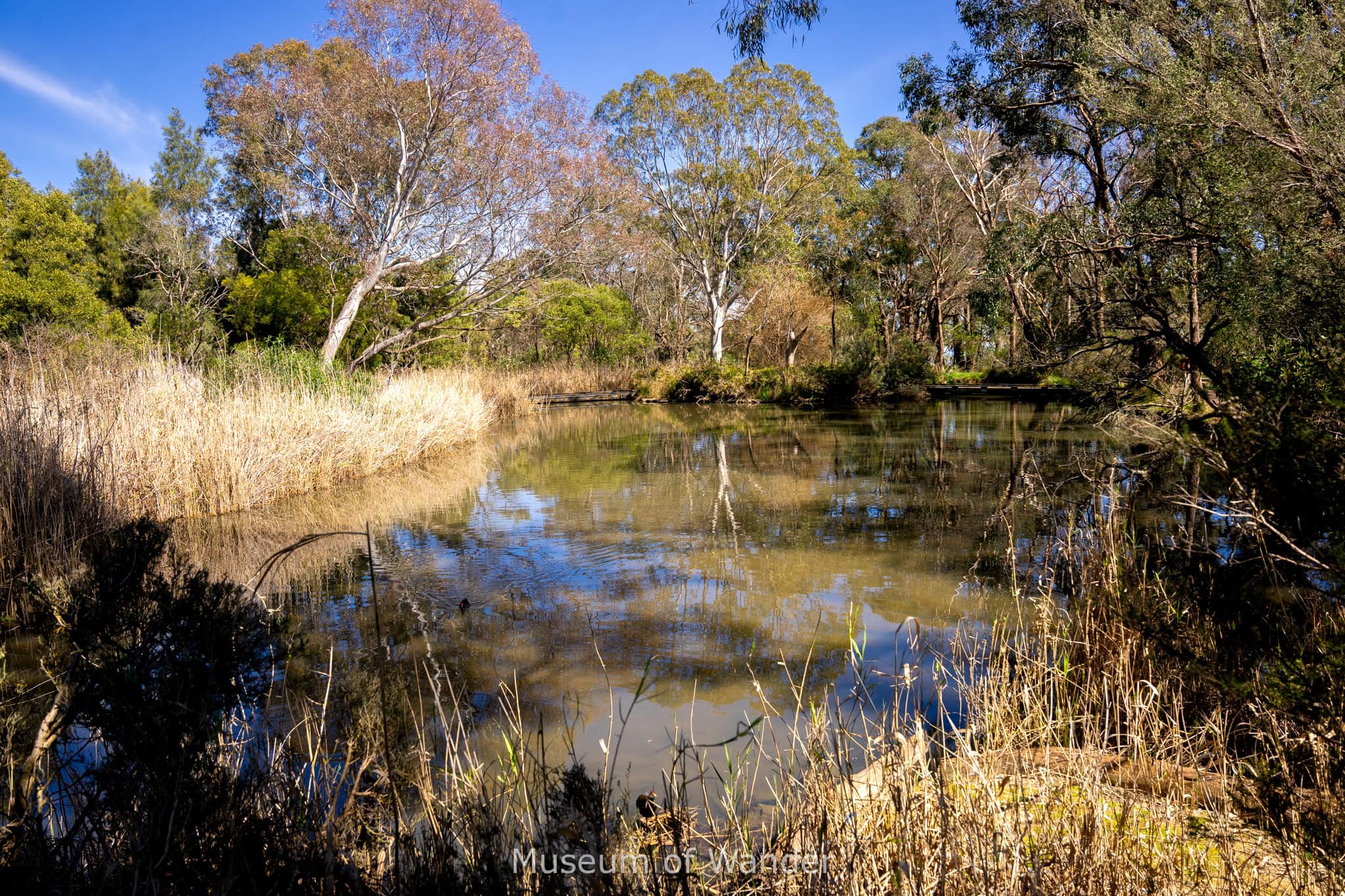
The first thing I’m glad to tell you is that Cleland Wildlife Park is not a conventional zoo. The park is about 35 hectares big, sitting in natural bushland on the ridge of the Adelaide Hills just below Mount Lofty and overlooking Adelaide.
While there are a few enclosures, which makes perfect sense for animals like dingoes and Tasmanian devils, much of Cleland consists of wide open, naturalistic areas where you and the wildlife can roam. You’re not simply standing outside an enclosure looking at an animal through a fence. It feels much more like you’re actually meeting them.
Cleland Wildlife Park is mostly flat, with good walking paths taking you around the park. You do need to do a fair bit of walking, but that is rather the point.
Finding the animals is pretty easy, and the map you receive at the entrance shows you where the different animals and areas are located.
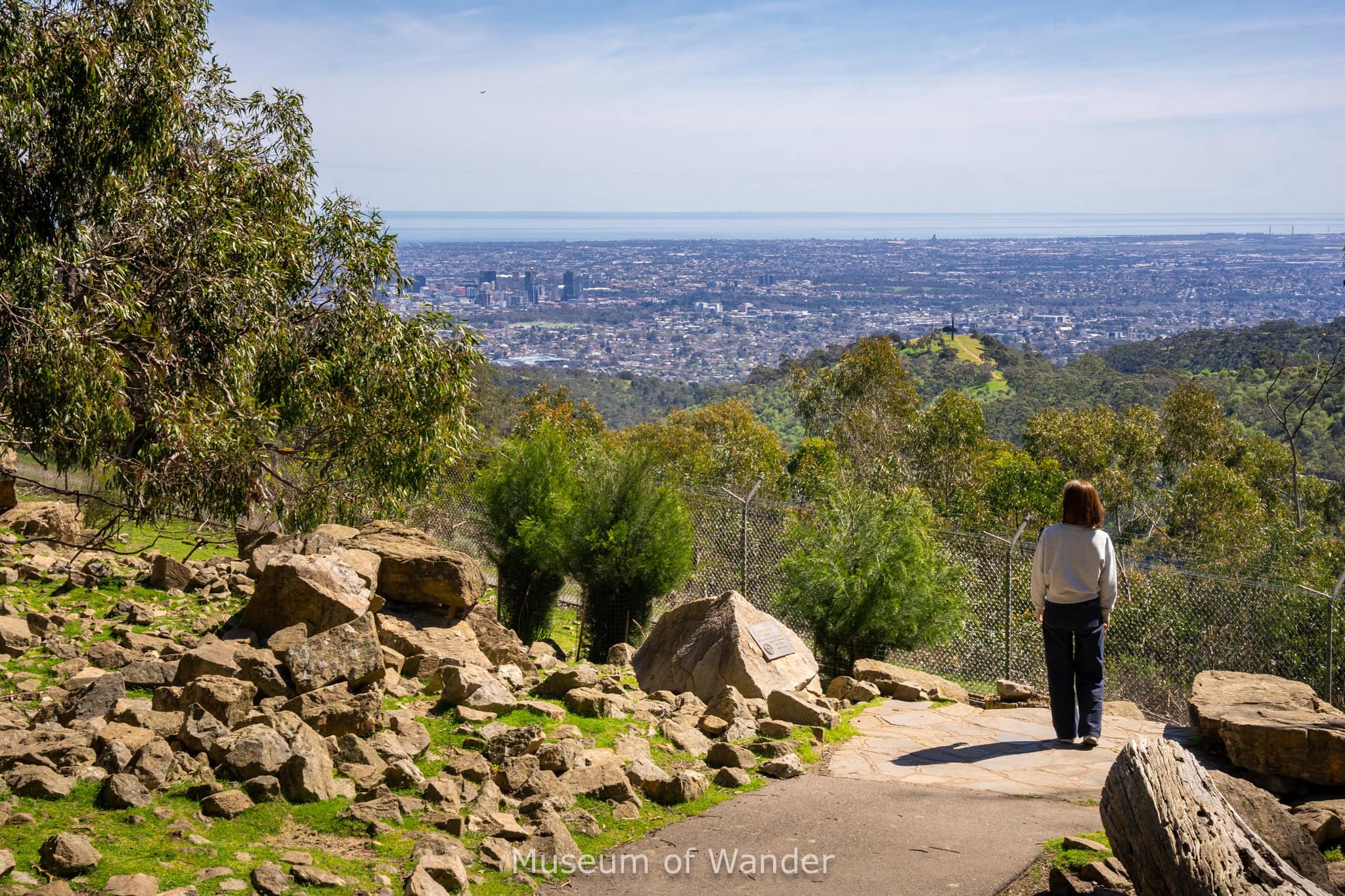
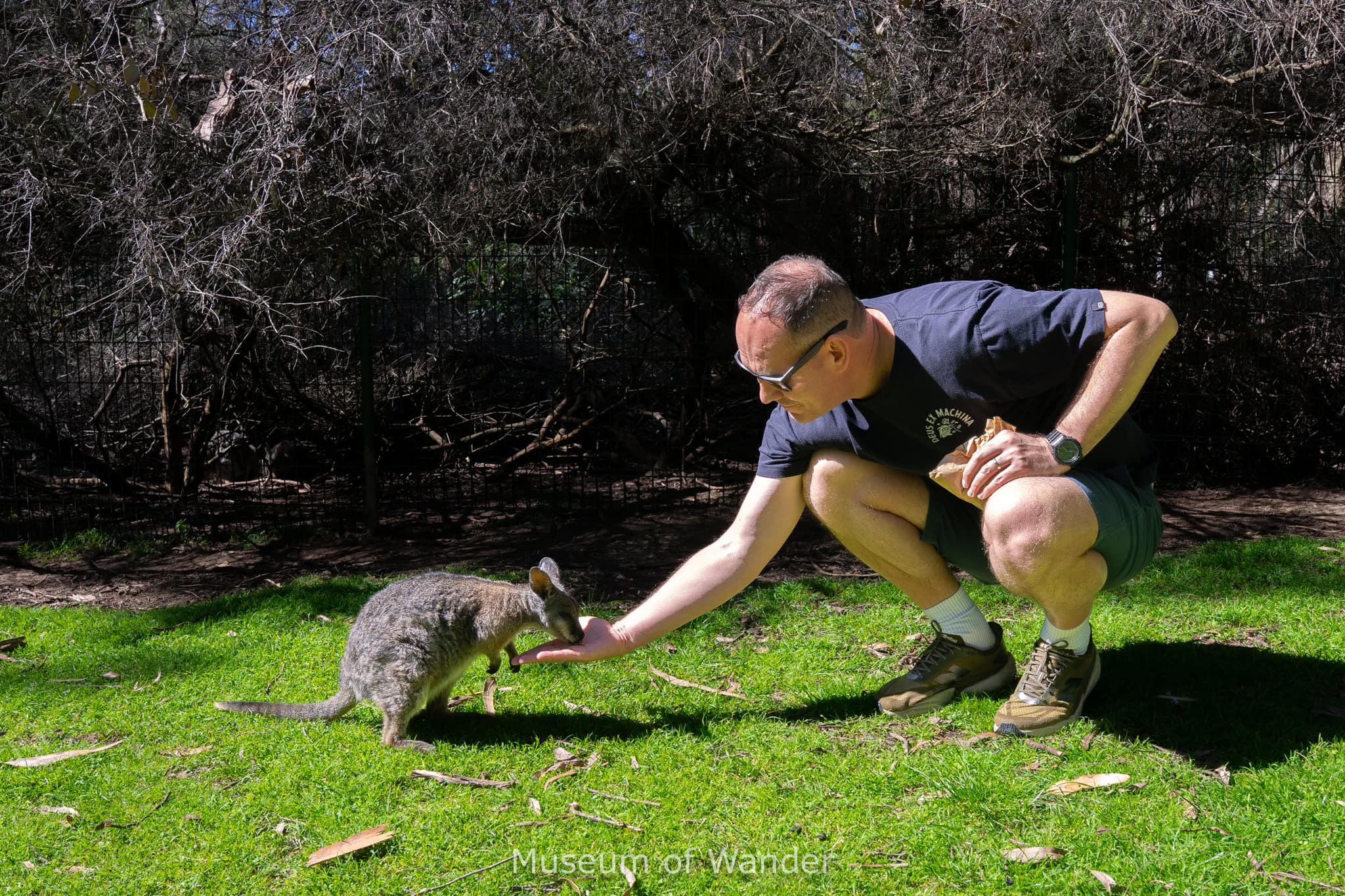
Apart from seeing the animals, we were particularly excited about meeting a koala up close, which I’ll get to later. What I hadn’t expected was just how close we could get to some of the other free-roaming animals. Kangaroos, wallabies and potoroos eat from your hand, while the whole experience still manages to feel very different from a petting zoo.
And yes, getting this close to Australian wildlife was considerably more exciting than I had expected. Even for someone who had looked King Kong straight in the eye.
Meeting a Koala at Cleland Wildlife Park

You can’t say you’ve been to Australia if you haven’t met a koala up close. That was one of the main reasons we decided to visit Cleland.
The Koala Close Up experience is included in the entrance fee, so you don’t need to pay anything extra for it. The experience runs from 11:00 to 12:00, and we were third in line at 10:45. When it started, there was already a long line behind us, and we congratulated ourselves on making good decisions.
Then the park ranger came walking down the path with a koala hugging her around the neck like a toddler.

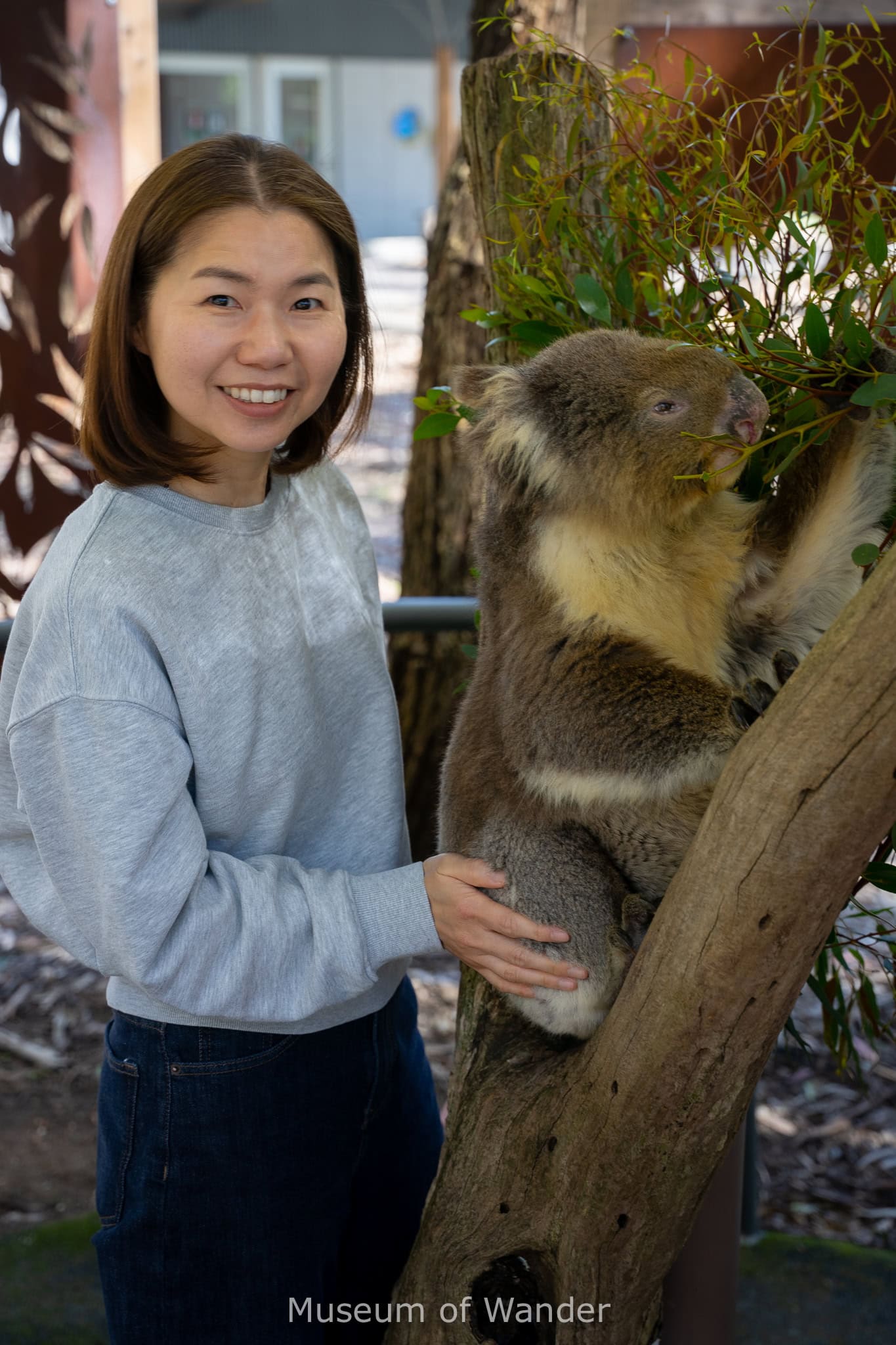
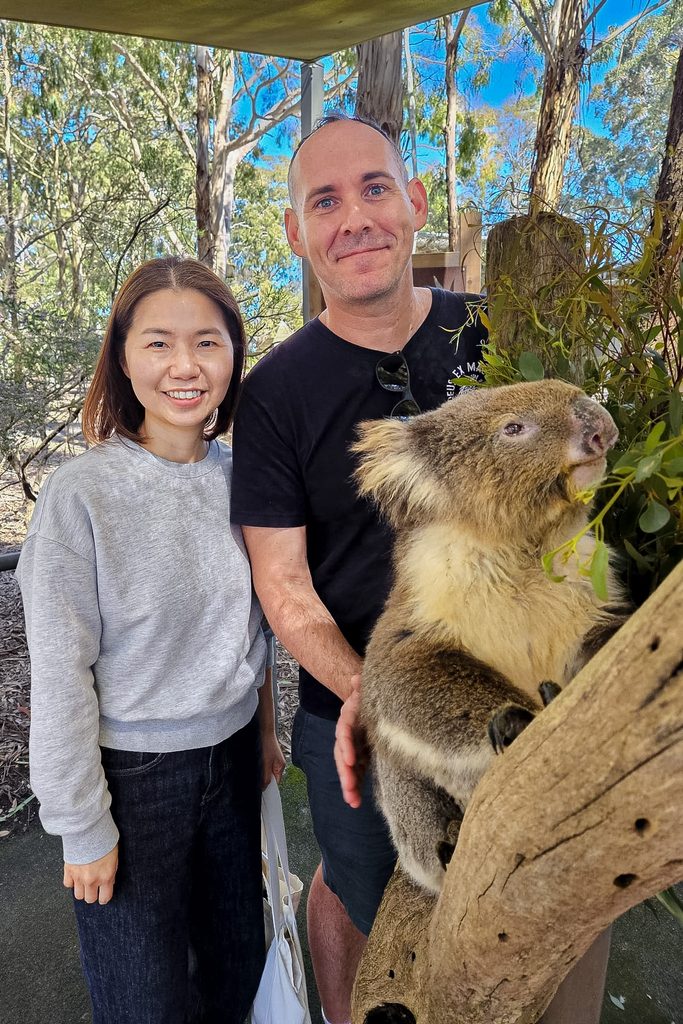
She introduced herself and Eddie, a 15-year-old male koala, then explained how the experience works.
Each family or group gets a minute or two to pat Eddie on his bottom. That’s the only place you’re allowed to touch him. No tummy, face or back. While you’re doing this, the ranger takes photos with your phone or camera.
Getting a photo of yourself patting a koala is what we all want, and that’s exactly what you get at Cleland, at no extra cost. For me, that was worth the entrance fee alone.

For those wondering: Can I hold a koala in Adelaide, there is also a Hold a Koala experience at Cleland. This costs an extra $89.50 and gives you the chance to actually hold a koala and spend 30 minutes with the animal and the ranger. Participants must be over 13 years old.
While that sounds wonderful, for $89.50 I expect to be taking the koala home with me.
If you don’t feel like standing in line for the Koala close-up experience, there are several koalas that you can view from a few metres away in their enclosures.
What Animals Can You See at Cleland Wildlife Park?
Cleland says there are around 130 species living in the park. I’m not entirely sure whether that includes every insect, common rodent and other creature scurrying around in the undergrowth, but we certainly saw a good variety of wildlife during our visit. More importantly, we managed to tick off most of the iconic Australian animals I imagine visitors are hoping to see.
Here are some of my favourites.
Potoroos

These little buggers are everywhere.
Something between a rat and a rabbit, potoroos were the most numerous animals we saw at Cleland. They are also wonderfully unbothered by humans. Hold out your hand with some food and one will happily hop over, gently eat from your hand, and then disappear again.
I arrived at Cleland having never even heard of a potoroo. By the end of the morning, I was wondering why nobody had told me about these ridiculously cute little creatures before.
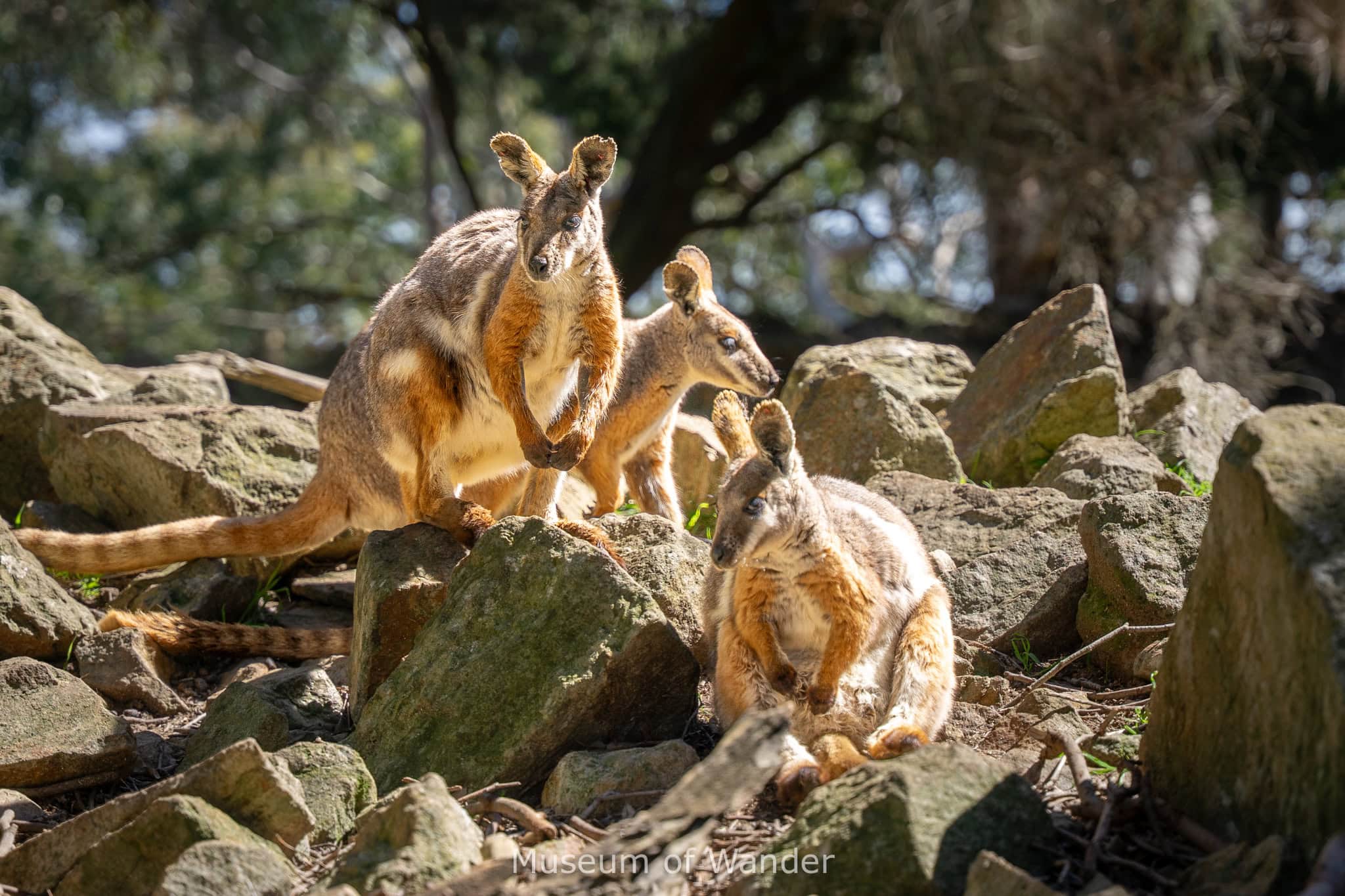
Yellow-footed Rock Wallabies
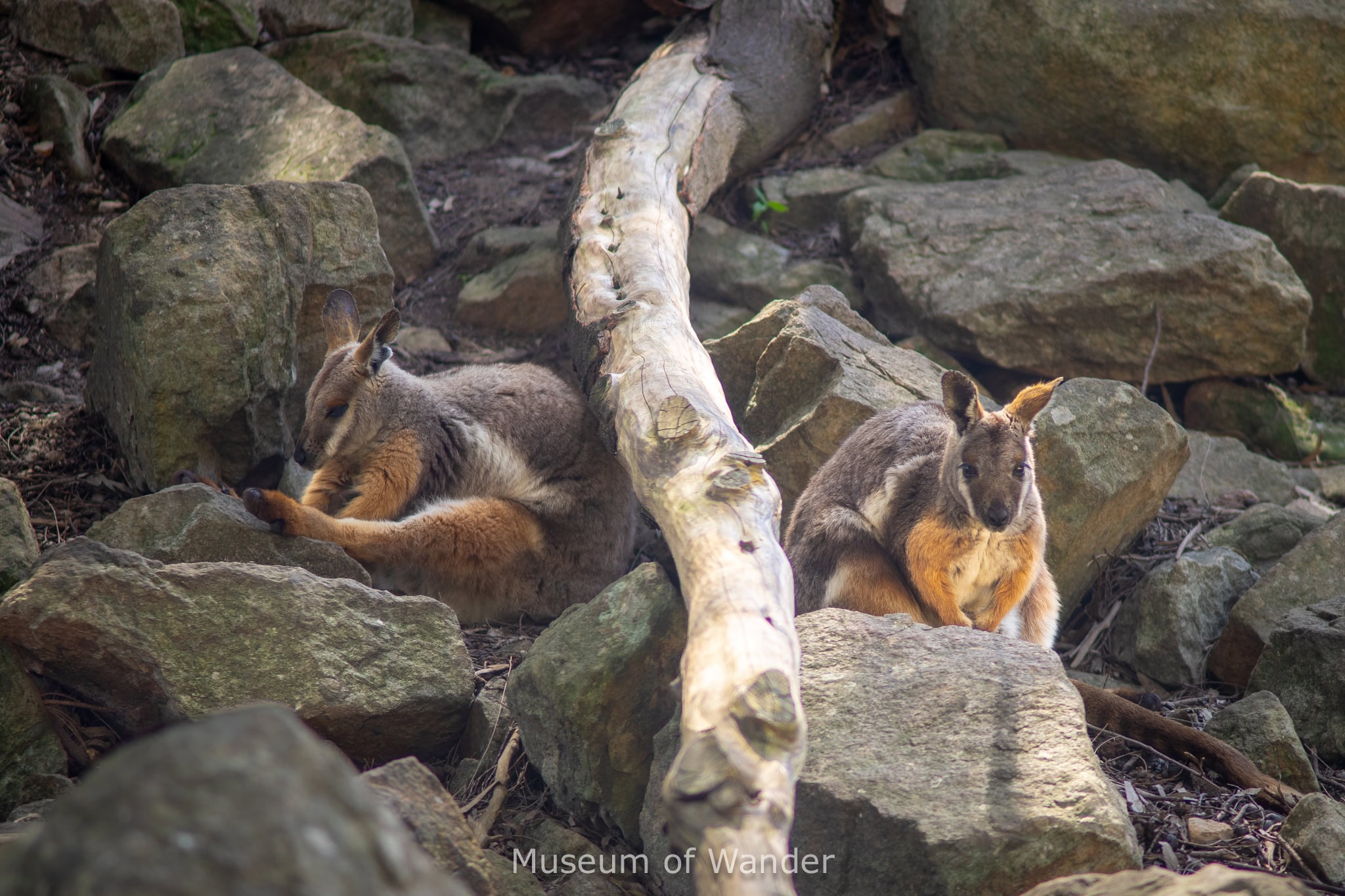
The Yellow-footed Rock Wallabies live among what looks like a mini man-made canyon. You walk down the path between the rocks, not quite knowing what you’re supposed to be looking for.
The map says Yellow-footed Rock Wallabies.
Then you see one.
And another one.
And another one.

They are impressively camouflaged among the rocks, but once you spot the first one, you suddenly realise they are popping up everywhere. It becomes a little game of spotting wallabies hiding in plain sight.
Tasmanian Devils
The Tasmanian Devils live in an enclosure, and when we finally spotted them, they were sleeping. Even so, it was nice to see such an iconic Australian animal in person.

I couldn’t help thinking they looked like some strange Staffordshire Terrier and rodent hybrid. Not exactly the terrifying creature their name suggests, although I suspect I’d feel differently if one woke up particularly hungry.
Kangaroos

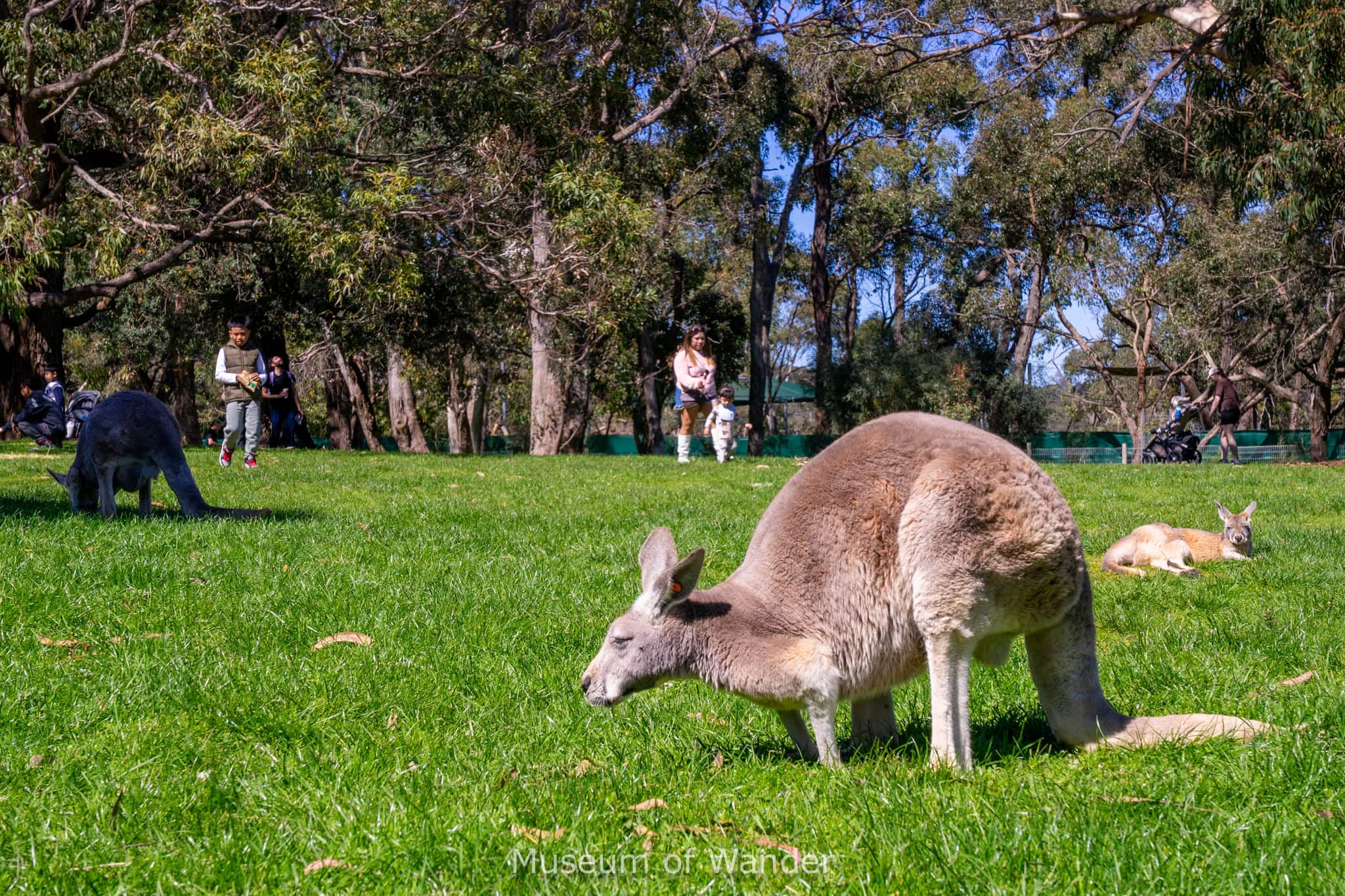
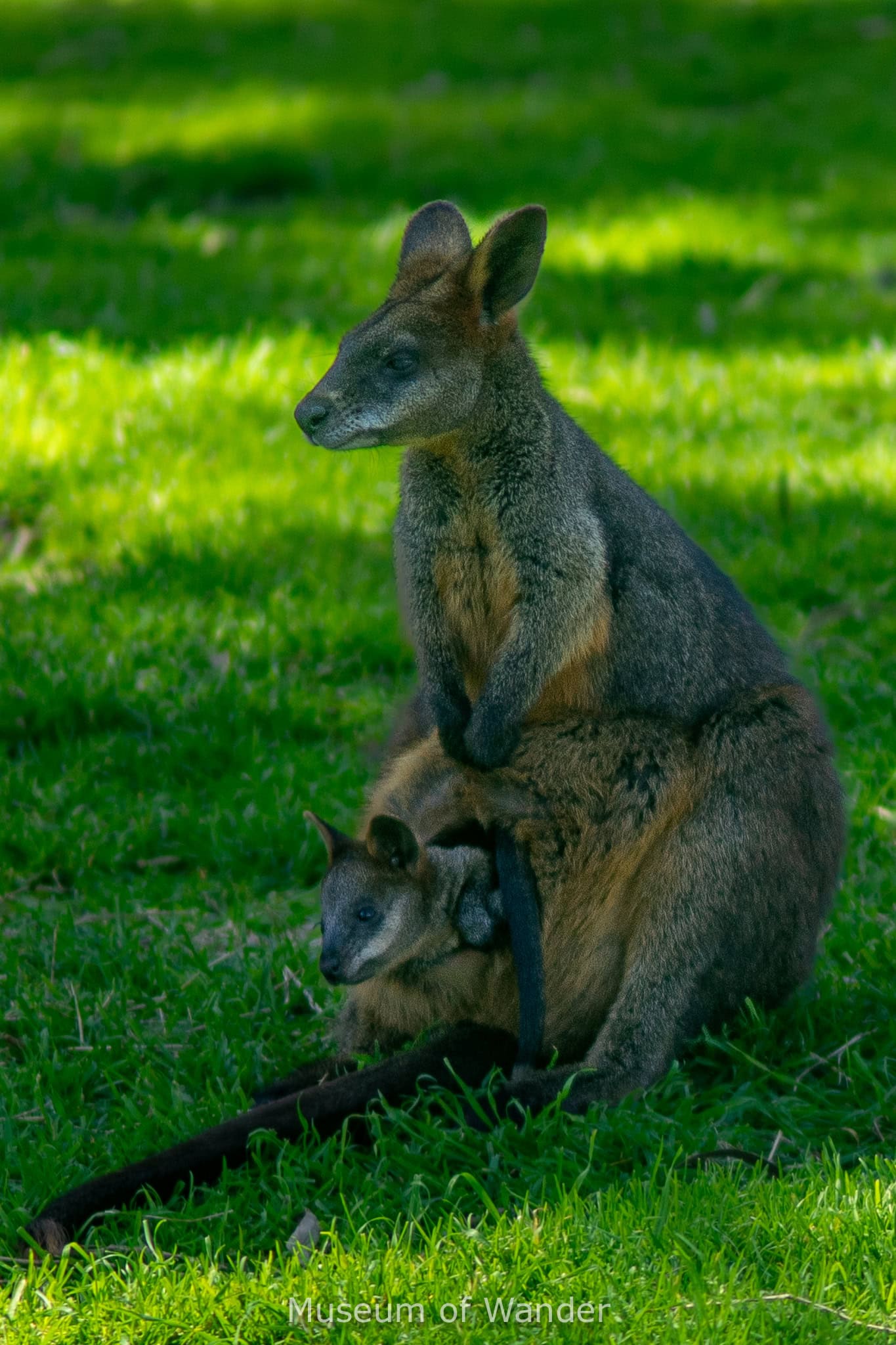
Several species of large kangaroos hop around the park, so seeing one is hardly a difficult task.
Getting close enough to touch them was one of the things we enjoyed most about Cleland. They are surprisingly soft and fluffy. I was expecting something coarse and matted.
Coming from Africa, I’m used to thinking of large wild animals as things you observe from a sensible distance. At Cleland, I found myself casually standing next to a kangaroo.
Australia is a strange place.
Echidnas
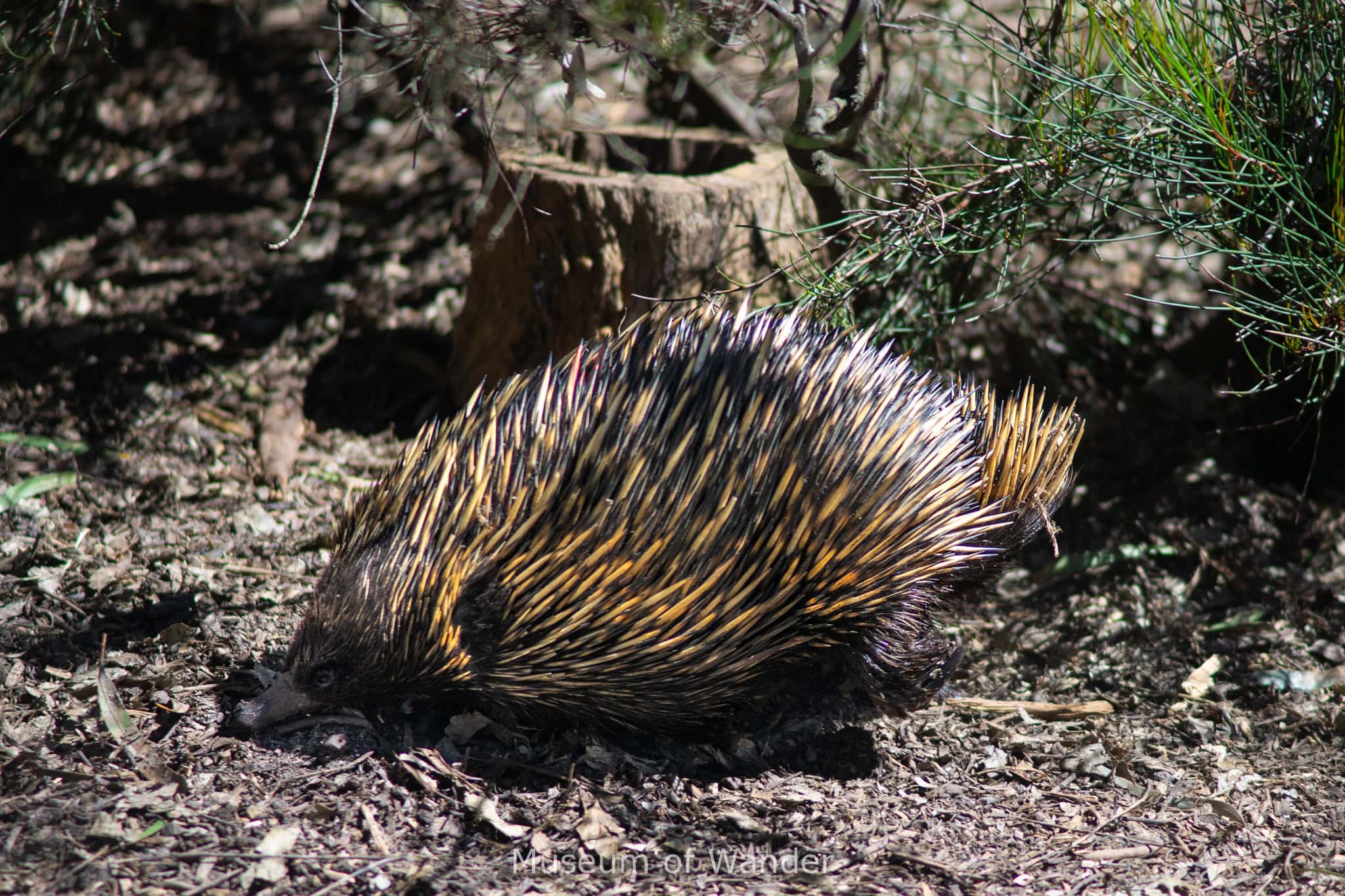
I was particularly excited to see an echidna. They are also kept in an enclosure, and they are strange looking creatures in the best possible way.
We spent some time watching them, and I couldn’t quite decide whether they were beautiful or bizarre. Probably both.
Either way, seeing an echidna in person was one of those little Australian wildlife moments I was hoping for when we visited Cleland.
Wombats
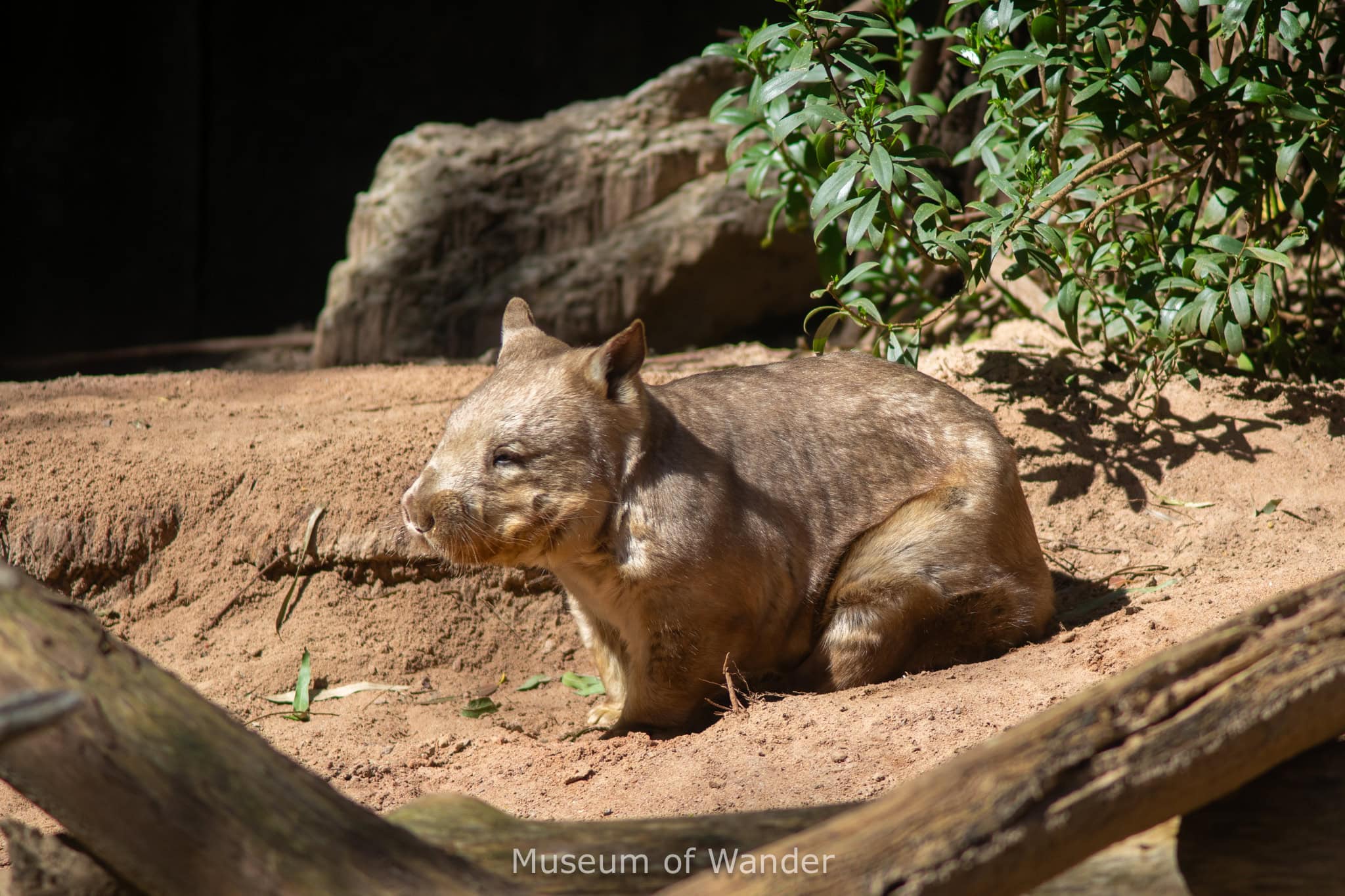
The wombat is a seriously solid-looking animal. Built like a brick, with absolutely no interest in winning any beauty contests.
From the way it was moving around, I also got the impression that intelligence may not be its greatest strength. Still, there is something wonderfully Australian about seeing a chunky little tank of an animal.
Birds
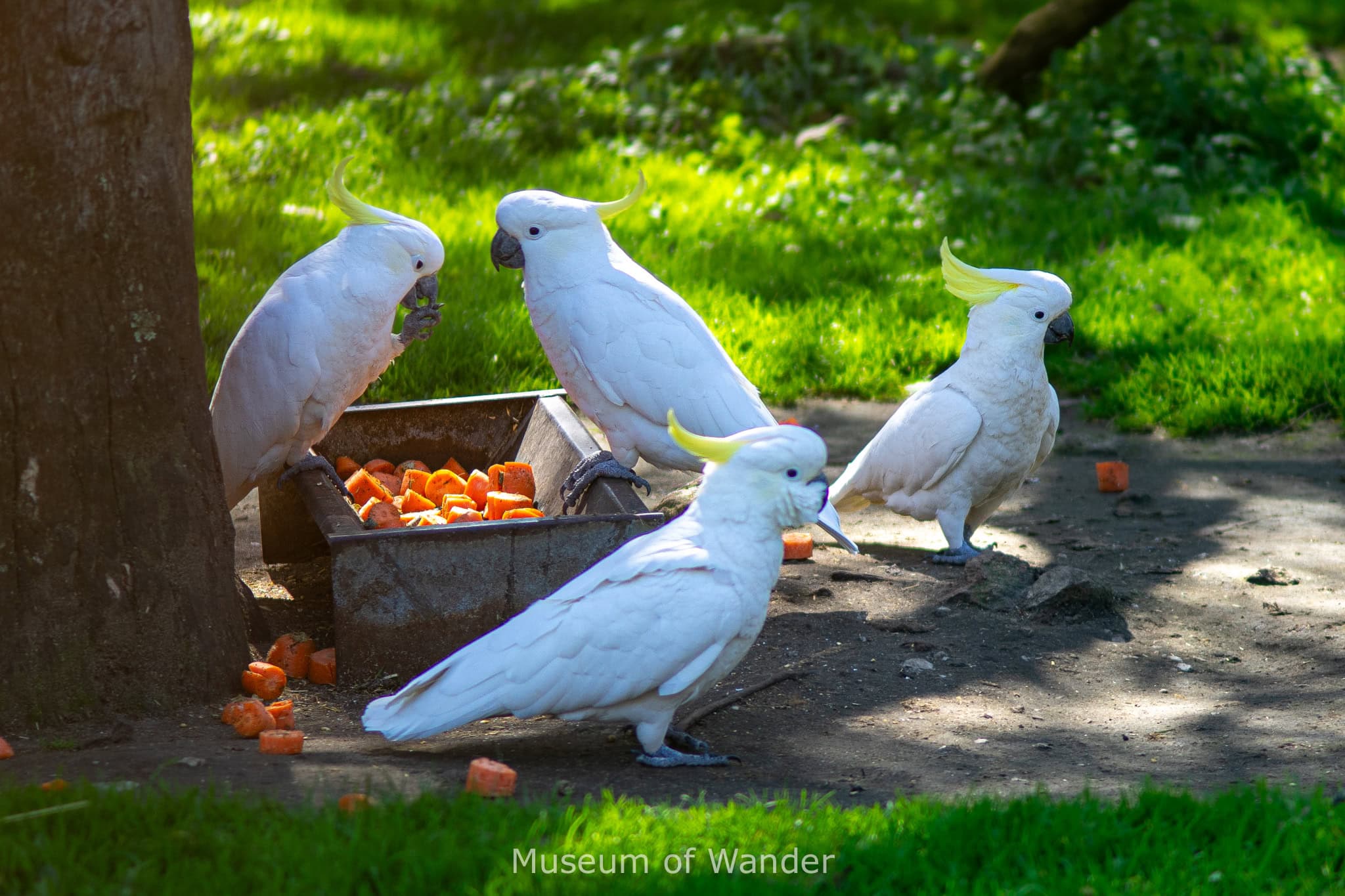


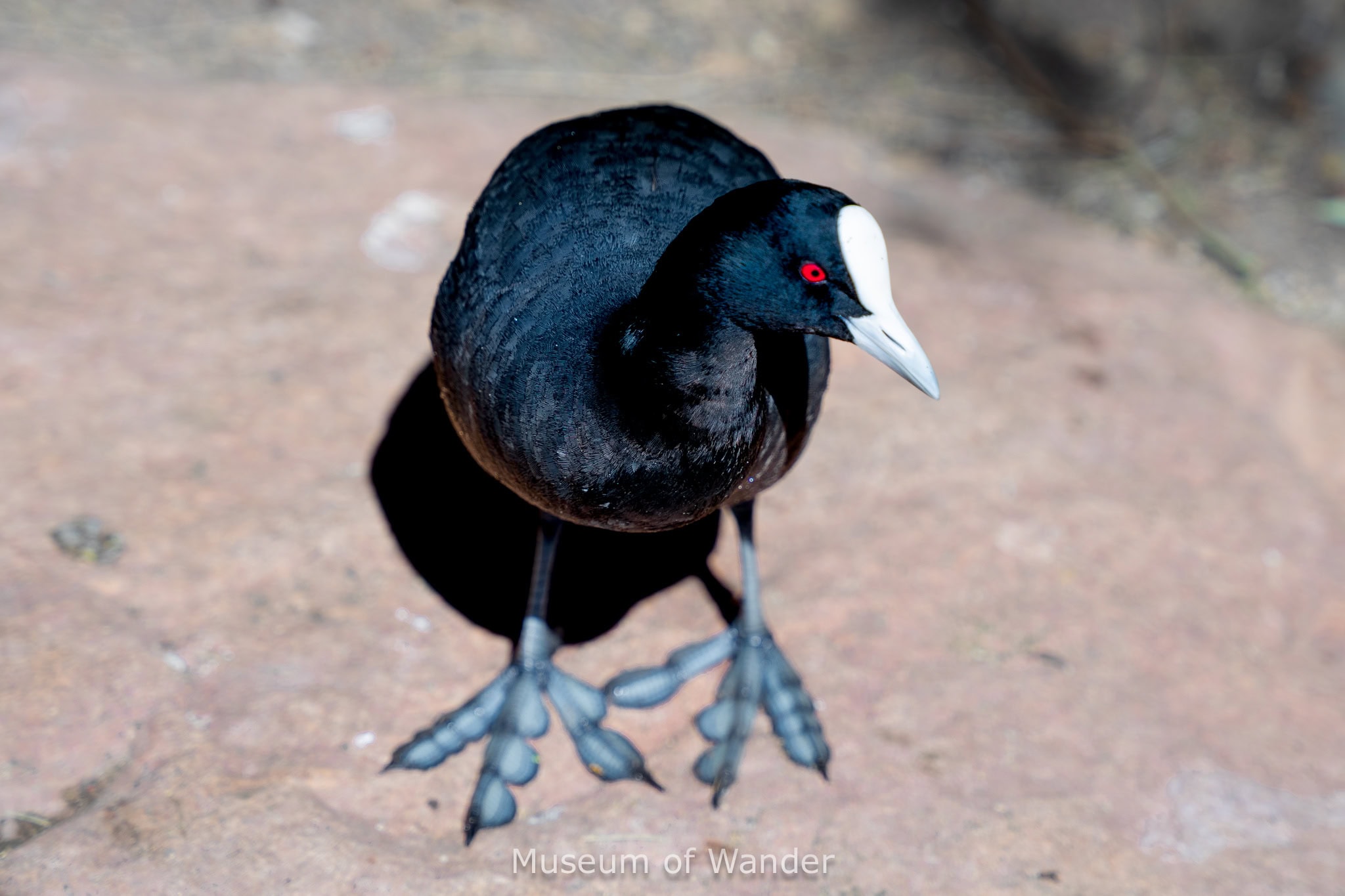
The big aviaries were closed during our visit because of the bird flu outbreak, so we didn’t get to see everything we had hoped to.
We did, however, get glimpses of beautiful black cockatoos, kingfishers and finches. There were also plenty of sulphur-crested cockatoos and pink galahs flying around freely, which was a nice reminder that at Cleland, some of the wildlife doesn’t need an enclosure at all.
Reptiles and Amphibians
I’ll admit I had my doubts about the reptile and amphibian section.
These displays are usually the ones that bore me the most. Give me a weird mammal over a snake sitting motionless under a heat lamp any day.
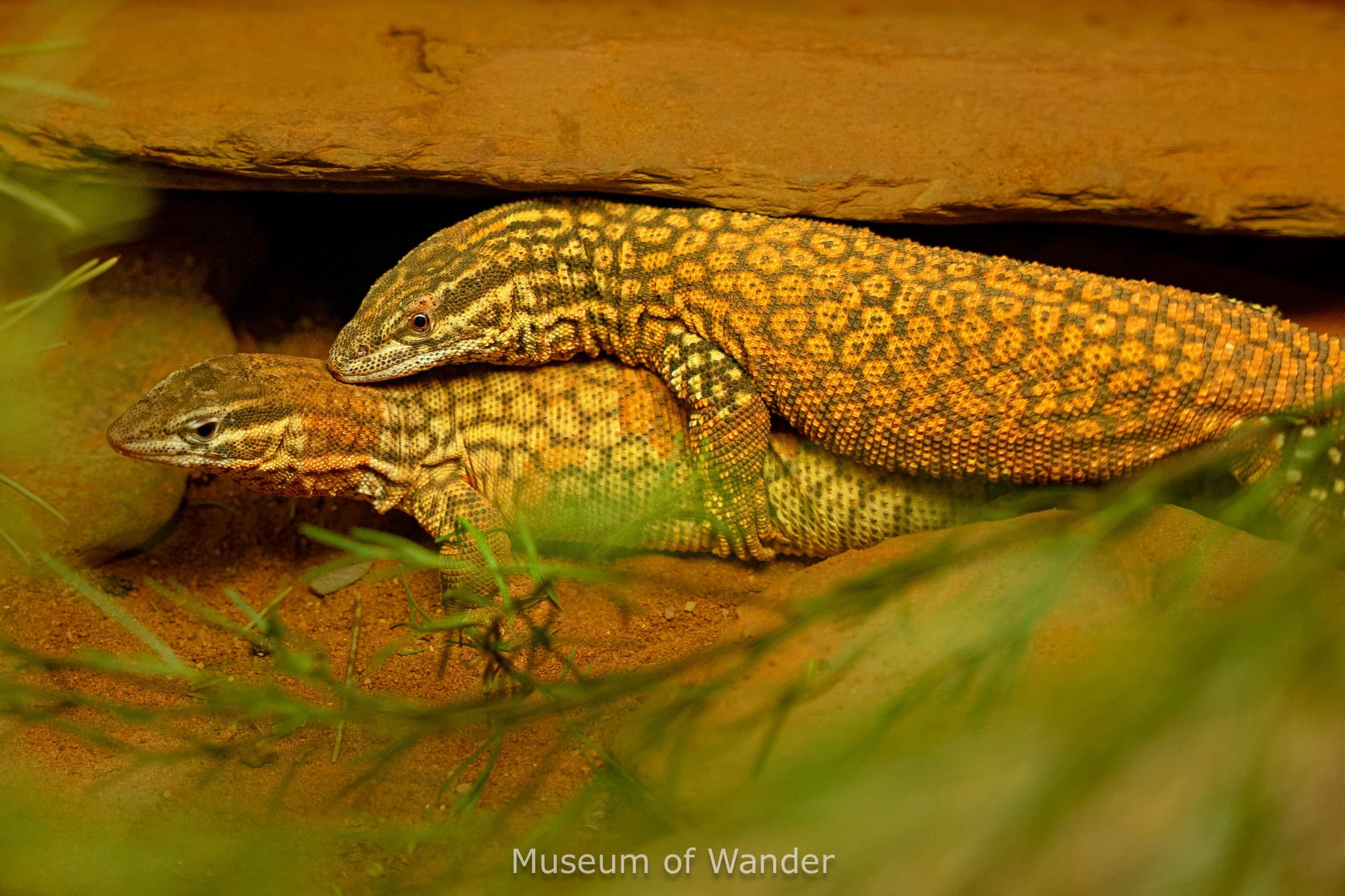

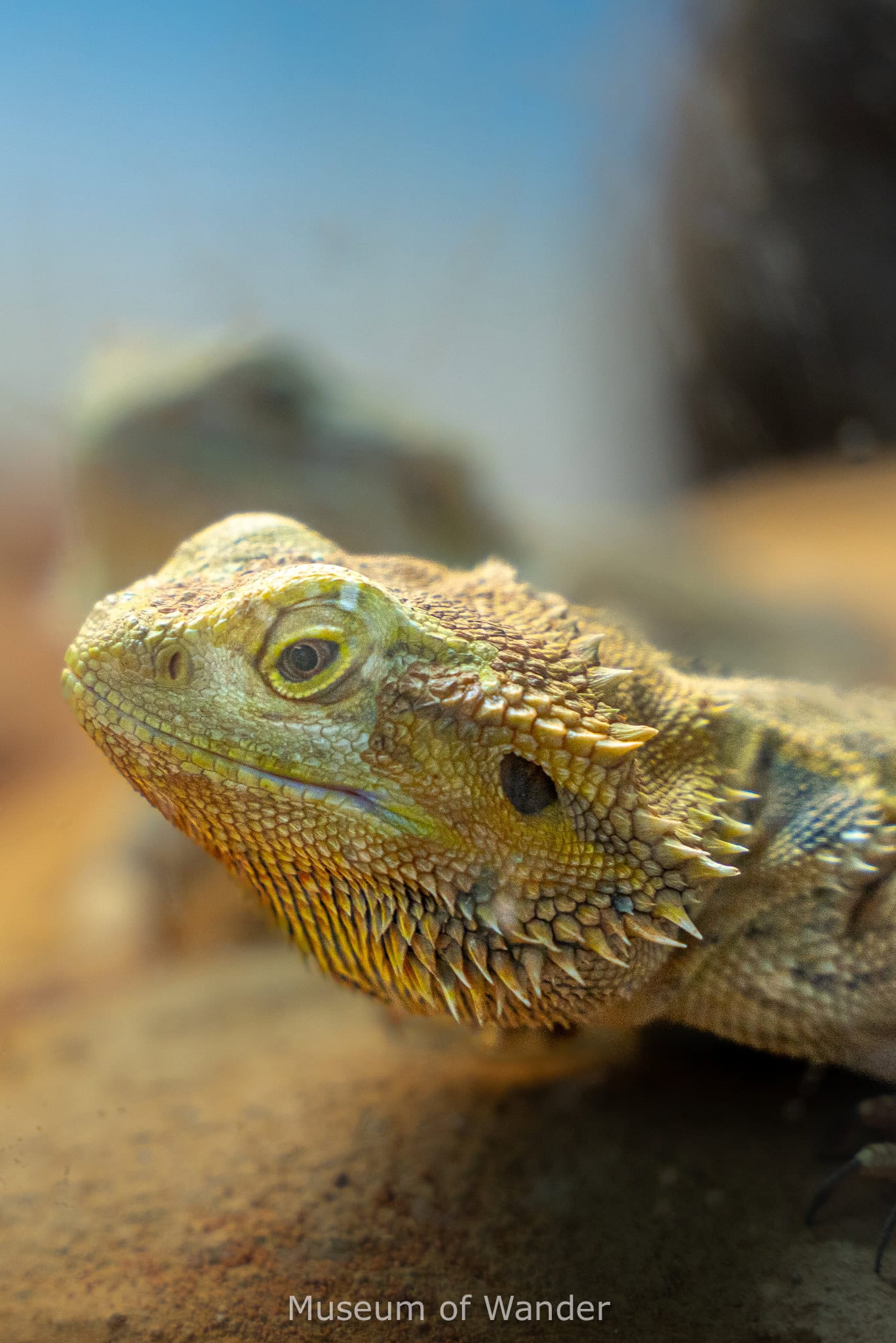
But Cleland surprised me here. Maybe it was because many of these creatures were completely unfamiliar to me, but I found the reptile and amphibian displays genuinely interesting.
Don’t skip this section. It’s beside the gift shop exit, so it’s easy to miss.
How Long Do You Need at Cleland Wildlife Park?
The first time we came to Cleland was in the afternoon, around 15:00. We had just been to Mount Lofty Summit and decided to check out Cleland before heading back to Adelaide.
The friendly woman at the ticket counter urged us to come back another day if possible. She insisted we didn’t have enough time.
She was right.
On our second visit, we came after breakfast and put aside half a day to properly experience Cleland. We packed a picnic, which we had with coffee on the benches on the lawns beneath the eucalyptus trees, while strange-looking birds tried their best to get crumbs from the table.
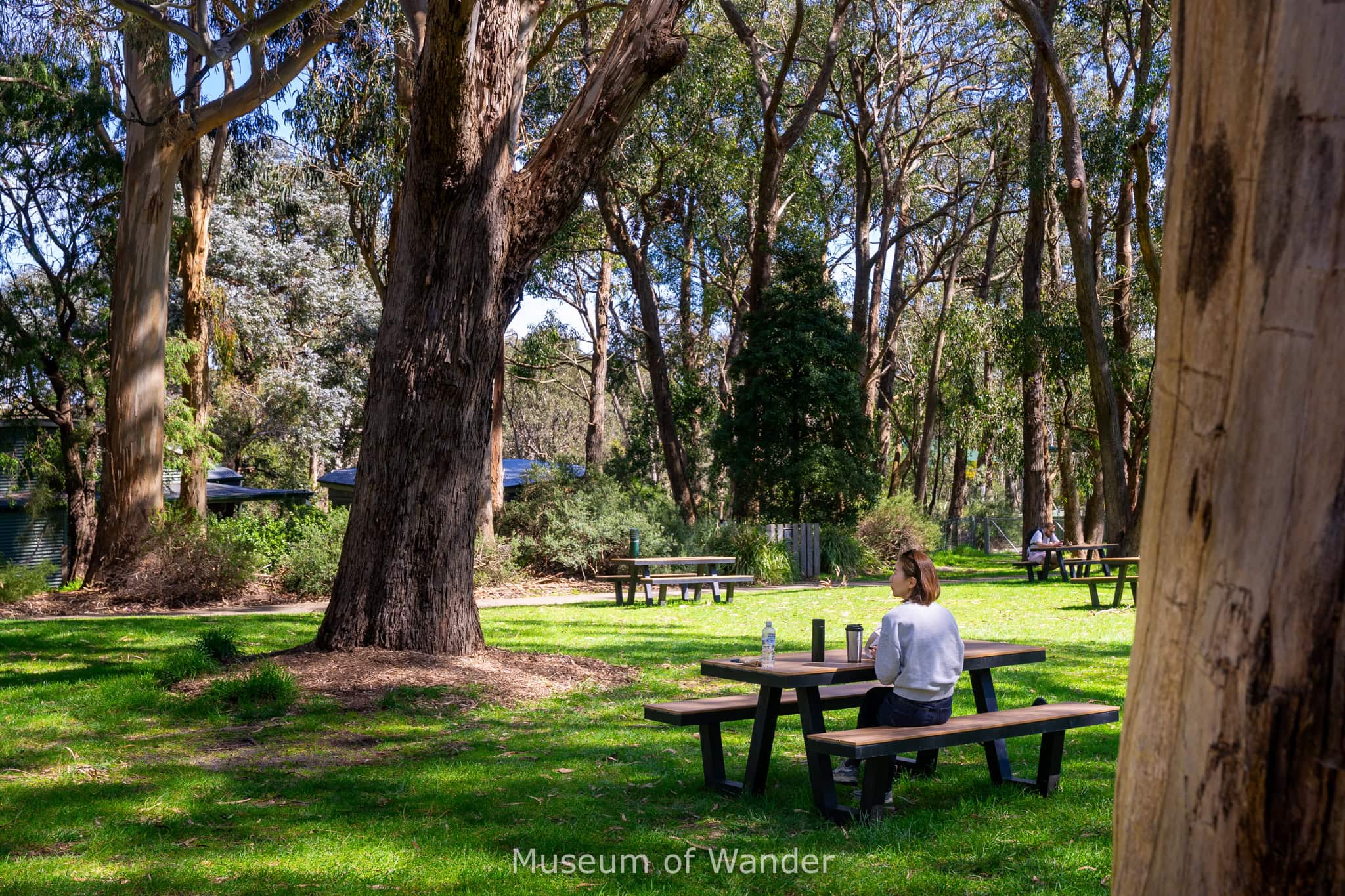
It was a much better way to experience the park. We could walk around without rushing, spend time with the animals, do the koala experience, and stop for a break when we felt like it.
I’d recommend allowing at least 2.5 to 3 hours for a relaxing and unhurried visit. You can probably see some of the park in less time, but I wouldn’t recommend it.
If you’re coming specifically for the Koala Close Up experience, remember that it runs from 11:00 to 12:00, so plan your visit around that.
How Do You Get to Cleland Wildlife Park from Adelaide?

There is public transport between Adelaide CBD and Cleland Wildlife Park, but we’d only recommend taking the bus if you have absolutely no other option.
The journey from Adelaide CBD to the entrance of Cleland takes at least 1.5 hours by public transport each way.
In theory.
In reality, you’re also at the mercy of the bus timetable, so this is not how we’d choose to spend a day visiting Cleland.
If you’re still up for it, catch a bus from the CBD to Crafers (routes such as 864 or T800/T840), then transfer to the 823 bus which goes directly to Cleland Wildlife Park (Stop 27).
If you don’t have a car, we’d suggest booking this tour that combines Cleland Wildlife Park with Mount Lofty Summit or this one that includes Hahndorf and Cleland. That way you can visit both without having to spend half your day figuring out Adelaide’s public transport.
If you have a car, getting to Cleland is much easier. It’s about a 20-minute drive from Adelaide CBD, and there is ample free parking right at the entrance.
Cleland Wildlife Park: Our Verdict
Cleland gave us pretty much the ultimate Australian wildlife experience in a single morning. We didn’t have to battle sandflies or worry about a dingo eating a baby in the Outback. We did it twenty minutes by car from home.
The entrance fee includes a close-up encounter with a koala. We saw animals I’d never seen before. Potoroos and kangaroos ate from our hands. The grounds are green and spacious, with sweeping views over Adelaide. You can pack your own picnic and eat it on the lawns, or grab something at the restaurant. What else could you ask for?
For a balanced Cleland Wildlife Park review, I should mention that the dingo enclosure was the one part of the park that disappointed us. The high fences took away some of the natural beauty of the setting, and there was quite a distance between the viewing area and the dingoes. We saw a few sitting on top of their shelters, which looked a bit like dog houses, and from that distance they felt more like domesticated dogs than wild Australian animals.
Cleland Wildlife Park is worth visiting whether you’re a first-time visitor to Australia or a local looking for a beautiful half-day trip from Adelaide. If you have kids, it’s a no-brainer. If you’re adults without kids and a pram, which is us, I’m pretty sure you’ll love it too.
We arrived sceptical about wildlife parks and left wondering when we could come back.
Just go already.
Cleland Wildlife Park FAQs
Is Cleland Wildlife Park worth visiting?
Yes. It’s a well-run, open-style park where you can get close to kangaroos, wallabies, potoroos and koalas in a natural bush setting just 20 minutes from Adelaide.
How long do you need at Cleland Wildlife Park?
Allow 2.5 to 3 hours for a relaxed visit. You can see the main areas in less time, but you’ll feel rushed.
Can you hold a koala at Cleland?
The free Koala Close-Up experience (included with entry) lets you pat a koala and get photos. There is also a paid Hold a Koala experience for $89.50 (13 years and older).
What are the opening hours and ticket prices?
Open daily 9:30 – 17:00 (closed Christmas Day). Adult tickets are currently $35.80. Check the official site for the latest prices.
How do you get to Cleland Wildlife Park from Adelaide?
By car it takes about 20 minutes with free parking on site. Public transport is possible but slow (around 1.5 hours each way). A tour that includes Cleland is the easier option if you don’t have a car.
Can you feed the animals?
Yes. You can buy bags of animal food at the entrance and hand-feed kangaroos, wallabies, potoroos and some birds.