
Andong Hahoe Folk Village (안동하회마을) is quite a mouth full. It is also one of the best weekend getaways from Seoul for those in search of rural Korea away from the neon lights and commotion of the city.
This beautiful village in Gyeongsangbuk-do Province, near the city of Andong, is located in the heartland of the Joseon Dynasty, which ruled the Korean peninsula for over 500 years between 1392-1910. A visit to Hahoe village is a refreshing, and often needed, break from the modern world.
Andong Hahoe Folk Village is a clan-based village and is UNESCO-recognized for its layout reflecting Confucian ideals during the Joseon dynasty.
Historical and cultural importance aside, the pretty village is a great place to spend a weekend away from the city. You can even sleep in one of the traditional houses and appreciate the quiet ambience of Hahoe village after all the day trippers have returned from whence they came from.
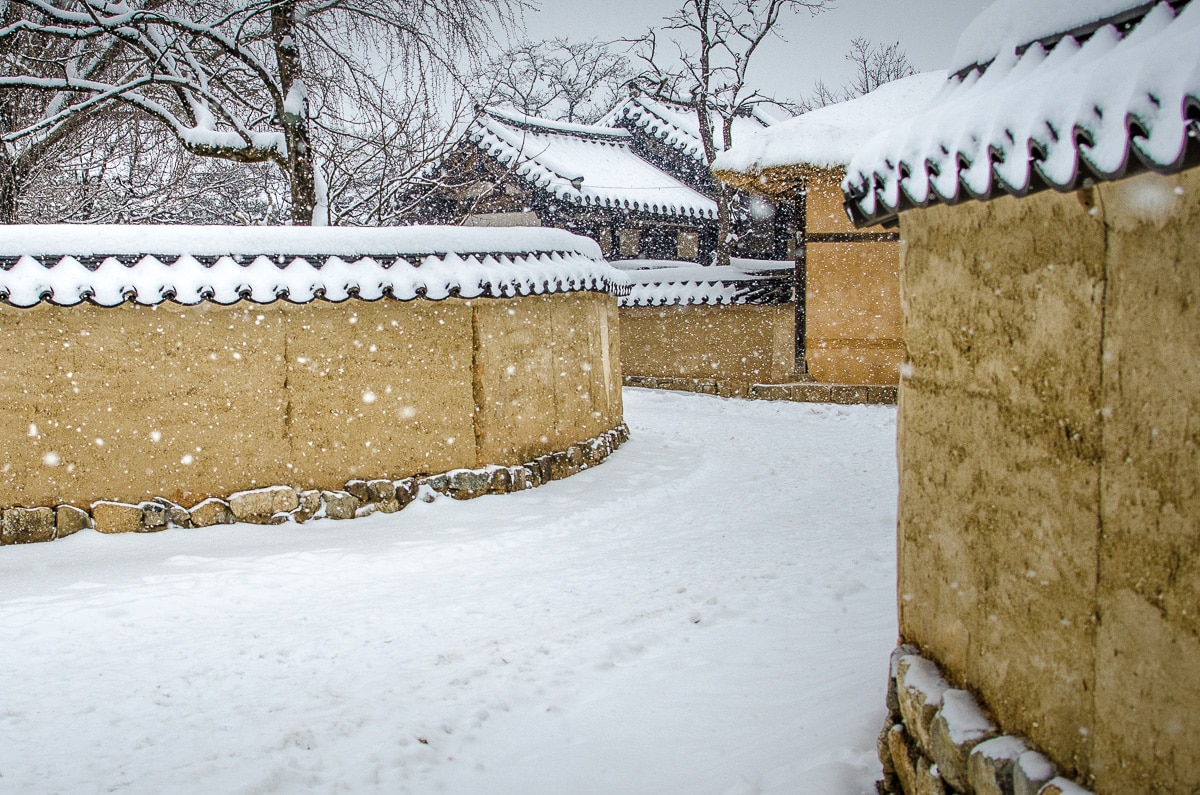
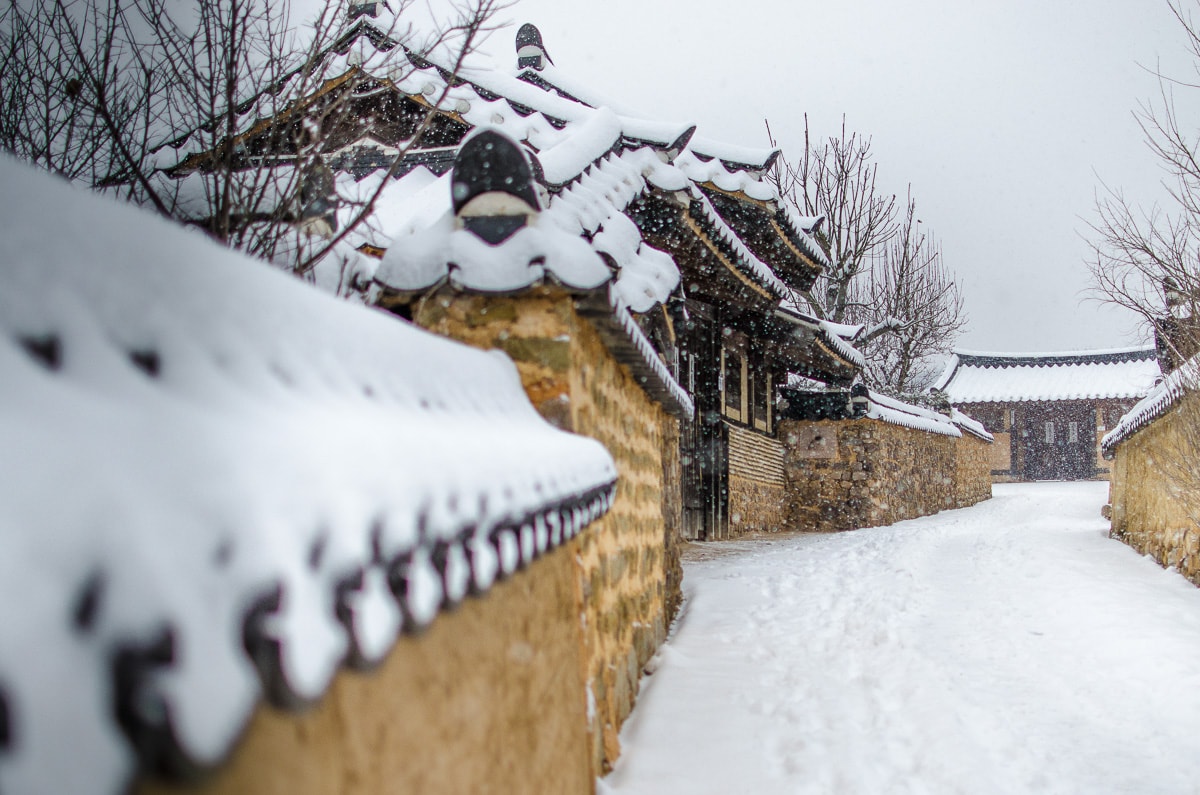
We spent a snowy weekend in Andong Hahoe Folk Village this winter, and it was pure magic! If you’re still undecided, we’ll show you what to expect from a stay in Hahoe village.

Please note: This post may contain affiliate links. This means I may earn a commission if you make a purchase by clicking a link (at no extra cost to you). As an Amazon Associate, I earn from qualifying purchases. Learn more.
Quick Guide to Hahoe Folk Village
How to get to Hahoe Folk Village: First reach the city of Andong. Buses leave Dong Seoul (East) Terminal every 30 minutes. Buses also depart from Express Bus Terminal, but only hourly. The journey from Seoul to Andong takes about 3 hours.
In Andong, transfer to a local bus. Bus 246 across from Andong Bus Terminal leaves for Hahoe Village between 7:20 am and 7:10 pm. Buses leave roughly hourly and the journey takes an hour.
Don’t get off at Hahoe Village Entrance! Stay on the bus until Hahoe Village Station, as it’s nearer to the actual entrance.
Suggested Time: It’s not feasible to visit on a day trip from Seoul when using public transportation. Spending a night in the village is just grand. You can see the village in a few hours, but spend the day enjoying rural Korea and the laid-back charm and beauty of the village.
Where to Stay: We stayed at Rakkojae Andong Hahoe Folk Village. The only other two options in Hahoe Village are Bukchondaek or Okeyon Jeongsa.
Entrance Fee: 5,000 per person
Brief overview of Andong Hahoe Folk Village
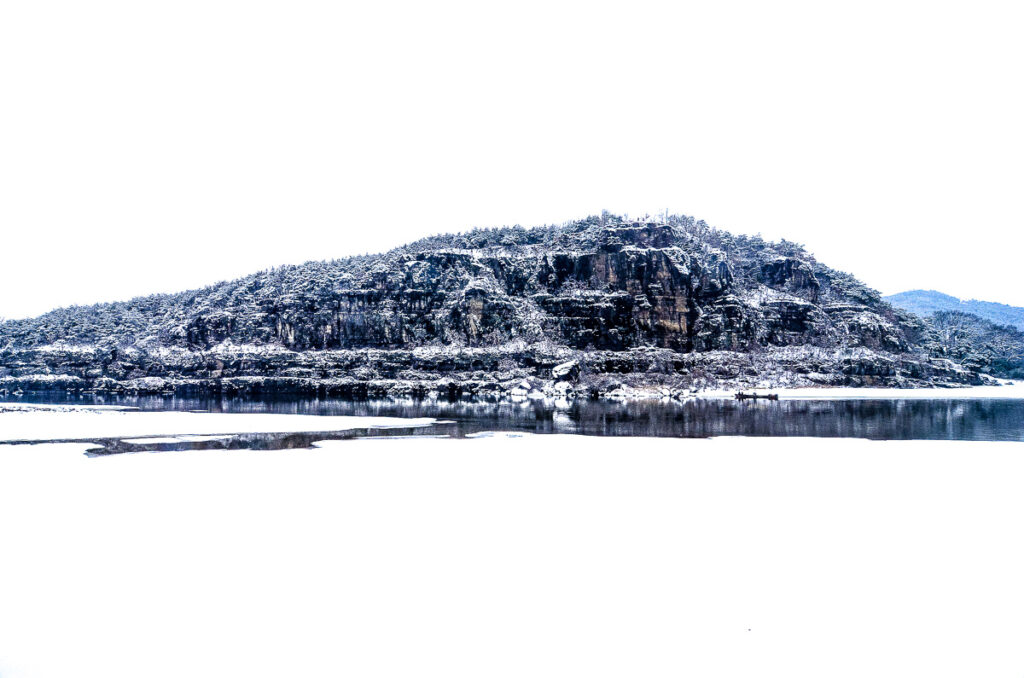

Hahoe Folk Village is a traditional Korean village near Andong City in Gyeongsangbuk-do Province. Over 600 years old, the village is known for its well-preserved Joseon-era architecture, beautiful natural scenery, and rich cultural heritage.
We loved how natural everything looked in Hahoe Village. The traditional houses, scattered between fields and pine trees, were built using only wood, mud, grass and paper.

Sitting on a bend on the Nakdong River, Hahoe means The Place Where the Water Turns Around, and the layout is heavily influenced by pungsu-jiri-seol, the Korean version of fengshui. According to these values, the village is laid out aiming for a balance between man and nature.
Call it fengshui, pungsu-jiri-seol or weekend getaway, but Hahoe Folk Village is indeed a wonderful place to reconnect with nature and quiet village life, far away from the modern world.
Don’t let the name Folk Village put you off. Before my first visit to Hahoe, I had my doubts about a place with a name like that. I imagined a village with actors who stayed in character from 9 am to 5 pm and then drove home in their cars from a parking lot hidden behind a fake facade.
Andong Hahoe Folk Village feels quite authentic, with a few real people still living there. Yes, it is set up for tourists, but in a good way. We didn’t have any FTW moments during our stay in Hahoe. Instead, we found ourselves thinking: “Ooooh, that is nice“, instead.
Visiting Hahoe Folk Village is possible throughout the year. The most popular time is during the Andong Mask Festival in October. I visited Hahoe years ago for the mask festival, which was spectacular (but BUSY!) If coming to the festival, book your accommodation in Hahoe months in advance, or stay in Andong.
If you want the village for yourself, come mid-week or in winter, as we did
Our Weekend Getaway in Andong Hahoe Folk Village
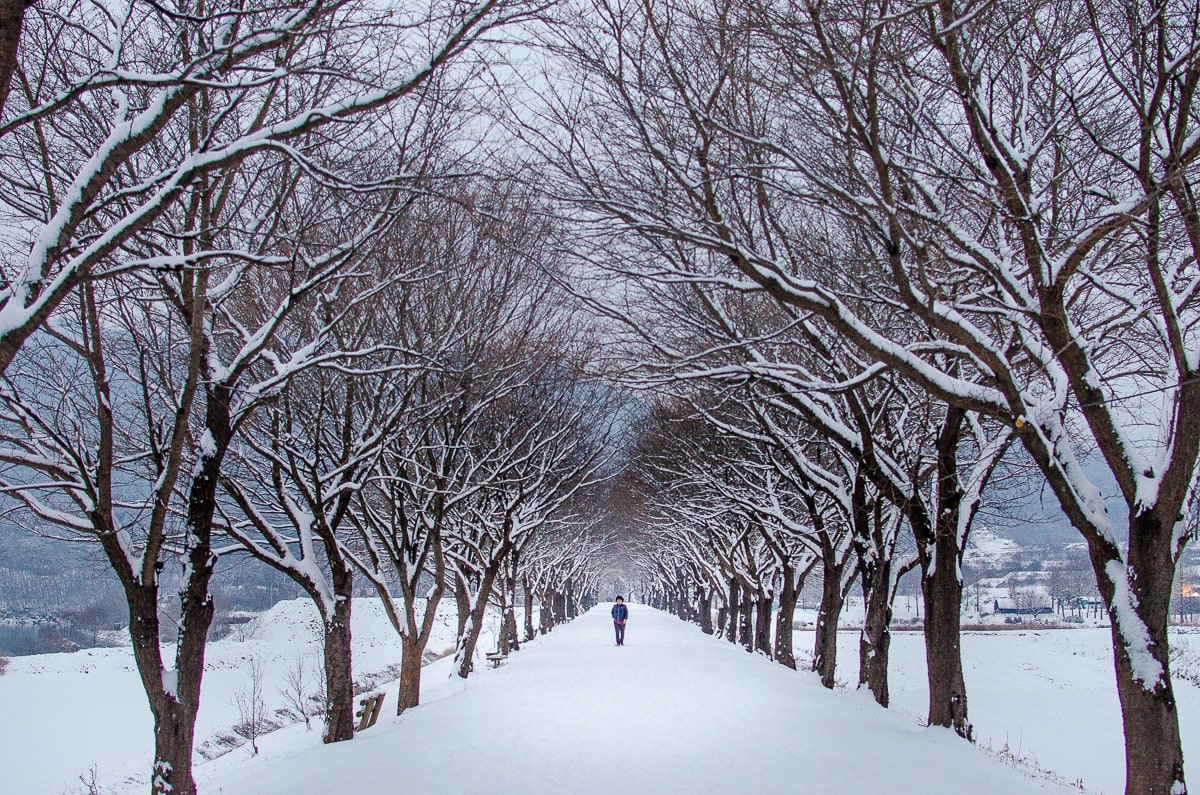
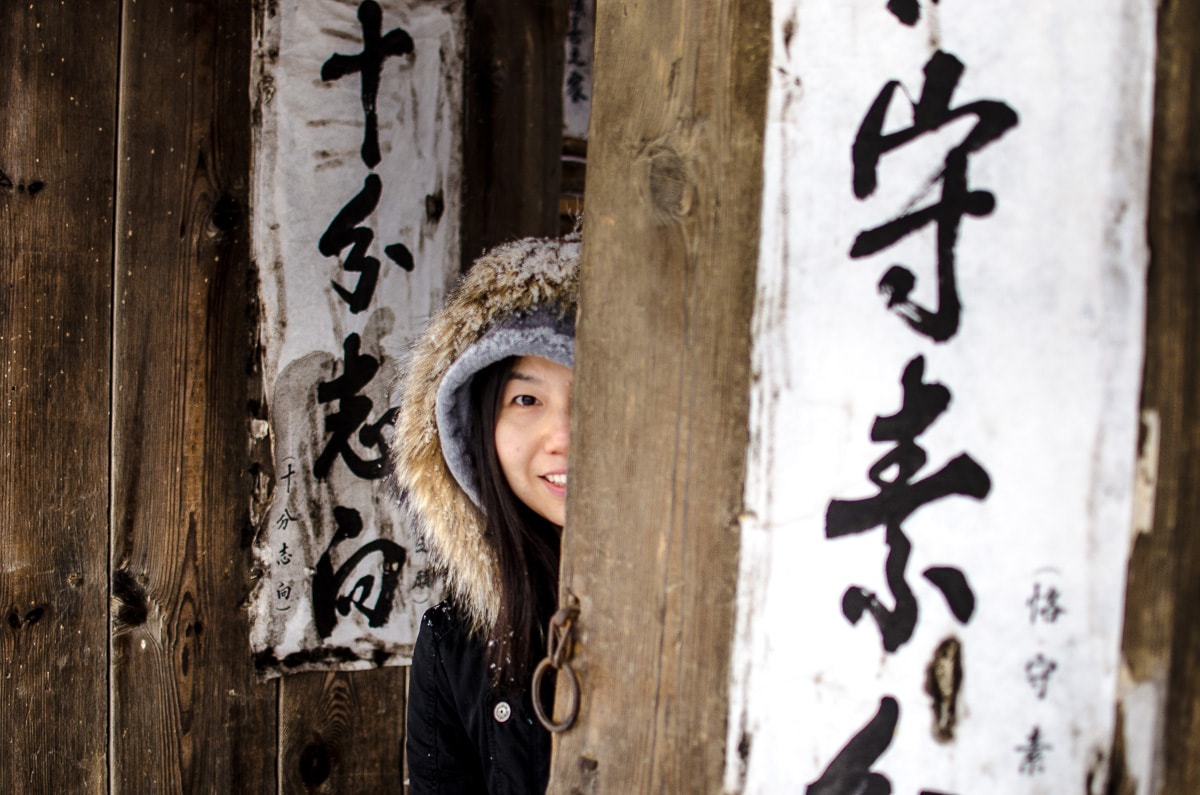
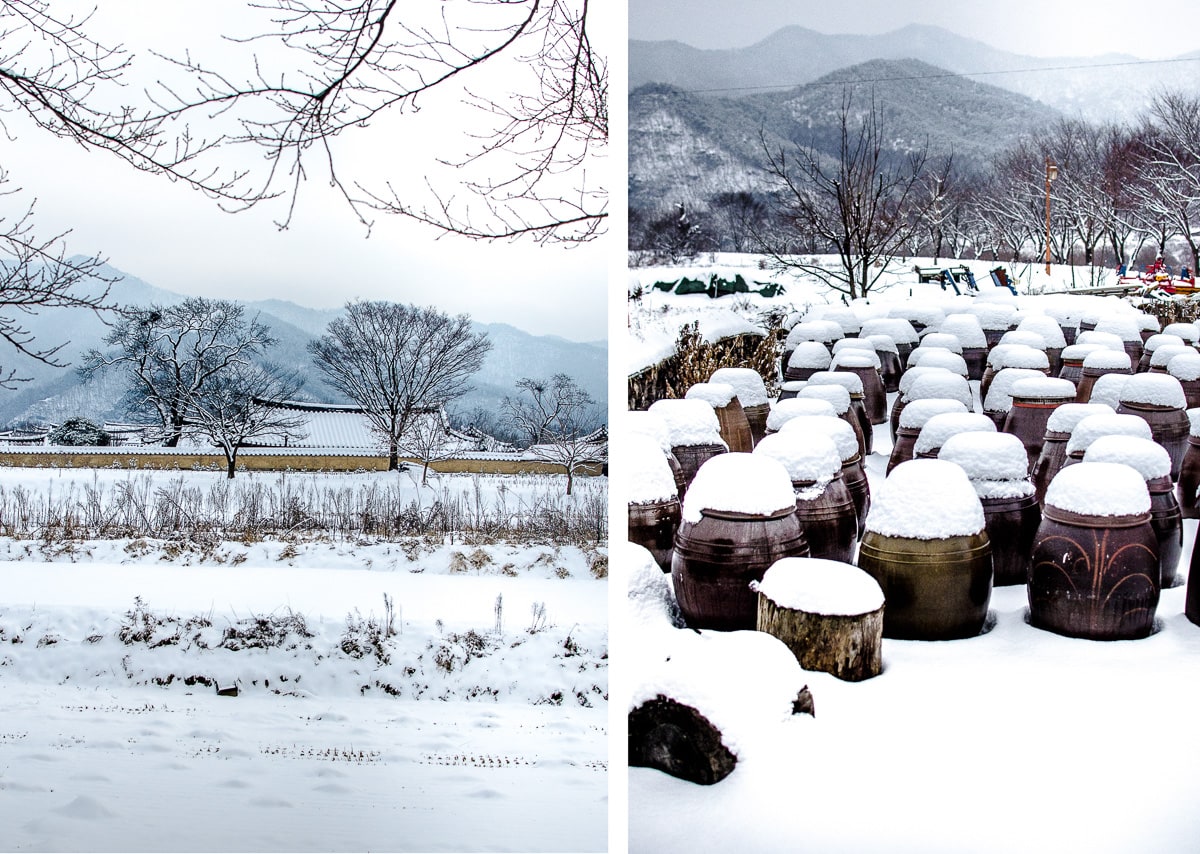
We arrive at Andong Bus terminal, a week before Christmas, in the middle of a blizzard. We grit our teeth and go wait at the bus stop outside the terminal for a local bus to Hahoe village. It’s freezing, and the snow is not letting up. The hot packs stuffed in our pockets provide temporary comfort from the biting cold. Luckily, we spotted a Dunkin’ Donuts where we could get something sweet and hot until the bus arrived.
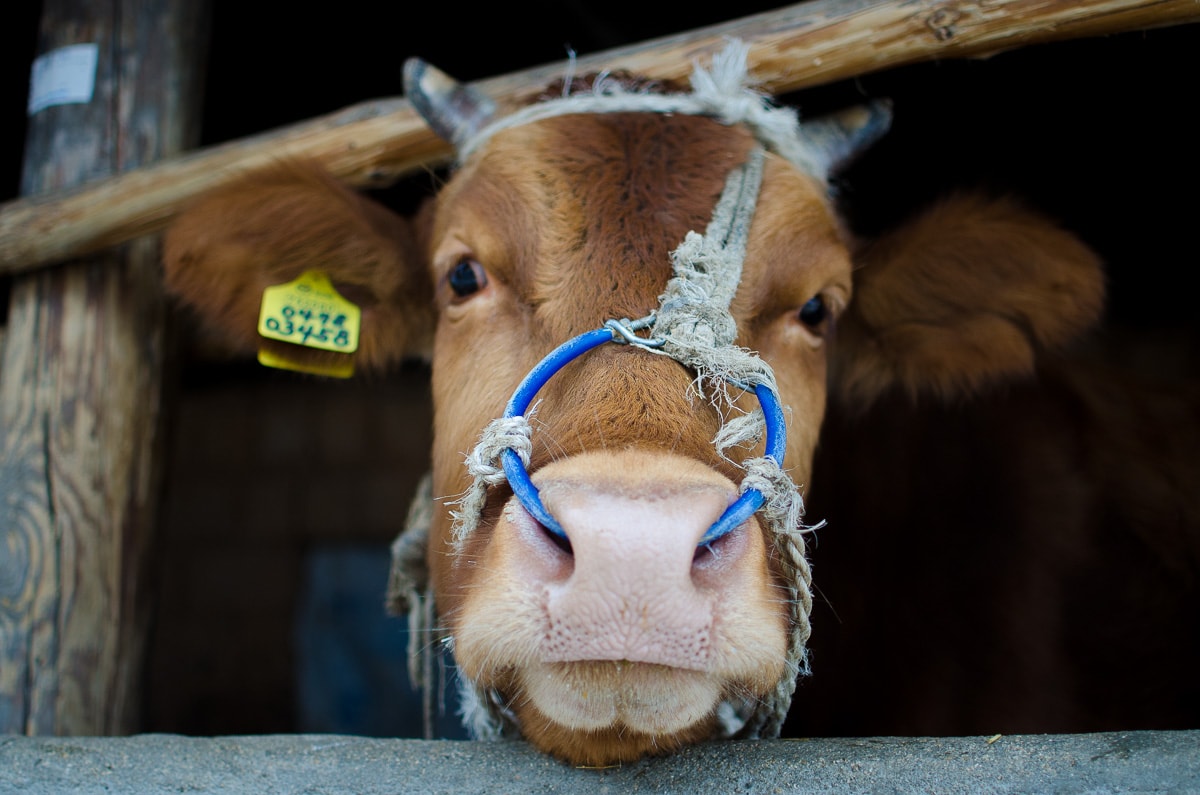
Those who know will tell you that Korean buses (and buildings) know only one temperature in winter: MAX. The bus ride from Andong to Hahoe village takes just under an hour, during which we lose our scarves, hats, gloves and at least two outer layers.
We see glimpses of rural Gyeongsangbuk-do through the window when the snow allows. It’s a landscape of fields, small rural towns and mountains.
About an hour after leaving Andong, the bus drops us at the entrance to the village. The last few flurries of the morning’s blizzard are still flying around, and the countryside has transformed into a winter wonderland. We leave the 21st century and walk ankle-deep in the snow into the Hahoe Folk Village – undiluted magic.
After we check into our lovely place for the night, we go for a walk around the village. We spot a handful of Koreans visiting on a day trip, but they leave after a few hours, and we have the entire town to ourselves.
Staying in a Traditional Choga House

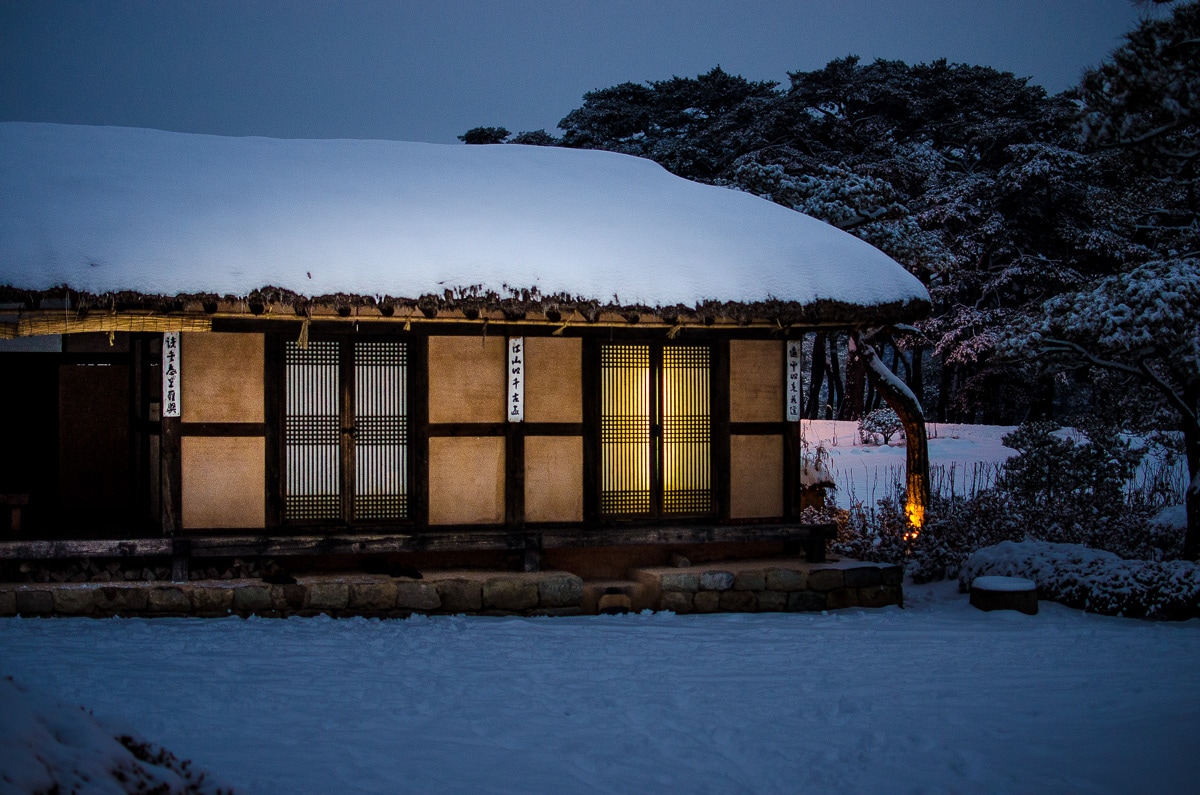
Home for our night in Hahoe is the extraordinary Rakkojae, and believe us when we say it’s incredible. It is the only choga-house accommodation inside Hahoe Folk Village, allowing you to stay right inside the village. Bukchondaek or Okyeon Jeongsa (across the river) are other options but tiled-roof Giwa houses.
Staying at Rakkojae is one of the most unique accommodations you’ll find anywhere in Korea and comes highly recommended – it’s an experience you won’t forget soon. We loved it from the moment we arrived.
The property consists of 4 separate choga houses, which have been converted to guest rooms with private bathrooms. Choga houses, meaning houses made of grass, were designed to fit the Confucian philosophy rather than functionality. Under the patriarchal Confucian society, households were gender segregated, with men and women living in different dwellings.
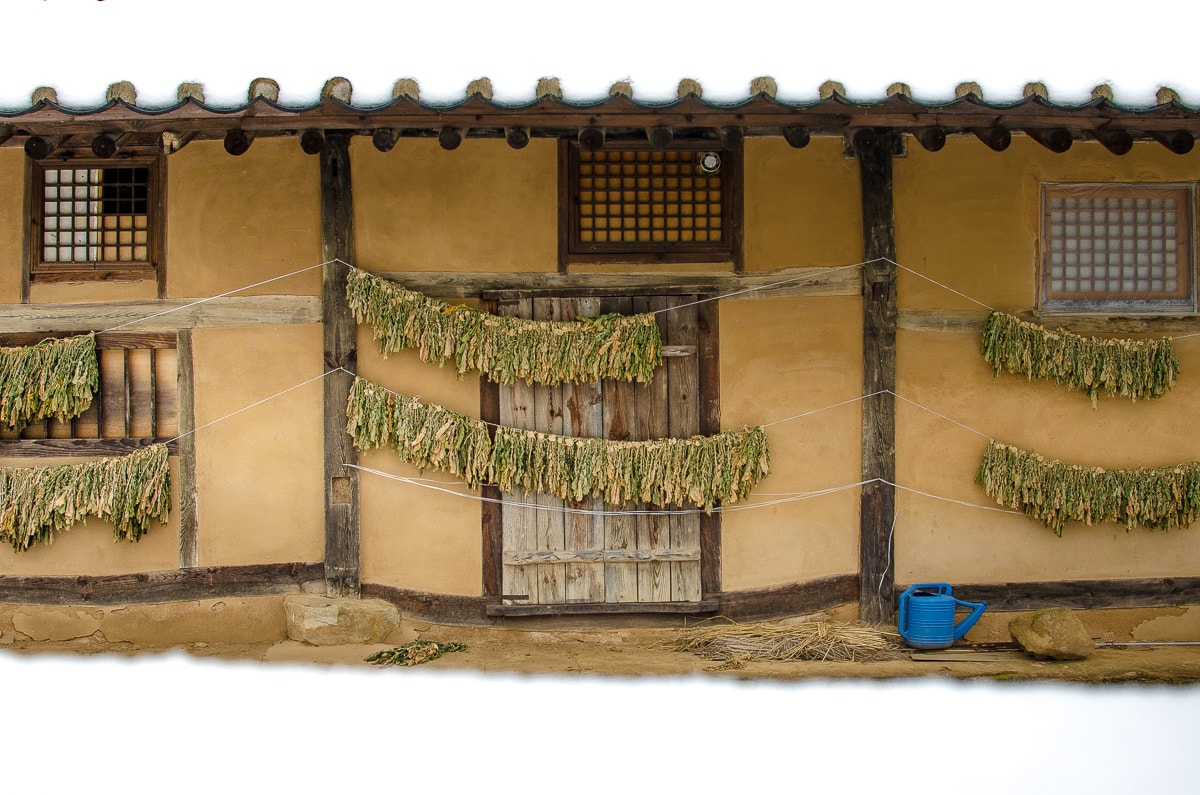
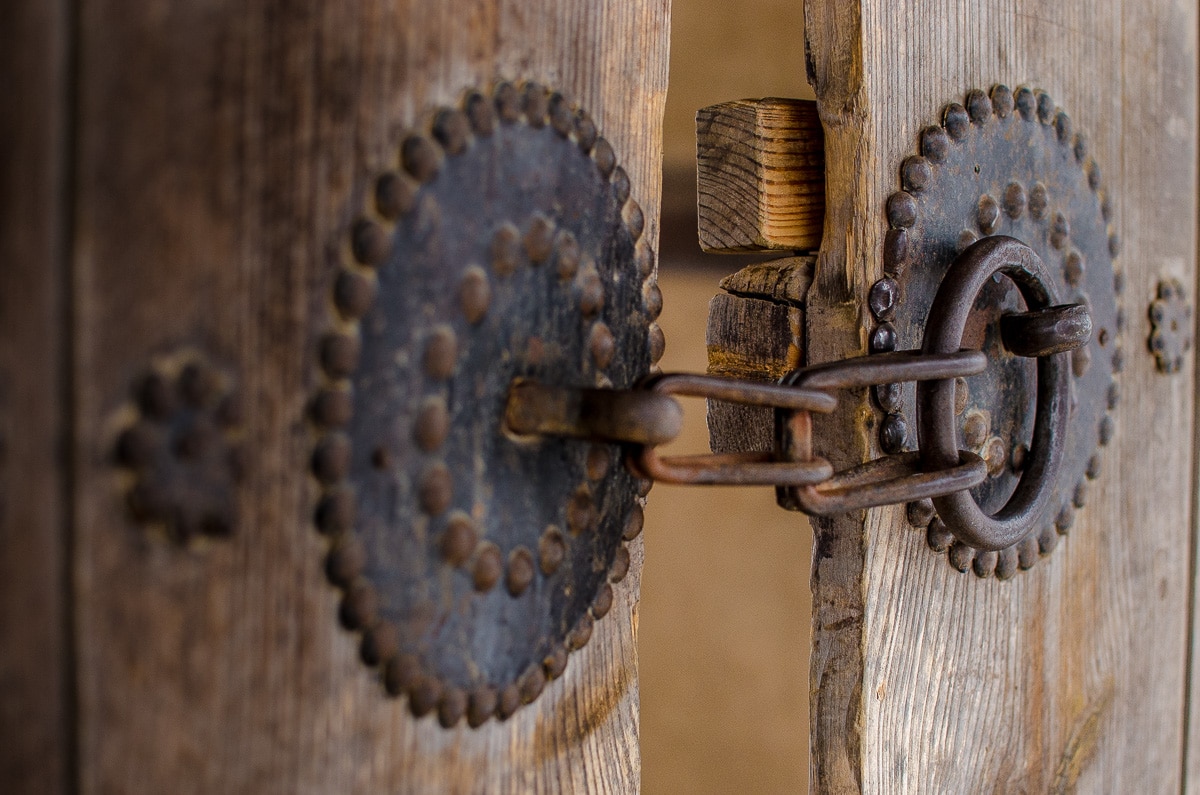
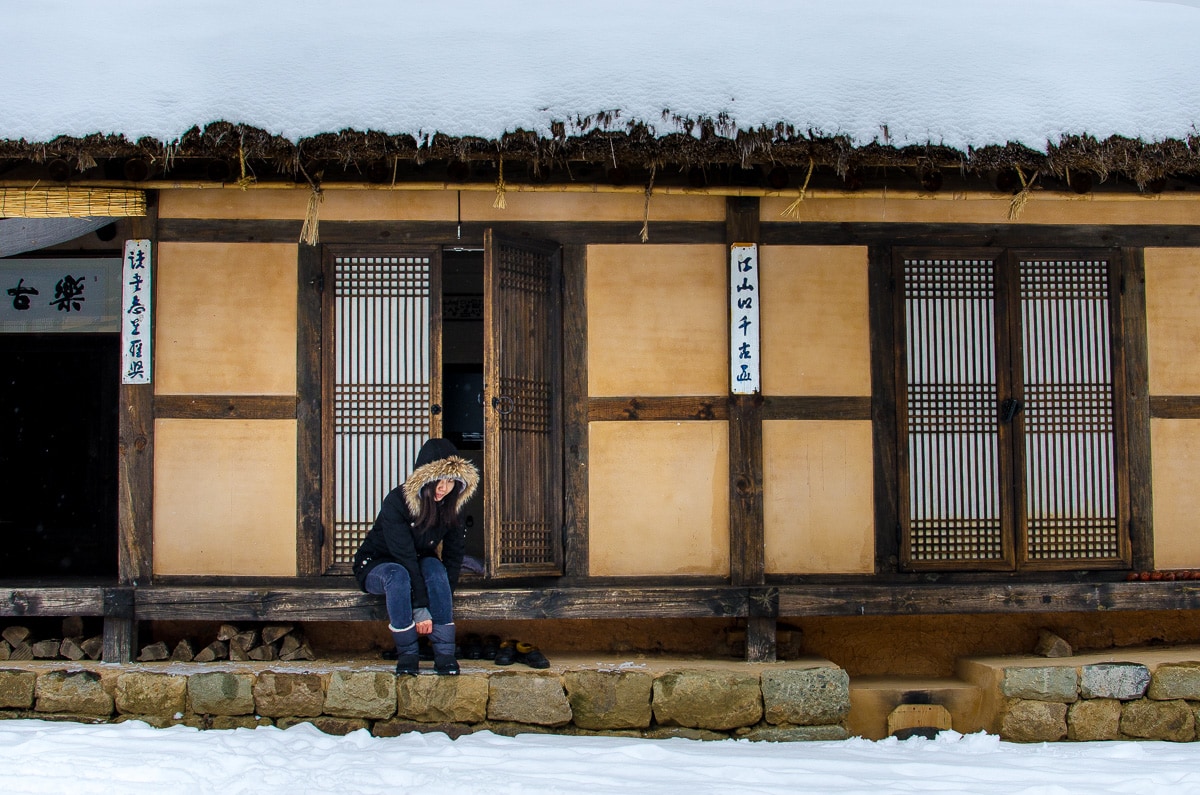
From the outside, the little choga houses at Rakkojae look like most others in the village, with mud walls, thick grass thatch on the roof and paper screen doors.
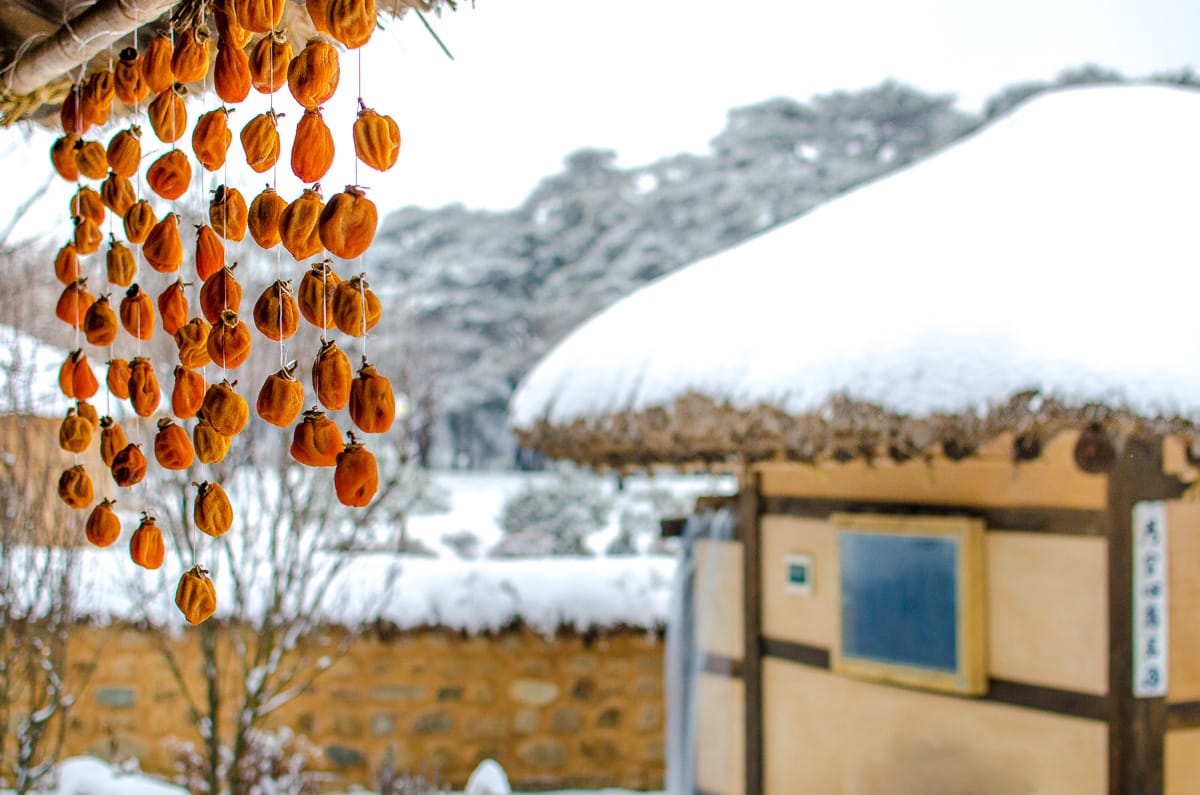
Strings of persimmons hanging to dry from the eaves of the houses greet us, followed by the friendly manager welcoming us and showing us to our room.
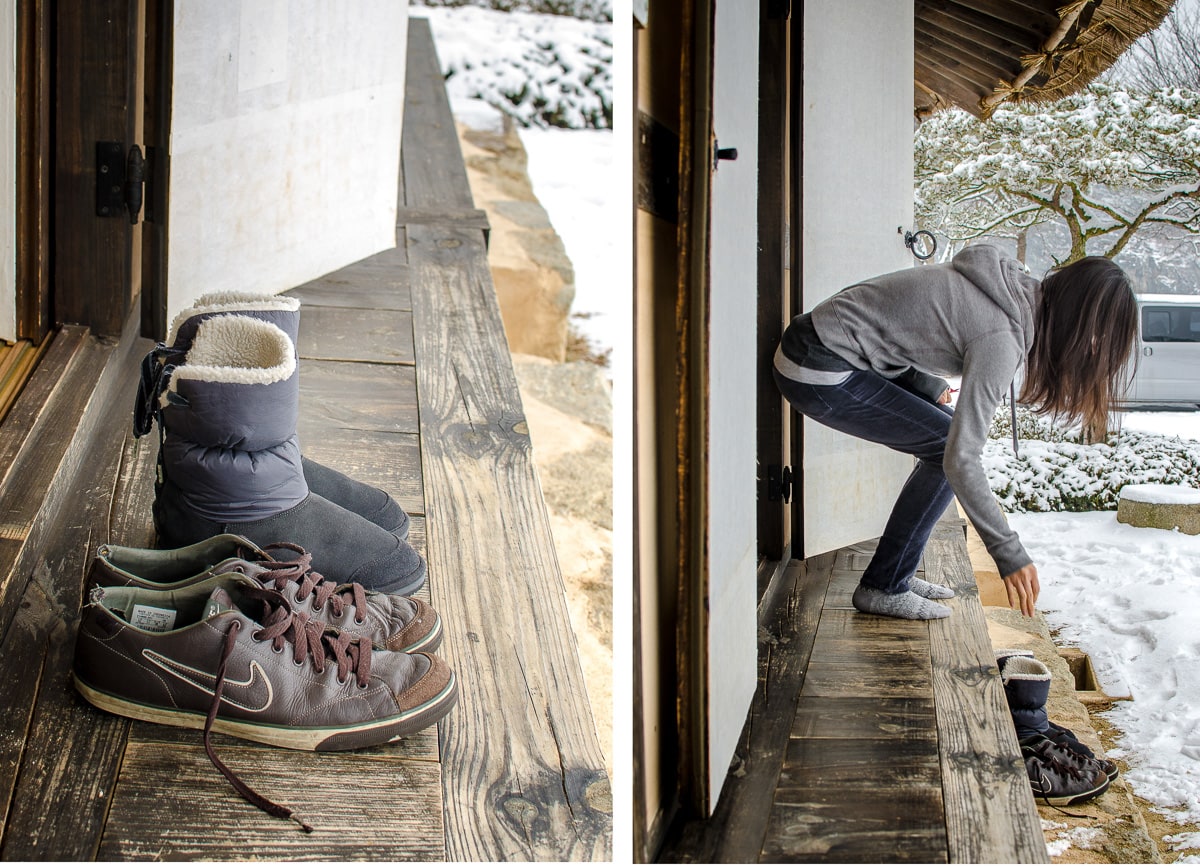
We are staying in Gunnunbang, the space initially reserved for the women of the household. We take off our shoes on the platform the house stands on before entering.
Inside, our house is toasty thanks to the ondol, the traditional Korean underfloor heating system. (You can see the stove that heats the floor at the back of the house when you go outside).
Our room is minimalistic and bare except for a low table, two yo (floor mattresses), and bedding. The modern bathroom has a wooden tub, shower and flush toilet. WiFi and AC for the summer months remind you that we are still in the modern day and age.
Breakfast is included in your stay and dinner is available on request (and must be booked in advance).
What Did We Eat in Hahoe?
Any good trip for us means the food must be good too. Hahoe Folk Village didn’t disappoint. We enjoyed authentic Korean food, which tasted damn good and kept us warm.
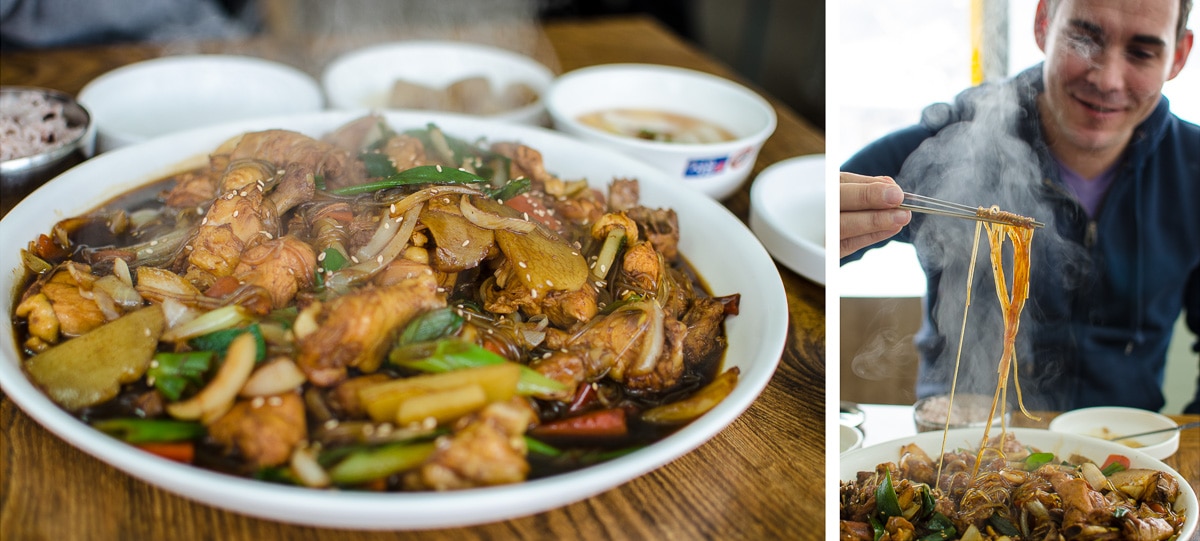
Lunch: Only one restaurant was open during our visit, where we had a fantastic Andong chicken for lunch.
Andong chicken, or Andong jjimdak (안동찜닭), is chicken braised in a savoury-sweet broth with dried whole chilli peppers and served with sweet potato starch noodles. The sweet-savoury-spicy chicken and glass noodle dish is one of my favourite Korean dishes. I was over the moon to have it in its natural habitat.
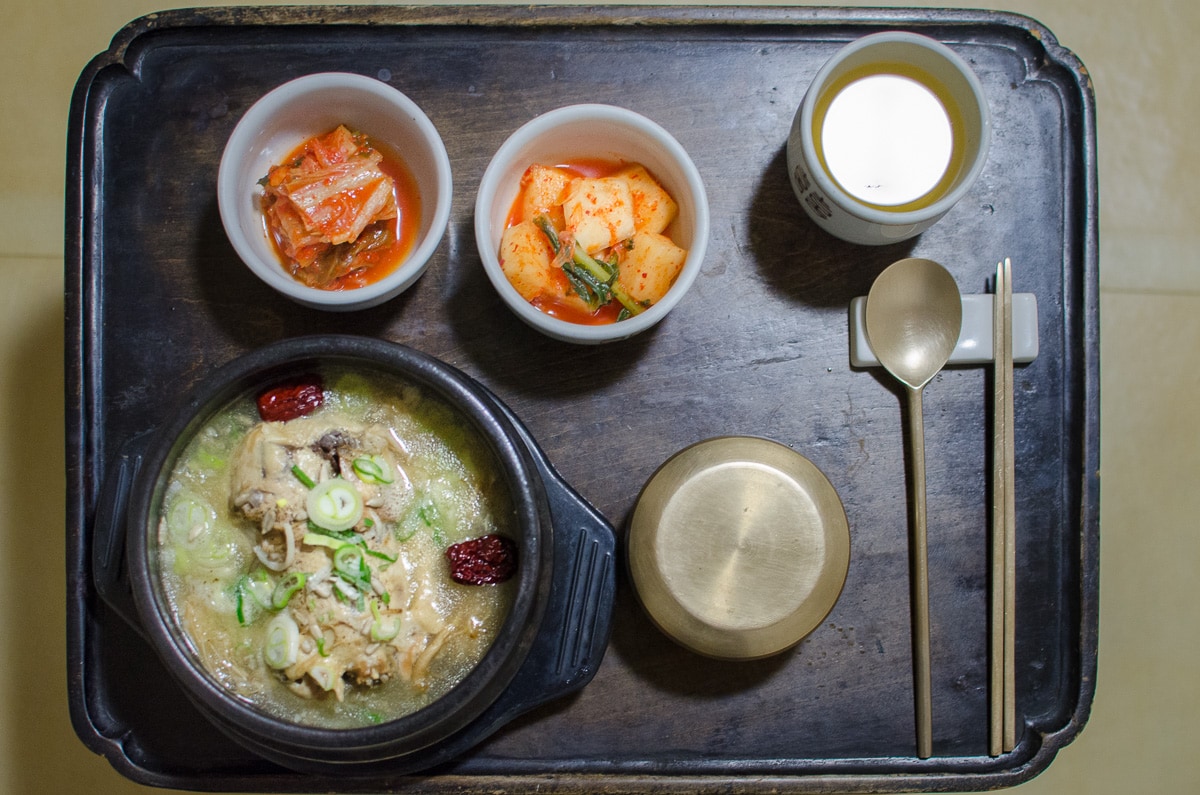
Dinner: The hostess at Rakkojae convinced us to pre-order samgyetang (삼계탕), and we’re glad she did.
Samgyetang, or ginseng chicken soup, is another classic Korean dish we love. A small spring chicken is stuffed with glutinous rice, ginseng root, jujube and garlic. The chicken is then cooked whole in a small pot and served as a single portion.
Traditionally eaten during the hottest part of summer, the hot, soupy samgyetang hit the spot on one of the coldest nights of the year.
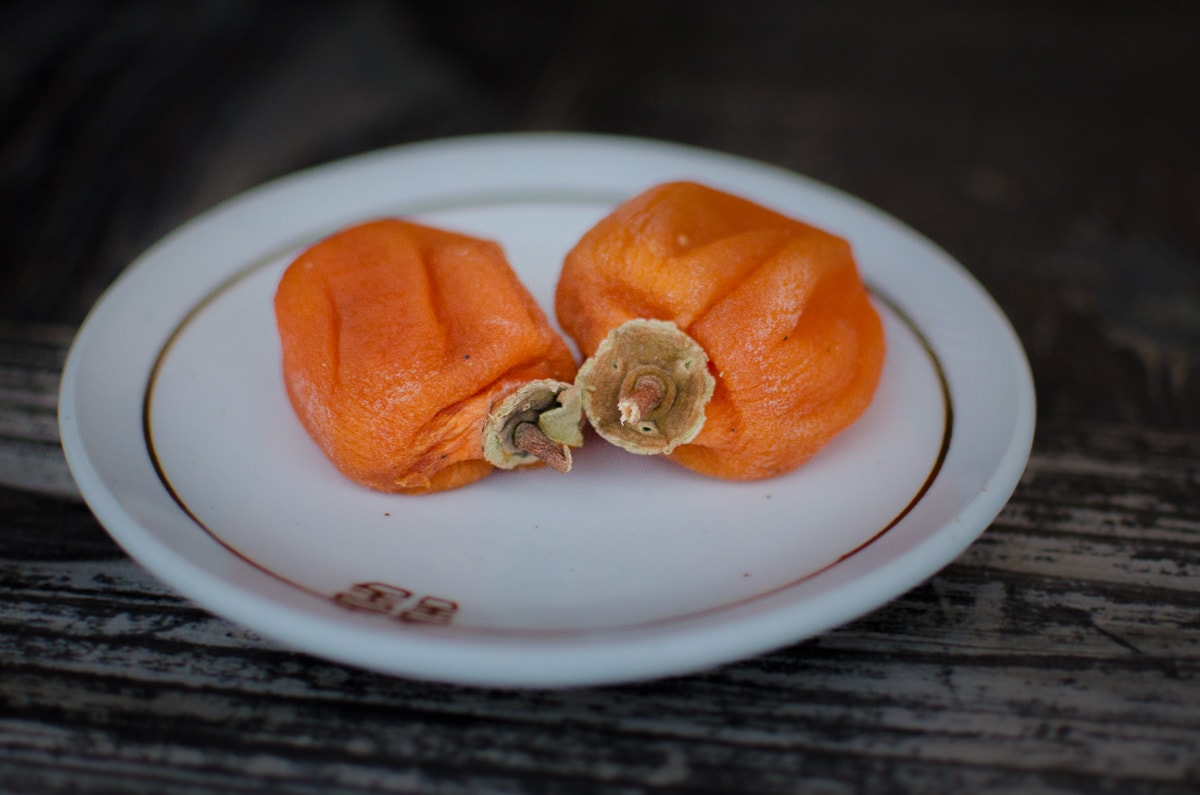
We were also treated with a dried persimmon each, which we saw hanging outside our house when we arrived.
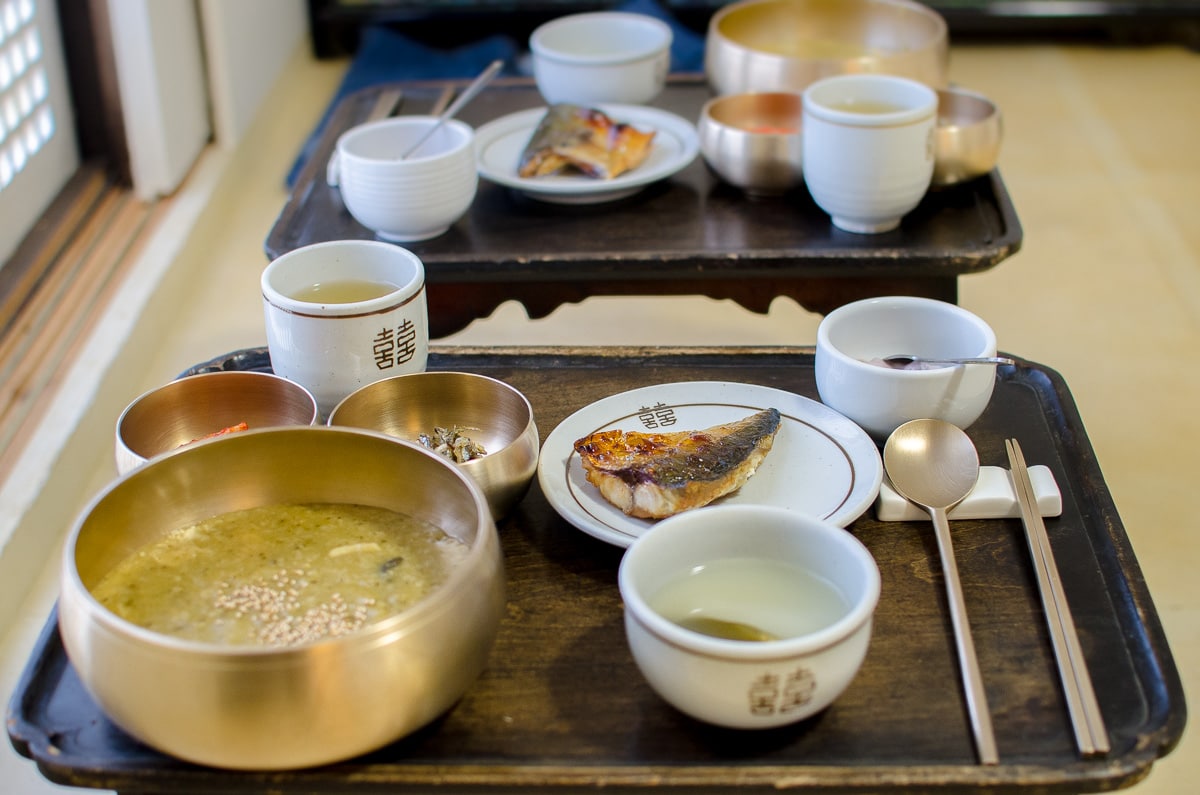
Breakfast: Your stay at Rakkojae includes breakfast, and it is delivered to your room. You’ll find grilled mackerel, abalone juk (rice porridge), dried fish, kimchi and yoghurt with berries and barley tea on your breakfast tray.
I’m all for toast and eggs or cornflakes, but this breakfast was very good and something unique.
Continental breakfast is also available on request.
Hahoe Village & the Andong Mask Festival
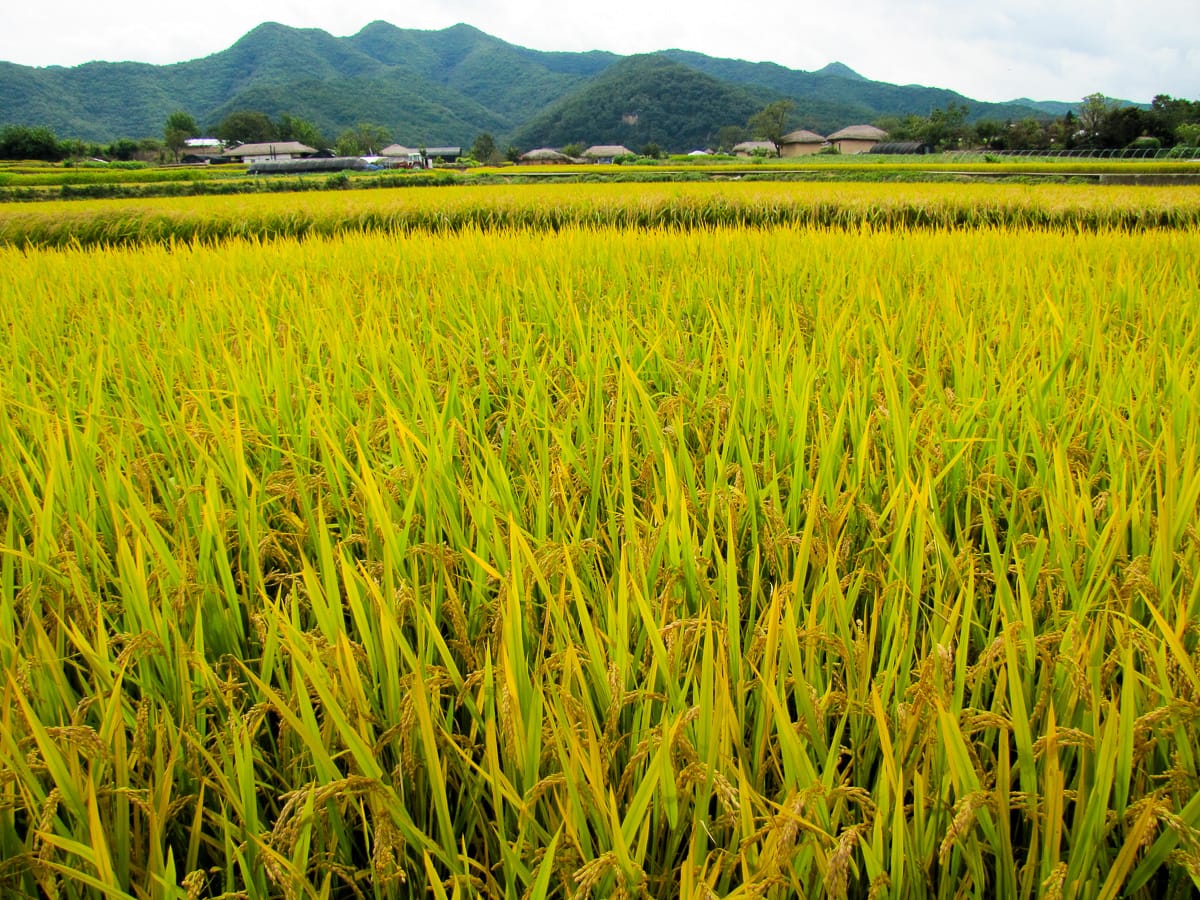
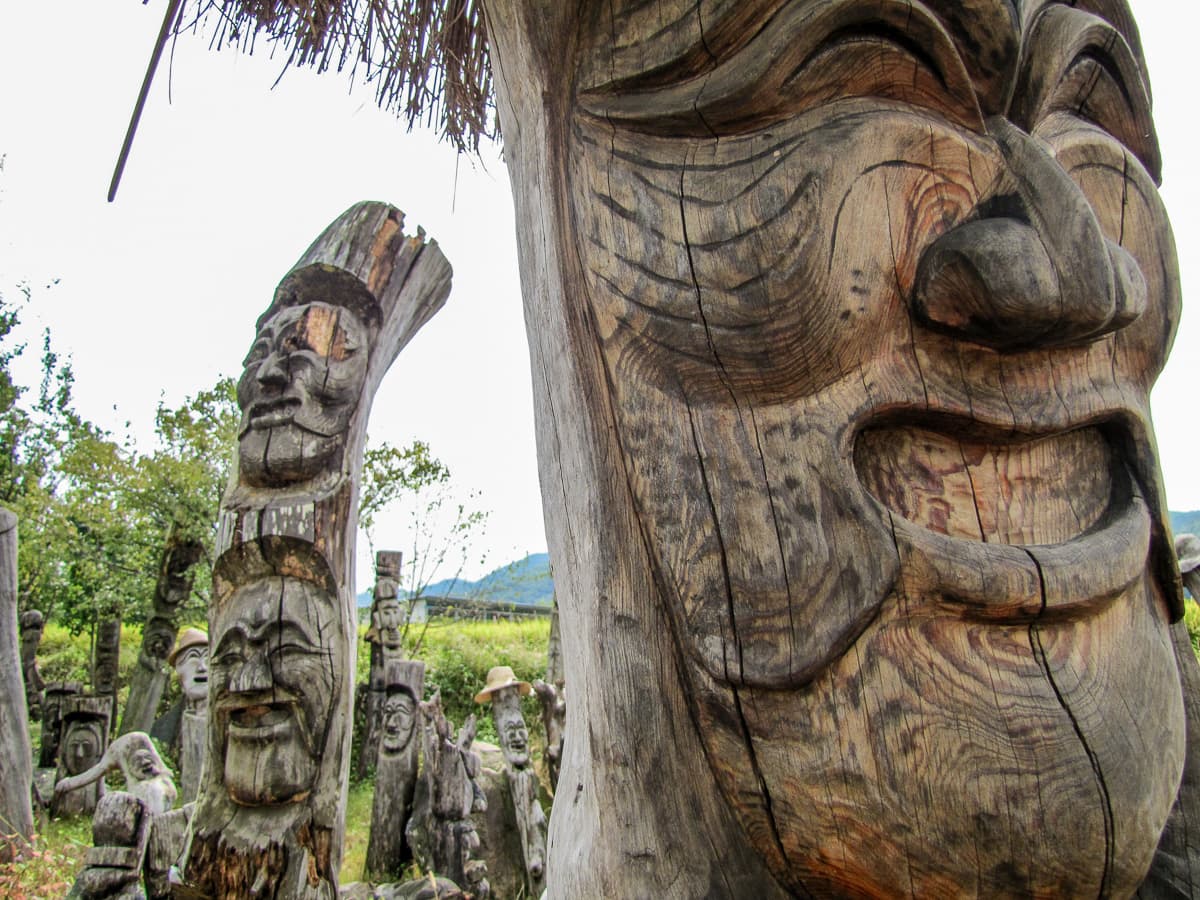
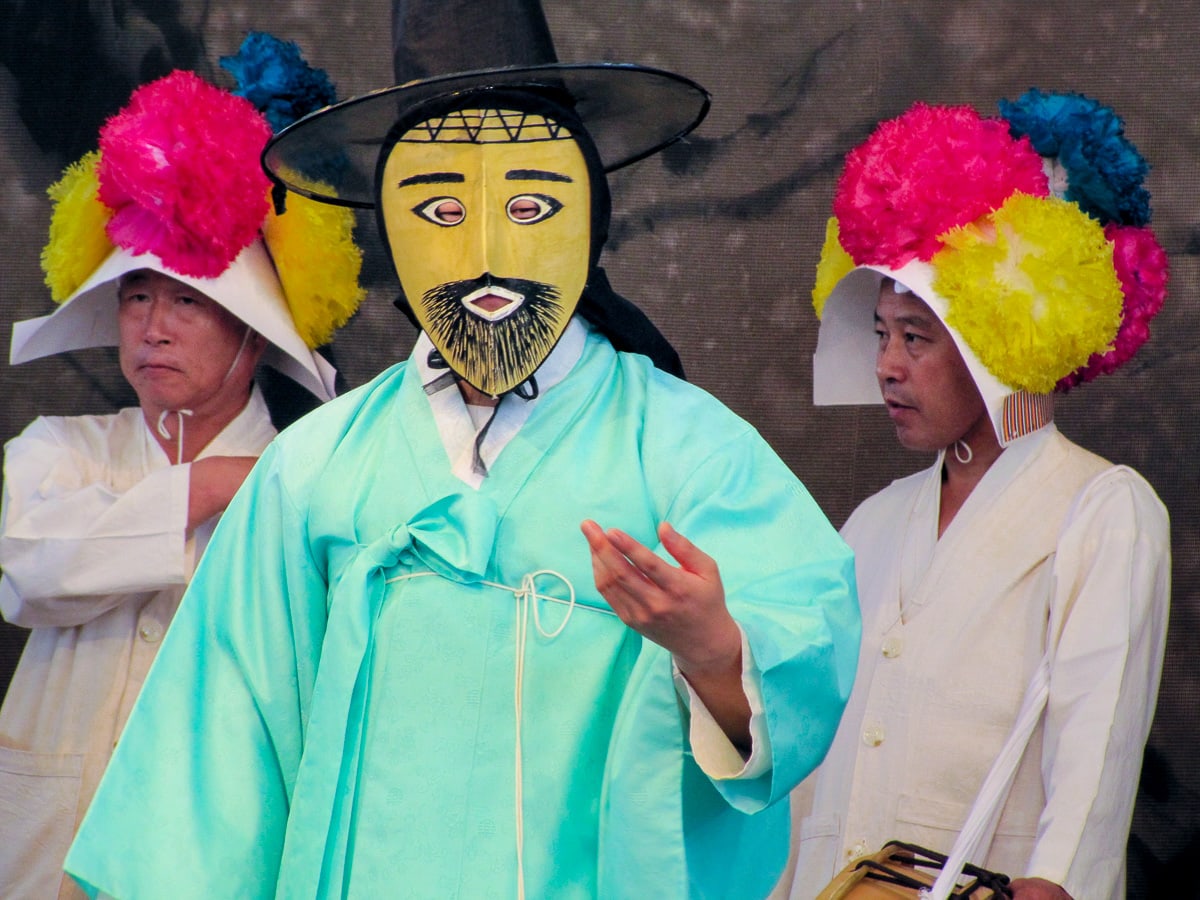
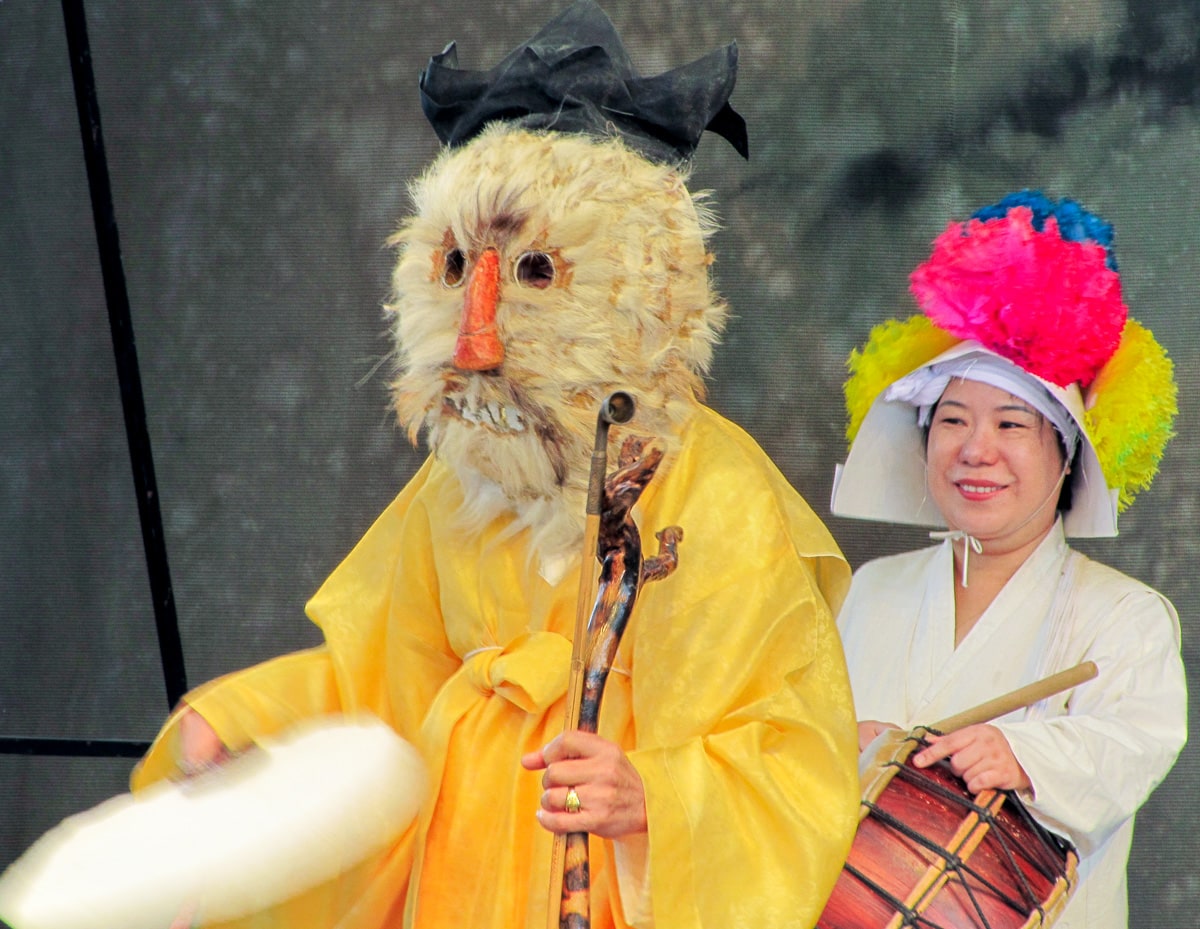
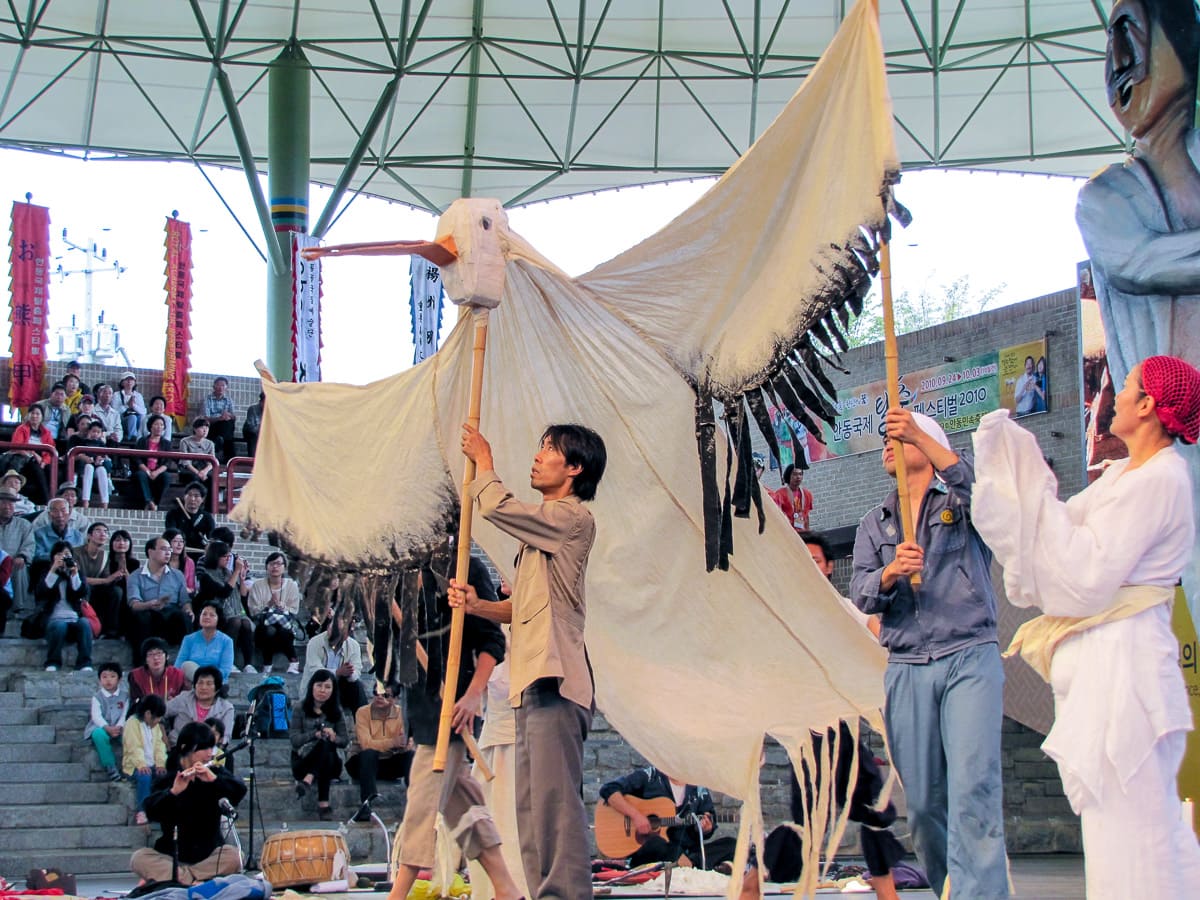
Years ago, I attended the Andong Mask Festival in Hahoe village. The festival takes place over four to five days and is usually held in late September or early October, with slight variations from year to year due to the lunar calendar.
During my visit in October, Hahoe village was stunning. The rice fields were heavy and golden just before the harvest, and the weather was perfect. The entire area was a sight to behold.
The festival is a major cultural event in Korea, attracting thousands of visitors from around the world. One of the highlights of my trip was the Hahoe Mask Dance which I saw in Hahoe village, a traditional Korean dance that has been performed for centuries.
Local performers wear traditional masks and costumes, accompanied by traditional music and singing, to ward off evil spirits and bring good luck and prosperity to the community.
In addition to the Mask Dance, the festival features other cultural performances, including traditional music and dance, puppet shows, and storytelling. Visitors can also explore exhibitions of traditional Korean art and crafts, such as pottery, calligraphy, and embroidery. Traditional Korean activities, such as mask-making, kite-flying, and games, are also available.
Of course, no festival would be complete without food and drinks. The festival has plenty of stalls serving delicious Korean cuisine and refreshing beverages.
As one of the most popular events on Korea’s cultural calendar, the festival attracts large crowds. If you plan to attend, booking your accommodation and transportation well in advance is advisable.
How I Shot This Guide
Every photograph in this article was taken with the exact same gear I carry on every journey. It is a setup refined over years on the road to keep travel light without compromising the final image.
- Camera: Sony A7 V
- Lens: Sigma 24-70mm f/2.8 DG DN Art.
- Storage: SanDisk Extreme Portable SSD
- Software: Adobe Lightroom Classic
And that, folks, is what we did in the Andong Hahoe Folk Village. Go there for a weekend – you won’t regret it ✌️