
Travellers to the Xinjiang Uygur Autonomous Region in western China are bound to pass through its capital, Urumqi, at one point. But don’t just pass through-you really should hang around to visit Urumqi Grand Bazaar and the excellent Xinjiang Museum.
Truth be told, Urumqi does not have a lot to offer in terms of tourist attractions other than the bazaar and museum. However, the city is clean, pleasant and modern, considering it’s the most remote city on earth.
The Urumqi International Grand Bazaar ((乌鲁木齐国际大巴扎) is worth a visit for some good souvenir shopping, tasty Xinjiang food and soaking up the atmosphere of this Silk Road city.
You absolutely should not miss the Xinjiang Museum (新疆自治区博物馆)! It is one of the most impressive museums that we’ve been to in China, with the Tarim Basin Mummies being the main attraction.
Please note: This post may contain affiliate links. This means I may earn a commission if you make a purchase by clicking a link (at no extra cost to you). As an Amazon Associate, I earn from qualifying purchases. Learn more.
Quick Guide to Urumqi, China
Visited: July
Suggested time: 1 day
Where to stay: Grand Mercure Urumqi Hualing
Famous for: Being the remotest city on earth, home to the Tarim Basin mummies
Transportation: Urumqi Diwopu International Airport is a hub for China Southern Airlines with frequent flights to the rest of China, Central Asia and Russia. Metered taxis for travel in the city
Tip: Haggling is expected when shopping
Unique experience: Trying the sublime Xinjiang food at Grand Bazaar Food Street
Urumqi First Impressions

Arriving in Urumqi from the Heavenly Lake of Tianshan, the city looked like most other cities in China. Somehow, I imagined Urumqi having a Wild West feel and being a bit rough around the edges. But no, it is sprawling, clean, efficient and, dare I say, charming.
Urumqi (pronounced as Wu·lu·mu·qi) with a population of over four million is the largest city in Central Asia, with Han Chinese, Uyghur, Kazakh, Hui, Kyrgyz, Uzbek, Mongol and Russian ethnicities making up the majority of the demographics.
Urumqi is the most remote city on earth, located right at the geographical centre point of Asia. It is the city that is the farthest away from any ocean.
It was only when we arrived at the Grand Bazaar with its towering minarets that I was reminded again that we were in Xinjiang. After passing through security and having our passports checked, we entered the bazaar.
Visiting the Urumqi Grand Bazaar


Start your visit to the Grand Bazaar Urumqi at the imposing Central Tower. For RMB 30, you can ride the elevator to the 6th floor for a panoramic view over the bazaar below and the city beyond. We hope someone has cleaned the windows by the time you get there.
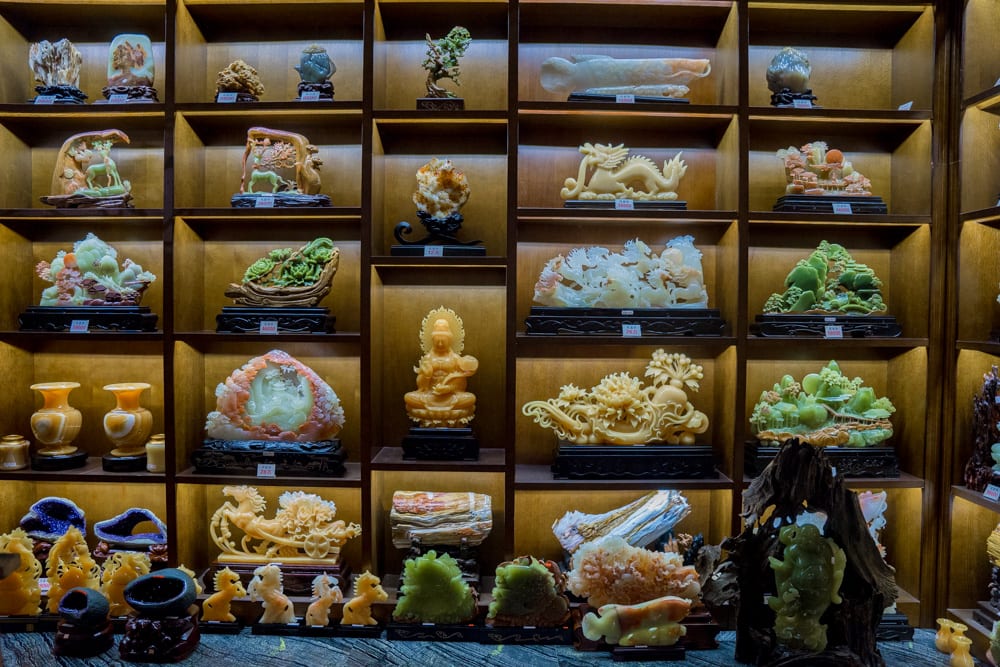
Those looking for Xinjiang souvenirs can get them all in one go while shopping in the bazaar. Local crafts like copperware, pottery and textiles are in abundance, as are gorgeous Xinjiang rugs. There is also superb jade on offer, anything from bangles to carved masterpieces weighing tonnes (that also cost a ton of money).
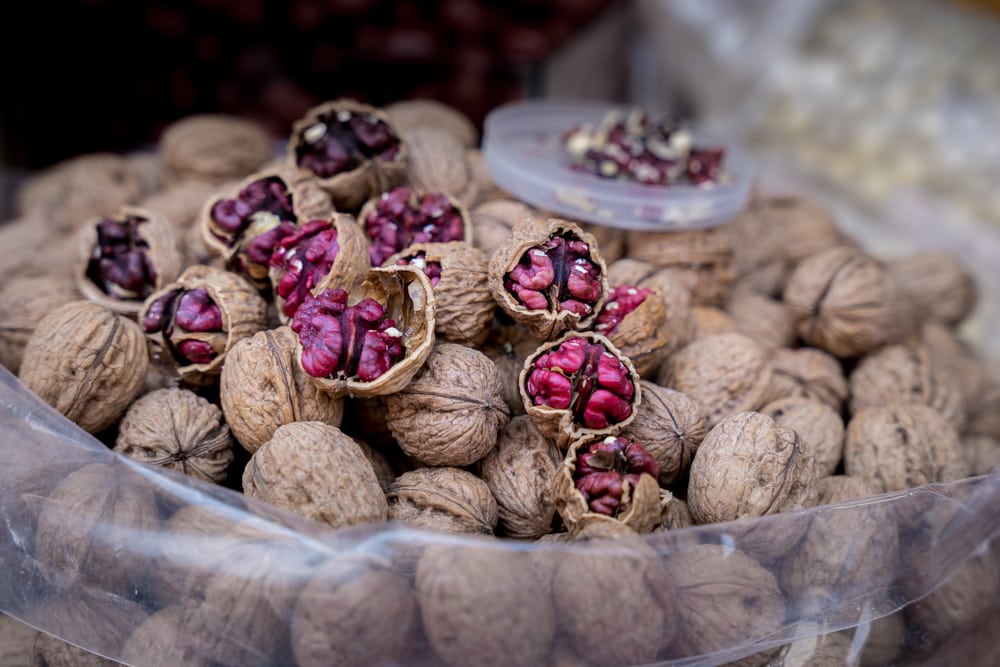
Snacks like nuts, dried fruit or camel milk candy are always good to share with people at home.
Unless you’re a hard-core shopper, you’ll soon realise that most shops have the same kind of things, though. Ordinary people (like you and I) will probably be done with the bazaar within an hour.
Urumqi International Bazaar Food Street
The real highlight of the Urumqi Bazaar for us was the fantastic Xinjiang food. English signage will direct you across the street to Grand Bazaar Food Street.
This outdoor food court is your one-stop shop for the best food in Urumqi. If part of a group, it’s a good idea to get something from different vendors to share.
We liked to food here so much that we decided to come back the next day for more on the way to the airport.
Here’s what we had, and they all come HIGHLY RECOMMENDED!
Polo/plov
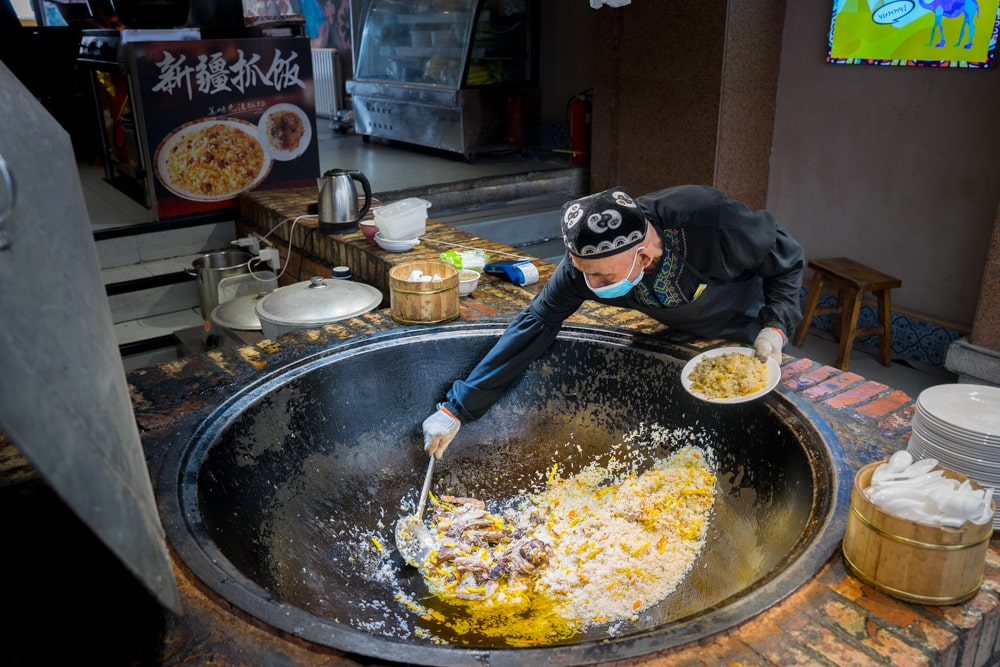
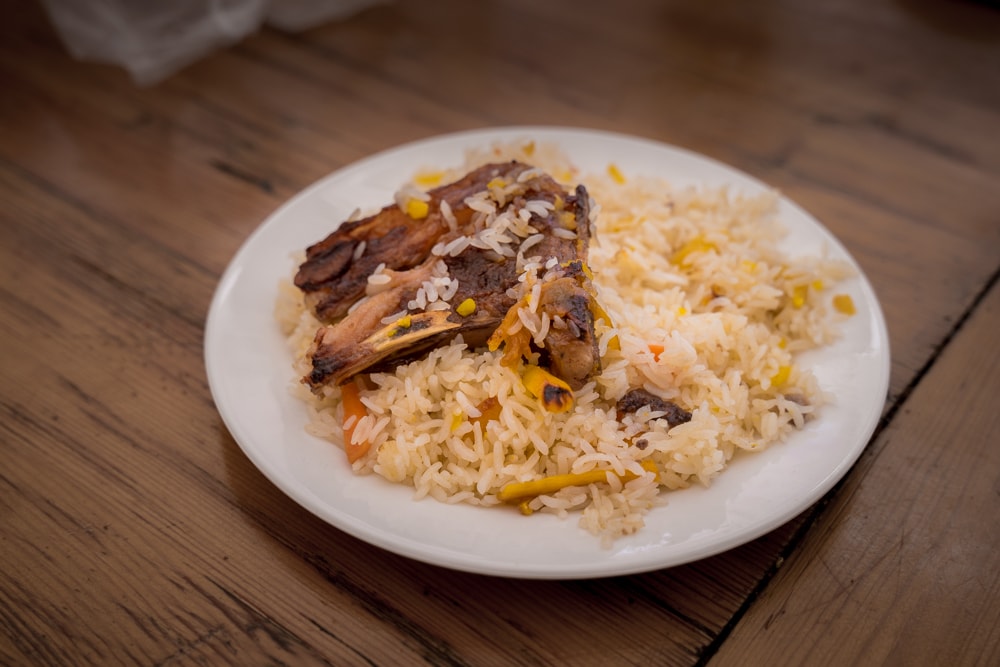
Typically eaten for breakfast in Xinjiang, polo is lamb and rice cooked together in one pot. The meat will be falling off the bone while the rice is soaked in all that fatty-meaty-cumin-y flavour. Don’t expect to find any polo anywhere in Xinjiang after lunch. It’s strictly a breakfast dish.
Nang

Unlike the stale nang bread we had elsewhere in Xinjiang, the flatbread at the Urumqi Bazaar Food Street was tops! More like a crispy pancake than bread, the nang came straight from the oven, and the outer layer was deliciously crisp and savoury while tender and moist inside.
Samsa/Kao Bao Zi

These baked dumplings make a tasty bite on the go. Usually filled with ground lamb, the ones stuffed with lamb ribs on the bone were equally delicious.
Grilled Meat

Like elsewhere in Xinjiang, carnivores are in for a treat at the Urumqi Bazaar Food Street. The crisp-savoury combo goes particularly well with an ice-cold glass of Kvass.
Kvass
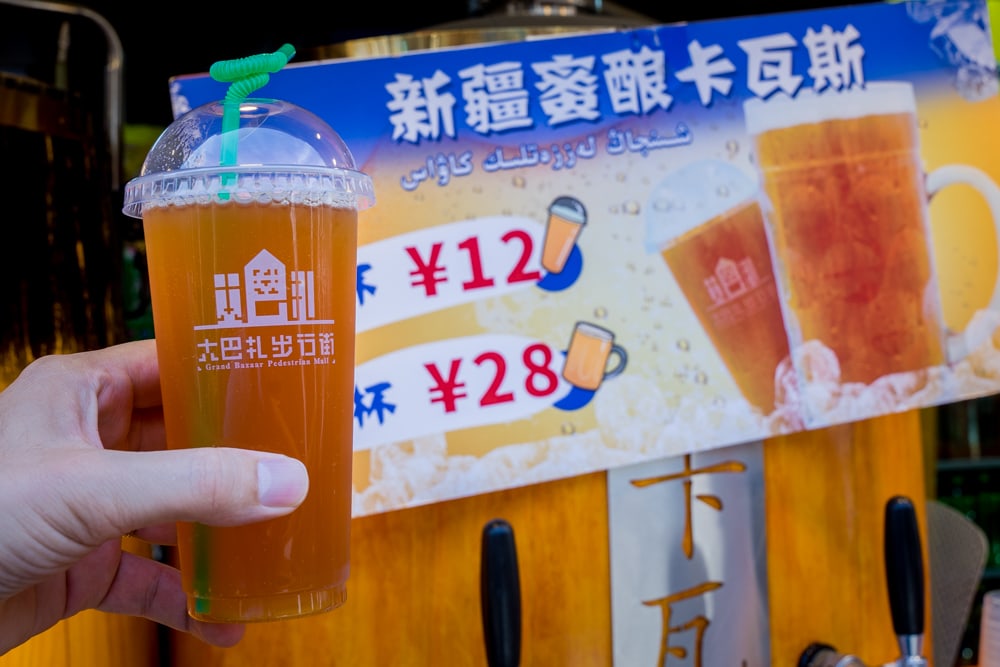
Kvass is a non-alcoholic fermented drink, similar to kombucha, popular in Russia and Eastern Europe. Look out for the stand with the wooden barrels selling this refreshing, sparkling drink. This tonic is not only healthy and packed with probiotics, but tastes damn good too.
Is the Grand Bazaar Urumqi worth visiting?
Urumqi’s bazaar is worth a short visit if you’re looking to buy some souvenirs before leaving Xinjiang. It is, however, set up for local Chinese tourists and lacks the atmosphere and “realness” of the Kashgar Bazaar. You should definitely come for the food, though.
A stroll in the surrounding neighbourhood is delightful and gives you a much better view of everyday life in Urumqi.
Visiting the Xinjiang Museum

Xinjian Museum Info
- Name in Chinese: 新疆维吾尔自治区博物馆
- Entrance: Free. Remember to bring your passport or you won’t be allowed in
- Hours: Summer: 10am-6pm, Winter: 10:30am-6pm
- Closed on Mondays
- We heard of people being refused entry for wearing flip flops, so better wear closed shoes or proper sandals
- Photography allowed
Officially known as the Xinjiang Uyghur Autonomous Regional Museum (a mouthful, isn’t it?) this excellent museum is the top tourist attraction in Urumqi.
While the big draw of the Xinjiang museum is the controversial Tarim Basin mummies, it also has extensive collections of Tang dynasty art, among others.
The entire collection of the museum consists of over 50 000 items. On the first floor, visitors can explore artefacts from the Stone Age to the Han Dynasty to the Qing Dynasty. Exhibits include pottery, jewellery, jade, clothing and paintings.
Tang Dynasty Art of the Xinjiang Museum
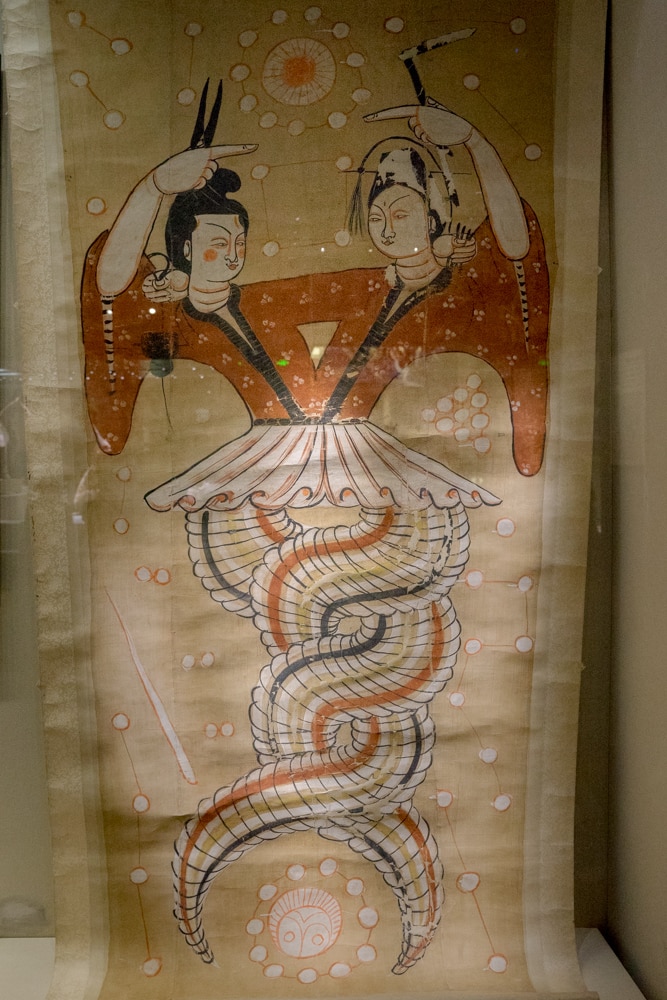
The Paintings of Fuxi and Nuwa are exquisite, depicting ancestral Chinese mythology and their vision of the universe. We saw similar but slightly different portrayals of the mythical Fuxi and Nuwa in the Turpan museum.
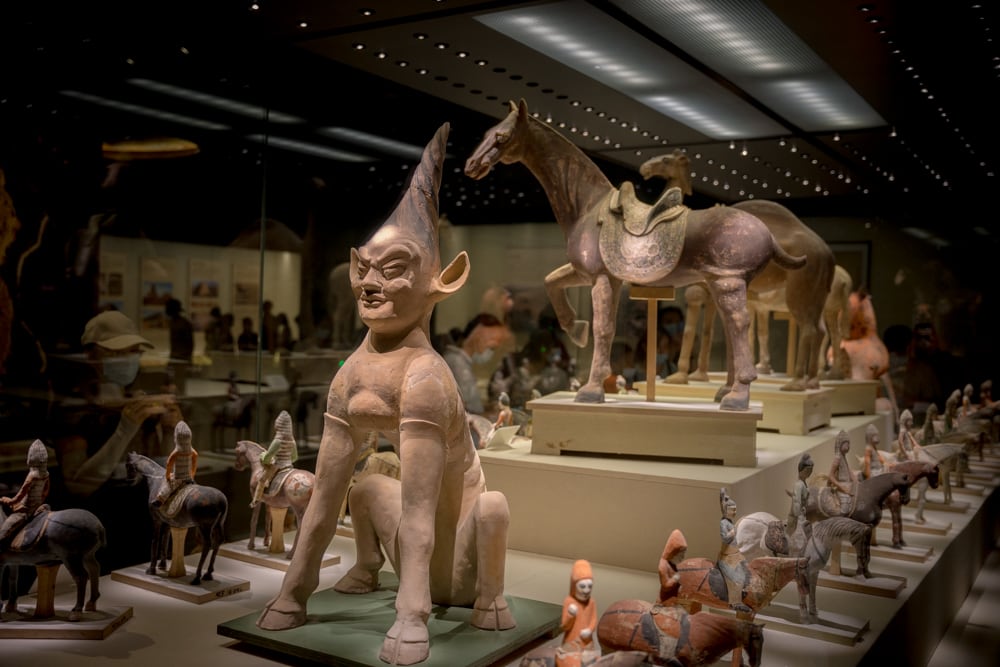
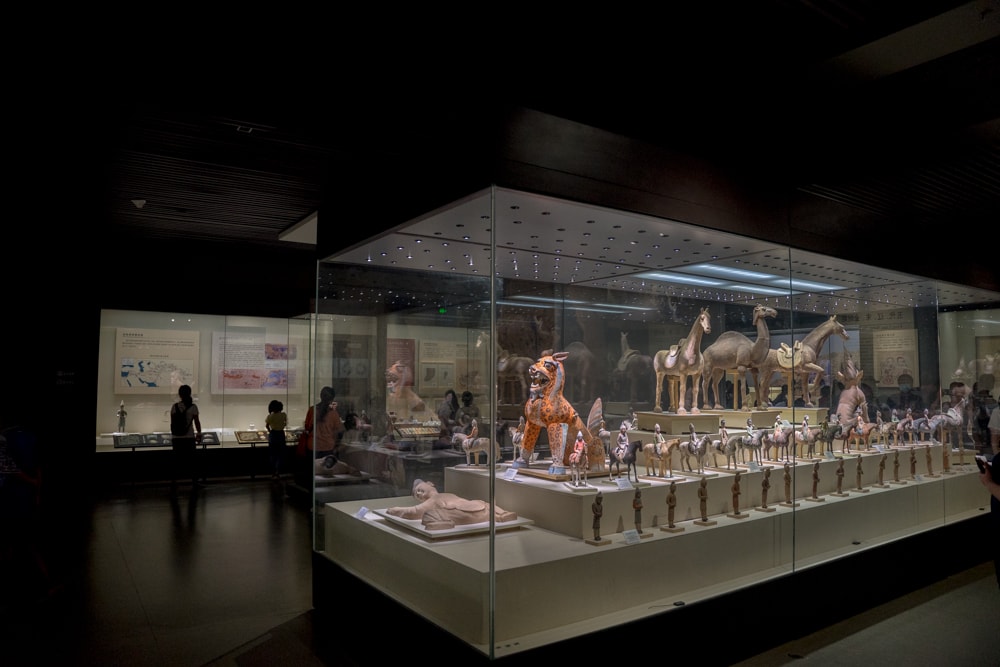
The highlight of the first floor exhibits is the Tomb Treasures of the Tang Dynasty. This collection features handsome terracotta horses, men and women on horseback and standing figures.
The spirit tomb guardians will probably intrigue you most. These magnificent painted beasts and demons are glorious and straight from an LSD trip.
The Xinjiang Mummies
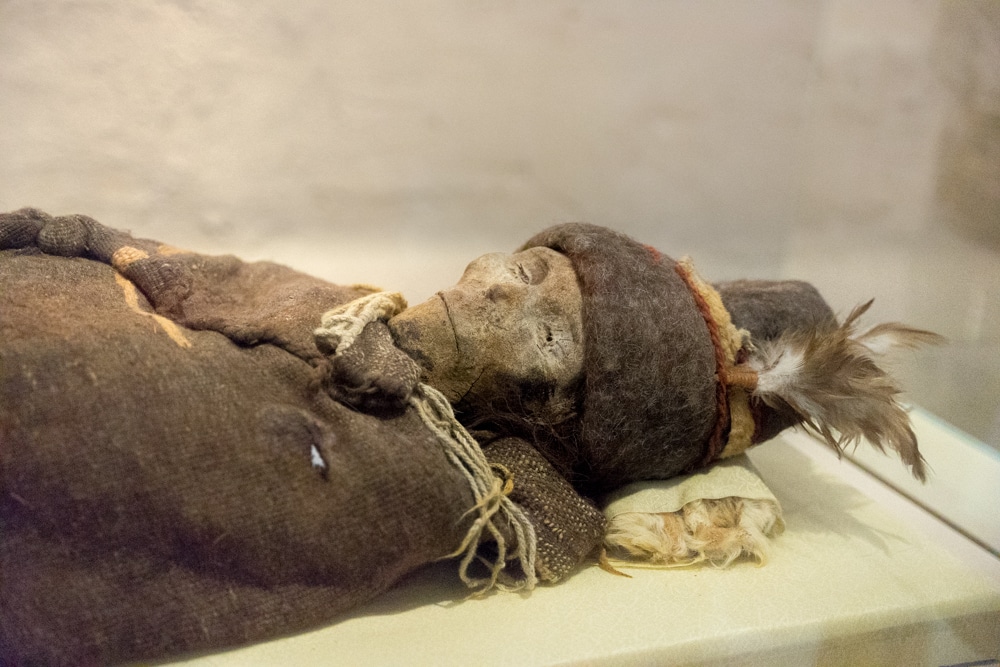
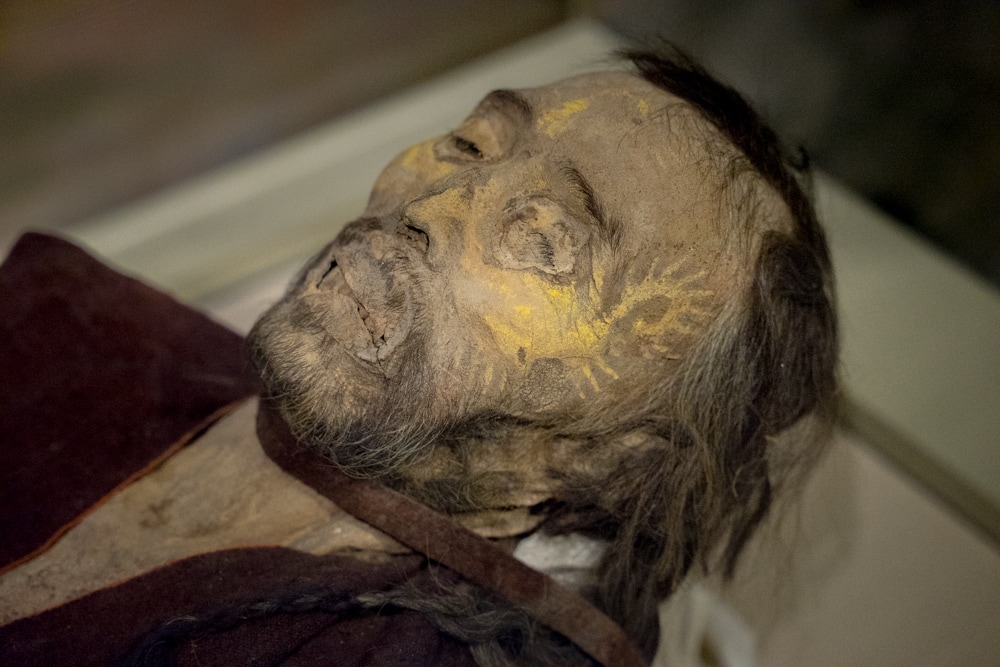
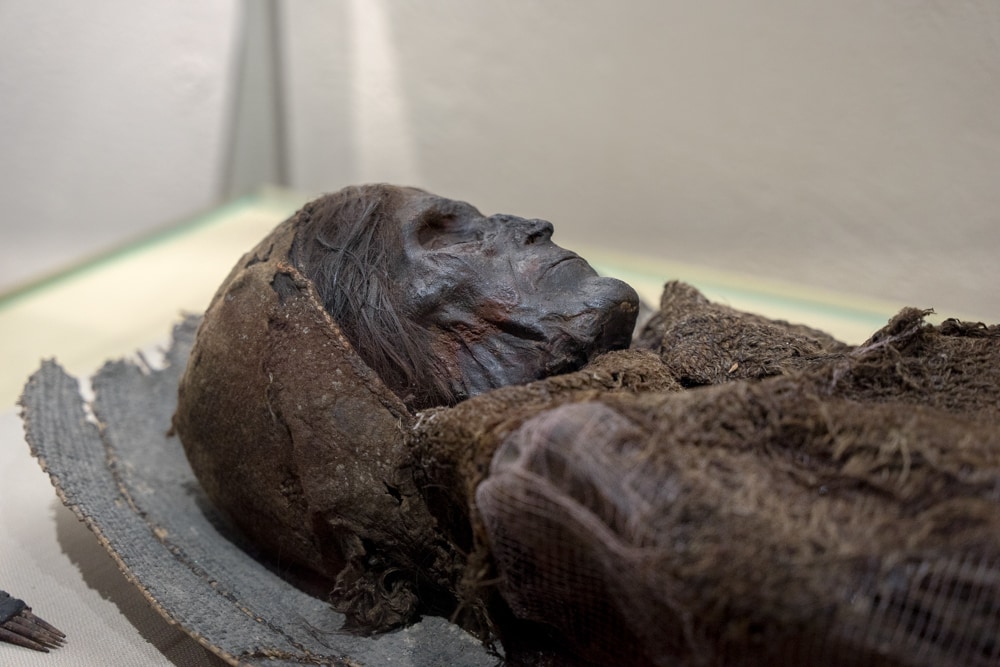

Go up to the second floor for the real reason you’re at the Xinjiang Museum in Urumqi – the Tarim Basin Mummies. Over 4 000 years old, these mummies have a unique story and are very well preserved. The facial tattoos on the one male mummy are quite remarkable.
These mummies have been quite controversial due to their Caucasian features, which has been a sensitive topic for China, especially in Xinjiang. At first, archaeologists believed that the red-haired mummies were caucasian descendants related to Finish people, something China has fiercely denied.
DNA analysis done by an international team has recently shed new light on the origins of the mummies. They are no longer considered caucasian but have been classified as descendants of ancient ice age Asian people.
Unlike the Egyptian mummies, the Tarim Basin mummies did not go through mortification. Instead, they were buried in boats, wrapped in woollen textiles, and the hot and dry desert climate did the rest.
The most famous of the mummies is called the Beauty of Loulan, and she is the one who sparked the controversy due to her western features and red-brown hair. She lived about 4000 years ago during the Bronze Age and died when she was around 40 years old.
Is the Xinjiang Museum Worth Visiting?
Without a doubt! Plan to spend at least 2-3 hours here. Anyone interested in art, history, Asian culture or the Silk Road can easily spend a whole day here. Best of all, it’s free!
Do not miss the Xinjiang Uyghur Autonomous Regional Museum in Urumqi. Let me repeat that: DON’T MISS THE XINJIANG MUSEUM.
Recommended Hotel in Urumqi
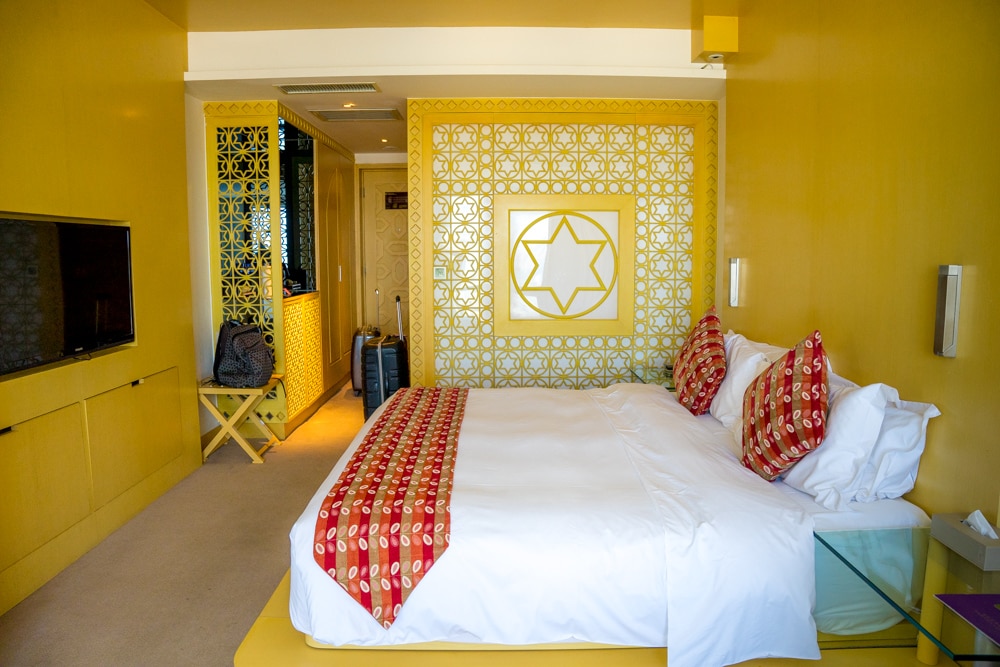
Need A Room Key in Urumqi? Sorry, just couldn’t help myself.
Foreigners are only allowed to stay at designated hotels in Xinjiang, and Urumqi is no exception.
The Grand Mercure Hualing comes highly recommended for its comfort, cleanliness, facilities and friendly service. The breakfast buffet is very nice too.
The Grand Bazaar Urumqi and Xinjiang Museum are within a basic-fare taxi ride (RMB 10) away.
Learn more about the Grand Mercure Hualing
How I Shot This Guide
Every photograph in this article was taken with the exact same gear I carry on every journey. It is a setup refined over years on the road to keep travel light without compromising the final image.
- Camera: Sony A7 V
- Lens: Sigma 24-70mm f/2.8 DG DN Art.
- Storage: SanDisk Extreme Portable SSD
- Software: Adobe Lightroom Classic
- Outerwear: My North Face Canyonland jacket was lightweight and warm, perfect for travelling in Xinjiang
Where in Xinjiang Will You Go Next?