
The Louvre Abu Dhabi on Saadiyat Island is arguably the best cultural attraction in the country. With a name like that, you know it is aiming for the top, and it actually delivers.
The Louvre Abu Dhabi is world-class, and in many ways, it reflects the UAE itself. The collection pulls from everywhere, just like the country does. You walk past ancient Egyptian artefacts, Renaissance paintings, African masks, Islamic manuscripts, and Asian scrolls, sometimes all within the same gallery. A Da Vinci will stop you in your tracks, only to be followed by something from Nigeria you have never seen before.

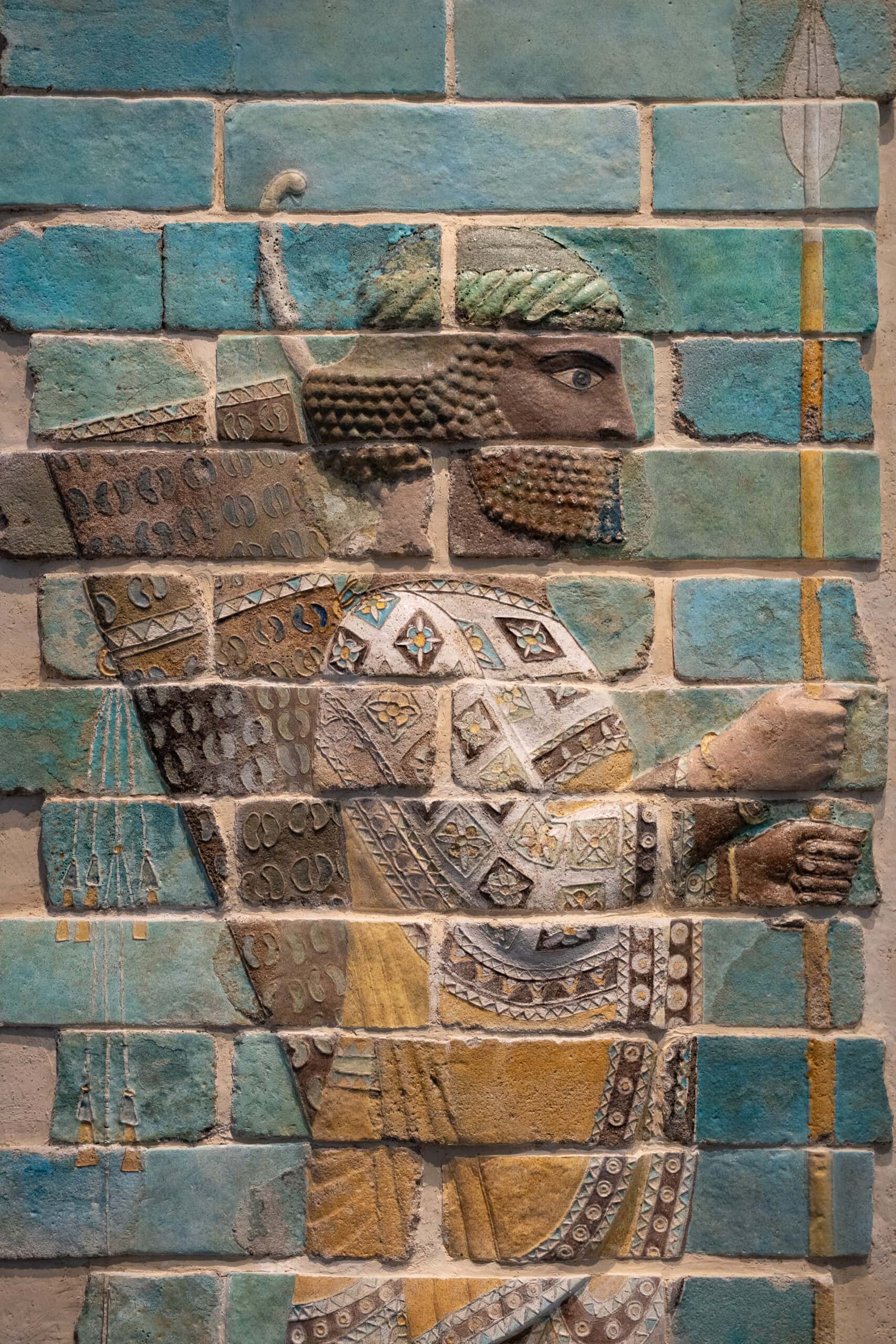
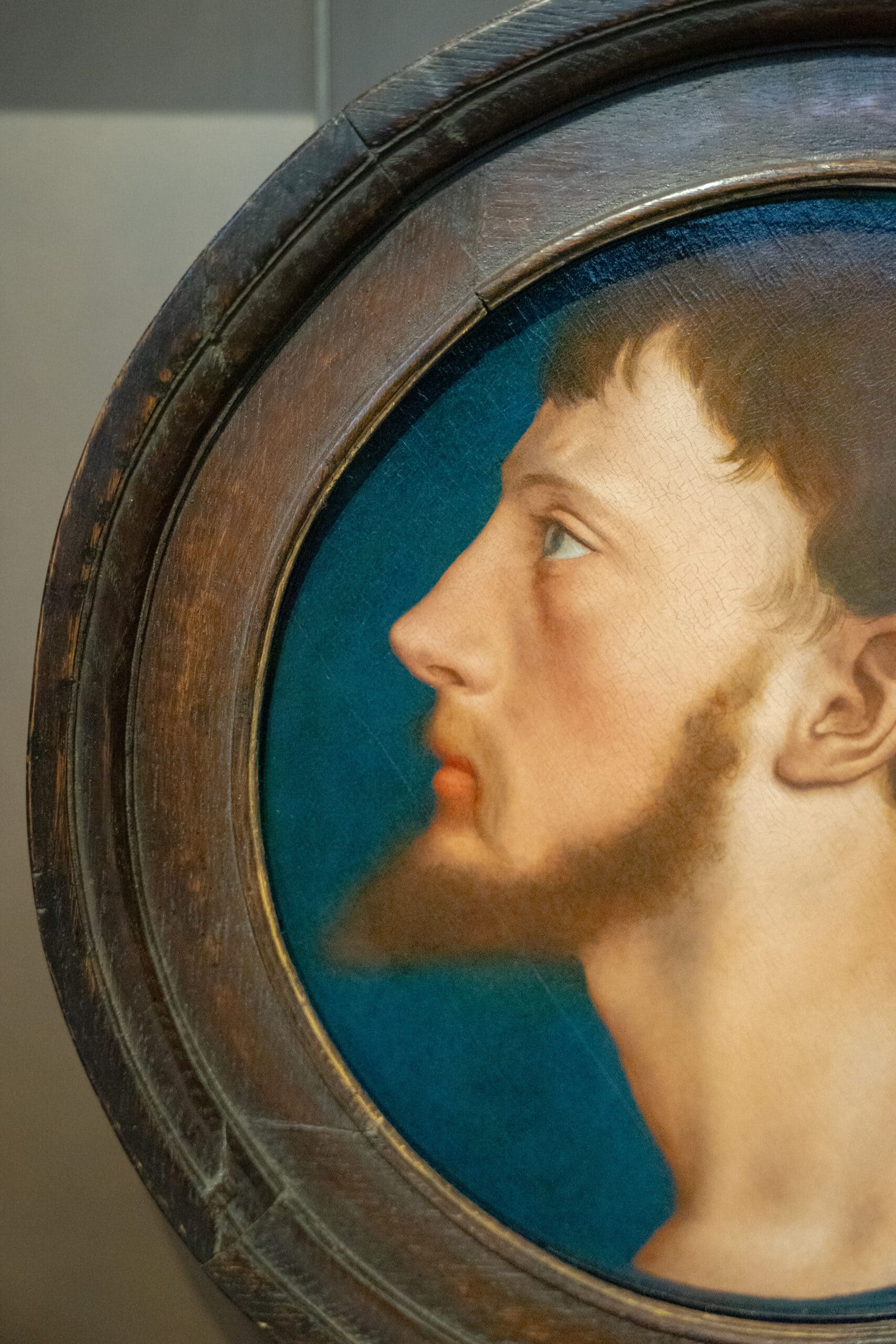
What makes the Louvre Abu Dhabi different is how the museum presents its collection. Instead of obsessing over dates and genres, the exhibits are arranged by theme. Motherhood, power, trade, faith. You see how different cultures answered the same questions, and it suddenly feels less like a history lesson and more like a conversation.
In this post, I will walk you through the practical side of visiting. From Louvre Abu Dhabi tickets to opening hours and the best times to go, plus a look at the highlights and a few of our favourite pieces from the collection.
If you want one cultural experience in Abu Dhabi that is worth the price, this is it.
Please note: This post may contain affiliate links. This means I may earn a commission if you make a purchase by clicking a link (at no extra cost to you). As an Amazon Associate, I earn from qualifying purchases. Learn more.
Louvre Abu Dhabi Tickets & Practical Info
Ticket prices: Adults 63 AED, kids under 13 free. Discounts for students, teachers, and UAE residents.
Where to buy: Best to grab tickets on the official Louvre Abu Dhabi website . You can also buy onsite or through Get Your Guide.
Skip-the-line & guided tours: Lines aren’t usually bad, but skip-the-line tickets are available. Guided tours (book on official website) give context if you want to dig deeper into the themes. For a unique view of the building, this kayak tour is the best.
Opening hours:
Tues – Thurs, 10:00 – 18:30
Fri – Sun: 10:00 – 20:30
Closed on Mondays
Best times to visit: Weekday mornings are quietest. Late afternoons are magical when the sun filters through the dome.
Accessibility: Fully accessible, elevators and wheelchairs available, plenty of seating if you need a break
Facilities: Lockers for bags, a café to recharge, and a gift shop under the dome if you want a souvenir
Parking: Free, covered, on-site parking
Our Visit to Louvre Abu Dhabi

I’ve been to the Louvre Abu Dhabi twice. The first time I went alone and walked out scratching my head. The exhibits felt scattered, almost random, like someone had emptied the world’s attic and laid it all out without a plan. On my second visit, with Jin in tow, it started to make sense.
The museum doesn’t organise by period or style. It works in themes. Motherhood. Power. Faith. Put a Greek statue, a medieval manuscript, and a Chinese painting side by side, and you start to see how cultures separated by oceans and centuries wrestled with the same ideas.
That shift in perspective is what makes the place stick with you. It’s not just a collection of masterpieces. It’s a conversation across time and geography, and you’re standing in the middle of it.
And for Abu Dhabi, that’s saying something. The city has a reputation for being a cultural desert, but this museum proves otherwise. Louvre Abu Dhabi tickets are surprisingly affordable, and in a city where anything can cost more than you want to admit, the museum gives you real value.
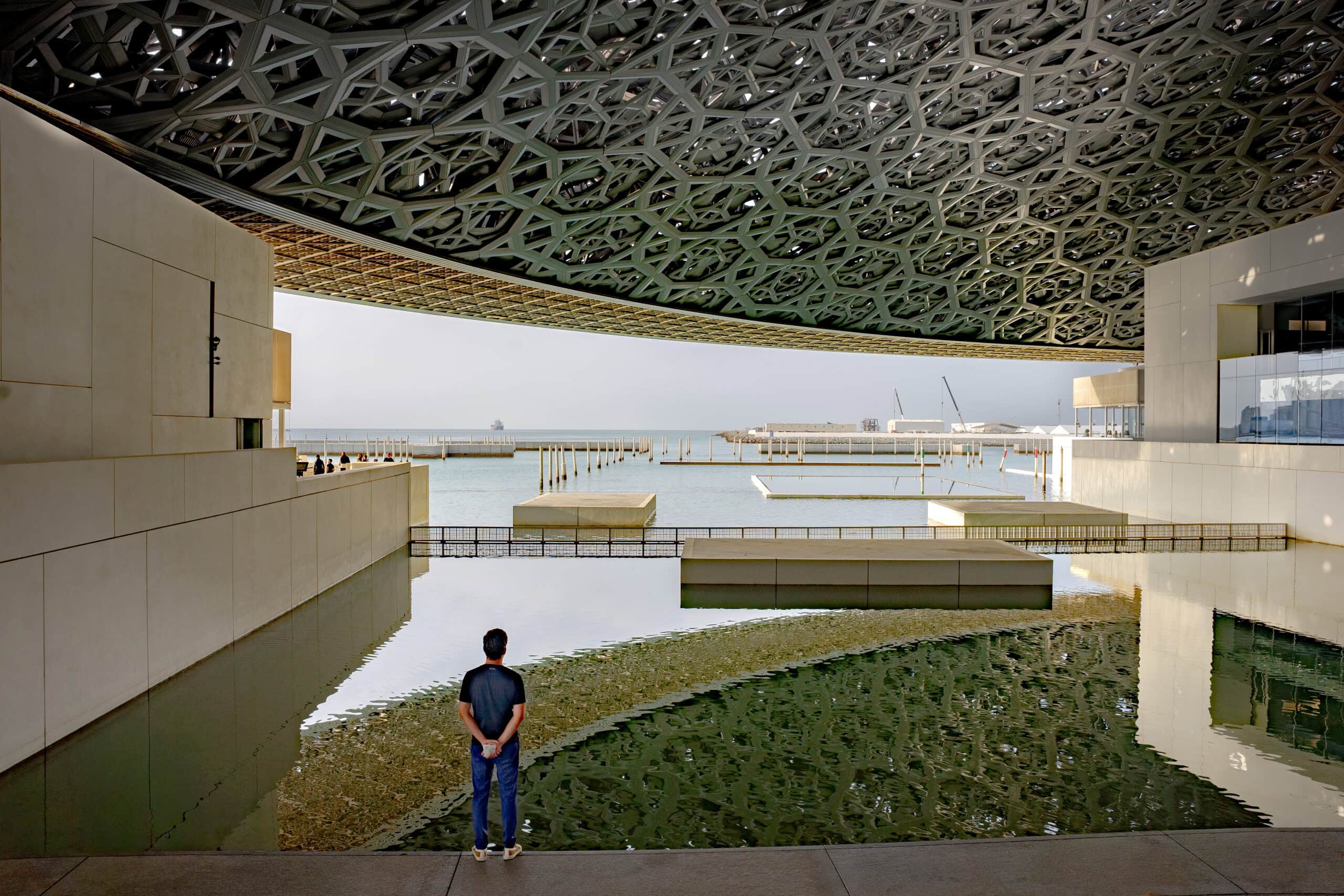
My first visit was on Christmas day, late in the afternoon. The second time we came first thing in the morning in March.
If you can, time your visit for the afternoon. The way the light filters through that iconic dome, the soft light and the long shadows are a masterpiece itself.
The Story Behind Louvre Abu Dhabi
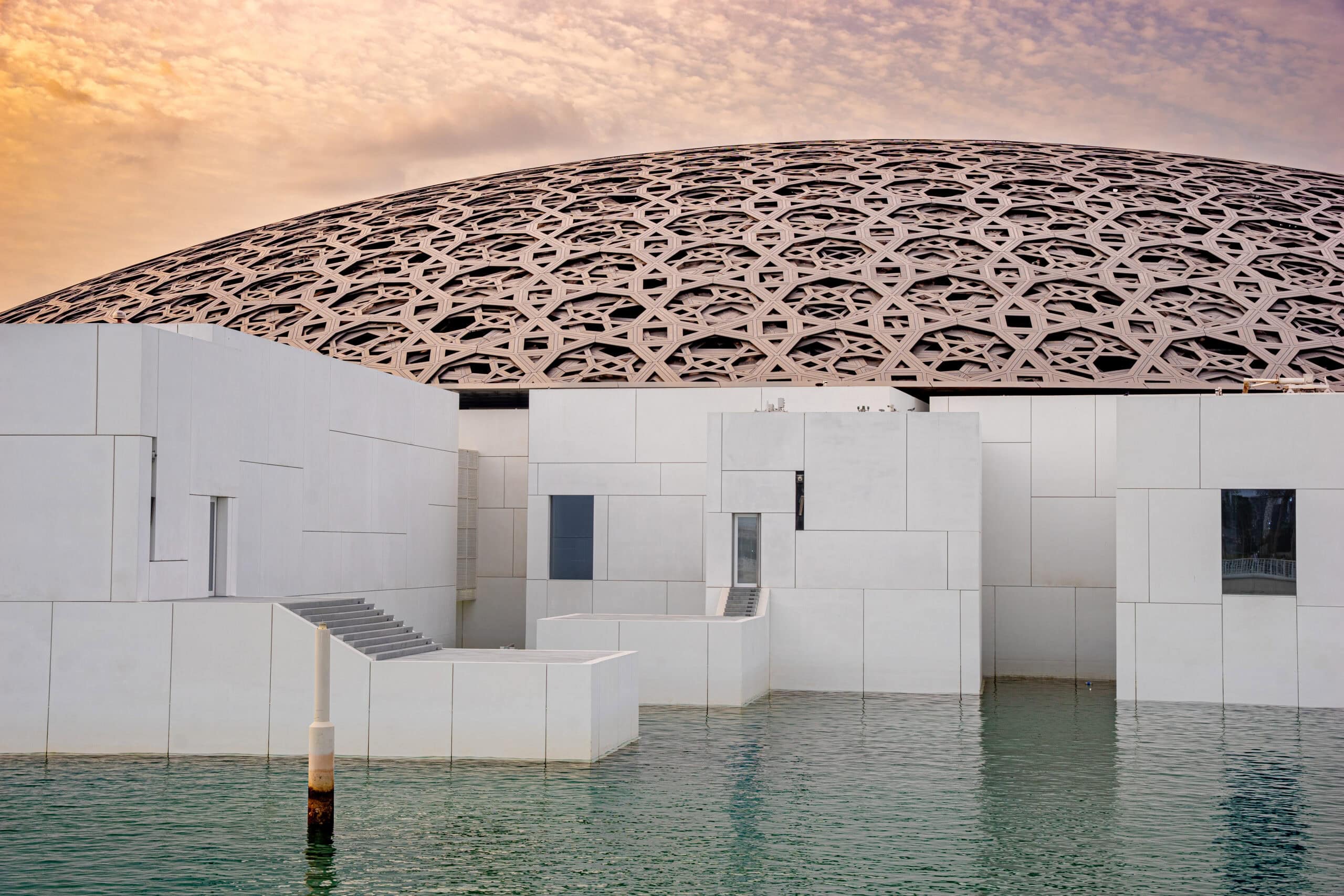
The Louvre Abu Dhabi officially opened on 11 November 2017. It was built in partnership with the Louvre in Paris (that deal runs until 2047), though it’s not a branch, but more like a cousin that shares loans and a name.
Upon entering the Louvre Abu Dhabi, you are told straight away that it’s a museum with a global perspective. Instead of separating cultures into tidy corners, the curators built a journey through time, spanning from prehistory to today, laid out in twelve chapters.
It is less about showing off blockbuster pieces and more about tracing the common threads of human creativity. The Louvre Abu Dhabi is not just a museum in the UAE, but a starting point for understanding a universal history, told through objects and art that might never have shared a room until now.
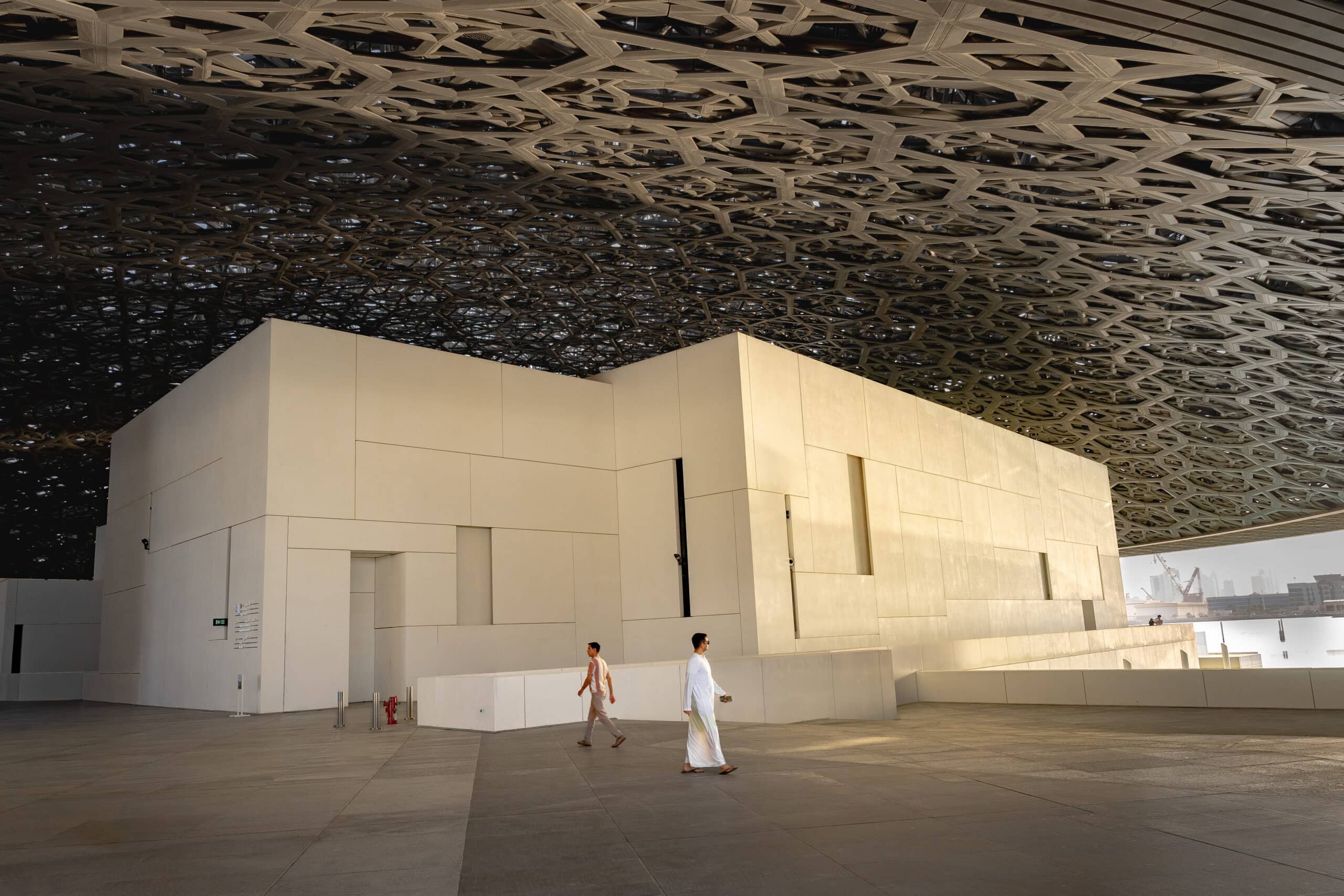
The Louvre Abu Dhabi was designed by Jean Nouvel, the French architect who usually builds things that make you stop in your tracks. He is the man behind buildings like Philharmonie de Paris, One Central Park in Sydney, and the National Museum of Qatar in Doha.
For the Louvre, his idea was to create a museum-city on water, inspired by the narrow lanes of an old Arabian medina. The buildings are low, white cubes, surrounded by the water that somehwo feel suspended between sky and sea.
The design’s signature move is that vast silvery dome, 180 meters across, that looks like it’s floating. It’s made of eight overlapping layers and nearly 7,850 unique star shapes. It cools as much as it dazzles.
When sunlight hits it, the light pours through in flickering patterns that feel like palm fronds dancing on the ground. Nouvel calls it rain of light.
Oh, and the museum is a hit, with over 1.4 million walking through the doors annually, it’s a must-visit in Abu Dhabi.
What Your Louvre Abu Dhabi Ticket Unlocks +
Our Favourite Masterpieces
Once we wrapped our heads around the slightly disjointed way the exhibits are arranged, we found ourselves enjoying it. The Louvre Abu Dhabi does not have the blockbuster pieces you line up to see in Paris, London, or Florence. There is no Mona Lisa here, no Venus de Milo.
What it does have is something arguably more interesting: a mix of artefacts and artworks pulled from far corners of the world, things you rarely encounter in one place.
For me, the highlight is the African collection. I have a soft spot for African art, and I loved how it’s incorporated in the Louvre Abu Dhabi. Then there are the surprises tucked between sections: a Picasso here, a Gauguin there, oh look, there’s samurai armour.
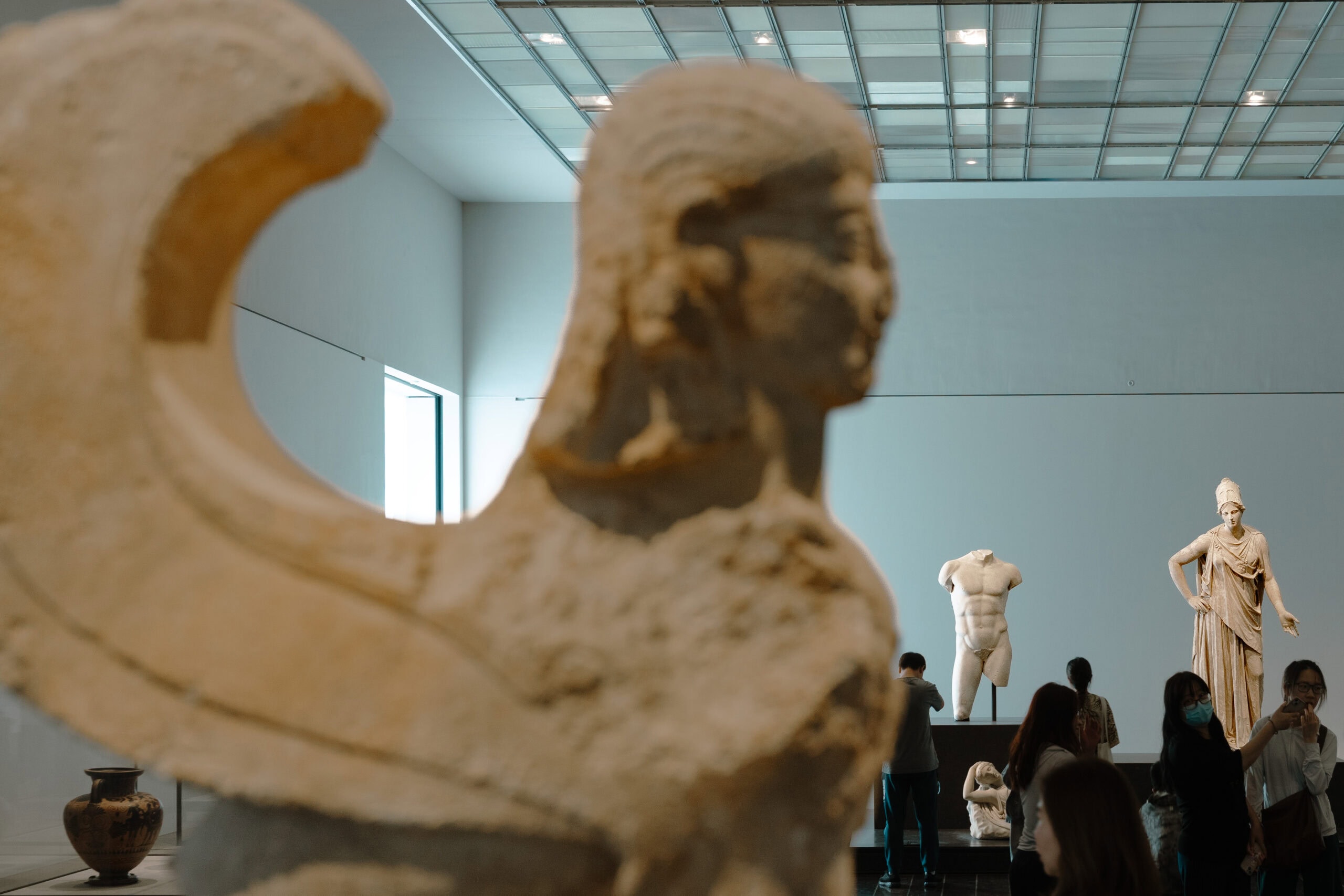
This is what your Louvre Abu Dhabi ticket gets you:
Antiquity: Sculptures, reliefs, and jewellery spanning thousands of years from Egypt, Mesopotamia, Middle East and Central Asia.
Islamic art: Calligraphy, ceramics, coins, and textiles that highlight the region’s craftsmanship.
Thematic galleries: Rooms organised around universal ideas like motherhood, power, and faith. Seeing different cultures tackle the same theme is striking.
African art: Masks, statues, and ceremonial objects that often surprise visitors.
Asian art: From Japan to India, pieces that show centuries of skill and philosophy.
European classics: Paintings and sculptures from the Renaissance to the 19th century.
Rotating exhibitions: 2025 highlights include Kings and Queens of Africa and AI-inspired artworks.
Architecture itself: The building with that dome is an Abu Dhabi landmark and a work of art in itself.
Below are some of our favourite exhibits: the pieces that stood out, sparked curiosity, or those that made us look twice
The Funeral of Mona Lisa
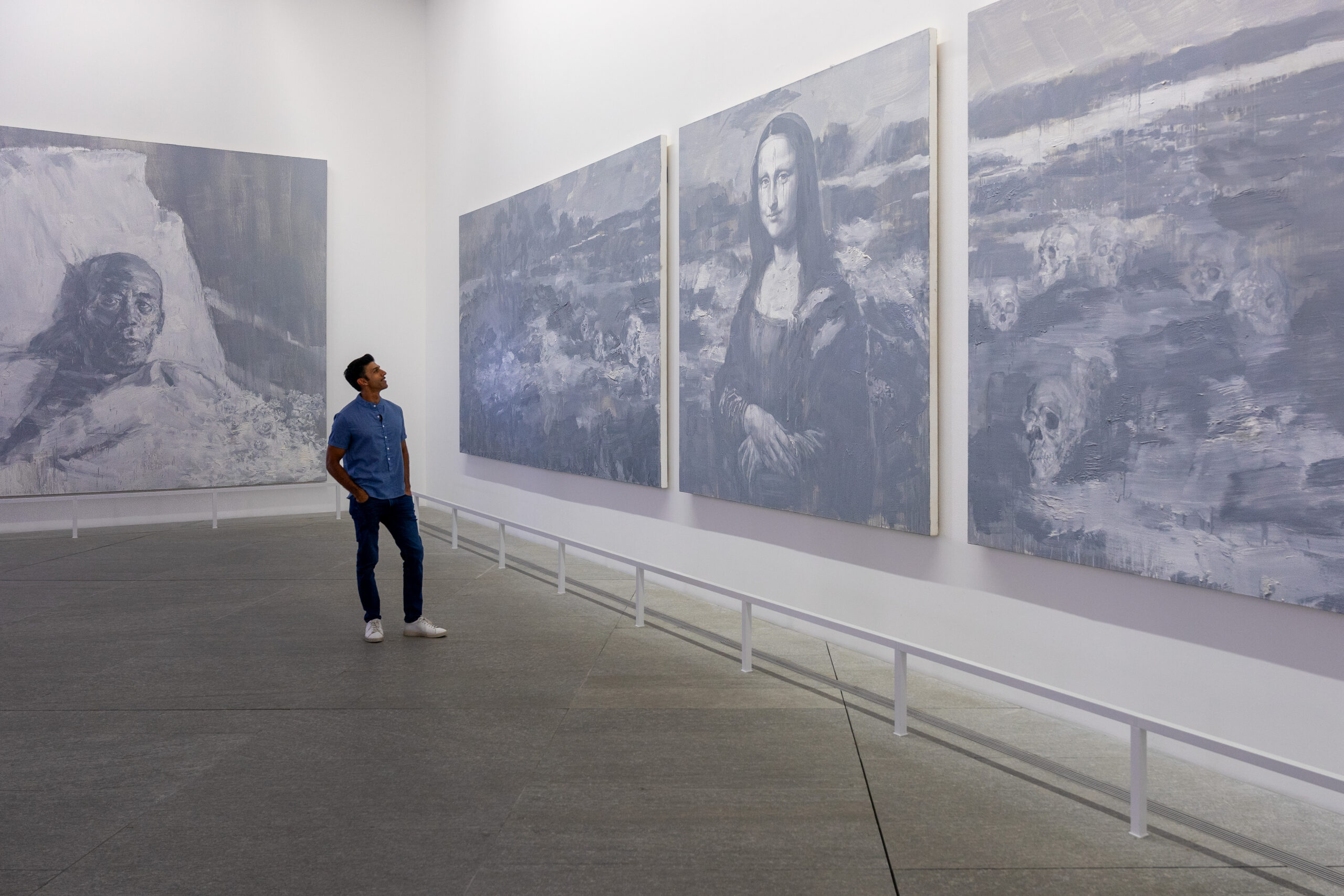
When you walk past the ticket booth and into the museum, the first thing that hits you is not Da Vinci’s Mona Lisa, but The Funeral of Mona Lisa, a gigantic work by Chinese contemporary artist Yan Pei-Ming. The scale alone stops you in your tracks. Six towering panels stretch across the three walls, painted in Yan’s signature almost violent brushstrokes.
The piece was created in 2013 and, like much of his work, it’s both homage and critique. Yan grew up during China’s Cultural Revolution and later became one of the country’s most prominent contemporary painters. Here, he takes one of the most recognisable symbols of Western art and stages her funeral.
What struck me wasn’t just the size, but the placement. The Louvre Abu Dhabi could have chosen to greet visitors with something classical or safe. Instead, you’re met with this reinterpretation of art history’s most famous face. It sets the tone for what’s to come inside: this isn’t about preserving a neat, linear story of art. It’s about questioning it and reshuffling it.
Antiquities from the Middle East
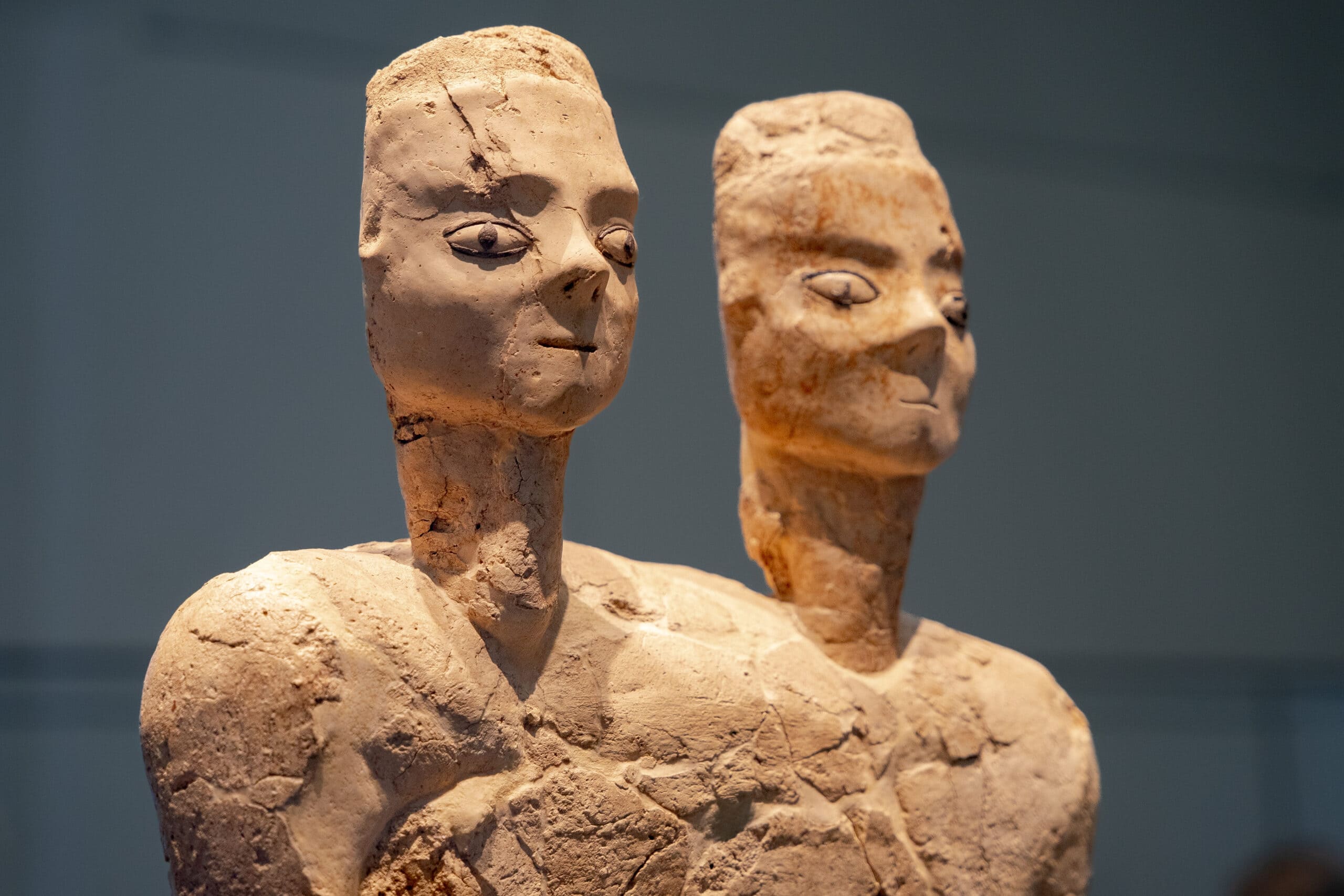
One of the most impressive sections at the start of the Louvre Abu Dhabi is dedicated to antiquities from the Middle East and Central Asia. It makes sense, given the region’s place in history as the cradle of civilisation.
The Monumental Statue with Two Heads from Jordan immediately pulls you in. A little eerie, it is one of the oldest large-scale statues ever discovered, dating back to the Neolithic period. Its blank eyes and twin faces feel almost otherworldly, a reminder of how long humans have been experimenting with form and symbolism.

Nearby, the “Bactrian Princess” from Central Asia is equally striking. Made of green chlorite and white calcite, she is composed of detachable parts, with her pale face and hands set against the darker stone of her robe and headdress.
Believed to come from the Oxus civilisation, she represents a type of early fertility or ancestral figure, though her exact role remains a mystery.
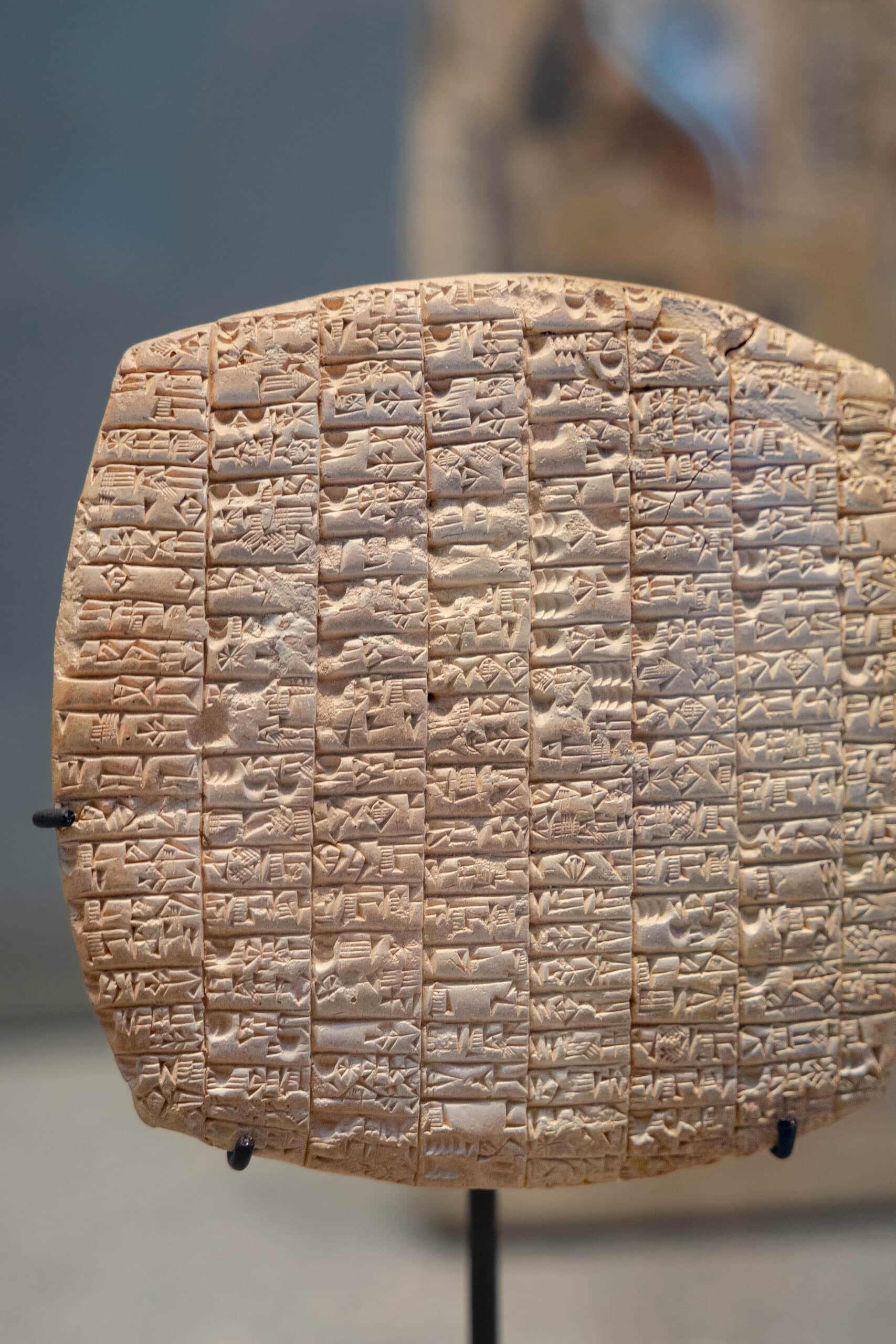
Another highlight is a small but weighty piece of history: a Mesopotamian cuneiform tablet. These clay tablets hold some of the earliest writing systems, marking the starting point of recorded language.
Having seen similar works in Ankara’s Museum of Anatolian Civilisations, it was fascinating to recognise the same marks here, connecting one museum visit to another and giving a sense of just how deep these cultural roots go.
Egyptian Artefacts
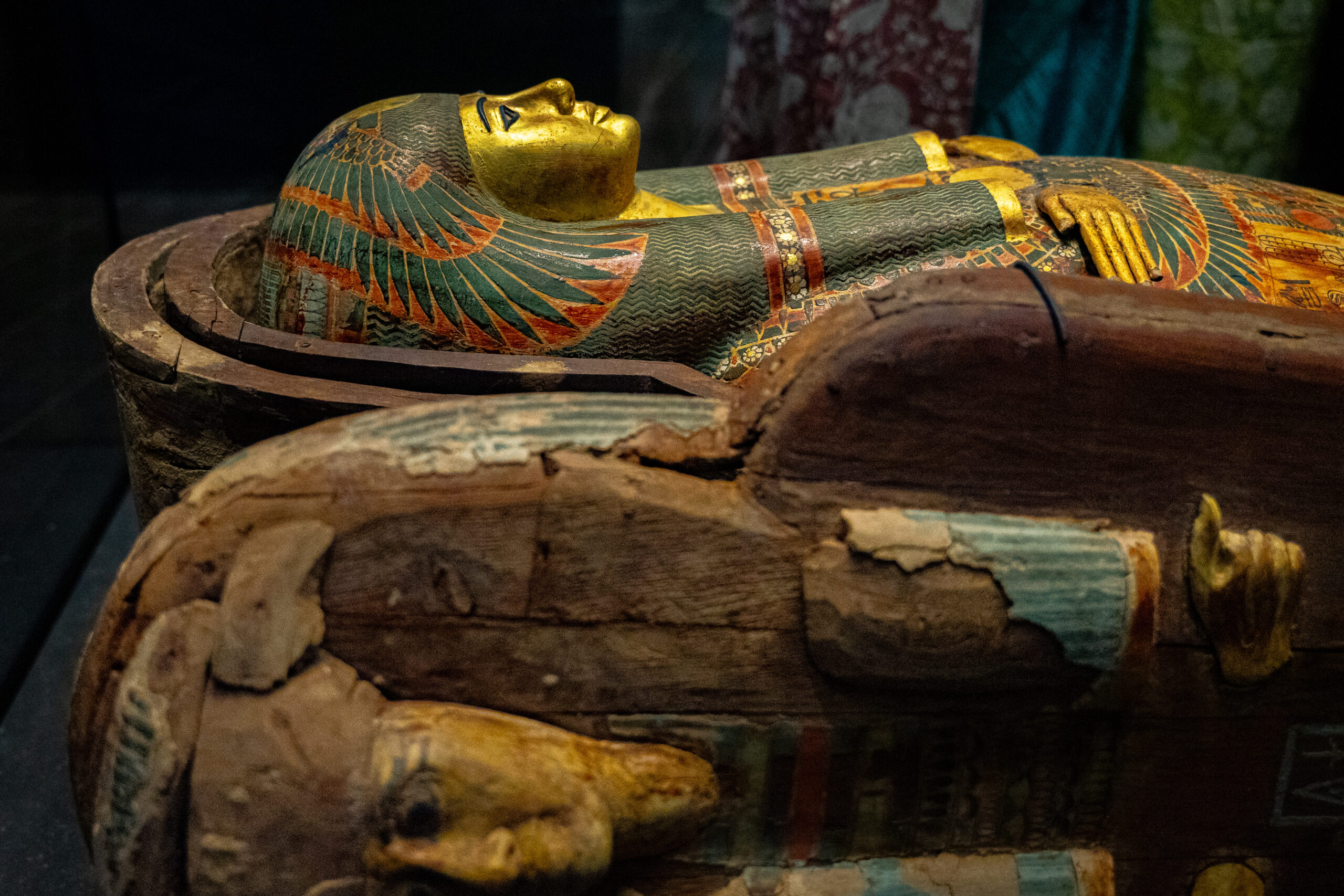
Jin has a bit of a thing for ancient Egyptian art, so we lingered in this section longer than most. The Louvre Abu Dhabi’s collection does not disappoint.
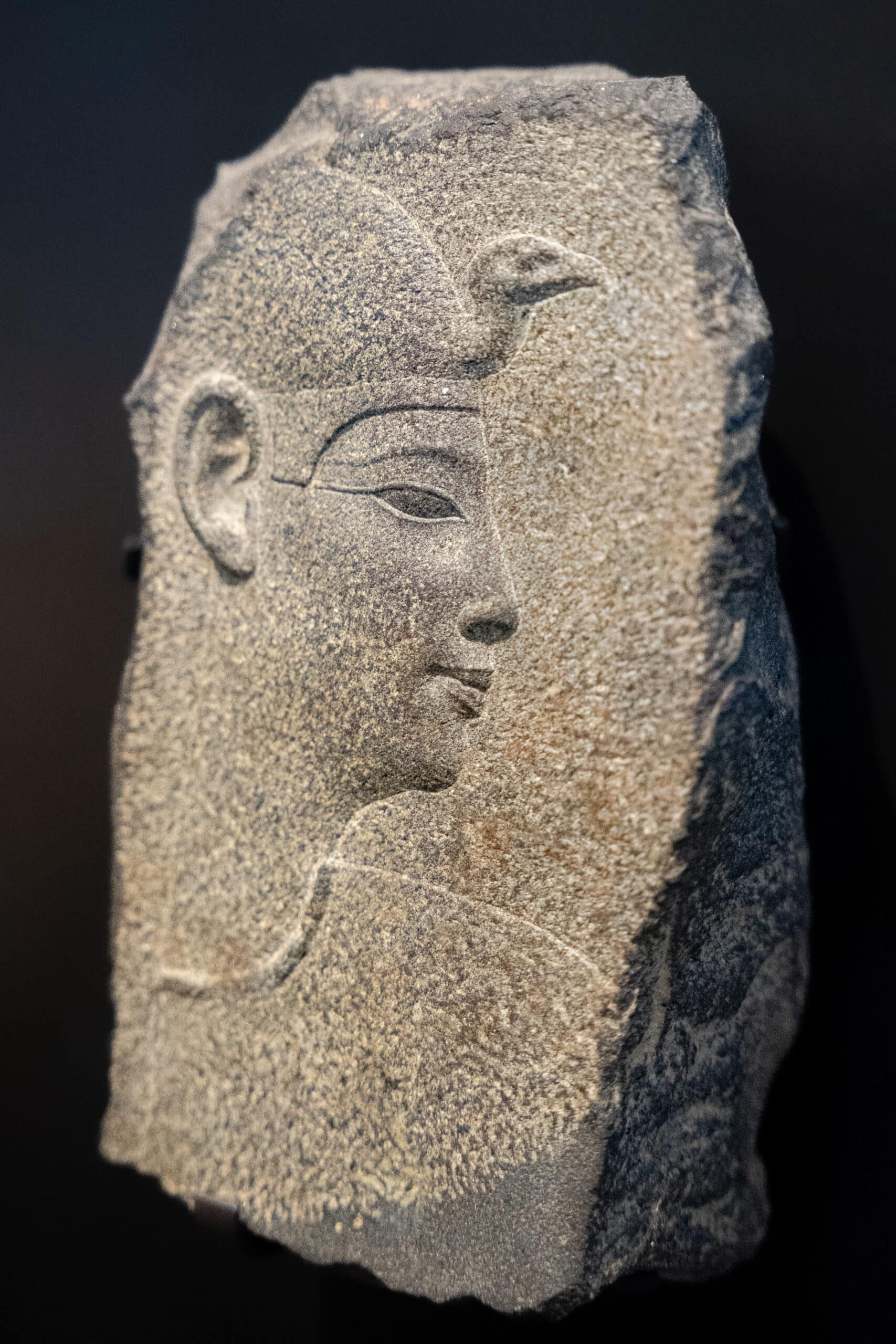
There are the usual showstoppers: massive seated pharaohs carved from granite, staring out across time with that unmistakable air of authority. Nearby, small wooden boats once meant to ferry souls into the afterlife sit quietly in glass cases. Intricate sarcophagi add the drama you expect from any decent Egyptian collection, painted and carved with symbols meant to guide the dead on their journey.
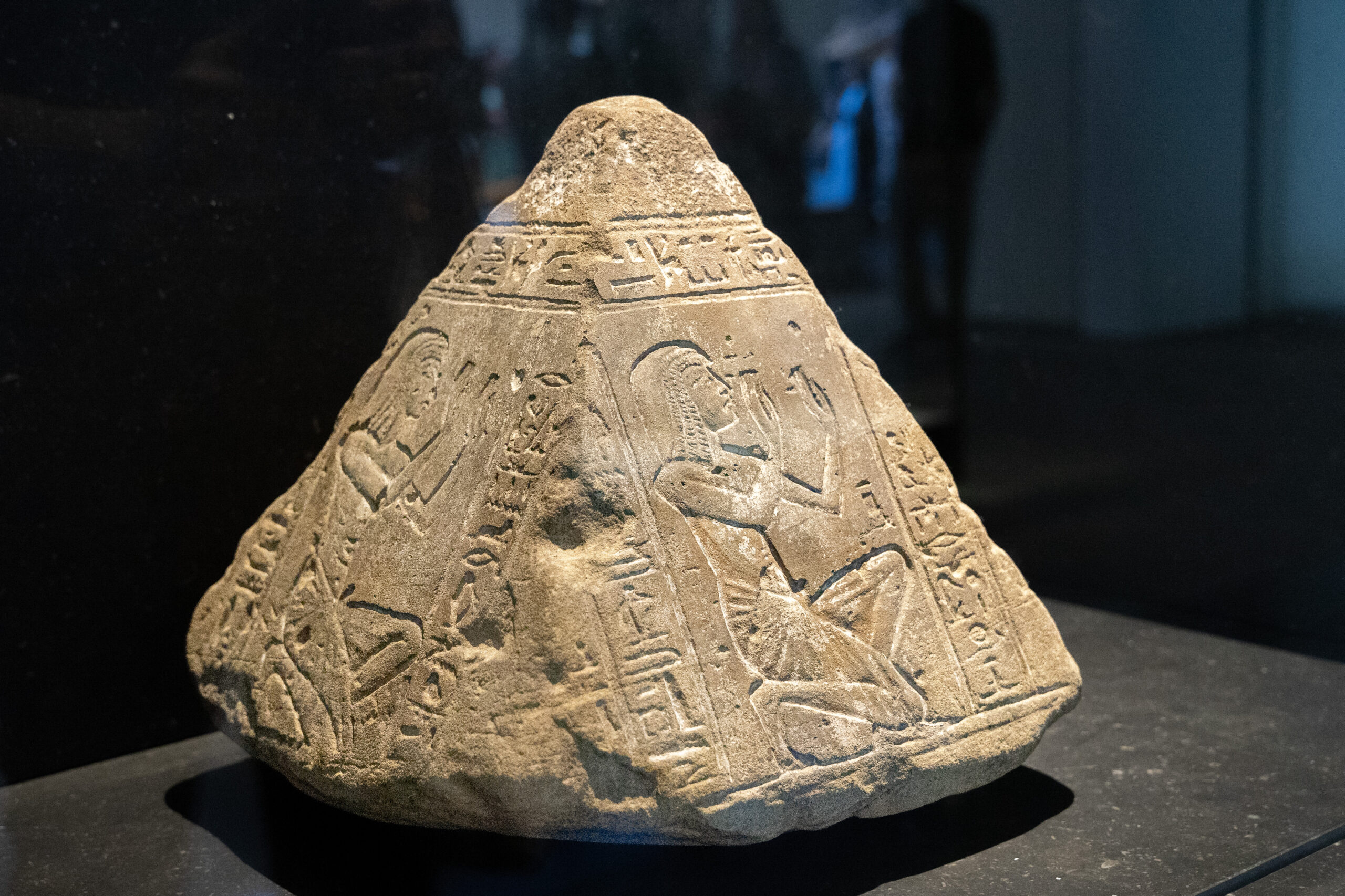
The biggest surprise for us, though, was a triangular prism of stone. At first glance it looks like a standalone block, but it is actually a pyramidion — the capstone that once crowned the very top of a pyramid.
These were often polished or covered in precious metals so they could catch the sun, a literal beacon for the gods. Seeing one up close for the first time was something special.
Head of an Oba
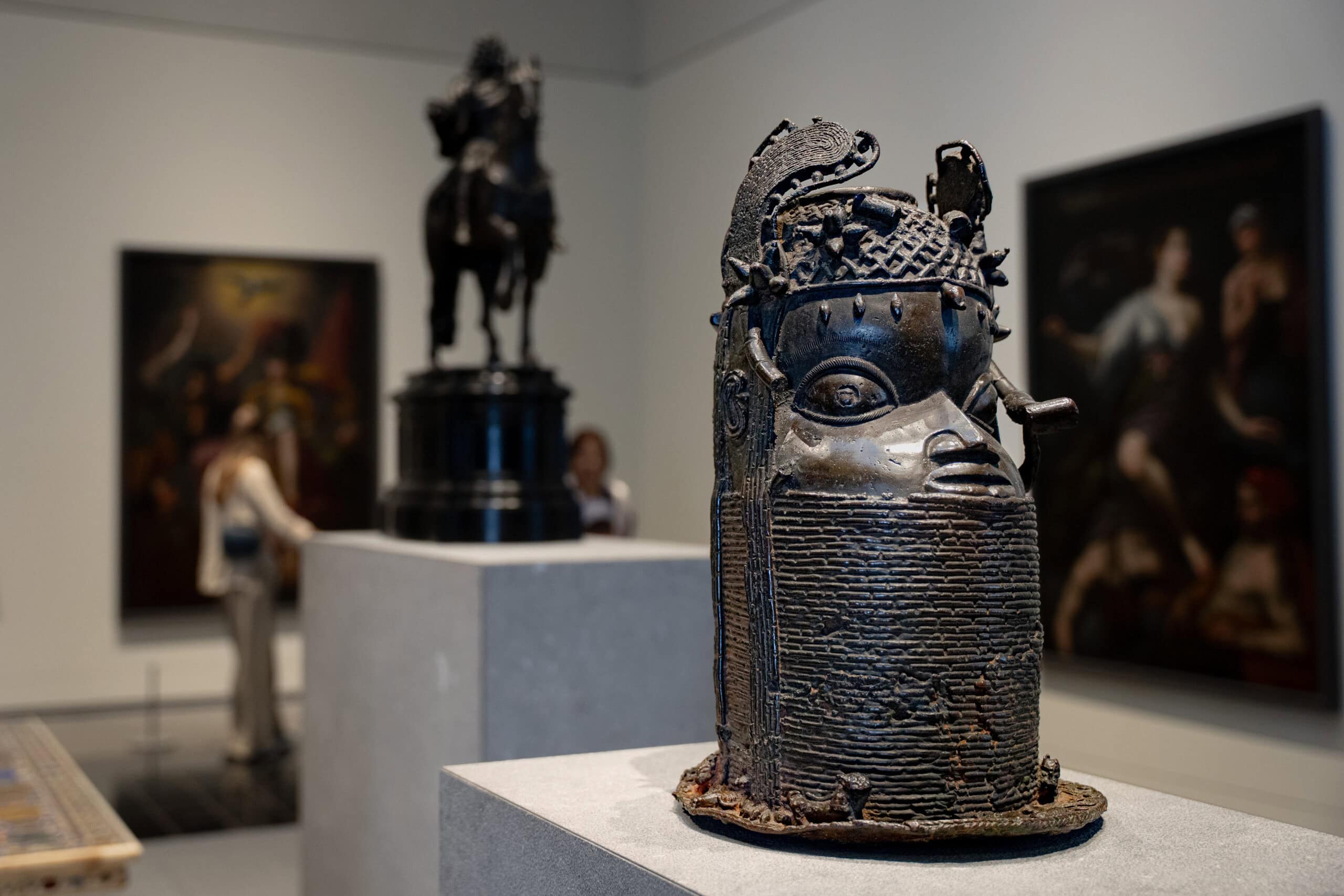
The Commemorative Head of an Oba is weighty bronze that comes from the ancient Kingdom of Benin in what is now Nigeria. This isn’t just art, it’s a declaration. A reminder of who holds power, who speaks to the ancestors, and who you better not cross.
These heads weren’t portraits in the Western sense. They weren’t about capturing the lines on someone’s face or the colour of their eyes. They were about channelling something bigger, the divine authority of the Oba, the ruler. The head was the seat of wisdom, and here it’s cast in metal that doesn’t age. Immortal, like the idea of kingship itself.
Made with the lost-wax technique, the head once held an elephant tusk, rising from the cavity at the top like a spine of ivory.
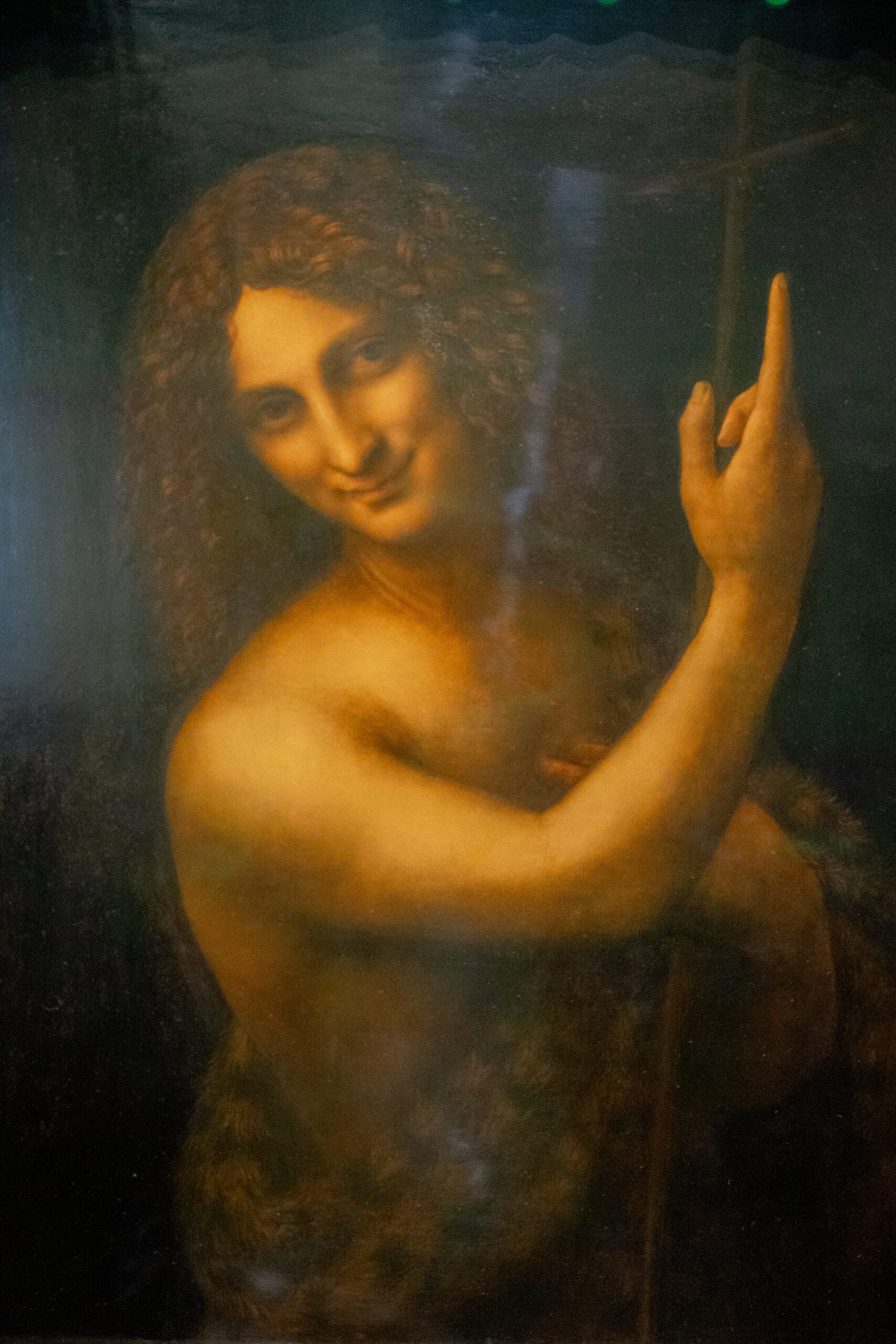
In true Louvre Abu Dhabi style, the Oba is having a staring contest with Saint John the Baptist, a Da Vince on loan from the Louvre in Paris.
Young Emir Studying
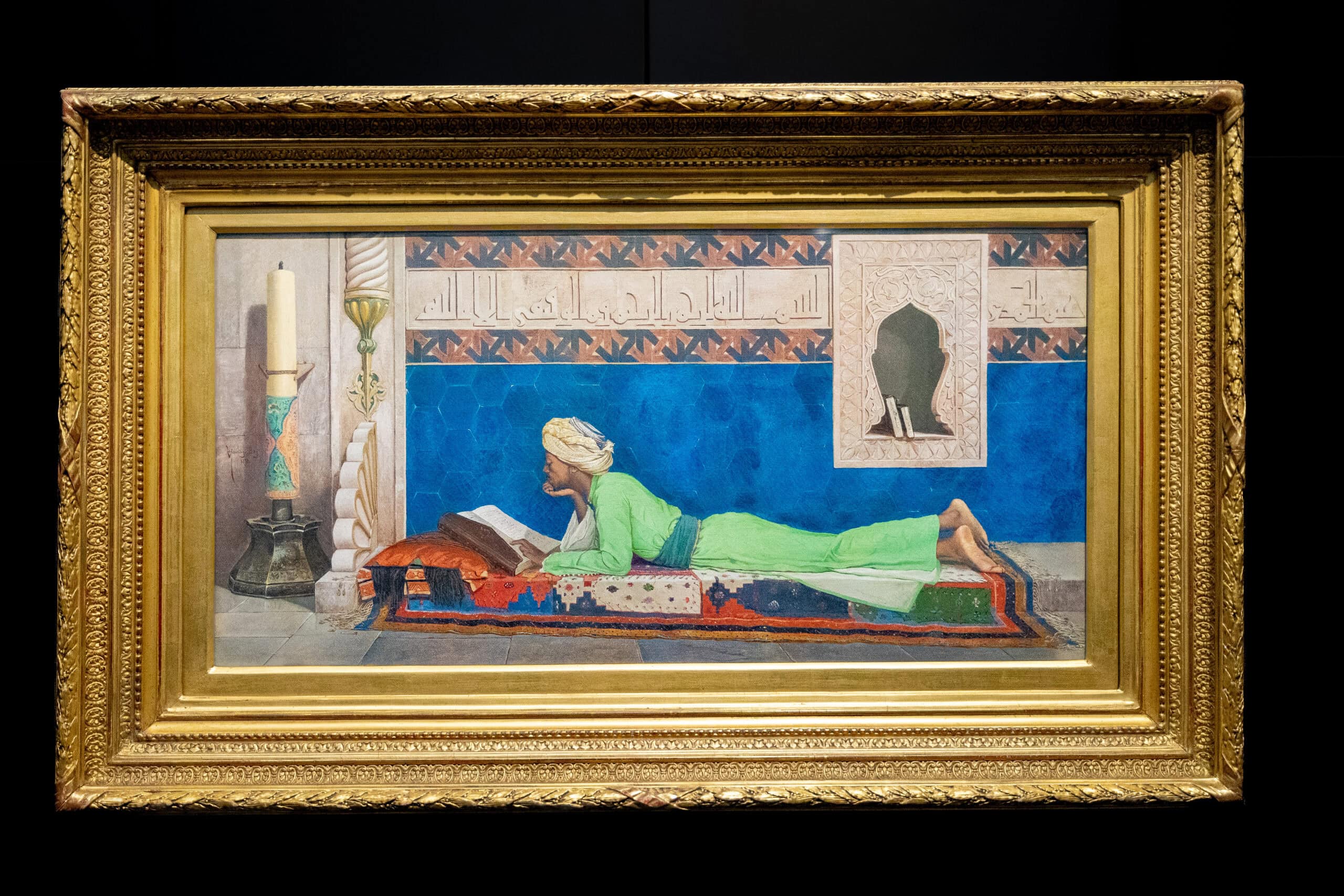
My absolute favourite at the Louvre Abu Dhabi is Young Emir Studying, painted around 1878 by Osman Hamdi Bey in Istanbul. If the Sheikh ever called me with a museum lottery win and I could take one piece home, this would be it. There is something about the colours, the composition, and the Middle Eastern vibes in this painting that just speak to me.
European Paintings
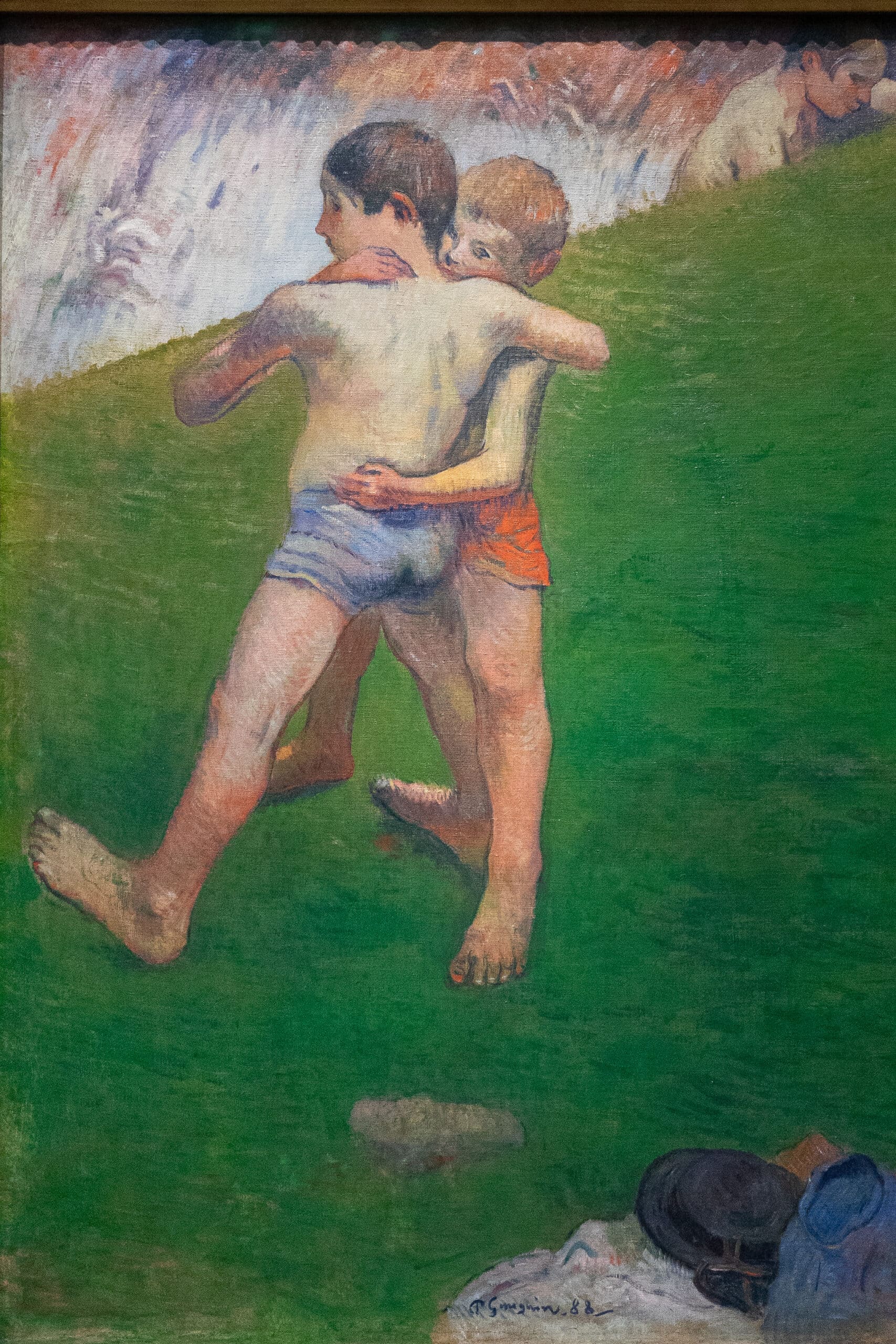
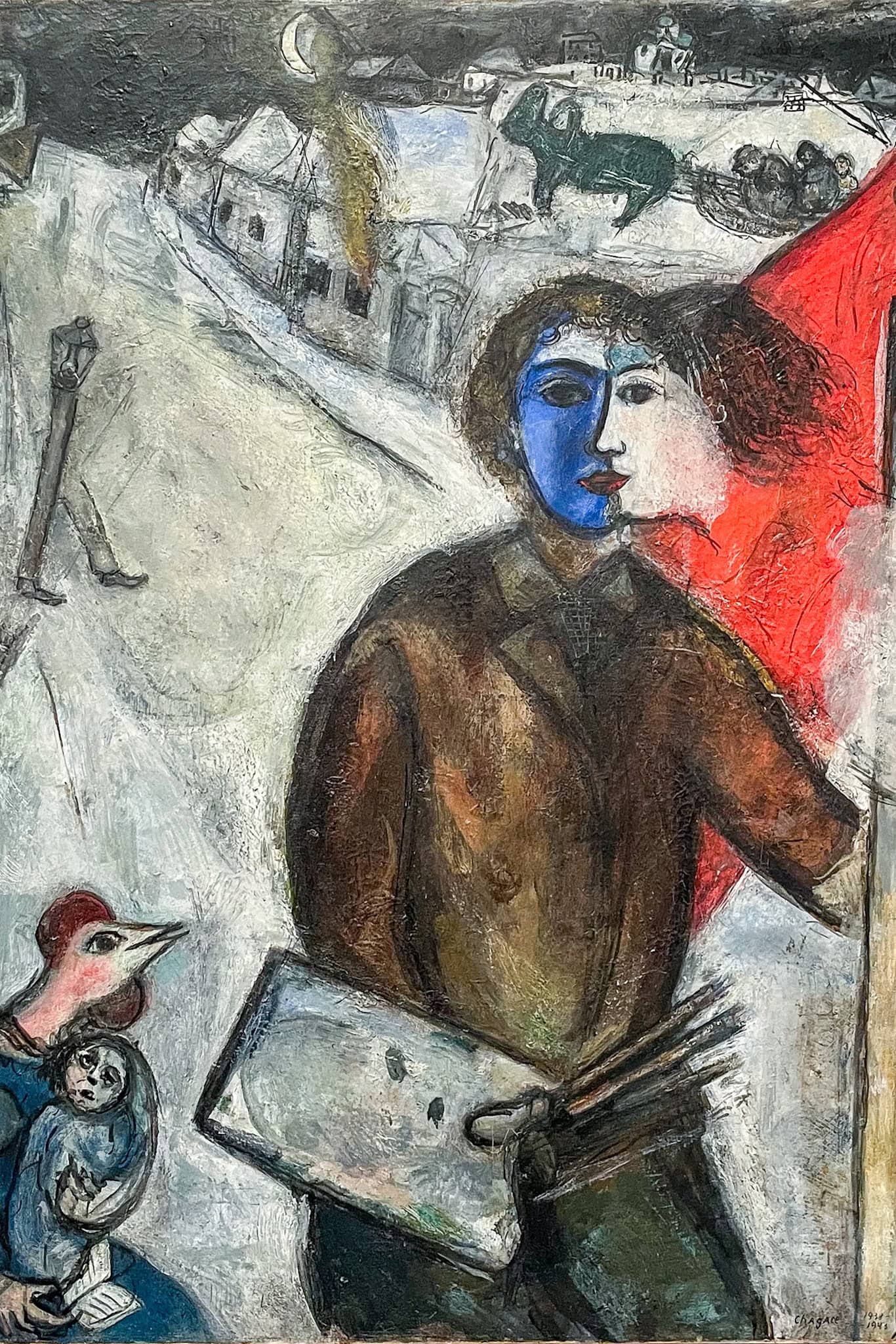

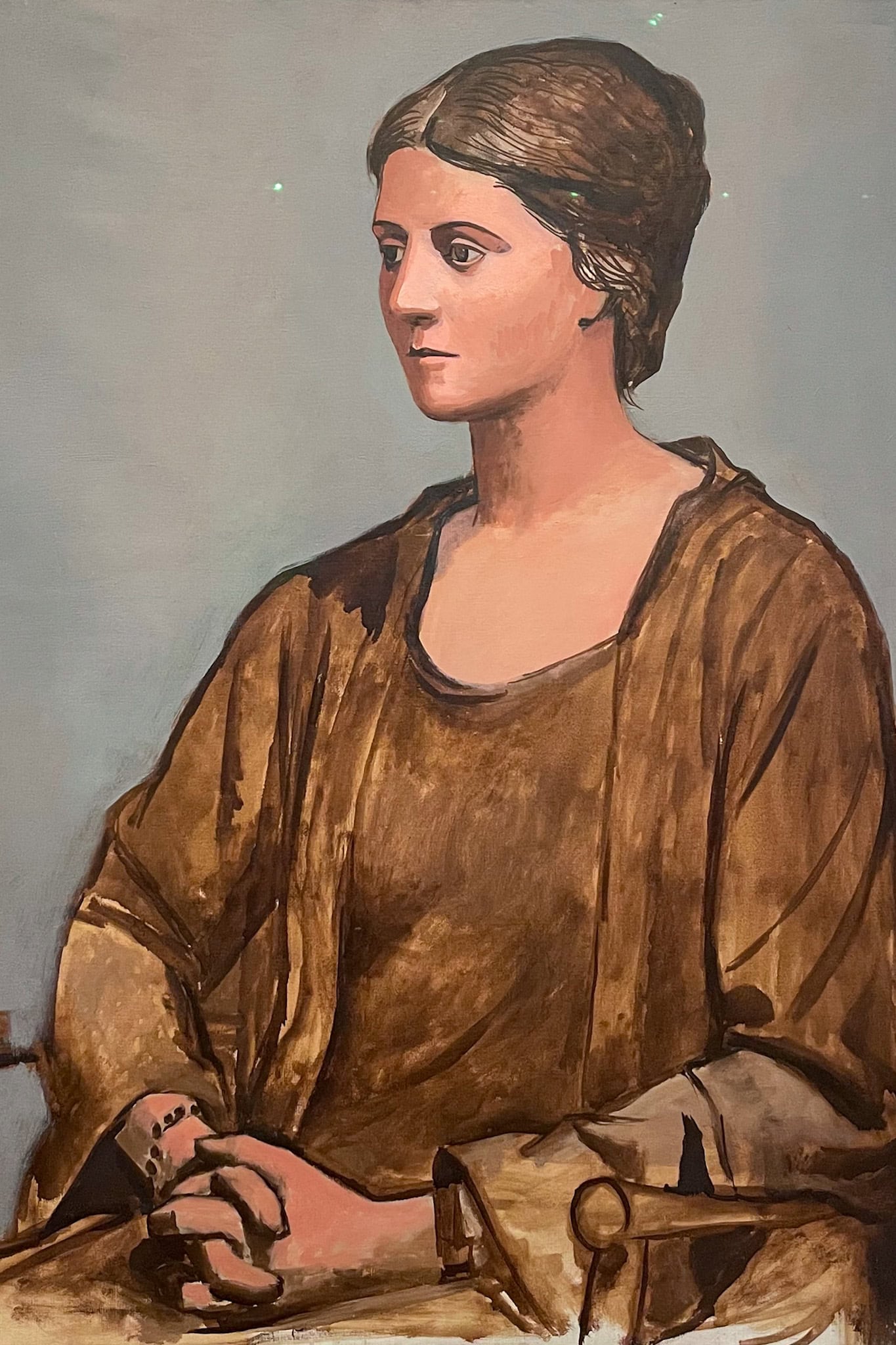
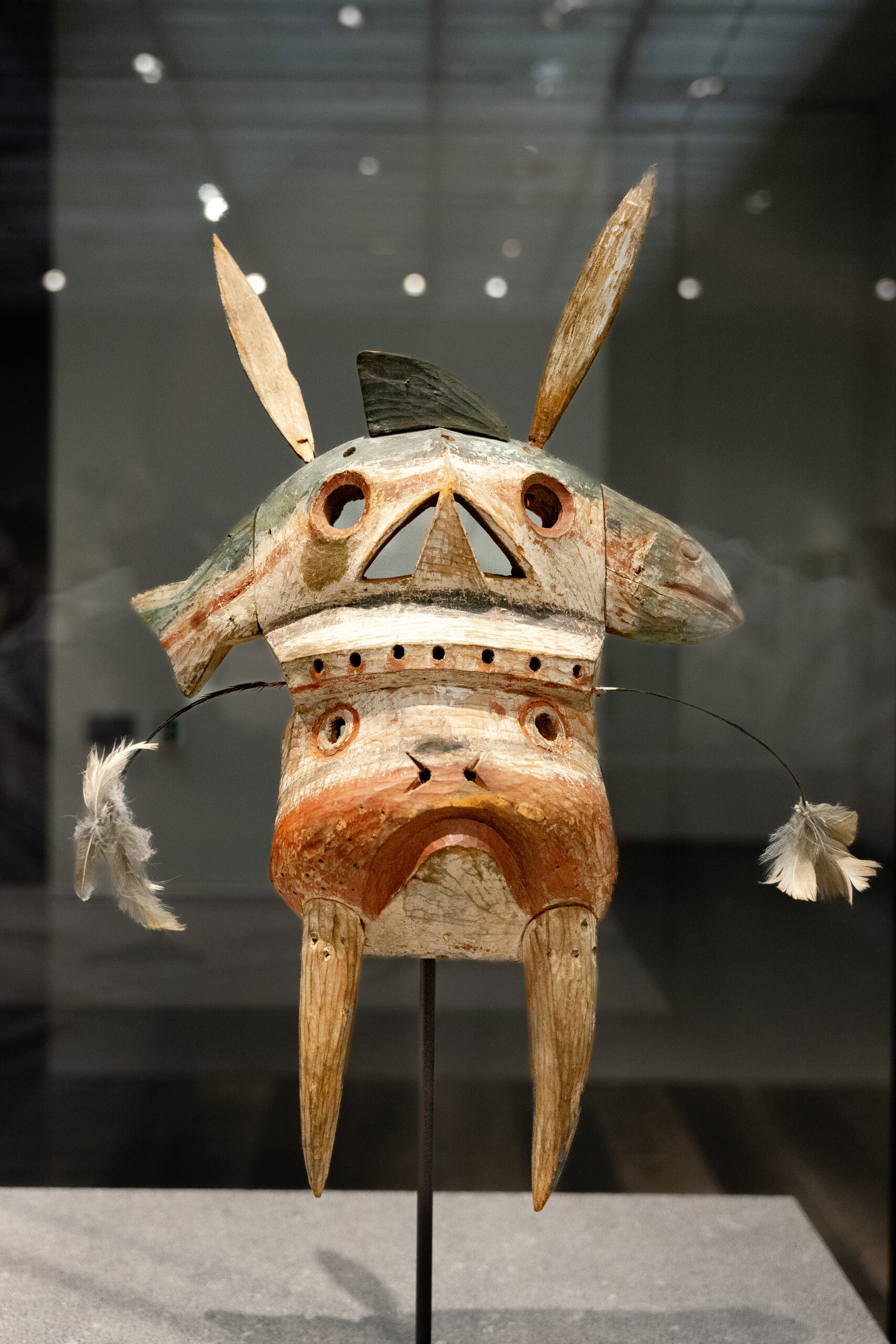
The ancient statues and manuscripts eventually give way, and suddenly you are in a hall surrounded by European paintings. It is a bit jarring. One wall has Picasso, Cézanne, or Chagall, while across the room a massive wooden mask from Oceania or a walrus mask from the Arctic stares back at you.
That is the Louvre Abu Dhabi in a nutshell: cultures and centuries colliding under one roof.
This section has the big names people expect when they walk into a museum with the word Louvre in its name. Picasso. Cézanne. Gauguin. Magritte. Chagall. It is not a long list, but it is enough to remind you that you are still in the orbit of the Paris mothership.
The standout for me was Gauguin’s Children Wrestling. Forget the famous Tahitian women and tropical colours. Here, you get two boys, their bodies oddly out of proportion, grappling on a flat, empty landscape stripped of depth. It is awkward and oddly moving, the kind of painting you linger on while still trying to make sense of that walrus mask.
Mayan Artefacts
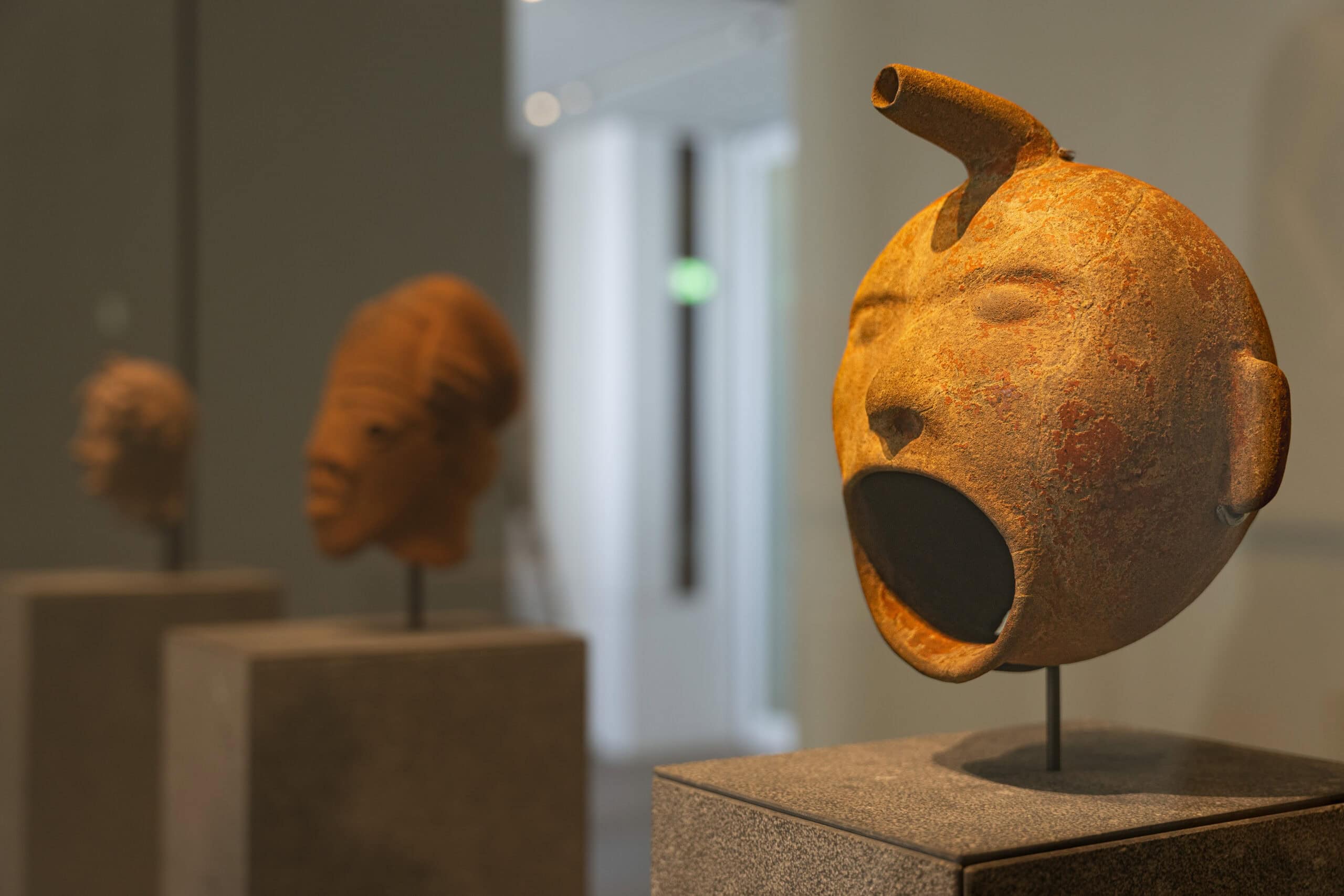
The Mayan and Teotihuacan pieces at the Louvre Abu Dhabi are some of the most surprising works in the collection. One vessel, shaped like a human head, has a gaping mouth, a spout for hair, and ears that double as handles. It is both strange and practical, and you can imagine it in use centuries ago.
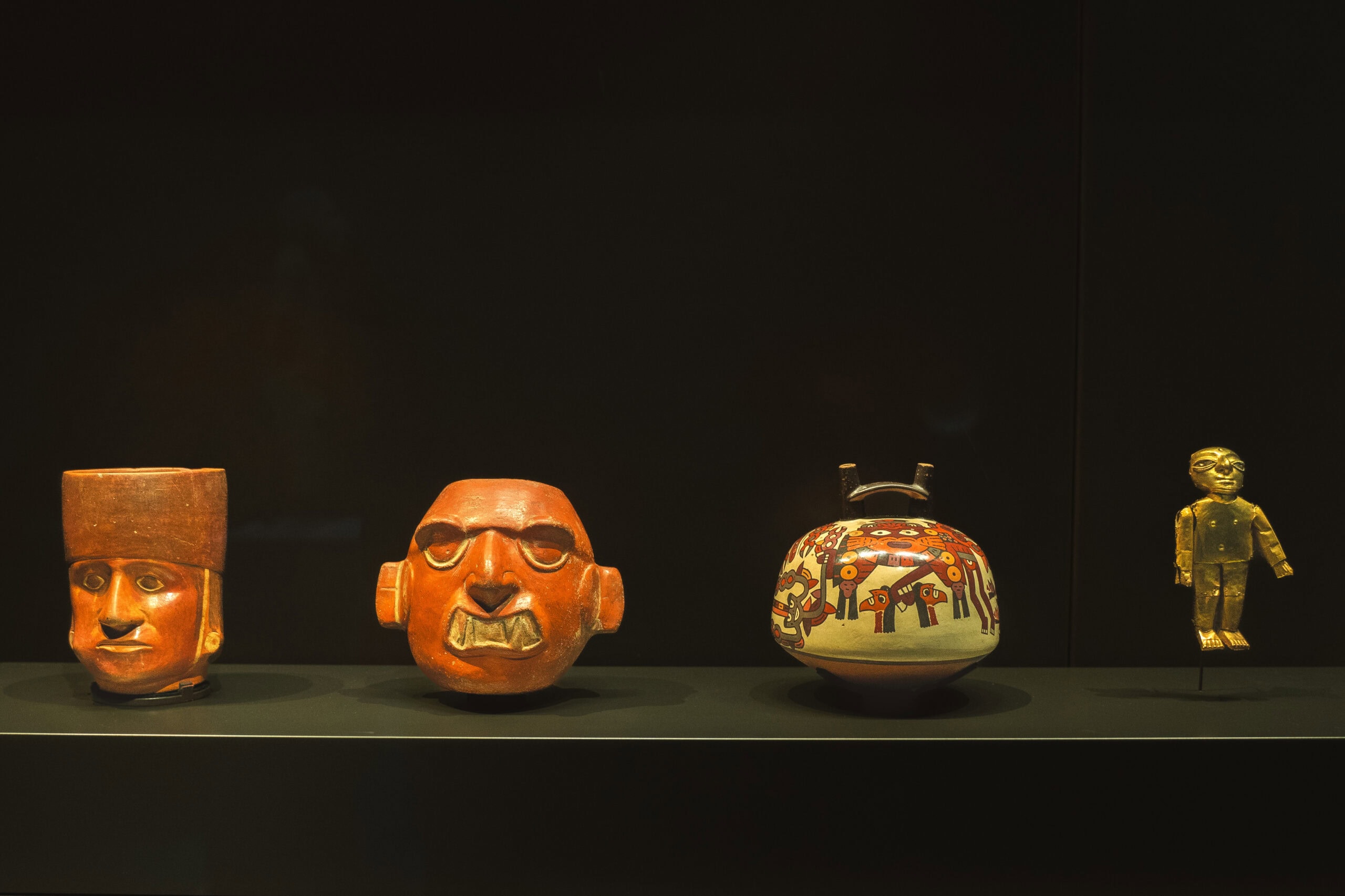
In another case, a set of Teotihuacan figures stares back with wide eyes. They look almost extraterrestrial, which makes them stand out even more in a museum otherwise dominated by familiar cultural references. These objects show how ancient American civilisations expressed power and belief through bold, unconventional forms.
Manuscripts
The manuscripts gallery at the Louvre Abu Dhabi is easy to miss, but it’s worth slowing down for. Two pieces in particular stood out to me.
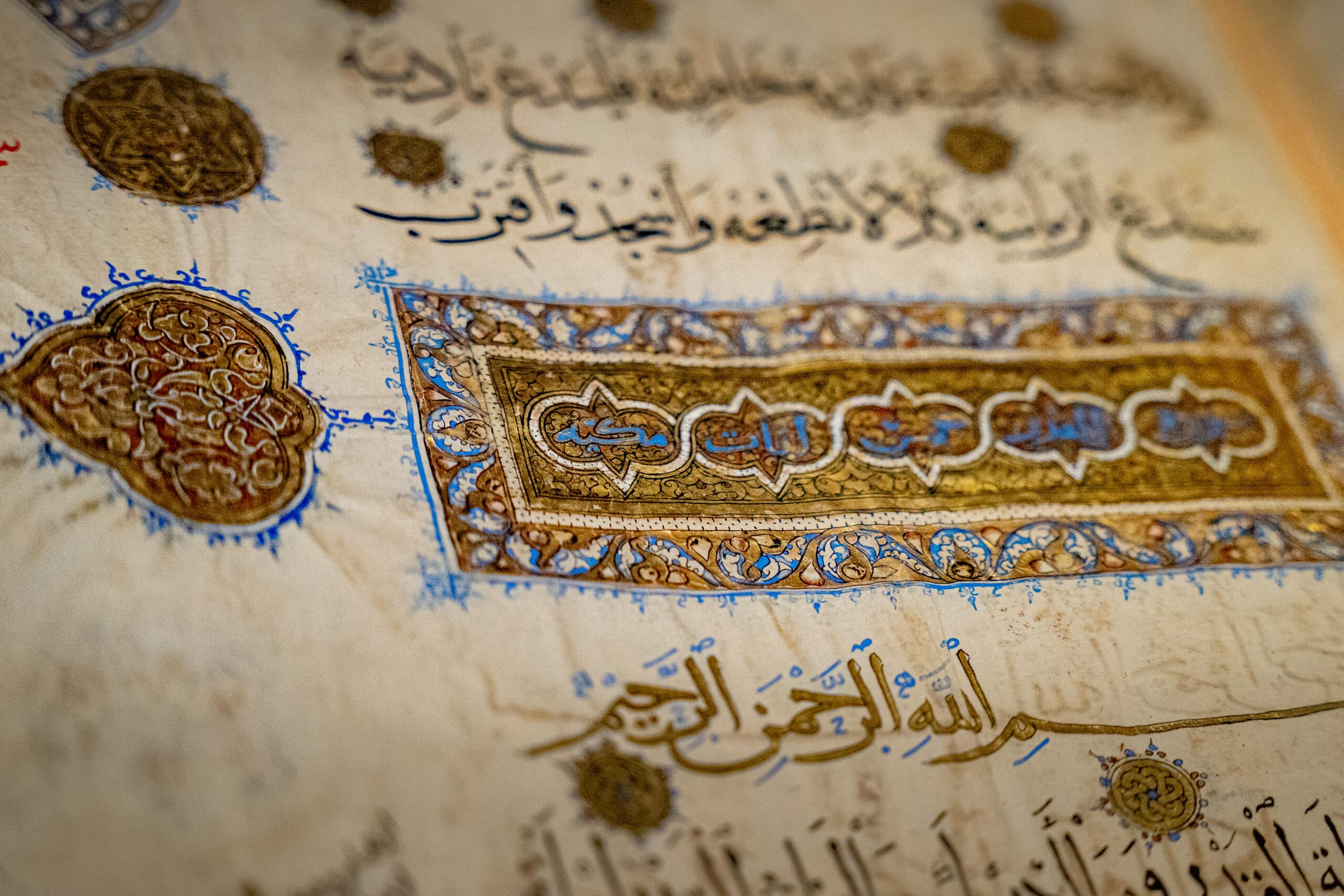
The Juz’ Amma, 30th section of the Holy Quran, comes from Damascus during the Mamluk period. Rulers at the time ordered giant Qurans for mosques and schools, and this one contains the final section of the text (the part most often memorised and recited in daily prayer).
It’s written in elegant muhaqqaq script, each surah opening with the bismillah in gold. Seeing it up close, you get a sense of how calligraphy here was never just about words on a page but also about devotion and power.
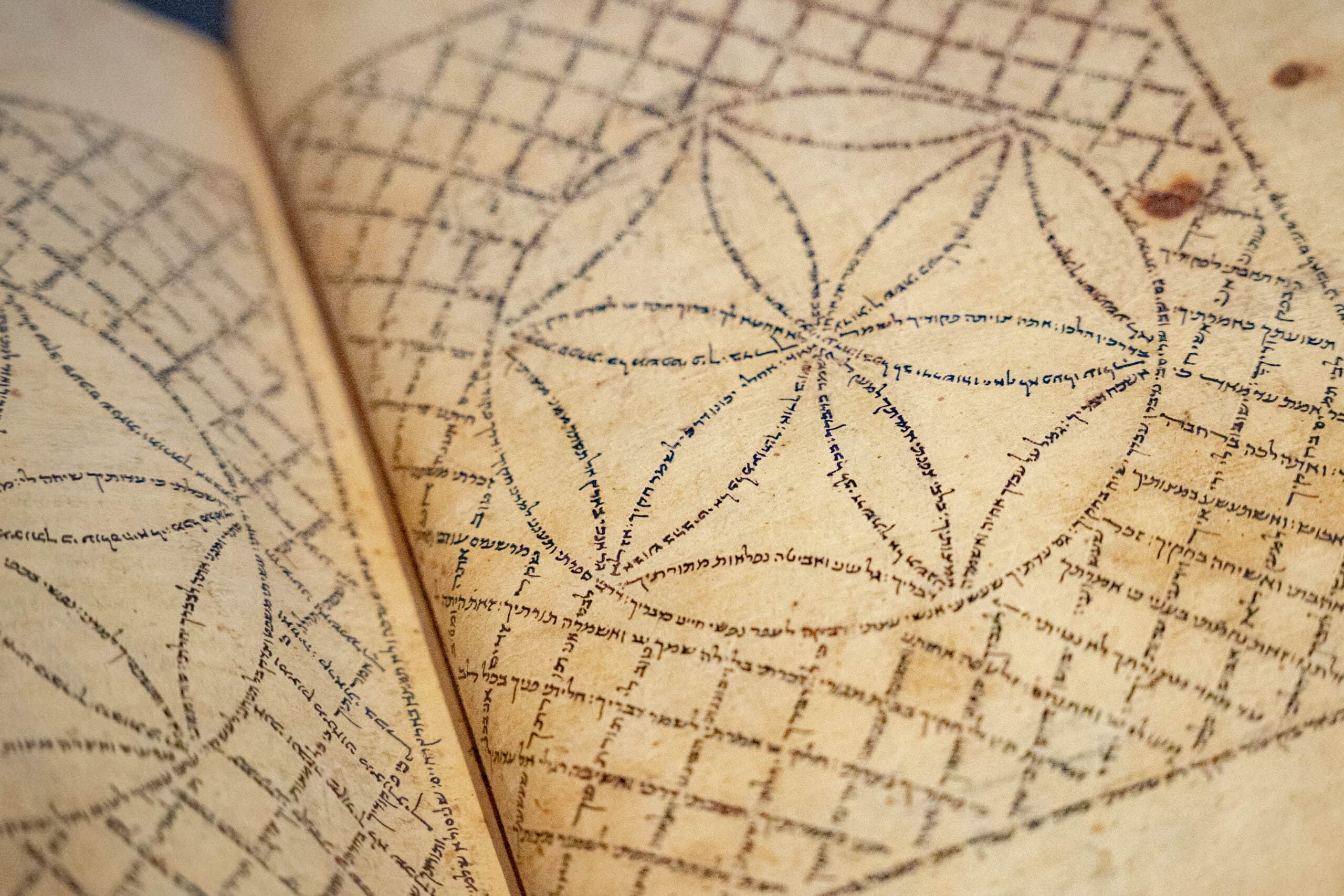
Right beside it is something I never expected to see in Abu Dhabi: a Torah from Yemen. Known as the Crown by Yemenite Jews, it was copied in the late 15th century and used as a model for Torah scrolls. The pages show off decorative micrography, while the geometric binding hints at Mamluk artistic influence that had spread into the Arabian Peninsula.
It’s fascinating to see a Jewish manuscript from Yemen displayed next to Islamic texts from Syria, both carrying layers of history, belief, and craftsmanship.
If you’re on Sadiyat Island and interested in interfaith dialogue, religion, or just good architecture, make sure to visit the Abrahamic Family House. It’s just a few minutes from the Louvre and well worth a visit.
Read more: How to spend one day in Abu Dhabi
Is the Louvre Abu Dhabi Worth Visiting?
So, is the Louvre Abu Dhabi worth visiting?
Absolutely.
In a country where most itineraries revolve around malls, beach clubs, or theme parks, the Louvre is one of the few places that delivers a true cultural punch. It is a statement piece for the UAE, and it stands out because it’s not about spectacle for its own sake. Even though the building is a spectacle you must see.
Sure, you won’t find the same blockbuster works that pull millions through the doors of Paris or Florence. But that’s not the point. The Louvre Abu Dhabi isn’t trying to be a greatest-hits playlist. It offers a different way of looking at art and history, one that transcends borders and timelines.
Ancient Mesopotamian tablets sit beside Egyptian statues, Picasso hangs near an African mask, and manuscripts from Yemen are displayed next to Qurans from Damascus. It forces you to connect the dots, to see history as one big, messy, interconnected story.
If you’re expecting the Mona Lisa, you’ll be disappointed. If you’re open to being surprised, you’ll leave with your head buzzing. For cultural travellers who crave more than Ferrari World or luxury shopping malls, the Louvre Abu Dhabi is not just worth it, it’s essential.
How I Shot This Guide
Every photograph in this article was taken with the exact same gear I carry on every journey. It is a setup refined over years on the road to keep travel light without compromising the final image.
- Camera: Sony A7 V
- Lens: Sigma 24-70mm f/2.8 DG DN Art
- Storage: SanDisk Extreme Portable SSD
- Software: Adobe Lightroom Classic
- A desert essential (trust me): Ray-Ban Wayfarer