
Last June, I spent four nights at Shingwedzi Rest Camp, deep in the quieter northern section of Kruger National Park. During my stay, I drove the Mphongolo Loop three times, and by the end of the first drive, I knew it was my favourite game-viewing route in the entire park.
Twisting along the dry riverbed between Shingwedzi and Babalala, the Mphongolo Loop (S56) offers something special. Wilderness that feels untouched, and wildlife sightings that sneak up on you when you least expect them.
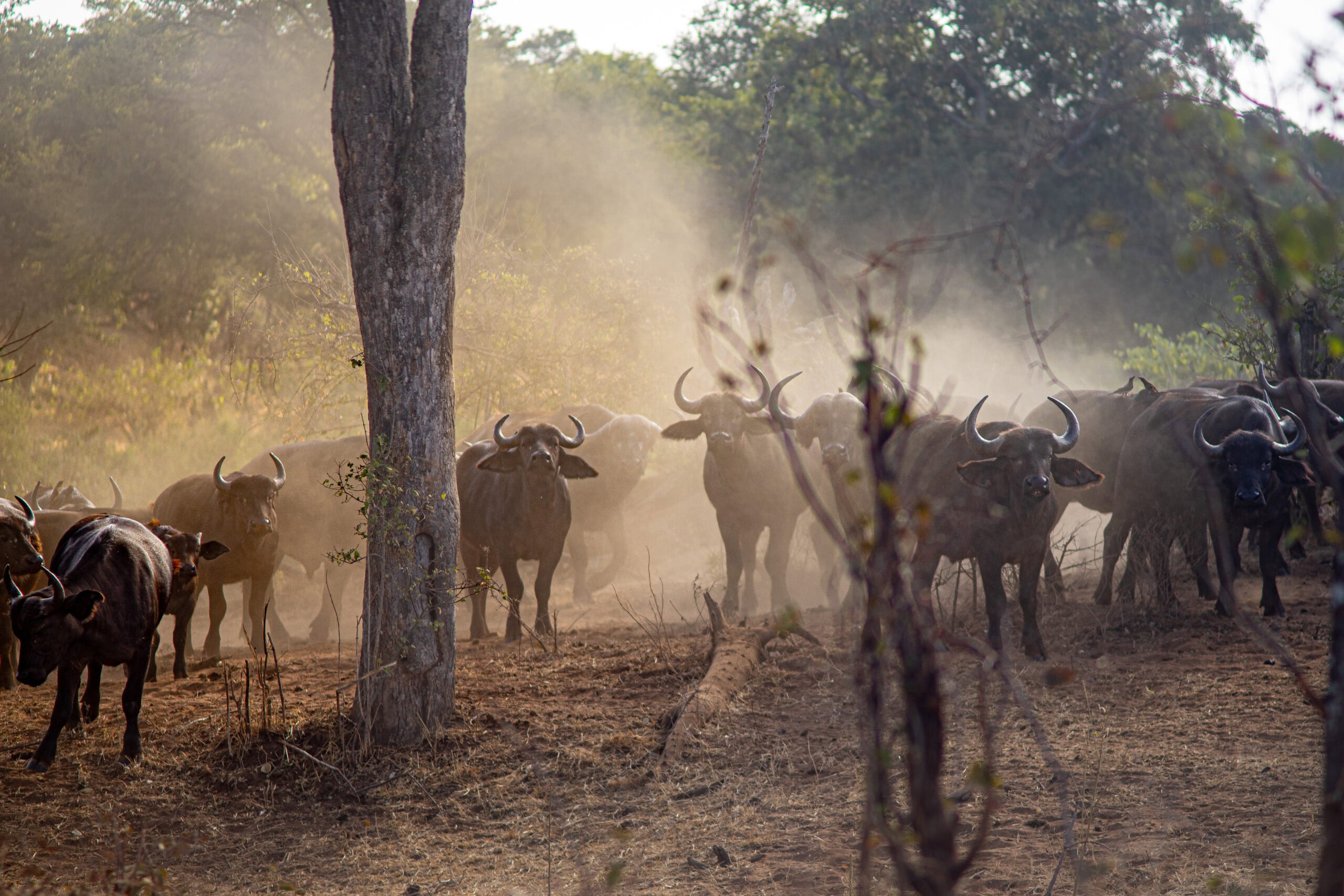
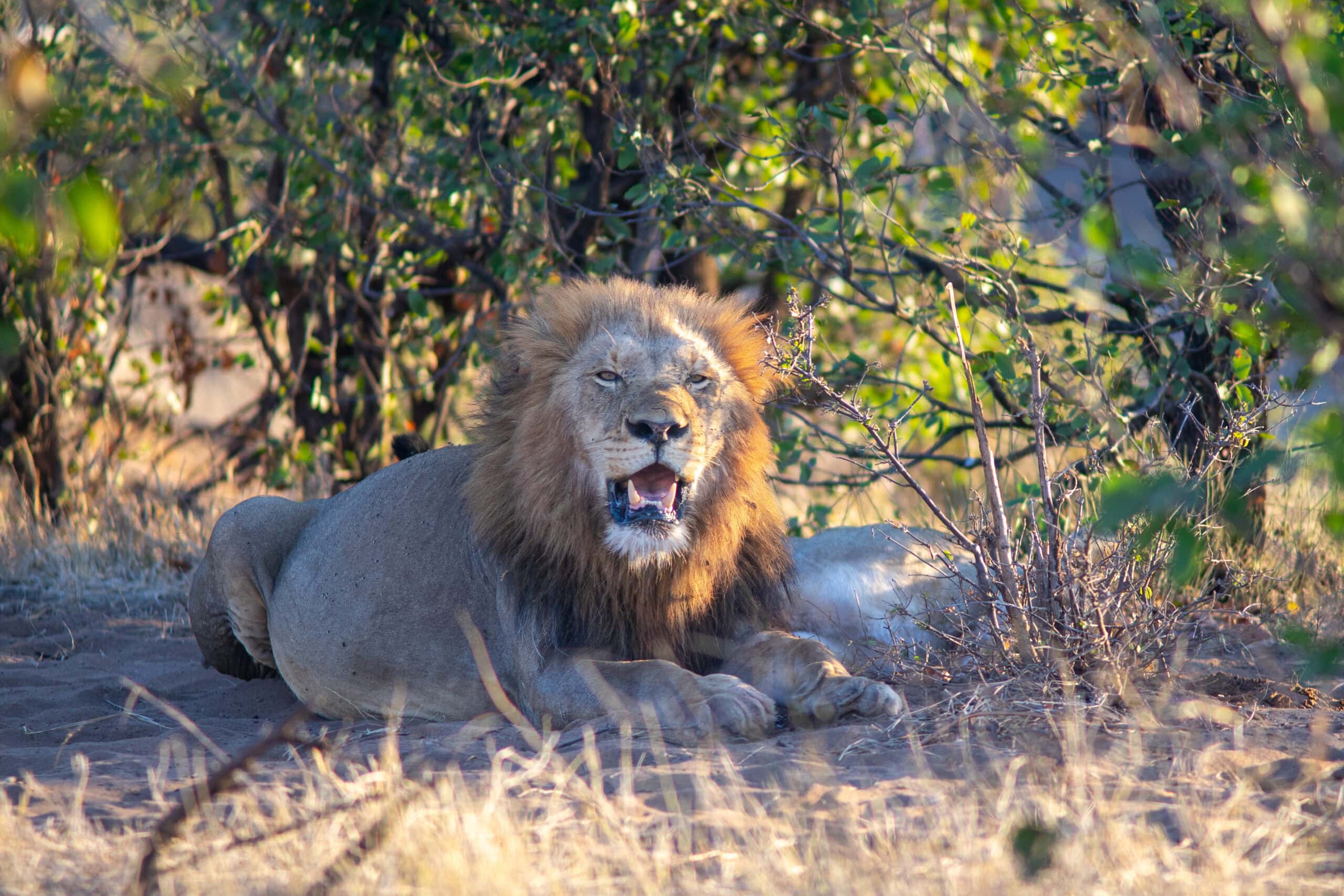
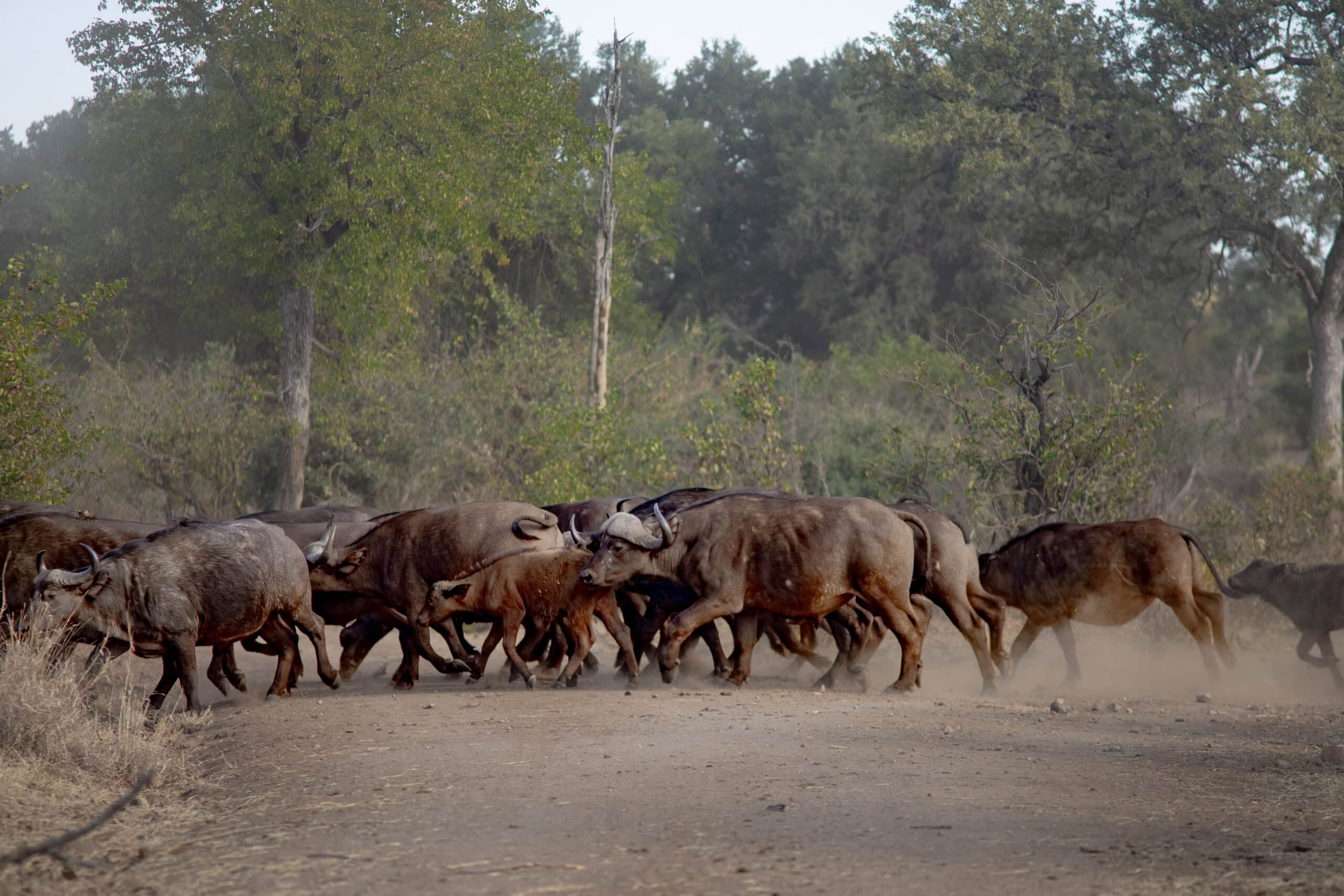
One afternoon, I rounded a bend and found myself face-to-face with a herd of buffalo at least a thousand strong, kicking up dust like a stampede. On another morning, Simba and Nala were making love with only me peeping on them.
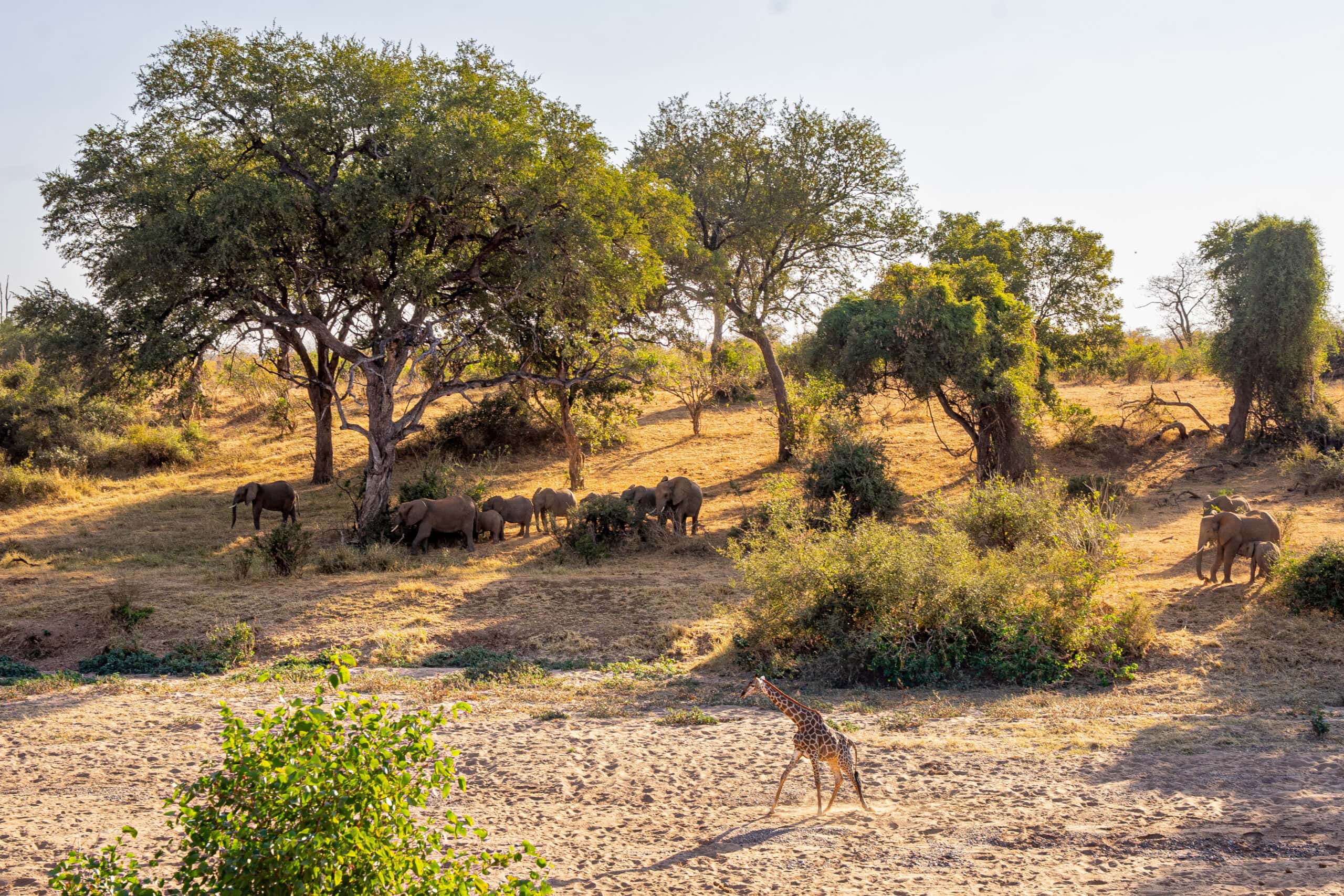
This route delivered again and again. Lions, elephants, lots of antelope, and moments of complete stillness that made the bush feel vast and personal all at once. Whether you’re planning your first self-drive safari from Shingwedzi or you’re a seasoned returnee, the Mphongolo Loop deserves a spot at the top of your Kruger itinerary.
If you’re staying at Shingwedzi and you’ve only got time for one drive, make it this one.
Please note: This post may contain affiliate links. This means I may earn a commission if you make a purchase by clicking a link (at no extra cost to you). As an Amazon Associate, I earn from qualifying purchases. Learn more.
About the Mphongolo Loop (S56)
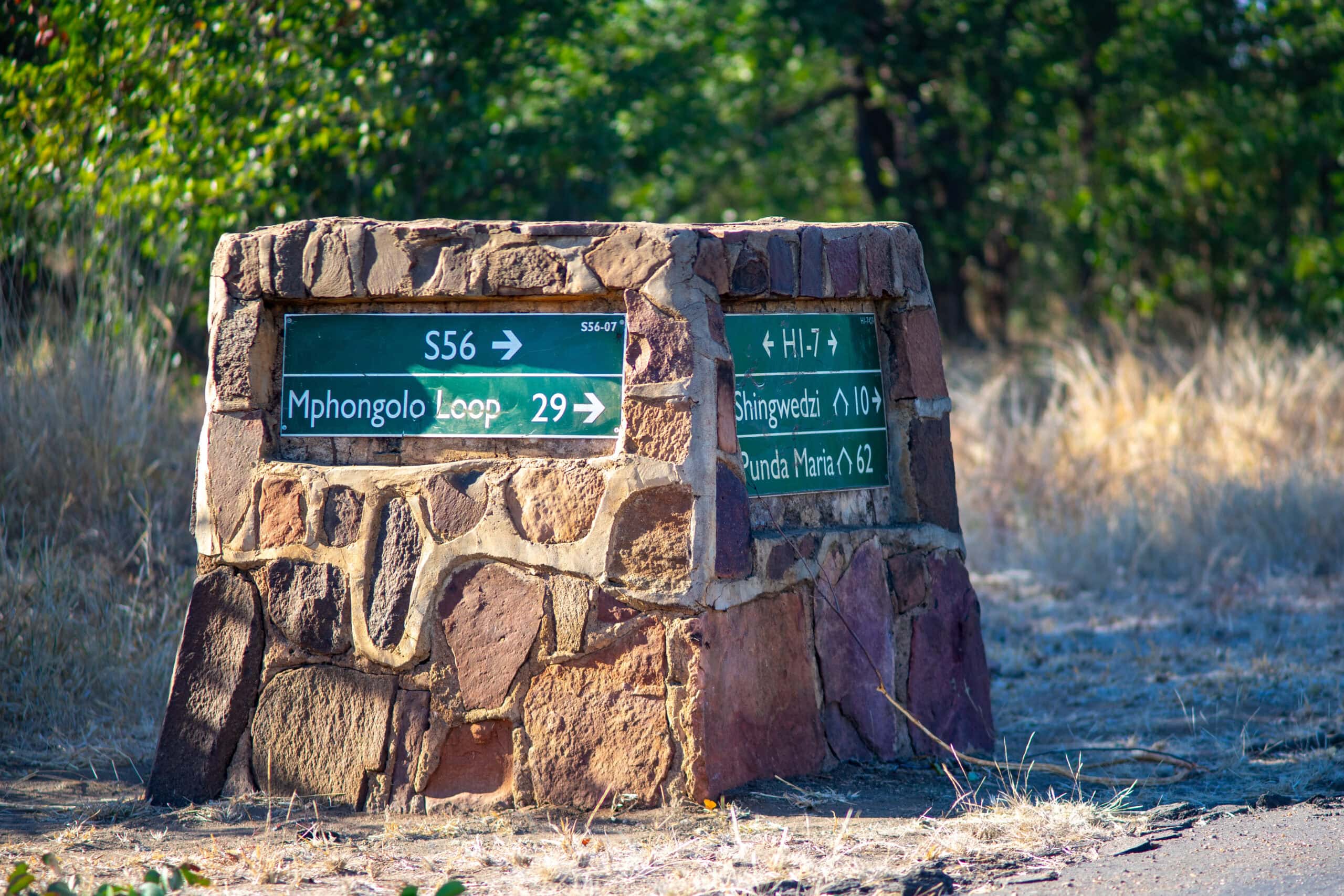
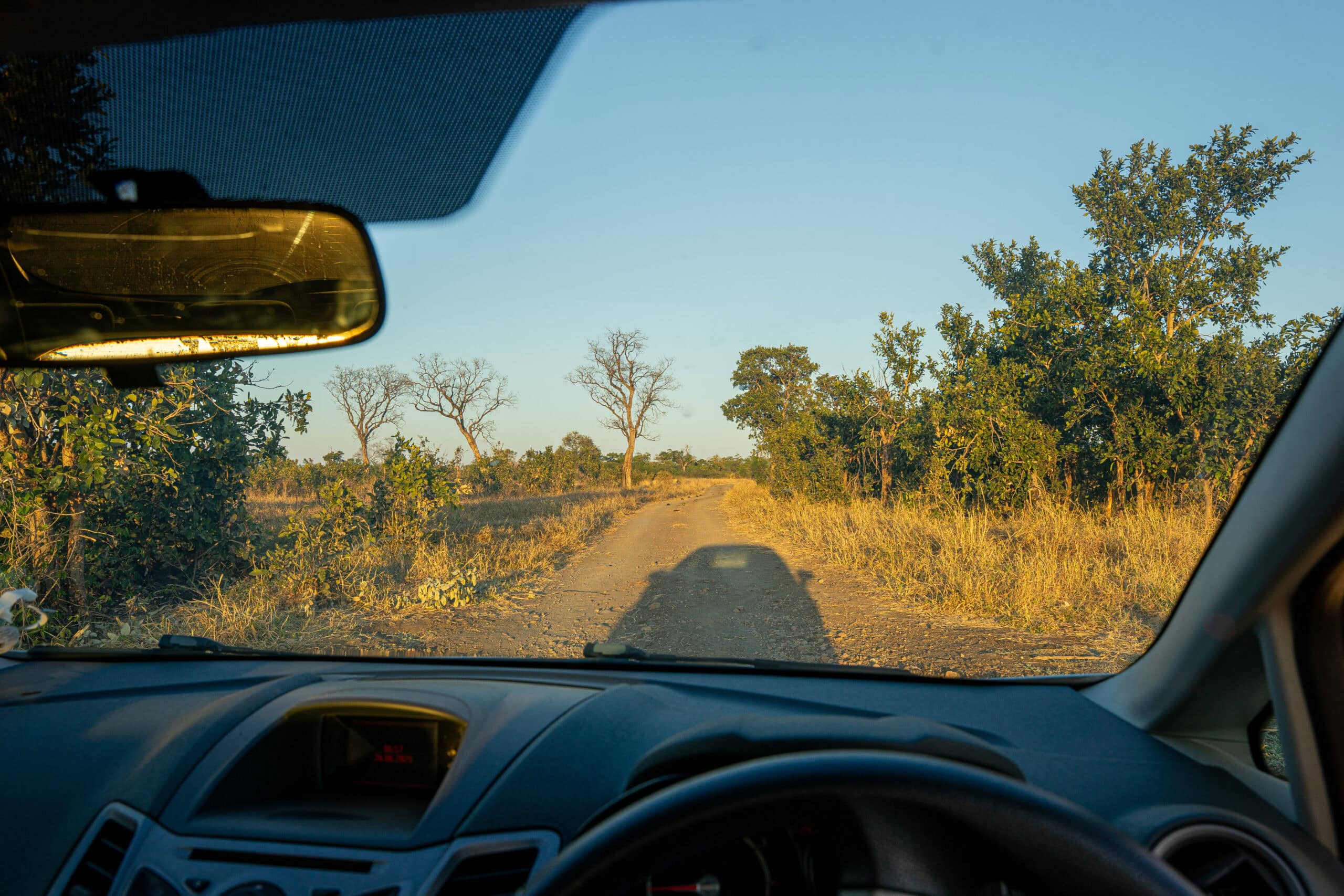
The Mphongolo Loop, officially the S56, runs between Shingwedzi Rest Camp and Babalala Picnic Site, shadowing the dry Mphongolo River as it weaves through northern Kruger. The gravel route is roughly 30 km long, and absolutely doable in a sedan. I drove it in my mom’s 2015 Ford Fiesta, probably the oldest, smallest car in the park. But that only added to the adventure.
The Mphongolo Loop is not suitable for trailers or caravans, as the signs warn you when you turn off from the H1-6.
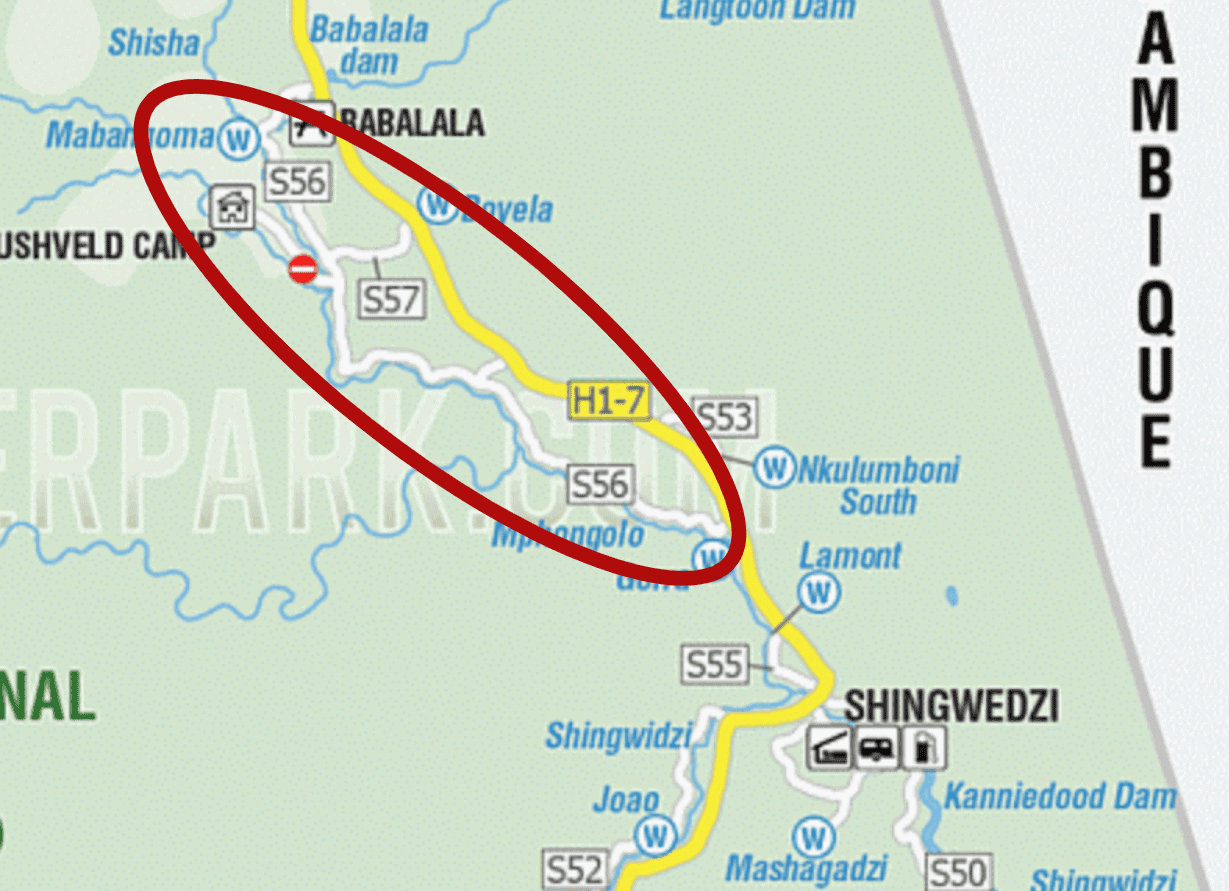
Much of the loop is hemmed in by dense mopani bush, where visibility drops and you start scanning for movement in the shadows. Then, it opens up, offering views across wide, sandy stretches of riverbed lined with towering jackalberry, leadwood and fig trees that look like they were made for leopards to disappear into.
The S56 also splits off into smaller loops that take you right down to the river’s edge.
For me, the Mphongolo Loop can be divided into three distinct zones, each with its own charms. Let me run them by you.
Southern Mphongolo: The Quiet Build-Up
Leaving Shingwedzi Camp, you hit the tarred H1-7 heading north toward Punda Maria.
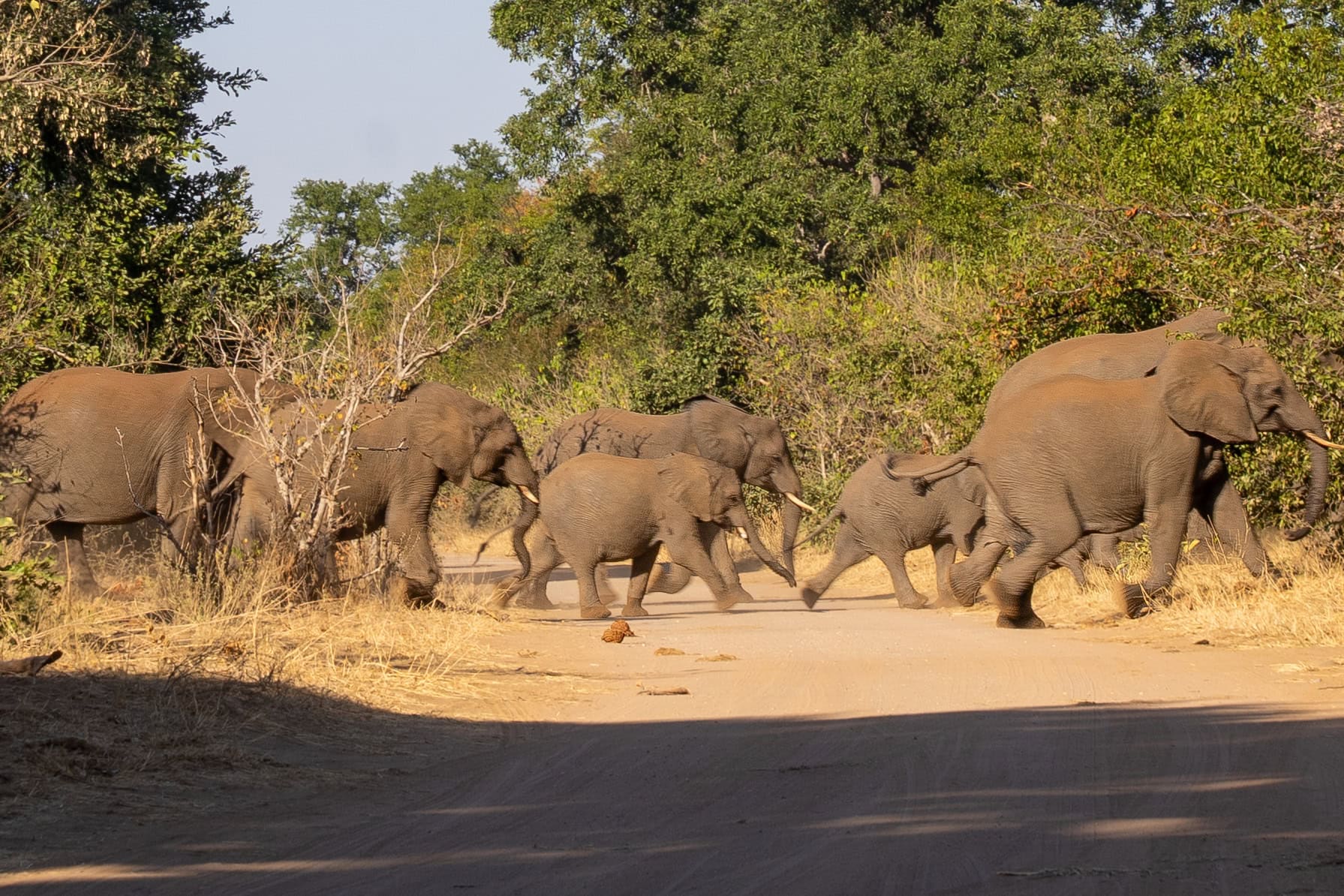
It’s not far, maybe 5km, before you spot a small round cement dam on your left. That’s the Lamont Loop (S55), and though it barely registers on the map, don’t skip it. It’s one of those blink-and-you ’ll-miss-it detours that punches way above its weight. I saw lions, buffalo, and a herd of elephants there, more than once. Give it five minutes. You won’t regret it.
Back on the tar, another 5km up the road (about 10km total from camp), the real adventure begins: the Mphongolo Loop (S56) swings left and dives into thick mopane. These first few kilometres on the Mphongolo Loop aren’t going to win any beauty contests. It’s a lot of sameness. Flat, dense mopane veld, little visibility, but don’t write it off too soon.
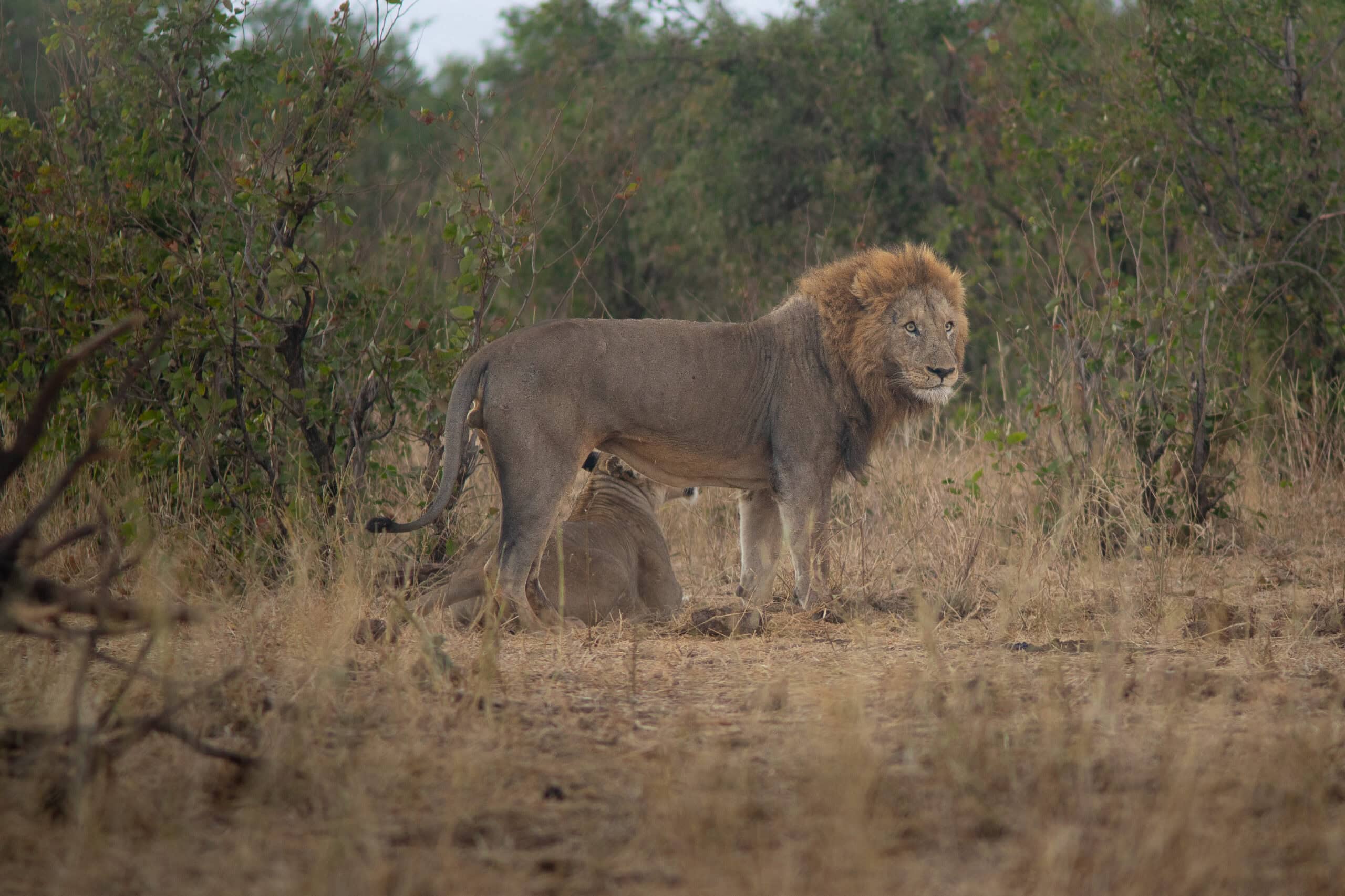
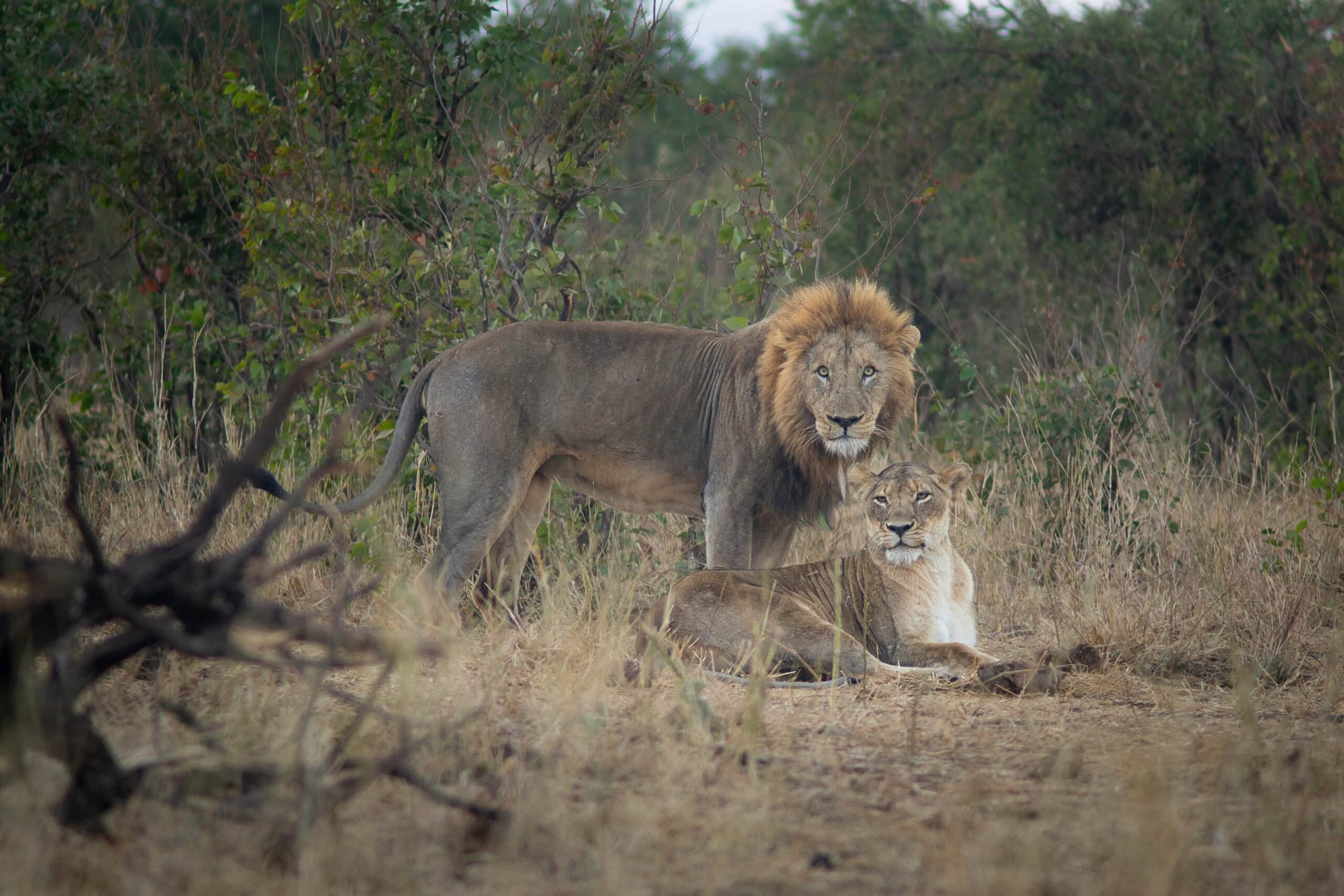
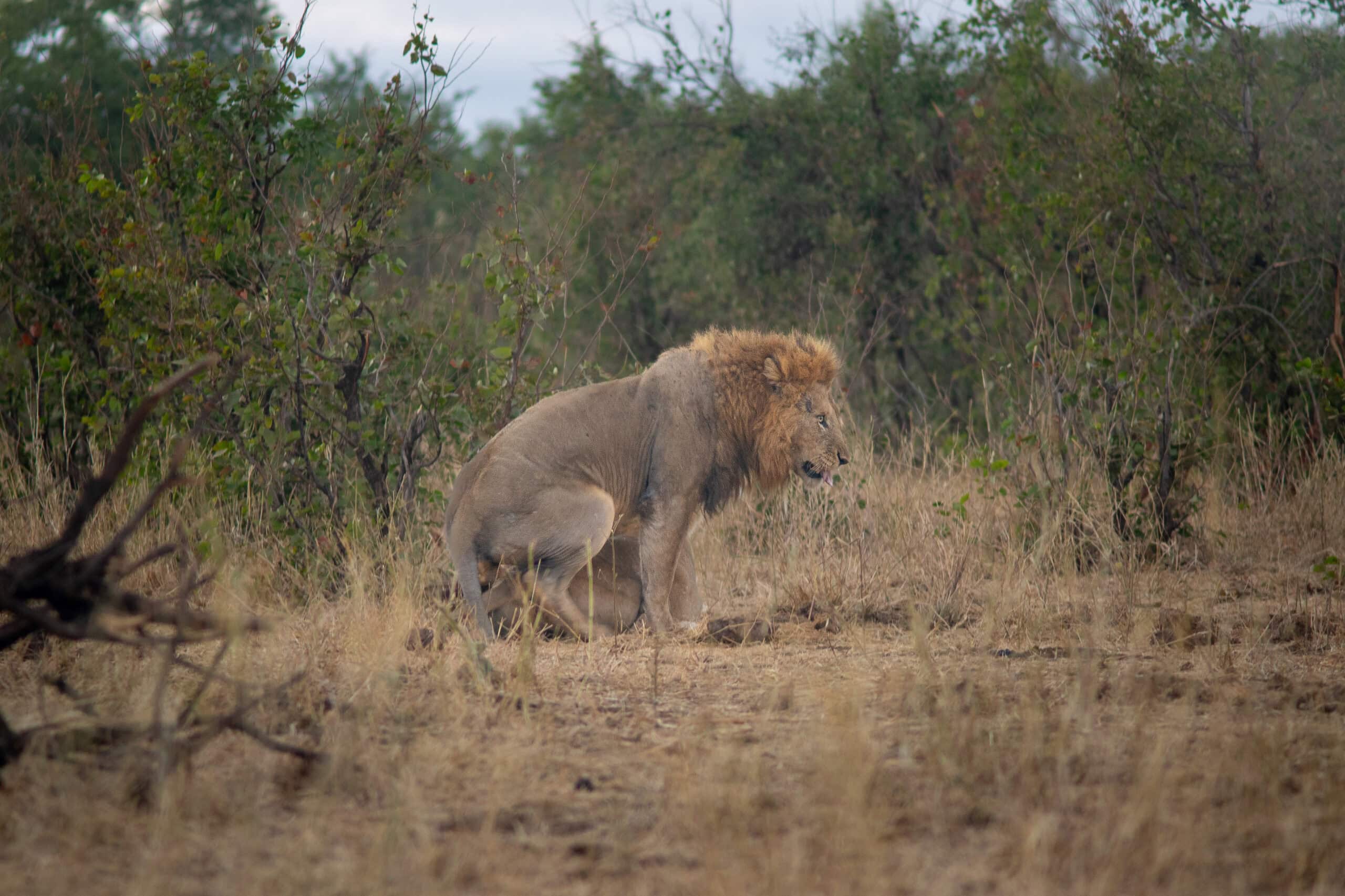
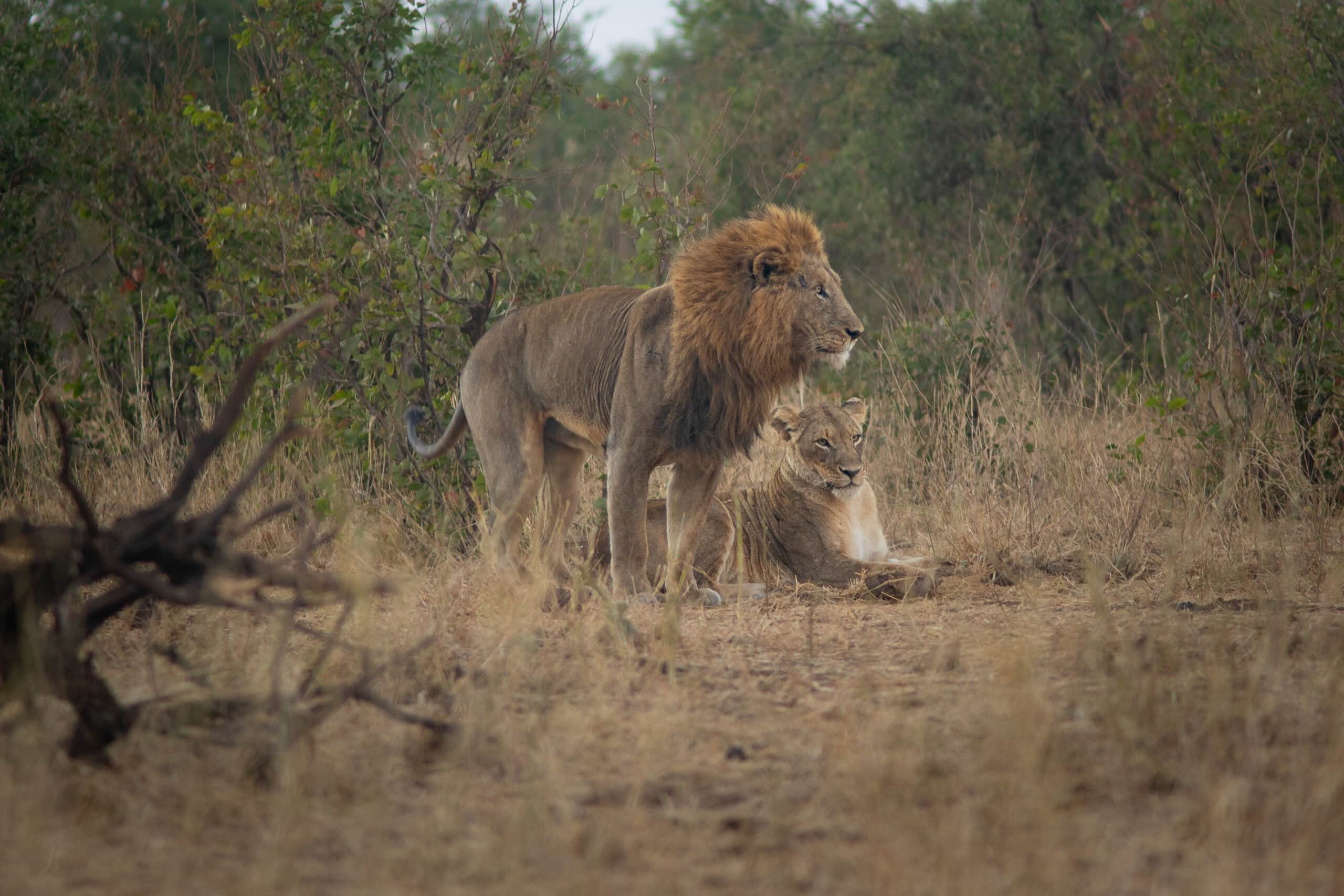
One early morning, just 20 minutes after leaving camp, I found a mating pair of lions not far from the road. They stayed here for a few days, and I spotted them on two of my game drives. No other cars in sight. This is northern Kruger after all, where solitude is part of the magic.
The mopane veld in the south is also a prime spot for elephants. I saw more than my fair share of them.
Eventually, you reach the confluence of the Mphongolo and Phugwane Rivers, and that’s where things really start to open up.
Central Mphongolo: The Heart of the Loop
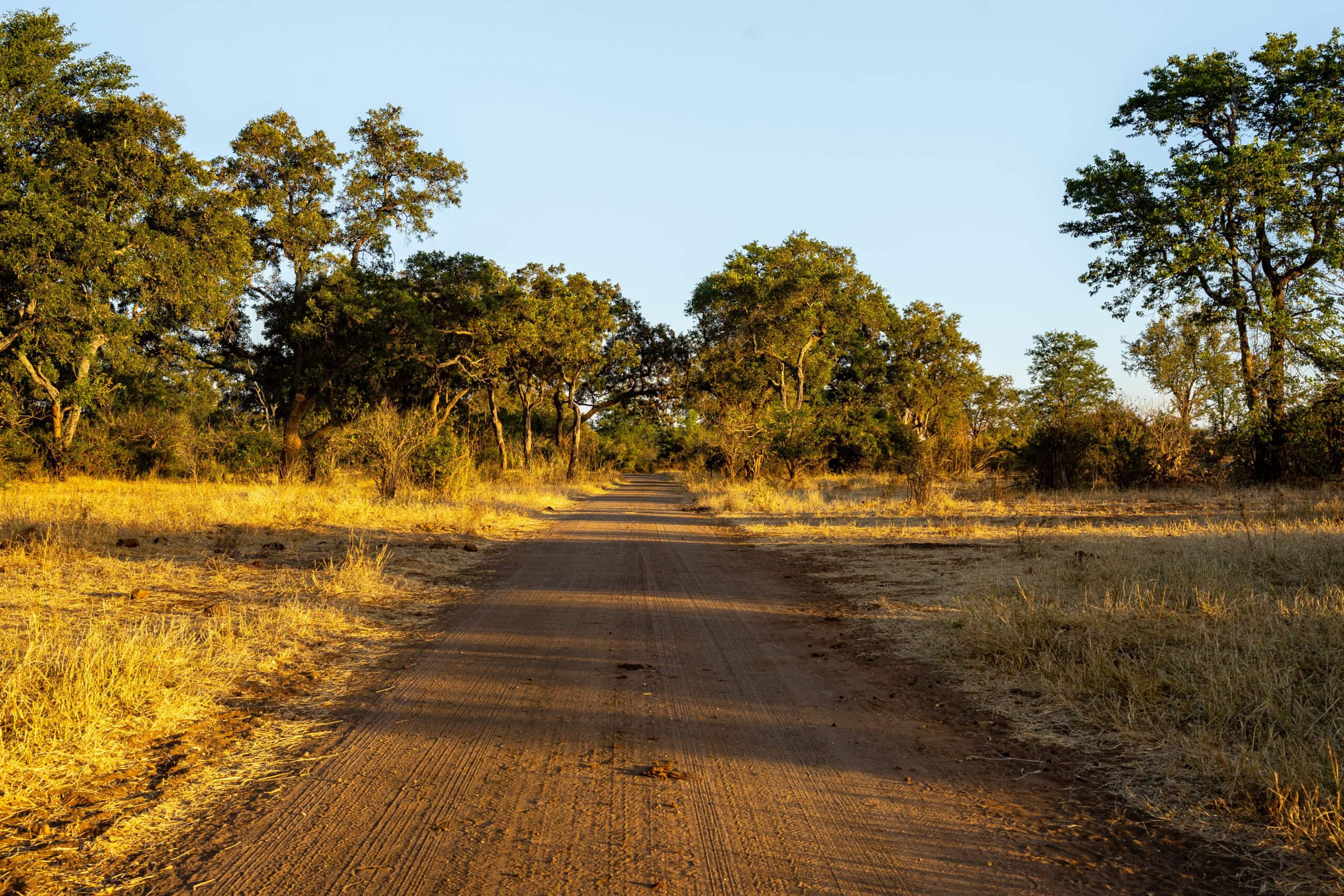
Past the confluence, the landscape transforms. The mopane thins out, and suddenly you’re winding alongside the dry Mphongolo riverbed, flanked by enormous jackalberry, sycamore fig, and leadwood trees. It’s here the loop earns its reputation. The light filters through the canopy, the riverbed sculpts the land, and it’s damn scenic.
I kept on thinking those big trees must be hiding a leopard somewhere. Maybe too well, as I never saw my leopard I was hoping for.
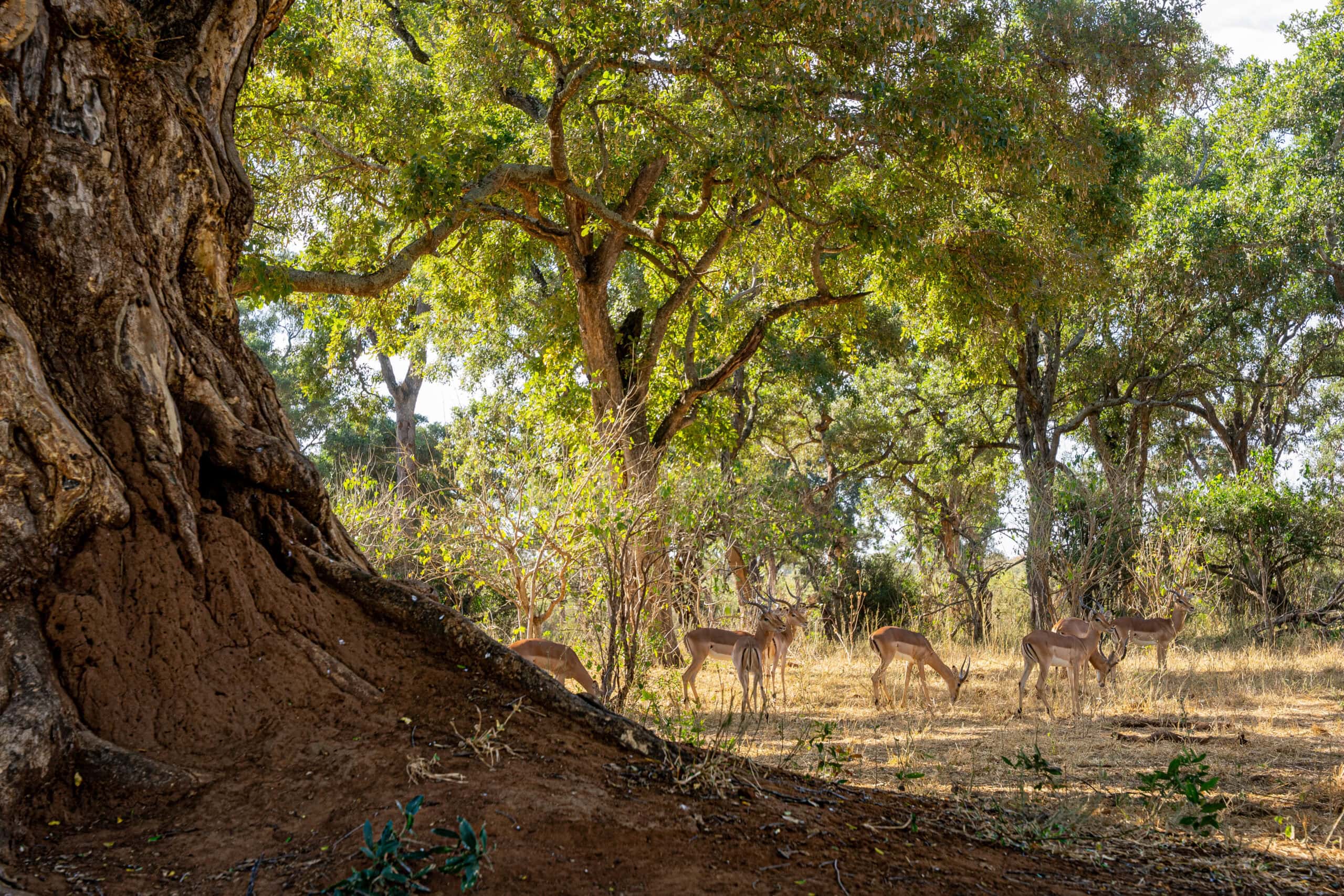
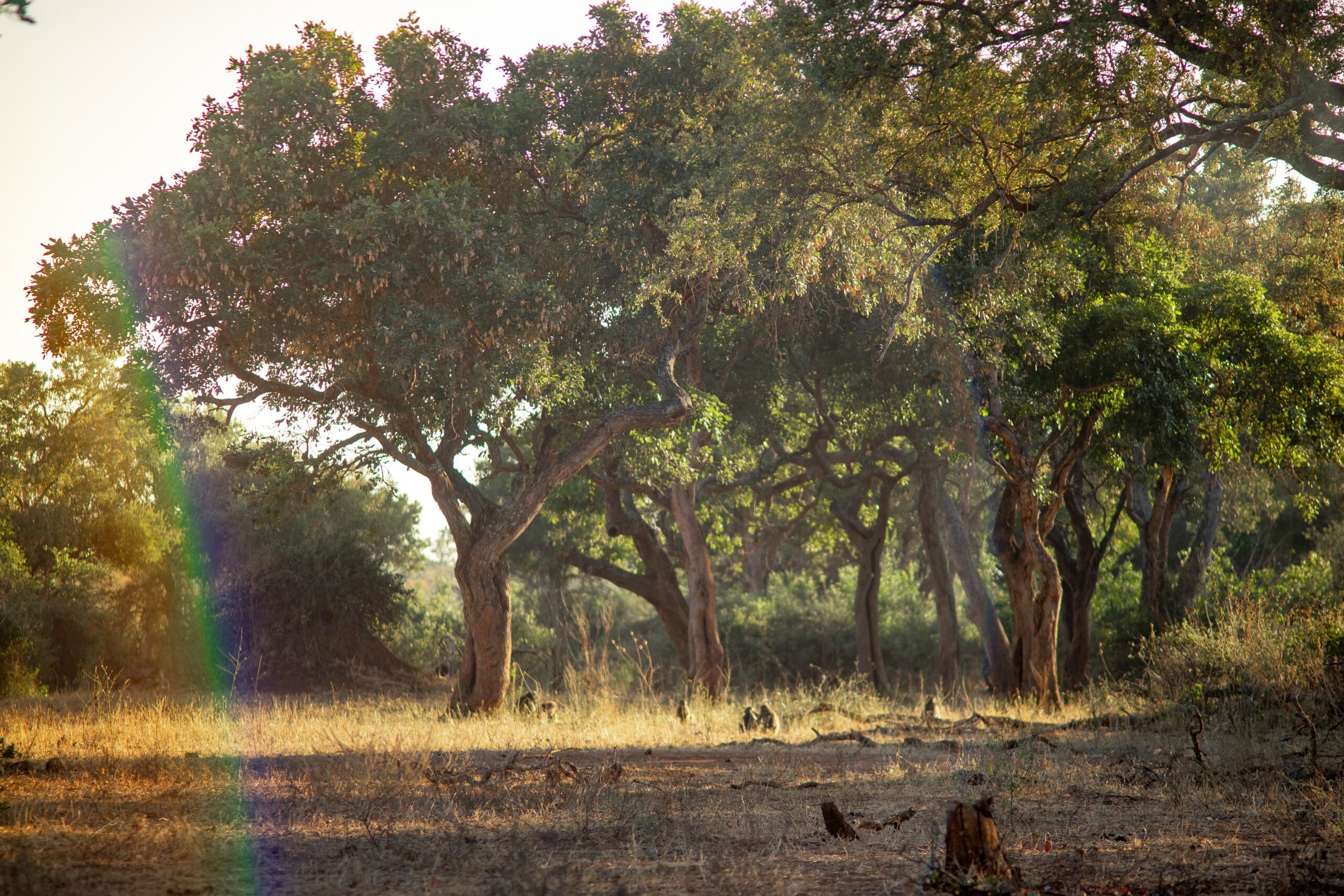
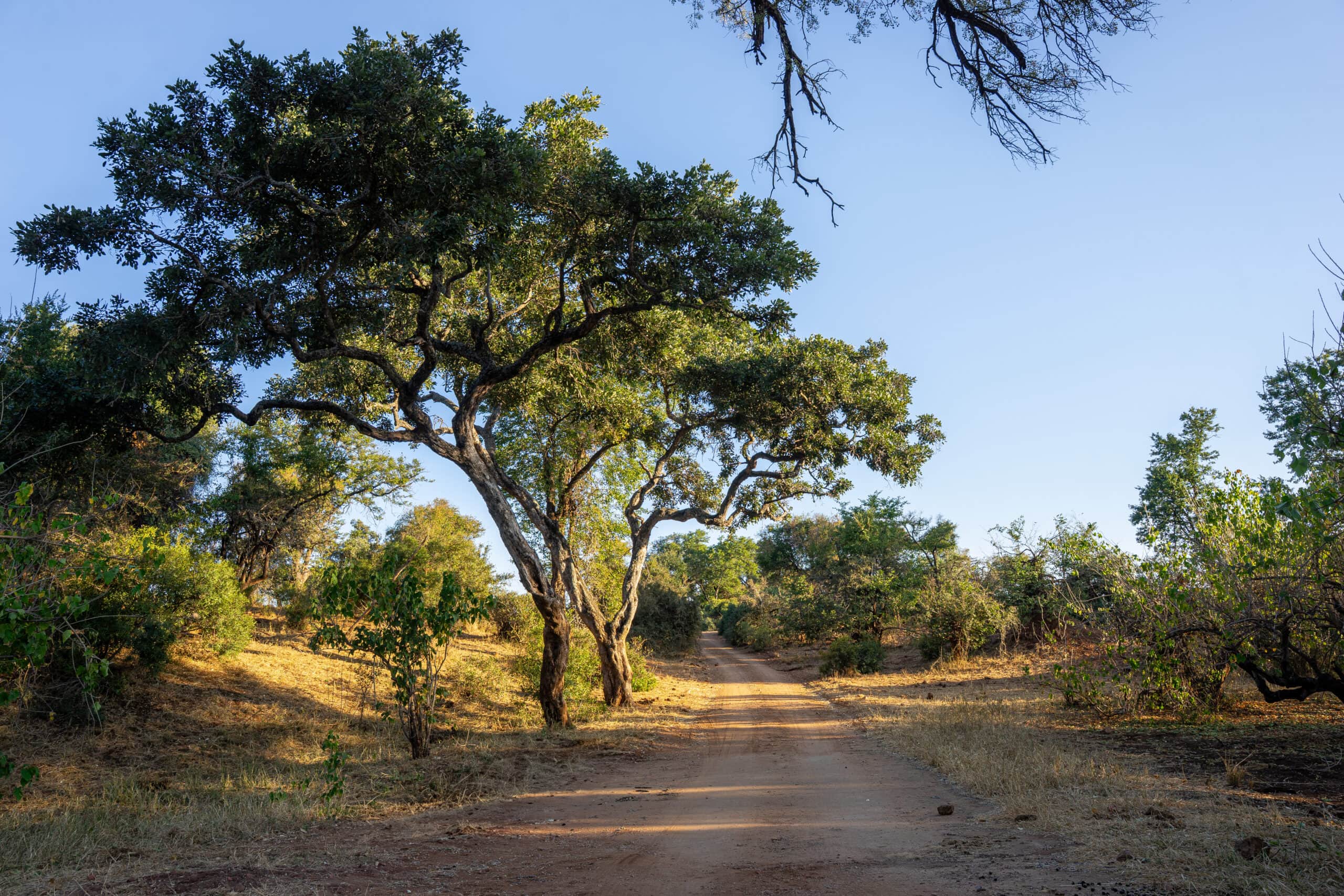
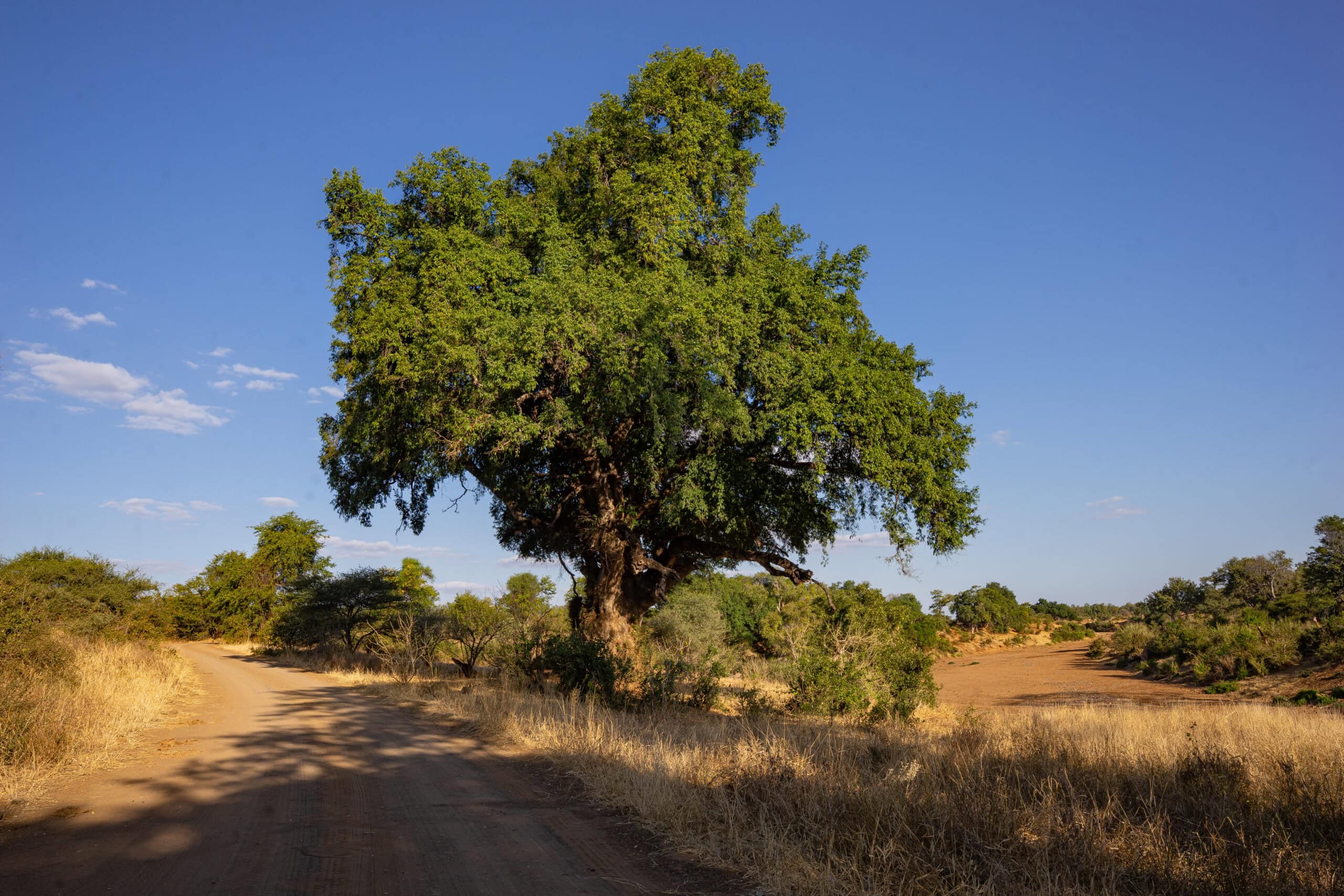
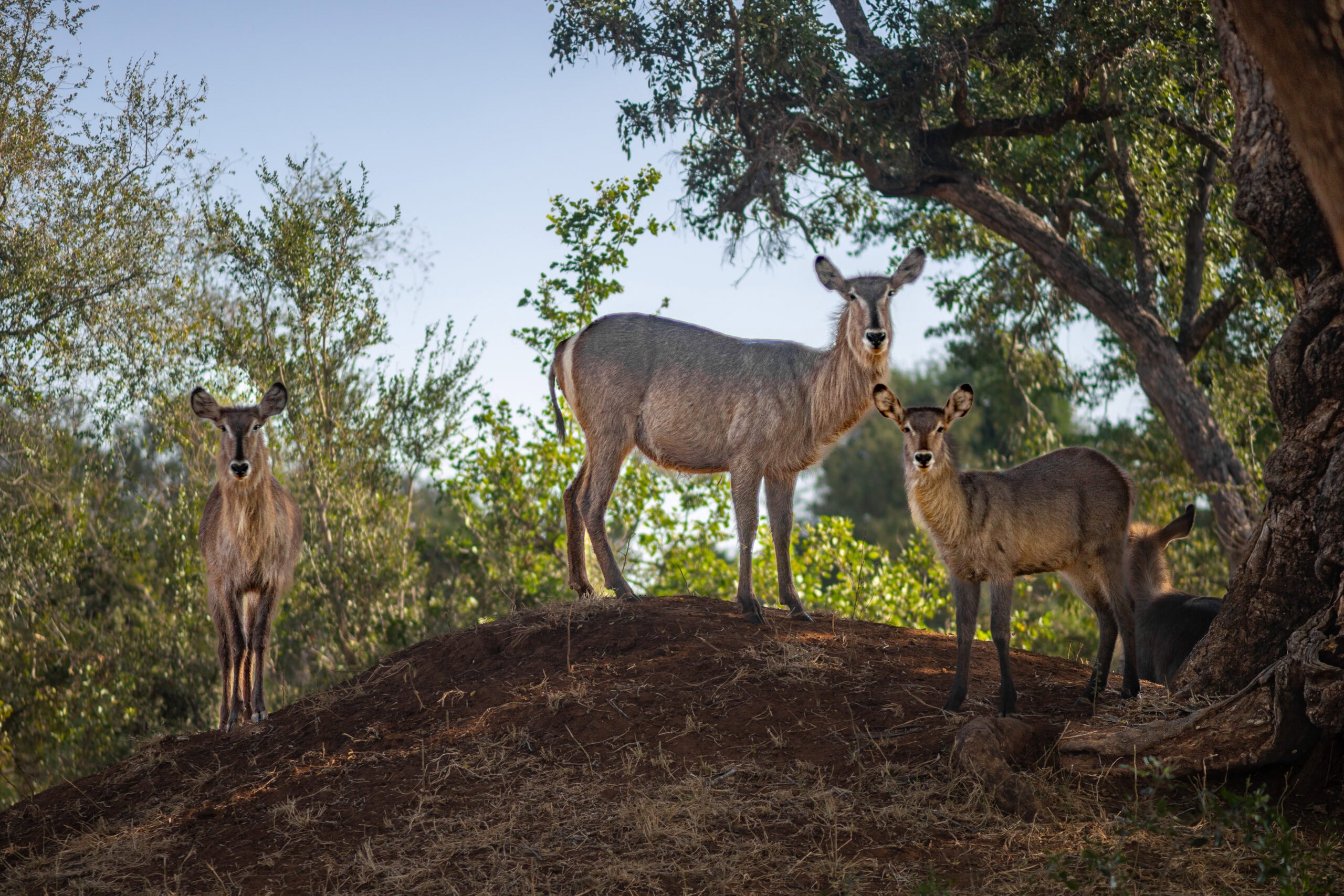
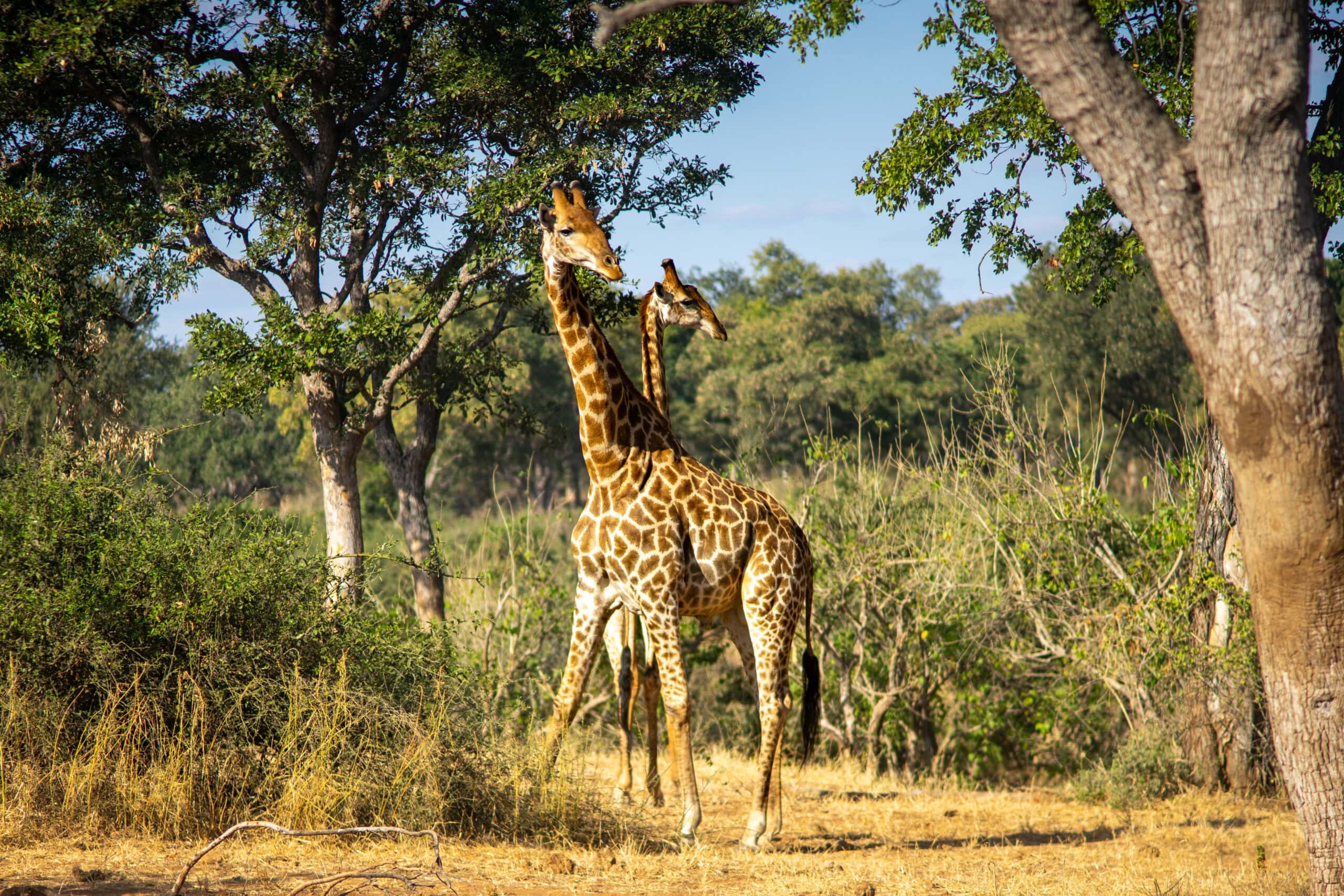
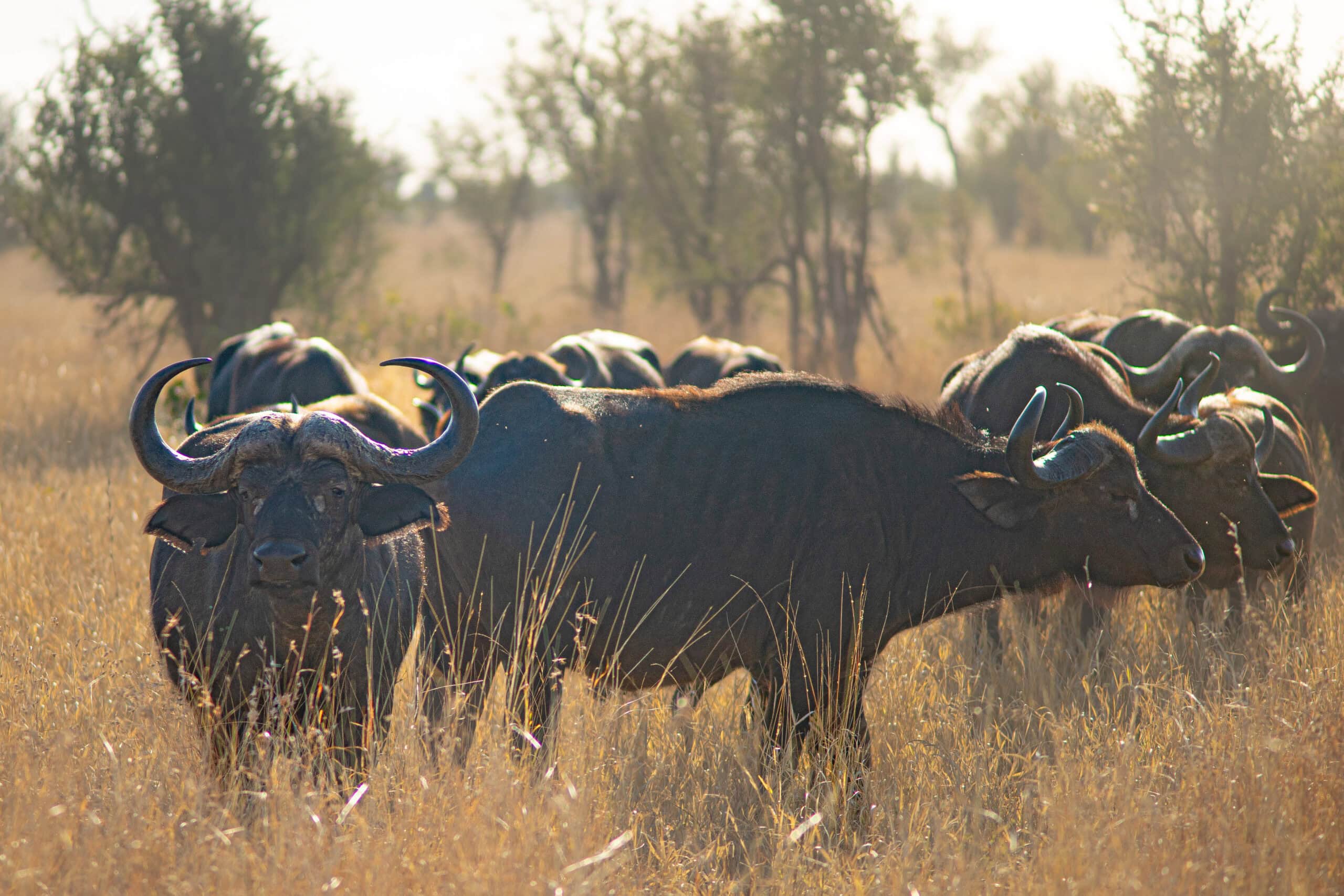
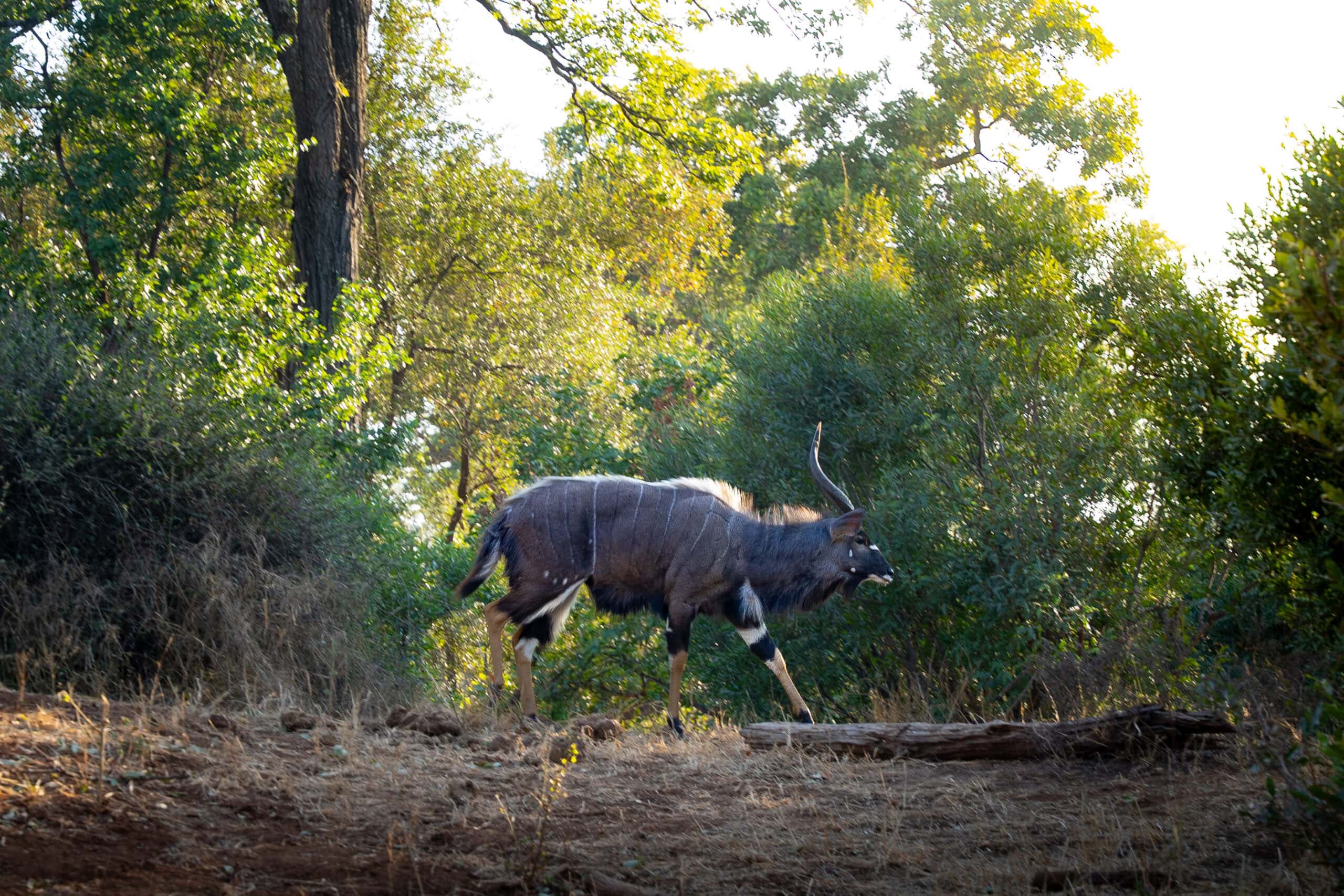
Game-wise, this stretch delivers. I saw plenty of the usual suspects: waterbuck, nyala, impala, and giraffe. Oddly, I didn’t see much kudu; maybe one or two over several drives. What it lacked in kudu was made up by buffalo. A metric fucton of them.
On one occasion, I got cut off by a buffalo mega-herd crossing the Mpholongo River and the road. At least a thousand of them, dust rising like smoke as they crossed the road in waves. I turned off the engine and waited. Half an hour later, they were still coming.
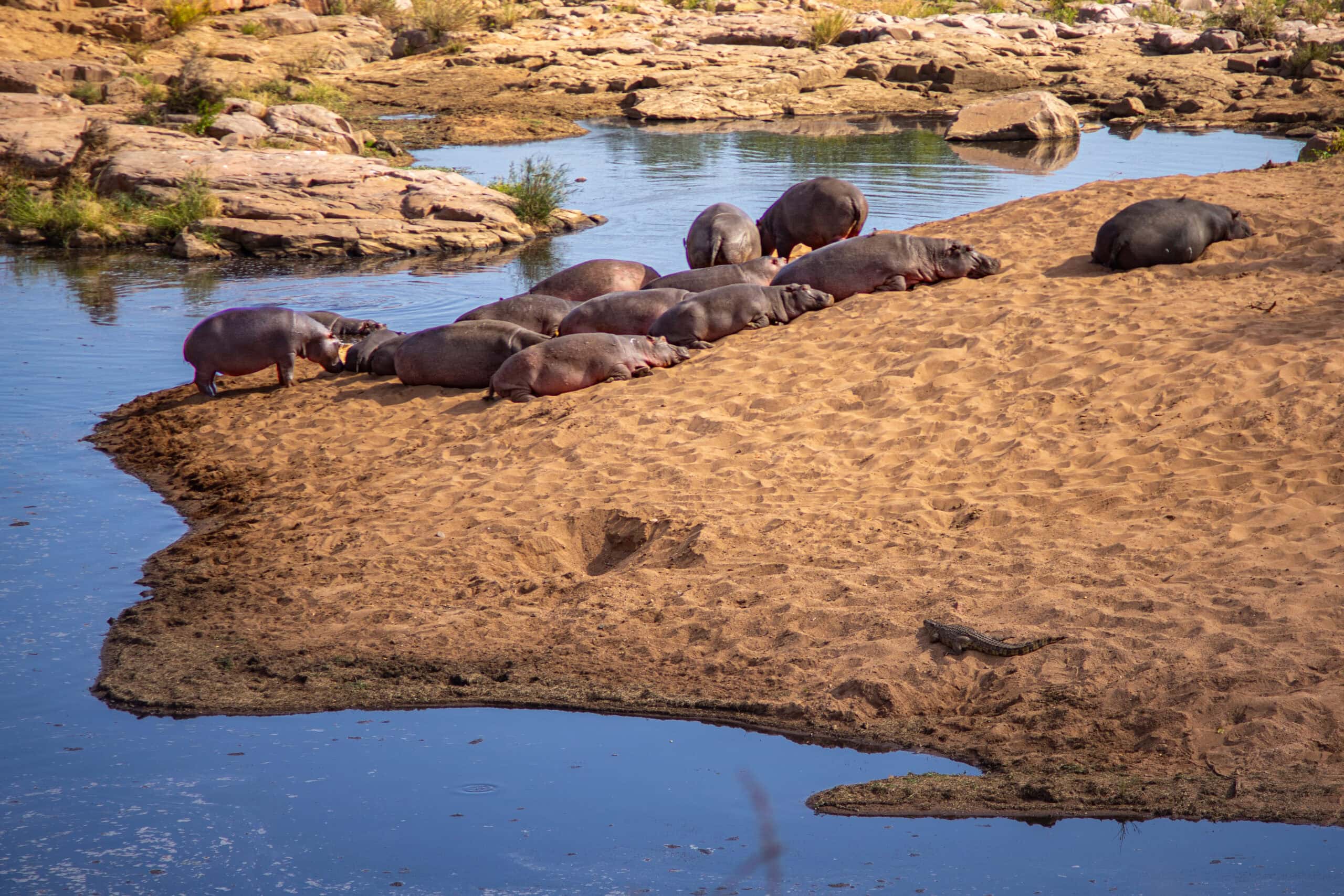
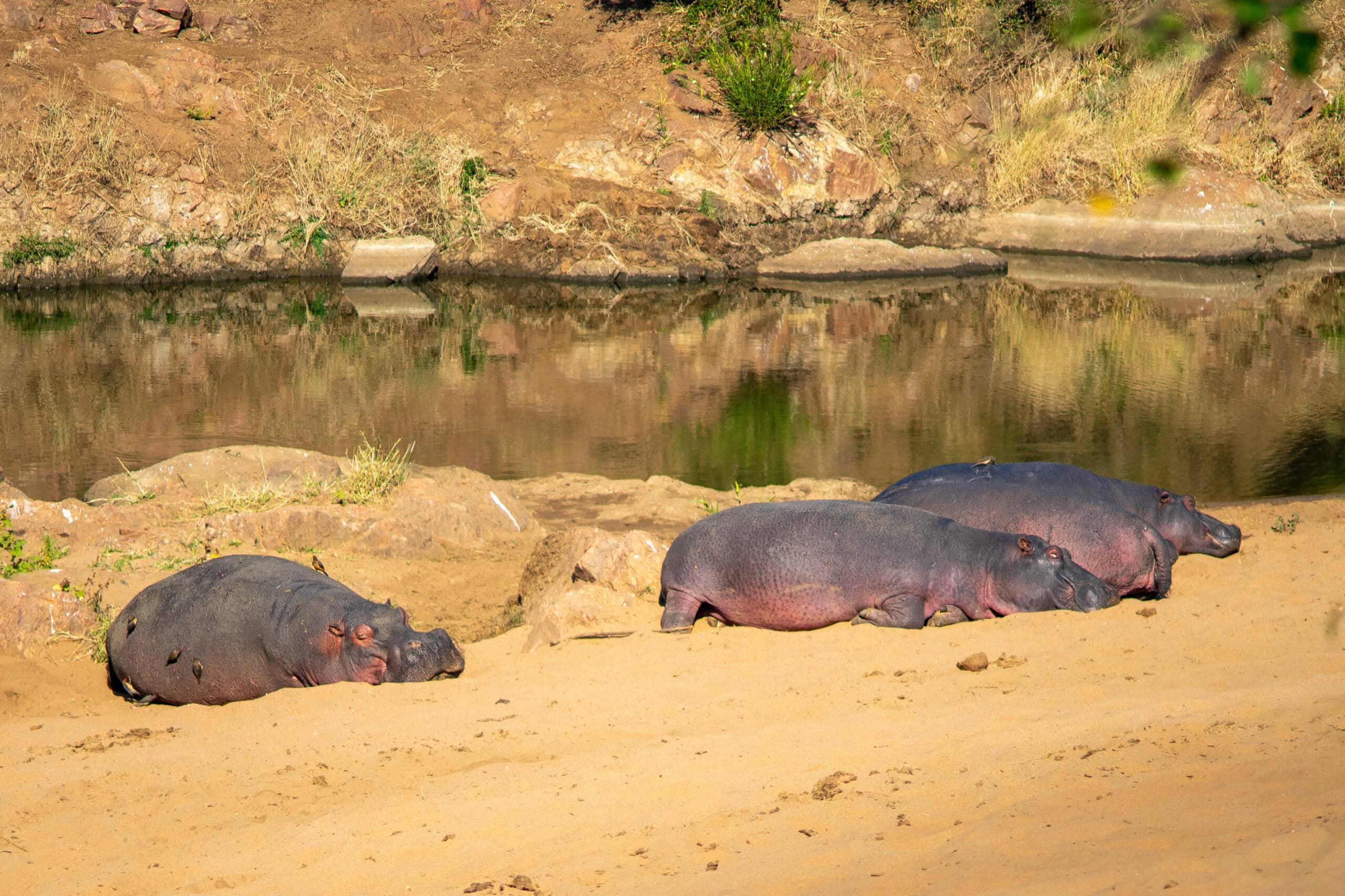
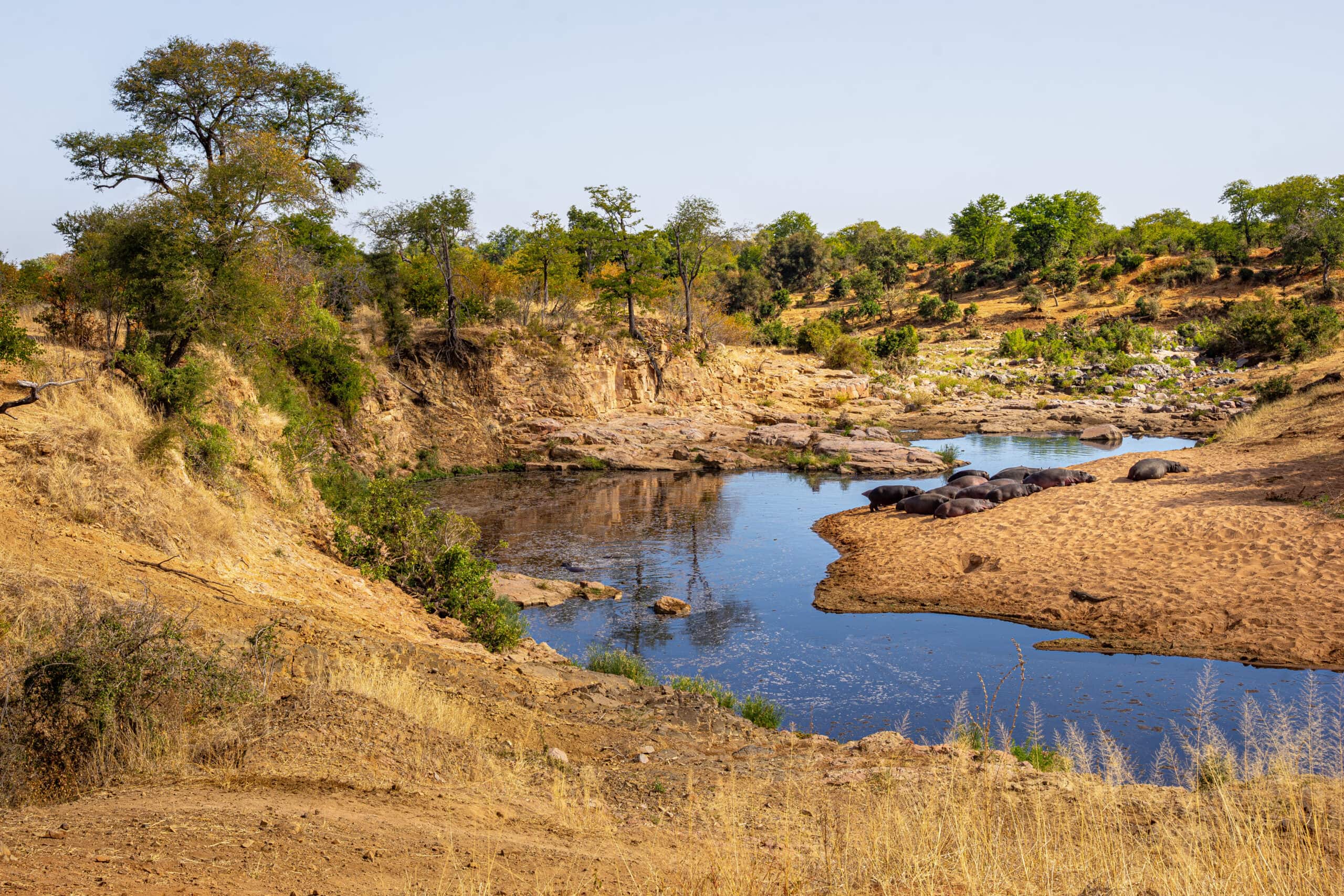
Just south of Sirheni Bushveld Camp (location) turnoff, there’s a small pullover spot overlooking one of the only permanent pools in this part of the Mphongolo. I watched a pod of hippos snorting and shifting on the riverbank while a giant croc basked nearby.
This whole central section, especially around Sirheni, is absurdly beautiful. It’s easily my favourite part of the loop.
But as you push north, the mopane starts to creep back in.
Northern Mphongolo: The Unexpected Finale
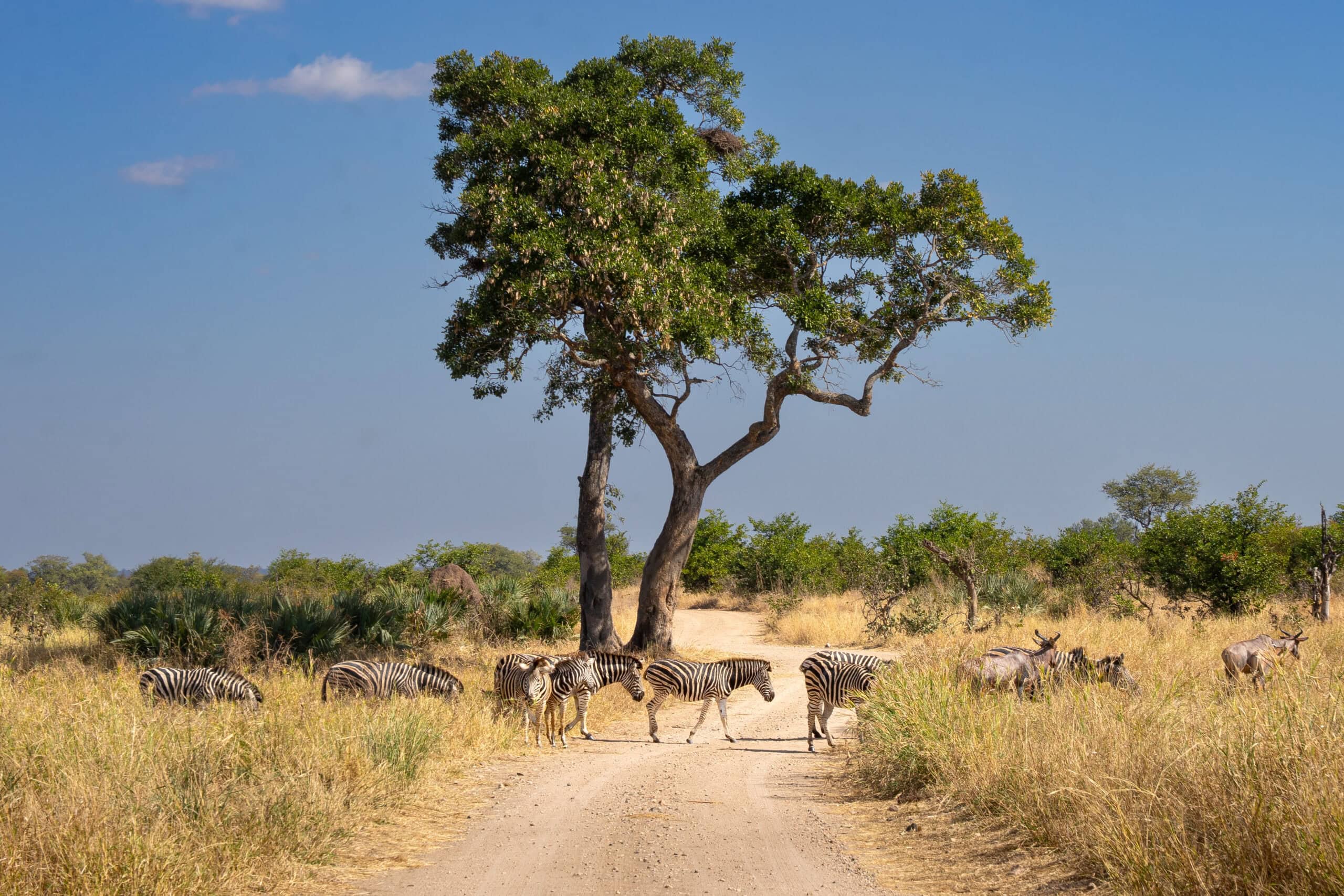
And then, just as you think the loop might fizzle out in more mopane bush, it opens into something totally different: open grasslands. A rare sight in northern Kruger, and a stunning contrast after the dense cover earlier on. It’s a short stretch, maybe 5km, but it’s worth every second.
I spotted zebra and wildebeest here, a couple of tsessebe (another northern Kruger special), and elephants slowly making their way across the plains.
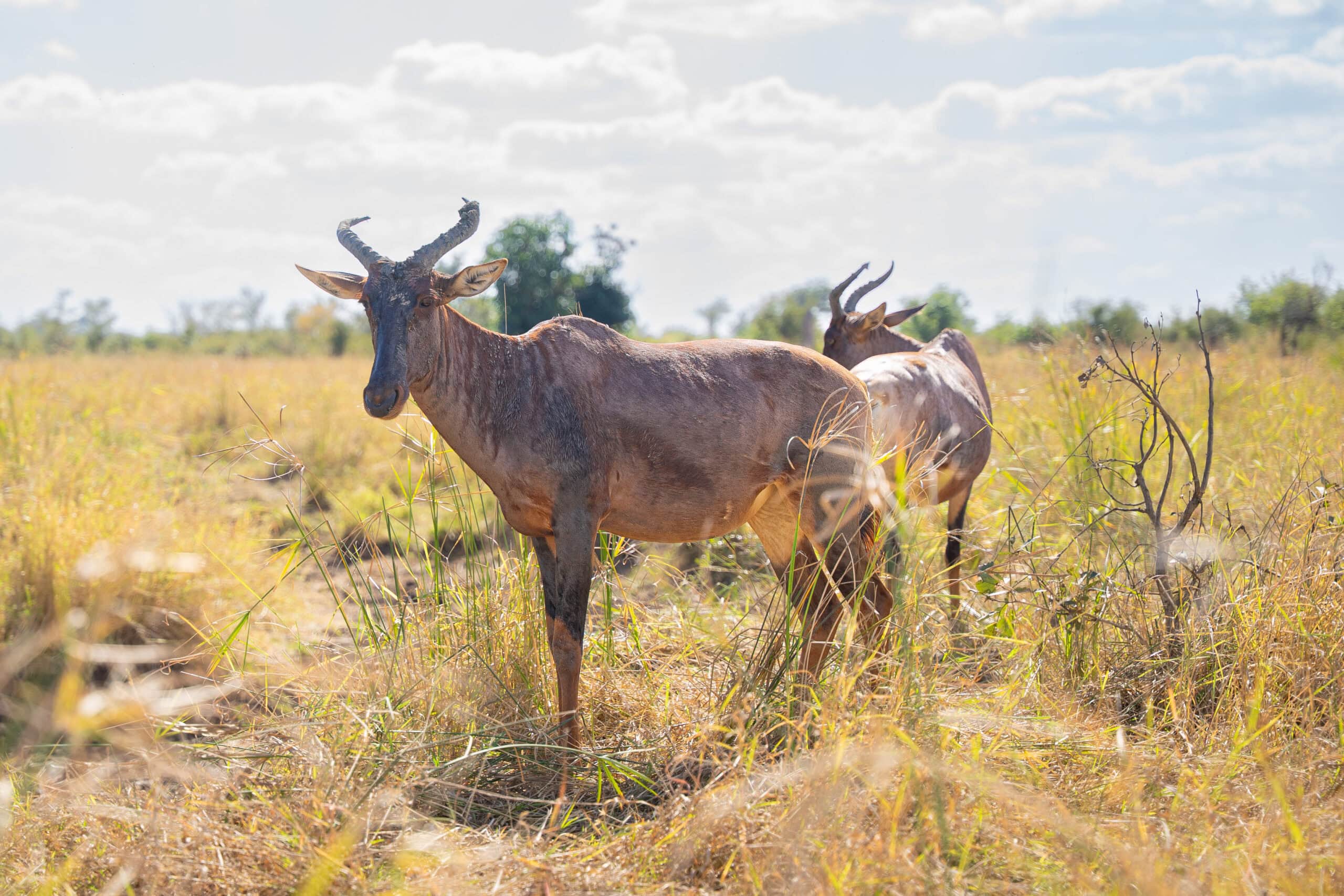
This open country takes you right up to Babalala Picnic Site, the loop’s quiet endpoint. There are a few shady trees, toilets, and not much else. Just the smell of coffee from a Thermos and the sound of the veld ticking in the sun.
The H1-6 near Babalala passes through the same grassland, and it has been rewarding on all my drives. It’s especially beautiful first thing in the morning when that grass seems to glow in the first morning sun.
Babalala Picnic Site: Peace, Shade & a Hot Breakfast
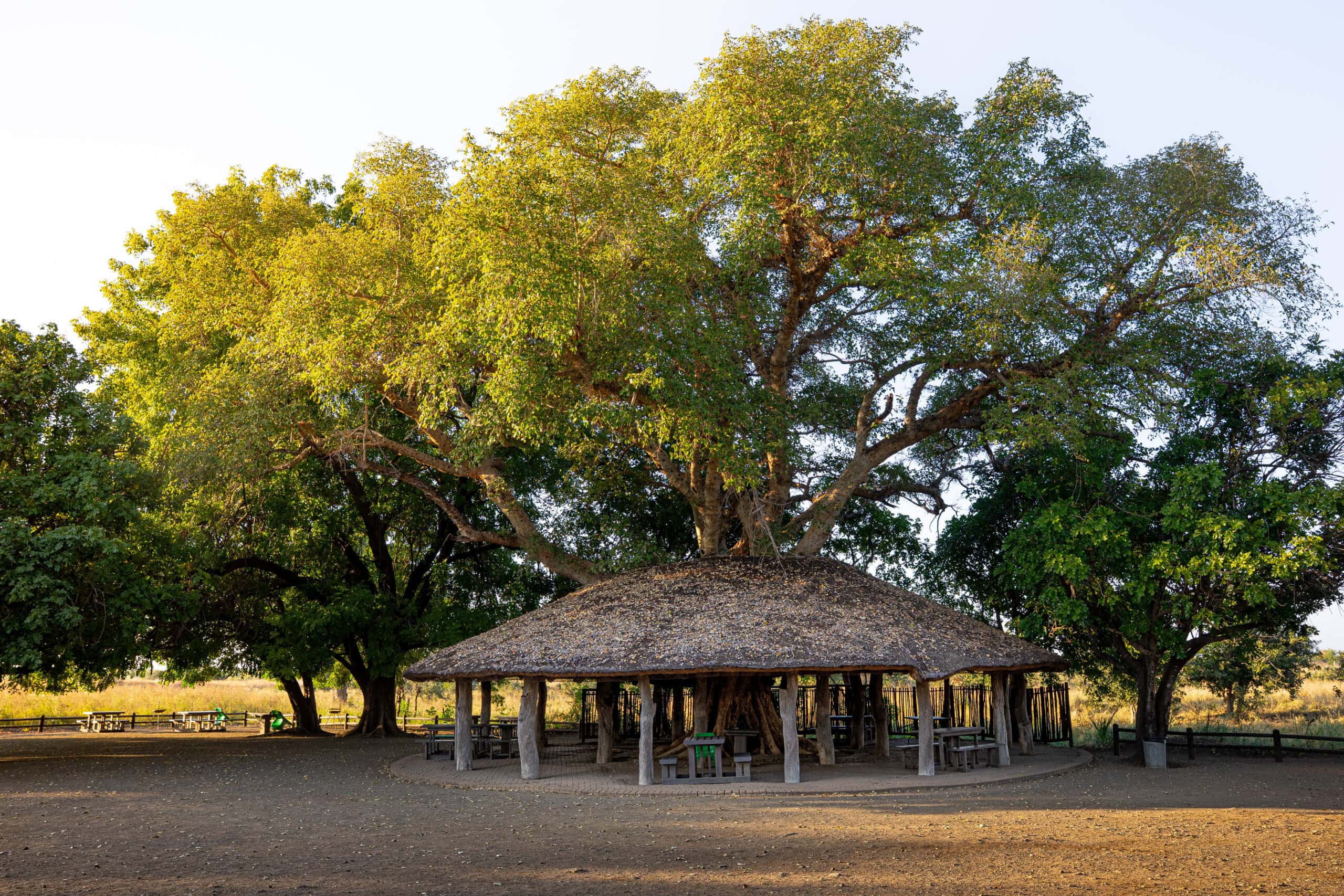
Babalala isn’t just a place to stretch your legs; it’s the only official stop on the Mphongolo Loop where you can get out of your car. After 30 km of slow gravel and bushveld, trust me, both you and your vehicle will appreciate the break. For me and my mom’s ageing 2015 Ford Fiesta, it was always a welcome sight. We both loved knowing a smooth stretch of tar (the H1-6) lay just ahead.
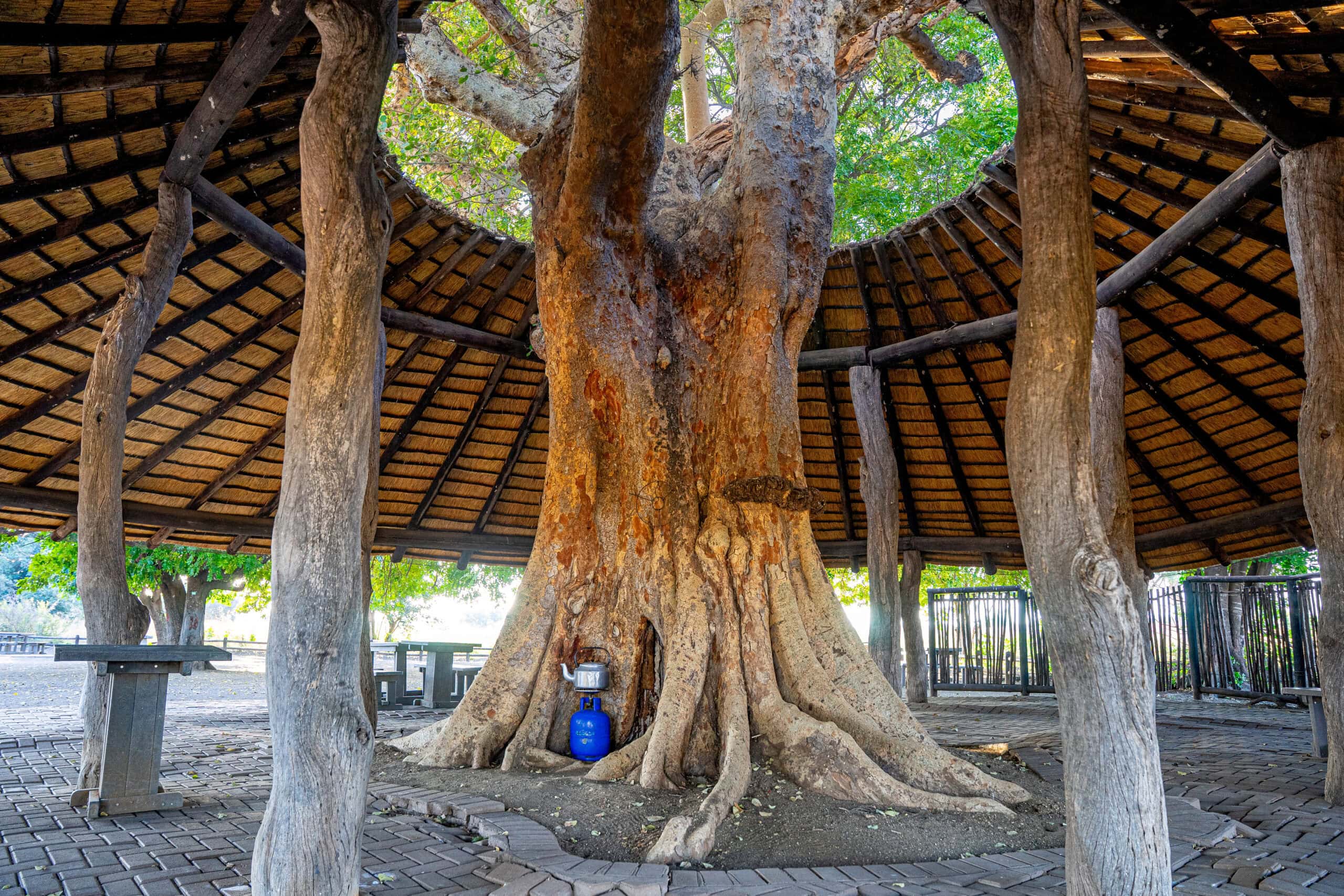
But Babalala is more than a pitstop. It’s one of the most scenic and peaceful picnic sites in Kruger. A massive sycamore fig tree dominates the space, its wide branches forming a living canopy over a circular thatched shelter cleverly built around the trunk.
Benches are scattered throughout the shade, offering views across the surrounding grasslands. I drank two cups of coffee and rusks while spotting the odd elephant lumbering past.
You can hire a gas braai here and sizzle up your own bacon-and-eggs breakfast or whatever gourmet situation your cooler box has going on. There are sinks for washing up, clean toilets, and, if you’re lucky, a breeze rustling through the trees.
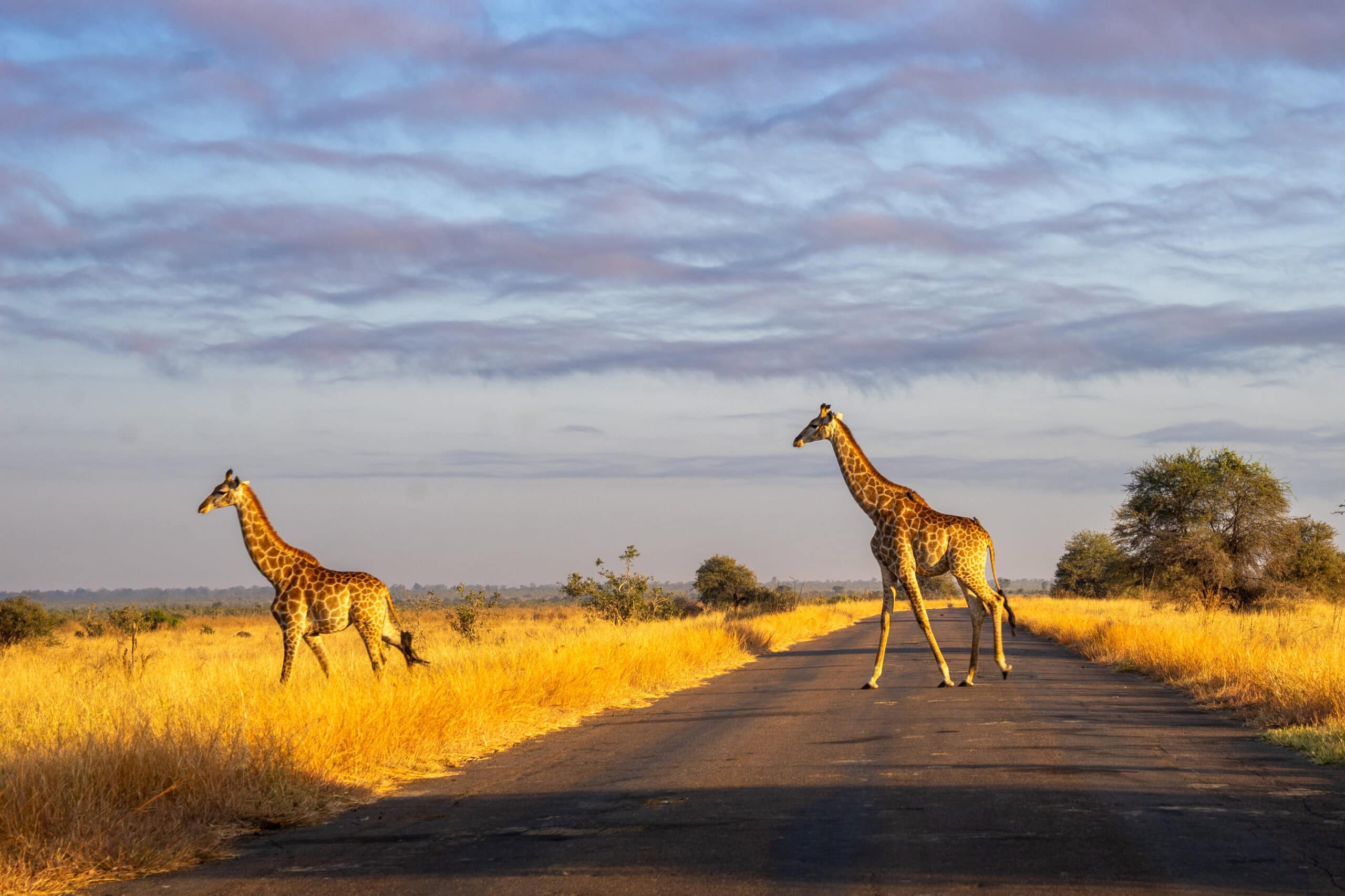
From Babalala, you can either loop back down the S56 or, like me, cruise south on the tarred H1-6, which almost always turned up something good. Elephant, buffalo, giraffes, ground hornbills, maybe even a roan antelope if you’re lucky.
Tips for Driving the Mphongolo Loop (S56)
First things first: wildlife is never guaranteed. You could drive the Mphongolo Loop and see lions lounging beside the road, buffalo herds thick as traffic in downtown Joburg, and a metric fuckton of elephants shaking the mopane trees, or you might see absolutely nothing but dust and impala. That’s just how self-drive safaris work. It’s part of the magic and the madness.
I drove the Mphongolo Loop three times during my four-night stay at Shingwedzi. Once from south to north first thing in the morning. Once north to south in the late afternoon, on my way back from Crooks Corner. And once just the northern section as a shorter afternoon drive taking the S57 from the H1-6 to Shireni, then looping up to Babalala.
If you’re asking me, the best way to experience the Mphongolo Loop is north to south, in the afternoon. As a solo traveller, it meant the dry riverbed was always on my side of the car. Ideal for spotting something tucked under a sausage tree. And the golden light filtering through the bush in the late afternoon was pure magic.
Here’s my ideal route: leave Shingwedzi around 2:30 PM, head north on the H1-6 up to Babalala (maybe stop for a rusk and a leg stretch), then take your time winding down the S56 back to camp. It’s scenic, it’s peaceful, and if the bush gods are in your favour, it might just be your best game drive in Kruger.
FAQ About the Mphongolo Loop (S56)
Where does the Mphongolo Loop start and end?
The Mphongolo Loop (S56) runs between Shingwedzi Rest Camp and Babalala Picnic Site in the northern part of Kruger National Park. You can drive it in either direction, but I prefer taking the H1-7 north to Babalala first, then looping back via the S56.
Is the Mphongolo Loop suitable for a sedan or 2WD vehicle?
Yes. The S56 is a gravel road but generally well-maintained. I drove it in a 2015 Ford Fiesta without any issues. Just take it slow.
How long does it take to drive the Mphongolo Loop?
Expect to spend 3 to 4 hours, depending on wildlife sightings and how often you stop. It’s best driven early morning or late afternoon for animal activity and cooler temperatures.
What animals can you see on the Mphongolo Loop?
This loop is known for elephants, giraffes, buffalo, nyala, and sometimes lions. Here is a full list of all my sightings on the S56:
- Lion
- Elephant
- Buffalo
- Giraffe
- Zebra
- Tsessebe
- Nyala
- Waterbuck
- Kudu
- Hippo
- Crocodile
- Impala
- Warthog
- Baboons
- Vervet monkeys
Are there any picnic spots or restrooms on the loop?
No rest stops along the S56 itself, but Babalala Picnic Site (at the northern end) has clean toilets, braai facilities, and shaded tables. Along the loop, there are many big trees overlooking the river that’s perfect for a coffee and rusk break in your car.
Is the Mphongolo Loop safe to drive solo?
Yes, but exercise caution. Wildlife has the right of way, and elephant encounters can get intense. Always keep your distance and don’t turn off the engine if a herd approaches. I had an intense moment in the southern section when an elephant herd with many calves came from the front, and I had to reverse a few hundred metres down a mopane tunnel.
Can you get out of your car on the Mphongolo Loop?
No. The only place you can leave your vehicle is at Babalala. Stay inside your vehicle at all times along the Mphongolo Loop.
When is the best time of year to drive the Mphongolo Loop?
Dry season (May–October) is best for visibility and wildlife sightings, especially along the dry riverbed where animals gather.
What kind of vegetation is along the S56?
The loop runs through mopani woodland with patches of open savanna and sections shaded by jackalberry, sycamore fig, and leadwood trees. This is the perfect hiding place for leopards.
Is the Mphongolo Loop worth it compared to other Kruger drives?
Absolutely. It’s less crowded, more scenic, and packed with wildlife if you’re lucky. For me, it was the highlight of my Shingwedzi stay.
Final Thoughts on the Mpholongo Loop, Kruger
If you’re based at Shingwedzi, driving the Mphongolo Loop is a no-brainer. Even if you strike out on big cats, the landscape alone makes it worth your time, especially the stretch between Shireni and Babalala. Do it slow, do it in silence, and don’t expect anything. That’s when Kruger usually delivers.
How I Shot This Guide
Every photograph in this article was taken with the exact same gear I carry on every journey. It is a setup refined over years on the road to keep travel light without compromising the final image.
- Camera: Sony A7 V
- Lenses: Sigma 24-70mm f/2.8 DG DN Art. My Viltrox 135mm is not nearly long enough but it’s something I use only on safari.
- Storage: SanDisk Extreme Portable SSD
- Software: Adobe Lightroom Classic
- A safari essential (trust me): Ray-Ban Wayfarer
Read More Kruger Posts from Shingwedzi
➜ Shingwedzi Camp Review: Staying in Kruger’s Wild North
➜ Top Game Drives Around Shingwedzi You Can Self-Drive
➜ How Much Does a Self-Drive Safari in Kruger Really Cost? (Solo Budget Breakdown)