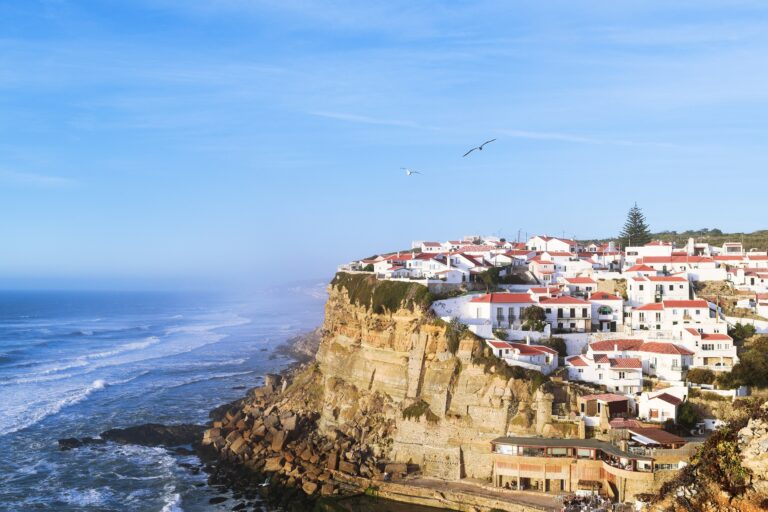
Halfway between Lisbon and Porto lies one of our favourite places in all of Portugal. Here, the Atlantic meets Portugal’s Silver Coast, or Costa da Prata, in the most spectacular way.
Nazaré is one of Portugal’s most iconic coastal towns, known around the world for its record-breaking waves at Praia do Norte. But there’s more to Nazaré than surfing. This small fishing village offers sweeping ocean views, traditional seafood restaurants, and plenty of local charm.
Whether you’re here on a day trip from Lisbon or staying longer to explore the Silver Coast, Nazaré is a destination that combines natural drama with authentic Portuguese culture.

Please note: This post may contain affiliate links. This means I may earn a commission if you make a purchase by clicking a link (at no extra cost to you). As an Amazon Associate, I earn from qualifying purchases. Learn more.
Quick Guide to Nazaré
Where we stayed in Nazare: Zulla Nazare Surf Village
Best time to visit Nazaré: We came in July. Nazaré has two seasons. Come in summer for beach vibes and the ultimate beach life. Winter brings the Atlantic storms that, in turn, bring the monster waves. November to February are the best months to see or surf the giant waves in Nazaré.
Suggested time: Three days minimum
Can I take a day trip to Nazare from Lisbon? Yes, see below
How to get there: Nazaré does not have a train station. It’s best to arrive by bus or car. From Lisbon, Rede Expressos buses leave from Sete Rios Bus Terminal and take 1.5-2 hours to Nazare. From Porto, you’re looking at 2 -3 hours. You can book your bus tickets here.
Top tips: Get a multi-ticket pass for the funicular between Sitio and Praia if staying a few days
Unique experience: We loved the Surf Museum inside the Farol da Nazaré
Reasons to Visit Nazaré


Nazaré is our favourite beach town in Portugal, and for good reason. This is a place where nature puts on a show. In winter, the legendary monster waves rise up to 30 metres high before crashing into the cliffs at Praia do Norte. Even outside of big wave season, the raw power of the Atlantic is mesmerising.
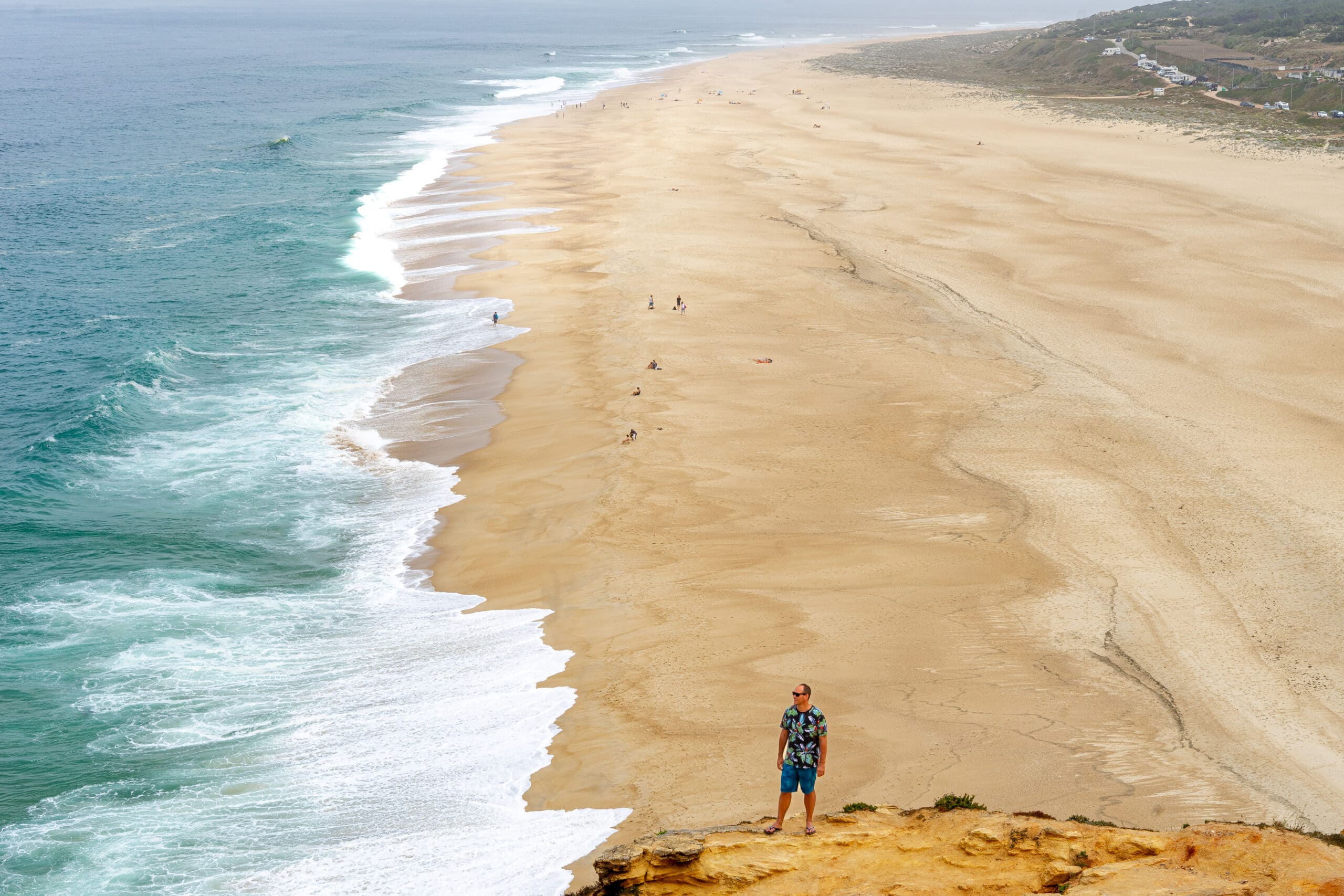

The weather keeps you on your toes. After a string of hot beach days, thick blankets of fog can roll in and linger for hours, sometimes days, transforming Nazaré into something moody and mysterious. Behind the town, pine and eucalyptus forests melt into sand dunes, which in turn spill onto endless empty beaches where you can walk for miles with nothing but wind and salt spray for company.
But Nazaré isn’t just about the scenery. Like much of Portugal, it’s also about the food. This is a town where seafood is the main event: grilled sardines, fish stews, and platters of shellfish that taste as fresh as the ocean breeze.
While we stayed four nights during our Spain and Portugal trip and let ourselves slow down, Nazaré also works as a day trip from Lisbon. It’s just under two hours by bus or car, making it one of the easiest coastal getaways from the capital. A day is enough to see the cliffs, the lighthouse, and the historic town centre, though staying longer lets you experience Nazaré’s more relaxed rhythm.
Nazaré Town vs. Sítio:
Two Sides of the Same Coastline
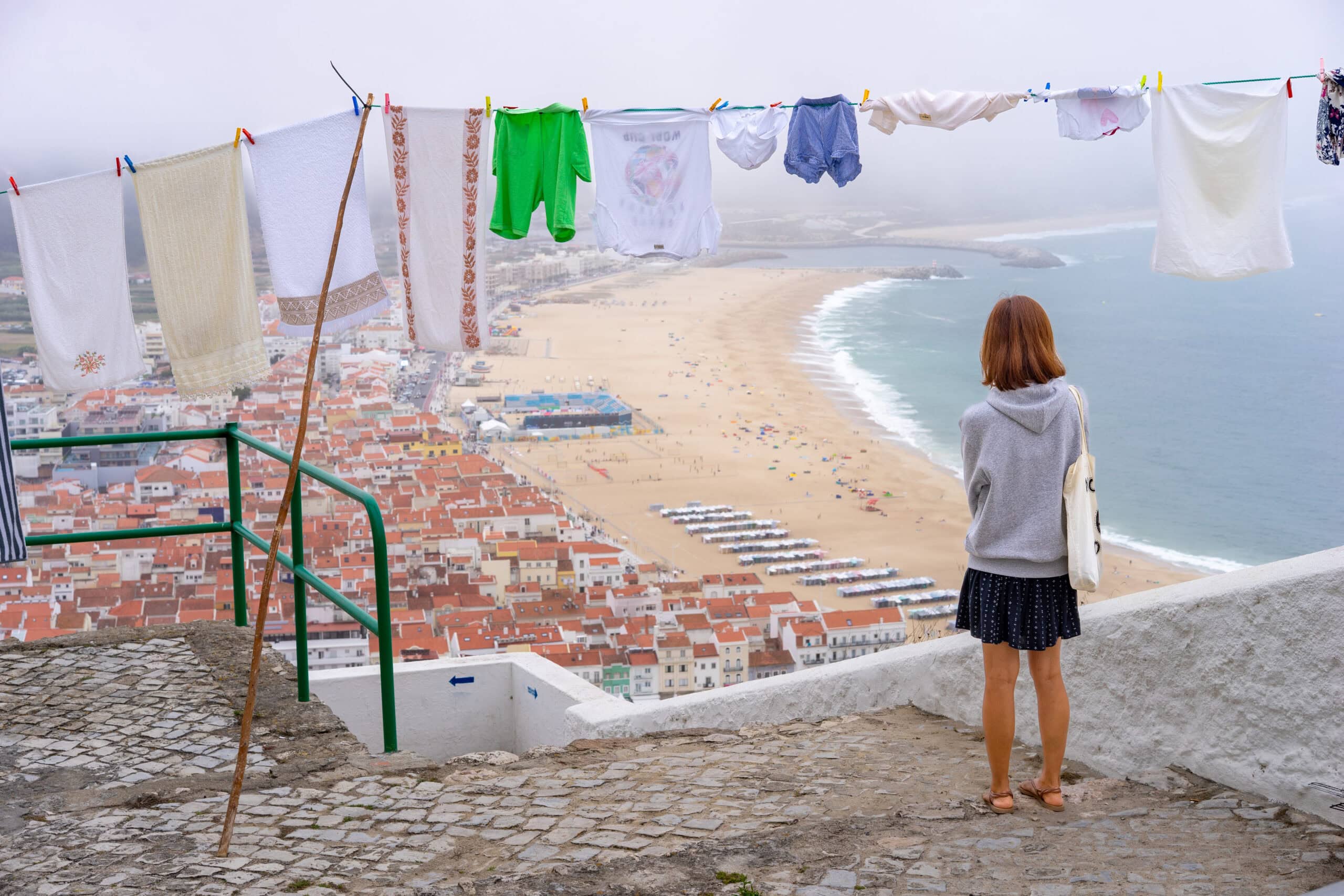
Nazaré is split into two very different worlds. Down by the sea is Praia da Nazaré, the lively beachside town with a long golden shoreline, restaurants, cafés and surf schools. It’s the hub of holiday life, where families spread their towels across the sand and locals stroll the promenade in the evening.
High above, perched on a cliff, is Sítio, the historic heart of Nazaré. You reach it by a short but dramatic funicular ride that climbs the hillside. Up here, the pace slows. Narrow streets and whitewashed houses circle around the Miradouro do Suberco, a viewpoint with a sweeping panorama over the beach, ocean and town below. From Sítio, a sandy trail winds down to Praia do Norte, the vast and untamed beach famous for its record-breaking waves and lighthouse lookout.
Together, these two neighbourhoods capture what makes Nazaré special. It’s a mix of lively seaside resort and timeless clifftop village, joined by one unforgettable view.
The Legend of Nazaré
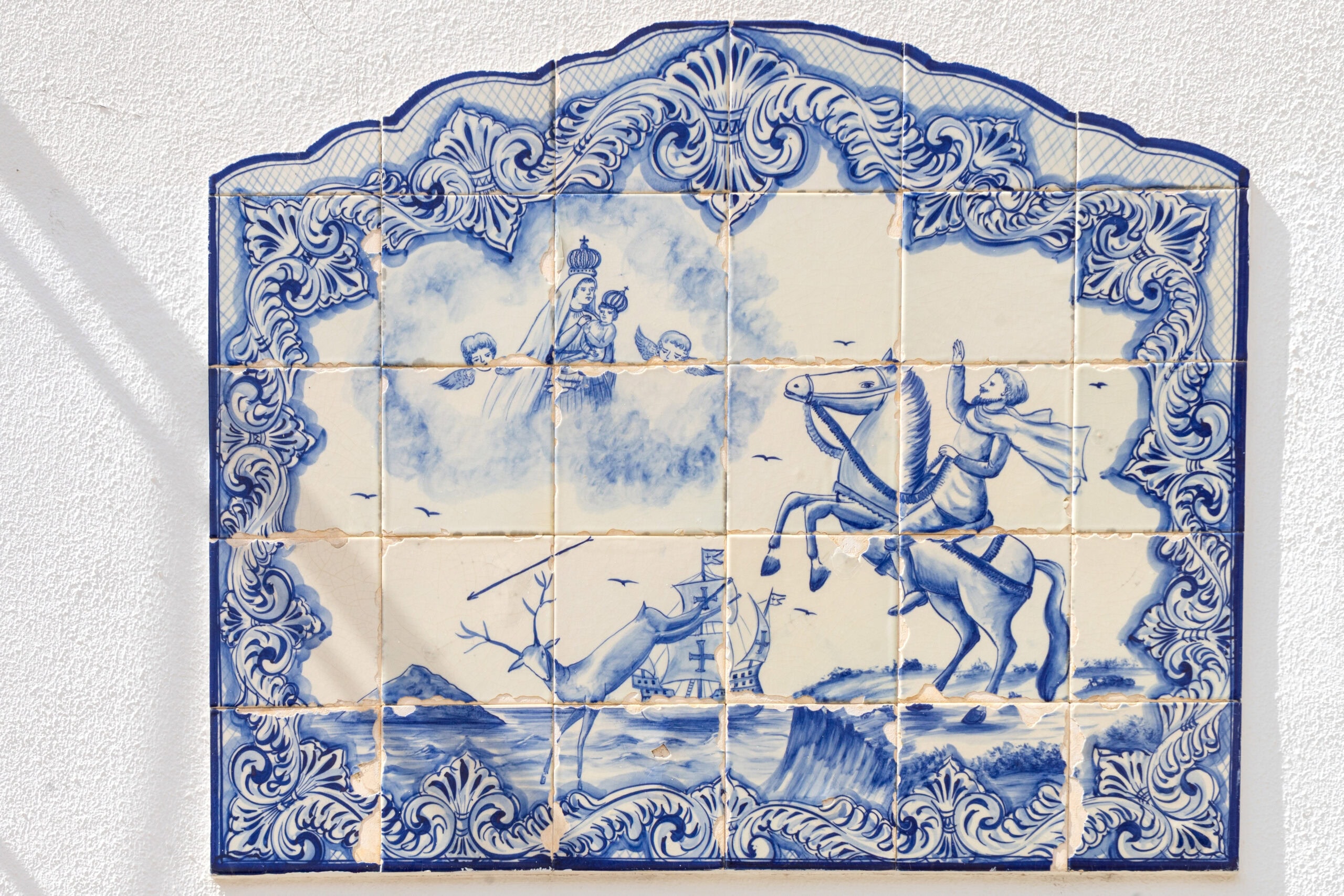
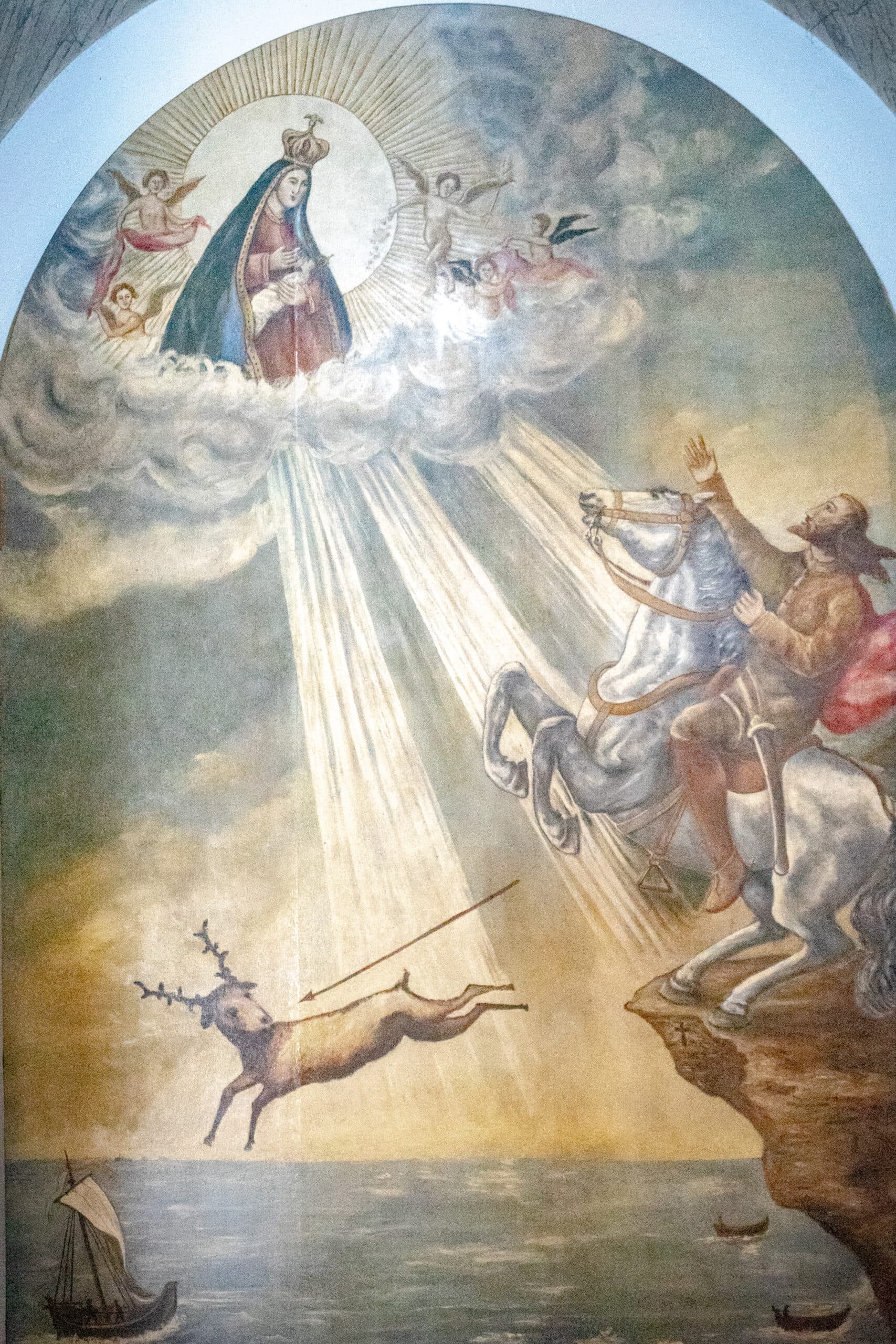
Like all good seaside towns, Nazaré comes with a story that’s equal parts myth and miracle. The tale goes that a knight was out hunting on the cliffs of Sítio in 1182 when a heavy fog rolled in. He chased a deer too far and suddenly found himself about to ride straight off the edge. In that moment of panic, he called out to Our Lady of Nazaré.
Somehow, his horse stopped dead on the cliff, hooves skidding, while the deer plunged into the waves below. The knight lived to tell the tale, and the town has been telling it ever since.
You’ll see the legend etched into tiles, carved into churches, and whispered around Sítio like it happened yesterday.
I just love the irony. A knight once begged the Virgin to stop his horse from charging off the cliff, and centuries later surfers do the opposite, throwing themselves into waves the size of apartment blocks.
Nazaré is where myth and muscle meet.
What to Do in Sítio, Nazaré
Sítio is where Nazaré slows down. Perched high above the beach, it feels older, quieter, more rooted in the past. The grandmothers wear their seven skirts, and the Atlantic view is as wide and wild as it gets.
This is where we stayed for four nights, and honestly, I wouldn’t do it any other way. There are enough restaurants to keep you fed, enough cafés to keep you caffeinated, and at sunset, you can sit on the edge of the cliff with a beer and watch the sky burn out over the ocean.
From here it’s an easy wander to the viewpoints, the lighthouse, and the path down to Praia do Norte.
Church of Nossa Senhora da Nazaré
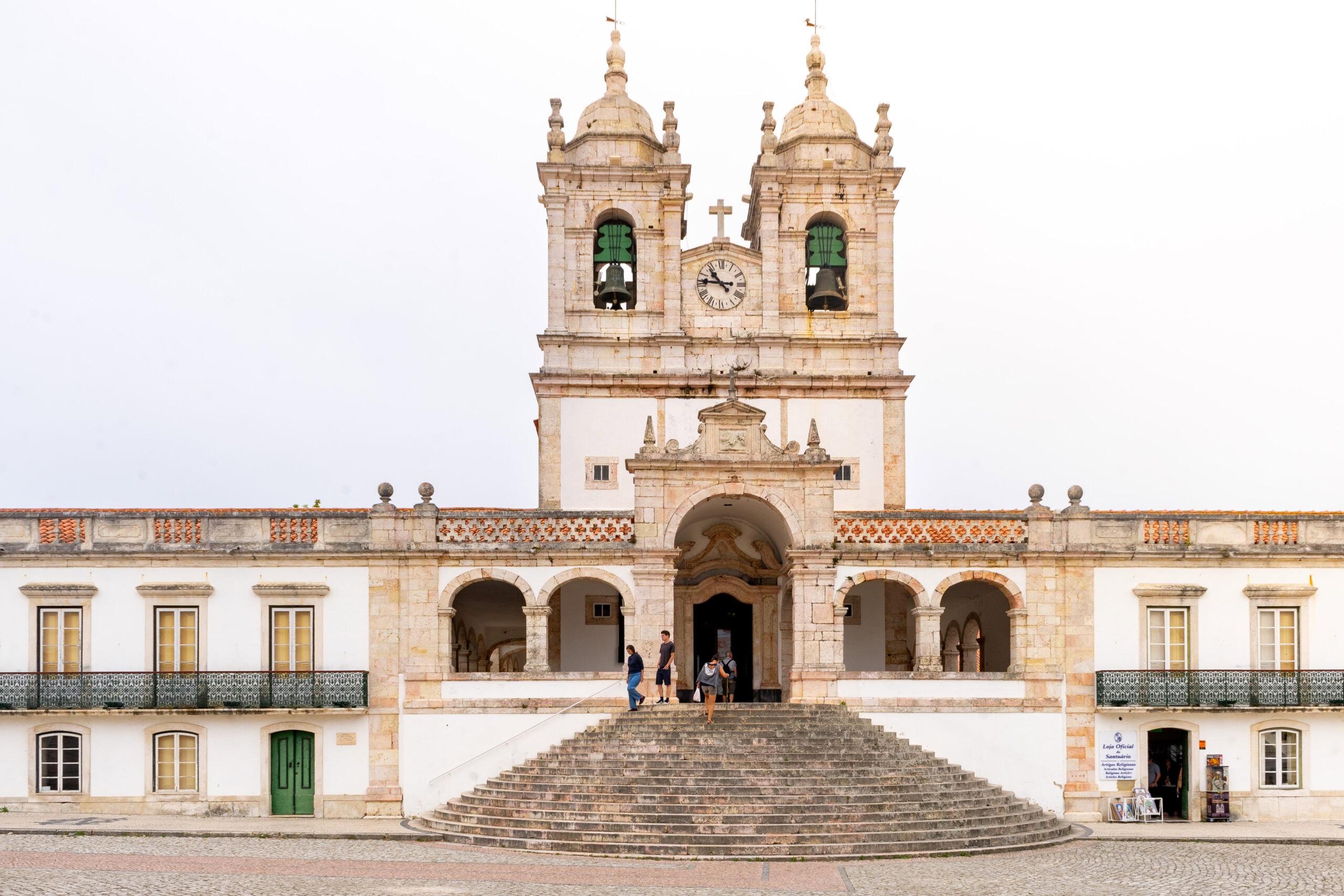
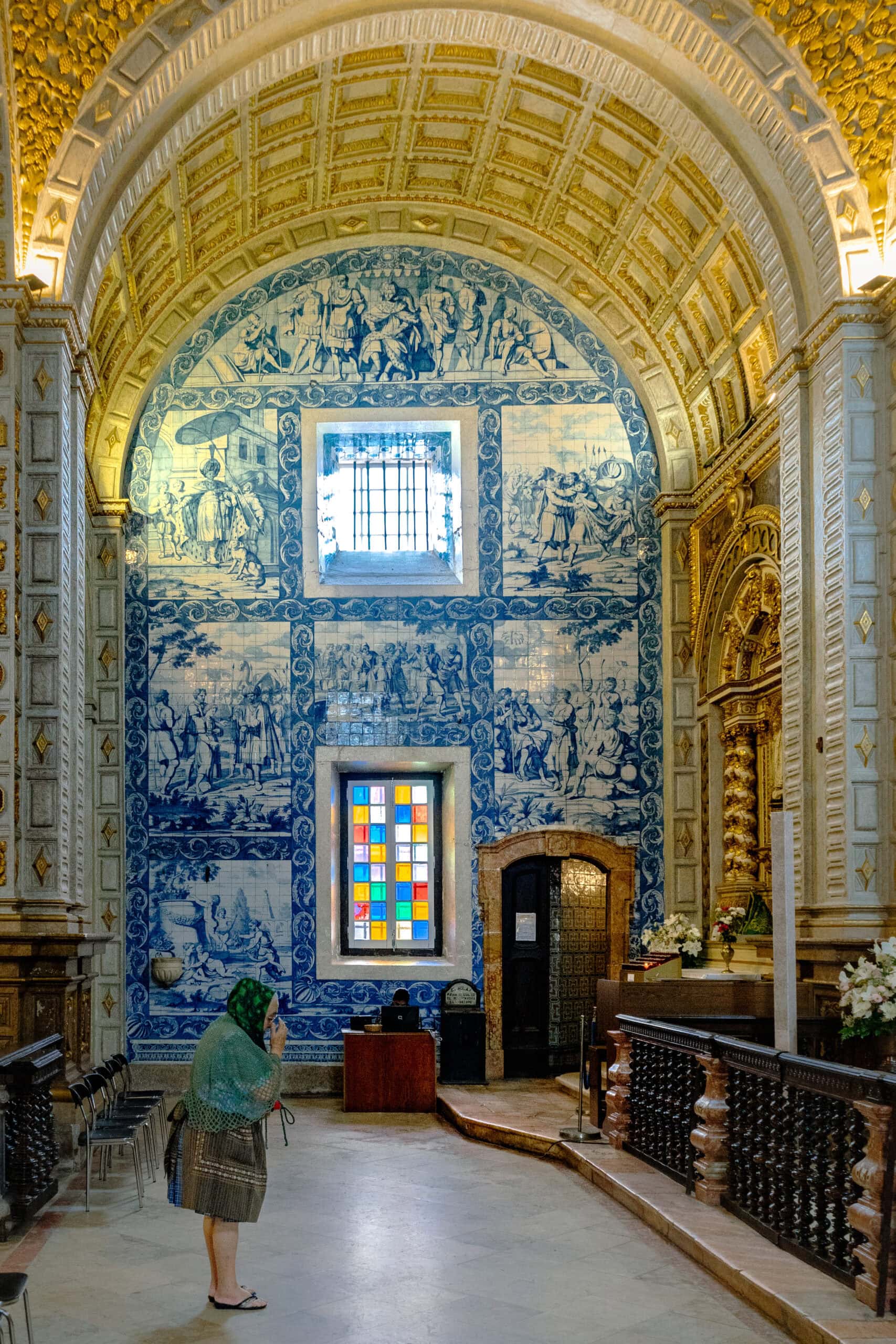
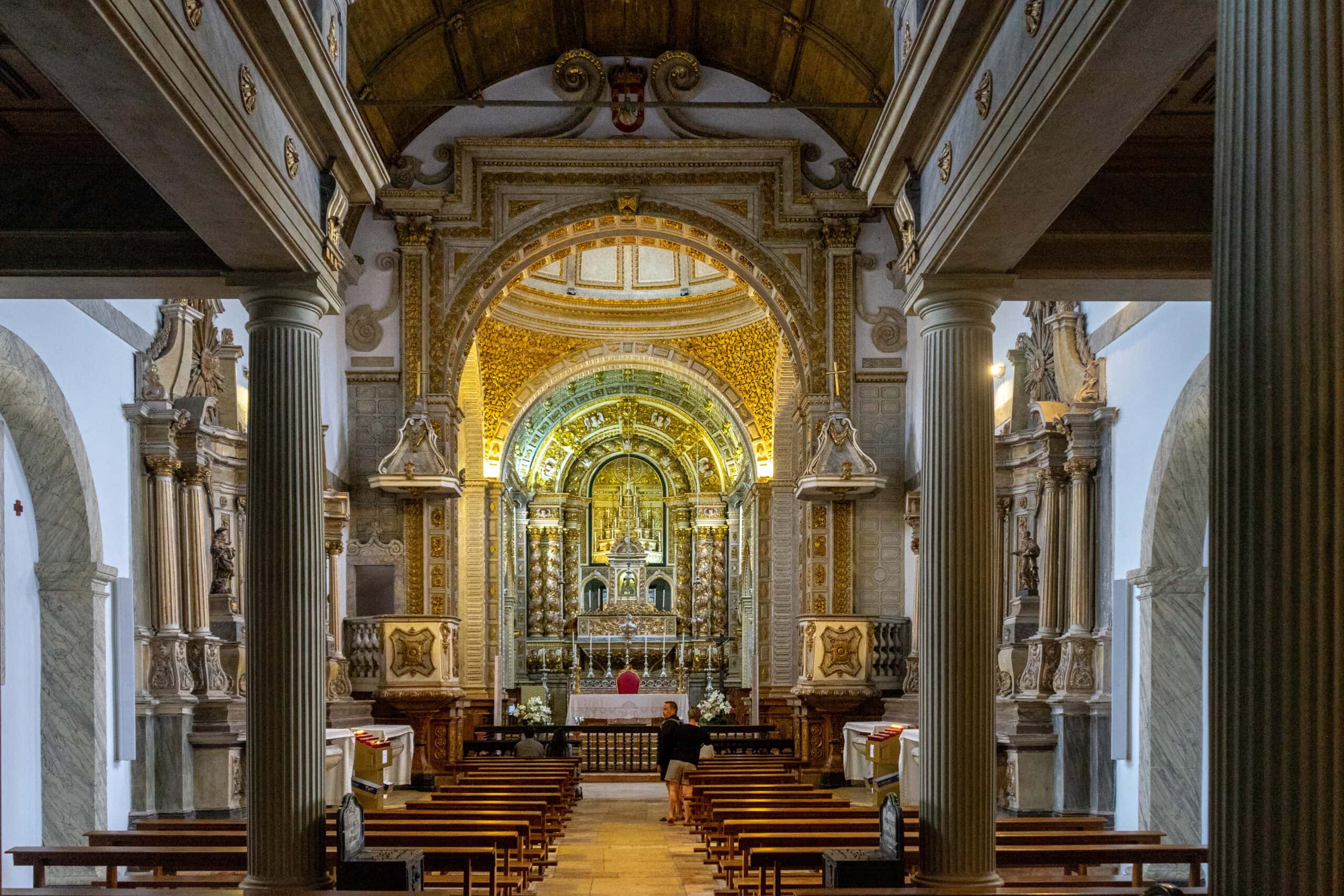
At the heart of Sítio is a large square that feels like the town’s living room. Old men gather, families stroll, and kids kick footballs around.
The square is dominated by the Church of Nossa Senhora da Nazaré (Sanctuary of Our Lady of Nazaré), a 17th-century baroque beauty built near the spot where, according to legend, the knight’s horse stopped short of the cliff. Inside, you’ll find the famous statue of the Virgin Mary, said to have been carved by Joseph himself back in Nazareth.
It’s this statue that turned Nazaré into a place of pilgrimage long before anyone came here for surfing.
Miradouro do Suberco
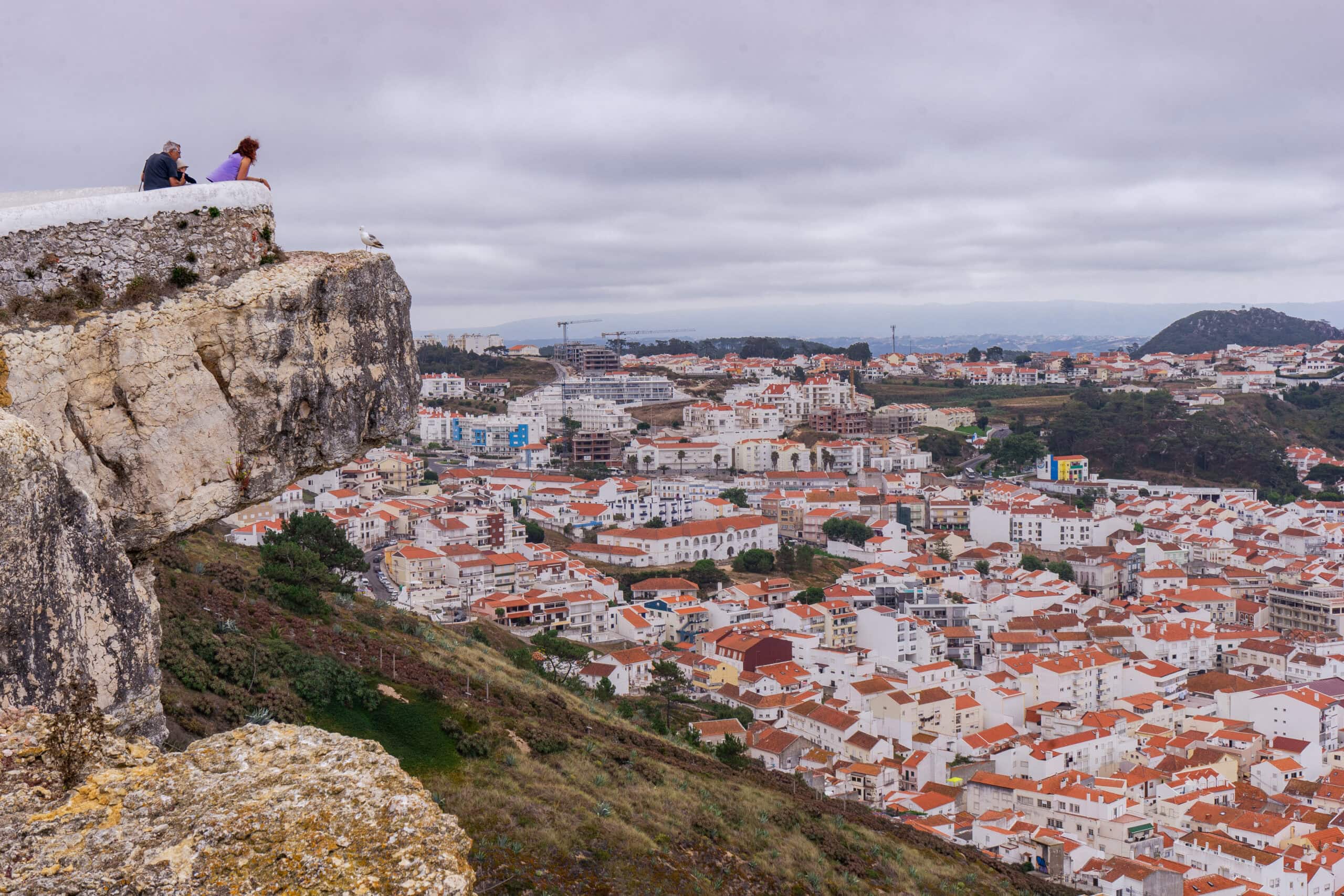
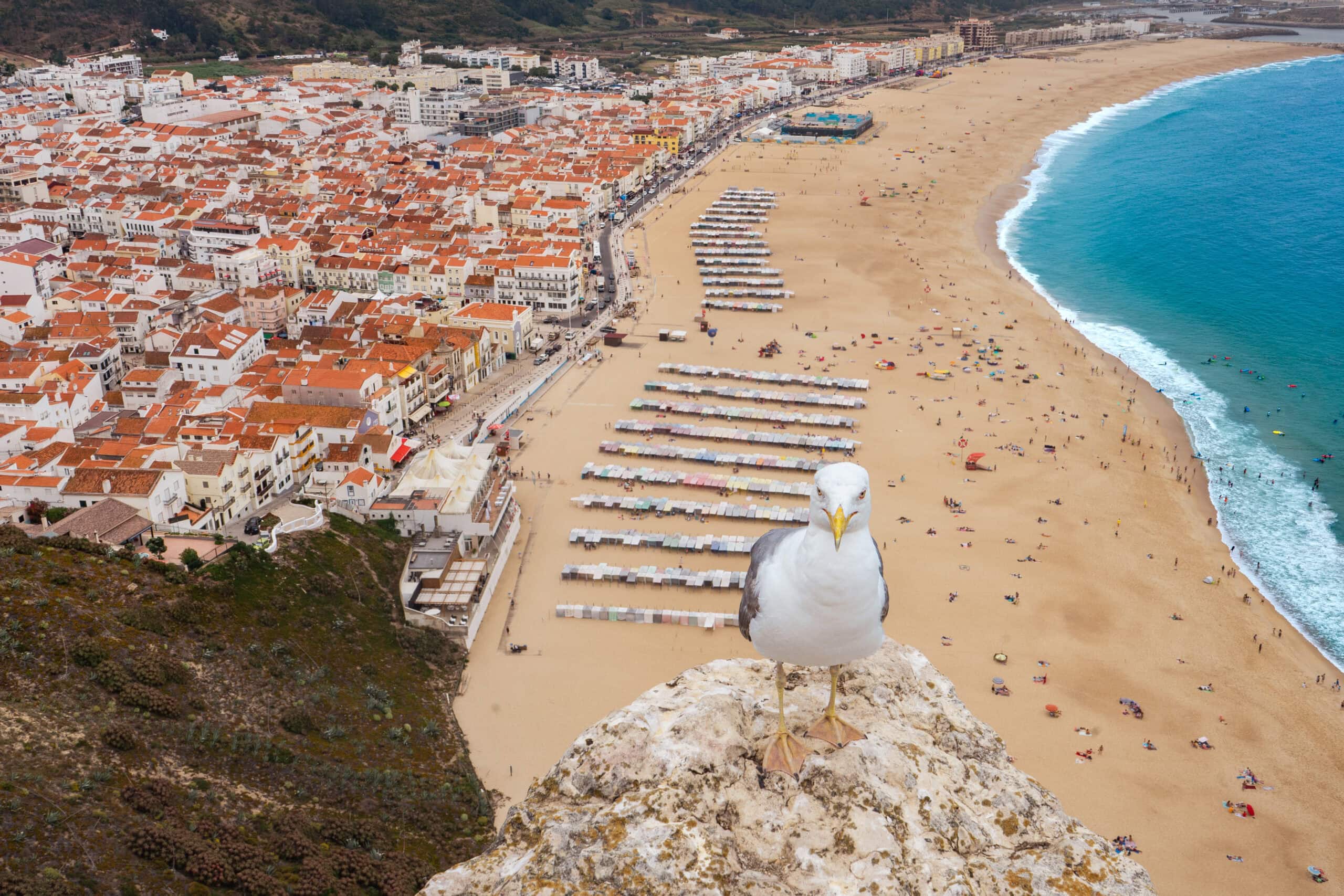
From the church, the square melts into the Miradouro do Suberco. The lookout point hanging over the edge of the cliffs is where you’ll find the best view in Nazaré.
The view drops straight down to Praia da Nazaré and stretches across the Atlantic. It’s dramatic, and best appreciated without a phone in your face. But yes, you’ll be taking quite a few snaps trying to capture the drama.
The small monument with a cross on top, standing next to the small chapel, commemorates Vasco de Gama’s visit to Nazaré. He came here to pray to Our Lady of Nazareth before setting off to India. On his return to Portugal, he returned to Nazaré as a pilgrim to give thanks.
The Statue of Veado
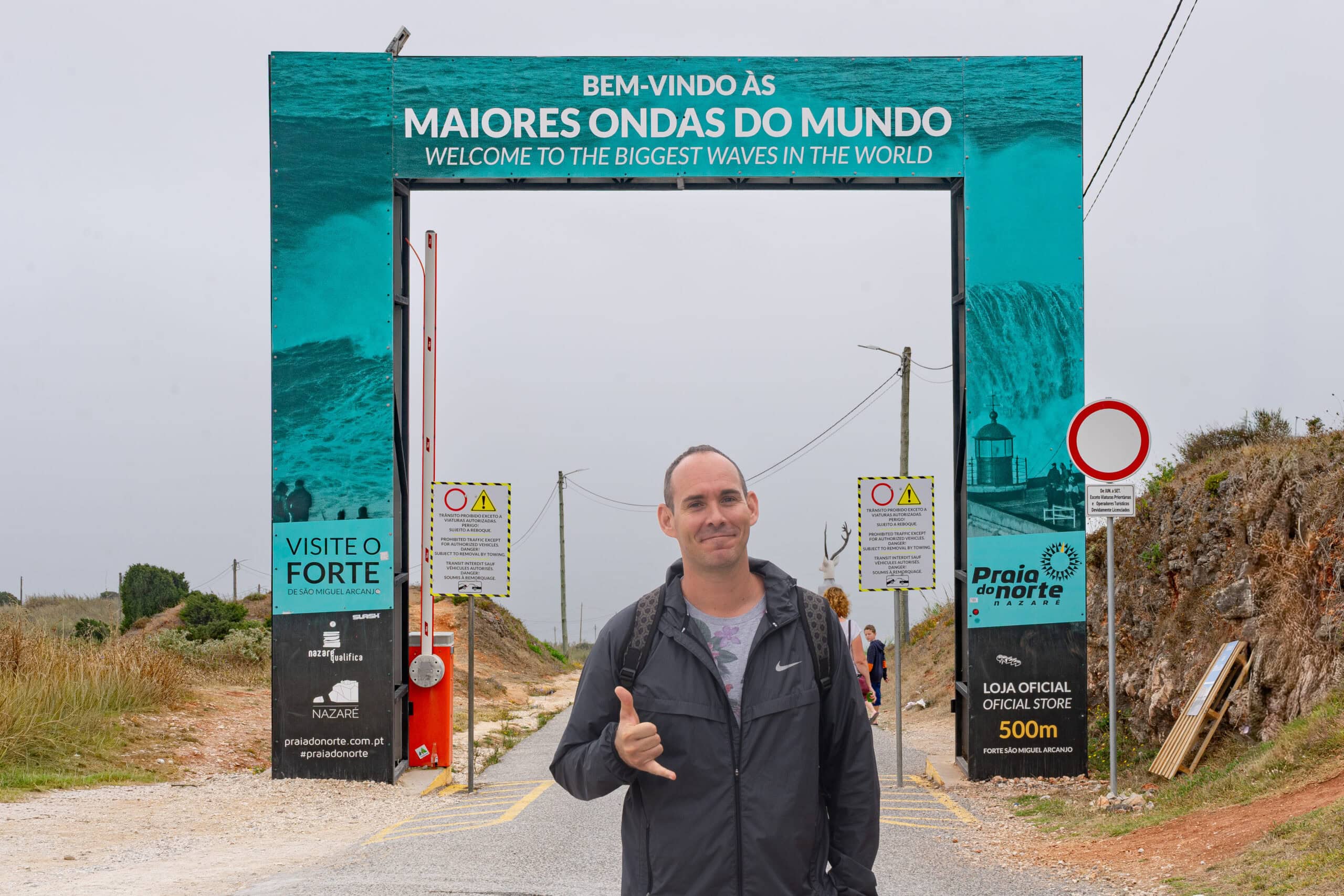
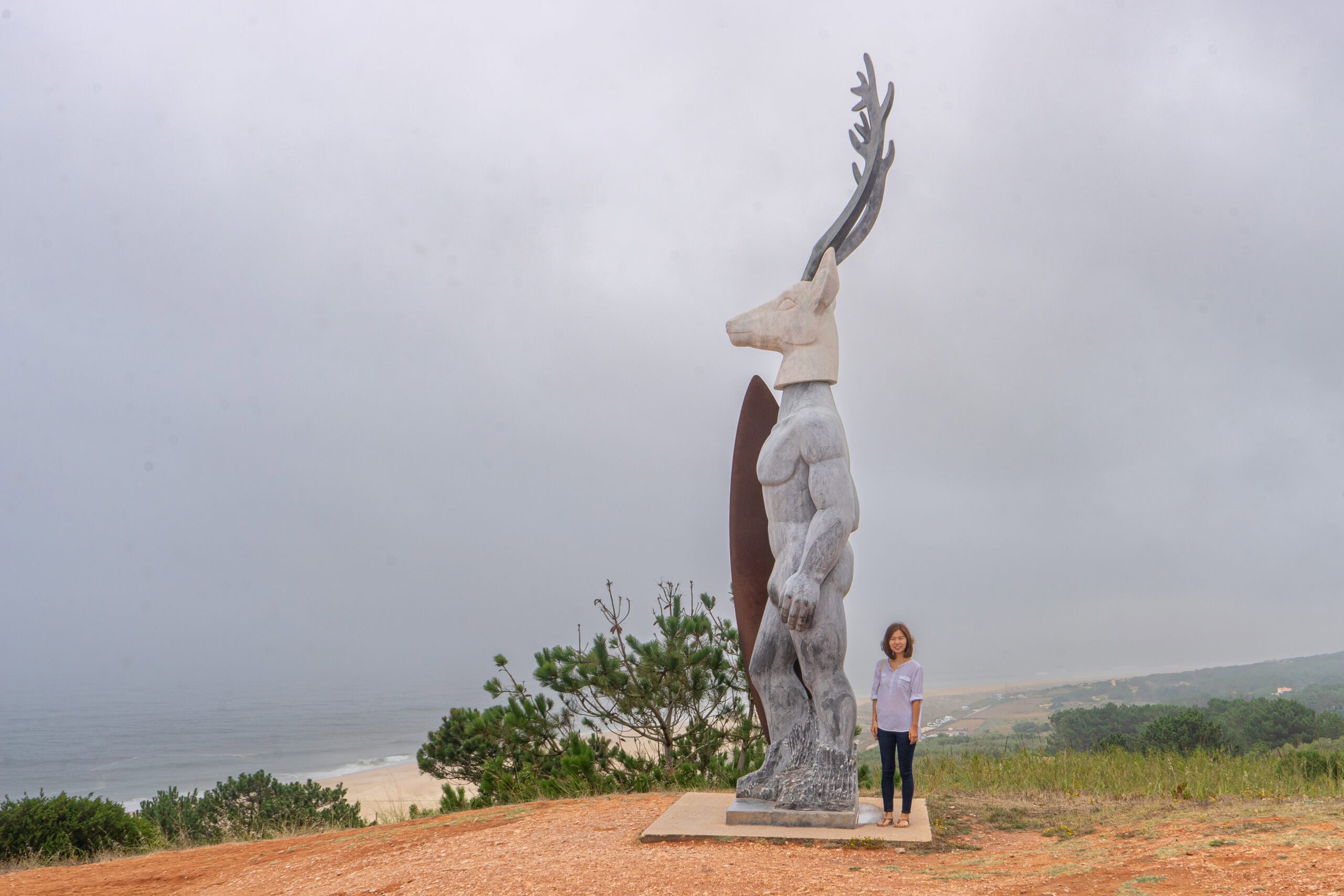
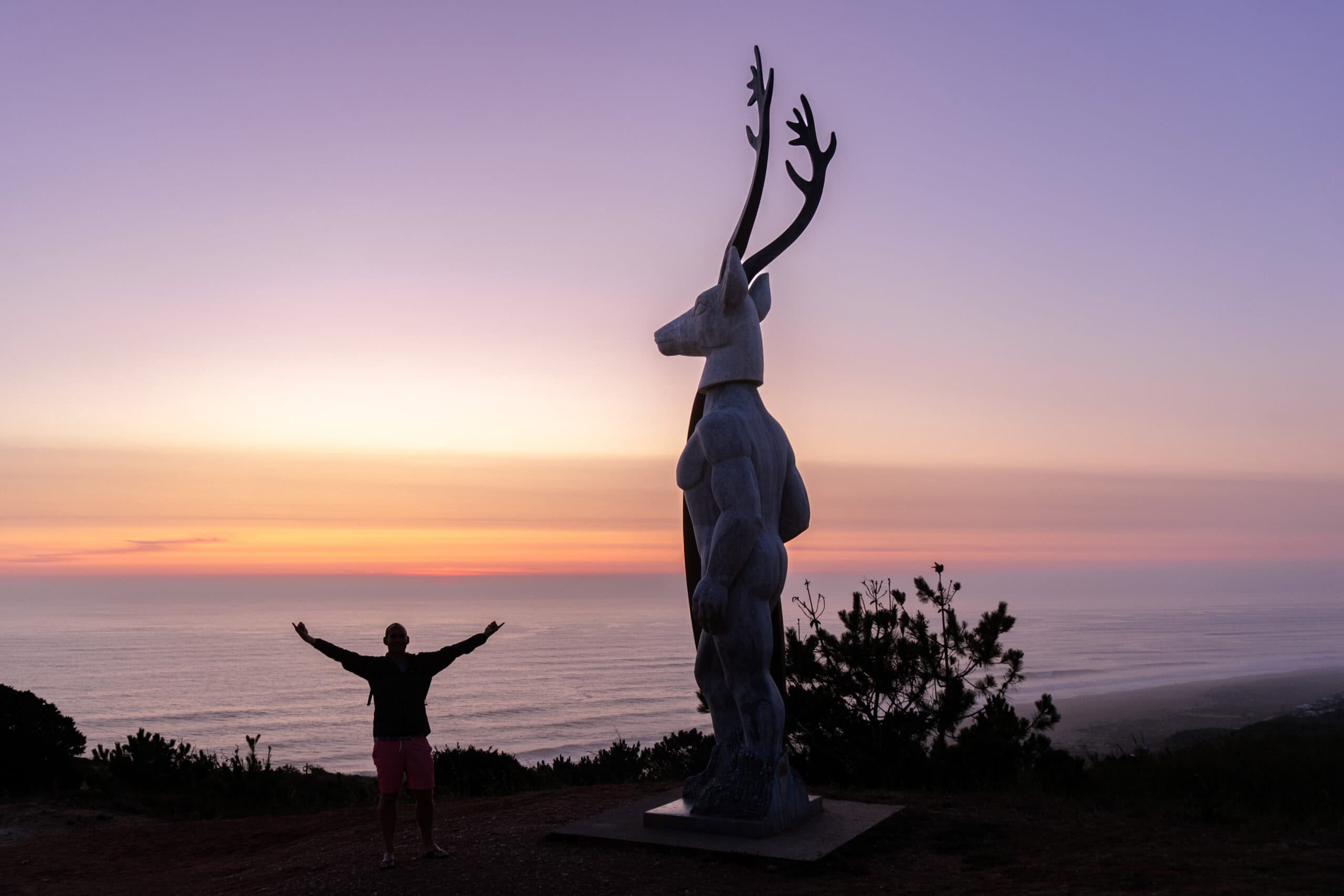
As you make your way towards the lighthouse at Praia do Norte you’ll pass a sign welcoming you to the biggest waves in the world.
Next, you’ll pass the Statue of Veado. It’s half-deer, half-surfer, a strange hybrid that ties together Nazaré’s two obsessions: the old legend of the deer and the modern-day chase for monster waves.
Keep walking downhill and the road opens up to the Atlantic on one side and Praia do Norte on the other. Eventually, it delivers you to the lighthouse, the place where surf folklore and Portuguese myth meet at the edge of the continent.
The Nazaré Lighthouse & Surf Museum
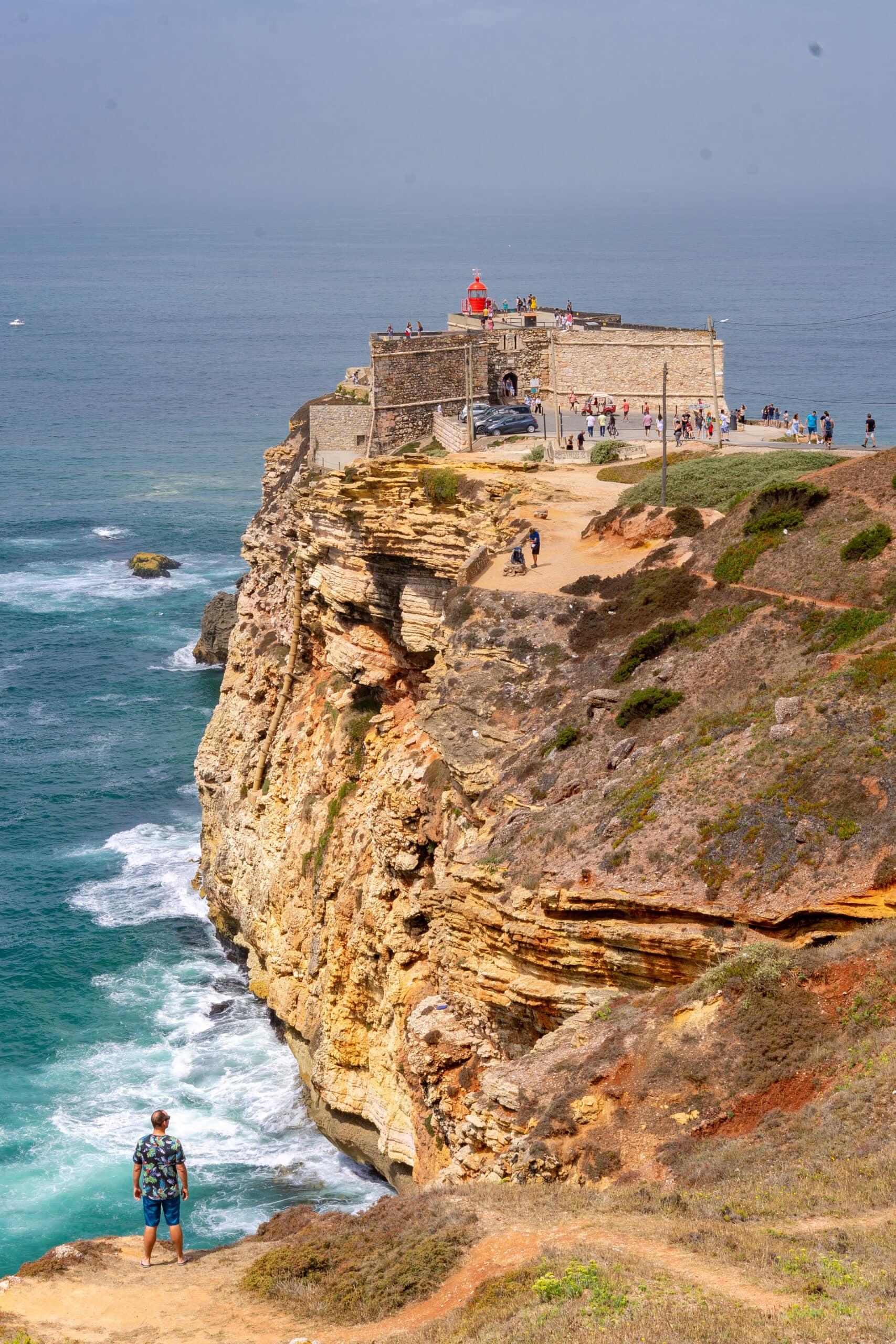


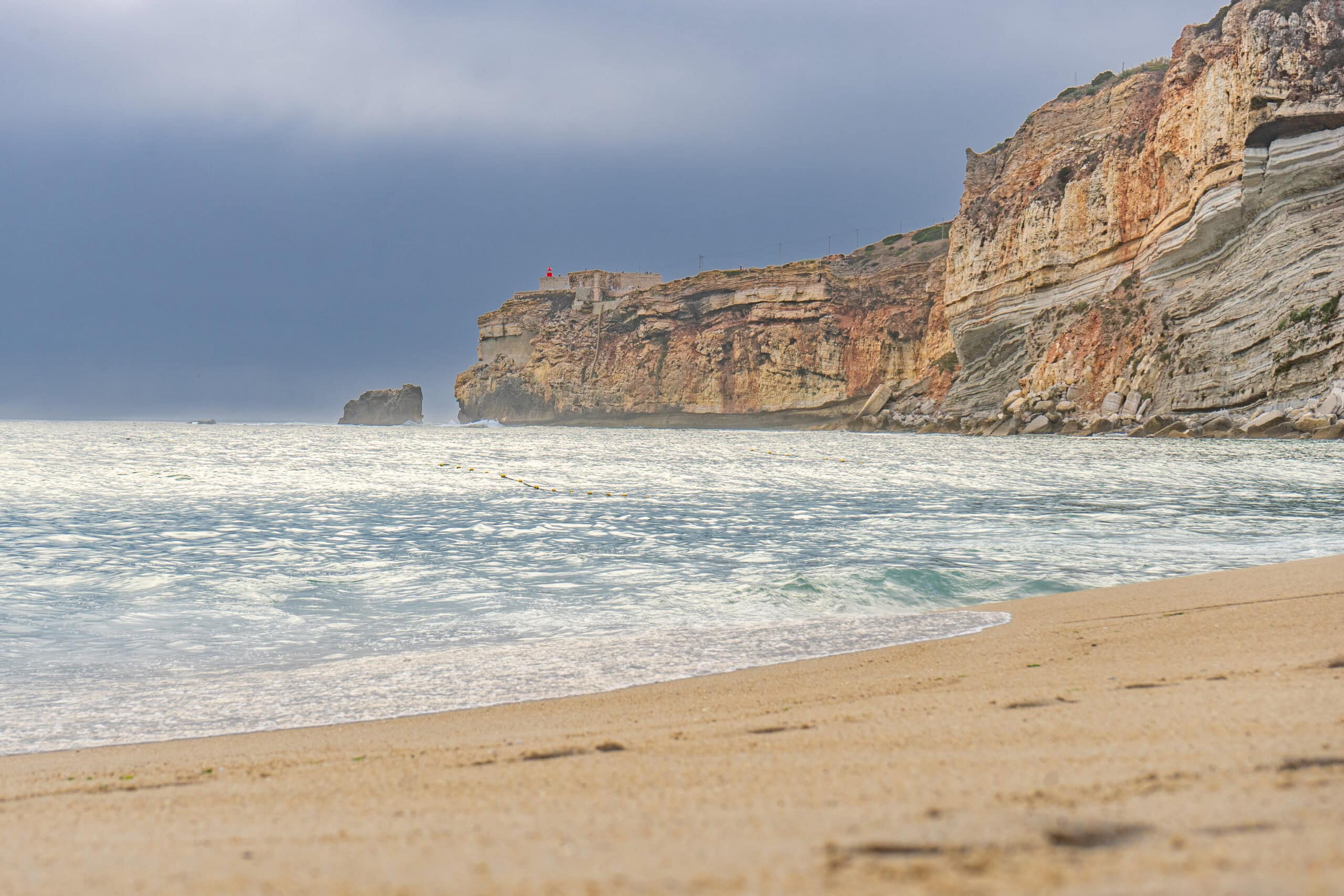
The small Farol da Nazaré (lighthouse) sits atop the much older Sāo Miguel Arcanjo fort. This is the absolute best place to come and see Nazaré’s famous waves. You’ll be in for a spectacular show if you are here when the swell is in.
Big-wave season usually runs during the winter months. We were in luck, though, and Nazaré treated us to what she does best. On our last day in Nazaré, the swell came in, and we were left speechless by the power of the waves we saw from the lighthouse.
The reason for these monster waves is the result of a massive underwater canyon just in front of the fort. The waves are drastically amplified as they reach the shore because of the drastic difference in depth of the ocean floor.
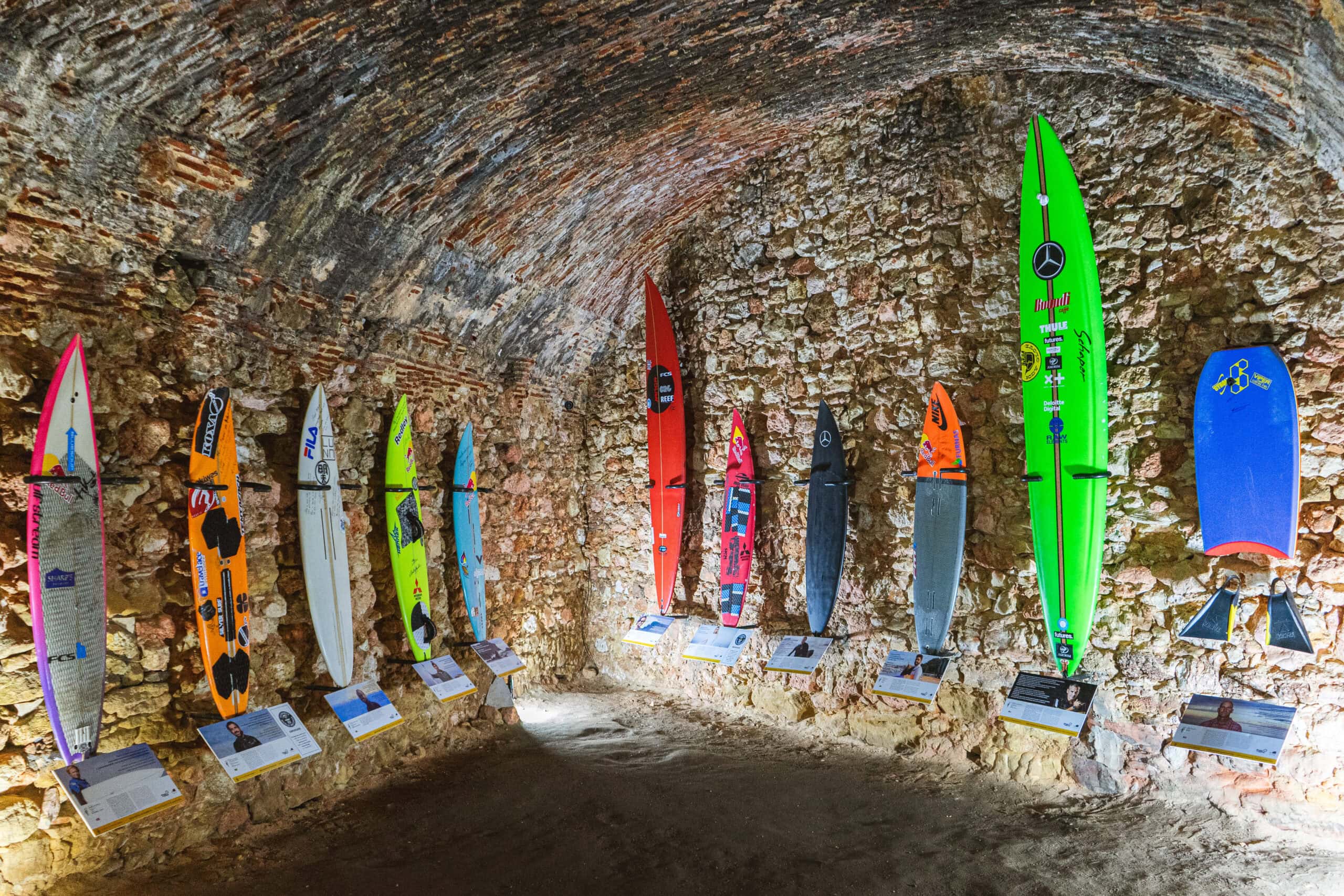
The fort is home to a small surfing museum, which is pretty cool, even for non-surfers like us. On display are many surfboards from gutsy surfers who had braved these monster waves. We loved the quotes on display describing what it feels like to surf these beasts.
Nazaré’s greatness does not lie only on the size of its waves, but in the magic that surrounds the whole town. I will always be greatful for having the opportunity to ride Nazaré’s waves and to be part of all its magic.
Abraham Hochstrasser – surfer
Things to Do in Praia, Nazaré
Ride the Funicular Between Praia and Sitio
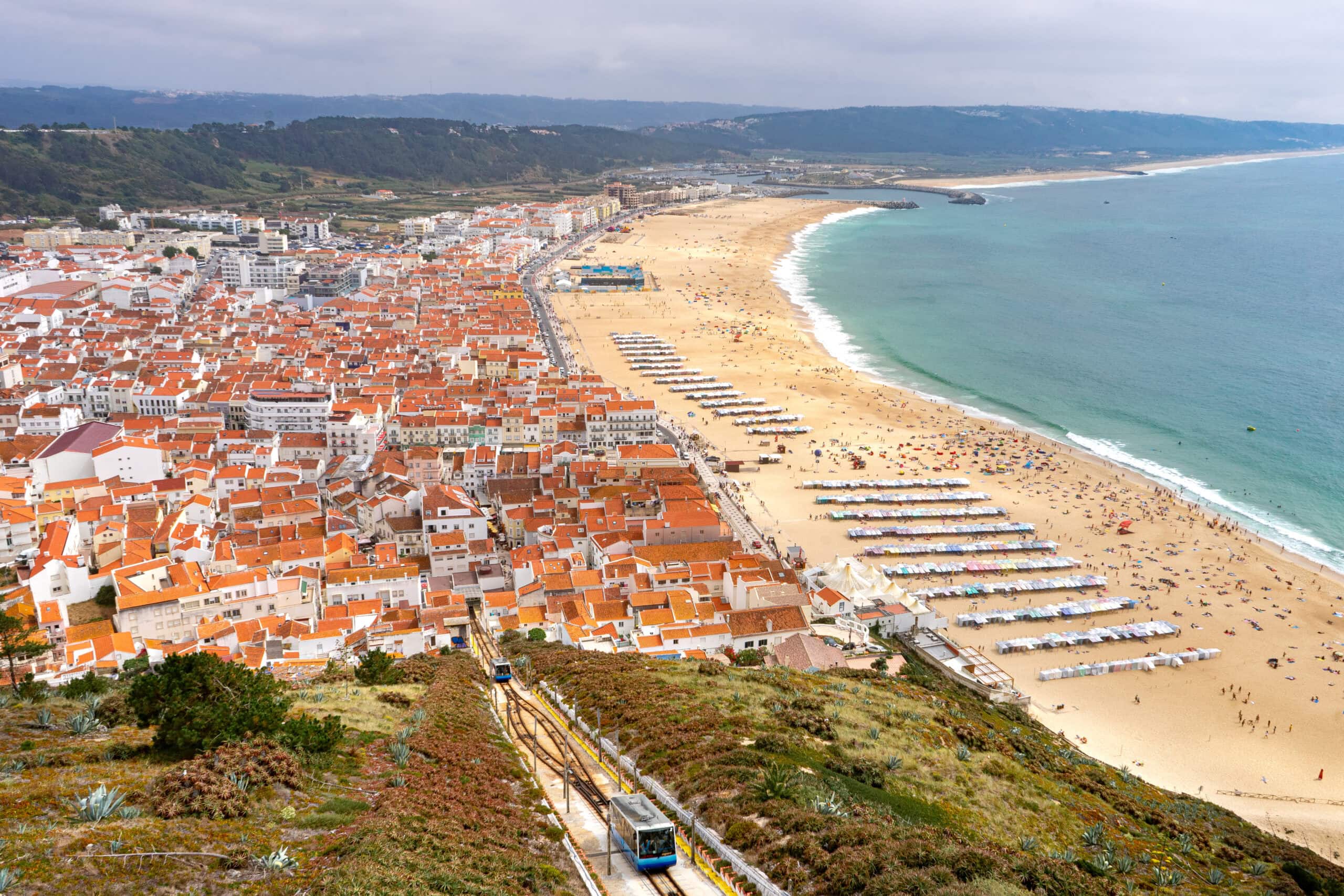
Getting between Sitio and Praia is easy with the funicular. Not only is it very convenient, but the views are stunning too. If you’re going to be in town for a few days, we recommend getting a multi-ride pass.
Single journey: €2.50
Return: €4.00
We got a 6-ride pass for €10.00.
7-day ticket: €17.50
The funicular runs seven days a week, from 7:15 to midnight, with a departure every 15 minutes.
Go for a Swim at Praia da Nazaré
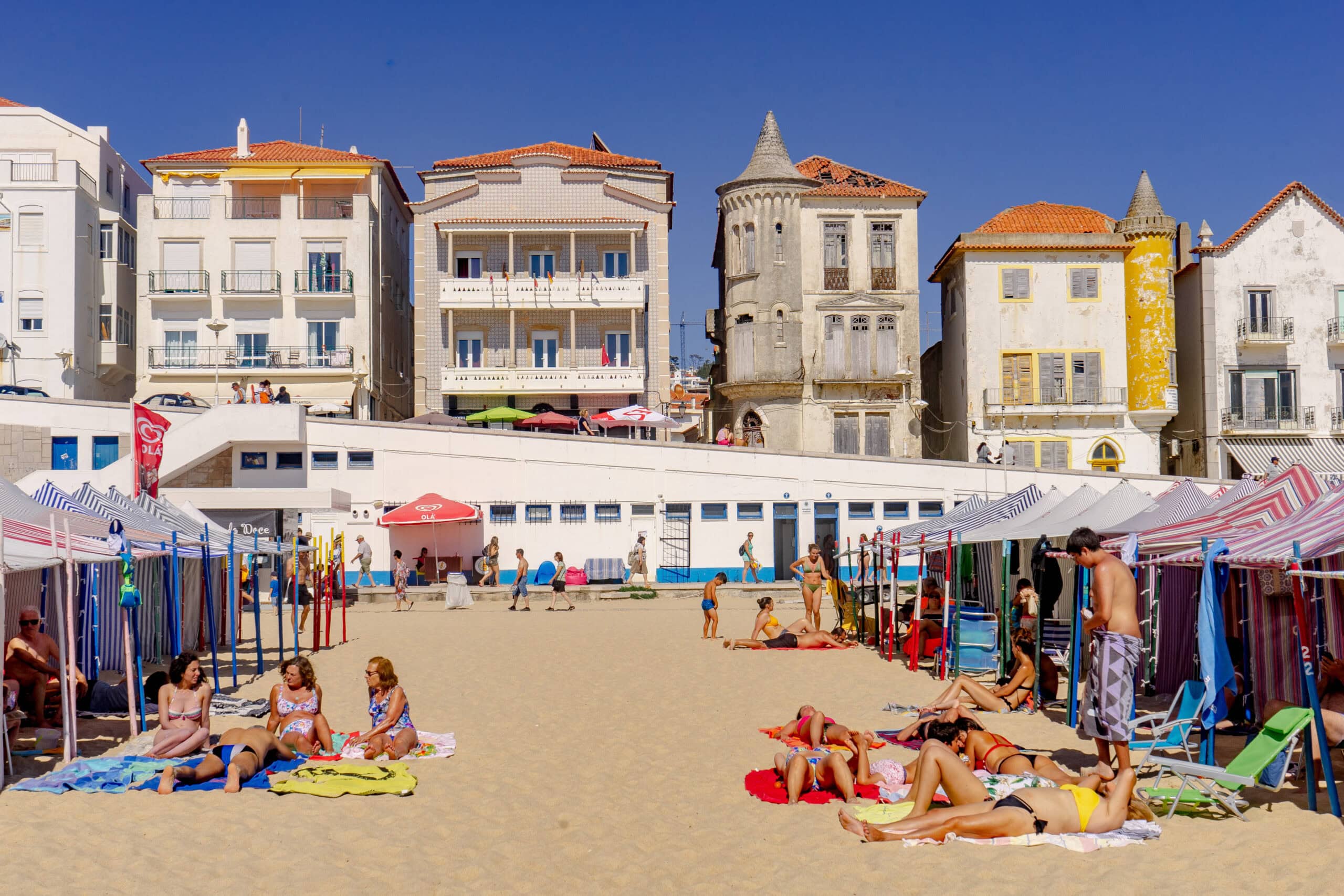
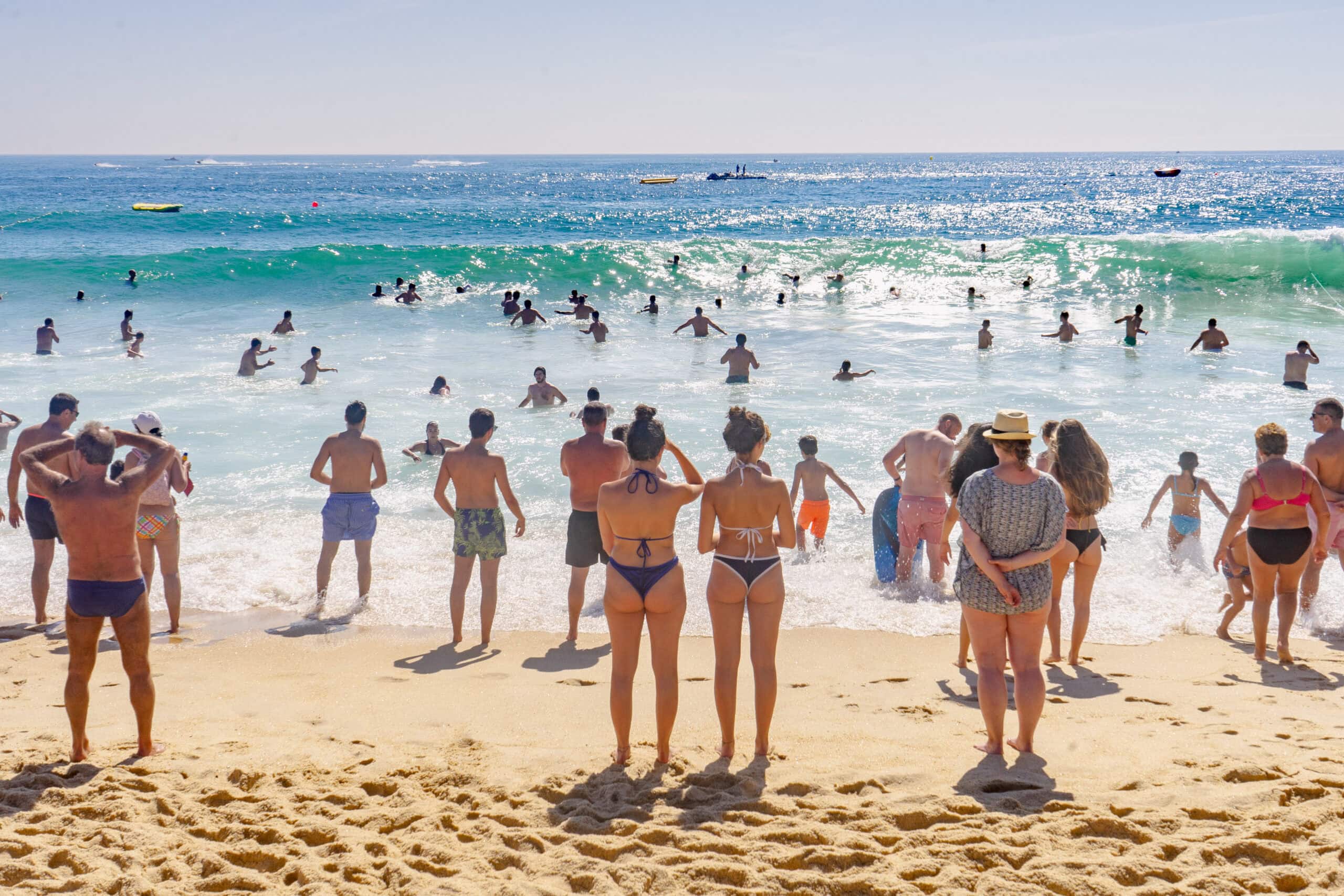
Young and old in all shapes and sizes come down to the Praia (beach) in Nazaré to …well…do what people do on a beach. Praia do Nazaré, right under the cliff, is where all the action takes place. It does get pretty busy, but the vibe is fantastic, and everyone is having a good time.
You can rent a little beach cabana for €7 per day and make yourself at home. Vendors selling snacks come around every so often, or there are many restaurants on the promenade.
As for swimming, the water here is COLD, but that’s to be expected from the Atlantic. Even in summer, the water temperature only goes up to 22°C. But that’s all part of the fun for me. Nothing refreshes like an icy dip after roasting in the sun. Bobbing up and down with the swell, my skin stinging with cold, is exhilarating. The water is clean, deep blue and the surf frothy white. What more could you ask for? I rest my case.
Traditional Fishing Boats & Sun-Dried Fish Museum
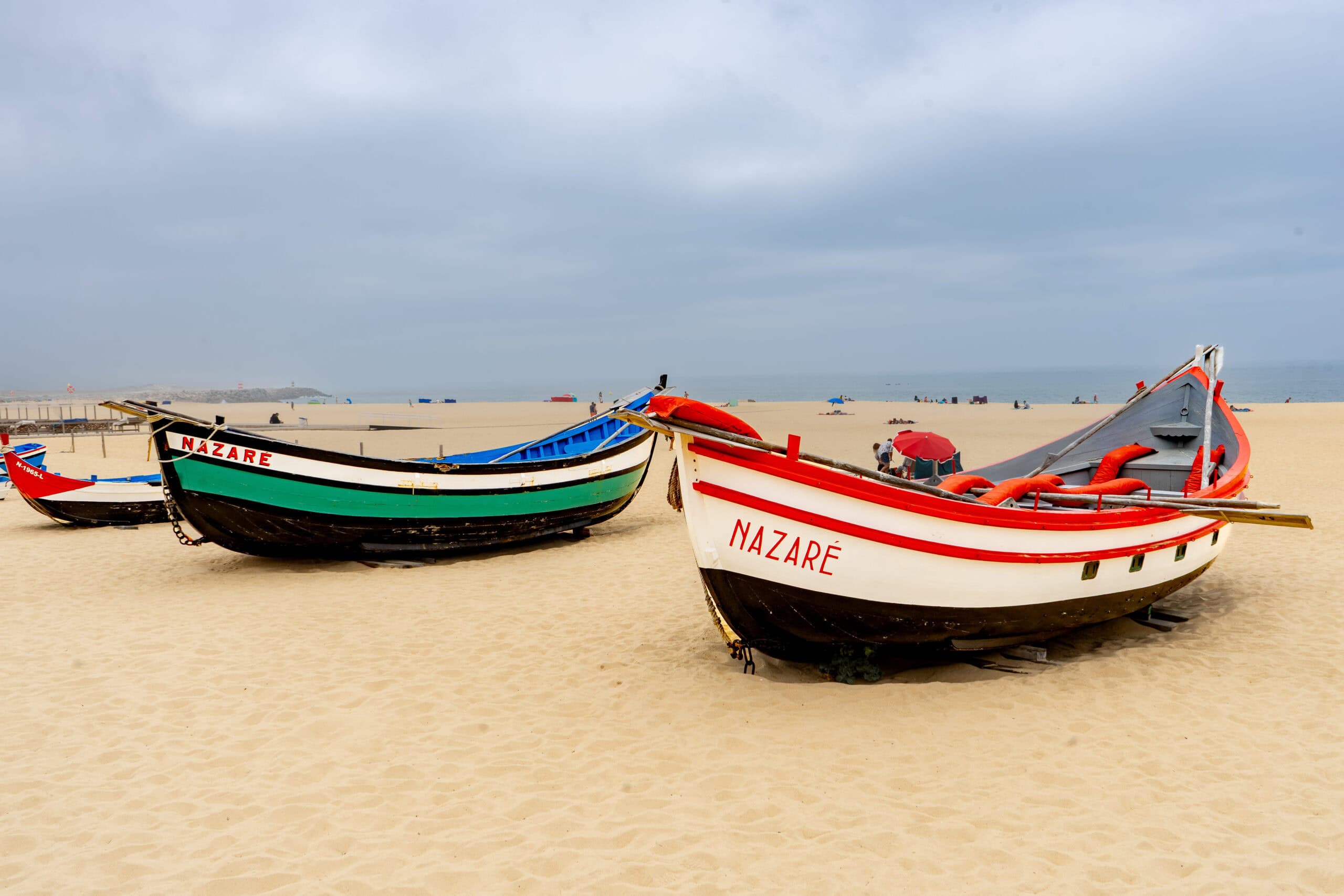
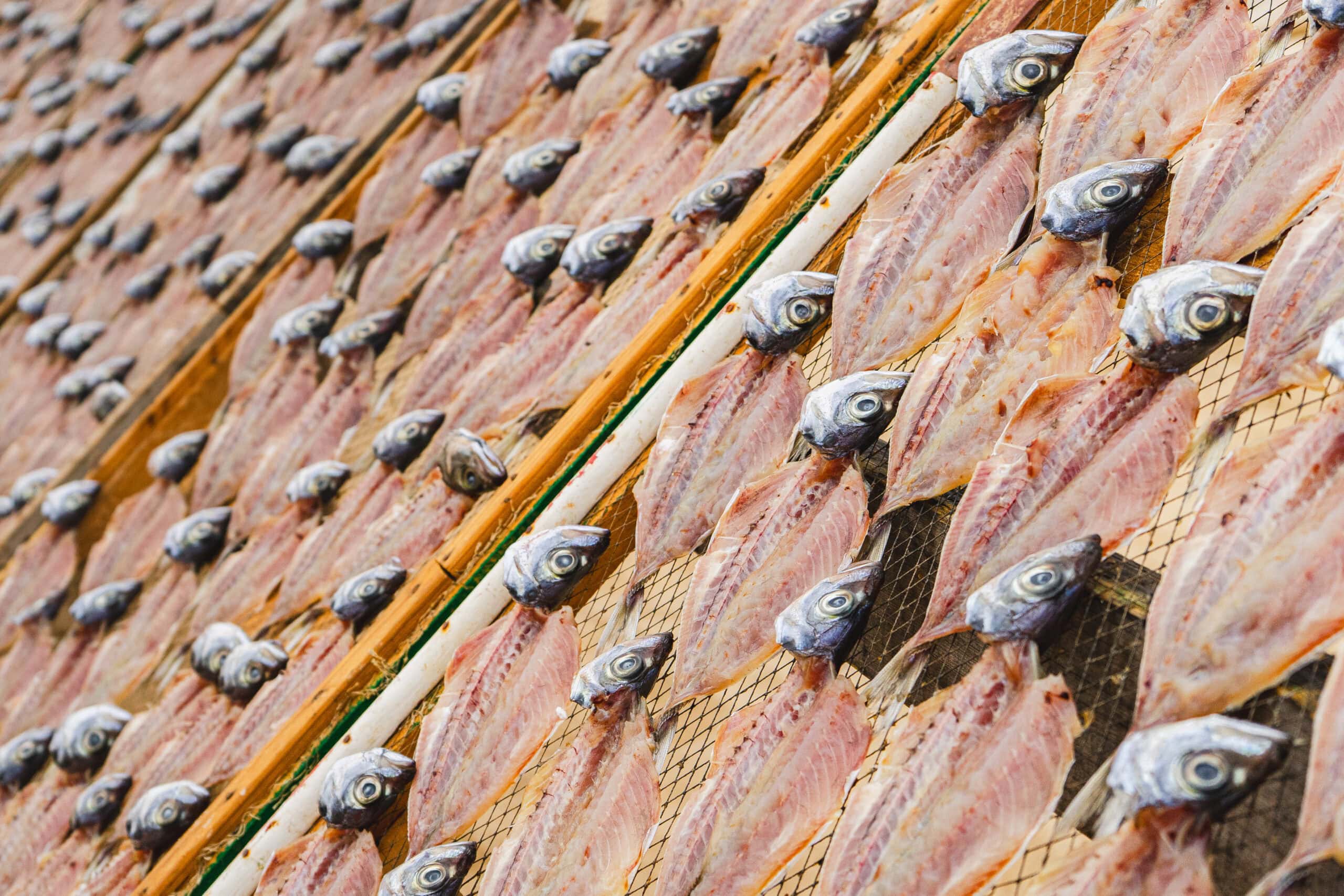
Walk further down the promenade, still on Nazaré main beach, away from the cliff, and you’ll see brightly coloured, traditional fishing boats on the beach. Follow your nose, and a little farther down the beach, you will find women drying sardines, octopus and other fish on racks in the sun.
This is actually the Sun-Dried Fish Museum. Cross the road to the former fish market, now museum, where you can learn about Nazaré’s fishing industry.
Our Favourite Restaurants in Nazaré
The seafood in Nazaré is amazing, as to be expected of a town on the Atlantic. There are tons of places to eat, especially in Praia. Since we stayed in Sitio, we mostly ate there.
As elsewhere in Portugal, your table in Nazaré will come with starters such as bread, olives, and cheese. This is not free, so if you don’t want it, don’t eat it. If you prefer to eat, say, only the olives, you will only pay for the olives.
Sitiado


This sexy little place does great tapa-sized dishes. Here, we also learned about P&T, which quickly became our go-to drink while in Portugal. Port and Tonic, served with a cinnamon stick and orange peel, is the perfect aperitif drink to set the mood for the meal to follow.
Casa Pires
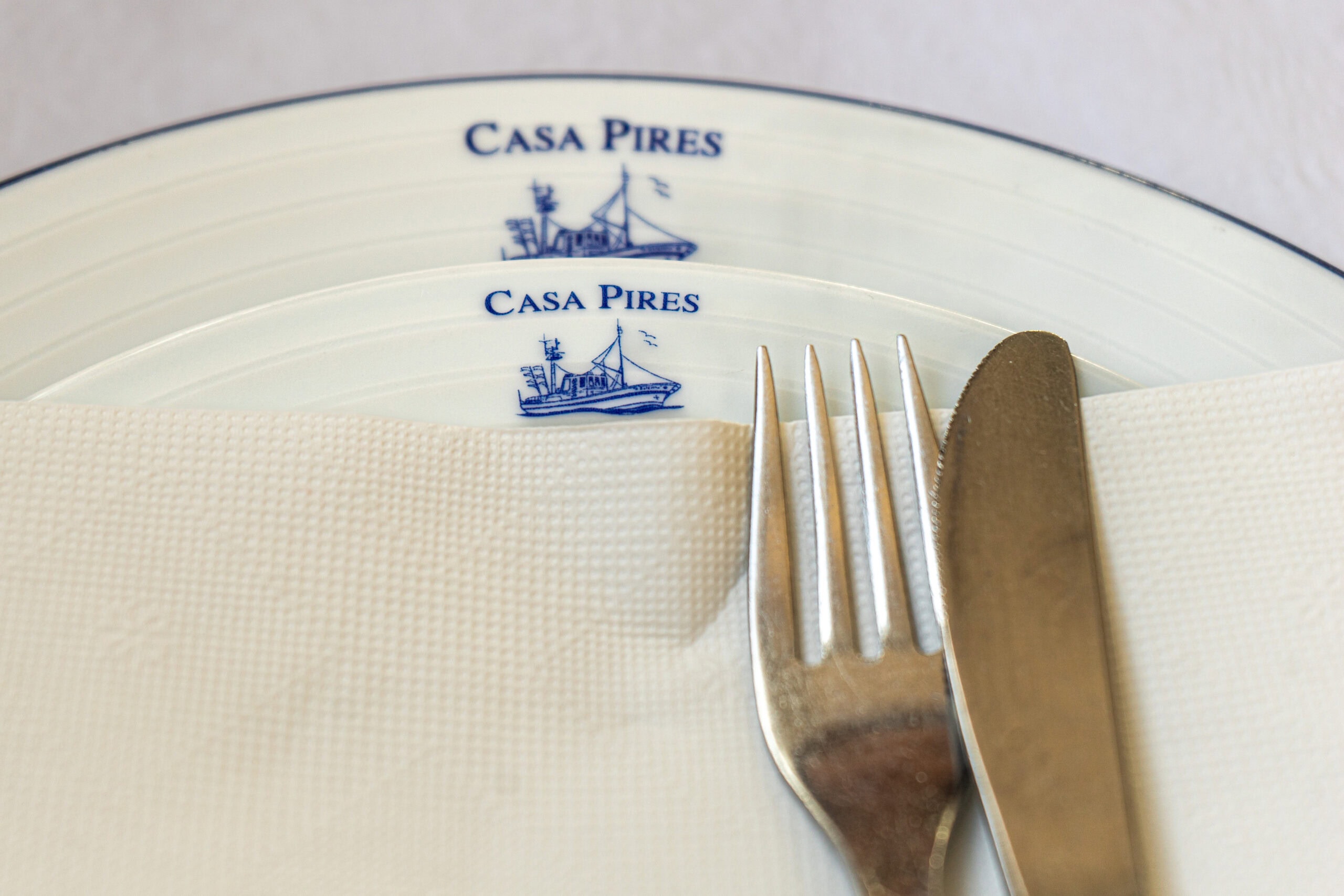
We referred to Casa Pires as the Place With No Name since there is no sign outside. With food this good though, who needs a sign?
Located right next to the church on Sitio’s main square, it is very easy to find, even without a name. The food, service and atmosphere were fantastic.
The bread basket here is damn good, so definitely don’t push that away. We had a whole grilled seabream, which was excellent.
location
Ole

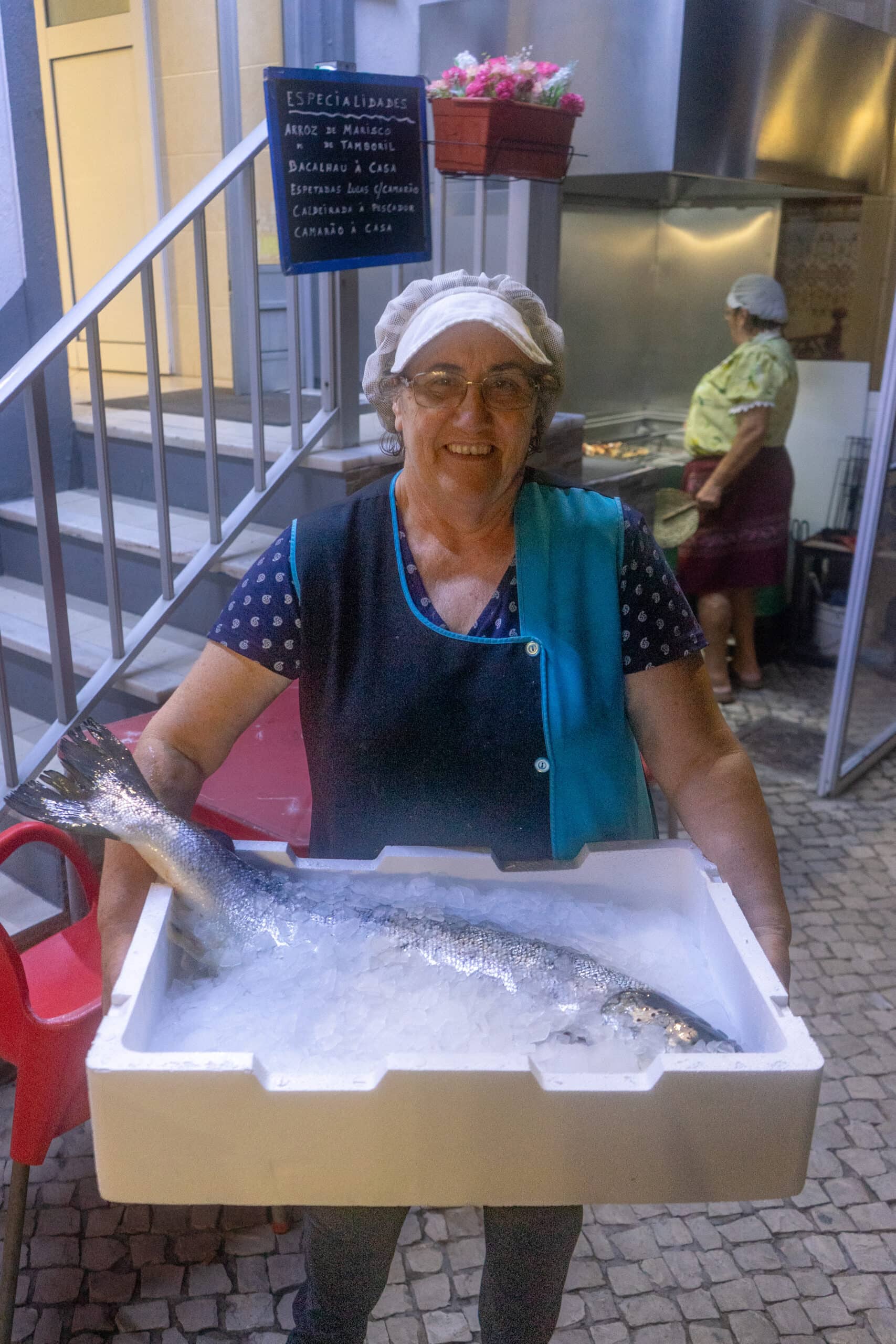

Aptly named Restaurant Ole sits next to the bullring in Sitio.
This is a family-run restaurant where ladies grill seafood right outside on the patio. The mixed seafood grill comes with 3 kinds of fresh fish of the day, squid and vegetables. For dessert, your waiter will bring a tray of sweets for you to choose from. Your waiter will also treat you to a complimentary shot of Ginja at the end of your meal.
We liked it so much that we came back here twice.
Seafood in Praia


Down in Praia, there are tons of cafes and restaurants to choose from. Barnacles are pretty popular little seafood snacks to wash down with beer.
Jin says they are called Turtle Claws in Korean, which is a pretty accurate description. Crispy and light bacalhau (salted, dried cod) are easy snacks, too, when you get hungry on the beach.
Where to Stay in Nazaré
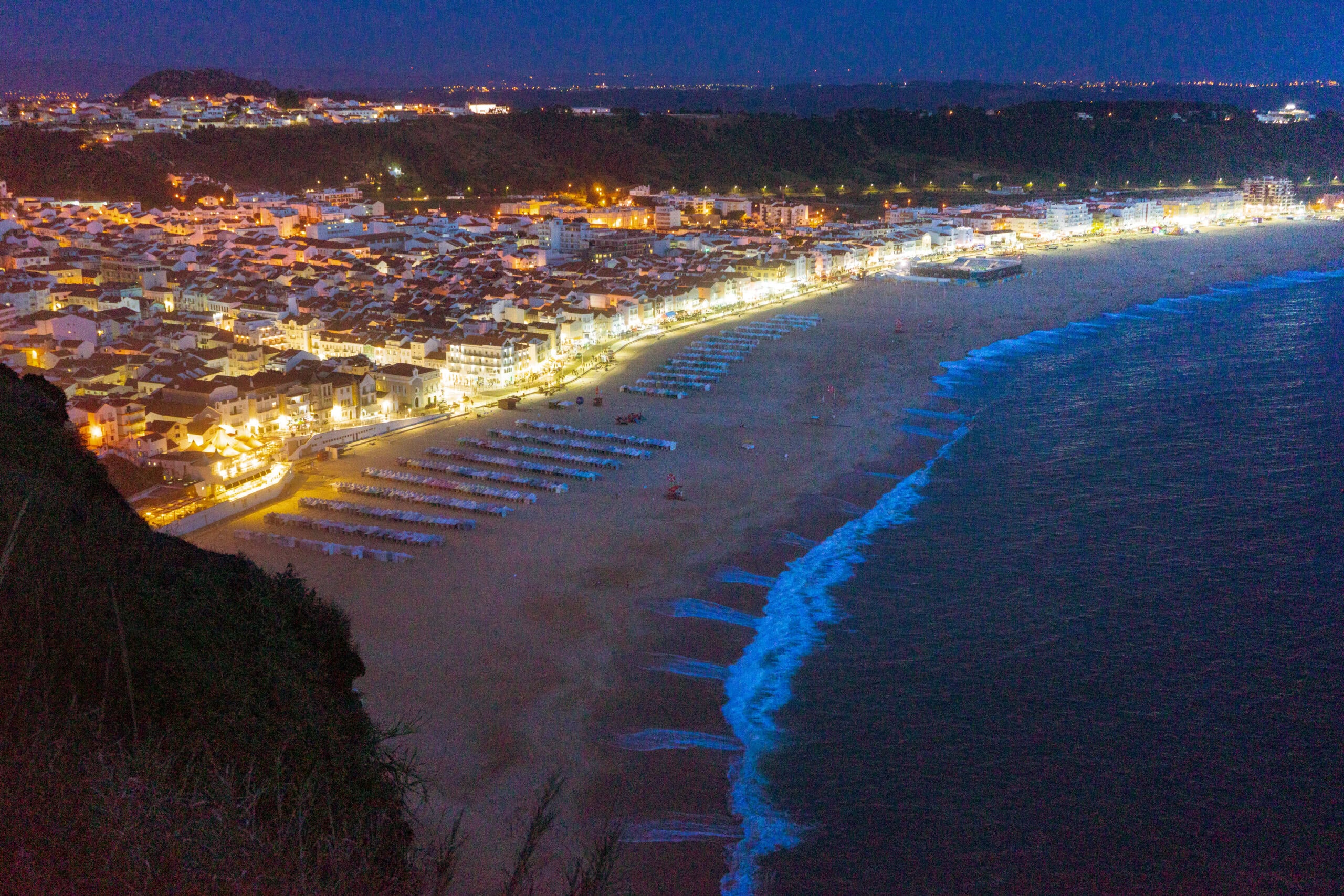
You’re probably on Google already typing Best place to stay in Nazaré 🙂 Stop wasting your time; we’ll tell you a little secret.
We stayed at the phenomenal Zulla Nazare’s Surf Village in Sitio for 4 nights. We loved the pool and surf vibes, and it really felt like we were on an Atlantic surf holiday – even for non-surfers. If you’re looking to up your surf game, they also have surf lessons on offer.
You can be on the wild Praia do Norte in no time by walking through the forests and dunes. It’s also just a short walk to the funicular that will take you down to Nazaré Beach.
Can You Visit Nazaré on a Day Trip from Lisbon?
If you’re short on time, Nazaré can be done as a day trip from Lisbon. It takes around 1 hour 45 minutes by car or just over two hours by bus, which makes it one of the most popular coastal escapes from the capital.
A day is enough to get a taste of Nazaré, but you’ll miss the slower rhythm that makes this place special. We stayed four nights and loved watching the beach and cliffs change with the light. If you can spare it, one or two nights here feels far richer than a day trip ever could.
With only a day, you’ll need to keep things simple. I’d suggest:
Morning departure: Leave Lisbon on the first bus at 7:45 to make the most of your day.
Praia da Nazaré: Stroll along the promenade, check out the traditional fishing boats, dried fish display, and take a walk on the beach. If you have your swimming costume, go for a dip, or at least wet your feet.
Light brunch in town: Grab a spot on the promenade, order something from the sea and a beer, or a pastel de nata and a bica.
Funicular to Sitio: Ride the funicular up to Sitio, take in the views from Miradouro do Suberco, visit the Sanctuary of Our Lady of Nazaré, and then stroll down towards the lighthouse and surf museum. This is where the legendary big waves roll in during winter, and the views are spectacular year-round.
Early dinner before heading back: The last bus from Nazaré to Lisbon leaves at 20:00, so you have time for a nice seafood dinner. We’d go for a nice tapas and drink affair at Sitiado or Casa Pires before getting a taxi to the bus terminal.
How to Get to Nazaré
Nazaré is about halfway between Lisbon and Porto. Since there is no train station in Nazaré, it’s best to get there by bus if you don’t have your own wheels. Buy your tickets online here. Buses leave from Sete Rios in Lisbon roughly every hour between 07:45 and 19:00. The journey takes less than 2 hours and costs from 5€.
A few buses are heading from Nazaré to Porto throughout the day. It should take about 3.5 hours to reach Porto and cost about 17€.
Should You Visit Nazaré?
YES!
Nazaré is a must-see for anyone travelling in Portugal. We really enjoyed Nazaré and will definitely go back there again. If you are looking for a laid back beach holiday, surfing, and good food, you can’t go wrong with good old Nazaré.
How I Shot This Guide
Every photograph in this article was taken with the exact same gear I carry on every journey. It is a setup refined over years on the road to keep travel light without compromising the final image.
- Camera: Sony A7 V
- Lens: Sigma 24-70mm f/2.8 DG DN Art
- Storage: SanDisk Extreme Portable SSD
- Software: Adobe Lightroom Classic
- My travel essential: Ray-Ban Wayfarer