
Prague is home to the oldest Jewish community in Europe, with roots dating back to the 10th century. Similar to other parts of Europe, the Jews in Czechia faced indescribable persecution, yet the Jewish community persisted. Today, six synagogues and a cemetery remain in Prague, which are essential stops for anyone looking to engage with the city’s culture, history, and architectural beauty.
And so, in our effort to explore Prague beyond the Charles Bridge, the Astronomical Clock, and its renowned beer, we tackled the Prague ghetto and its synagogues on a self-guided walking tour.
Our DIY walking tour led us through the beautiful streets of the Jewish Quarter, also known as Josefov. The diverse architecture of the Prague synagogues, ranging from solemn to magnificent, along with the profound sense of history, was one of the highlights of our trip.

Please note: This post may contain affiliate links. This means I may earn a commission if you make a purchase by clicking a link (at no extra cost to you). As an Amazon Associate, I earn from qualifying purchases. Learn more.
Quick Guide to Prague’s Synagogues
Entrance Fee: A combined ticket to the Jewish Museum in Prague costs CZK 500/370 for adults and children. It covers the five synagogues and the Jewish cemetery in Josefov (Maisel, Pinkas, Klausen, Spanish, and the Old New Synagogues). It also includes entrance to the Ceremonial Hall and Robert Guttmann Gallery. We bought our ticket at the Maisel Synagogue, where we started our tour. In summer, it’s advisable to buy your entrance ticket online.
The Jerusalem Synagogue, outside Josefov, has a separate entrance fee of CZK 150/100 for adults/children.
Opening Hours:
November – March: 9 a m – 4:30 pm
April-October: 9 am – 6 pm
Closed on Saturdays and Jewish holidays
Recommended Time: We spent about half a day seeing all the synagogues, with a few food and drink stops and other distractions along the way.
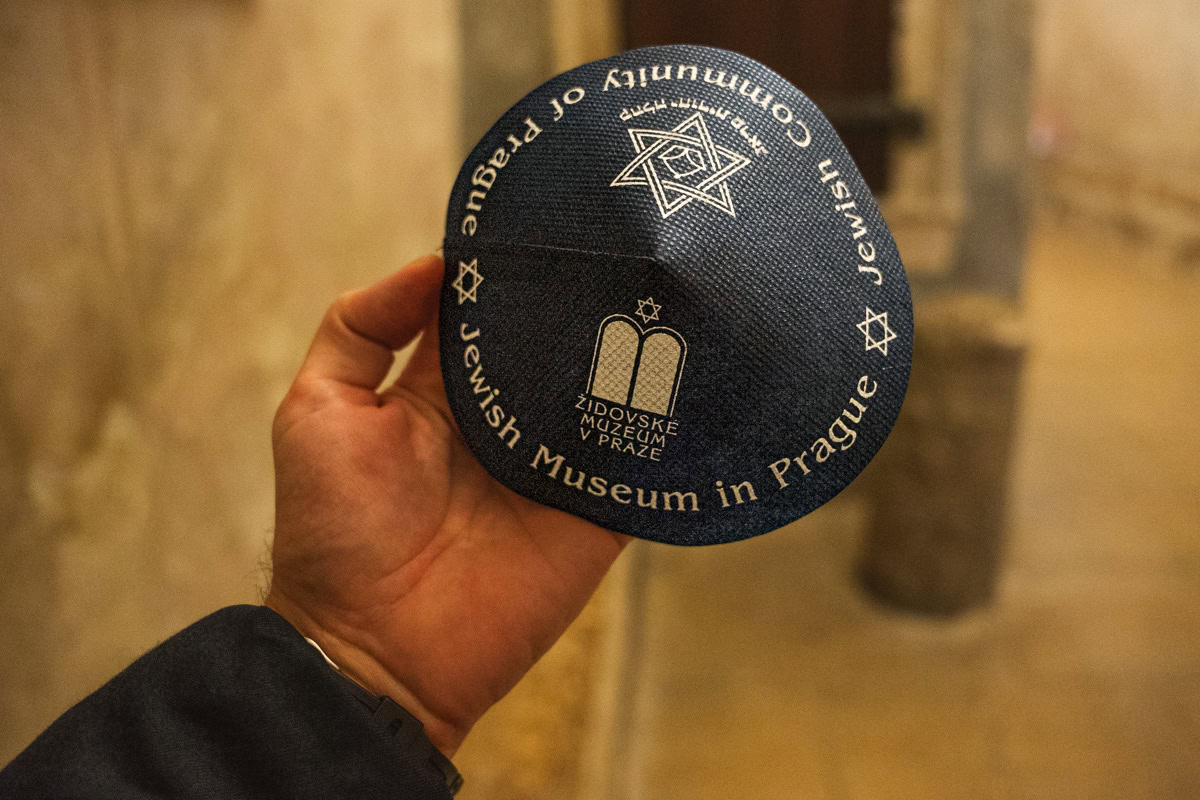
Etiquette: Men will receive a kippah (Jewish skullcap) that must be worn inside the synagogues. Mine fell off at the entrance to the Pinkas Synagogue, and the guy behind me had a mini aneurysm, thinking I was going to enter with a bare head. Keep it on!
Shoulders should be covered, so no tank tops.
While some spots are extremely photogenic, don’t turn this into an Instagram experience. Respect and all that, you know.
Guided Tour: This top-rated guided tour of the Jewish Quarter is perfect for those who wish to dig deeper into Prague’s Jewish community.
Still planning your trip? We loved staying at Residence 44.
Our Visit to the Jewish Quarter in Prague
We hit the streets of Josefov on the morning of 24 December. This was our second visit to Prague, and somehow, we missed the Jewish Quarter during our first visits. Shameful, I know!
This time, we made it a priority and set aside half a day to explore the Jewish Quarter, and it turned out to be one of the highlights of our Prague trip. Even for non-Jewish folks like us, a visit to the Jewish Quarter and the synagogues of Prague is a must for anyone visiting the city. The history and architecture of Jewish Prague will add immense depth to your visit.
We started at the Maisel Synagogue, where we bought our entrance ticket, CZK 500 for adults. The lovely lady at the ticket counter tried her best to convince us to get the audio guide as well. She insisted that going without the audio guide is like watching a movie without sound. We insisted we didn’t need an audioguide.
In hindsight, she was right. For people like us with limited knowledge of Judaism and the Jewish culture, I’m sure we missed a lot or saw things without knowing the true meaning.
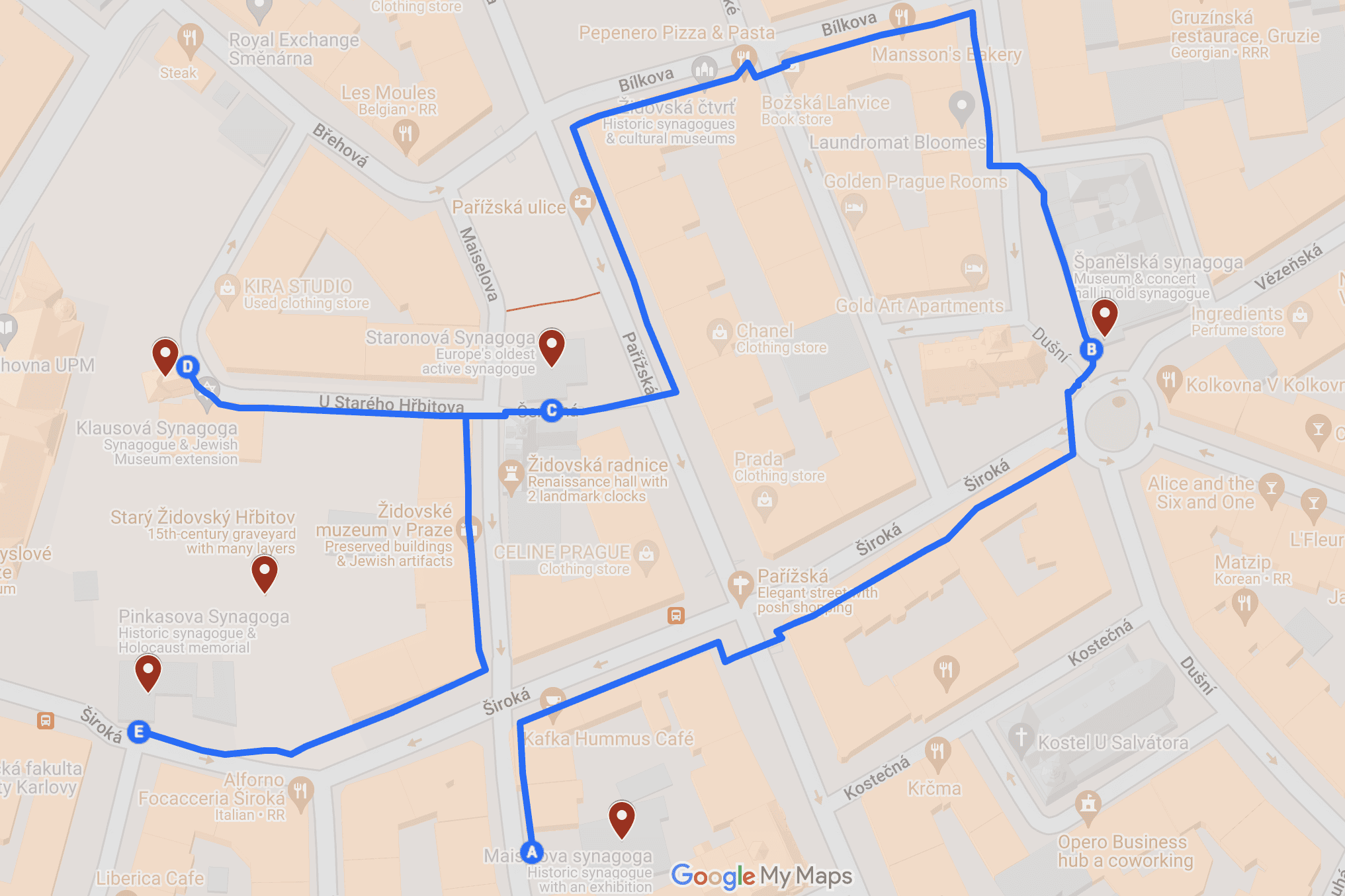
We walked the following route:
- Maisel Synagogue
- Spanish Synagogue
- Old New Synagogue
- Klausen Synagogue
- Ceremonial Hall
- Pinkas Synagogue
- Jewish Cemetery
After that, we walked to the Jerusalem Synagogue, about a 20-minute walk from the Jewish Quarter. We used Google Maps for directions and stopped at the Christmas Market in Old Town Square for a snack.
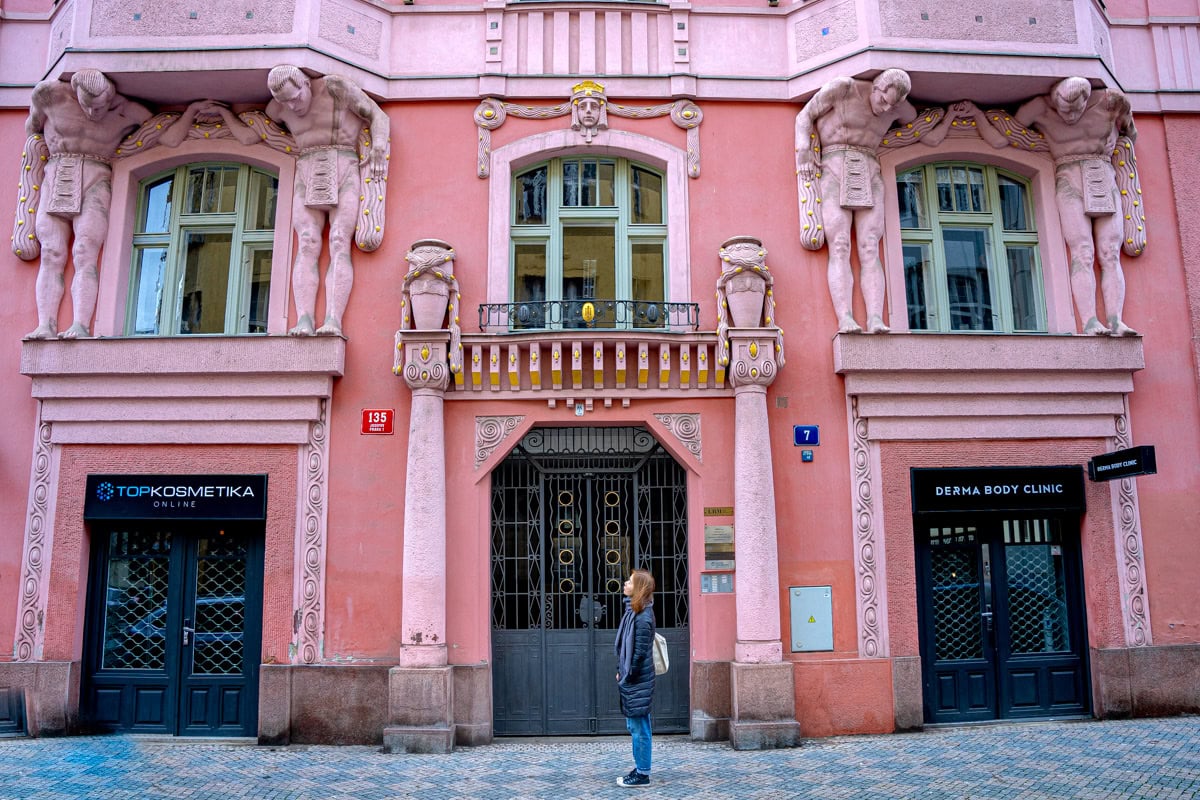
Apart from the synagogues, our walk of Josefov led us to some cool architectural highlights and street art. Prague is a great city to walk around, with many unexpected things to discover.
Maisel Synagogue
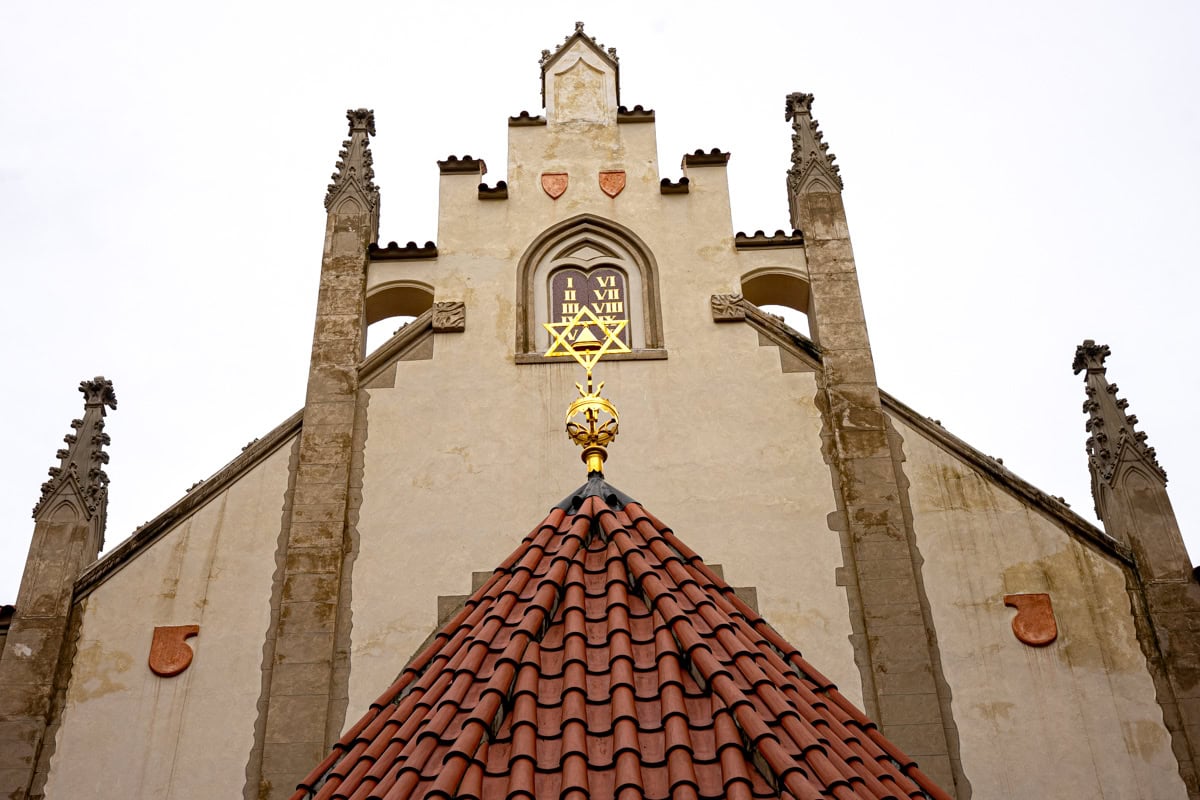
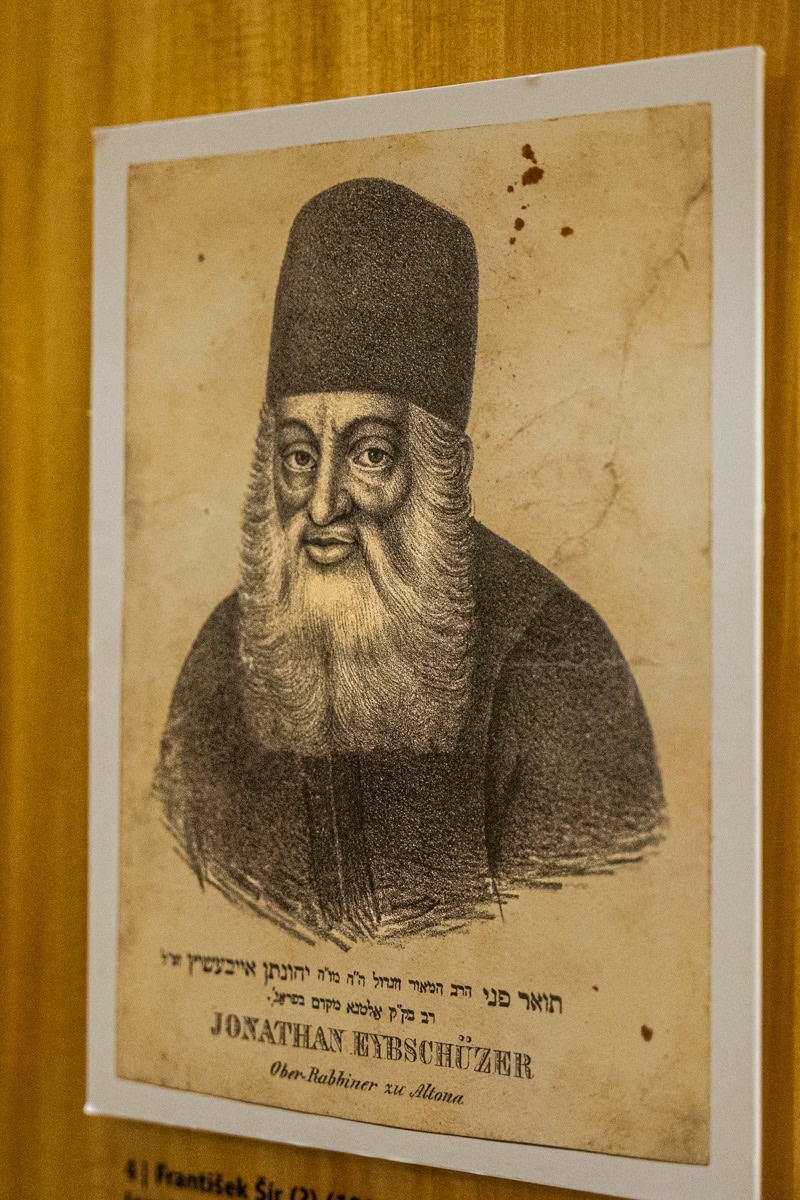
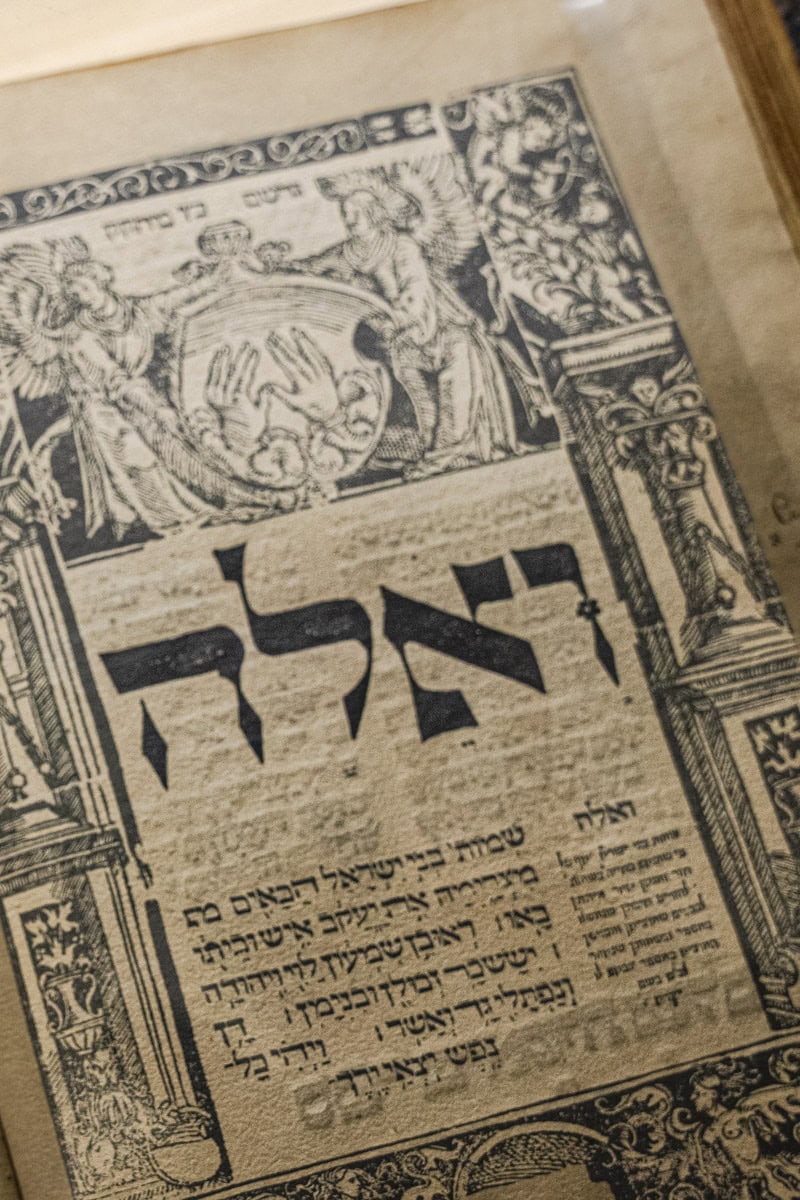
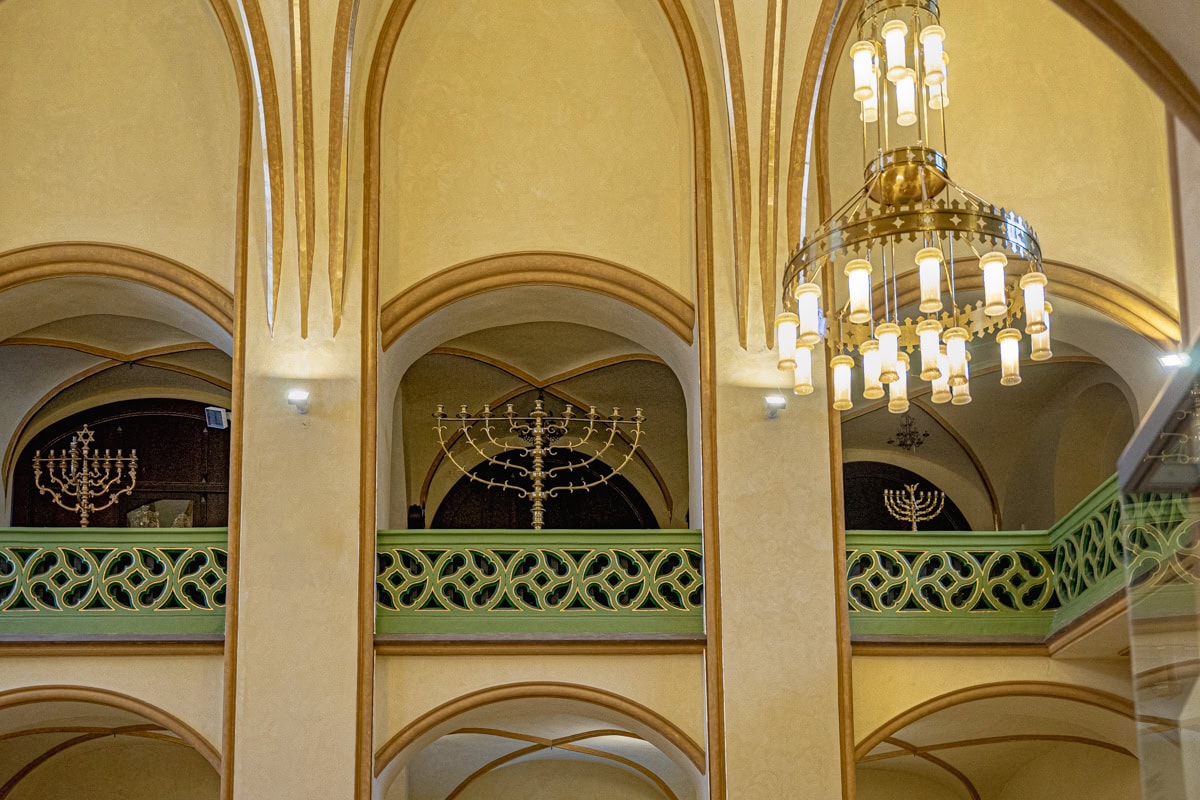
The three-nave synagogue was initially built in the Renaissance style in 1590, but it was later rebuilt in the Neo-Gothic style after a fire destroyed it in 1689.
Inside, the synagogue resembles a museum more than a place of worship. It hasn’t been an active synagogue since 1955. The interior features informative displays, Hebrew documents, and touchscreen displays that document the history of the Czech Jews.
Spanish Synagogue
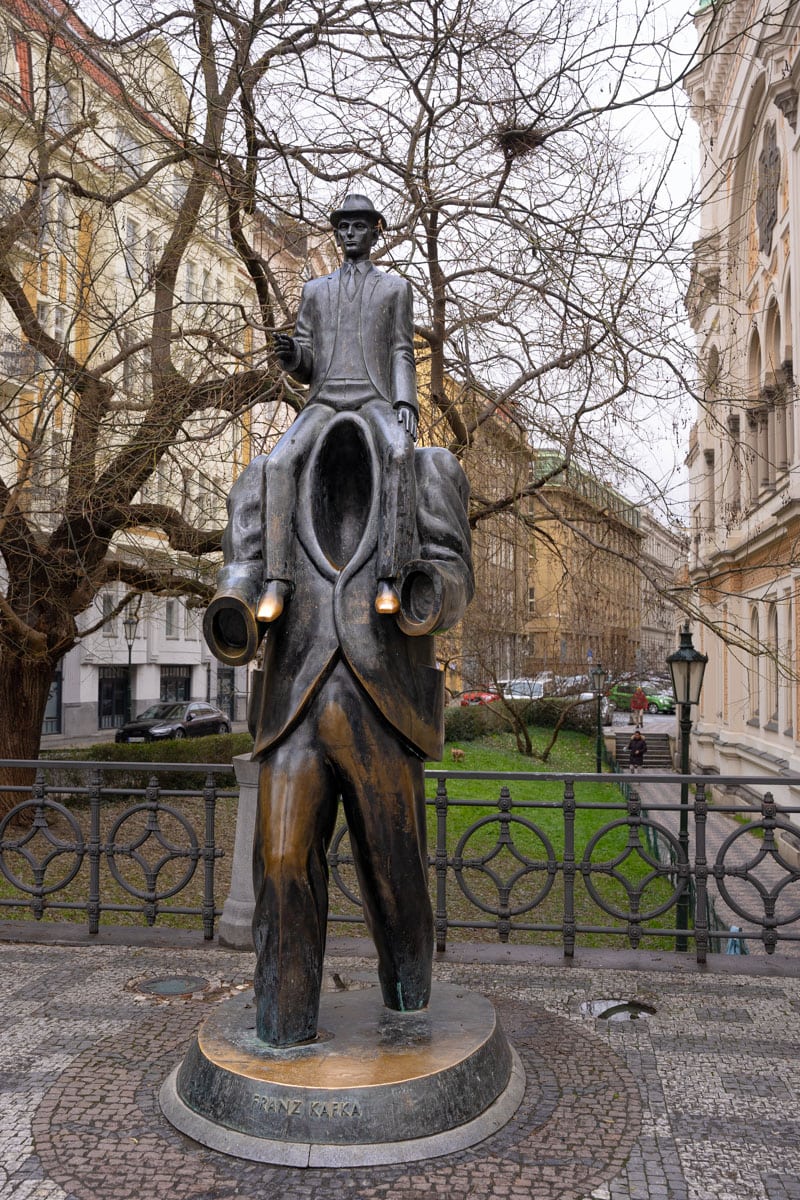
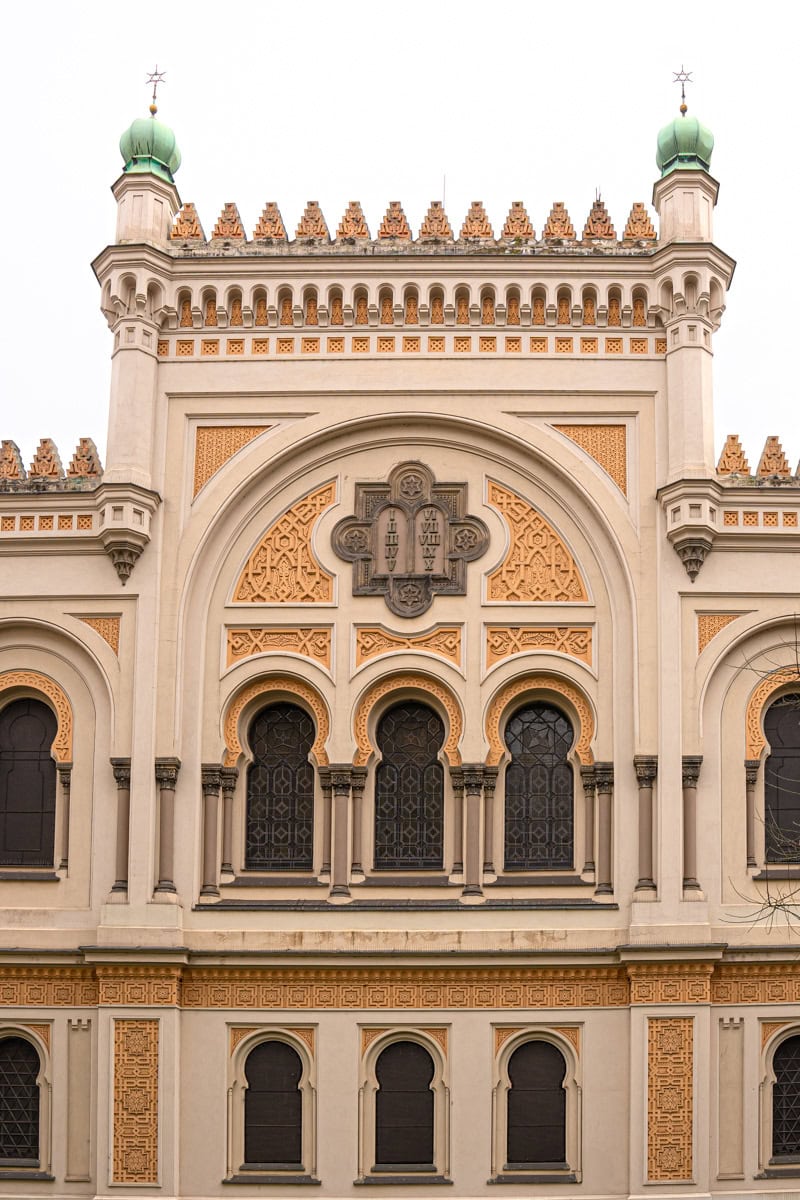
The Spanish Synagogue completely steals the limelight in Prague’s Jewish Quarter. It is extravagant on a level we never imagined seeing in a synagogue.
Before entering, take a moment to admire the unique Kafka statue in front of the synagogue. The four-meter-tall bronze statue depicts Kafka sitting on the shoulders of an empty suit and was inspired by his short story Description of a Struggle.
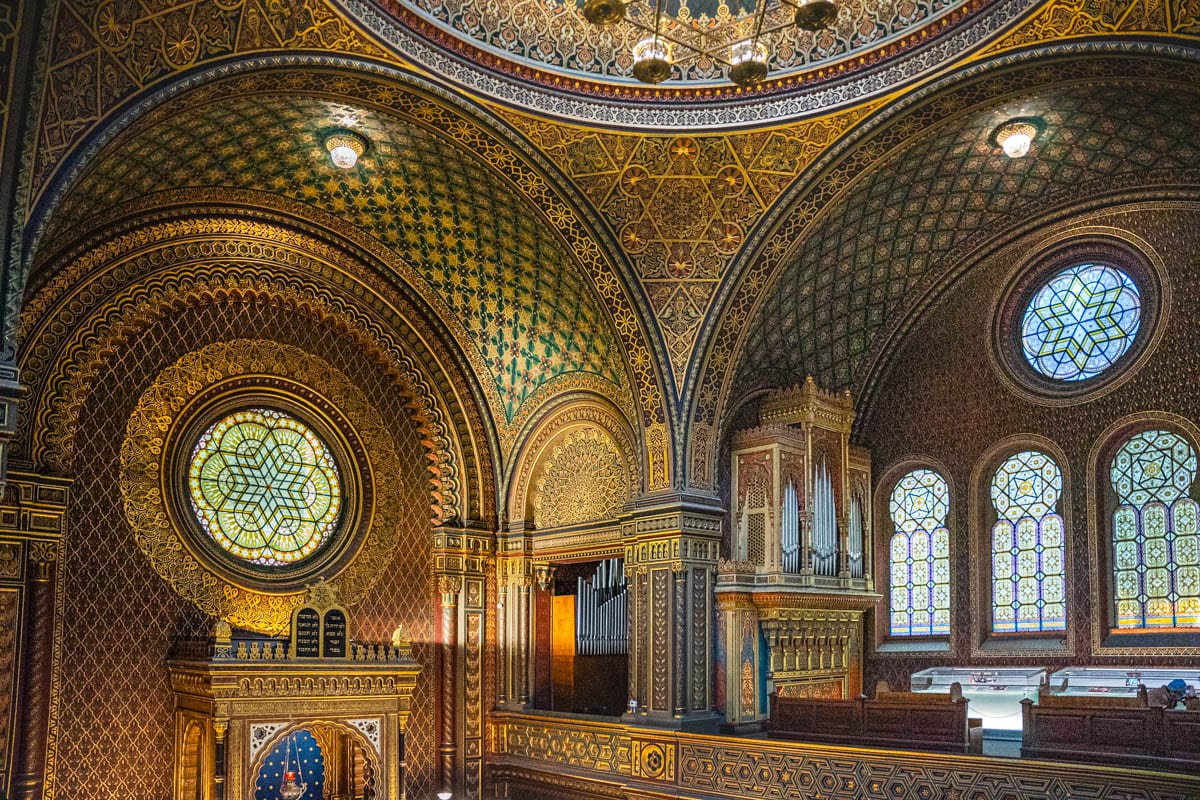
Built in 1868, the Spanish Synagogue is the newest synagogue in Josefov. It stands on the site of the oldest Jewish house of worship in Prague, the Old School, and offers a striking contrast to the nearby plain Gothic synagogues.
The name Spanish Synagogue reflects its distinctive Moorish style, inspired by Arabic art in Spain, with elaborate stucco work and richly decorated motifs.
Designed by Vojtěch Ignác Ullmann and Josef Niklas, the Spanish Synagogue’s interior dazzles with intricate arabesque patterns, brilliant stained glass windows, and a stunning domed ceiling. The dazzling dome immediately reminded me of the Mudejar Alcazar we saw in Seville.
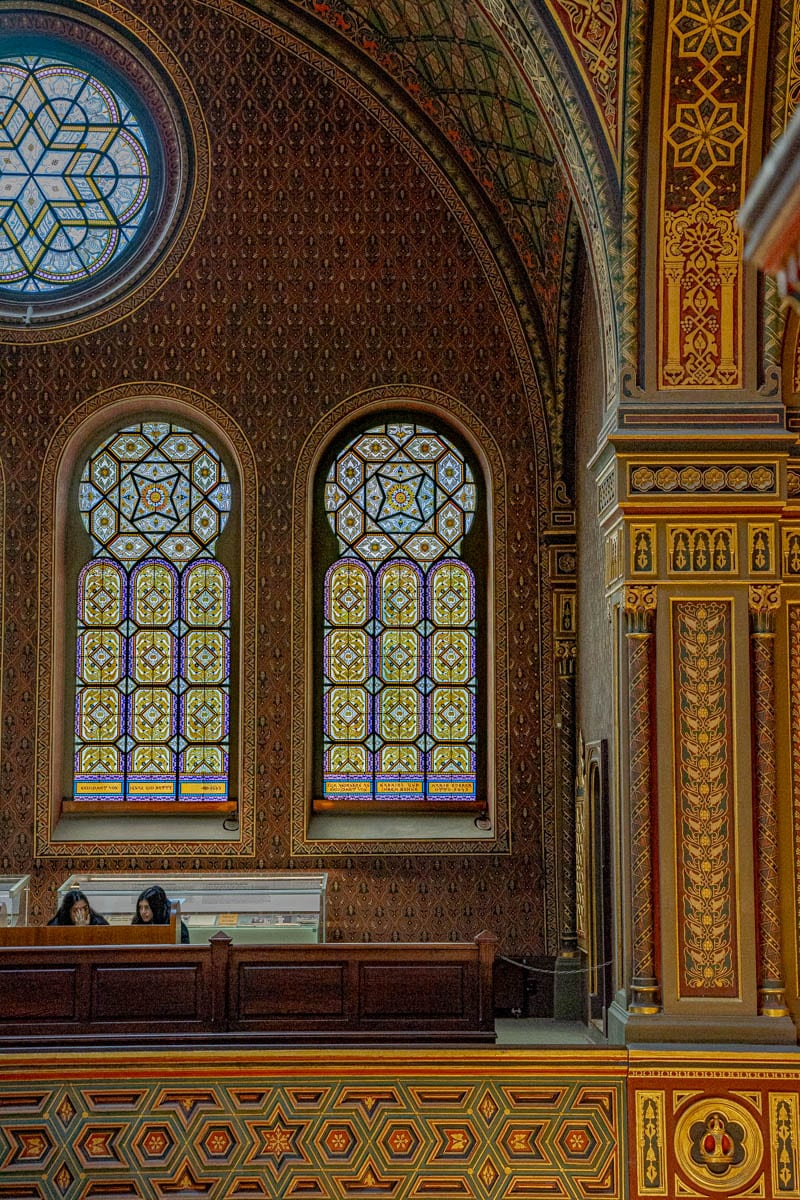
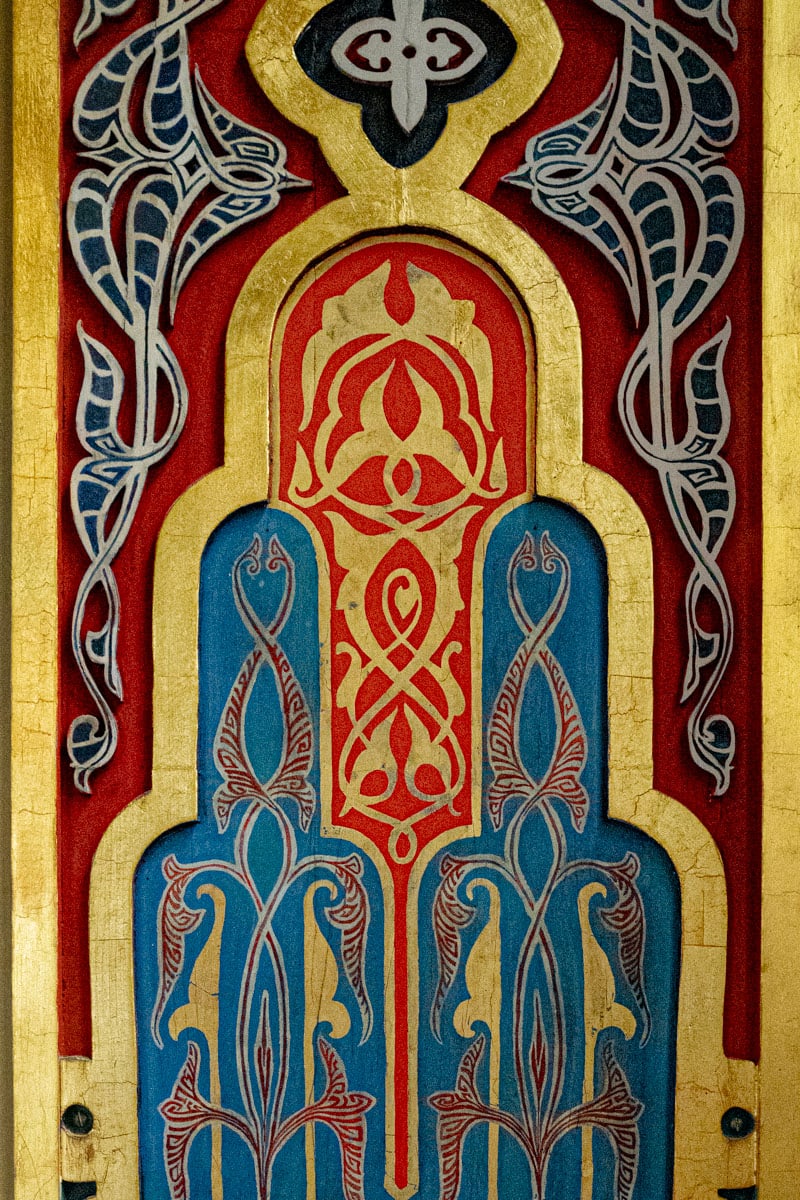
I noticed the architectural details as my initial sense of wonder gave way (or my neck started hurting from staring at the ceiling). Intricate geometric designs and gold accents cover every square inch from the floor to the domed ceiling.
Up on the upper balcony, you’ll find an organ with a history tied to the renowned Czech composer Bedřich Smetana. The space is filled with beautiful light streaming through the stained glass windows.
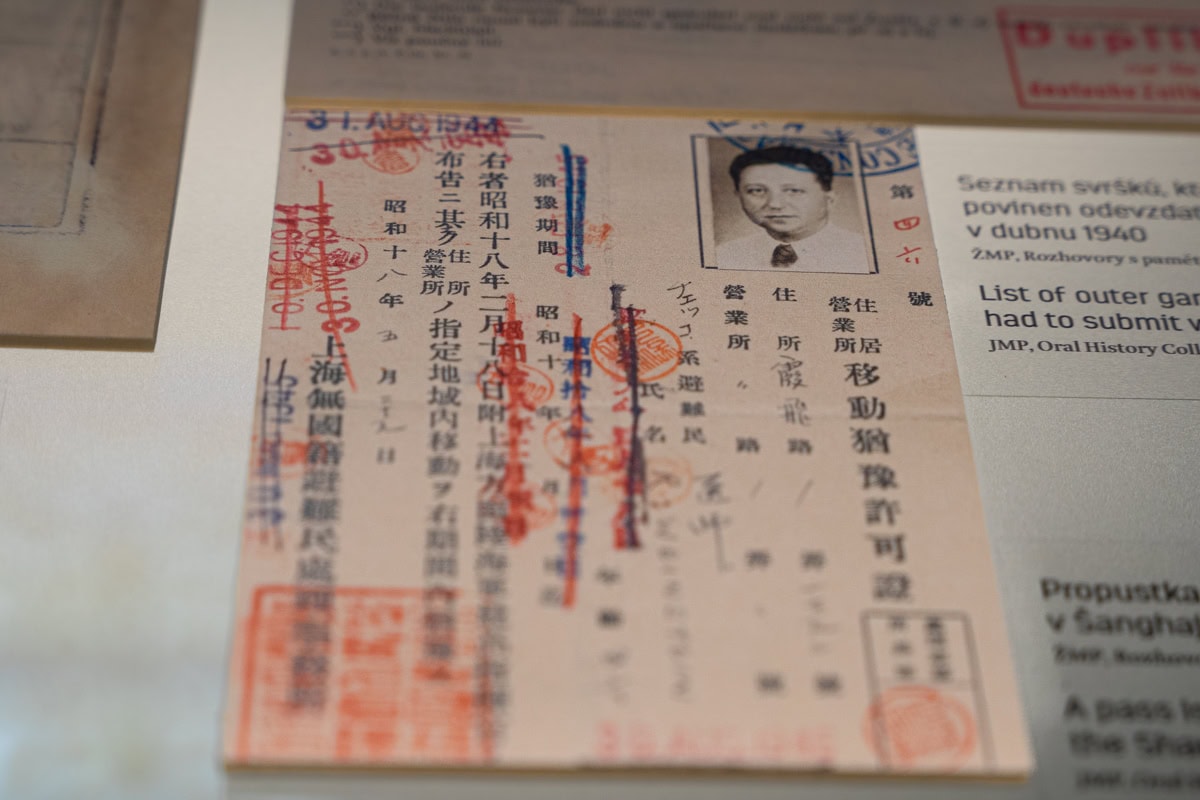
Like the other synagogues forming part of the Jewish Museum in Prague, there are informative exhibitions that chronicle the history of Jews in Bohemia and Moravia and beyond. I was particularly drawn to the displays of the Jewish community in Shanghai, where we lived for a year in 2021.
Old New Synagogue
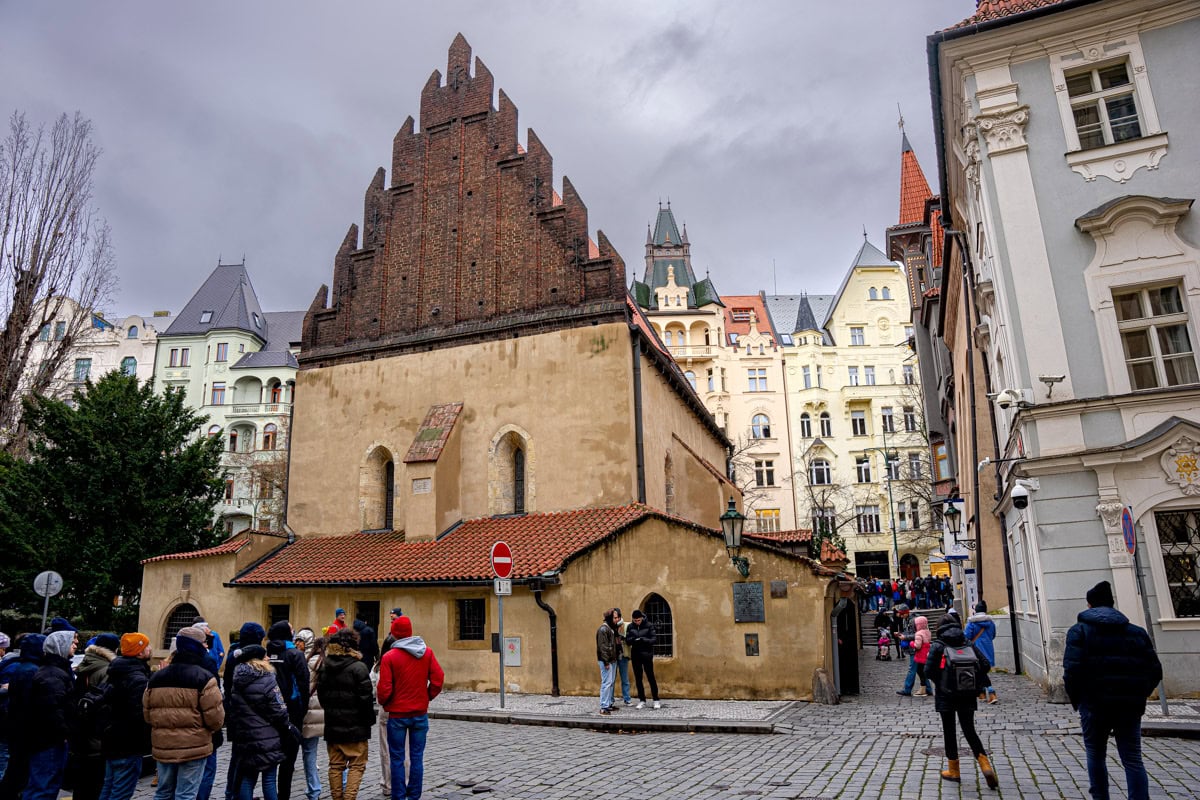
The Old-New Synagogue is the oldest active synagogue in Europe and has been a central part of Prague’s Jewish community for over seven centuries. It was built around 1270 in the Gothic style.
Originally called the New Synagogue, it became the Old-New Synagogue when newer synagogues were built. Another interpretation of the name comes from the Hebrew word al tnay, which means on condition, sounding similar to alt-nay in Yiddish. According to legend, angels brought stones from the temple in Jerusalem to build the synagogue on the condition that they would be returned when the Messiah came.
I like the second version better. What to do say?
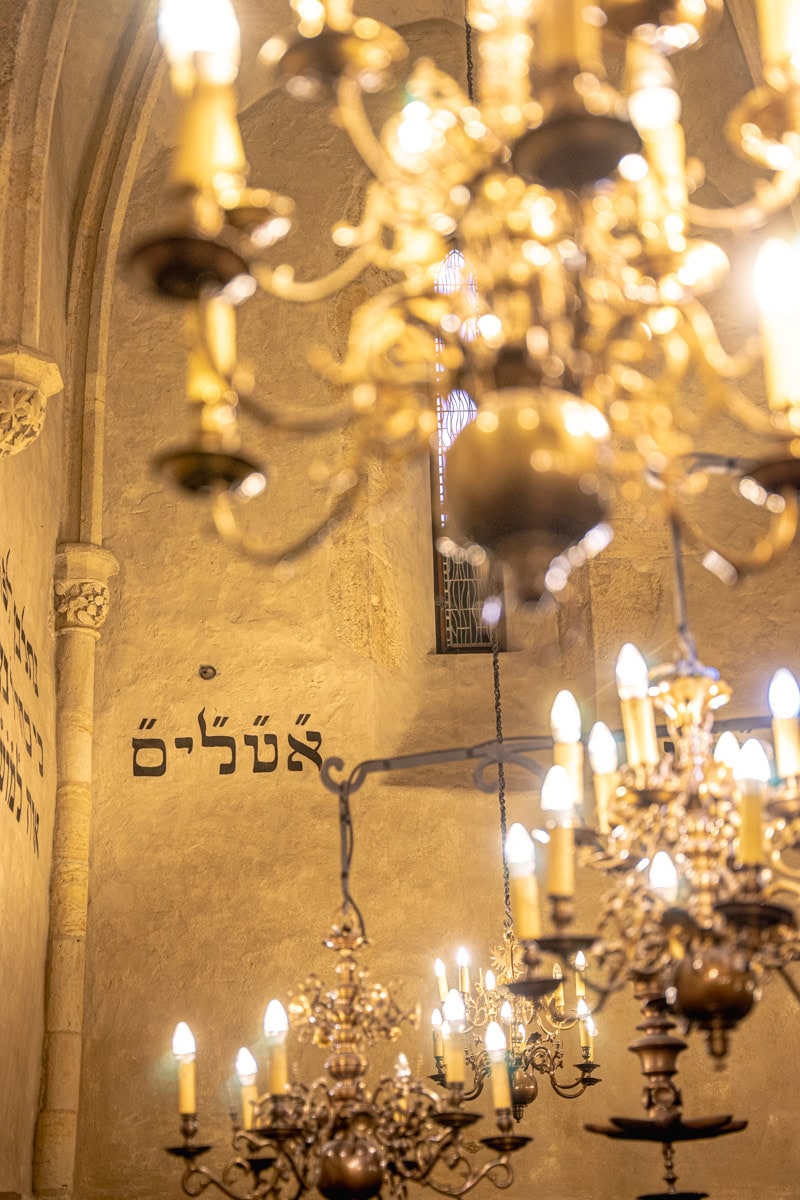
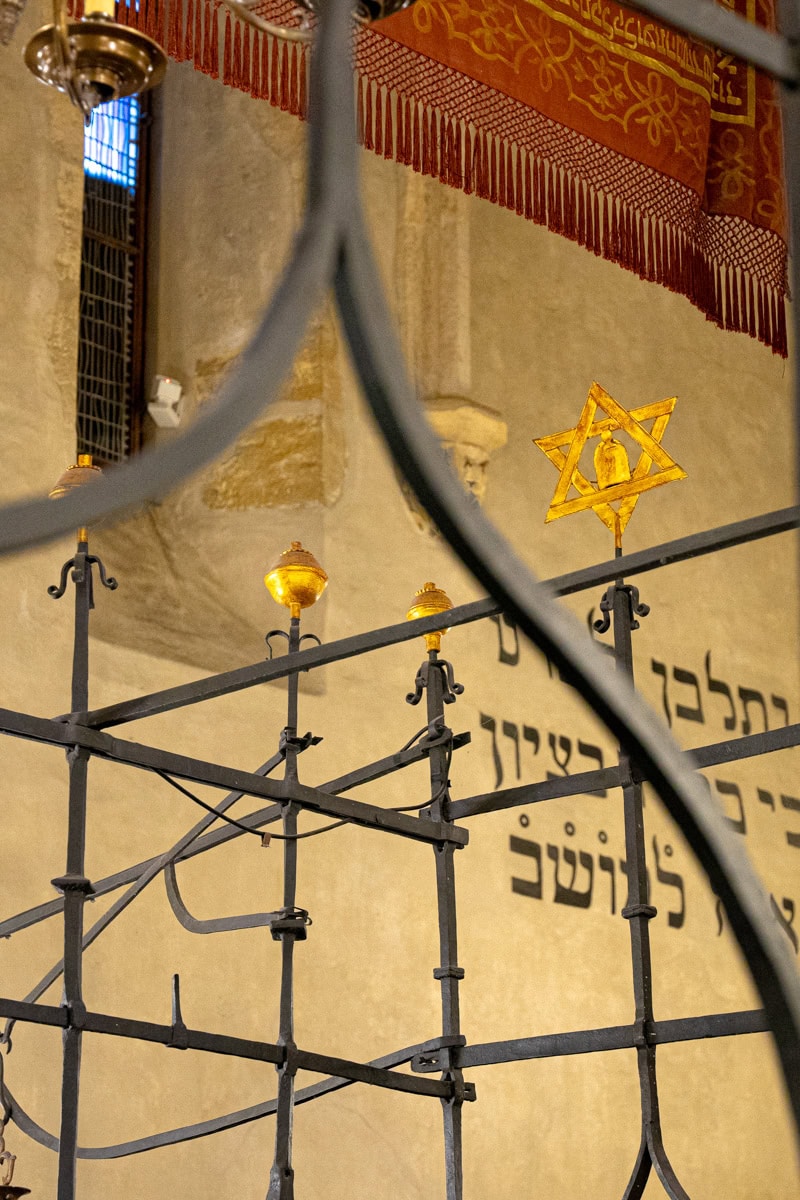
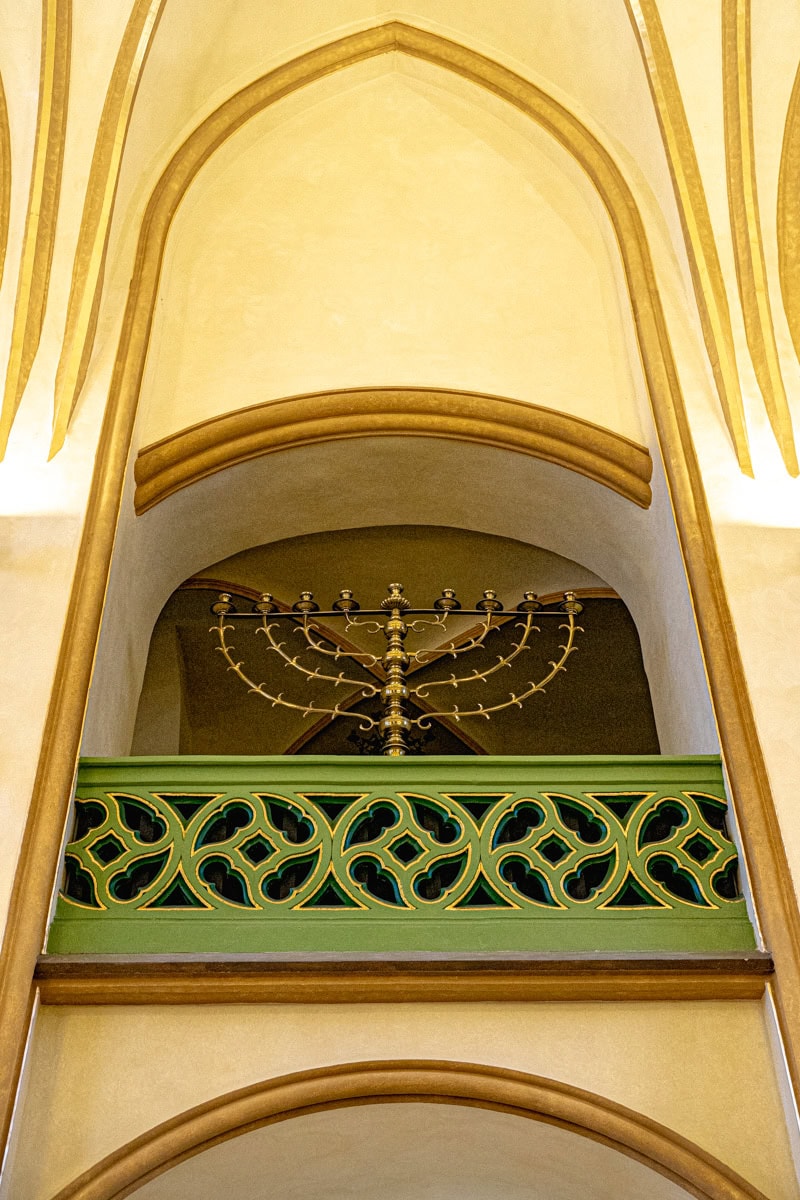
Architecturally, the synagogue has a simple yet imposing design with thick walls, high vaulted ceilings, and narrow windows. The main prayer hall has a bimah (pulpit) and an ornate Torah ark. The twelve Gothic-style windows symbolize the twelve tribes of Israel.
Ceremonial Hall
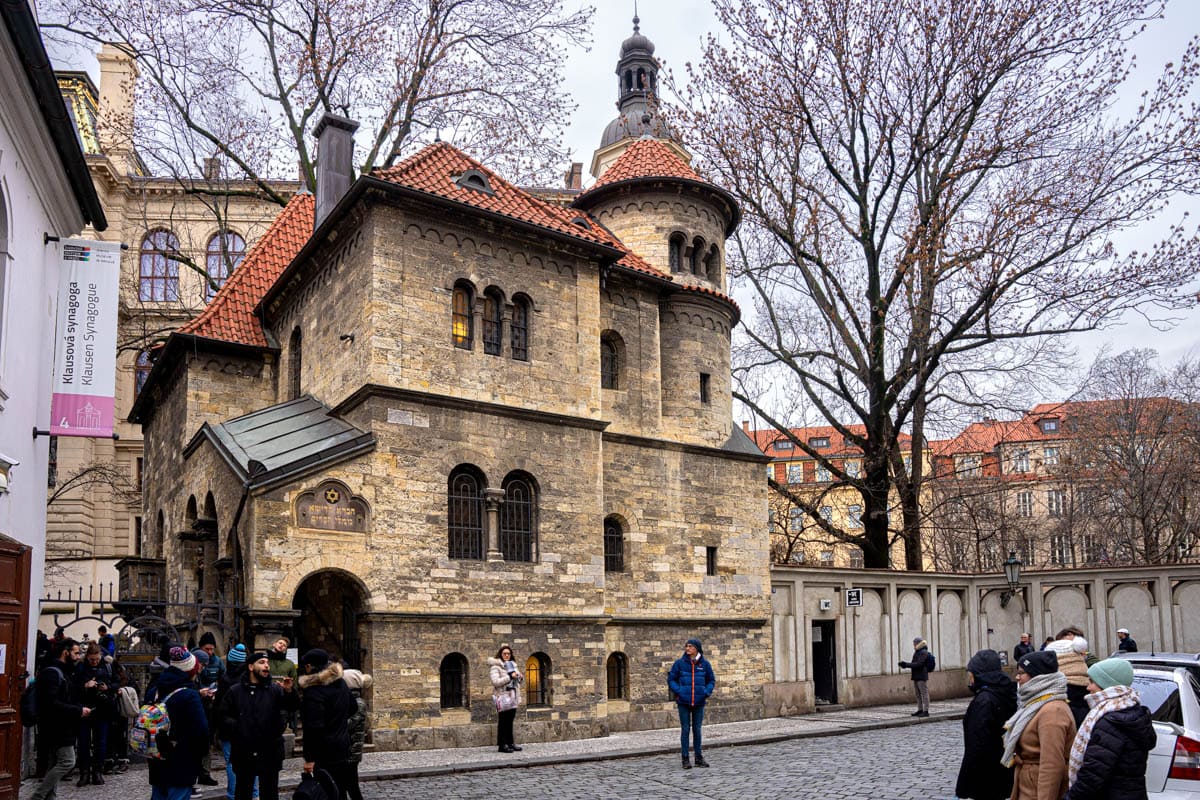
The Ceremonial Hall, with its arched windows and stonework facade, is a neo-Romanesque structure built between 1906 and 1908. Originally part of the Old Jewish Cemetery, this building served as the mortuary and ceremonial space for Prague’s Burial Society, known as the Chevra Kadisha.
Today, the Ceremonial Hall is part of the Jewish Museum in Prague. On the walls, 15 paintings depict the customs and practices associated with Jewish funerary rites.
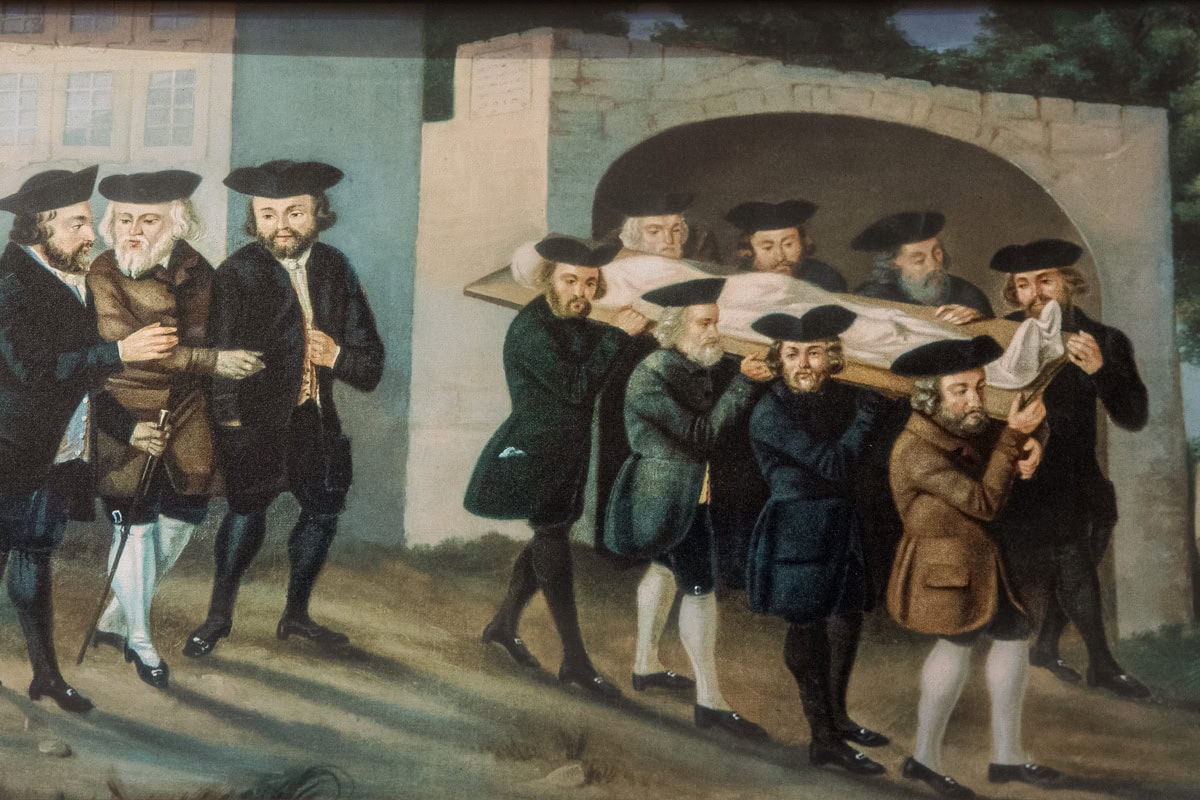
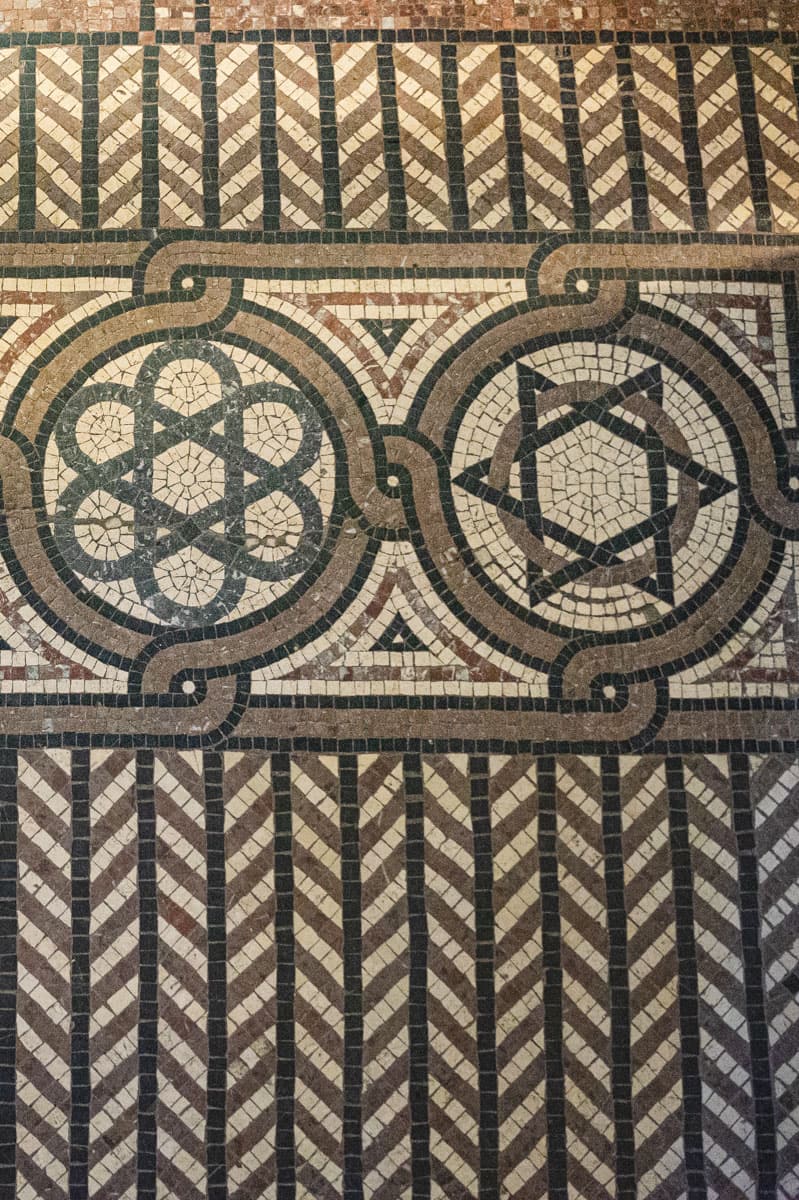
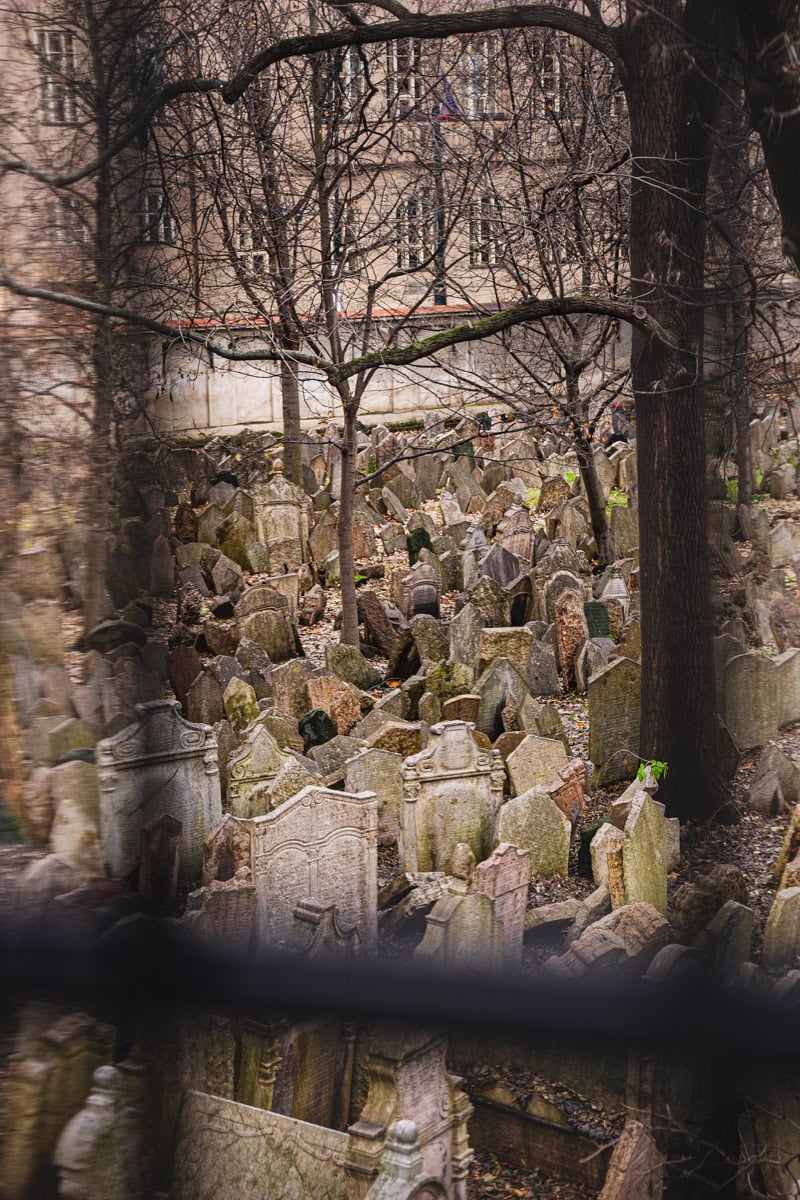
We enjoyed the intricate mosaic floors and the glimpses of the cemetery through the small windows.
The Ceremonial Hall is located at the cemetery’s exit, so you can’t enter it from here. You need to walk around the corner to the Pinkas Synagogue, from which you can access the cemetery.
Klausen Synagogue

This Baroque-style synagogue, the largest in Prague’s Jewish Quarter, was constructed in the late 17th century next to the Ceremonial Hall. It derives its name from the three smaller buildings, or klausen, that once stood on its site.
Inside, the synagogue houses exhibits on Jewish traditions, customs, and daily life, with a particular focus on Prague’s unique Ashkenazi heritage.
We found this synagogue the least interesting of the places we visited on this day and were in and out in a few minutes. However, there are some Torah scrolls and ceremonial objects to look at.
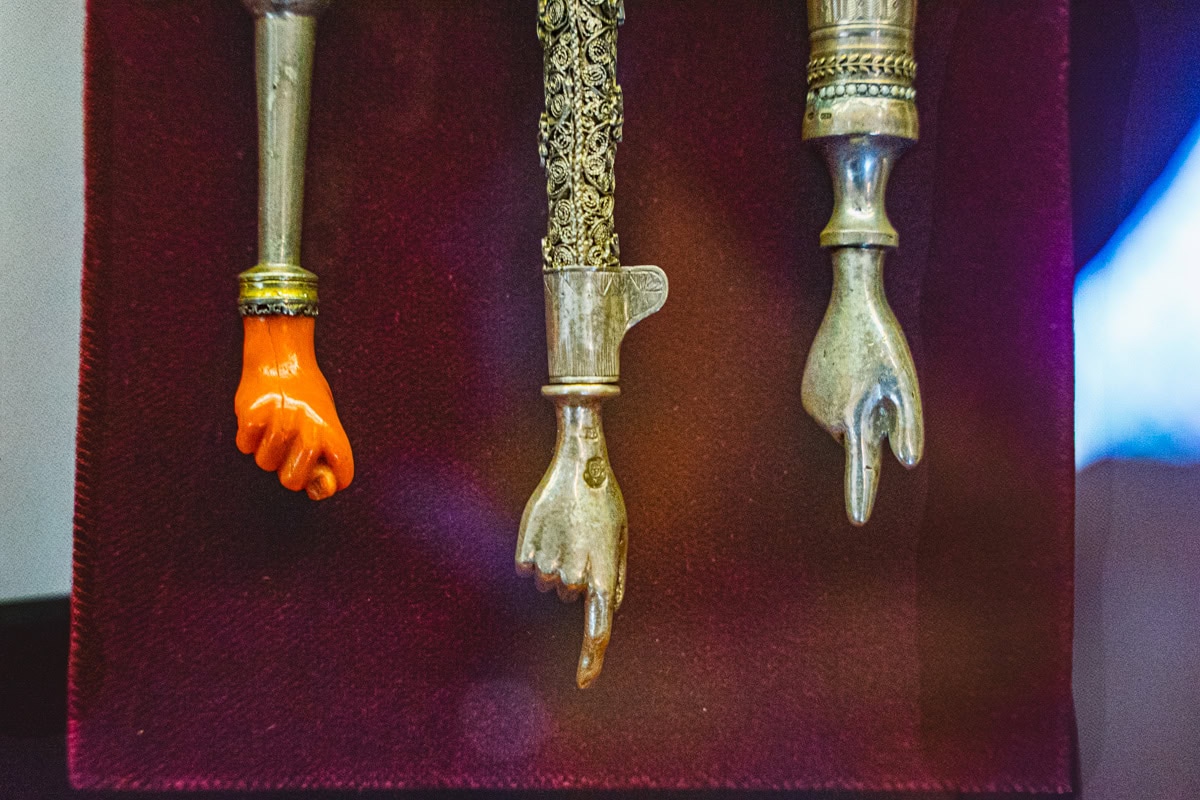
I liked the Torah pointers, about the size of ballpoint pens, something we didn’t see anywhere else. These pointers are used to follow the text while preventing the reader from touching the holy scripture.
Pinkas Synagogue
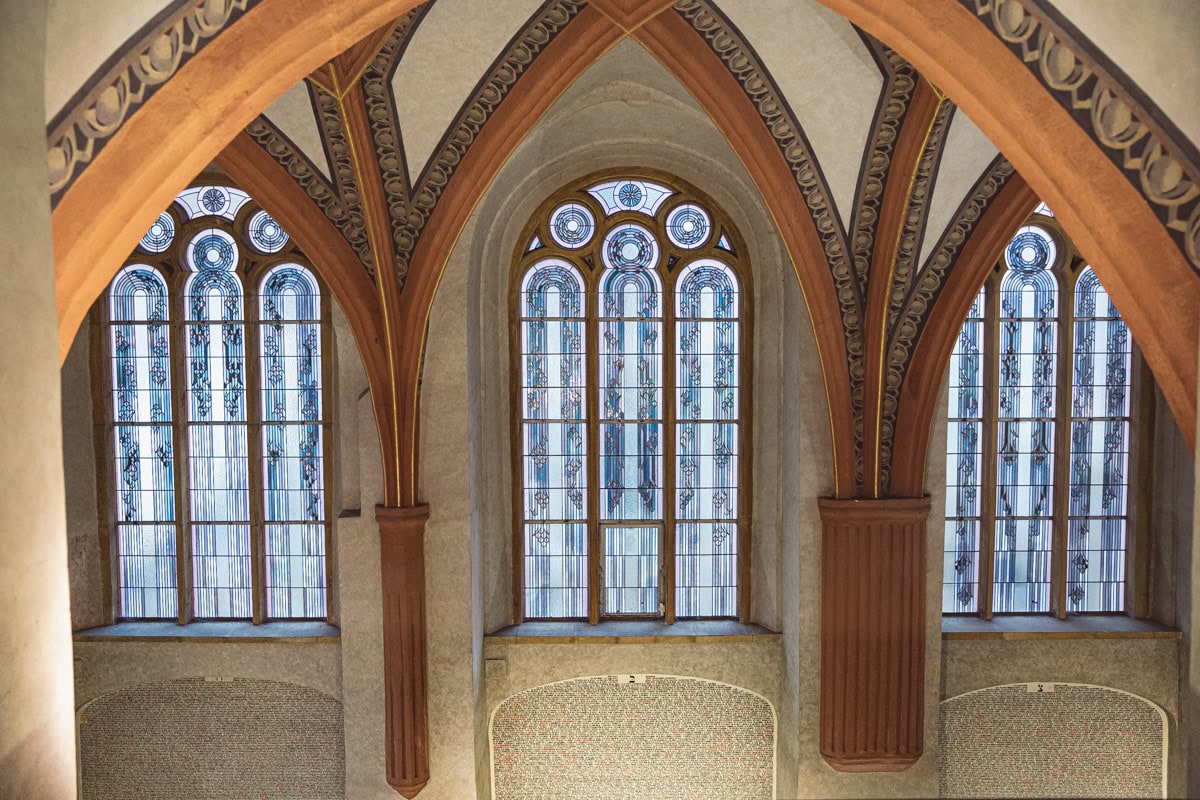
The moment we set foot inside the Pinkas Synagogue, utter silence replaced the oohs and aahs we uttered at the architecture and interesting displays of the other synagogues.
The Pinkas Synagogue is a heart-wrenching memorial and a testimony to the resilience of the Czech Jewish community. Inside this late Gothic structure (1535), we came face-to-face with the stark reality of Jewish history.
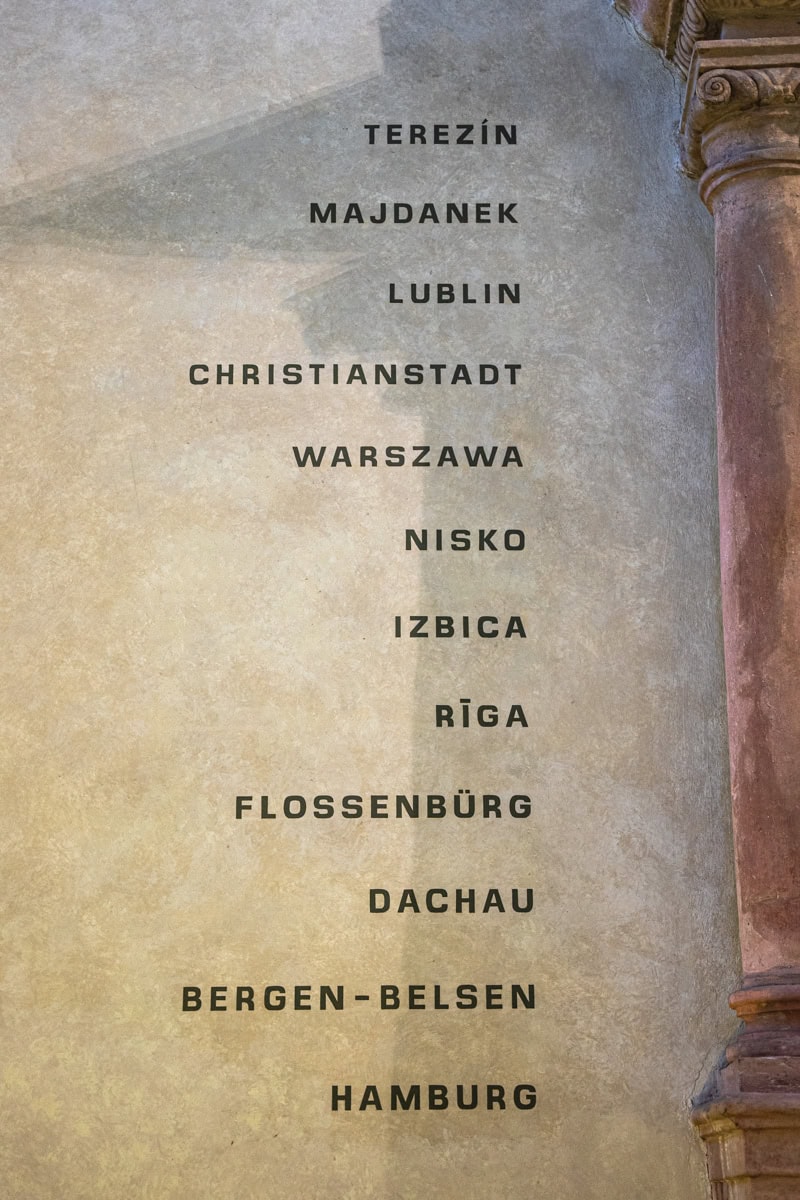
The synagogue is dedicated to the memory of the Czech Jews who perished during the Holocaust. The walls are inscribed with the names, birthdates, and dates of the disappearance of these victims, creating a powerful and emotional tribute.
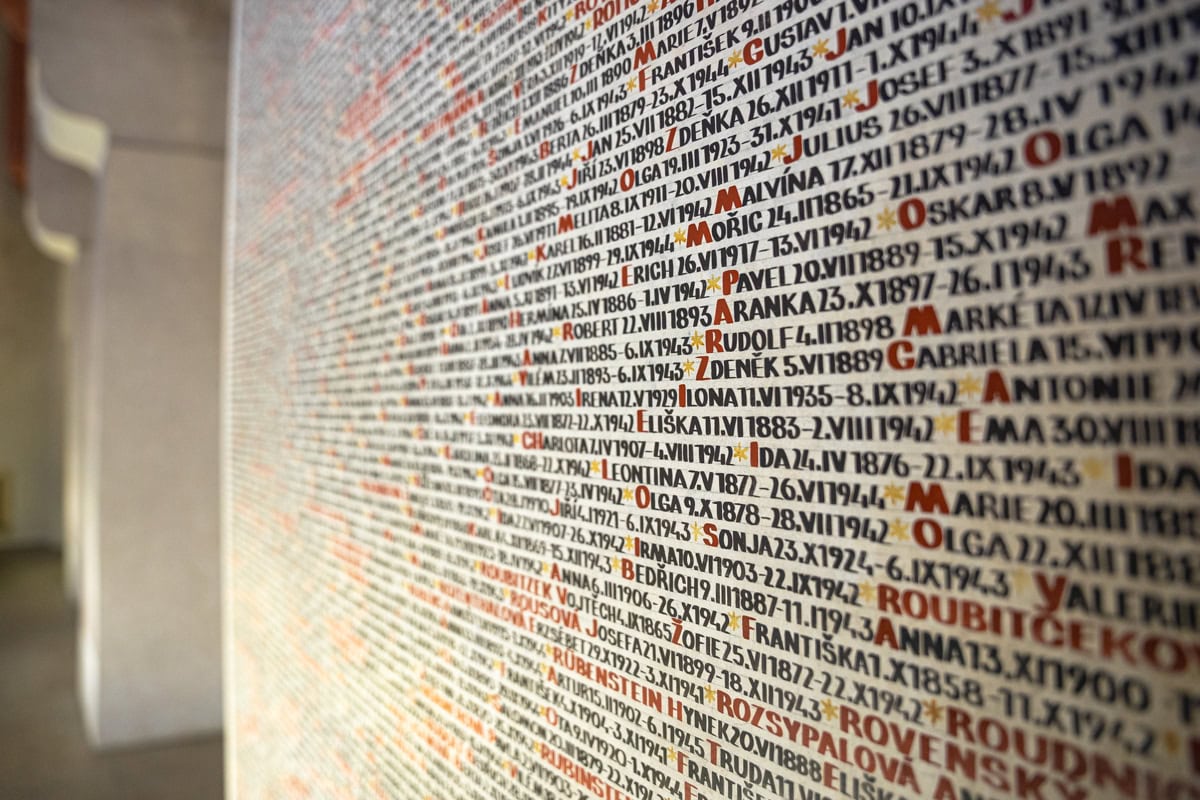
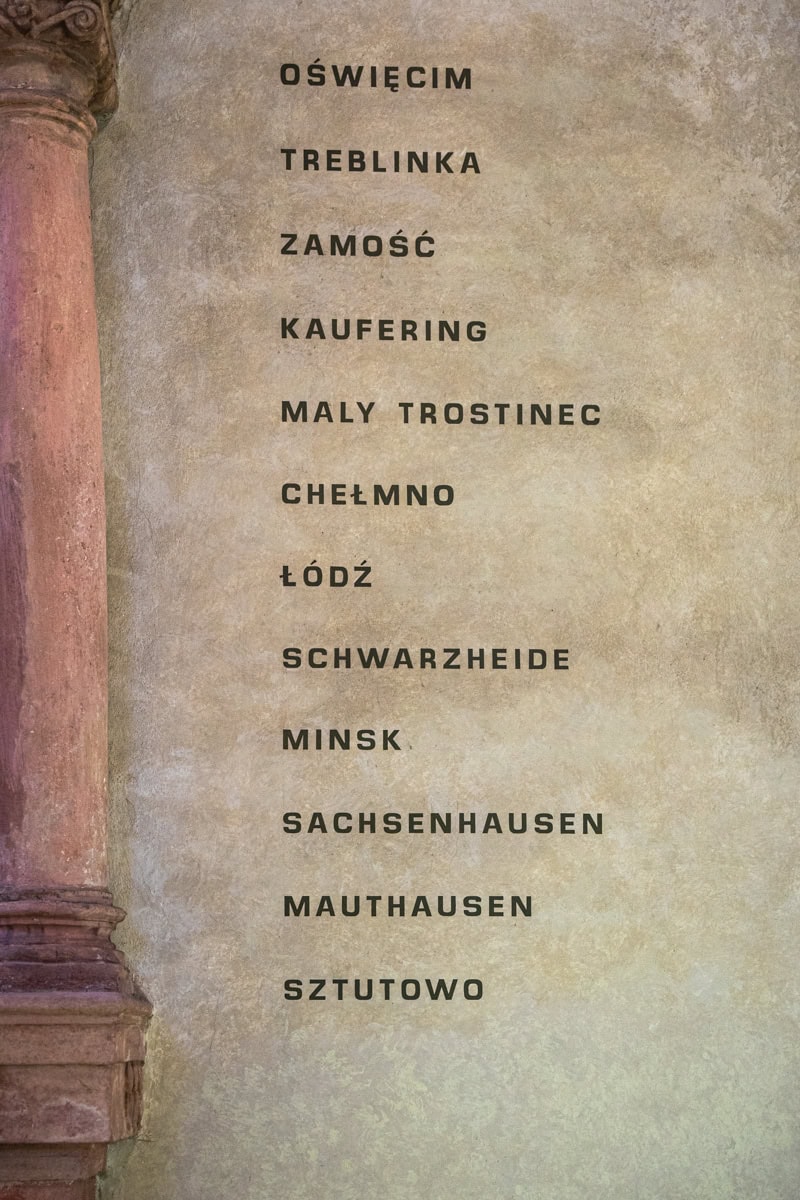
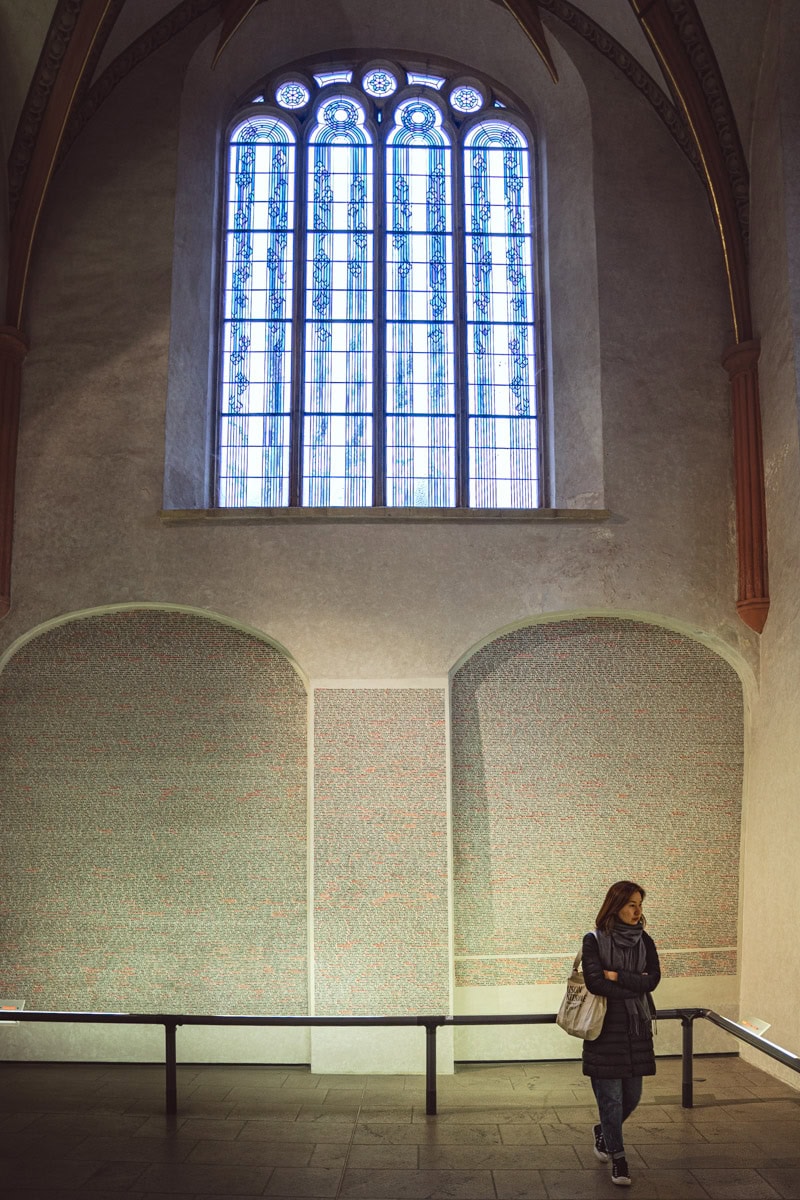
As we walked around trying to comprehend the immense loss, the Holocaust got names. Markus Sonnenschein, Emilie Krausavae, Frankl Moric and over 70,000 others who were sent to places like Auschwitz, Treblinka, Schasenhausen and Dachau. No history lesson or Holywood movie has had this impact on me.
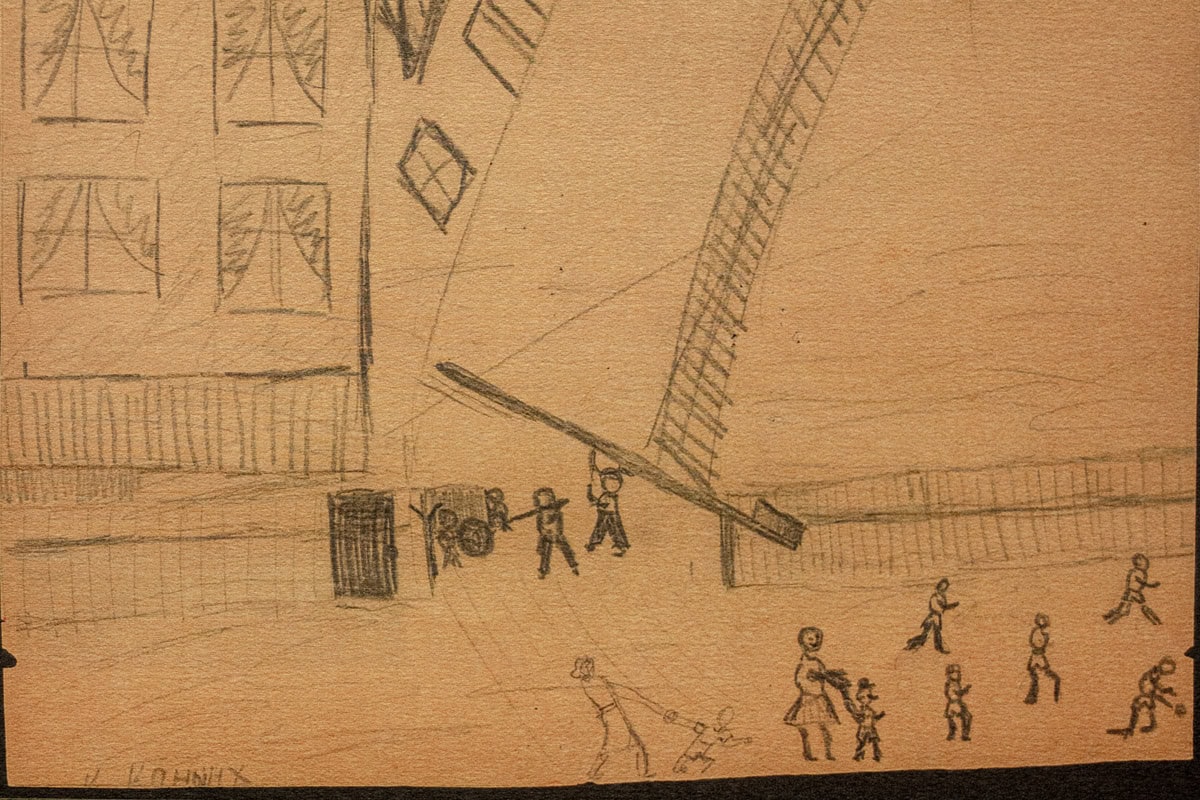
Upstairs, the Pinkas Synagogue houses a collection of children’s drawings from the Terezín ghetto, offering a heart-wrenching glimpse into the lives and resilience of young Holocaust victims.
A visit to this synagogue is a deeply moving experience that honours the memory of those lost and highlights the enduring spirit of the Jewish community. It’s not a nice place, but one that has to be visited.
Old Jewish Cemetery
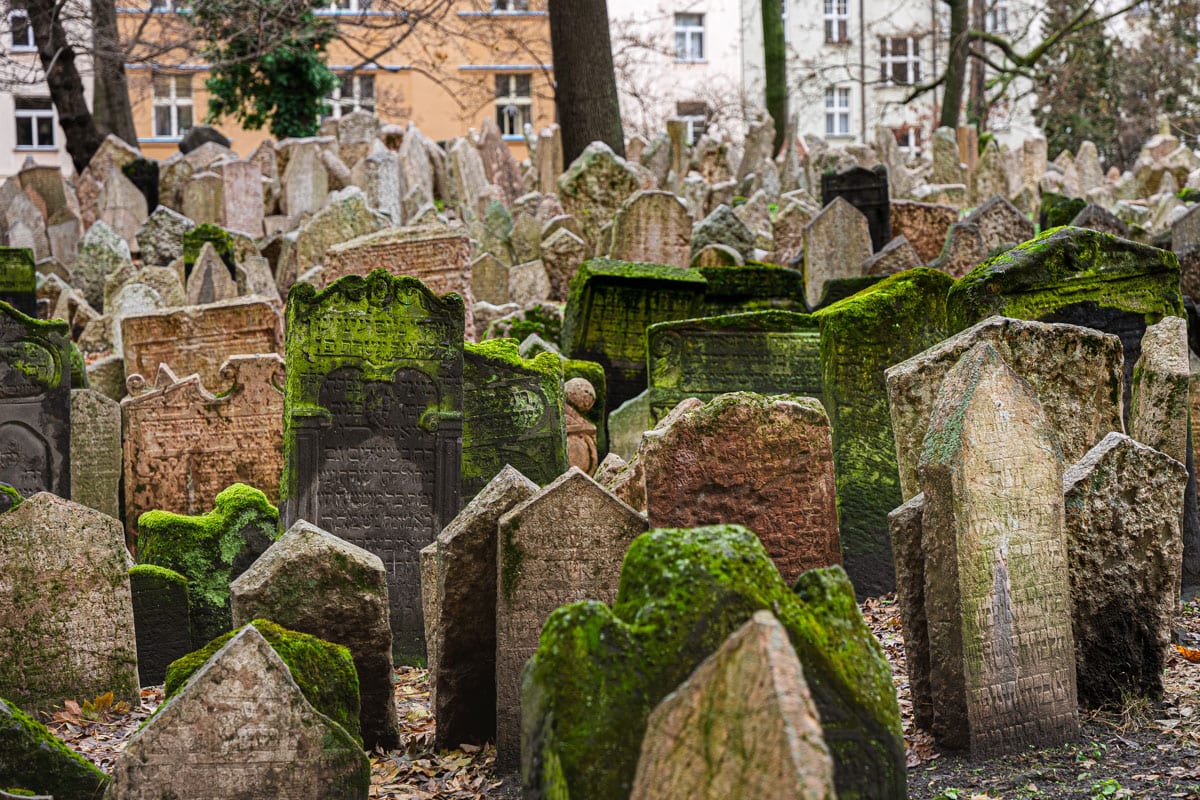
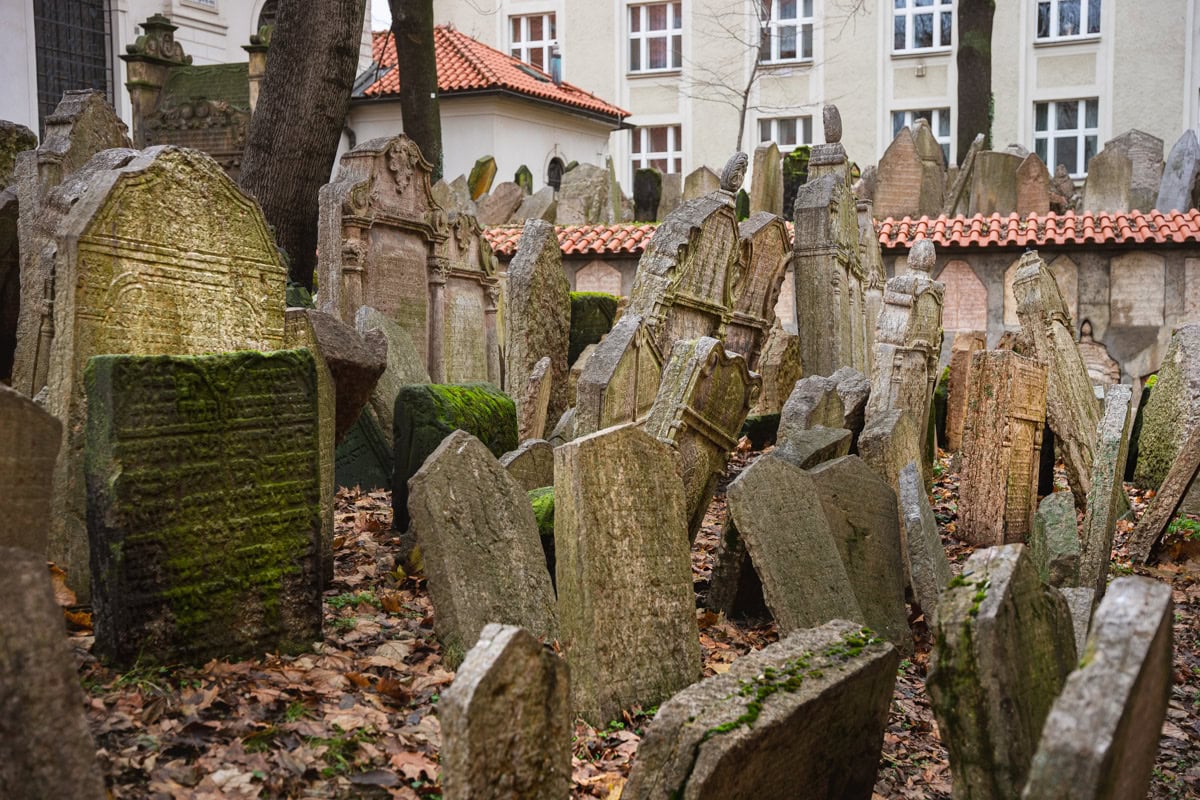
Hauntingly beautiful is the best way to describe the Old Jewish Cemetery in Prague. Established in the early 15th century and remained in use until 1786, it was the primary resting place for Prague’s Jewish community. Therefore, it is not a cemetery for Holocaust victims.
With over 12,000 tombstones, the cemetery’s crowded, uneven landscape is extremely photogenic. But please, people, don’t turn this into an Instagram venue: respect and all that.
The graves are indeed stacked on top of each other. Due to space constraints, bodies were buried in layers on top of each other, with some areas containing up to twelve layers of graves.
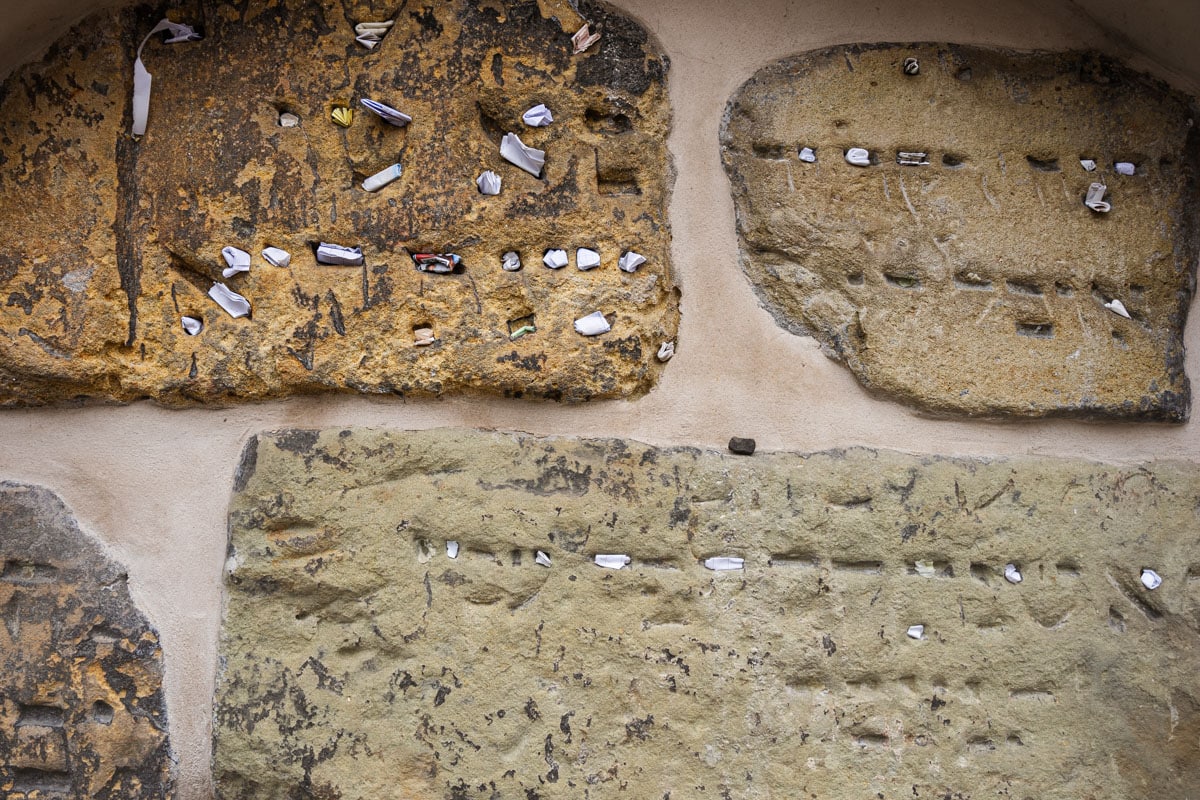
Look out for the grave of Rabbi Judah Loew ben Bezalel, the 16th-century Maharal of Prague, marked by a dragon on the tombstone. He is said to have created a golem to protect the Jewish community. People would put handwritten notes in the golem’s mouth to activate the golem.
Since there is no golem in the cemetery, people wedge their little notes in a stonewall nearby.
Jerusalem Synagogue
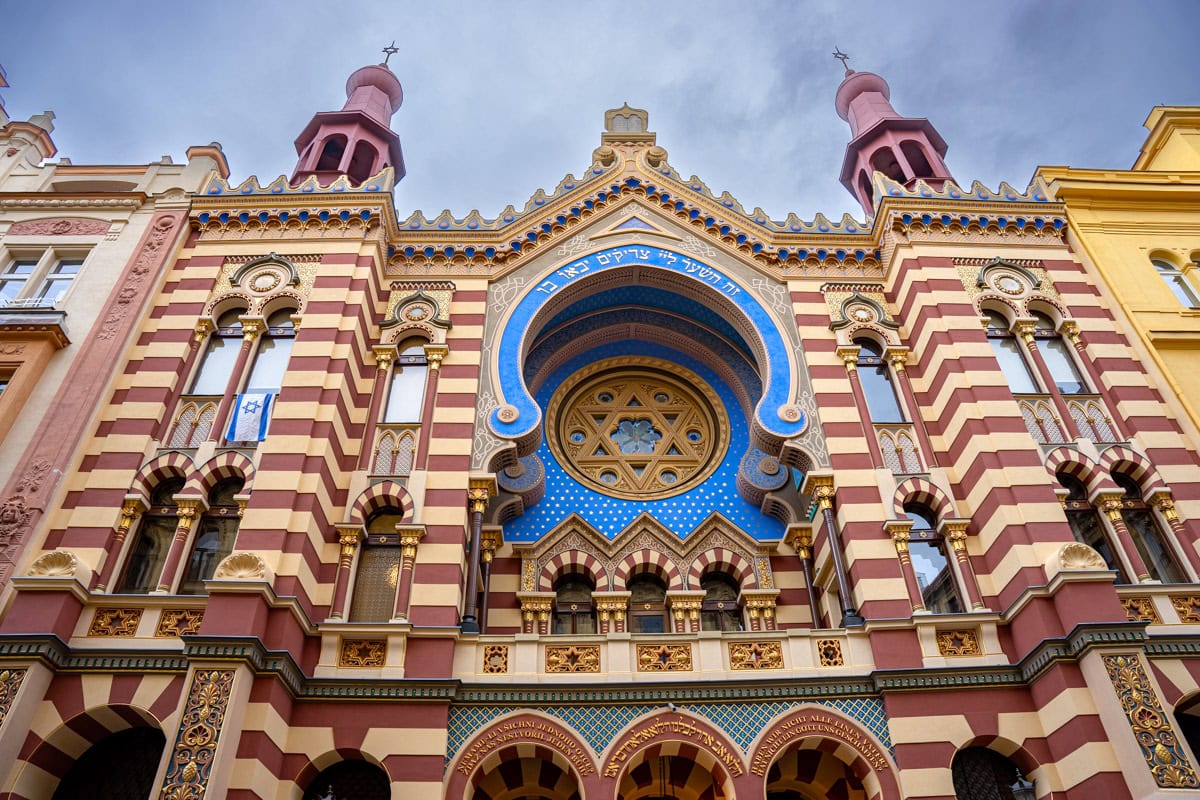
Prague’s newest and largest synagogue was constructed between 1905 and 1906 by Viennese architect Wilhelm Stiassny and replaced three synagogues (the Zigeiner, the Velkodvorská, and the New) that were demolished during redevelopment between 1898 and 1906.
Originally called the Jubilee Synagogue to commemorate Emperor Franz Joseph 1 of Austria’s Silver Jubilee, it was renamed the Jerusalem Synagogue after the fall of the Iron Curtain.
During the Nazi occupation, the Jerusalem Synagogue was used to store confiscated Jewish property.

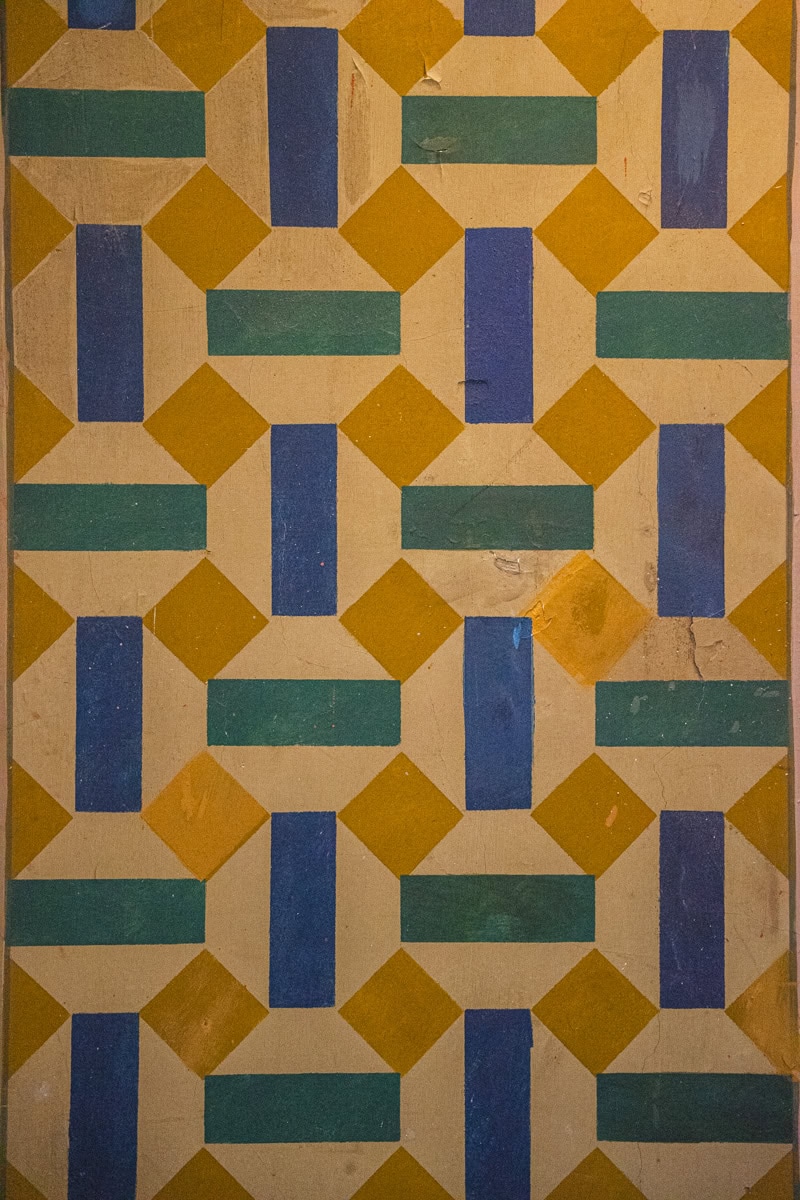
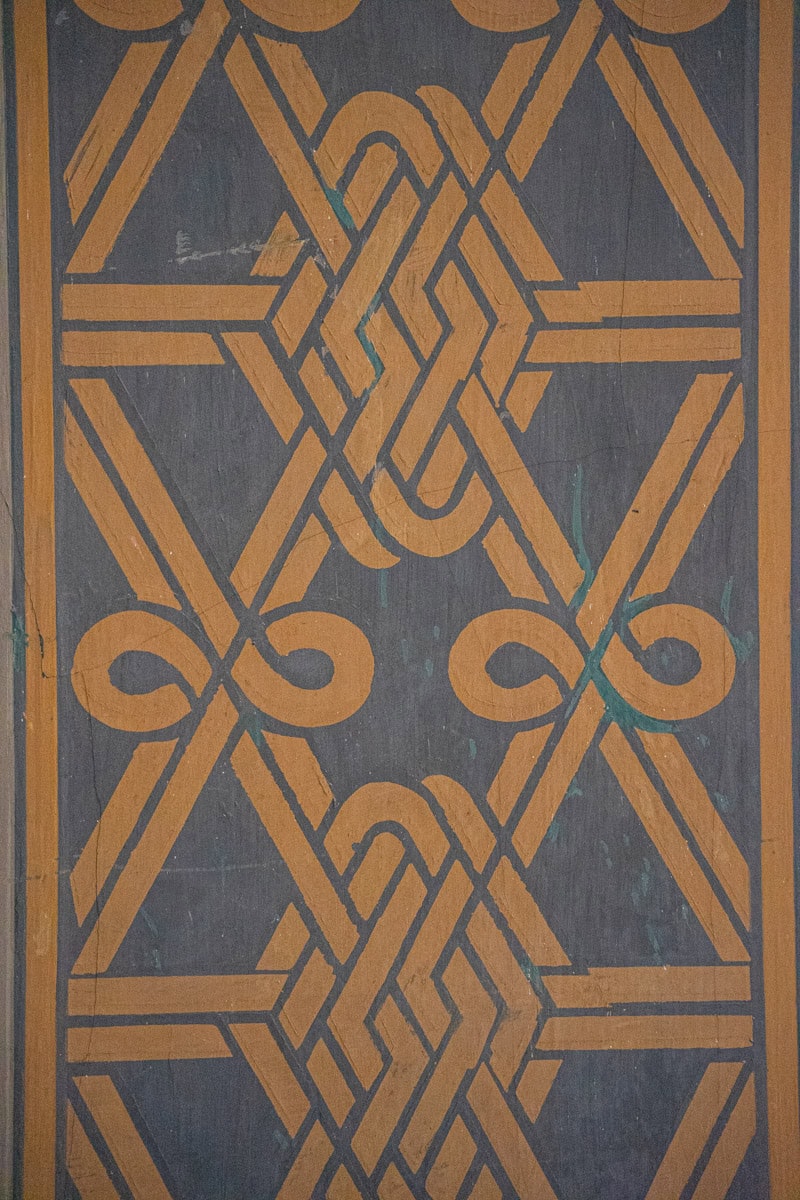
The Jerusalem Synagogue is a stunning building that you shouldn’t miss on your tour of Jewish Prague, even though it’s located outside Josefov.
Like the Spanish Synagogue, it features a beautiful blend of Moorish and Art Nouveau designs. The colourful facade stands out with its horseshoe-shaped arch and a window in the shape of the Star of David. And that’s just the beginning.
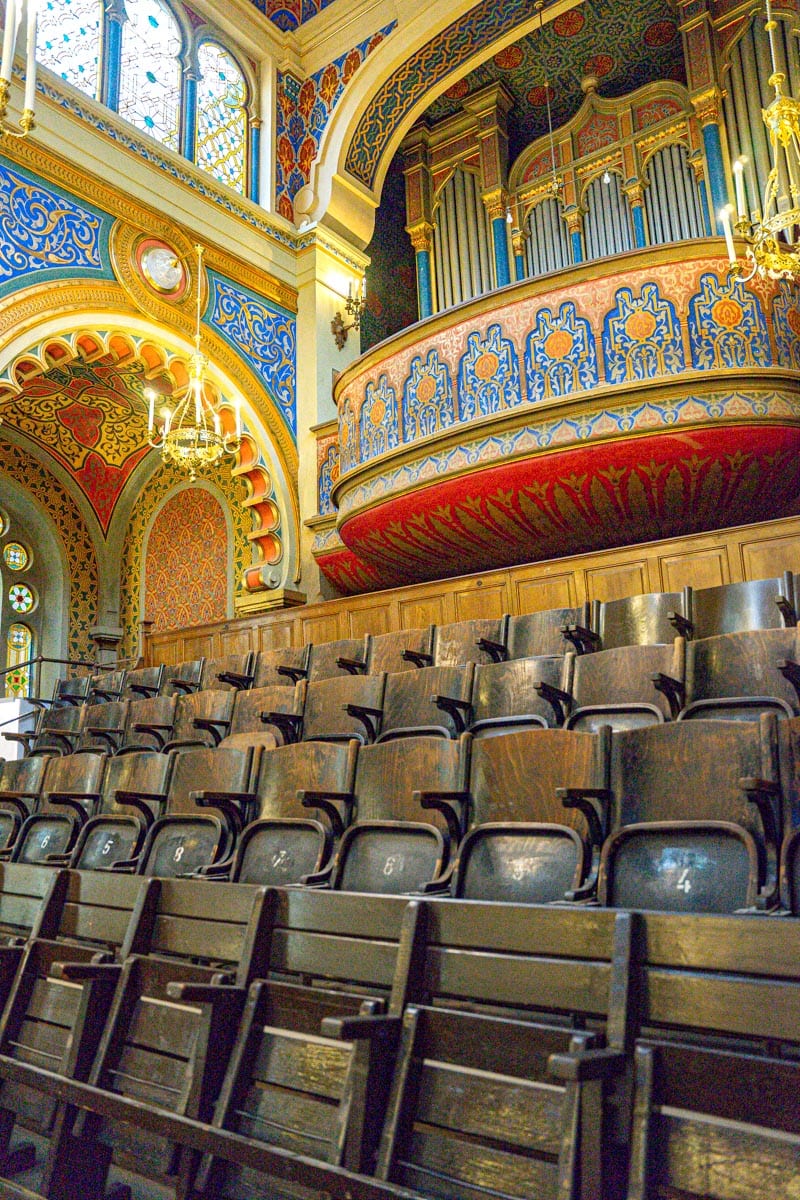
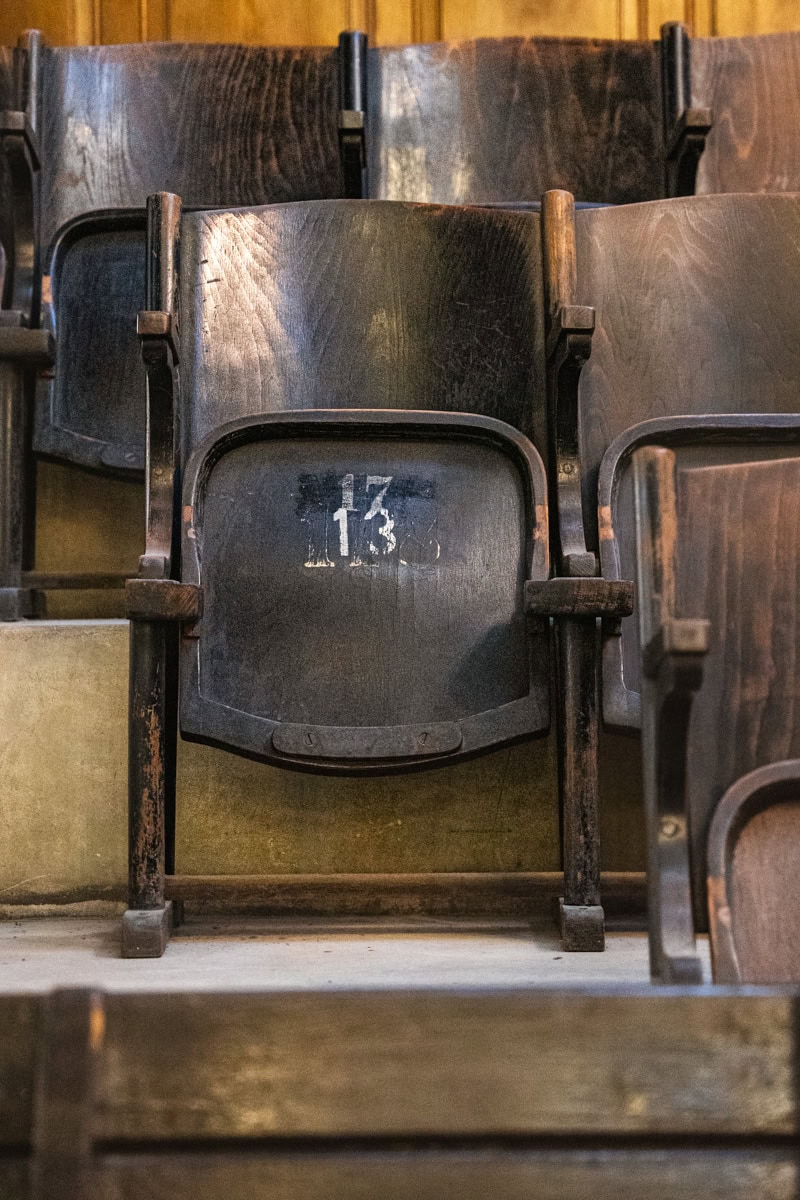

Once inside, a cacophony of colours and patterns greets you. On the ground floor, Art Nouveau lines intersect with geometric Moorish patterns, while the windows shine bright with hues of green and blue.
If someone wakes me up in the middle of the night inside the Jerusalem Synagogue and asks me where I was, I’d say Rajahstan in India or Abu Dhabi. It’s an exotic sight you don’t associate with Central Europe.
The extravagance continues upstairs, where a multicoloured organ overlooks the entire congregation.
How I Shot This Guide
Every photograph in this article was taken with the exact same gear I carry on every journey. It is a setup refined over years on the road to keep travel light without compromising the final image.
- Camera: Sony A7 V
- Lens: Sigma 24-70mm f/2.8 DG DN Art.
- Storage: SanDisk Extreme Portable SSD
- Software: Adobe Lightroom Classic
- Outerwear: My North Face McMurdo Parka kept me warm throughout this walk and the rest of our Christmas trip to Europe.
We hope you enjoy our walking tour of Josefov and the synagogues in Prague as much as we did. Let us know in the comments below if you have any questions, And we’ll try our best to help
✌️