
Most people are happy with the free hotel and transit visa Ethiopian Airlines offers on a long layover in Addis Ababa. They treat the long layover as a necessary evil, so they take the shuttle from Bole Airport, check in, count the hours until their connecting flight, and leave with a vague story about that one time they went to Ethiopia.
Not me.
I booked this long Addis Ababa layover on purpose, giving myself a full 23 hours to actually see the city. No itinerary. No expectations. Just a plan to let the city show me what it wanted.

It was my second time in Ethiopia. On my first trip, I skipped past the capital entirely, heading straight to Lalibela’s rock-hewn churches and the colourful chaos of Harar. But this time, I did things differently: I booked a flight with the longest transit I could find, just so I could spend a day in Addis Ababa.
If you’re wondering how to spend a day in Addis Ababa on a long layover, here is how my one full day in Addis Ababa unfolded.
Please note: This post may contain affiliate links. This means I may earn a commission if you make a purchase by clicking a link (at no extra cost to you). As an Amazon Associate, I earn from qualifying purchases. Learn more.
Can You Leave the Airport During a Layover in Addis Ababa?

Yes, you can, as long as you have a visa.
I was staying in Addis on an Ethiopian Airlines layover programme, which included a transit visa. The transit visa is issued at Bole Airport together with your hotel voucher. Your passport will not be stamped with this transit visa. To qualify for the transit visa and free layover hotel, you must have a transit between 8 and 24 hours on Ethiopian Airlines.
Don’t miss my detailed Ethiopian Airlines economy class review that also covers the free Addis Ababa layover hotel.
For those who don’t qualify for the Ethiopian Airlines layover program, it’s still possible to leave the airport AS LONG AS YOU HAVE A VISA.
Check the visa requirements before you jet off to Addis. There is a visa-on-arrival counter for most countries (USD 62), or you can get an evisa before arrival. Here is the official website for e-visa and visa on arrival.
The next question that needs an answer is whether it’s worth leaving the airport during a long layover in Addis Ababa. The answer is maybe.
Africa, in general, can be intimidating if you’ve never been there. If your layover is the necessary evil kind, go to your complimentary transit hotel, eat the free meal, sleep, and move on.
But for the curious among us, take this opportunity to see Ethiopia, even just for a few hours. I found Addis very rewarding, and it was much better to see the city rather than sit at the hotel.
Money Tip: Don’t Over-Exchange
One piece of advice before heading into Addis for the day. Only change enough foreign currency to birr to get you through the day. I exchanged $100 to cover the cost of my driver, entrance fees, coffee, snacks, and souvenirs.
My driver insisted on being paid in USD, and I don’t blame him. With the recent devaluation of the Ethiopian birr, everyone’s chasing foreign currency. I was lucky I still had some dollars on me.
In the end, I only needed local cash to cover the museum entrance, the coffee, and a beer at the hotel. The only money exchange at Bole was not open when I left early the next morning. Since then, I’ve tried to change my leftover birr to real money in South Africa, Hong Kong, China, Japan, and Korea. No one will touch the birr.
You’ve been warned.
Morning: Blue Sky Hotel
Don’t expect a choice of hotels for your layover. You’re assigned a hotel, and you take what you’re given.
For me, that was Blue Sky Hotel, a no-frills place about 20 minutes from Bole Airport. The shuttle was a tired blue minivan filled with other transit zombies. We rumbled out of the airport and onto a road that quickly turned from tar to dirt.
First impressions of Addis aren’t gentle. It’s a rough, raw kind of place. But I’d come prepared for that.
At the hotel, I checked in and told the receptionist I needed a driver for a day tour of Addis. She said no problem.
But first, I needed sleep. After a 03:00 check-in at Dubai, I was finished. I needed rest before the chaos. So I arranged a time with her and crashed for an hour or two.
My Driver for a Day in Addis Ababa
When I resurfaced at the prearranged time, the receptionist jerked her chin towards a man standing under a tree across the road. Probably her cousin. Or boyfriend. Or both. This is Africa.
We shake hands and introduce ourselves. A tall Oromo man in his early thirties. Galaan is his name. He says it means River in Oromo. Born in Jimma, but Addis is home now.
What do you want to see? he asked.
I had no plan. He was my plan.
Just show me your city, I said.
We agreed on $50 USD for a half-day ride, and I gave him just one instruction: Show me Addis.
No plan, no checklist, just the hope that a local would show me his city with pride.
National Museum of Ethiopia — Meeting Lucy

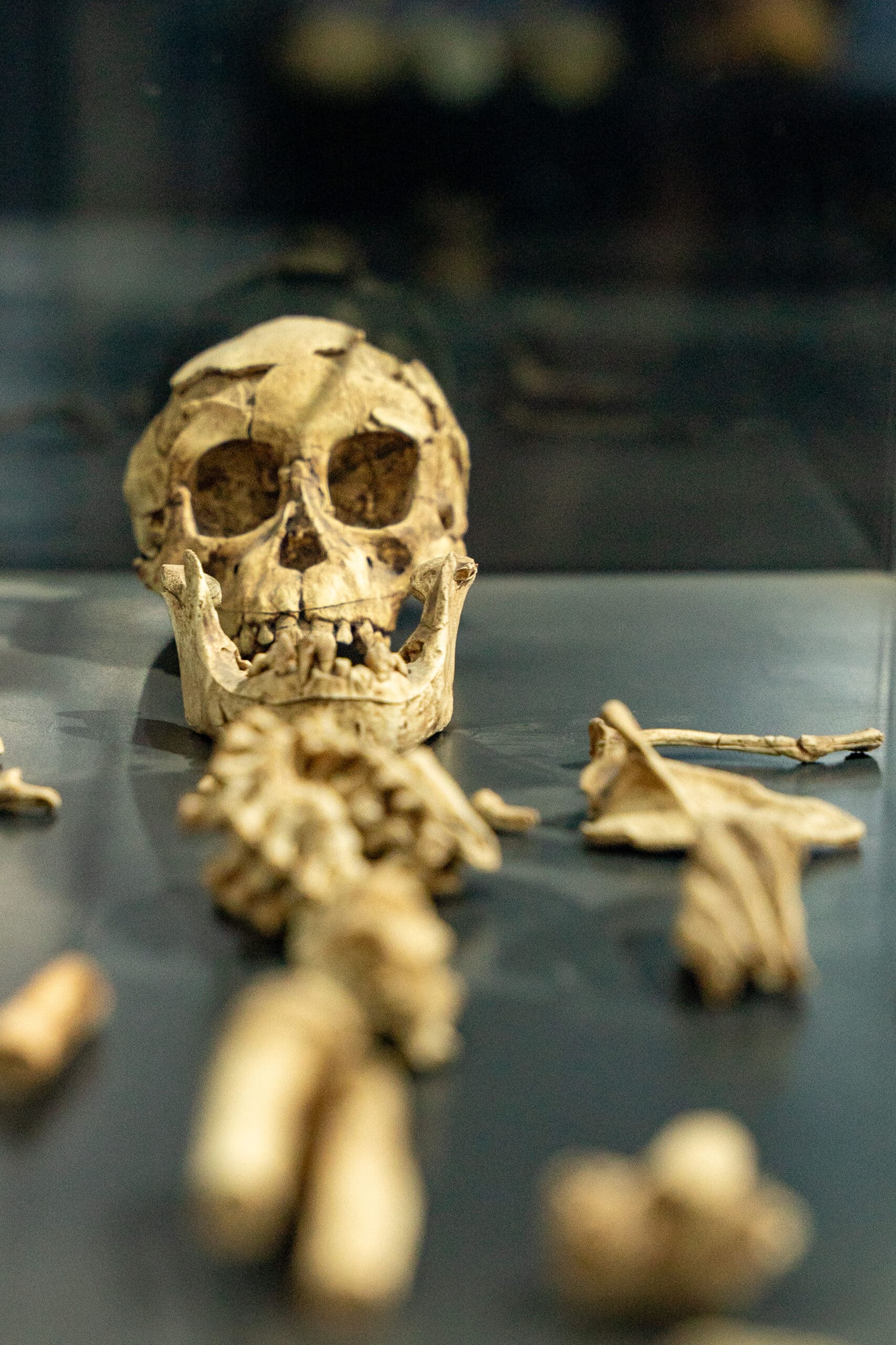
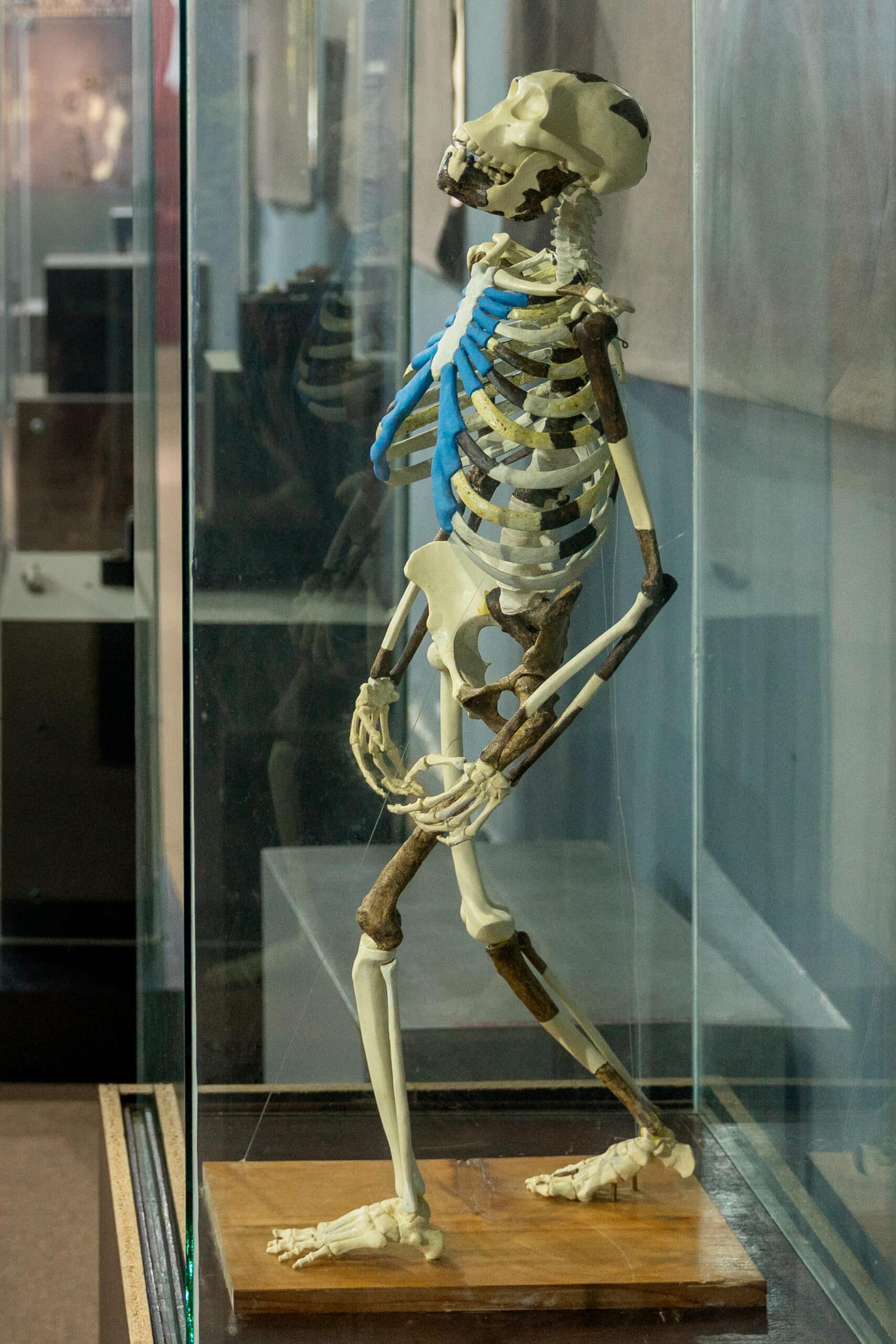
Our first stop was the National Museum of Ethiopia (50 birr entrance fee), home to the world-famous fossil of Lucy. She is the 3.2-million-year-old hominin who changed everything we thought we knew about human evolution.
I went in with low expectations. In my mind, African museums in African capitals don’t usually offer much more than faded posters from the 80s, dim lighting, and maybe a dusty taxidermy lion.

The National Museum of Ethiopia turned out to be a genuine highlight of the day. I spent over an hour wandering through it all, not because I had to, but because I wanted to.
Of course, Lucy is the star attraction. What remains of Lucy is on display in a dedicated room, alongside detailed information on Ethiopia’s role in the human story.
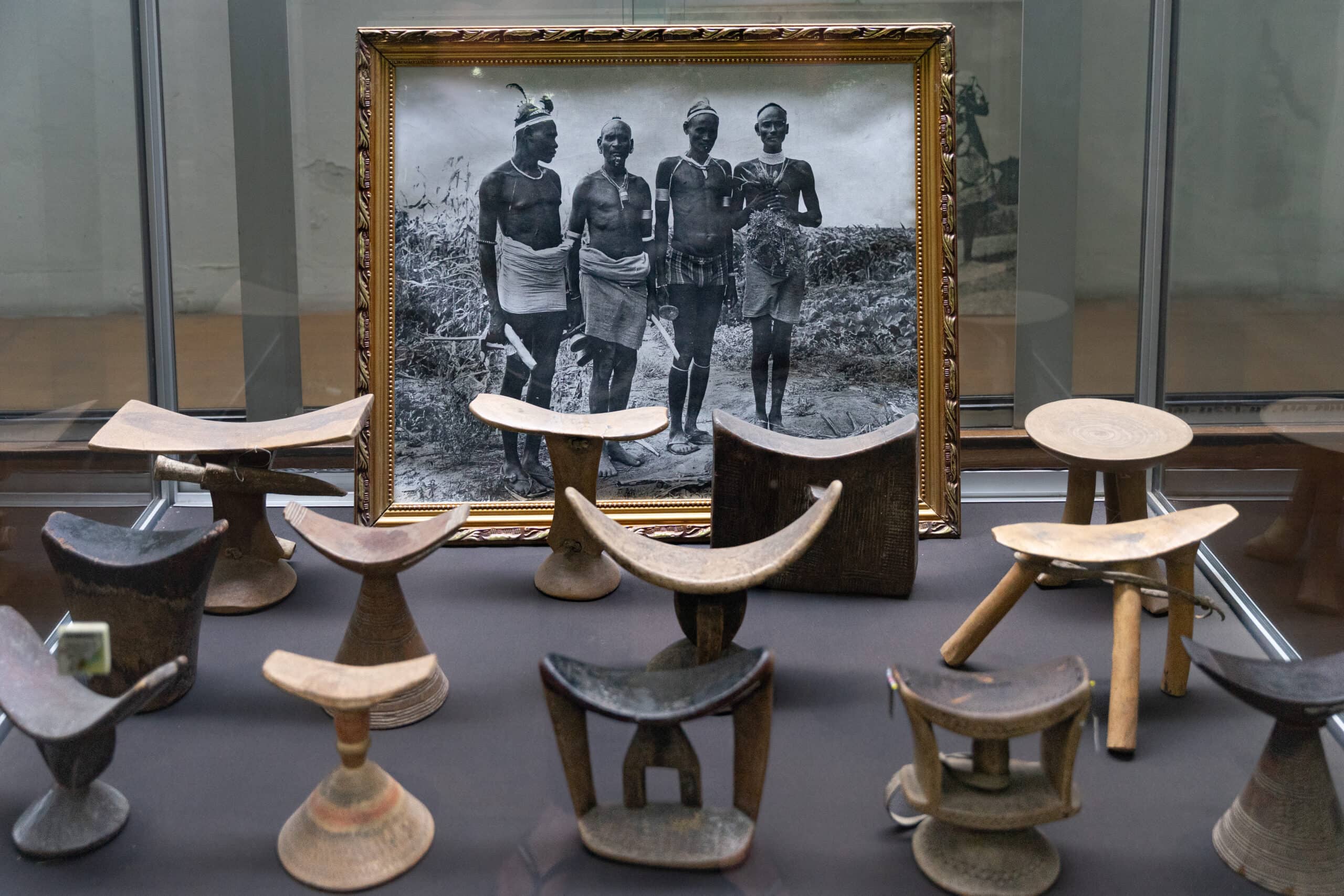
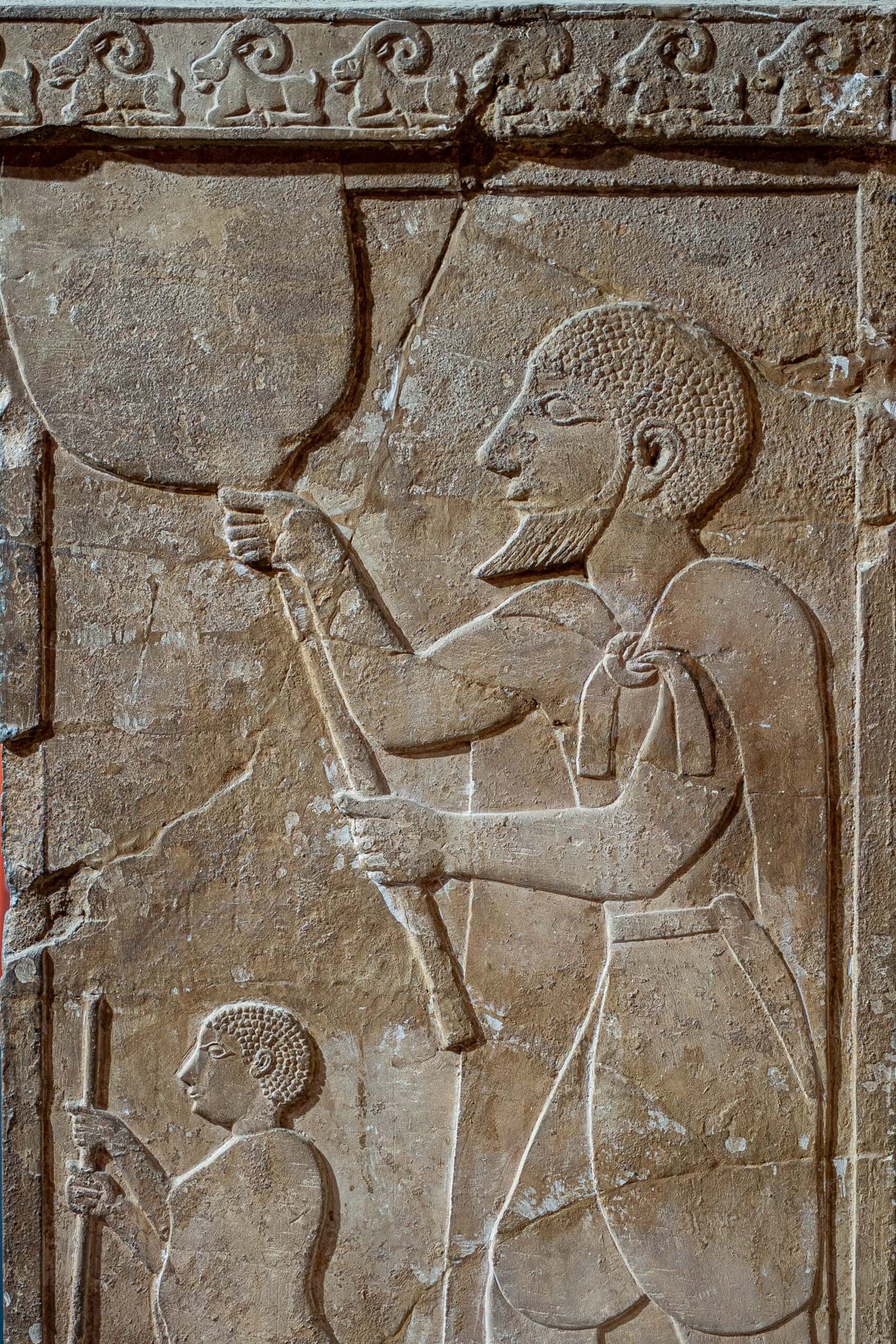
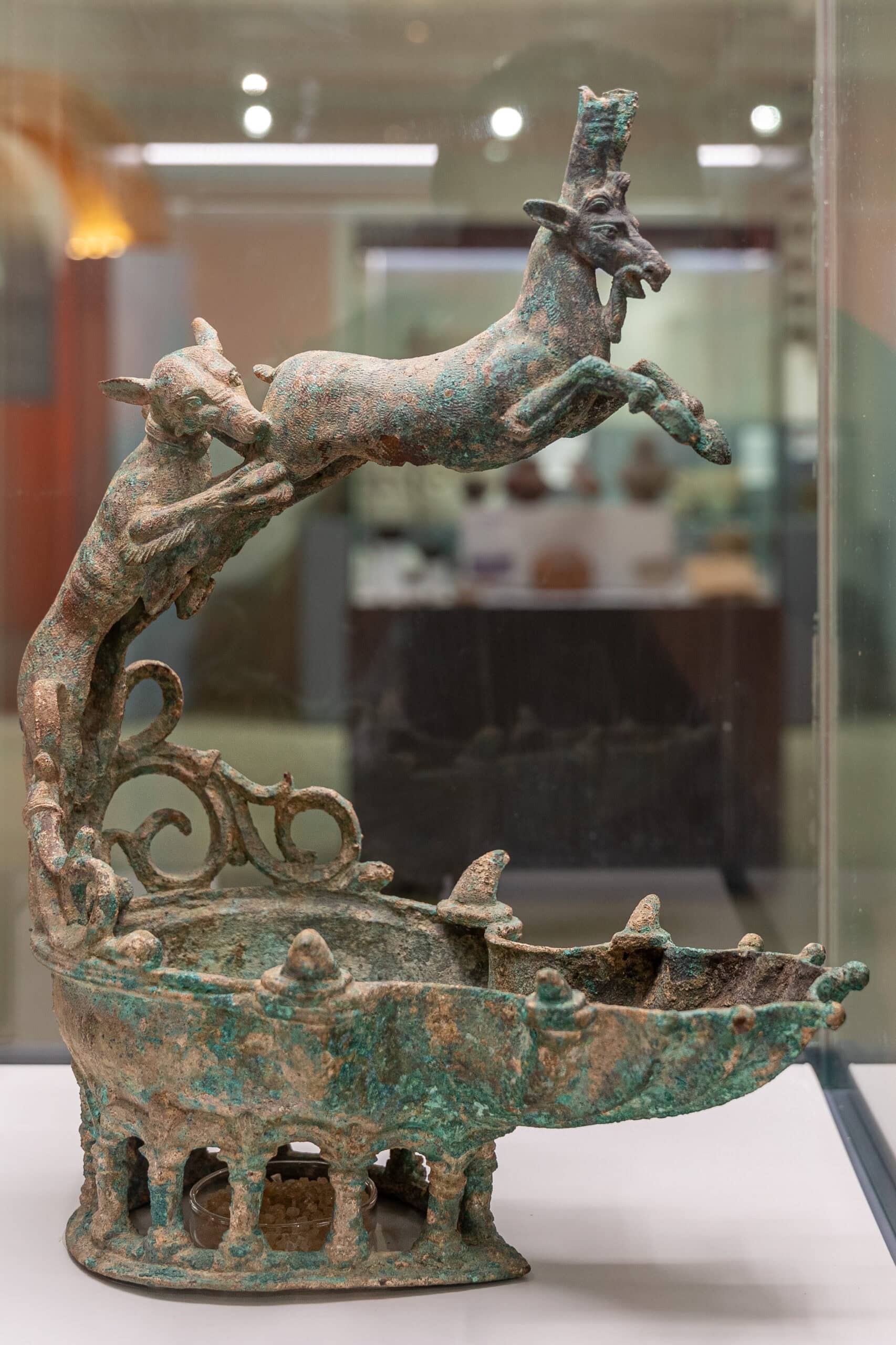
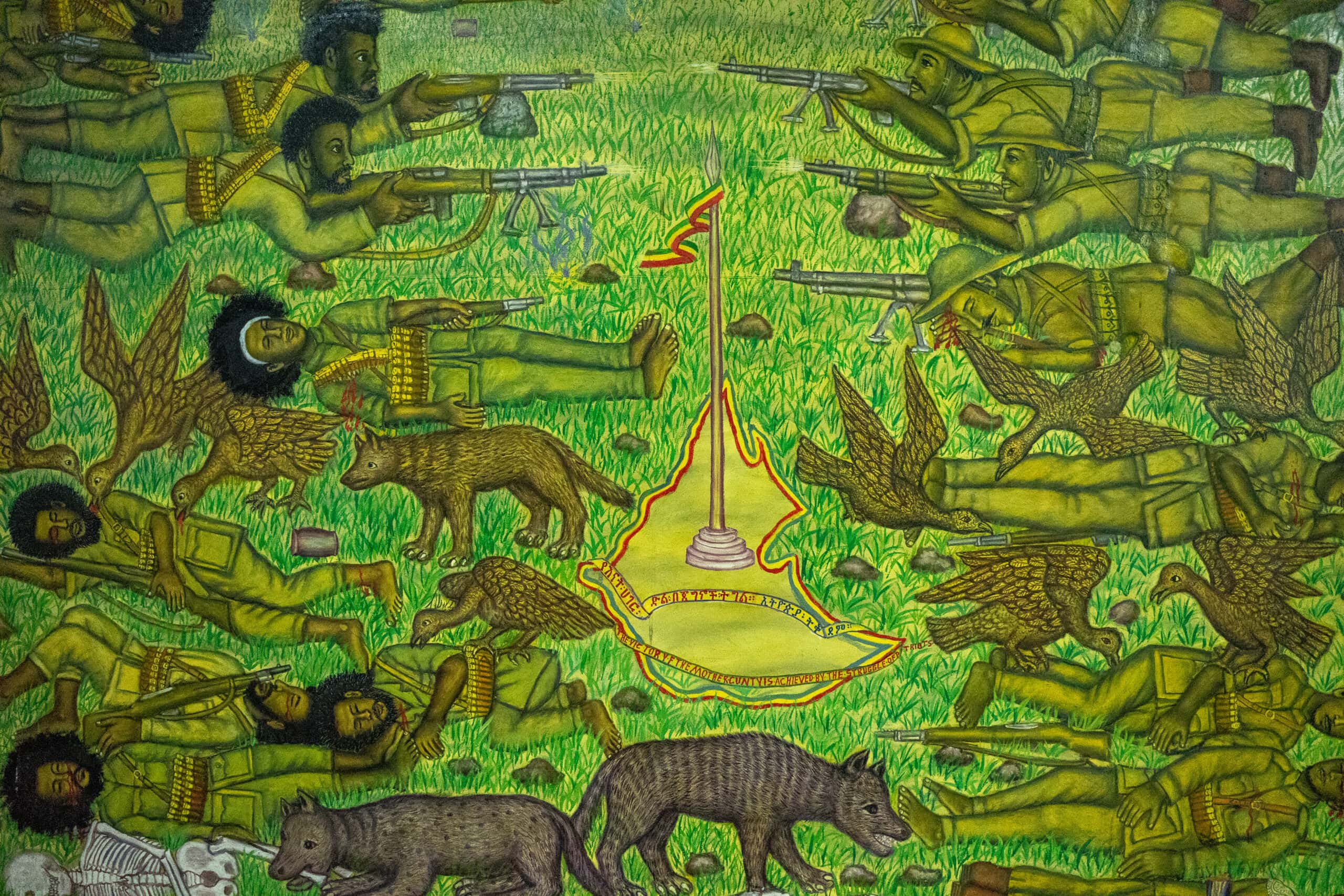
But there’s much more than just Lucy: numerous human fossils, ancient artefacts, religious art, royal relics, and cultural exhibits that showcase Ethiopia’s layered and complex history.
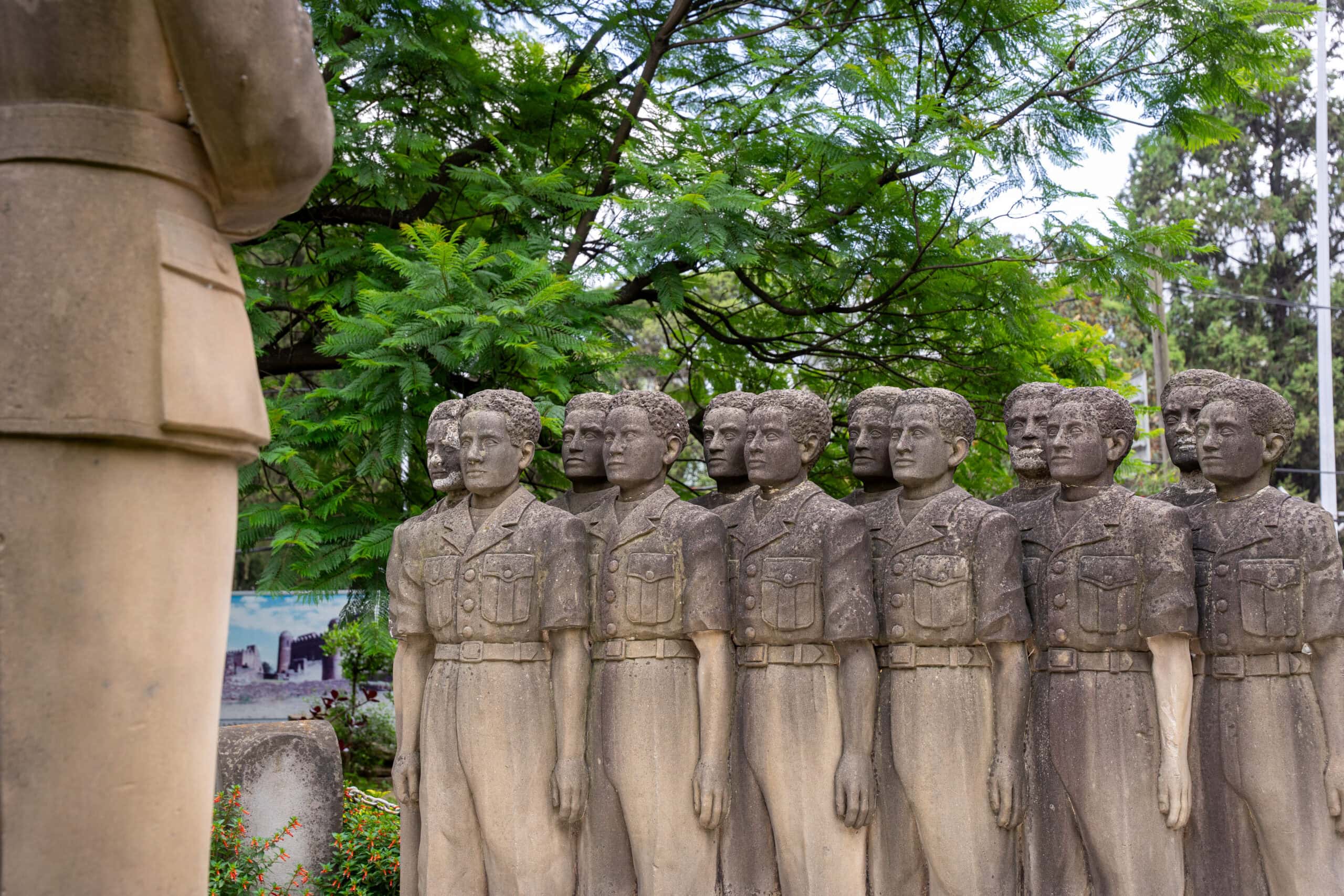
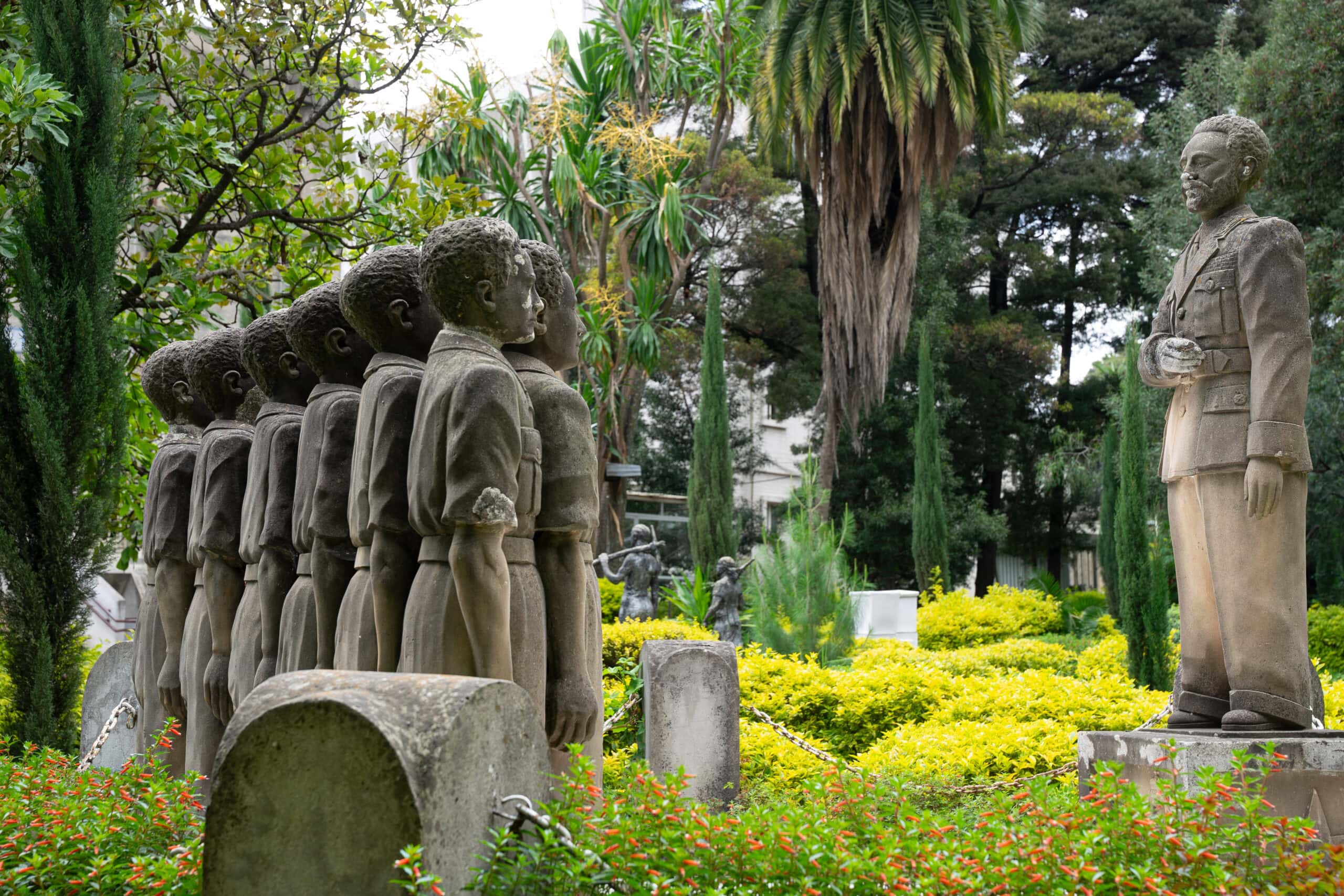
Outside in the museum’s lovely garden, Galaan, now officially promoted to guide, took me for a stroll. He led me past a statue of Haile Selassie addressing soldiers standing at attention.
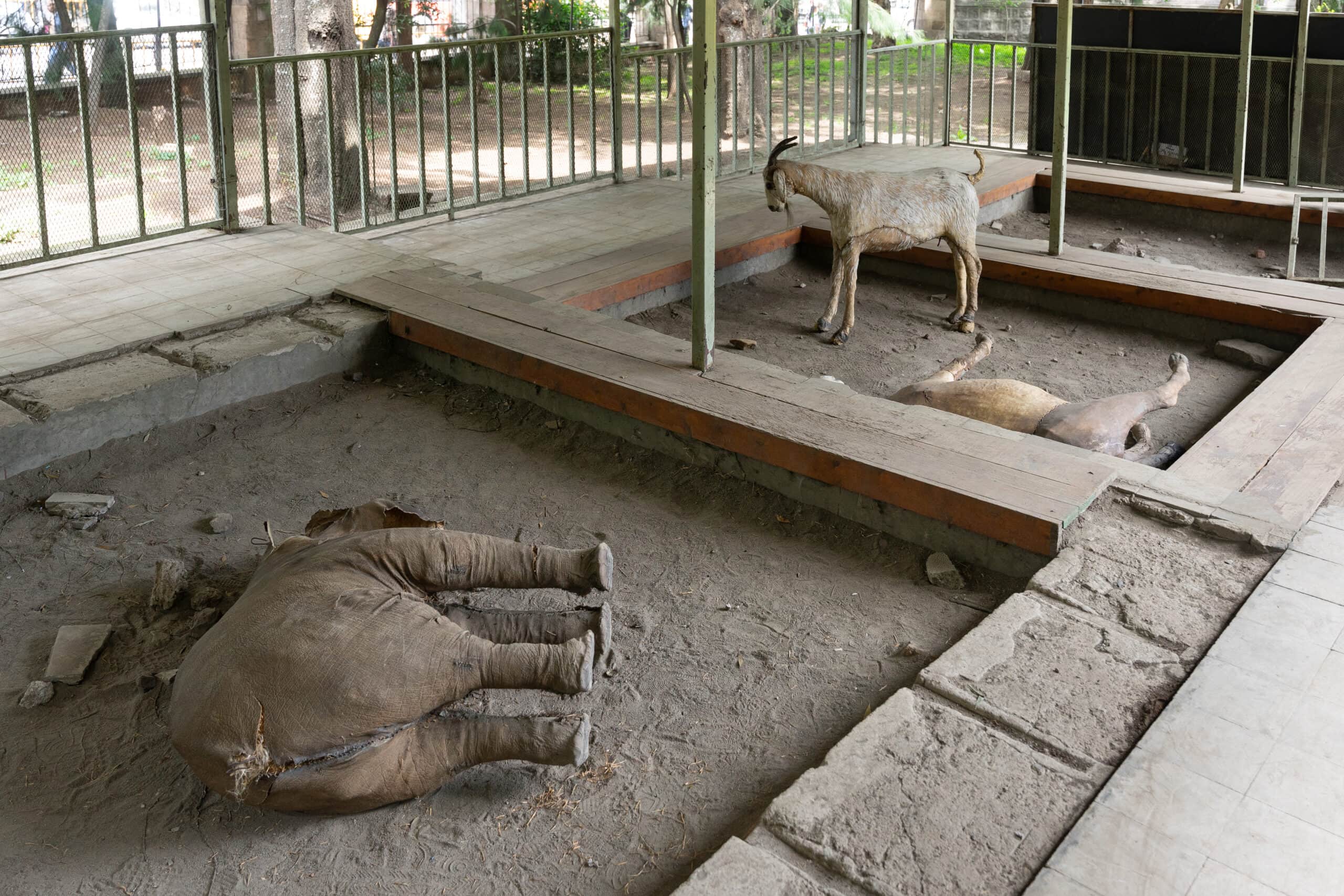
I also finally see the dusty taxidermy animal I was expecting from an African museum in Africa. A baby elephant is lying sideways next to two stuffed goats. Outside.
We move on swiftly.

A minute or two later, Ganaan points out the large tortoises living in the garden.
You like animals? he asked.
Not as much as fossils, I replied.
Galaan laughed. We were getting along just fine.
Mud and Optimism in Piazza
After the museum, we drove through Piazza, one of the most historic neighbourhoods in Addis Ababa. You’d be forgiven for missing that beneath the construction dust and chaos. The entire city centre is being torn up, part of a huge urban revamp. The centre of Addis is being rebuilt from the ground up. It’s not pretty yet.
All new, said Galaan. The Chinese are building a new city.
We skirted past Merkato, the largest open-air market in Africa, which I’d heard is both exhilarating and exhausting. I wasn’t in the mood to be hustled. So we kept moving, chatting as we circled the madness. About Addis. About Ethiopia.
You like Ethiopia? he asked.
I do. This is my second time.
He smiled. We have many problems. War. No jobs. But still we live. We must.
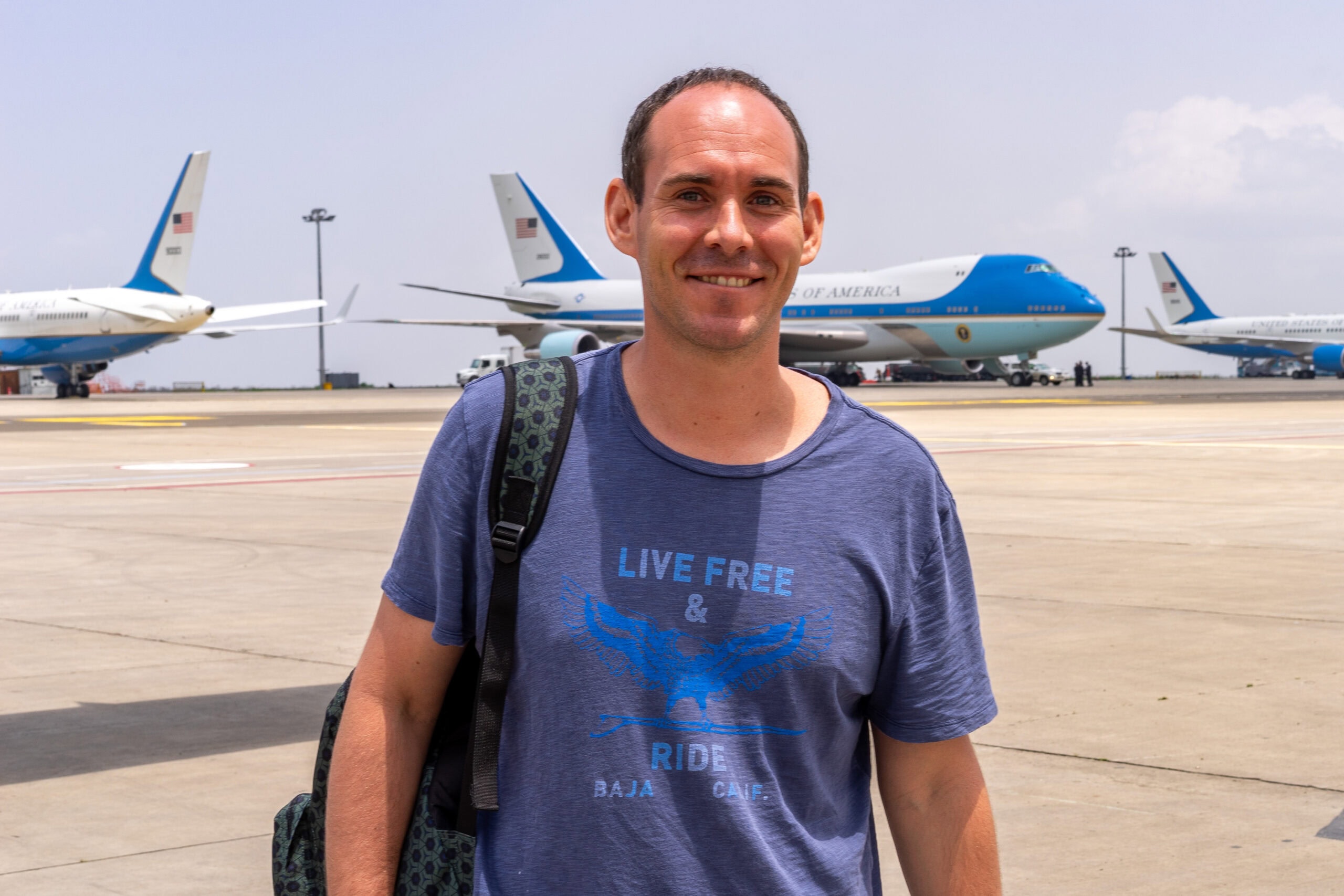
The last time I visited was during Obama’s trip to Ethiopia. I even took a selfie in front of Air Force 1 on the runway at Bole Airport. The whole country glowed with optimism. Since then, there’s been a civil war in Tigray, a battered economy, and now this full-on capital city revamp.
And yet, the people still smile. Still grind. Still hope.
That’s how we Africans roll.
Coffee at Tomoca
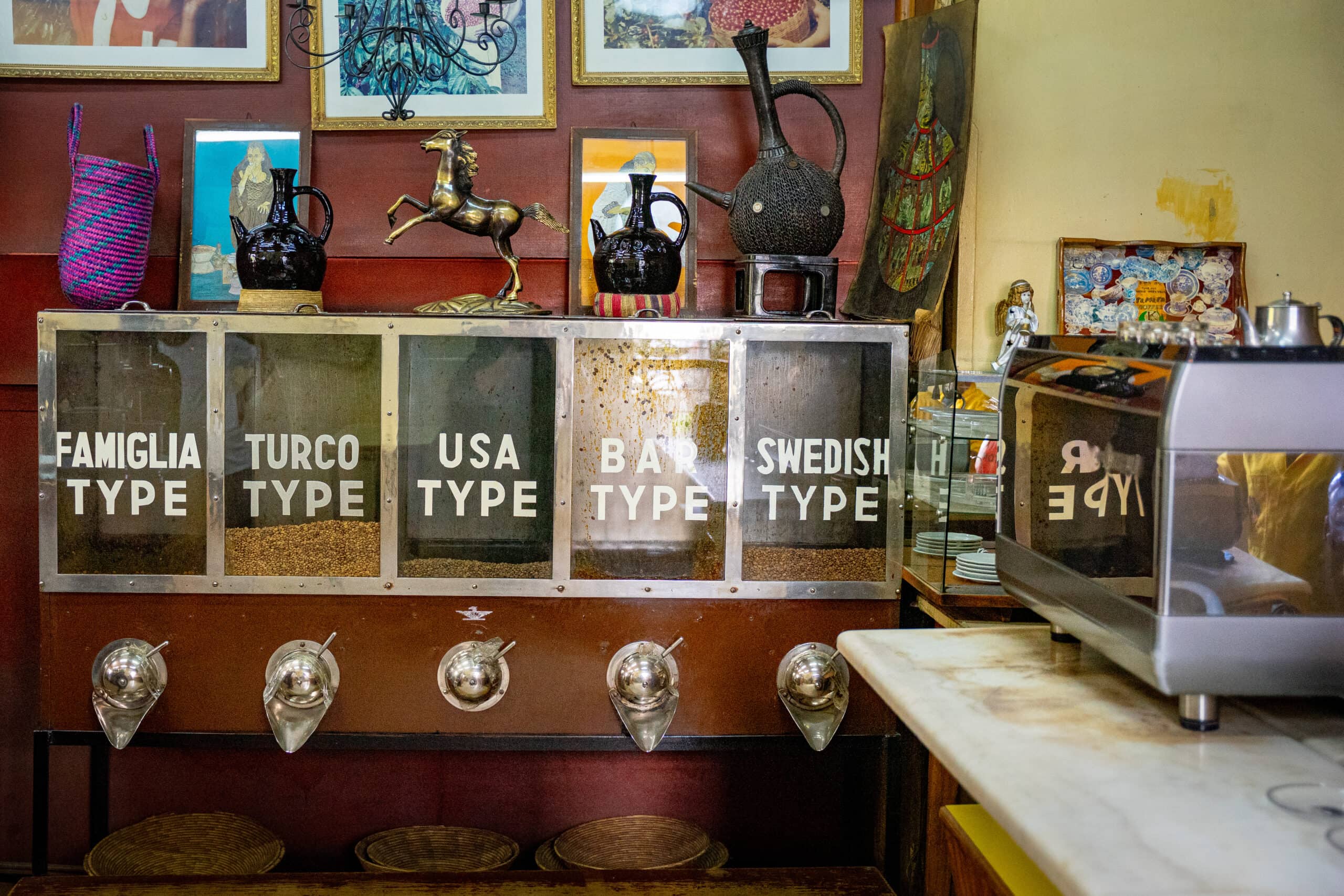
Our next stop was Tomoca Coffee, an essential Addis experience and one of the city’s most iconic coffeehouses. This place isn’t trendy or hip. It’s the real deal. A proper Ethiopian institution that’s been brewing the good stuff since 1953.
After looping the block a few times in search of parking — Addis isn’t kind to drivers — we finally found a spot and walked in. Inside, it was all wood counters, silver coffee grinders, brass scales, and the thick smell of freshly ground beans.
No frills. No fuss. No foam art, no oat milk or extra pump of hazelnut. This is the birthplace of coffee, and they still do it best. Just great coffee and people who know exactly how they like it.
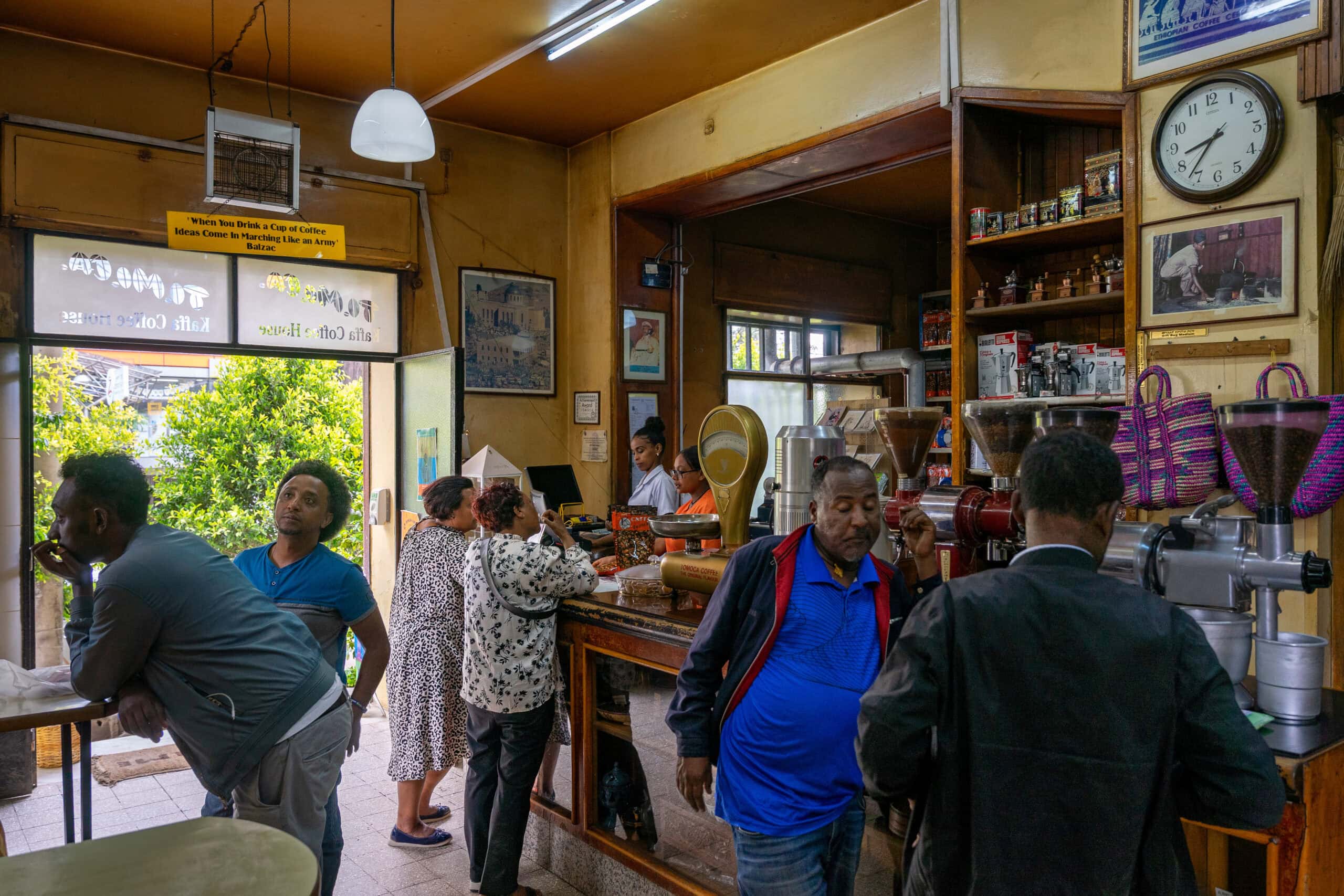
Above the door, a faded yellow sign bore a quote from Balzac:
When you drink a cup of coffee, ideas come in marching like an army
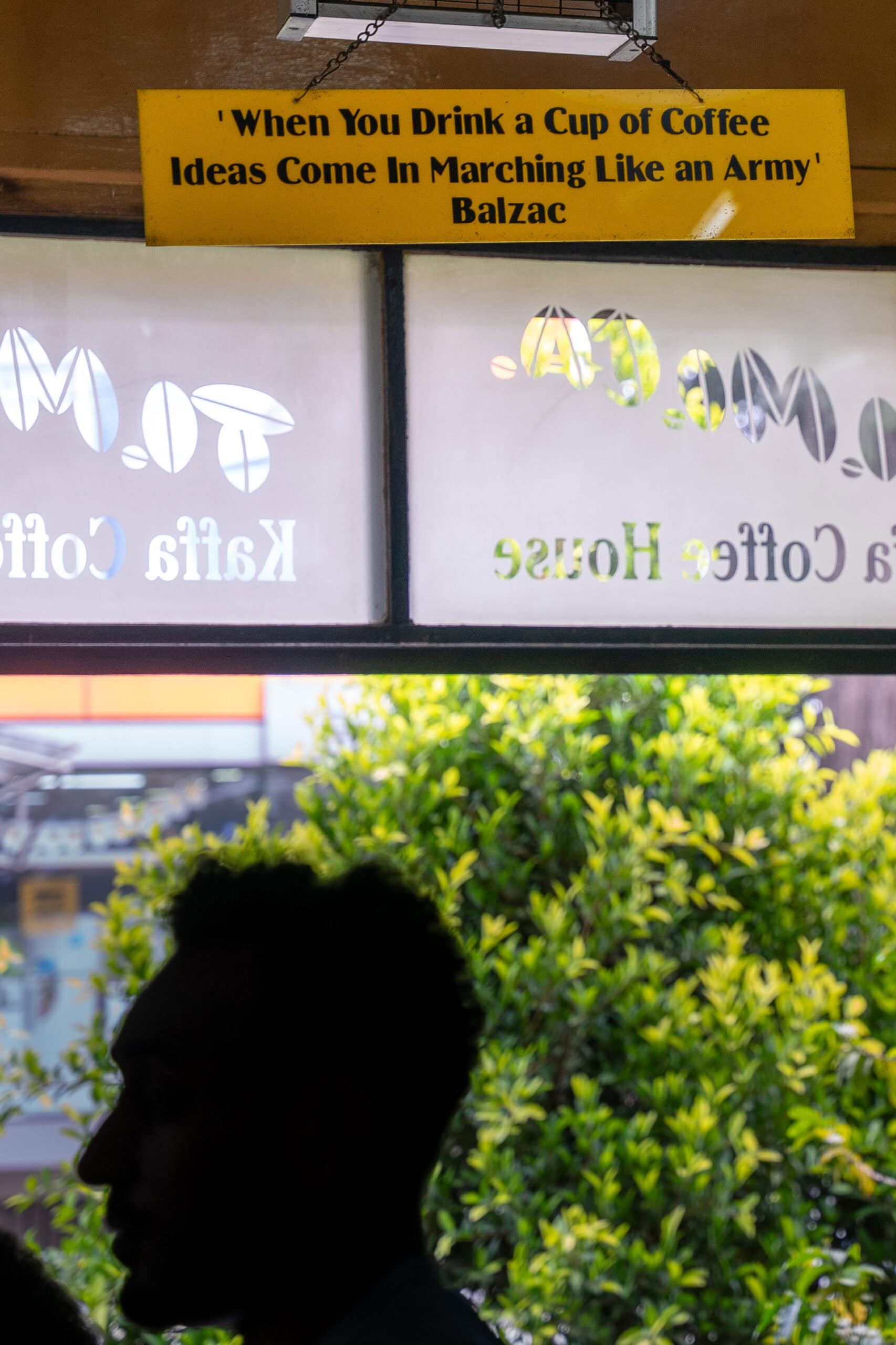

I ordered a macchiato. Galaan, fasting for Ethiopian Orthodox Lent, took his black. We drank standing up at the counter, elbow-to-elbow with office workers, taxi drivers and students. All pausing for the good stuff.
I walk out with a kilo of Tomoca beans under my arm. A small act of self-sabotage. Because after Tomoca, I knew I’d never be satisfied with mediocre coffee again.
A Cathedral in Addis

After coffee, we marched out of Tomoca like an army, fully caffeinated and ready to face the beast that is Addis traffic. Galaan says we’re going to church.
You can’t visit Addis without seeing a cathedral, he tells me, eyes fixed on the road like a man on a mission.
He meant Holy Trinity Cathedral, the grand one, where emperors are buried. But as we got closer, it became clear something was going on.
A funeral, massive and public, had drawn a crowd. The traffic jam was biblical. After twenty minutes without moving, we made a tactical decision to abort mission.
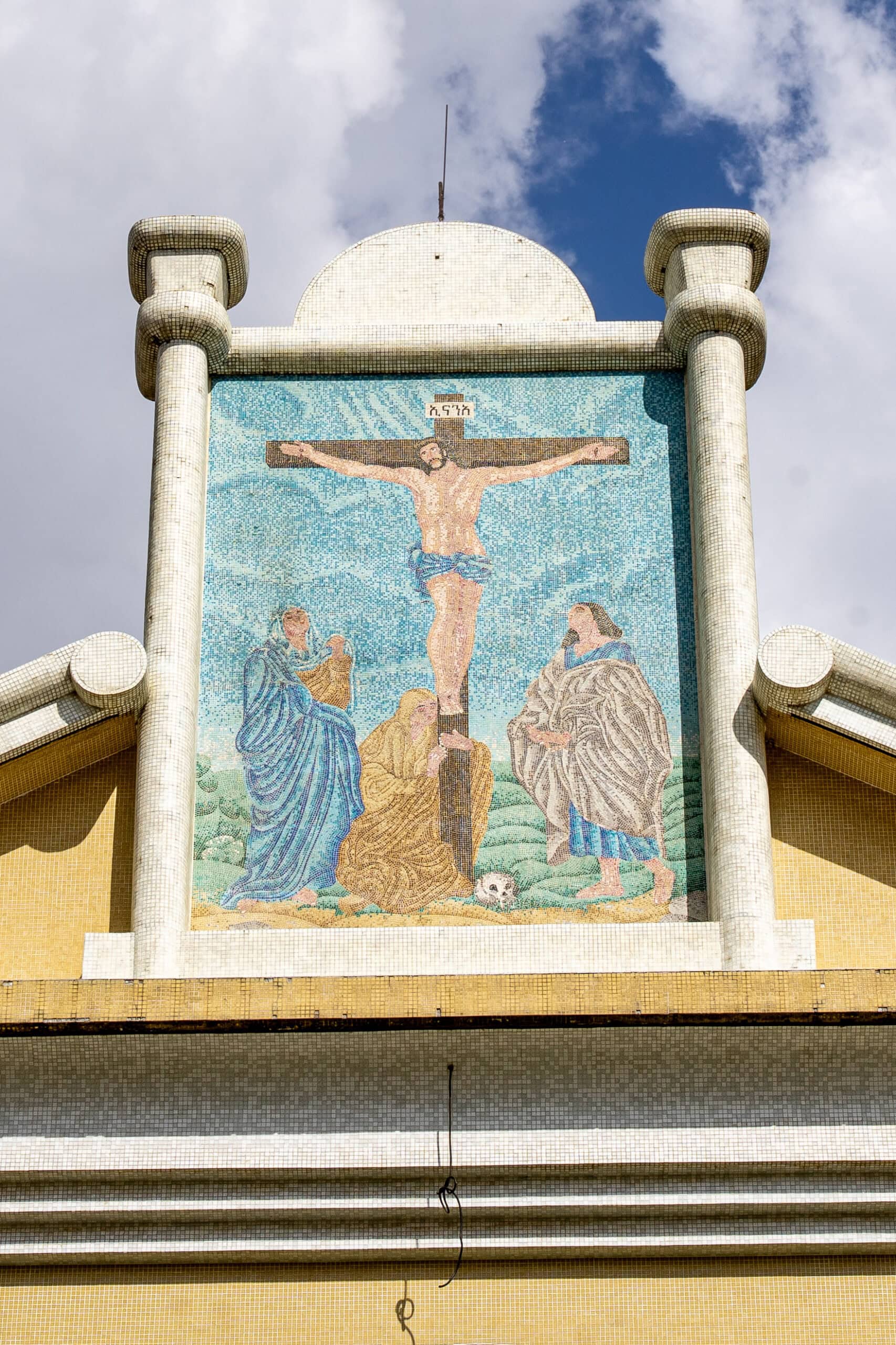
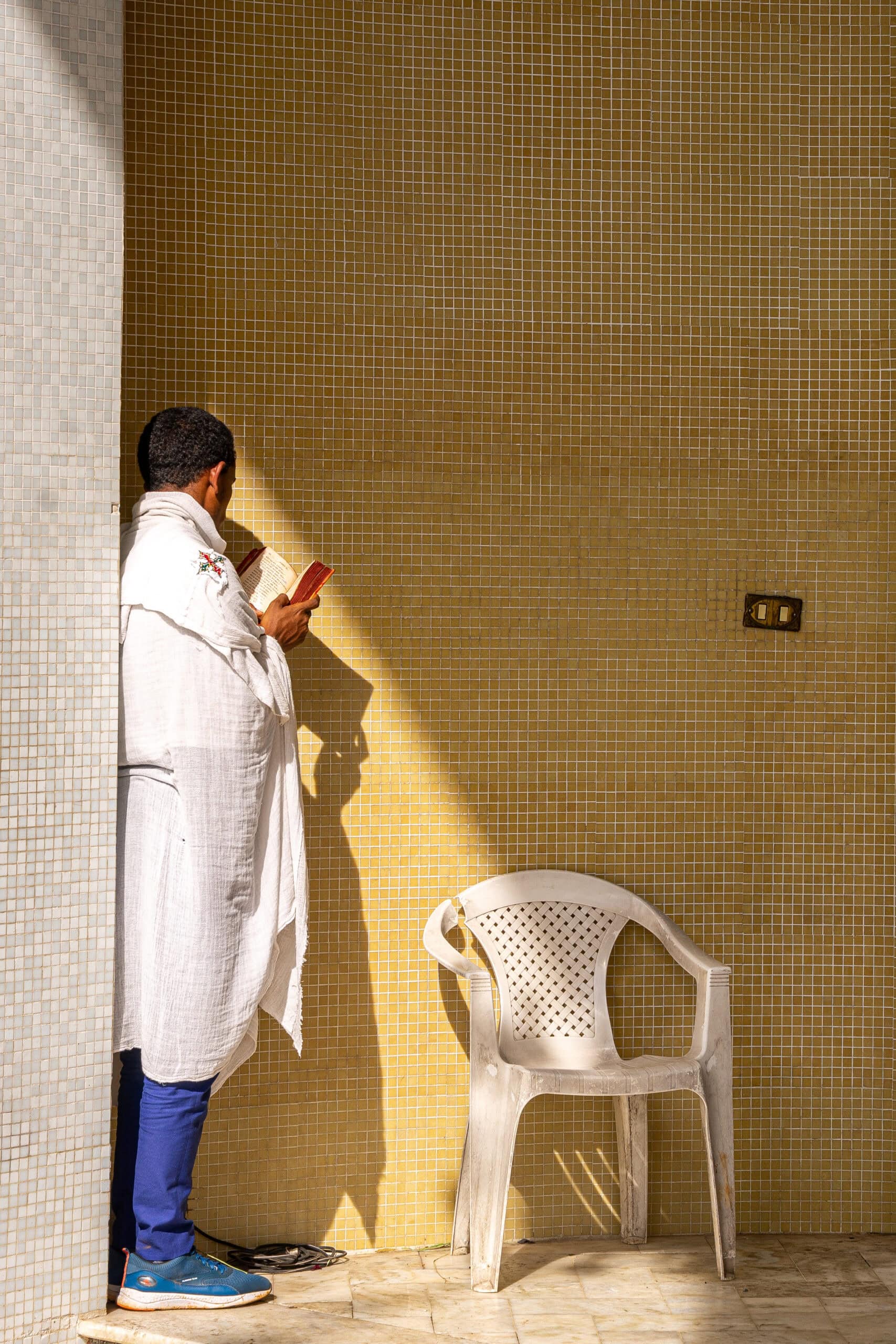
We divert to another church — the Medhane Alem Cathedral. What it lacked in fame and size, it made up for in atmosphere. Colourful flags fluttered in the wind. The cathedral was closed, but that didn’t stop people from praying. I watched as worshippers pressed their foreheads against the walls, whispering devotions with a kind of quiet intensity.
It was another unexpected moment of stillness in the city. Ethiopia is a deeply religious country, and in a city that seems to thrive on chaos, faith brings a stillness.
Quest for an Ethiopian Cross

There was one last thing I wanted before wrapping up my stopover tour in Addis. An Ethiopian cross to add to my collection. I already have three from my trip to Lalibela, but I was hoping to find something special to mark this return to Ethiopia.
Galaan takes me to a souvenir shop just off Ras Mekonen Avenue. Inside, the place was bursting with woven baskets, jabena coffee pots, Orthodox icons, colourful fabrics, and rows of delicate Ethiopian crosses, each one more intricate than the last.
I spotted the cross I wanted immediately. Large, intricate, brass, heavy, beautiful.
The owner asks $150. We both laugh. We haggle. He drops to $100.Still too much. I walk away empty-handed.
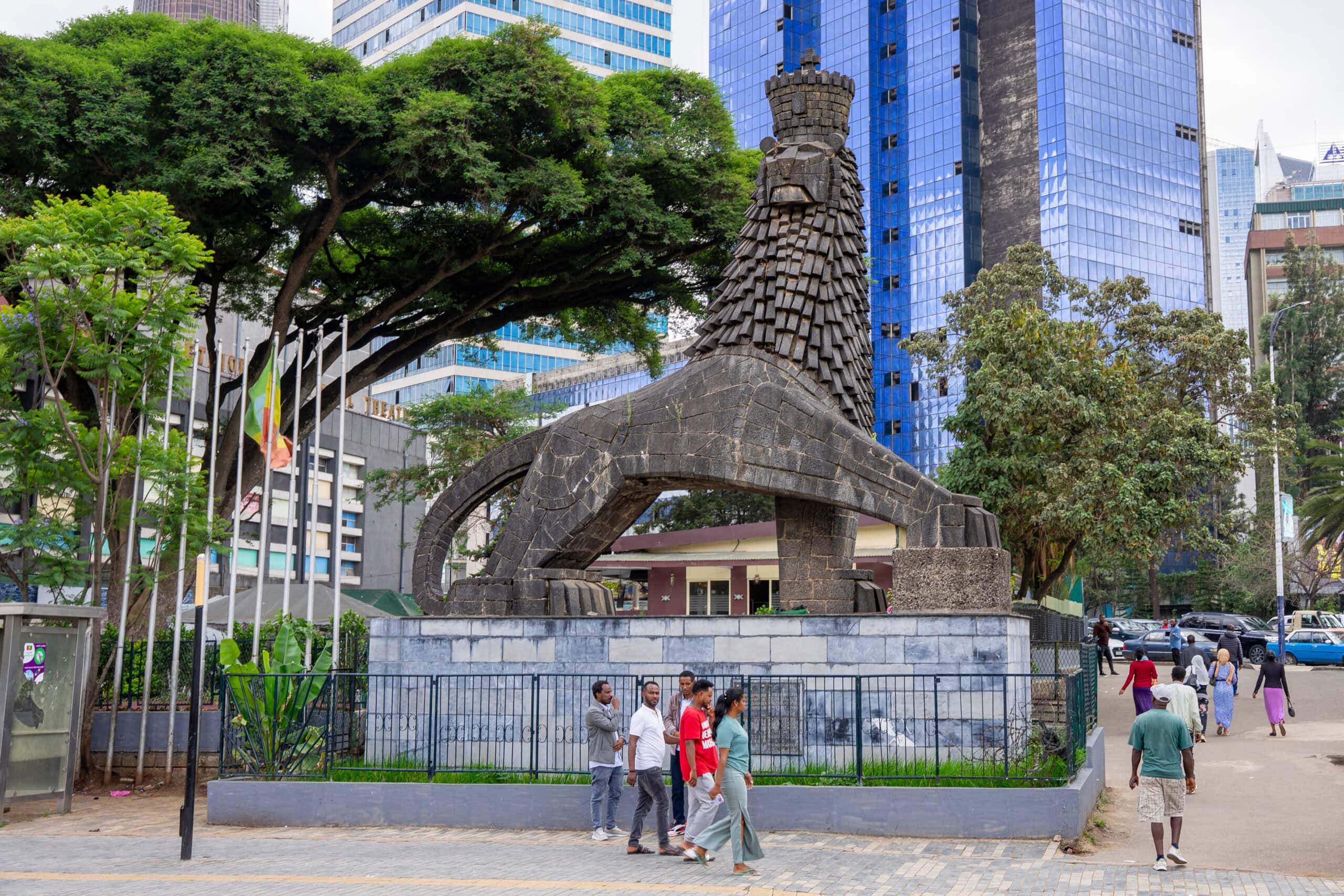
Across the street, the Lion of Judah Monument draws us in.
The monument stands proud in the middle of Addis like it’s seen a few things. It probably has. Unbothered by the chaos around it.
It’s more than just a landmark. It’s a symbol of power, royalty, and Ethiopia’s unshakable spirit. Linked to Haile Selassie, who claimed descent from Solomon and the Queen of Sheba, the lion is a nod to Ethiopia’s deep roots and its faith.
The Ethiopian Orthodox Church calls it sacred. For everyone else, it’s a reminder: this place doesn’t bow.
***
By now, I’d had enough. My senses were full. I ask Galaan to take me back to the hotel. Free dinner was waiting.
Back at the hotel, I grab a free early dinner. Spicy fried fish, bread, rice, and something unidentifiable but tasty. I get a bottle of St George’s Lager from the bar and head outside for a balcony view of Addis.
I sit watching the street: women in white scarves, a man carrying a mattress on his head. Horns blare. Laughter float up. Sometimes places like Addis are best appreciated from a distance.
From up here, Addis made sense.
Final Thoughts on One Day in Addis Ababa
If you’ve got a long layover in Addis Ababa, don’t waste it doom-scrolling on your phone in a generic hotel room. Get out there. Hire a driver. Talk to people. Drink real coffee. See Lucy. Get stuck in traffic. It’s all part of it.
I didn’t see everything. Not even close. But I didn’t need to. Spending a day in Addis Ababa isn’t about ticking off attractions. It’s about letting the city get under your skin, even for a few hours.
Addis can be messy. It’s unpredictable. It’s full of people who’ve been through a lot and still manage to smile and make the best cup of coffee on Earth.
If you’ve got a long layover in Addis Ababa, don’t just sit in your hotel. Get out there. Let the city surprise you.
It will.
How I Shot This Guide
Every photograph in this article was taken with the exact same gear I carry on every journey. It is a setup refined over years on the road to keep travel light without compromising the final image.
- Camera: Sony A7 V
- Lenses: Sigma 24-70mm f/2.8 DG DN Art.
- Storage: SanDisk Extreme Portable SSD
- Software: Adobe Lightroom Classic
- My travel essential (trust me): Ray-Ban Wayfarer
Don;t they give the Skylight hotel for layovers?
Hi Shubham,
You don’t know which hotel you’ll get. I was hoping for the Skylight too. Rumors have it that the Skylight is for business class travellers.
“Her cousin. Or boyfriend. Or both. This is Africa.”
This is a racist generalization. For your information, in an overwhelming MAJORITY of African cultures, marriage between close kin is forbidden because it is considered incestuous. And in cultures where marriage between kin is permitted, these marriages are arranged (so, no courtship), and it is ensured that both parties aren’t related very closely.
Therefore, there is no cultural space for a ‘boyfriend cousin’ to even exist in a commonly enough fashion that you can be forgiven for predicating it on an entire continent.
Hi Nosa,
Thanks for your opinion. I’m sorry if this has upset you. It was meant to be a lighthearted thought on my side as to who this man was.
I am an African myself, and understand your concern about generalizations and racism. This was never the point in that sentence.