
Our visit to the Mor Hananyo Monastery begins most fittingly – with a glass of saffron tea.
It’s the first week of April, and we’re sitting on the sun-kissed terrace outside the monastery, eagerly awaiting the start of our guided tour. As we sip on the fragrant tea, we can’t help but marvel at the moment – savouring the delicate flavour of saffron while at a monastery known as Deyrulzafaran – the Saffron Monastery. It’s a small but delightful experience I savour as I look out over the Mesopotamian plains stretching towards Syria.
Cradled in the hills just outside Mardin in southeastern Turkey, overlooking the Mesopotamian plains, the Mor Hananyo Monastery is one of the oldest monastic churches still functioning. Founded in the 5th century, the monastery has since served as a centre of learning and worship for the Syriac Orthodox Church, one of the oldest Christian communities in the world.
After finishing our saffron tea, join us on a visit to the Mor Hananyo Monastery. From its architecture to cultural significance, we hope to give you a glimpse into the beauty and history of this unique place.


Please note: This post may contain affiliate links. This means I may earn a commission if you make a purchase by clicking a link (at no extra cost to you). As an Amazon Associate, I earn from qualifying purchases. Learn more.
Quick Guide to Visiting Mor Hananyo Monastery
How to get there? Mor Hananyo Monastery is about 10 km outside Mardin by road. The best way to get here is by taxi or driving yourself. Negotiate a fare and waiting time with a taxi for your return journey, as the monastery is remote.
We visited Mor Hananyo on the way back to Mardin from Dara, which was very convenient as it was on the way.
Where did we stay in Mardin? Zerzevan Hotel
Mor Hananyo Opening Hours: The monastery is open every day from 09:00-11:30 and 14:00-17:30
Mor Hananyo entrance fee: TRY 50 per person, including the guided tour
Suggested time: The brief guided tour lasts about 20 minutes, after which you’re free to look around by yourself. In total, we spent an hour, which included having tea while waiting for the tour to depart.
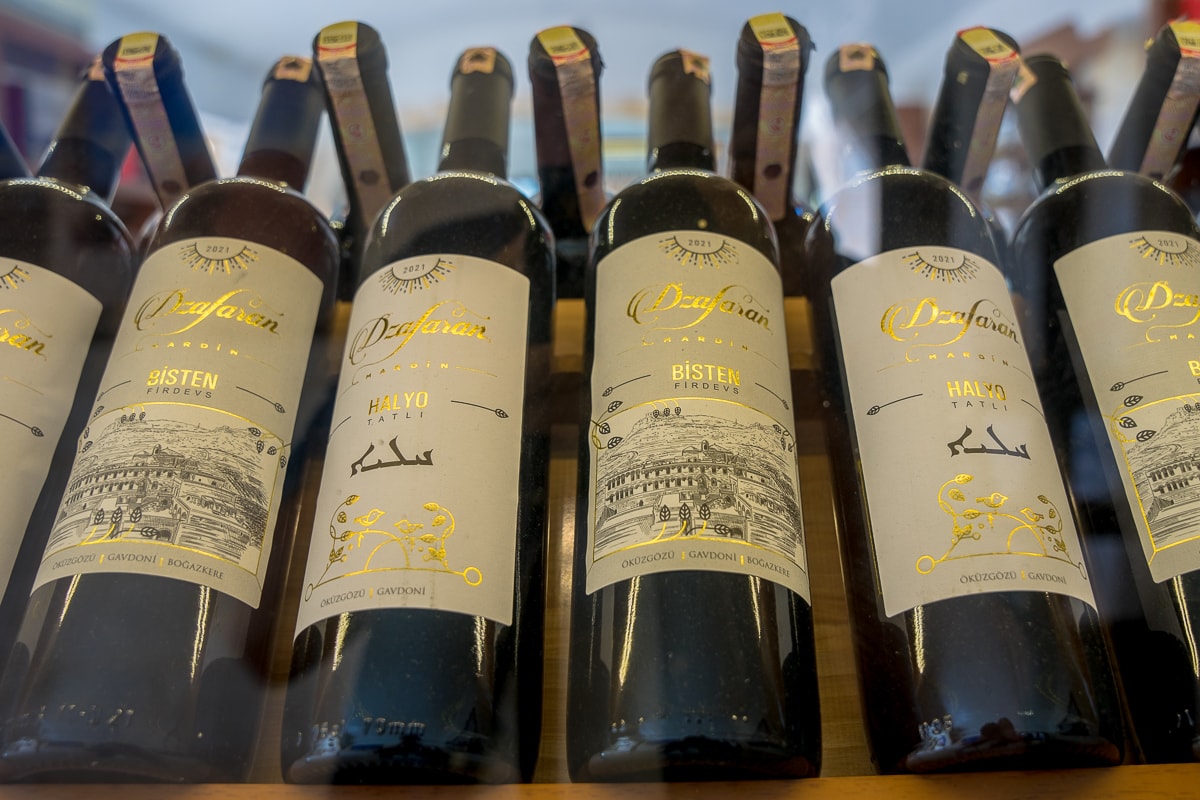
Tip: The cafe and shop sell locally-produced Assyrian wine called Dzafaran named after the monastery. It makes a good souvenir or present with a printed picture of the monastery on the label. The shop let us try a few of the wines to help make up our minds.
Mor Hananyo / Deyrulzafaran / Monastery of Saint Ananias
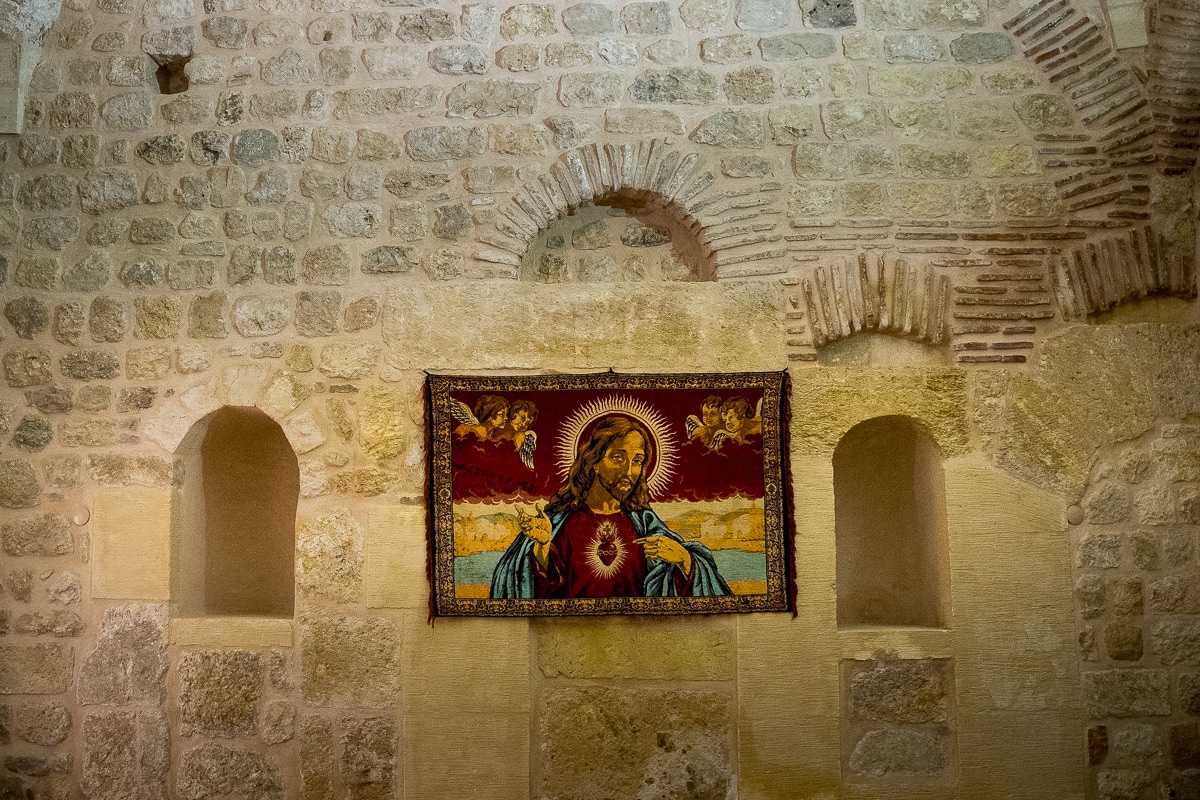
The Mor Hananyo Monastery has gone by different names throughout its existence. First called Mar Slemun, it was renamed Mor Hananyo after Saint Ananias (Hananoy) in the seventh century. Legend has it that saffron was mixed into the mortar during the construction, giving the building its warm colour. That is where the monastery’s Arabic name, Deyrulzafaran or the Saffron Monastery, originates.
The monastery is an important religious and pilgrimage site for the Syriac Orthodox Church, one of the oldest Christian denominations in the world, dating back to the ancient city of Antioch in modern-day Turkey.
Constructed in 493 AD, the monastery is said to have been built on the site of an older Sun Temple dating from 2,000 BC. On our guided tour of the monastery, we were told that there are 365 rooms in the complex, one for each day of the year. (We only visited four rooms).
Over the centuries, the Mor Hananyo Monastery has played a crucial role in preserving the Syriac language and culture. It still holds a daily service in Aramaic, the language Jesus spoke.
It has weathered numerous challenges, persecution and invasions but has remained a symbol of the Syriac Orthodox Church’s resilience and endurance.
Today, the Mor Hananyo Monastery remains an important pilgrimage site for Syriac (Assyrian) Christians from around the world. Some even call it the Mecca of the Assyrians.
Our Visit to the Saffron Monastery


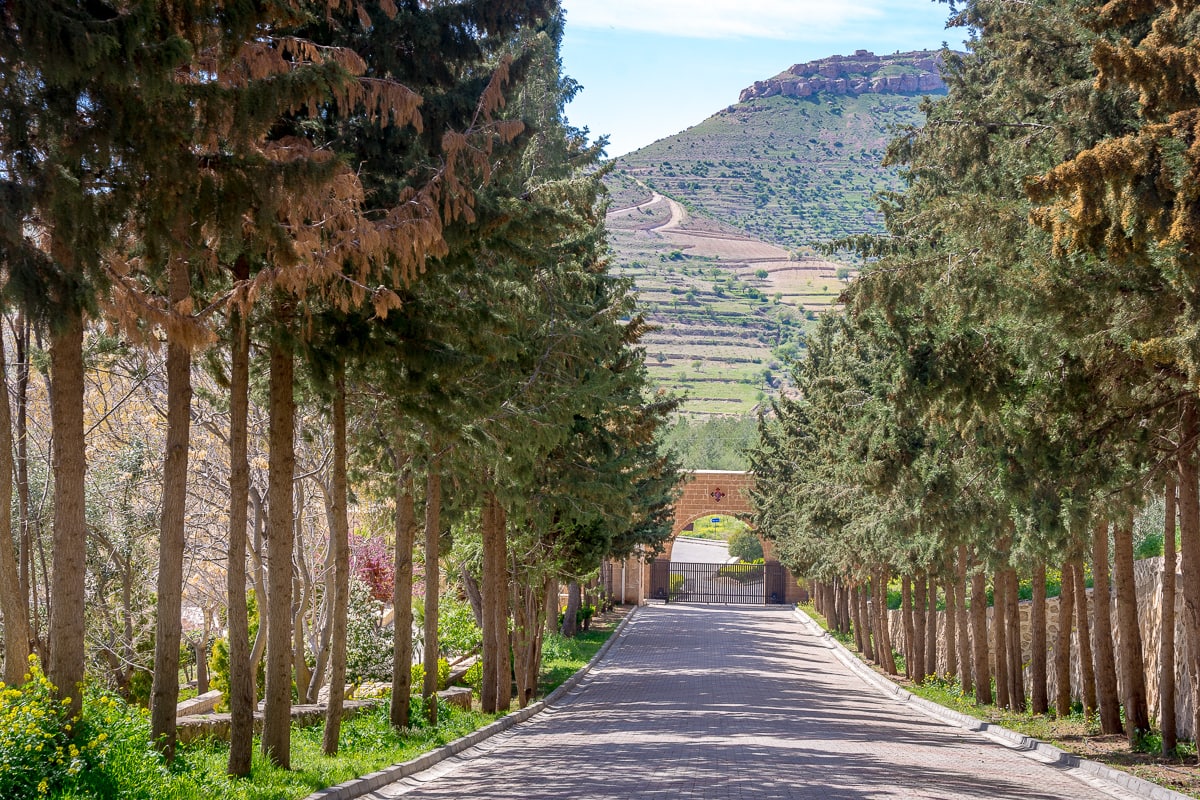
After paying the entrance fee (TRY 50 per person), we walked up the steps to the monastery’s entrance. On the right, we saw olive groves and yellow rape fields tumbling down the hills to the Mesopotamian plain. On the left, we caught glimpses of Mor Hananyo Monastery through the trees.
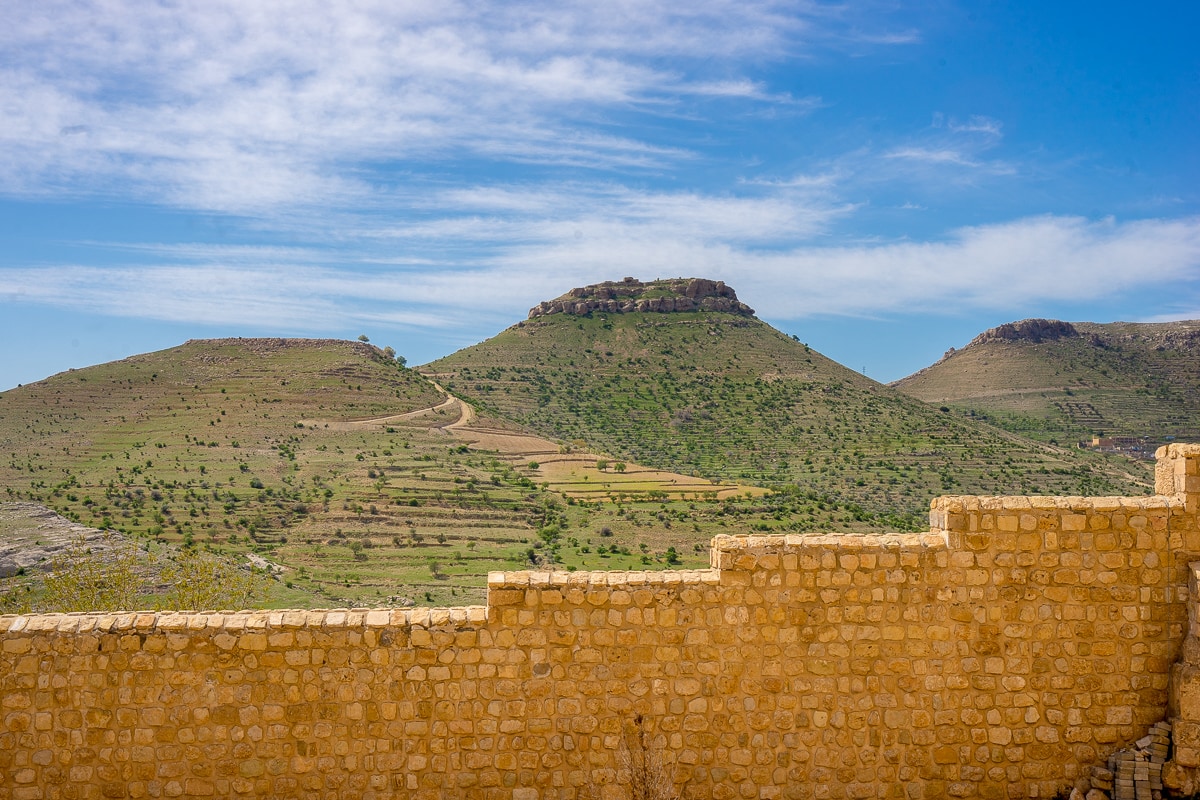
After reaching the entrance to the monastery’s outer wall, we walked through an arched gate and up even more steps to get to the entrance. While we waited for the rest of the group to gather, we took in the stunning views of the surrounding Tur Abdin (mountains of the Servants).

Our group comprised a family from the UK and Turkish visitors, so our guide ran a bilingual tour as we toured the buildings.
Below is what we saw during our visit to Mor Hananyo Monastery.
Virgin Mary Church & Printing Press

Our tour first visited the Virgin Mary Church, a small chapel which is only used once a year when children are baptised.
The church houses the monastery’s famous printing press. The printing press made its way from England via Aleppo around 1874. Monks used this press to print books, manuscripts and documents in Syriac, Arabic and Turkish.
Mor Hananyo Church
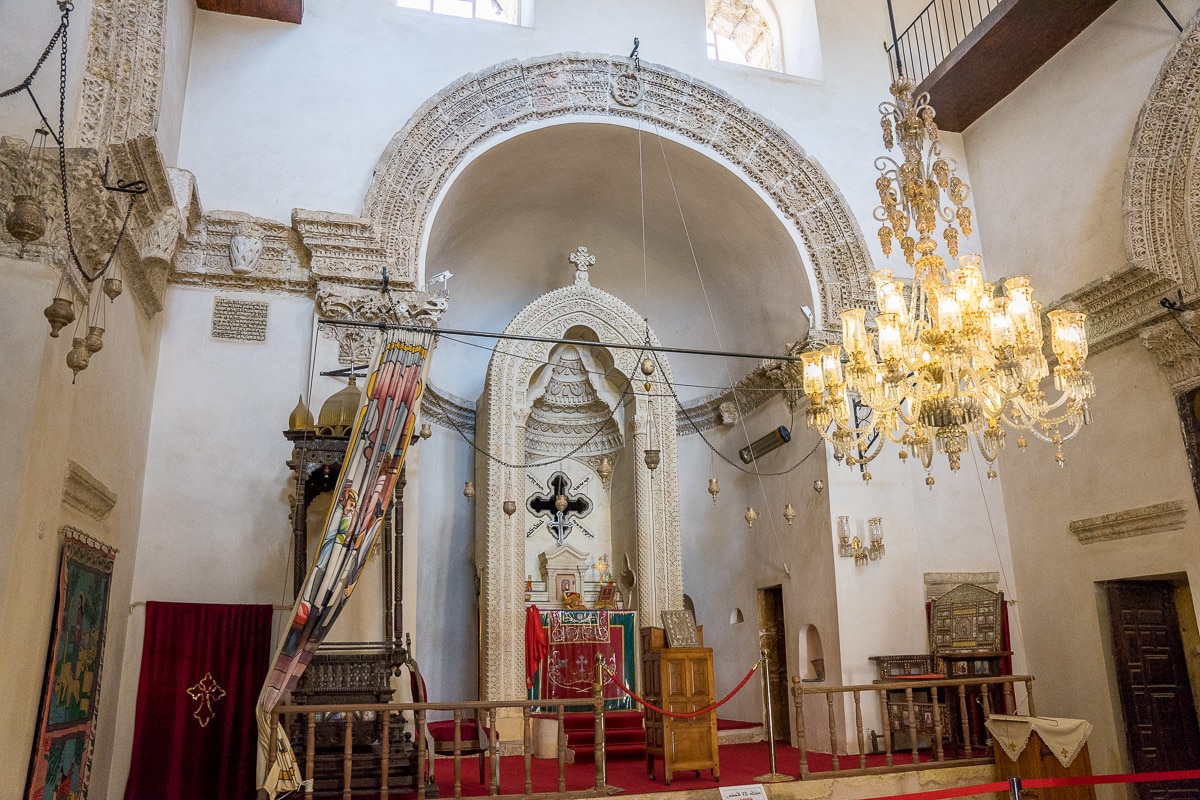
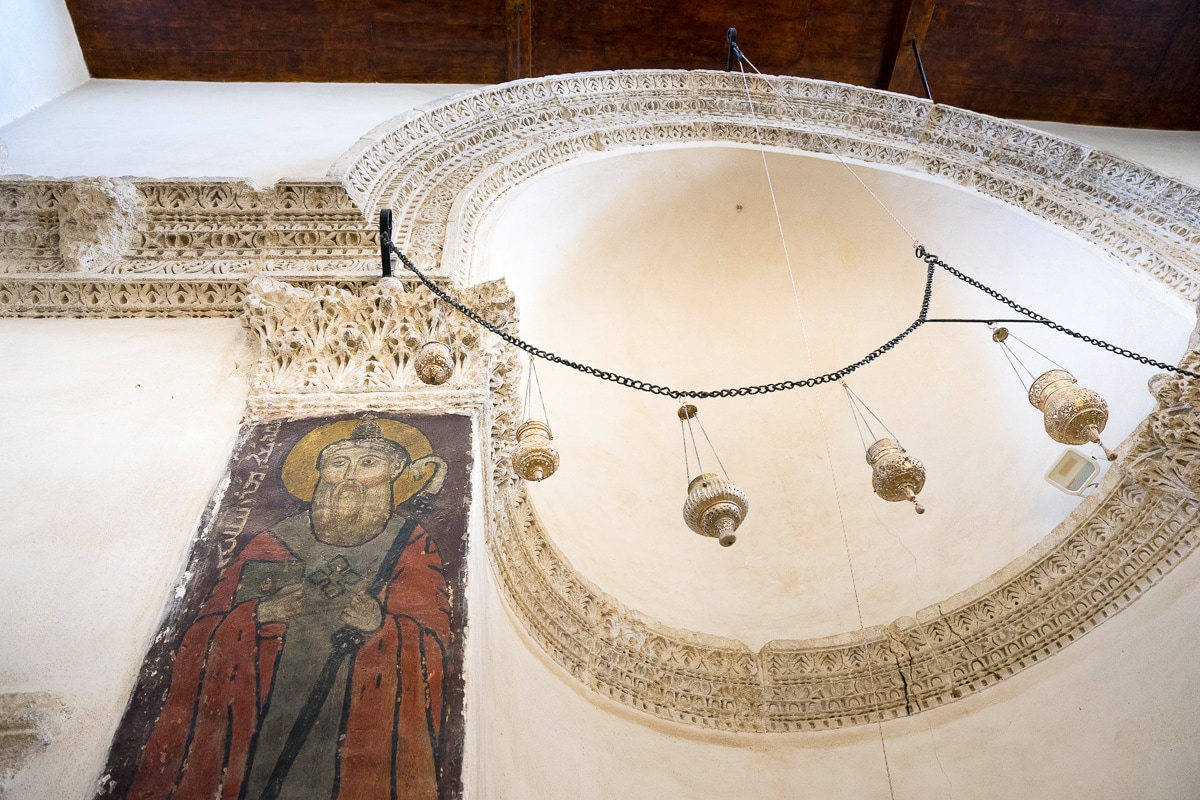
The main church, the Mor Hananyo Church, also called the Domed Church, was constructed during the reign of Byzantine Emperor Anastasius between AD 491-518 by two Syriac brothers, Theodosius and Theodore.
While the church was originally adorned with frescoes on its inner walls, only one has survived to this day – a tall and thin fresco depicting St. Hananyo. Despite this loss, the church is still beautiful.
House of Saints
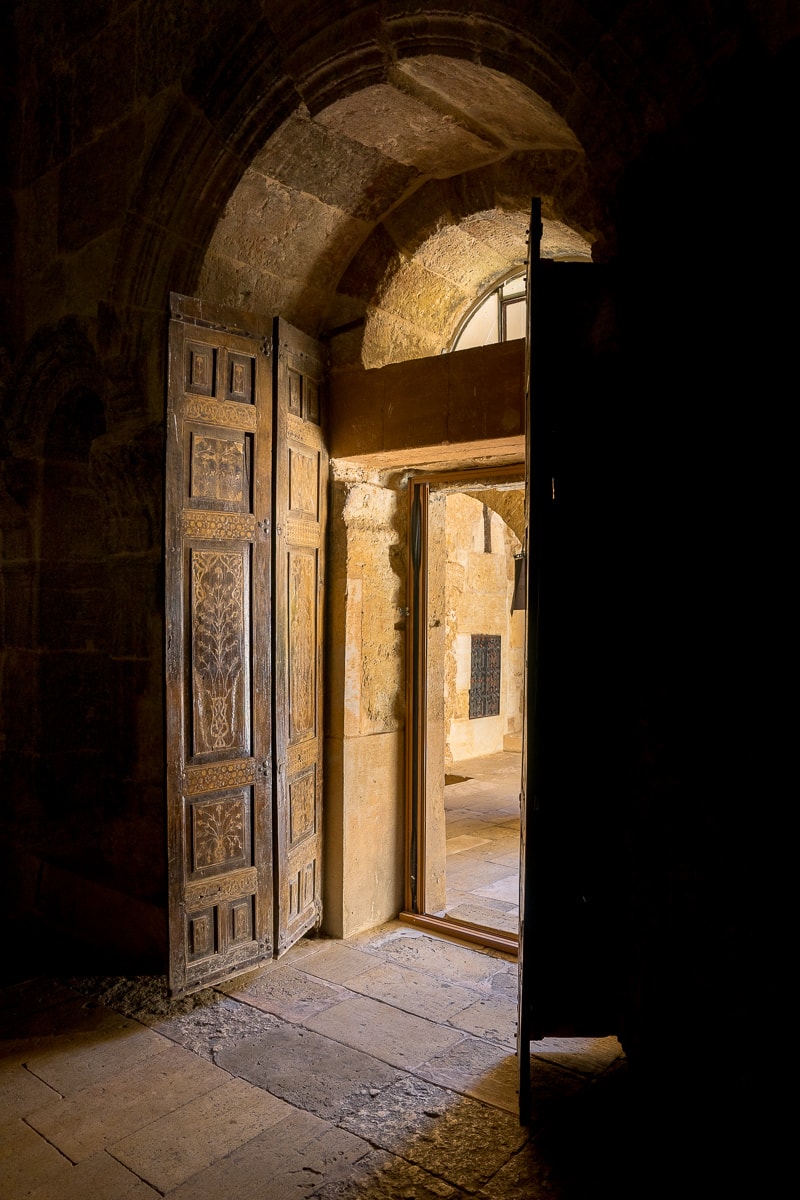

This small and bare domed structure is quite beautiful. The church serves as a final resting place for the patriarchs of the monastery and several saints, with a total of 52 graves located across seven burial chambers.
The church also features some engravings on the otherwise bare walls.
The Sun Temple
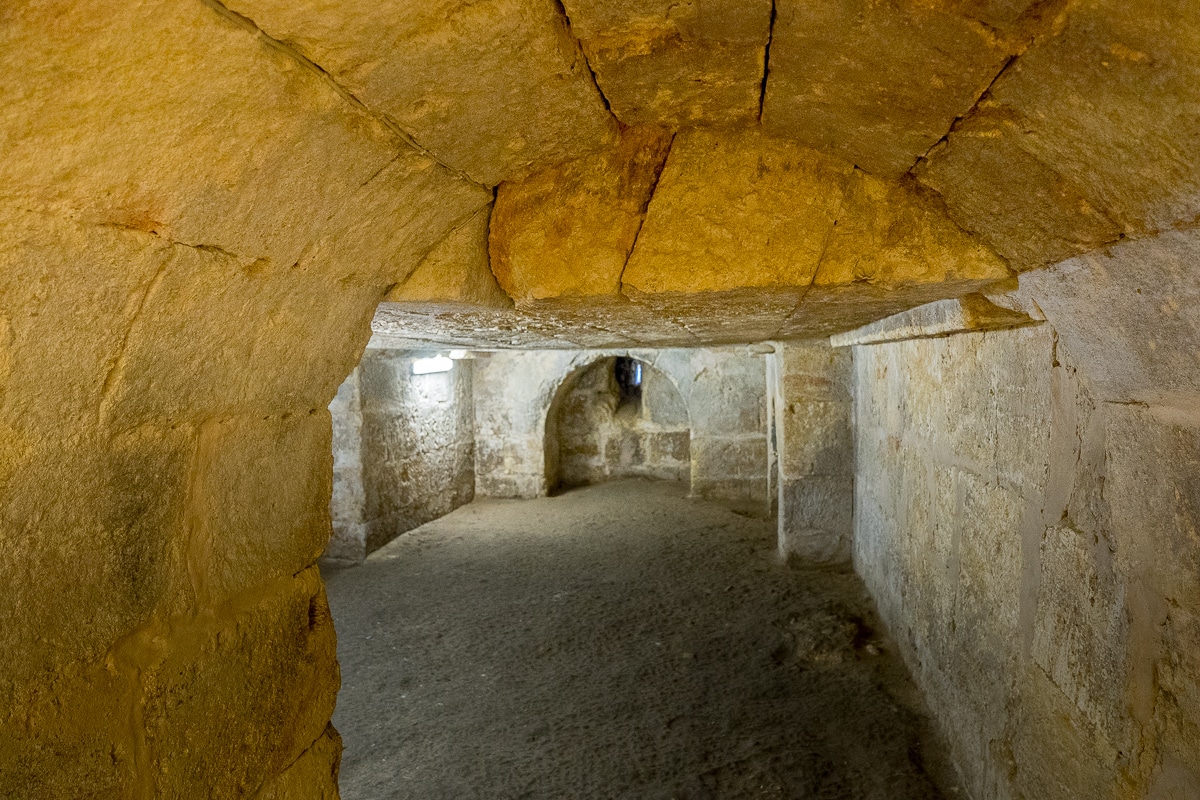
Dating back to the fourth century, the Sun Temple was constructed atop an earlier temple dedicated to worshipping the sun.
Today, the impressive remains of the original structure can still be seen under the church. Particularly impressive is its roof, made up of enormous 2-meter-high stones weighing between 500 kg and 1 ton. These stones are held together without mortar. Our guide pointed out the keystone locking these massive stones together.
In one of the temple walls, there is a window through which the sun penetrates in the morning. According to legend, when the sun reaches the altar opposite the window, a sheep or another animal is sacrificed in honour of the sun god.
The Courtyard

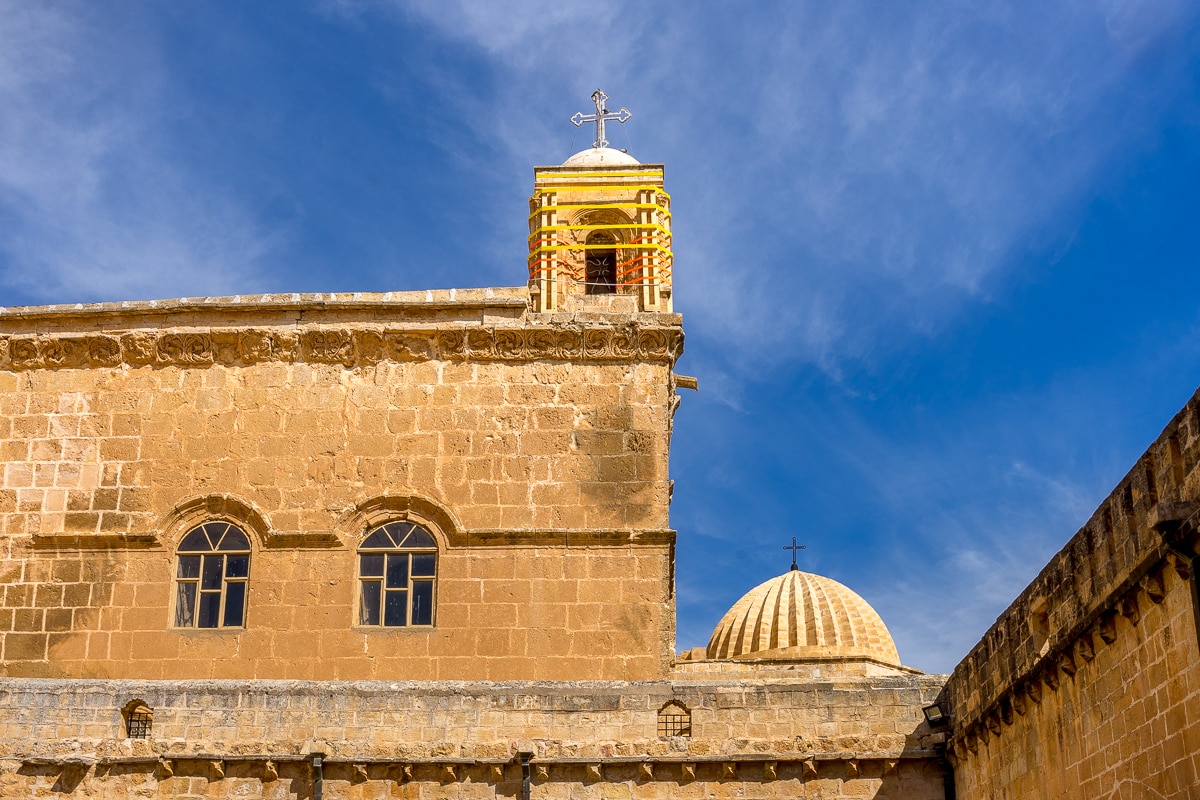
After the guided tour, we were free to look around the courtyard. I wanted to climb the stairs up to the top floor to take pictures of the courtyard from above but was stopped . The top floor is reserved for guests sleeping over at the monastery.
There is not much to see, and sadly the rest of the monastery is out of bounds to visitors. So after snapping a photo or two, you can head back out the exit.
Remember to get some wine from the shop before getting in the taxi.
Is Mor Hananyo Monastery Worth a Visit?
Yes, we think so.
Visiting the monastery is an interesting experience showing the unique demographics of Mardin. While the Assyrian Christian community continue to dwindle, the monastery still holds on to its beliefs as ages ago.
Cultural significance aside, it’s a beautiful setting and pretty close to Mardin.
Oh, and there is Assyrian wine too 😃
How I Shot This Guide
Every photograph in this article was taken with the exact same gear I carry on every journey. It is a setup refined over years on the road to keep travel light without compromising the final image.
- Camera: Sony A7 V
- Lens: Sigma 24-70mm f/2.8 DG DN Art.
- Storage: SanDisk Extreme Portable SSD
- Software: Adobe Lightroom Classic
- My travel essential (trust me): Ray-Ban Wayfarer
- Outerwear: My North Face Canyonlands jacket was perfect for spring weather in Türkiye