
Mesopotamia. Madrasas. Mosques. Monasteries. Minarets. Few other places in Türkiye can ignite a sense of the exotic quite like Mardin. This blog post has the best places to visit and things to do in Mardin to experience the magic of Türkiye’s stone city.
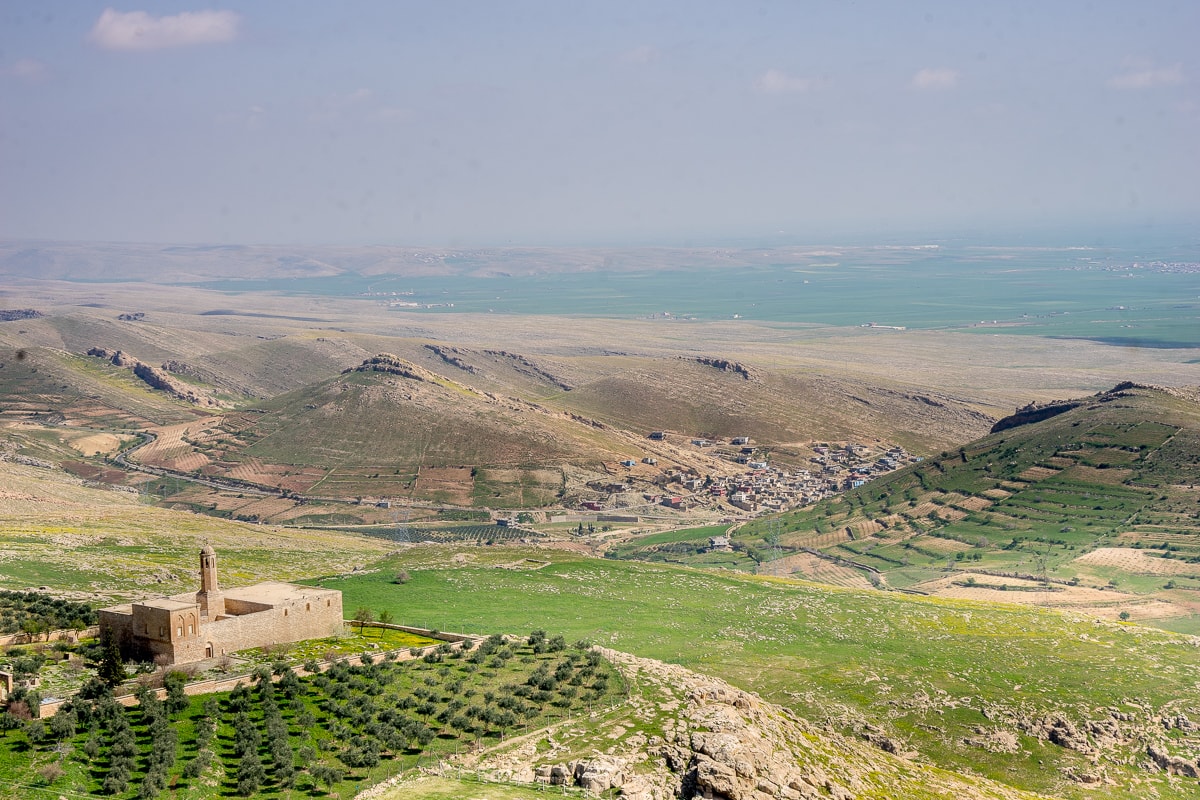
We spent four days in Mardin this recent spring, and we absolutely loved it. Mardin is an exotic place that transported us to another world and time. Perched on a hill overlooking the Mesopotamian plains, Mardin has a stunning location. We never got tired of peering down to the plains from above, which seemed different every time due to the changing light.
Its honey-coloured alleys reveal age-old stone mansions, bazaars, domed madrassas, hidden monasteries and towering minarets, while its cultural heritage is a fascinating blend of Middle Eastern, Mediterranean, and Central Asian influences. You should really come to see this for yourself.
If you’re looking for one of the most beautiful and unique places to visit in Turkey, put Mardin at the top of your list.



Please note: This post may contain affiliate links. This means I may earn a commission if you make a purchase by clicking a link (at no extra cost to you). As an Amazon Associate, I earn from qualifying purchases. Learn more.
Quick Guide to Mardin
When did we go? The first week of April. Spring in this part of Turkey is gorgeous.
Where did we stay in Mardin? Zerzevan Boutique Hotel
How long to spend in Mardin? At least 3 days
How to get to Mardin: Mardin is located near the Syrian border in the far southeast of Turkey. Most convenient way to reach Mardin is by plane. We flew with Turkish Airlines from Ankara (1.5 hours flight) and returned to Istanbul (2 hours flight).
If you’re already in the region, bus and dolmus connect Mardin to other cities in southeast Turkey, such as Sanlıurfa, Diyarbakır, Gaziantep, Harran and Midyat.
How to get around: Mardin: Havabus from the airport will drop you at or near your hotel. We paid TRY 45 per person from the airport to the old town. Returning to the airport, we paid TRY 200 for a taxi, which took roughly 20 minutes.
The best way to see Mardin is on foot.
Where to Stay in Mardin


Mardin is divided into two parts: the UNESCO Old City, also known as Eski Mardin, and the New City, or Yenişehir.
The Old City is the historic centre of Mardin. It features stunning Artuqid architecture and panoramic views of the Mesopotamian plains. We highly recommend staying in the Old City for the complete Mardin experience.
However, it’s worth noting that hotels in Old Mardin are generally more expensive and tend to get booked up quickly. So plan and book in advance if you want to stay in the Old City. On the other hand, Yenişehir offers cheaper rooms but requires taking a bus or taxi to reach Mardin’s attractions.
The Hilton in Yenişehir gets excellent reviews if you want to stay in the New City.
We stayed at the Zerzevan Hotel in a quiet alley next to the Post Office in Old Mardin. Our en-suite room was clean, comfortable, and quiet. We had a great stay. The breakfast served on the terrace with a great view was good and came with unlimited tea.
Places to See & Things to Do in Mardin
Visiting Mardin is as much about admiring the incredible rock architecture as it is about slowing down, ordering another glass of çay and pondering just how far away the Syrian border is or how old these buildings really are while peering over the plains below.
Another highlight of visiting Mardin is experiencing the city’s mix of cultures. This part of Turkey is incredibly diverse in language, culture and religion. Between exploring Mardin’s attractions, you’ll, no doubt, get to meet the friendly Arabs, Kurds, Assyrians, Turks, Chechens and Mhallamis that call Mardin home.
Plan to spend at least 3 days in Mardin to see the city at a comfortable pace. We spent 4 nights in Mardin, which was perfect for our style of travel – we don’t run from one sight to the next and value the occasional mid-day nap.
This blog post covers everything you need to know when planning your Mardin trip: The best things to do in Mardin, where to stay and what to eat. So, let’s get going!
Look Up at the Minaret of the Ulu Camii (Grand Mosque)


Mardin’s most prominent attraction and symbol of the city is the Ulu Camii (Grand Mosque). Its towering minaret is visible almost everywhere in the Old City, making it impossible to miss. The giant minaret drew us towards it like a magnet, compelling us to explore its architectural grandeur.
The Ulu Camii was built over 800 years ago during the Artuqid period, with inscriptions on the epigraph of the minaret dating the mosque to 1176. It is one of the oldest mosques in Anatolia. The mosque is constructed from cut stone and features a beautiful sliced dome and a large rectangular courtyard. However, inside, the Ulu Camii is relatively bare.
Despite being a historical landmark, the Ulu Camii is still a functioning place of worship and is open to everyone regardless of religion. Visitors should dress and behave appropriately when entering the mosque.
Entrance Fee: Free
Climb the Zinciriye Madrasa Roof for the Best View in Mardin


Mardin boasts plenty of lovely views and viewpoints, but we think the best views are from the rooftop of the Zinciriye Madrasa.
This historical landmark of Mardin dates back to 1385 and was commissioned by Sultan ‘Isa as a religious school (madrasa).
Aside from the breathtaking views of the city, castle, and plains, the Zinciriye Madrasa (also called the Sultan ‘Isa Madrasa) is one of the most stunning buildings in Mardin. Before entering, take some time to appreciate the incredible calligraphy in Kufic script and the teardrop medallion in the muqarnas vault on the roof of the portal.
Once you’ve seen the beautiful courtyard, seek out the staircases that lead up to the rooftop. When you reach the top, you’ll be greeted by the two distinct domes of the madrasa. While these domes are impressive, the scenes behind them of Mardin and the plains are the real stars of the show.
Hours: 9:00am – 5:00pm (Monday to Saturday)
Entrance Fee: 10 TRY
Get Clean in the 800 Year-Old Sihhi Emir Hammam

One of the most enjoyable things to do in Mardin (or anywhere in Turkey, for that matter) is visiting a hammam.
I was over the moon when I spotted the Turkish bath house on the main street of Old Mardin, near the bazaar area. For me, a trip to Turkey is incomplete without proper hamam time.
The Sihhi Emir Hamam is a historical Turkish bath dating from 1205. It’s just the place to treat yourself after a long day of exploring Mardin on foot.
The hammam includes a sauna, hot and cool rooms, and offers an authentic Turkish bath experience. I paid TRY120 for a proper hammam treatment, which included a scrub and a vigorous massage. Expect to spend around 1.5 hours at the bathhouse, although you could easily stay longer.
Besides getting good and clean and fresh, a hamam visit is perhaps the most genuine cultural experience tourists to Turkey can have. You really should give it a try.
Hours:
Men: 6:30 a.m. – noon, 6:00 p.m. – 10:00 p.m
Women: Noon – 5:30 p.m.
See the Most Beautiful Post Office in Turkey
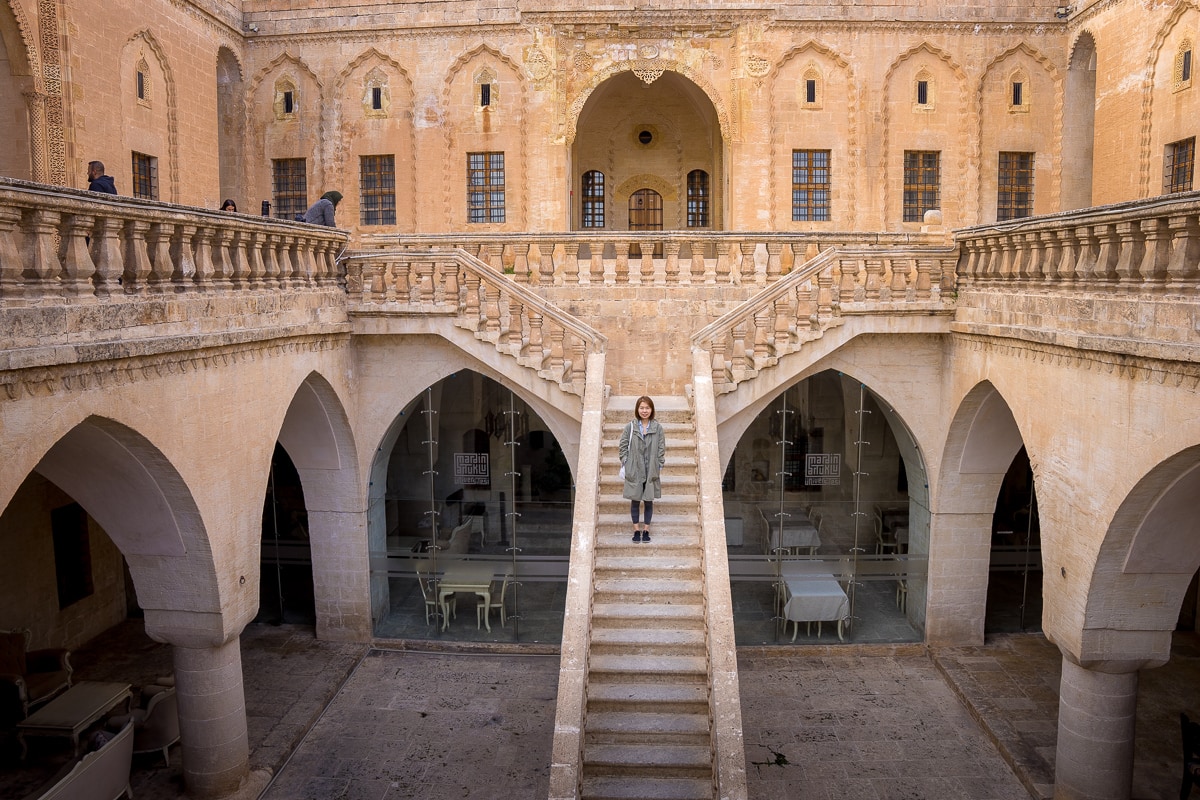

While you can still mail a parcel or postcard from Mardin’s beautiful Old Post Office, the real reason to come here is to admire the stunning architecture.
First built around 1890 as a home for the Şahtana family, it was turned into a post office in the 1950s. Today, only a small room still does post office business, with the rest of the building open to visitors.
Turkey’s most beautiful post office might have remained just a post office were it not for the Turkish TV drama, Sıla. The post office was used as the set for the popular TV series, which attracted domestic tourists.
The most prominent feature of the post office is the elegant staircase leading up from the courtyard to the terrace.
The Mardin Post Office is highly photogenic, making it a popular spot for taking wedding photos.
Entrance Fee: 10 TRY
Take a Selfie in Republic Square

Join the local tourists and snap a pic or two at the #mardin sign on Republic Square.
Behind the sign, you’ll spot a statue of Ataturk standing in front of the Mardin Museum. The museum is housed in the former Assyrian Catholic Patriarchate.
The area around the square has a few nice restaurants and cafes. For a sugar and caffeine kick, check out Muanna on the corner of the square (see Where to eat in Mardin below).
Spot Şahmeran

The legend of Şahmeran, a half-snake and half-woman creature, originated from Mesopotamia and has been retold for centuries in Mardin. Her portrait can be seen all around Mardin, which is believed to bring good fortune.
A young man named Tahmasp found her in a cave under Mardin and fell in love with her looks and incredible stories. After spending days with Şahmeran in the cave, the honeymoon phase wore off, and he returned home.
When the king became gravely ill, a rumour went around that the only cure was the flesh of Şahmeran.
Tahmasp was spotted in the hamam with snake scales on his body, and soldiers tortured him until he gave up Şahmeran’s hideout.
As Şahmeran was chopped up, she claimed that eating a piece of flesh from her tail would grant a person all the secrets of the world, but eating from her head would result in instant death. The king and his followers devoured the tail meat, while Tahmasp, grief-stricken, wished to end his life by eating from her head.
However, Şahmeran had planned ahead and deliberately given the wrong instructions to save her lover. Tahmasp survived and became a renowned doctor, while the king and his men perished instantly.
Have a Çay at Tarihi Marangozlar Kahvesi
(Carpenter’s Cafe)


Tarihi Marangozlar Kahvesi, or Carpenter’s Cafe in English, is our favourite spot in Mardin to simply hang out.
Located in carpenter’s bazaar, the cafe used to be the social glue of the Mardin carpenter community in the 50s and 60s. Sadly ready-made furniture had put most of the carpenters out of business.
While some woodworkers remain in the area, the Tarihi Marangozlar Kahvesi is now a popular spot for tourists seeking the charming atmosphere of one of the city’s historic cafes.
The inside of the cafe, with its large sunny windows, was perfect for us on a slightly chilly spring morning, but the outside terrace was full anyway. We imagine it gets perfectly toasty in here when the stove is fired up in winter.
We loved the cafe and ended up having more than just one cup of çay. Seriously, we couldn’t get ourselves to leave. They also do tasty toasties and other light meals if you’re hungry.
Our bill came to TRY 105 for at least 6 cups of tea and two toasted sandwiches.
Browse the Bazaars


The bazaar of Mardin is located one block down the hill from the main avenue, 1 Caddesi, which runs along the length of the Old City. Here, you’ll see that Mardin is not just a jumble of old stone buildings.
A stroll along the alleys making up the bazaar takes you past fresh produce vendors, tailors, blacksmiths, carpenters, bakers, donkeys, and some of the friendliest folk imaginable.
Between all of this, you can find anything from a copper pot or a litre of honey to a donkey saddle or lingerie that looks like it was hot in 1983.
While there is the odd souvenir shop, the bazaar is refreshingly free of tacky tourist tat. Most souvenir shops are on the main street, leaving the bazaar full of authentic and unique finds.
Visit the old Syriac Church of the Forty Martyrs


Also known as Mor Behnam or Kırklar Kilisesi, the 40 Martyrs Church is the heart of Mardin’s Syriac Christian community. The beautiful church was built in the 5th century and is still going strong with weekly services.
The church was initially named Mor Behnam but was renamed in 1170 to Kırklar Kilisesi (40 Martyrs Church) when the remains of 40 martyrs were brought here from Cappadocia.
The church’s exterior features intricate stonework and carvings in Syriac and Aramaic language. Inside are a few very nice paintings, especially the one depicting the legend of the 40 martyrs. Unfortunately, no photography is allowed inside.
SCAM ALERT: Upon entering the church grounds, we were met by a friendly young man speaking English. He seemed genuinely nice and convinced us to let him take a picture of us in front of the bell tower. Off course, he also wanted to do the touch-the-belltower pose thing, which seems common practice for taking photos in Mardin.
What a lovely young Christian man, I thought as he directed us to the church entrance.
We went to look around inside the church and made a donation to the church box. Upon exiting the church, our friend awaited us and suddenly insisted on TRY 100 for his photo service.
This left us with a sour taste in the mouth, as we really enjoyed the church visit. I gave him TRY 50 to get rid of him, and we walked off with a tainted memory of the beautiful church.
See Mardin from Another Angle at the Buyuk Otel


When you think you have reached your limit of views over Mardin and the plains of Mesopotamia, change your perspective! To see the city from a different angle, head down to Buyuk Mardin Otel.
After we visited the 40 Martyrs Church, we walked downhill to the hotel, located at the bottom of the hill that Mardin sits on. The views from here are magnificent.
You’ll have an unobstructed vista of the plains, as there are no buildings blocking your view. The view of the Mar Mihail Kilisesi church on the plains below was one of my favourite views in Mardin.
After overdosing on the views of the plains, head to the hotel terrace to see Old Mardin in its entirety. Order a çay or two to sip on while you’re rubbernecking to take in the layers and layers of the architecture of Mardin Old City.
Go Meet Merdin Monroe

Everyone knows Marilyn Monroe, but have you heard of Merdin Monroe?
We found this lovely, quirky lady in the alley leading to our hotel. She is every bit as colourful as the alley she has created (see below).
Melek Akarmut is an animal rights activist, more famously known as the Marilyn Monroe of Mardin or Merdin Monroe.
With a striking resemblance to the original Marylin, Merdin Monroe has a small boutique selling unique soaps and other novelties. (Donkey milk shampoo, anyone?)
We suspect that most of her earnings go into the cat shelter she created in the alley behind her shop.
Pop in to buy something for a good cause or snap a pic with her before or after taking your selfies in Cat Alley. She doesn’t bite and is happy to pose for a snap.
See The Colourful Cat Alley


Okay, the name of this colourful alley behind Medrin Monroe’s shop is not really Cat Alley, but that’s what we called it. This alley is also the one leading up to our hotel, so we’ve become very well acquainted with its friendly feline residents.
At the entrance to the alley, located between the Old Post Office and Merdin Monroe’s shop, you will spot several colourful houses for cats and dogs and their occupants.
Continue walking up the steps, and soon, you’ll be surrounded by colourful murals, street art and friendly cats.
Get Lost in Old Mardin’s Alleys


Wandering through the alleys of Mardin Old City is like stepping into a time machine and being transported to a bygone era. The narrow streets wind and twist their way through ancient stone buildings, with unexpected surprises waiting around every corner.
You might stumble upon a hidden courtyard, catch a glimpse of a craftsman at work, or find yourself face-to-face with a friendly donkey or cat.
As you walk around Mardin, the scent of spices and freshly baked goodies waft through the air, and the sounds of the city – the call to prayer, the clip-clop of donkey hooves, the fluttering of pigeon wings – create an unforgettable atmosphere.
With each step, you’ll feel like you’re peeling off another layer of Mardin’s psyche and quickly fall under the city’s timeless charm.
Watch the Sunset from Seyr-i Merdin


Mardin has terraces looking down over the city and plains galore. But the champion of the decks is undoubtedly Seyr-i Merdin.
Sitting right above the Ulu Camii mosque, this terrace is one of the best viewpoints in Mardin, especially around sunset when the colours get warm and the shadows long.
It’s a steep climb up the stairs to the rooftop of the building, but it’s worth it. Indoor and outdoor seating are available, and they also serve food. We only had a few cups of tea while basking in the last golden glows of the day.
Don’t Try to Visit the Mardin Castle

Like the proverbial cherry on the cake, the Mardin Castle is perched on the very top of Old Mardin. However, this cherry remains out of bounds to everyone, as it is home to a NATO military base.
Don’t believe other travel blogs claiming the castle to be the best viewpoint in the city or describing a visit to Mardin castle. The castle is FIRMLY OFF LIMITS, so don’t even try to get up there.
The castle is roughly three thousand years old and is popularly known as Eagle’s Nest. It’s kind of fitting that the fortification still serves its original purpose. The radar station and technology up there must be able to spot even a mouse fart across the Syrian border.
The nearest you can get to the top is probably the roof of the Zinciriye Madrasa.
Touch a Minaret

With all those towering minarets, it’s no wonder that taking one of those photos where it looks like you’re pinching the top of the building is so popular in Mardin. It’s definitely a thing you must do in Mardin, judging by what we saw.
One day I was taking a photo of Jin with my camera (a normal photo, mind you) when the cutest little girl came over and, like a boss, told us to give her my phone.
Kudos to either her geometry teacher or Instagram, but she nailed that shot within seconds!
If you want to blend in in Mardin, you should really get one of these photos yourself.
Explore the Ruins of Dara Ancient City


Visiting Dara Ancient City on a day trip from Mardin is a must for history buffs, architecture enthusiasts and bragging rights. These impressive ruins lay roughly 6 km from the Syrian border, but don’t let that put you off.
This once-thriving city dates back to the Roman Empire and was the seat of the empire in Mesopotamia. Dara is home to many stunning ruins, including a few incredible water cisterns, a necropolis, and a sprawling agora, among others. Best of all-, entrance to the entire site is free.
Dara is about 30km from Mardin and is best reached by taxi or driving yourself. We got a taxi, and the driver turned out to be a great guide too.
If you’re coming to Dara (yes, you should), read our post on visiting Dara Ancient City.
Tour Mor Hananyo, the Saffron Monastery

Nestled in the hills of the Tur Abdin between Mardin and the Mesopotamian plains is the beautiful Mor Hananyo monastery. It is one of the most important religious sites for Syriac Orthodox Christians and is commonly called the Saffron Monastery.
Legend goes that when it was built in the 5th century, saffron was mixed into the mortar giving the monastery its warm, golden colour.
The church is still active and holds a daily service in Aramaic – the language spoken by Jesus.
Entrance to Mor Hananyo is by guided tour only and costs TRY50.
The monastery is about 10 km outside Mardin, so you will need a taxi or your own wheels (or the stubbornness of a donkey to walk) to get here.
We stopped at the Saffran Monastery on the way back from Dara, as it’s in the same direction.
Where to Eat in Mardin
We visited Mardin in the middle of Ramazan, the holy month of fasting. Many restaurants were closed because of this, but we didn’t go hungry, Hamdullah.
Visiting Mardin during Ramazan was still enjoyable, and we ate well, but we did notice many eateries closed, unlike Istanbul, Safranbolu and Amasra, which we visited soon after.
We found two great places and liked them so much that we didn’t bother much finding any alternatives. We visited each place twice for dinner during our four days in Mardin. For lunch, we found more than enough snacks on the streets to keep us going.
Most places don’t put the prices on the menu, possibly because they will need to print new menus every week due to inflation.
Birtat Lahmacun

Lahmacun (think paper-thin pizza without the cheese) doesn’t get any better than at Birtat Lahmacun.
You’ll find this tremendous lahmacun joint across the road from the #mardin sign at Republic Square.
We also had Adana kebab and cheese pide here, but it was the lahmacun that called us back. Don’t be shy; order a few each, throw on a few fresh herbs and a squeeze of fresh lemon, fold them up and bite into that heavenly crunchy crust!
This was by far the best lahmacun I’ve ever had, even putting Gaziantep lahmacun to shame.
One lahmacun goes for TRY 2o.
Al Hayaal


Dining at Al Hayaal is more than just good food – it’s an experience. This intimate restaurant is just beautiful, set in an ancient building (well, that’s everywhere in Old Mardin, really). But still, this restaurant has a beautiful setting.
It also has a lovely terrace with great views of the mosque with its star-shaped windows and plains beyond. We sat inside, though, as the evenings were still chilly in early April. We came here for dinner on two of our nights in Mardin.
The must-try at Al Hayaal is a fantastic dish called Kaburga Dolması.
What is that, you ask?
Kaburga Dolması is meat stuffed with meat, and yes, it’s as good as it sounds.
The stuffed lamb rib is served on a silver platter, and moments after arriving at your table, the waiter will unravel the stitching and start ripping the meat from the bone with his hands.
The final product is tender lamb meat, nuts, apricot seeds and raisins on a bed of fragrant rice. Yes – I told you it is good. We had this with a mezze platter, so this dinner turned into a mini banquet. The bill for this dinner and soft drinks came to TRY 480.
The other night we had soup (beyran for me and lentil for Jin) and lamb chops, which were also delicious.
Mualla

Sweet tooths, sugar whores and normal people like you and I will soon find that Turkey does very good desserts.
For some damn fine desserts in Mardin, check out Mualla, also near the #mardin sign. It is, in fact, right across the road from Birtat Lahmacun, so we came here for dessert after dinner.
I ordered the creamiest and most delicious custard called makbule, while Jin went with the tiramisu. Both were great. The makbule was more than great, to be honest.
Sadik Kunefe

Situated on Mardin’s main street, Sadik Kunefe is a great place to search out for, well…you guessed it- kunefe.
Their hot cheese pastry topped with pistachios pairs perfectly with a thick slab of dondurma (Turkish ice cream) and a glass of çay.
Our bill for this sweet lunch was TRY 110.
Bite Into Süryani Çöreği

The aroma of freshly-baked goodies follows you around in Mardin, especially late in the afternoon.
You’ll see – and smell – Süryani Çöreği (Syrian cookies) all around the main street and bazaar. Their amazing aroma is thanks to the 42 different spices that go into them. These Assyrian cookies are made without sugar but use molasses, dates, and liquorice syrup instead.
There are two varieties of çöreği, one made with almonds and another made with tahini molasses and sesame, both containing dates.
They are sold by the kilo, so grab a bag to enjoy at your hotel with tea or for late-night munchies.
Halka Tatlisi

One of Turkey’s favourite street foods is Halka Tatlisi. Think of it almost as a churro, but much, much sweeter. These sticky swirls of fried dough drenched in syrup are just the thing when you need a little mid-afternoon sugar kick.
How I Shot This Guide
Every photograph in this article was taken with the exact same gear I carry on every journey. It is a setup refined over years on the road to keep travel light without compromising the final image.
- Camera: Sony A7 V
- Lens: Sigma 24-70mm f/2.8 DG DN Art.
- Storage: SanDisk Extreme Portable SSD
- Software: Adobe Lightroom Classic
- My travel essential (trust me): Ray-Ban Wayfarer
- Outerwear: My North Face Canyonlands jacket was perfect for spring weather in Türkiye
And THAT’S how you properly do Mardin. We hope you find our list of things to do in Mardin helpful when planning your trip ✌️
Bu güzel gezinizi bizimle paylaştığınız için çok teşekkür ederiz harika resimler muhteşem tavsiyeler için minnettarız 👌
Thanks Yusuf, Mardin is such a beautiful place. We hope you enjoy your trip
Great blog, thanks. We followed most of the things you wrote about on our 3 day visit to Mardin, it was so useful!
Hi Mark,
Glad it was useful and thanks for the feedback.
Thanks for such a great blog on what to see and do in Mardin. One question, though: does the Havabus from the airport drop you off even if your hotel is in Yenisehir? We are staying at the Hilton Garden Inn Mardin.
Hi Joshy,
I believe the bus will drop you at the Hilton. The bus does a loop from the airport going past the new town before ending at the old town. Unless things have changed… Enjoy your trip