
Buam-dong does not have a metro station. That is perhaps the best thing about it.
You take a bus from Gwanghwamun and head north along the walls of Gyeongbokgung Palace. The crowds thin and the traffic fades. The bus begins to climb the slopes of Inwangsan, and about fifteen minutes later, you step off feeling as though you have left Seoul behind. Not entirely. But almost.
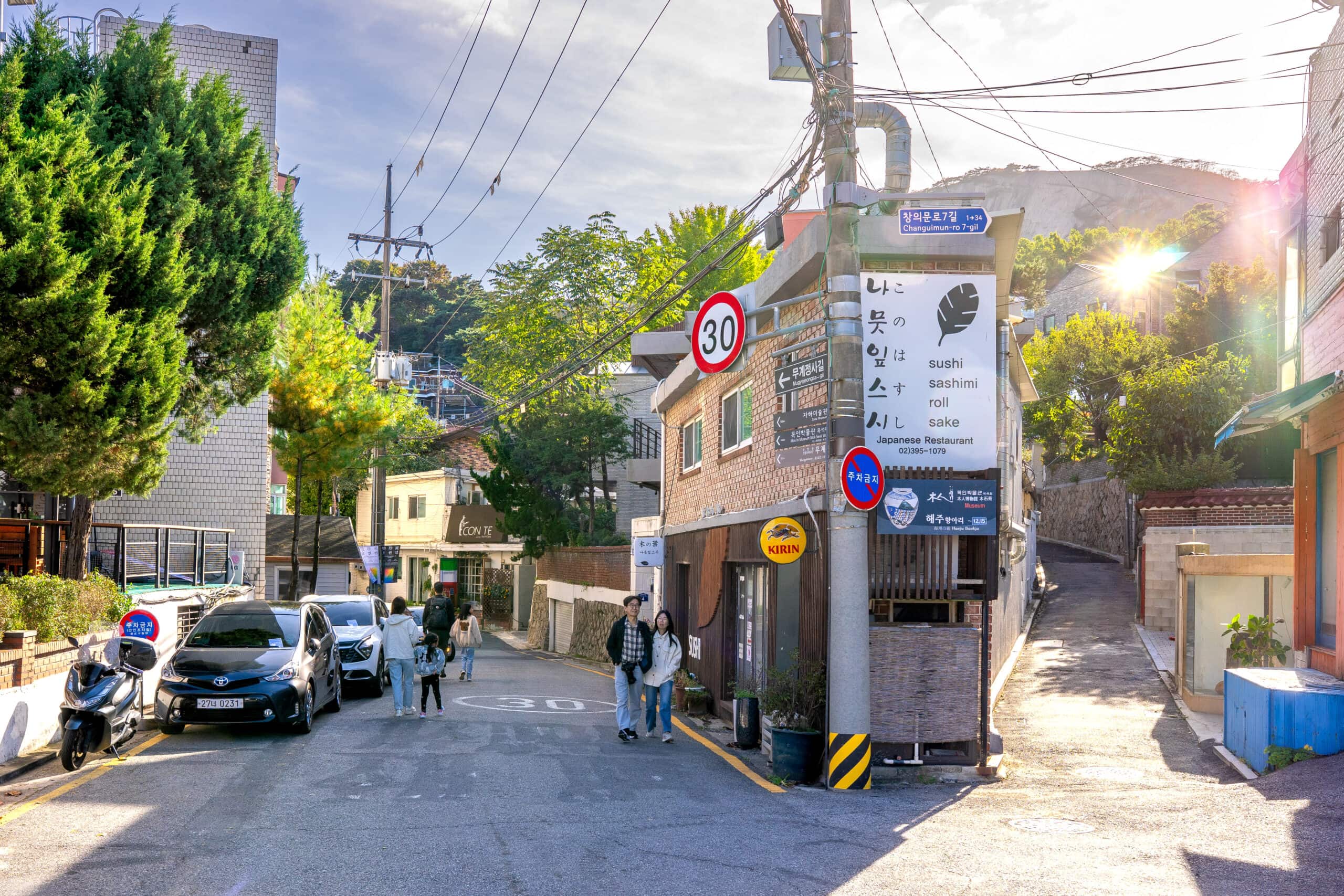
Tucked between Inwang Mountain and Bukgak Mountain, Buam-dong has that unmistakable behind-the-mountain feel, as though the city simply forgot about it. For a city that rarely pauses, this neighbourhood feels like it inhales and exhales so much slower.
We first fell for Buam-dong years ago when we were still dating. It became our default for a romantic rendezvous, long strolls, and food that justified the journey.
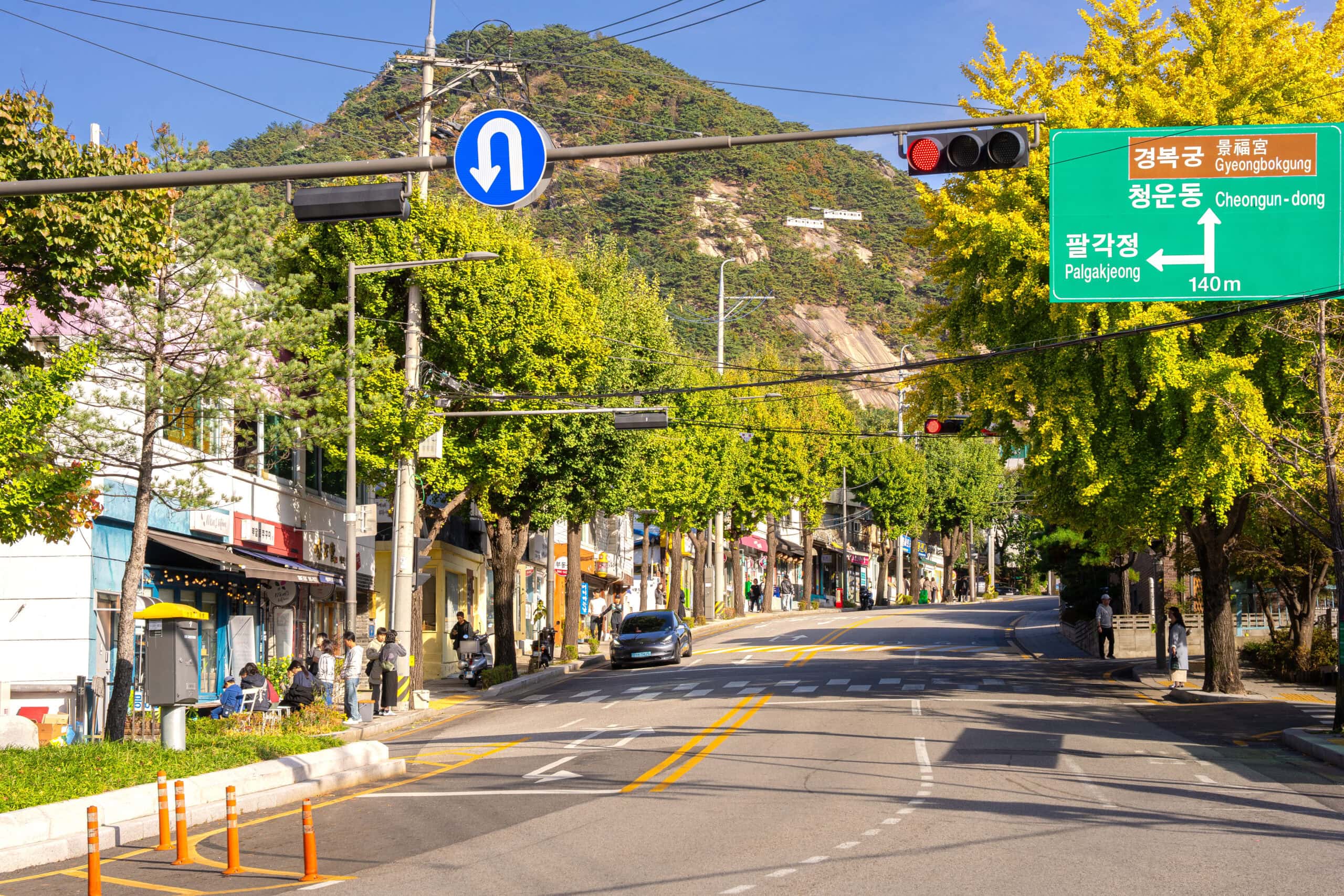
Thirteen years later, now still happily married, we went back to see if it would hold up to memory. It does. Buam-dong remains one of our favourite corners of Seoul for a slow afternoon that turns into dinner without you quite noticing.
If you are looking for unhurried things to do in Buam-dong, here is exactly how we spent our afternoon. And for a broader look at what to see and do across the city, head to our detailed Seoul travel guide.
Please note: This post may contain affiliate links. This means I may earn a commission if you make a purchase by clicking a link (at no extra cost to you). As an Amazon Associate, I earn from qualifying purchases. Learn more.
Scones at Scoff Bakehouse
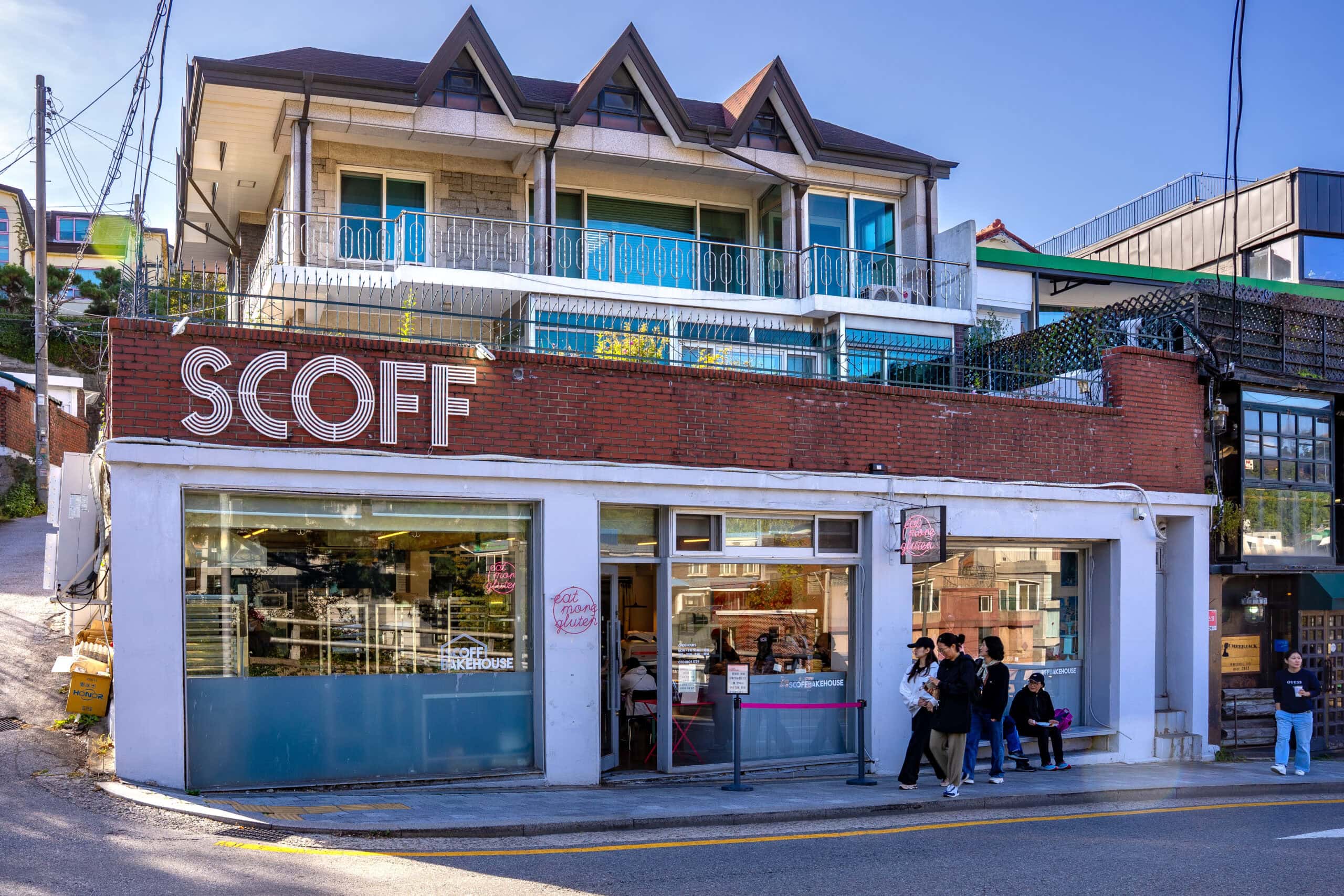
Our first order of business after getting off the bus was getting our hands on the notoriously good baked goods from Scoff. We came specifically for the scones, something Seoul’s other bakeries have not quite mastered yet. Yes, the others all bake excellent salt bread, bagels, and cronuts, but for proper scones, you come to this very British-style bakehouse.
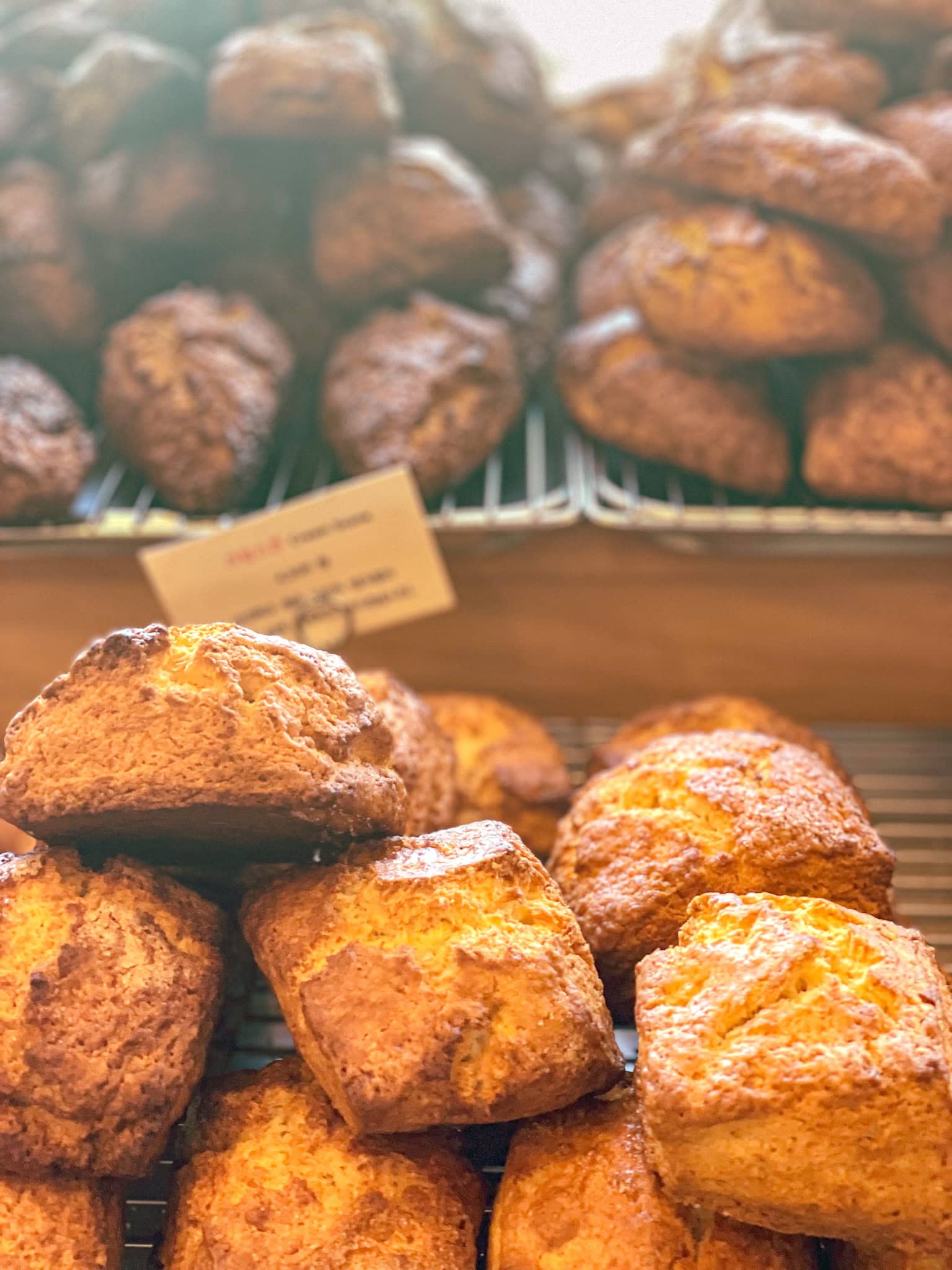
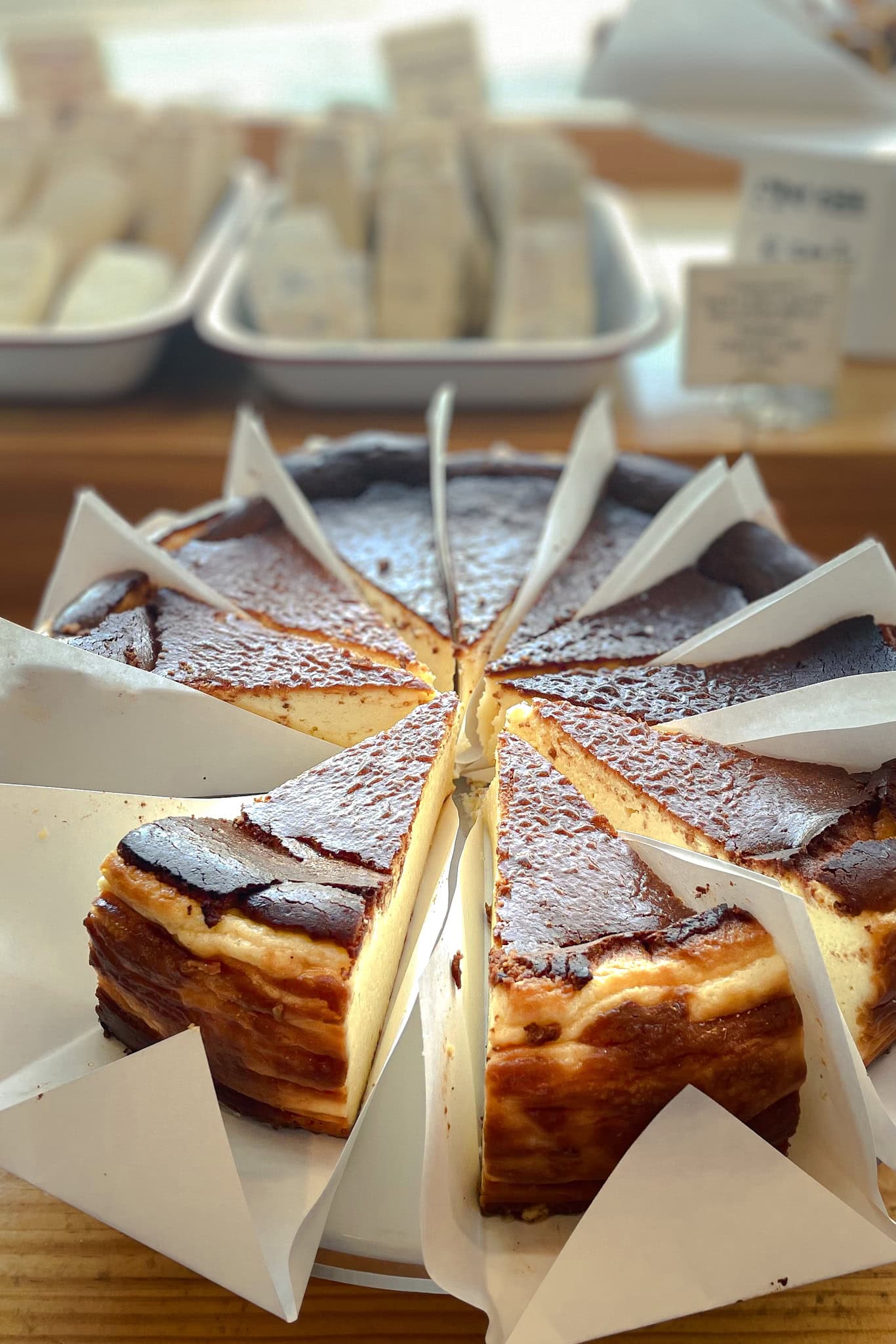
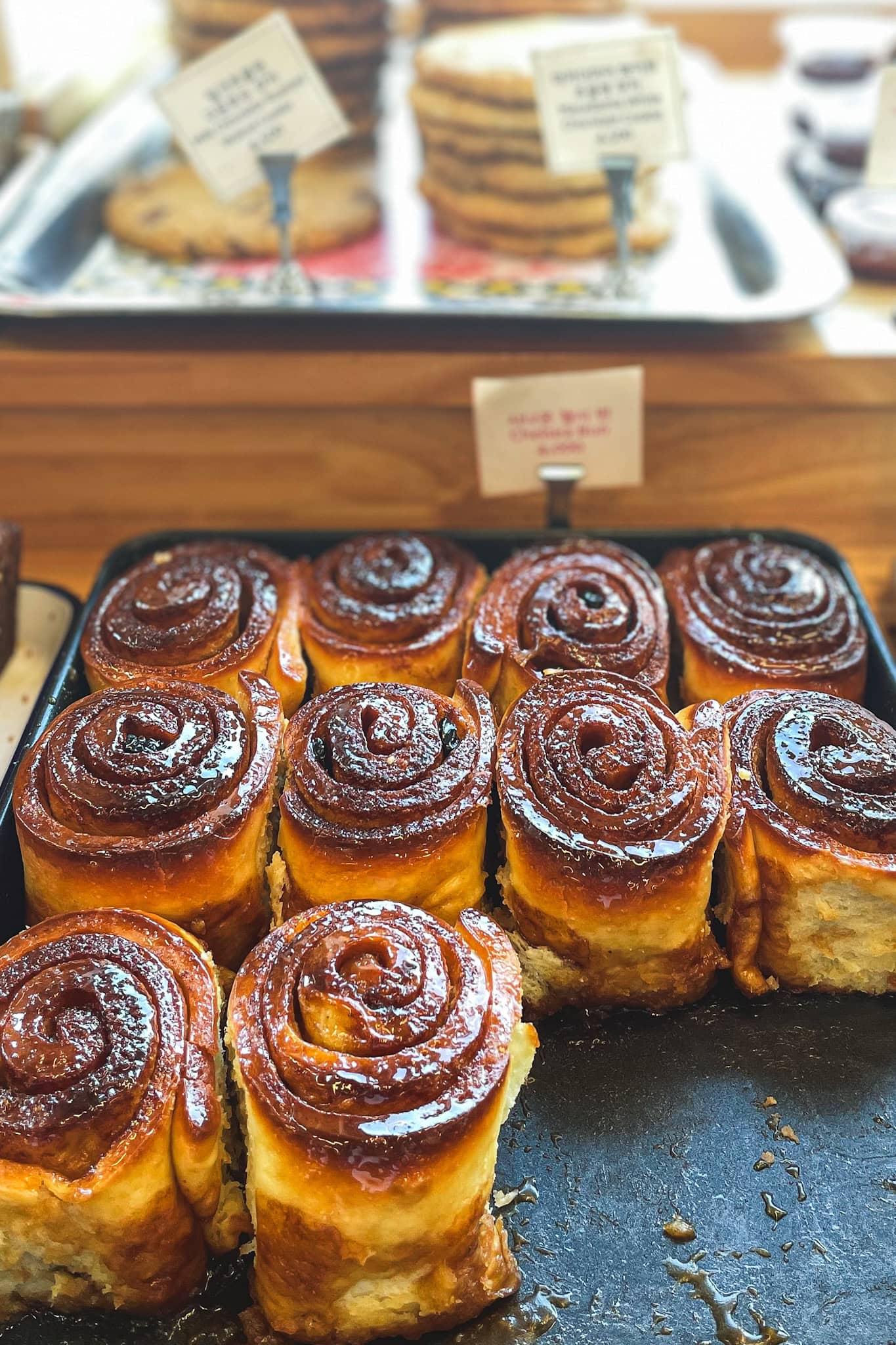
The shop was packed, both with customers and with baked temptation. Alongside the scones sat beautiful cakes, brownies, shortbread and all the usual suspects arranged with confidence.
We filled a tray with plain, butter, Earl Grey and chocolate scones and ordered them to take away. This was to be breakfast for the next morning with the Jin’s family at home.
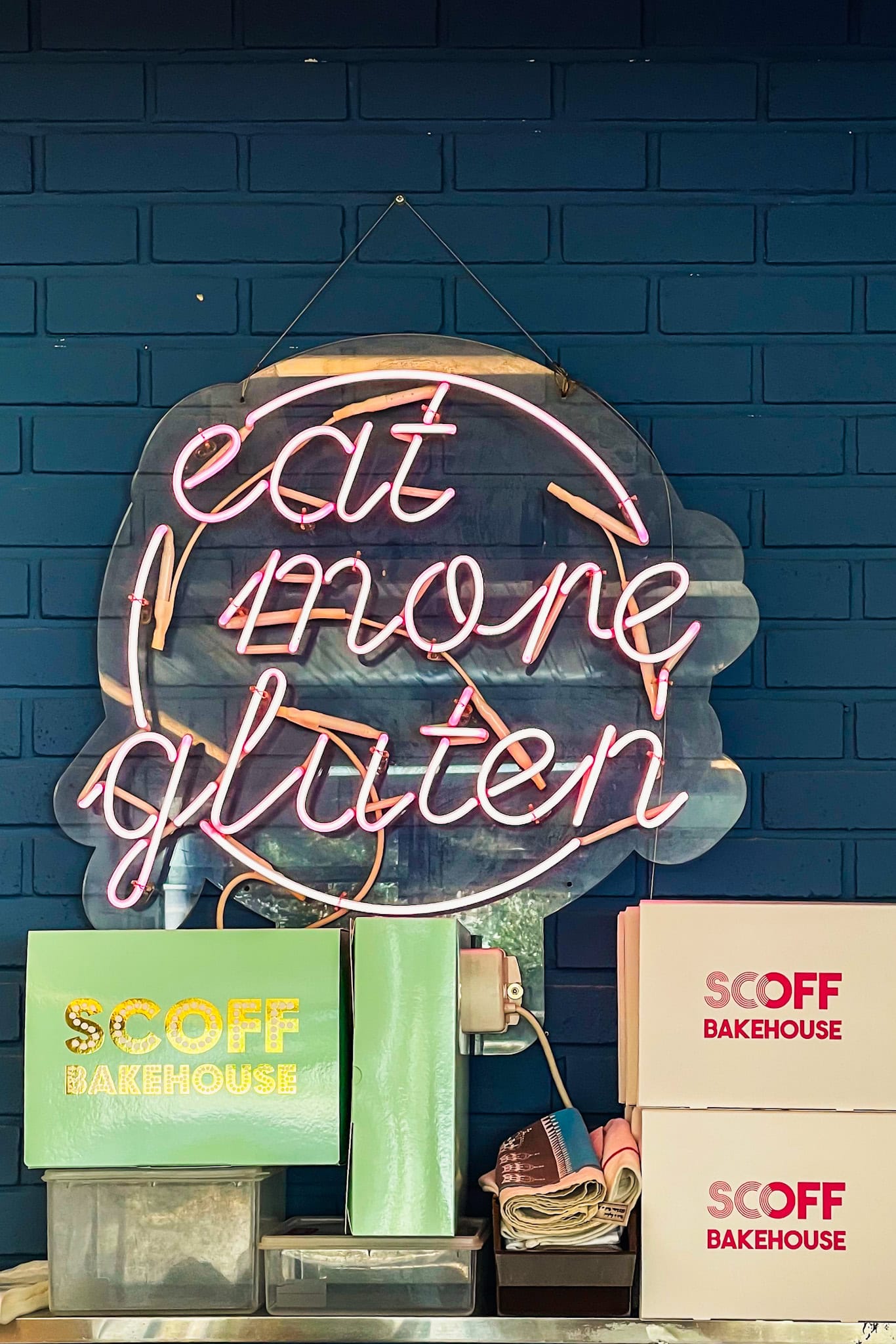
As everything was packed into a brown paper bag, I chuckled at the bold neon sign glowing behind the counter: Eat more gluten. Frankly, the world would be a better and noticeably happier place if we all followed this advice.
Side note: the Earl Grey scones were divine.
Changuimun Gate and Poet’s Hill
From Scoff, we wandered downhill and briefly stopped at Mom’s Kitchen to make a dinner reservation. We are practical like that.
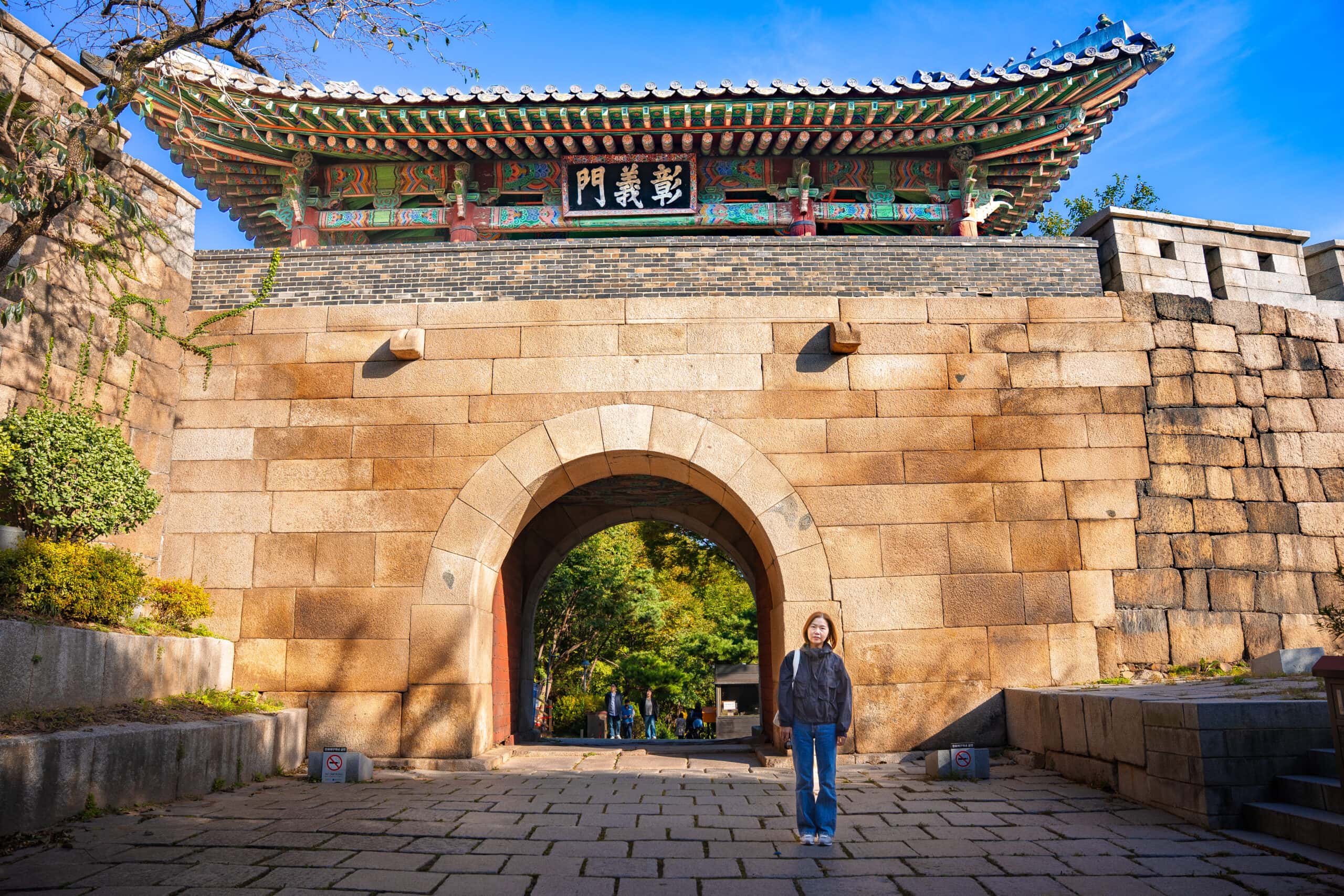
A few quirky shop fronts later, we arrived at Changuimun Gate, one of the original four small gates of the Seoul City Wall. We found ourselves almost alone in front of this 14th-century structure, and after taking a snap, wandered around the area.
Changuimun marks the official entrance to the Inwangsan hiking trails. A few determined walkers pass through here with proper footwear and admirable enthusiasm, but we were not among them. A punishing hike was not on the agenda.
Instead, we followed the road downhill along Inwangsan towards a very specific bookshop café with one of the best views in Seoul. On the way, we paused at Poet’s Hill, or Si-in-ui-ondeok, where a large rock bears the engraved poem Foreword by Yun Dong-ju, written in November 1941 (during the Japanese occupation of Korea).
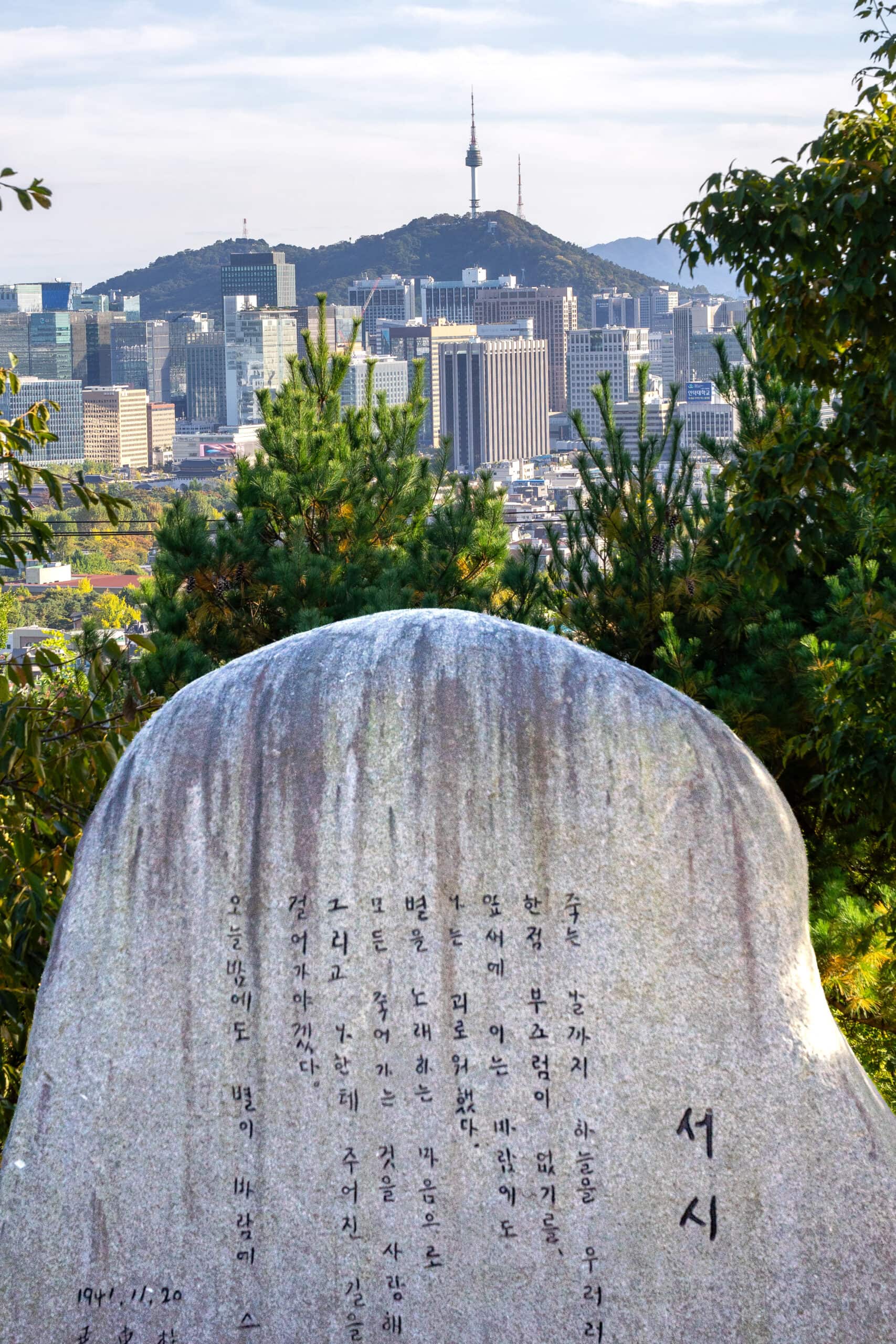
Foreword (Seosi)
Wishing not to have a speck of shame until the day I die,
I suffered, even when the wind stirred the leaves.
With a heart that sings of the stars,
I must love all dying things.
And I must walk the path
that has been given to me.
Tonight, again, the wind brushes the stars.
Often described as the most famous poem in Korean literature, it reflects his inner struggle and his hope for moral clarity during a dark period of history. Even in translation, the closing line stayed with me.
The Forest Chosochaekbang:
A Café with One of the Best Views in Seoul
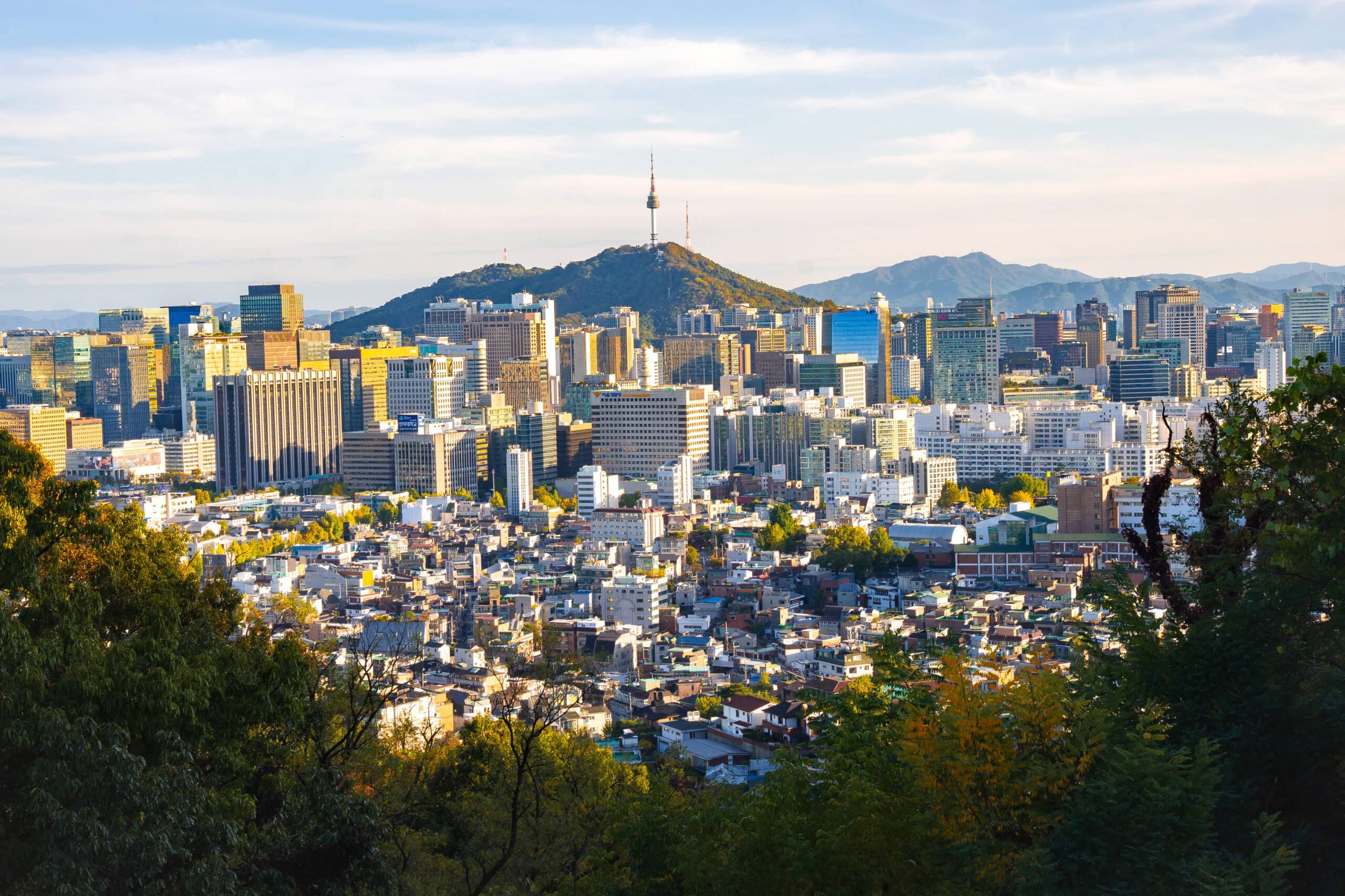
If you are looking for a café with one of the best views in Seoul, The Forest Chosochaekbang gets my vote. It sits with Inwangsan rising behind it and a sweeping view of central Seoul and Namsan unfolding in front. N Seoul Tower stands squarely in the middle of the skyline, perfectly framed as if the architect planned it that way.
Technically, this is a chaekbang, (bookshop), but we ignored the literary intentions completely. We ordered a coffee and a grapefruit ade, then made a direct and unapologetic move to the outdoor deck. While a regular bookshop might invite quiet reading, this one demands that you stare at the skyline.
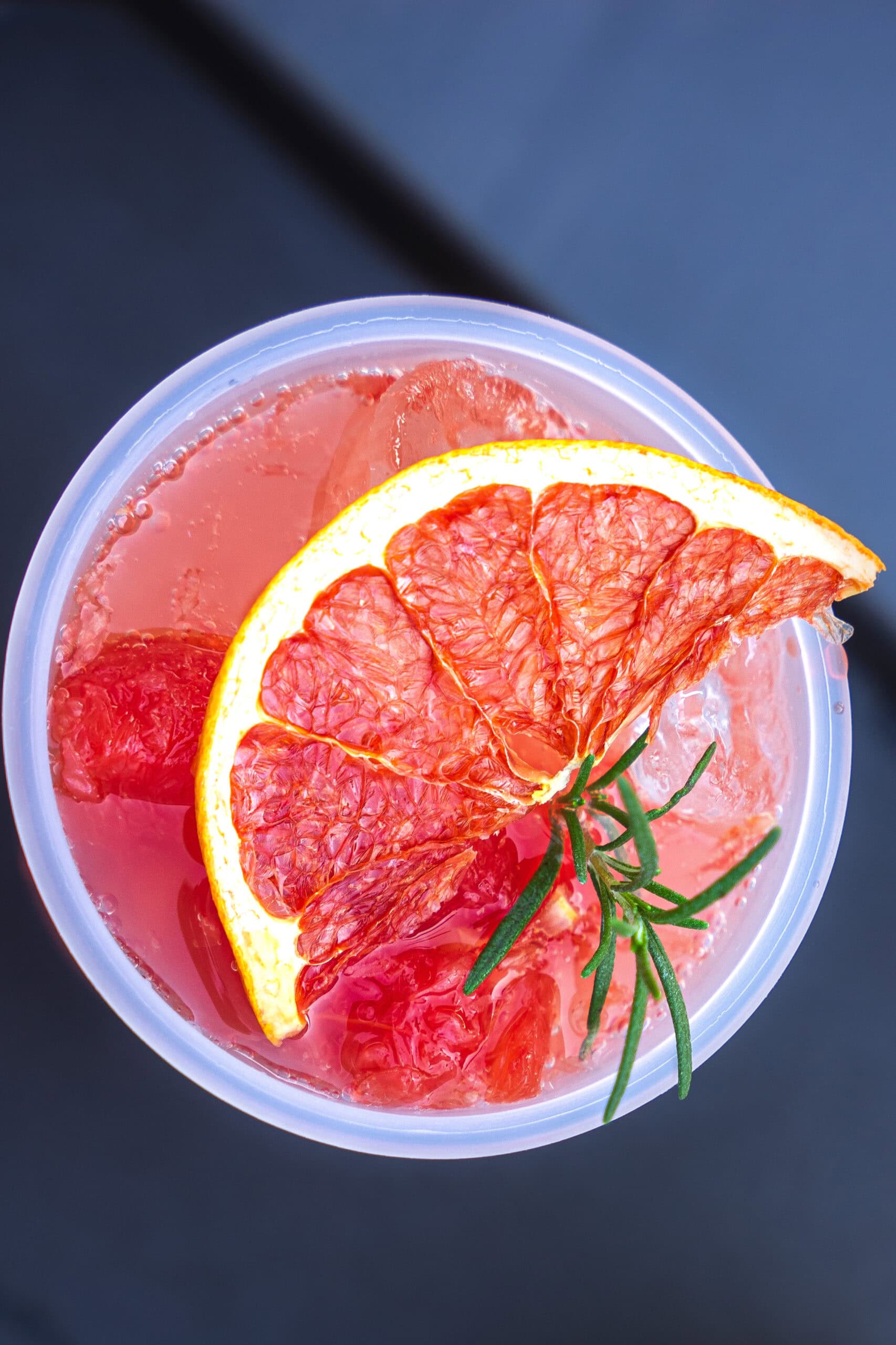
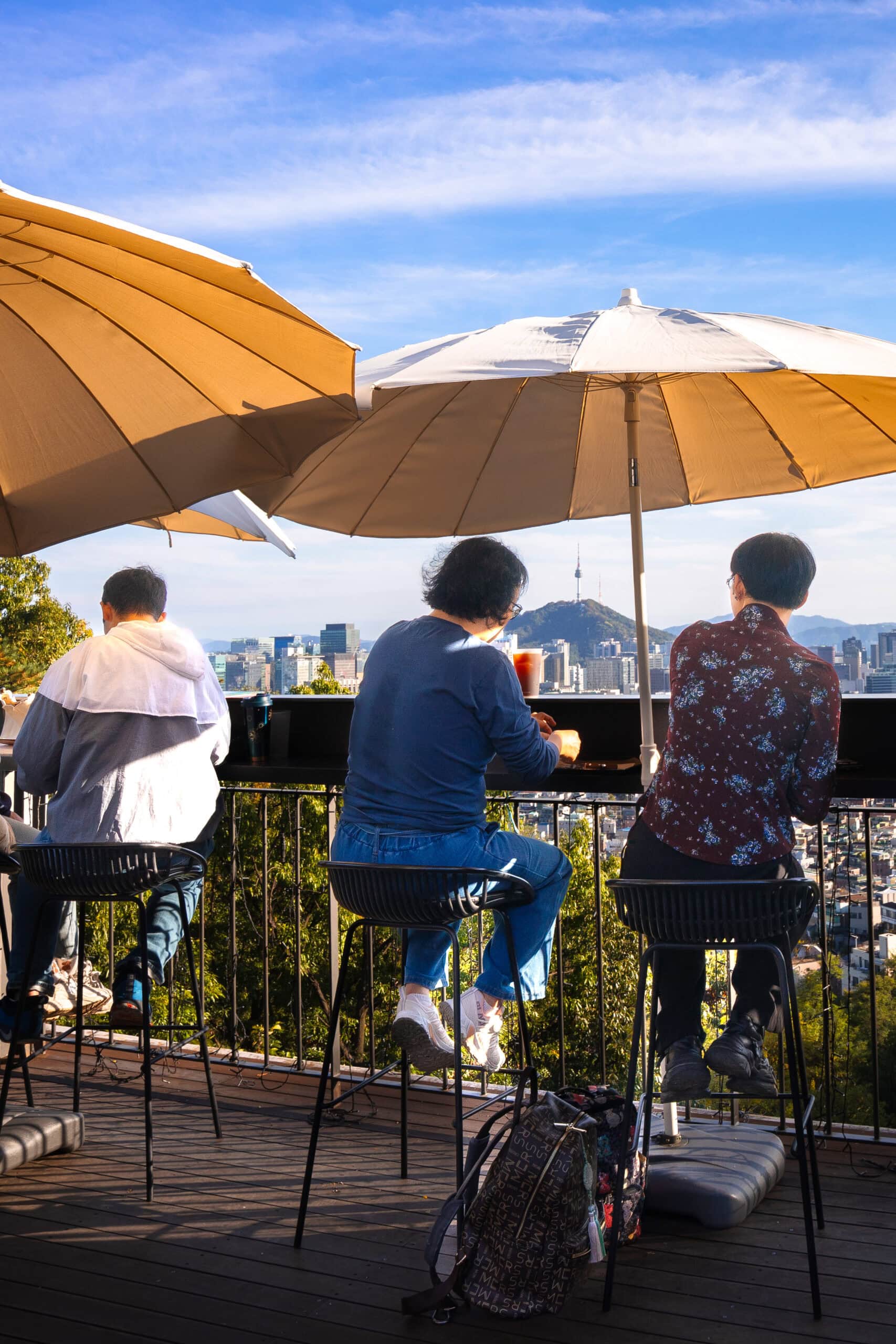
Grand views and good coffee aside, the building comes with a rather serious backstory. For more than fifty years, this was a fortified police guard post. It was built in the aftermath of the 1968 Blue House Raid, when North Korean commandos crossed the DMZ and made it onto these very slopes in an attempt to assassinate the president at Blue House.
The surrounding mountains were closed to the public for decades. In 2020, the barricades were finally removed, and the concrete structure was transformed into this glass-fronted café. A few original elements remain, including parts of the reinforced base and an old iron door.
Back Along the Wall & Waffles at Buam Waffle
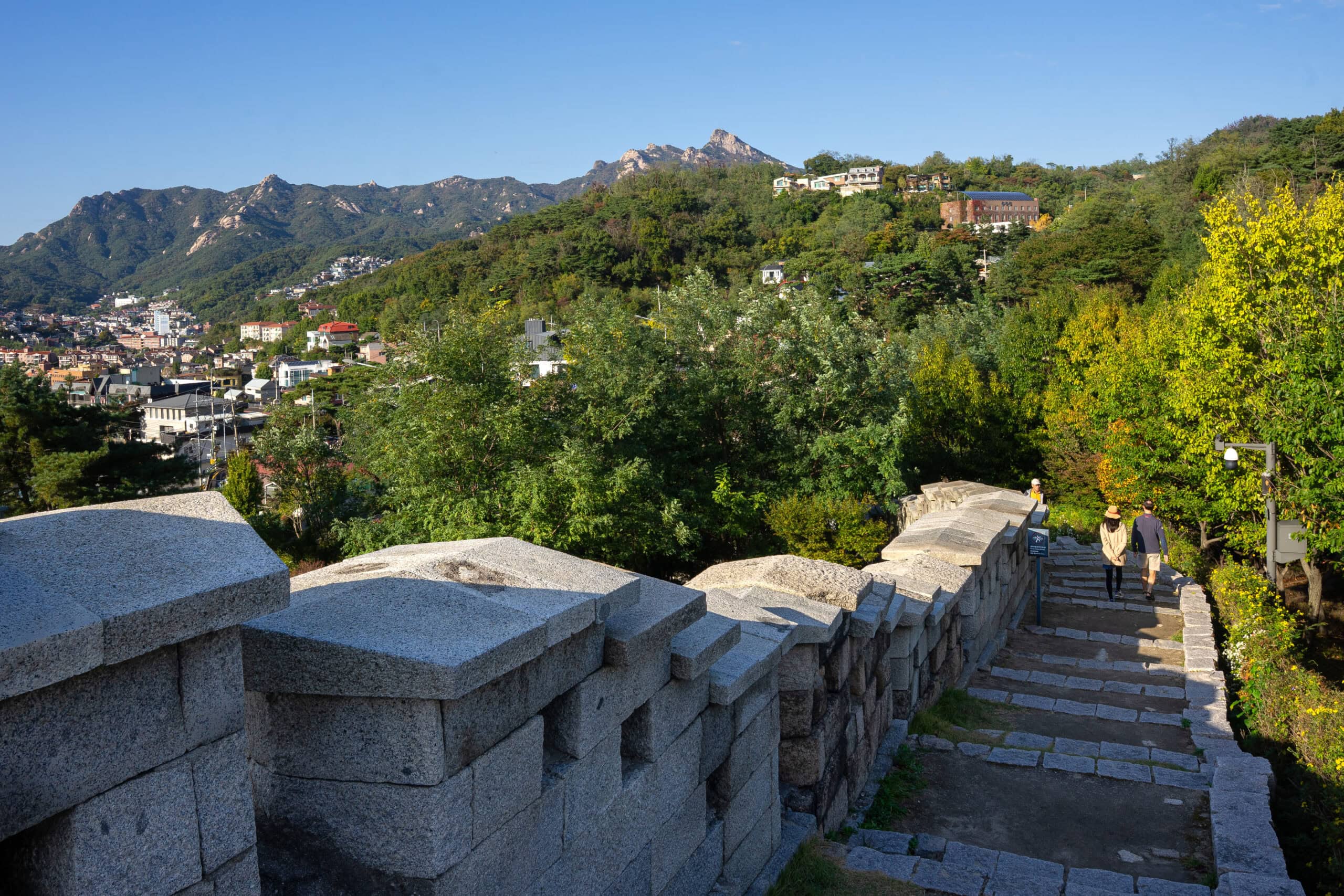
When the shadows got longer , we made our way down from Forest Chosochaekbang back towards Buam-dong. This time, we followed a stretch of the Seoul Fortress Wall instead of the road.
The granite blocks curve gently downhill, guiding you back towards the neighbourhood with views of rooftops and layered mountains ahead. It was an easy, unhurried walk. Exactly what Buam-dong does best.
Back in the neighbourhood, the sign for Buam Waffle caught our attention from a low building on the corner. We stopped immediately. Waffles rarely require discussion.
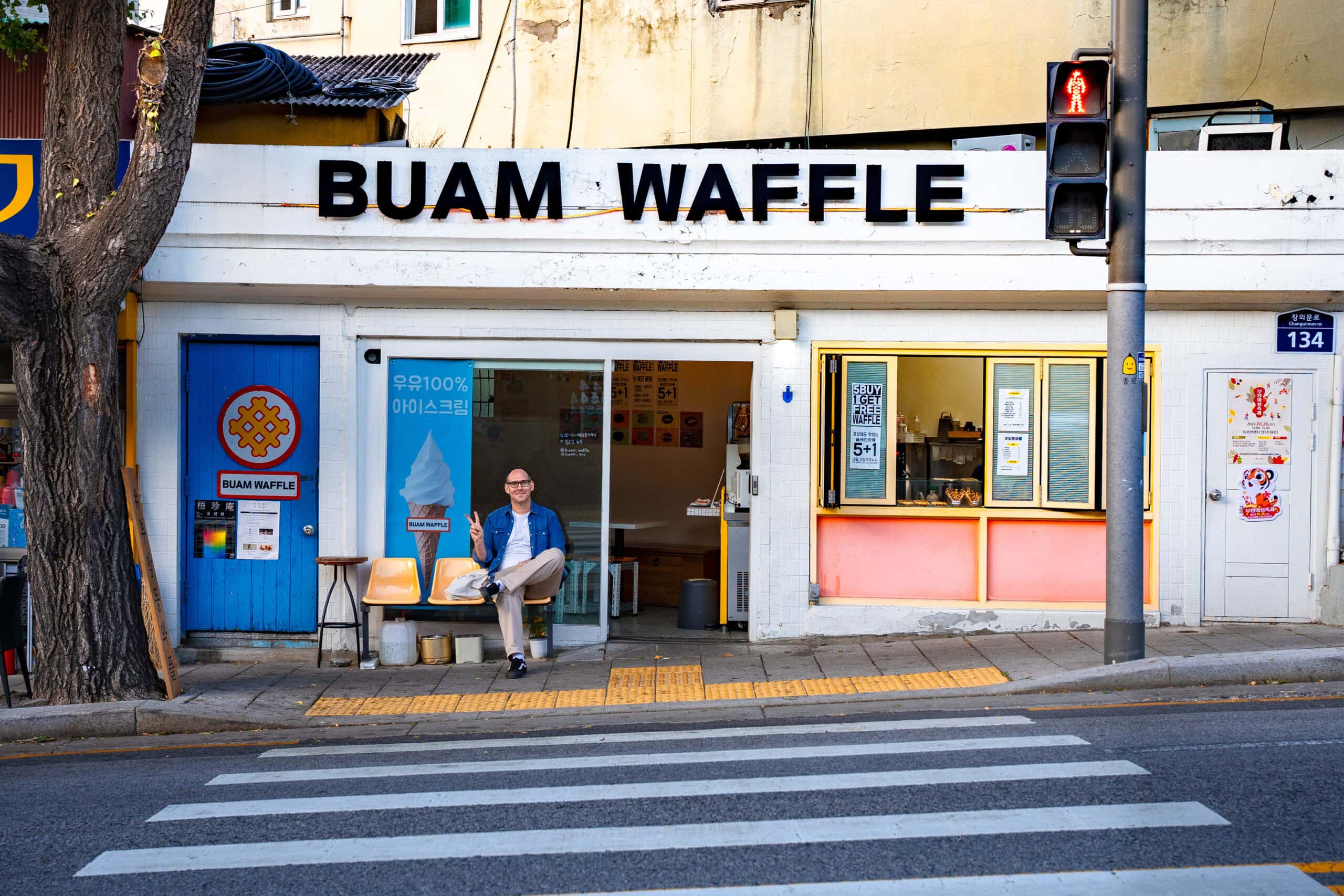
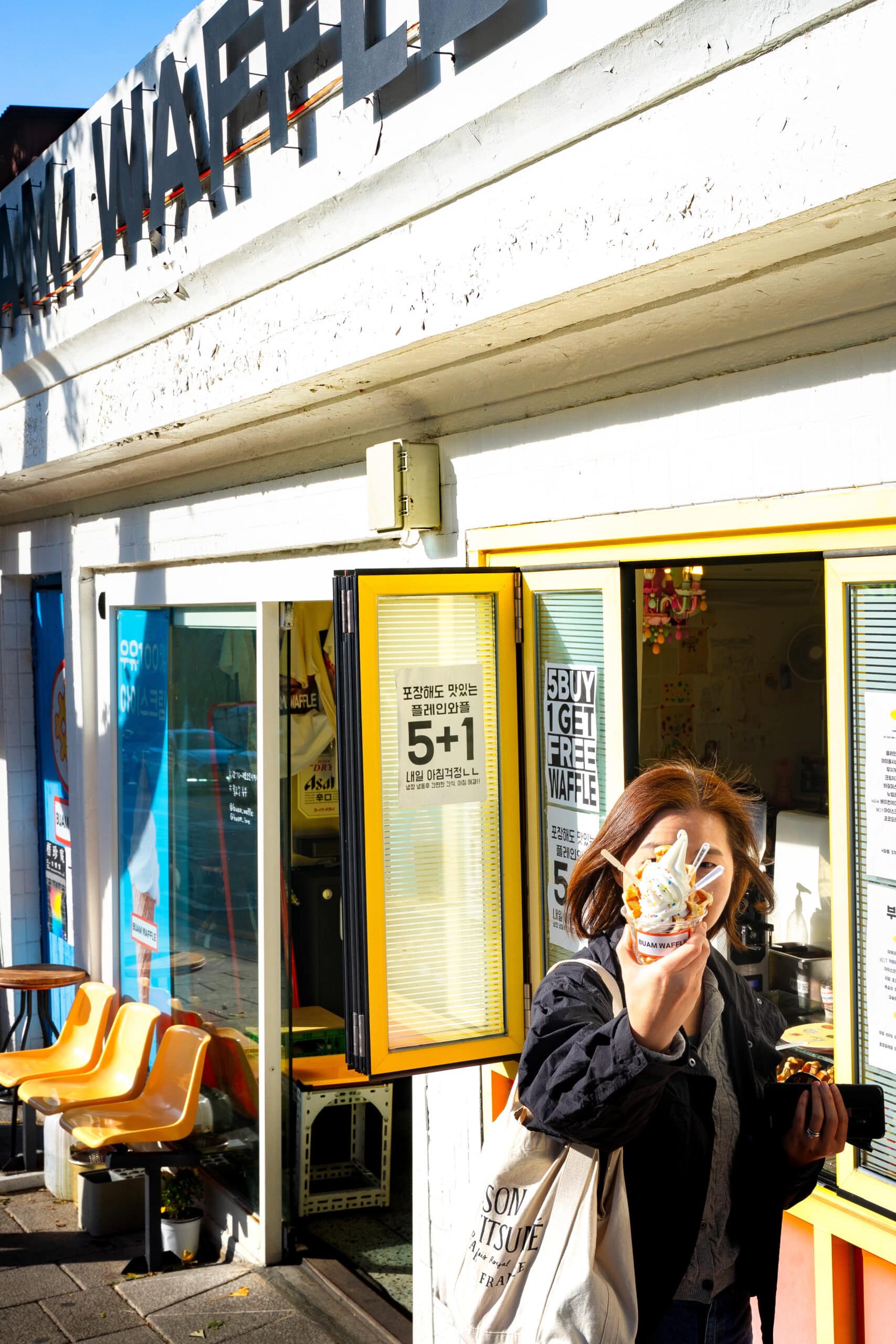

There is something slightly retro about that corner, slightly frozen in time. We ordered a cup of soft serve topped with colourful sprinkles and waffle strips and ate them outside on the pavement, standing there with melting ice cream and absolutely nowhere else to be.
Somehow it felt perfect.
Wandering Buam-dong Without a Plan
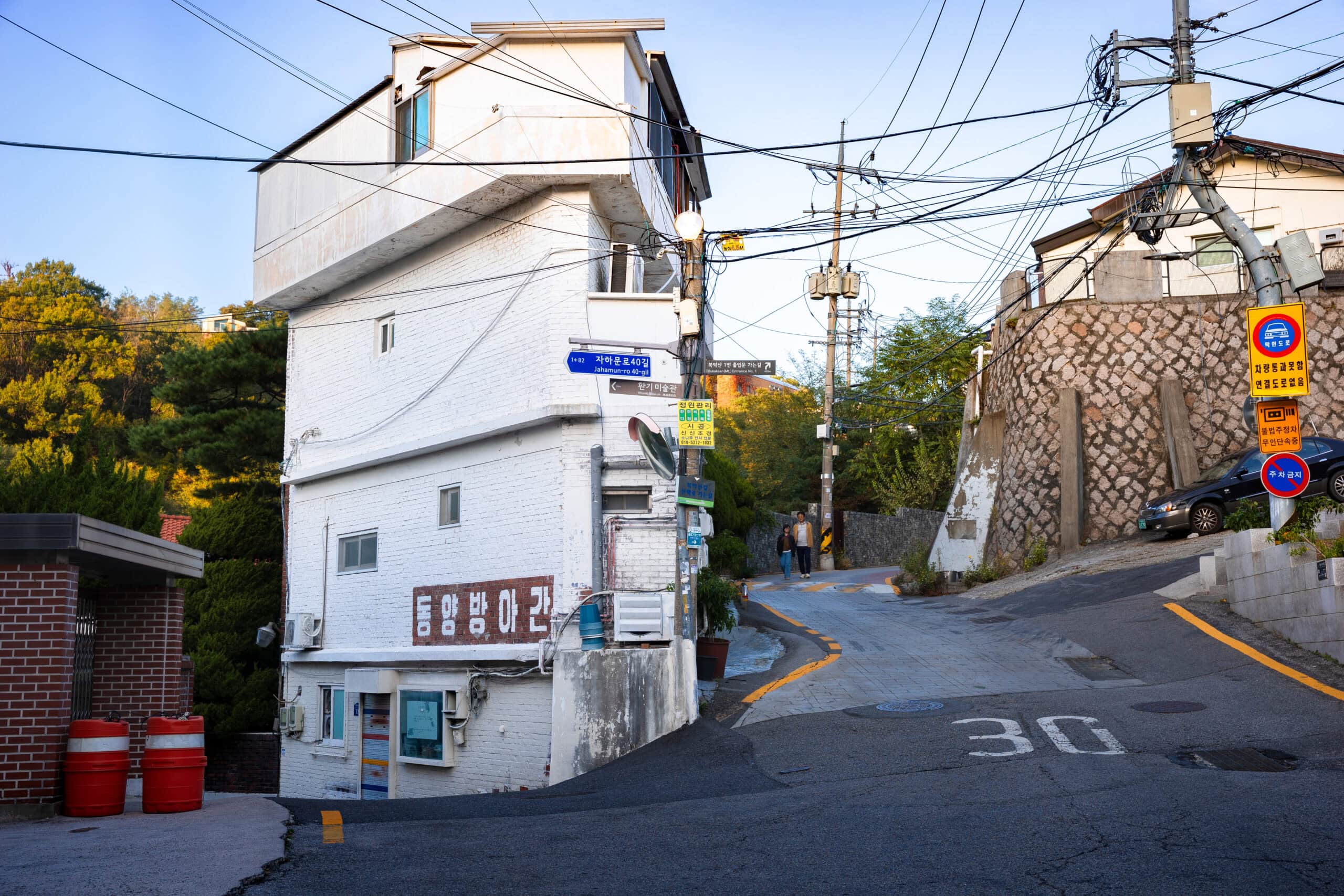
We still had some time before dinner, so we did what Buam-dong encourages you to do. We wandered.
This neighbourhood is built for slow walks and accidental discoveries. Small cafés appear when you least expect them. Narrow lanes pull you uphill. Most of it is residential, with the occasional gallery or museum quietly tucked between homes.
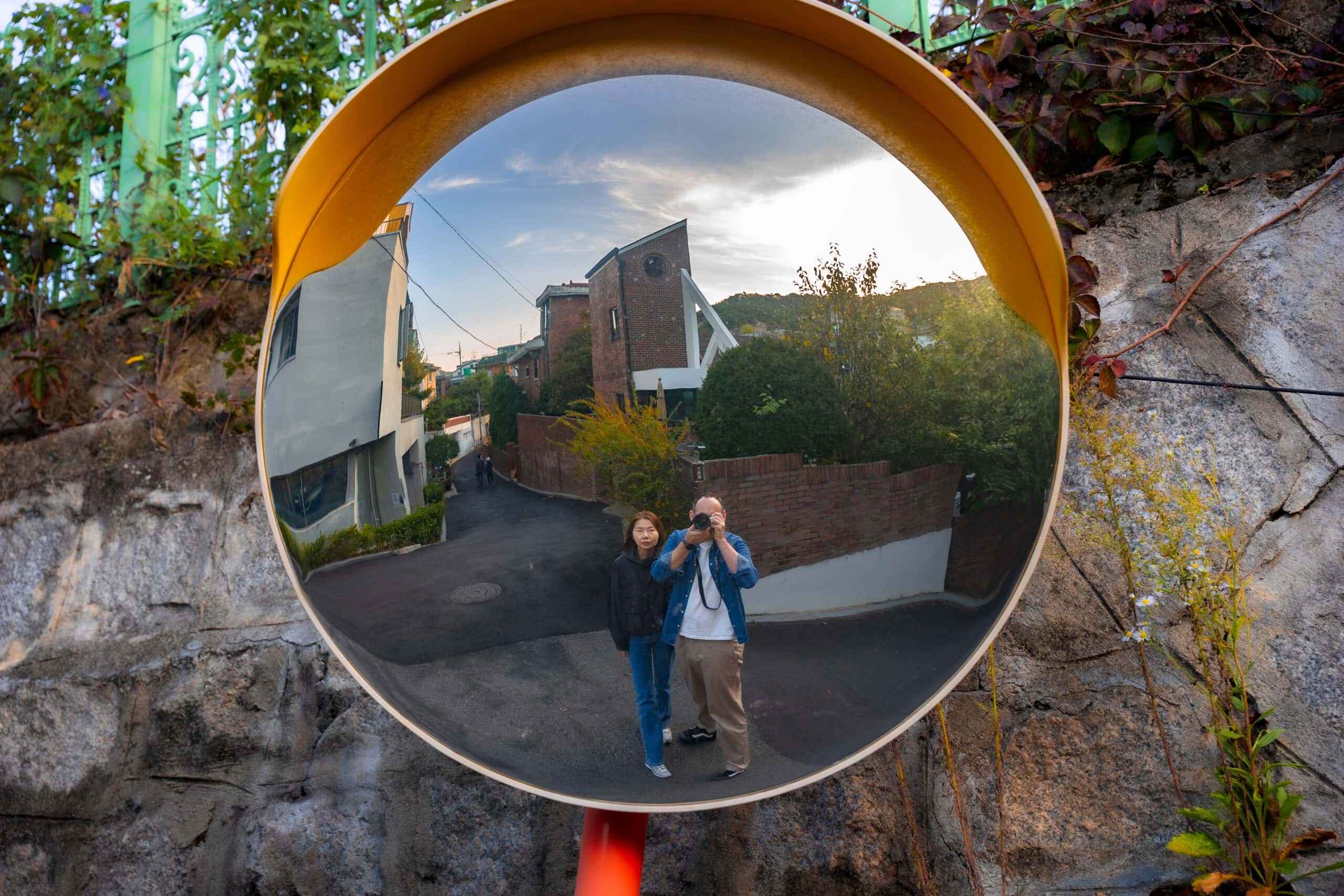
I was quite excited about the Whanki Museum.
It is dedicated to Kim Whanki, one of Korea’s most celebrated abstract artists, known for his meditative dot paintings and ultramarine canvases. The museum itself is considered an architectural work of art, and his later pieces have sold for record-breaking prices at auction.
When we saw the entrance fee of 20,000 won per adult, our enthusiasm disappeared. For that price, I can visit the Louvre or the Kunsthistorisches Museum in Vienna.
So we carried on uphill.
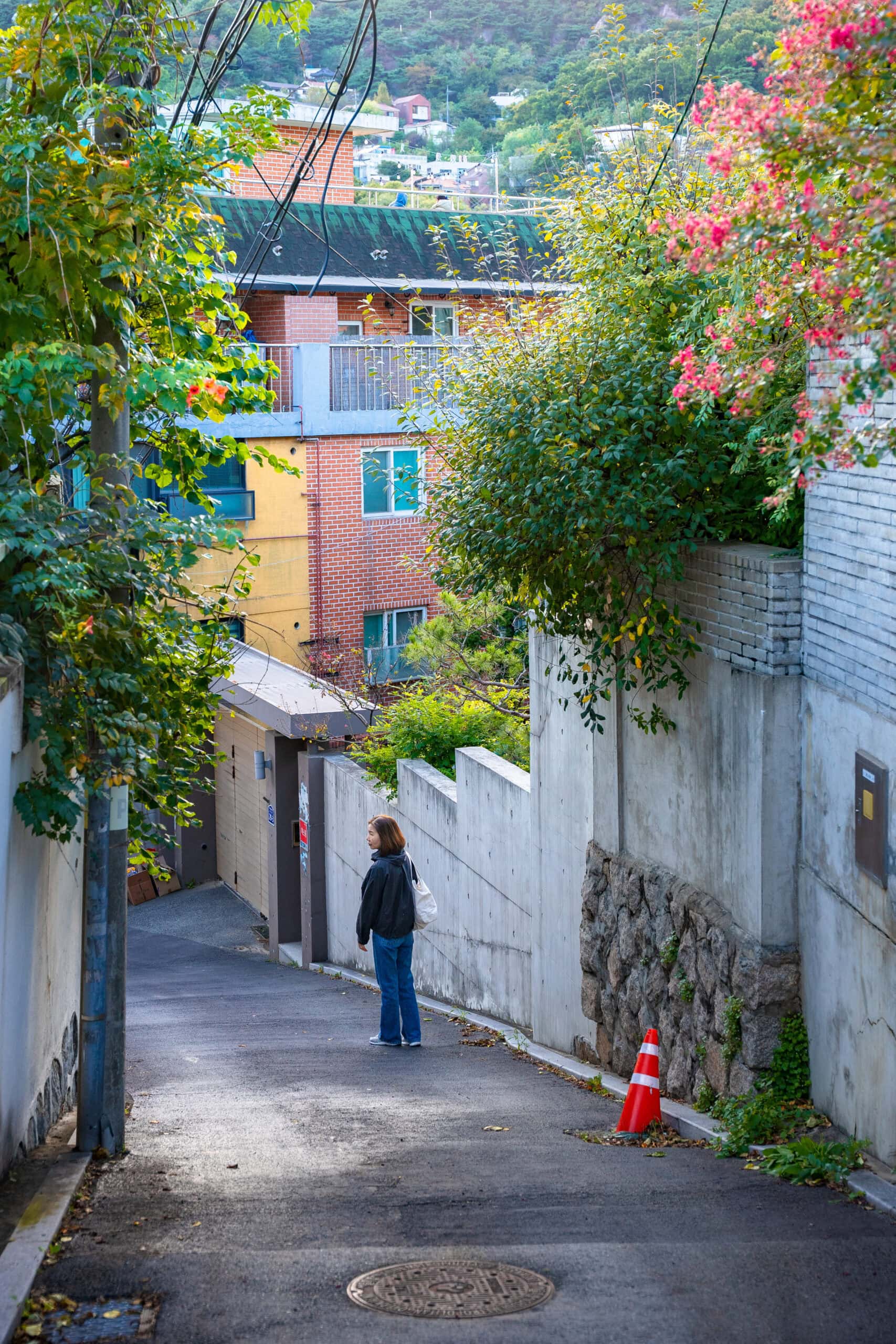
Further along, we passed a large brick building marked with the letters CCC. It had a slightly mysterious presence, like the setting of a television suspense drama where unexplainable events happen behind closed doors.
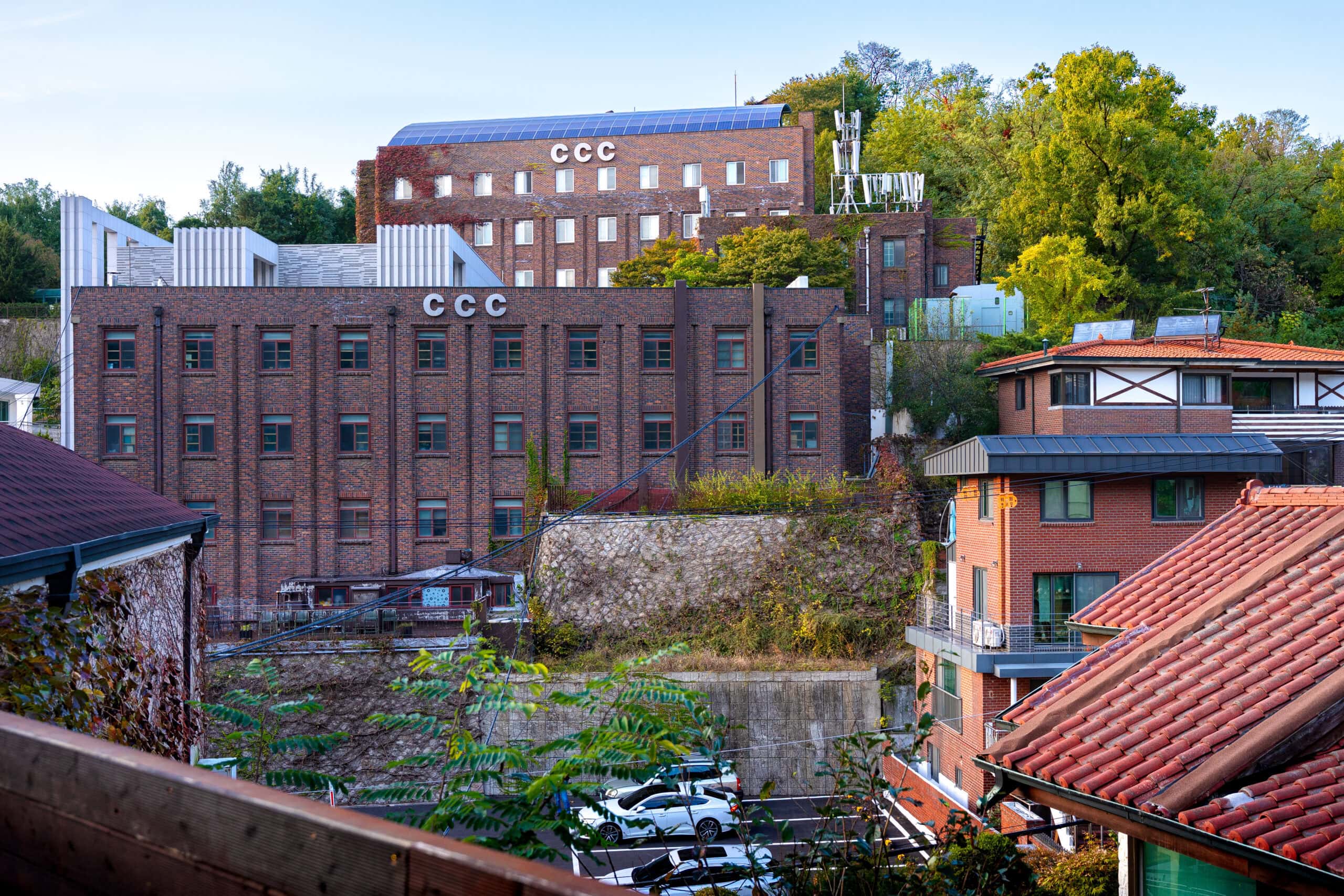
Jin told me it is the headquarters of Campus Crusade for Christ, known as the Soon Movement in the United States. Mystery solved. She also mentioned it’s seen as a bit of a cult in Korea.
Taking a stroll without a plan is one of the best things to do in Buam-dong, so do it slowly. The point is not to tick anything off, but rather just to see what you notice.
Dinner at Mom’s Kitchen
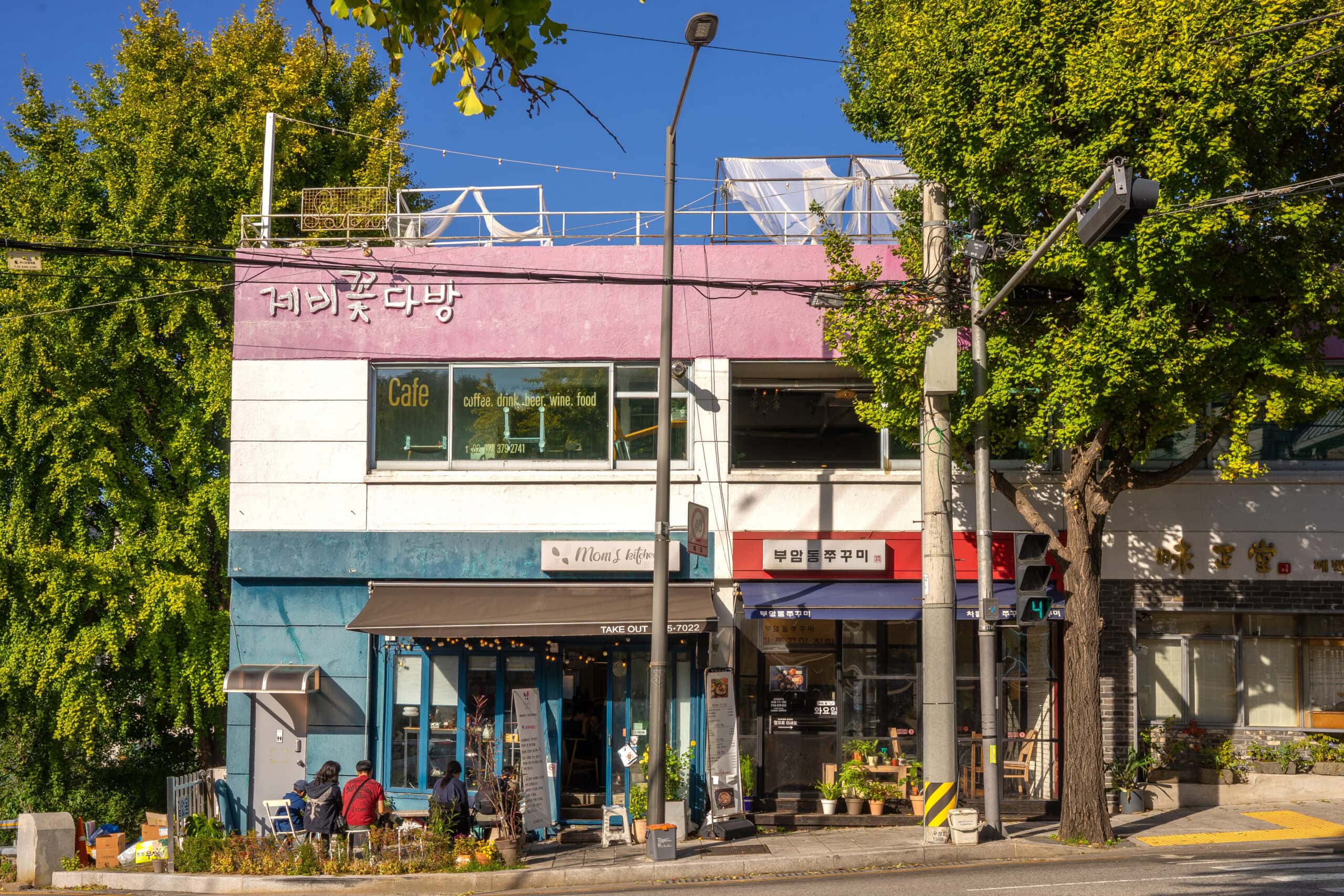
Buam-dong has a handful of well-known restaurants, which made choosing slightly stressful. There is the famous mandu spot, Jaha Son Mandu, the always-busy fried chicken institution Gyeyeolsa, and of course Sanmotoonge, better known to many as the Coffee Prince café. Options were plentiful. Decisions were not.
In the end, we went with Mom’s Kitchen, a quietly lovely Japanese restaurant run by Japanese Koreans. It felt in tune with the rest of the day. Unpretentious, calm, and confident in what it does.
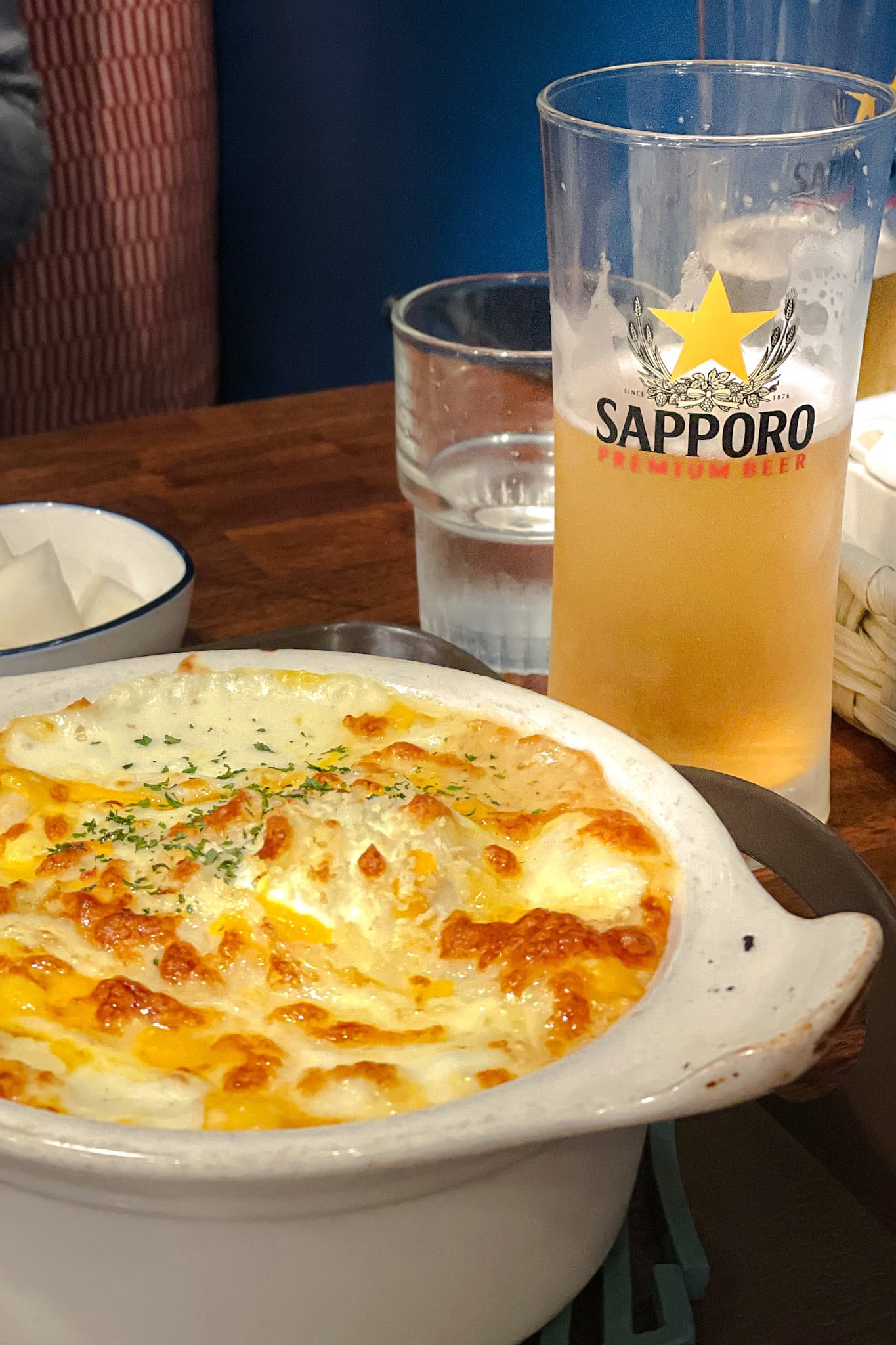
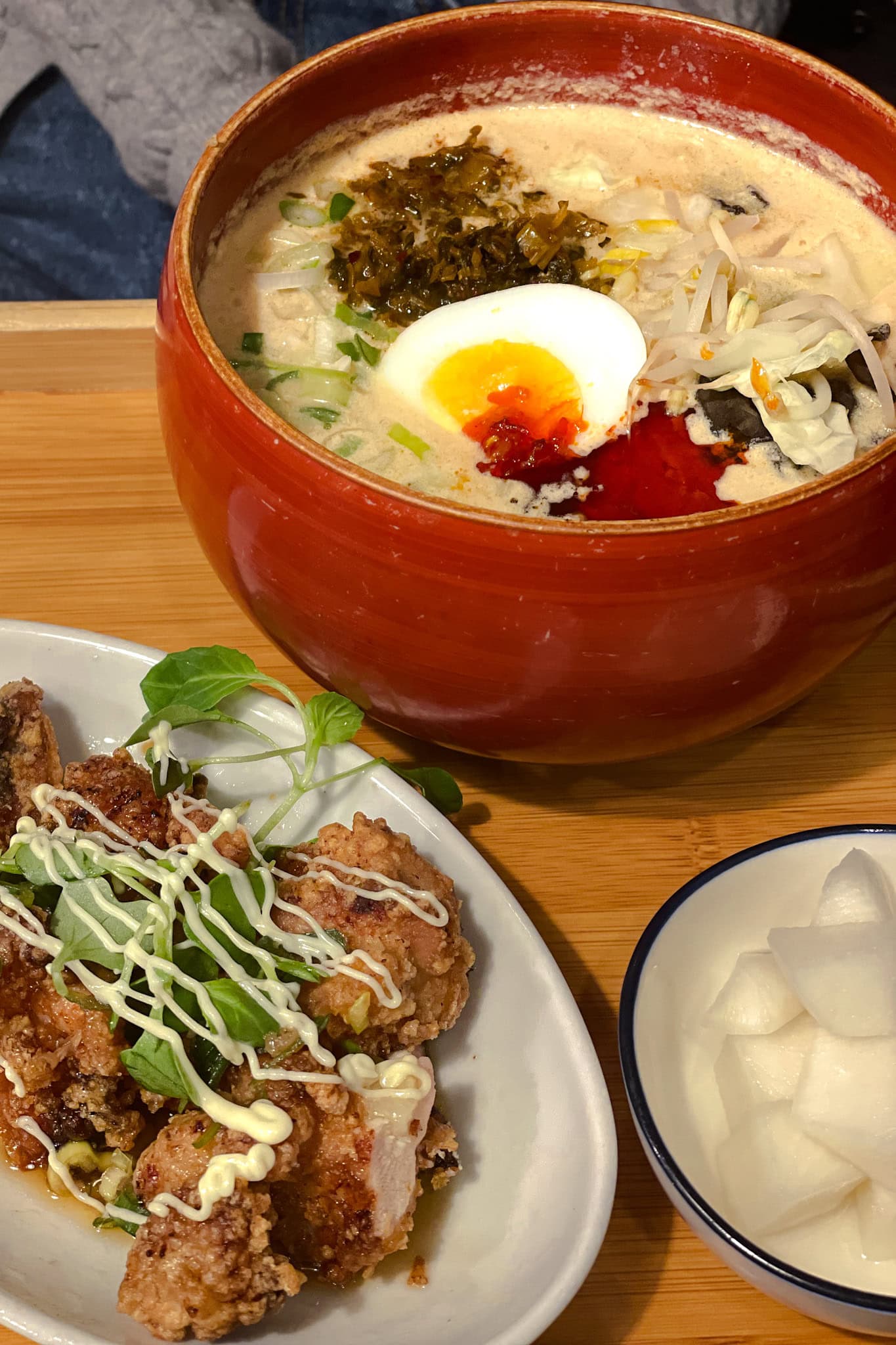
We started with Sapporo draught beers, which tasted particularly well-earned after a day of walking. Then came karaage, ramen, and their signature gratin. Everything hit the spot. The karaage was crisp and generous, the ramen comforting without trying to reinvent itself, and the gratin rich and cheesy enough to make you consider ordering it again immediately.
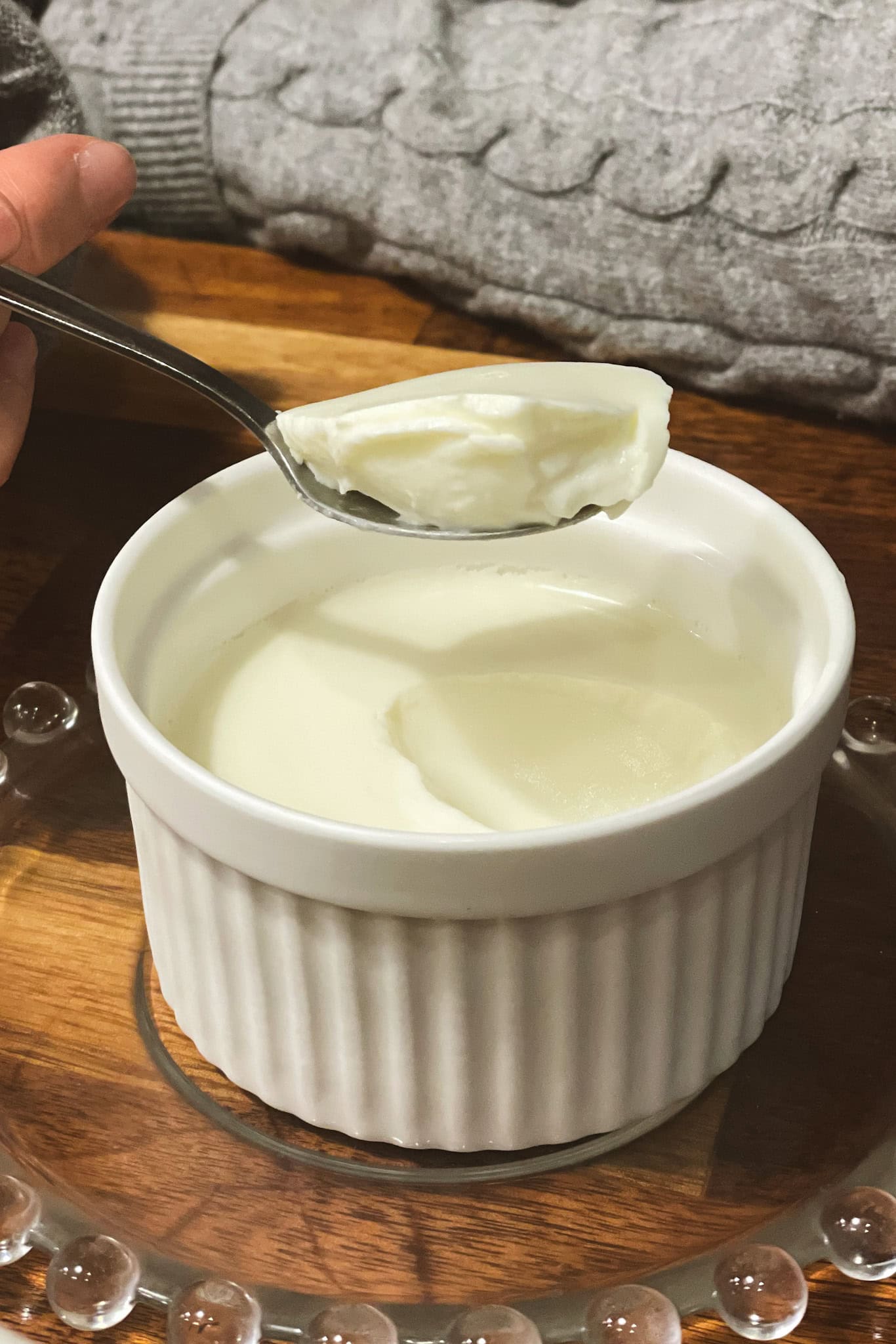
Naturally, we finished with milk pudding. It was every bit as good as the Ohayo milk puddings we became mildly obsessed with during our Japan trip and routinely bought from convenience stores.
Mom’s Kitchen mirrors Buam-dong in many ways. It moves at its own pace and rewards you for slowing down. It was exactly how we wanted to end our afternoon in Buam-dong.
Is Buam-dong Worth Visiting in Seoul?
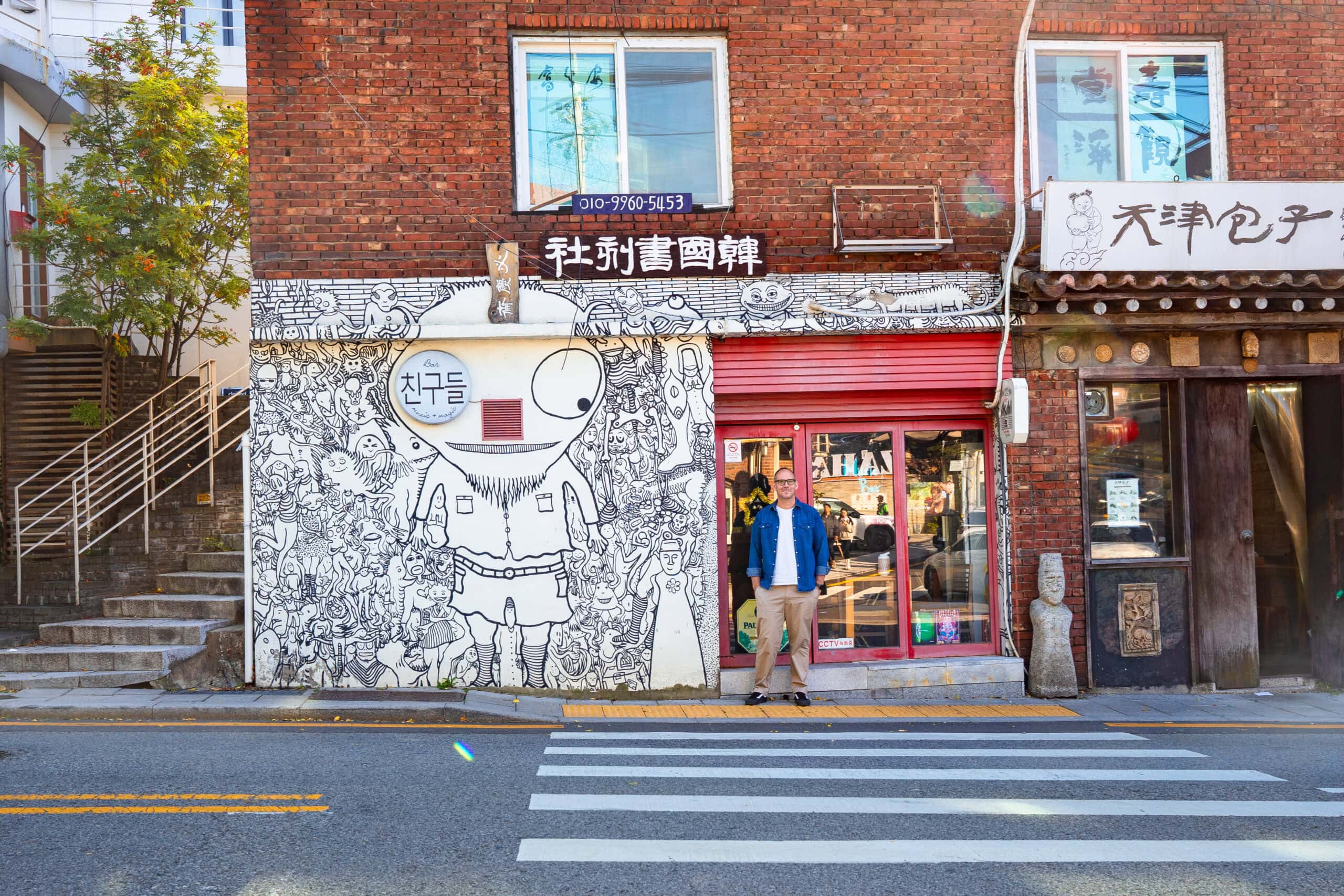
Is Buam-dong worth a visit? I hesitate slightly as I write this, because part of me would like to keep it exactly as it is. Quiet. Local. Slightly removed from the rush. But yes, it is absolutely worth it.
If you want to see a different side of Seoul, one that moves at a gentler pace and rewards you for slowing down, there is no better neighbourhood than Buam-dong. Come for the slow vibes and the mountain views, stay for the waffles, and let the afternoon unfold without a plan.
If you love quirky little neighbourhoods or hidden gems in Seoul, also put Mullae-dong on your list.
How I Shot This Guide
Every photograph in this article was taken with the exact same gear I carry on every journey. It is a setup refined over years on the road to keep travel light without compromising the final image.
- Camera: Sony A7 V
- Lens: Sigma 24-70mm f/2.8 DG DN Art
- Storage: SanDisk Extreme Portable SSD
- Software: Adobe Lightroom Classic
- Outerwear: The North Face Canyonlands Hybrid Jacket