
I’ve flown from Johannesburg to Seoul more times than I can remember. Usually, the experience starts the same way. Board the plane, turn right and settle into another economy seat for the long trip ahead.
This time, I turned left.
A few minutes later I had a glass of bubbly in my hand before we’d even pushed back from the gate. Safe to say this wasn’t my usual flight.
What made it even better was that I didn’t actually pay for it. I redeemed a stash of Asiana Club miles and only paid US$35 in taxes. That has to be one of the best value flight redemptions I’ve ever made.
This Ethiopian Airlines Business Class review is based on the journey I took from Johannesburg to Addis Ababa, then onwards to Seoul. I flew on two completely different aircraft, which meant two quite different Business Class experiences. I also had a seven-hour layover in Addis Ababa, which gave me plenty of time to explore the Sheba Cloud Nine Lounge.
If you’ve read my Ethiopian Airlines Economy Class review, you’ll know I’ve been banging the drum for Ethiopian Airlines for a while now. I still think it’s one of the most underrated airlines flying to and from Africa.
If you’re wondering whether Ethiopian Airlines Business Class is worth it, the answer depends a lot on which aircraft you end up flying.
Here’s how the journey unfolded.
My Ethiopian Airlines flight details:
Johannesburg to Addis Ababa
Flight number: ET848
Aircraft: Boeing 787 Dreamliner
Seat: 2L
Flight duration: 5h 25m
Addis Ababa to Seoul (Incheon)
Flight number: ET 672
Aircraft: A350
Seat: 6A
Flight duration: 11h 25m
Please note: This post may contain affiliate links. This means I may earn a commission if you make a purchase by clicking a link (at no extra cost to you). As an Amazon Associate, I earn from qualifying purchases. Learn more.
Disclaimer: Neither Ethiopian Airlines nor anyone else is paying us for this review of my flight experience. I paid the full fare and am not affiliated with Ethiopian in any way. This Ethiopian Airlines business class review reflects my personal experience and opinion.
How I Flew Ethiopian Airlines Business Class for Free
Well, almost free.
I’ve been a loyal Asiana Club member since 2009. Every flight I could, I credited to Asiana. I also used my Hana Bank credit card strategically to earn even more miles. Over the years those miles paid for a couple of economy flights, but after that we decided to stop spending them. Instead, we let them pile up for something a little more exciting.
The original plan was to use them on a dream trip somewhere like Tahiti, or perhaps splurge on a long haul business class flight. Then Asiana announced its merger with Korean Air. As part of the merger, Asiana will leave Star Alliance in December 2026. Suddenly my stash of 145,000 miles had an expiry date.
It was time to cash in.
I opened the Asiana app and started searching for award flights. The app is clunky and doesn’t actually let you complete a redemption booking on Star Alliance partners. Instead, Jin called the Asiana office in Seoul and spoke to one of their agents in Korean.
In theory, there were a few options to get me from Johannesburg to Seoul in business class on Star Alliance. I could fly Air China via Shenzhen and Beijing, or route through Singapore. I’d been dreaming of Singapore Airlines Business Class for years, but there wasn’t a single redemption seat available for months on either carrier. Apparently, getting a Singapore redemption ticket in business class using Star Alliance miles is a bit of a unicorn.
The agent’s next suggestion was Ethiopian Airlines.
Deal.
A few minutes later, 75,000 Asiana Club miles disappeared from my account. In return, I received an e-ticket for Ethiopian Airlines Business Class from Johannesburg to Seoul via Addis Ababa. The only cash I had to pay was 56,700 Korean won (about US$35) in taxes.
One small hiccup came after the booking confirmation landed in my inbox. My e-ticket included a reservation number, but the Ethiopian Airlines website refused to recognise it when I tried to log in and choose my seats.
A quick online chat with Ethiopian Airlines customer support solved the mystery. The agent gave me the Ethiopian booking reference linked to my ticket, which was different from the reservation number on my eTicket. Once I entered that, I could log in, manage my booking and choose my preferred seats without any issues.
Business Class Check-In at Johannesburg
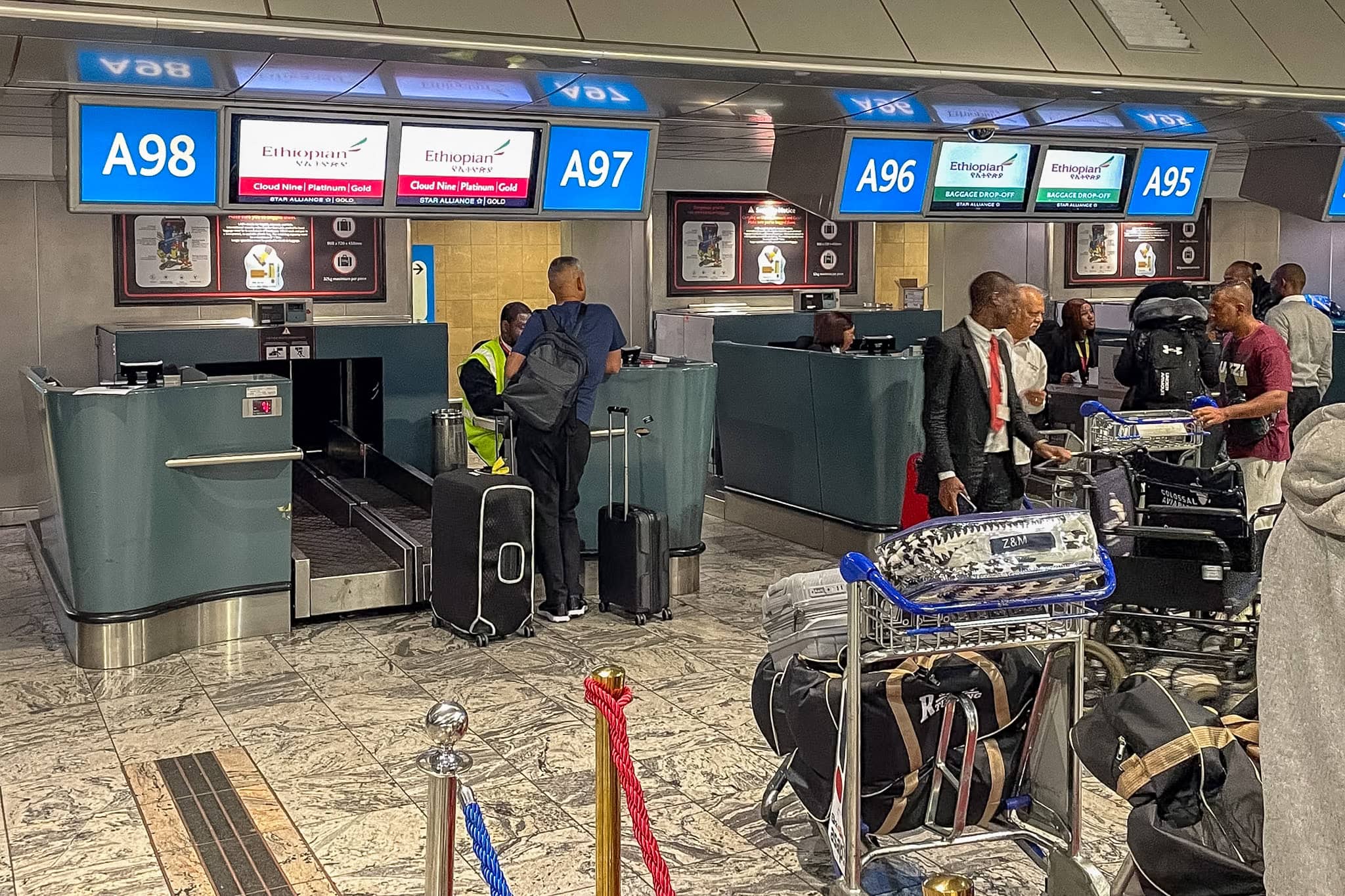
Flight ET848 was scheduled to depart OR Tambo International Airport at 8:20. I arrived at the Ethiopian Airlines check-in counters just after 5:00. A red carpet leading to the dedicated Business Class counter made it pretty obvious where I was supposed to go. It was my first taste of travelling up the front.
Despite arriving more than three hours before departure, there were already a handful of people waiting at both the economy and business class counters.
Check-in itself was quick and friendly. Since I was travelling to Seoul on a one-way ticket, the agent asked to see proof of my onward travel before issuing my boarding pass. I already had flights booked from Seoul to Adelaide a week later, so that was easily sorted.
My suitcases were tagged for priority handling, which hopefully meant I’d be reunited with them a little sooner in Seoul. Business class passengers are allowed two checked bags weighing up to 32 kg each.
Before I left the counter, the agent explained that I could use either the Shongololo Lounge or the South African Airways Lounge before departure. He handed back my passport with one last genuine smile before I headed towards immigration.
Lounge Access at Johannesburg
It wasn’t even 6:00 when I wandered airside at OR Tambo International Airport. The international terminal wasn’t fully awake yet.
As a complete newbie to the lounge world, I had done some research the night before. A quick SAA Lounge vs Shongololo Lounge Google search suggested that Shongololo was the better option, so that was where I headed.
The Shongololo Lounge sits down a corridor that looks like it might lead nowhere. When I finally reached the entrance, I discovered it was still closed. Backtracking towards the main departure area, I found the South African Airways Lounge instead.
Even from the outside, it felt more welcoming and confident than Shongololo. The lounge itself is large and comfortable, with plenty of seating and a surprisingly good breakfast spread. There were baked goods, pastries, cheeses, fresh fruit and a hot buffet available.
The bar only starts serving alcohol from 10:00. Probably for the best. I don’t normally wake up craving a beer or a glass of wine at 6:00 in the morning, but airports have a funny way of making unusual decisions feel completely reasonable. I went with a strong flat white instead, which was exactly what I needed.
Say what you will about SAA and OR Tambo, but the genuine friendliness of the staff in the SAA Lounge was a great reminder of what makes South Africa such a great place. The smiles and chats felt much more personal than the usual polished but distant airport service you often find elsewhere.
The WiFi worked well throughout the lounge. The morning started off quietly, but as the sun rose, more passengers started arriving. Even then, it never felt crowded or difficult to find a comfortable spot.
Johannesburg to Addis Ababa on Ethiopian Airlines Business Class (Boeing 787 Dreamliner) Review
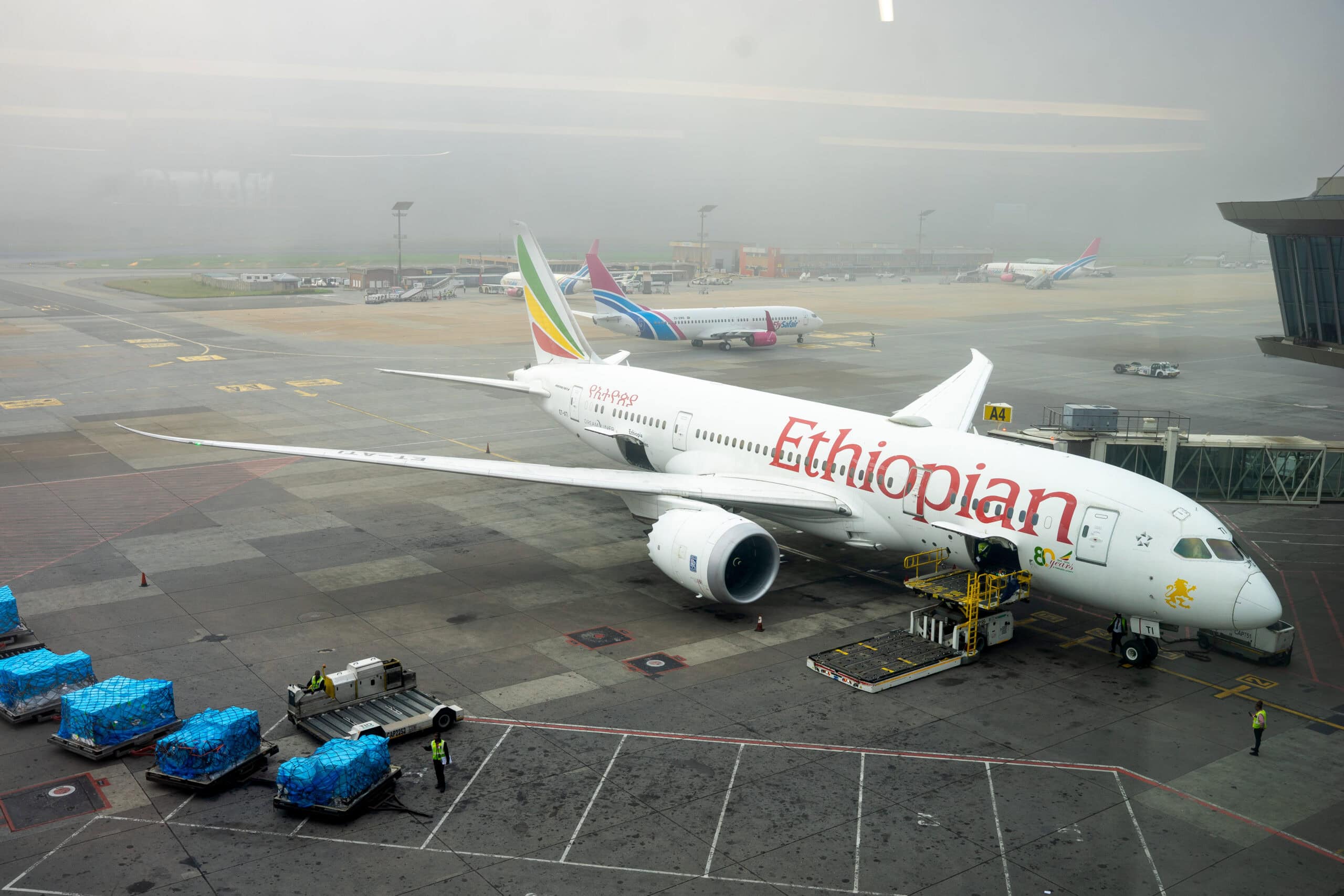
The first leg of my journey, flight ET848 from Johannesburg to Addis Ababa, was operated by a Boeing 787 Dreamliner. I’ve flown on the Dreamliner before, so I was already familiar with its party trick. Instead of pulling down a window shade, you simply press a button and the window magically tints darker.
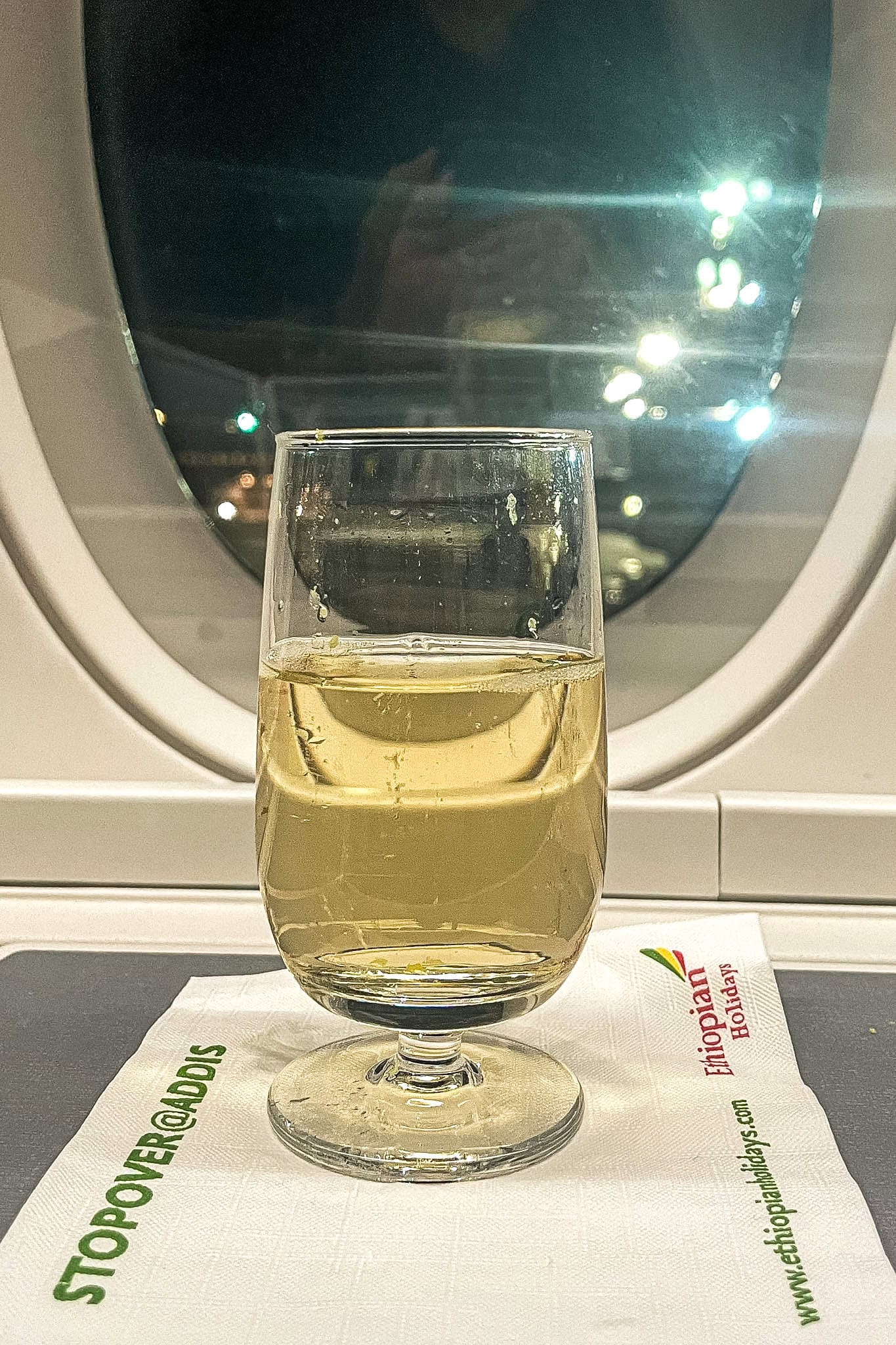
Boarding was relaxed and the welcome from the crew felt genuine. It wasn’t the rehearsed smile you sometimes get on airlines. Everyone I interacted with seemed genuinely pleased to have me on board. I enjoyed a glass of real bubbly while getting to know the seat and cabin.
Ethiopian Airlines Business Class Seat (Boeing 787 Dreamliner)
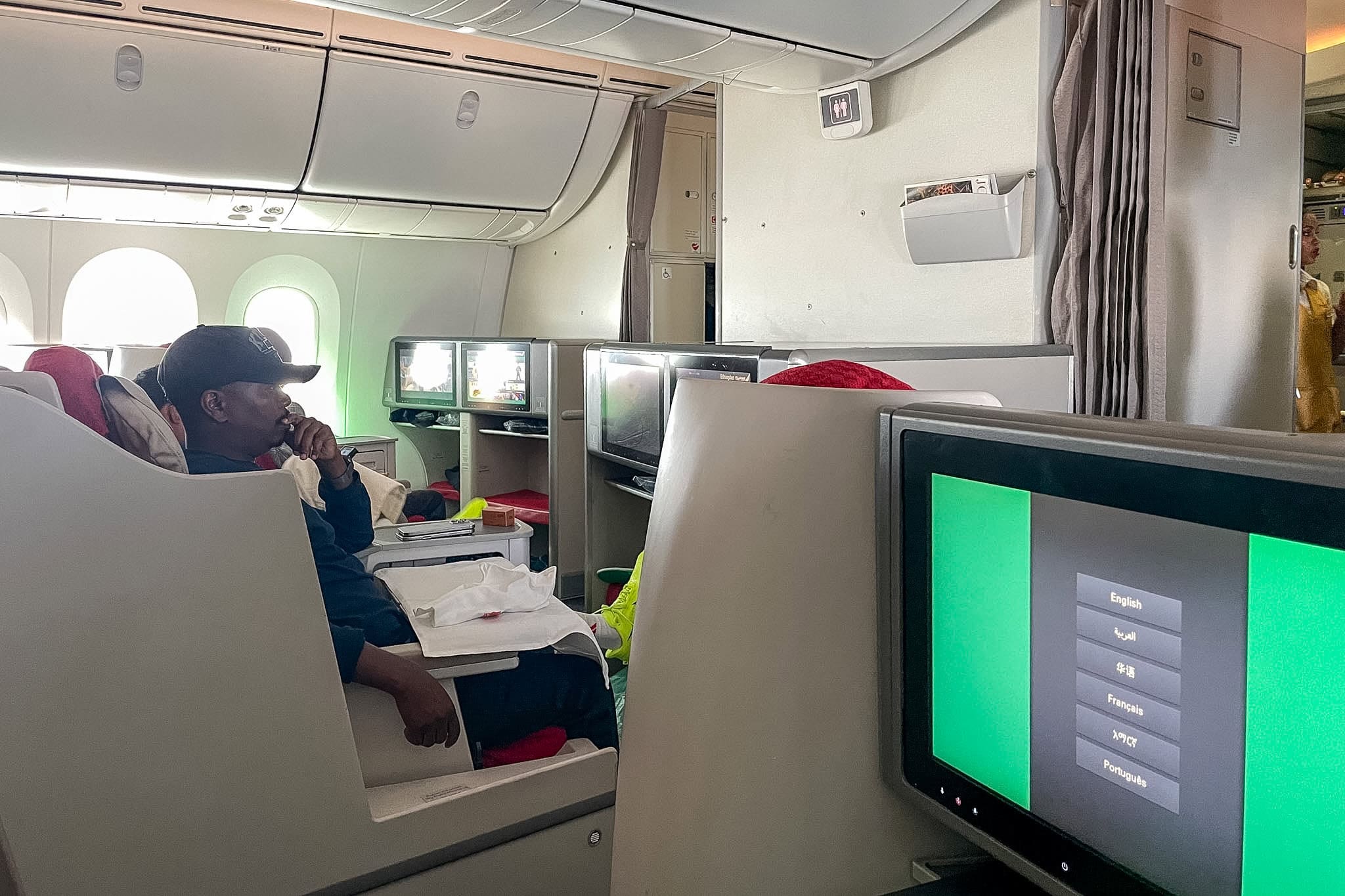
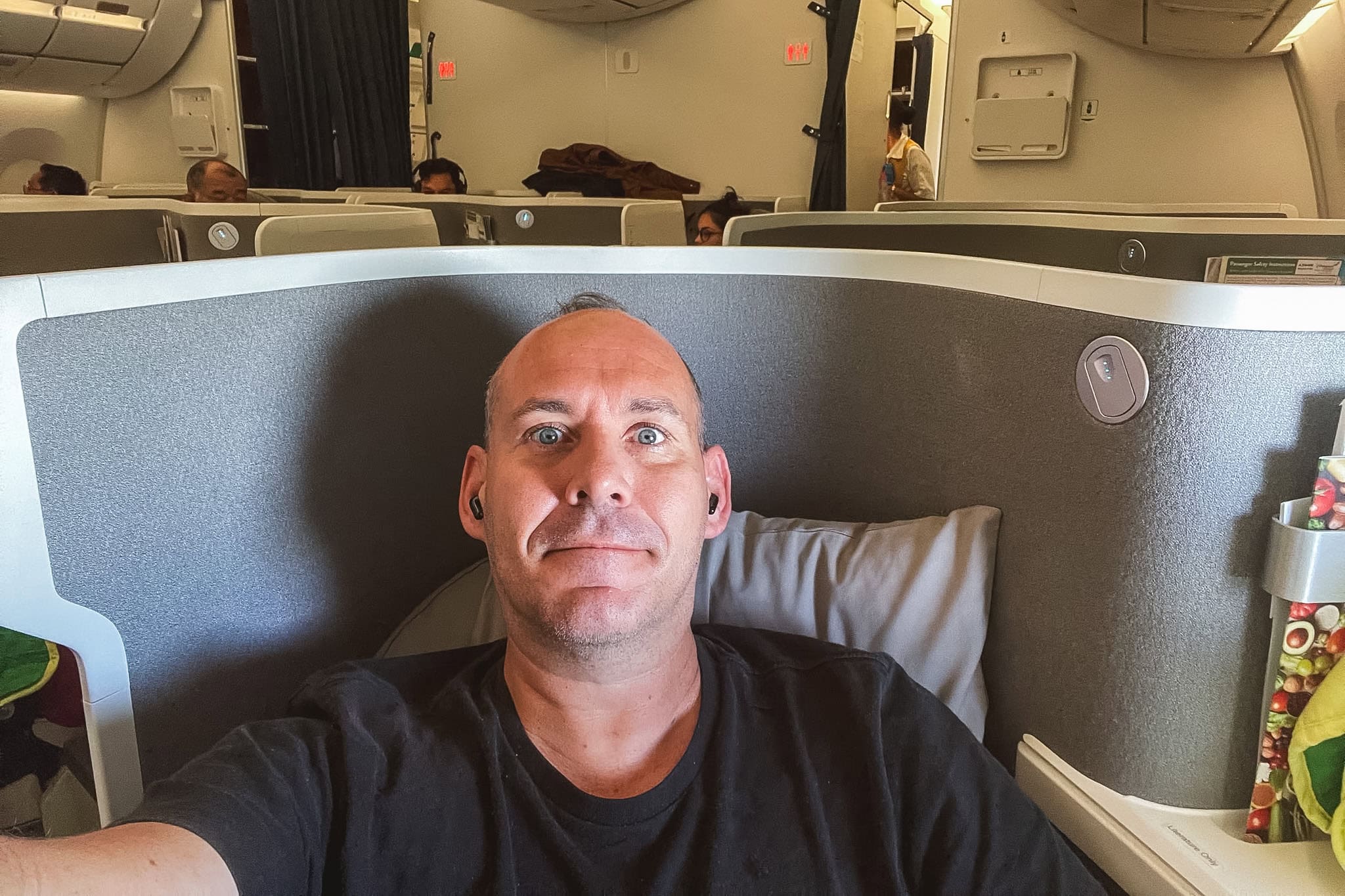
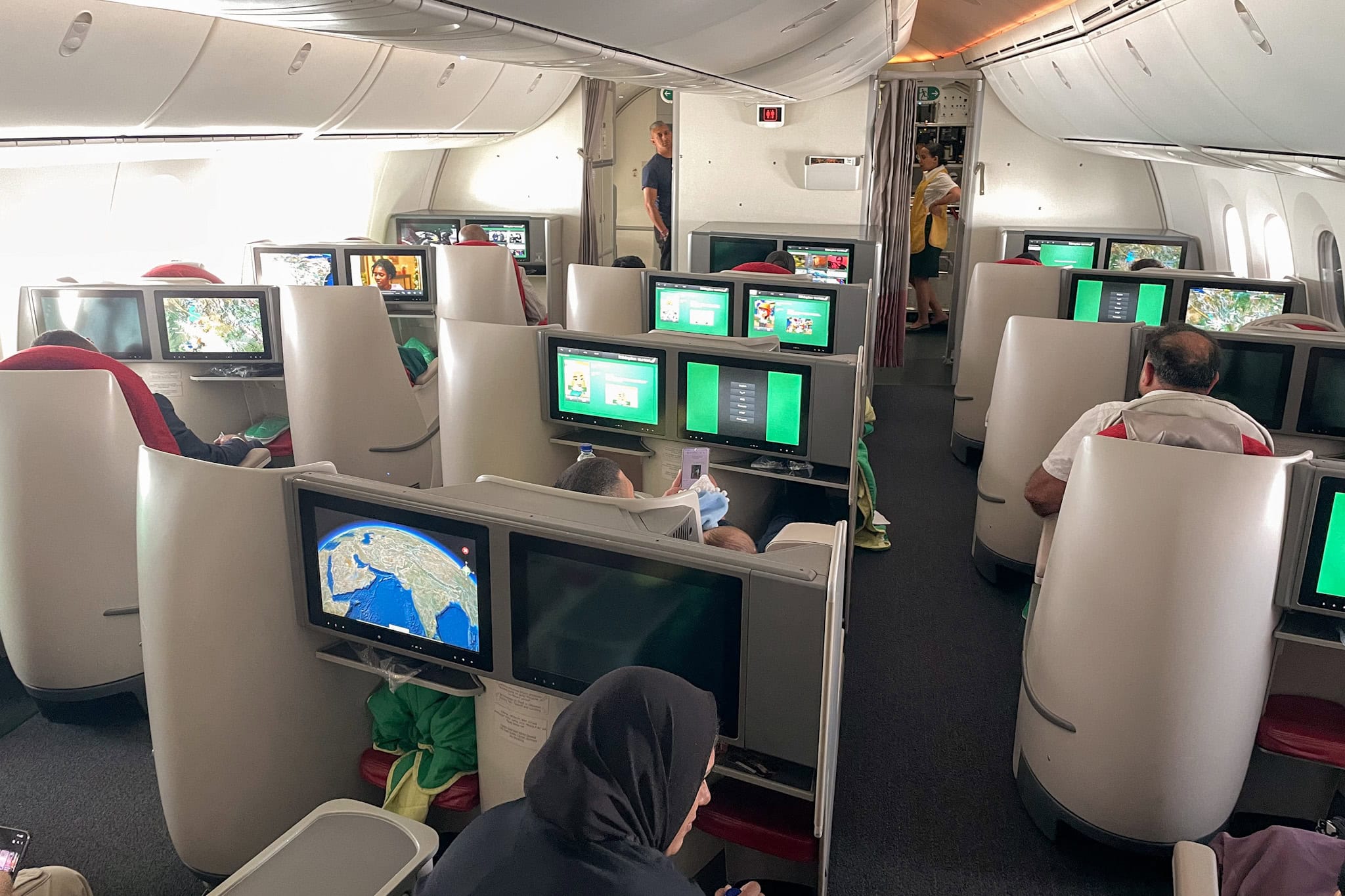
The Business Class cabin is arranged in a 2-2-2 configuration. That means passengers in the window seats don’t have direct aisle access. I was sitting in 2L, a window seat in the second row.
Unfortunately, my neighbour decided to recline his seat into bed mode almost as soon as we were airborne and left it there for most of the flight. Every trip to the toilet became an awkward game of trying to climb over him without it looking and feeling like I was performing a lap dance.
The seats also don’t have a privacy divider between them. If privacy is high on your priority list, this probably isn’t the cabin for you. Personally, coming from economy, simply having enough personal space felt luxurious enough.
The seat itself was wide, comfortable and reclined into an almost flat bed. Notice I said almost. It isn’t completely level, although I still found it far more comfortable than any economy seat I’ve flown in.
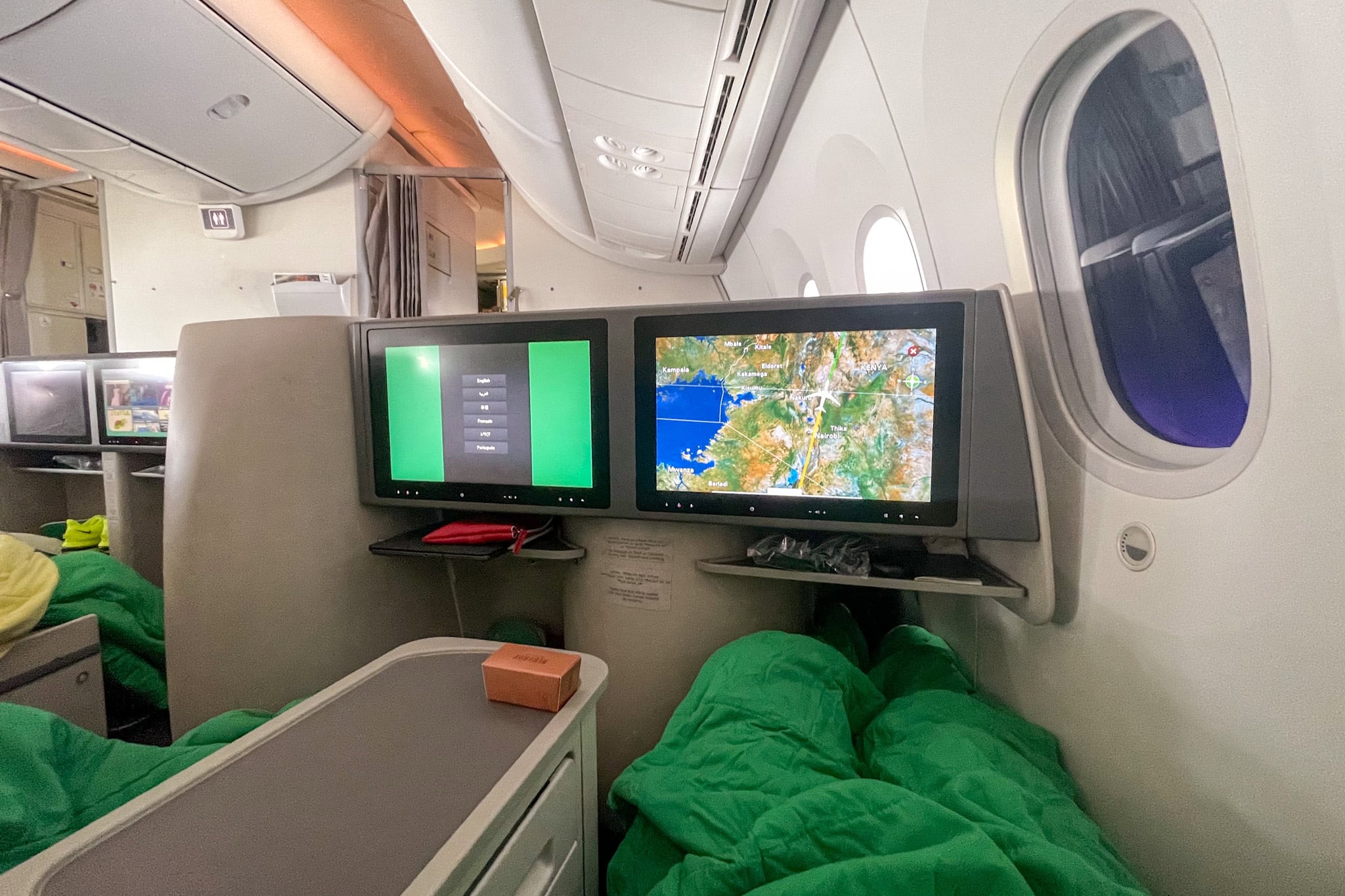
Although I didn’t sleep on this flight, I did spend some time lying flat. This is where I found my biggest complaint.
The footwell is surprisingly narrow. It felt like sliding my feet into a little triangular coffin. I’m 187 cm tall and wear a size 11 shoe, so there wasn’t much room to move around. I found myself crossing my feet over each other just to get comfortable, and the enclosed space became quite warm after a while.
If you’re shorter than me, I doubt you’ll even notice it. Taller travellers, on the other hand, might find the footwell a little restrictive.
Entertainment & Storage
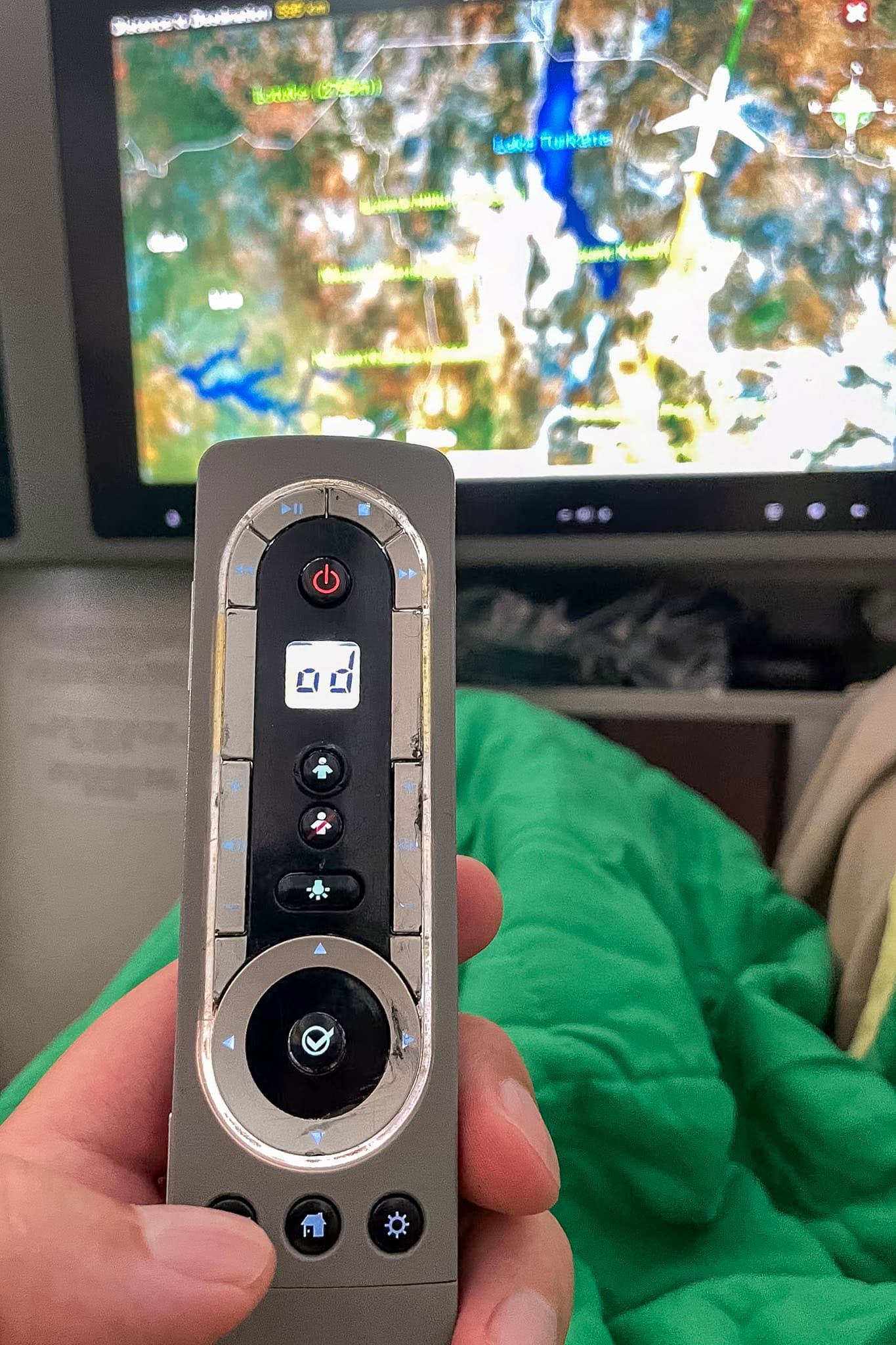
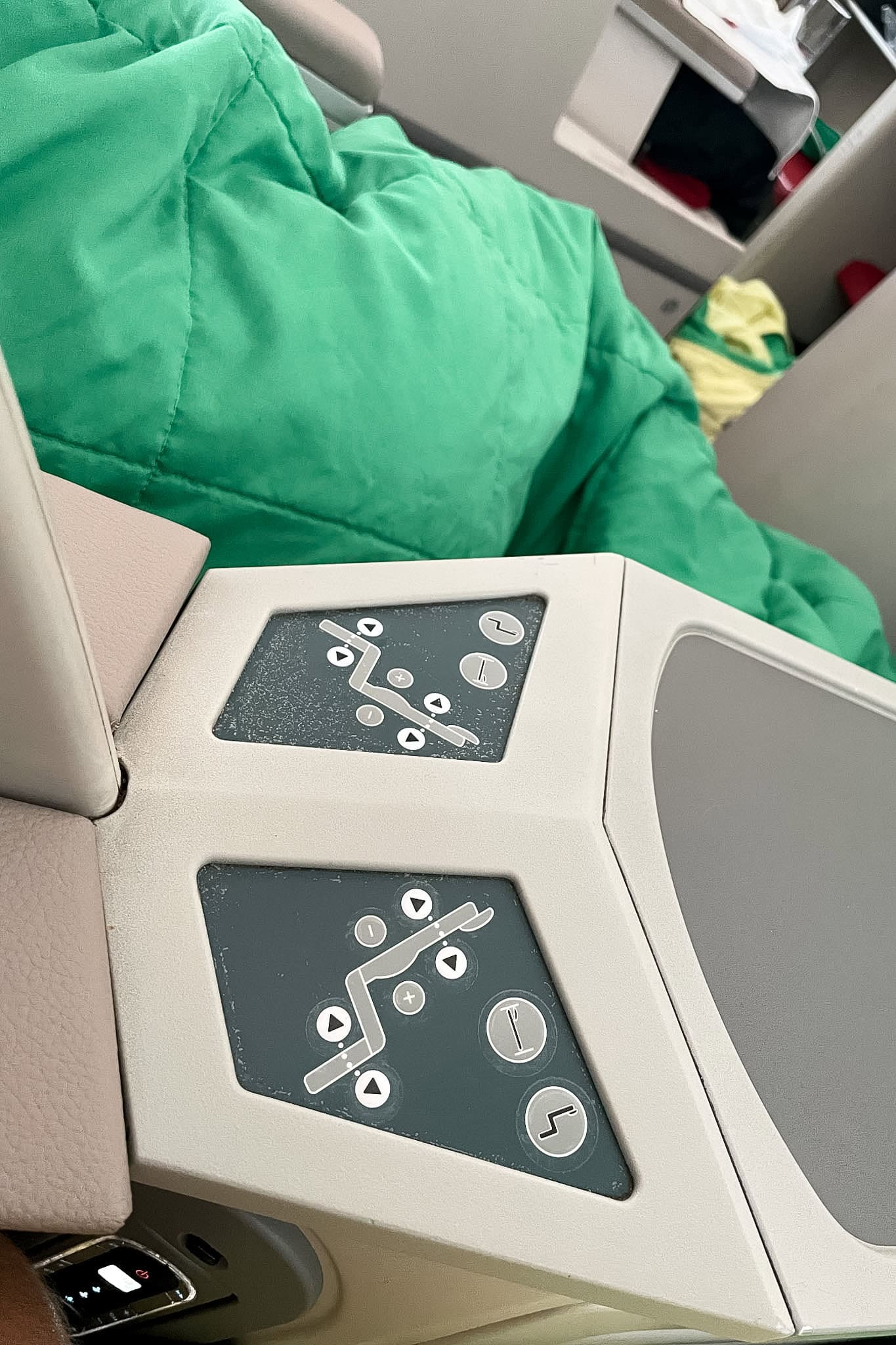
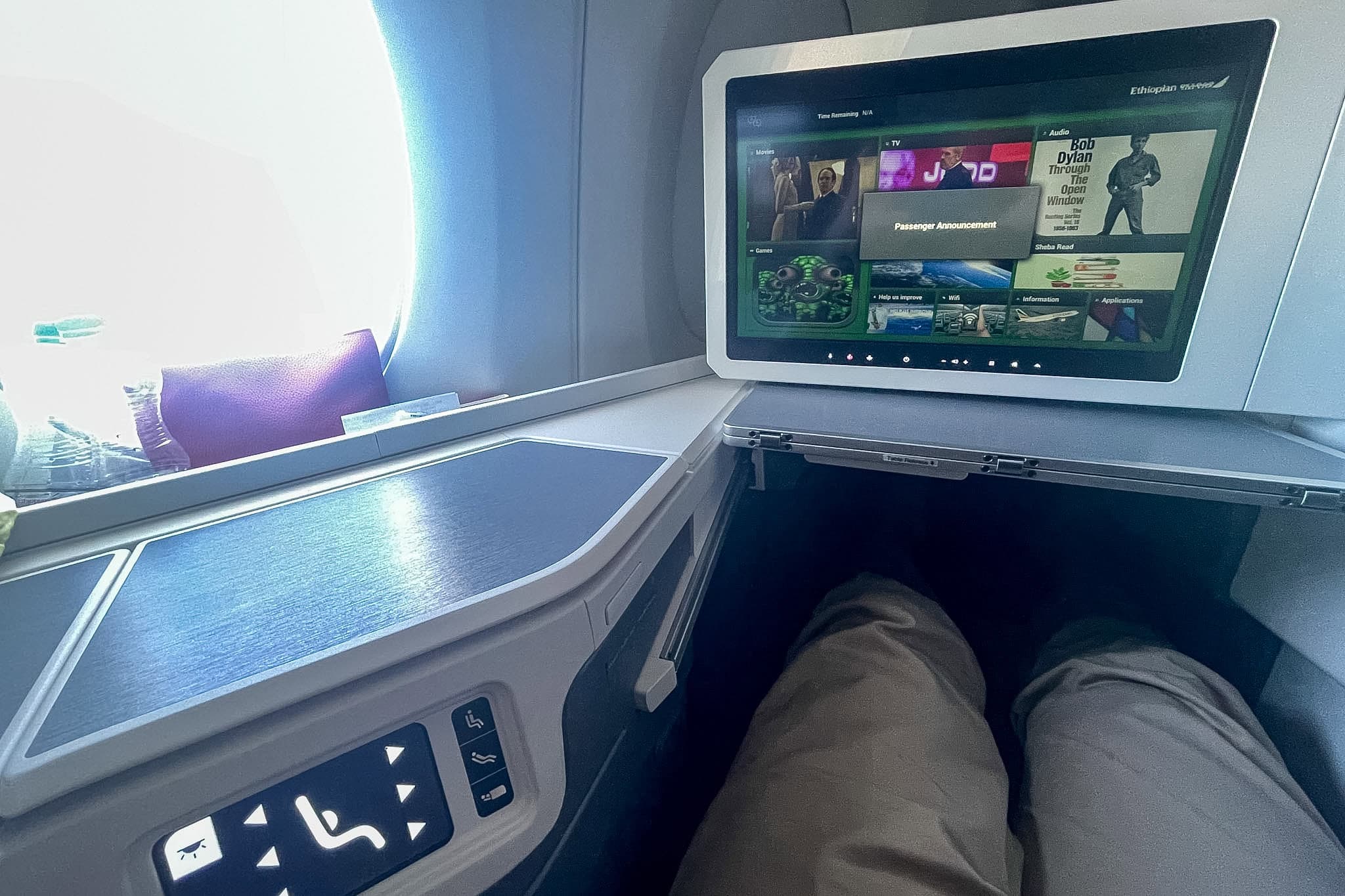
The entertainment screen was a good size, although the system itself definitely showed its age. The wired remote control and seat adjustment buttons looked like they belonged in a late 1980s science fiction movie.
The entertainment library was more disappointing than the hardware. There were only a handful of movies and television shows, none of which interested me, so I ended up doing what I usually do on flights anyway. I watched the moving map and listened to music instead.
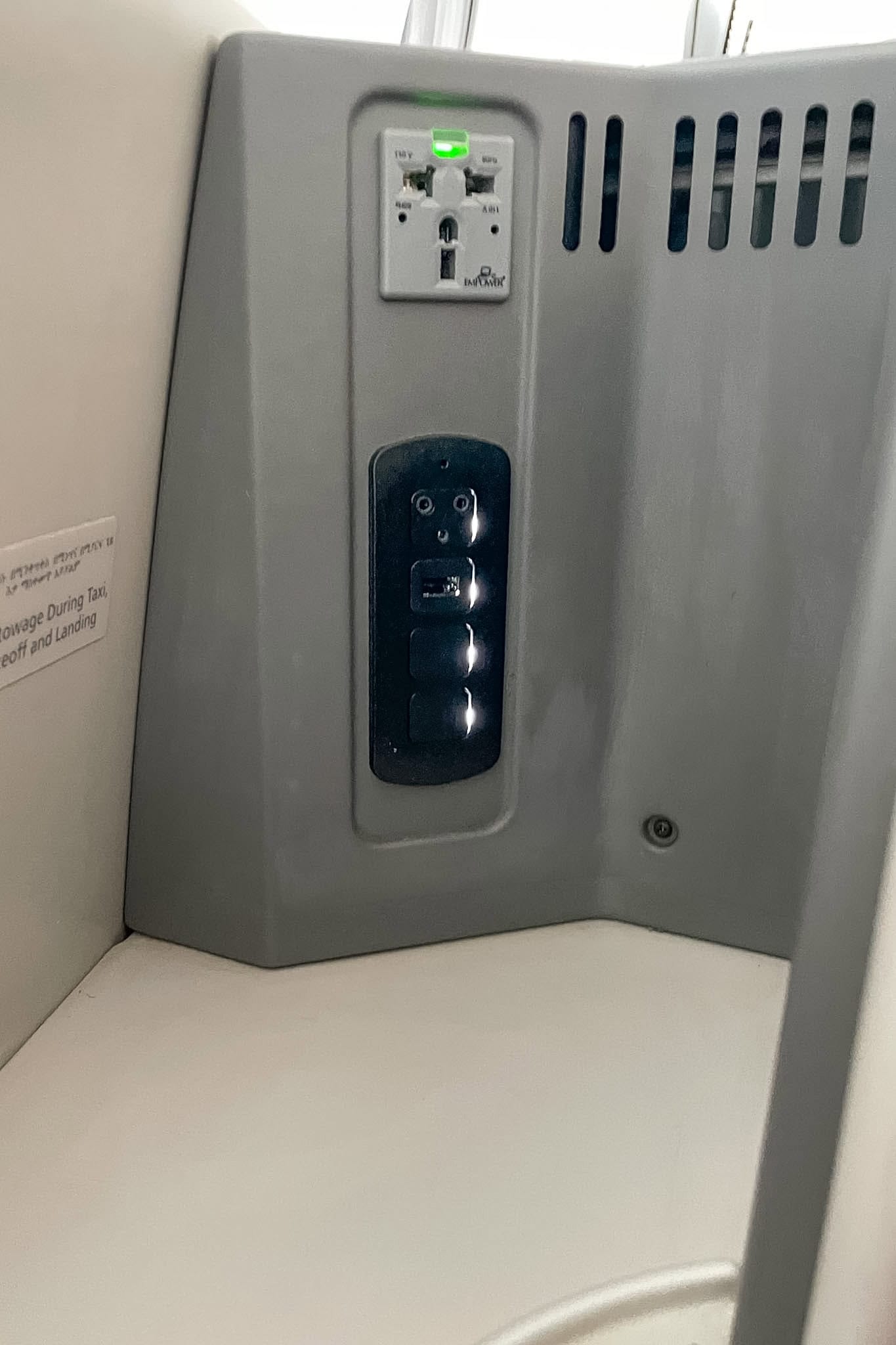
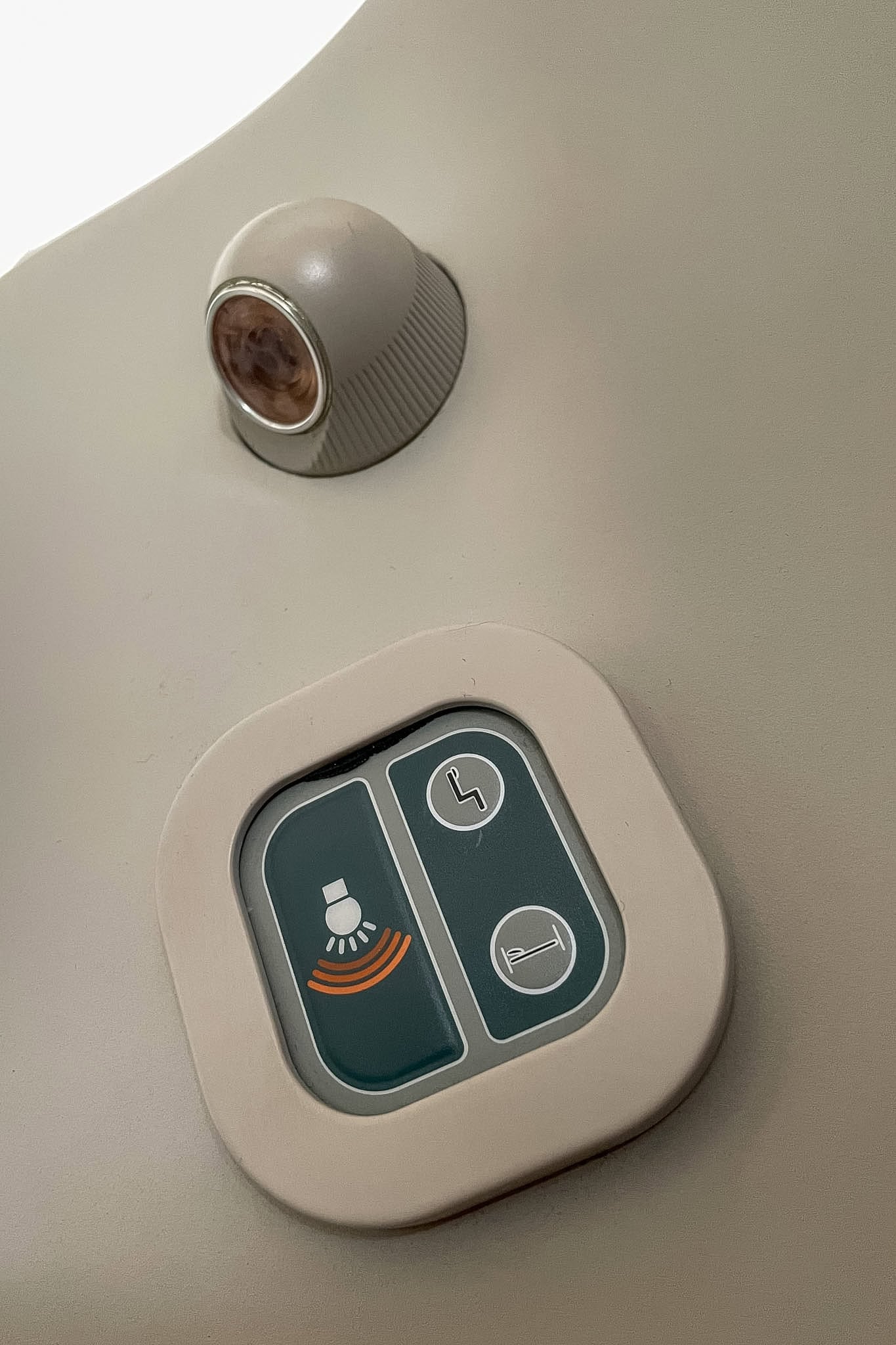
Storage around the seat was excellent. There was plenty of room for my camera, headphones and the usual collection of travel bits and pieces. The seat also included a universal power outlet and USB ports. My favourite feature was a small storage nook beside the headrest next to the window, which turned out to be the perfect place to keep my phone while it charged.
The tray table was sturdy and large enough to comfortably fit my lunch and drinks with room to spare.
Ethiopian Airlines Business Class Amenity Kit
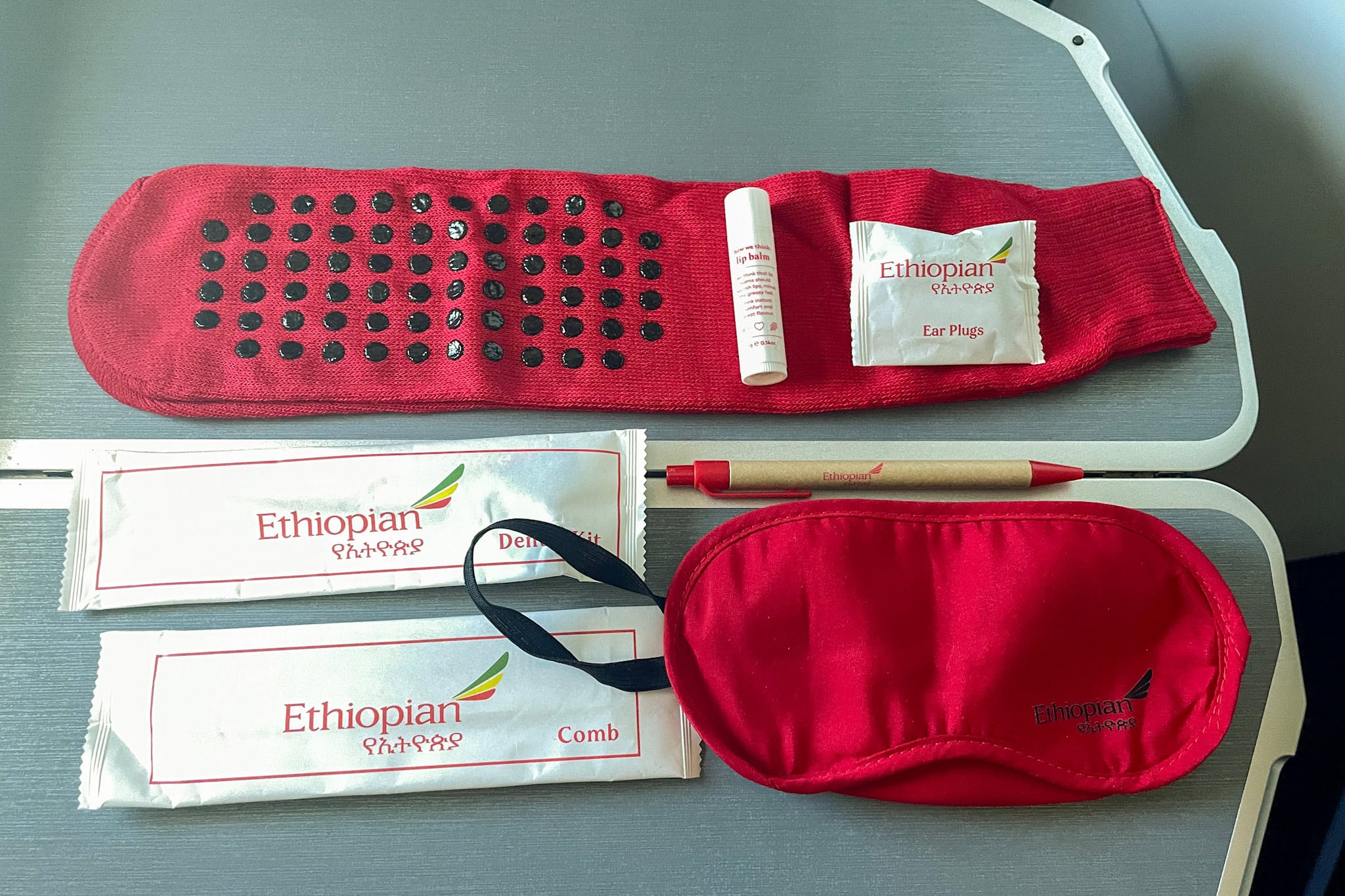
The faux leather amenity kit came in Ethiopian’s signature red and included bright red non-slip socks, lip balm, a wooden comb, a toothbrush, an eye mask, earplugs and a pen. It wasn’t particularly luxurious, but it had everything I needed.
Pillow & Blanket
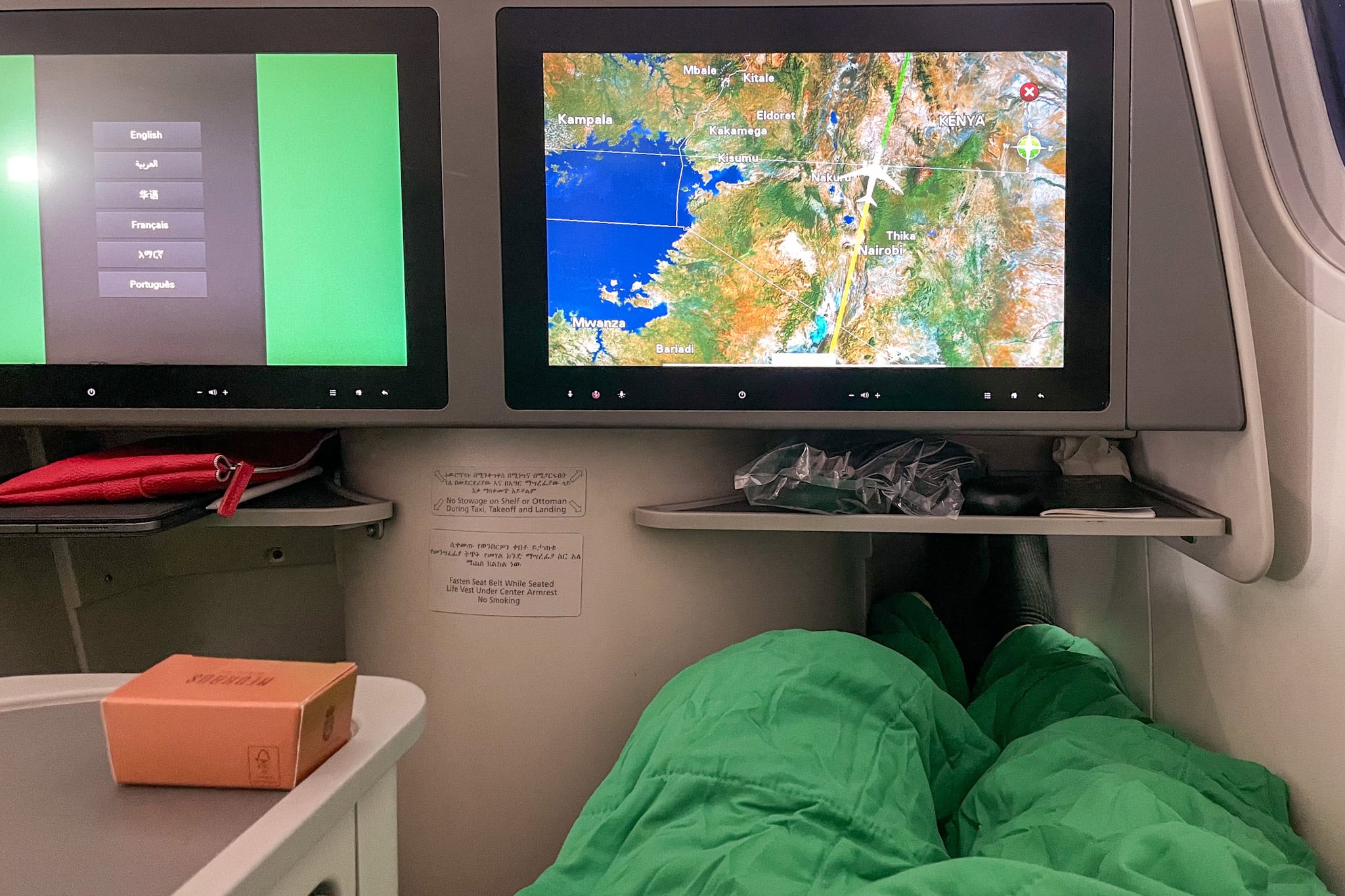
The pillow and blanket were genuinely comfortable. In a world where every airline seems determined to decorate its cabins in various shades of grey and beige, I appreciated Ethiopian’s bright red seats and lime green blankets. They might not be everyone’s cup of tea, but at least the cabin has a bit of personality.
The blanket itself was lightweight, warm and generously sized. It was easily one of the more comfortable airline blankets I’ve used.
Food, Drinks & Service
The service is probably my favourite thing about flying Ethiopian Airlines.
I’ve mentioned this in my previous Ethiopian Airlines economy class review as well. Even in economy, the hospitality never felt rehearsed or forced. Up the front of the plane, that feeling was even more noticeable.
I wanted to take more photos of the crew in their distinctive white and green uniforms, but then I remembered I was in their workplace. Nobody wants a camera pointed at them while they’re trying to do their job.
In my economy flight reviews, I’ve always joked that nobody flies for the culinary experience.
Well, I might have to take that back.
The food in Ethiopian Airlines business class was genuinely excellent. Somewhere between the starter and my second glass of wine, I found myself feeling a bit like Lady Gaga on tour.
Before this flight, I’d read quite a few Ethiopian Airlines business class reviews. Almost all of them mentioned traditional Ethiopian dishes being served on board. Having previously travelled through Ethiopia and eaten some incredible meals in places like Lalibela, I was secretly hoping for a proper doro wat at 35,000 feet.
Sadly, that wasn’t to be.
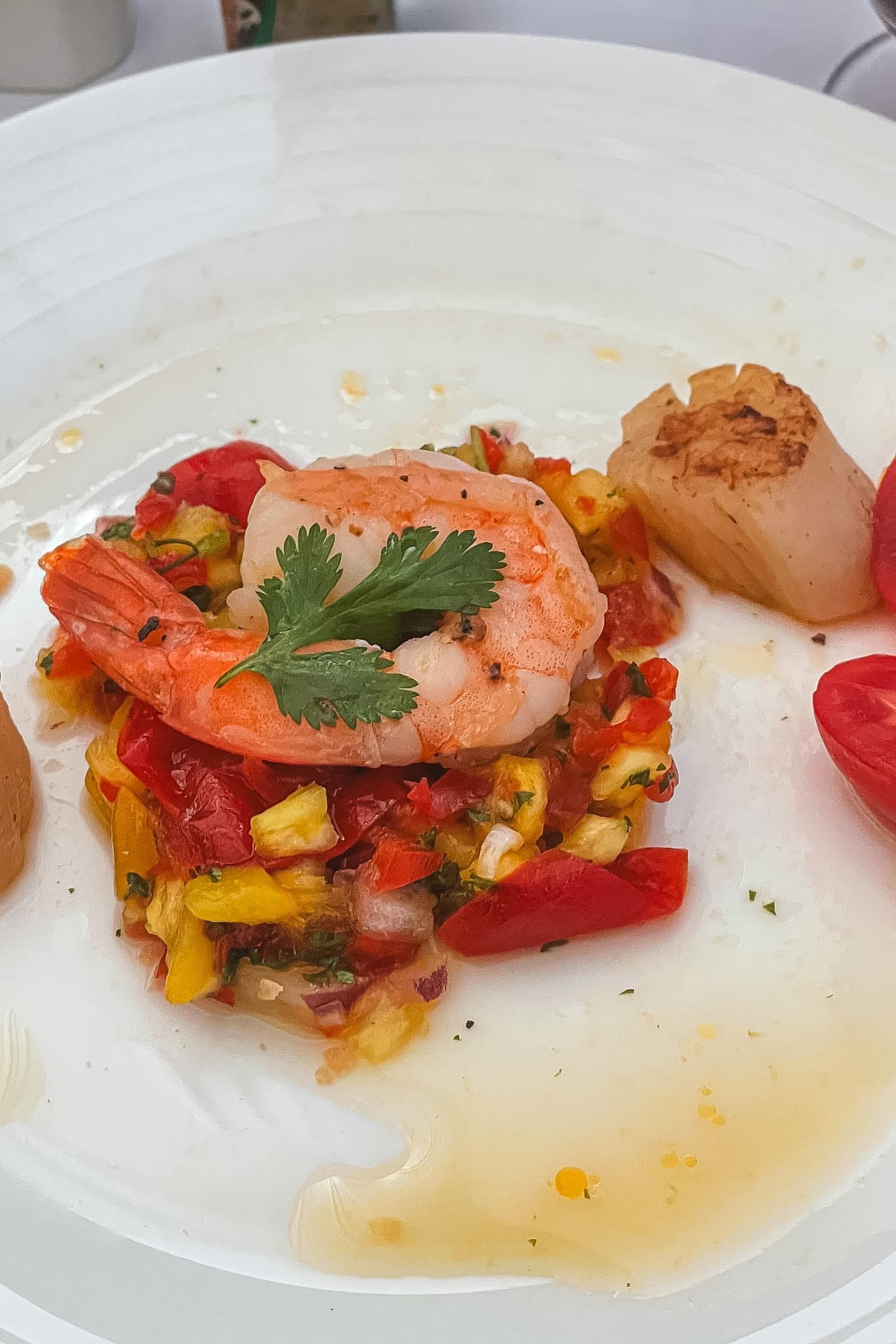
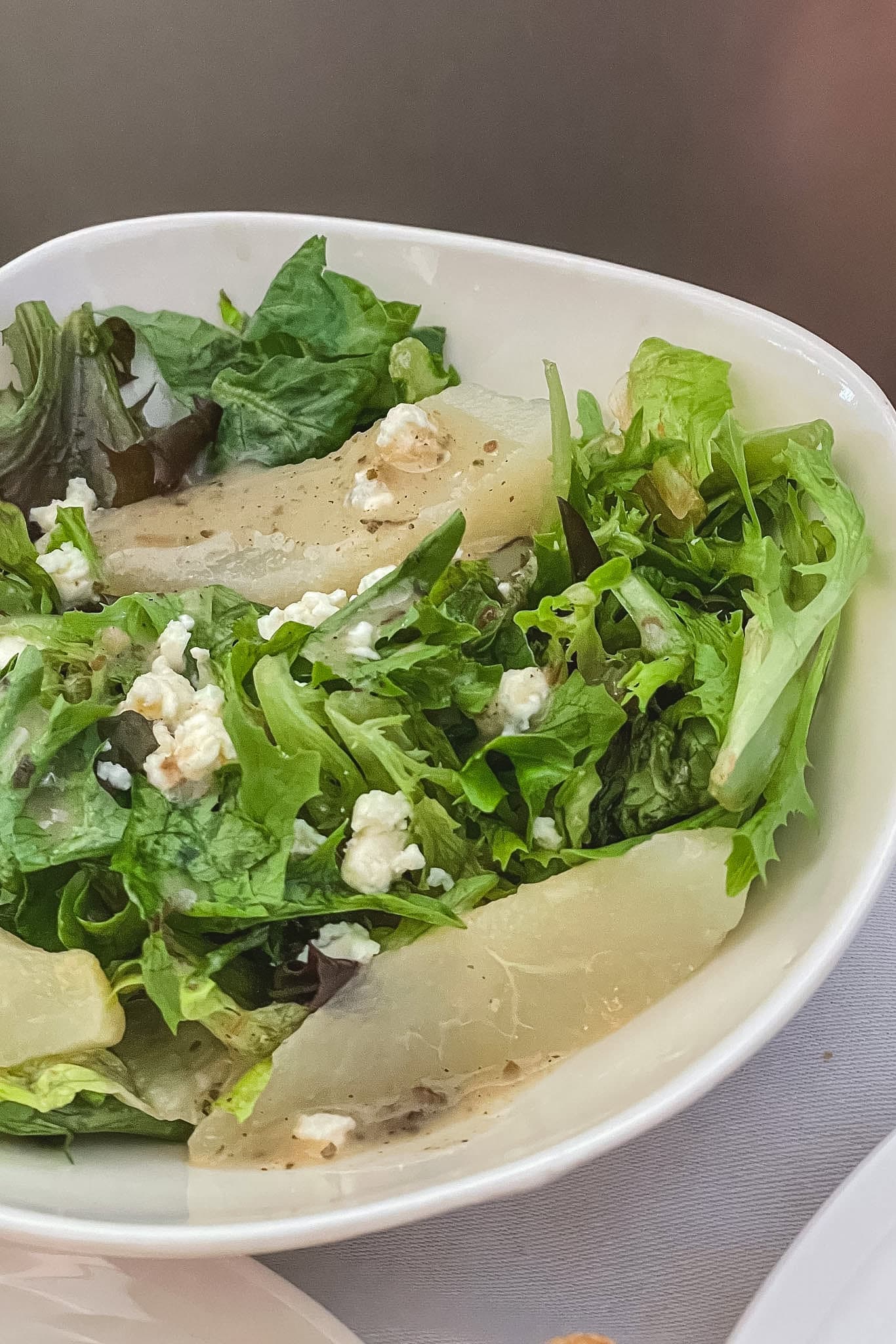
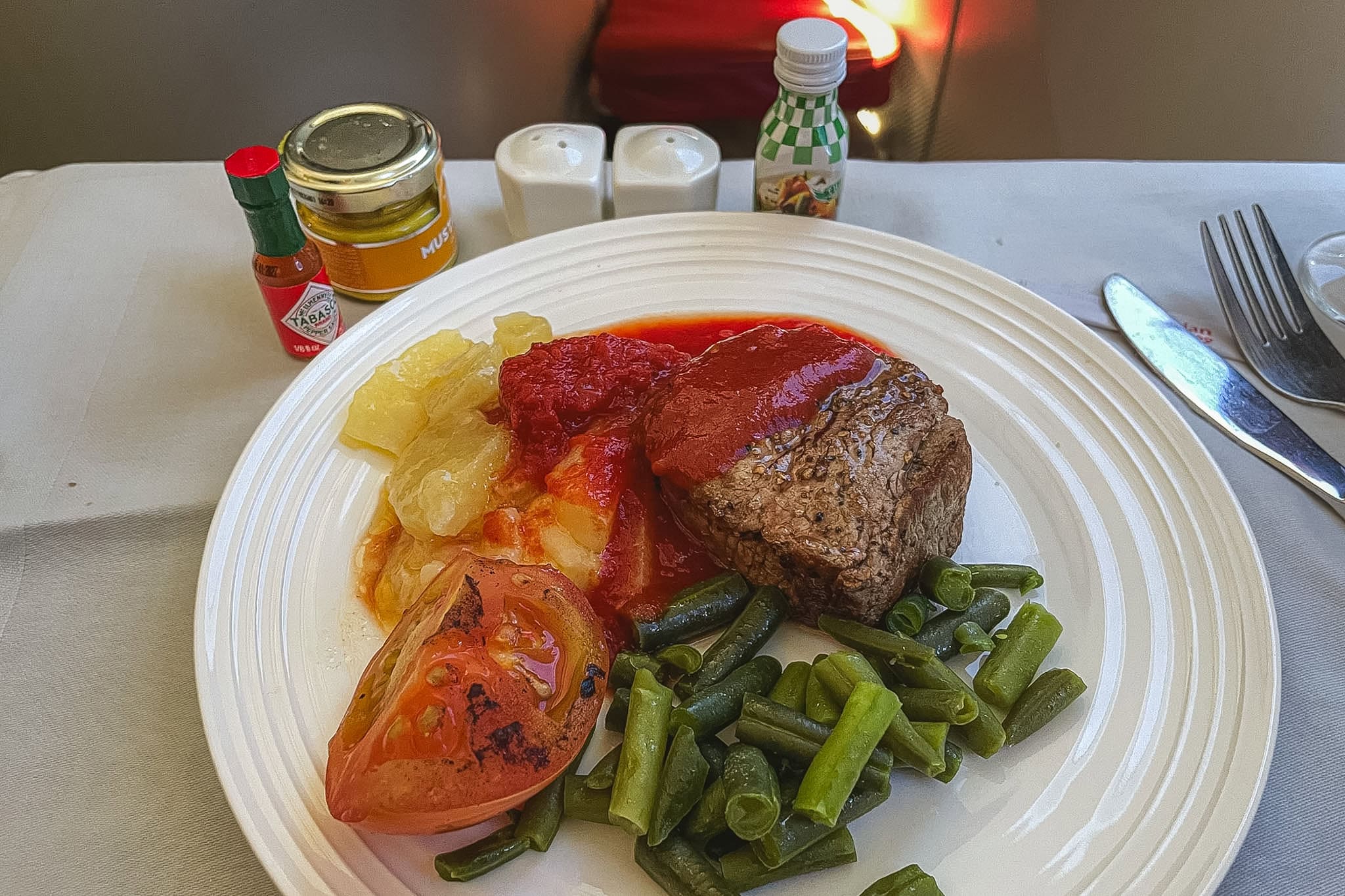
Neither of my flights featured any traditional Ethiopian dishes, which was probably my biggest disappointment of the entire trip.
Instead, lunch began with a beautifully presented shrimp and mango salsa served alongside a fresh salad. The main course was a steak that was cooked far better than I expected from an airline kitchen. In fact, it still stands out as one of the best steaks I’ve ever eaten (in the air or on the ground).
Dessert included several options, but I couldn’t go past the cheese platter paired with a glass of port.
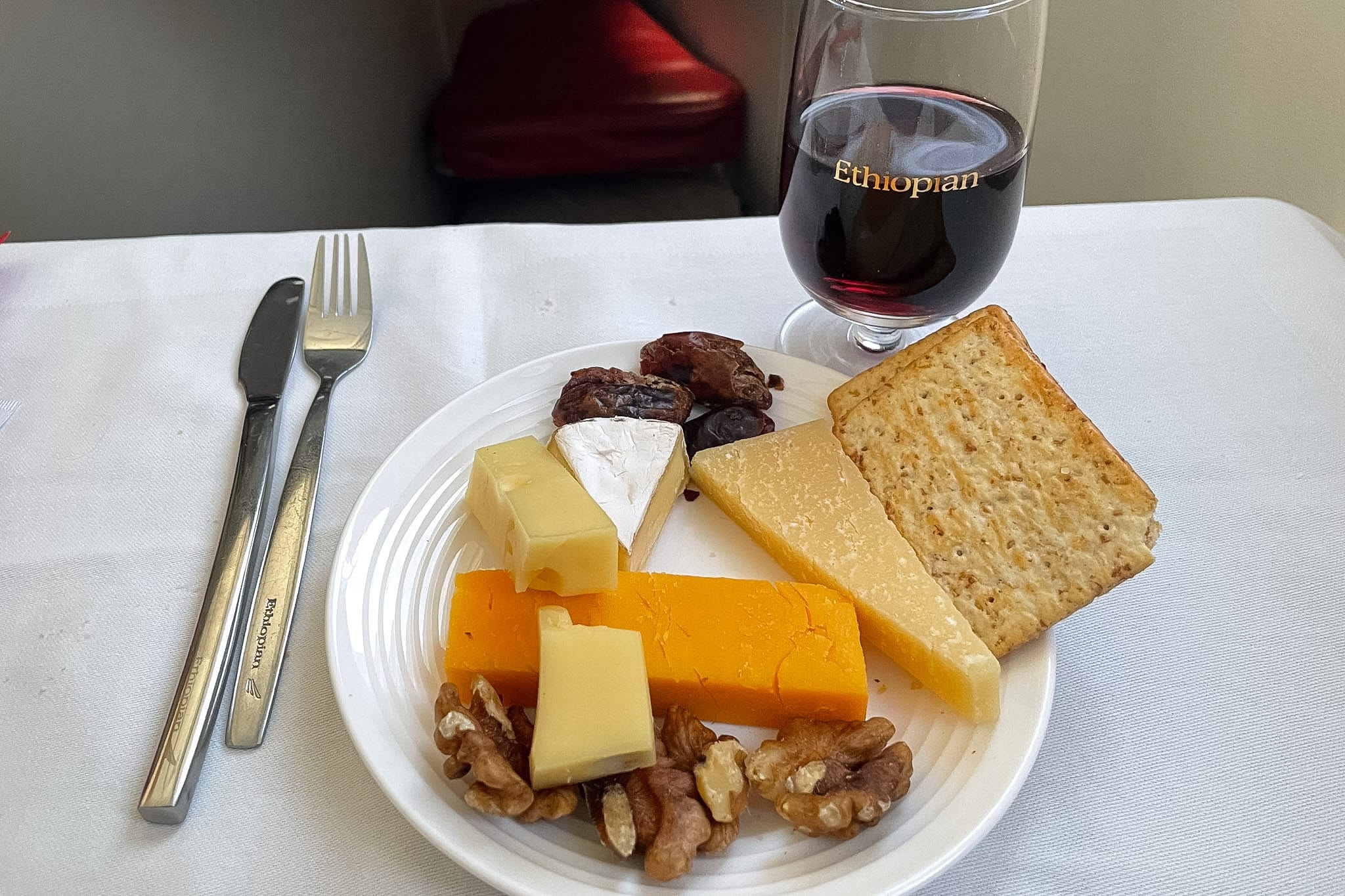
The wine list featured a good selection from France, Italy, South Africa and Ethiopia. Finishing the meal with a traditional Ethiopian coffee and a couple of chocolate truffles felt like the perfect ending to what was an outstanding dining experience.
If Ethiopian Airlines ever brings doro wat back to the business class menu, I’ll happily book another ticket just to try it. Until then, the food, wine and genuinely warm service still made this one the best meal I’ve had in the air.
Ethiopian Business Class B747 Overall Impressions
The Ethiopian Airlines business class cabin on the Boeing 787 is beginning to show its age. The entertainment system feels dated, the seat lacks direct aisle access and taller travellers may find the footwell a little cramped.
Even so, it was a comfortable way to fly. As someone who normally travels in economy, having the space to stretch out made a noticeable difference and left a very positive first impression.
Ethiopian Airlines Sheba Cloud Nine Lounge Review
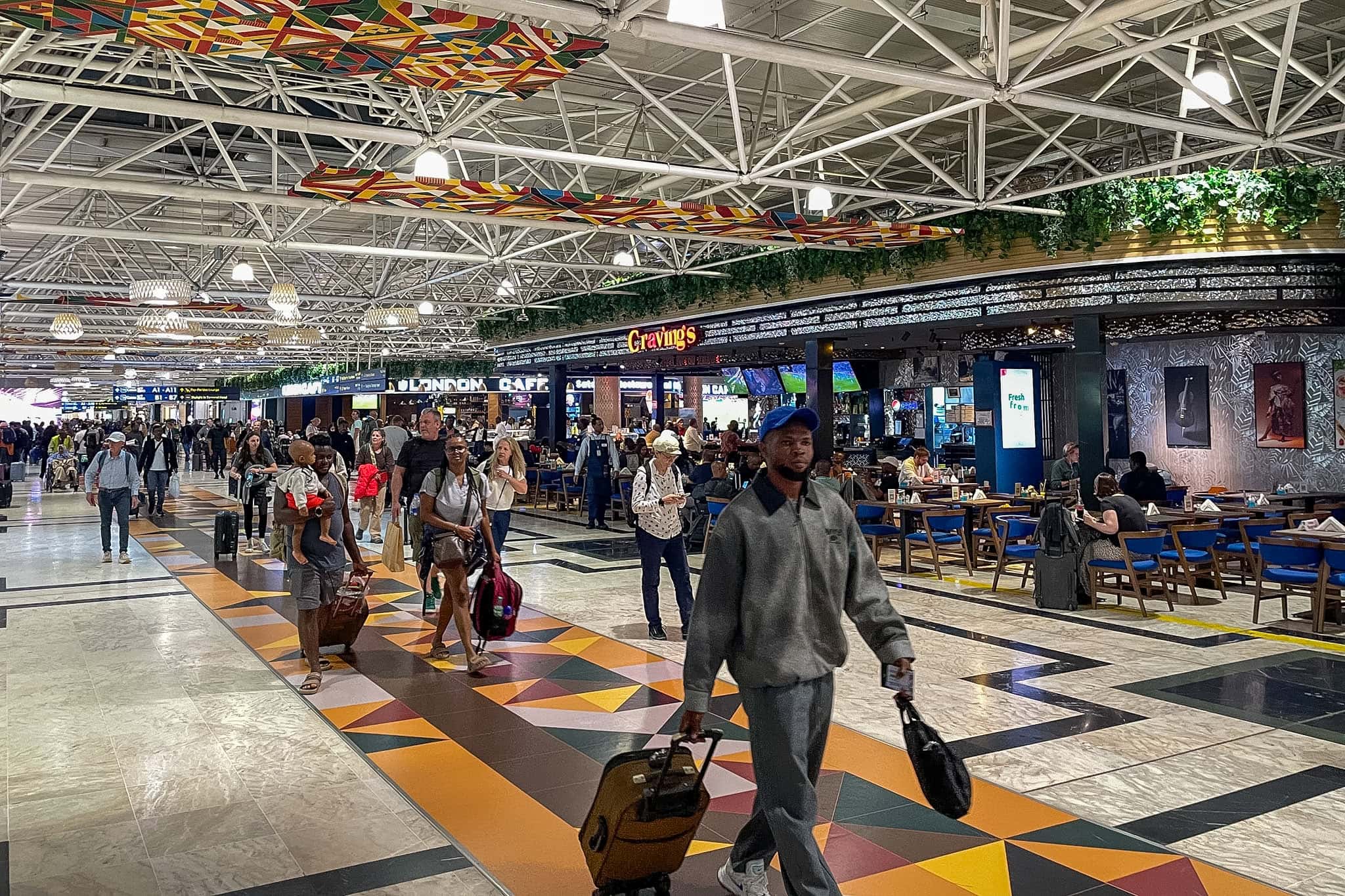
My connection in Addis Ababa had a seven-hour-and-fifty-minute layover at Bole International Airport. Frustratingly, that falls just short of the eight-hour minimum required to qualify for Ethiopian Airlines’ complimentary transit hotel.
On a previous trip, I was lucky enough to receive a free hotel and spend the day exploring Addis Ababa. If your layover is long enough, I’d highly recommend leaving the airport. I’ve put together a guide on how to spend a day in Addis Ababa if you’re lucky enough to have the time.
This time though, I was confined to the terminal.
Fortunately, that meant I had almost eight hours to properly experience the Sheba Cloud Nine Lounge.
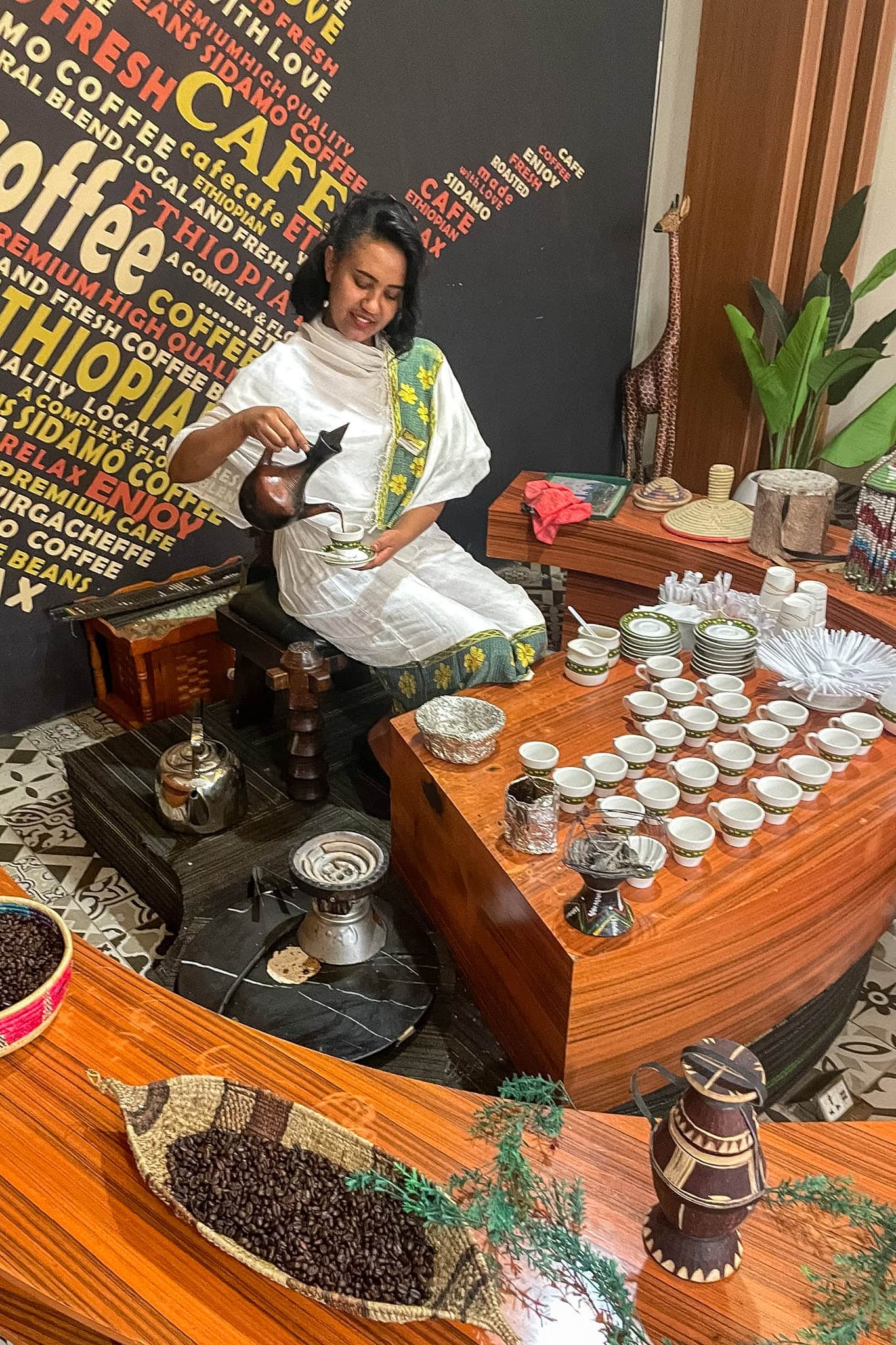
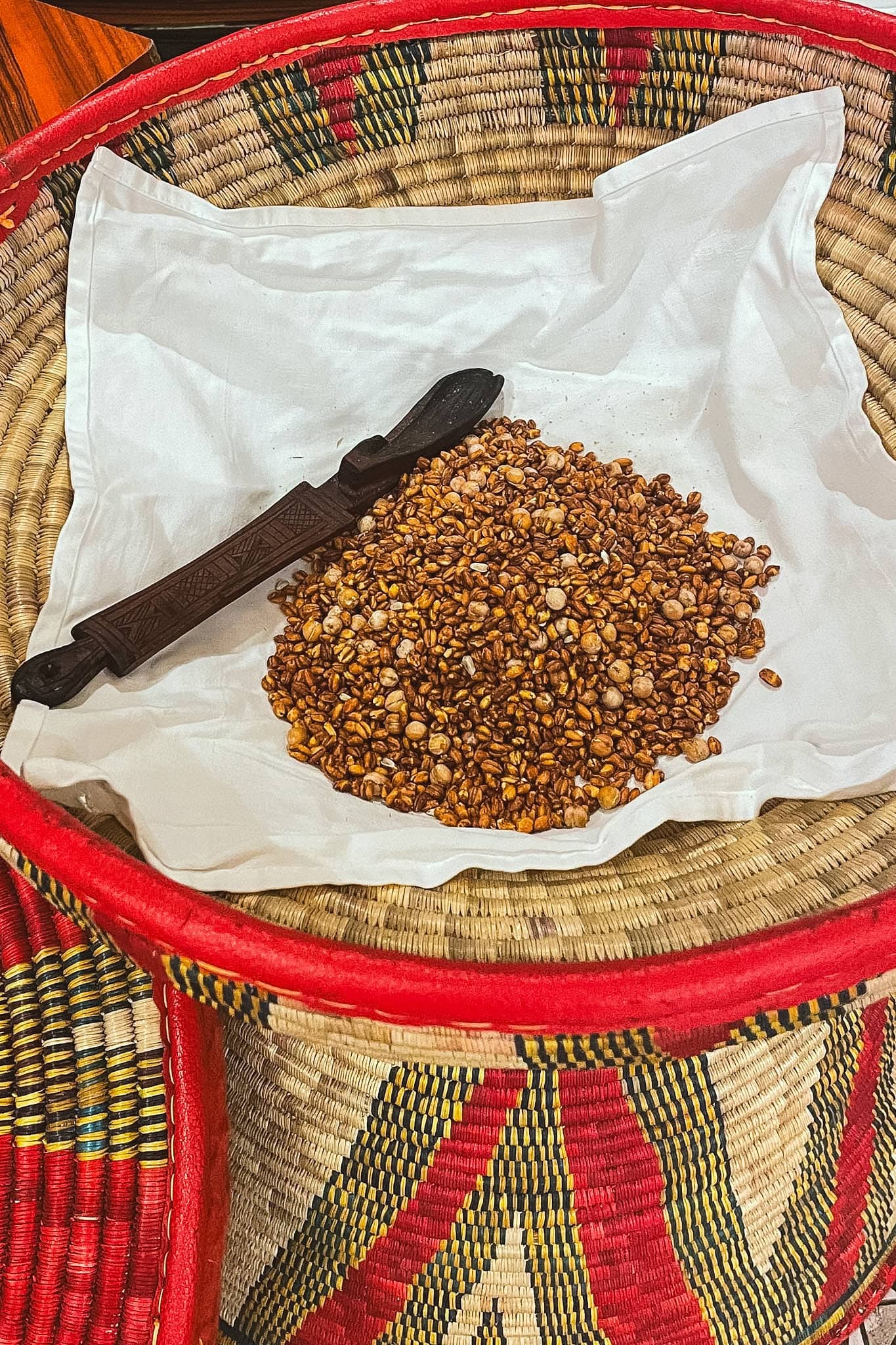
The first thing that greets you after checking in is a traditional Ethiopian coffee ceremony. Fresh coffee beans are roasted over hot coals while incense fills the air. Barley is served as a snack alongside the coffee. It’s a wonderful introduction to Ethiopia and a nice reminder that I’ve landed in the birthplace of coffee.
My first priority, however, wasn’t coffee.
It was sleep.
After a 4:30 wake up in Johannesburg, I made a beeline for the quiet room. The lounge has a dedicated rest area with curved reclining chairs that are somewhere between a sun lounger and a bed. The shape wasn’t the most comfortable, but the room was quiet enough for me to get a decent nap before my next flight.
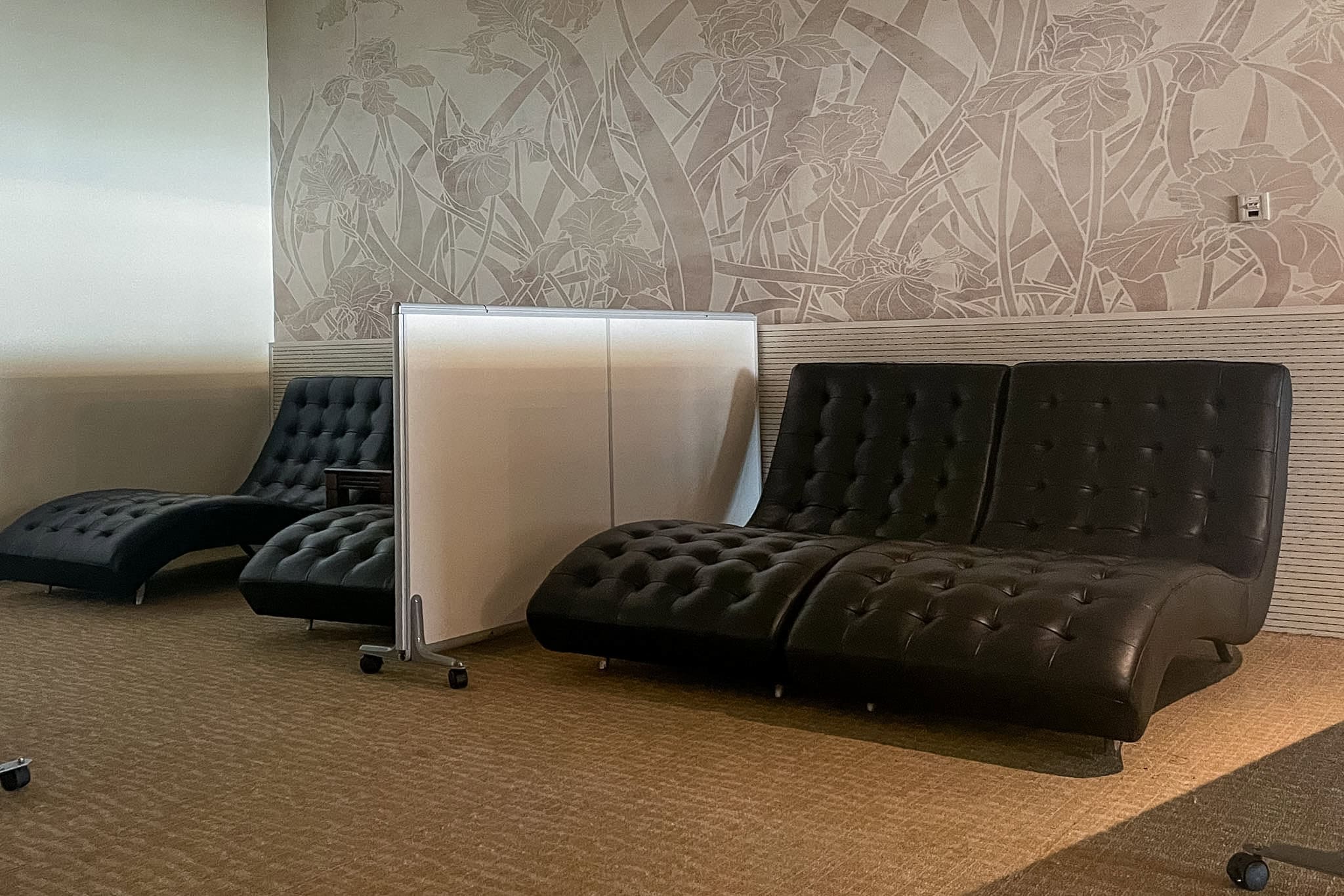
The lounge itself is enormous. Large windows overlook the airport, there are self-service fridges stocked with soft drinks, a fully serviced bar and two buffet areas. One focuses on Western dishes, while the other serves traditional Ethiopian food.
This was where I finally got my doro wat.
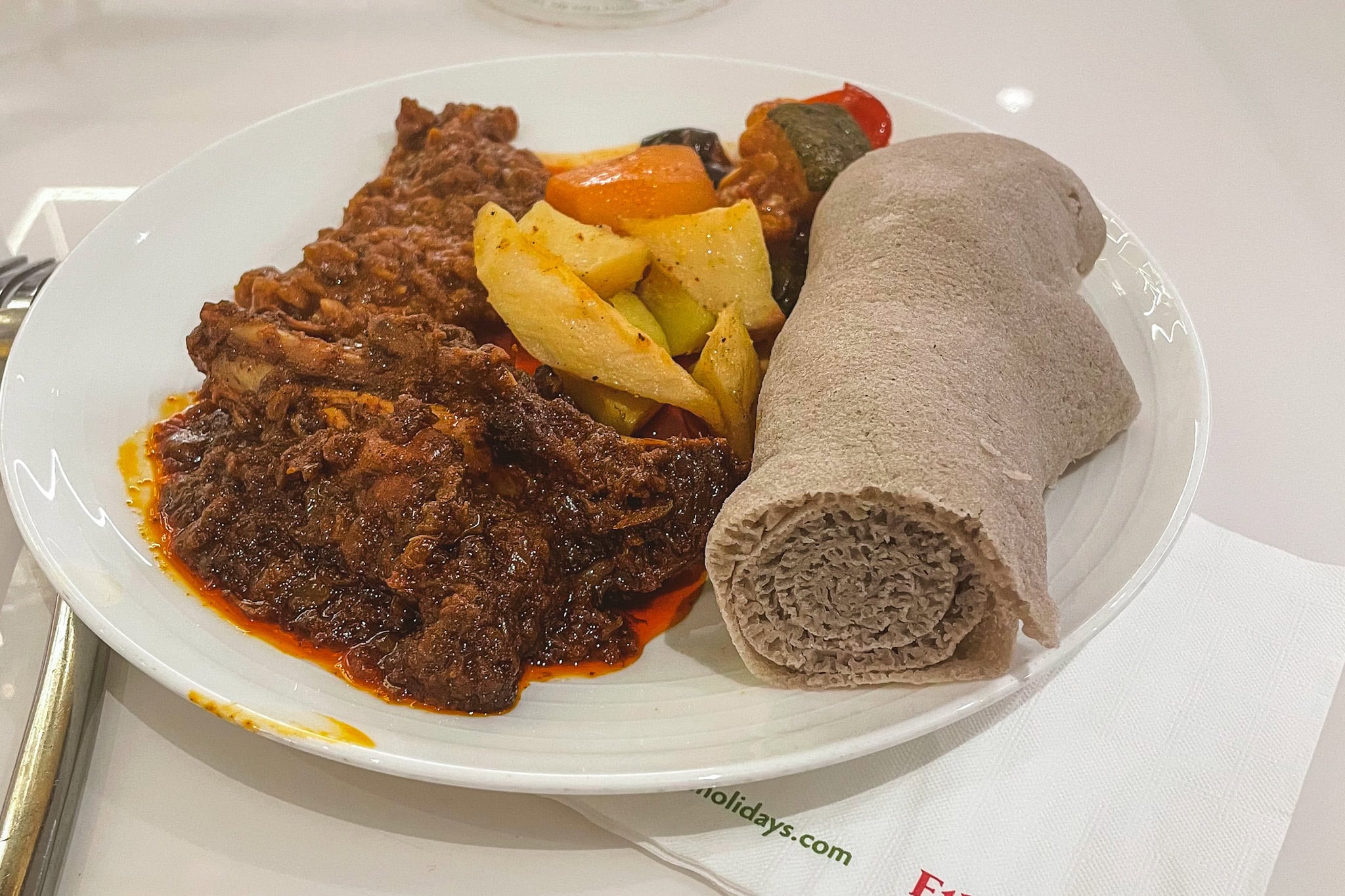
After spending the entire first flight hoping it would appear on the menu, I finally got my fix in the lounge instead. It was every bit as good as I’d hoped, and every bit as spicy as I remembered from my travels through Ethiopia.
The buffet was kept well stocked throughout my stay, with enough variety to cater for most dietary requirements.
The WiFi was excellent. It was fast enough to make a WhatsApp video call without any noticeable lag, which is about as good a test as any.
When I arrived just before 15:00, the lounge was almost eerily quiet. There were only a handful of other passengers, and the place felt far larger than it needed to be.
As the afternoon wore on, more connecting passengers started arriving and the atmosphere gradually picked up.
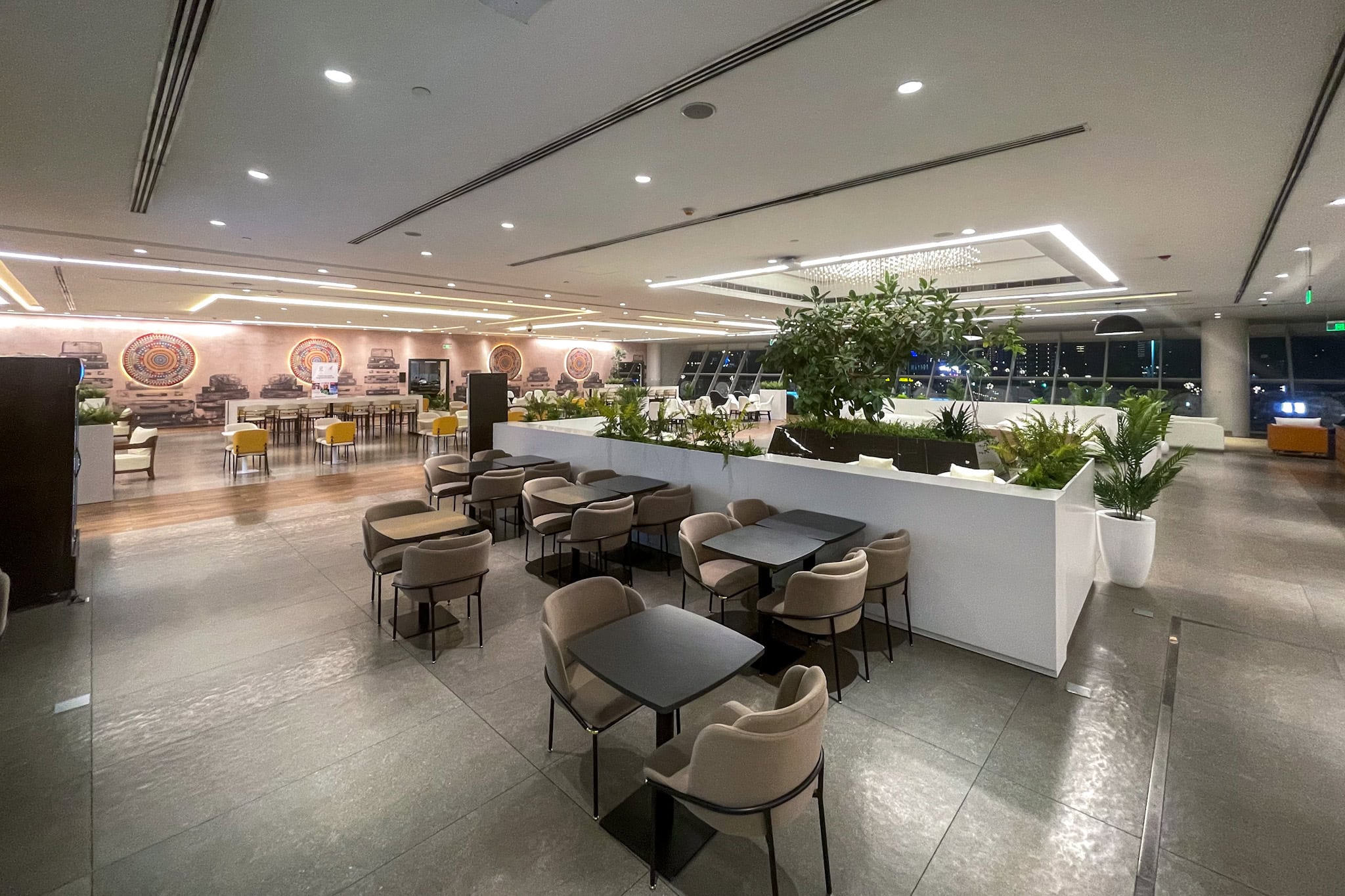
The lounge is so large that it occupies two almost identical halls. During my visit, one entire side remained closed, with its own seating, buffet and bar sitting completely unused. If you’re looking for a quiet corner to work, read or simply escape the crowds, this is where I’d head first.
Before boarding my flight to Seoul, I took advantage of the shower facilities. The men’s area has four private shower rooms, each with a toilet, basin and a generously sized shower. The water pressure was excellent, there was plenty of hot water and while the complimentary toiletries were fairly basic, they did exactly what they needed to do.
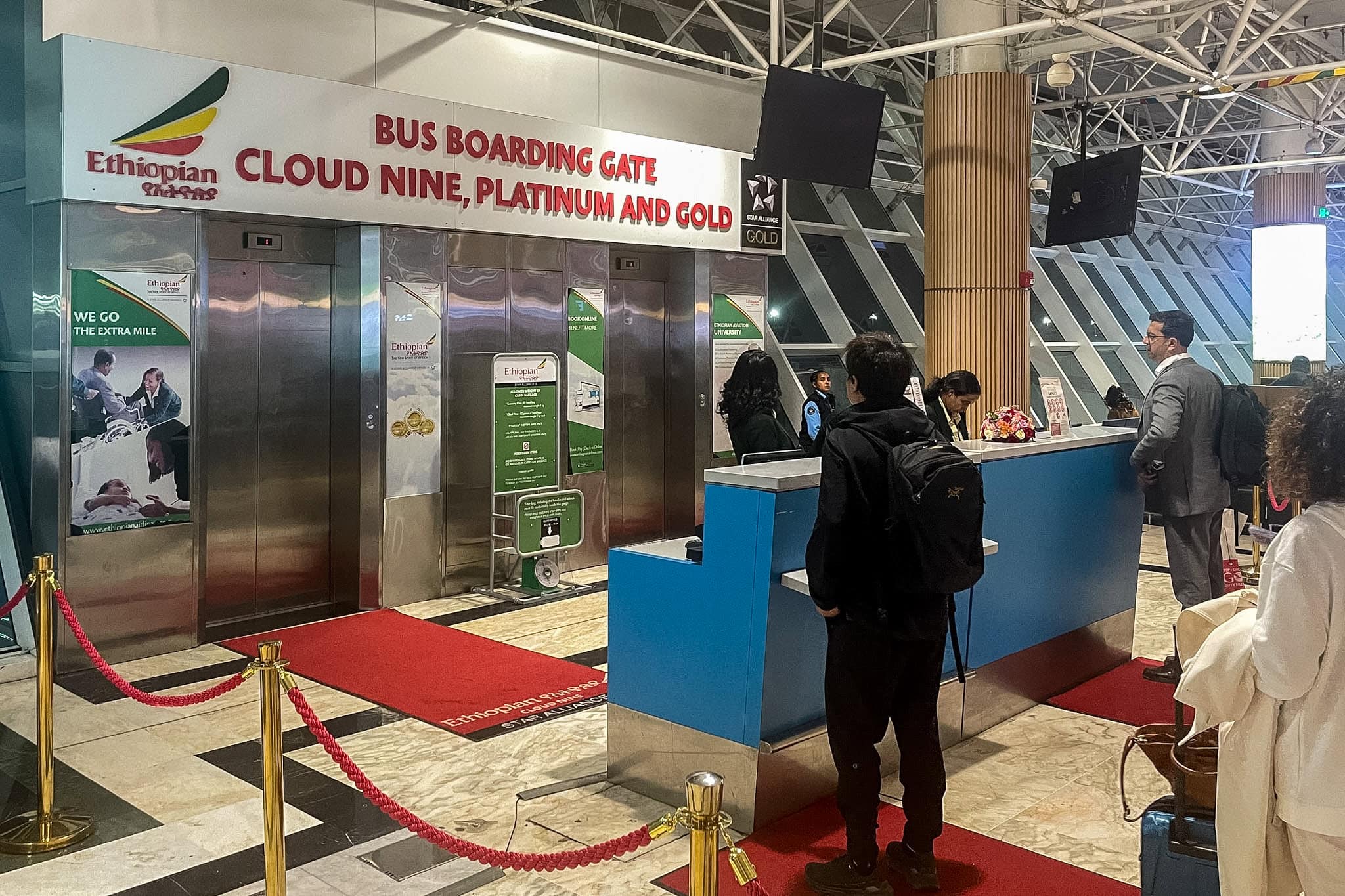
Business Class passengers board from a dedicated gate before being transferred to the aircraft by bus.
Looking back, I genuinely enjoyed my time in the Sheba Cloud Nine Lounge. Spending almost eight hours in an airport usually sounds like a terrible idea. Somehow, this one never felt that long.
Addis Ababa to Seoul: Ethiopian Airlines A350 Business Class Review
The second leg of my journey was flight ET672 departing at 22:35 from Addis Ababa to Seoul. This flight continues onwards to Tokyo Narita after stopping in Seoul. All passengers disembark in Seoul, while those continuing to Japan go through boarding again before the flight continues.
For me though, Seoul was the final destination.
As the bus pulled up alongside the plane, there was an audible buzz among the passengers.
The aircraft was brand new.
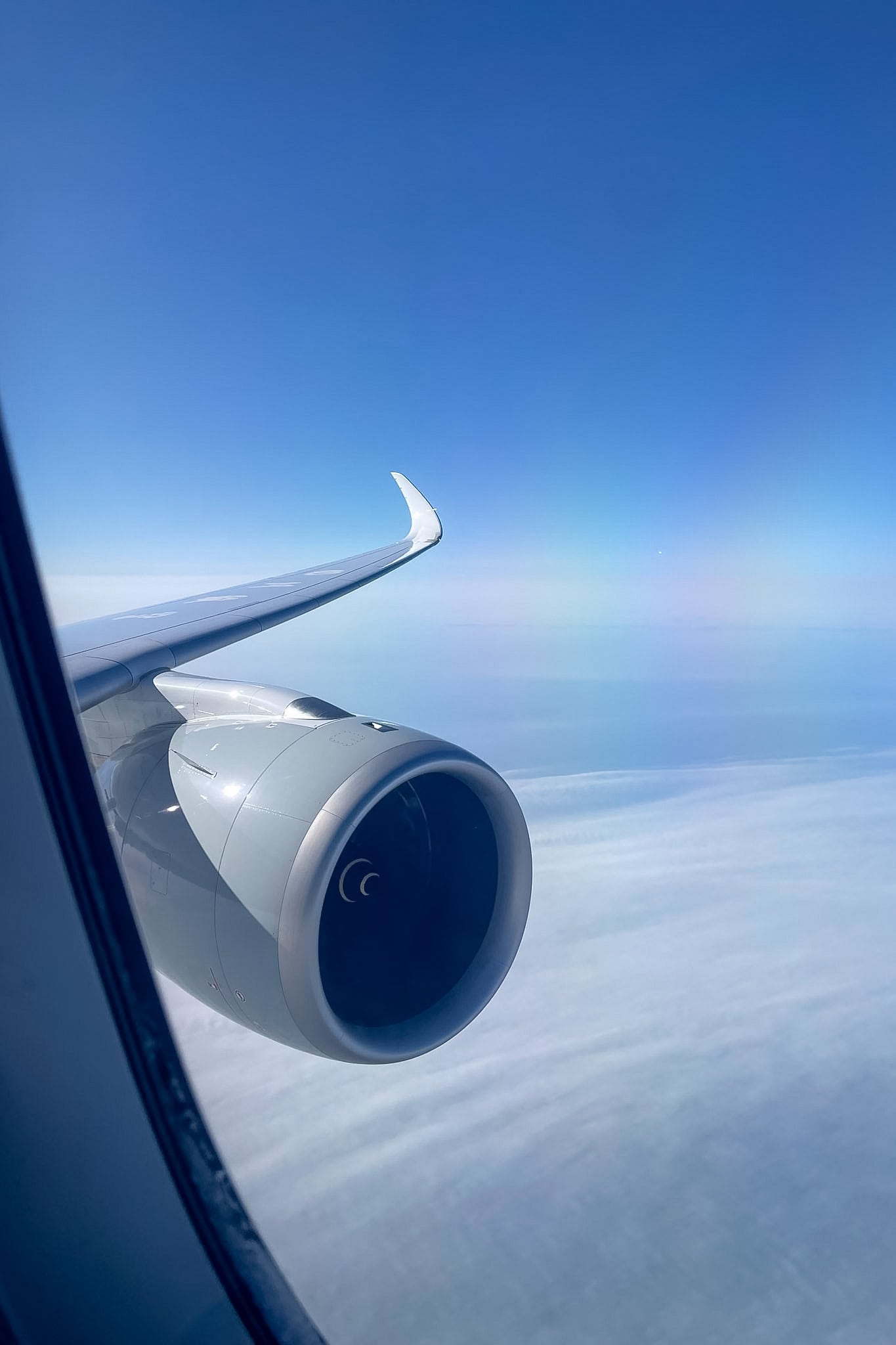
It was so new that it didn’t even have Ethiopian Airlines branding on the fuselage yet. Standing next to me was a businessman from Tokyo who seemed even more excited than I was.
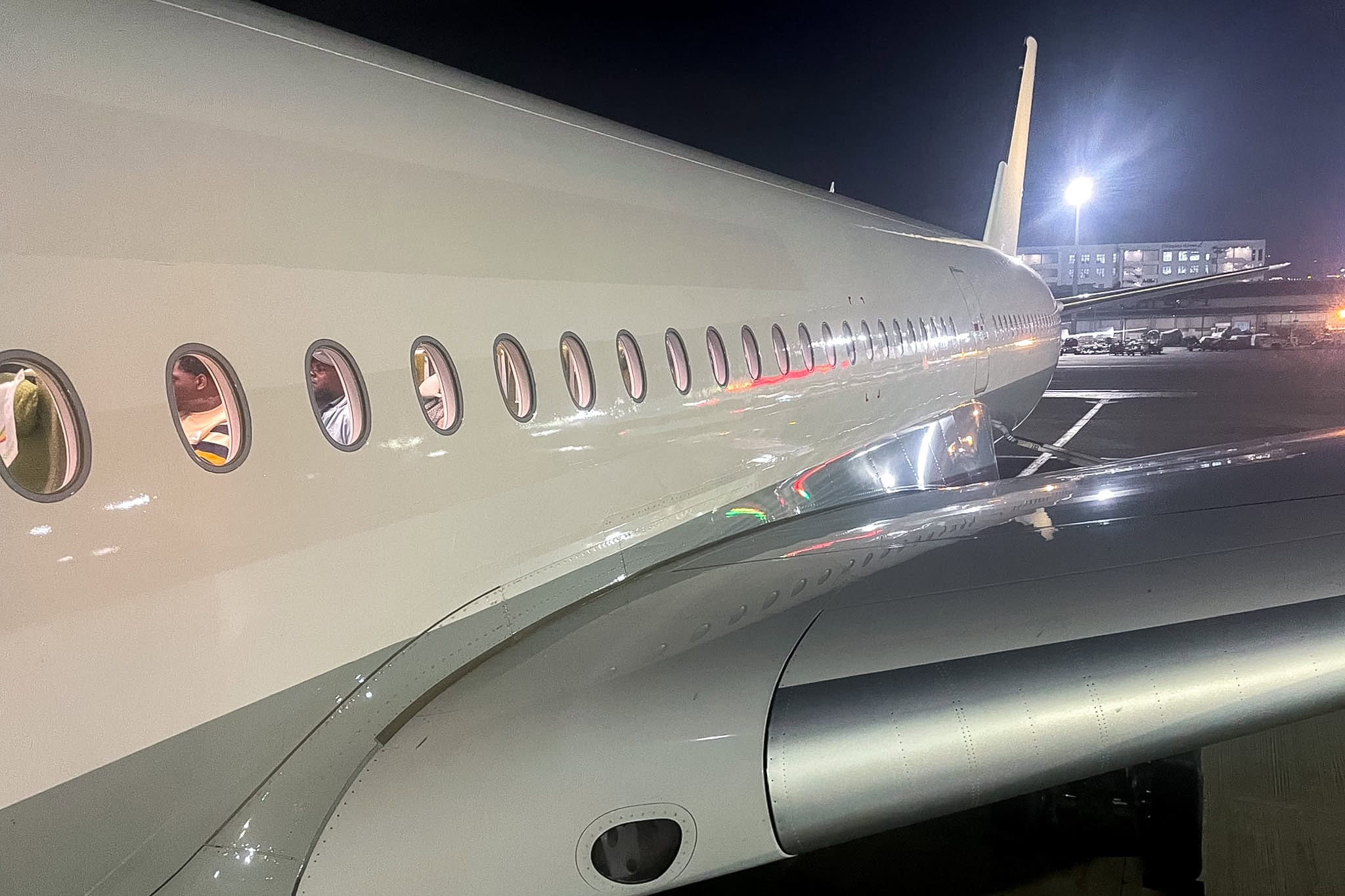
Up until this point, I’d been enjoying my business class experience, but I wasn’t completely convinced.
Sure, the extra space was nice. The food was fantastic and the service had been excellent. Even so, I kept thinking that if I were paying full price, I wasn’t sure it would be worth the money.
That opinion lasted right up until I stepped onboard the Airbus A350.
Now this felt like Business Class.
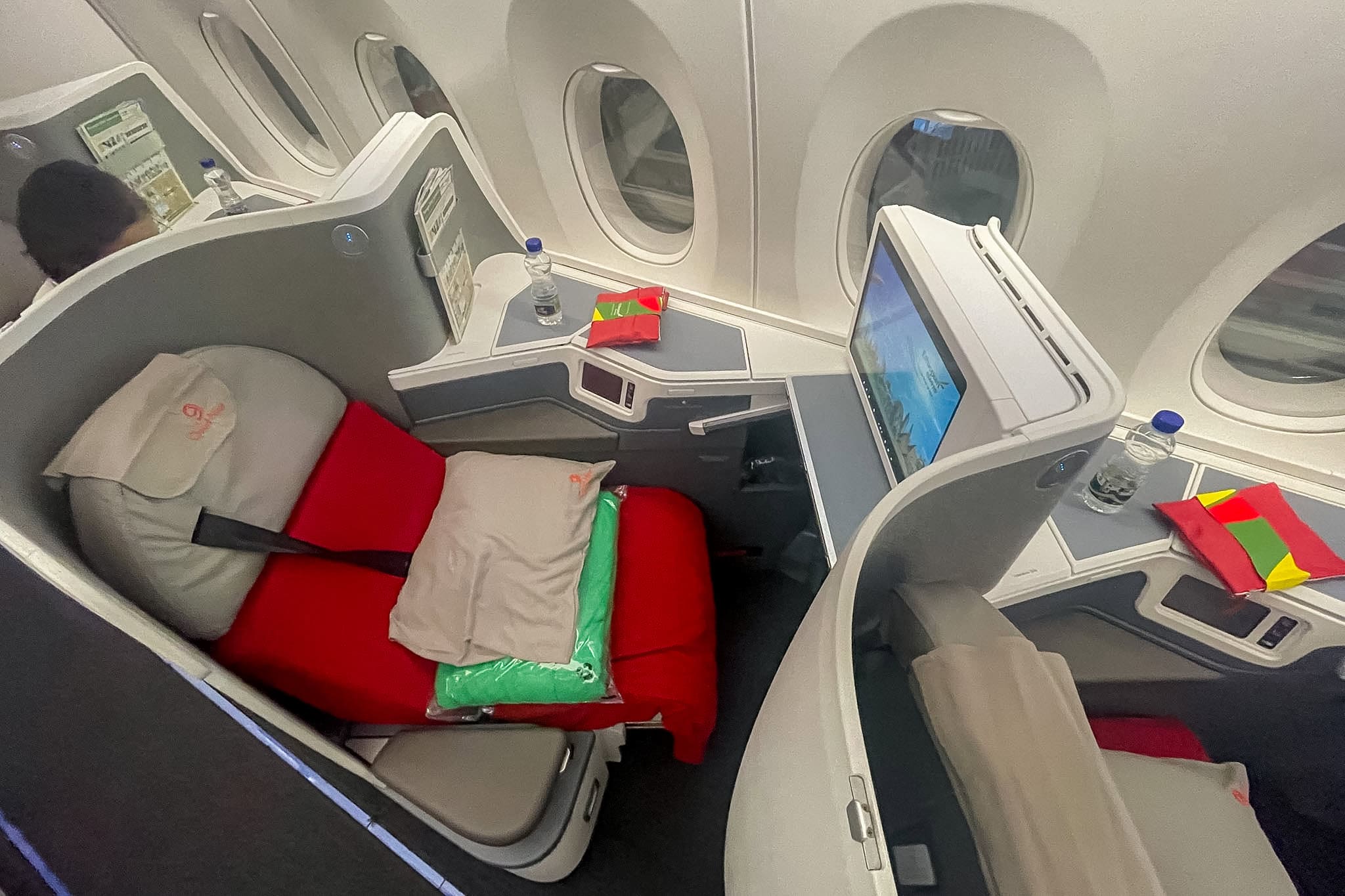
The cabin couldn’t have been more different from the Boeing 787 I’d just left behind. Instead of a 2-2-2 layout, the A350 features a modern 1-2-1 configuration. Every passenger has direct aisle access, and every seat feels like its own private little pod.
I was immediately impressed.
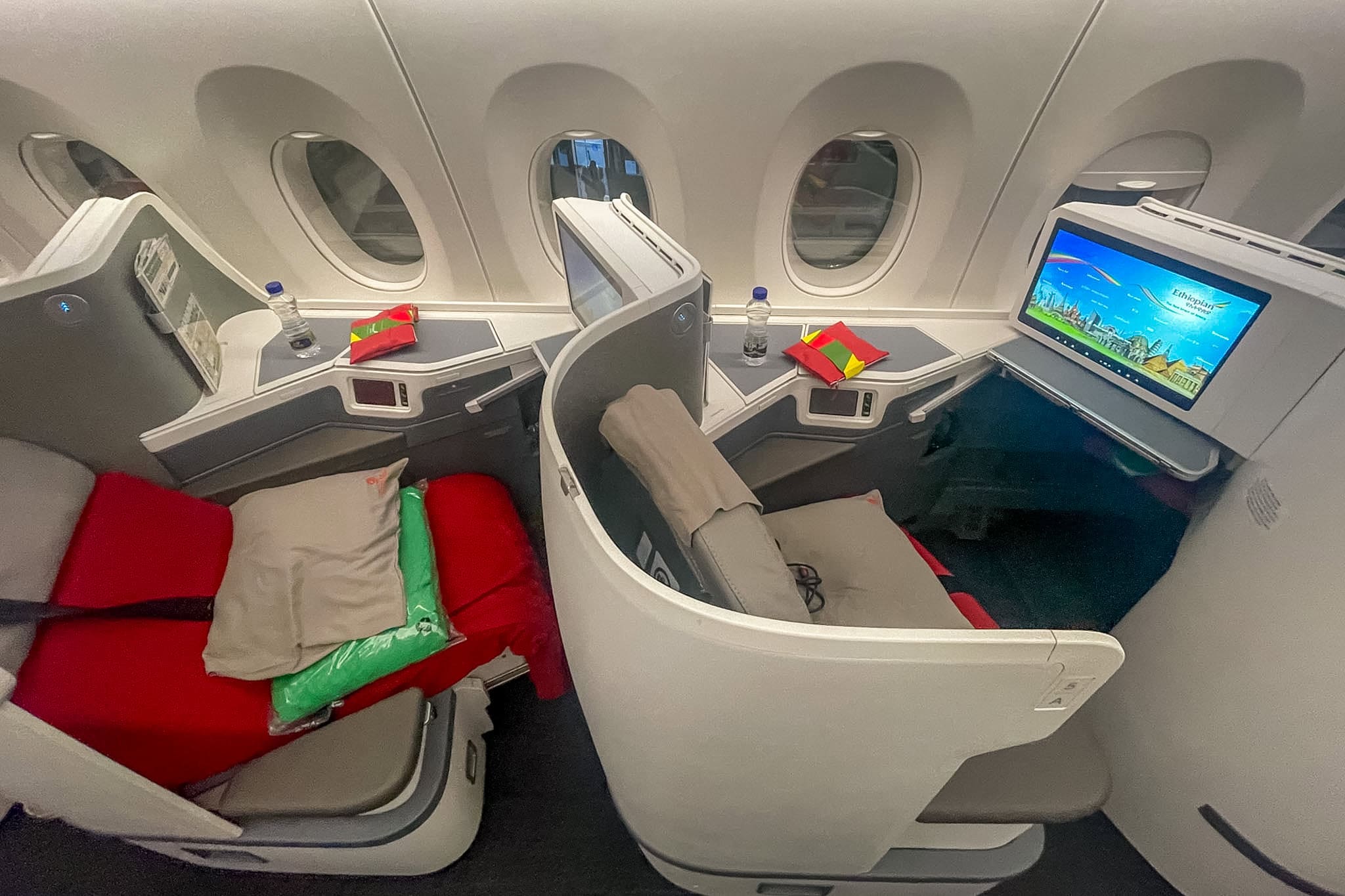
The cabin felt modern, spacious and thoughtfully designed. Rather than simply sitting in a large seat, it genuinely felt like I had my own personal space for the next eleven hours.
If the Boeing 787 cabin had shown its age, the A350 was the complete opposite.
I suddenly understood why people get so excited about flying Business Class.
The A350 Business Class Seat
I was seated in 6A, a window seat on the left-hand side of the cabin. The first thing I noticed was the seatbelt.
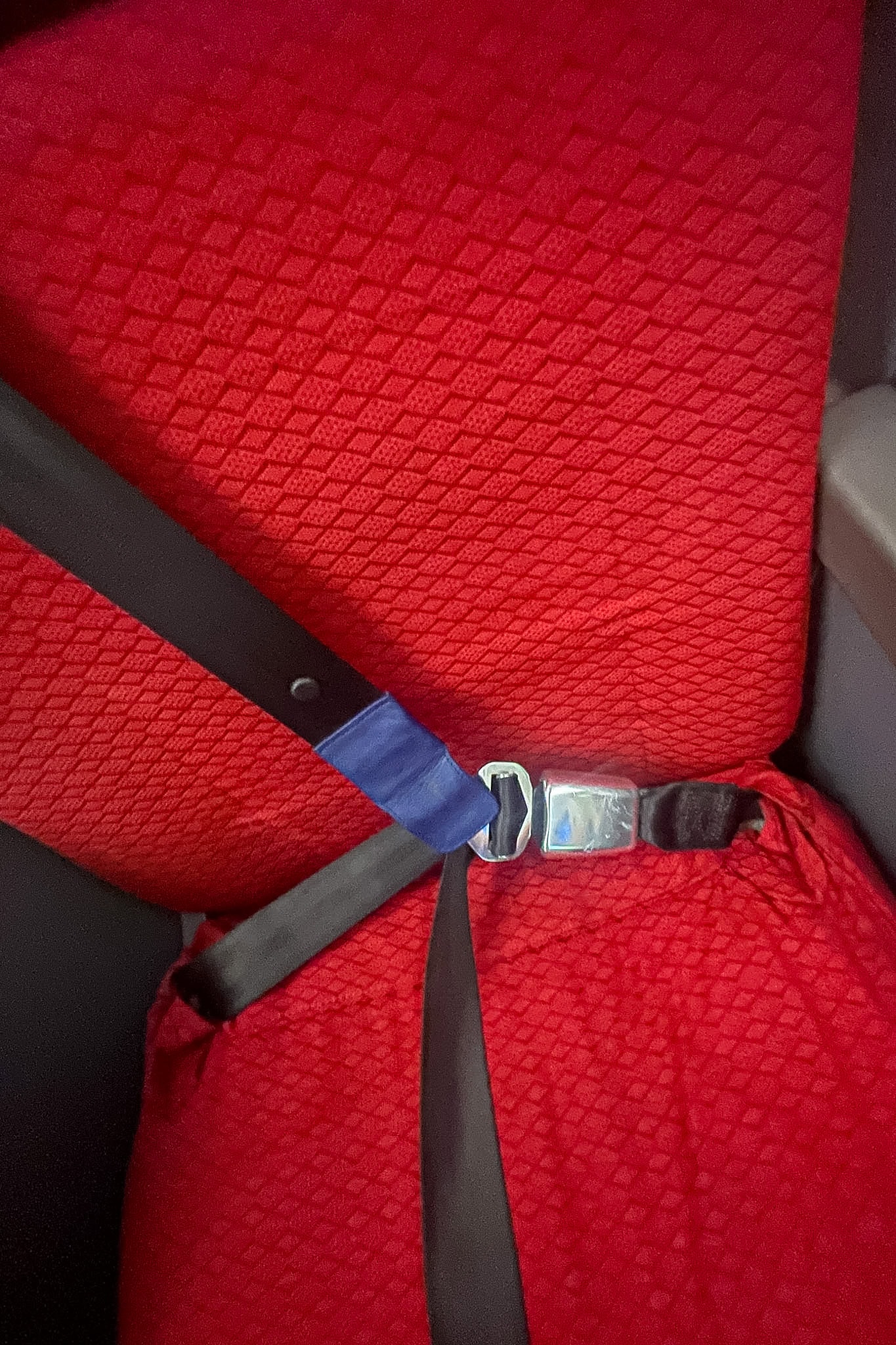
Unlike the standard aviation seatbelt I’m used to, this one had an additional shoulder strap, similar to what you would find in a car. It felt slightly unusual at first, but it makes sense when you are lying down in a fully flat bed.
The Business Class seats on the Airbus A350 are a huge step up from the Boeing 787. The 1 2 1 configuration means every passenger has direct aisle access, while the design of each seat creates a surprising amount of privacy.
The cabin itself also felt completely different. It was bright, airy and modern, both because of the natural light coming through the windows and the lighter materials used throughout the cabin. My window pod had two windows, which made the space feel even more open.
The middle seats have a privacy divider, which can be raised if you are travelling alone or lowered if you are travelling with someone. Even the centre seats felt like their own private little space.
Storage is where the A350 seat really impressed me. Beside the window was a small cabinet that opened to reveal the entertainment remote. It looked like a small tablet, although it was still attached by a cord. The cabinet also contained two USB ports, two power outlets and enough space to store smaller items during the flight.
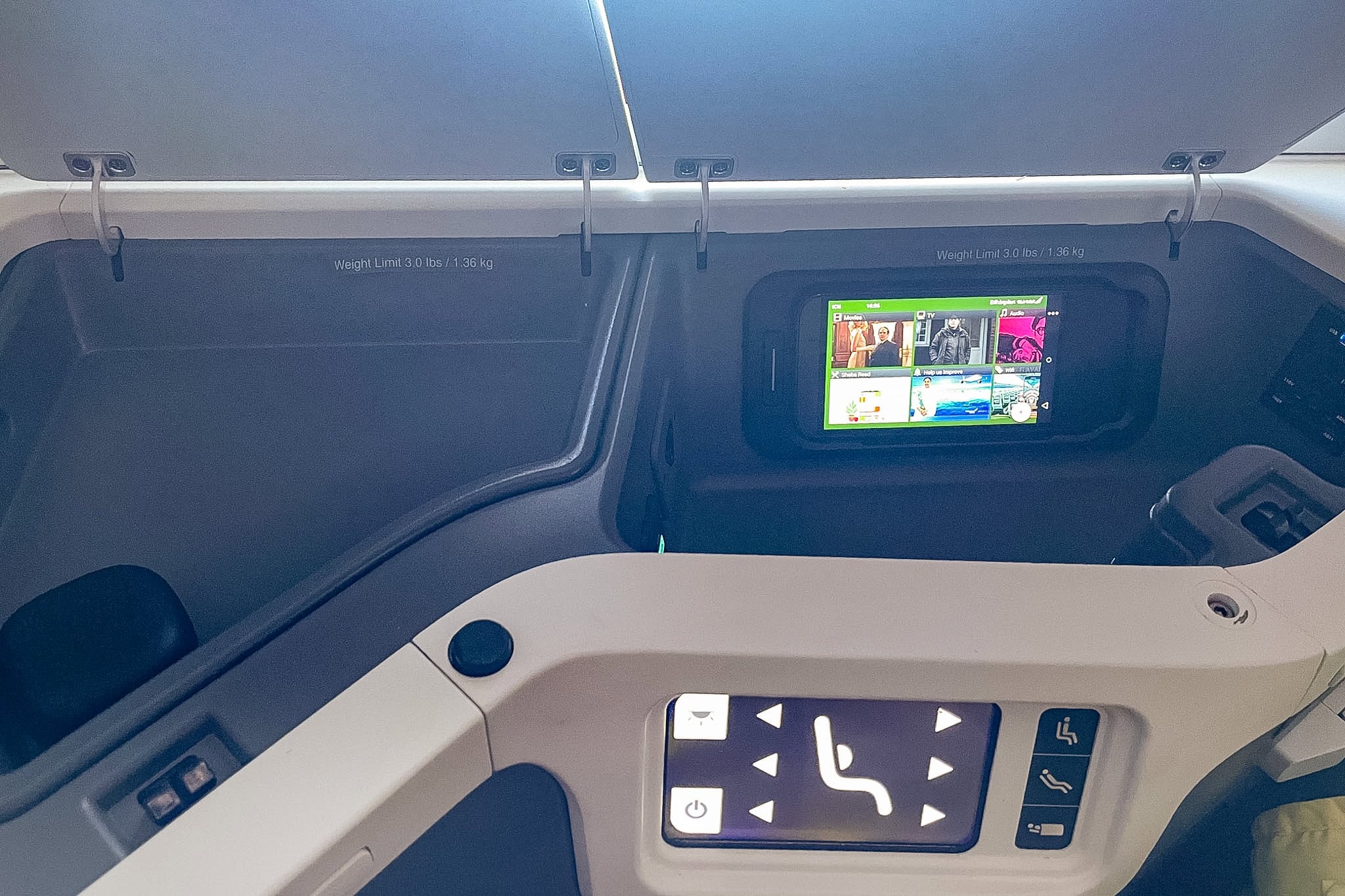
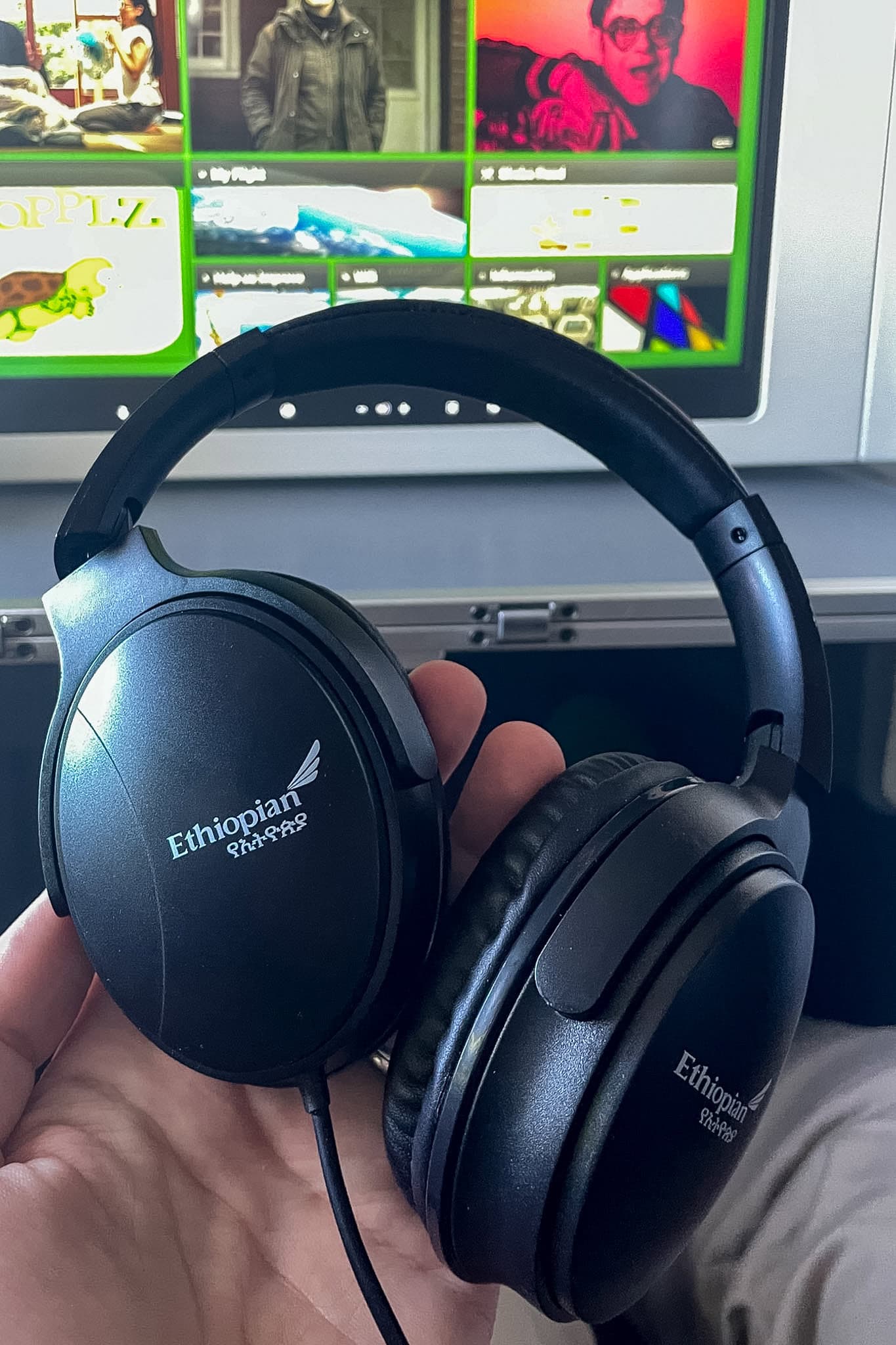
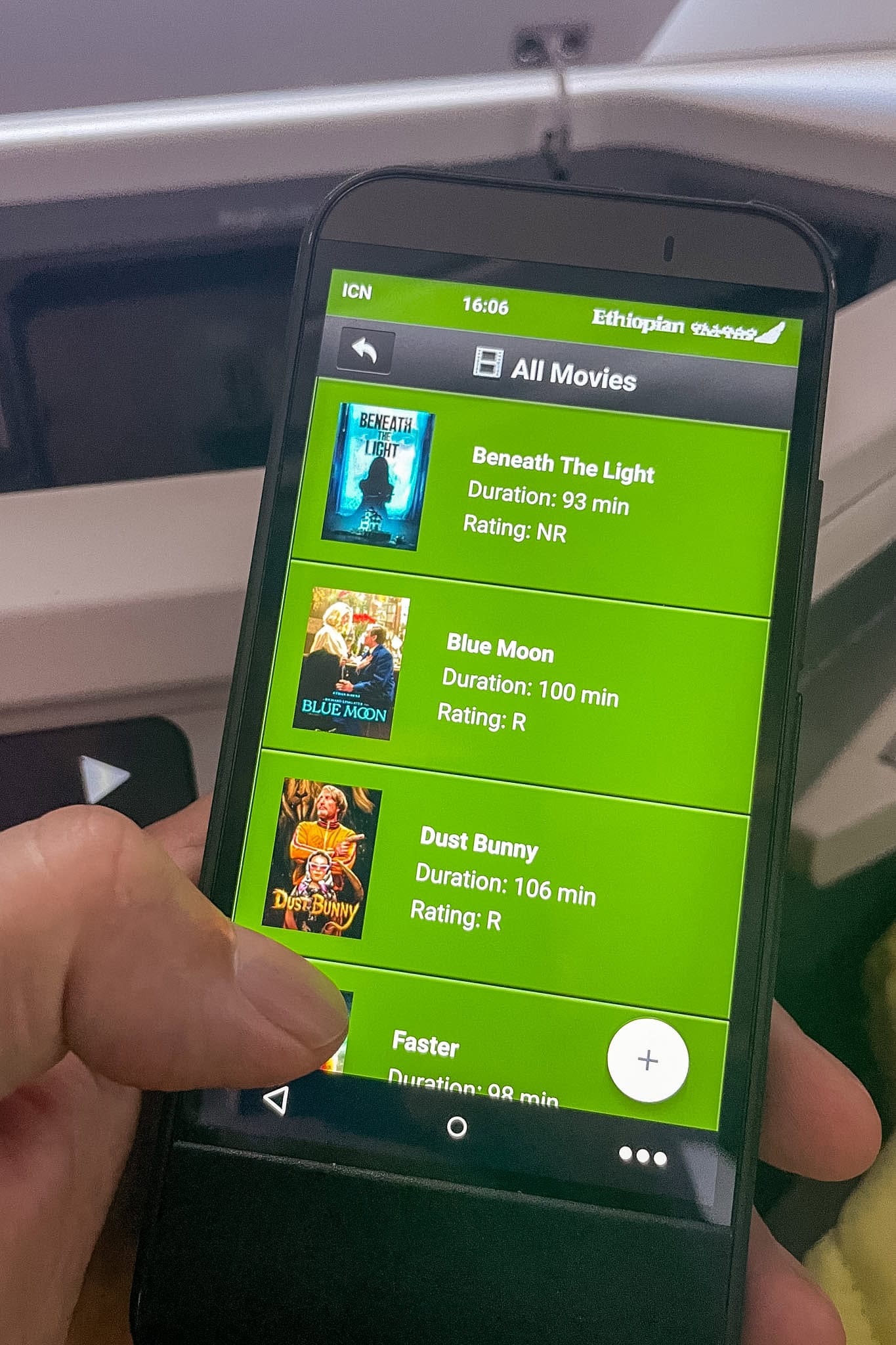
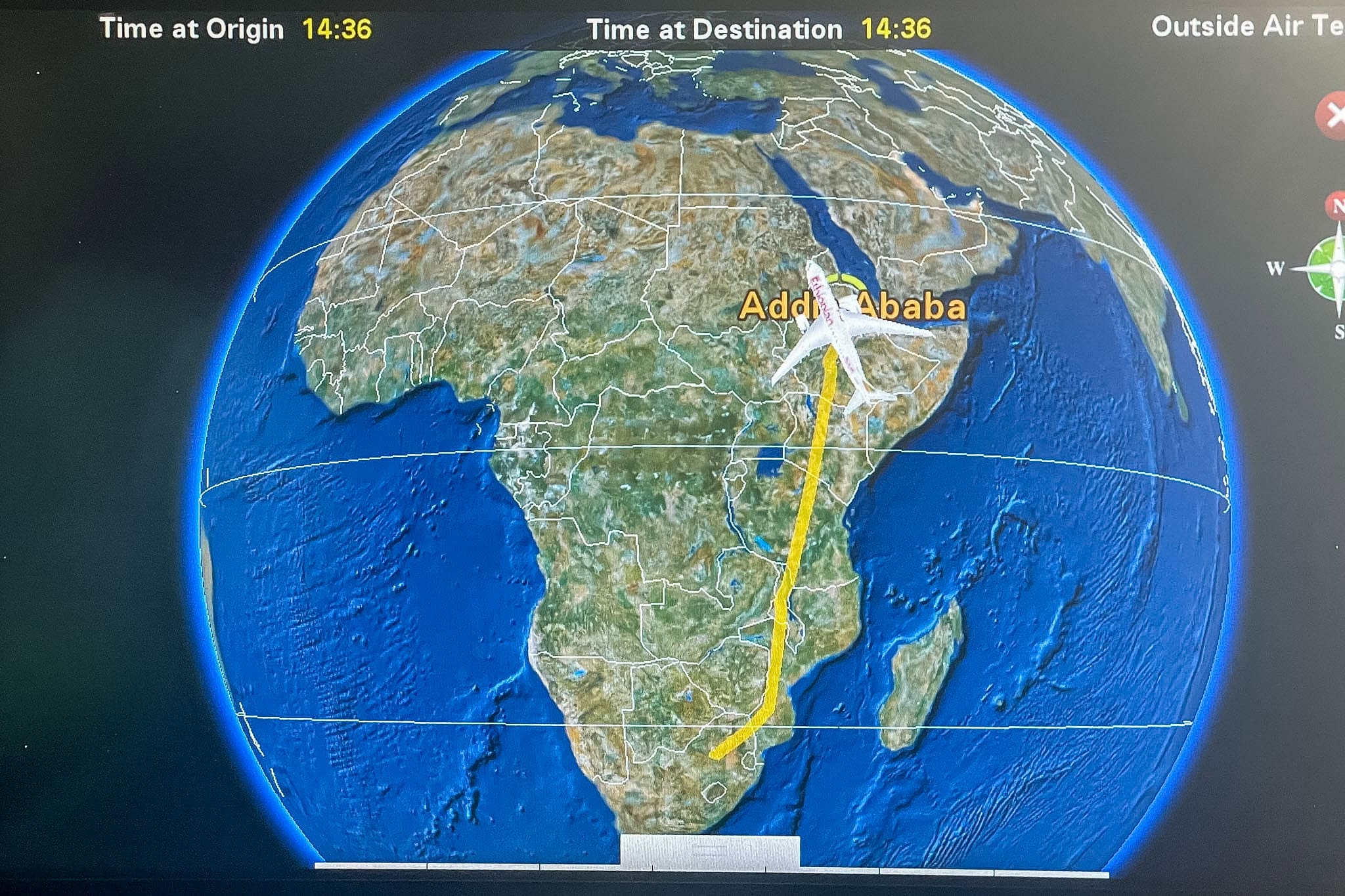
I knew from the first flight that the entertainment selection probably wasn’t going to keep me occupied, so I didn’t spend much time with the remote. I did want to follow our journey on the flight map, but unfortunately, it wasn’t available. Perhaps this was because the aircraft was brand new and some systems were still being set up.
WiFi was also unavailable on this flight.
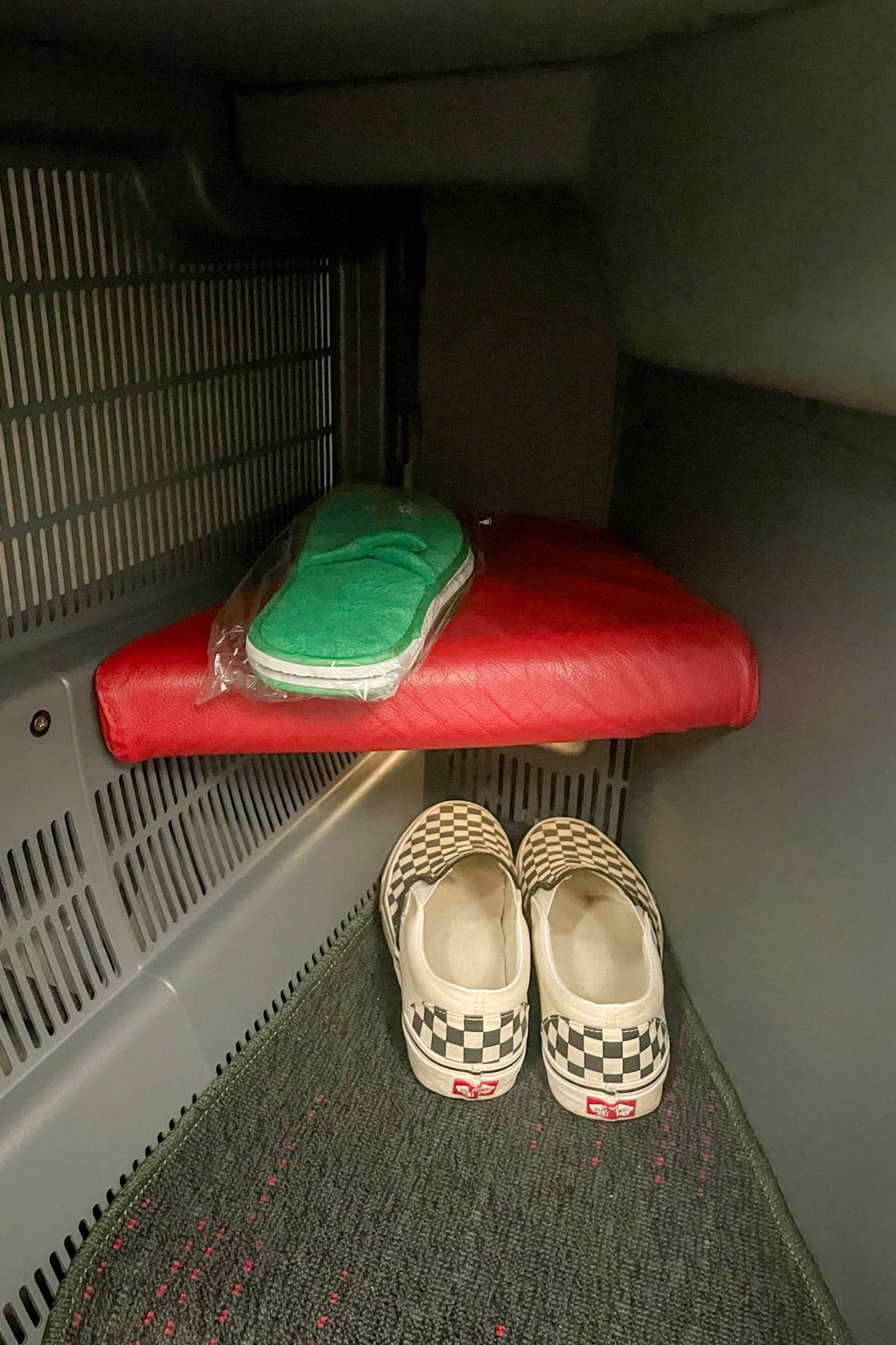
The footwell was another massive improvement over the Boeing 787. There was significantly more space, and my feet no longer felt like they were being squeezed into a warm triangular box. At 187 cm tall with size 12 shoes, this was a noticeable difference.
The seat also converted into a completely flat bed. After the almost flat experience on the previous flight, this felt like the upgrade I had been hoping for.
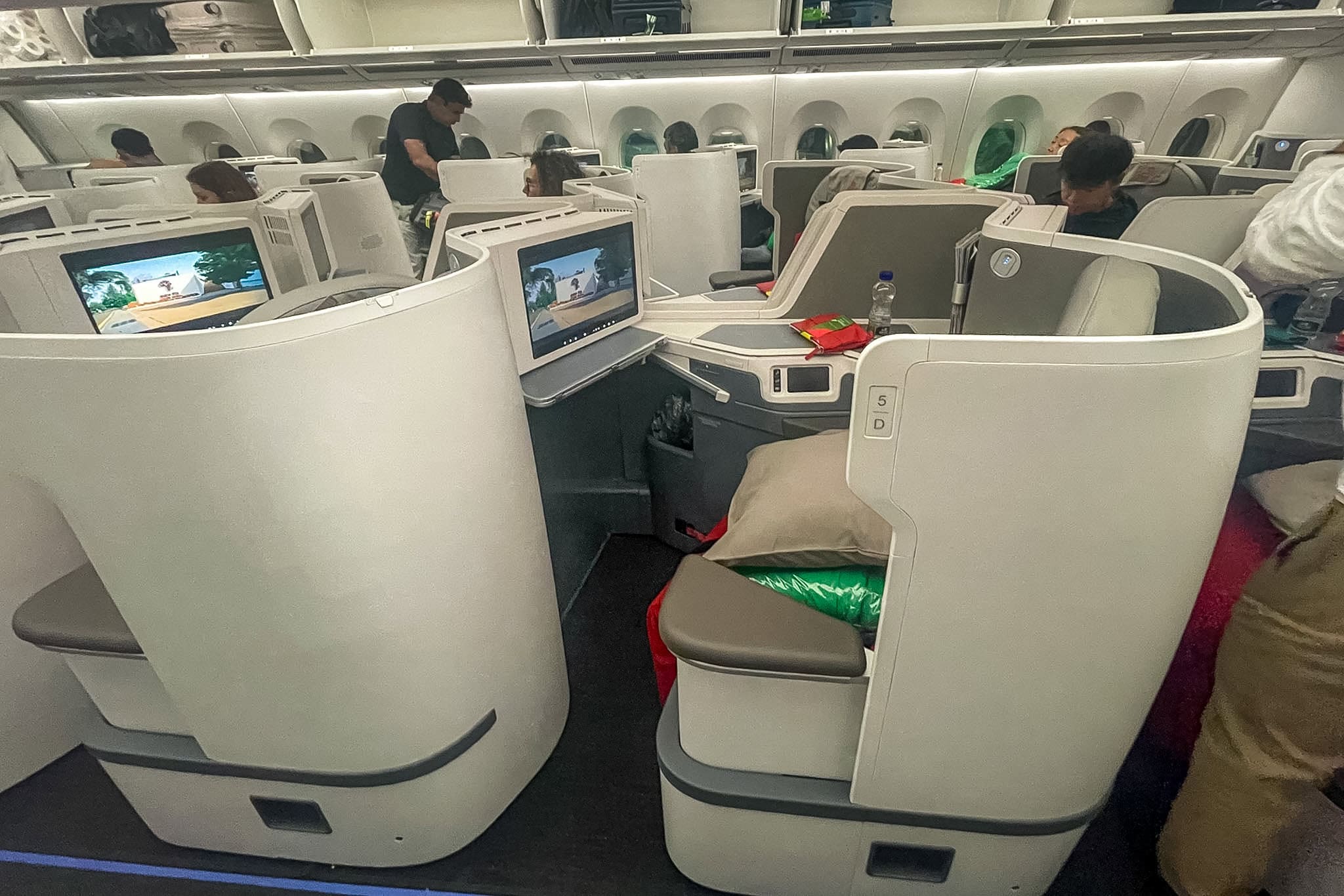
After dinner service, I converted my seat into bed mode and settled in for the night. I ended up sleeping for most of the flight, which says a lot about how comfortable the seat actually was.
This was the moment Ethiopian Airlines Business Class finally clicked for me. The Boeing 787 was a comfortable way to fly. The A350 felt like the kind of Business Class experience people talk about.
Ethiopian Airlines Business Class Food, Drinks & Service on the A350
Food and drinks remained one of the highlights on the second flight. Sadly, there was still no traditional Ethiopian food on the menu, which was becoming my biggest disappointment with the Ethiopian Business Class experience.
Before take off, the purser came through the cabin to take our dinner orders. By this stage, I was feeling much more comfortable with my new life at the front of the plane and decided to ask for a wine recommendation.
She suggested the Rift Valley Syrah from Ethiopia. Her reasoning was simple. We were flying Ethiopian Airlines from Ethiopia, so why not try an Ethiopian wine?
Fair point.
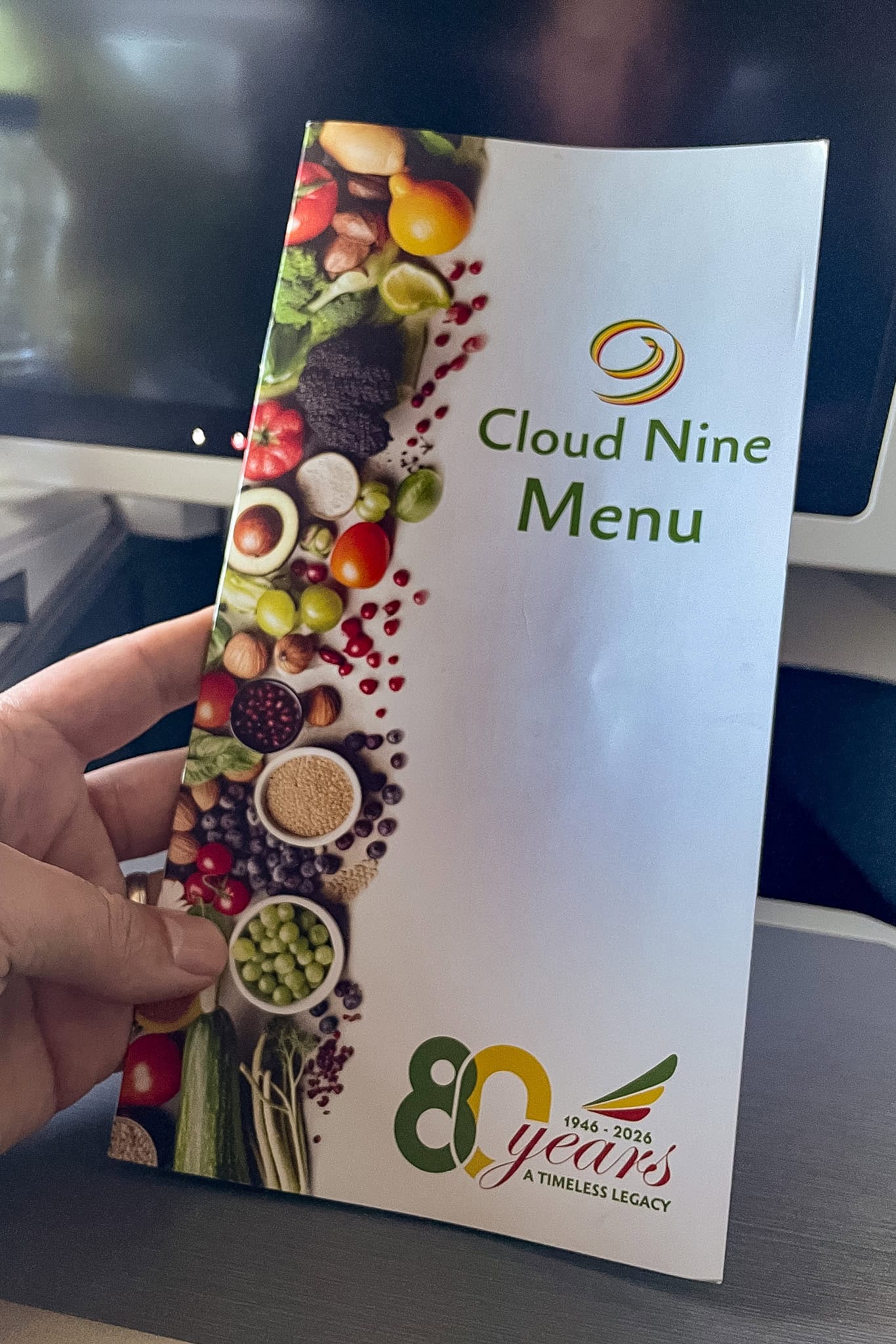
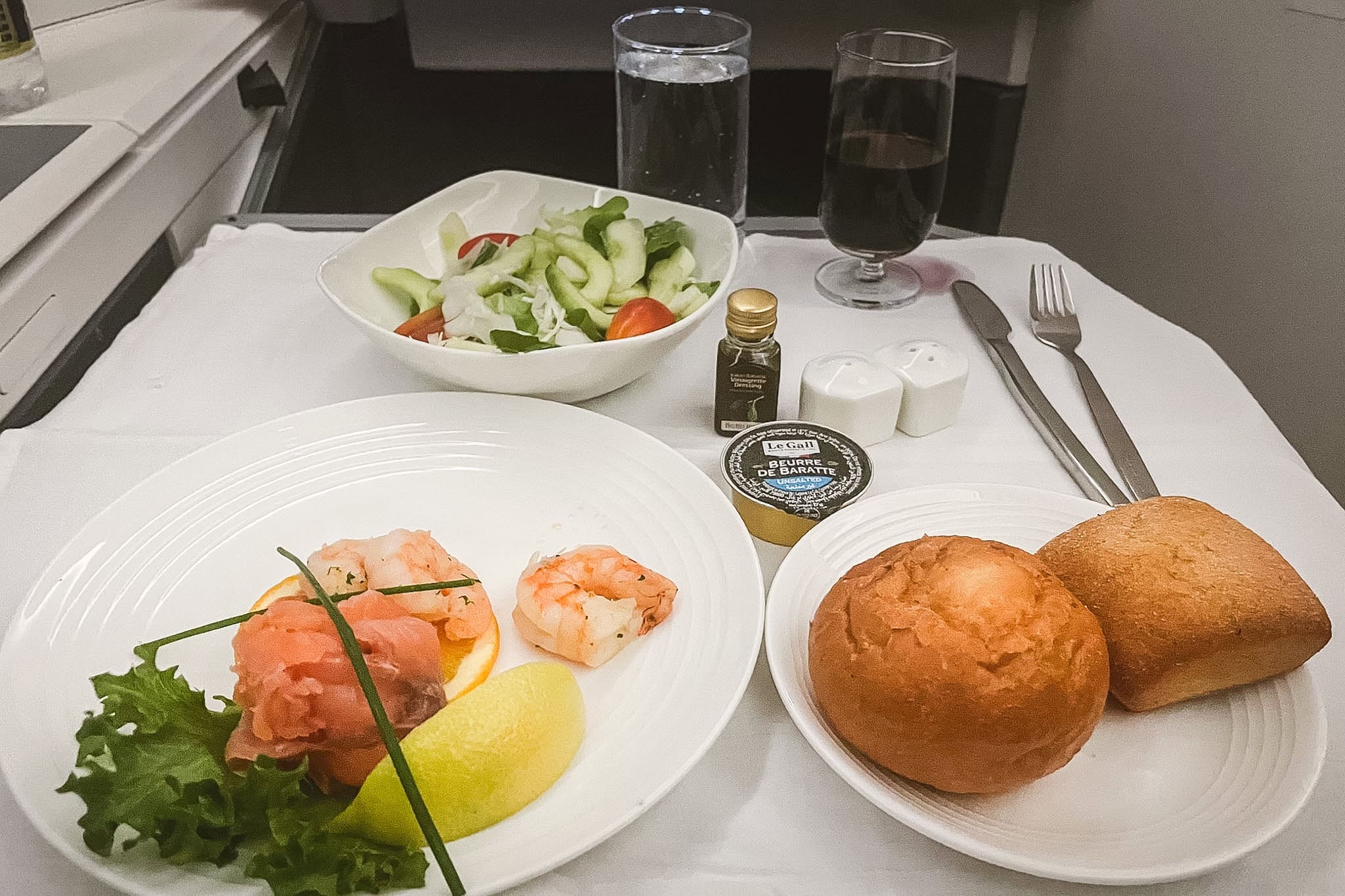
Dinner came with tempting choices. I
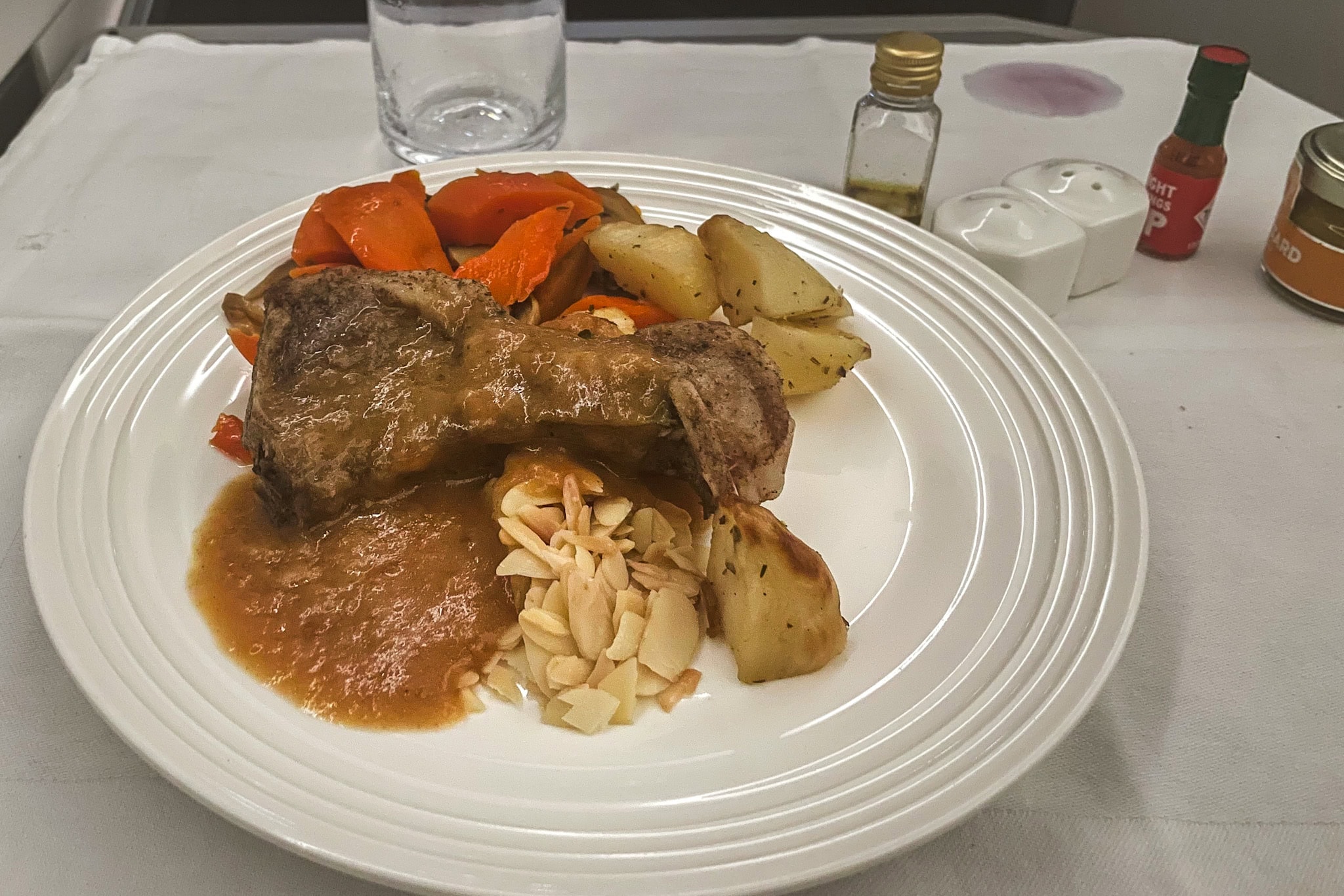
started with salmon and shrimp, along with a selection of bread rolls and a fresh salad. The main course was lamb chops with almonds, and it was excellent. The portion was generous, the flavours were great and it was genuinely one of those moments where you remember that airline food can occasionally surprise you.
When the dessert trolley arrived, I immediately spotted the cheese platter. Apparently, Business Class had turned me into someone who gets excited about cheese at altitude.
In the end, I went with the Häagen-Dazs ice cream instead. A difficult decision, but one I was happy with.
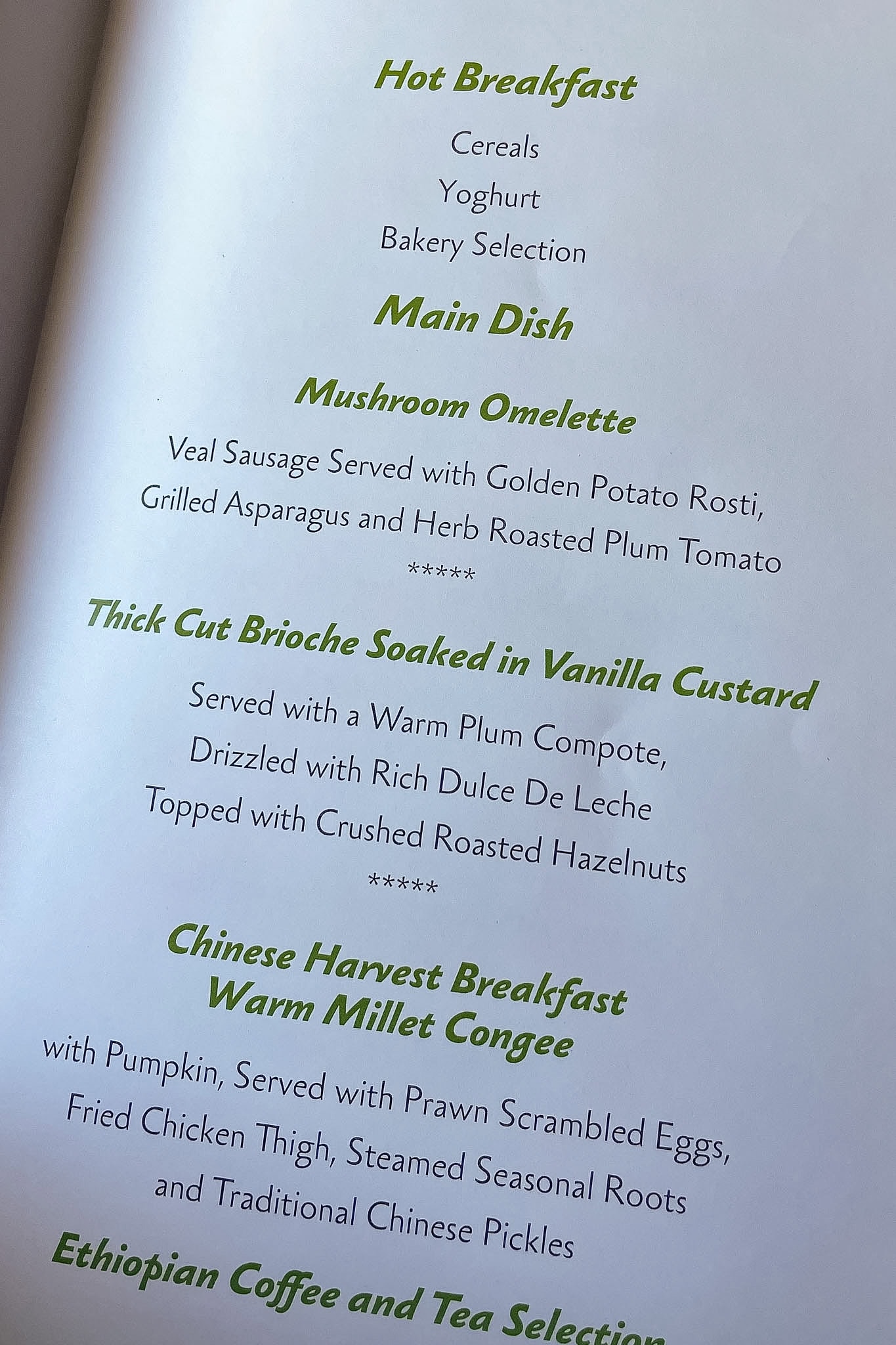
Breakfast before landing in Seoul was a more mixed experience. It started well with cornflakes, a croissant, fresh fruit, juice and a strong Ethiopian coffee.
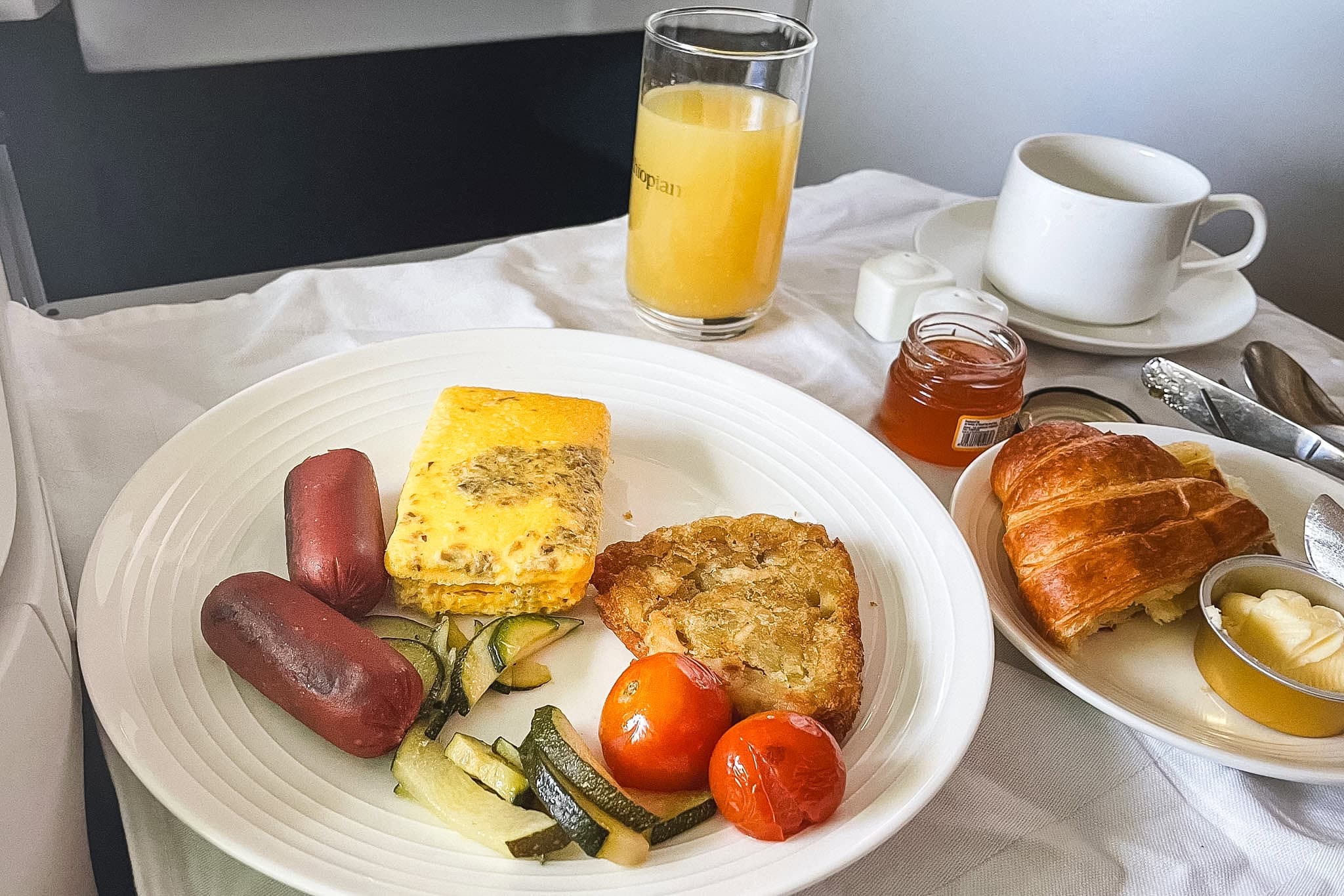
I chose the eggs as my main dish, but this was where the experience lost some altitude. The meal was forgettable and felt much closer to an economy class breakfast. The sausages in particular belonged in the back of the plane.
Looking back, I should have chosen the French toast brioche with custard instead.
The service throughout the flight, however, remained excellent. The crew were warm, attentive and genuinely friendly without ever feeling overbearing. It was this hospitality, more than any single meal or feature, that continued to make Ethiopian Airlines stand out.
The Lie Flat Seats in Ethiopian Airlines Business Class A350
This was the part of the flight I was most curious about.
As someone who normally flies economy, a lie-flat bed on a plane still feels like a bit of a luxury. Would I actually sleep? Would I find it comfortable? Or would I spend the night awkwardly trying to find a position that works?
Thankfully, the answer was simple.
After dinner, I converted my seat into bed mode, tucked myself in and fell asleep.
The fully flat bed made a huge difference. I could comfortably sleep on my back or on my side, and the temperature in the cabin was just right. It never felt too warm or too cold, which can make or break a long overnight flight.
There wasn’t much else to report, and that is probably the best compliment I can give. No loud disturbances, no uncomfortable moments and no constantly waking up to shift positions.
I managed a solid five to six hours of sleep.
Usually, I arrive in Seoul after the long journey from Johannesburg feeling like a zombie. Between the flights and the time difference, the final few hours can be brutal.
This time was completely different.
I walked off the plane feeling surprisingly fresh and ready to start exploring Seoul. For me, that is the biggest benefit of flying Business Class. It isn’t just about the nicer seat or the better food. It’s arriving at your destination feeling like you can actually enjoy the first day.
Arrival in Seoul
We arrived right on time at Incheon Airport.
I was one of the few passengers getting off in Seoul. Most of the cabin seemed to be continuing onwards to Tokyo Narita, heading towards the transit area, while I made my way towards immigration.
Unfortunately, my smooth Business Class experience came to an abrupt end there.
There is no special arrival treatment for Ethiopian Airlines Business Class passengers at Incheon. No dedicated immigration lane, no priority escort and no shortcut through the airport.
The Business Class bubble disappears the moment you step off the plane.
Suddenly you’re back with everyone else, filling in immigration forms, joining the queues and waiting for your bags. After a flight where I had a lie flat bed, wine recommendations and a cheese platter at 35,000 feet, standing in an immigration line was a rather quick reminder that the airport doesn’t care which end of the plane you sat in.
Immigration was incredibly busy that afternoon. I waited in line for just under an hour, which was the longest I’ve ever waited at Incheon in more than 15 years of flying there.
After what felt like an eternity, I finally made it to the counter, received my entry stamp with a smile and headed downstairs to baggage claim.
My priority tagged suitcase was already waiting for me, circling the carousel with the other bags.
If Seoul is your final destination too, I’ve put together a detailed Seoul Travel Guide covering everything from where to stay and what to eat, to the best things to do during your visit.
Is Ethiopian Airlines Business Class Worth It?
After this journey, I can honestly say I thoroughly enjoyed Ethiopian Airlines Business Class.
Was it the most polished Business Class experience in the world? No. If you are expecting the ultra-refined service, designer amenity kits and perfectly curated details of some Middle Eastern carriers or airlines like Singapore Airlines, this probably isn’t that.
There was no Tom Ford cologne hiding in the amenity kit. The cabin on the Boeing 787 was showing its age. Some of the little details were a bit rough around the edges.
But that is also part of the charm.
Ethiopian Airlines Business Class felt less like a perfectly packaged luxury product and more like a genuine travel experience. The warmth of the crew, the excellent food, the Ethiopian touches and the fantastic A350 cabin all combined into something I was genuinely happy to have experienced.
Would I pay for it myself?
If money were no object, absolutely.
But I’m a normal guy who would probably rather spend US$4,000 on an amazing experience at my destination than on a plane ticket to get there. At that price point, I would struggle to justify buying this flight with cash.
This is where airline miles come in.
If you are collecting points or airline miles and wondering where to spend them, this is exactly the kind of redemption that makes all those flights and credit card points worthwhile. Getting a long haul Business Class experience between Africa and Asia, with an excellent lounge experience in Addis Ababa and a fantastic A350 flight, is a seriously good use of miles.
For me, turning 75,000 Asiana Club miles into this experience was one of the best redemptions I’ve ever made.
Who is Ethiopian Airlines Business Class for?
Ethiopian Airlines Business Class is ideal if:
- you’re redeeming airline miles
- you’re flying the A350
- you’re travelling long haul between Africa and Asia or North America