
There is a certain magic in the way Seoul refuses to let go of its roots. In a city where you can order a hot meal with a single tap and have it at your door in minutes, you might expect the old-school marketplaces to have faded into the background. But they haven’t. If anything, they are having a massive moment.
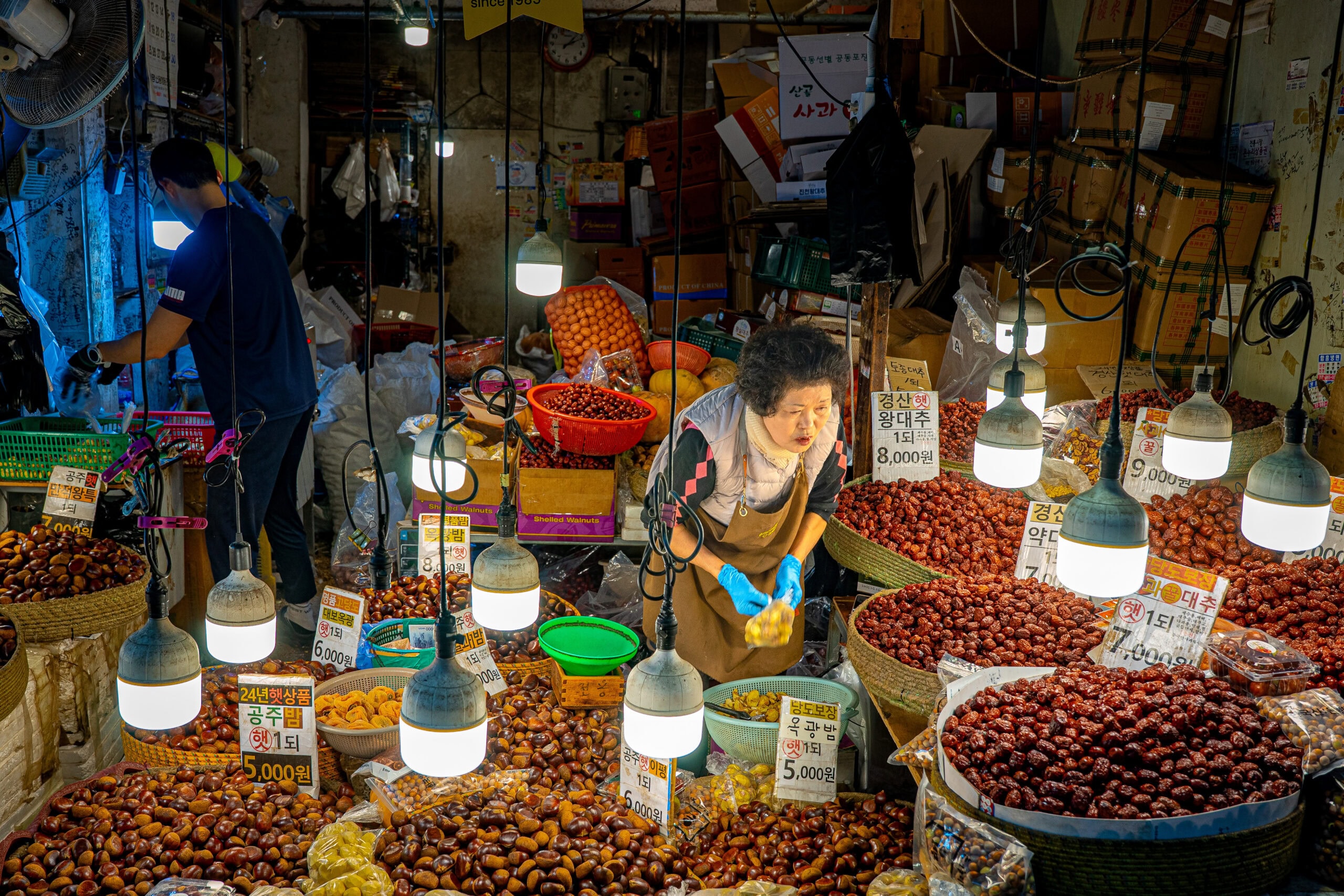
It is incredibly refreshing to find that the best traditional markets in Seoul to visit aren’t just preserved relics but an essential part of the urban fabric, and they aren’t going anywhere.
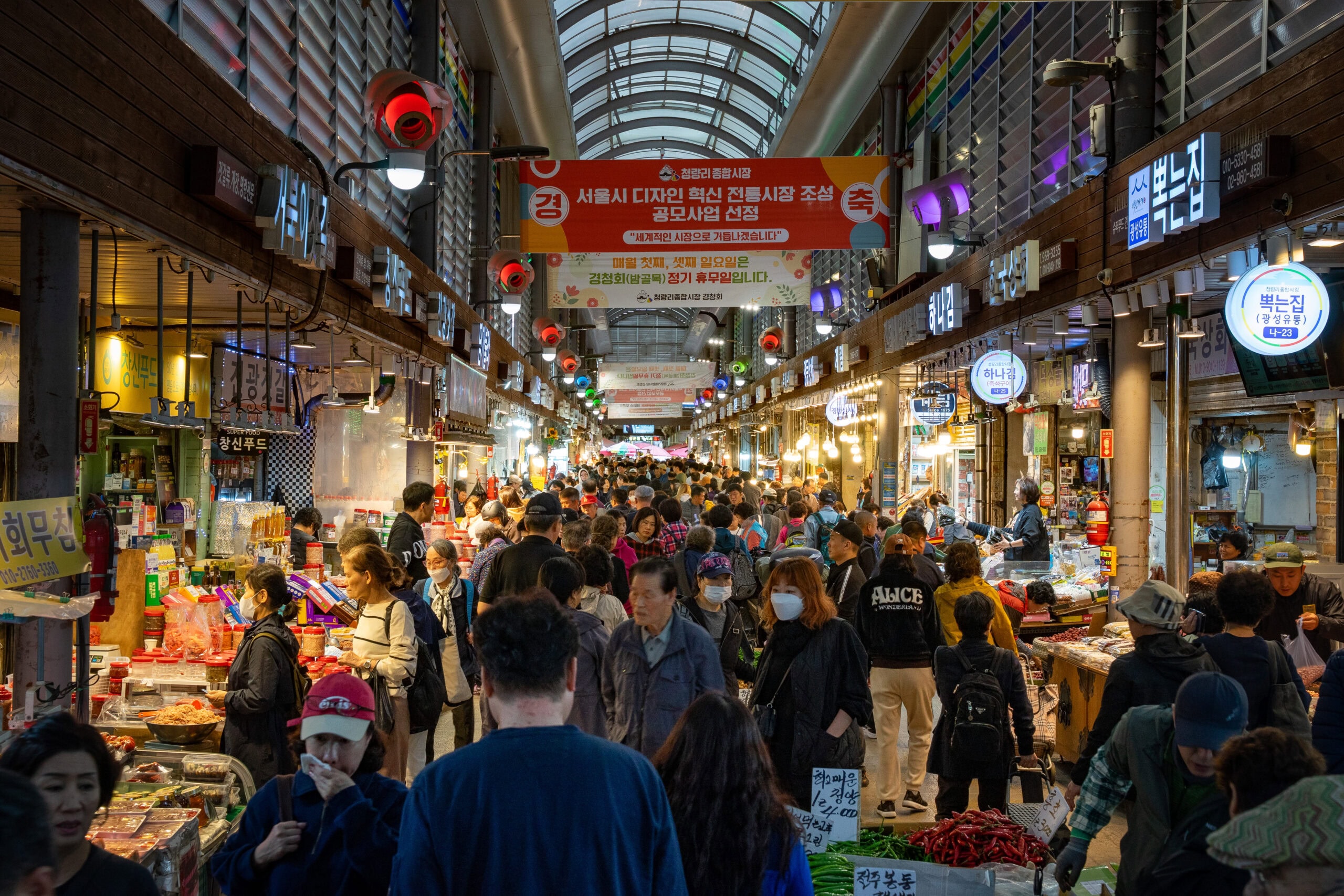
In fact, a younger generation of Koreans is flocking back to these stalls, drawn by a newtro (new-meets-retro) vibe that links them to their culture in a way a shiny mall never could. From hidden rooftop cafes to viral food stalls, many corners of these ancient spaces have become the trendiest hangouts in town.
For us travellers, it’s the ultimate window into a world where ancient traditions and contemporary cool thrive side-by-side.
Let’s go for a wander through my favourites.
Please note: This post may contain affiliate links. This means I may earn a commission if you make a purchase by clicking a link (at no extra cost to you). As an Amazon Associate, I earn from qualifying purchases. Learn more.
Top Traditional Markets in Seoul
Gwangjang Market
(The Food Icon)
How to get there: Subway Line 1 to Jongno 5-ga Station, Exit 8 or 9 (Exit 9 puts you right at the food entrance).
Best for: Trying a huge variety of street food in a historic, central location.
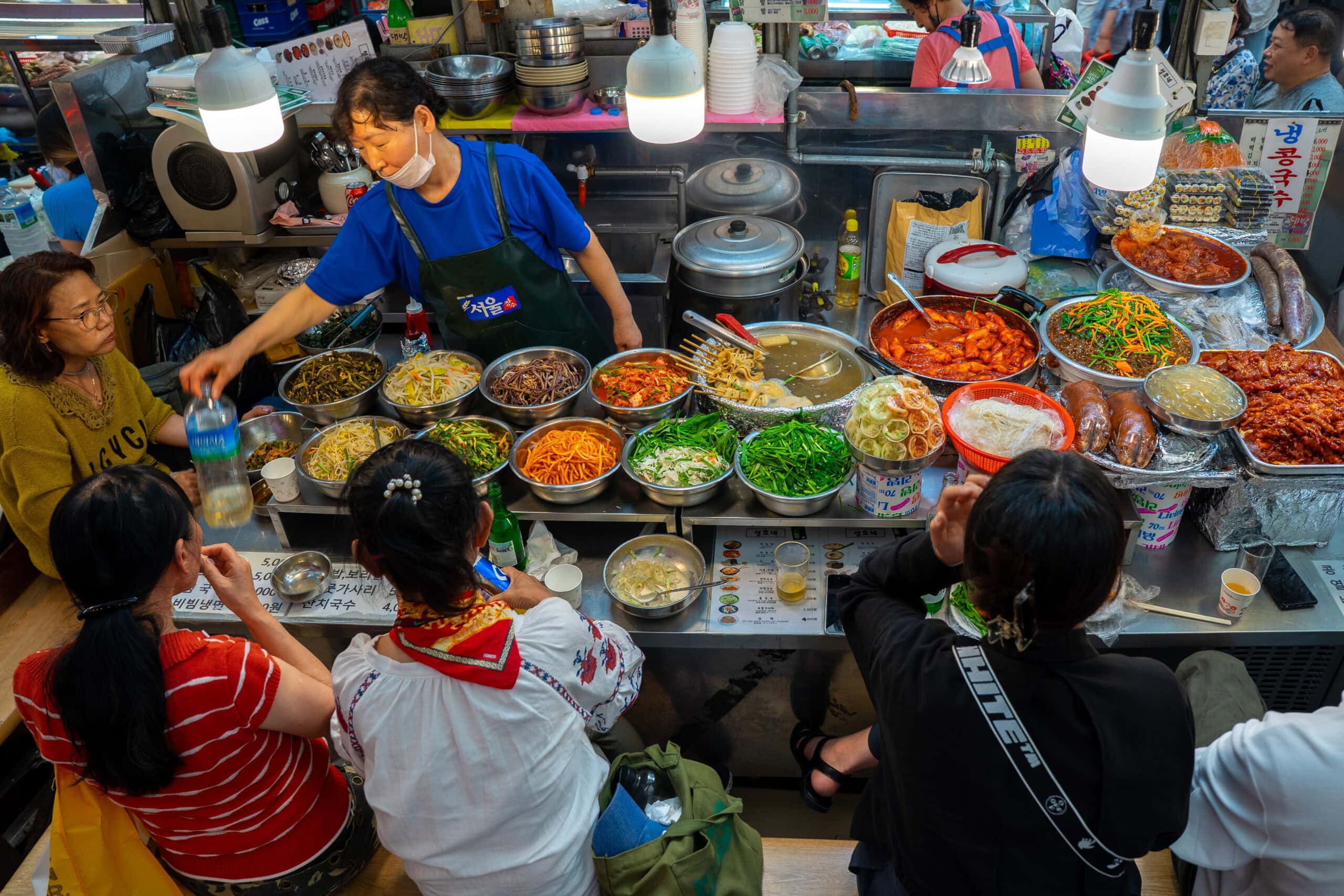
Gwangjang is arguably the best food market for tourists in Seoul. Its location makes it incredibly convenient, as it sits within easy walking distance of major hubs like Myeongdong, Insadong, and Dongdaemun. Established in 1905, it is also one of the oldest traditional markets in the country.
While its fame means you will see plenty of other travellers, it remains a favourite for locals too. On my most recent visit, I let my Korean in-laws choose our lunch spot, and my mother-in-law vetoed the trendy cafes of the city in favour of a pot of spicy cod soup at Gwangjang Market.
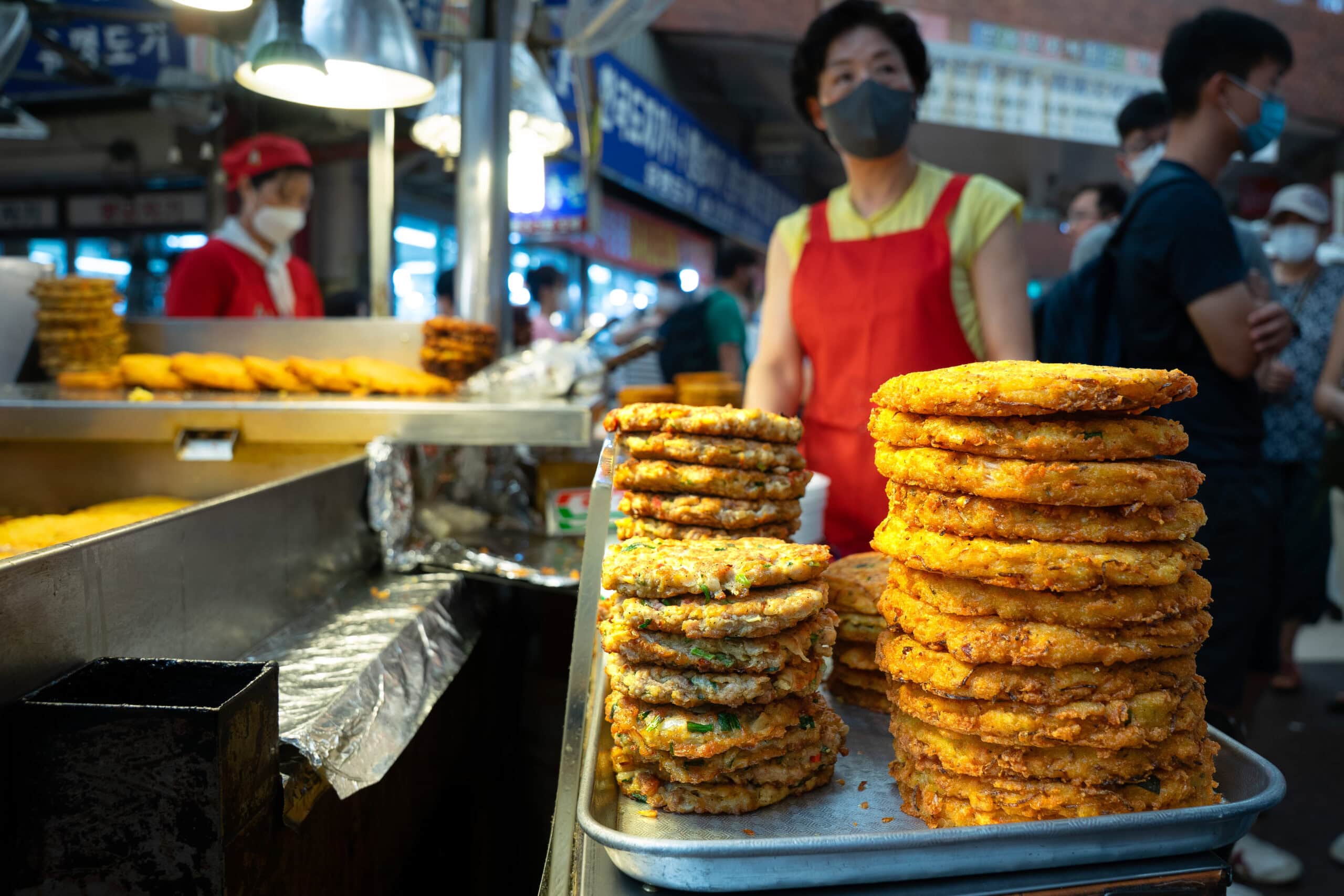
The star of the show at Gwangjang is bindaetteok, a thick, golden-fried patty made from ground mung beans. These savory pancakes are ground on-site using traditional stone mills, and you can choose between a classic vegan version or one loaded with meat.
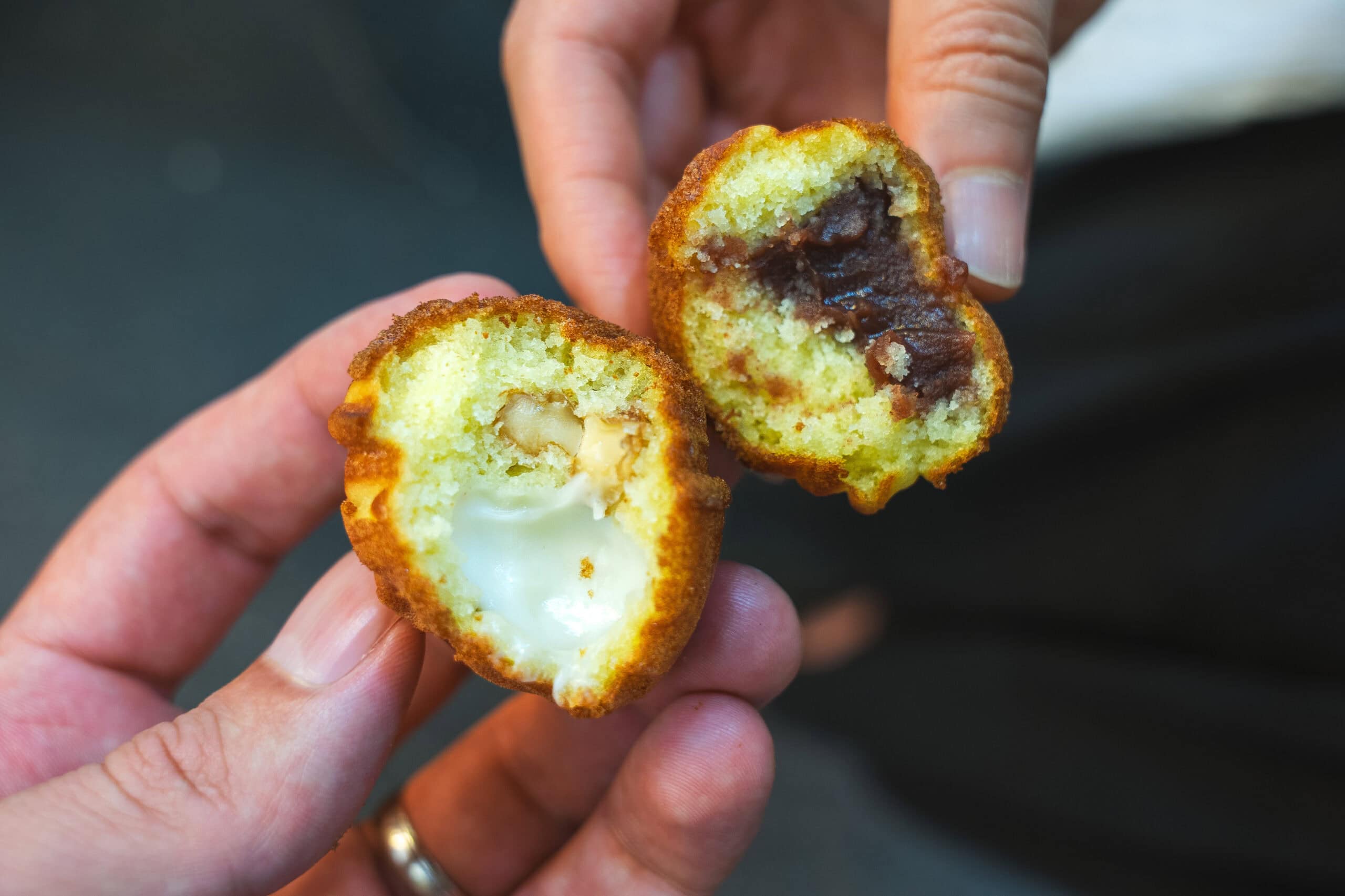
(walnut-shaped cake filled with custard or red bean)
Beyond the pancakes, you will find endless stalls serving mandu (dumplings), mayak kimbap (addictive mini seaweed rolls), hand-cut noodles, and the famous twisted Korean donuts.
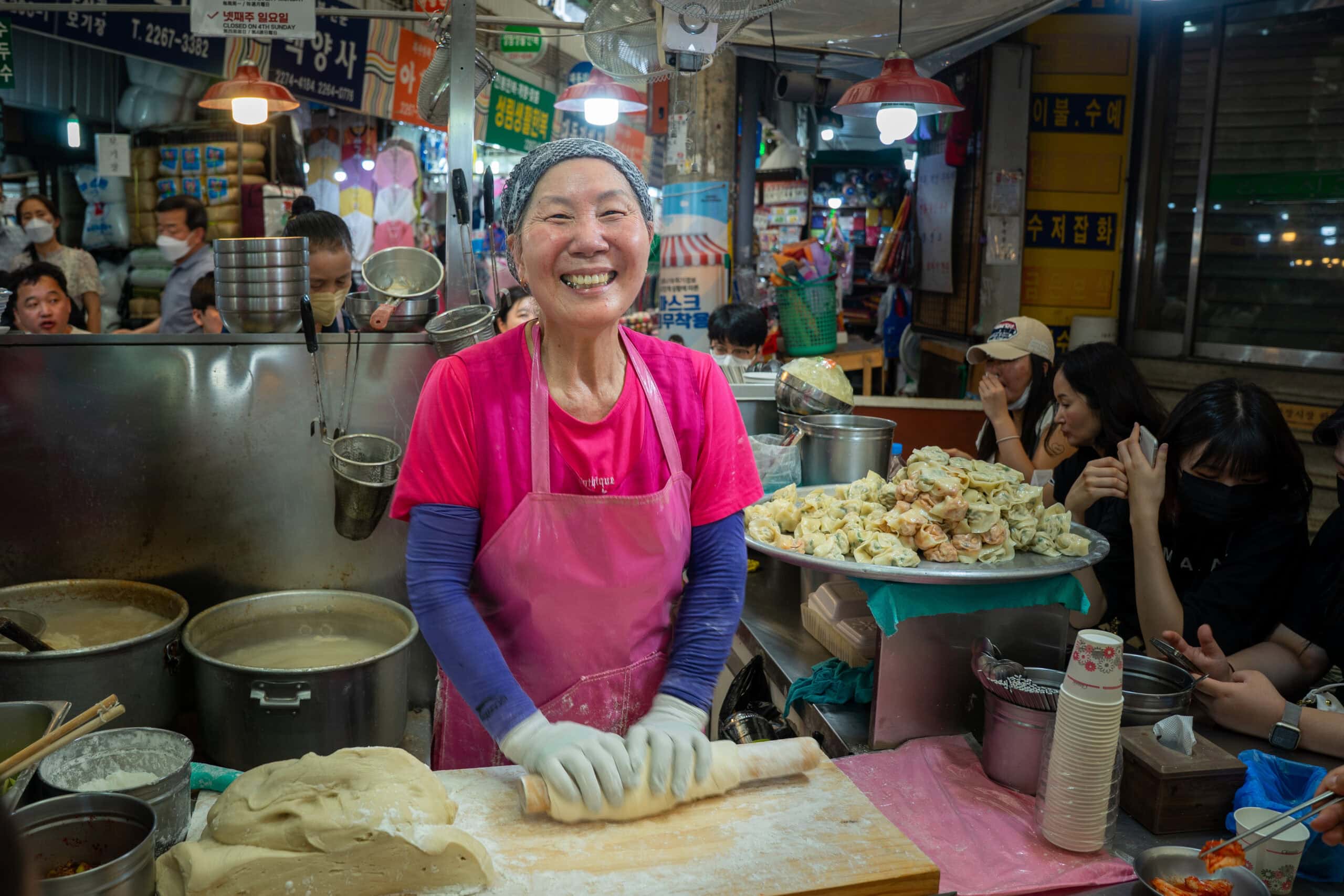
One spot you cannot miss is the Gohyang Kalguksu stall, run by Cho Yonsoon. She was featured on the Netflix series Street Food: Asia and has become a local celebrity. We sat down for her kalguksu (hand-cut noodles) and dumplings, and they lived up to the hype.
Despite the constant crowds and cameras, she is a remarkably kind and bubbly woman who still prepares every bowl with a smile.
Read more in my detailed Gwangjang Market Guide.
Namdaemun Market
(The Everything Market)
How to get there: Subway Line 4 to Hoehyeon Station, Exit 5.
My Tip: While Hoehyeon is the official stop, I find it much easier to walk here from Myeongdong. It’s a flat, 10-minute stroll past the Shinsegae Department Store, and it beats navigating the deep tunnels and stairs of the Hoehyeon subway station.
Best for: An energetic market atmosphere, cheap Korean-style clothes, and unique souvenir socks.
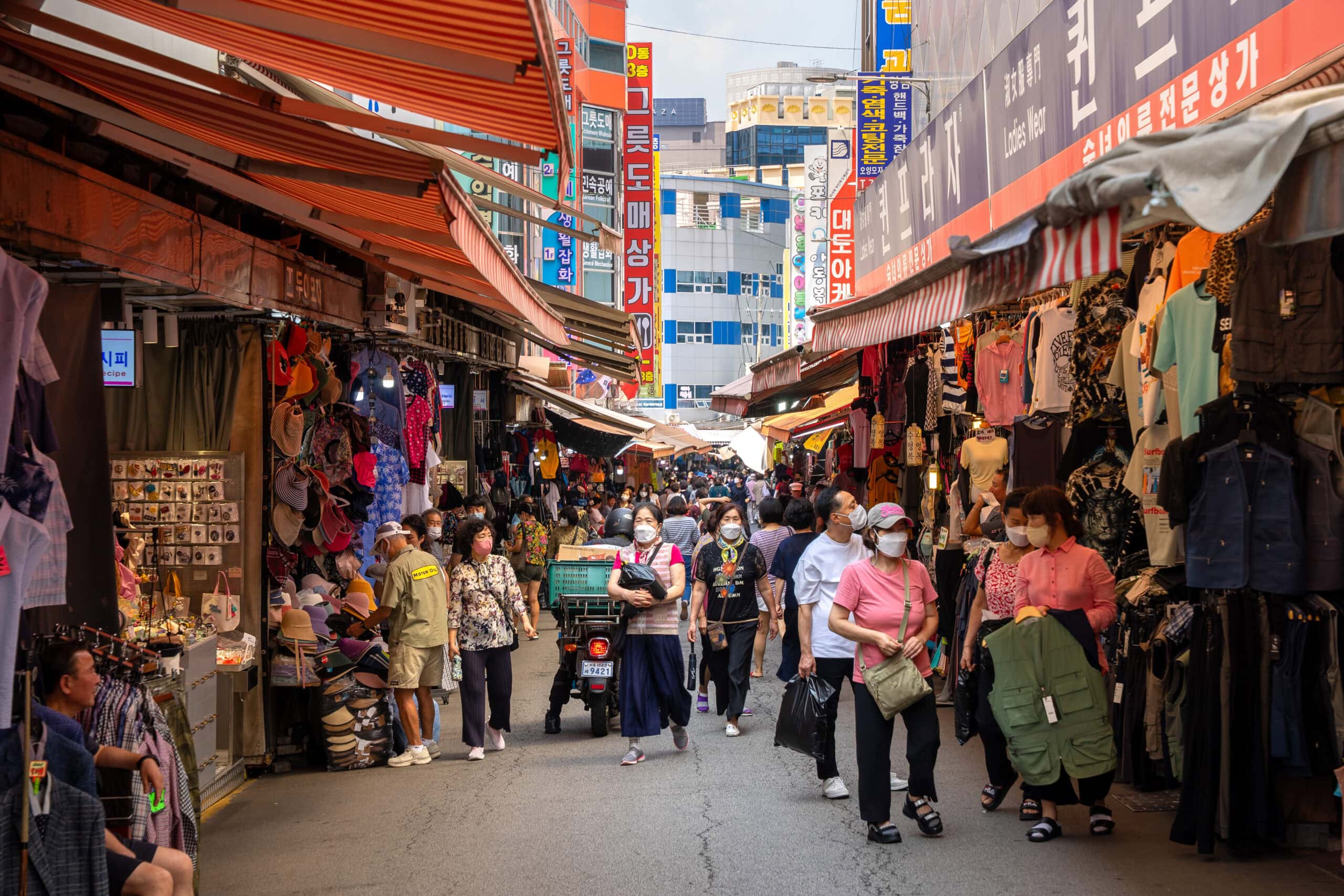
This sprawling market has a bit of everything. Locals come here for everyday essentials like vegetable peelers, steamers, and affordable clothing, while tourists arrive to soak up the energy and the beautiful chaos of a traditional market.
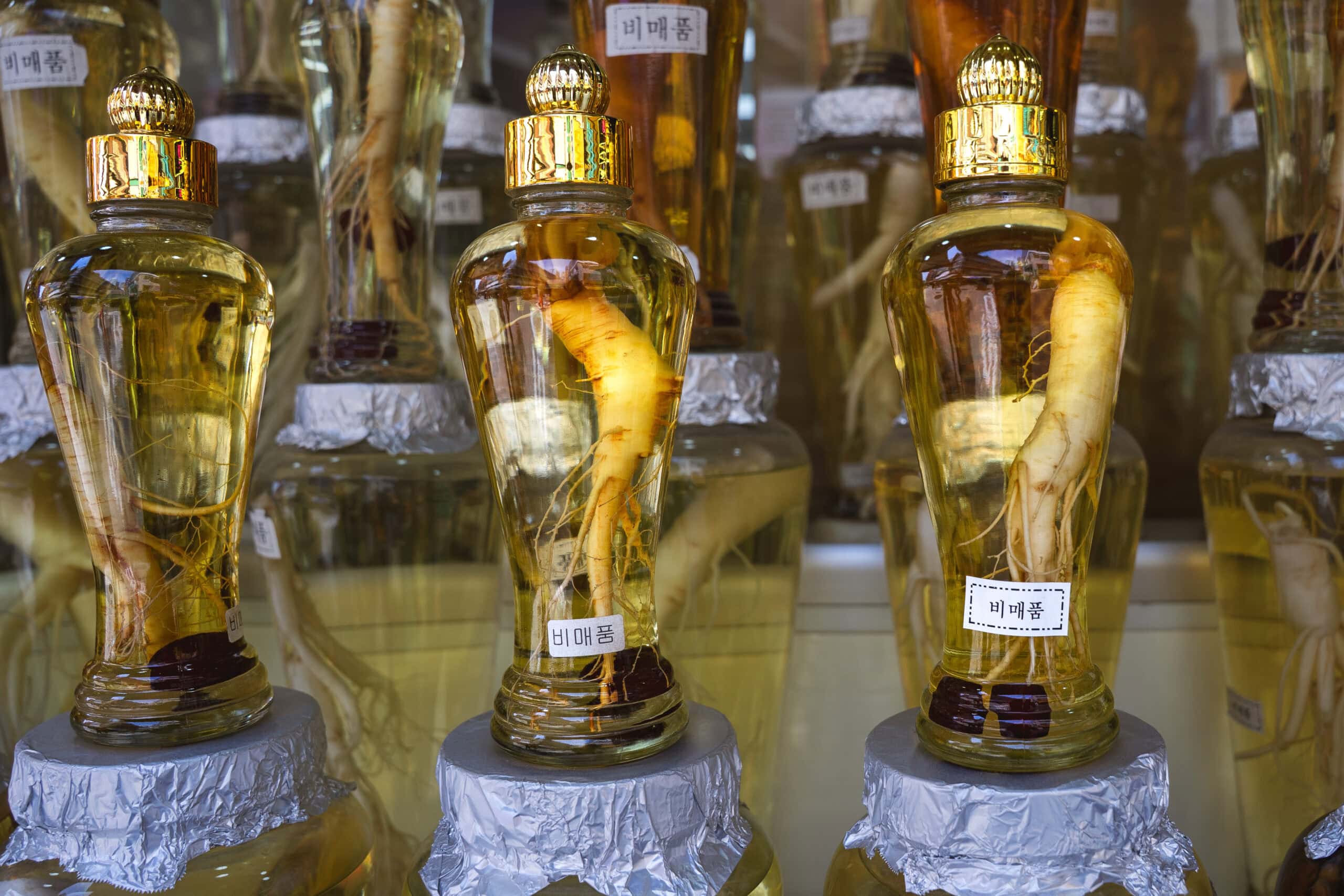
The variety is staggering; you will find everything from cute socks and jars of ginseng roots to military surplus gear, Korean snacks, and power tools. Inside the covered International Market section, you can even find Russian vodka, caviar, and flour to make your own tacos.
It feels as though you can find absolutely anything here if you know where to look.
There are two famous food alleys – Kalguksu Alley (hand-cut noodles) and Galchijorim Alley (braised hairtail), and both are worth a visit. I particularly love coming here in winter for a steaming dolsot bibimbap or deep-fried dumplings.
While you are in the area, the historic Sungnyemun Gate is right nearby and worth a quick photo stop before you dive back into the crowds.
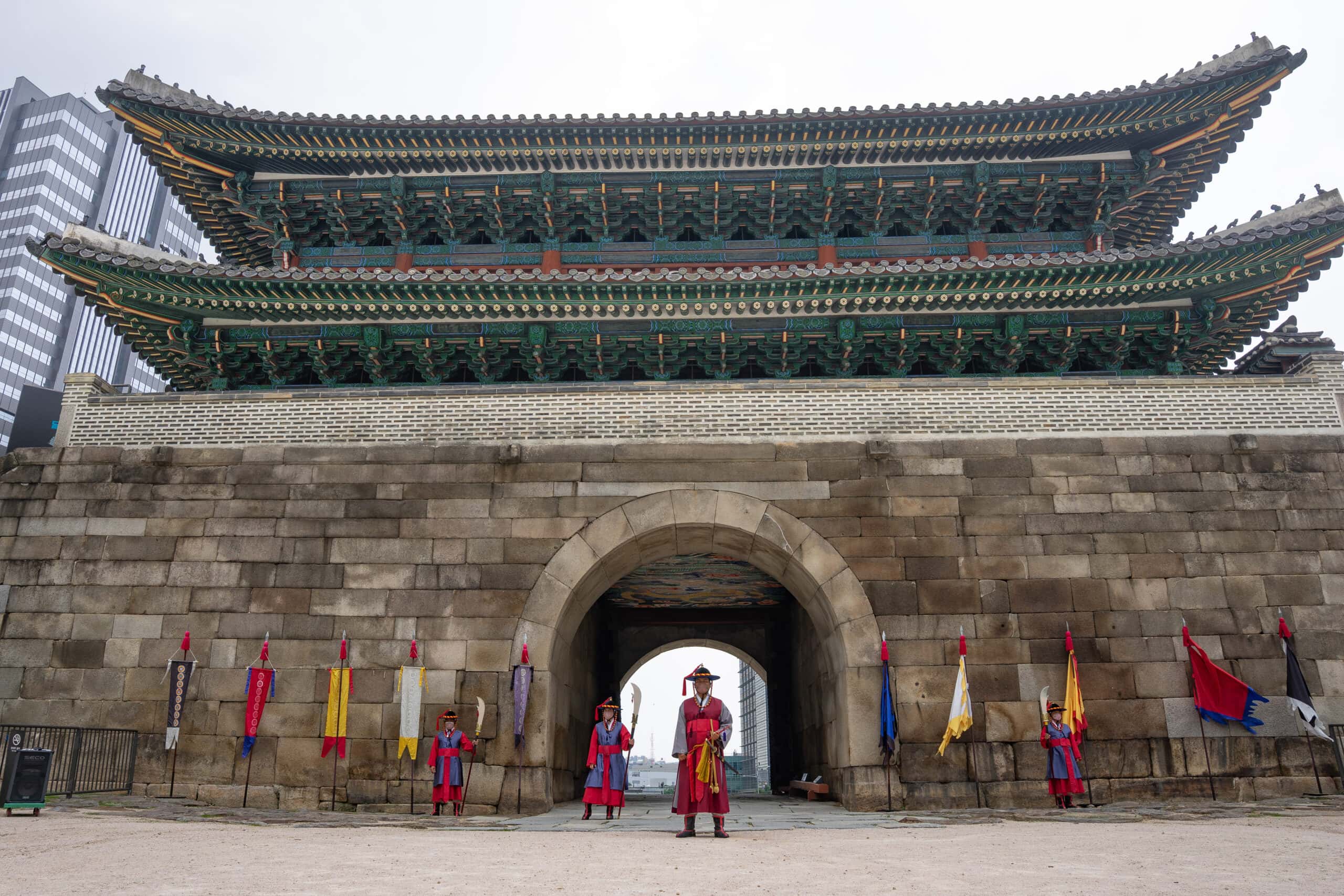
Two of my favourite spots in Namdaemun deserve a special mention:
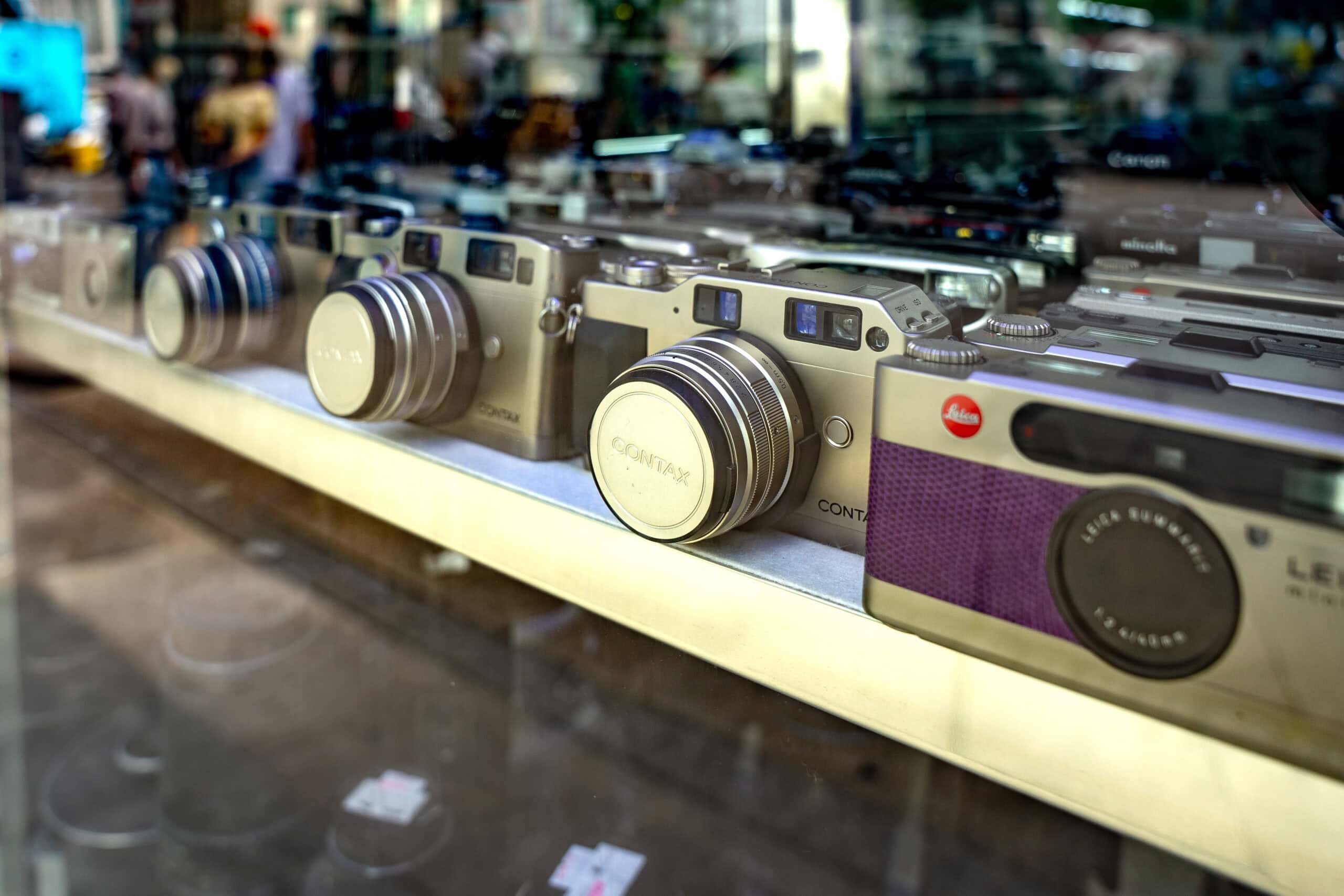
Second-Hand Camera Shops: On the corner of the market opposite Sungnyemun Gate is a row of shops that is a dream for any photographer. You can find almost any piece of gear imaginable, from vintage Hasselblads and Leicas to the latest full-frame mirrorless bodies.
Many Korean photographers upgrade as soon as new models are released, meaning you can often find equipment that looks brand new but at second-hand prices.
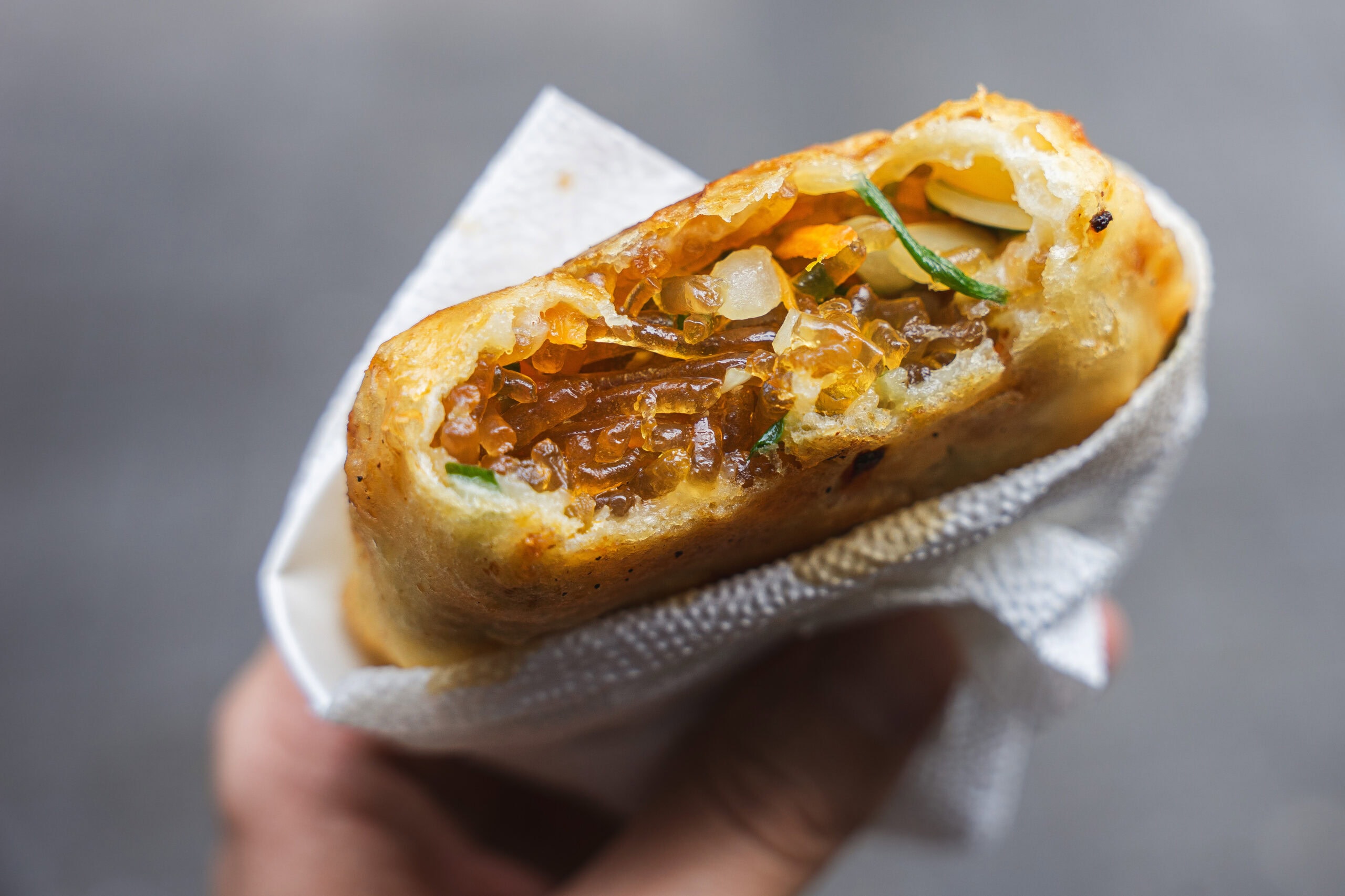
Namdaemun Yachae Hotteok Stand: Located at Gate 2, this stall serves what I consider the best stuffed and deep-fried hotteok (Korean pancakes) in the city. You can choose between a sweet sugar-cinnamon filling or a savory version packed with vegetables and glass noodles for 1,500 won.
It has become one of the hottest snack stops in Seoul, so just look for the inevitable line to find it.
Gyeongdong Market
(The Herbal Medicine Hub)
How to get there: Subway Line 1 to Jegi-dong Station, Exit 2.
Best for: Photographers and visitors interested in traditional Korean medicine and wellness.
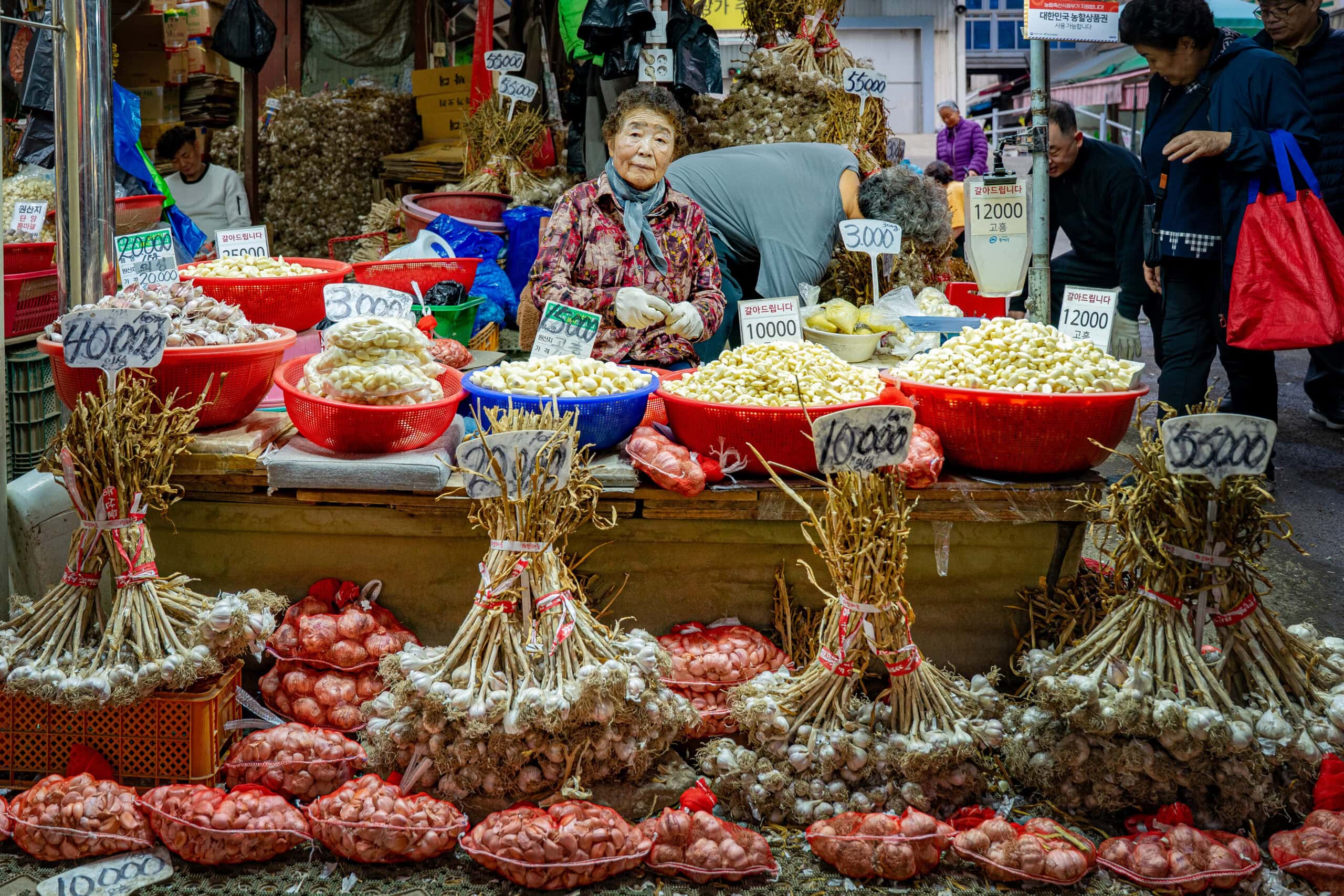
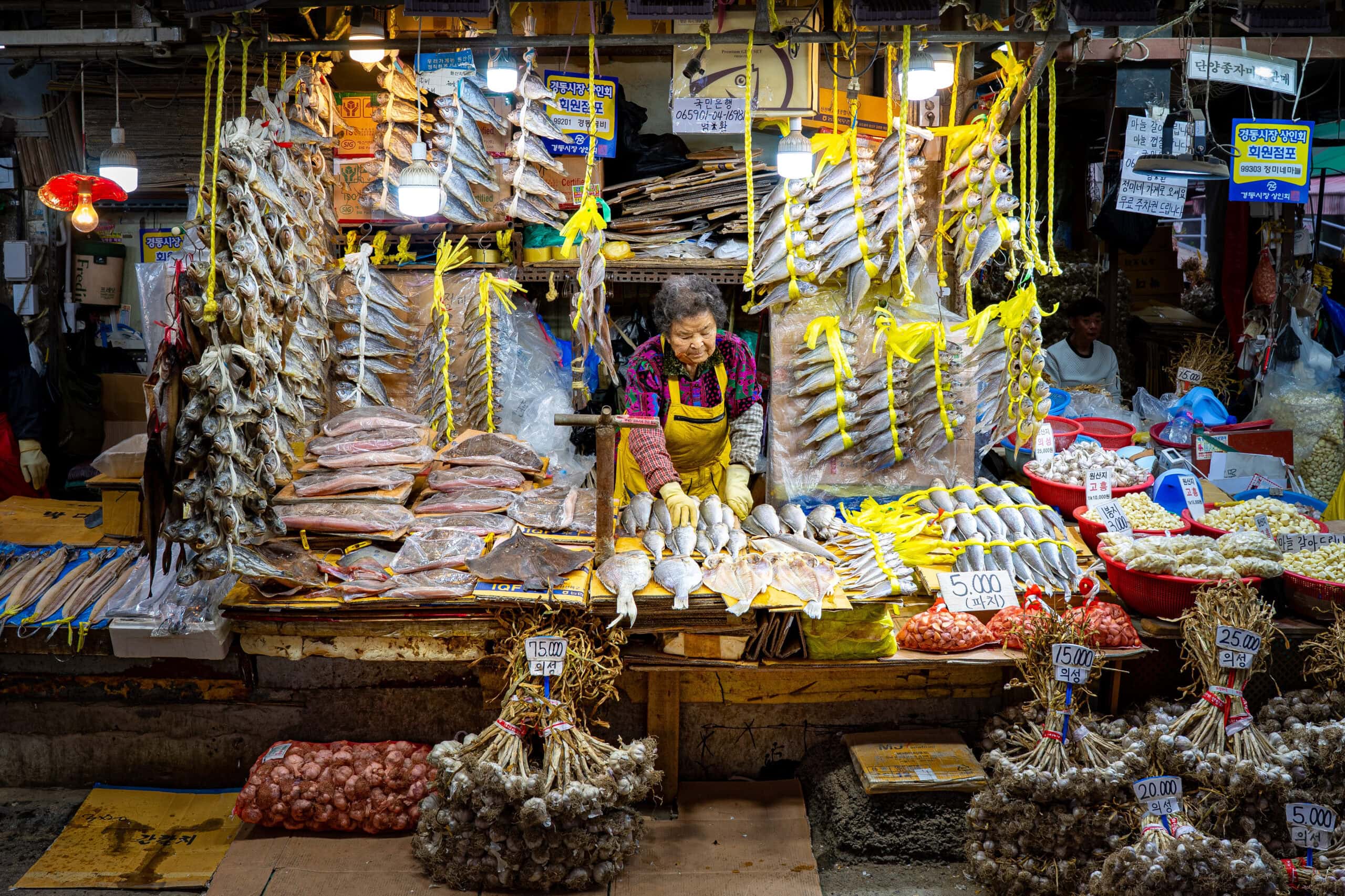
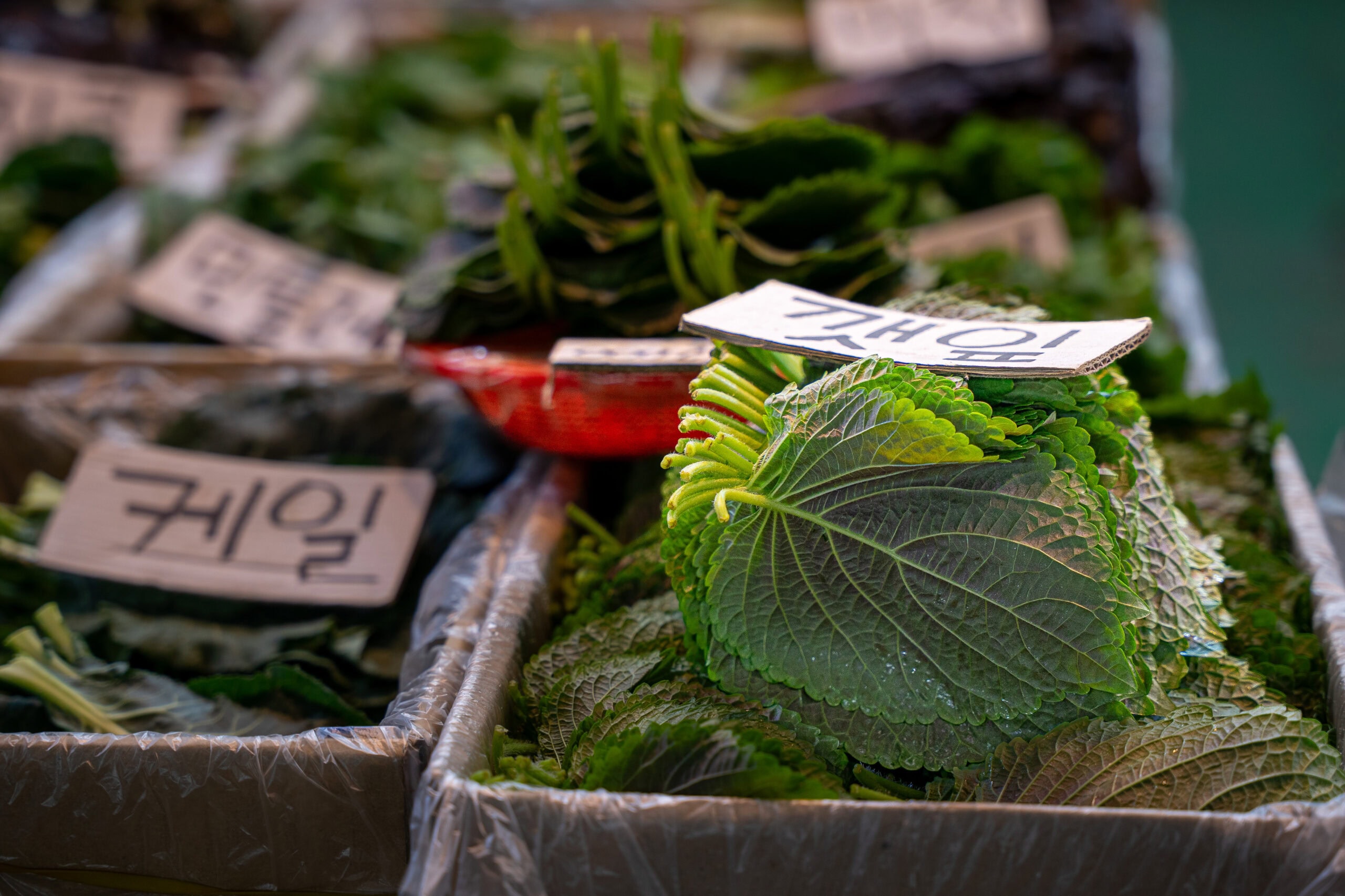
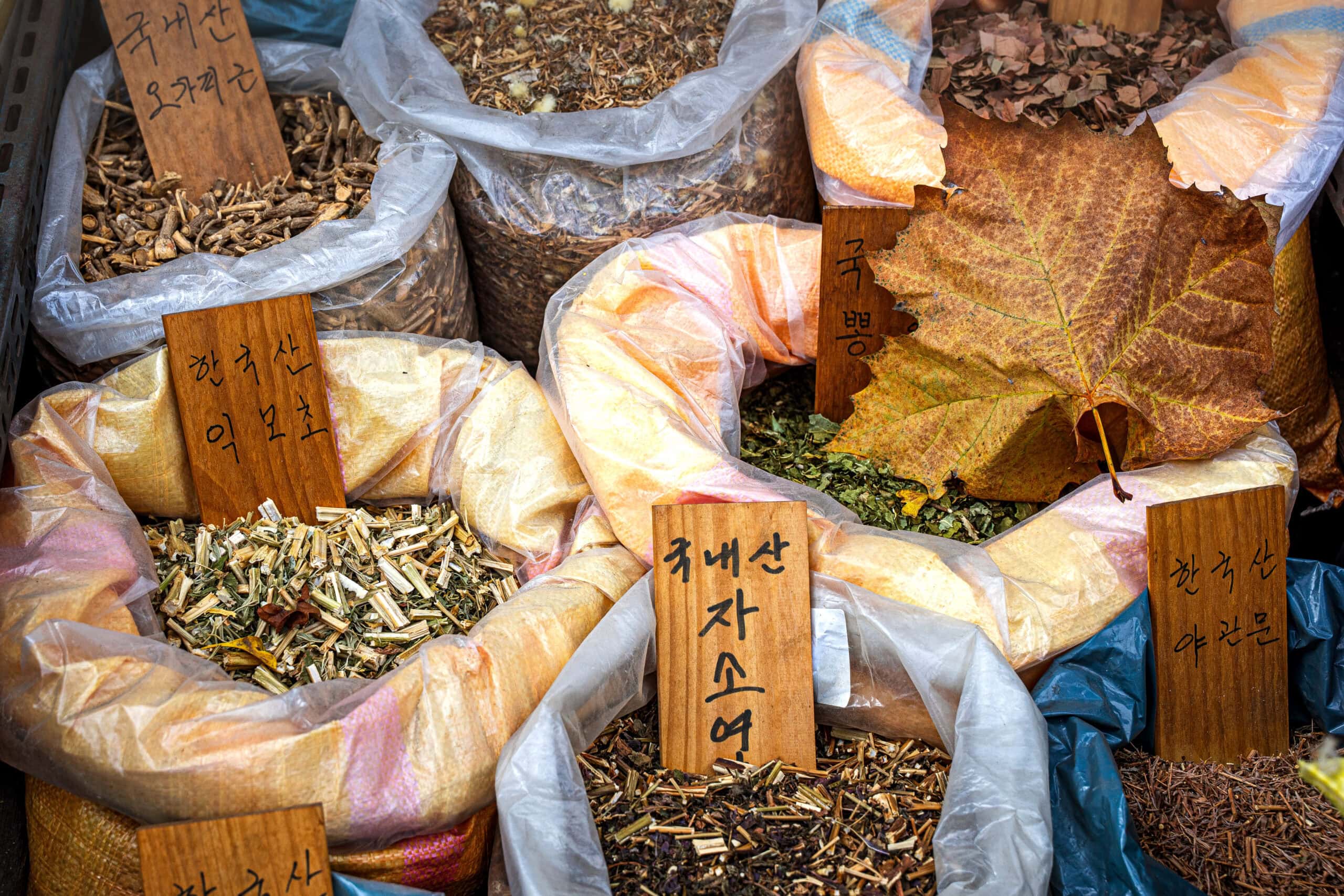
This is the market my mother-in-law visits every week to buy her vegetables. When I finally went to check it out, I was blown away by the sheer scale of the place and the incredible variety of roots, twigs, mushrooms, and leaves.
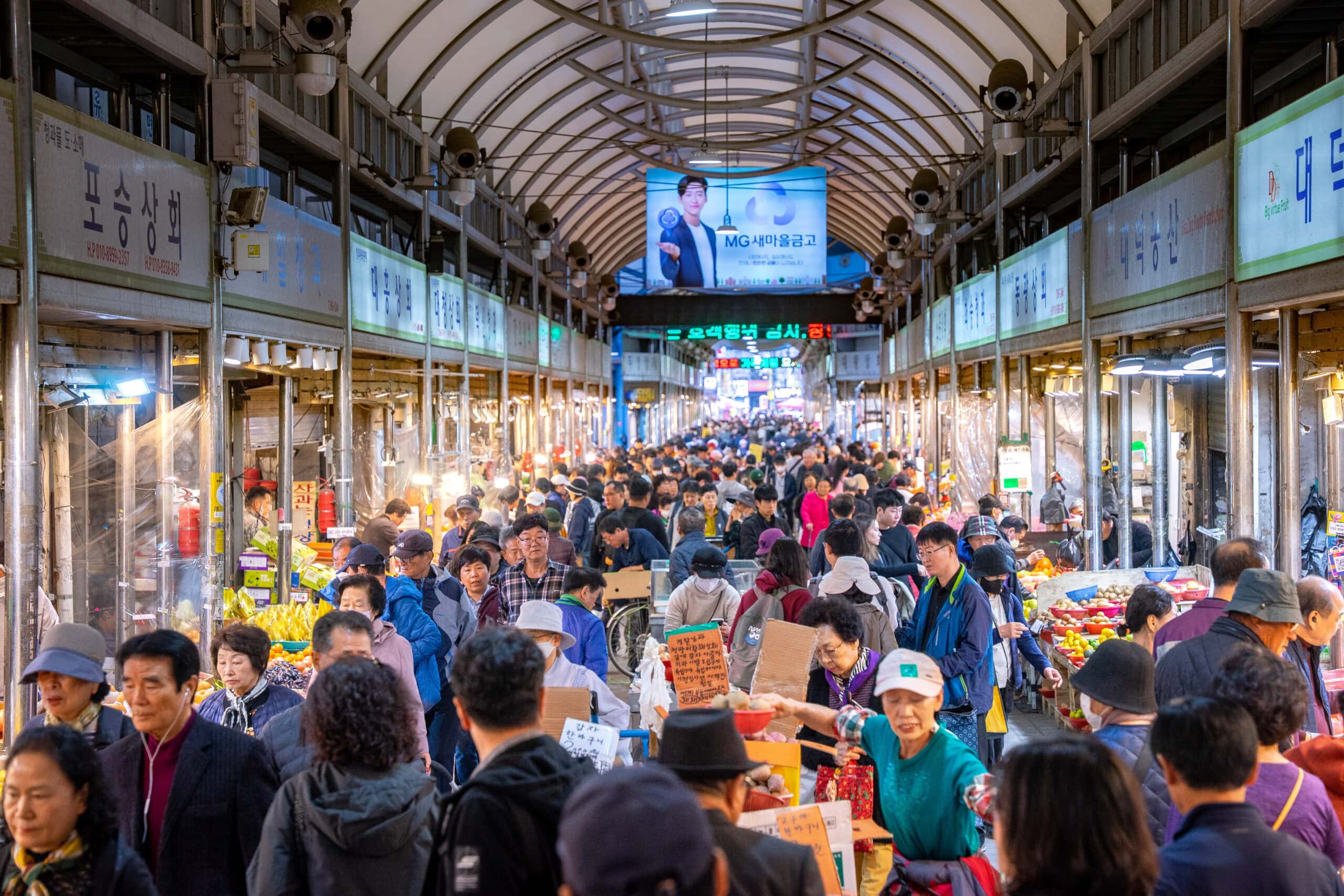
The air here smells of ginger, earth, and toasted sesame oil. For me, this is by far the most traditional market in Seoul. It is extremely photogenic, filled with interesting textures, local characters, and constant commotion.
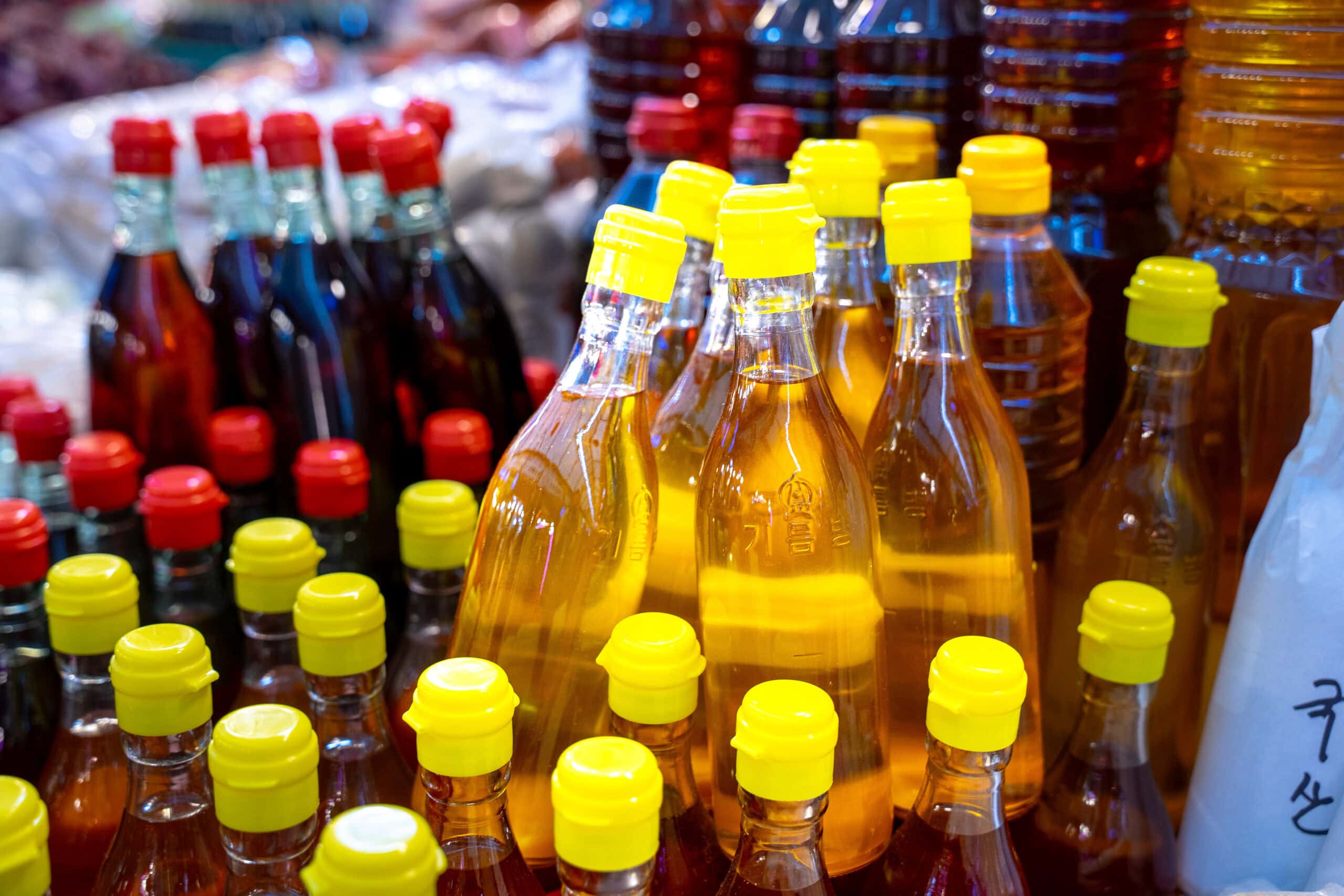
While you probably won’t be buying fresh produce to take home, the bottles of pressed sesame oil or perilla seed oil are fantastic deals and taste better than anything you will find in a supermarket.
Hidden inside the market is the Starbucks Gyeongdong 1960. This cafe was built inside an old abandoned theater, and Starbucks has preserved many of its original features. The seating still faces forward toward the stage where the baristas work, creating a very cool, retro cinema atmosphere.
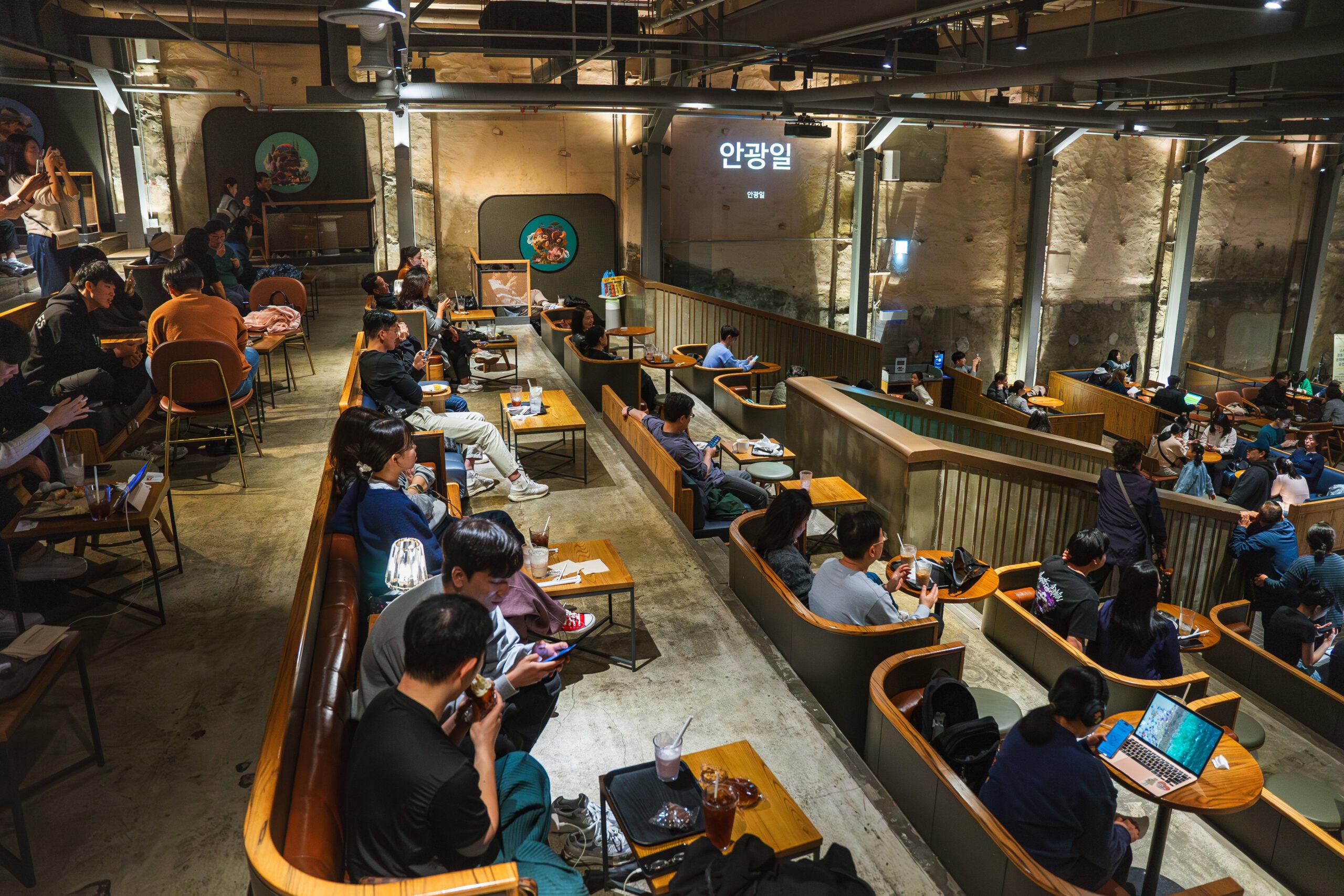
Just across the road is the Yangnyeongsi Market, the world’s largest medicinal market. It is fascinating to see that in one of the world’s most digital countries, people still deeply value traditional medicine.
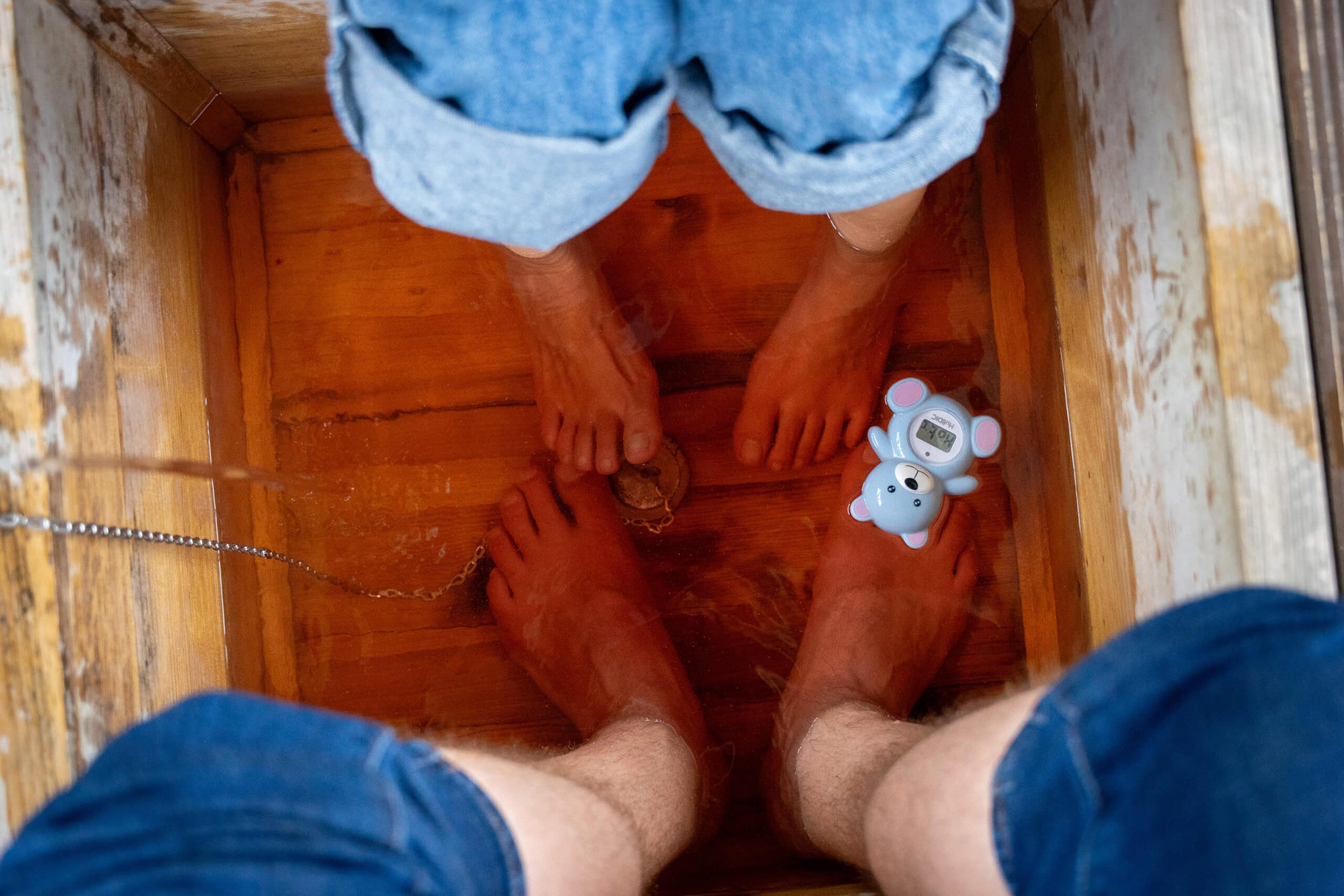
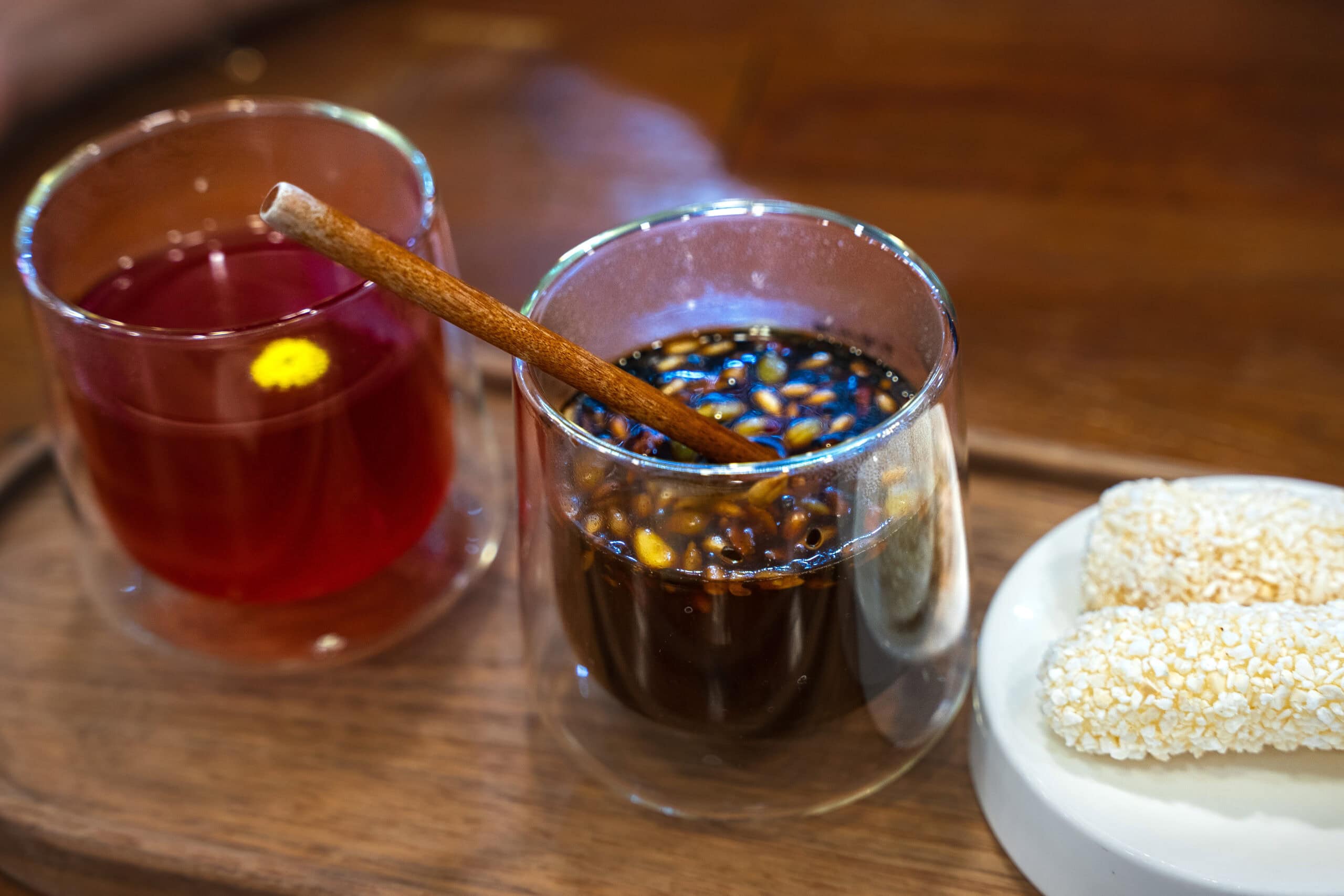
For a hands-on experience, head to the Seoul K-Medi Centre. Housed in a beautiful Hanok-style building, it offers a wellness program that includes a herbal foot bath and a mechanical massage. You lie on a bed that sounds and feels like your back is being struck by bamboo, followed by a herbal drink served in a traditional pharmacy setting.
For more details, check out my full guide to Gyeongdong Market
Mangwon Market
(The Local Neighbourhood)
How to get there: Subway Line 6 to Mangwon Station, Exit 2. Turn right and walk straight for about 5 minutes.
Best for: An incredible variety of food, a younger local crowd, and a less touristy atmosphere.
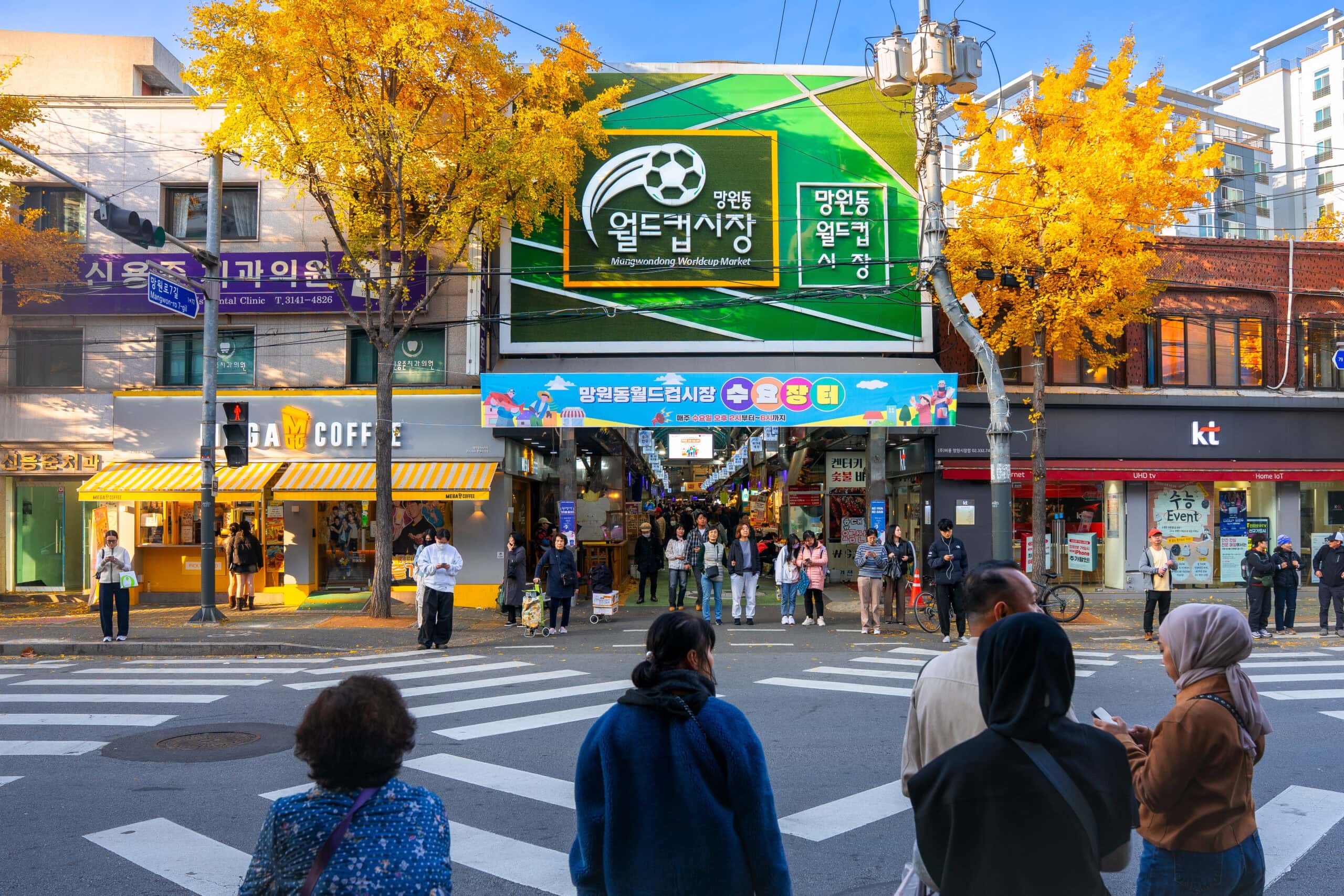
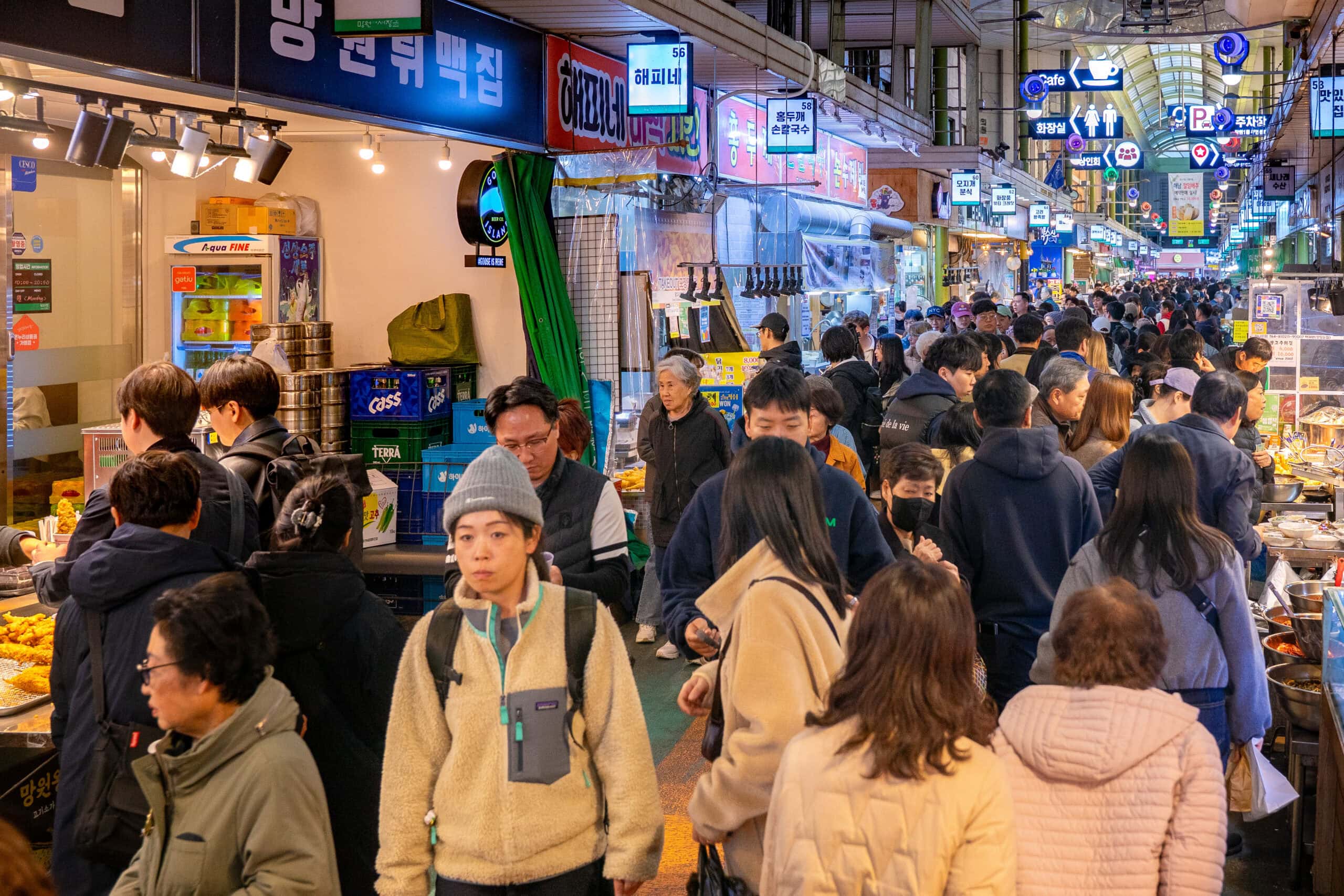
Those who find Gwangjang Market a little too famous will love Mangwon Market. While Gwangjang is excellent, Mangwon feels like a neighbourhood secret that belongs to the locals.
This long, covered market stretches several city blocks near the Seoul World Cup Stadium and the Han River, making it a perfect stop if you are heading to the water for a sunset stroll.
For me, the variety of street food here feels even larger than at Gwangjang. The atmosphere is less about sitting at a central bench and more about grabbing a snack and moving with the flow of the crowd.
Since there is limited seating, you can either duck into the alleys just off the main market or carry your haul to the nearby park to eat.
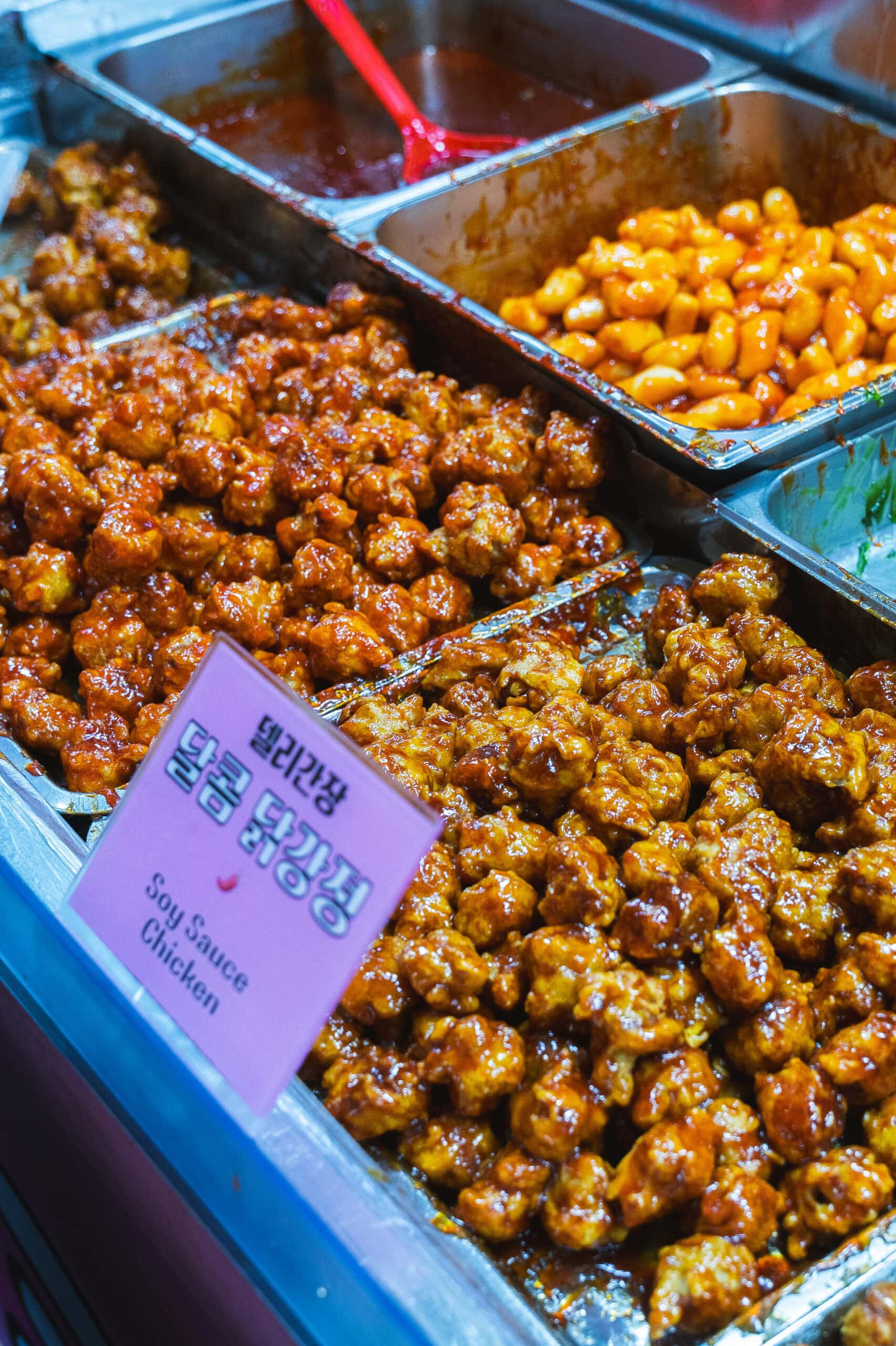
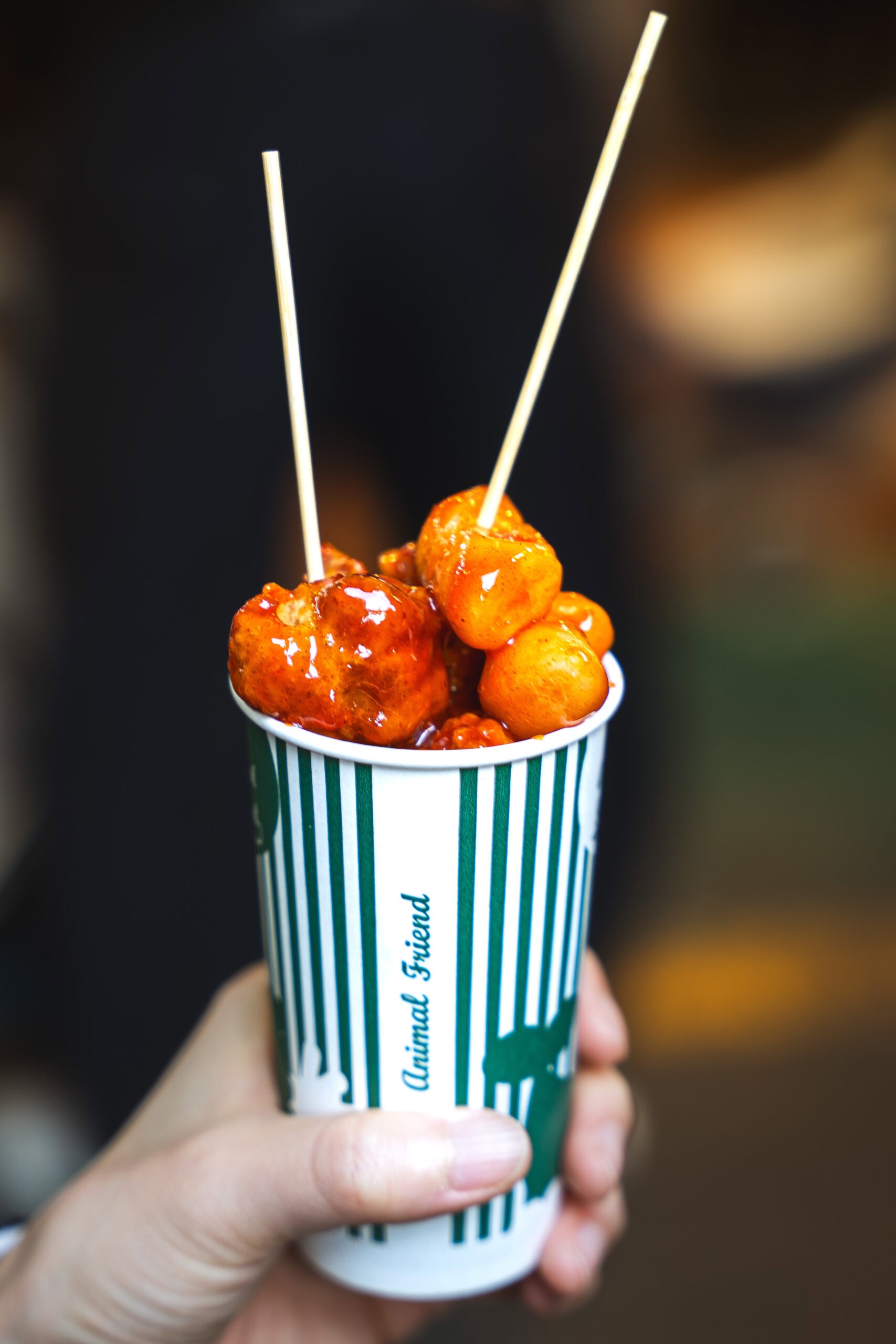
We had some incredible Yangnyeom chicken (sweet and spicy fried chicken), classic twisted donuts coated in sugar, and amazing mandu (dumplings) that were literally the size of my palm. It is the kind of place where you want to show up hungry and try a little bit of everything.
If you want to venture beyond the markets, I’ve put together a full guide on what to eat in Seoul that covers everything from hidden neighbourhood gems to the city’s best sit-down meals.
Dongmyo (The Flea Market)
How to get there: Subway Line 1 or 6 to Dongmyo Station, Exit 3.
Best for: Cool fashion finds, vintage gems, and discovering things you definitely didn’t know you needed.
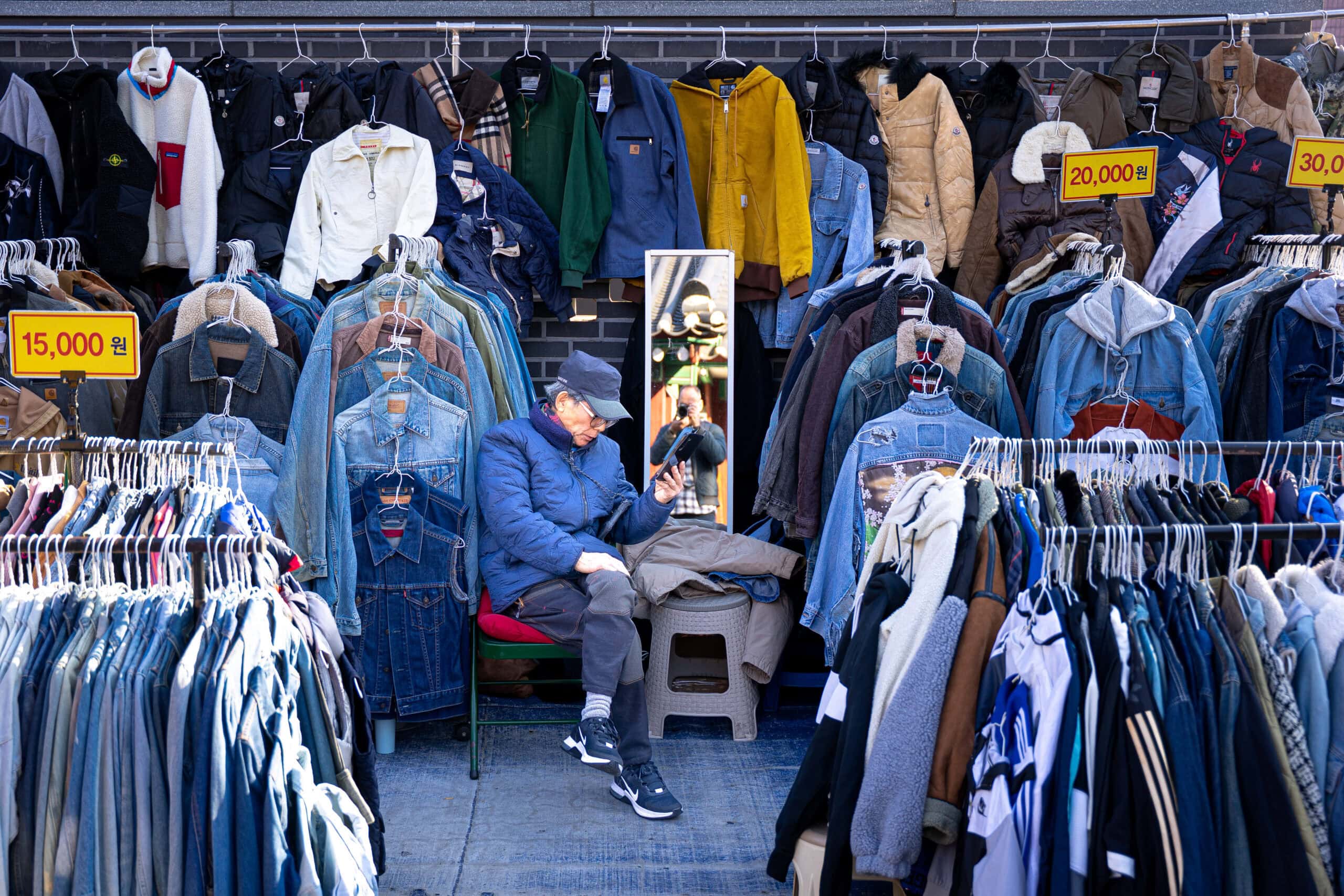
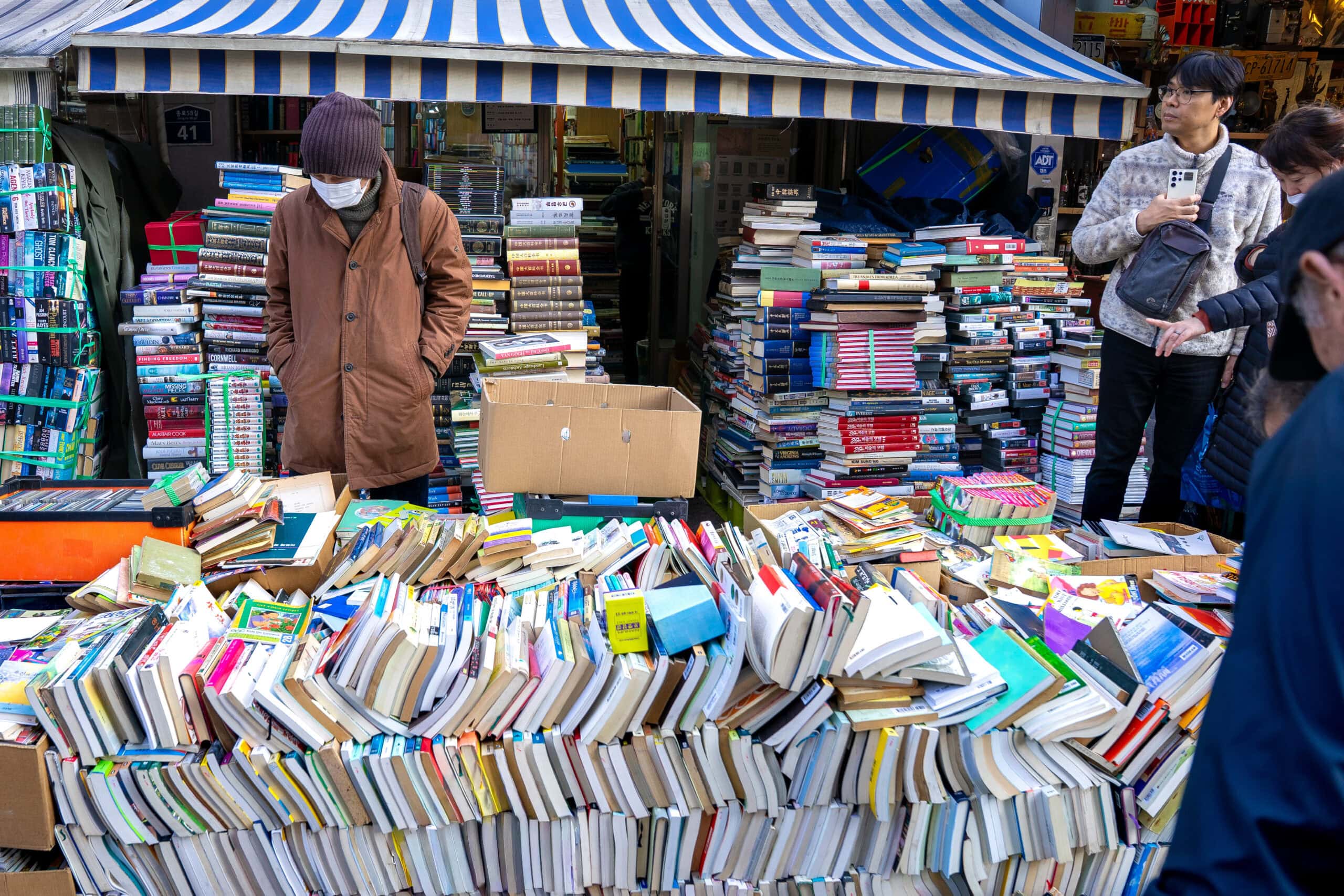
Who doesn’t love a good old-fashioned flea market? Seoul’s answer to that is Dongmyo. If you visit on a weekend, you will find massive piles of clothes and shoes sprawled across the pavement, and digging through them is all part of the fun.
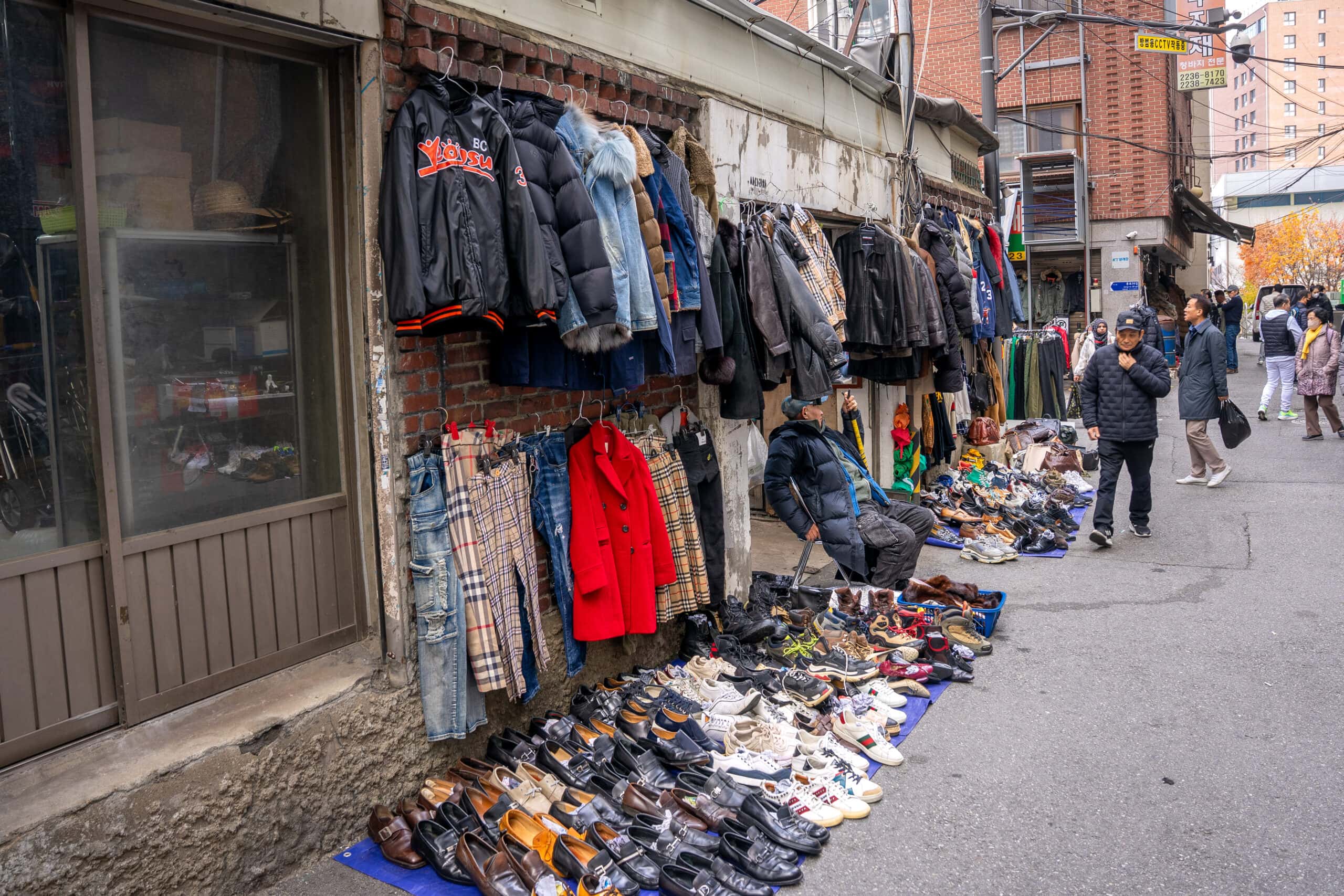
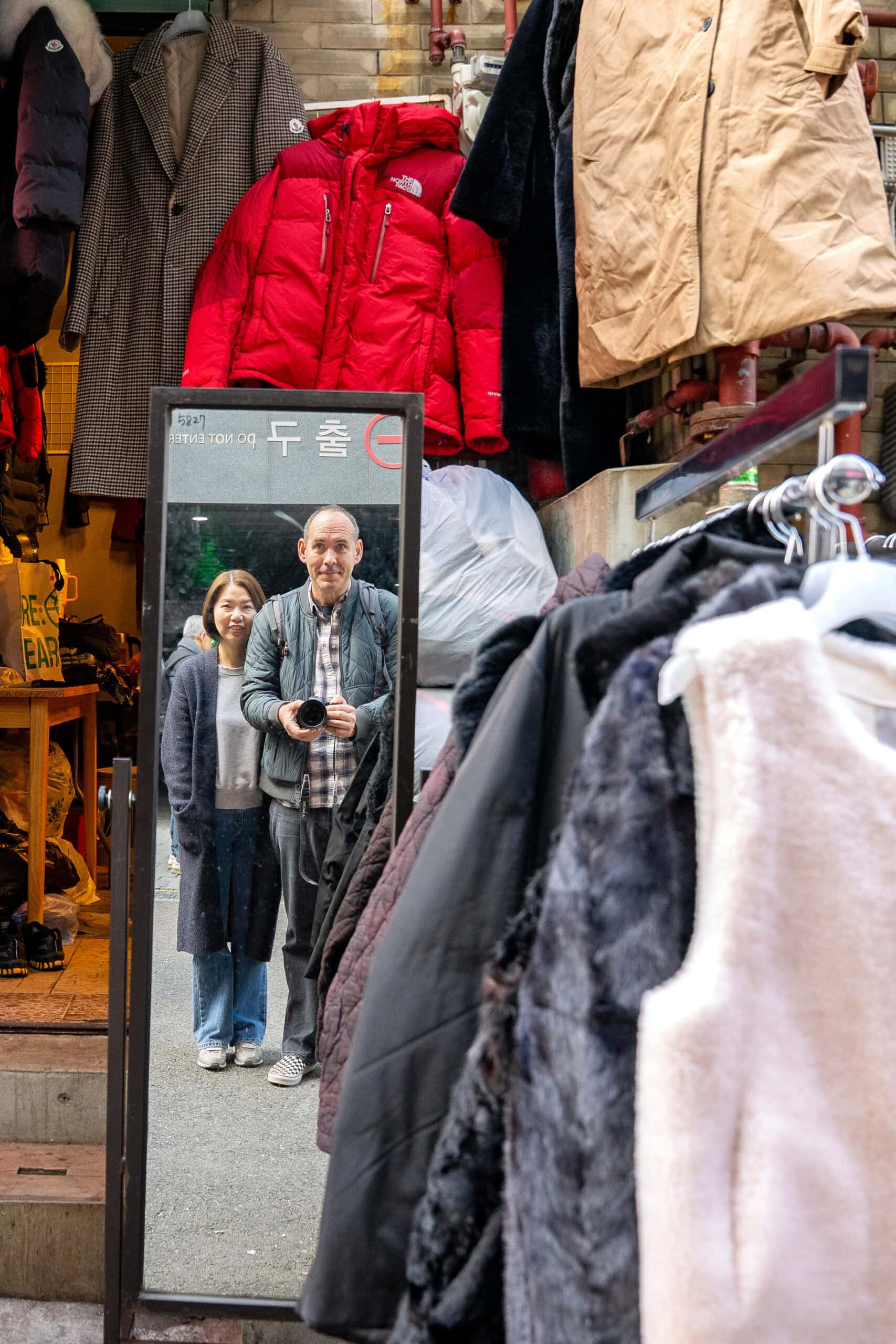
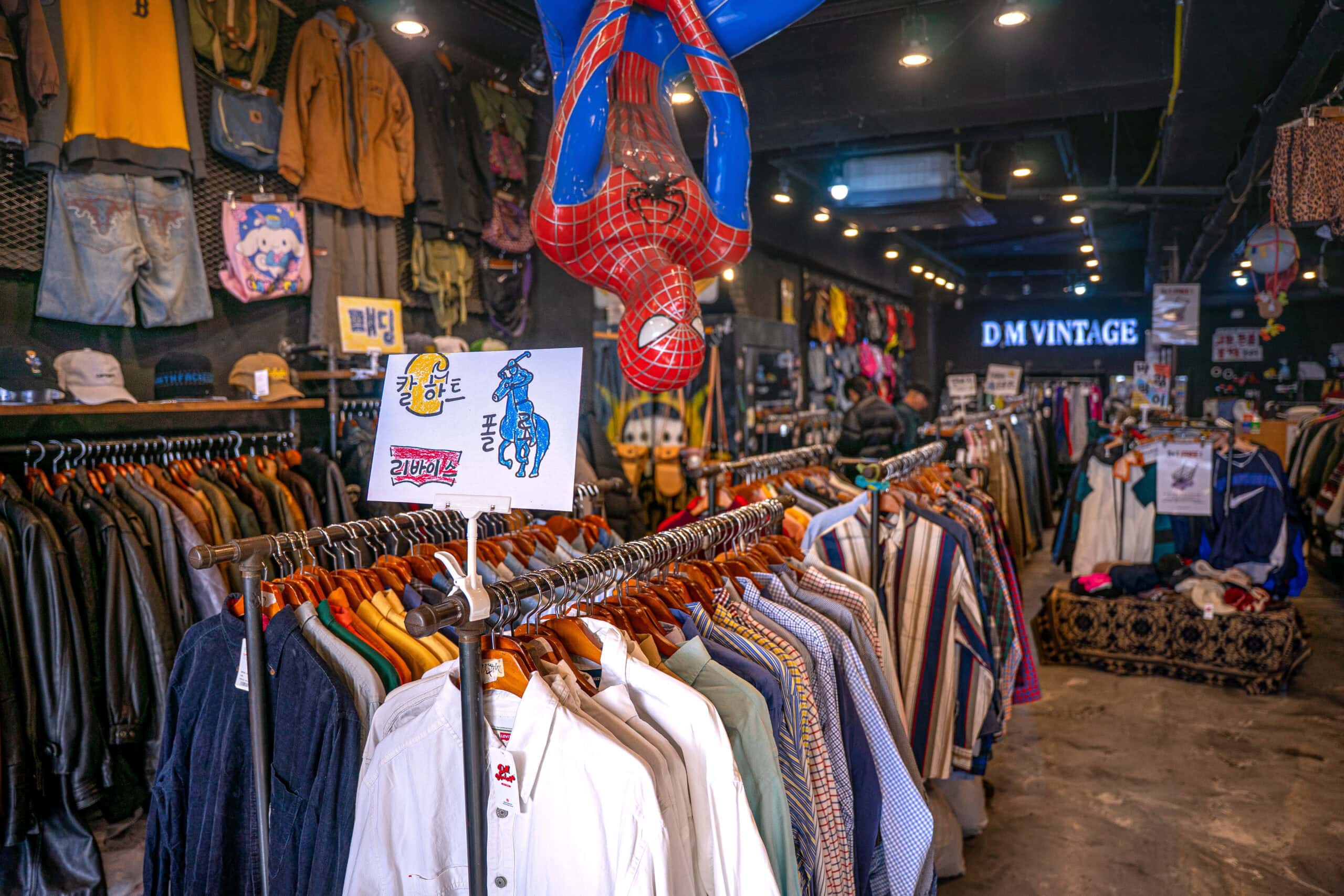
The market stretches across several city blocks, but the clothing section is the real highlight. Beyond the piles on the street, you will find curated vintage shops with items on hangers and funky displays. It is a treasure trove of serious finds, from Moncler and Carhartt to boot-cut Levis and an astonishing collection of jean jackets.
This is the ultimate playground for Seoul’s Gen Z, ageing hipsters, and anyone chasing that “newtro” look. Prices are incredibly affordable, and as long as you aren’t quite as big as I am, you can score some truly unique pieces here.

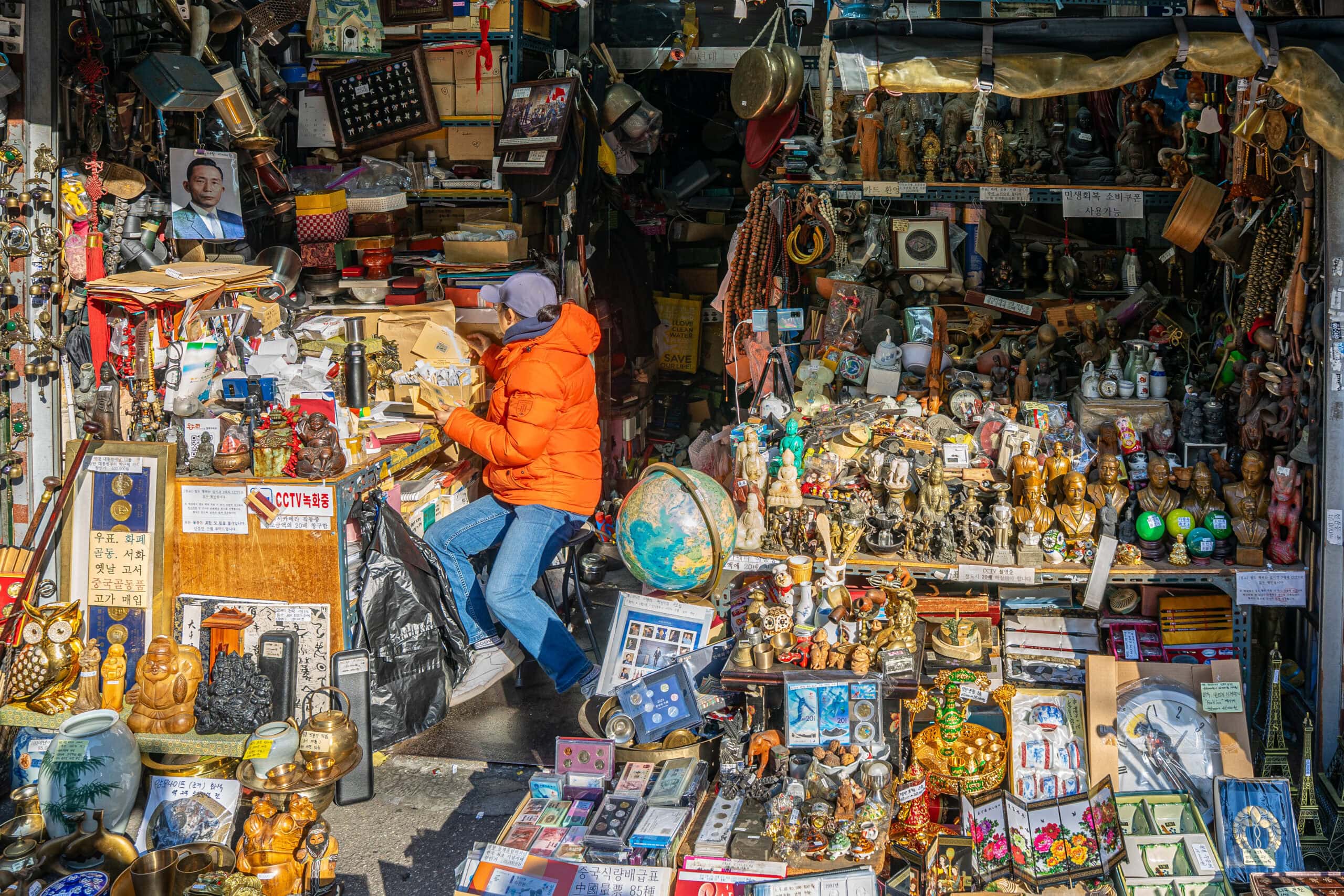
Other sections of the market are just as fascinating, with stacks of old books, eclectic knick-knacks, and retro Casio-style watches that look like they were pulled straight from 1986.
It is also one of the best spots in the city for people-watching, as the swagger of the local seniors, often mixing hiking gear with vintage fashion, is legendary.
Dongdaemun Market
(The Fabric & 24/7 Wholesale Area)
How to get there: Subway Line 1 or 4 to Dongdaemun Station, Exit 8 or 9. (If you’re heading to the fashion malls like Doota, use Dongdaemun History & Culture Park Station, Exit 14).
Best for: Midnight shopping, fashion designers, and sampling authentic Central Asian cuisine.
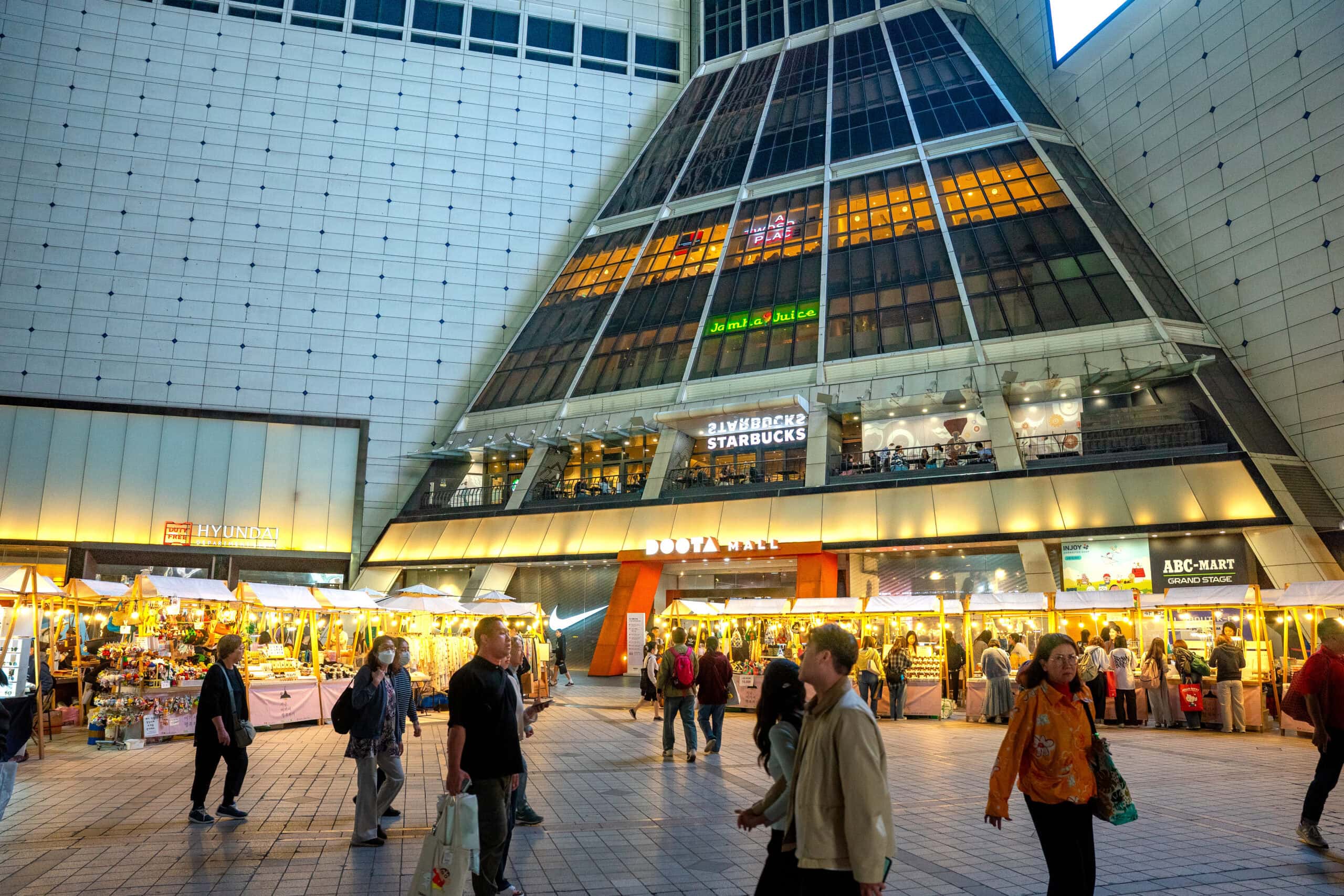
When many people refer to Dongdaemun Market, they are actually talking about the massive fashion malls like Doota, Migliore, and the Hyundai City Outlet. This is one of the best areas in Seoul for shopping, with many malls staying open until midnight or later.
The neighbourhood is a true 24/7 district, as the wholesale side of the market typically runs from 10:00 PM until 5:00 AM.
I personally find the actual wholesale market a bit underwhelming for the average traveller. This is where Korean online shop owners or exporters come to buy things in massive bulk, like 1,000 pairs of socks or 30,000 extra-small blouses.
However, it can be a goldmine for the right person. Jin’s cousin, a kyopo (Korean-American) with a deep interest in fashion, absolutely loved it. She picked up bags of unique fabrics, buttons, and accessories to take back home and incorporate into her own designs.
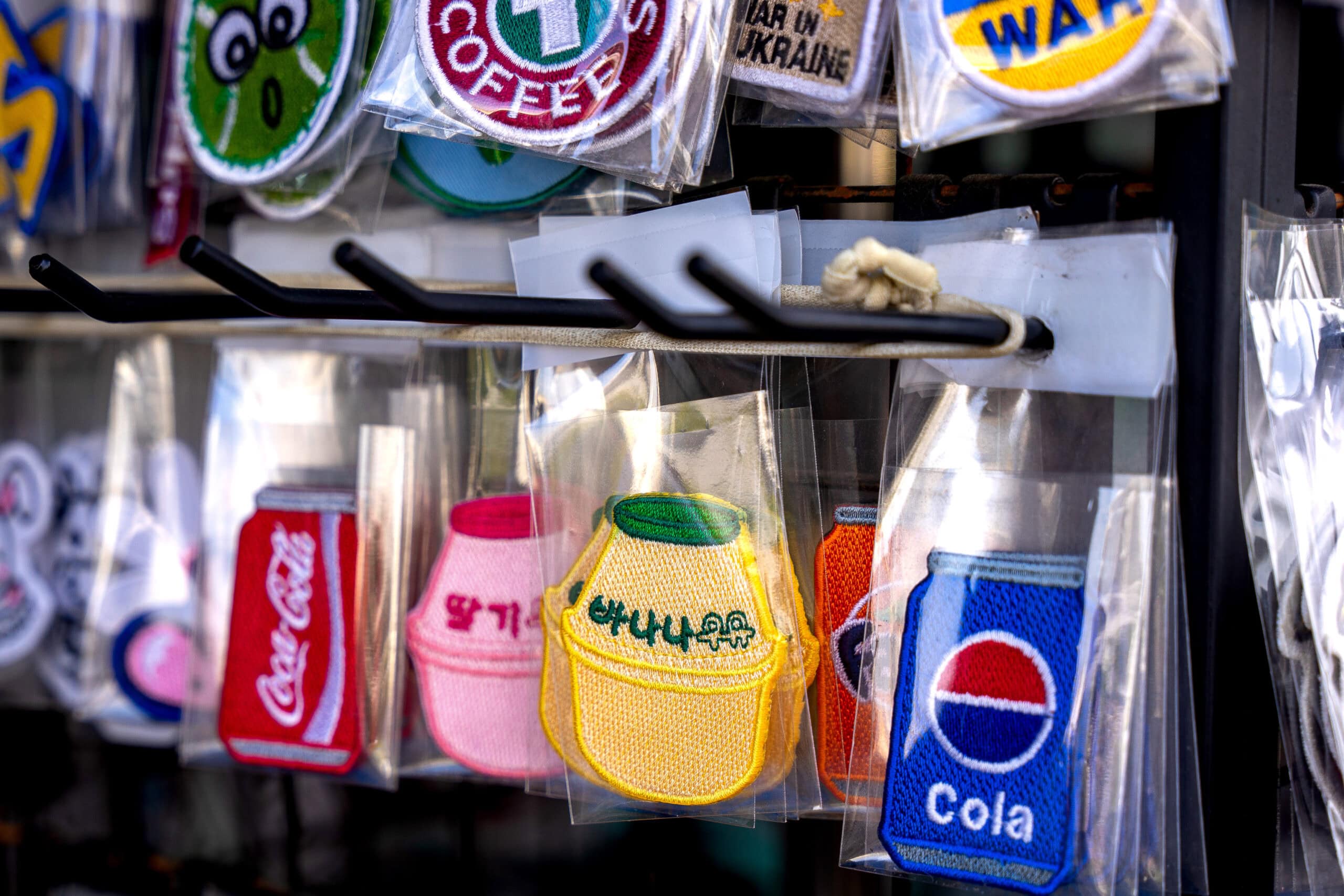
Beyond the fashion, Dongdaemun is home to Seoul’s Central Asian community.
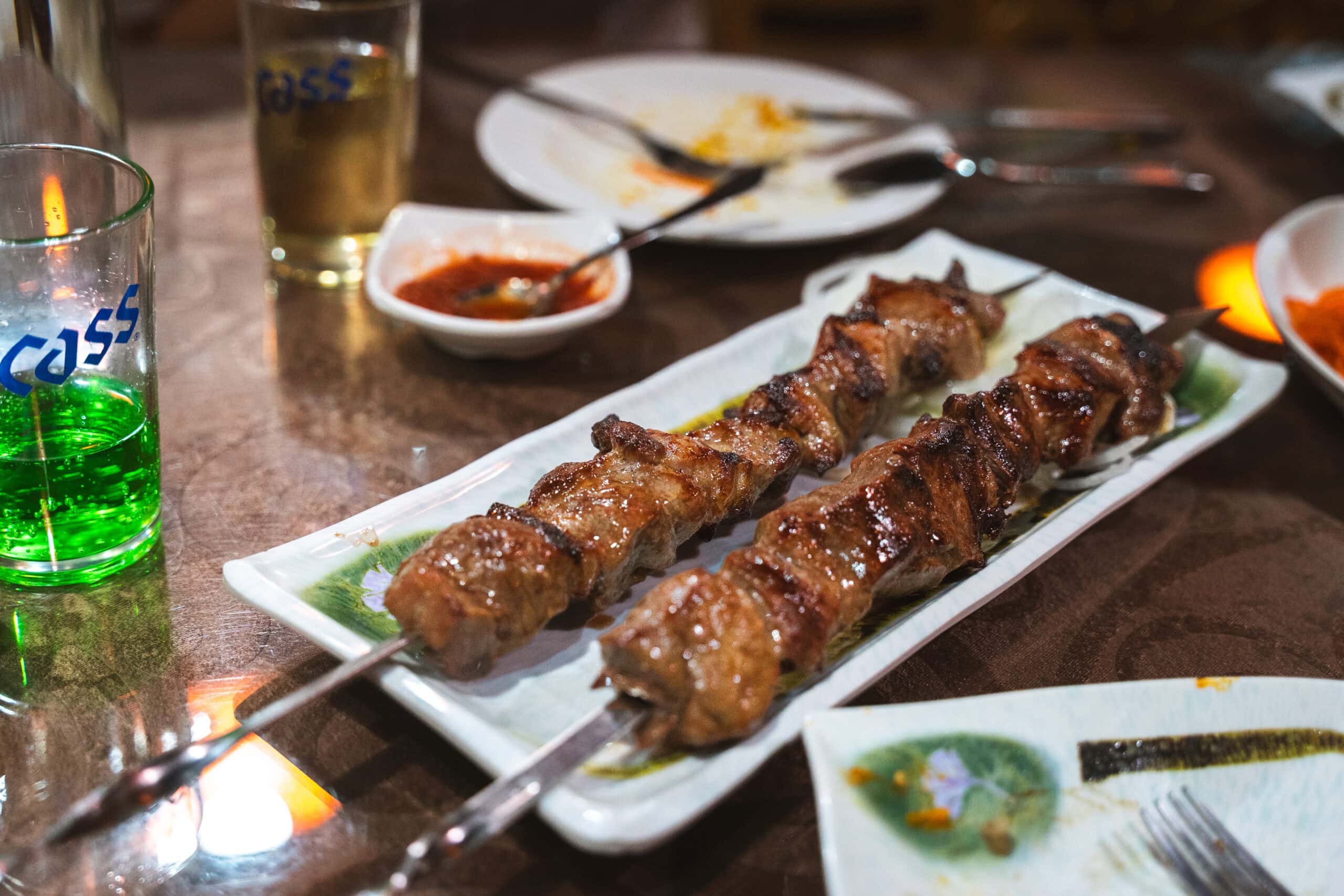
In the Gwanghuidong neighbourhood (which we just call Little Russia or Little Mongolia), you can find some incredibly good Uzbek food or even book a cheap flight to Tashkent. It is a fascinating pocket of the city where the signage switches to Cyrillic and the smell of roasting lamb fills the air.
Dongdaemun remains one of my favourite districts in Seoul because of this constant overlap of high fashion and gritty reality.
Check out my complete Dongdaemun guide.
Noryangjin Fish Market
(The Seafood Experience)
How to get there: Subway Line 1 or 9 to Noryangjin Station. Use Exit 9 (Line 1) or Exit 7 (Line 9) and follow the signs for the pedestrian bridge.
Best for: Seafood lovers and families with kids who will enjoy seeing the marine life in the tanks.
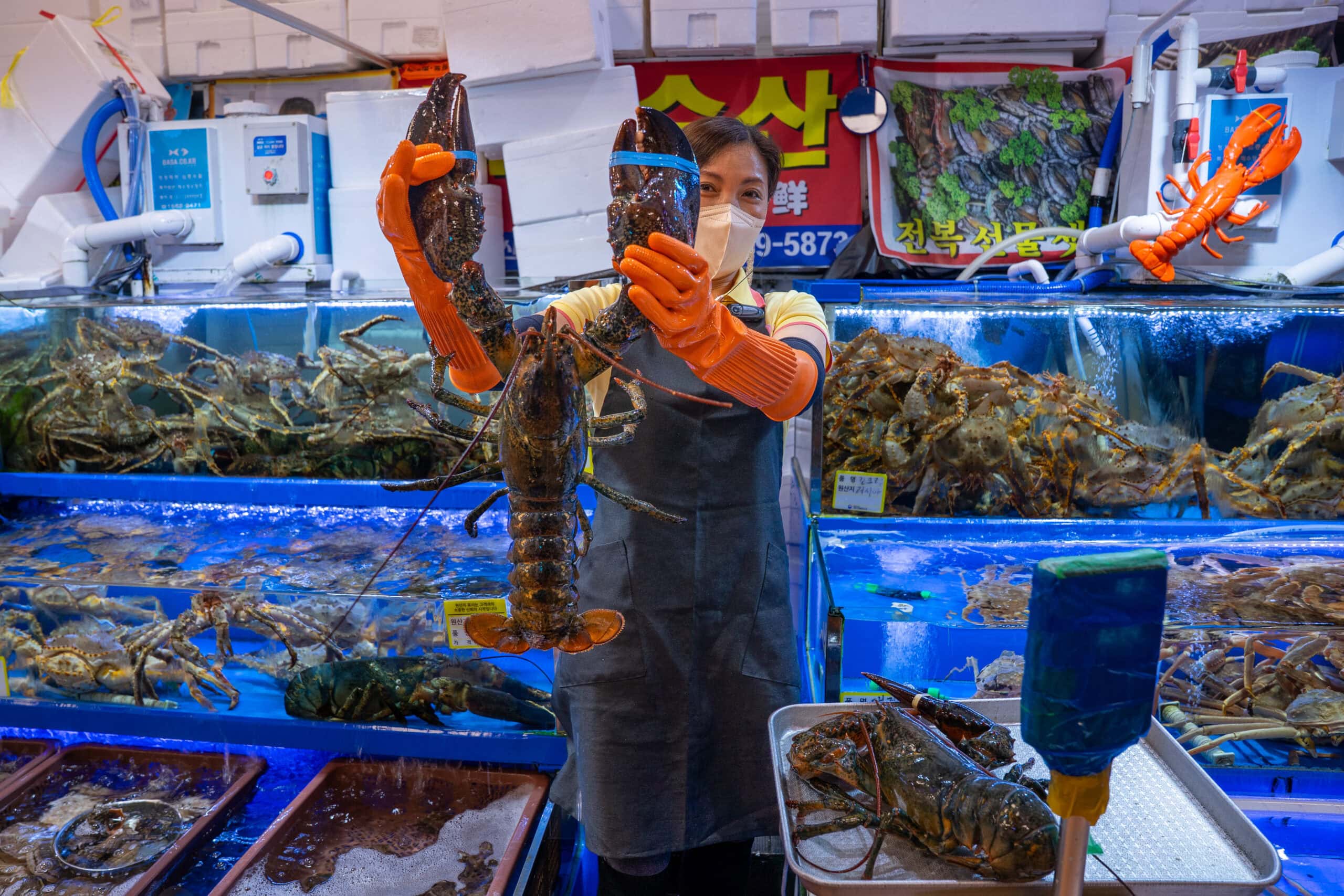
While Noryangjin Fisheries Wholesale Market sits slightly outside the central tourist core, it is a fascinating destination for anyone who appreciates truly fresh seafood.
The facility is surprisingly clean and organised, though it lacks some of the grit and chaos found at Jagalchi in Busan. This modern, civil atmosphere makes it easy to navigate, particularly on a quiet weekday morning when the crowds are thinner.
The selection of sea creatures here is staggering, with tanks filled with everything from massive crabs and squirming tentacles to exotic shells and fins. It feels much like walking through an aquarium, only you have the option to eat the exhibits.
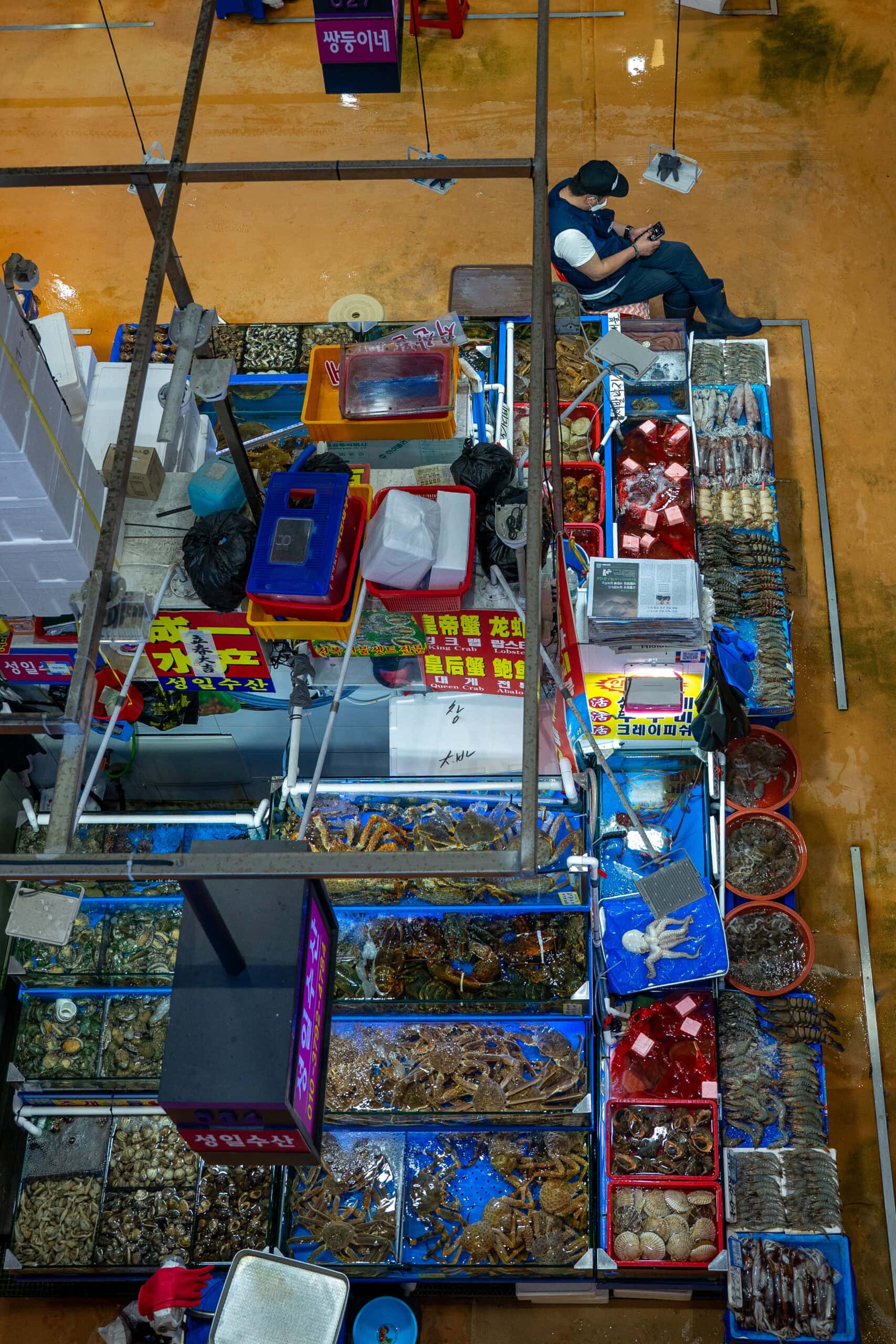
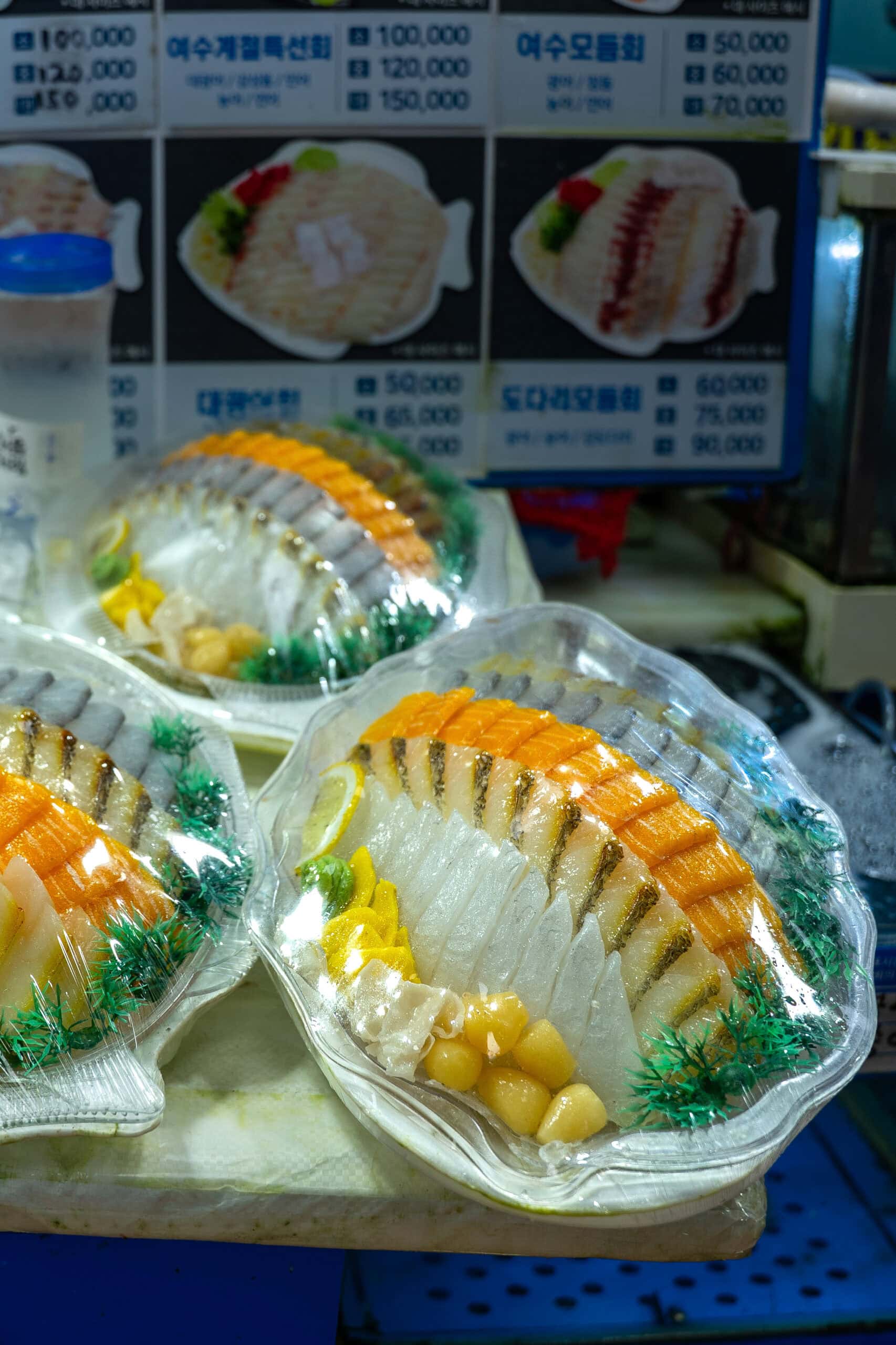
The Tank-to-Table Experience: The traditional way to dine here is to purchase your seafood from the vendors on the ground floor and take it to the restaurants upstairs. The staff will prepare your catch, often serving it as fresh sashimi alongside various side dishes.
Convenient Dining: If negotiating for a live fish feels like too much trouble, you can simply head straight to the upstairs restaurants. Most have full menus and will source the fresh ingredients for you, saving you the effort of the downstairs transaction.
A Local Perspective: This is one of the less touristy traditional markets in the city, offering a raw look at how Seoul’s massive appetite for seafood is supplied daily.
Essential Tips: Know Before You Go
While Seoul is famously high-tech, its traditional markets are one of the few places where analogue rules still apply.
Cash is king in these aisles; while the rest of the city runs on cards and mobile apps, most market vendors (especially at food stalls in Gwangjang or clothing racks in Namdaemun) will insist on cash.
In the camera shops of Namdaemun, the stakes are even higher; you will often be quoted a lower price if you pay in cash, as card payments involve extra fees and taxes that vendors prefer to sidestep.
It is also worth noting that haggling is not common here. Unlike markets in other parts of Asia, the price quoted is usually the fair final price.
Koreans value their privacy, and many are uncomfortable with a camera being pointed at them, even if they are just in the background of a shot. Always ask for permission before taking a portrait or a close-up of a stall. A simple nod and a smile go a long way, but if they decline, respect their space and move on.
Lastly, be prepared for the fact that public trash cans are as rare as chicken teeth in Seoul. When buying street food, the common practice is to eat your snack and then return the trash to the specific stall where you bought it. If you’ve moved on, carry your rubbish with you until you return to your hotel or find a bin in a subway station.
Conclusion: The Soul of the City
At the end of the day, you haven’t truly seen Seoul until you’ve spent an afternoon getting lost in its markets. While the high-tech skyscrapers and neon-lit shopping malls represent the city’s rapid climb into the future, the markets remain the anchor of its psyche. They are the places where the real Seoul lives. To visit at least one of these spots is to witness the city’s true character.
Planning your trip? Now that you know which markets to explore, check out our Ultimate Seoul Travel Guide to see how to fit them into your itinerary, along with all our insider tips on where to stay and how to get around.
How I Shot This Guide
Every photograph in this article was taken with the exact same gear I carry on every journey. It is a setup refined over years on the road to keep travel light without compromising the final image.
- Camera: Sony A7 V
- Lens: Sigma 24-70mm f/2.8 DG DN Art
- Storage: SanDisk Extreme Portable SSD
- Software: Adobe Lightroom Classic
- Outerwear: The North Face Canyonlands Hybrid Jacket