
Bulguksa Temple is one of South Korea’s most important UNESCO World Heritage Sites and a highlight of visiting Gyeongju. This photo essay captures Bulguksa during peak autumn, balancing its beauty, age, crowds, and quiet moments, alongside reflections from a personal visit. For more context on the city’s history, visit Gyeongju National Museum, or plan your visit with my 2-day Gyeongju itinerary.
***
In Gyeongju, everything is a journey both in distance and time. This became my running joke before we even left Seoul, delivered with increasing confidence and rapidly diminishing returns.
Every bus ride, every walk, every mildly inconvenient transfer in Gyeongju earned the same line. Halfway through day one, Jin had made it clear the joke was finished.
The problem was that I was right.
Gyeongju feels older than anywhere else in South Korea. Older not just historically, but atmospherically. The past does not feel preserved behind glass or neatly packaged for visitors. It feels embedded. This was the capital of the Silla Kingdom after all, and that weight still lingers in the air.
You notice it walking between the burial mounds, standing in museum halls, and riding buses that seem to travel slowly on purpose. Bulguksa was meant to be the climax of that feeling.
So we boarded the bus from central Gyeongju towards the mountains, embarking once again ( I had to remind ourselves) on a journey both in distance and time. About fifteen kilometres on the map and roughly a thousand years back in history. Jin sighed. The bus pulled away.
Forty minutes later, the bus dropped us at the Bulguksa Temple stop, which is less an arrival and more a suggestion. We stood at the bottom of a hill looking up at several paths heading off into the trees. No clear signs or helpful arrows. Just a general sense that whatever we were looking for involved an uphill effort.
We told ourselves that any path would do. Other passengers scattered upwards with quiet confidence, each group committing to their chosen route. We followed one path, then, halfway up, doubt crept in. We questioned our decision, turned around, and took a fork in the opposite direction, still heading uphill but now with a faint sense of irritation.
You would think a UNESCO World Heritage Site might offer better signage. Or perhaps the absence of signs was intentional. Maybe it’s a small spiritual test before finding enlightenment at one of the most famous temples in the country. Or maybe no one ever thought about directions from the bus stop, as most Koreans arrive by car, judging by the large parking lot.
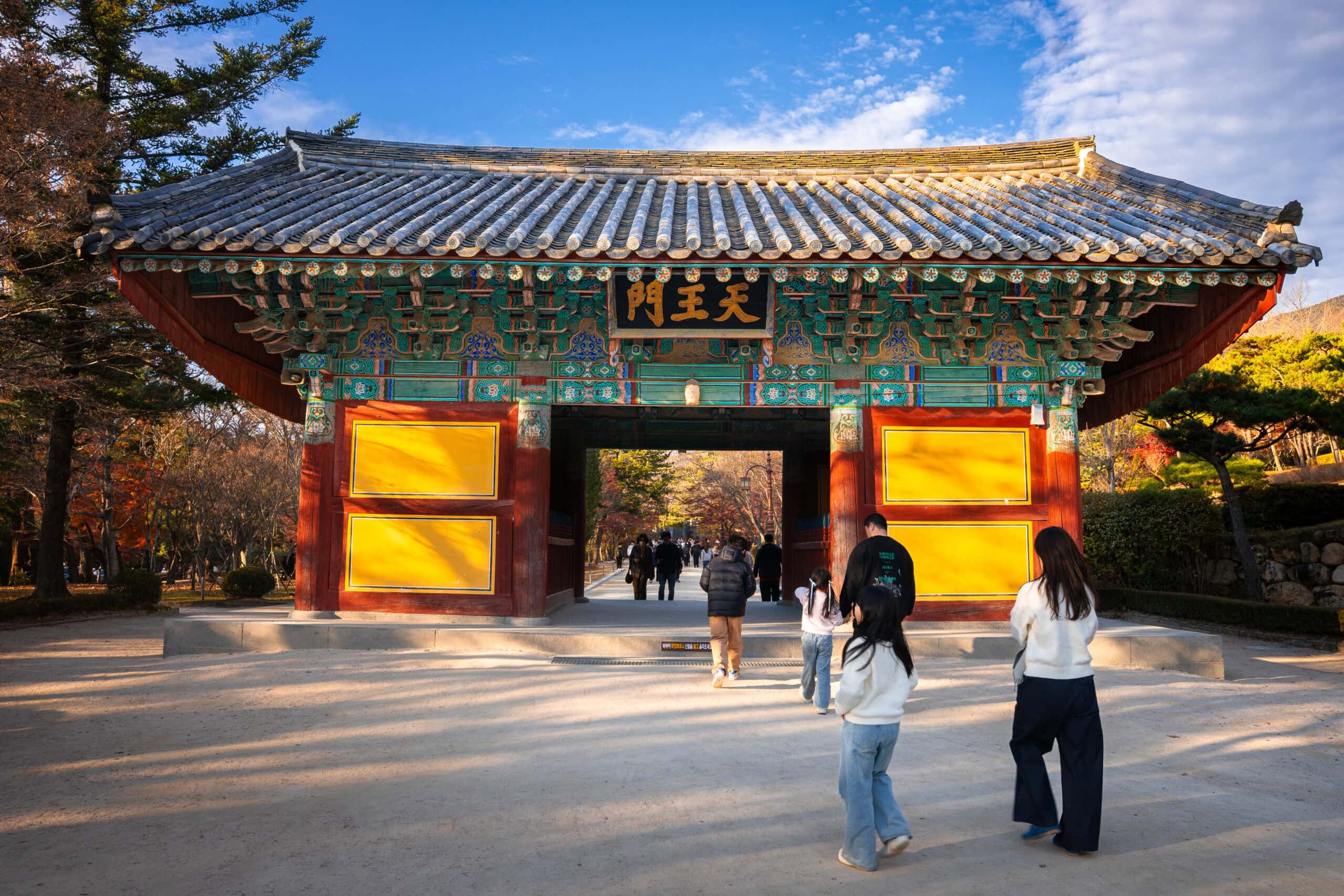
Eventually, the hill flattened out, and a UNESCO sign appeared, calm and official, welcoming us to Bulguksa Temple. We still could not see the temple itself, but confirmation mattered at this point. In the past there was an entrance fee here, but someone, either Korea or UNESCO, decided to remove it. We walked in freely, thanking Korea or UNESCO.
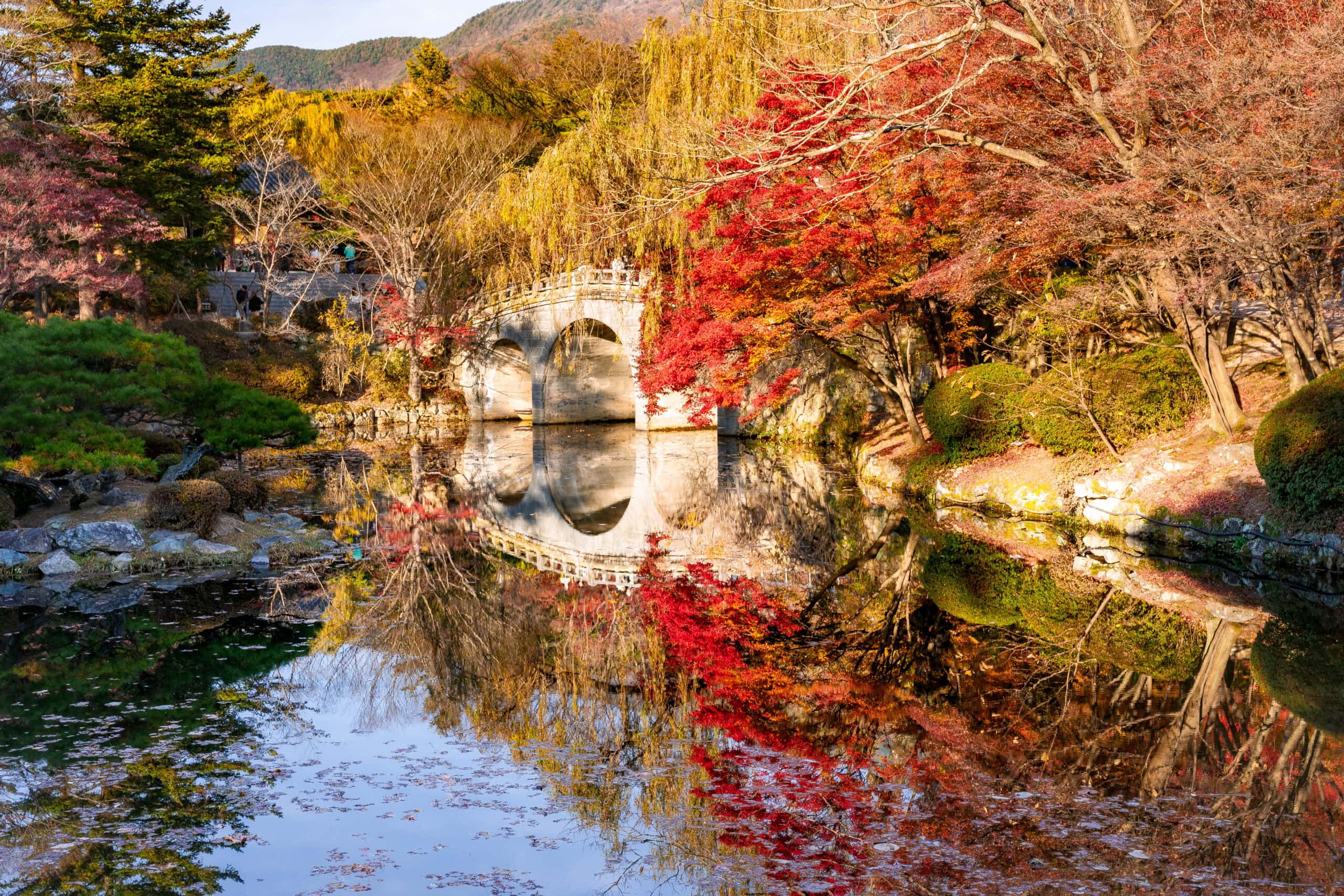
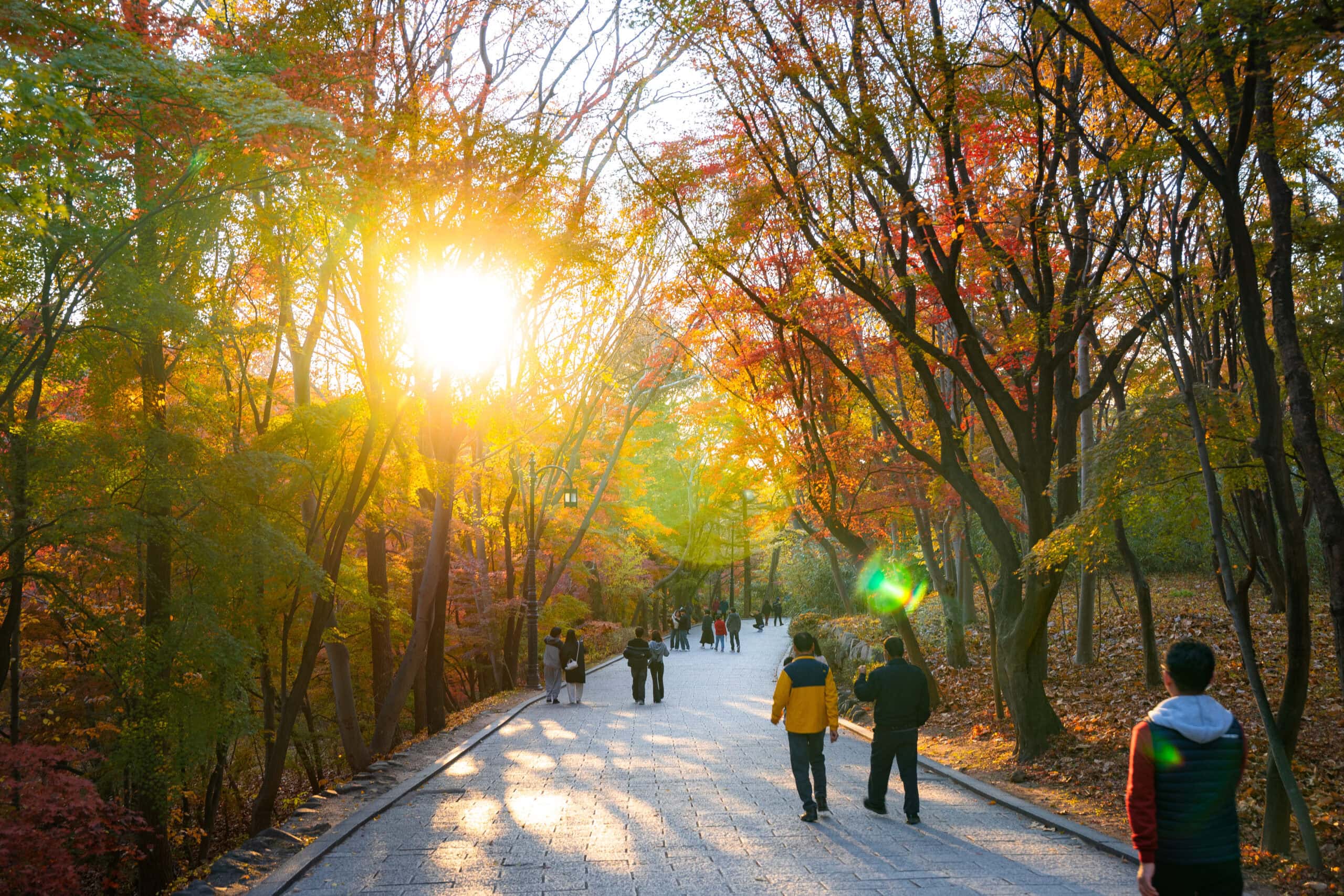
It was peak autumn and the place was busy. Everyone had come for the same reason. The mountains were on fire with colour. Yellow, red, and orange maple leaves framed the paths. Cameras came out. Phones were raised. Of course we joined in without resistance.
Jin told me that the kind of shots I, and everyone else, was taking are called mum’s profile pics in Korea. You know what I mean: perfect leaves, no people, no context.
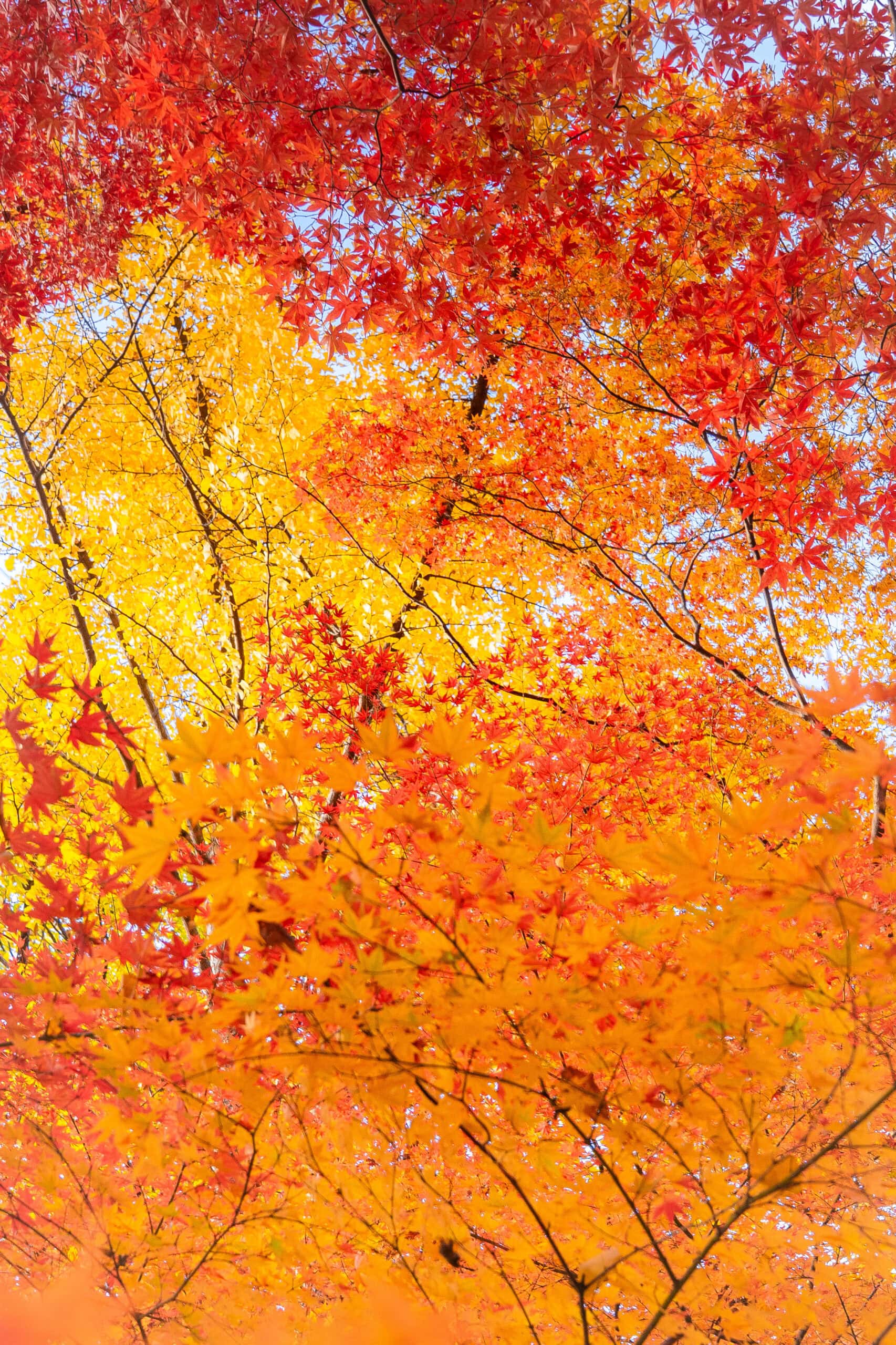
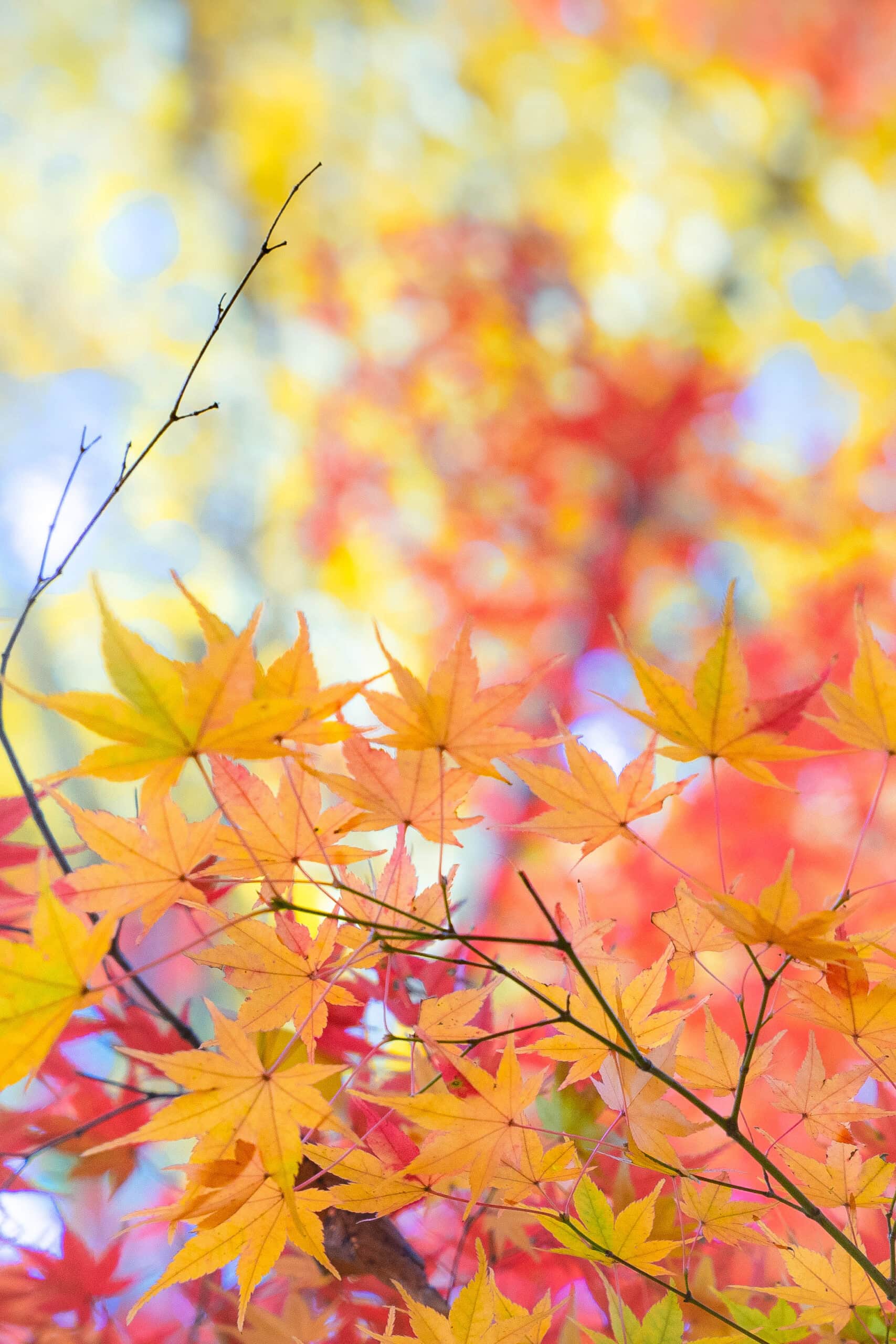
About fifty mom’s profile pics later, we reached what we actually came for.
First impressions confirmed what everyone says. Bulguksa really is beautiful. For me, it is the most beautiful temple in South Korea, and I have seen a few.
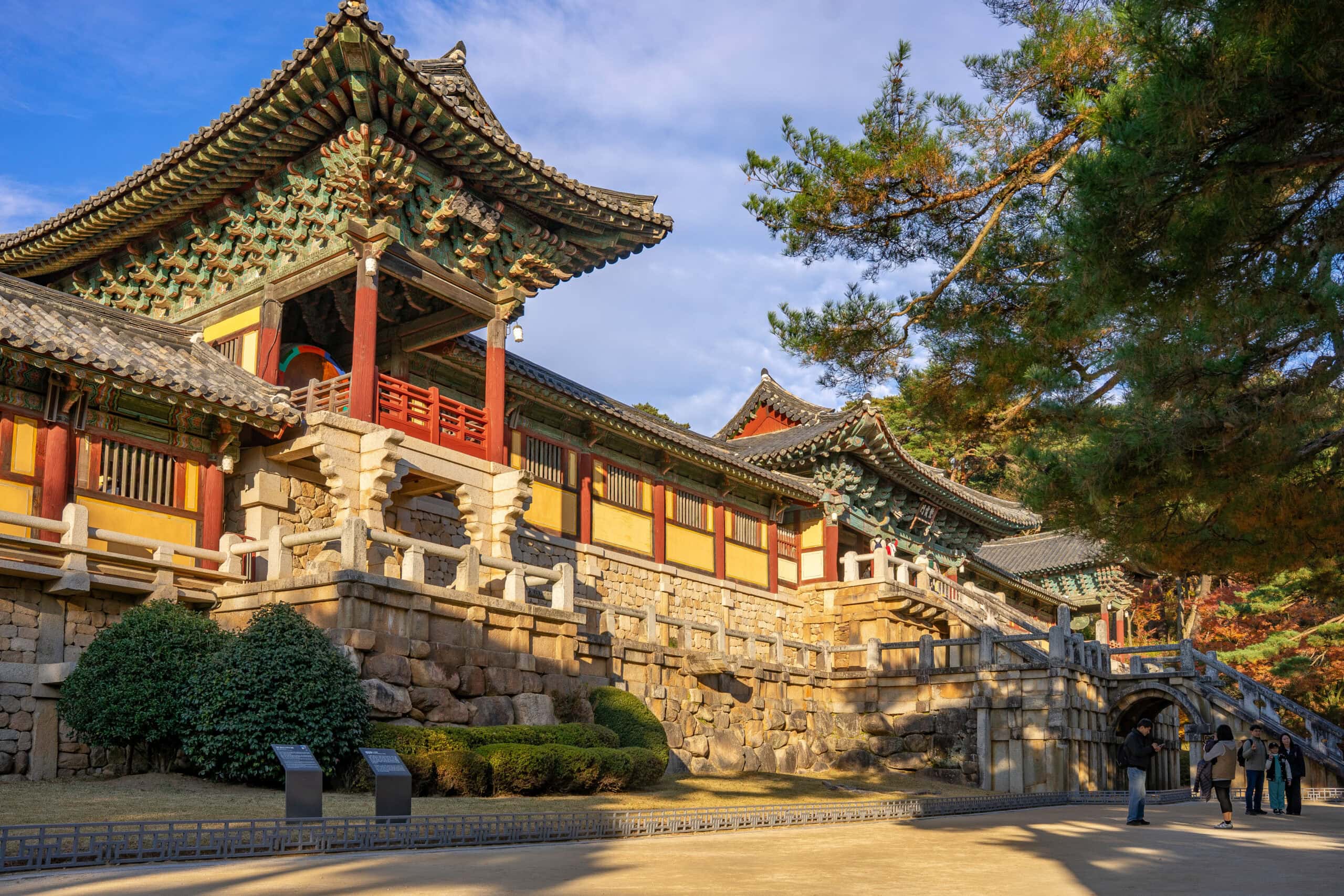
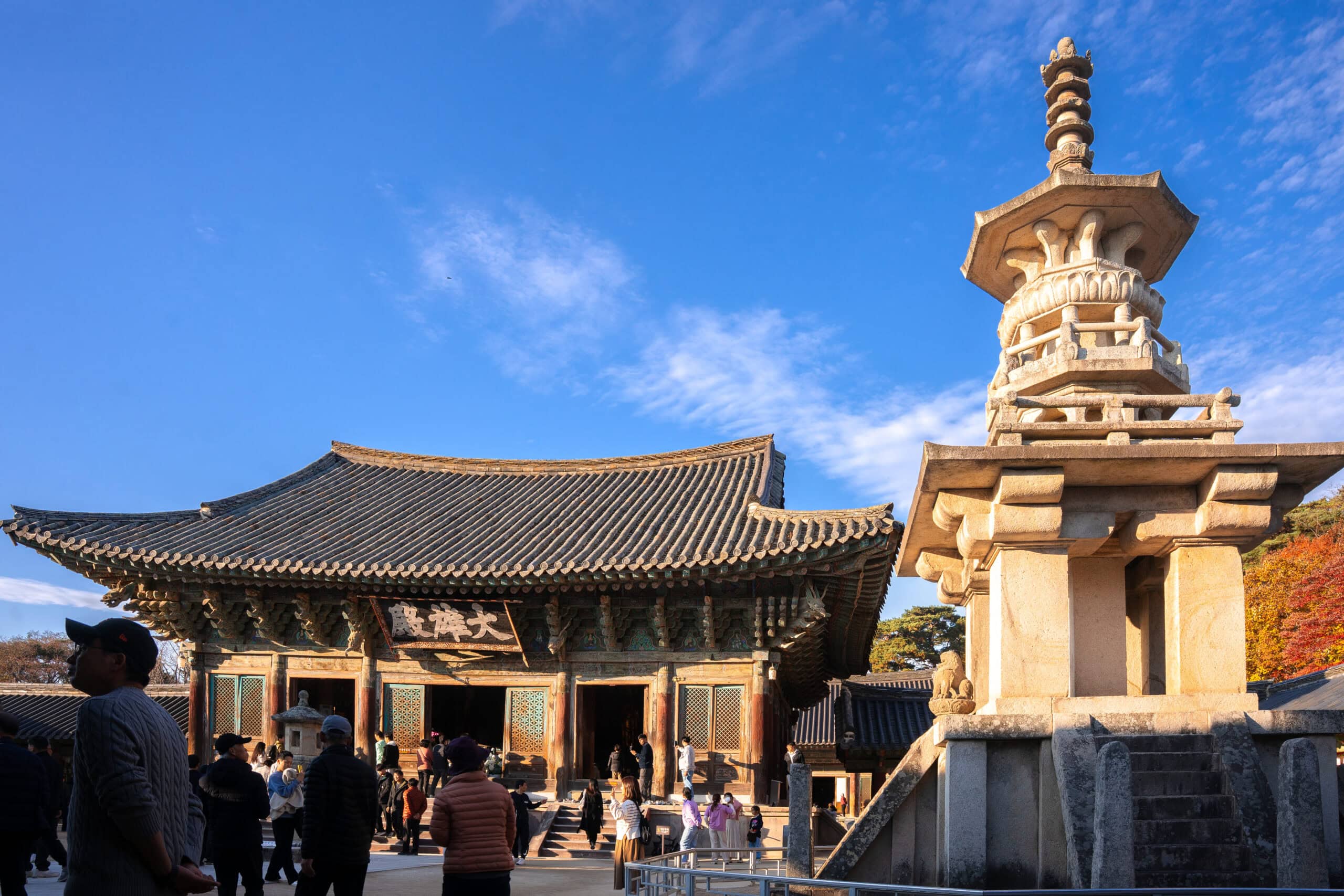
There is a weight to it that goes beyond scale or symmetry. It looks old in a way that doesn’t feel restored. The paint on the eaves and roofs does not sit on top of the wood. It looks absorbed, as if colour and timber have aged together over centuries rather than being periodically refreshed for visitors.
Heavy stone steps lead up towards the main temple buildings. Solid and immovable. Sitting on top of them are wooden structures that feel almost light by comparison. I could see the buildings clearly. The steps themselves were mostly hidden behind several tour groups.
Crowds and quiet spiritual moments do not belong in the same photograph, so I cropped them out before pressing the shutter.
The stairs funnel you straight into the main courtyard, where two stone pagodas stand facing each other. One of them appears on the back of the ten-won coin, which I’ve seen countless times before, but felt compelled to photograph anyway. Once again, I cropped carefully. The crowds were edited out of existence.
This was a pilgrimage to a remote mountain temple after all, and my photos should reflect that.
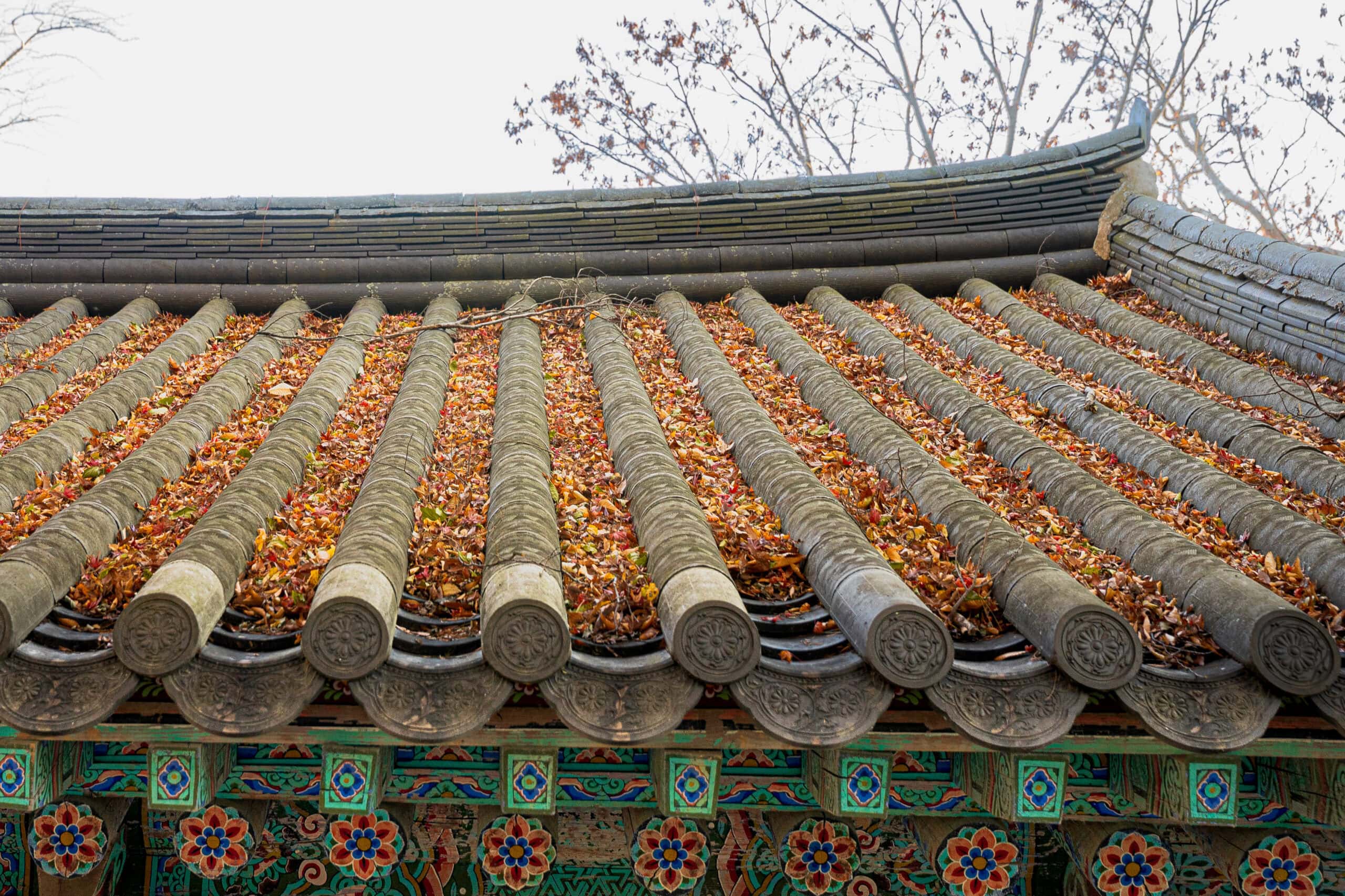
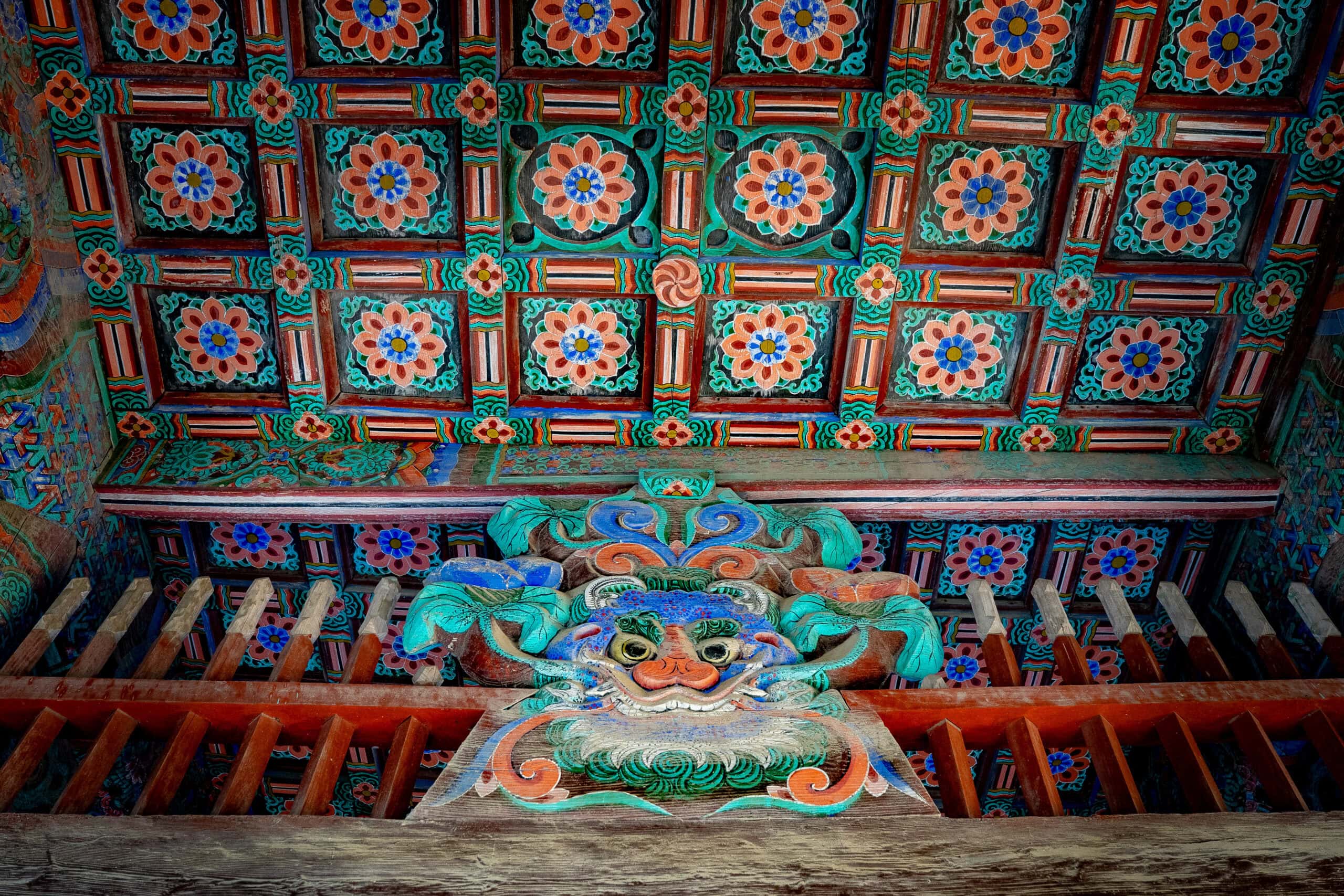
Above us, the wooden eaves and ceilings were covered in paintings and patterns. Every square centimetre filled. Easily the most intricate temple decoration I have seen in Korea. Layers of colour, repetition, and detail that reward prolonged looking.
It reminded me of those three-dimensional images from the nineties, the ones where you had to squint until a hidden picture appeared. I tried it, expecting a Buddha.
Nothing revealed itself.
Enlightenment denied.
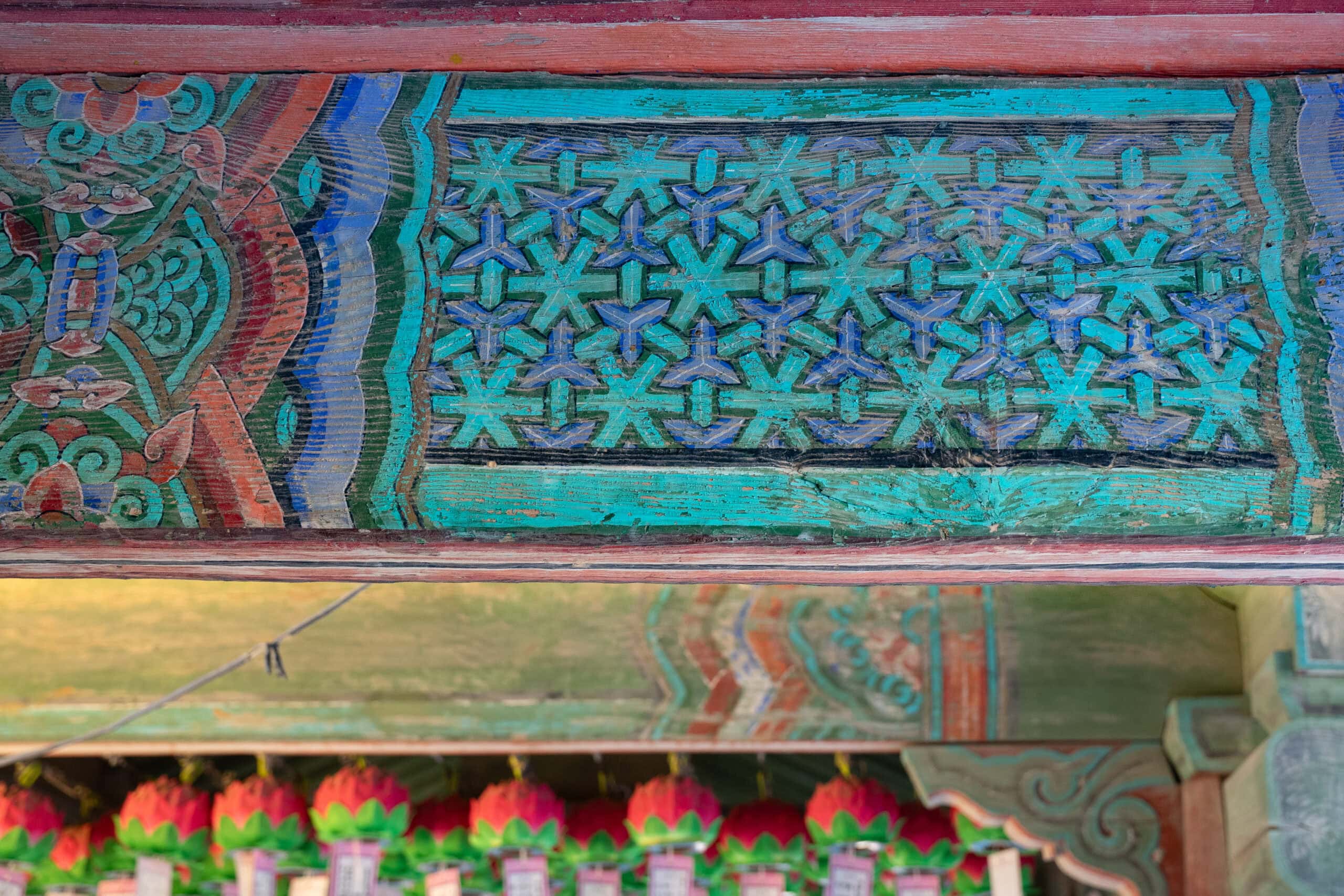
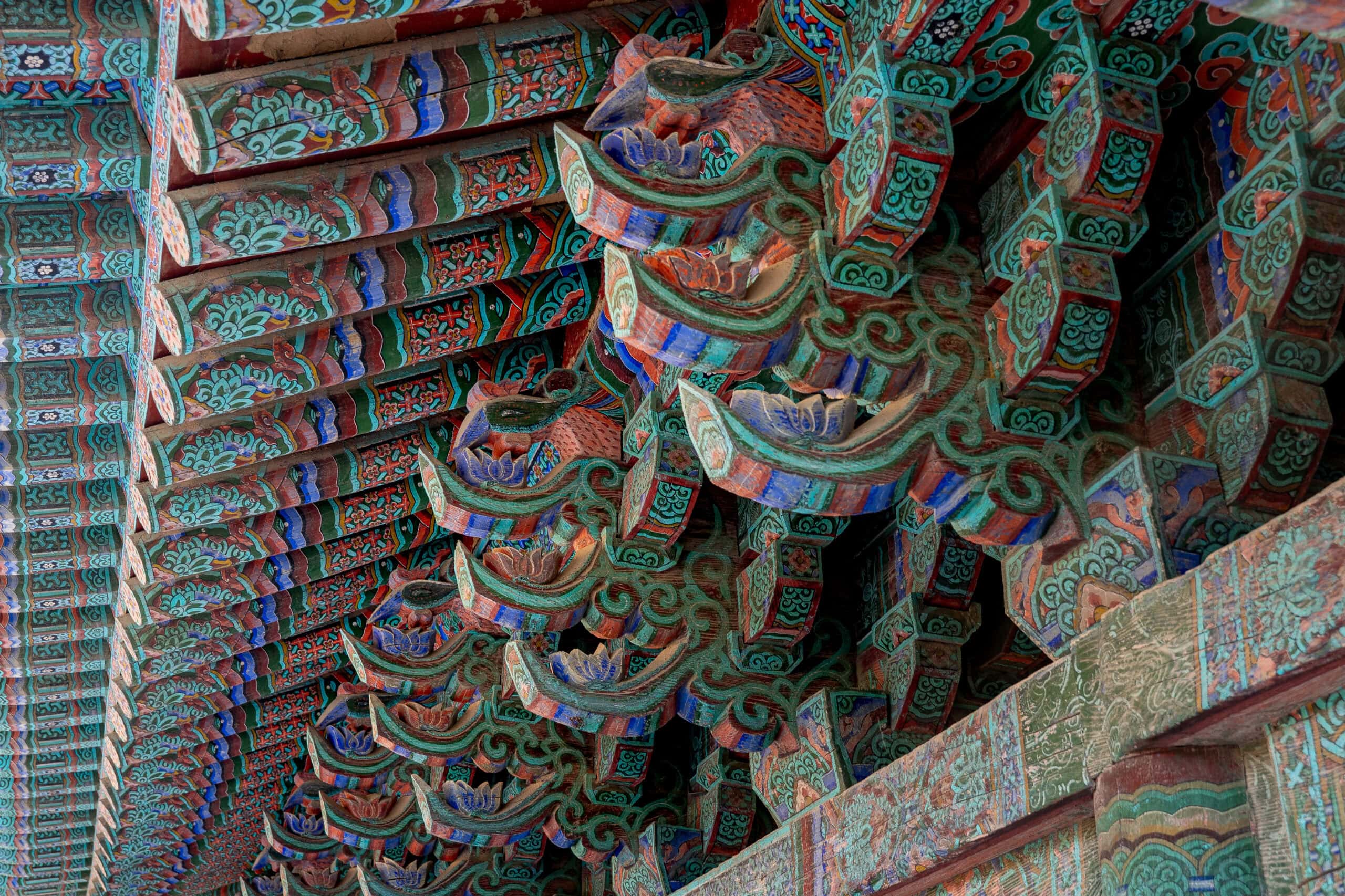
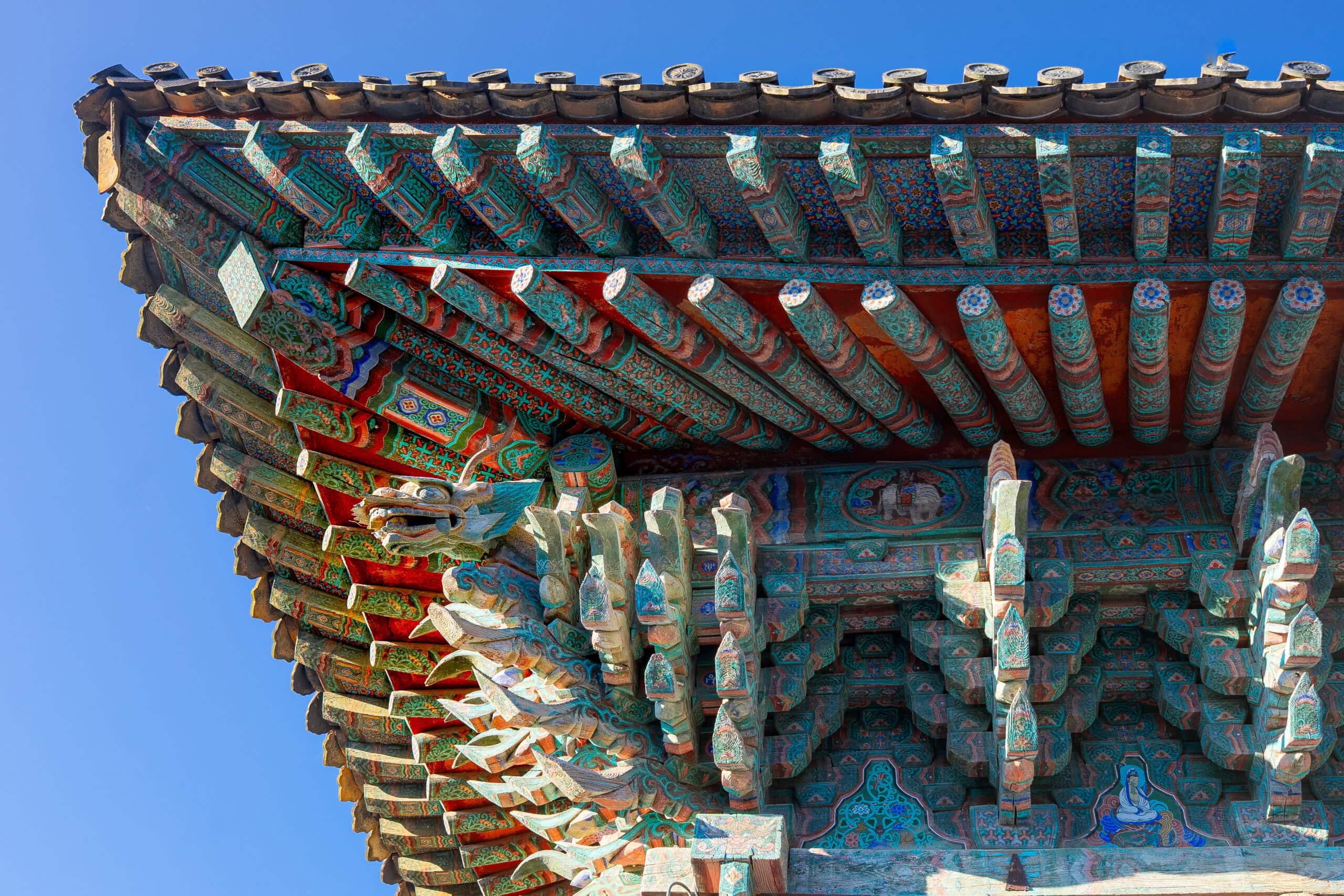
Then I noticed a dragon’s head tucked between the beams. Then another. Then another. Once you see one, the rest appear everywhere. Dragons peaking under rooflines, peering from corners, watching quietly. They were easy to photograph. Painted ceilings are forgiving. They allow you to preserve the illusion of serenity.
Before reaching the main prayer hall, it became obvious that I was doing it wrong.
I was trying to capture something that Bulguksa very clearly was not on that afternoon. I wanted a quiet, zen-like mountain retreat. What I was standing in was movement.
Hundreds of people flowing through the grounds. Couples posing with hands pinched into little hearts. A tour group of fifty following a guide holding a yellow teddy bear on a stick above her head. The guide shouting yeogi (here) and everyone speeds up and looks at the same thing that she points out with her teddy bear on a stick.
Once I let go of the idea of showing Bulguksa as I wanted it to be, everything became easier. The photos improved. I stopped forcing stillness into a place that was alive. More importantly, I stopped lying to myself.
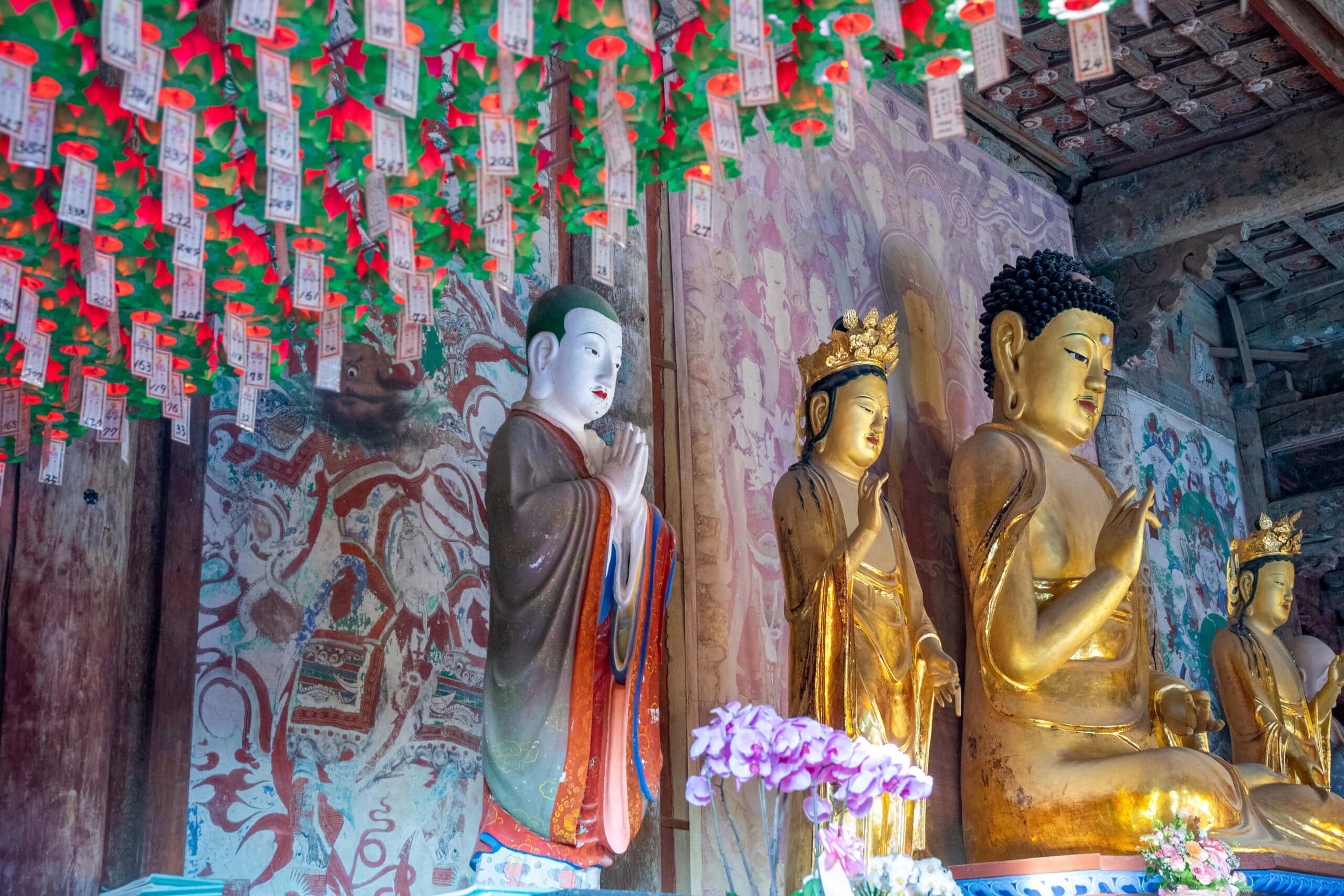
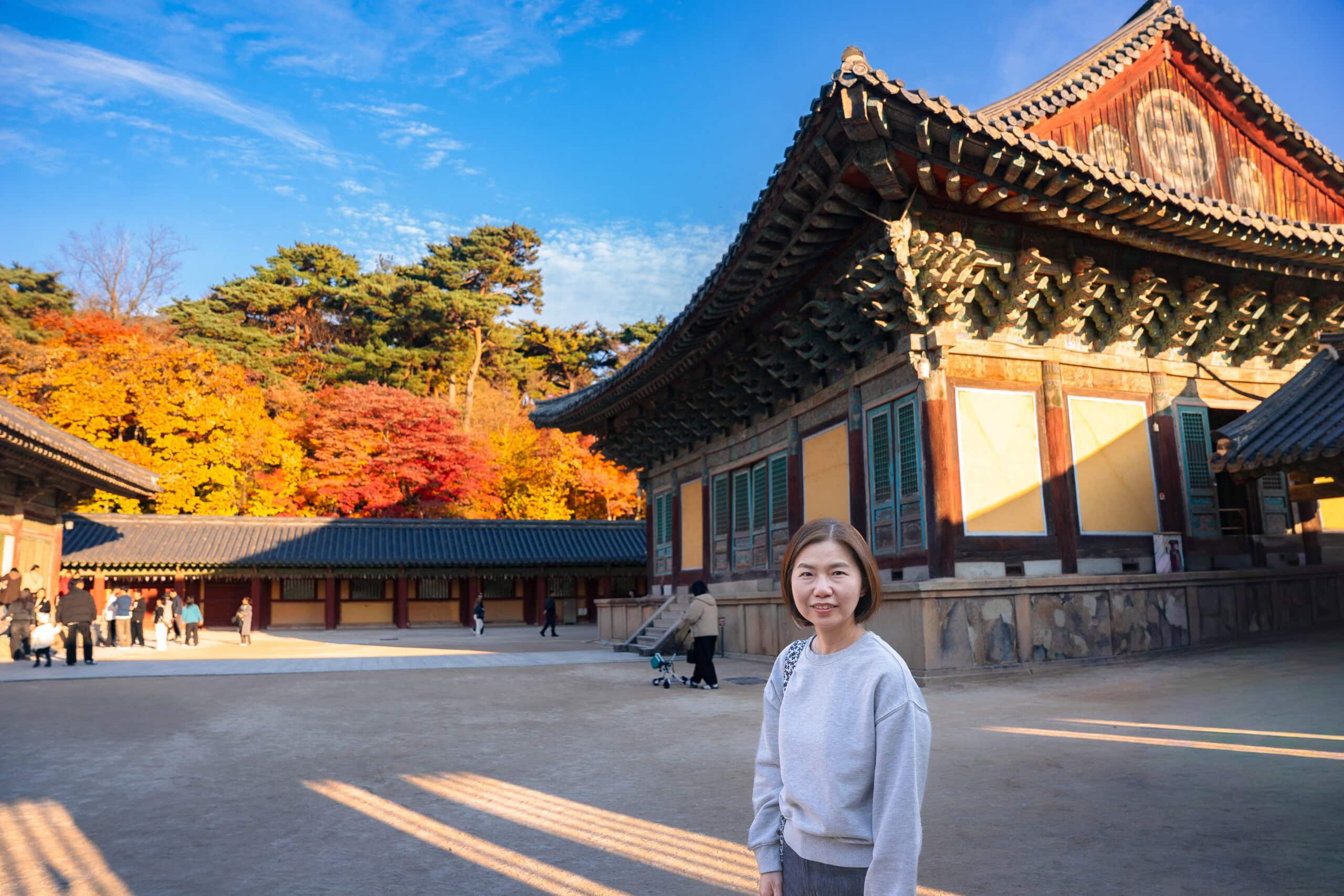
We did eventually find our peace.
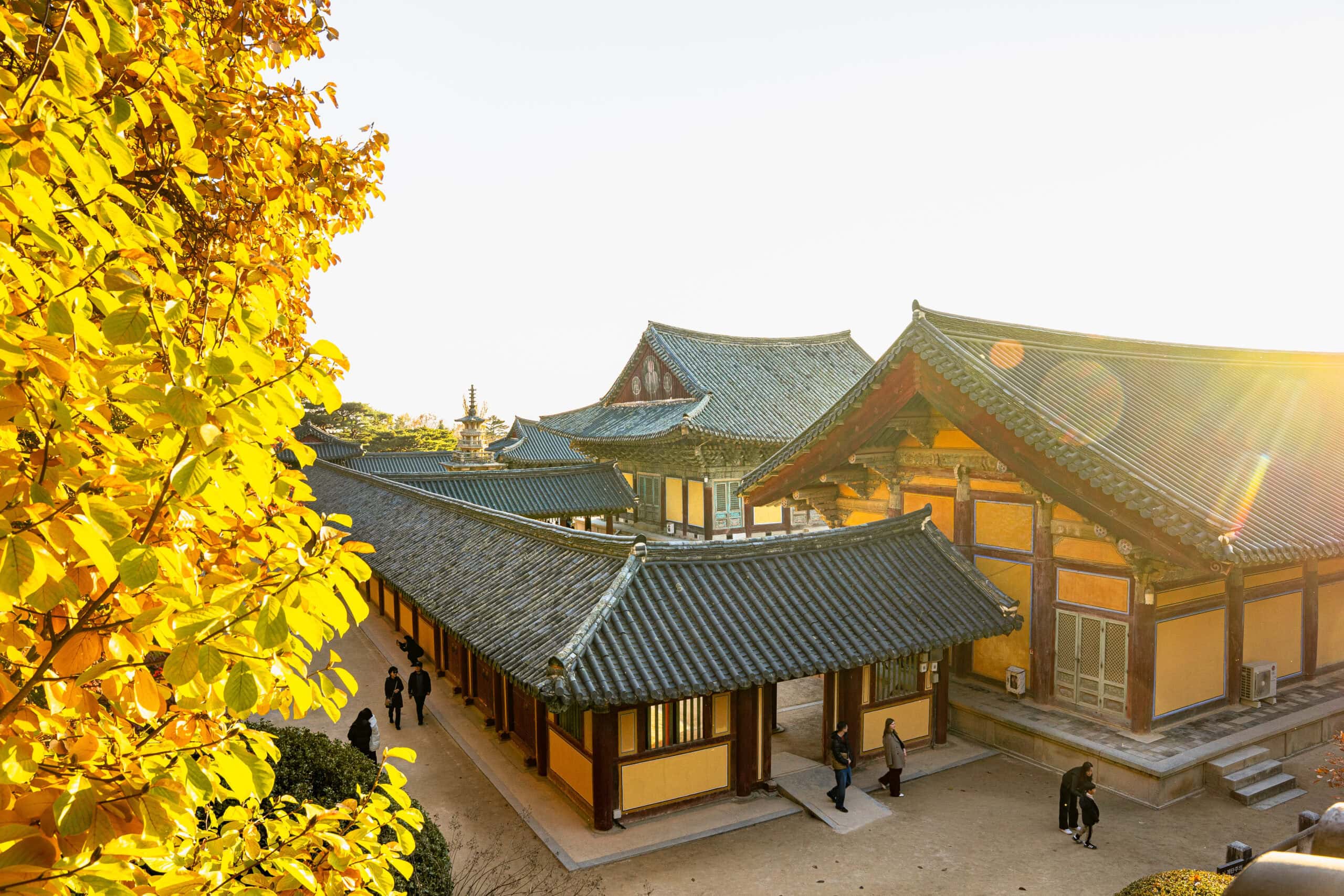
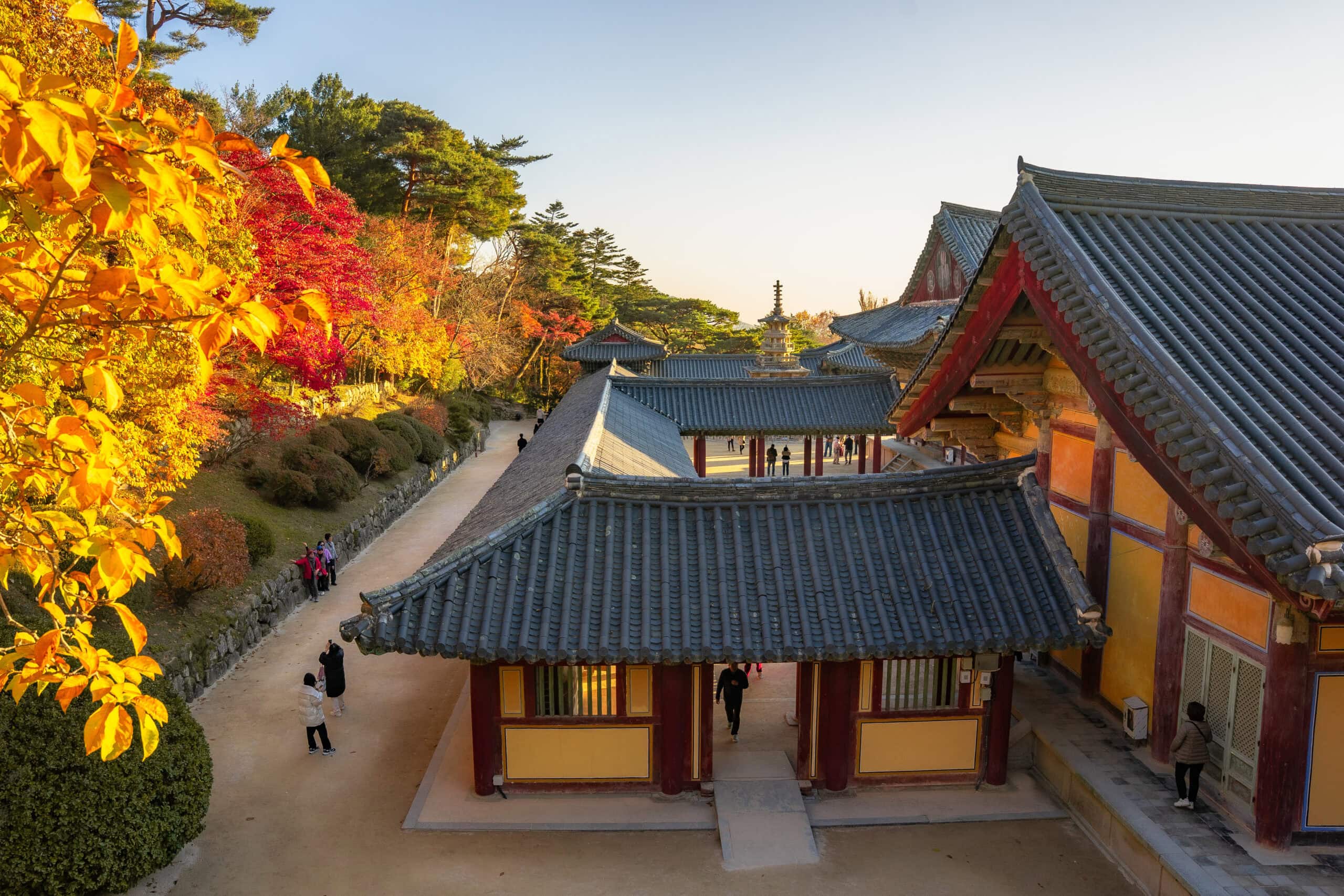
Behind the main prayer hall, small steps lead up to another building. From there, the view opens across the entire complex. Yellow maples blaze on one side. On the other, temple roofs and courtyards sit quietly in the last afternoon light. It should have been the busiest spot of all. Instead, it was just us.
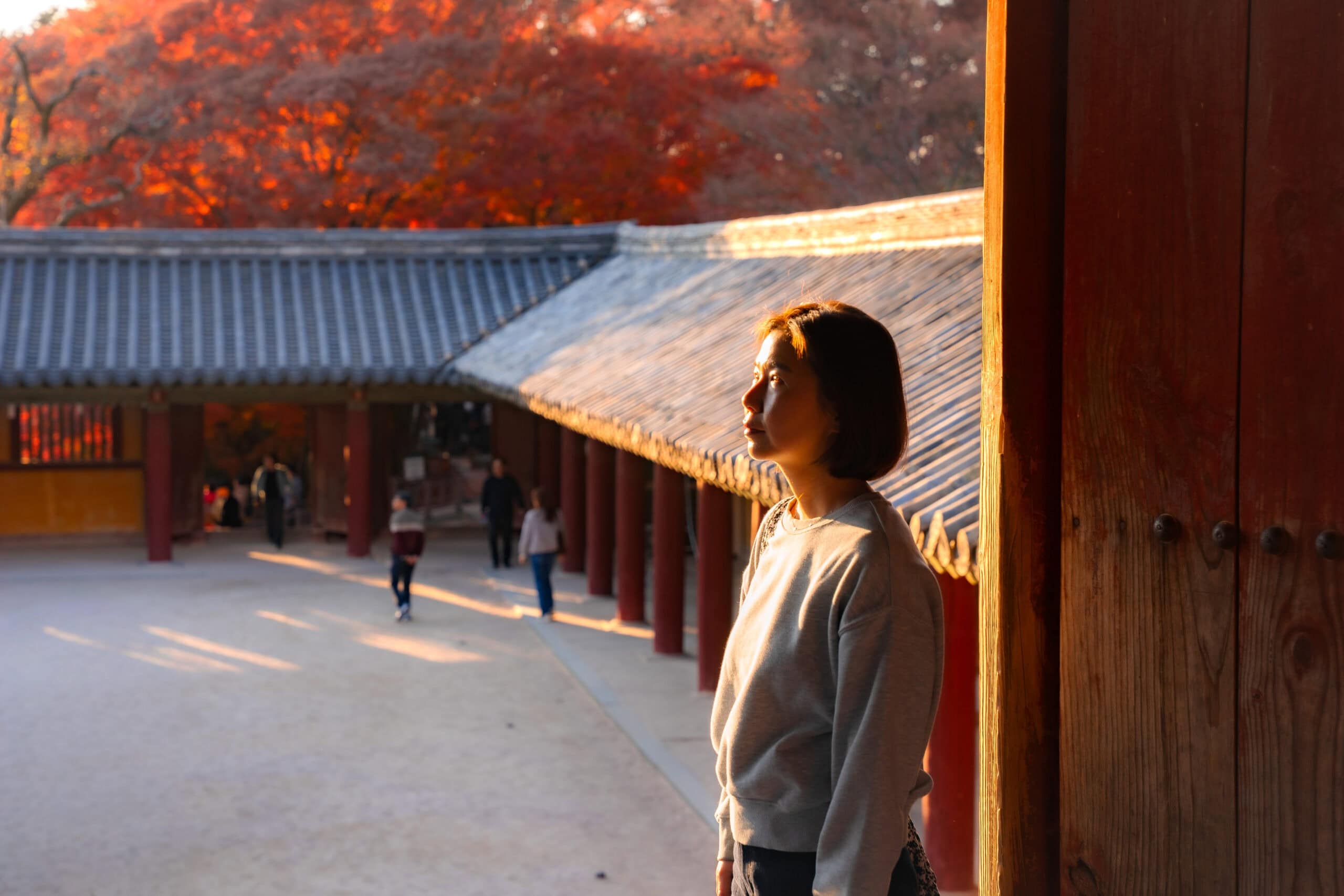
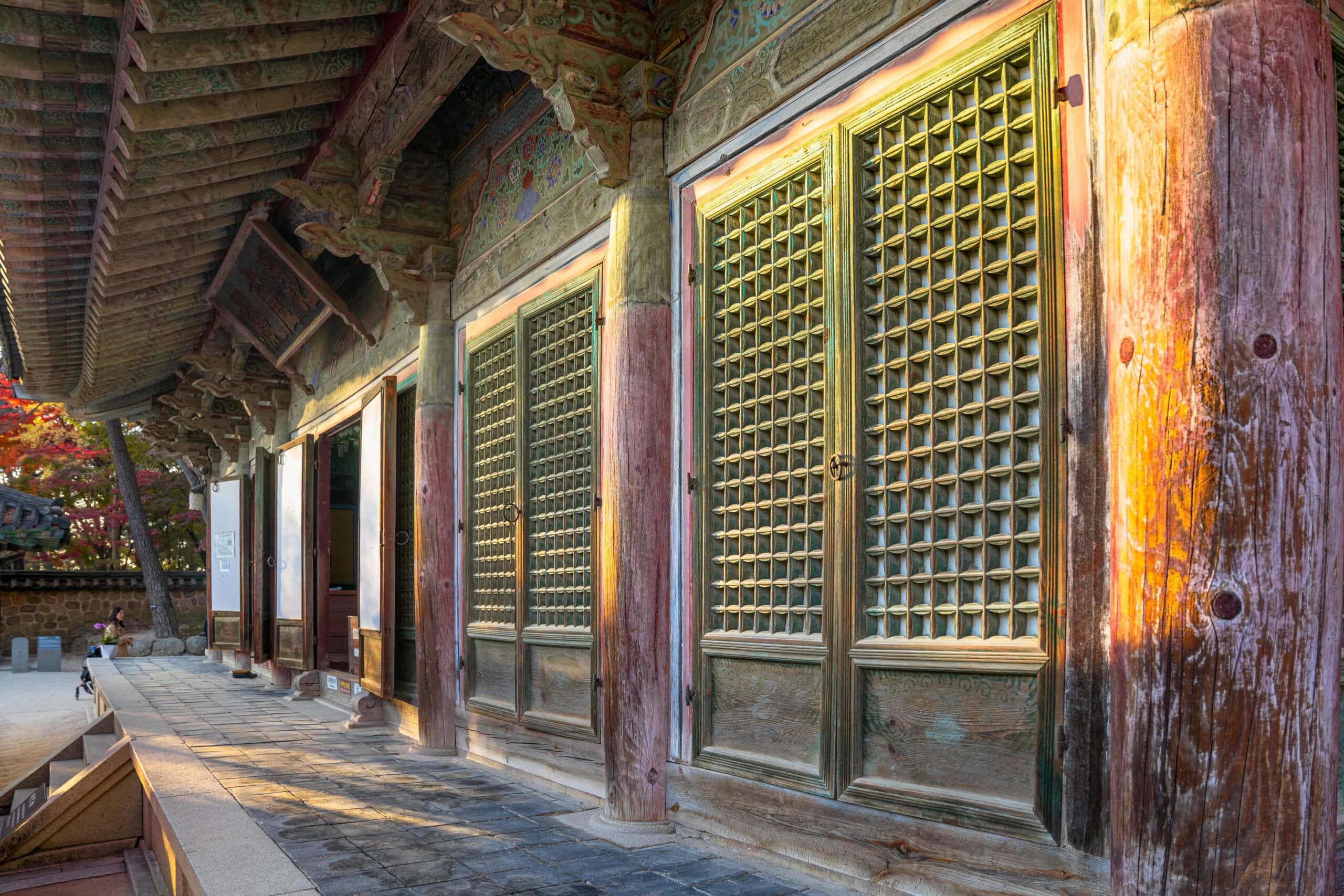
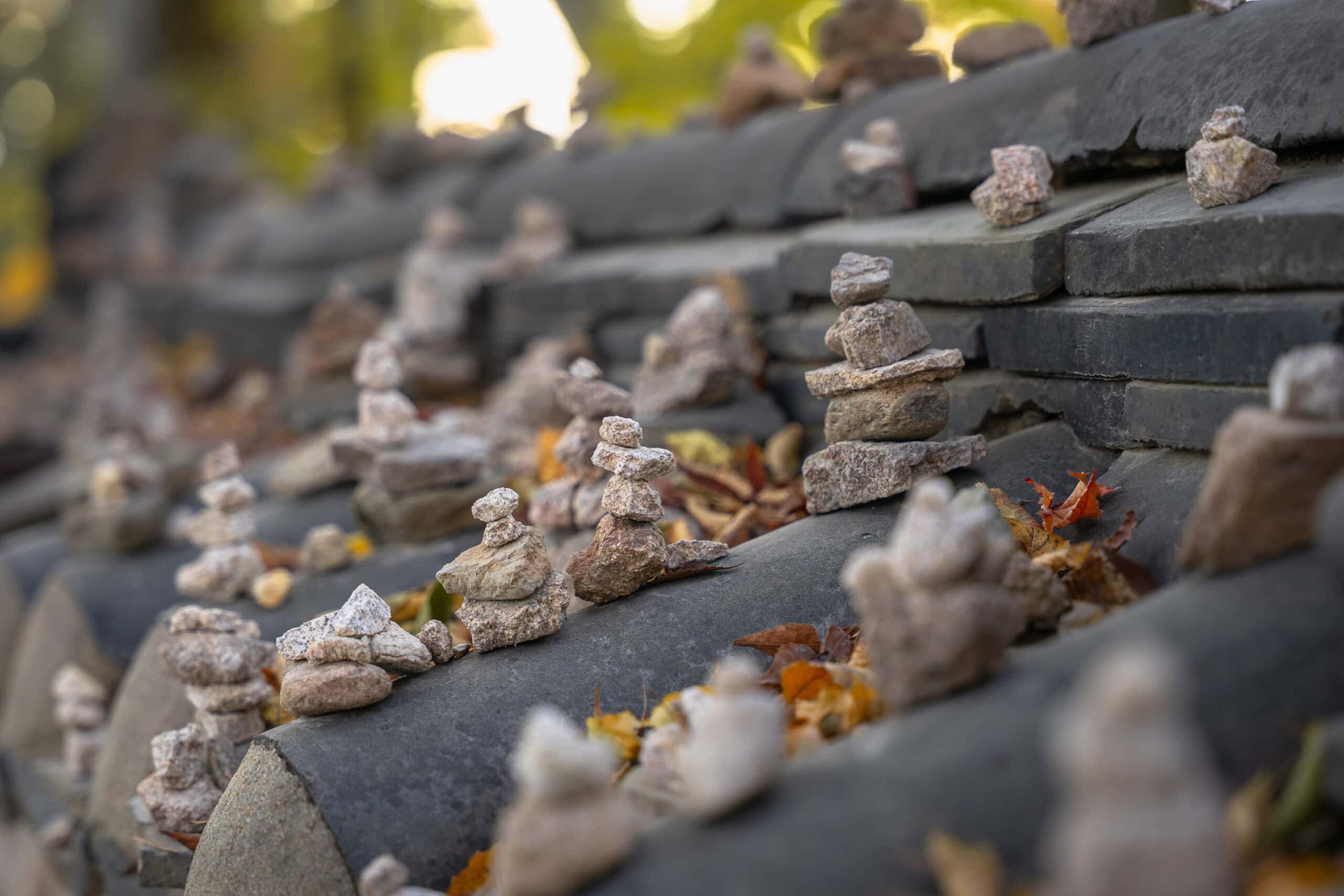
As good as that moment was, something even quieter waited near the exit. At a small side temple, we stumbled upon hundreds, maybe thousands, of small stone pagodas. On the ground. On walls. Balanced on tree roots and branches. Each one carefully stacked by someone who had slowed down long enough to concentrate.
Their power lies in their impermanence. None of them is meant to last. A strong wind or an uncareful step is enough to undo them. And yet people build them anyway. That, more than anything else at Bulguksa, felt like the lesson I had been searching for.
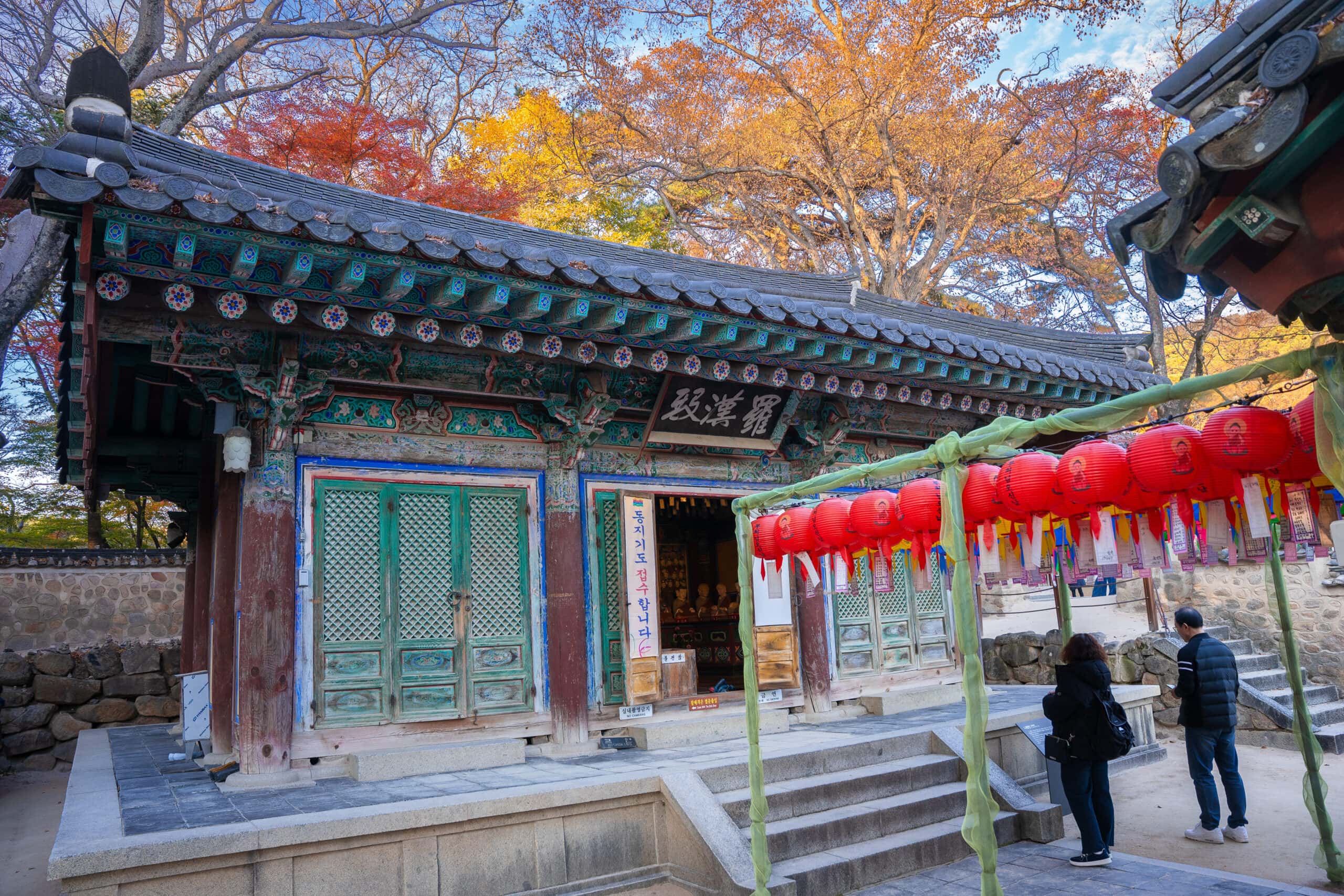
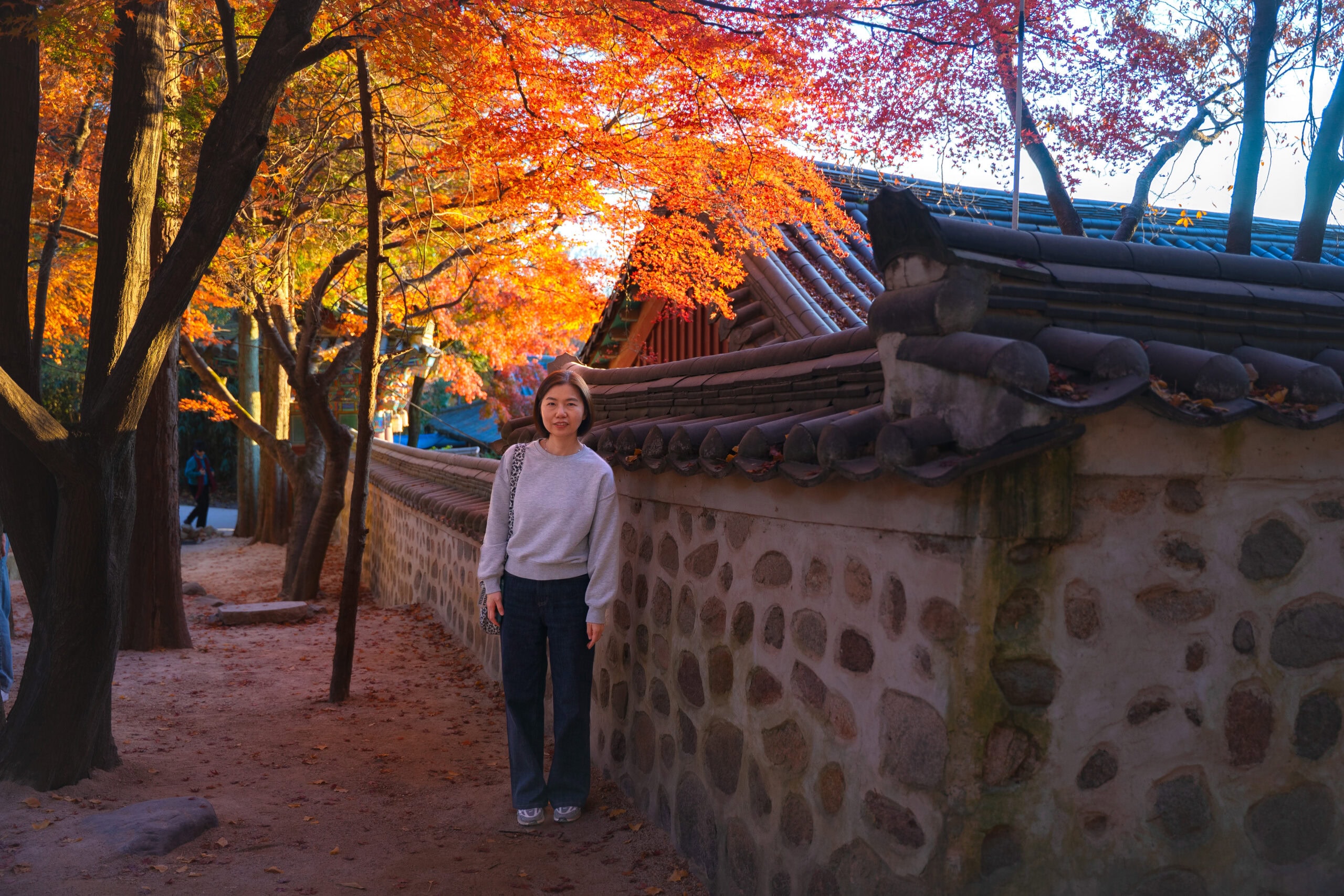
Nearby, more maple leaves attracted impromptu photo shoots and more mum’s profile pictures. Usually a middle-aged woman posing (hand on a branch, of course), then immediately showing her photos to friends. The friends responded enthusiastically.
Wow! OMG!
Amazing!
Beautiful!
We walked on. There was a bus to catch at the bottom of the hill. Another journey waiting. One that would take us about fifteen kilometres to town and roughly a thousand years forward in time.
Is Bulguksa Worth Visiting?
Yes. If you are in Gyeongju, Bulguksa is not just worth visiting, it is essential. A huge amount of the city’s history and cultural identity is tied to this temple, and seeing Gyeongju without coming here would feel incomplete. UNESCO status aside, it really is a beautiful place. Free entrance does not hurt either.
You just need to manage your expectations.
If you are imagining a serene mountain temple hidden deep in the mountains, where wise old monks welcome you with green tea and instant enlightenment, Bulguksa is probably going to disappoint you. This is a busy site. Tour groups arrive throughout the day, and weekends, especially in spring and autumn, bring people in serious numbers.
Accept that, and Bulguksa works. Let the place be what it is, and the quieter moments tend to find you anyway.
How I Shot This Guide
Every photograph in this article was taken with the exact same gear I carry on every journey. It is a setup refined over years on the road to keep travel light without compromising the final image.
- Camera: Sony A7 V
- Lens: Sigma 24-70mm f/2.8 DG DN Art
- Storage: SanDisk Extreme Portable SSD
- Software: Adobe Lightroom Classic
- Outerwear: The North Face Canyonlands Hybrid Jacket