
Gyeongju has always stood out to me as one of the most unique places in South Korea. It’s often called the Museum Without Walls, and while I usually roll my eyes at slogans like that, Gyeongju earns it. Ancient tombs sit in public parks and between cafés, and history feels less curated and more lived in than anywhere else we’ve visited in the country.
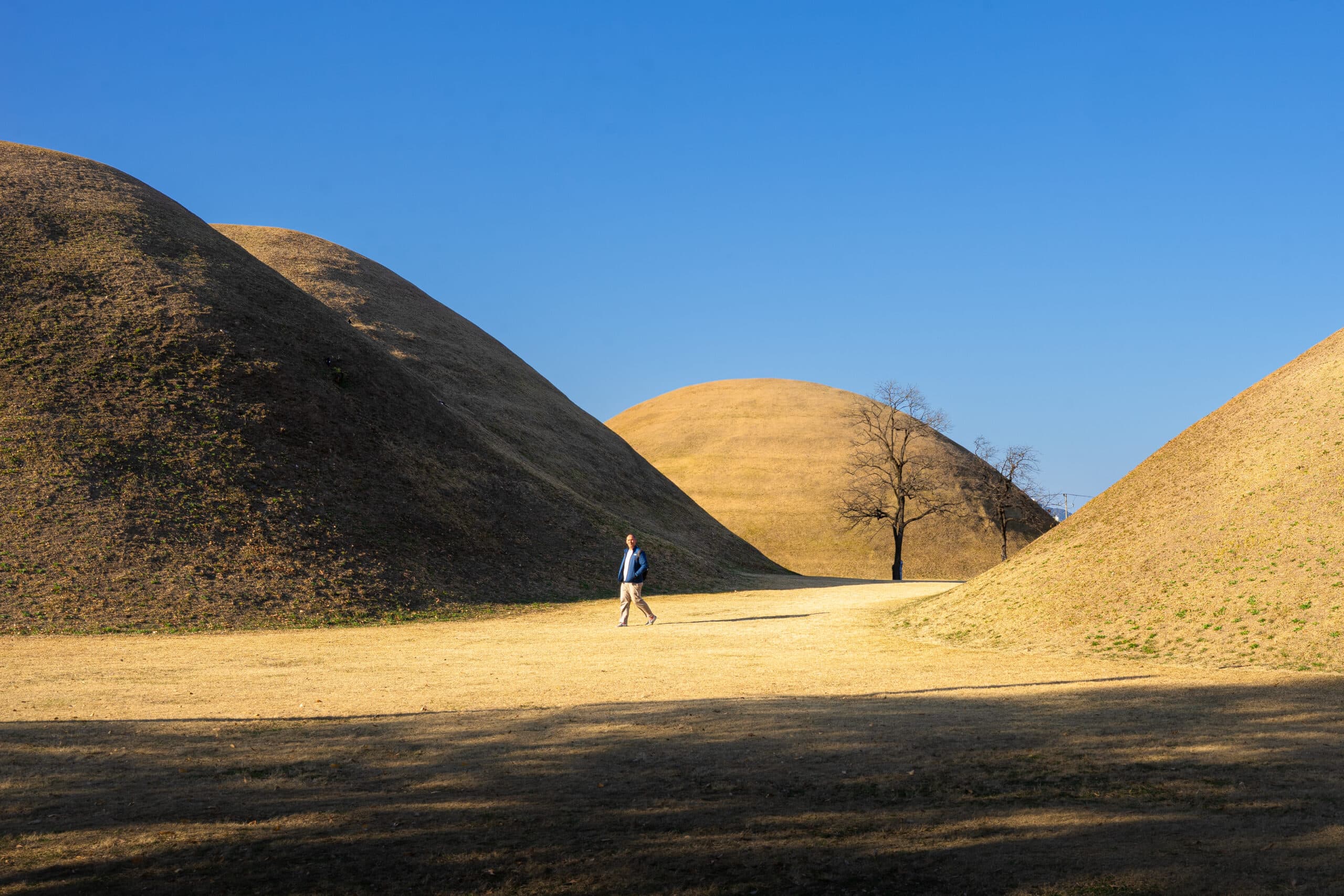
We travelled from Seoul by bus and spent one night and two days here, which turned out to be just enough time to see the highlights without rushing. This 2 day Gyeongju itinerary focuses on the essentials: the must-see historical sites, plenty of walking, and eating well in between.
We left happy, well-fed, and fully convinced that Gyeongju deserves a spot on any Korea itinerary, especially if you want to understand where the country really began.
Please note: This post may contain affiliate links. This means I may earn a commission if you make a purchase by clicking a link (at no extra cost to you). As an Amazon Associate, I earn from qualifying purchases. Learn more.
KTX vs Bus from Seoul to Gyeongju: Which Is Better?
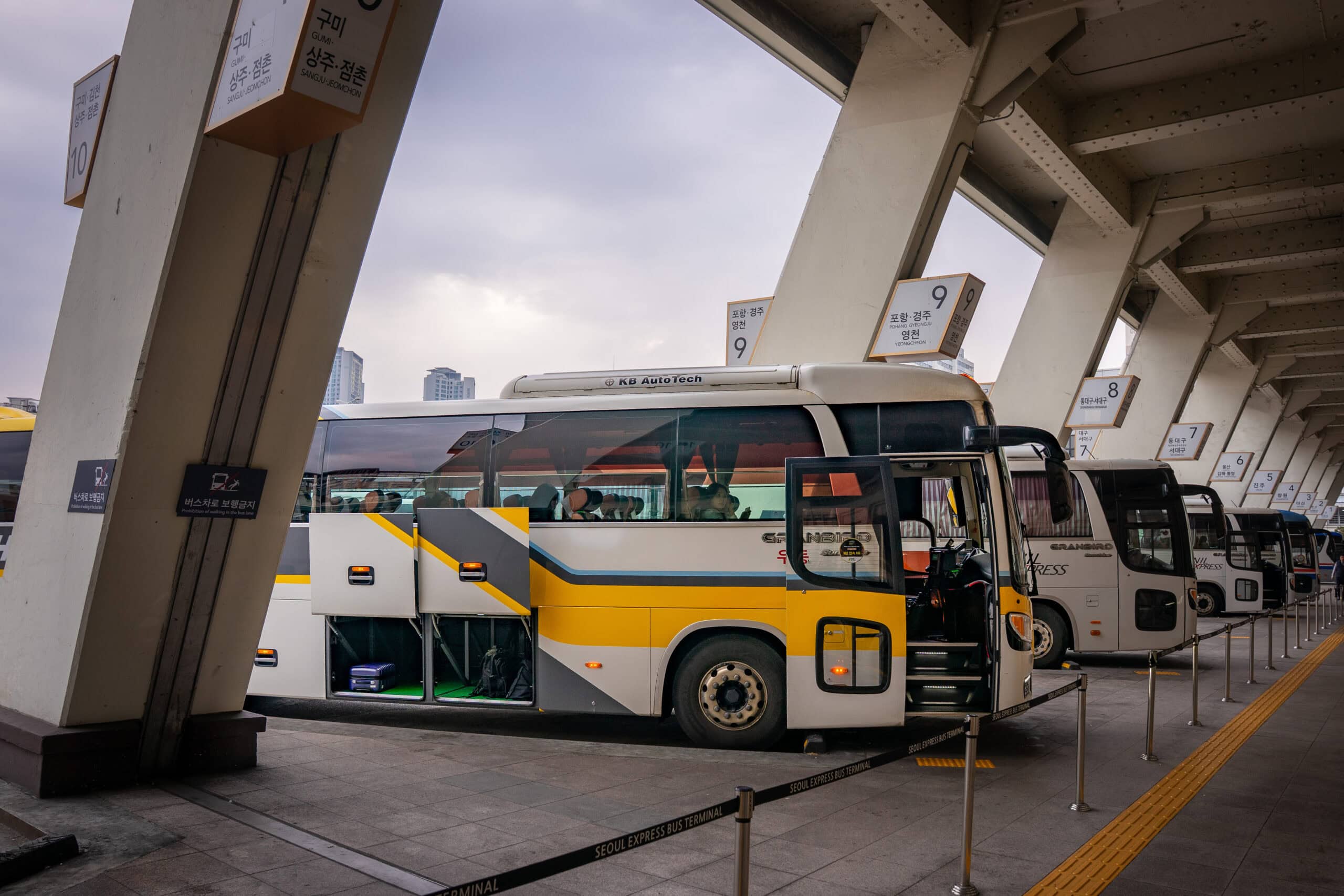
We went back and forth on KTX vs bus from Seoul to Gyeongju, and in the end, the bus won by a comfortable margin.
On paper, the KTX looks faster. The train from Seoul to Singyeongju takes around three hours, which sounds great. The catch is that Singyeongju Station isn’t actually in Gyeongju. From there, you still need another 30 minutes by local bus or taxi to reach the city centre.
The express bus from Seoul Express Bus Terminal takes a little longer, roughly four hours, but it drops you right in central Gyeongju. We walked to our hotel in five minutes.
Cost also tipped things firmly in the bus’s favour. The KTX is considerably more expensive, and once you add the extra transfer into town, the price gap widens even more. Comfort-wise, Korean limousine buses are excellent with wide seats, plenty of legroom, and complimentary Wi-Fi.
Buy your Seoul – Gyeongju bus tickets here.
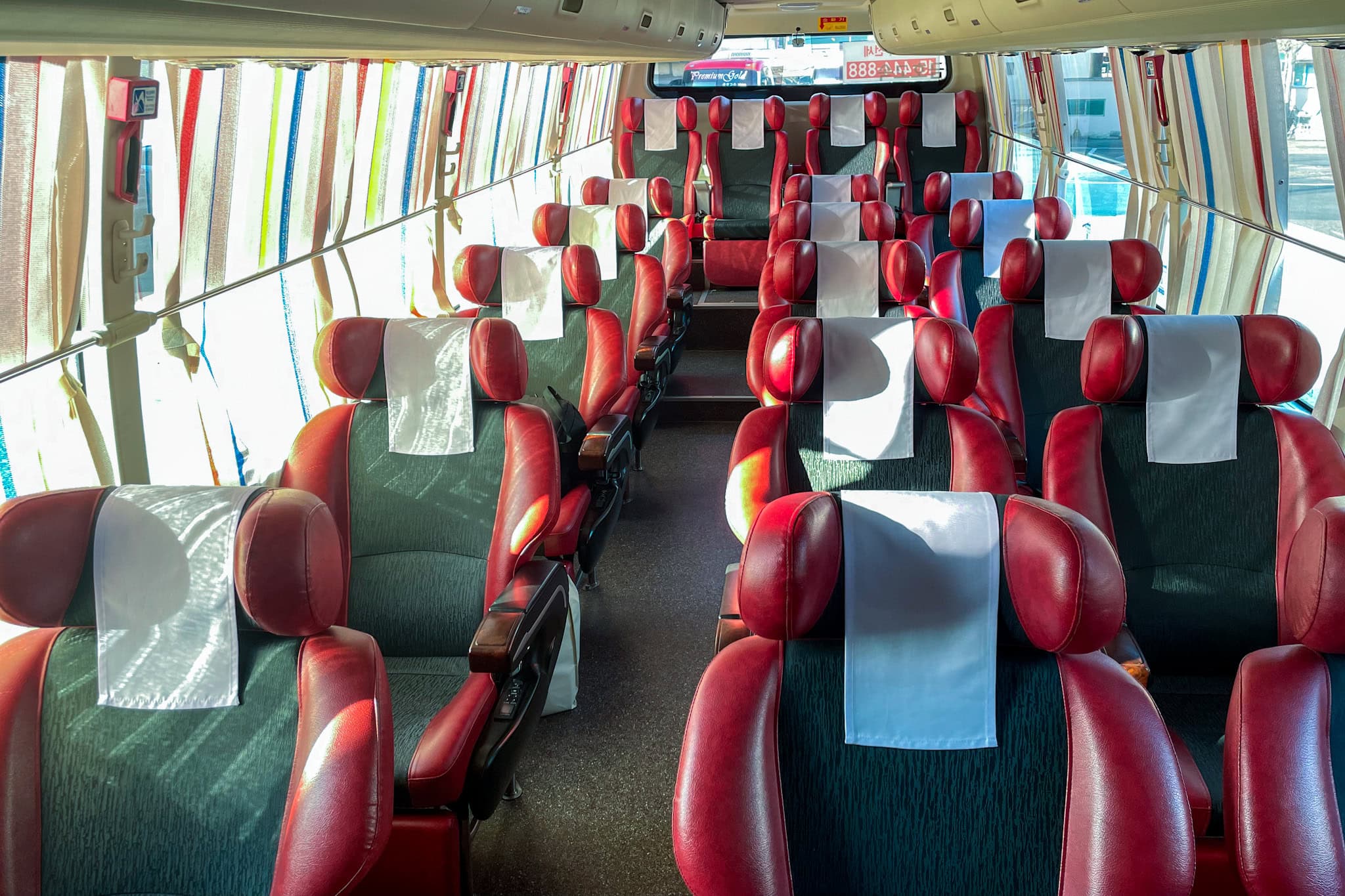
For us, it came down to price, convenience, and where you actually end up. The bus was cheaper, simpler, and dropped us exactly where we wanted to be. So, for us, the bus is the clear winner here.
From Busan:
Gyeongju makes a perfect side trip from Busan. Buses from Busan Bus Terminal take around 1–1.5 hours and are the easiest option.
There’s also a KTX option from Busan to Singyeongju (about 30-minute travel time), but once you factor in transfers, the bus is often simpler.
Where We Stayed in Gyeongju
We stayed at Maison Mini Hotel, just a five-minute walk from Gyeongju Bus Terminal, and the location alone made it a great choice. The room was spacious, the bed was comfortable, and everything we wanted to see was within easy walking distance.
The price offered excellent value for money, and the final win was being able to leave our suitcase at the hotel after checkout and pick it up later before catching the bus back to Seoul.
About Gyeongju: Korea’s Open-Air Time Capsule
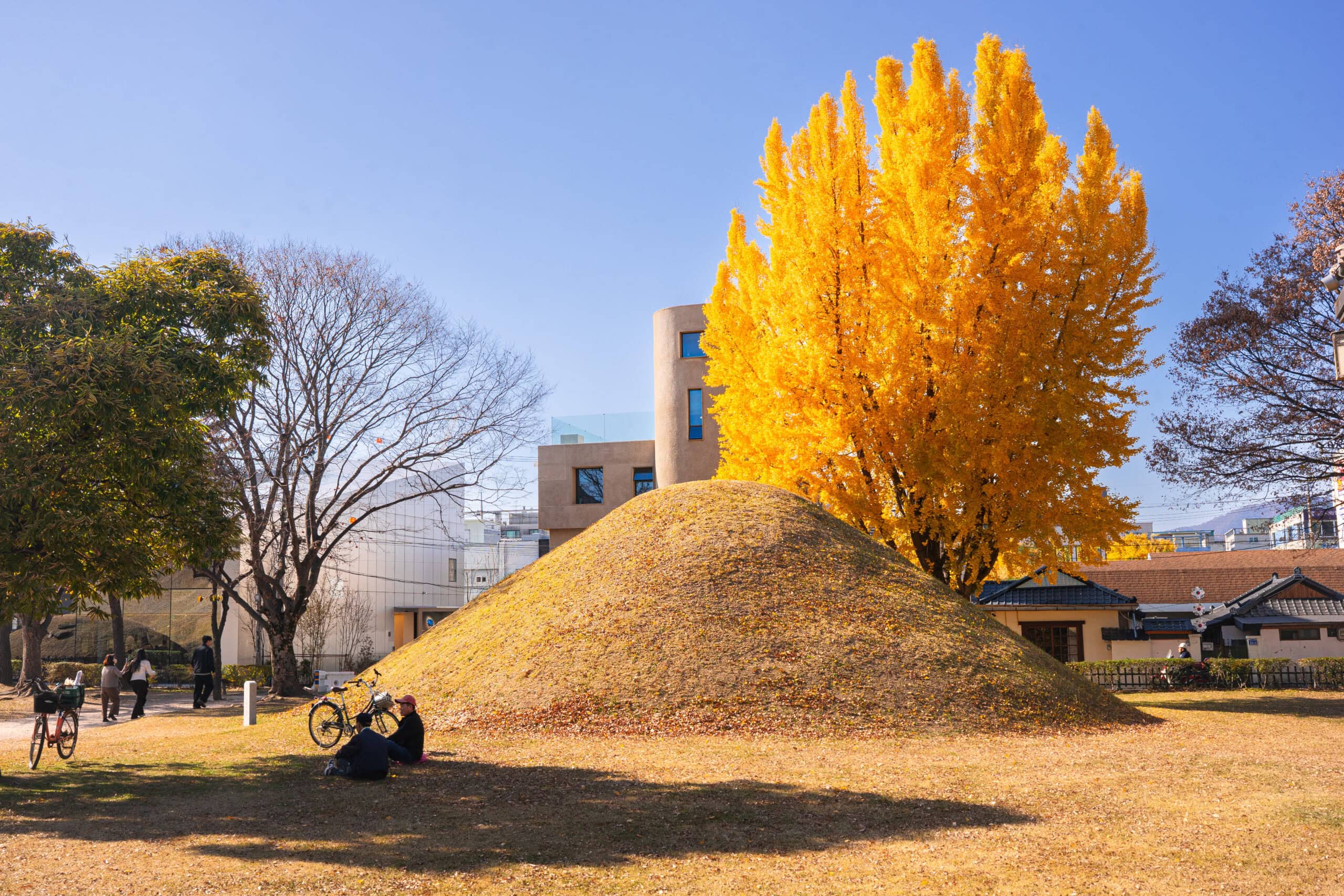
For nearly a thousand years, Gyeongju was the capital of the Silla Kingdom, one of Korea’s Three Kingdoms, from 57 BC until 935 AD. This was the political, cultural, and spiritual heart of the peninsula long before Seoul existed in any meaningful way.
When Silla finally fell, Gyeongju quietly stepped out of the spotlight, leaving behind an extraordinary concentration of temples, burial mounds, palaces, and artefacts. Today, many of Korea’s most important national treasures are either here, or came from here.
What makes Gyeongju special isn’t just its history, but how visible that history is. Royal tombs rise like grassy hills in the middle of town. Ancient observatories, palace ruins, and temple complexes sit alongside cafés, bike paths, and bus stops. This is why they call Gyeongju The Museum Without Walls.
In a part of the world with an almost obsessive relationship with the future, visiting Gyeongju feels like time travel. It looks different, and it moves at a different pace.
Explore More Korea Itineraries
Our 2 Day Gyeongju Itinerary Map
Day 1: Blue
Day 2: Red
Google Maps does not work well in Korea. Instead, download Naver Map for navigation. This map is purely for a geographical overview. I will link Naver Map locations throughout the post.
Day 1 Gyeongju Itinerary: Ancient Temples, Night Views & Market Food
Arrival → Lunch on Hwangnidan-Gil → Bulguksa Temple → Donggung Palace and Wolji Pond → Woljeong Bridge → Cheomseongdae Observatory → Dinner at Jungang Market
Arrival & Lunch on Hwangridan-gil (황리단)
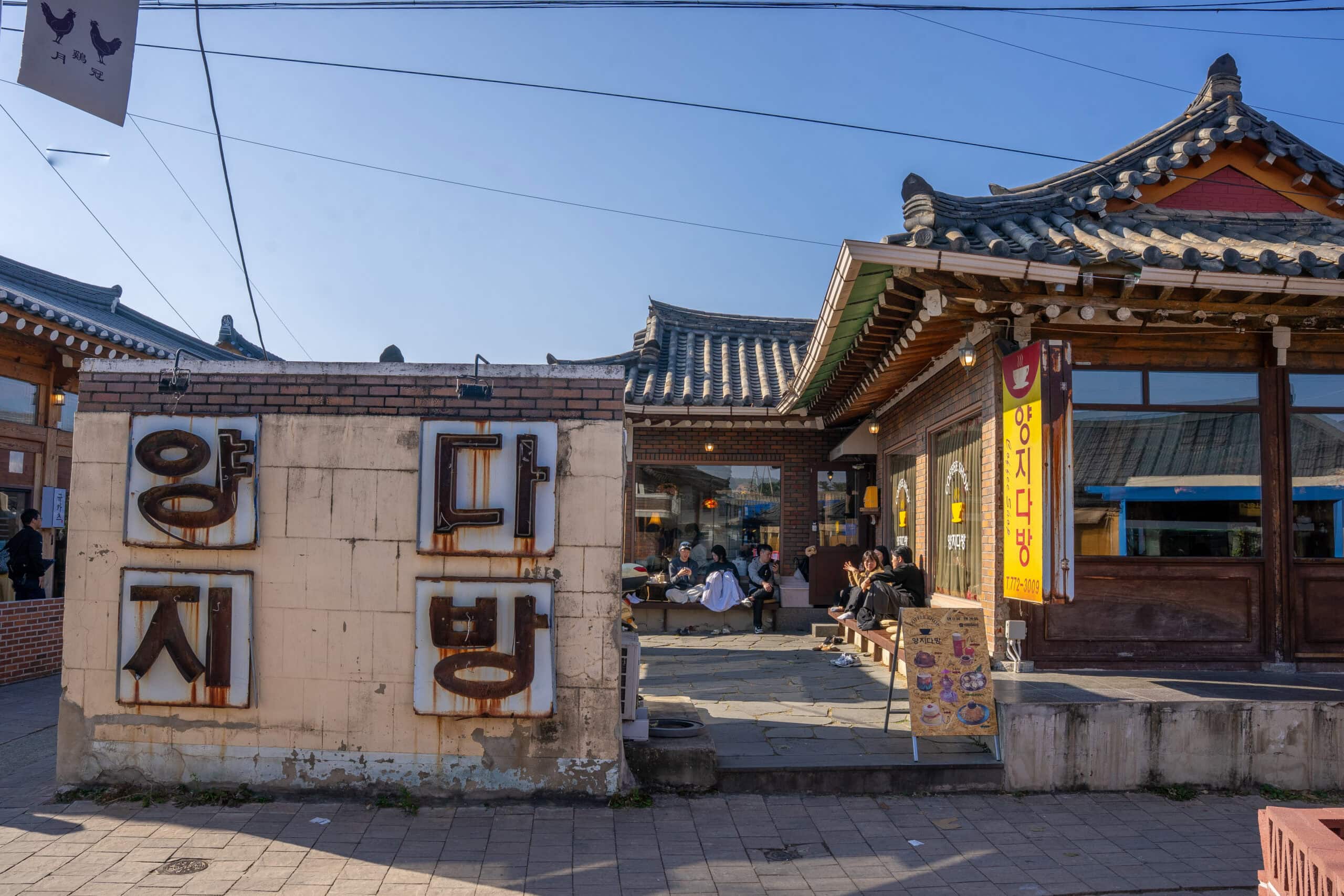
We arrived in Gyeongju around noon, hungry and ready to start. After dropping our luggage at the hotel, we walked straight to Hwangnidan-gil, the city’s most popular food and café area.
Just off the main road, a web of narrow lanes is lined with refurbished hanok houses and old homes that have been given a second life as restaurants and cafés. It’s busy, yes, but still charming, and a good place to ease into Gyeongju.
We settled on Wolgyegwan (월계관) and joined the queue outside. Waiting is basically a Korean dining ritual, and having to wait means a restaurant is doing something right.
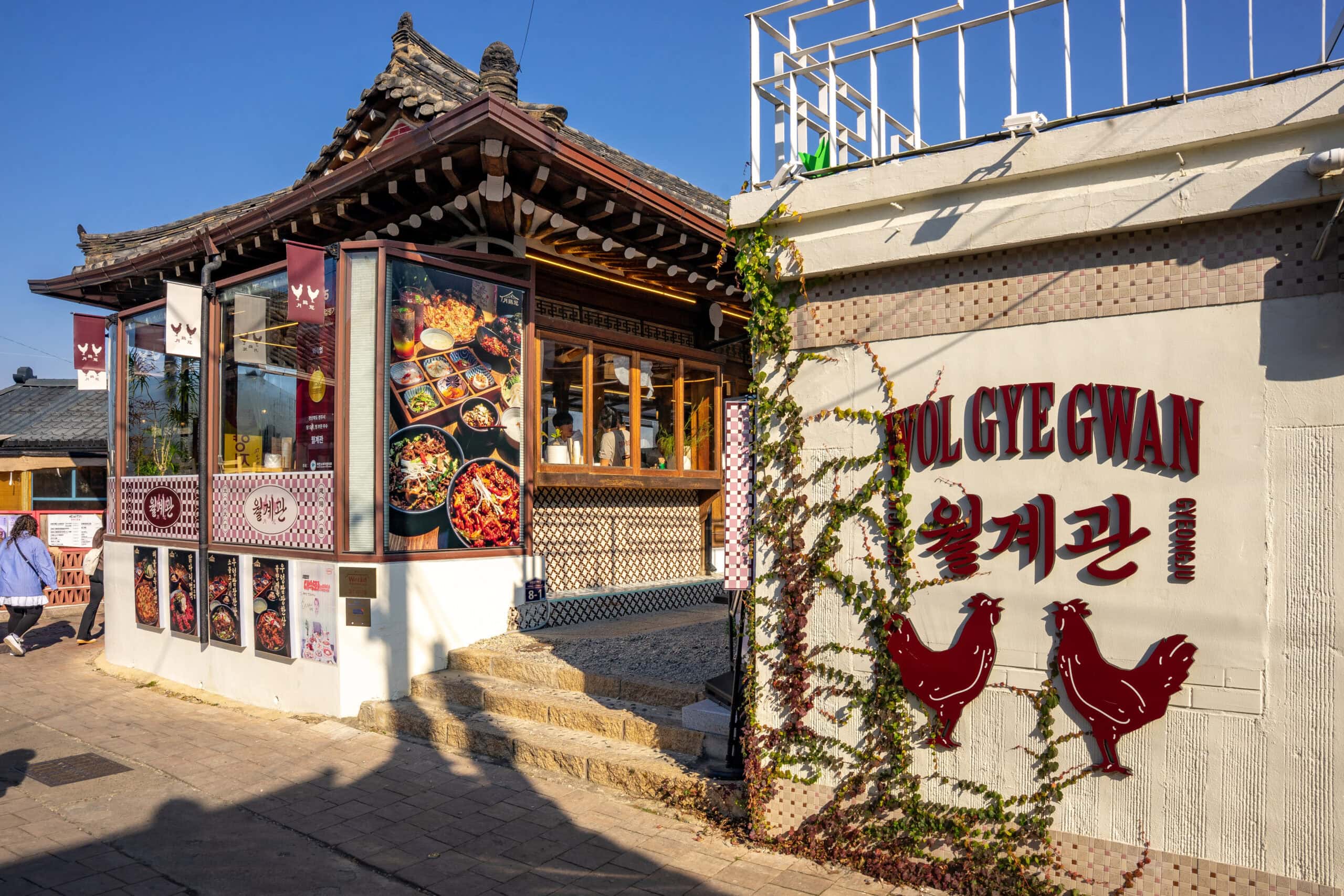
We ordered the lunch set for two, which was really, really good. The stir-fried pork arrived smoky, tender and properly spicy, along with a generous spread of banchan (side dishes) and a basket of leafy greens for wrapping everything up. There was also a thick, crispy green onion pancake packed with shrimp.
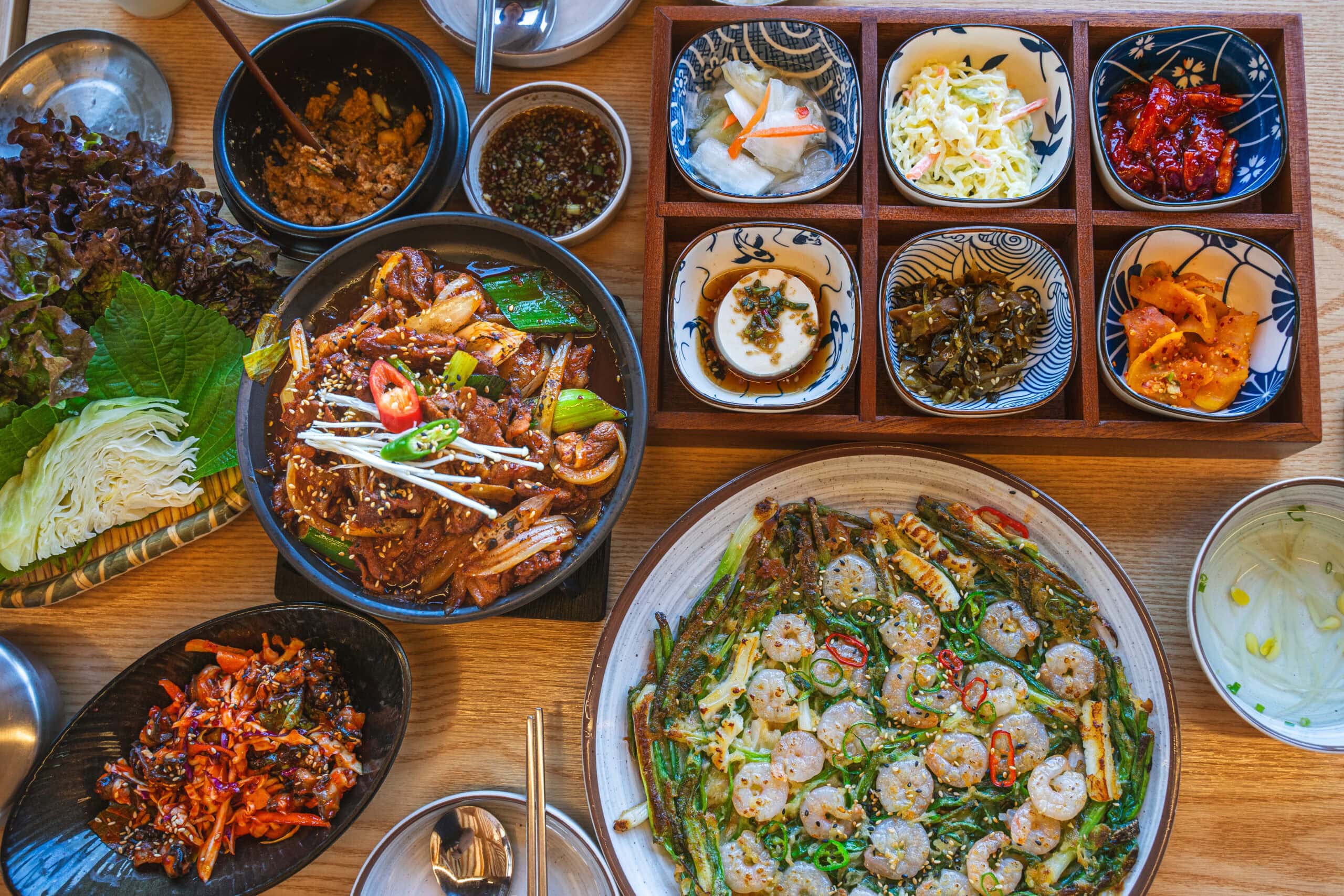
It was exactly the kind of lunch we wanted on day one, and a clear sign that Gyeongju was already treating us well.
Wolgyegwan Naver Map
Hours: 11:00-15:00, 17:00-21:00
Bulguksa Temple
NAVER Maps led us to the bus stop for Bulguksa, where we quickly learned that this particular bus does not believe in real-time updates. It arrives when it arrives. We waited around 20 minutes, just long enough to start discussing a taxi, before it finally rolled in unannounced.
The bus ride took about 40 minutes and dropped us at the bottom of a hill. From there, it’s still a 15 minute walk uphill to the temple, which feels longer on the way up than it does on the way down.

Bulguksa dates back to the 8th century and was built during the Silla Dynasty, when Gyeongju was the capital of the kingdom. It’s now a UNESCO World Heritage Site and one of the most important temples in Korea, which explains both its scale and its popularity.
For us, Bulguksa is the most beautiful temple we’ve seen in Korea. The stone staircases leading up to the main halls are the standout feature, along with the intricate roof and eaves paintings. Once you notice the dragon heads tucked under the roofs, you’ll start spotting them everywhere.

In the main courtyard, you’ll see two stone pagodas, one of which features on the 10 won coin. It’s one of those famous sights that everyone wants a photo with, so good luck getting one of your own.
Our visit coincided with the week the autumn leaves peaked, which made the temple incredibly beautiful and very busy. That said, there are quiet corners, and the crowds tend to move in waves, leaving brief pockets of calm if you’re patient.
I’ve published a photo essay on Bulguksa, so head over there for more pictures and thoughts from our visit.
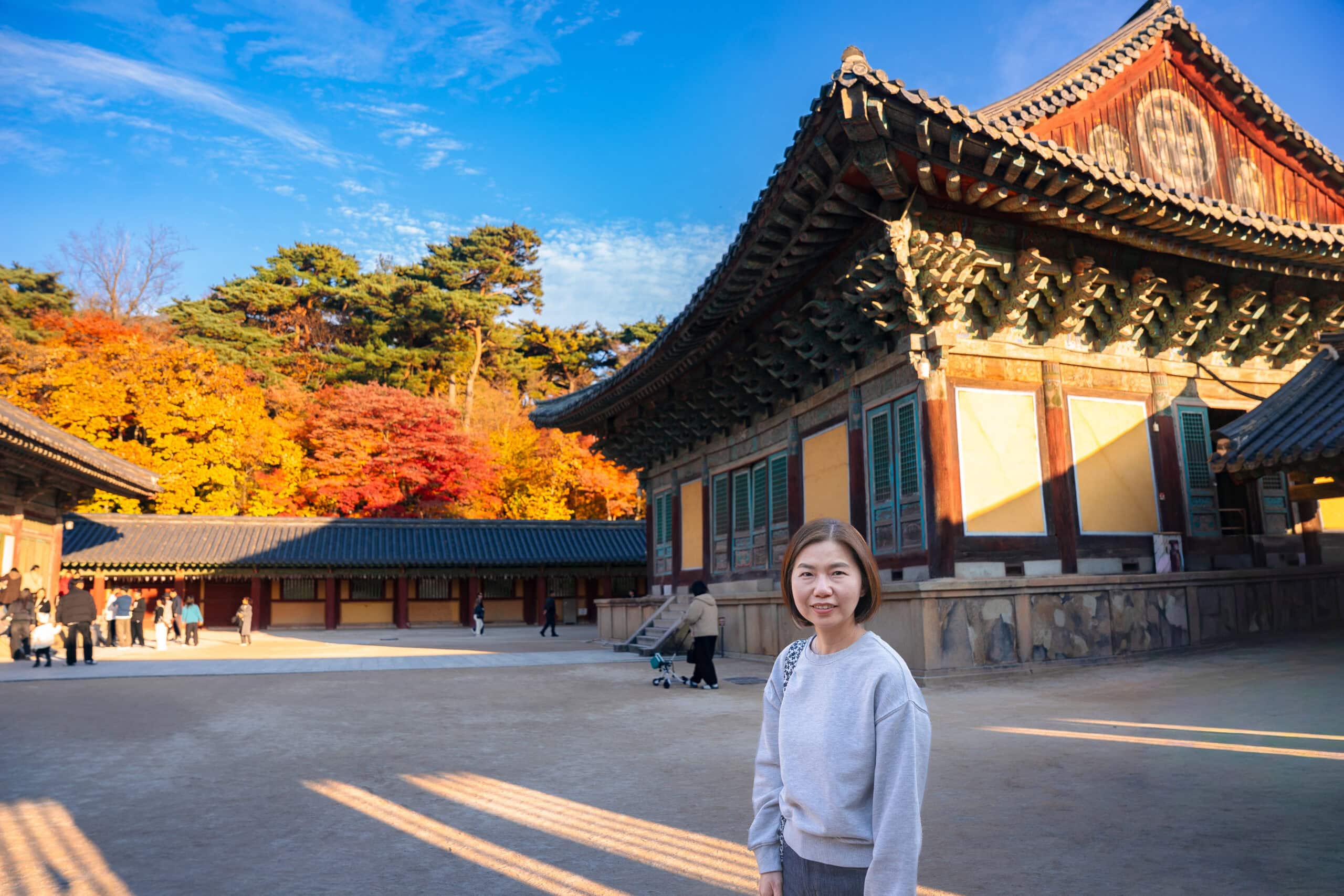
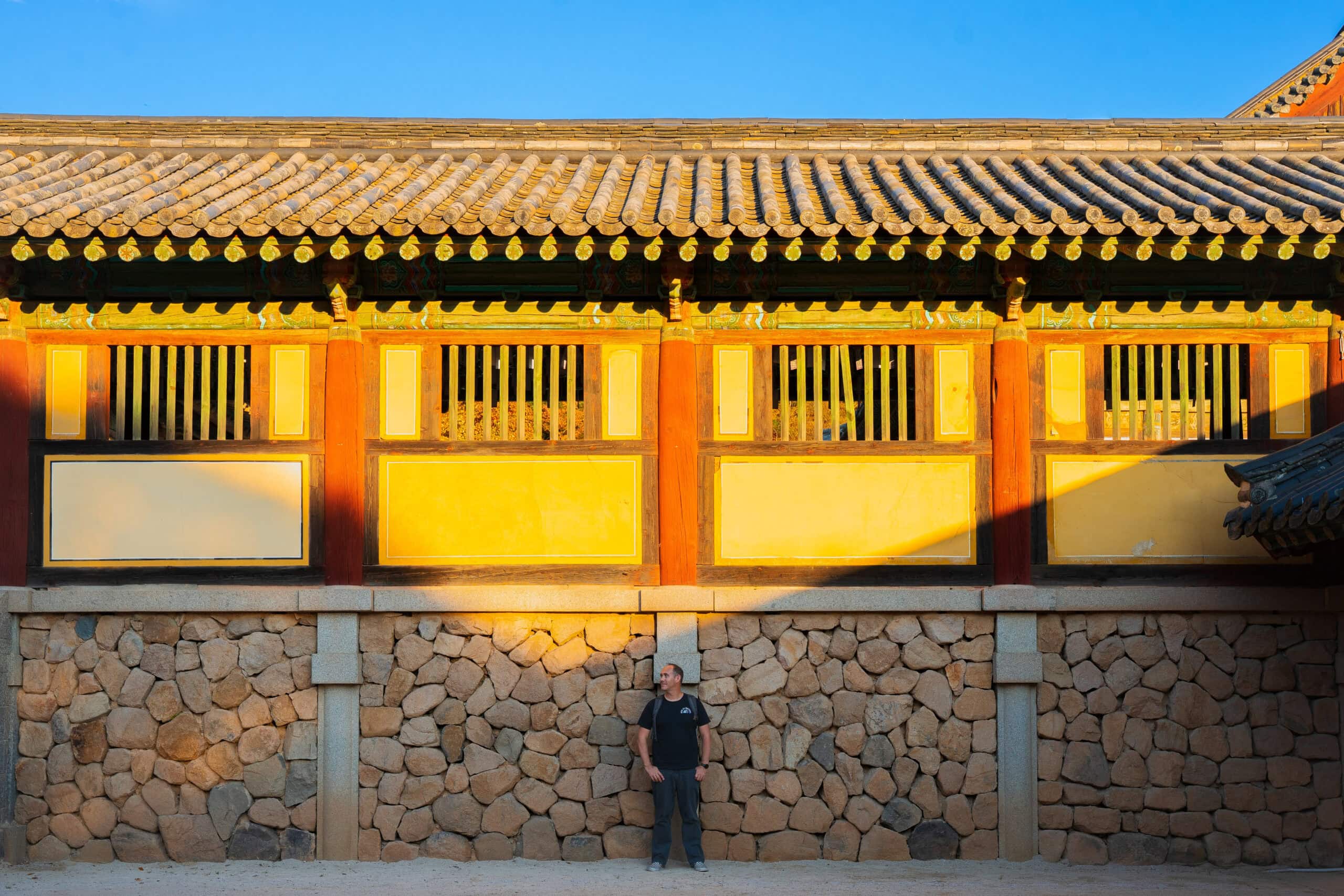
There used to be an entrance fee for Bulguksa, but that’s been scrapped. For now, entry is free, so thank you to either Korea or UNESCO for that.
Bulguksa Naver Map
Hours: 9:00-18:00
Free Entry
Bulguksa to Gyeongju Bus Confusion
Getting the bus back to Gyeongju from Bulguksa was more confusing than expected, and we weren’t the only confused ones. Several other visitors, including Koreans, seemed equally unsure.
NAVER Maps isn’t clear about which side of the road to catch the bus. We initially waited on the opposite side from where the bus dropped us off. Then we noticed people quietly migrating back to the original stop, so we followed them.
When the bus finally arrived, anyone still waiting on the other side crossed the road and boarded with us. It seems likely that buses from both sides eventually head back to Gyeongju, but we can’t say that with complete confidence.
What worked for us was waiting at the same bus stop, on the same side of the road where we were dropped off. If in doubt, follow the locals.
Gyeongju at Night
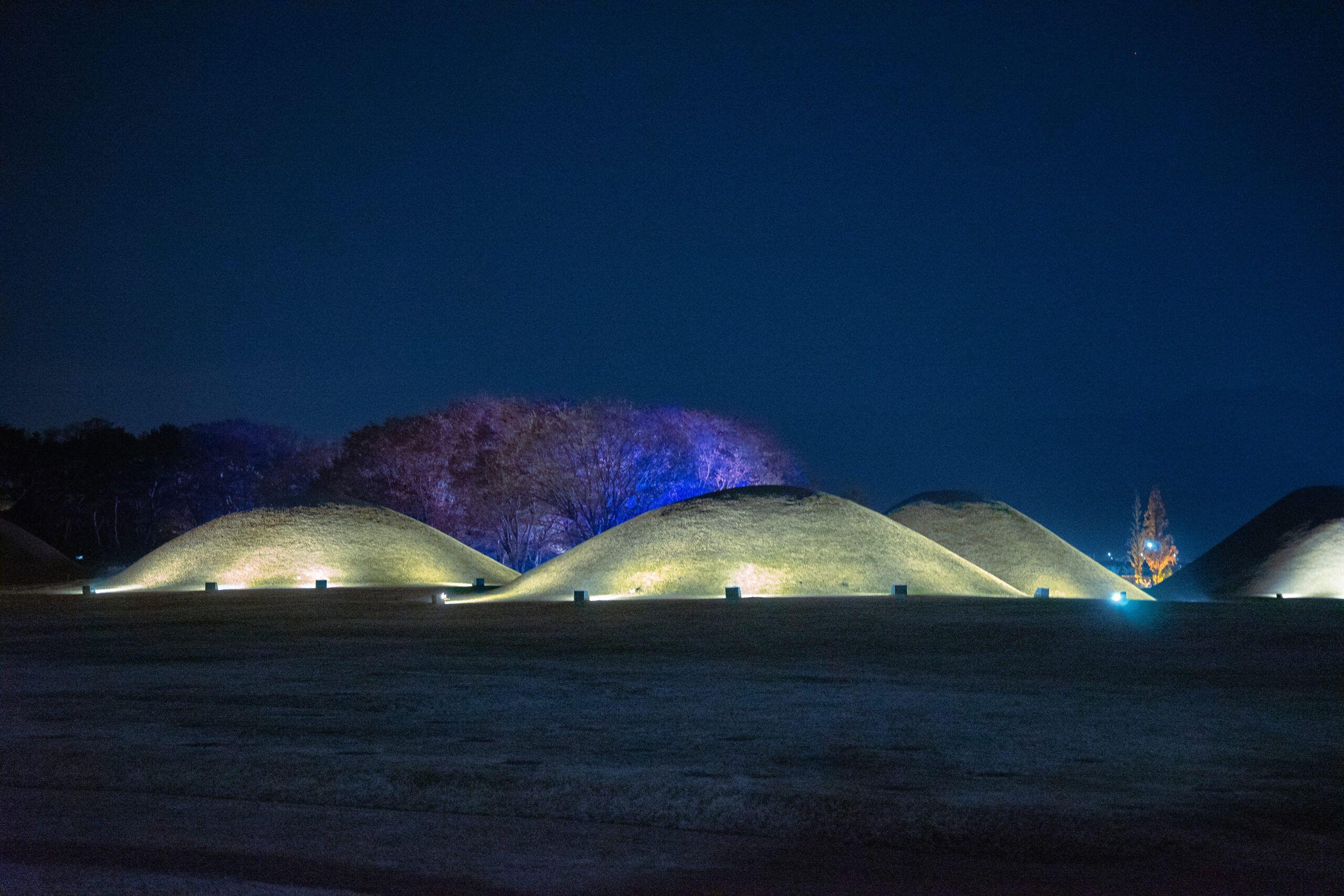
Sightseeing in Gyeongju doesn’t stop when the sun goes down. If anything, this is when the city really comes into its own. Many of the main landmarks, from palaces to bridges to ancient burial mounds, are softly lit after dark, and walking between them at night is one of the best things to do in Gyeongju.
Strolling around Gyeongju at night was one of our favourite parts of the trip. The city feels more atmospheric at night, and the illuminated landmarks give everything a slightly unreal quality. It’s well worth saving your energy for.
Donggung Palace & Wolji Pond at Night

The bus from Bulguksa dropped us at the entrance to Donggung Palace and Wolji Pond just as night had fully arrived. The timing couldn’t have been better.
Donggung Palace was once part of the secondary palace complex of the Silla Kingdom, used by the crown prince, and Wolji Pond was originally built as a pleasure garden for the royal family. You may also see it referred to by its former name, Anapji Pond, which was its historical name for centuries before it was restored.
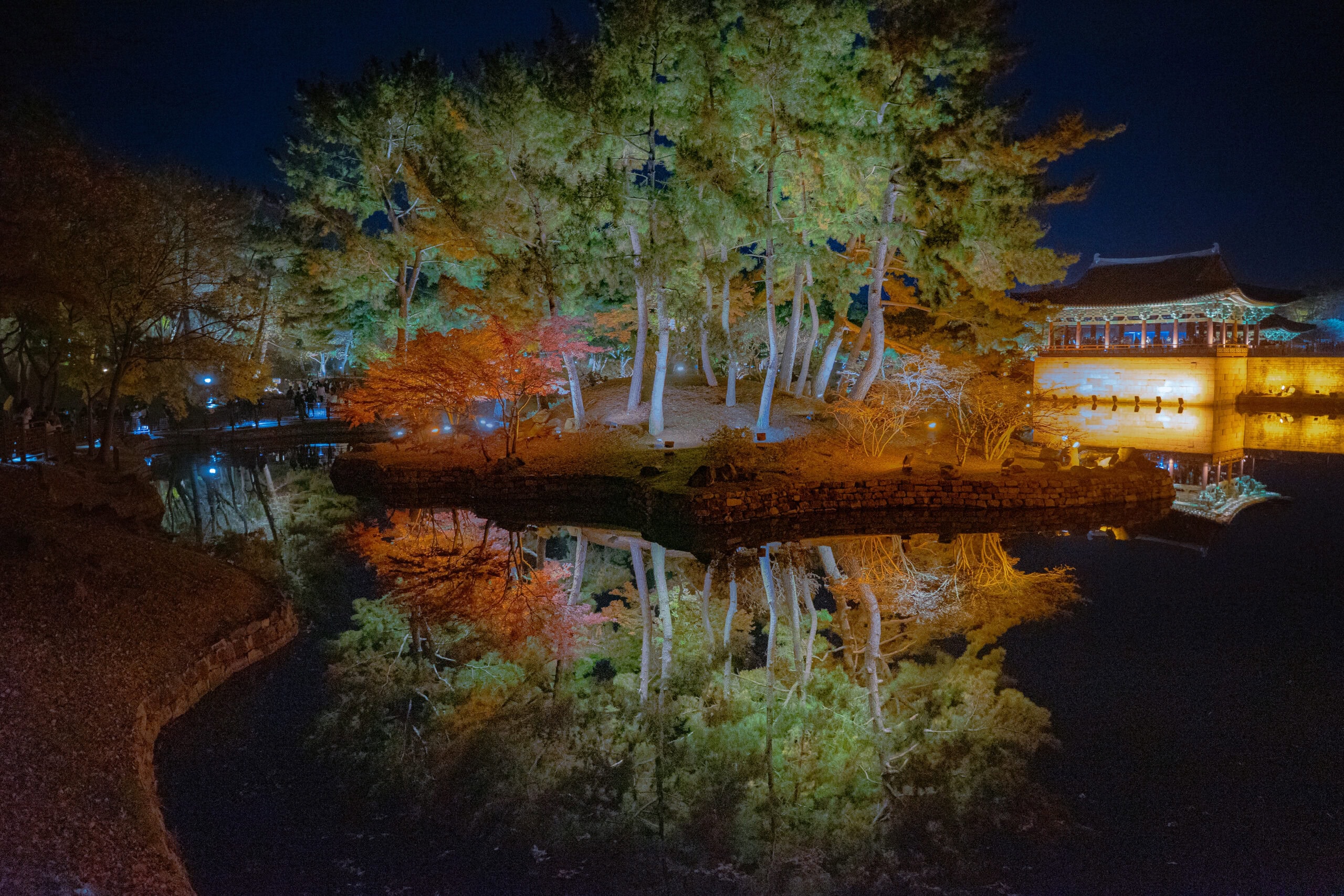
At night, the pond turns almost mirror-like, perfectly reflecting the illuminated buildings, trees, and surrounding landscape. The palace structures glow softly, and their reflections sit in the water, making it hard to tell where the real thing ends and the reflection begins. It’s an utterly surreal landscape and atmosphere.
It’s open during the day, but if you have a choice, come at night. This is when Donggung Palace and Wolji Pond really show off, and it’s easily the most beautiful spot in Gyeongju after dark.
Donggung Palace Naver Map
Hours: 9:00-22:00
Entry: 3,000 won
Woljeong Bridge at Night
We had somehow assumed that Woljeong Bridge and Donggung Palace were right next to each other. They are not. It’s about a 20-minute walk between the two, but as it turned out, that walk was part of the experience.

Strolling through Gyeongju at night took us past softly illuminated burial mounds, their rounded shapes glowing gently and reflecting in still ponds along the way. It felt slightly surreal, and very different from the city we’d walked through earlier that day.
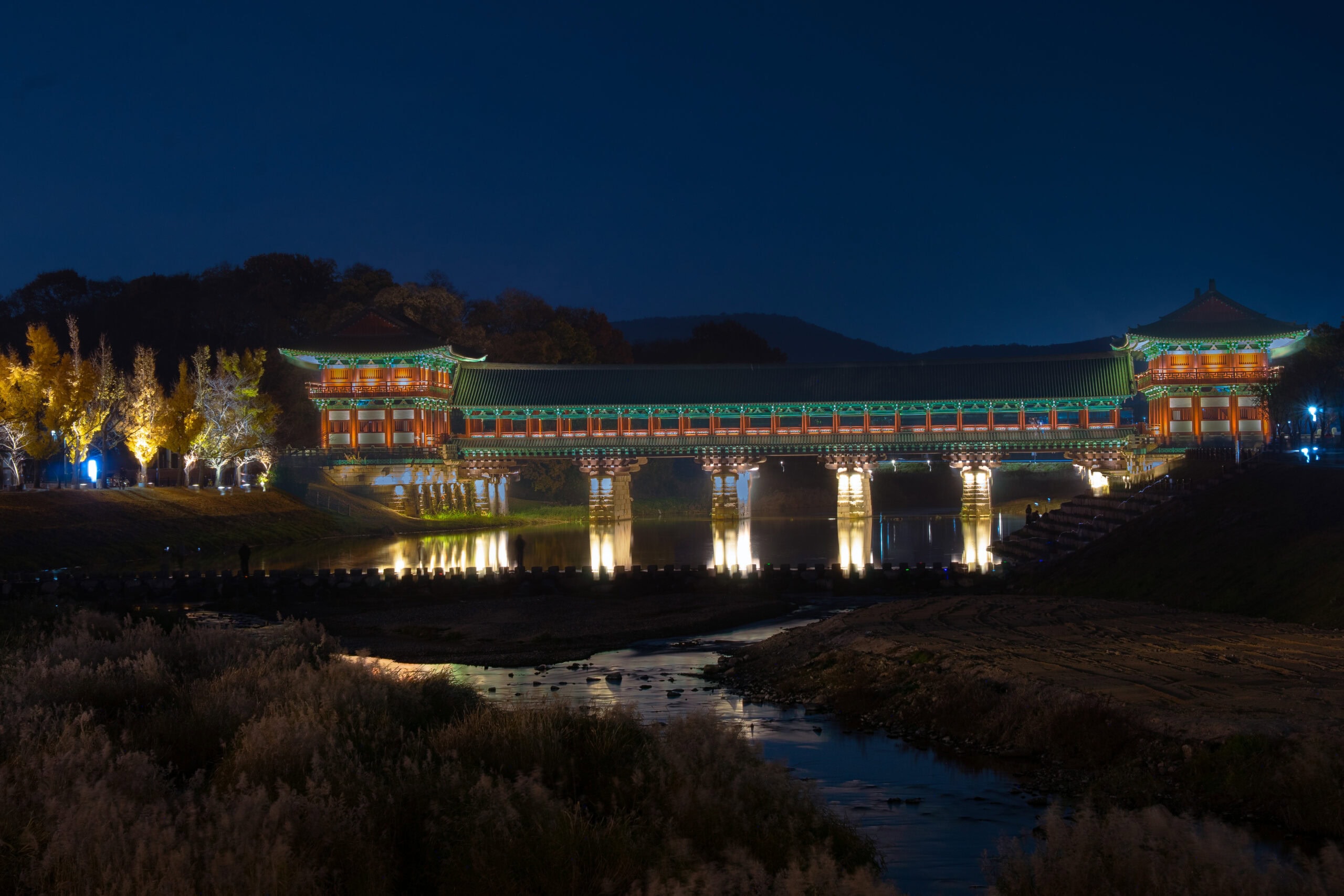
Woljeong Bridge itself was an impressive sight when we arrived. The original bridge once spanned the Namcheon River during the Silla Dynasty and was an important connection to the royal city. It was destroyed centuries ago and only recently reconstructed, reopening in its current form in 2018. Whether ancient or modern, it’s hard not to be impressed by its scale and symmetry when lit up at night.
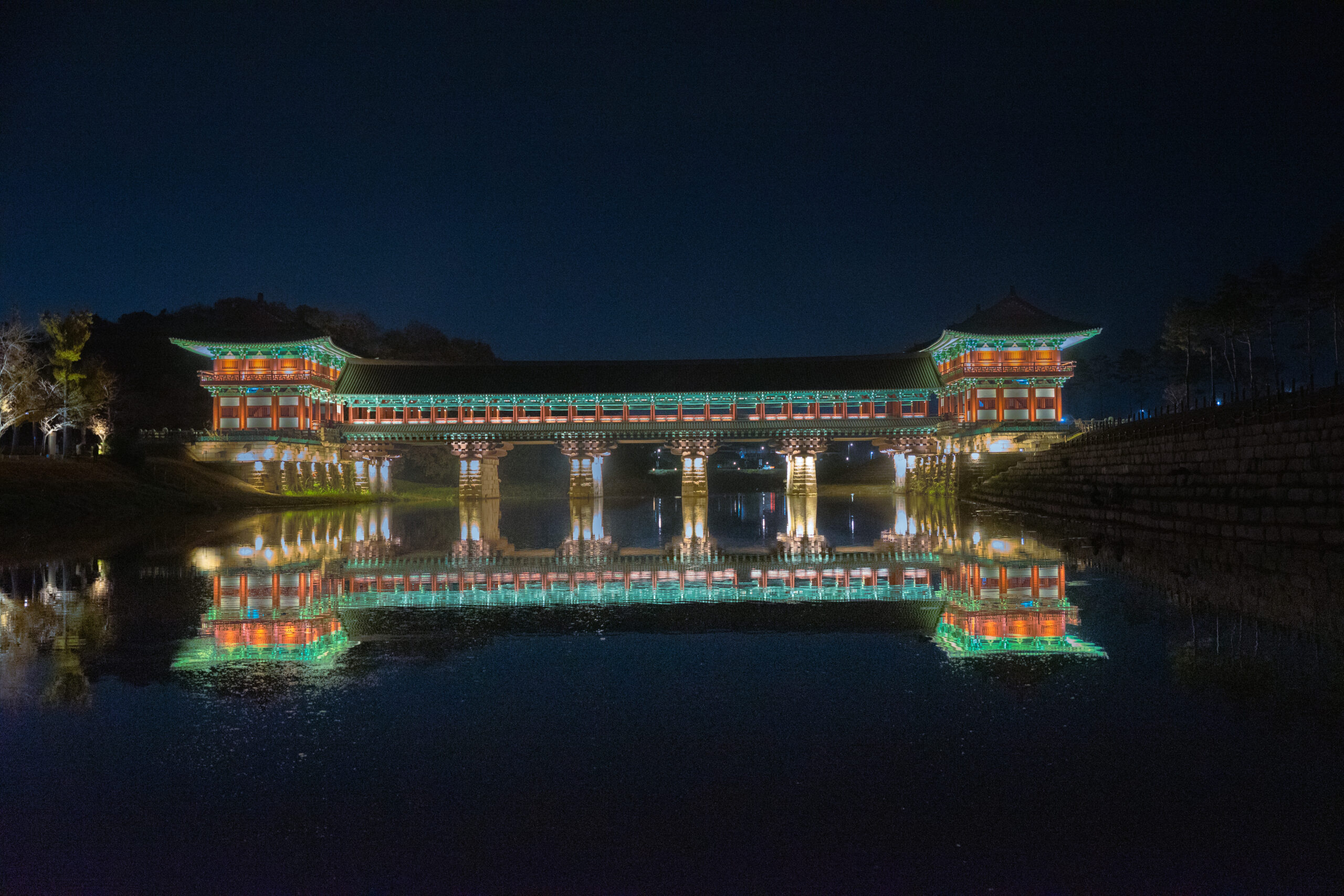
For the best view, walk a little downstream to the stepping stones that cross the river. From there you get a perfectly symmetrical view of the bridge and its reflection in the water. Another excellent photo spot is from the modern bridge further downstream, which frames Woljeong Bridge beautifully against the night sky.
Woljeong Bridge Naver Map
Open for crossing: 9:00-22:00
Free
Cheomseongdae Observatory at Night
Seeing Cheomseongdae at night felt fitting. After all, this is a structure built for observing the stars, so visiting it after dark just makes sense.
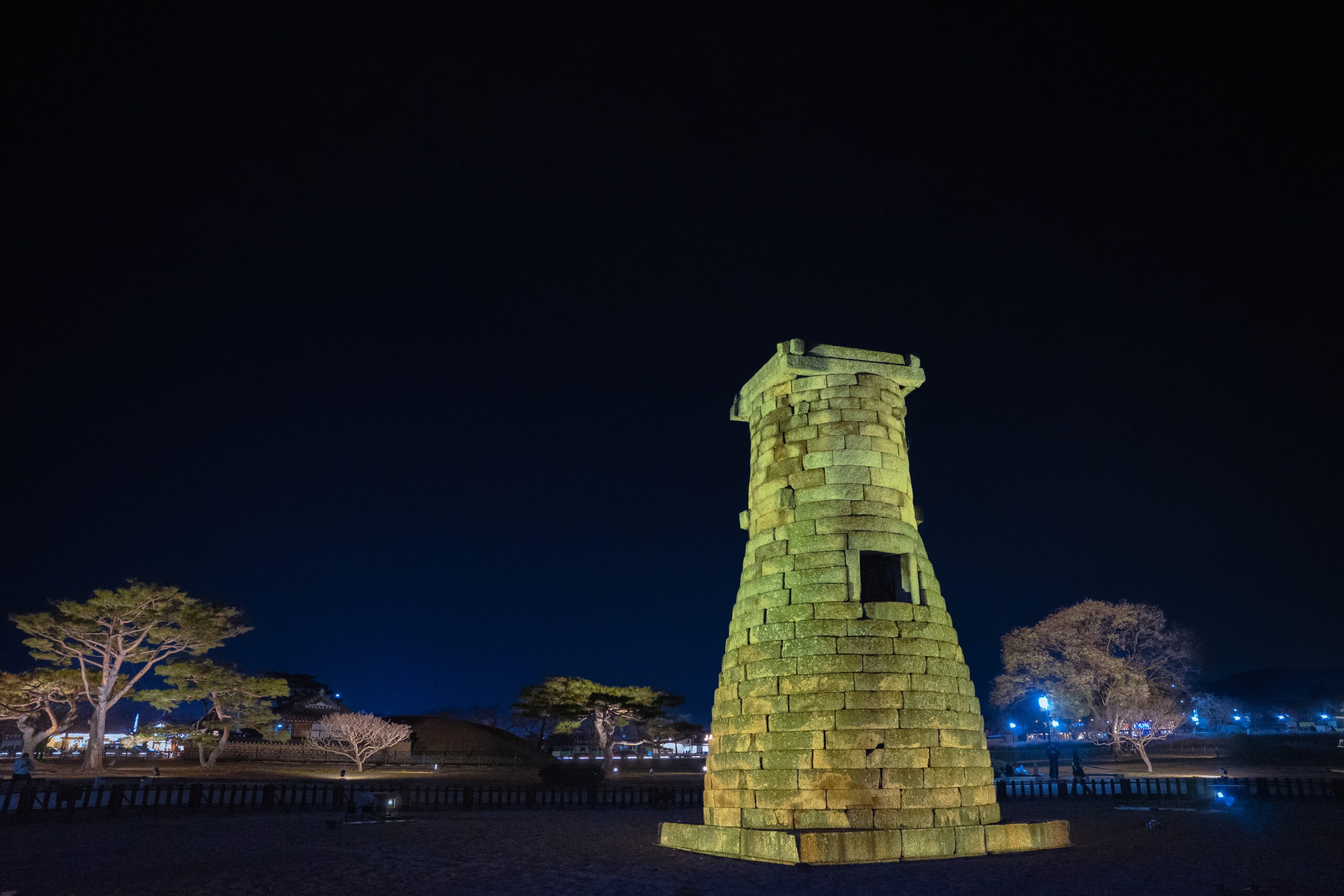
Cheomseongdae dates back to the 7th century and is considered the oldest surviving astronomical observatory in East Asia. It was built during the Silla Dynasty and used to observe celestial movements, which were closely tied to agriculture, seasons, and royal decision-making.
The tower is made up of 362 stone blocks, said to represent the number of days in the lunar year, with its square base of 12 stones (one for each month) symbolising the earth and the circular body representing the heavens. Whether you take the symbolism literally or not, it’s impressive how much thought went into something that looks so simple at first glance.
At night, Cheomseongdae is softly illuminated, almost glowing against the darkness. The lighting gives it a slightly unreal, almost hologram-like quality, almost like something quietly hovering in time.
Cheomseongdae Naver Map
24 hours, free
Dinner at Jungang Market
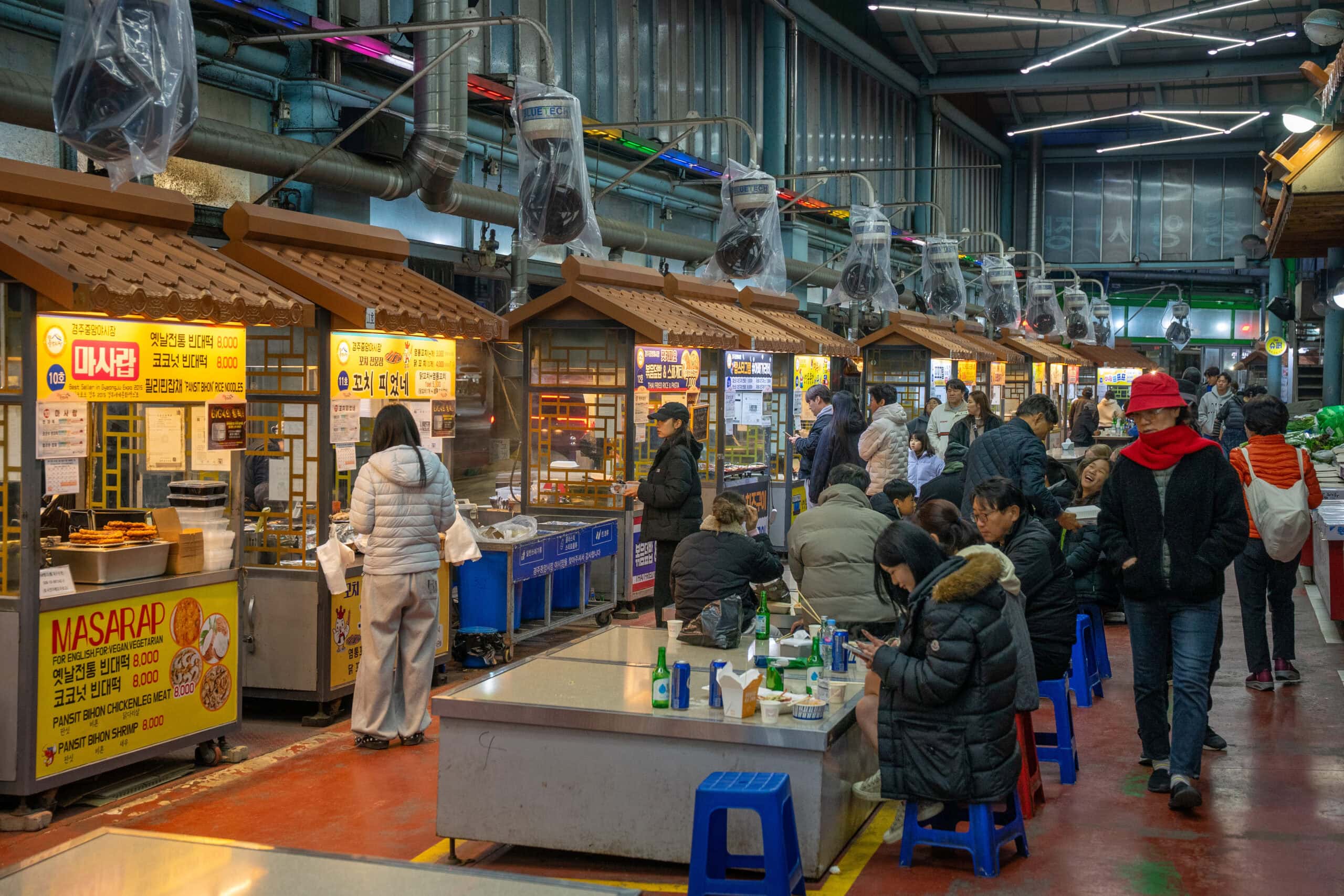
From Cheomseongdae, we grabbed a taxi over to Jungang Market for dinner. This is Gyeongju’s main city market, selling everything from clothes and household goods to produce and snacks, but it’s the night food market that draws most visitors in the evening.
The food market is clearly geared towards tourists, but that doesn’t mean it’s a write-off. The atmosphere is lively, the prices are reasonable, and the food is solid. The range is wide too, with stalls serving Korean classics alongside Vietnamese dishes and a few vegetarian options, which makes it easy to please everyone.
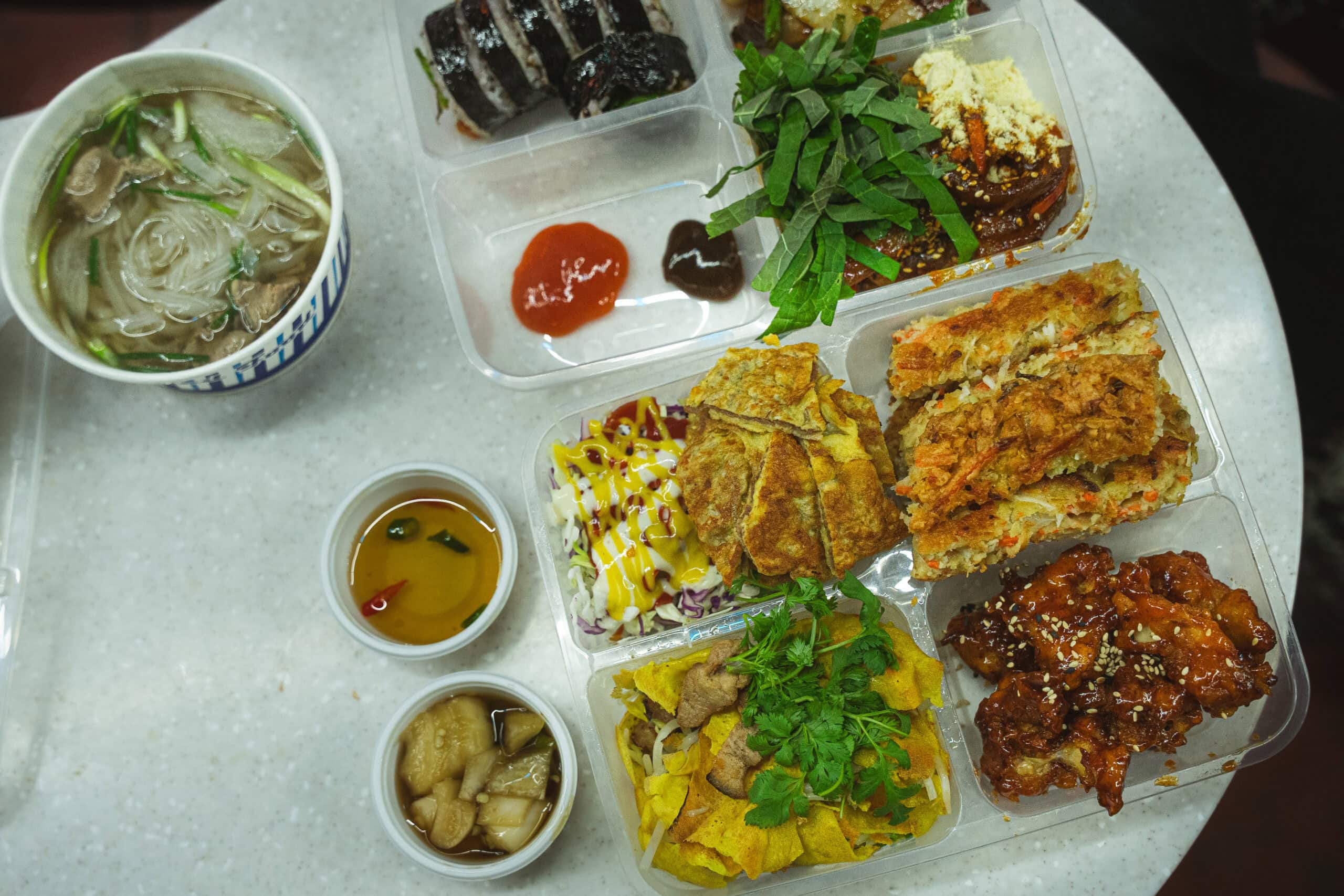
One of the best deals is a set where you get four dishes from different stalls for 12,000 won. You pay at any stall, receive four tokens, and then redeem them wherever you like. You can also order individual dishes if you’re not that hungry or just want one thing.
If you do go for the set, it’s worth collecting and eating one dish at a time. Otherwise, by the time you’ve picked up all four, at least one of them will be lukewarm and slightly regretful.
Jungang Market Naver Map
Hours:
March-Nov: 18:00-23:00 daily except for 1st and 15th of the month
Dec-Feb: only opens Friday, Saturday
Day 2: The Museum Without Walls
Gyeongju National Museum → Brunch → Daereungwon Tomb Complex → Buying Gyeongju bread → Coffee in Hwangnidan-gil → Bus back to Seoul
Gyeongju National Museum
We skipped breakfast and headed straight to the Gyeongju National Museum when it opened, planning to earn our brunch properly afterwards. The museum sits a fair distance from central Gyeongju, so we took a taxi, and as we pulled up we were greeted by a long line of people already waiting. This was 30 minutes before opening.
We’re not entirely sure if this is the norm or if it was due to the temporary exhibition on Silla Kingdom crowns, which was the main reason for our visit. Either way, it’s worth arriving early just in case, especially if there’s a special exhibition on.
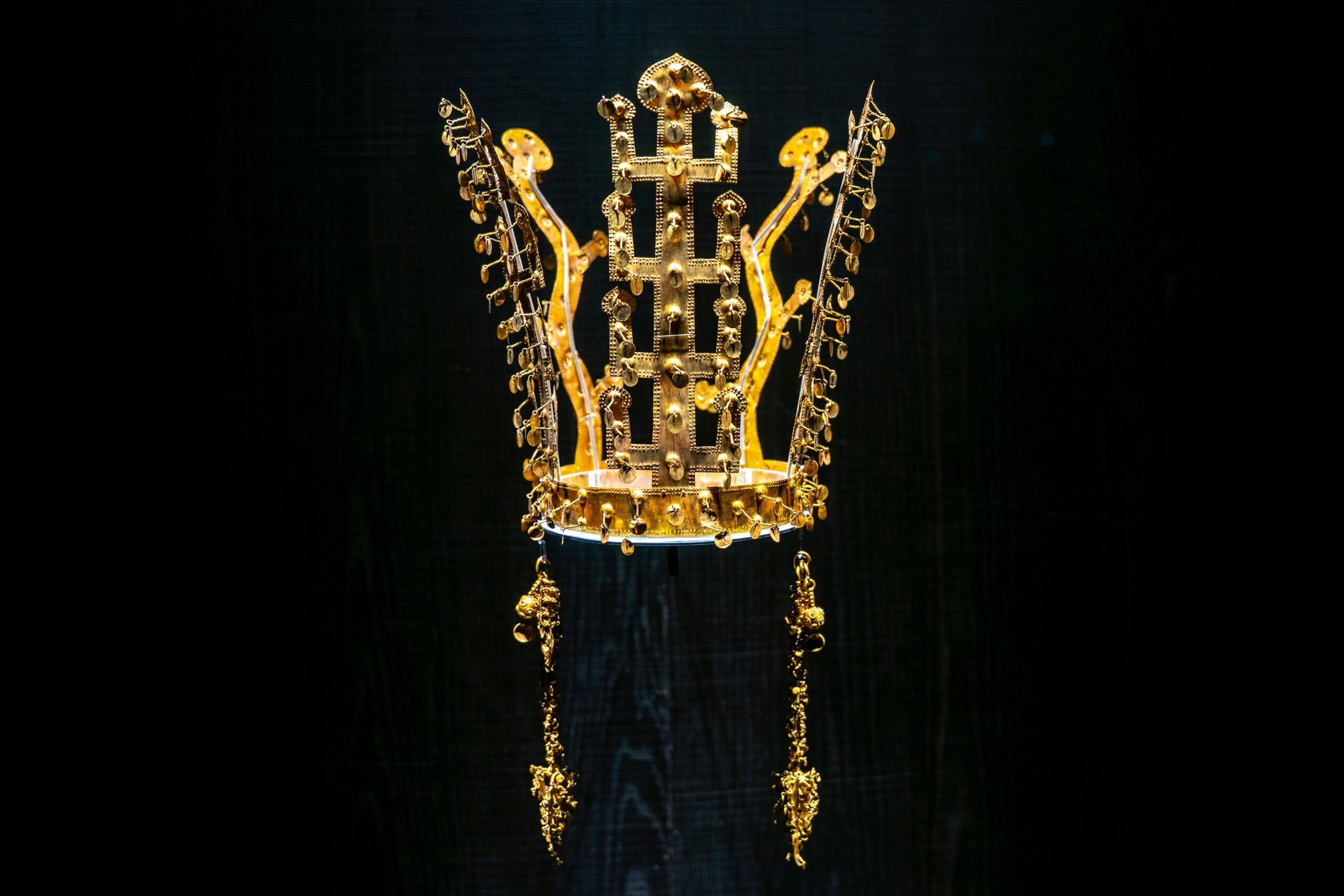


Inside, the museum is an excellent way to make sense of Gyeongju’s past as the capital of the Silla Dynasty. The permanent galleries cover everything from pottery and jewellery to everyday objects, many of them excavated from the surrounding burial mounds. There’s also a strong focus on Buddhism, with Buddha statues in various styles, sizes, and materials.
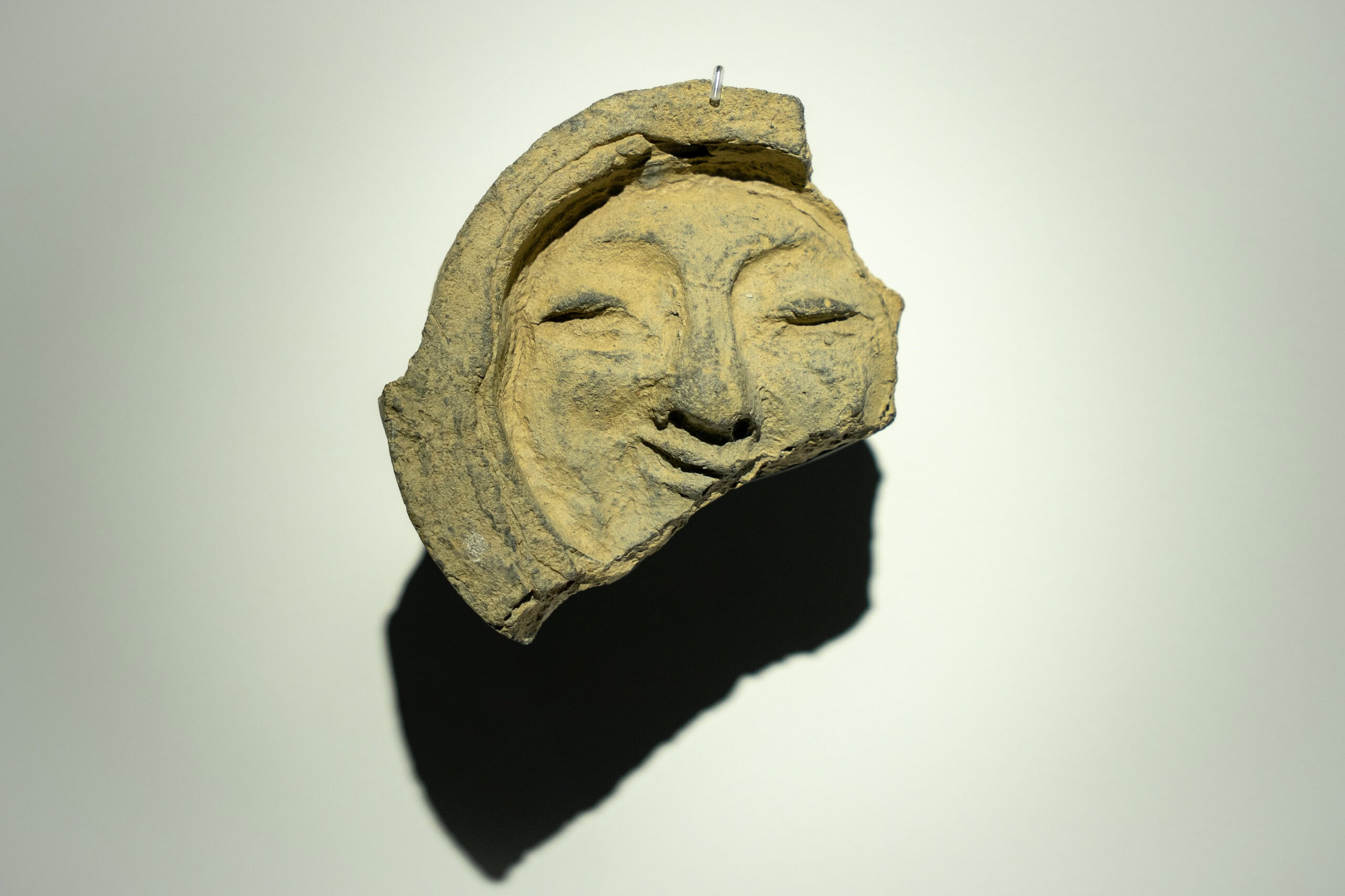
One small but memorable highlight is the Smiling Face Roof Tile, nicknamed Smiling Silla. It’s a simple roof-end tile with a gentle grin that has somehow become the unofficial face of Gyeongju.
The temporary Silla Gold Crowns exhibition (running until 22 February 2026) was spectacular, bringing together several royal crowns from collections across Korea, some of which are rarely displayed together. A few crowns are part of the museum’s permanent collection, but seeing them presented side by side gave real context to the power and craftsmanship of the Silla elite.
I’ve written a separate, more detailed guide to visiting the Gyeongju National Museum, which will come in handy if the museum is high on your list.
Gyeongju Museum Naver Map
Hours: 10:00-18:00 (until 21:00 on Saturday)
Tickets: You’ll be able to get a ticket and walk in for the permanent exhibition without waiting.
For the Silla Crowns exhibit, time slots are in place, with 70 online / 80 on-site visitors allowed in every 30 minutes. We tried getting online tickets, but since it’s so popular couldn’t get any. The website is also quite confusing for foreign visitors. On-site ticketing opens at 9:20, so we suggest you arrive at 9:00 at the latest.
Brunch at Tak
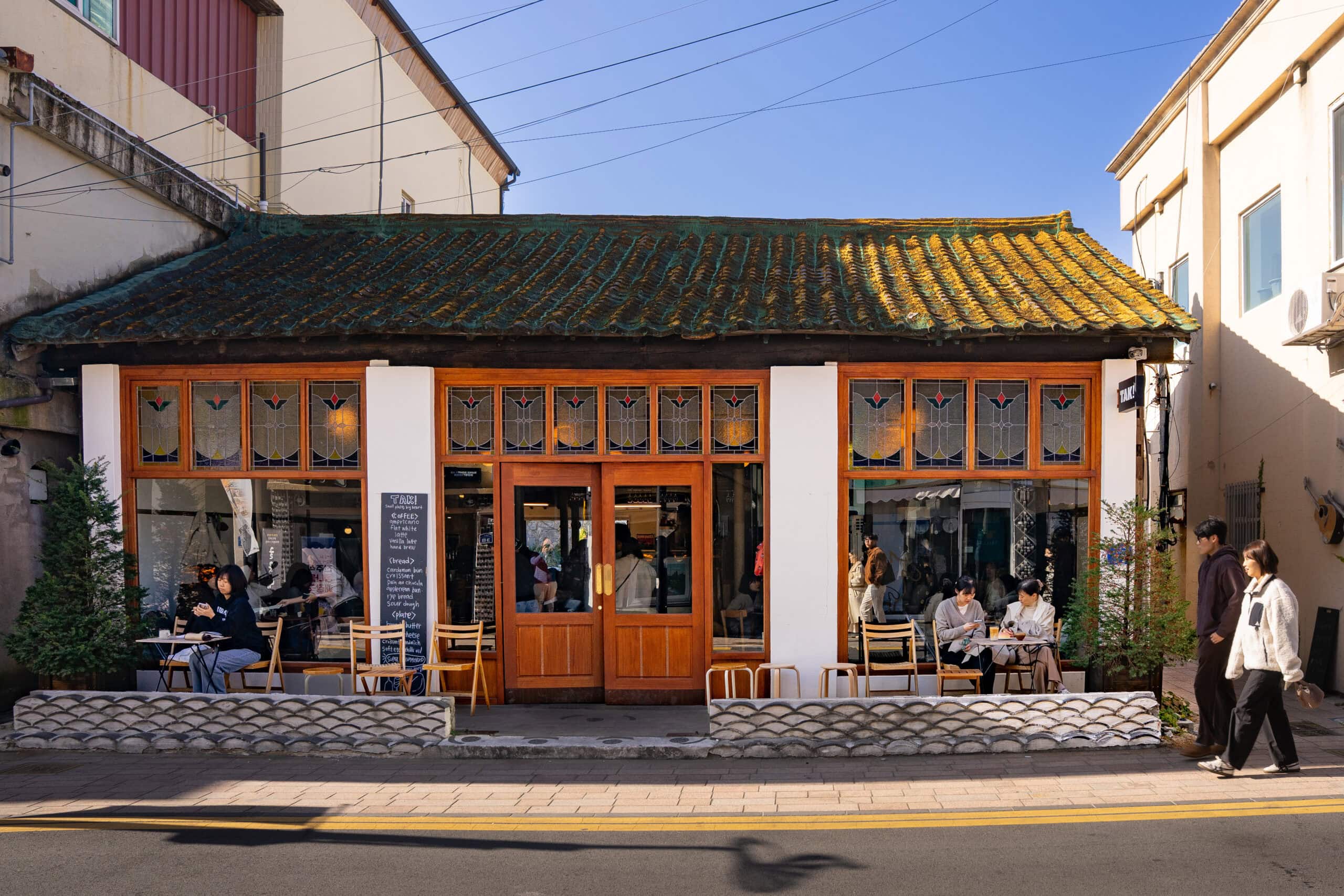
After the museum, we were more than ready for brunch. We headed to Tak, a Nordic bakery set inside a beautifully repurposed traditional house. From the outside, you’re very much in Gyeongju. Step inside, and you could just as easily be in Oslo or Gothenburg.
Tak focuses mostly on bread and pastries, but this is a case of doing a few things and doing them properly. The coffee was excellent, with Ethiopian Yirgacheffe beans brewed Nordic-style, clean and bright rather than heavy.
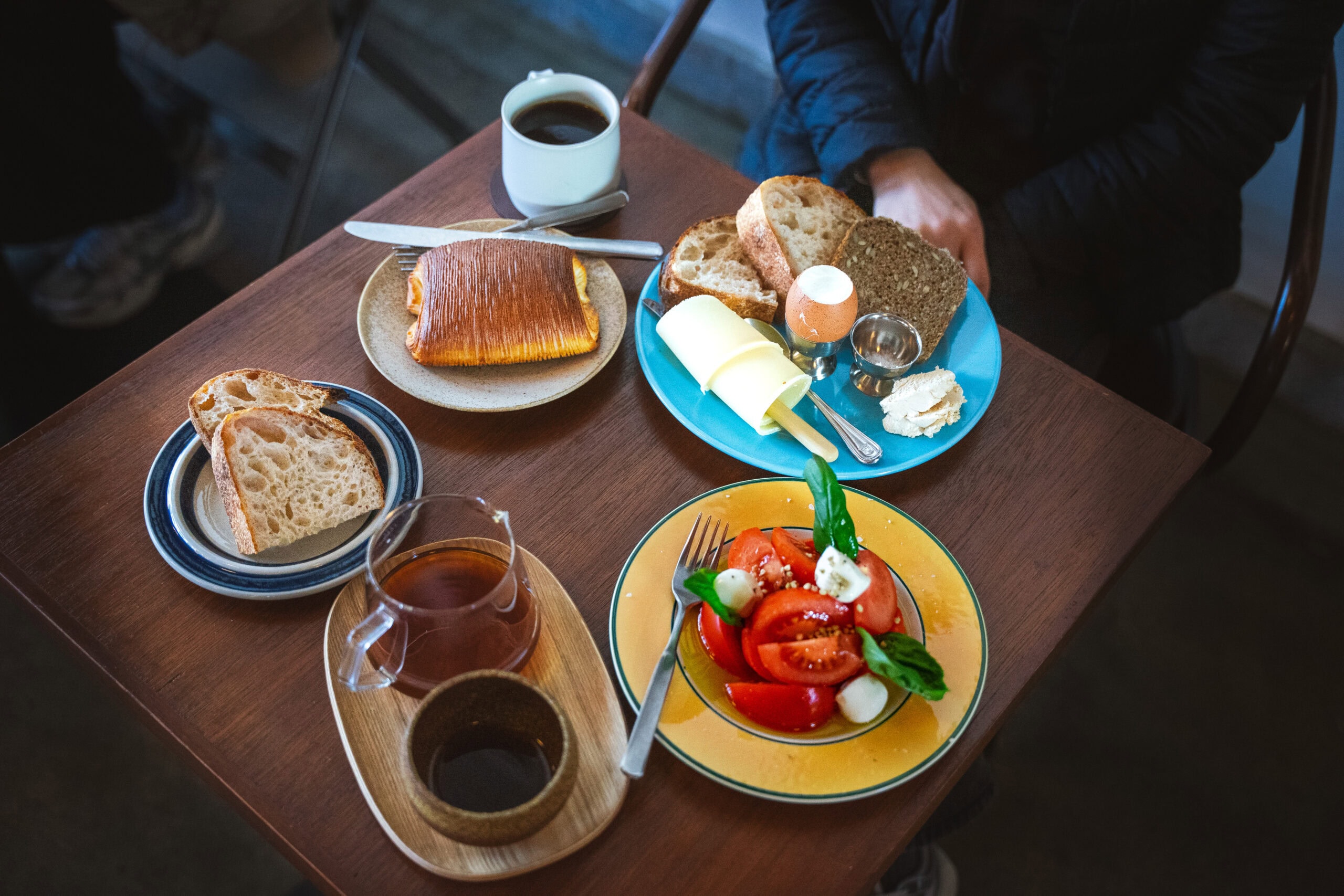
I went for the tomato, basil, and mozzarella salad with thick slices of sourdough, while Jin ordered a Nordic-style breakfast plate with two types of bread, two cheeses, and a boiled egg. Simple, well-balanced, and very satisfying.
We also shared an apple pastry, which was easily the highlight. Think flaky layers, thinly sliced apples, and just the right level of sweetness. Whether you call it Scandinavian baking or just very good pastry, we awarded it the Nobel Pastry Prize.
Tak comes highly recommended.
Tak Naver Map
Hours: 9:00-17:00
Daereungwon Tomb Complex (Tumuli Park)
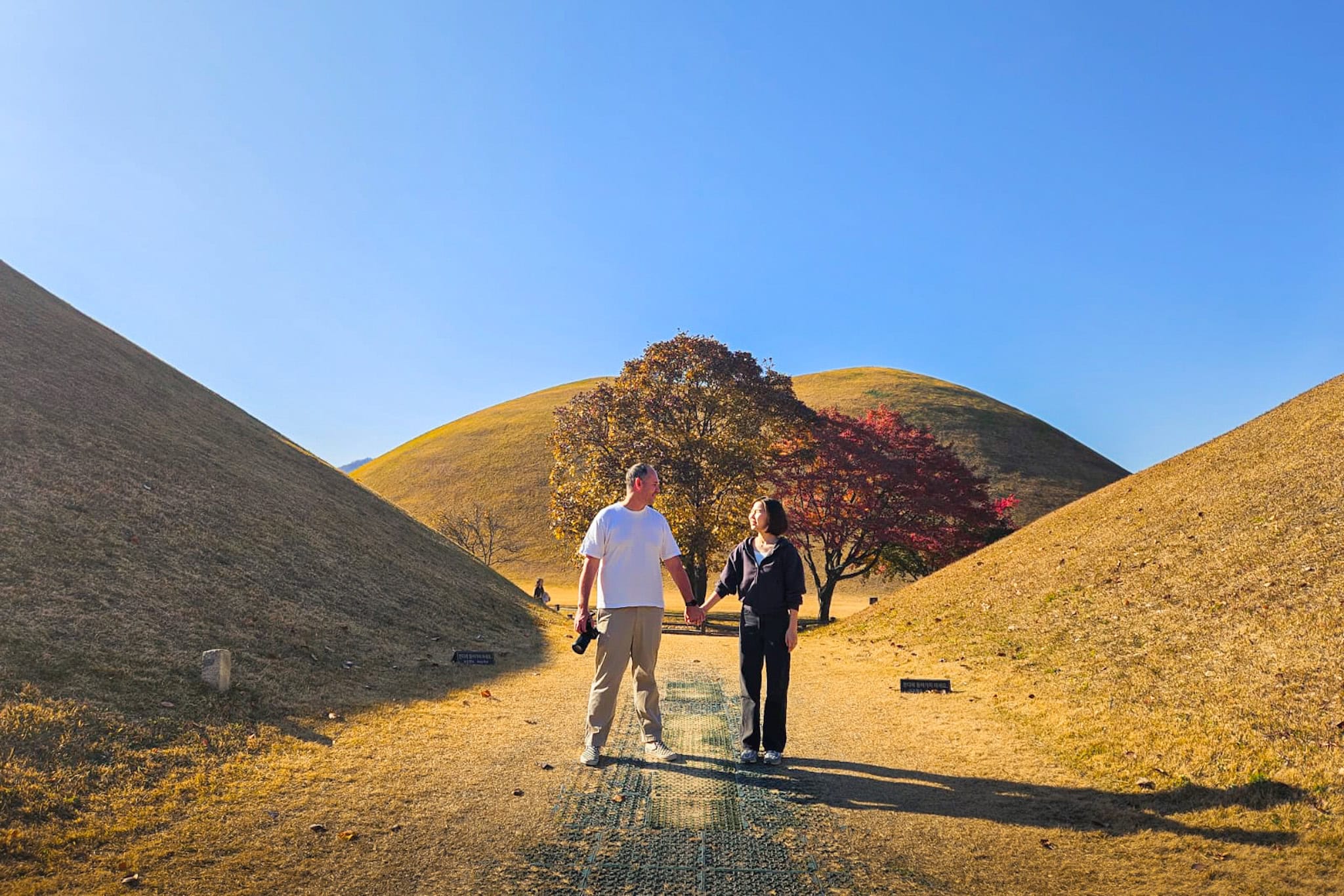
We walked off that brunch by heading to Daereungwon Tomb Complex, the central tumuli park and Gyeongju’s most recognisable sight and the heart of the city’s UNESCO landscape.
These grass-covered burial mounds are scattered all over the city, but this is where they’re most concentrated and easiest to explore. In total, there are over 150 burial mounds across Gyeongju, a reminder that this was once the heart of a powerful kingdom. If you need a loose comparison, think of it as Gyeongju’s version of the pyramids. Different shape but same sense of scale and significance.
Rather than trying to figure out who’s buried under which mound, we found it far more enjoyable to take the place in as a whole. The rounded hills, the open space, and the quiet paths make this one of the most pleasant walks in the city, even if you arrive knowing very little about Silla royalty.
Like many visitors, I was curious about what actually sits beneath these mounds.
Are they hollow or solid?
The answer comes at Cheonmachong, one excavated tomb that’s open to visitors. Inside, you’ll find a reconstructed burial chamber filled with funerary objects, which ties in nicely with what you see earlier at the national museum. This is also where the famous Flying Horse painting was discovered, and while the original is preserved elsewhere, you can see a replica here.

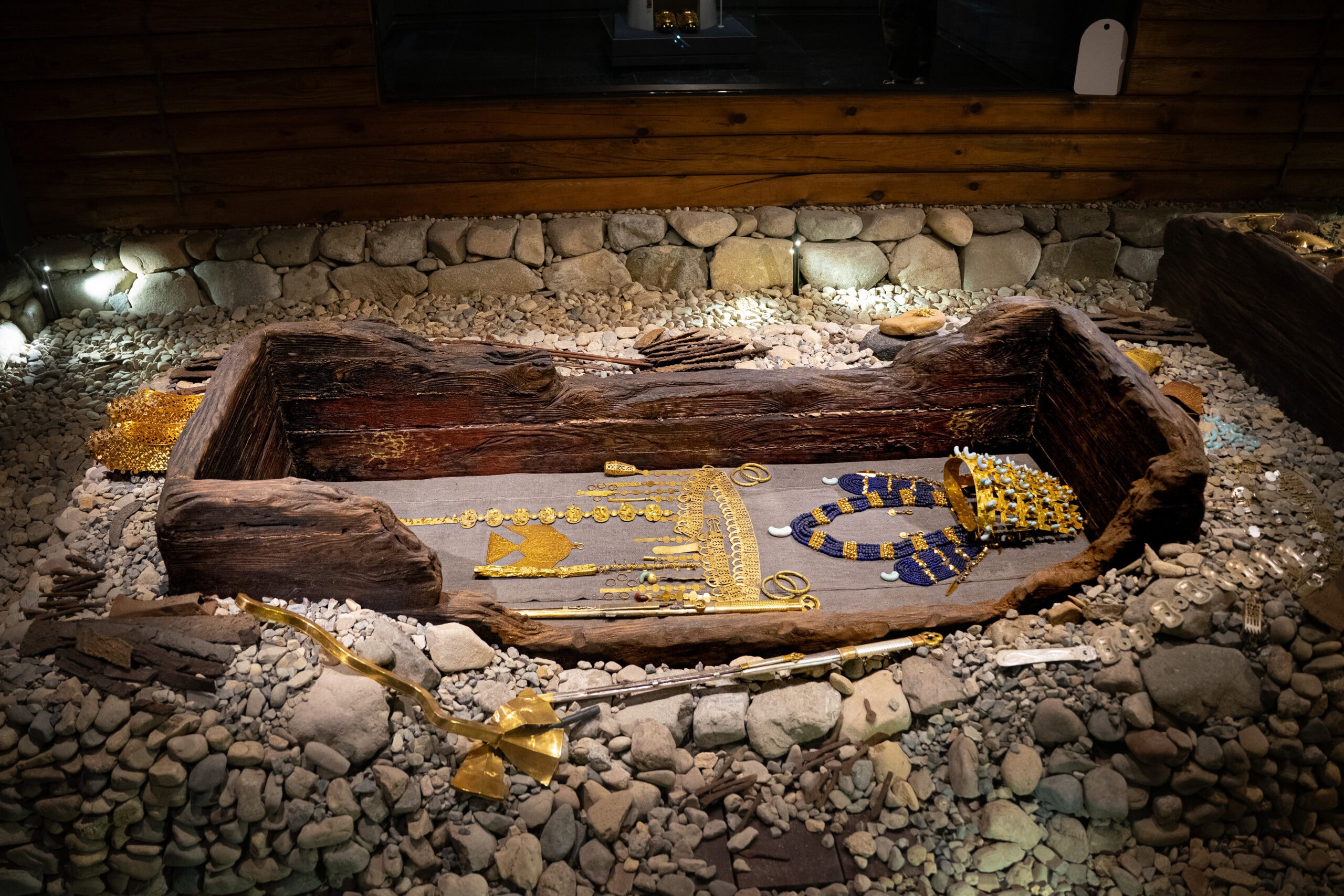

Start with Cheonmachong, then take your time wandering the rest of the park. It’s less about ticking boxes and more about soaking up the feeling of walking among something far older than we can really understand.
Cheonmachong Naver Map:
Cheonmachong entrance fee: 3,000 won (park is free)
Hours: 9:00-21:30
The park itself is open 24/7
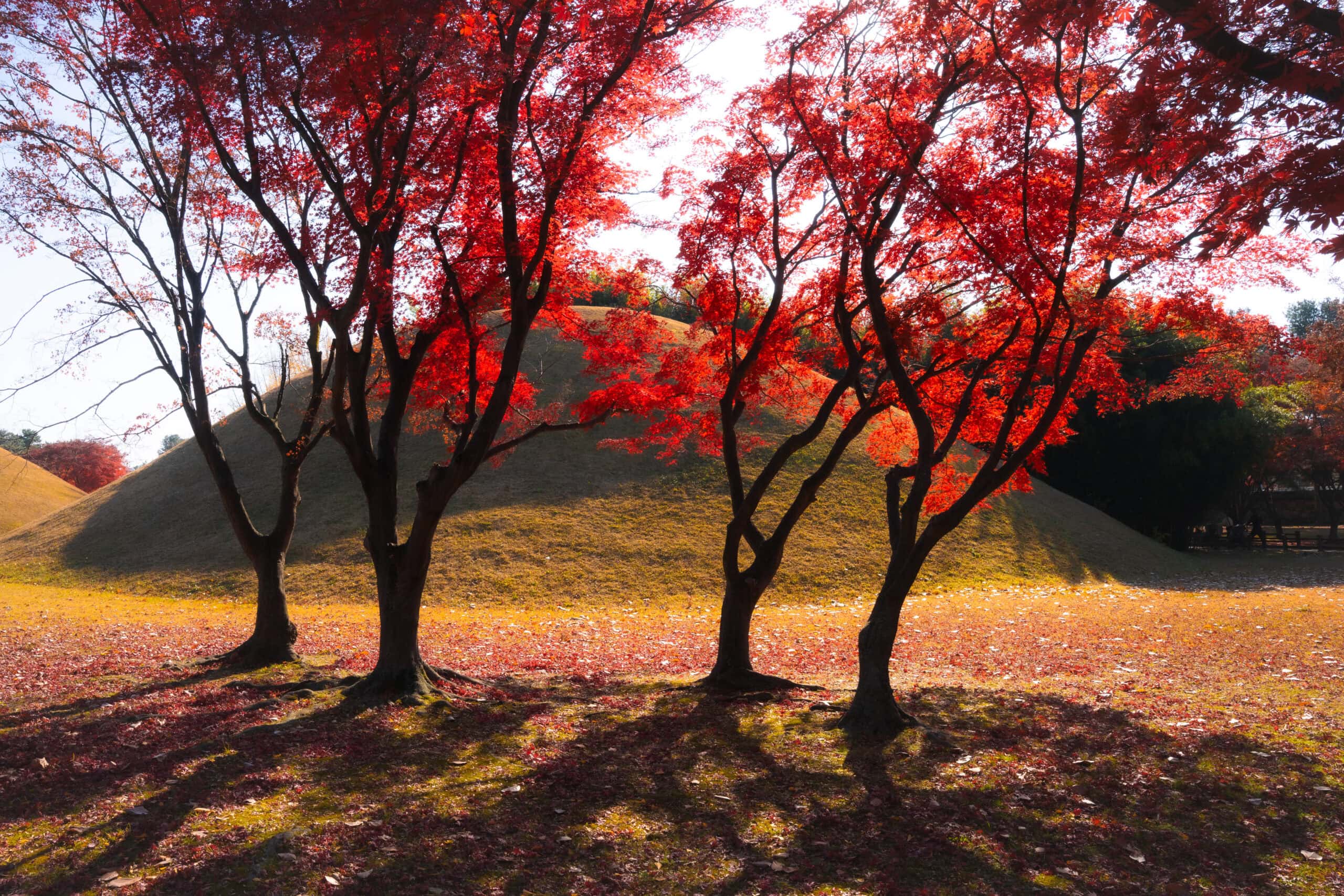
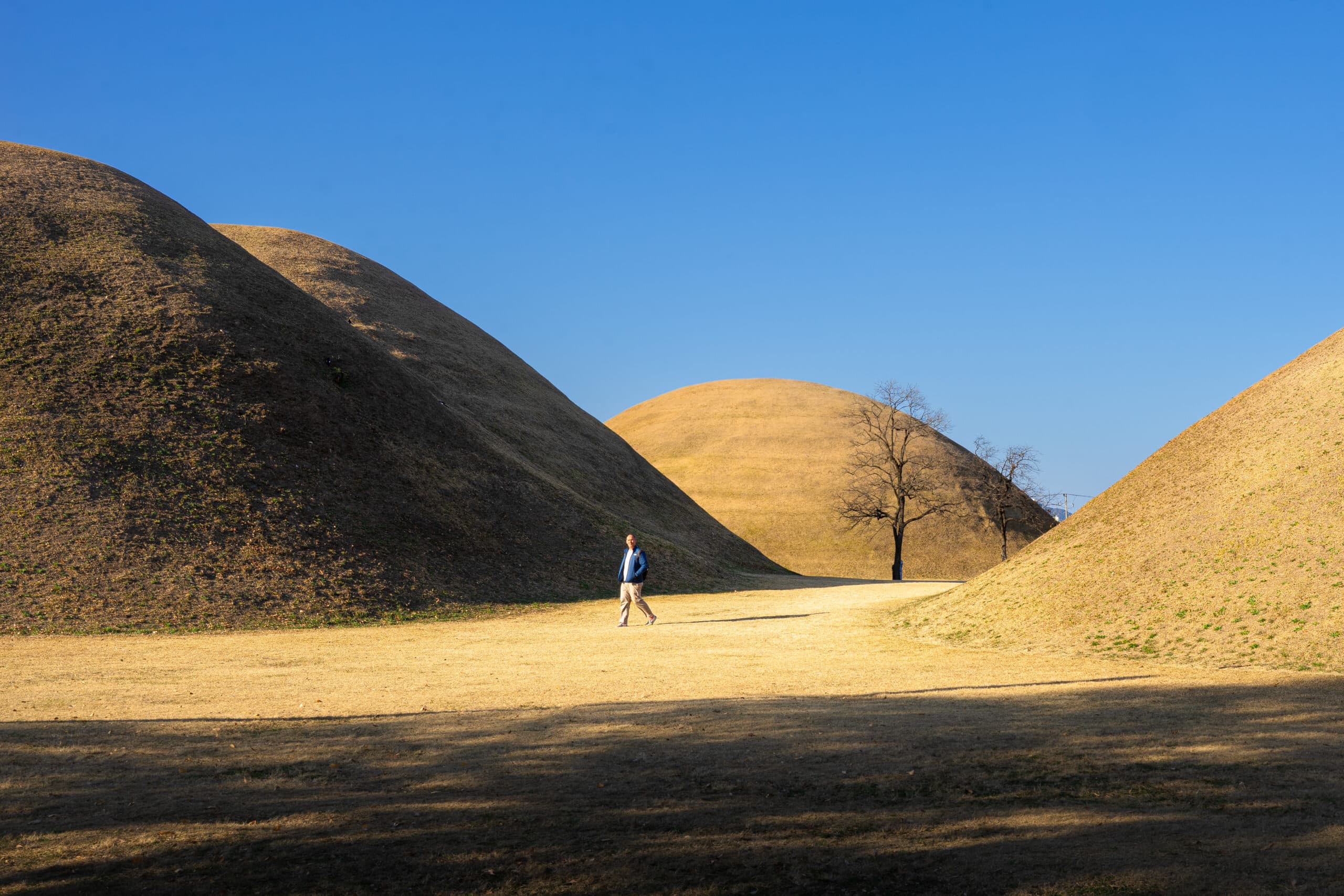
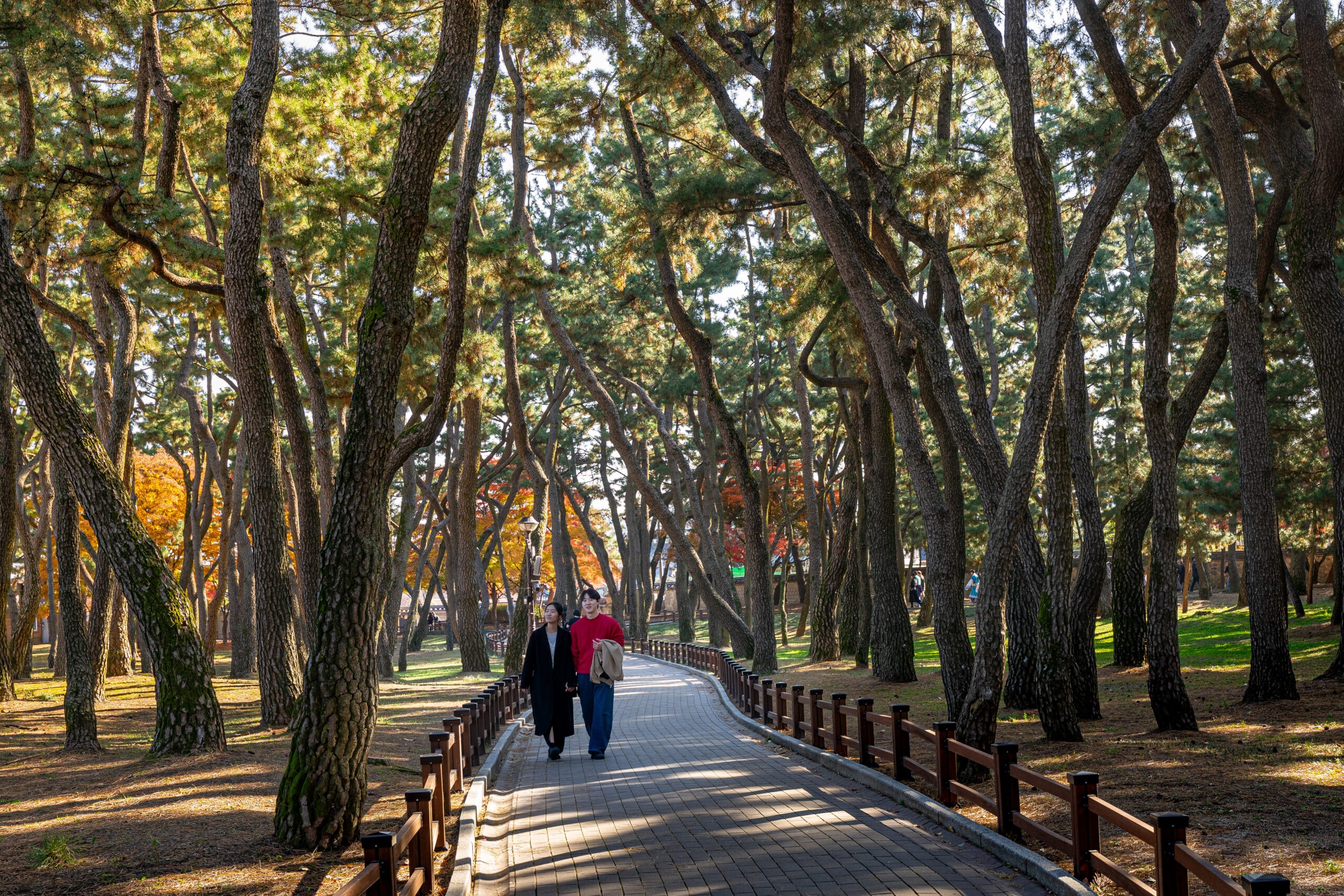
Important note: do not climb the burial mounds. Not for a better view, not for an influencer moment, not for a dare. Doing so can land you with a 20 million won fine (roughly USD 15,000) or up to two years in prison. Enjoy them from the paths. Respect and all that.
Poseok-ro, Coffee, & Back to the Future
After completing a full lap of Daereungwon Tomb Complex, we exited onto Poseok-ro, Gyeongju’s main tourist shopping street. Every second shop sells snacks or souvenirs, the rest rent out hanbok, with the occasional restaurant or bar mixed in.
We weren’t here to browse for long. The mission was simple: buy a box of Gyeongju bread to take back to Jin’s parents in Seoul. Mission accomplished.

With time to spare before our bus departed at 16:30, we ducked back into the quieter alleys where we’d had lunch the day before and ended up at Silladang (신라당), easily the prettiest café in the area. There’s seating both inside and out, but sitting outdoors is the way to go. We grabbed a spot overlooking a mossy garden and pond and nursed good coffee alongside the café’s creative takes on Gyeongju bread.
Silladang Naver Map
Hours: 10:00-21:00
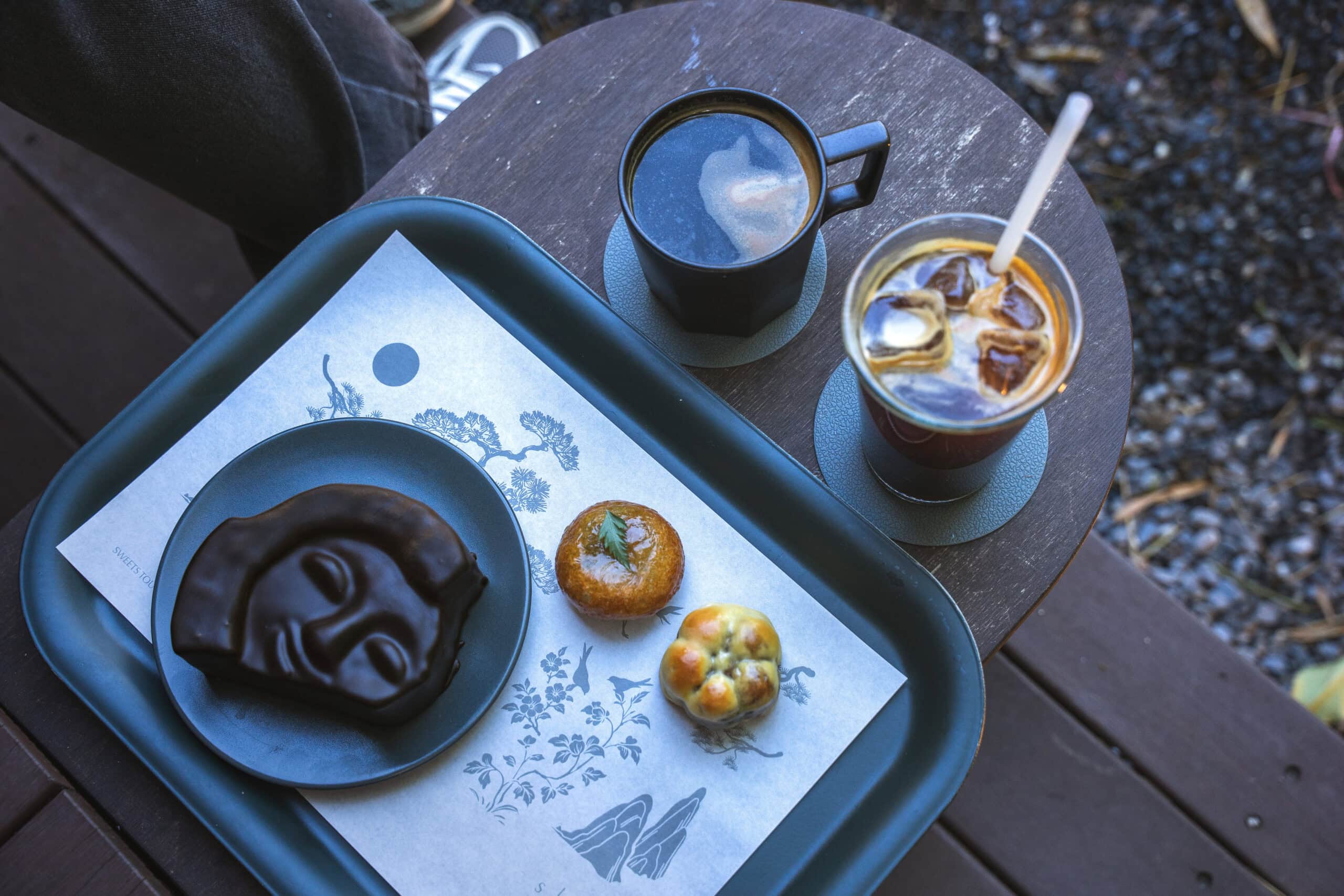
Naturally, Jin ordered the Silla Smile tiramisu, modelled after the famous Smiling Silla tile we’d seen earlier at the museum. It looked great, but you can skip it.
Pretty? Yes.
Tiramisu? No.
Anyhoo.
When it was time, we headed back to the hotel, picked up our luggage, and jumped on the limousine bus back to Seoul (AKA the future).
Game over.
And that’s how we did Gyeongju in two days (and you can too). Let us know in the comments below if you have any questions and we’ll try our best to help
✌️