
We’ve been to Macau many times. And before you ask, no, we don’t have a gambling problem. When you live in Zhuhai, just across the border in Mainland China, Macau becomes your default escape hatch: a spontaneous after-work dinner, a weekend wander, or a why-not–cross–the-border day simply because you can.
Over four years, we crossed that border 18 times, ate far too many Portuguese egg tarts, and learned that Macau is a place people wildly misunderstand.
This one-day in Macau itinerary is the result of all those visits, condensed into a practical, no-nonsense guide that will help you see the best of the city in a single day. It’s Macau as we know it: historic, cinematic, and unapologetically tasty.


Most visitors reduce it to casinos and bling. But the real Macau is more layered. Portuguese tiles rub shoulders with Cantonese kitchens while fortune-seekers strut by old temples in the shadow of billion-dollar hotels.
It’s a city where you can sip bubble tea in a back alley cafe that looks like it teleported from Lisbon, then walk five minutes and find yourself in the middle of an air-conditioned hallucination that looks like Las Vegas on steroids.
This Macau day trip itinerary is everything we’ve come to love about the city. You’ll see the best of the Macau Peninsula, Coloane, and Taipa in one ambitious, flavour-packed day. Yes, it’s full. But it’s also realistic.
When family came to visit in Zhuhai, this itinerary was the default plan. Cross the border before breakfast, go on a food-and-sightseeing marathon through Macau, and make it back before the border closes at midnight.
If you have time, stay overnight. Macau is definitely more than just a day trip from Hong Kong.
Please note: This post may contain affiliate links. This means I may earn a commission if you make a purchase by clicking a link (at no extra cost to you). As an Amazon Associate, I earn from qualifying purchases. Learn more.
One Day in Macau: Practicalities
Getting There from Hong Kong
The most convenient way to visit Macau on a day trip from Hong Kong is by ferry. Sailings depart every half hour between 7:30-22:30 from the Hong Kong Macau Ferry Terminal (Sheung Wan), and take about one hour. One-way fares start from USD 22, with good package deals on return fares.
Book your TurboJET ferry tickets here.
Macau has two ferry terminals: Outer Harbour Ferry Terminal and the Taipa Ferry Terminal. The Outer Harbour is on Peninsular Macau, close to the historical centre (Senado Square, Lisboa Casino), while Taipa is right on the casino strip.
If you’re doing this Macau itinerary as a day trip from Hong Kong, arrive on the first ferry and book the last one back. For our itinerary, it makes sense to arrive in Taipa and take the public bus (number 26) to Coloane Village, where we start our day.
From Hong Kong Airport (Without Entering Hong Kong)
If you’re connecting straight to Macau after landing, take the airport buses across the Hong Kong–Zhuhai–Macau Bridge. They’re more frequent than the ferries from the city, and you don’t need to travel to Hong Kong just to catch. a ferry. Just follow the signs for “Mainland/Macau Transfer” inside the terminal to skip Hong Kong immigration. Some airlines will even transfer your luggage directly, so you’ll collect your bags in Macau.
From Mainland China
If you’re coming from the Mainland, the main land crossing is Gongbei Port in Zhuhai, attached to Zhuhai Railway Station. It’s open 06:00–01:00 daily and extremely busy (about 330,000 people cross on an average day), so even with a separate foreign passport line, plan at least one hour, if not more.
For a calmer, near-queue-free crossing, head to the Hengqin Port instead (20–30 minutes by taxi from central Zhuhai). We’ve crossed here in literal minutes.
There are also direct Turbojet ferries running between the Shekou or Fuyong terminals in Shenzhen and the Outer Harbour or Taipa terminals in Macau, taking about an hour.
Getting Around Macau
- Free Casino Shuttles: Free buses run between the ferry terminals, border gates, Taipa, Cotai, and major casinos. They don’t go to Coloane, but they will get you close.
- Public Buses: Cheap, reliable, and cover everywhere, including Coloane.
- Taxis: Easy to find, but can be pricey and sometimes slow in traffic.
- Octopus Card: You can use your Hong Kong Octopus card on Macau buses.
Navigation & Internet
As a SAR, Macau is not behind the Great Chinese Firewall. Google, Facebook, Instagram, and YouTube work fine without a VPN. Google Maps works just fine for public transport and walking around. We always found it astonishing how all of them stop working the MOMENT you set foot across the border into the Mainland. Free public WiFi is available in all casinos and some public spaces around town.
Money
Macau uses the Macanese Pataca (MOP), which is pegged to the Hong Kong Dollar (HKD). You can pay with either, but if you hand over HKD, the change will be in MOP. Try to use up or exchange your Patacas before leaving, as they’re hard to change outside Macau. Cards are accepted almost everywhere.
Costs
Macau can be as cheap or as expensive as you choose. Ride the free shuttles, snack on street food, wander historic streets, and stare at the outrageous Cotai casinos — all free. Free soft drinks are available in the casinos, so help yourself without feeling guilty. We recommend splurging on one decadent meal and catching a show (like House of Dancing Water).
Where to Stay
Confession: In 18 visits, we never actually slept in Macau. Our house in Zhuhai was a bicycle ride from the border. But if we were splurging for a night on the Cotai Strip, we’d check into Wynn Palace for that classy, pampered escape. We also adore the Morpheus, purely because of THAT NAME, and we’re suckers for Zaha Hadid architecture.
For a more affordable stay, Peninsular Macau is your place, with the Holiday Inn Express being one of the best budget options in town.
About Macau: The Tiny Giant of the Pearl River Delta
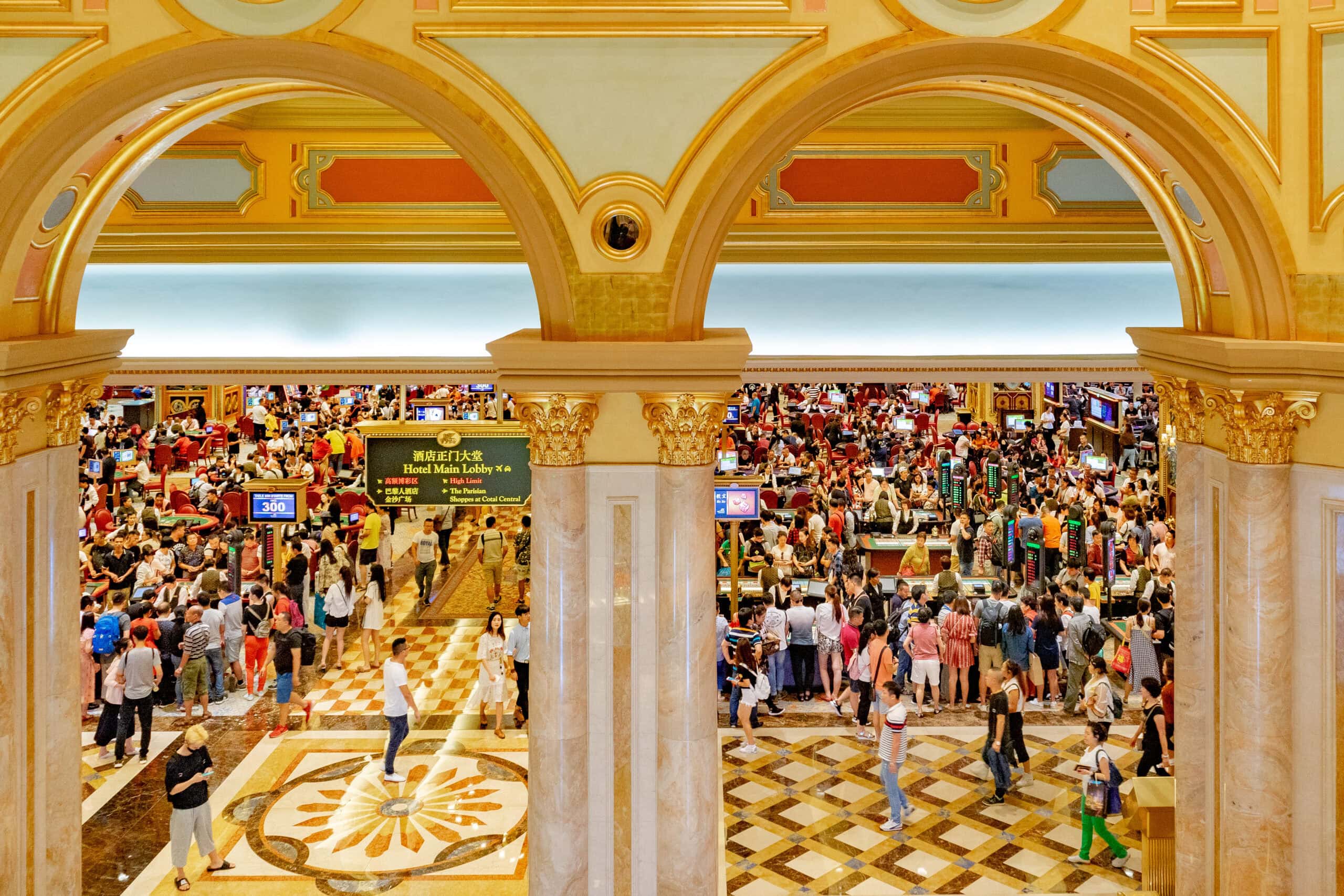
Macau is a tiny speck on the map, just 30 square kilometres in size, yet it punches far above its weight. Officially a Special Administrative Region (SAR) of China, it operates under its own currency, laws, and immigration policies. Cross over from Hong Kong or Mainland China, and you will get your passport stamped.
It may be part of China, but it dances to its own rhythm.
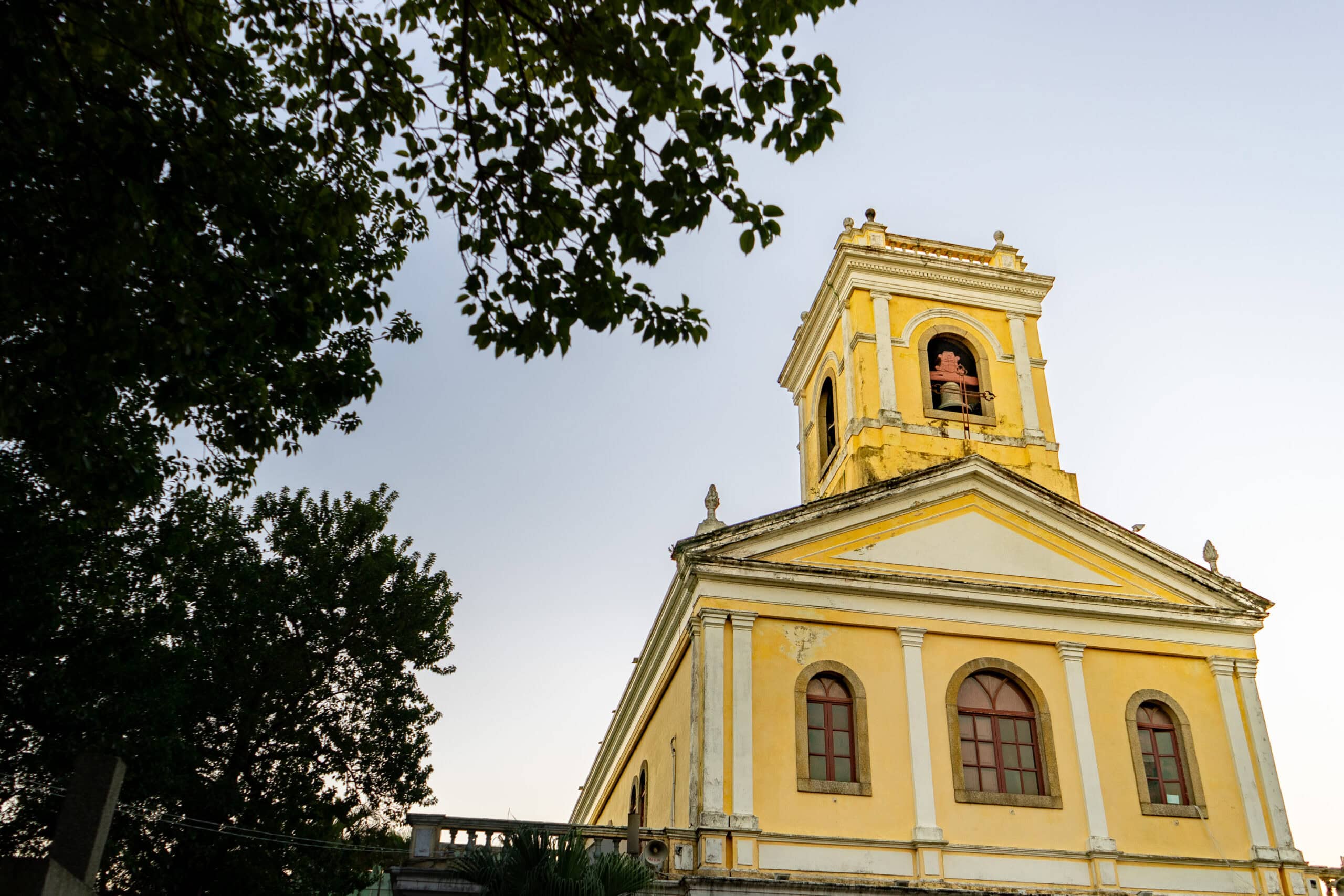
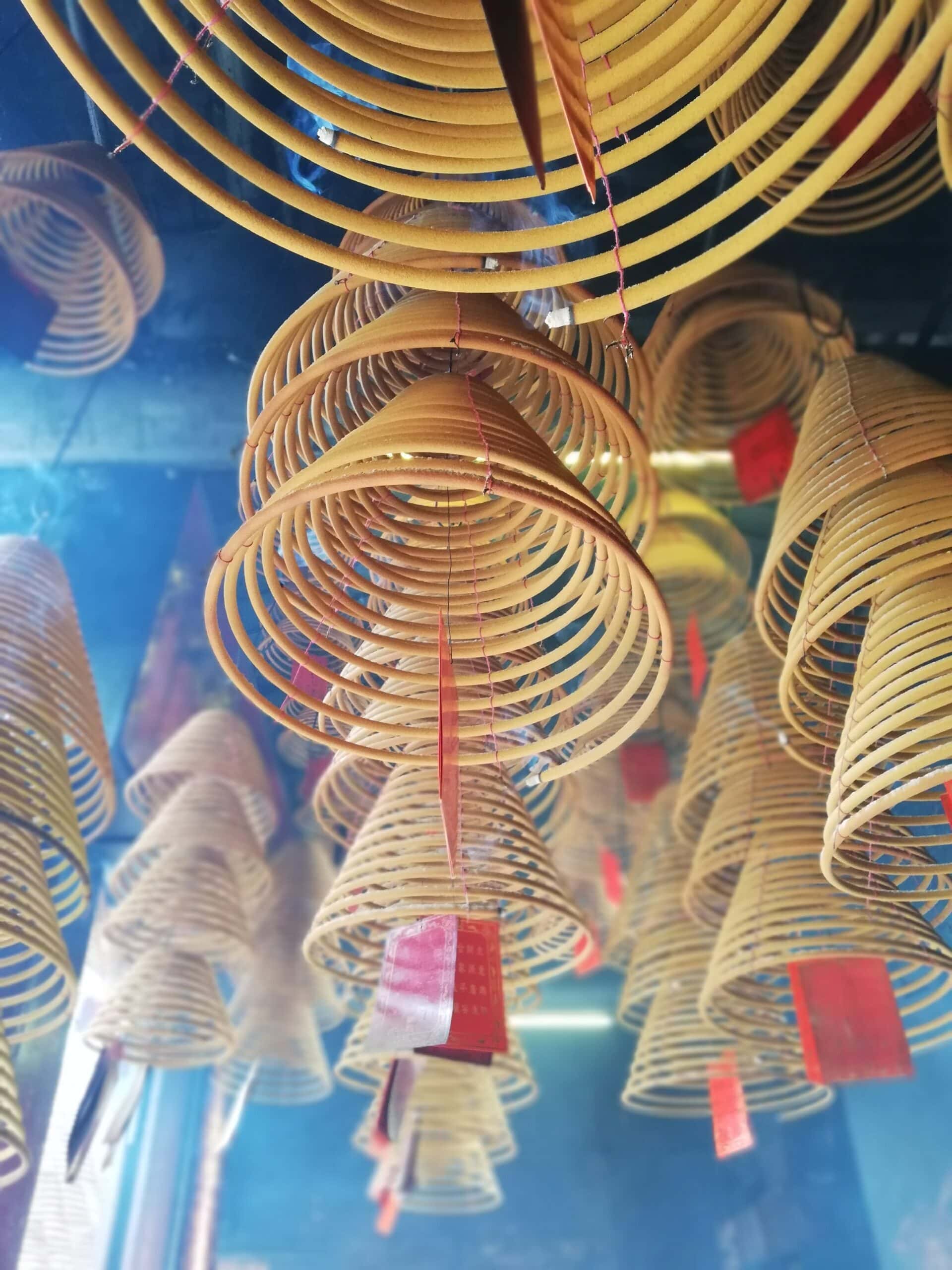
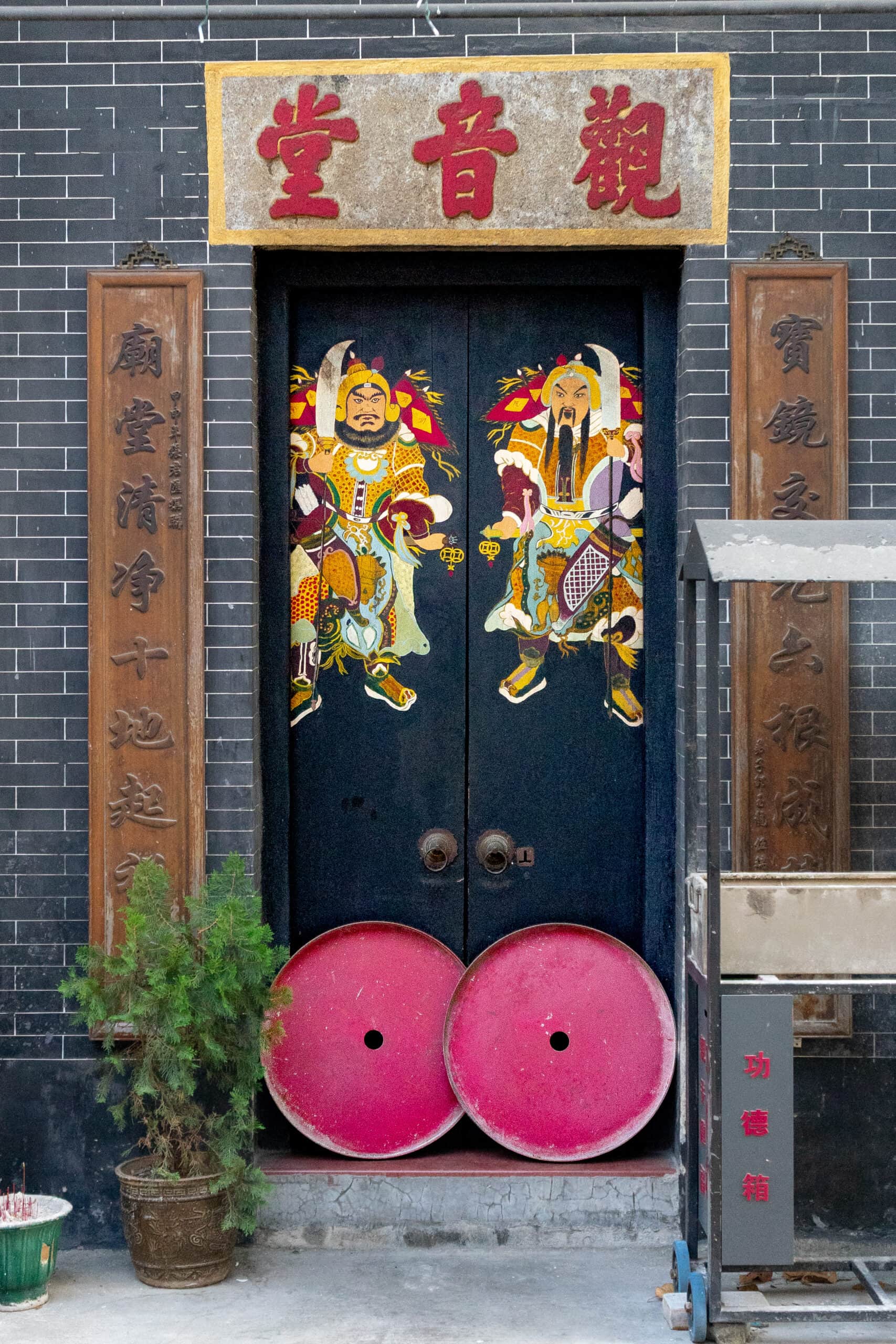
It is also the most densely populated place on earth, home to over 23,000 people per square kilometre, and one of the richest, with a GDP per capita of around US$112,800.
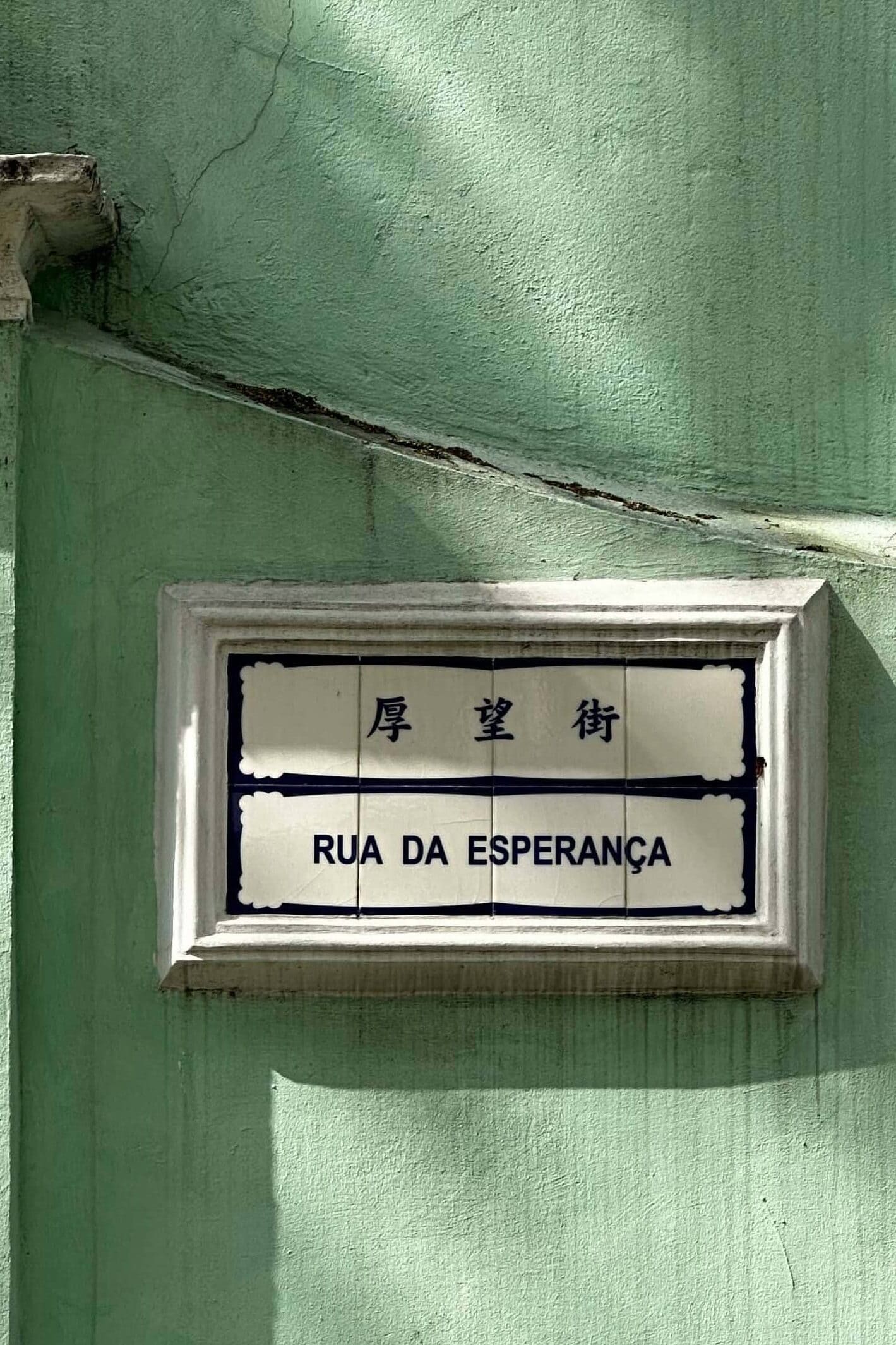
For 442 years, Macau was under Portuguese rule, from 1557 until it was returned to China in 1999, the very last European colony in Asia to go. The colonial fingerprints are everywhere: in the tiled sidewalks, in the codfish croquettes, and in the street signs. Every sign is written in both Portuguese and Chinese, public transport announcements are trilingual, and English is widely spoken.
Then there is the real money-maker, gambling.
Smaller than Hong Kong, bigger than Vegas
Macau’s casinos rake in roughly double the revenue of Las Vegas, averaging more than a billion dollars more each month. Nearly 30 million visitors come each year, about half of them on day trips, drawn to this surreal blend of Europe and Asia, old-world charm and high-roller gloss.
The skyline tells Macau’s story clearly, with baroque churches and pastel Portuguese facades sharing the sky with billion-dollar casino towers wrapped in neon. It truly is a fascinating city with so many layers.
How to Use This One-Day Macau Itinerary
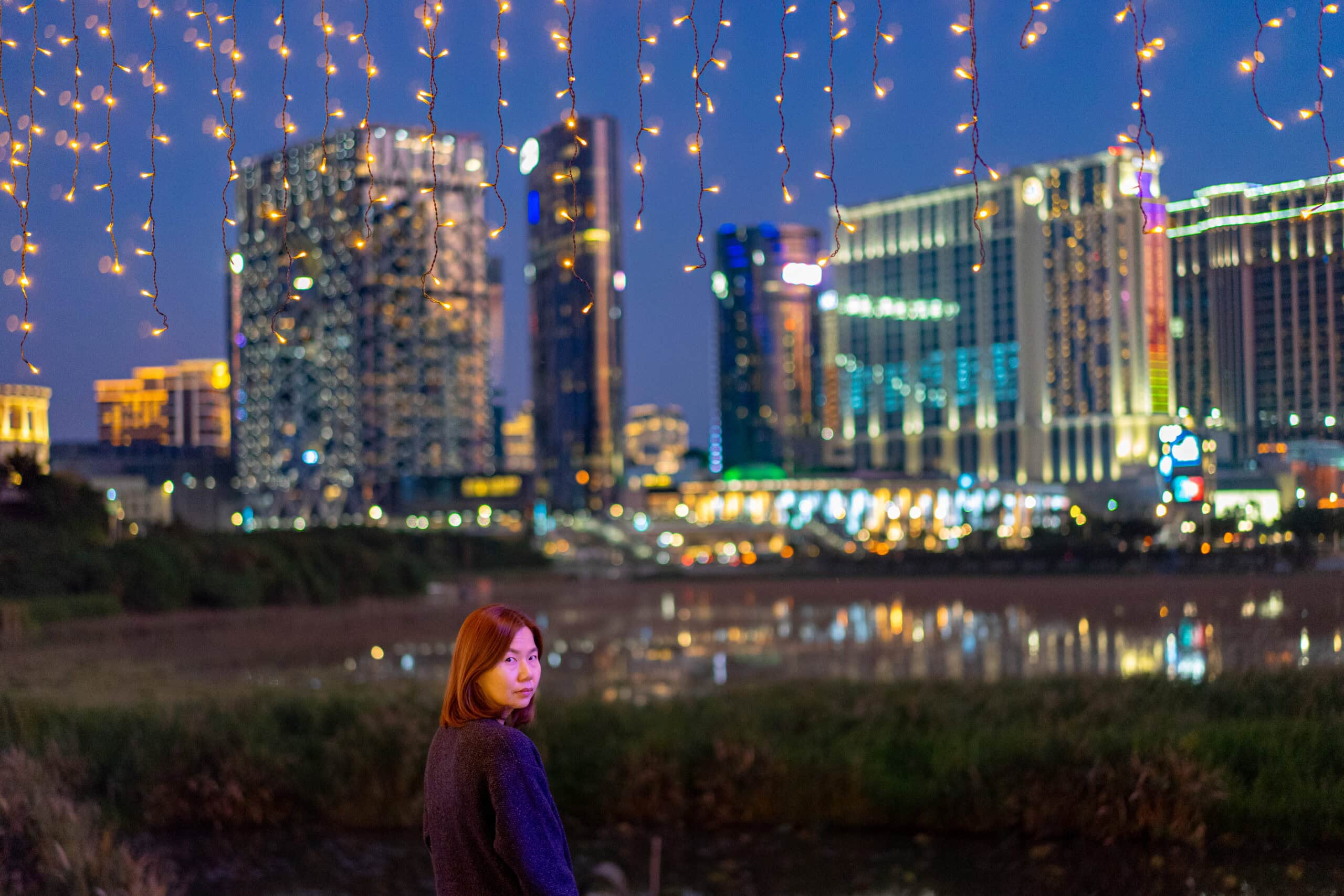
This one-day in Macau itinerary is packed and busier than how we usually travel, but if you’re only coming once, you should absolutely go all in. Macau is small but divided into three distinct parts, each with its own personality.
The Peninsula is attached to mainland China, with Taipa/Cotai and Coloane sitting on an island. Three bridges connect the peninsula to Taipa Island, and public buses cover the entire territory.
Coloane is sleepy and colonial with cobbled lanes and Portuguese charm. Macau Peninsula is the classic core with the Ruins of St. Paul’s, Senado Square, and that unmistakable mix of heritage and high-rises. Taipa and Cotai are where modern Macau shows off, all glass, lights, and larger-than-life casinos.
If you’re pressed for time, you could skip Coloane or the House of Dancing Water, but we wouldn’t. They’re two of the most memorable experiences in Macau, and the ones that make this tiny territory so much more than just a gambler’s paradise.
Morning in Coloane:
Egg Tarts, Sea Breeze & Slow Streets
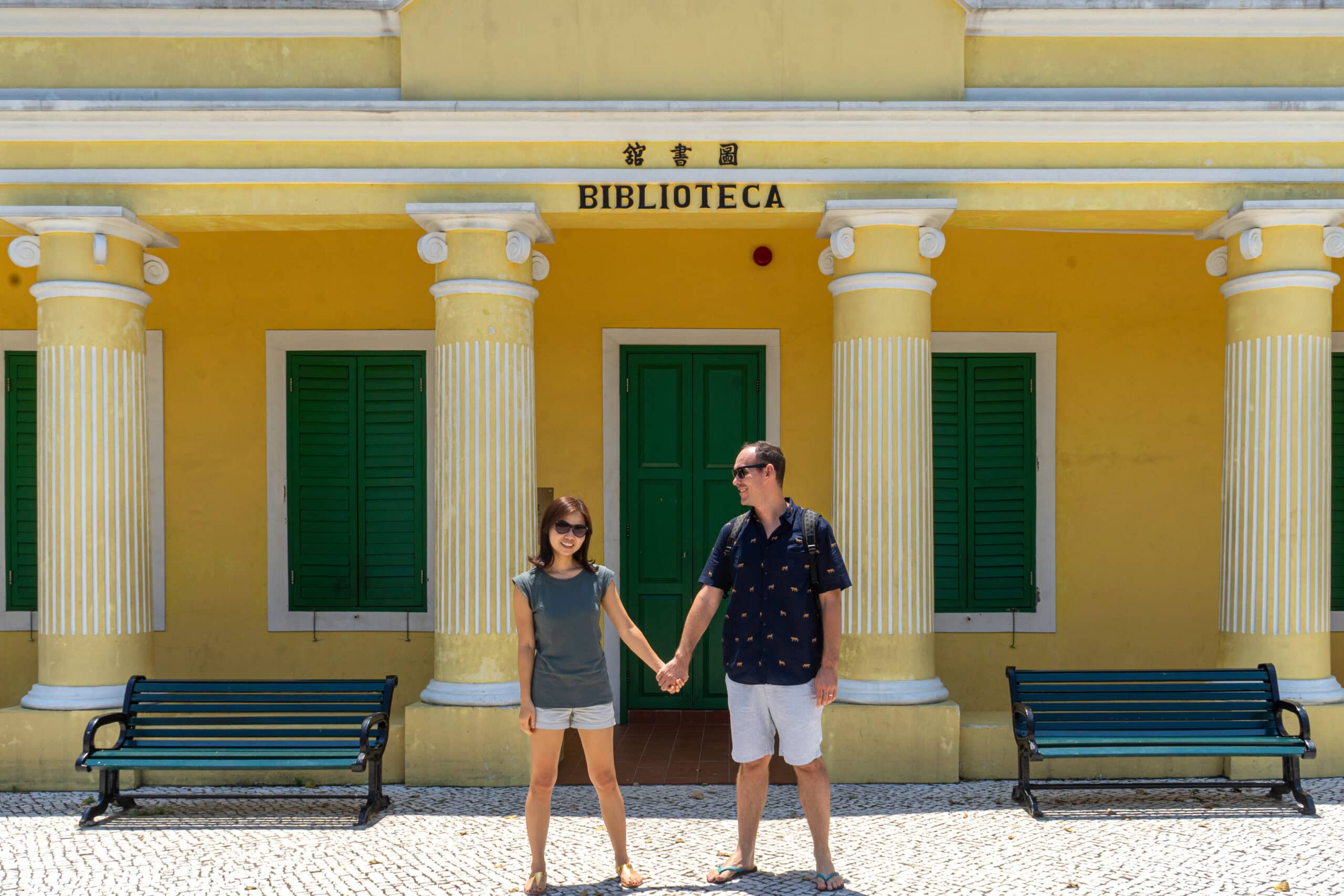
Vila De Coloane is the opposite of everything people imagine when they think of Macau. There are no armies of tourists or glass palaces trying to out-bling each other. Instead, you get quiet lanes, pastel buildings, banyan trees, and a salty breeze that still carries the faintest hint of old Portugal.
This is Macau before Macau became the Vegas of the East.
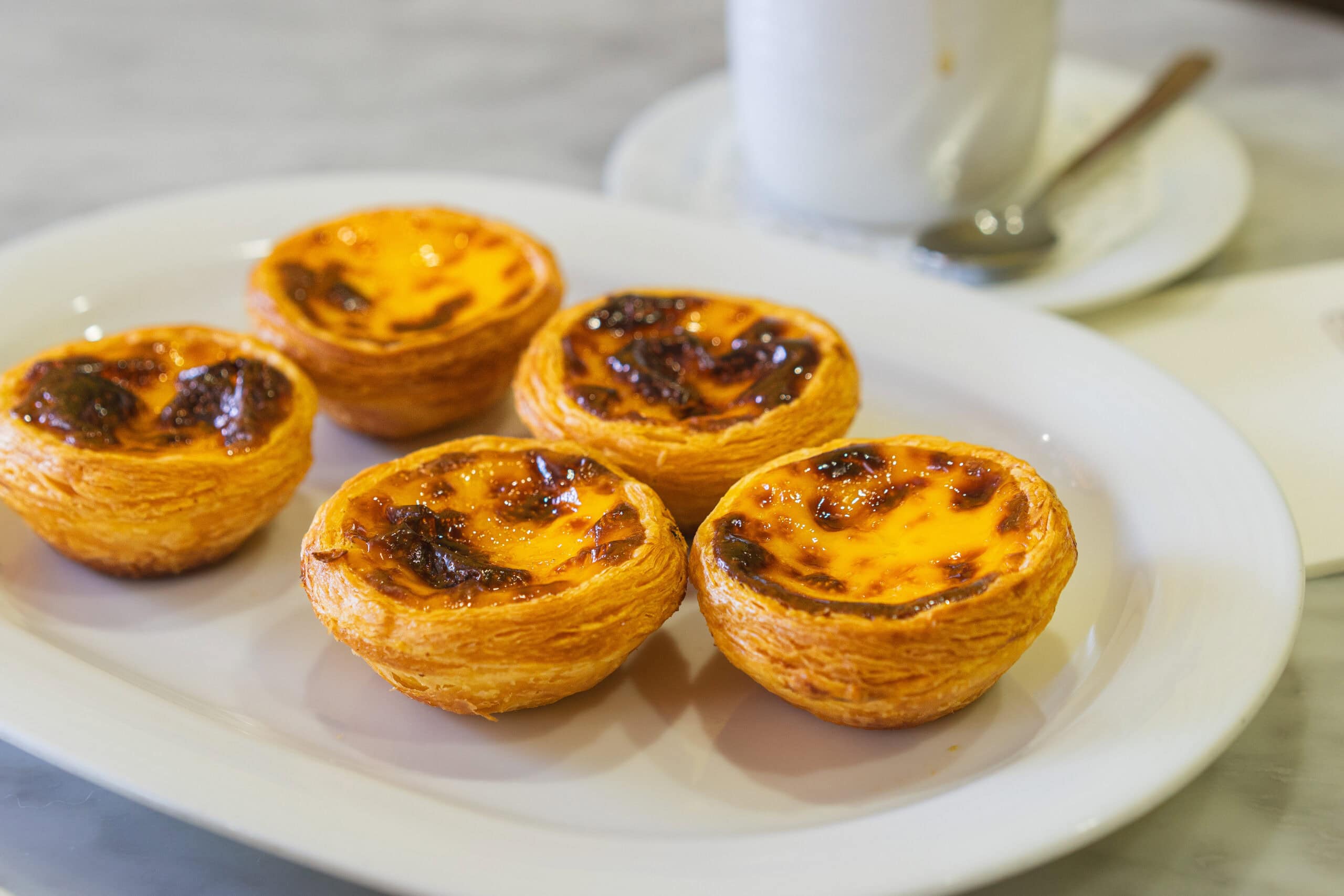
We always start the day at Lord Stow’s Bakery, because, for us, breakfast in Macau means pastéis de nata and a strong black coffee. It’s the only logical choice in a former Portuguese enclave. While you can get the classic Lord Stow’s egg tarts in the Venetian Casino and in Taipa, there’s something special about having them at the original bakery in Coloane.
These egg tarts are the real deal, right up there with the ones we ate in Belém. The crusts are big and beautifully flaky, the centres perfectly custardy, and they’re just a touch less sweet than the Lisbon originals. Honestly, we prefer the Macanese version. Grab a few. One is never enough.
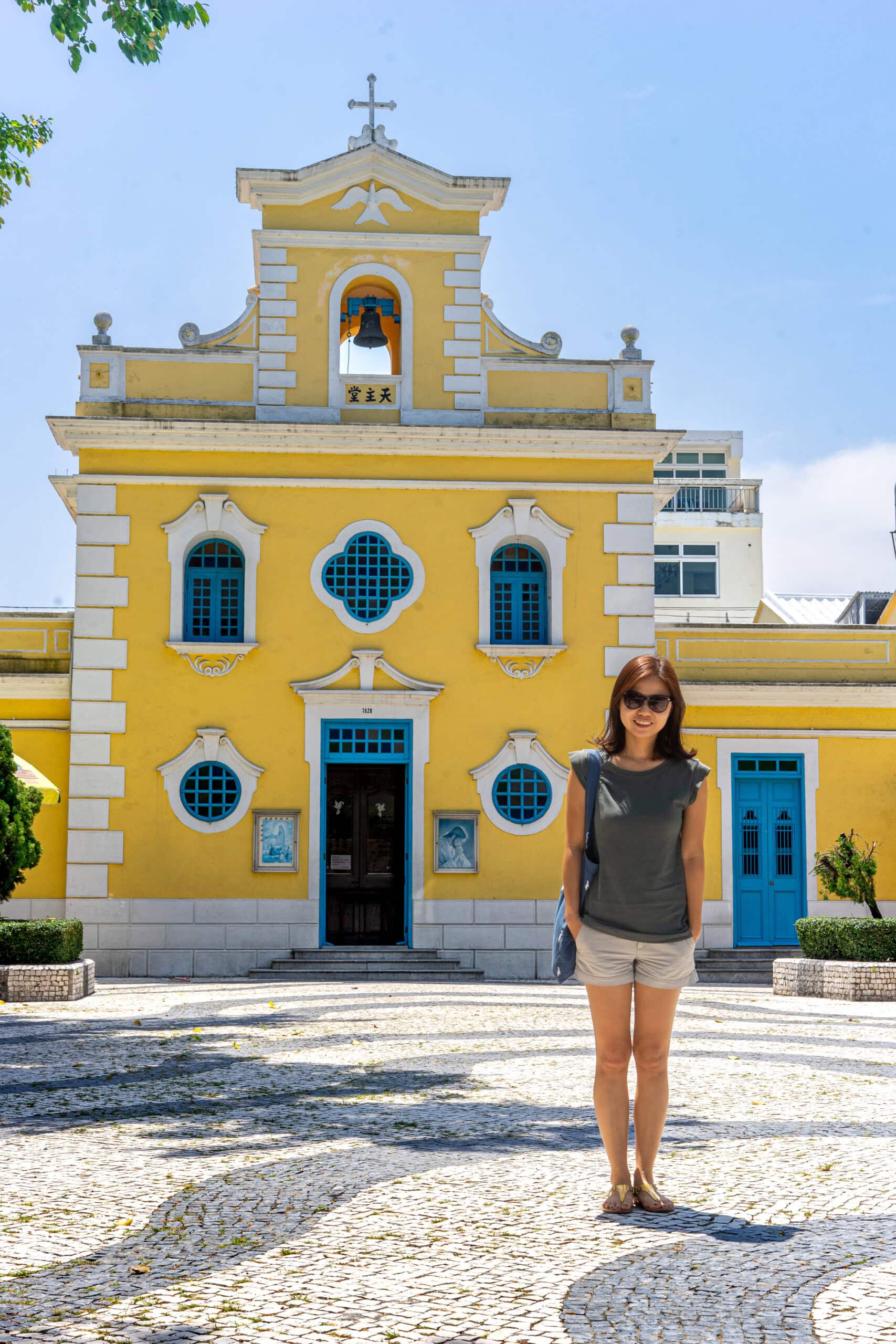
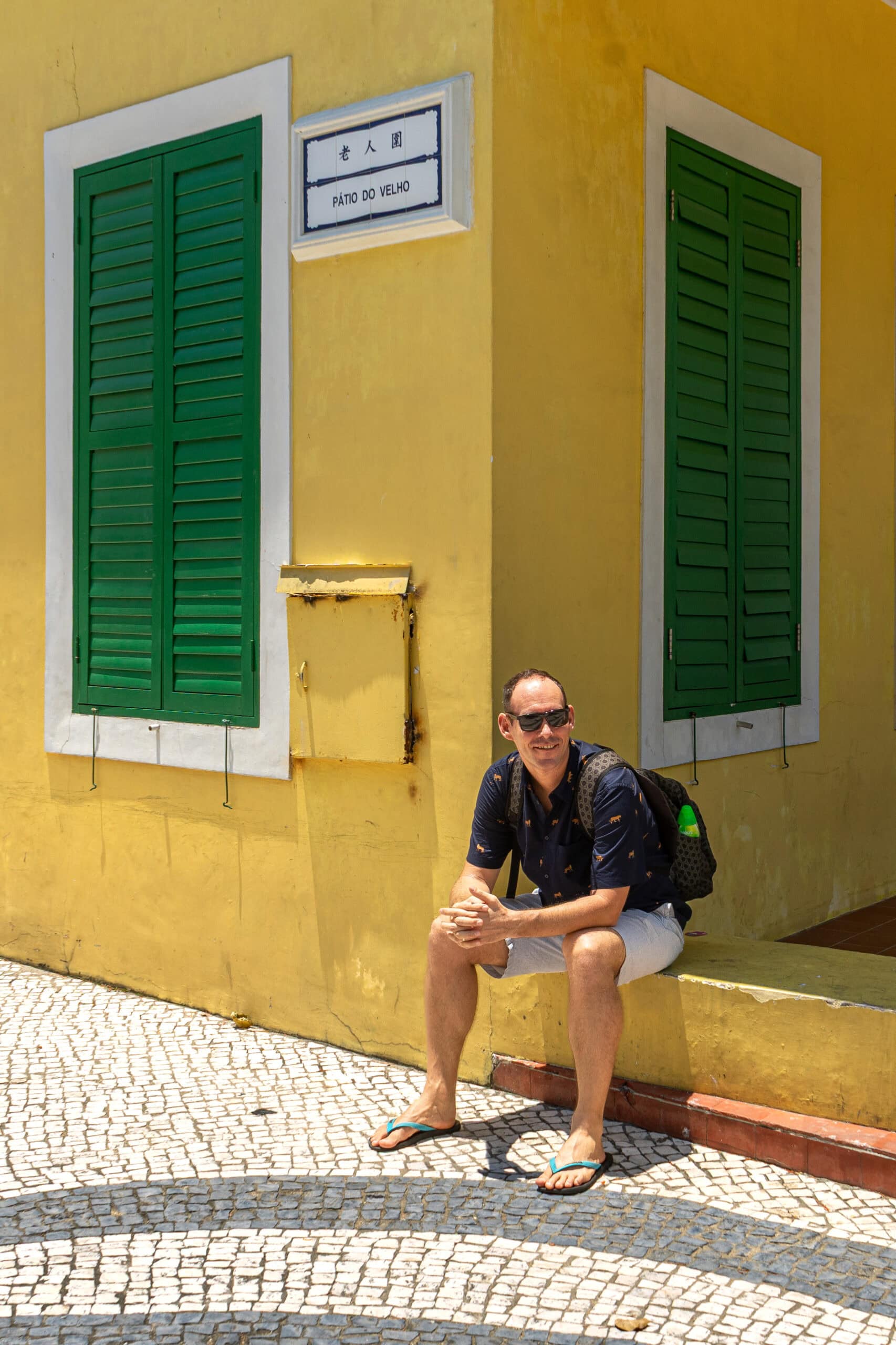

After breakfast, wander slowly through Coloane Village. This is where Macau’s nostalgia lives. The butter-yellow library with its green shutters, the black-and-white Portuguese pavement curling like waves, laundry swaying from balconies, and old men reading newspapers outside tiny shops are what this part of Macau is all about.
The Chapel of St. Francis Xavier, just around the corner, is small, simple, and photogenic in that effortlessly European-in-Asia way.
Take it slow. Coloane isn’t a place to do. It’s a place to stroll and breathe before diving into the chaos of the Macau Peninsula.
If you’re in Macau for more than a day, do yourself a favour and come for lunch or dinner at Fernando’s. This place on Hac Sa Beach is a Macau institution, and they do the best Portuguese food with a Macanese twist in town. Order the suckling pig and a jug of sangria; you can thank us later. However, Fernando’s is not a place to rush, so sadly, there is not enough time for our favourite Macau restaurant on this one-day itinerary.
Macau Peninsula:
Senado Square, Ruins of St. Paul’s & Free Snacks
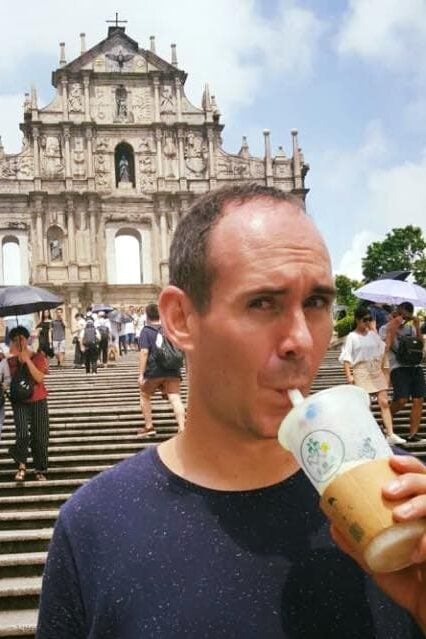
From Coloane, hop on bus 26A and cross one of the bridges into Macau Peninsula.
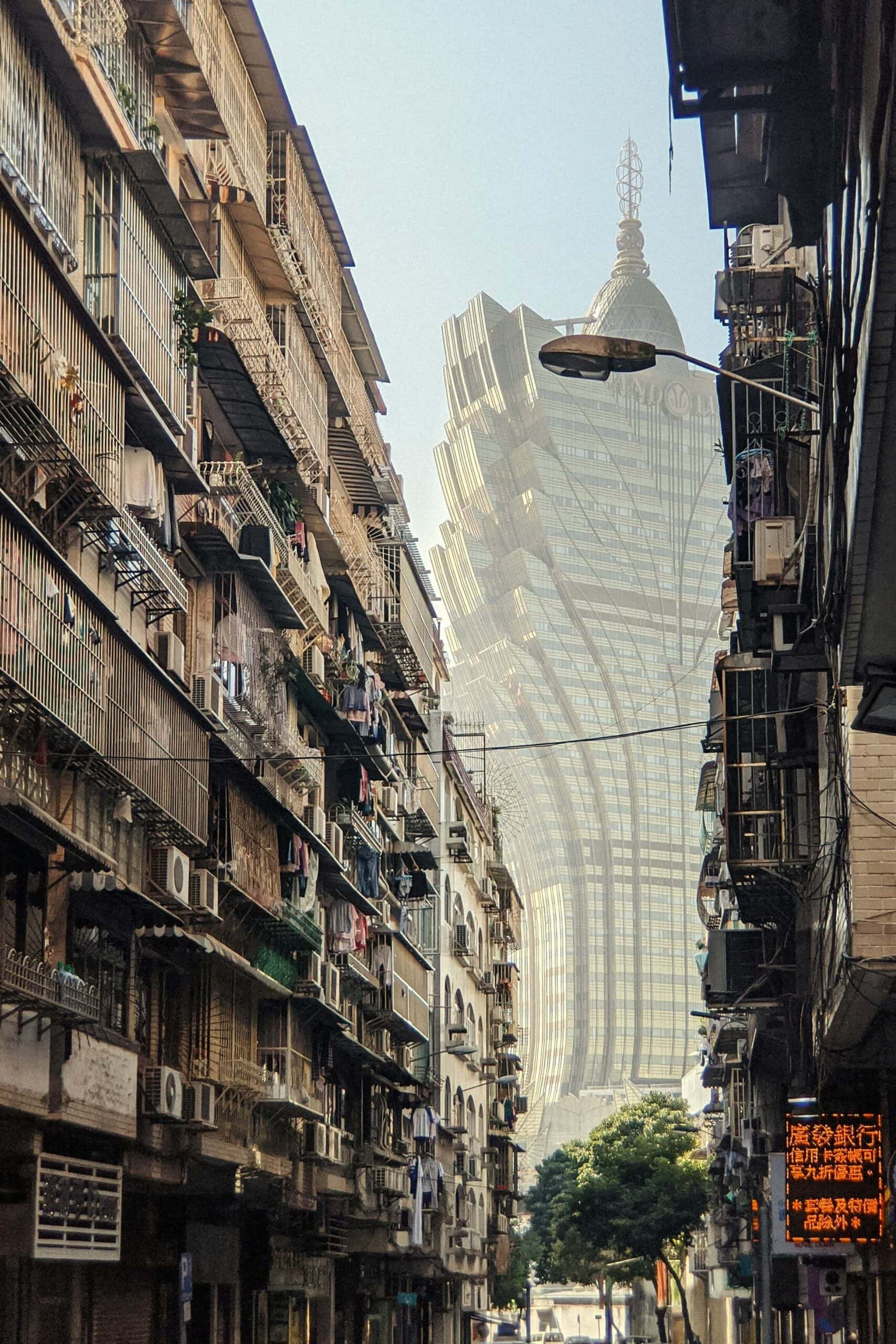
This ride gives you the territory in miniature. Out the window, you’ll see what Macau really is: half-Portuguese, half-Chinese, part-Vegas, all jammed together in a space barely big enough for it all to fit. Towering casinos shadow quiet temples. Normal people shuffle past billboard models dripping in diamonds.
It’s a strange, beautiful collision, one that takes more than one visit to truly understand.
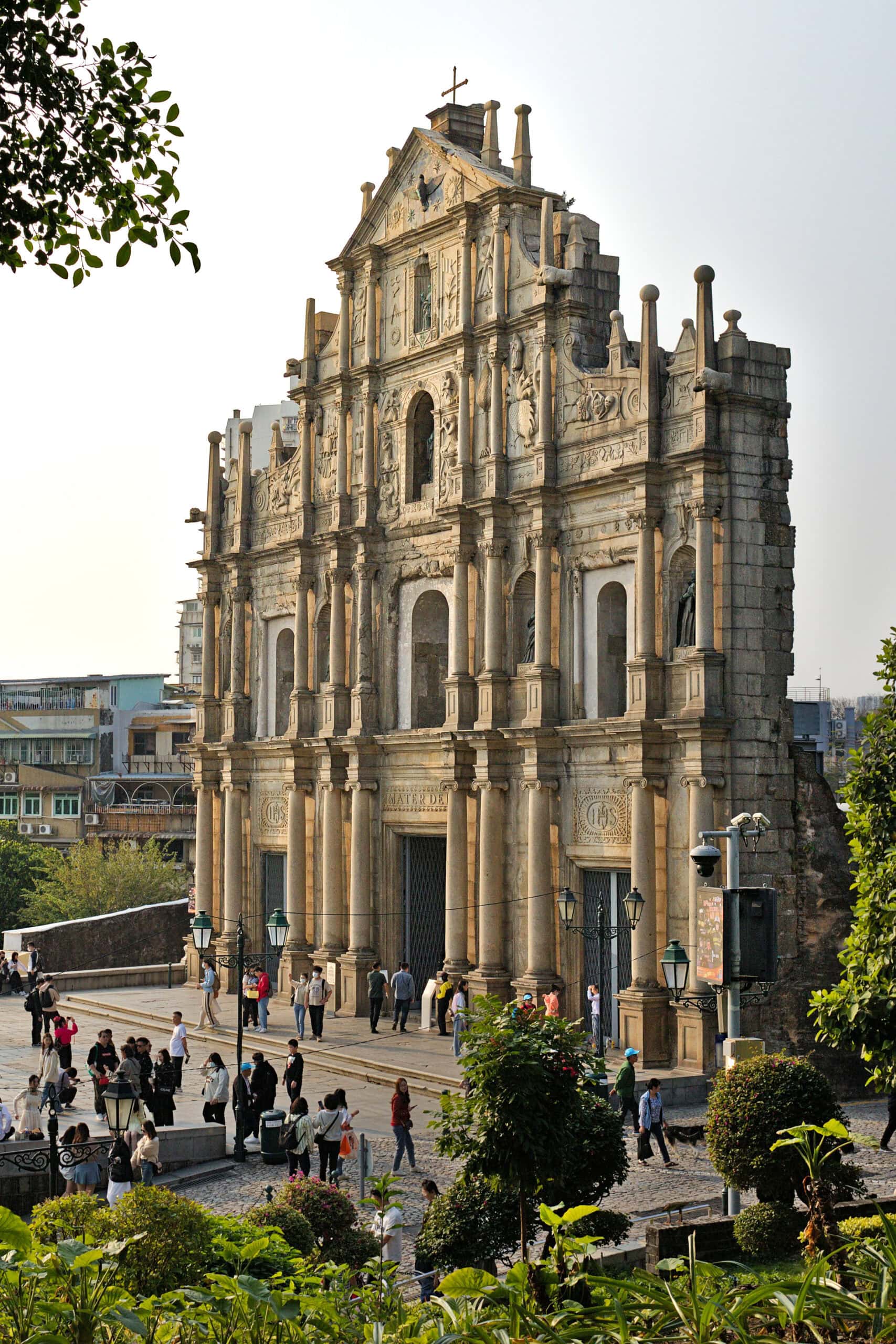
Your first stop is the Ruins of St. Paul’s, Macau’s most famous postcard view. Only the stone façade remains of the baroque church that burned down centuries ago, but it still stands proud, defiant, and damn photogenic. Snap your picture (you’ll only need a minute) before following the calçada (those rippling black-and-white Portuguese pavements) down through Senado Square.
The colonial architecture around Senado Square is something out of Lisbon or Rio, just with more humidity and better snacks.
The narrow streets leading down to Senado from St. Paul’s (Rua de São Paulo, Rua da Ressurreição, Rua de Santo António) are chock-a-block with shops giving away free food samples like candy at a carnival. One of the best things to do in this area is simply to pop into these shops for the free samples.
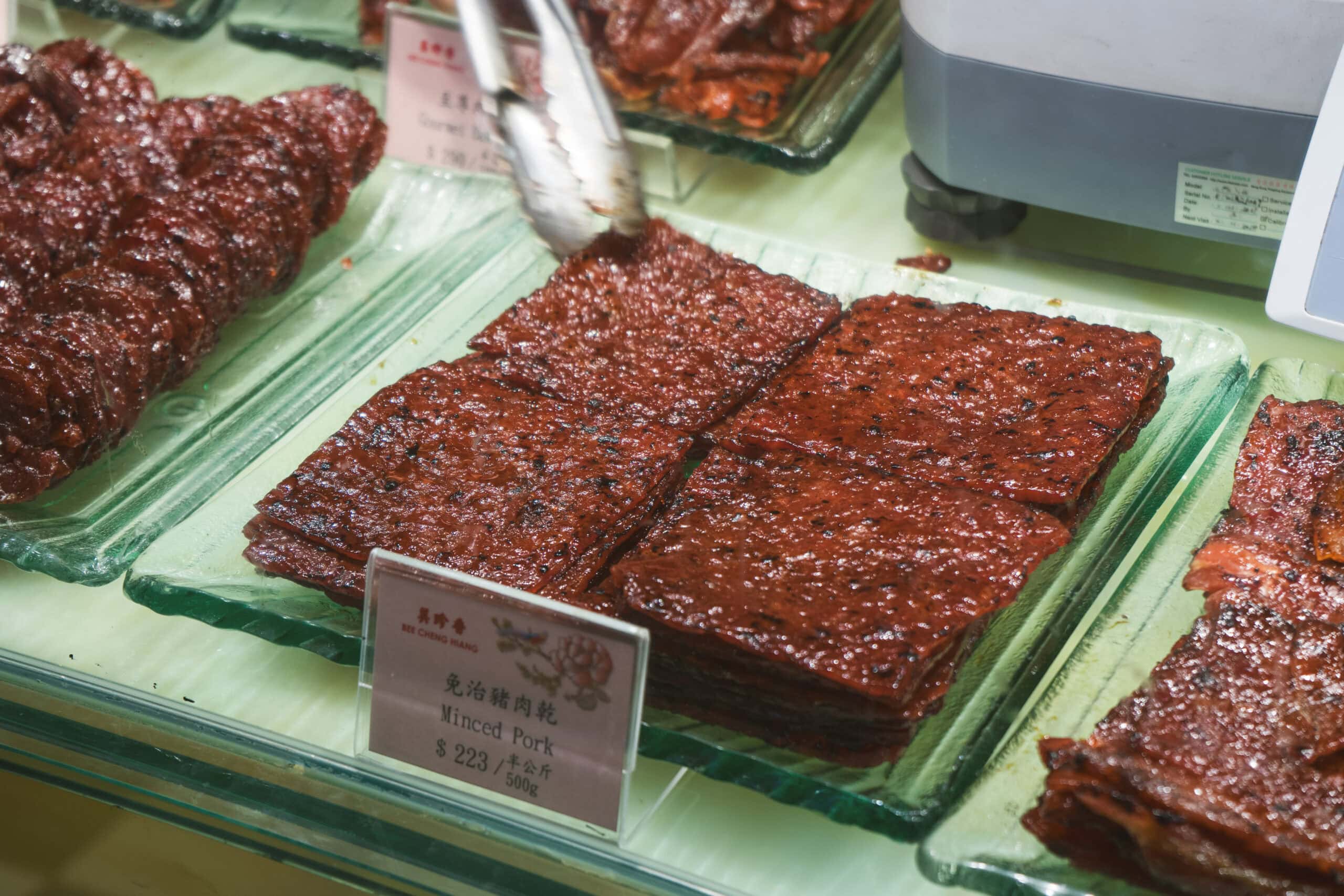

Try everything. Don’t be shy. The Cantonese-style pork and beef jerky (bak kwa) is glossy, sweet, and smoky; chewy in that dangerously addictive way. The almond cookies crumble like fine beach sand. The egg rolls shatter in your mouth, buttery and light. If you’re here in early October, you’ll find mooncakes stacked high for Mid-Autumn Festival (with free samples).
Between snacks, you’ll catch flashes of tiled walls, the glint of the Grand Lisboa Casino, and waves of mainlanders enjoying their day in Macau, just like you.
Lunch in Taipa:
Macau’s Tastiest Neighbourhood

Hop on the free casino bus from the Grand Lisboa to Galaxy Casino. The ride is short, the air-conditioning blissful, and your legs will thank you. From Galaxy, follow the signs to Taipa Village, a pocket of old Macau that somehow keeps its charm despite sitting right next to the Cotai strip. It still feels like a village, complete with narrow lanes, pastel houses, and the smell of incense drifting from tiny temples.
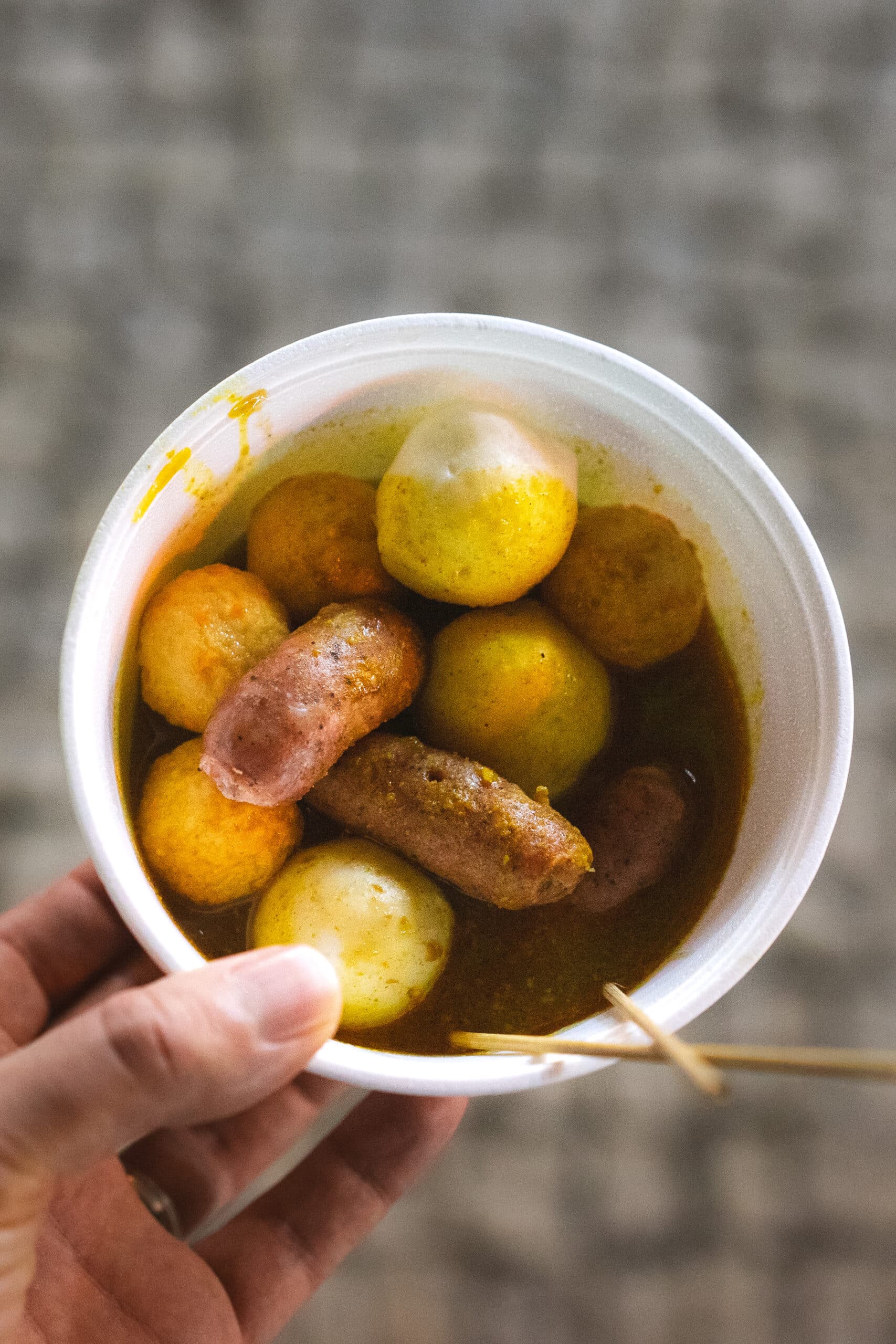
By lunchtime, Taipa is the only place you’ll want to be. Rua do Cunha is the heartbeat of the neighbourhood and a paradise for street food lovers. Here you’ll find curry fish balls, glutinous rice cakes, fruit mochi, Michelin Star almond cookies from Ko Kei Bakery, and Lord Stow’s famous egg tarts. Most snacks on this street go for about 10-30 MOP each, so you can try a few different foods, even if you’re in Macau on a budget.
A few steps off the main drag, Sei Kee Cafe serves what locals swear is the best pork chop bun in Macau, and their clay pot iced coffee is a perfect match.
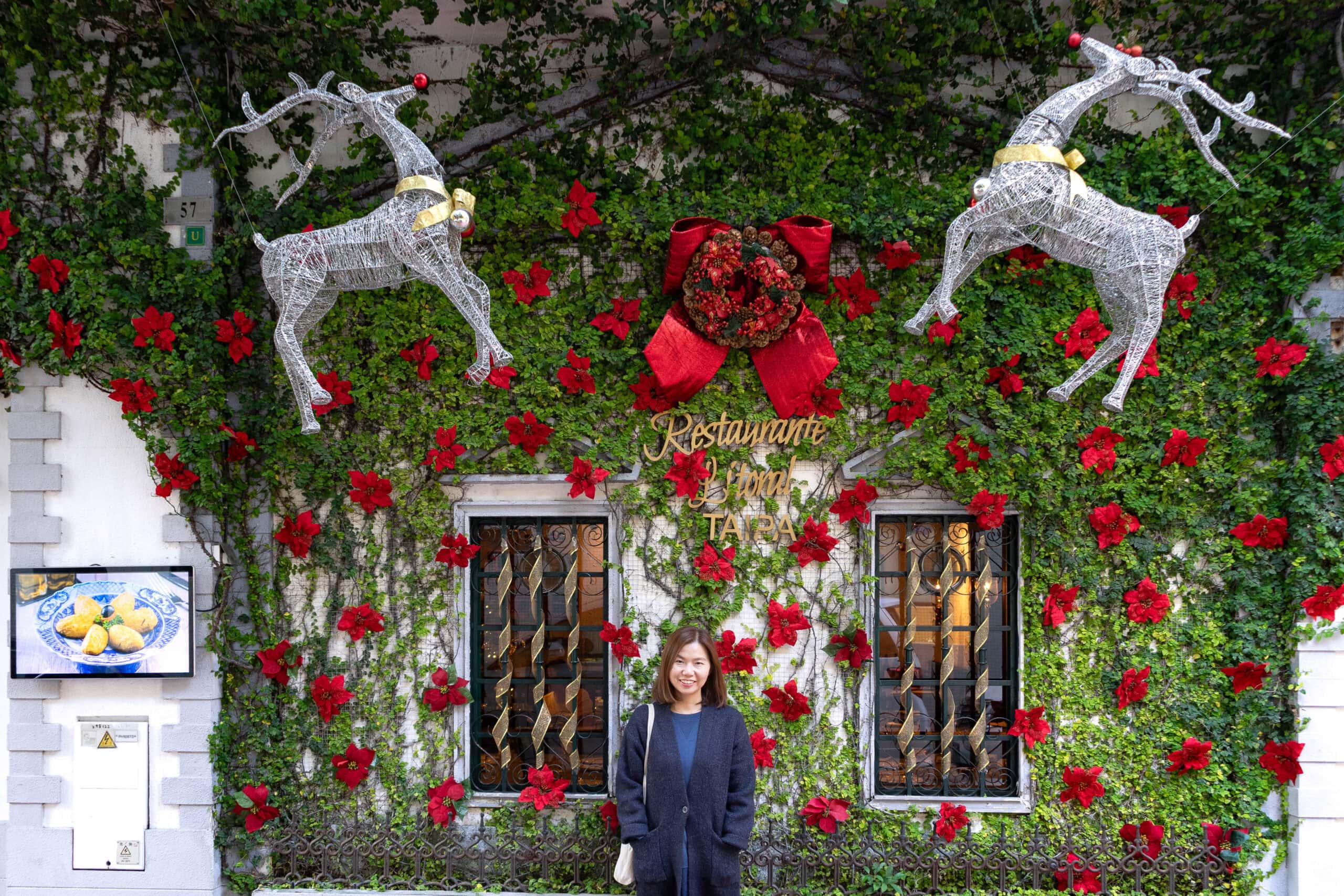
For something special, Restaurante Litoral is a Taipa institution, serving fantastic Macanese cuisine with an extensive wine list from Portugal. Go for the African chicken, duck rice, or seafood rice for a true taste of Macau. It’s on the pricey side, but well worth it. Reservations essential.
For more on what and where to eat, check out our Food Lover’s Guide to Macau.
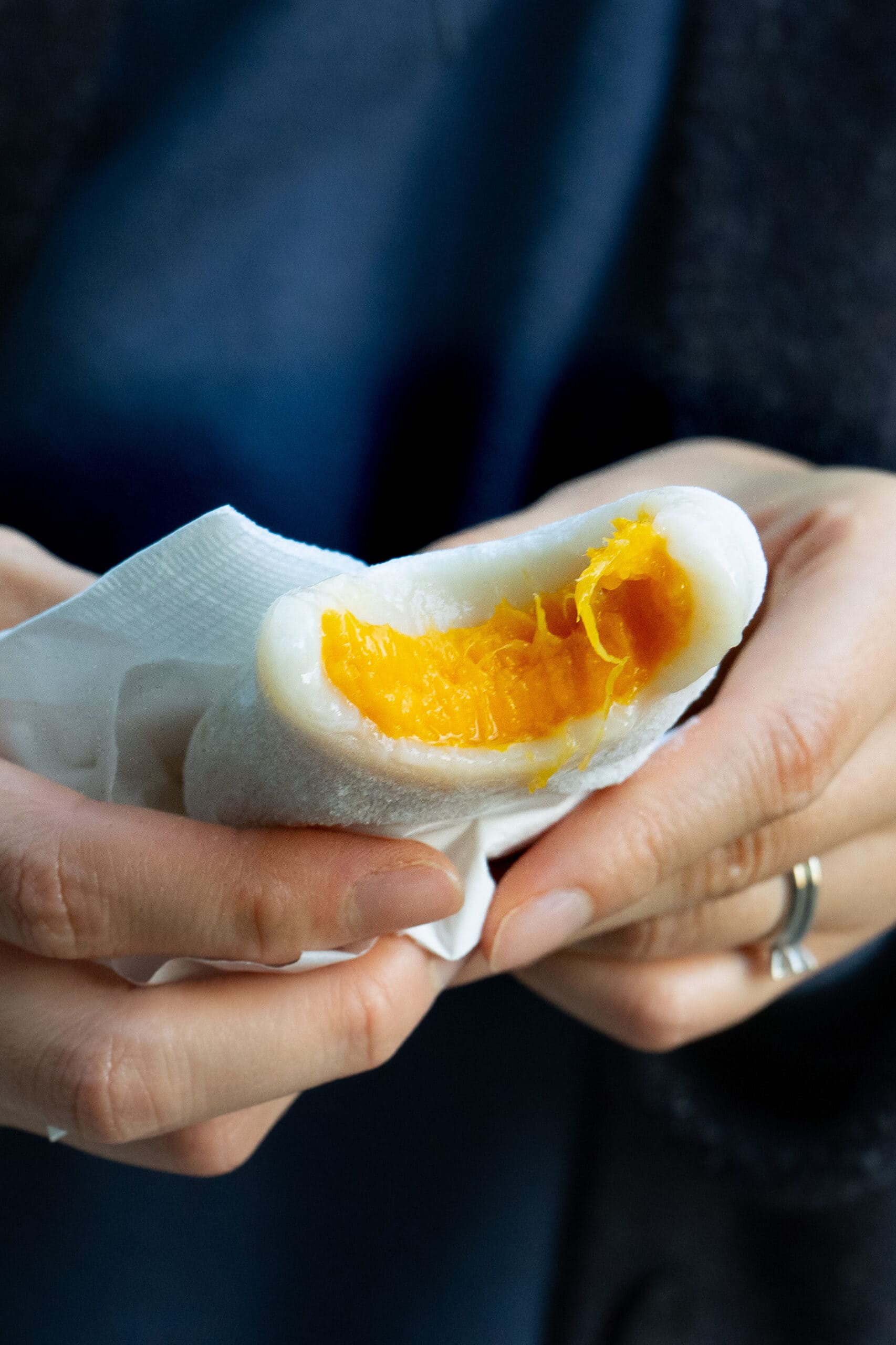
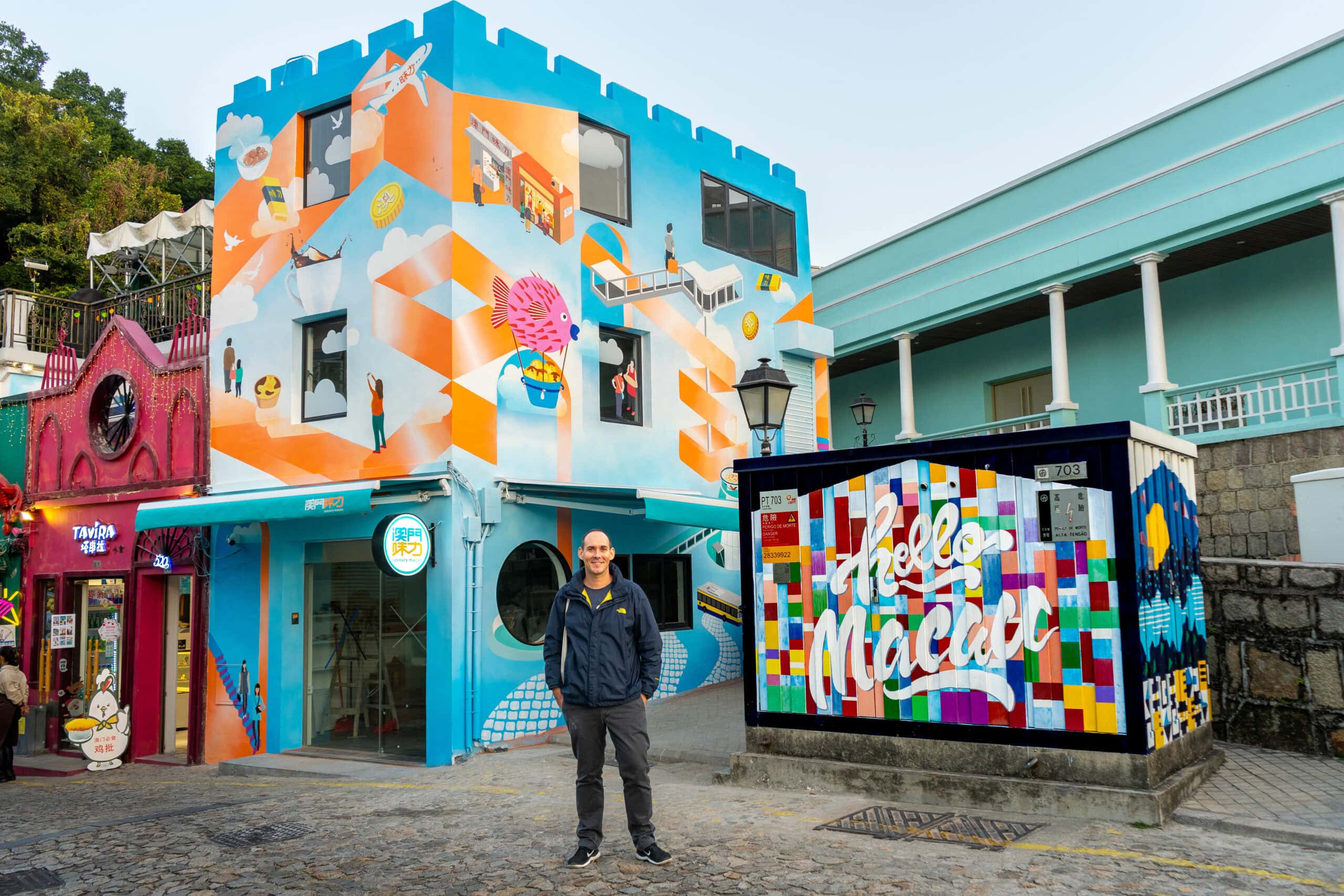
Between snacks, wander through Taipa’s side streets where old temples billow with incense and murals splash colour across peeling walls.
For the most photogenic corner, head to Calcada do Quartel, where street art, tiled pavements, and vintage shopfronts come together in a frame that captures the soul of old Taipa.
The House of Dancing Water:
Macau’s Must-See Show
If you’re going to splurge on one thing in Macau, skip the roulette table and buy a ticket to The House of Dancing Water. This show is an absolute spectacle.
Think acrobats diving off towering ships into a stage that transforms into a pool, ballerinas gliding between fountains, and stunts that make you sit on the edge of your seat. And, yes, there is actual water. If you’re sitting in the first few rows, you’ll get a poncho with your ticket.
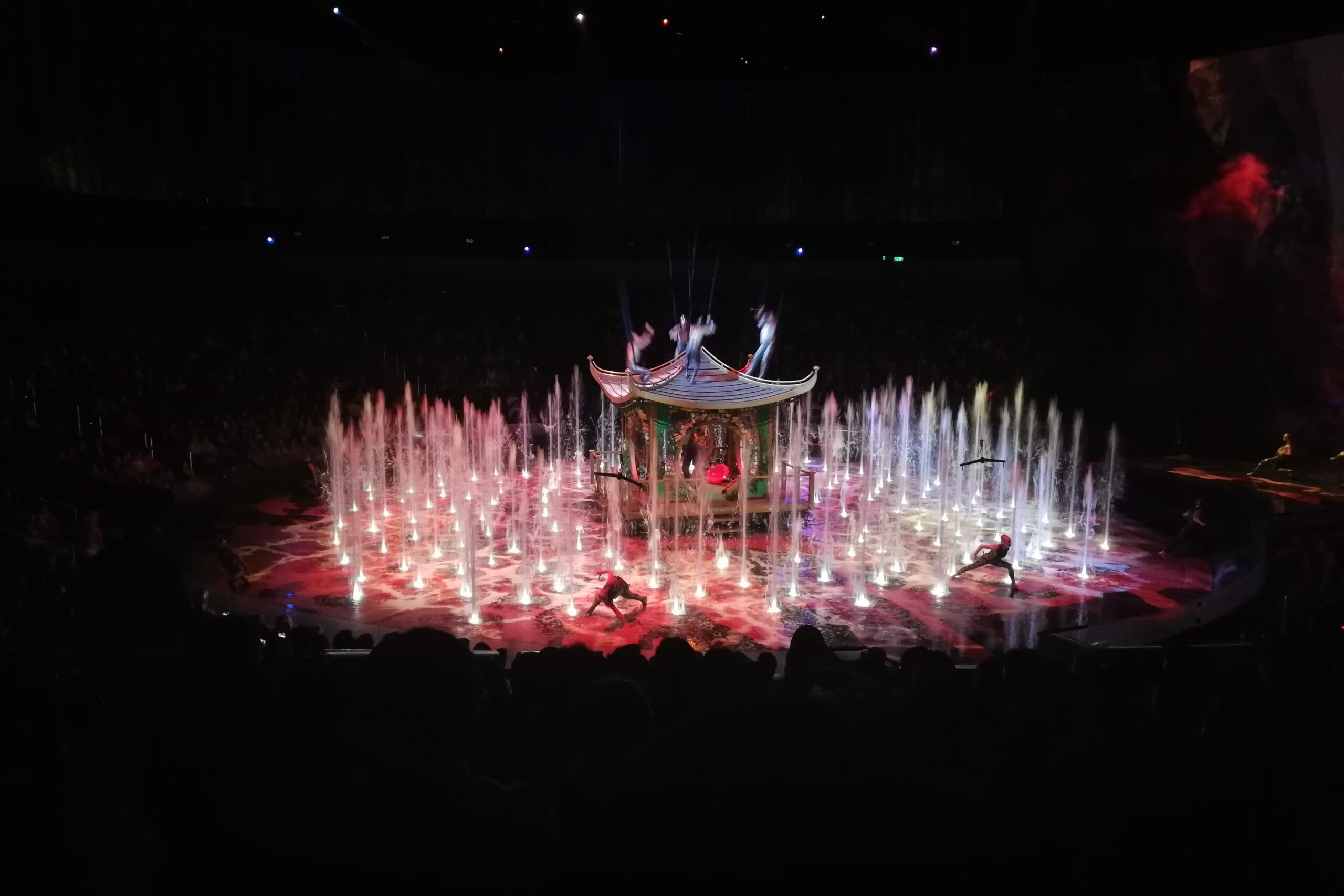
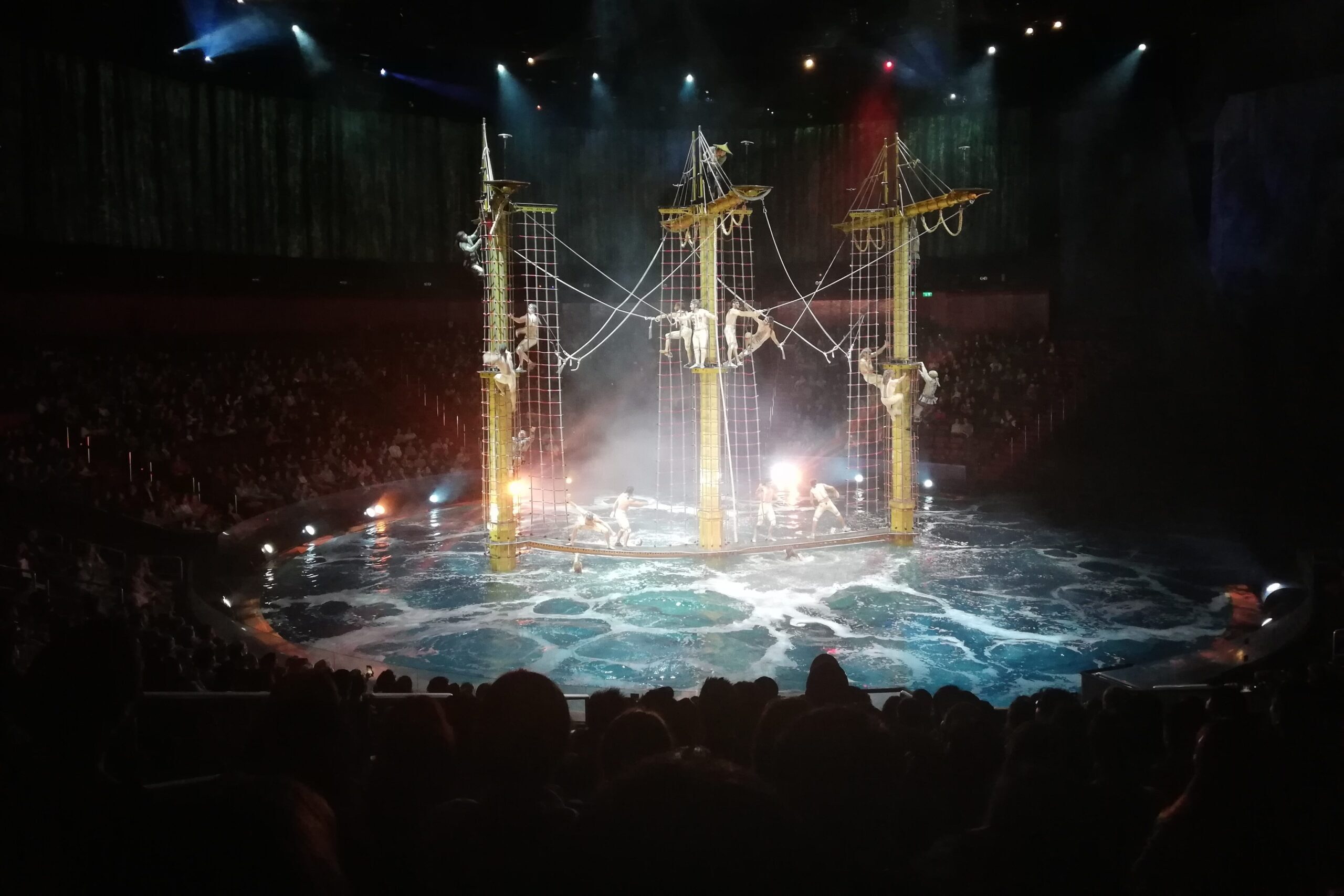
Without spoiling too much, the motorbike scene alone is worth the price of admission. It’s the kind of sequence that makes you want to stand up and holler and cheer.
Over 90 minutes, the performance fuses theatre, acrobatics, dance, and sheer engineering wizardry into an unforgettable experience. The air conditioning and plush seats don’t hurt either, especially after a day of walking through the city’s humidity.
At around $75, it’s not cheap, but it’s worth every pataca. Performances are at 14:00, 17:00, and 20:00 at City of Dreams in Cotai. We recommend the 17:00 show, which gives you time to grab dinner afterwards and take in Macau’s glittering casinos by night.
Buy your House of Dancing Water tickets here.
Night on the Cotai Strip:
Where Macau Goes All In
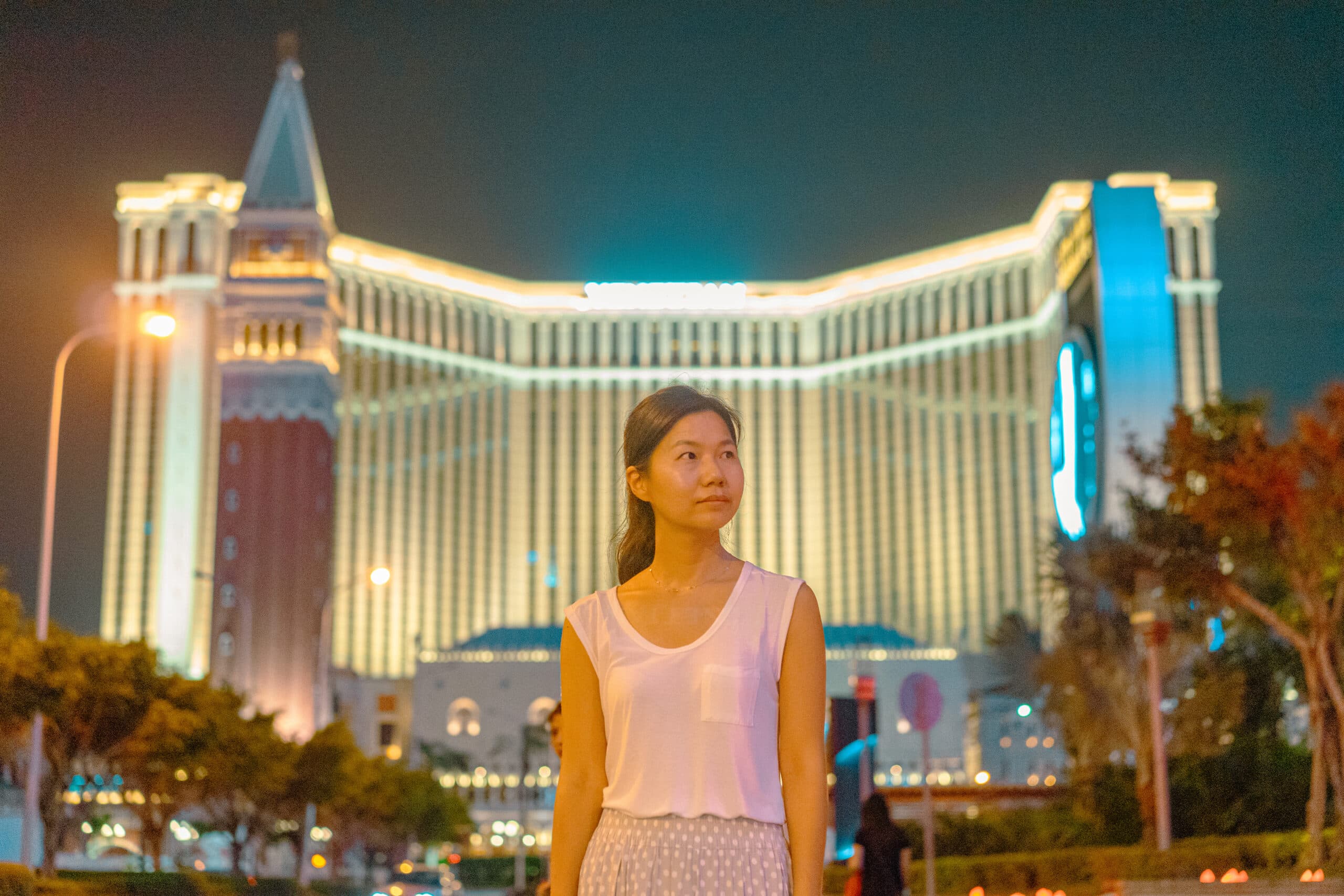
Welcome to the Cotai Strip, Macau’s glitziest stretch and the beating heart of its casino empire. This is where the city’s love affair with excess truly shines.
Each resort is its own little universe — London, Paris, Venice — all within a few square kilometres. Even if you’re not here to gamble, wandering through these themed palaces feels like a win in itself. For us, the most beautiful casinos on the strip are the Venetian, Londoner, and the Parisian, while the MGM and Wynn are classy without the foreign themes.
Cotai is peak Macau: over the top and utterly fascinating. Even more so at night.
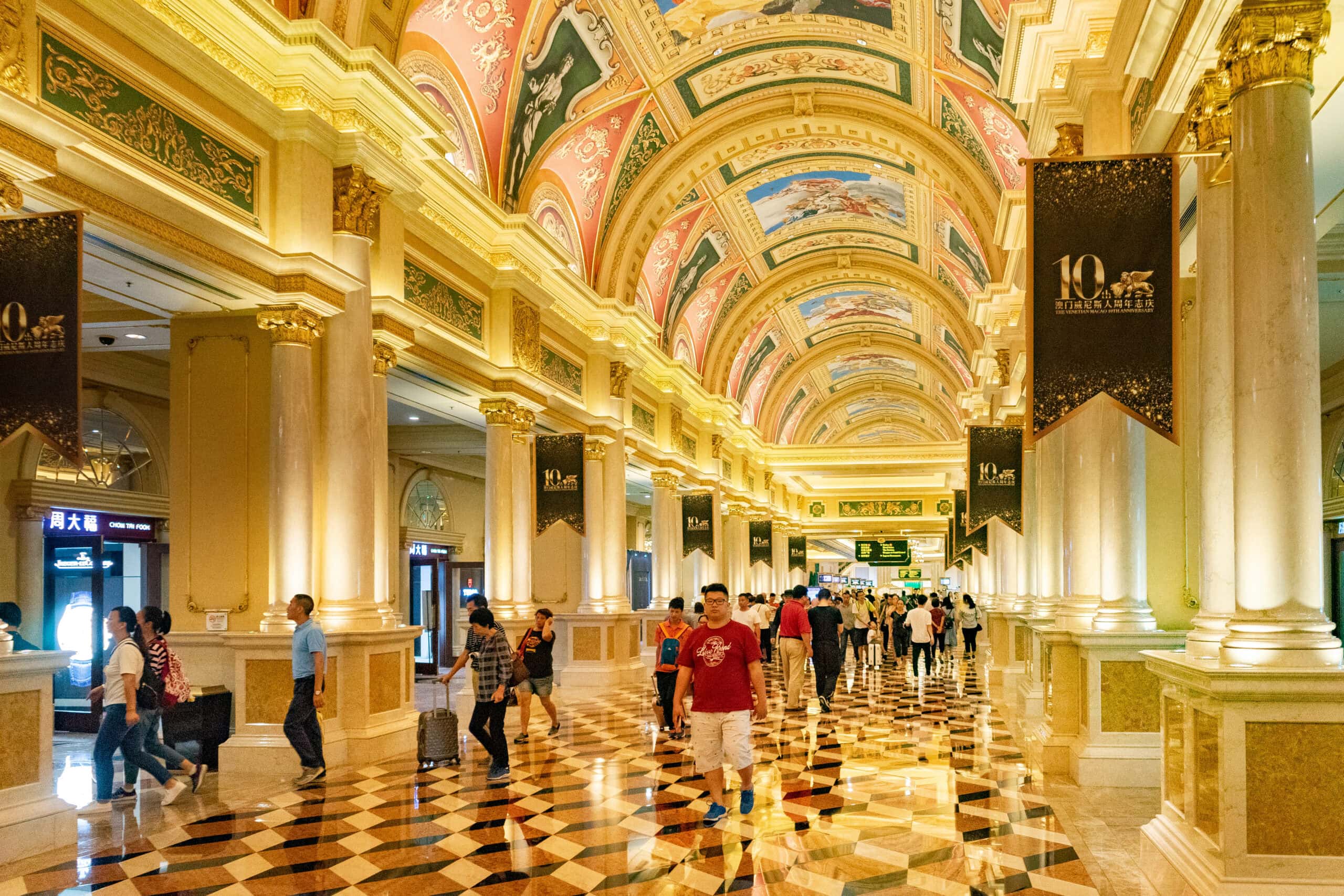
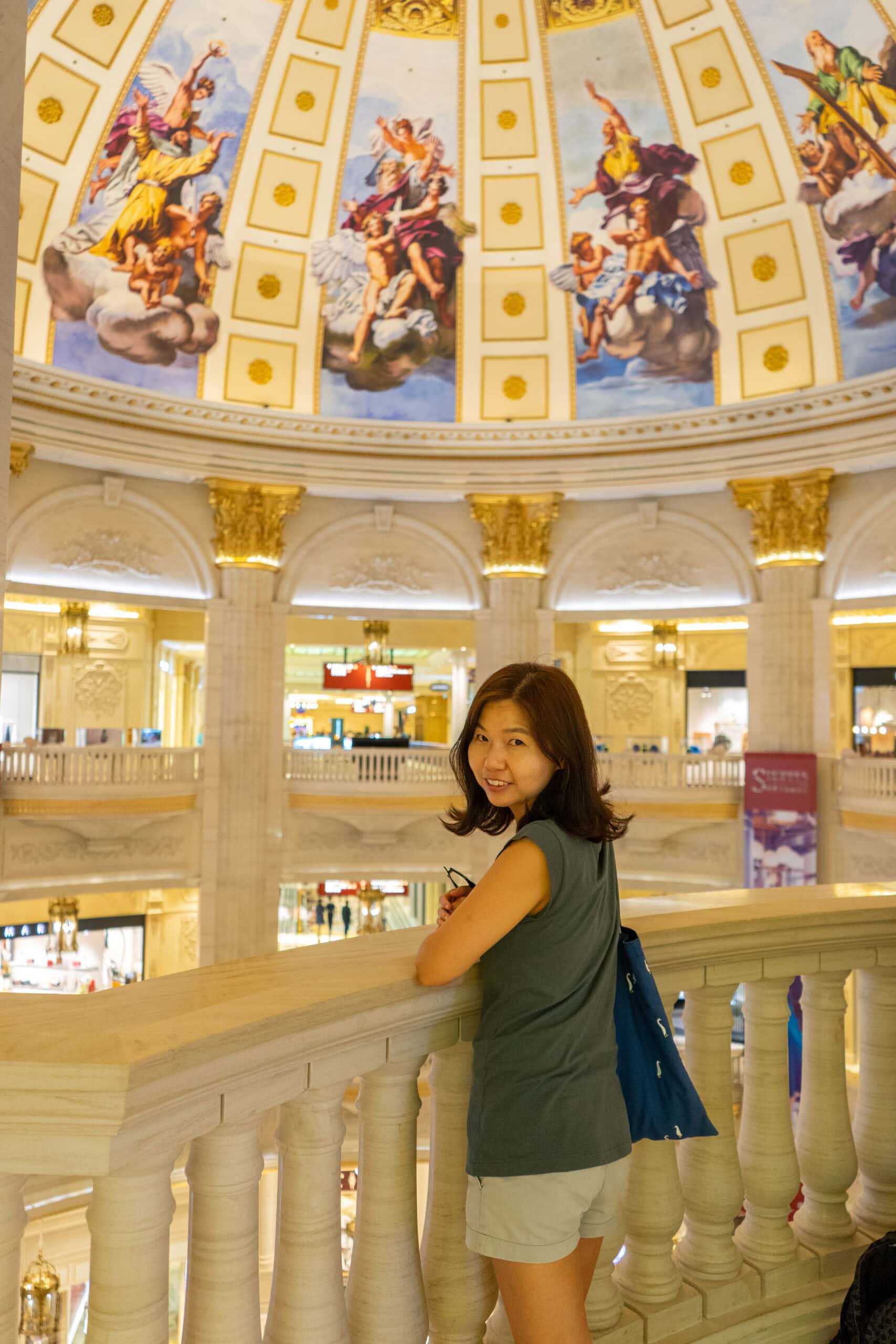
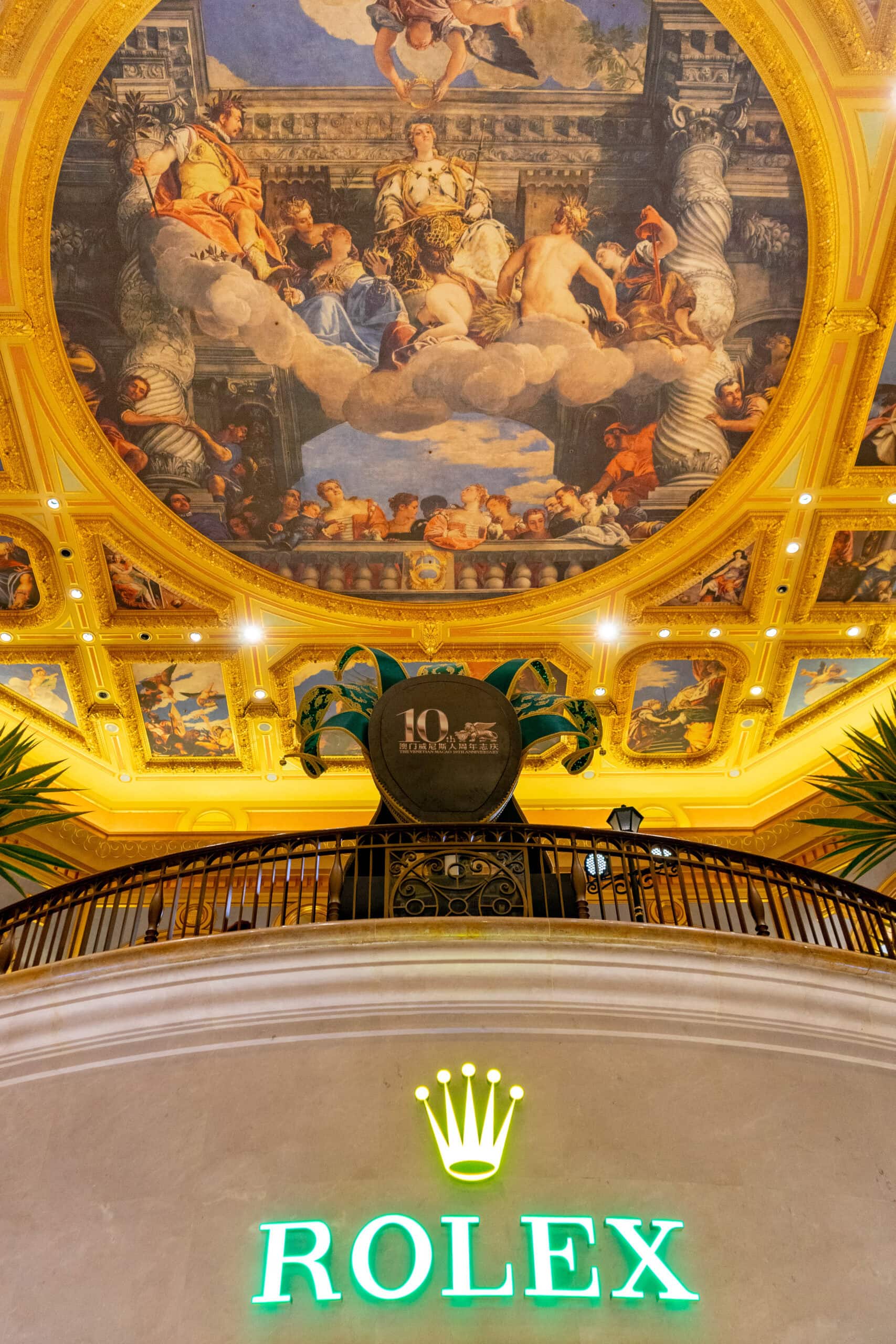
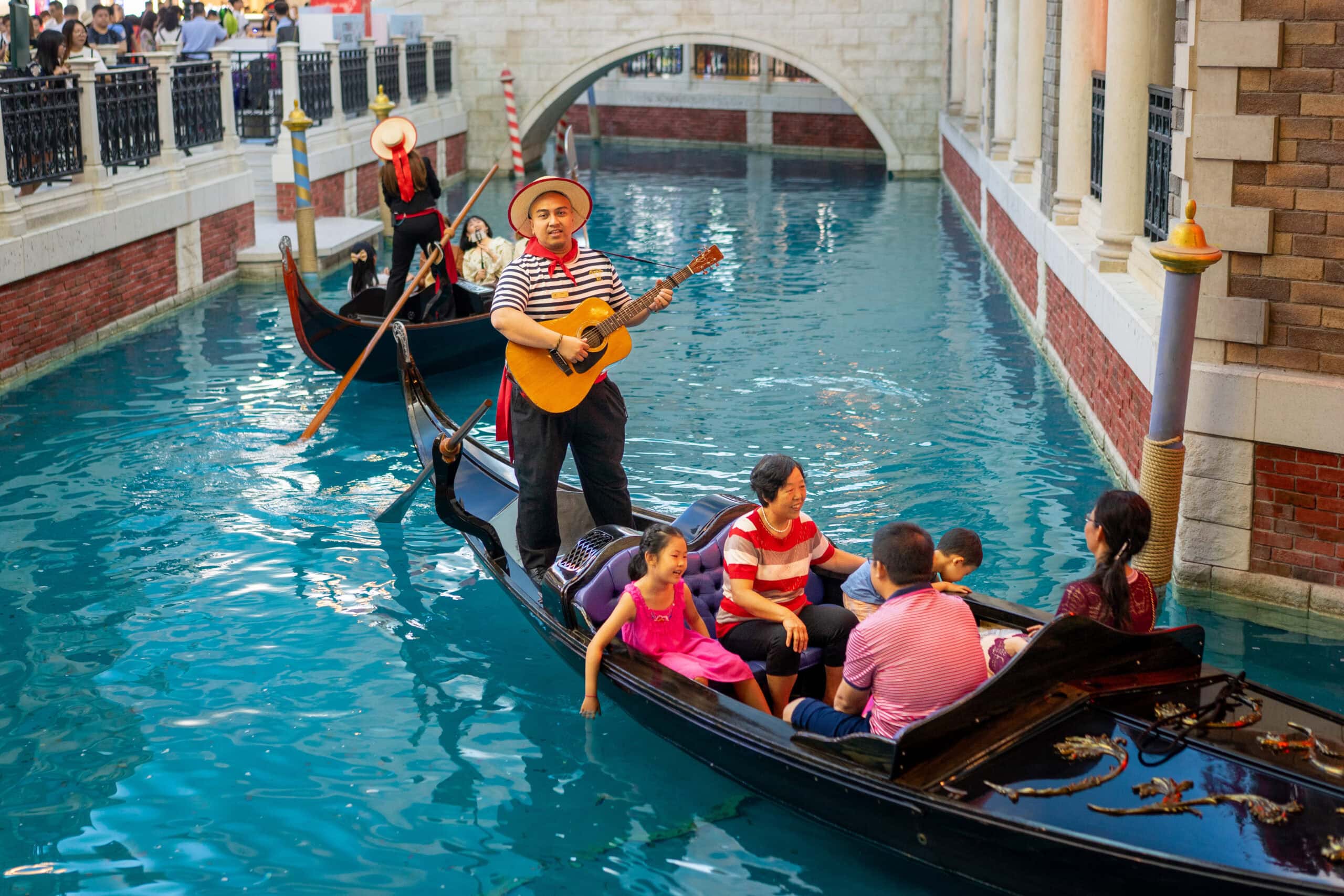
The Venetian is pure grandeur with its canals, gondolas, and cloud-painted ceilings. Across the road, the Parisian’s half-scale Eiffel Tower sparkles at night like a beacon of decadence, while The Londoner serves up double-decker buses, afternoon tea, and the occasional performance from a David Beckham hologram. Yes, really.
Inside, you’ll find locals, high rollers, and mainlanders dressed head to toe in Gucci, stacking chips worth your year’s salary like it’s pocket change. It’s people-watching at its finest. If all that wealth leaves you hungry, casino buffets are the way to go. From endless sushi, roast duck, and dim sum to dessert tables that could feed a small army. They’re surprisingly good value and a fitting finale to your day.
Wynn Palace Fountain Show & Sky Cab Ride
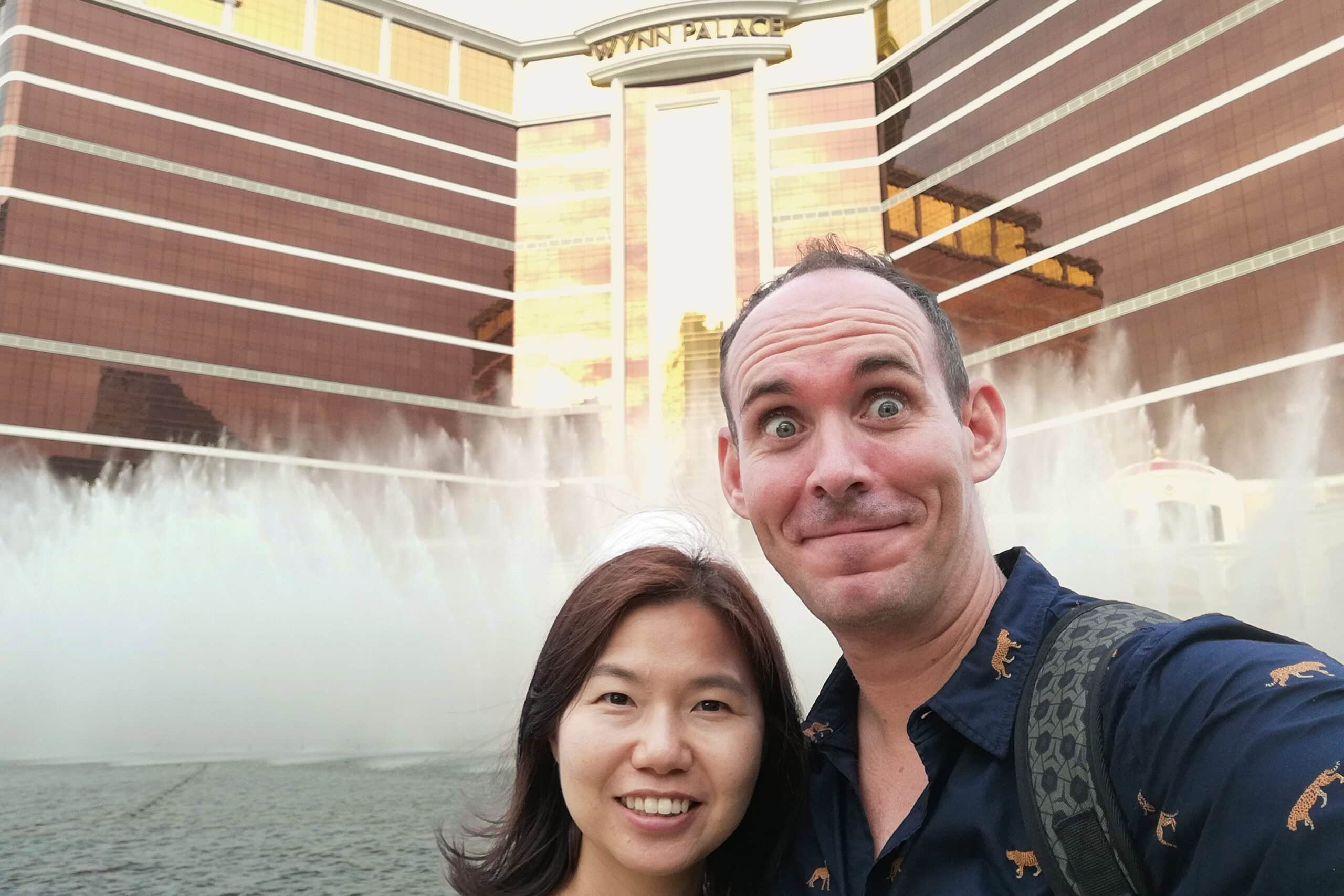
For us, any day in Macau ends at Wynn Palace, the glitziest kind of grand finale. Every 20 minutes, the Performance Lake erupts into a choreographed fountain show set to classical music and pop anthems. Water shoots up to 40 metres, twisting and dancing in perfect sync with lights and sound. It’s especially beautiful at night.
You’re so close to the fountain that you feel the cool mist on your face, which is pure bliss in the summer heat. We’ve seen the fountain show in Dubai, and honestly, Wynn’s is so much better. You’re right up at the water’s edge, not watching from across a giant pool. Dubai has nothing on Macau.
When the music fades, head to one of Macau’s best free experiences, the Wynn Palace Sky Cab. These air-conditioned cable cars glide in a loop above the fountains, giving you a sweeping view over Cotai’s neon skyline before dropping you at Wynn Palace. From up here, the MGM Cotai looks like a tower of stacked gold cubes, and you’ll see the Parisian’s Eiffel Tower glowing in the distance.
Inside Wynn Palace, the theme is pure floral fantasy, with giant revolving displays, chandeliers dripping with colour, and entire sculptures, all made of fresh blooms. And not a single wilted petal or out of place. Take a slow wander before catching the free Wynn shuttle bus to the ferry terminal.
And that’s how your one-day Macau adventure comes to a perfect close.
How I Shot This Guide
Every photograph in this article was taken with the exact same gear I carry on every journey. It is a setup refined over years on the road to keep travel light without compromising the final image.
- Camera: Sony A7 V
- Lens: Sigma 24-70mm f/2.8 DG DN Art
- Storage: SanDisk Extreme Portable SSD
- Software: Adobe Lightroom Classic
- Outerwear: The North Face Canyonlands Hybrid Jacket
Also read:
One day in Hong Kong
Best places to visit in China
Authentic Beijing experiences
Nice guide — clear and practical. Quick question: for a one-day trip from Hong Kong, would you recommend starting in Taipa as you suggest even if I’m arriving at the Outer Harbour terminal, or is it better to adapt the route depending on ferry arrival? Also, any tips for saving time at the border during peak hours?
Hi Soren,
Outer Harbour or Taipa are both fine. Taipa is a little closer to Coloane if you’re heading that way.
The borders at the ferry terminals are not nearly as busy as the Zhuhai mainland border crossing at Gongbei. Not much you can do beside lining up and waiting your turn.