
I always fancied the idea of having a small wine collection at home. A shelf of bottles, each tied to a place or a night or a story. The problem is, I never managed to let them sit. Wine in our house is opened, poured, and gone.
Tea turned out differently. After moving to China, I realised tea isn’t just a drink here, it’s a whole way of life. We eased into it without much thought. It started very innocently when we bought a few grams of pu-erh tea at a tea market in Lijiang. Back home in Guangdong, we discovered black tea during weekend dim sum.
One thing followed another. Jin ordered a tea set on Taobao. Then a tea pet. Then tins of leaves started arriving at our door faster than we could brew them. Somewhere along the way, we became amateur collectors, or at least the kind of people with more tea than cupboard space.
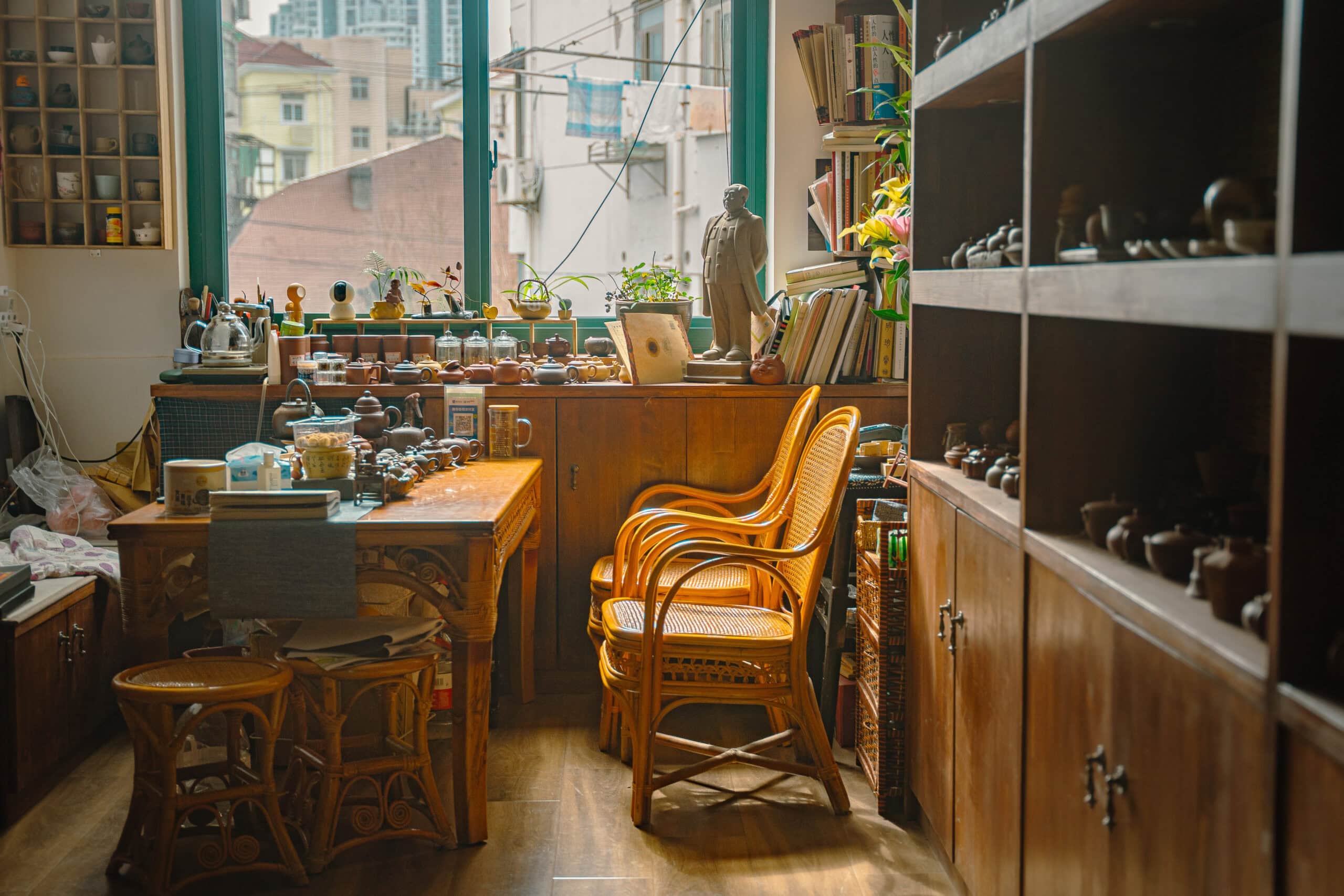
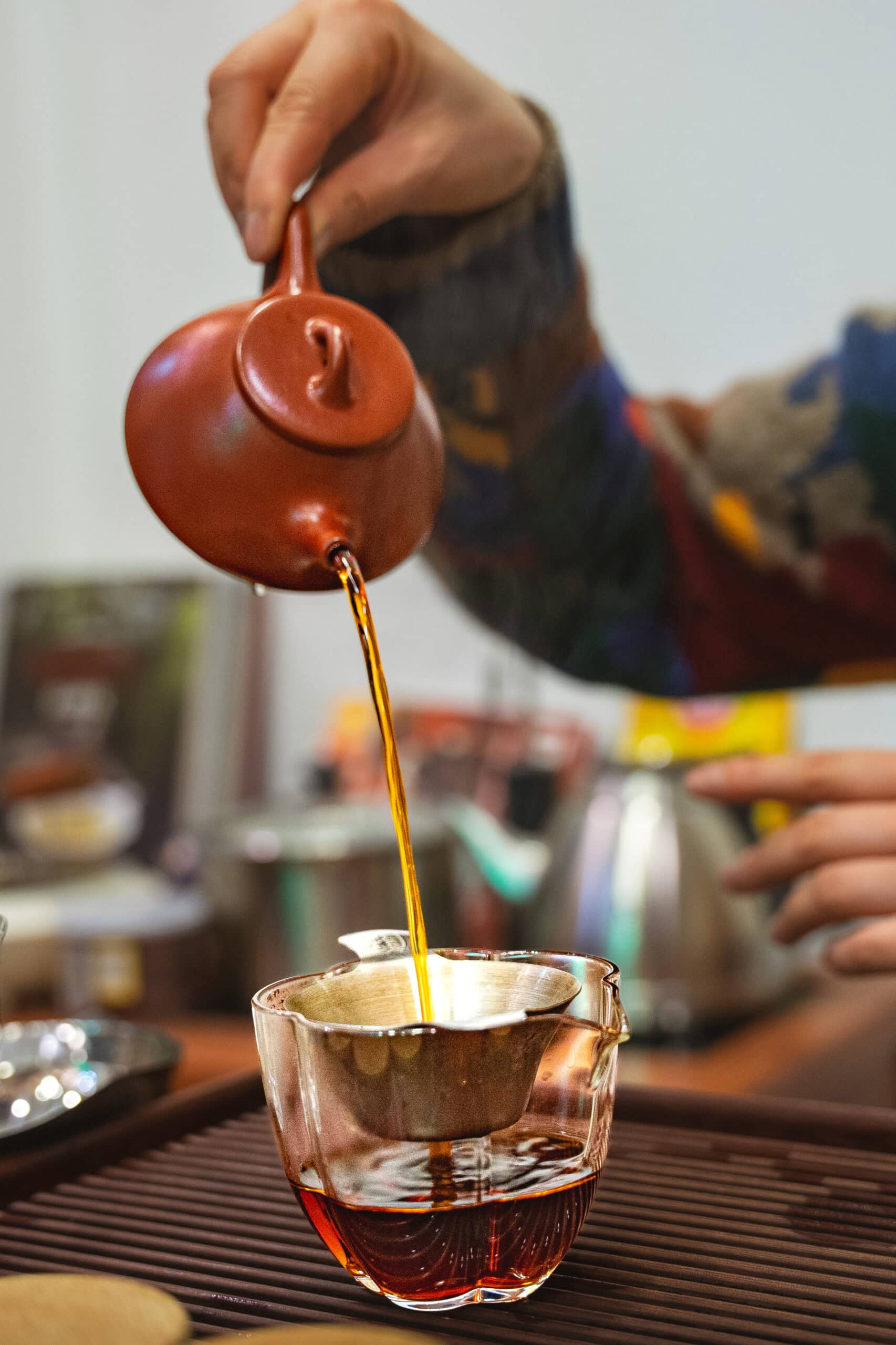
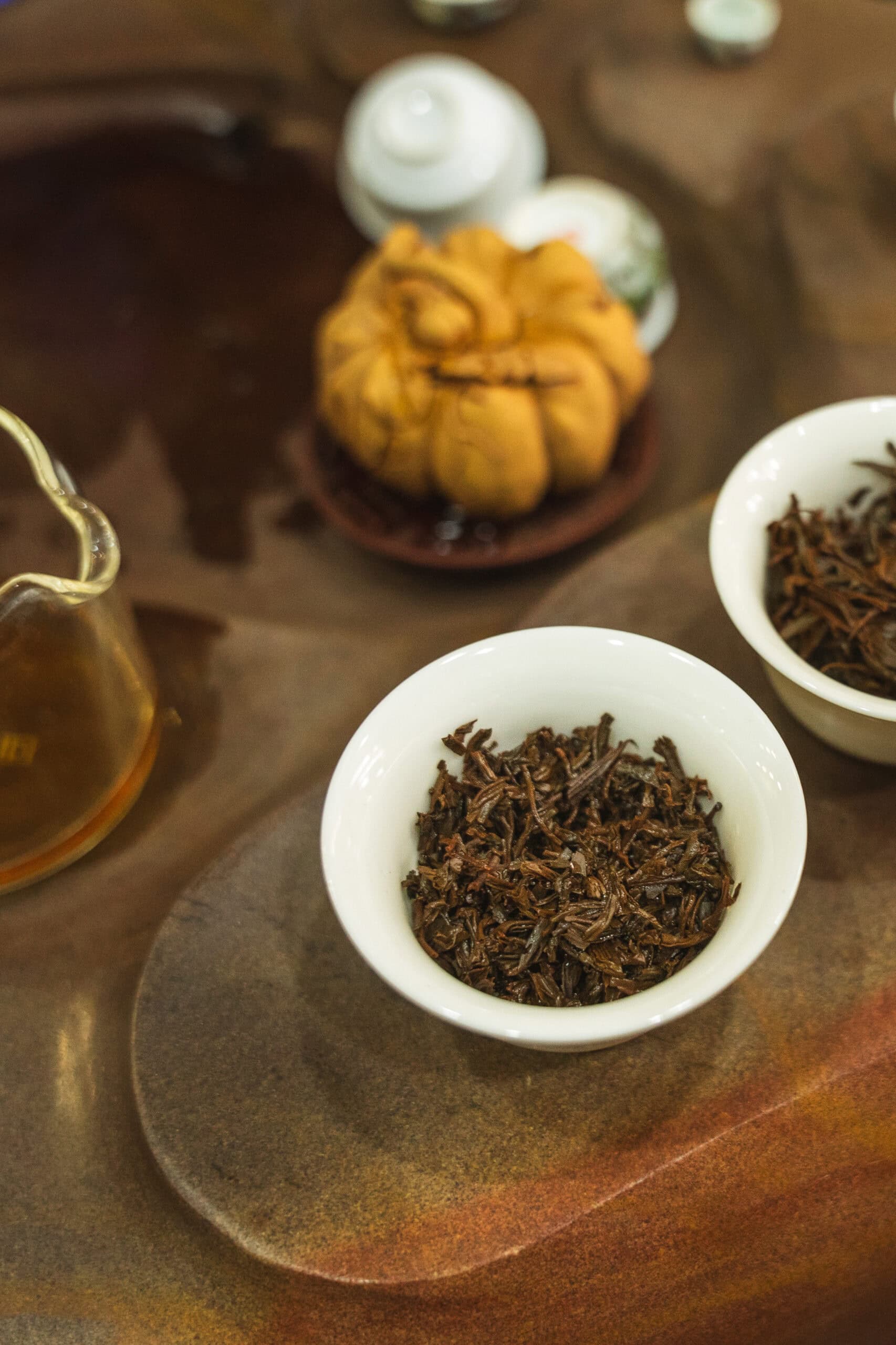
Soon, our travels revolved around it, too. Hangzhou for longjing. Wuyishan for oolong. Chengdu for maofeng. And eventually, on a wet morning, we made our way to Tianshan Tea City in Shanghai in search of something smooth for slow afternoons. What we found was a maze of tiny shops, open gaiwans (those lidded Chinese cups), swirling steam, and shopkeepers ready to pour cup after cup.
This is what we saw, tasted, and learned inside Shanghai’s most famous tea market.
Please note: This post may contain affiliate links. This means I may earn a commission if you make a purchase by clicking a link (at no extra cost to you). As an Amazon Associate, I earn from qualifying purchases. Learn more.
Why We Went Tea Shopping in Shanghai

It was one of those cold, wet Shanghai mornings where the sky never wakes up. We wanted shelter, warmth, and something to sip, and figured there are few better rainy day things to do in Shanghai than drinking tea. So we headed for Tianshan Tea City (天山茶城 ) with a mission: find a new oolong for our growing stash and try white tea for the first time.
By this point, tea had already become part of our routine and a minor obsession. In China, tea is never just tea. There are hundreds of varieties, each with its own character. Some even age like wine.
One of Jin’s best Taobao buys is a pair of 15 and 20-year-old pu-erh bricks that we still haven’t opened. They sit, still sealed in their tins, waiting for the perfect afternoon, untouched and full of promise.
On this day, though, we wanted something lighter. Tianshan Tea City seemed like the right place to hunt for it.
What Is Tianshan Tea City?
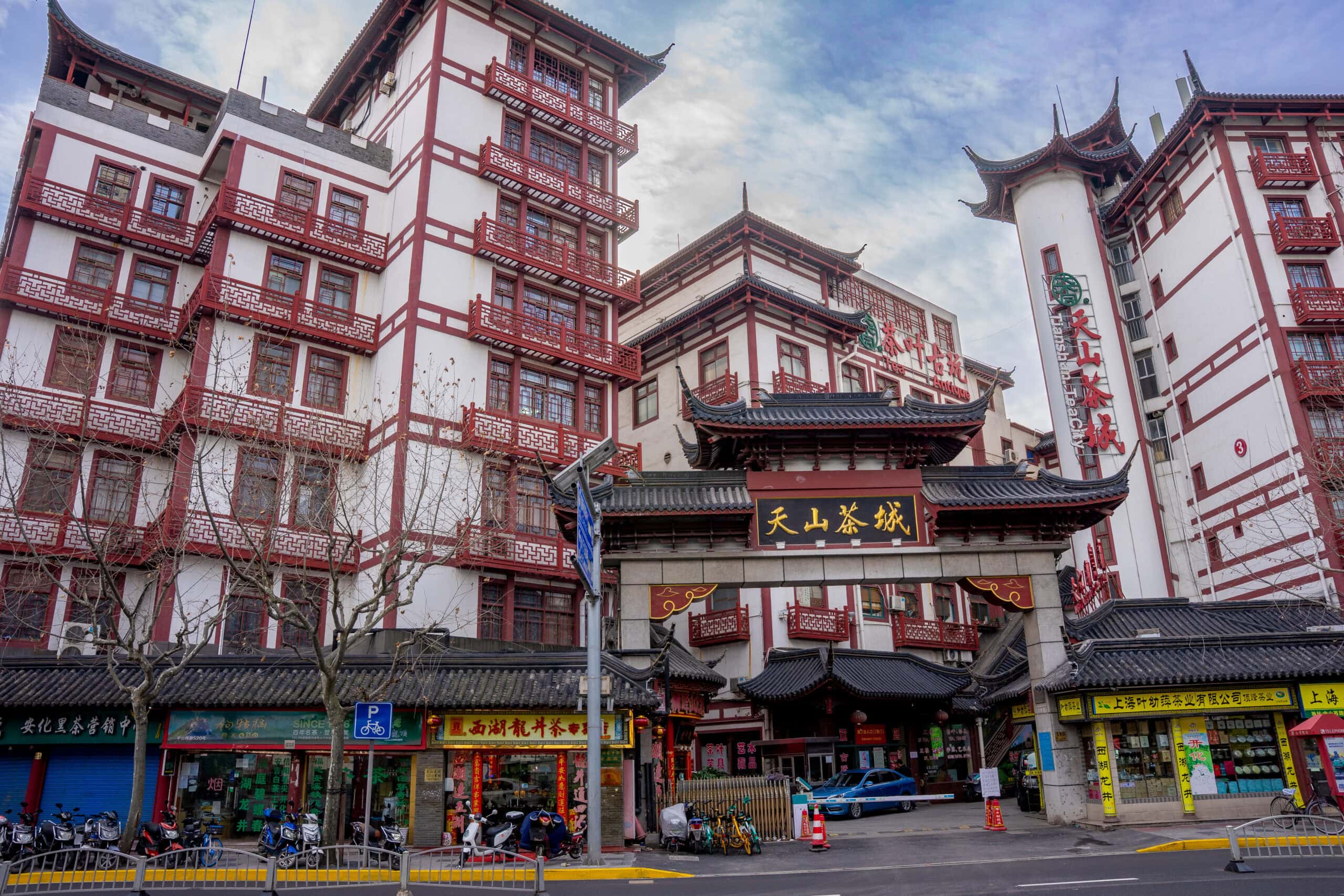
Tianshan Tea City in Shanghai is indeed like a little city in its own right. Inside, you’ll find over 150 tea shops stacked over several floors. Each shop smells slightly different: some warm and musty, some sweet with jasmine, some just like paper and dust, but all of them promising something worth tasting.
The place is famous for loose-leaf tea, from everyday green, black, and jasmine to oolong and pu-erh, and the higher floors are crowded with teapots, cups, tea pets, and kitschy gifts you didn’t know you needed.
The tea market itself is organised and civil. This is not a wet market. No vendors shouting or clapping their hands to attract customers. Most owners are busy minding their own business, but the odd one might smile and invite you in. We found that those who speak some English will make an effort to get you inside (without being pushy), while those who don’t will ignore you.
The market draws everyone: locals hunting a favourite brew, collectors chasing aged pu-erh, and tourists curious enough to stray from the Bund or French Concession.
If you’re looking to buy loose-leaf Chinese tea in Shanghai, this is the place to be. Shops encourage tasting before you buy, and if you sit for a while, the vendors will pour cup after cup, answer questions, and maybe even tell a story or two.
We visited in the morning on the first day of the two-week-long Chinese New Year holiday, and about a quarter of the shops were already closed for the break. However, it was a relaxing visit, and we eventually found what we came for.
Practical Tips for Visiting Tianshan Tea City
How to Get There: The nearest subway station is Zhongshan Park Station (still about 1 km away). We took a Didi from People’s Square in downtown which took about 15 minutes and cost RMB 25.
Opening Hours: 10:00 – 21:30 daily.
How Much Time to Budget: At least 1.5 hours. We spent about 45 minutes per tasting
Is English Spoken? Some shops speak fluent English, others a bit, and some nothing at all.
Cash vs. Card: Before visiting China, set up Alipay and WeChat Pay. You should have no problem linking your debit or credit card. If not, cash is king.
Our Visit to Tianshan Tea Market
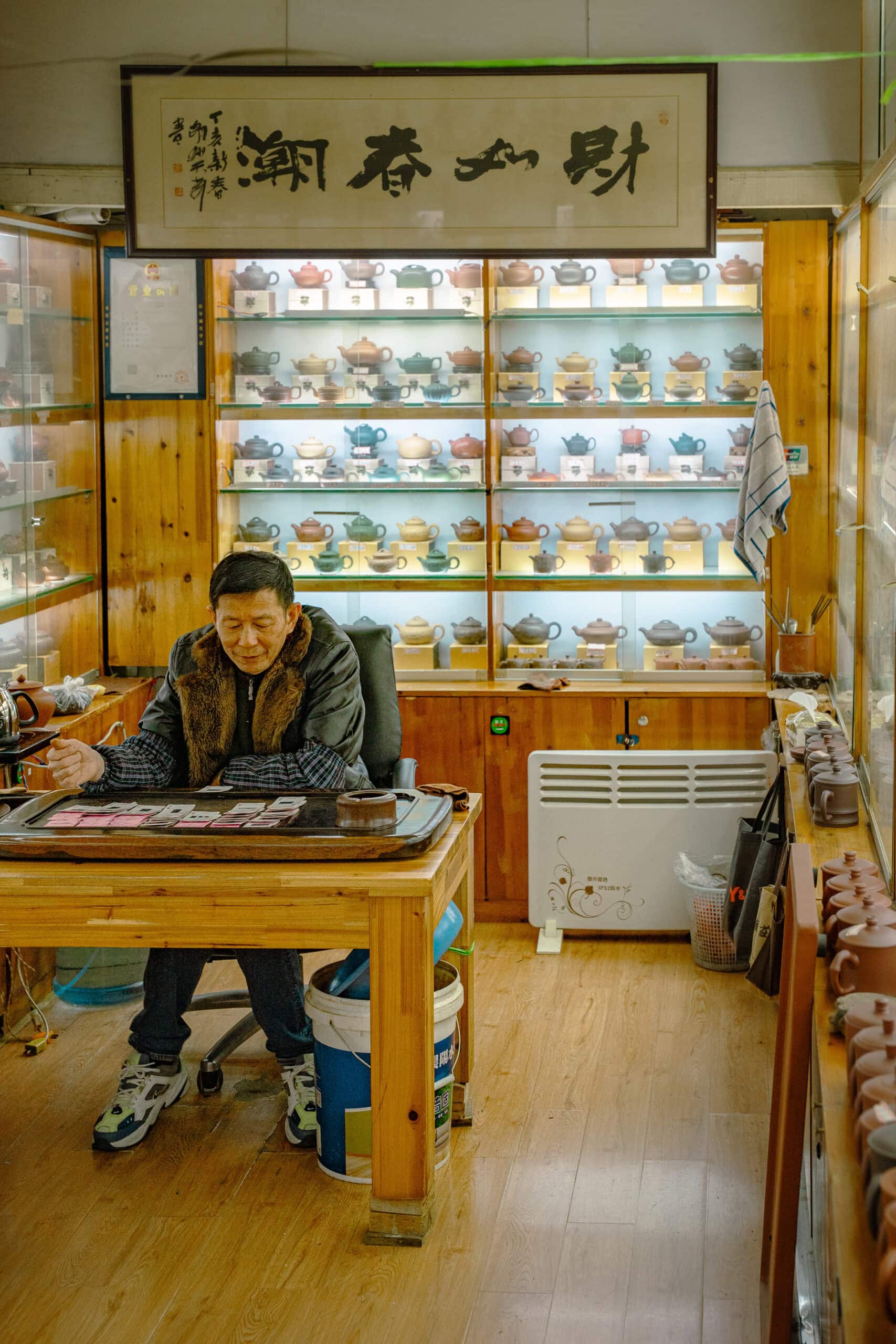
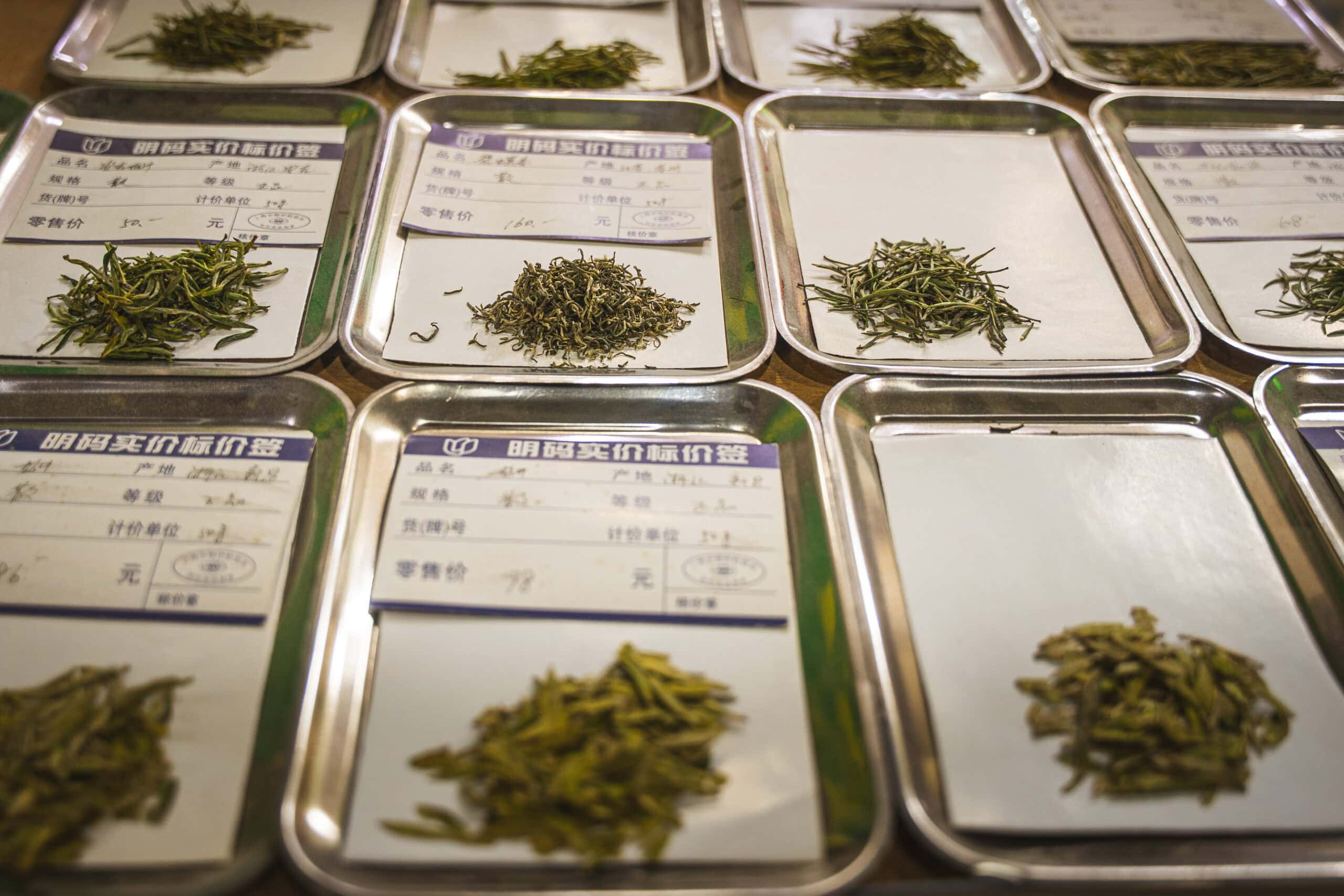
Inside, we find ourselves walking through a corridor lined with shops on both sides. Some have trays of leaves on display with Chinese signs and the odd sign in English. English usually means tourist trap, so we ignore those.
Even after years in China, we feel a little lost. There are too many choices and too much Chinese for our foreign eyes and ears. Some shopkeepers glance up and wave us over, while others barely notice we exist. We wander, scanning the stacks of tea cakes and tins, trying not to look like complete amateurs.
Eventually, Jin spots a shop with the Chinese character for oolong. A friendly lady welcomes us in, and in broken English, she confirms that, yes, she has hěn duō (a lot of) oolong.
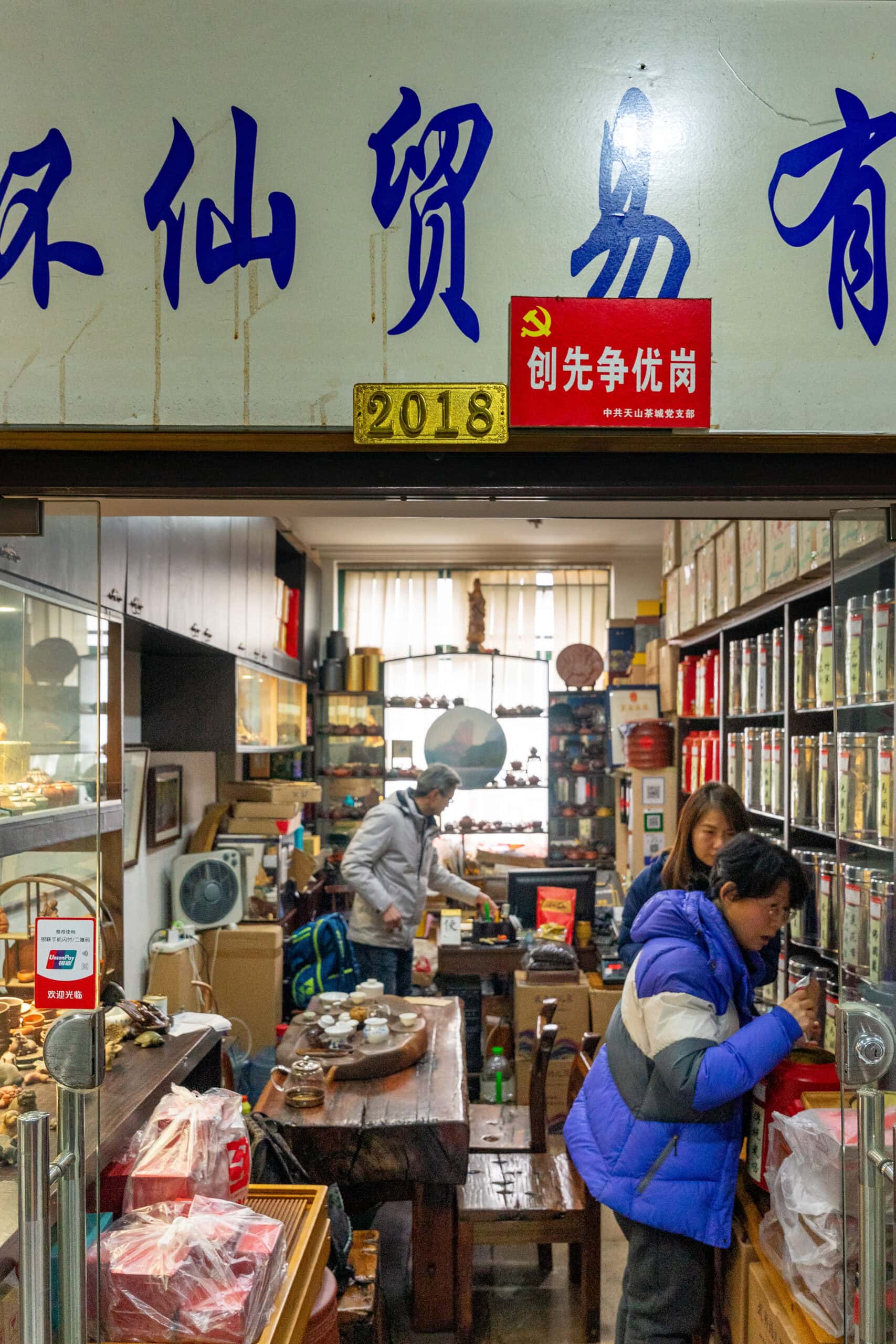
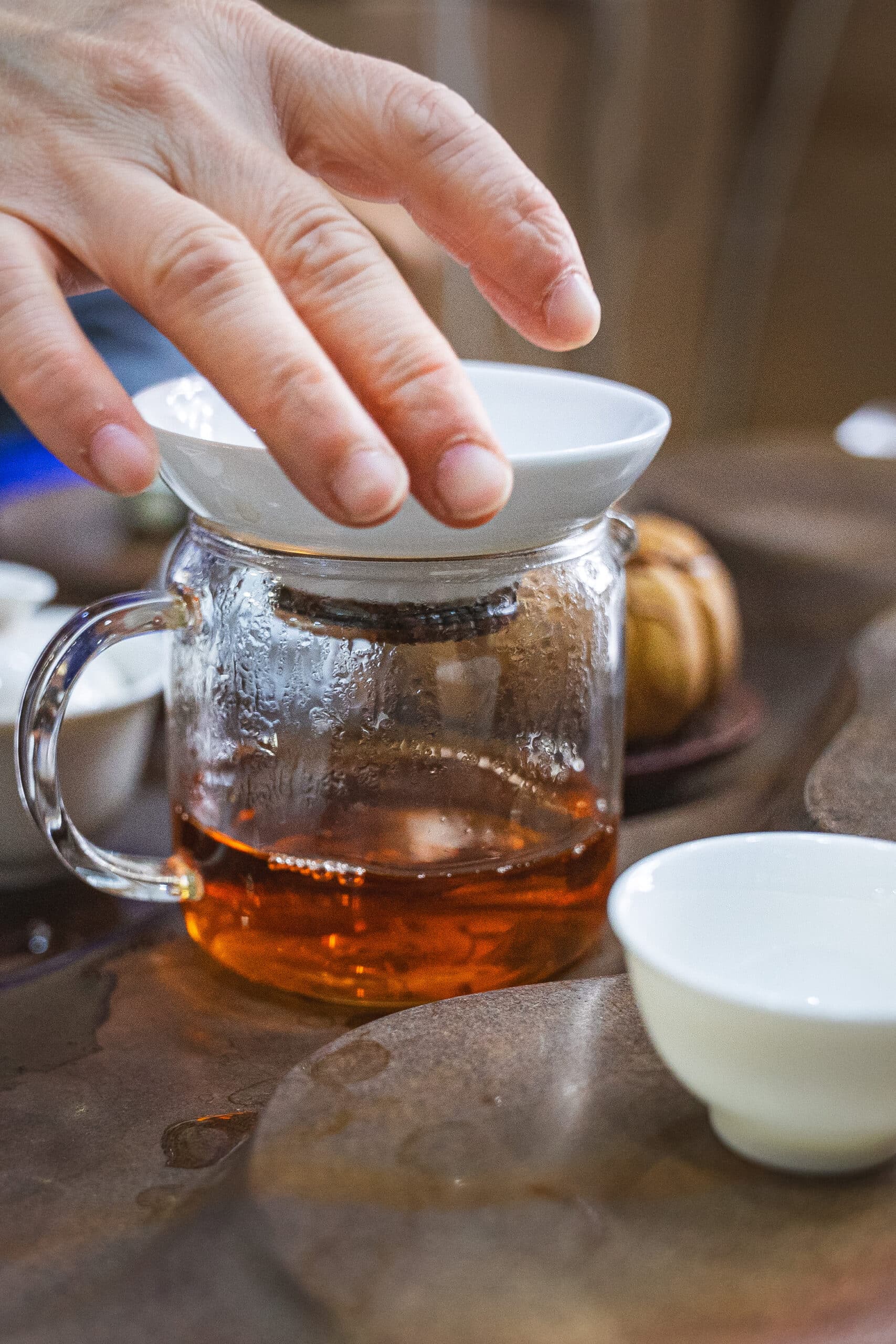
After sitting down, the confusion from outside fades, and as we begin to relax, we are excited to try some tea.
Like most other places in China, Tianshan Tea Market might feel overwhelming at first for independent travellers. But if you take the leap and stay long enough, it becomes strangely inviting.
How Tea Tasting Works at Tianshan Tea City
The Quest for Da Hong Pao Oolong
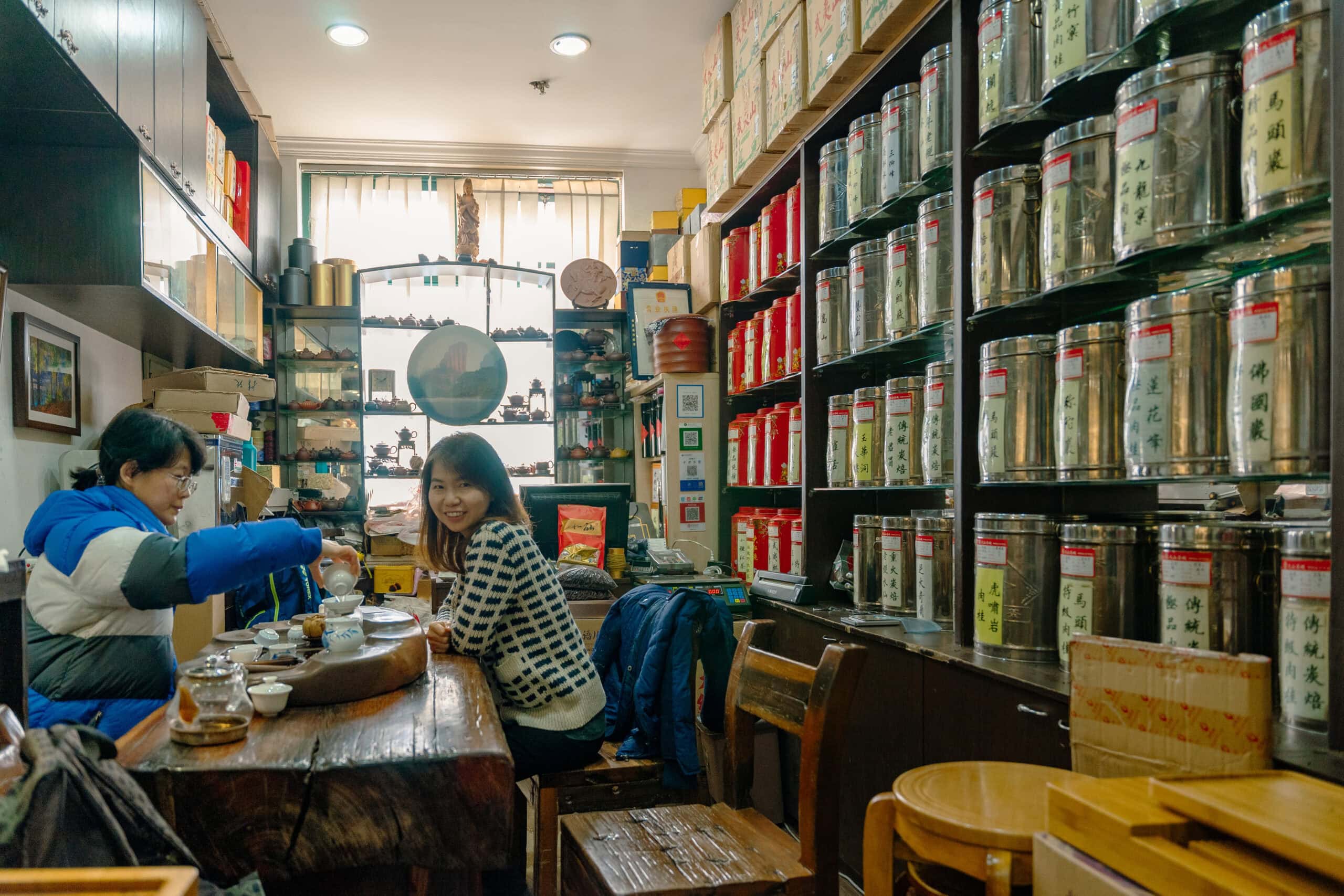
A tea market is like any other shop. You come for something, the owner has something. If you’re not sure what you want, don’t worry, they’ll let you try a few until you find your fix. Too strong, too weak, too bitter, too smoky, too floral…whatever you don’t like, they’ll move on to the next batch.
The shop owner will brew several teas for you to try and drink with you, explaining the tastes and character. You do not have to pay for the tea you’re trying. If it turns out that you don’t like any of the tea, buy at least a very small packet to compensate them for their time and effort. But I’m pretty sure if you came for tea, you’ll find something.
We came for Wuyishan Oolong, or Wuyishan Rock Tea from Fujian. Specifically, I was hunting Da Hong Pao, the King of All Teas, as they call it in China. At shop number 2018 on the second floor, Jin explained this in her clumsy Chinese. I chimed in wherever I could, and the owner, in her clumsy English, said she’ll sort us out.
She opened a tin, brewed the first tasting, and we got to work. She explained as she made the tea: First, wash the leaves. Steep the first brew for five seconds, the second pot for ten, adding five seconds for each subsequent pot up to a maximum of 10 steepings. Small cups, small sips, repeat until you find something you like.
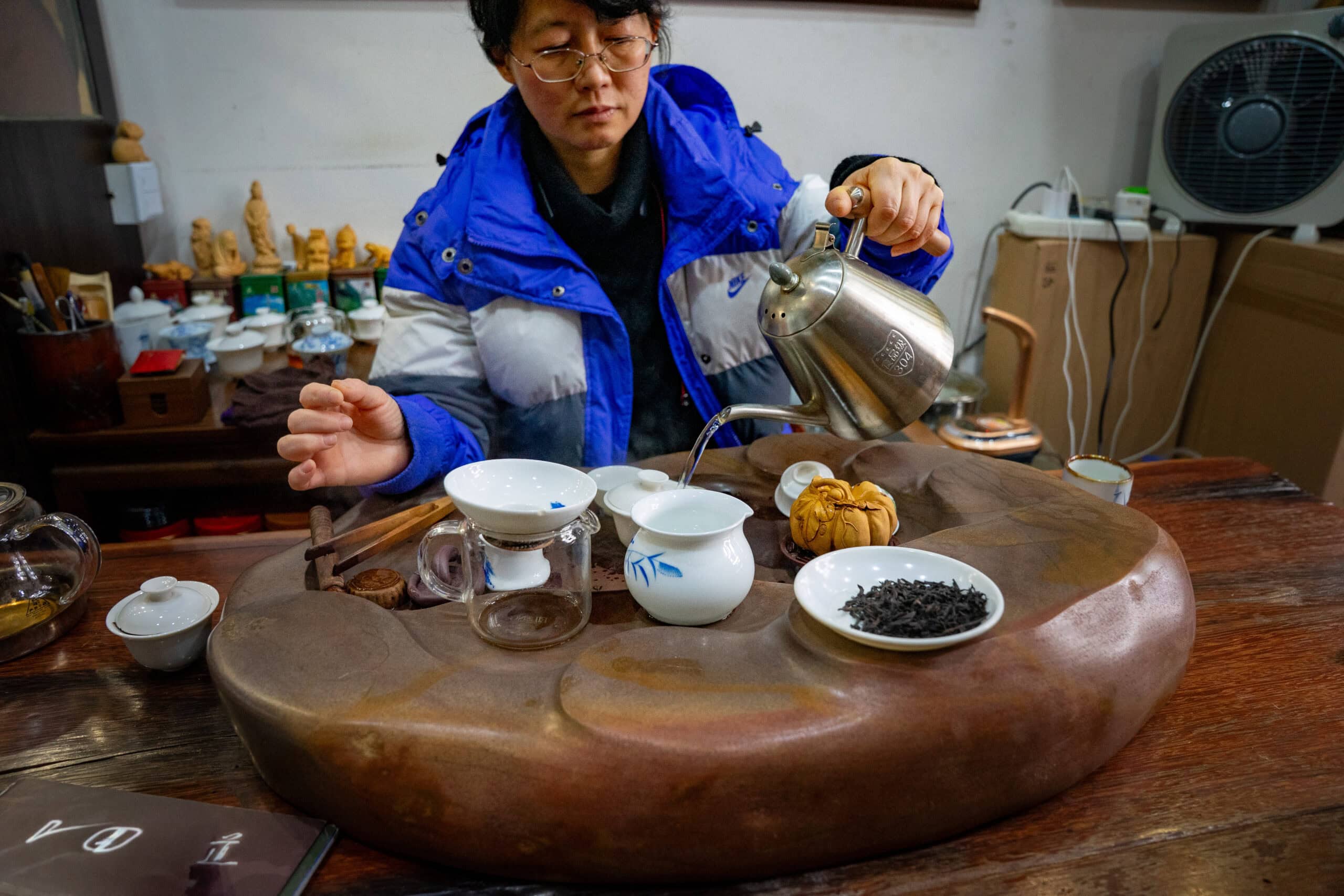
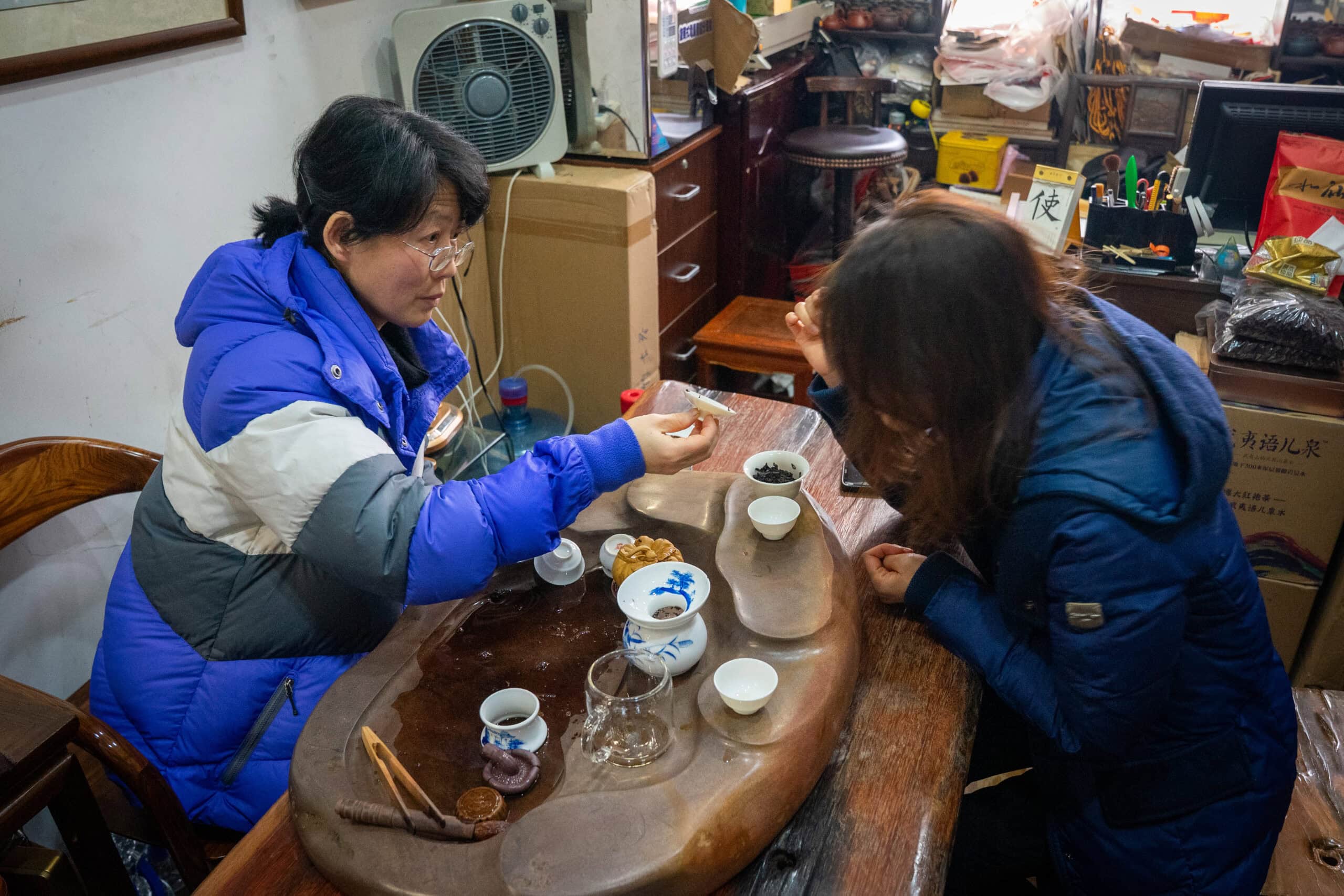
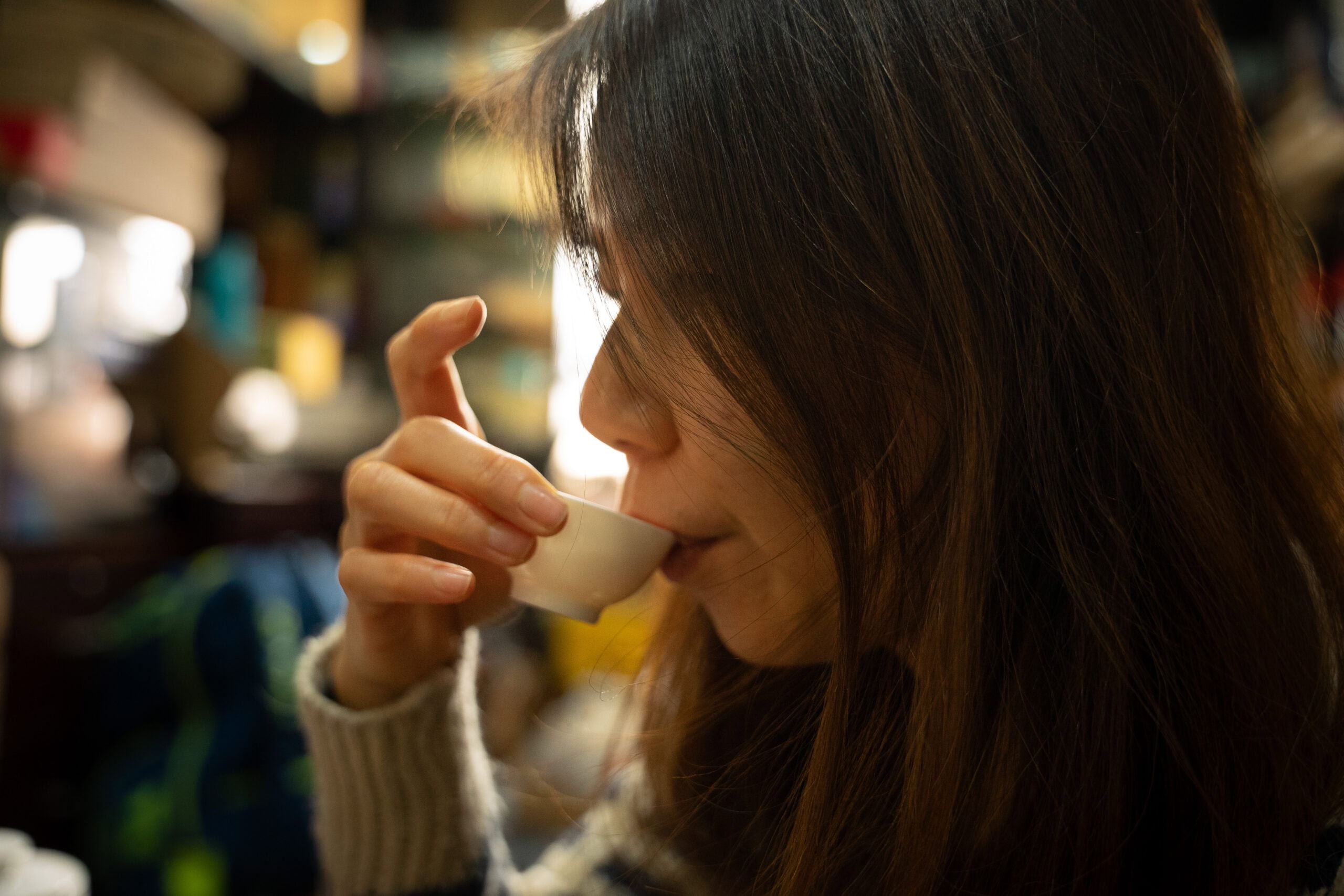
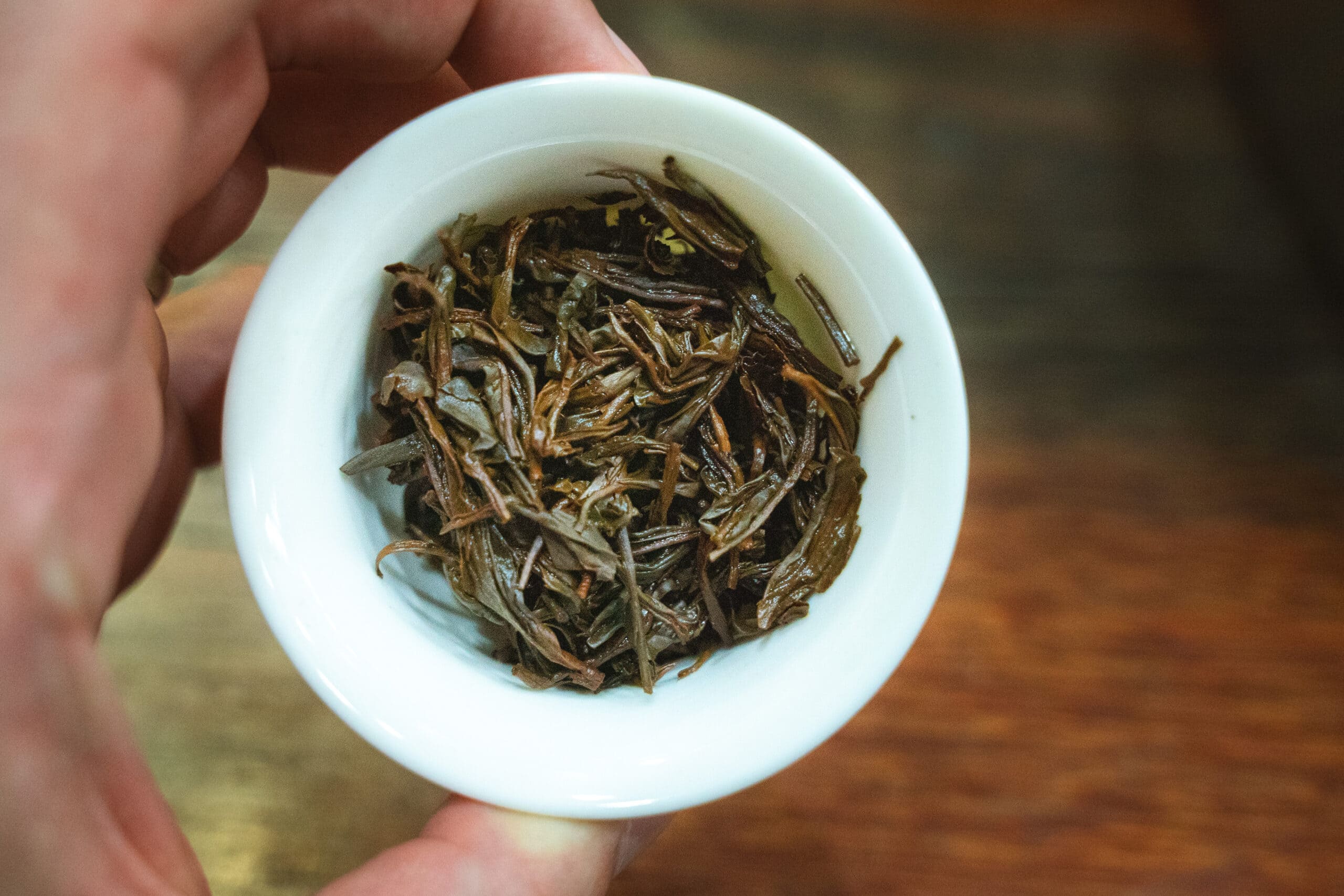
She let us smell the leaves between brews. Cinnamon, tobacco, even a hint of whisky at first, then flowers and milk by the final steep. She says to take a sip but not to swallow it, then suck air through our teeth and swirl the tea around in our mouths to REALLY taste it.
The first oolong she recommended was too strong and smoky. Back to the tins she went. The second batch was smooth and perfectly balanced. We got 50 grams for 150 RMB, enough for ten slow afternoons at home.
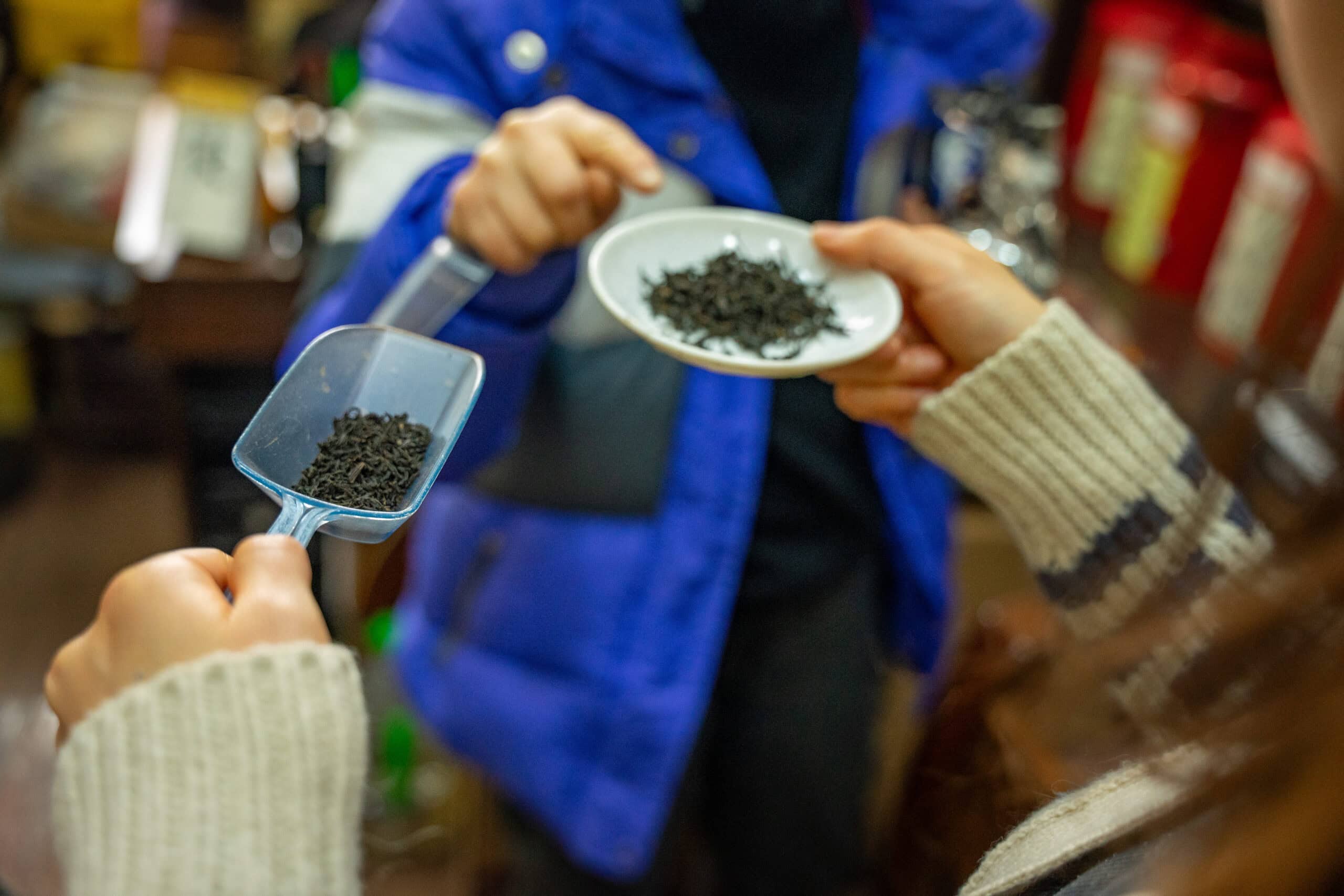
Jin decided we also needed more black tea at home. Just in case. We don’t want to run out.
Back to the tins she went and brewed a champion pot. It tastes like English Breakfast infused with straw and cereal. SOLD!
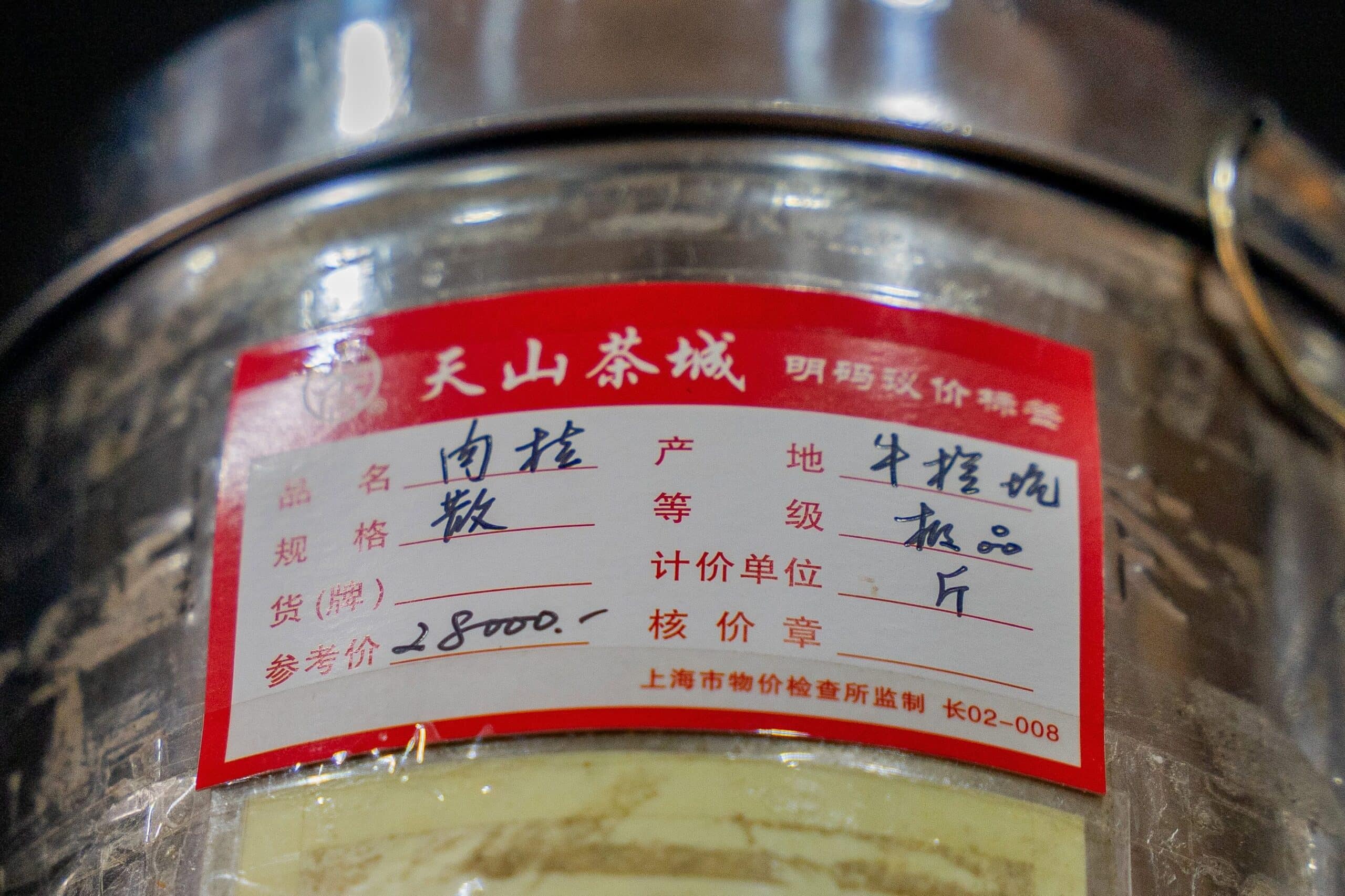
Before we left, I asked about her most expensive tea. She proudly pointed to a silver tin: 28,000 RMB per 500g. Nearly 4,000 USD. Maybe next time.
In Search of Fujian White Tea

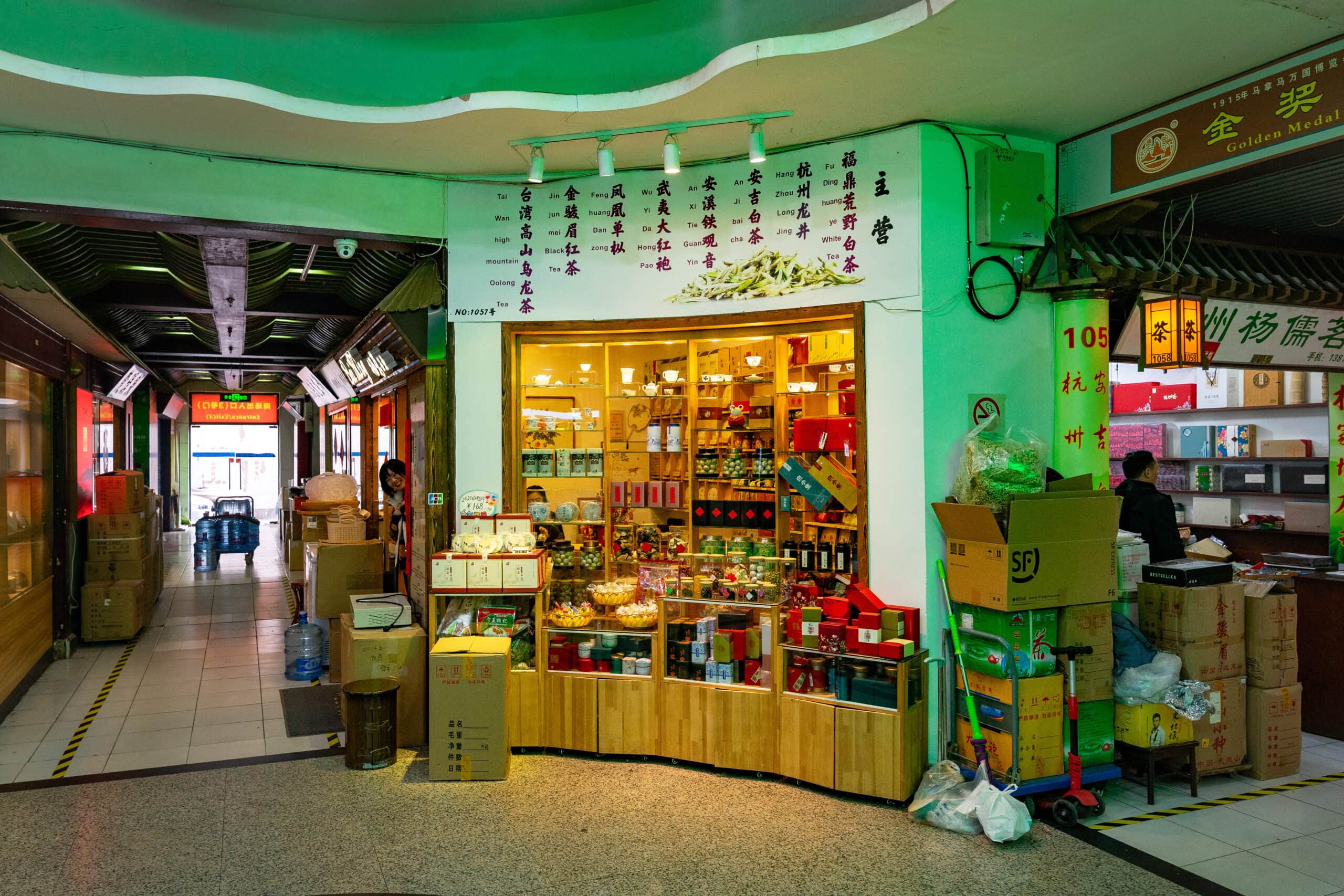
Riding the high of our successful oolong purchase, we set out to find white tea. On the first floor, near exit 3, we passed shop number 1057, which looked warm and inviting.
The owner smiled, and that was good enough for us. Inside, a group was already mid-tasting, but she waved us in without hesitation and switched to perfect English. After an entire oolong negotiation in broken Chinese and broken English, this suddenly felt like tea shopping on easy mode.
The other party turned out to be Japanese, and the owner ping-ponged between English and Japanese like she’d been doing it her whole life. We knew we were in good hands.

We got straight to the point: white tea. She explained that white tea is made from the young, fuzzy leaves, dried without the roasting or pan-firing you find in most Chinese teas. Because it’s untouched, you don’t do a rinse. No tea-washing ritual. You brew it, and you drink it.
The first infusion was pale — almost too pale — and it looked like white jade and smelled like spring pushing through late winter. Light, clean, no bitterness at all. The owner called it a sip of spring breeze, and for once, a poetic tea description actually made sense. This particular batch was from Fujian Province and from 2016.
Fifty grams for 150 RMB. Sold. Enough to get us through until summer arrives.
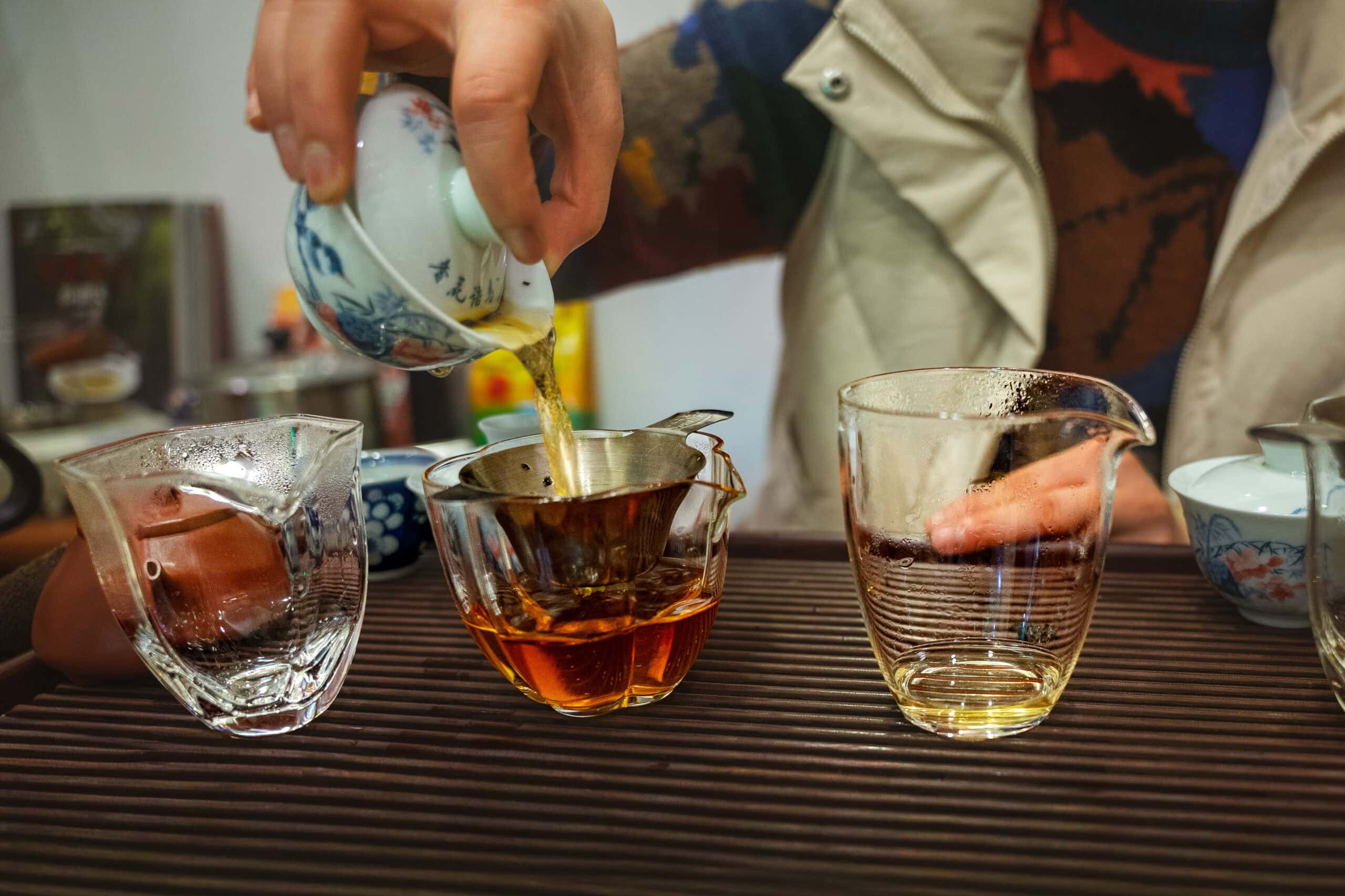
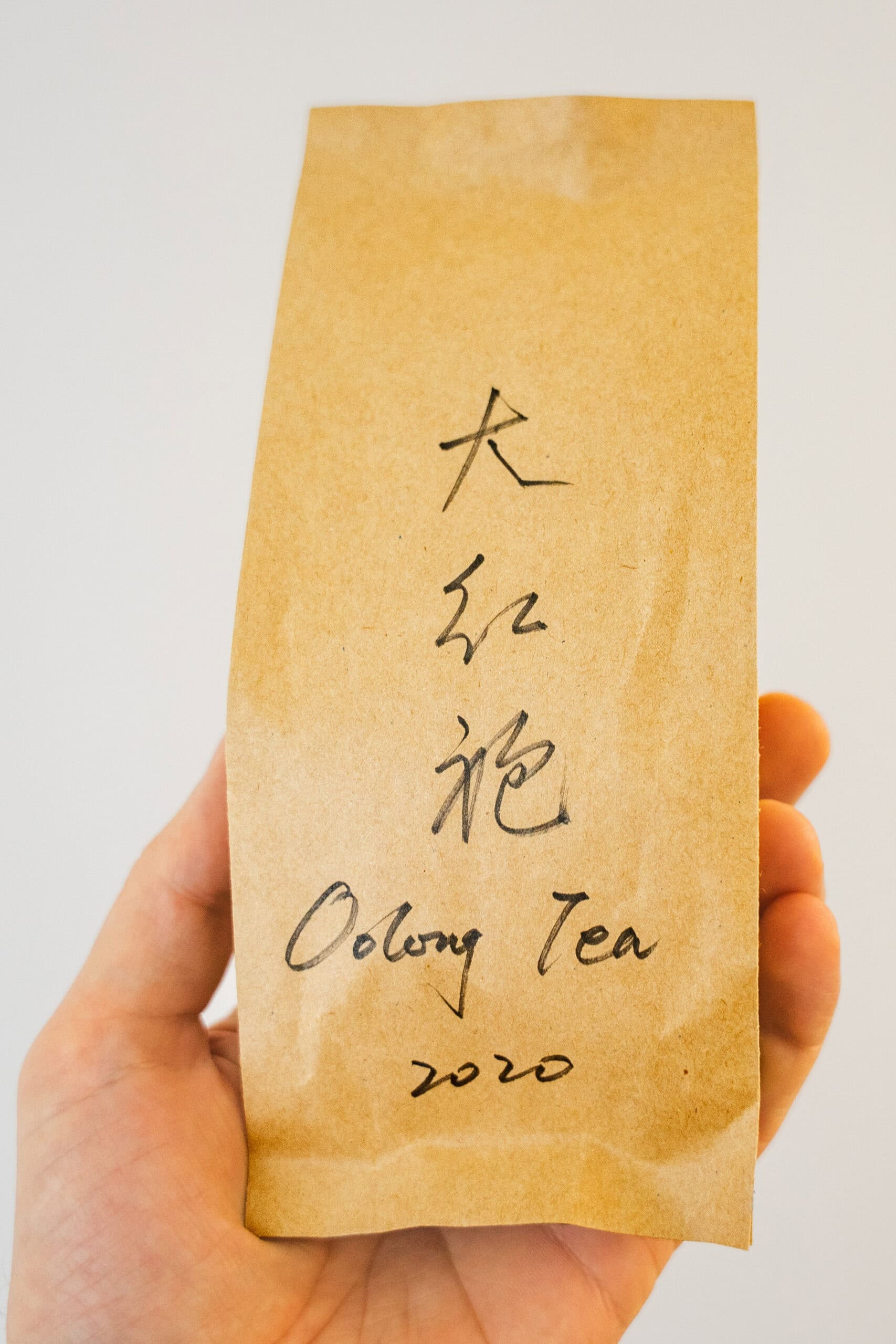
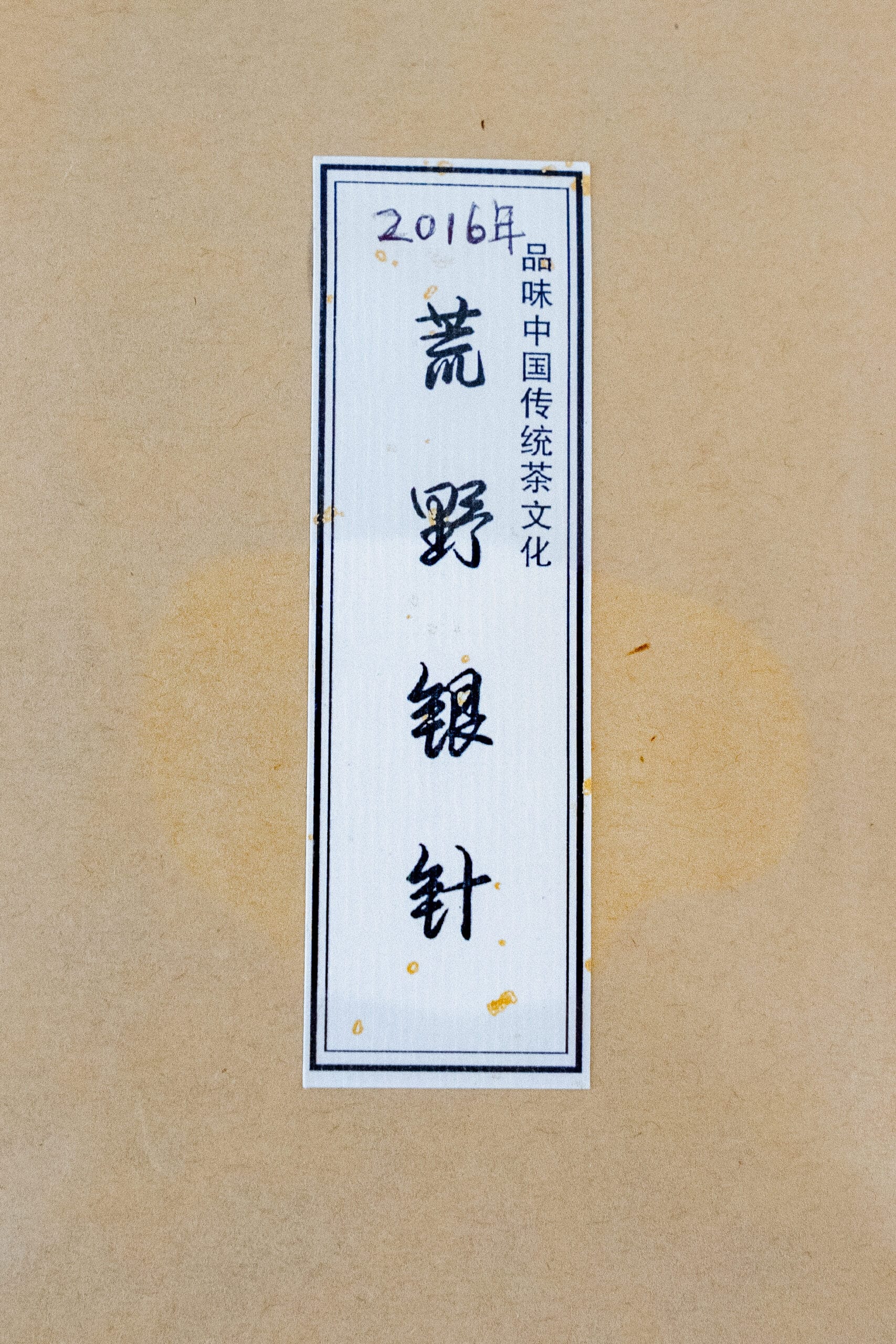
Since we were already sitting, we kept tasting, and the owner kept pouring, hoping to seal another deal. There was Longjing green, Keemun black, and both fermented and unfermented pu-erh. All interesting and well-made, but none of them spoke to us that day. We passed on the rest, thanked our multilingual tea master, and stepped back out exit three with two bags of tea, confidence intact, and well caffeinated.
Don’t Skip the Teaware
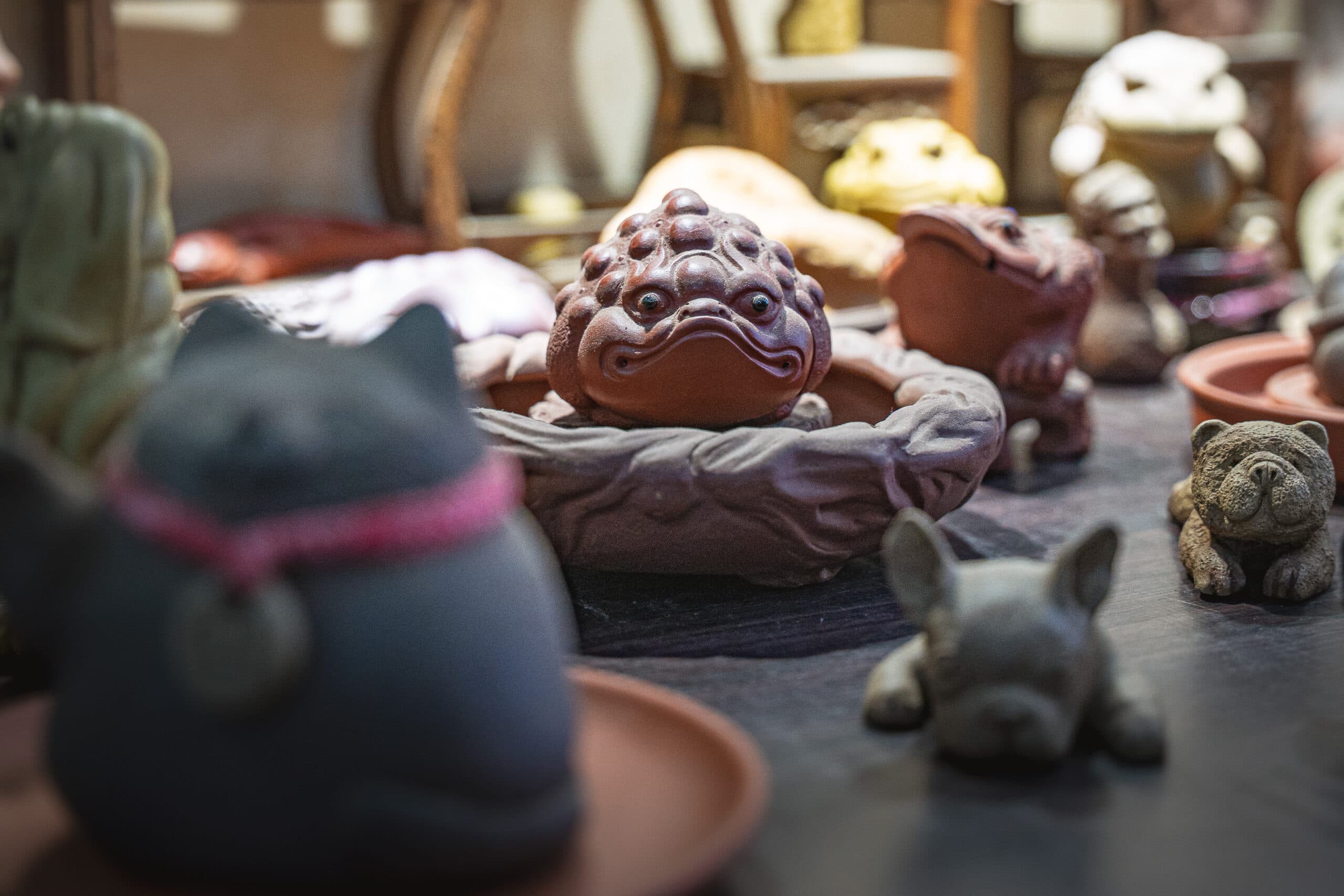
Once you start collecting tea, you quickly realise the leaves are only the beginning. Then you need the “right” pot. Then a cup. Then a second pot for a different style of tea. Then a tray. Then, a Yixing clay pot that you absolutely did not plan on buying but suddenly can’t live without. Before long, you’re also collecting tins, strainers, scoops, and whatever else promises to “elevate the experience.”
And then there are tea pets.
If you’ve never heard of them, tea pets are small clay figurines that sit on your tea tray purely for amusement. Some change colour when you pour hot water over them, others spit water, and some even wiggle or whistle.
We started our tea pet collection with two turtles that shift colour under hot water. Then came a tiny watermelon that turns into a bubbling fountain. Our latest addition is a ridiculous little peepee boy who shoots a perfect arc of water more than a metre across the room.
Completely useless.
Absolutely essential.
Never not funny.
Tianshan Tea City has all of it, from serious teaware for serious tea people to joyful nonsense that makes the whole ritual even better.
Is Tianshan Tea City in Shanghai Worth Visiting?
If you’re into tea, then yes, absolutely, Tianshan Tea City is a must. Even if you don’t think you’re into tea, you might just surprise yourself. It’s one of the most unique cultural experiences in Shanghai, especially on a rainy day or when you want an authentic souvenir that isn’t a fridge magnet or a panda keychain.
This isn’t some tourist conveyor belt. It’s a living market where locals shop, deals are made over tiny cups, and you can sit for an hour tasting and talking without anyone rushing you along. If you’re even a little curious, go. Bring an open mind, a bit of time, and a willingness to drink more tea than you planned. You’ll walk out with stories, probably a bag or two of leaves, and a deeper appreciation for a tradition that runs through everyday life in China.
Yes, we can get the tea (a little) cheaper on Taobao and delivered straight to our door. But the experience of having it at the market and the chance to taste several teas before buying are things an online purchase can never offer.
Besides that, it’s a relaxing and enjoyable window into authentic Chinese culture. So just go already.
How I Shot This Guide
Every photograph in this article was taken with the exact same gear I carry on every journey. It is a setup refined over years on the road to keep travel light without compromising the final image.
- Camera: Sony A7 V
- Lens: Sigma 24-70mm f/2.8 DG DN Art
- Storage: SanDisk Extreme Portable SSD
- Software: Adobe Lightroom Classic
- Outerwear: The North Face Canyonlands Hybrid Jacket
Love! Thank you for sharing. We will be visiting here in a couple of weeks. What time do the shops open daily? Thank you.
Hi Schellie,
Hours for the market are 10am to 9:30pm. Enjoy the tea!
What a great post! I was inspired and visited after work on Wednesday. It was almost 8 when I reached and half the shops were closed. I managed to get 2 pots and 3 types of tea. The shopkeepers were mostly ladies and very friendly (caveat: I can speak Mandarin). It was late and I tried not to bargain so they always threw in extra bags of tea for me. Although advertised as closing at 9.30, 8.30 would be more accurate on the weeknight I was there. The area got pitch dark, I didn’t dare venture up the second floor. I left at 9 and took a didi back to my hotel in Pudong.
Hi Grace,
Glad you got some tea! Thanks for the feedback on the closing hours. I’ll update the post accordingly.