
I was already fat when we arrived in Osaka. When you see our Japan trip photos, you’d think I came for a sumo tournament. And I gained a few more pounds during our two days in Osaka, leaving me even fatter when we left. No regrets.
The city is called Japan’s Kitchen, after all.
I’ll admit it: Osaka wasn’t high on my list of places to visit in Japan. I imagined it as just another big, busy city and almost skipped it. But Jin insisted we come for the food. Strange enough, I liked Osaka from the get-go. It was loud, laidback, and absolutely delicious.
If I ever find myself back in Japan (and we will be back), I’ll definitely make time for Osaka again. And I’ll come hungry.

During our two days in Osaka, we ate like the Very Hungry Caterpillar, wandered through neon wonderlands, dodged rain, stumbled into some truly memorable pockets of culture, drank more than we meant to, and found ourselves completely sold on a city that never once tried too hard.
Our 2-days in Osaka itinerary with food recommendations is perfect for first-time visitors who want to experience the best of both worlds: iconic sights and unforgettable eats. Whether you’re here for the food, the neon, or the vibe, this city delivers.
If you’re ever in this neck of the woods and wondering how to spend two days in Osaka and what to eat, here’s exactly what we saw and ate in just two days.
Please note: This post may contain affiliate links. This means I may earn a commission if you make a purchase by clicking a link (at no extra cost to you). As an Amazon Associate, I earn from qualifying purchases. Learn more.
Quick Guide to Osaka
Visited: 2-4 November. We had one day of heavy rain and the other day was perfect.
Where we stayed: R Hotel Namba Daikokucho. The location was perfect, it was comfy and quiet.
How many days in Osaka? If you want to see the sights and eat as much as you like, we recommend a minimum of two full days. We stayed for two days, and could easily have stayed for another.
Transportation: We mostly walked, but also took a few subway rides. Use Google Maps to find the best transit routes. We found Osaka’s public transportation convenient and easy to use.
Train Pass: We travelled in Japan using the JR Kansai-Hiroshima Area Pass, and it was excellent value. Osaka, Kyoto, Hiroshima, Nara, Kobe and others are all included in this pass.
Where We Stayed for our 2 Nights in Osaka
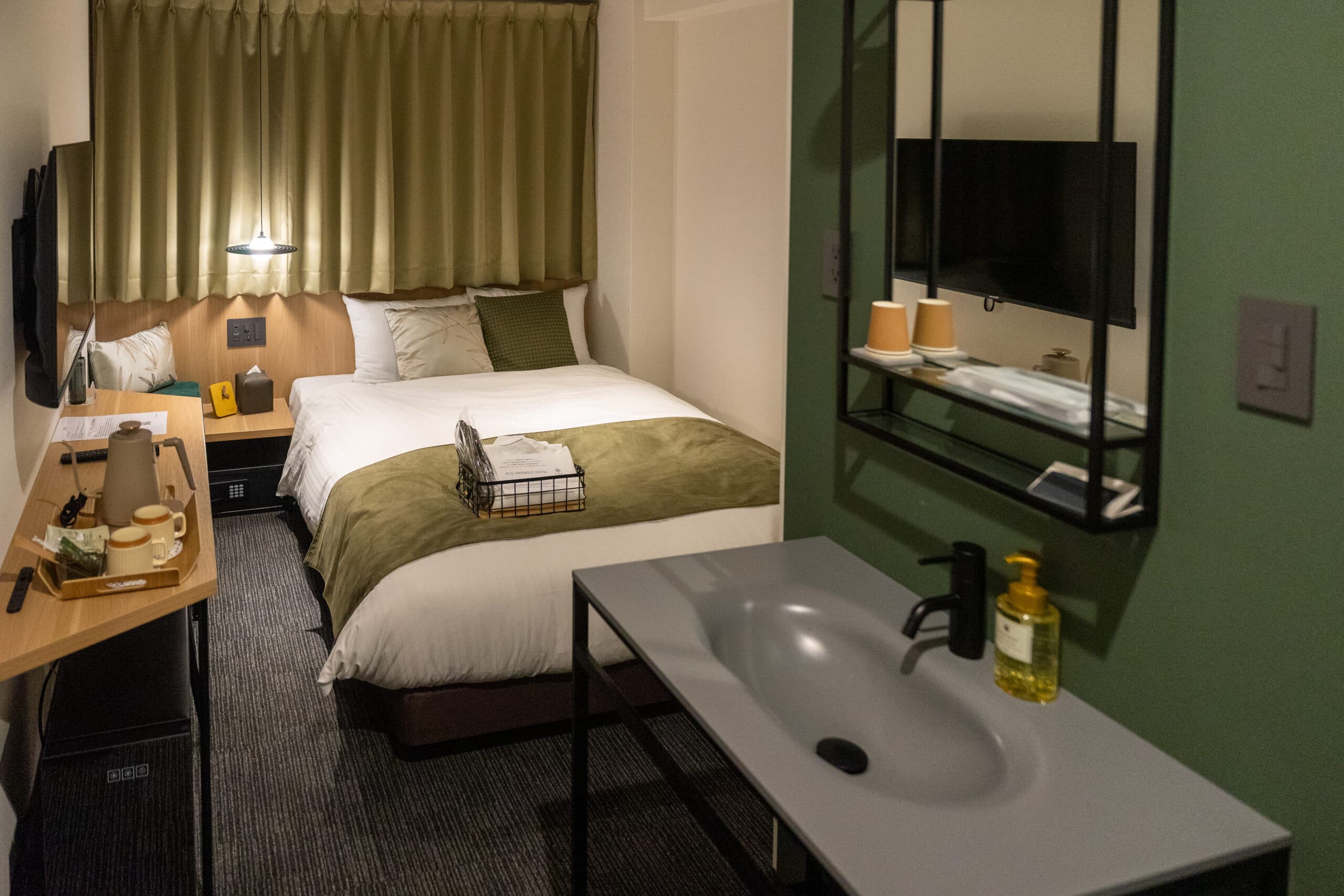
We stayed at R Hotel Namba Daikokucho and loved it. Located halfway between Dotonburi and Shinsekai, it’s perfect for exploring Osaka on foot. It’s right by Daikokucho metro station.
Our ensuite double room was like a condensed version of the country – clean, comfy and, most of all, practical.
The slippers in our room came with a note about sustainability. I felt morally superior for a second when I put them on.
Omakase at Sushi Hiro
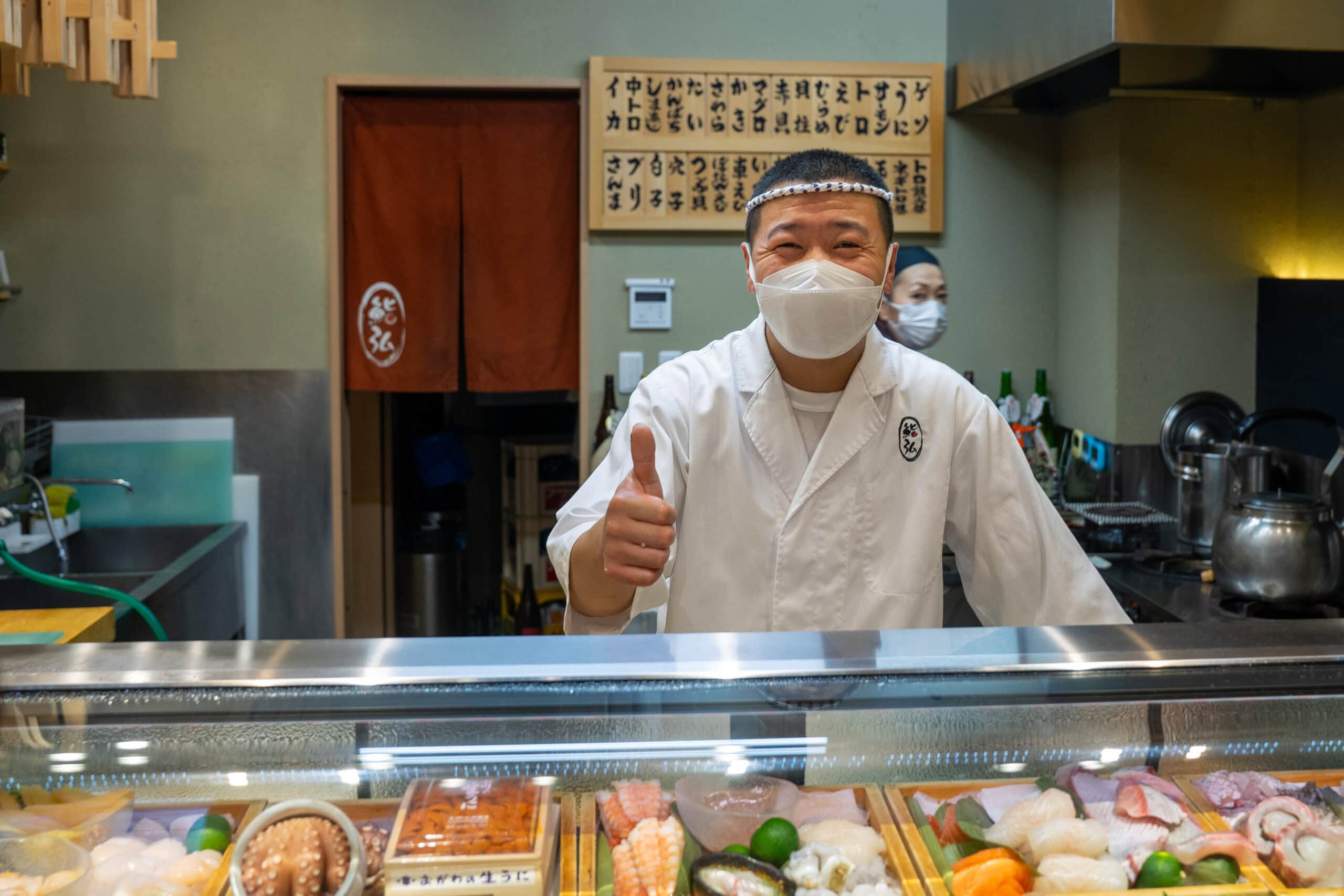
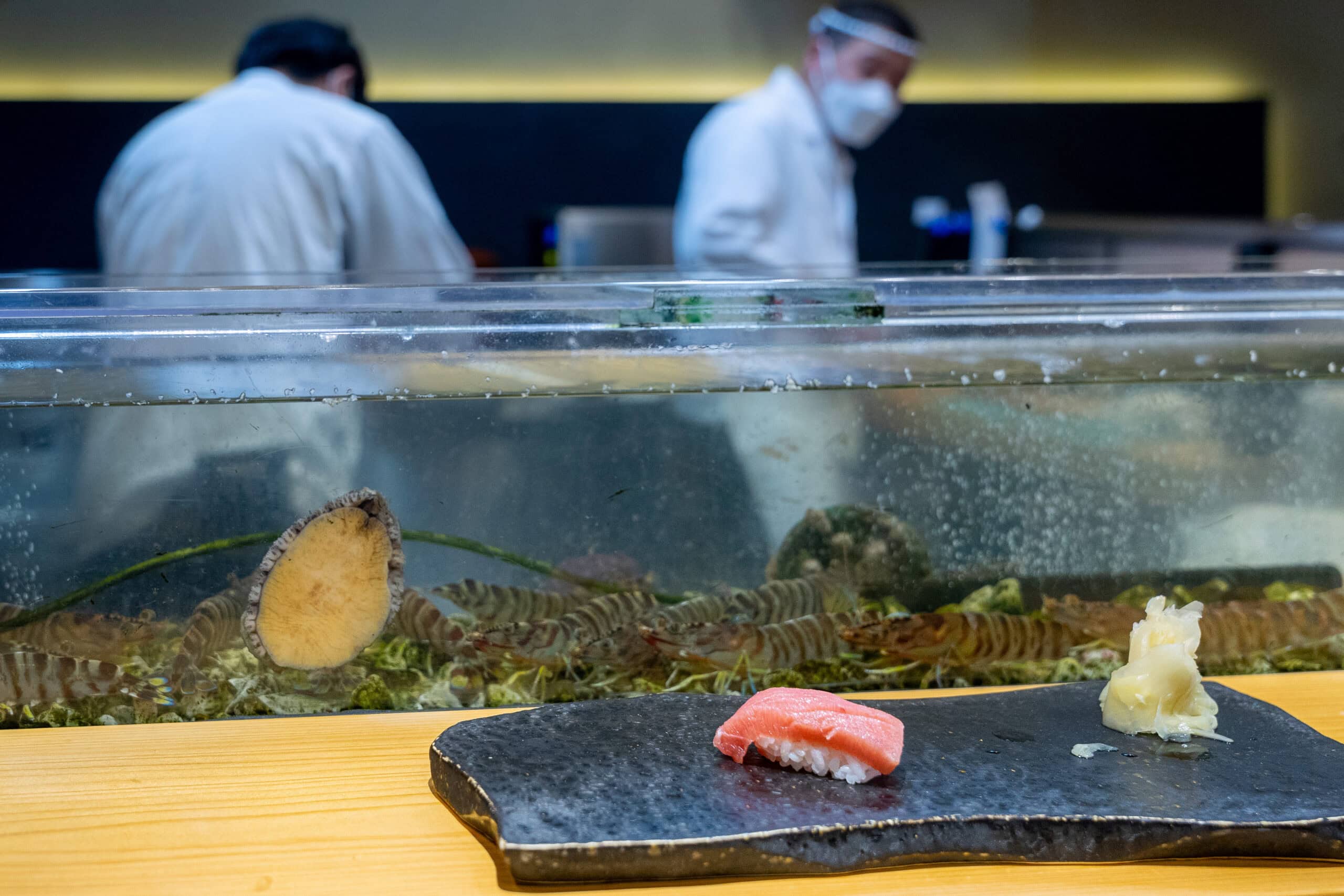
We started our first day in Osaka with something serious: sushi. Not conveyor belt stuff, not over-the-top theatrics. Just a counter seat at Sushi Hiro (鮨ひろ) across from Shinsekai, where a chef with years in his hands serves what he wants, how he wants it. We went for the 15-piece omakase (4,950 yen) and let him take the reins.
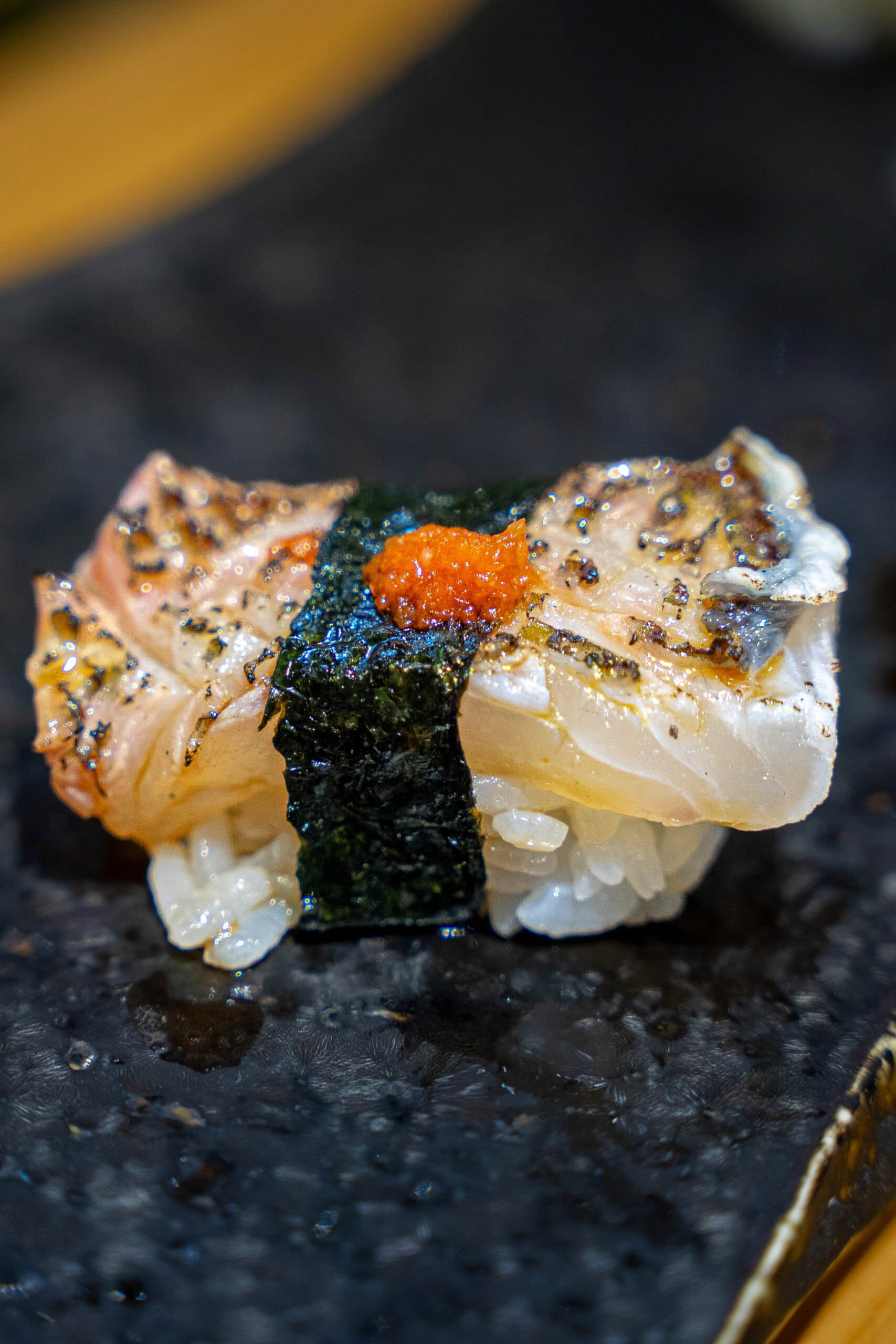
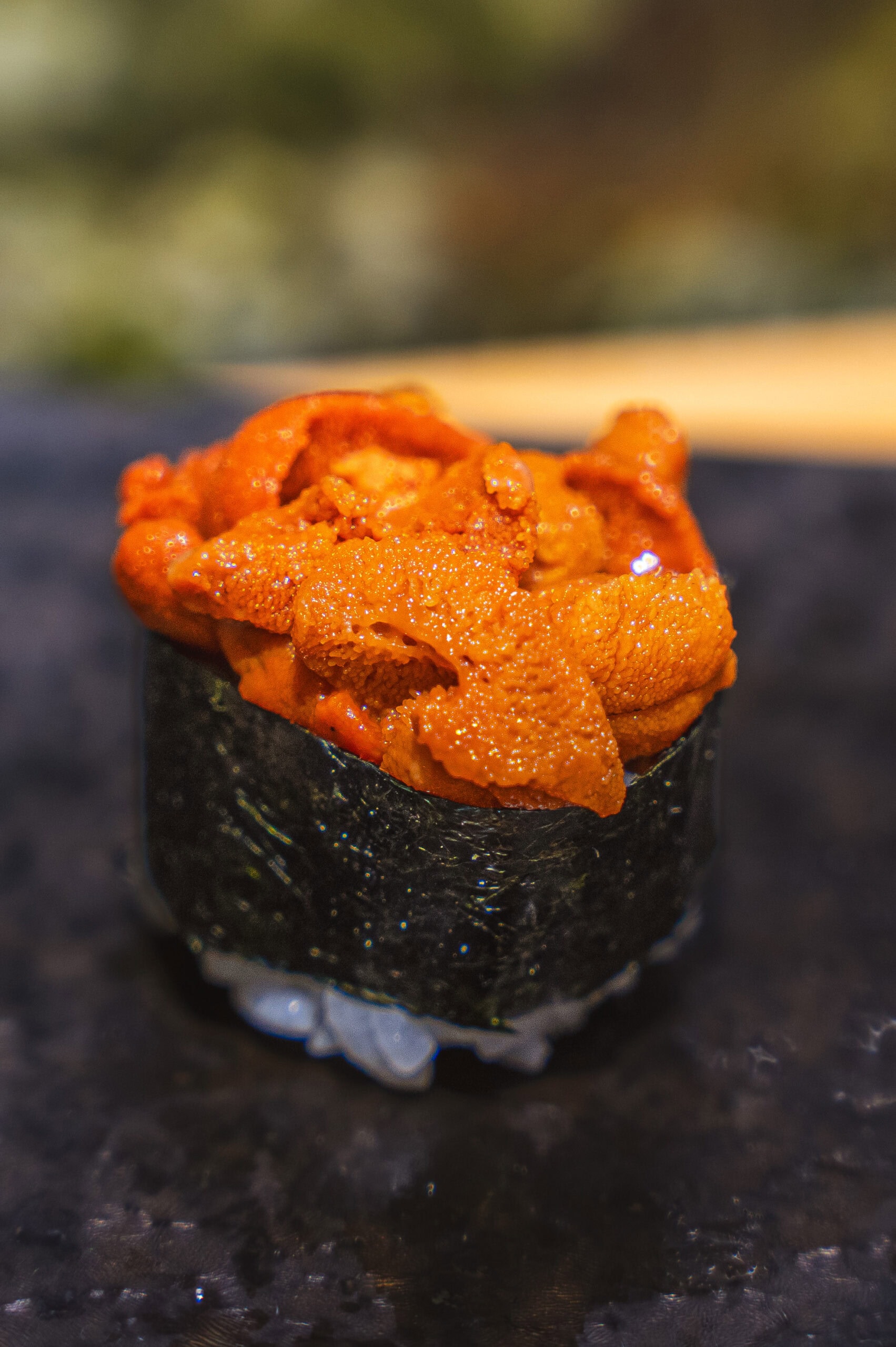
The 15 courses were a parade of perfection that included sea bream, uni, cockle, and roe-laced kelp. One minute, a prawn was swimming with its mates in the tank in front of us; the next, it was expertly butterflied and handed to us with a whisper: No soy sauce.
Add a cold Asahi and a couple of sake highballs, and you’ve got yourself a proper welcome to Osaka.
Location
Hours: 11:00-15:00, 17:00-21:00.
Closed on Wednesday
Shinsekai by Day (In the Rain)
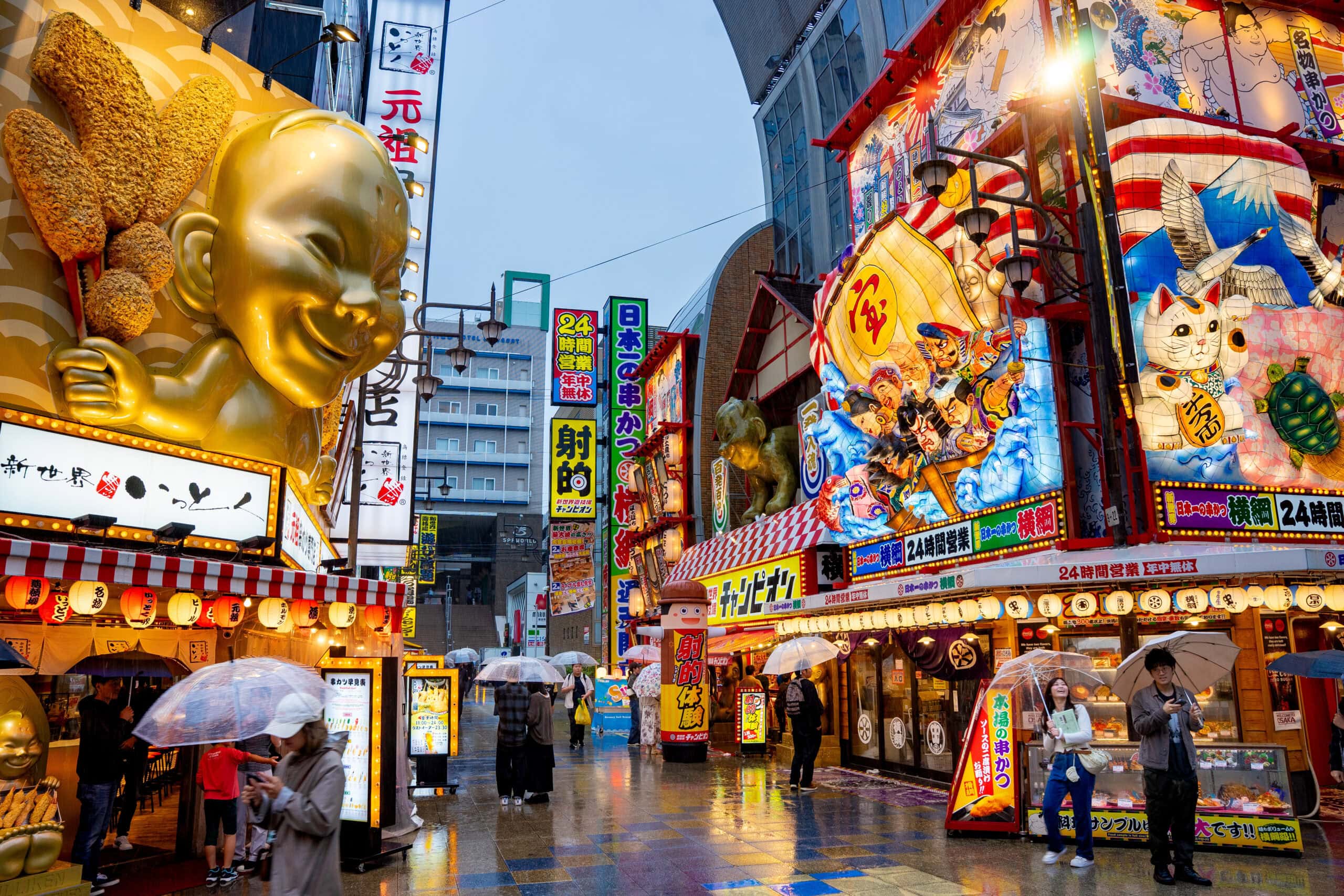
We waddled out and crossed the street into Shinsekai under a sky that had clearly decided to open up just for us. Cats and Great Danes came down sideways. A postscript from a typhoon that passed through the area just a few days before.
Shinsekai (New World) was built in 1912 as Osaka’s utopian answer to Paris and New York. That didn’t exactly work out. What’s left is a gloriously faded, neon-soaked neighbourhood that feels like someone pressed pause on 1975.
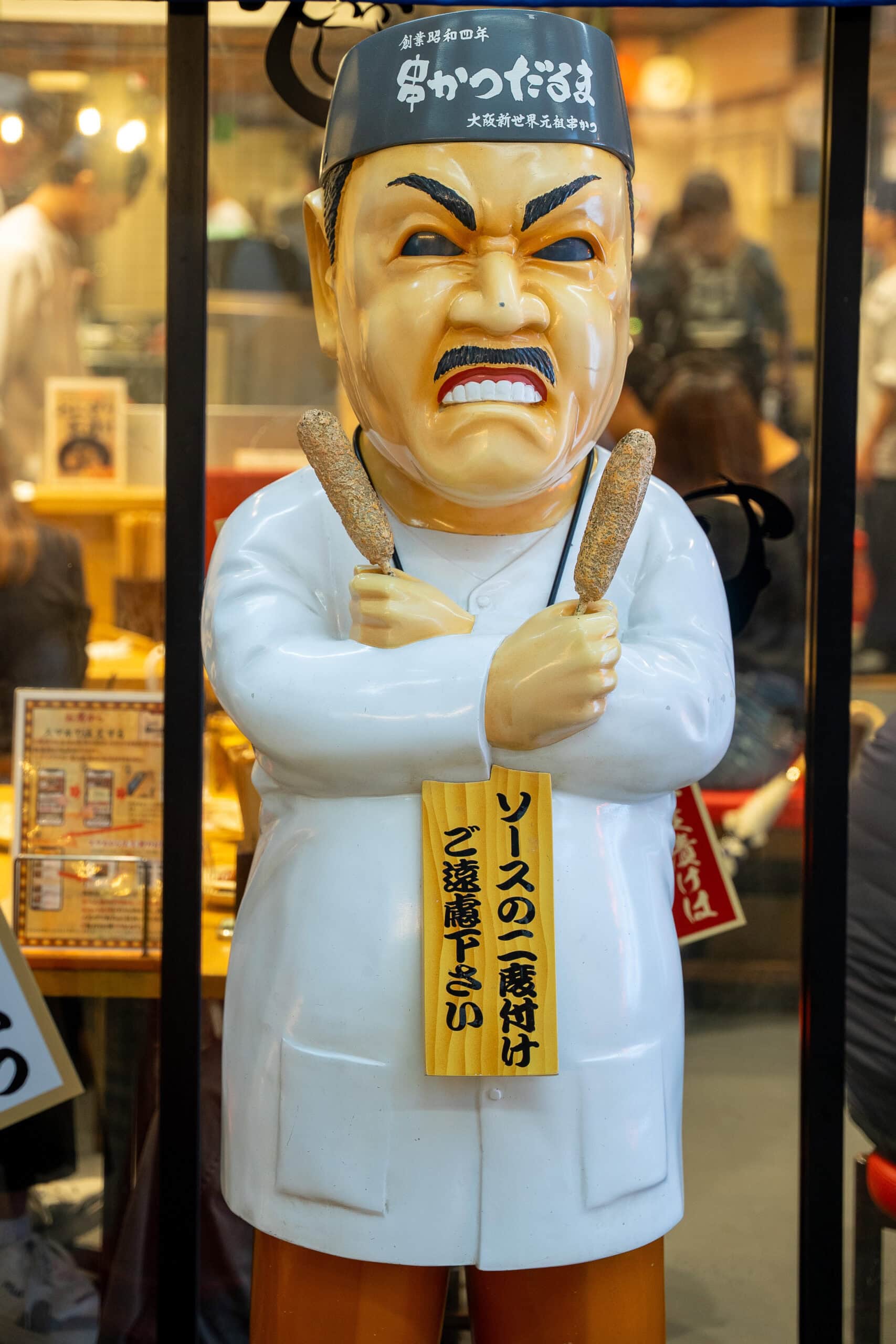
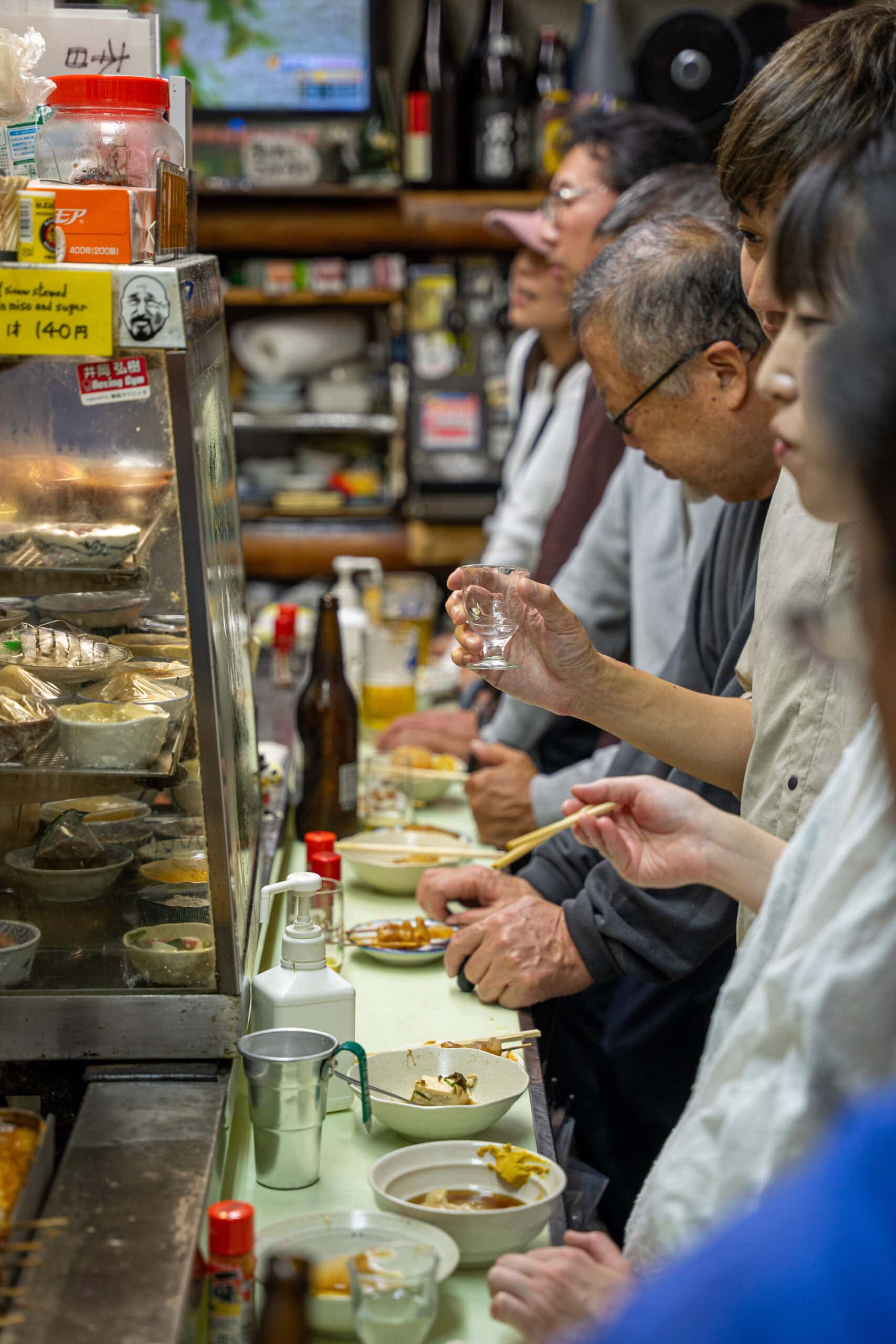
In the rain, it had a kind of bruised charm. Wet streets reflected the Tsutenkaku Tower, shop shutters rattling in the wind, and locals crammed into pachinko parlours or eating street food snacks under awnings.
We didn’t stay long, but we knew we’d be back. Shinsekai doesn’t make sense in the daylight, anyway.
Otaku Culture in Nipponbashi (Denden Town)
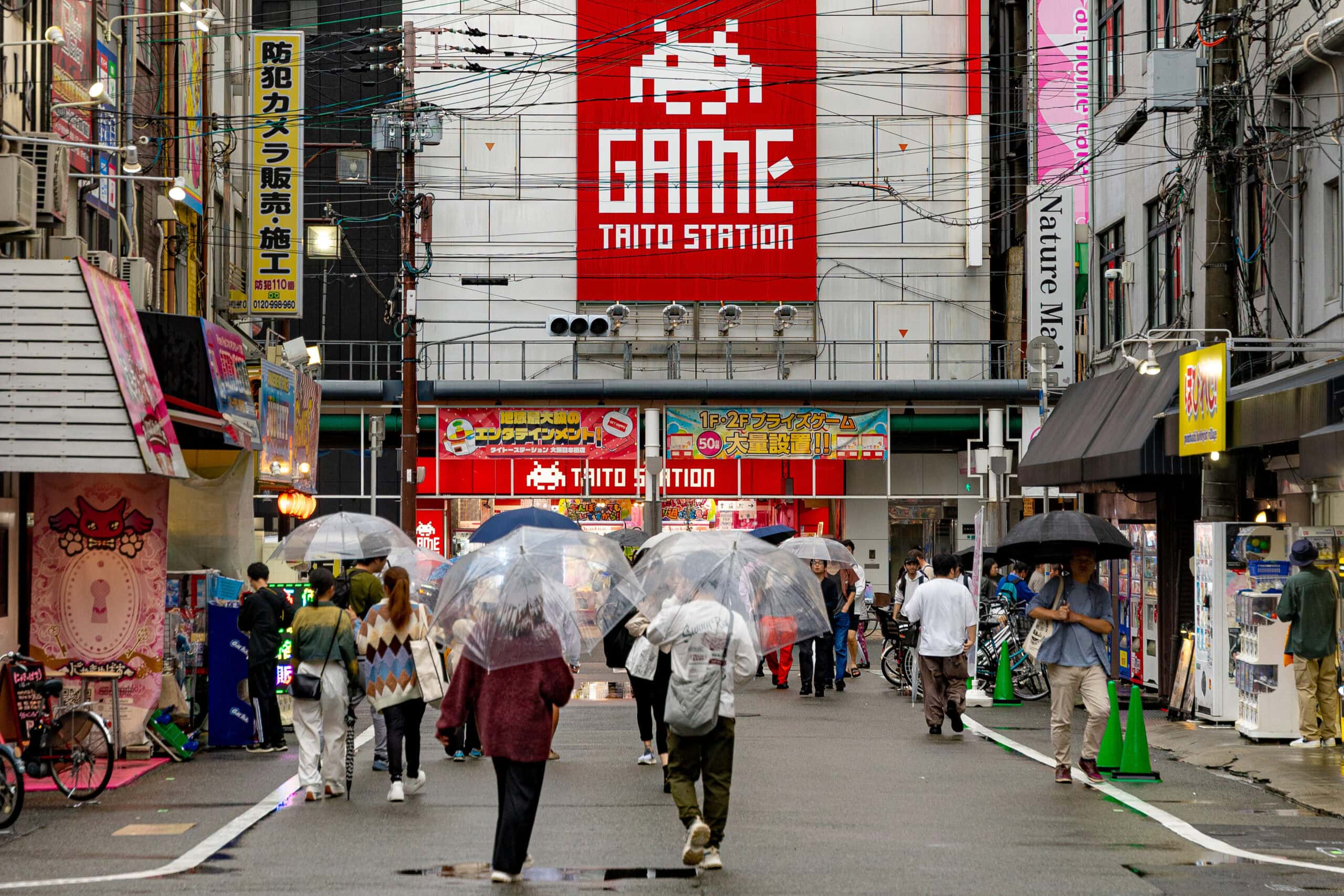
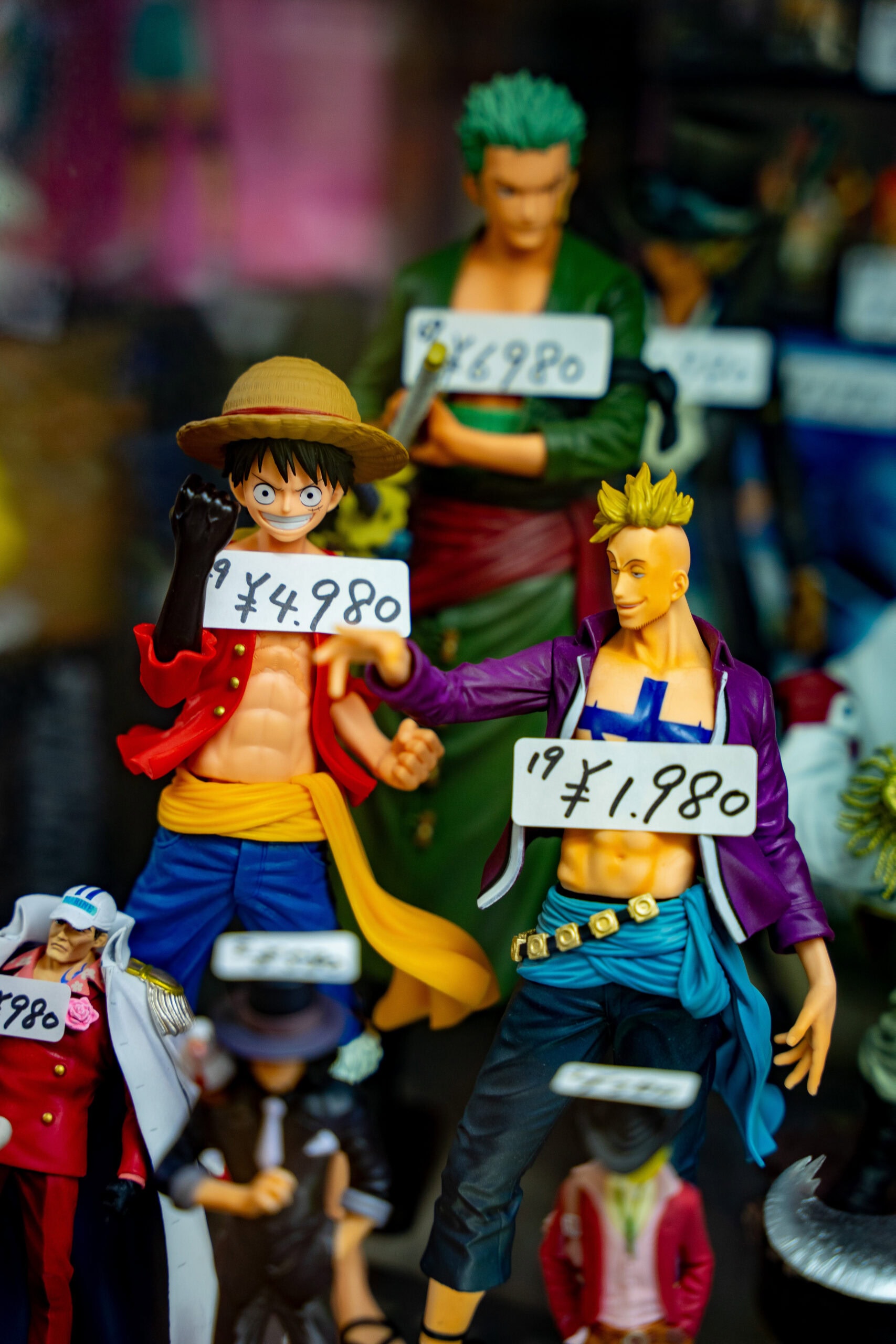
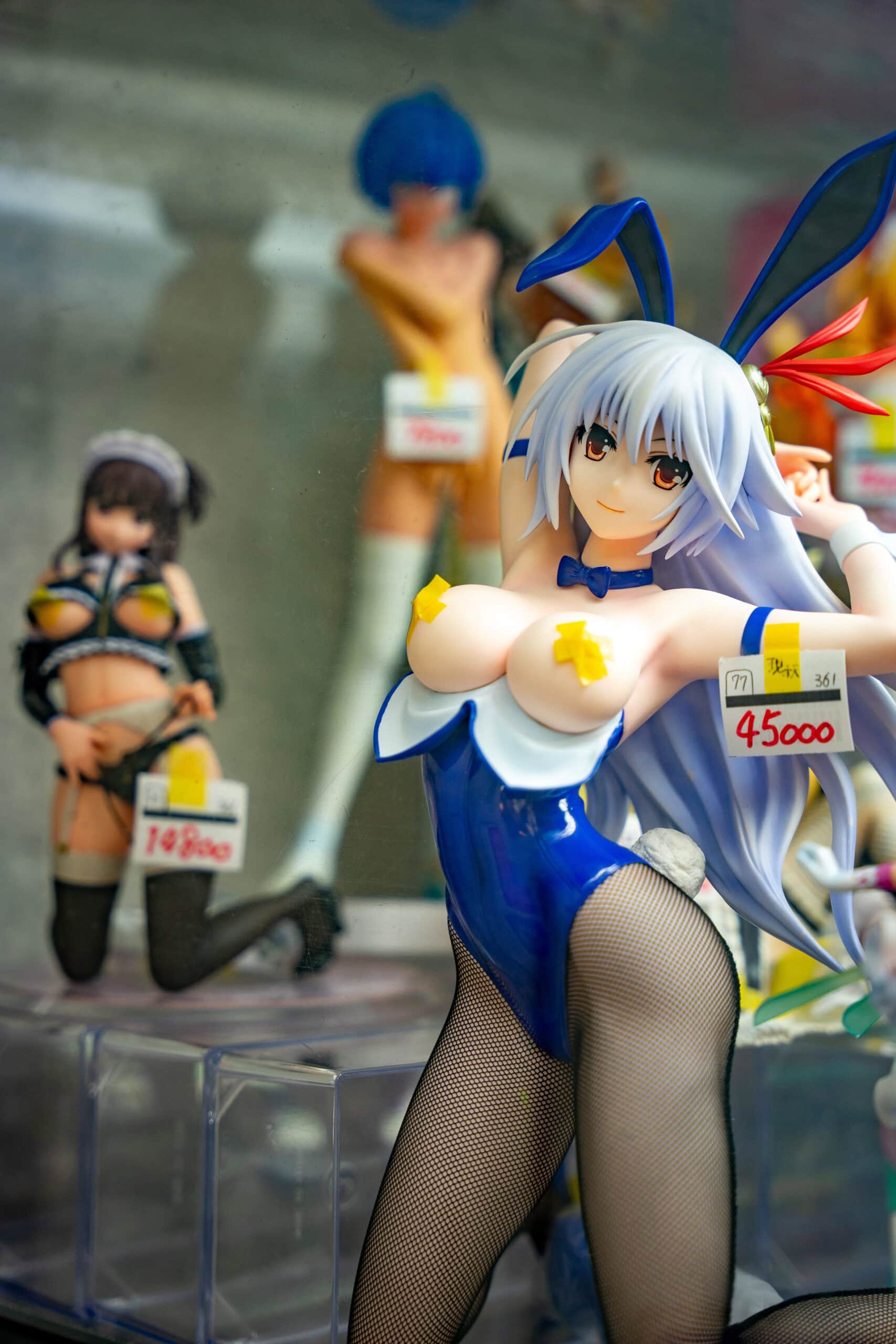
From Shinsekai, we wandered up to Nipponbashi, known as Denden Town, Osaka’s version of Akihabara. Shops spilled over with figurines, model kits, vintage video games, and manga by the mile. Even if you’re not into anime, it’s an intriguing pocket of Japanese pop culture (otaku).
Anime / Manga is not our scene at all, but still, we ducked into a few shops just for the fun of it. It was an entirely different world, and we oohed and aahed, especially over the vast selection and the prices.
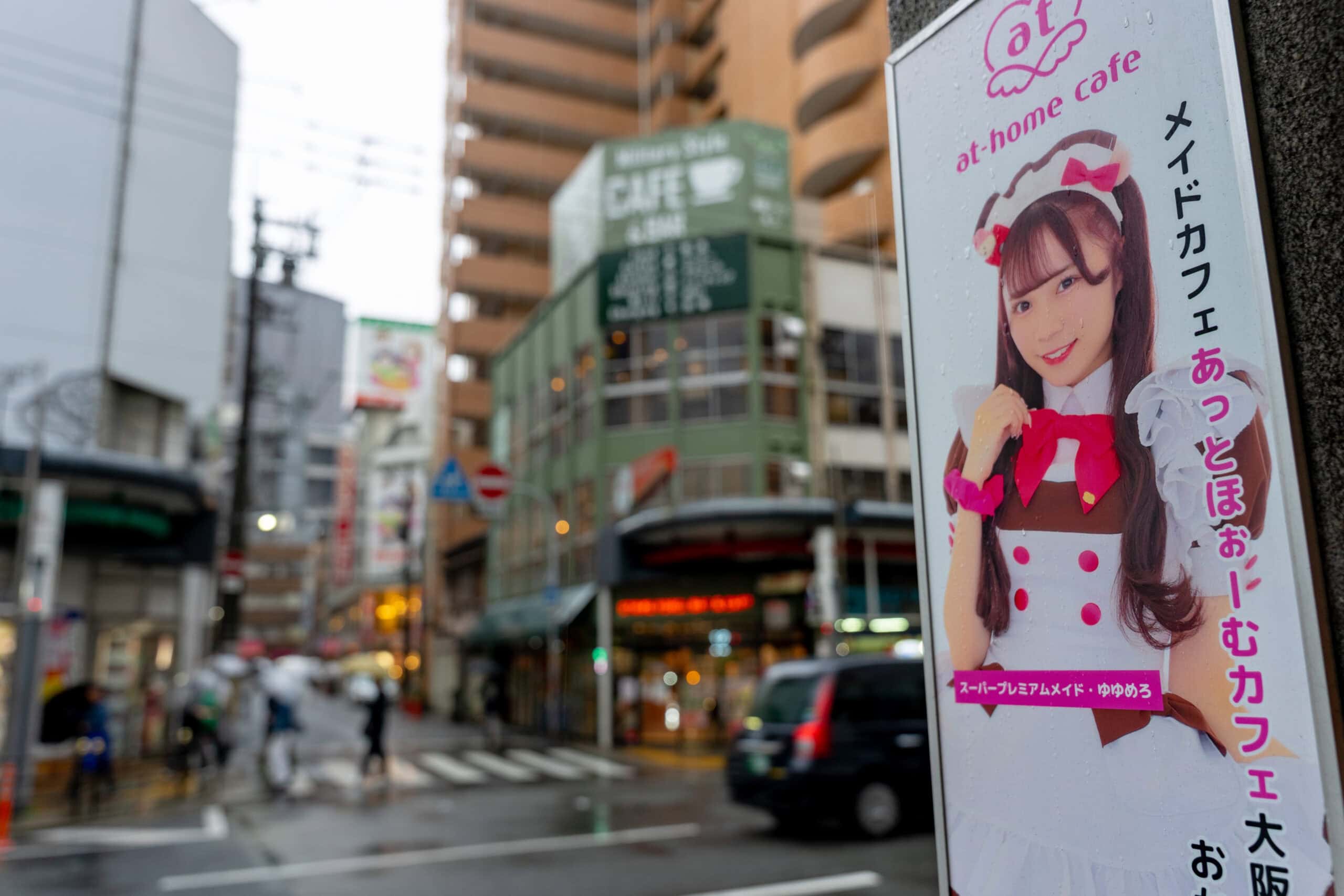
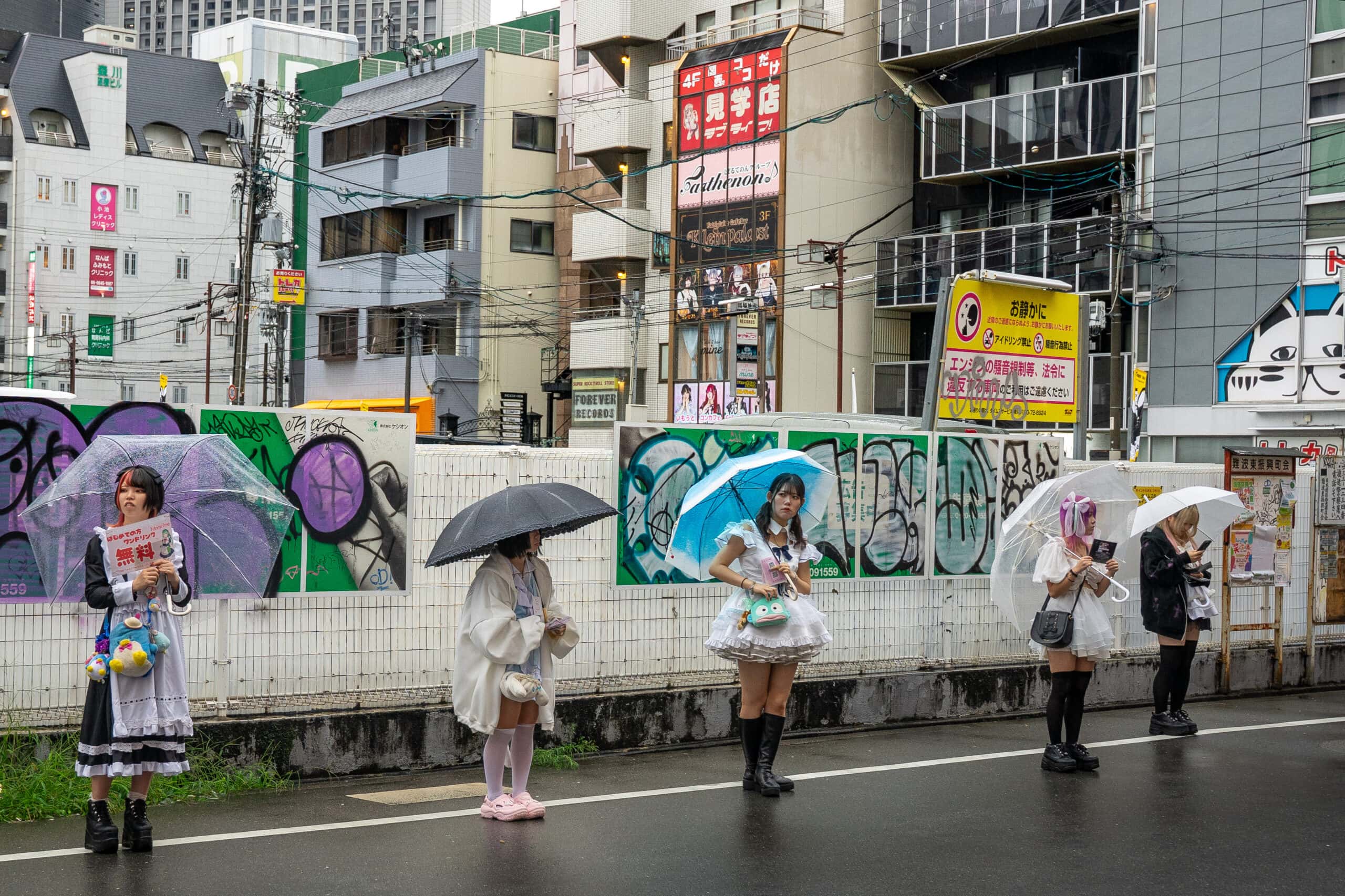
Still in the area, you’ll spot the Maid Cafés and the girls dressed in frilly costumes advertising their services on the street. It was as if we had stepped into someone else’s very specific dream.
But they’re not prostitutes. They’re waitresses and will serve you coffee or parfaits while calling you ‘master’ in an overly cheerful voice, followed by a dance routine or two. It’s all part of Japan’s pop culture, and you either lean in or walk on by. We observed from a distance and kept walking.
Kuromon Ichiba Market
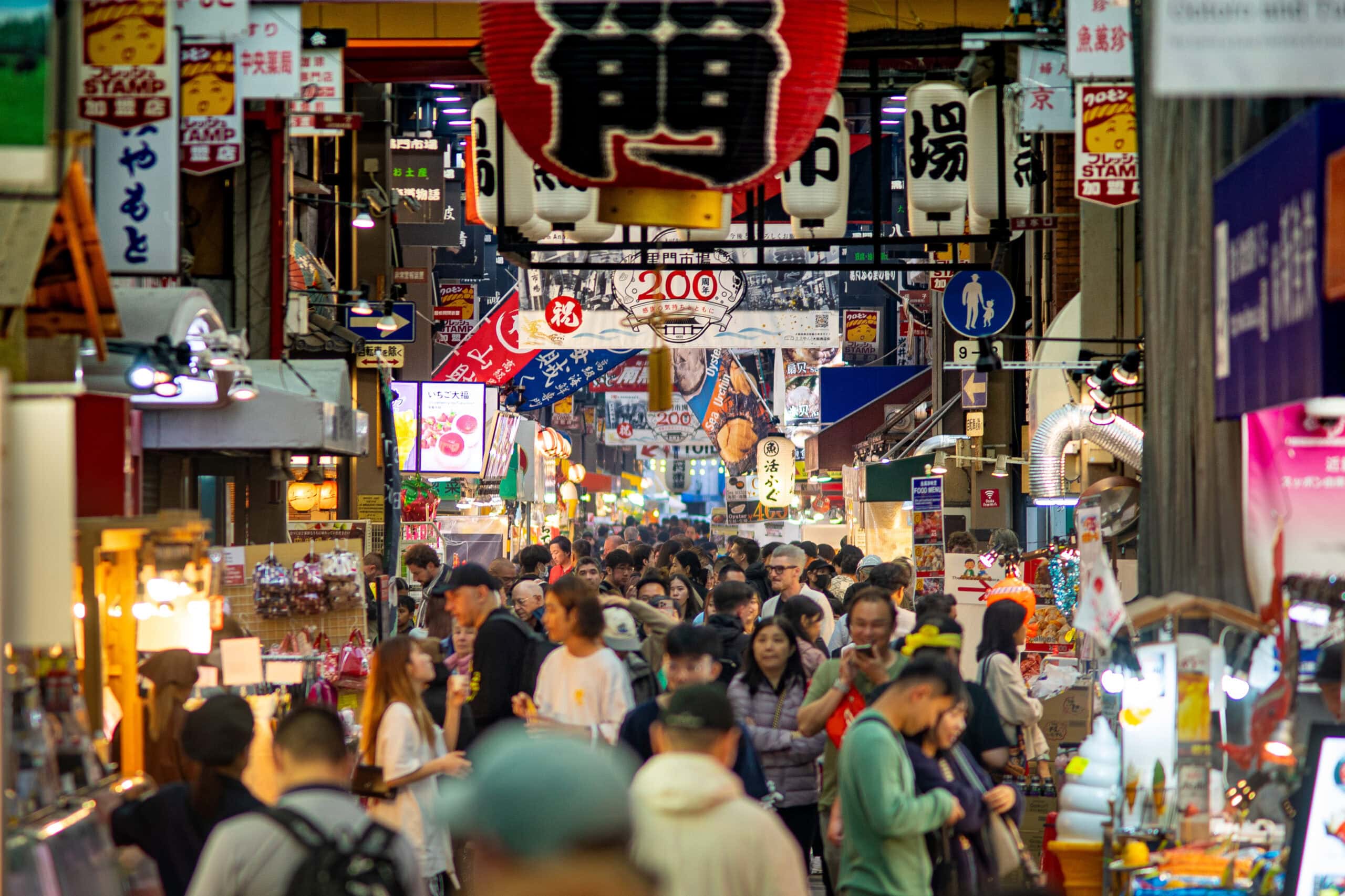
We were still digesting 15 courses of sushi by the time we hit Kuromon Market. Didn’t matter.
You walk into this place, and your stomach forgets it’s full. 150+ stalls crammed with blowtorched wagyu, oysters the size of our palms, uni on rice, freshly grilled eel, and fruit so perfect it looked Photoshopped.
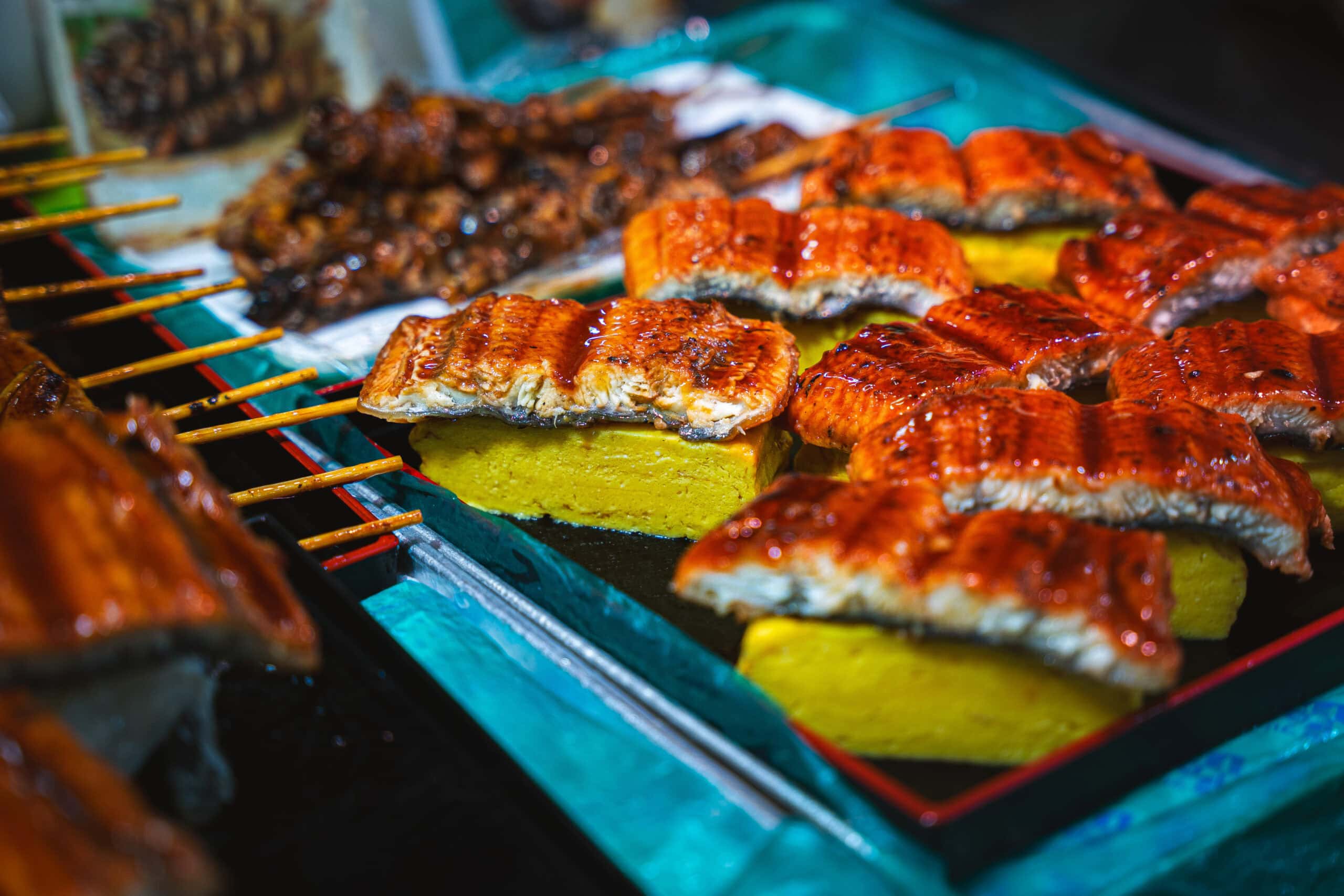
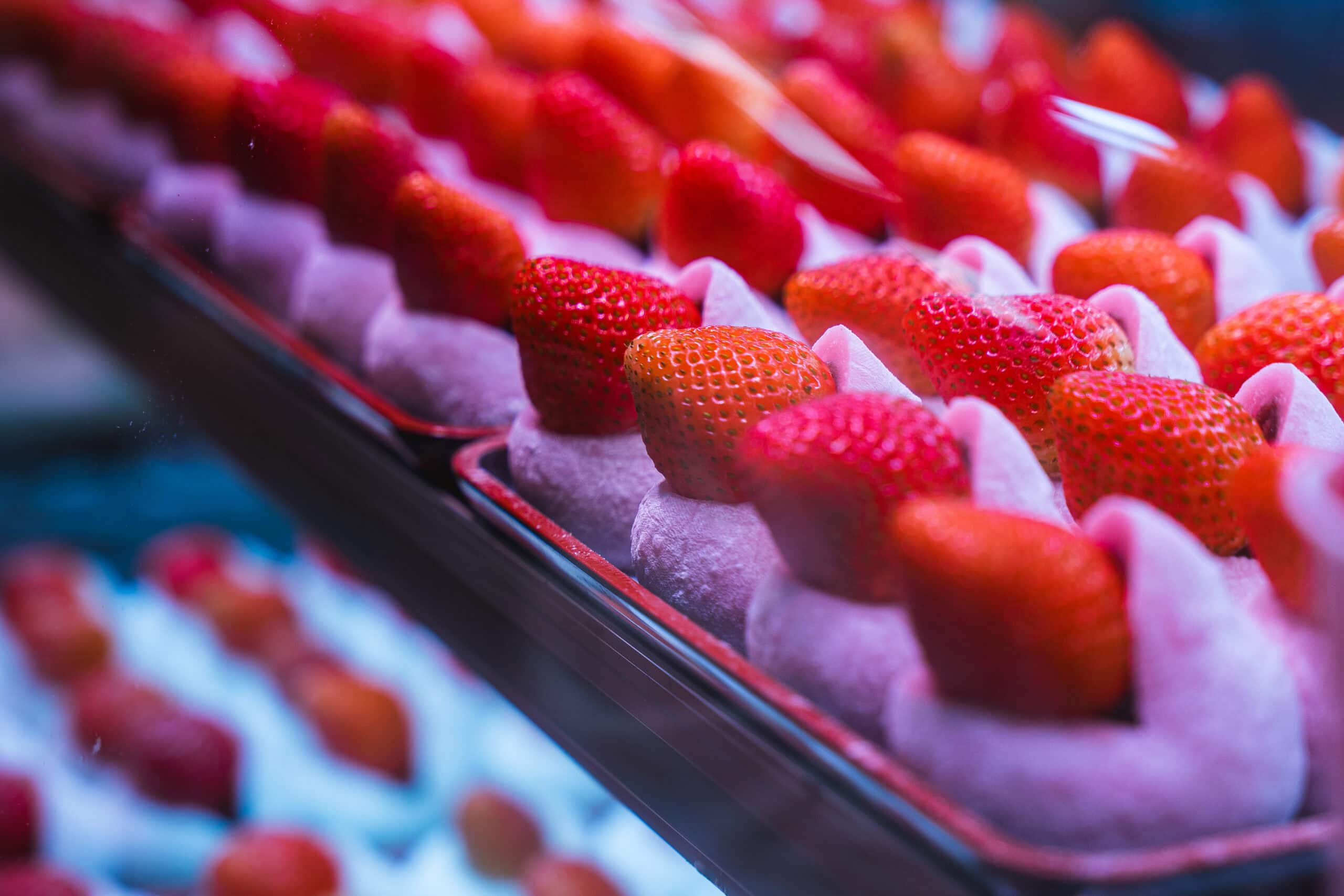
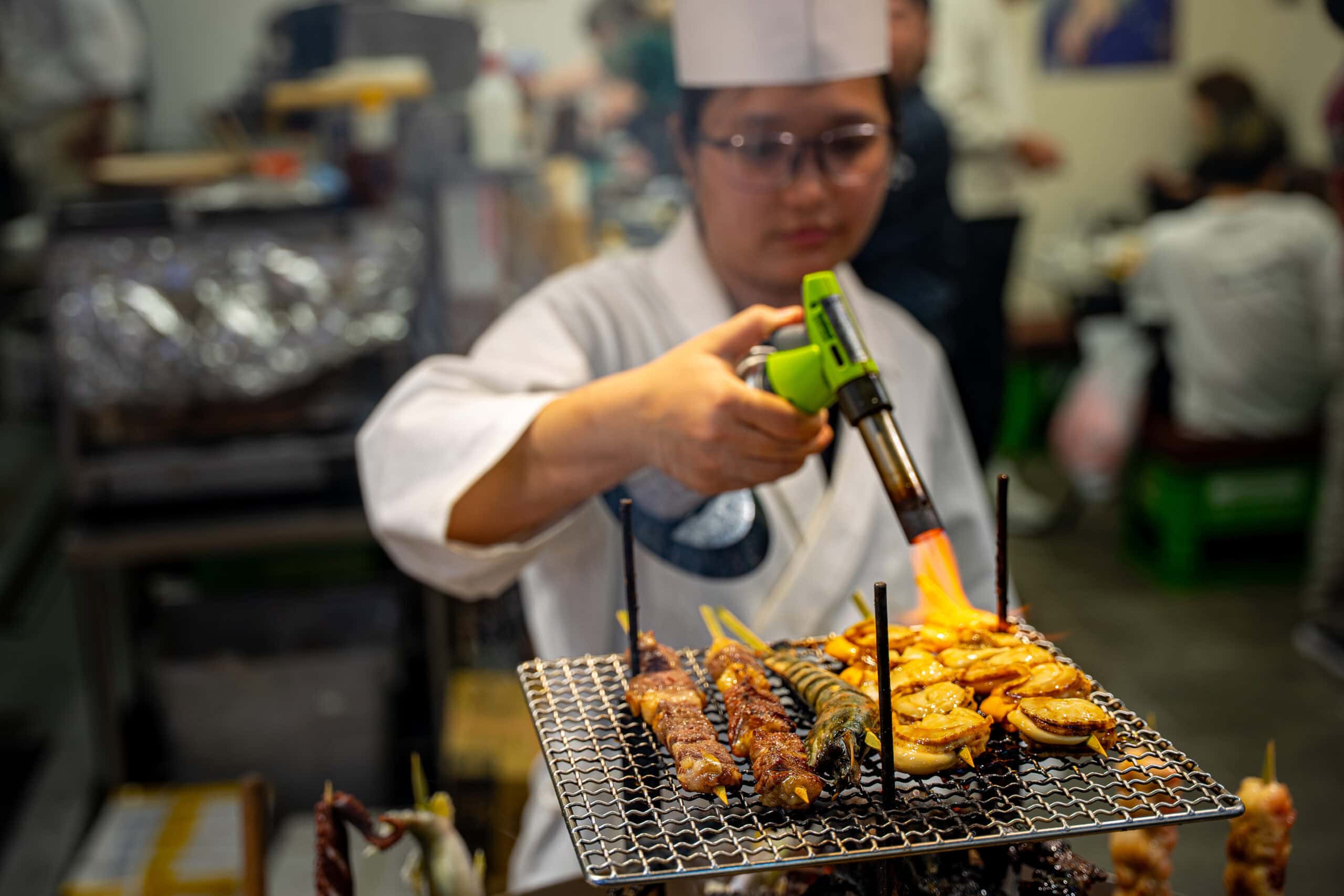
We sipped a cheeky sake, did a lap, and ate with our eyes. We loved the vibe at Kuromon Market a hundred times better than the touristy Nishiki Market in Kyoto. Kuromon displays looked and smelled way better than the plastic food on display at Nishiki.
It’s easy to explore independently with menus and signs in English, so ditch the food tours and eat when and what you fancy.
Location
Hours: 9:00-18:00
Yakitori Dinner by the Tracks
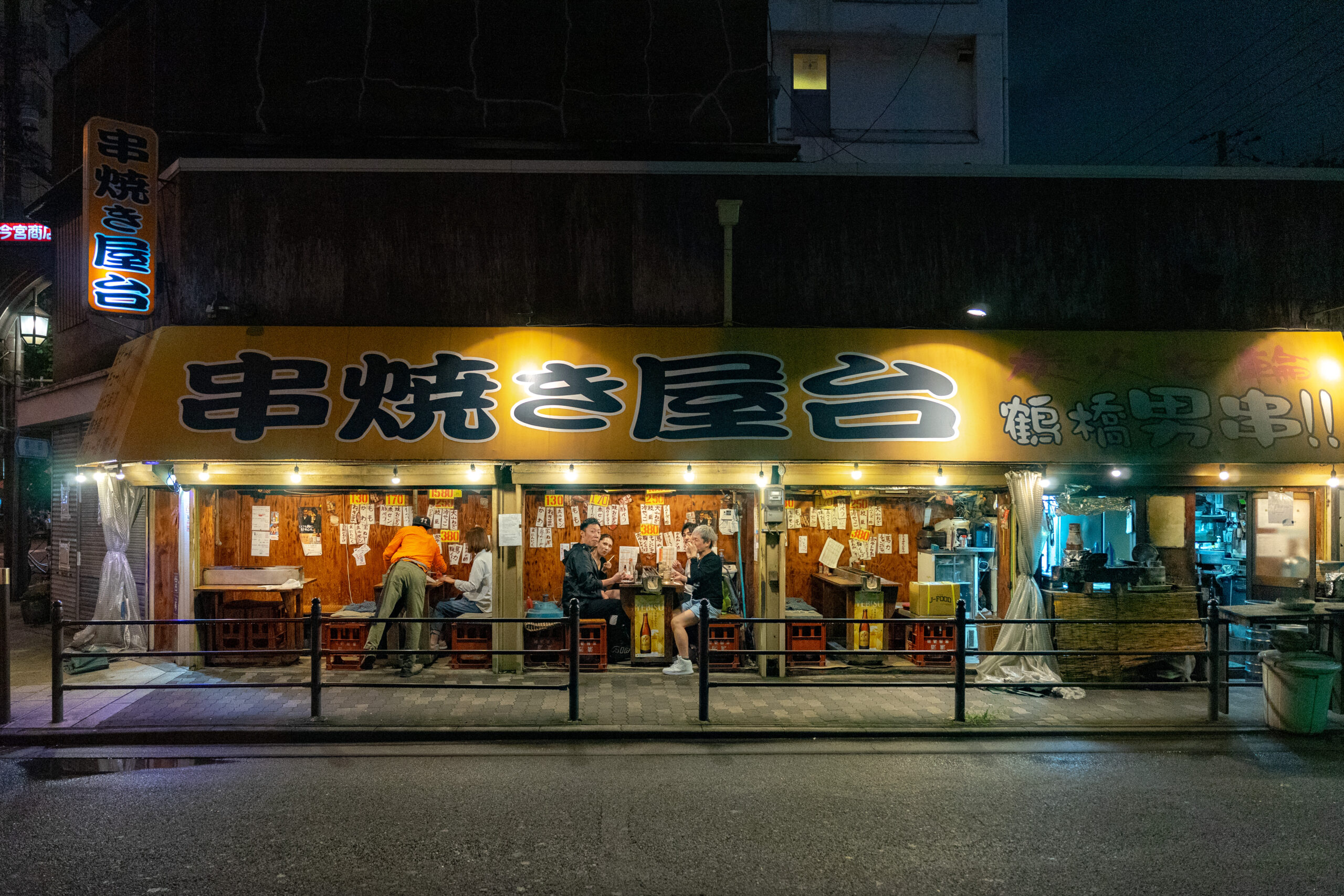
We went back to the hotel to check in, rest our legs and stomachs, and did some doom-scrolling before heading out to eat again.
Dinner was at Kushiyakiyatai Tsuruhashiotokogushi (串焼き屋台 鶴橋男串), another gem Jin found on Korean blogs. Seriously, my wife has a sixth sense for finding the best eats in any town.
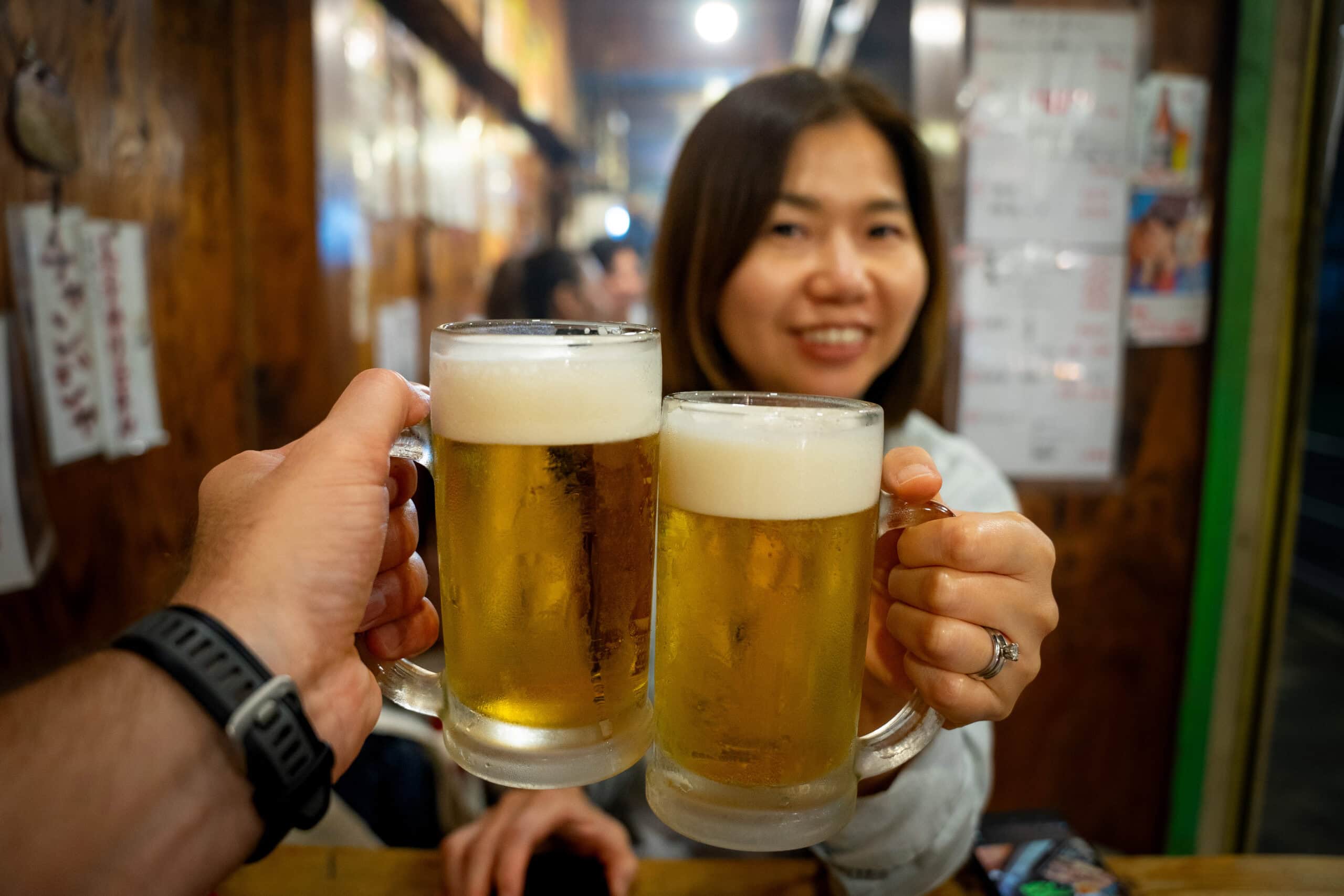
The place with the long name is a tiny spot across the street from Shinsekai, with a tram line out front and no more than four tables, each with a built-in charcoal grill.
We found a laminated menu, a tiny piece of paper and a pen waiting at our table. You write down codes from the menu and take it to the owner when you have enough dishes, or run out of space on the paper.
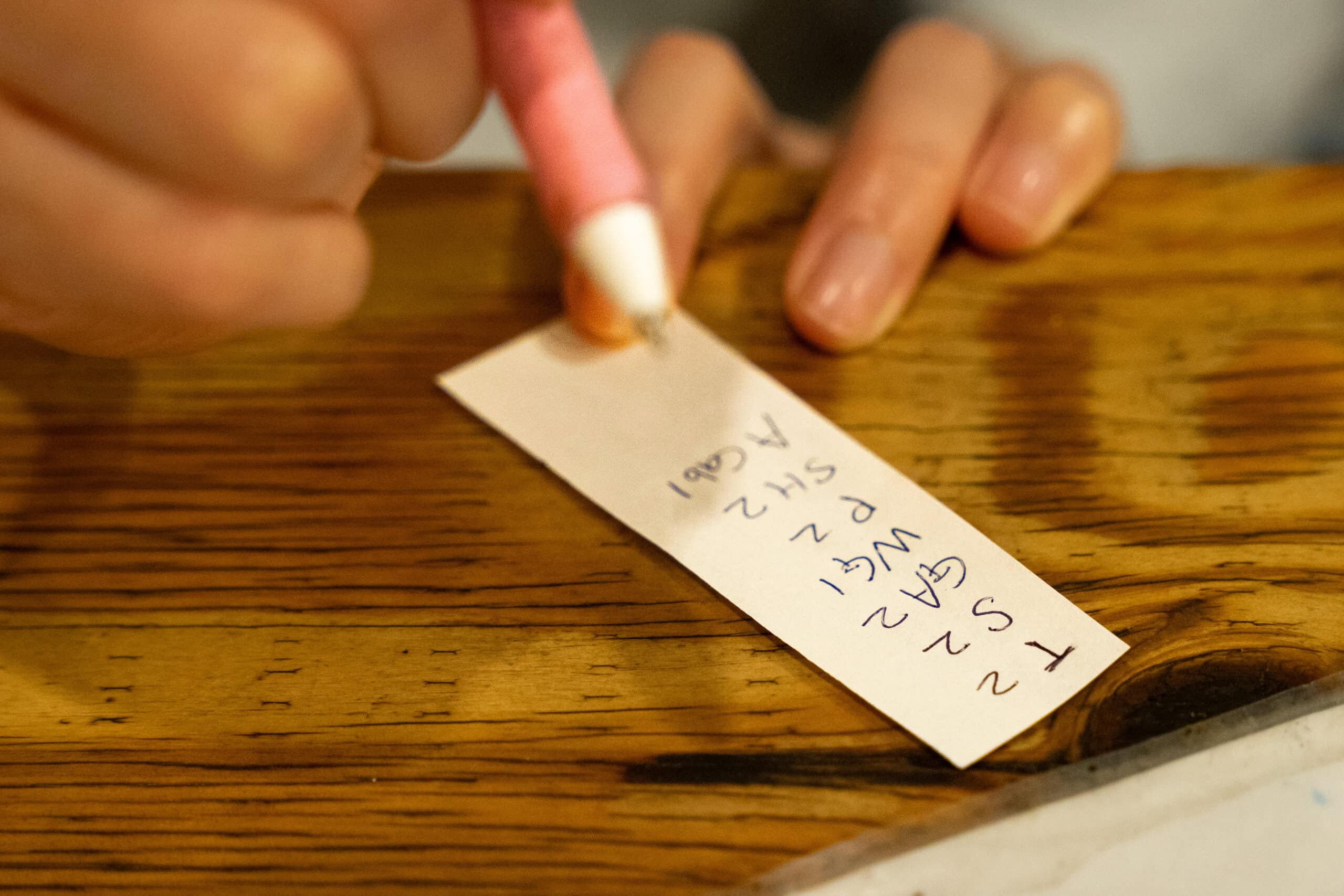
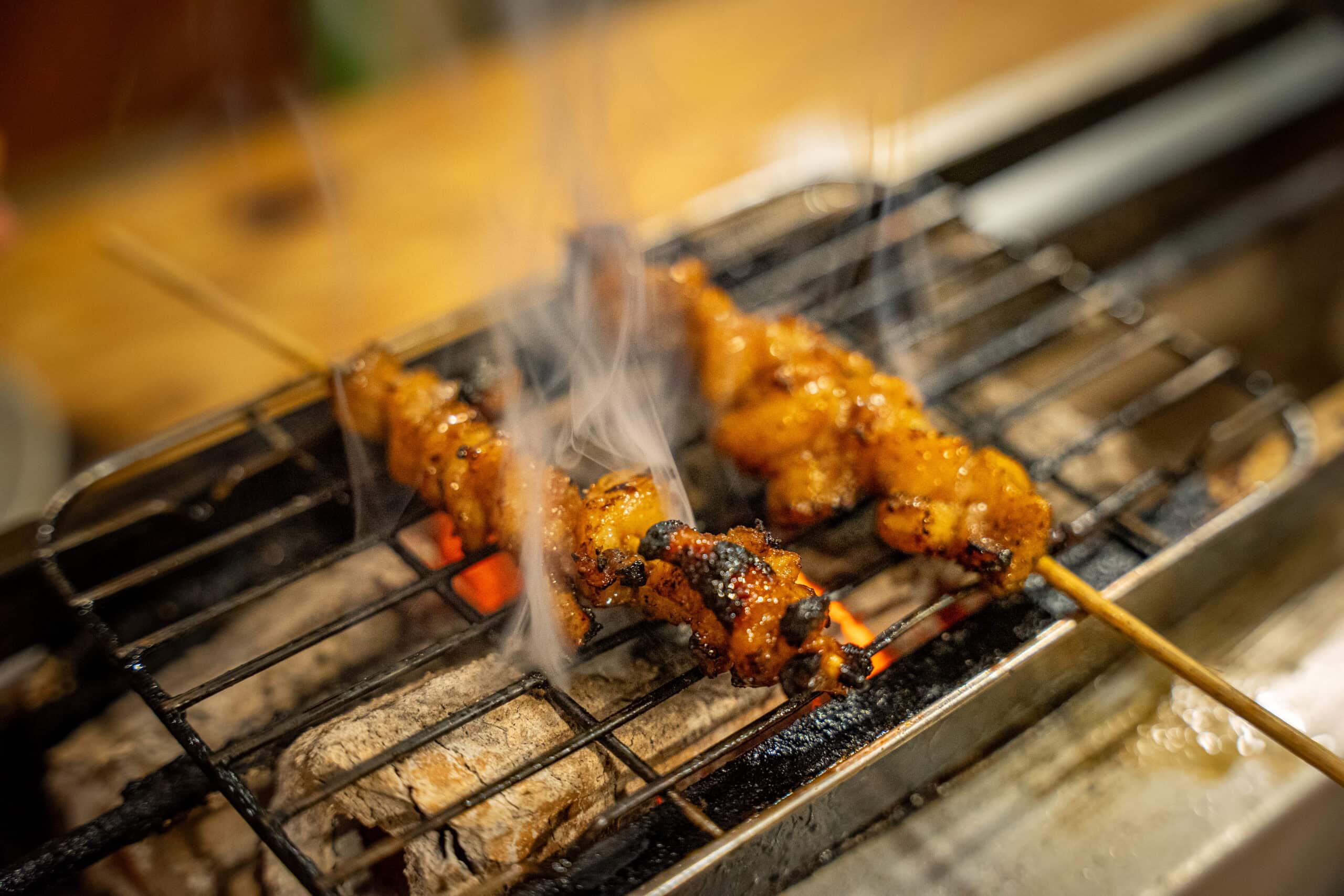
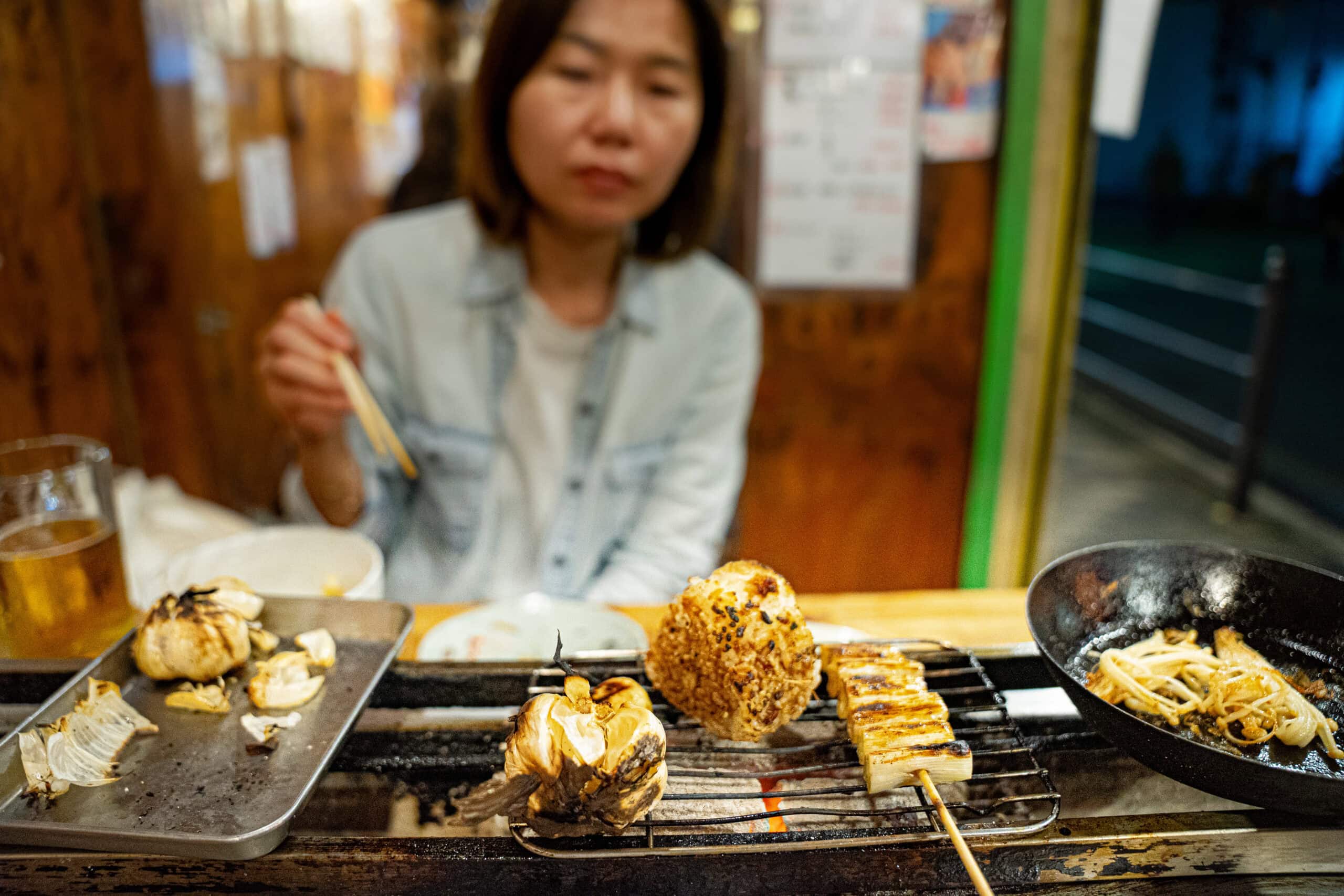
Jin wrote down T2, S2, GA2, WG1, A Cab 1- secret code for beef, chicken, shrimp, and pork skewers, whole garlic bulbs on sticks, an iron cast pan with butter and enoki mushrooms, and an onigiri that you grill over the coals.
There was also plum sake, cold beer, and a sense that we’d stumbled onto something special. It was a bit messy, smoky, and completely unpretentious.
Location
Hours: 19:30 -0:00 (closed on Thursday)
Night in Shinsekai
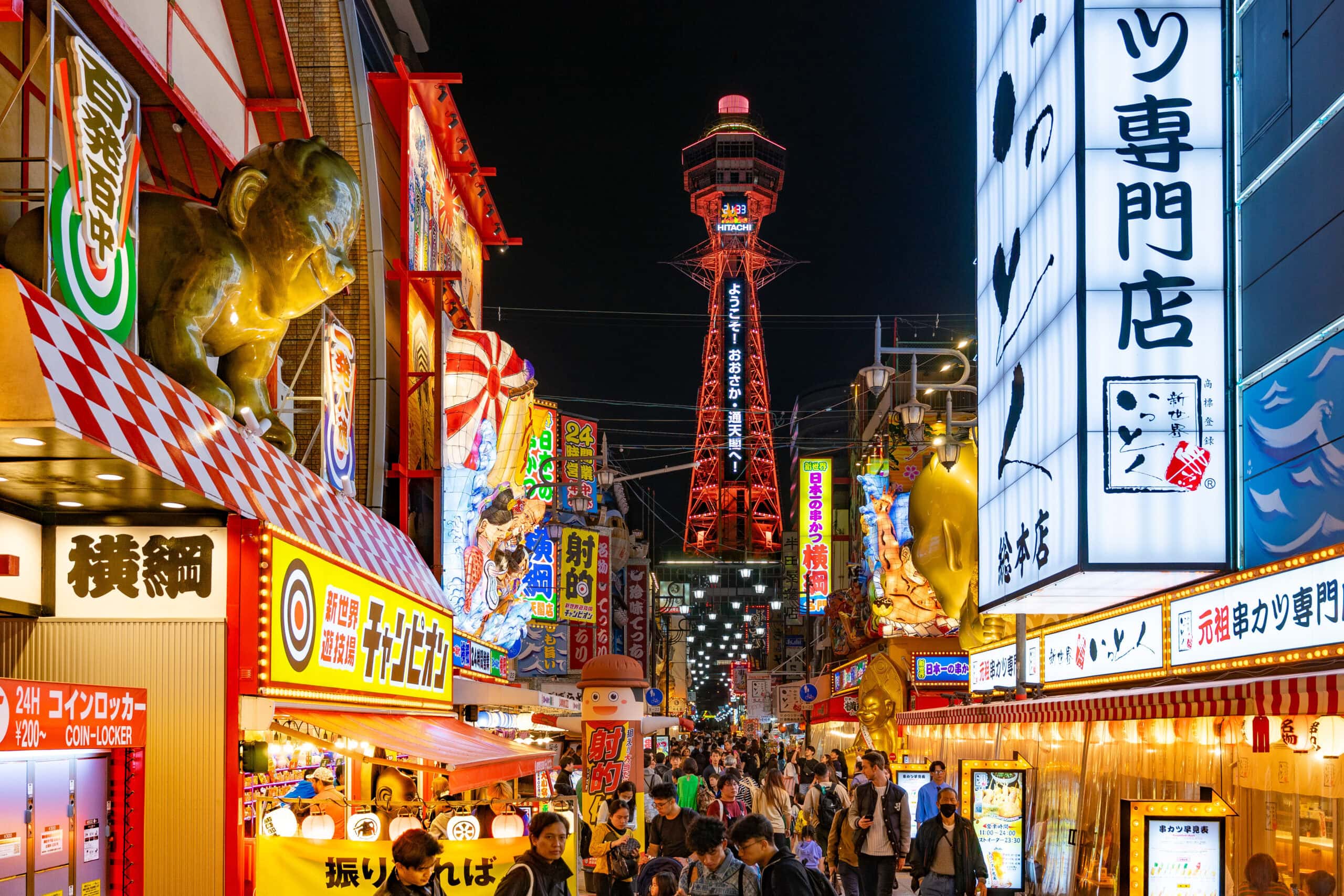
Stuffed to the gills with T2, S2, and A Cab 1, and with a slight plum sake buzz, we stumbled across the street to Shinsekai.
Shinsekai after dark was a different world from the one we saw earlier in the day. Retro magic wrapped in neon overdrive. A district of flashing signs, cheap thrills, and a whiff of nostalgia.
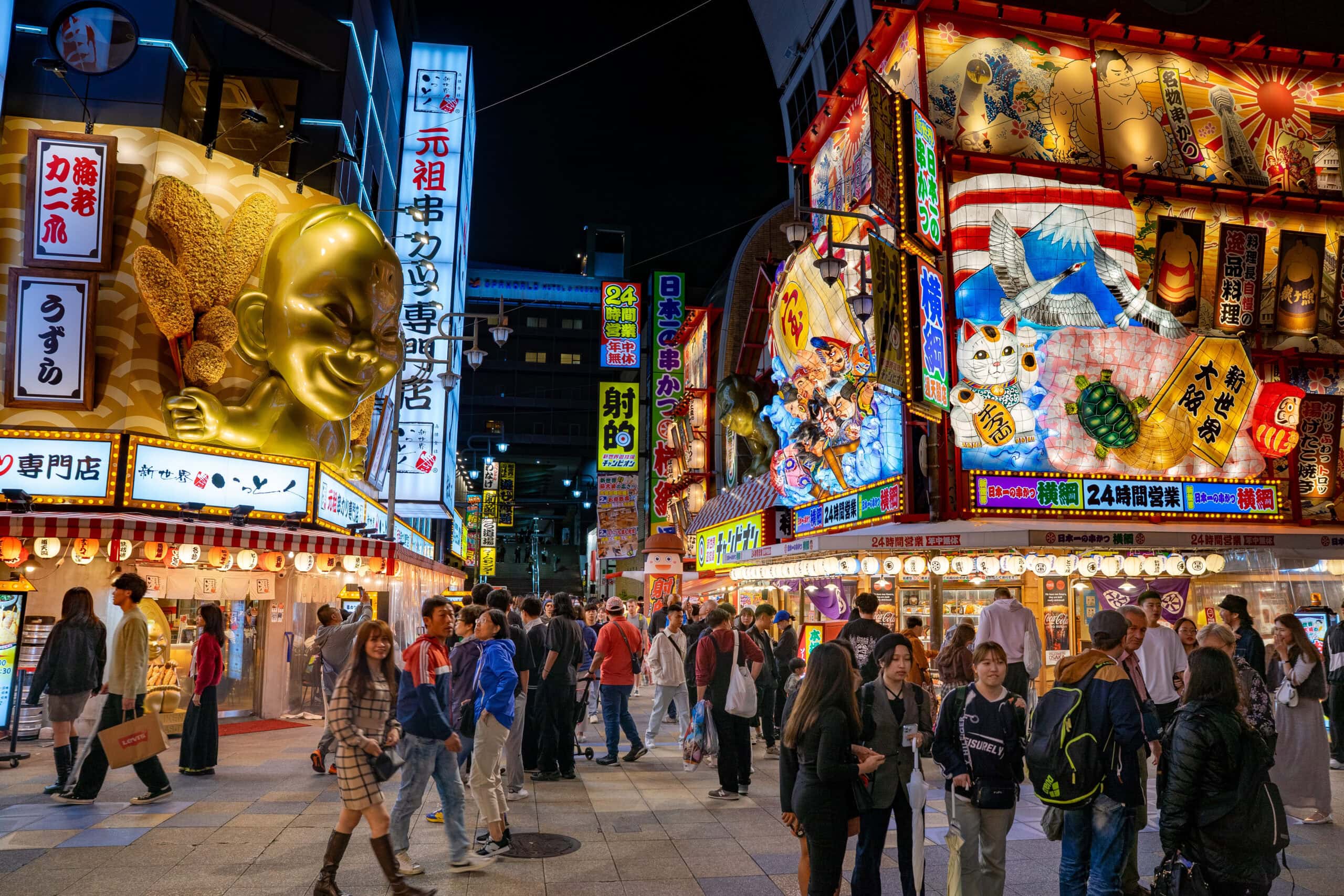
We watched locals and tourists drink beer and slurp noodles. Teenagers shot at targets with air guns, and we watched as a couple of kids destroyed a claw machine. We took a selfie under the Tsutenkaku Tower.
If you’re up for a rush or a cheap thrill (1,000 yen), a 60-meter-long slide spirals down the side of Tsutenkaku and zips you off into the basement in under 10 seconds. You must be under 100 kg, so I couldn’t go.
I made a silent promise to myself that I would be thinner on our next trip to Osaka.
Day 2 in Osaka
My Garmin said 22,451 steps. Calories weren’t counted. The only math that mattered was how many streets we could walk and how much we could eat before bedtime. If you ask me how to spend two days in Osaka, I’d say walk and eat. On repeat.
A subway or two helped us cheat, but mostly, we saw Osaka on foot.
Convenience Store Breakfast
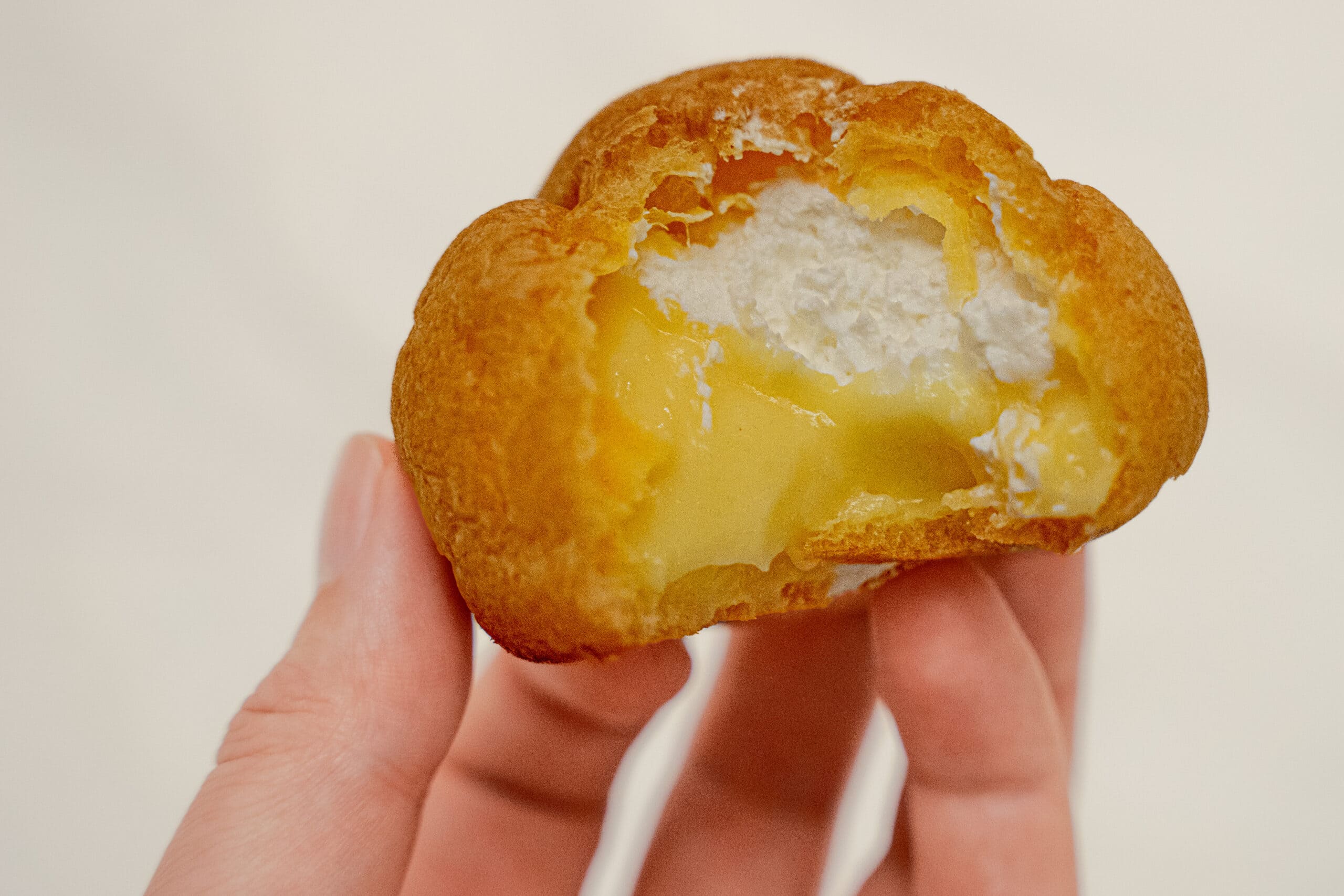
We began our second day in Osaka with a quick breakfast at Lawson, one of Japan’s ubiquitous convenience stores. While convenience store breakfasts might sound mundane, they’re anything but in Japan.
I grabbed a coffee and a fluffy egg sandwich, but the real star of the morning was Lawson’s cream puff. Filled half with rich custard and half with airy whipped cream, it was, quite frankly, orgasmic. I ate it leaning over the bin outside because it’s too good to wait—and I have no shame.
I should have gotten two.
Osaka Castle
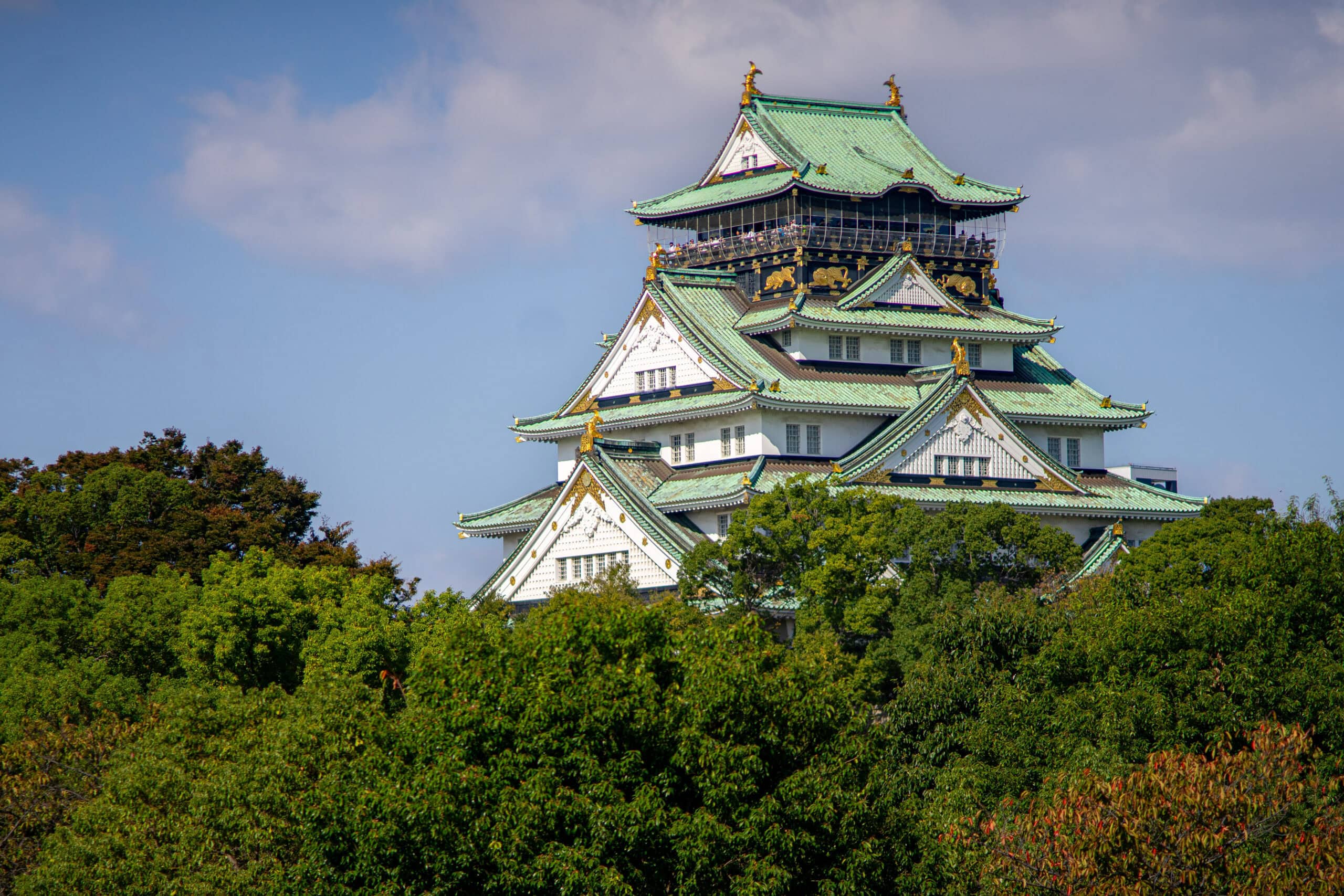
Our second day of sightseeing in Osaka starts with Osaka Castle.
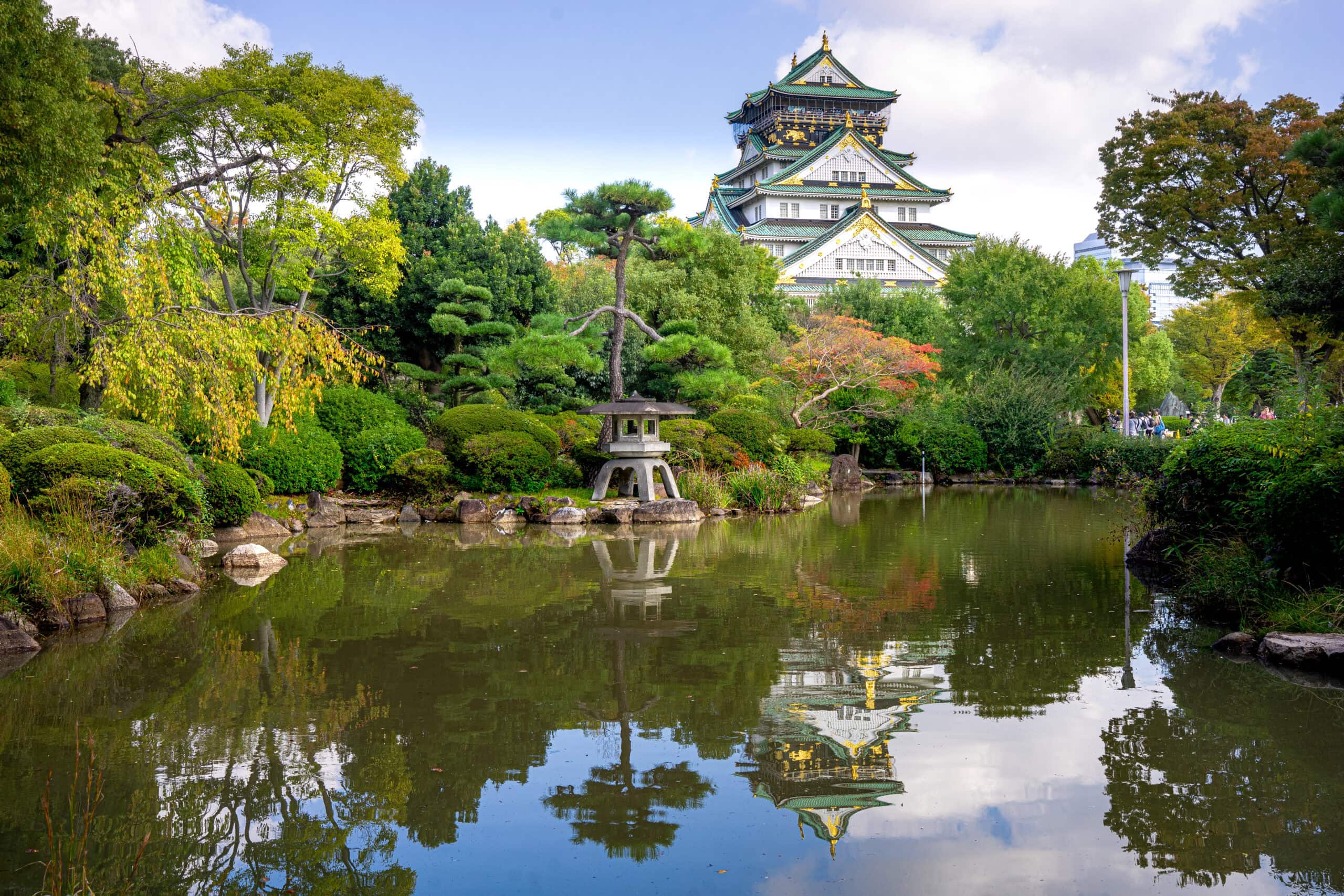
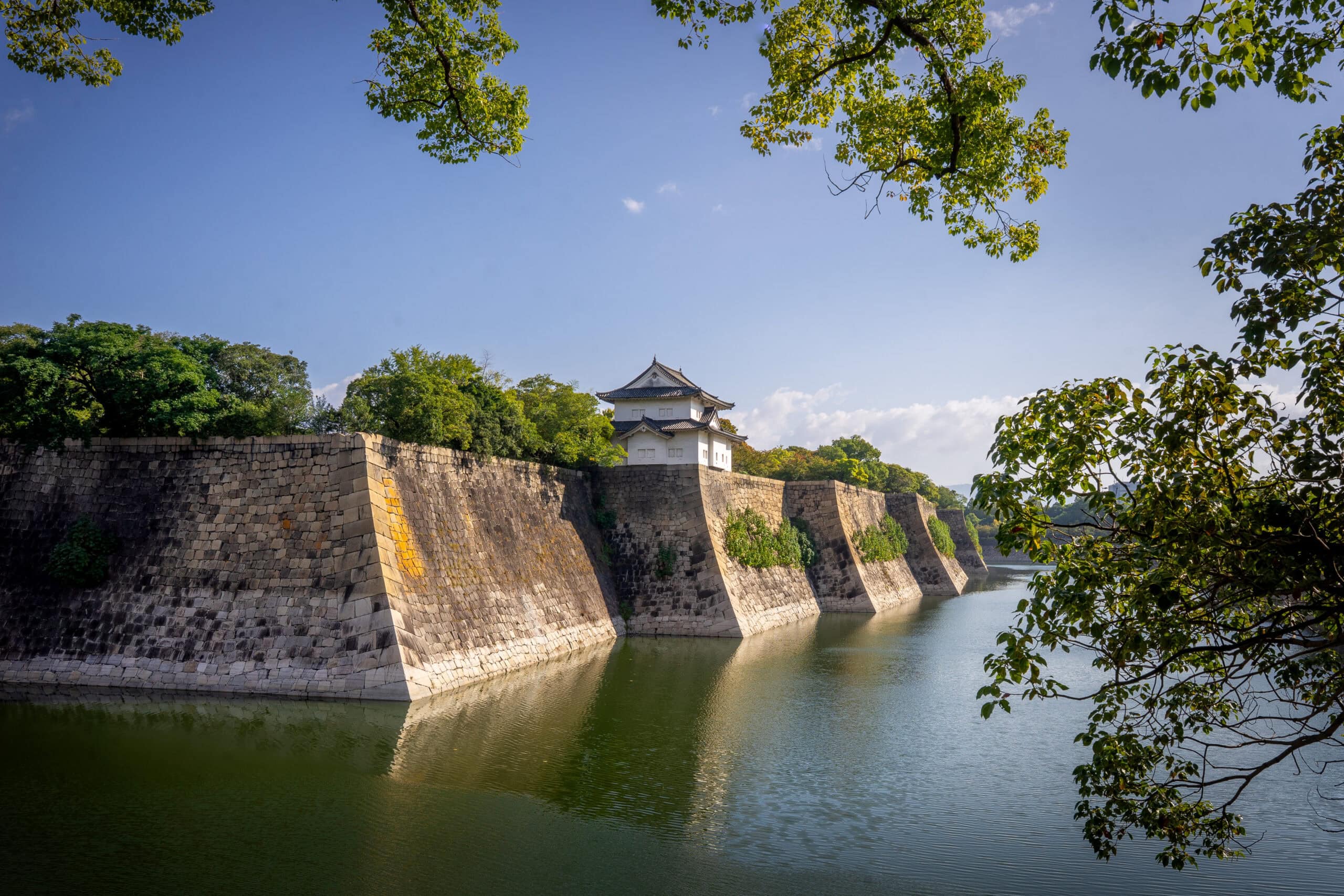
Osaka Castle rises like a monument to ambition. Built to project power, and it still does—moat wide, walls high, stone heavy as guilt. You stand beneath it and wonder what it must’ve felt like to hold that much control, that much fear. Besides pondering the power trip, the castle is a beautiful spot for taking photos.
For beautiful photos without the crowds, head to the little garden to the left after entering from the Sakuramon Gate. TikTokkers will no doubt be calling this secret garden in Osaka Castle, or the spot no one tells you about in Osaka Castle. It’s not hidden and no secret, just a little quieter. Here’s the location.
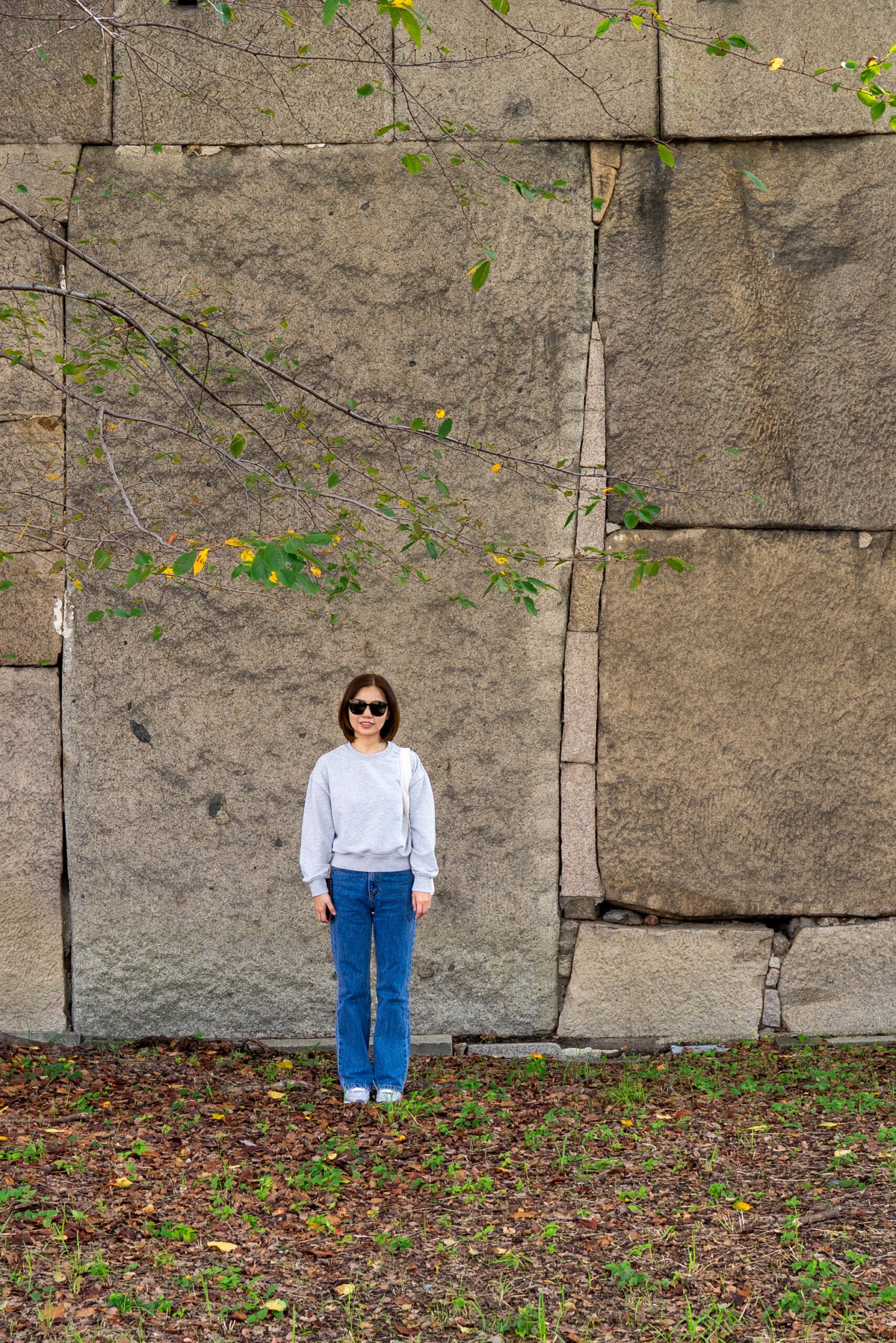
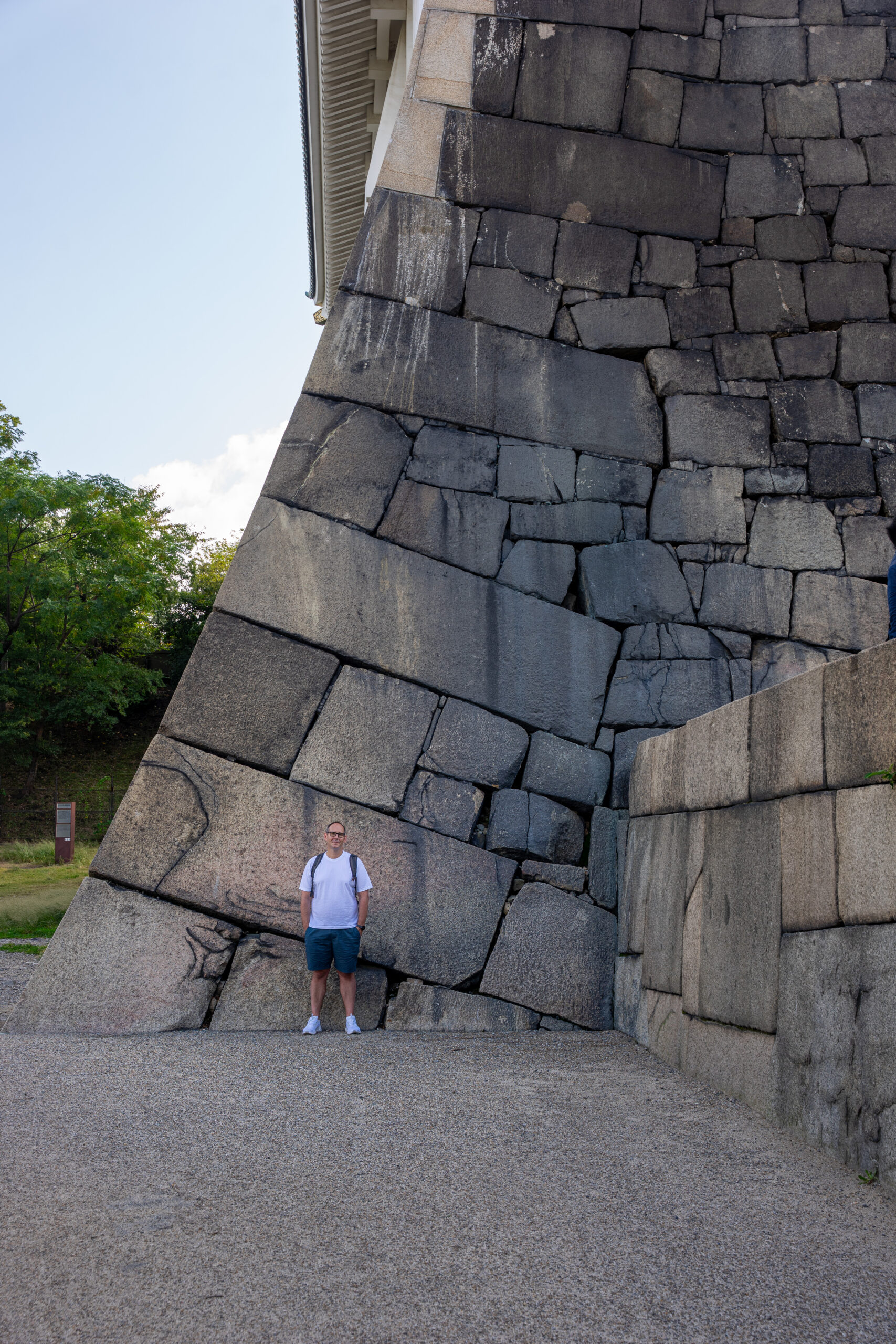
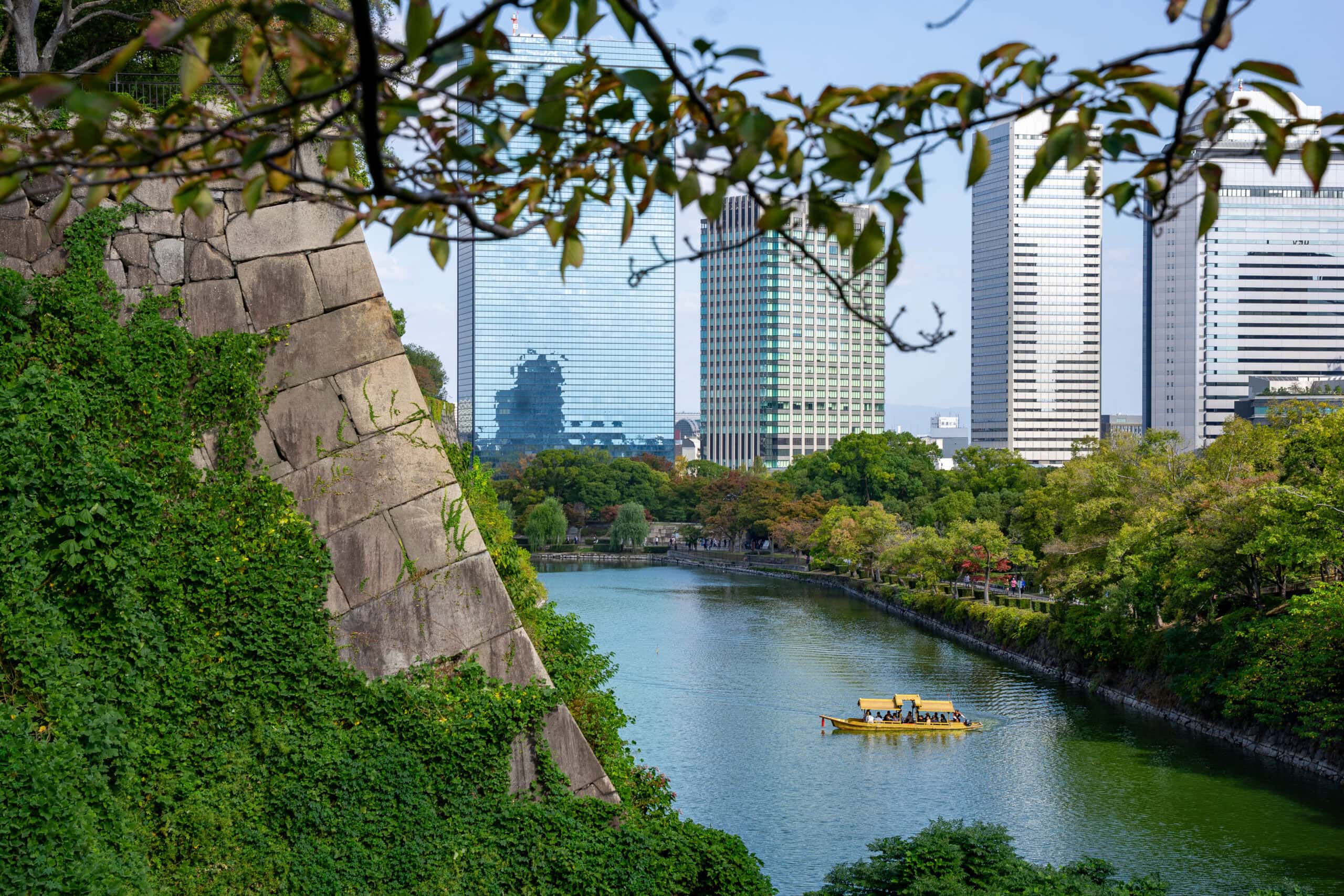
Before taking the turn to the garden, take note of the gigantic stones in the wall at Sakuramon-masugata Square. One in particular, the Taiko-ishi (Octopus Stone), covers an area of 60 square meters and weighs 120 tonnes.
The castle itself dates back to the 16th century when Toyotomi Hideyoshi built it to showcase his strength after unifying Japan. The original 16th-century structure was flattened a long time ago—first by war when the shogun Tokugawa besieged the castle with a 200,000-man army, then by lightning, and finally by the Americans. What stands today is a 1930s rebuild.
Otemon Gate entrance location
Hours: 9:00-17:00 (castle) Grounds 24/7
Entrance fee to castle: 1 200 / 600 yen adults/students. Free to walk around castle grounds
Hard Rock Café at Universal City
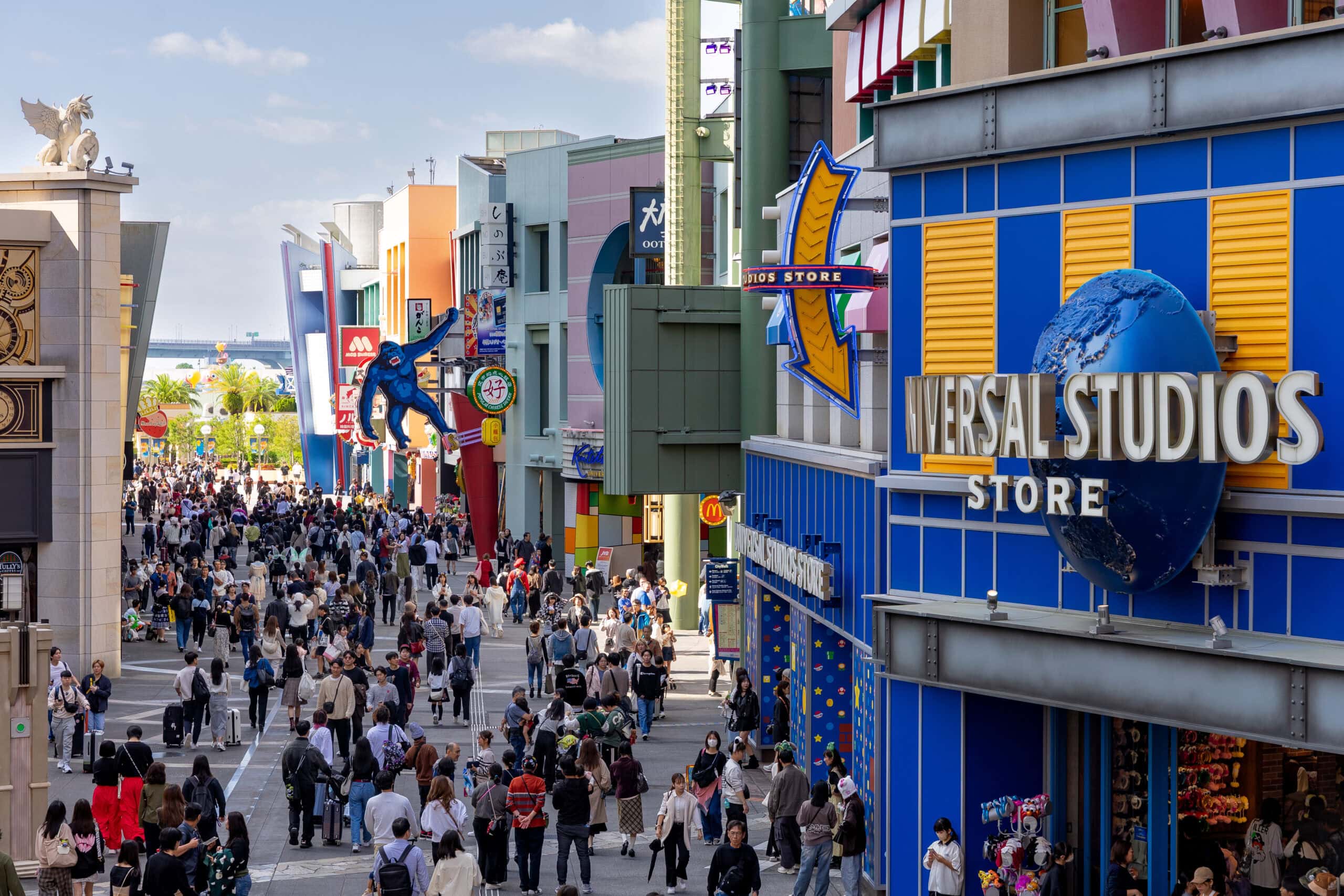
We jumped a train to Universal City, not for Super Nintendo World or some Jurassic rollercoaster. We had other business. Hard Rock cafe guitar pin collectors. Jin’s nephew needed a T-shirt. It was a mission.
We also took a quick look around Takopa (Takoyaki Park), but didn’t eat as we had bigger food plans ahead.
Osaka Hard Rock Café is just outside the entrance of Universal Studios, so there’s no need to pay the hefty entrance fee.
Hard Rock Cafe location
Chinese-Japanese Fusion for Lunch
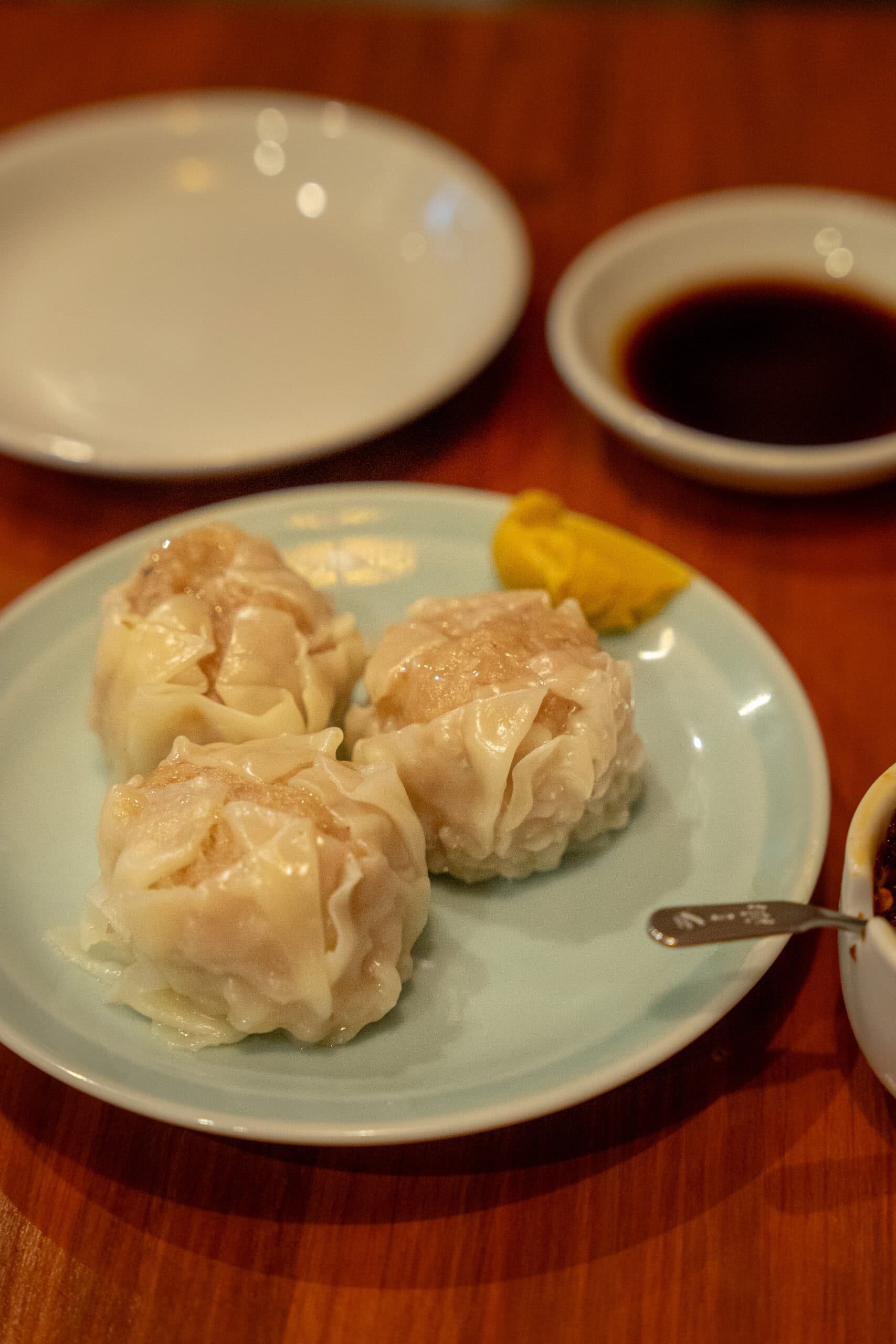
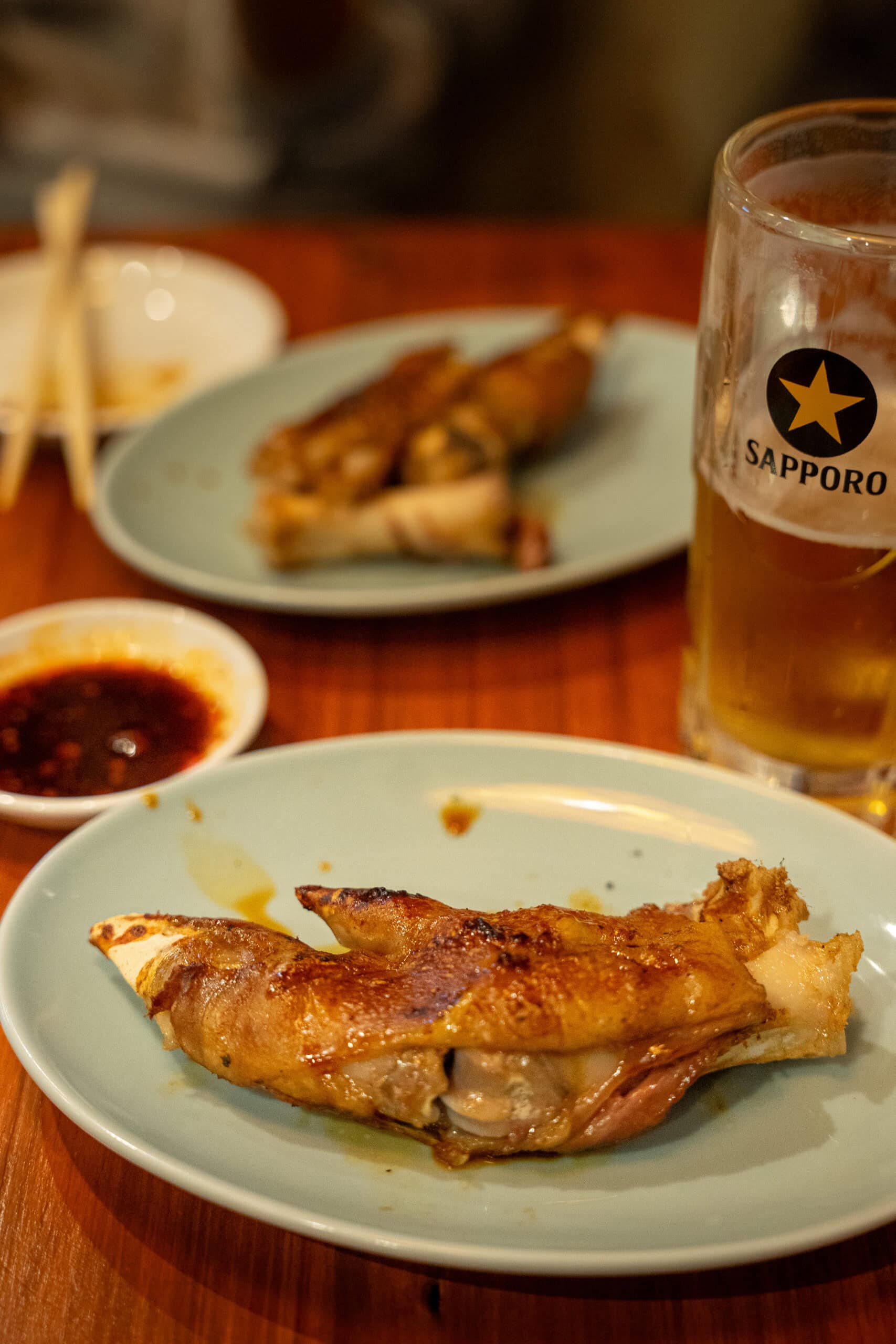
Jin had a lunch place near Kyocera Dome saved on her maps. She found it on a Korean vlog and trusted her gut. She was right.
Google Maps say the English name is Pork Chinese Osaka Shaumaichin (Taisho Branch). Somehow, the Japanese makes more sense: 豚中華 大阪焼売珍 大正店. Here’s the location.
We ordered fried and steamed shumai, a gelatinous pig’s trotter grilled to perfection each, and a bowl of mapo tofu that lit a slow fire down your throat. It was Chinese in spirit, Japanese in discipline.
The shumai was so good we ordered seconds. Two Sapporo draughts turned into a long pause and a lazy conversation. It’s one of those lunches that convinces you to stay a little longer than you planned.
Hours: 11:30–15:00 , 17:00–23:00 pm (week days)
Weekends: 11:30 – 23:00
Abeno Harukas Observatory – Views from Japan’s Tallest Building
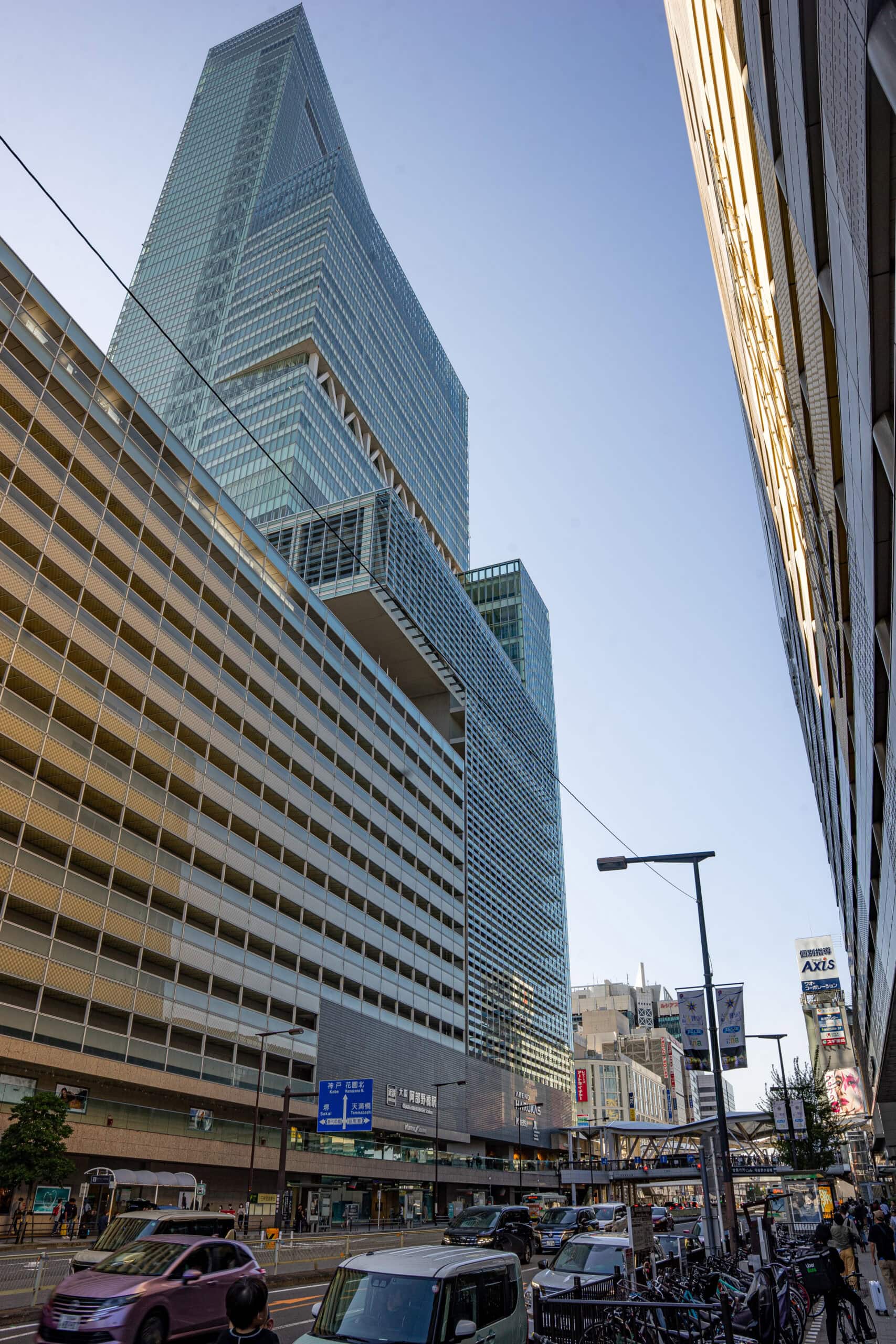
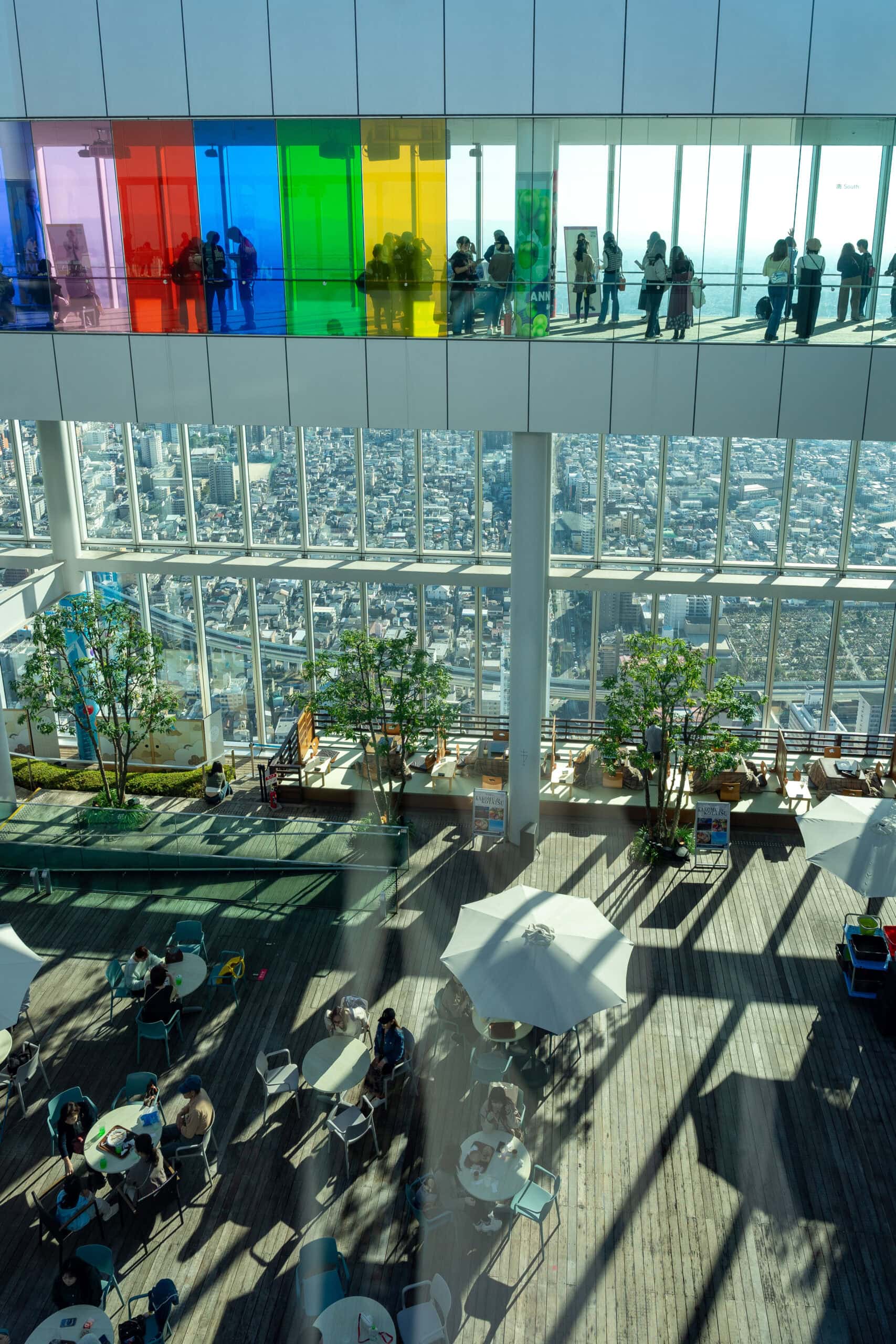
We wanted to see Osaka from above—because of course we did. That old urge to climb higher, to look down on the world and make sense of it, even if we never really can.
And so the big Umeda Sky vs Abeno Harukas conundrum began. Every influencer with an iPhone and a hashtag picks Umeda. You know the type—Japan is living in 2253, they’ll say, sipping vending machine matcha like they know every damn thing.
We chose Abeno Harukas. Tallest building in Japan. A 300-metre-tall erection of steel, glass, and pride. The Harukas 300 Observatory spans the 58th to 60th floor, and the views are endless. The kind of view that reminds you just how small you are.
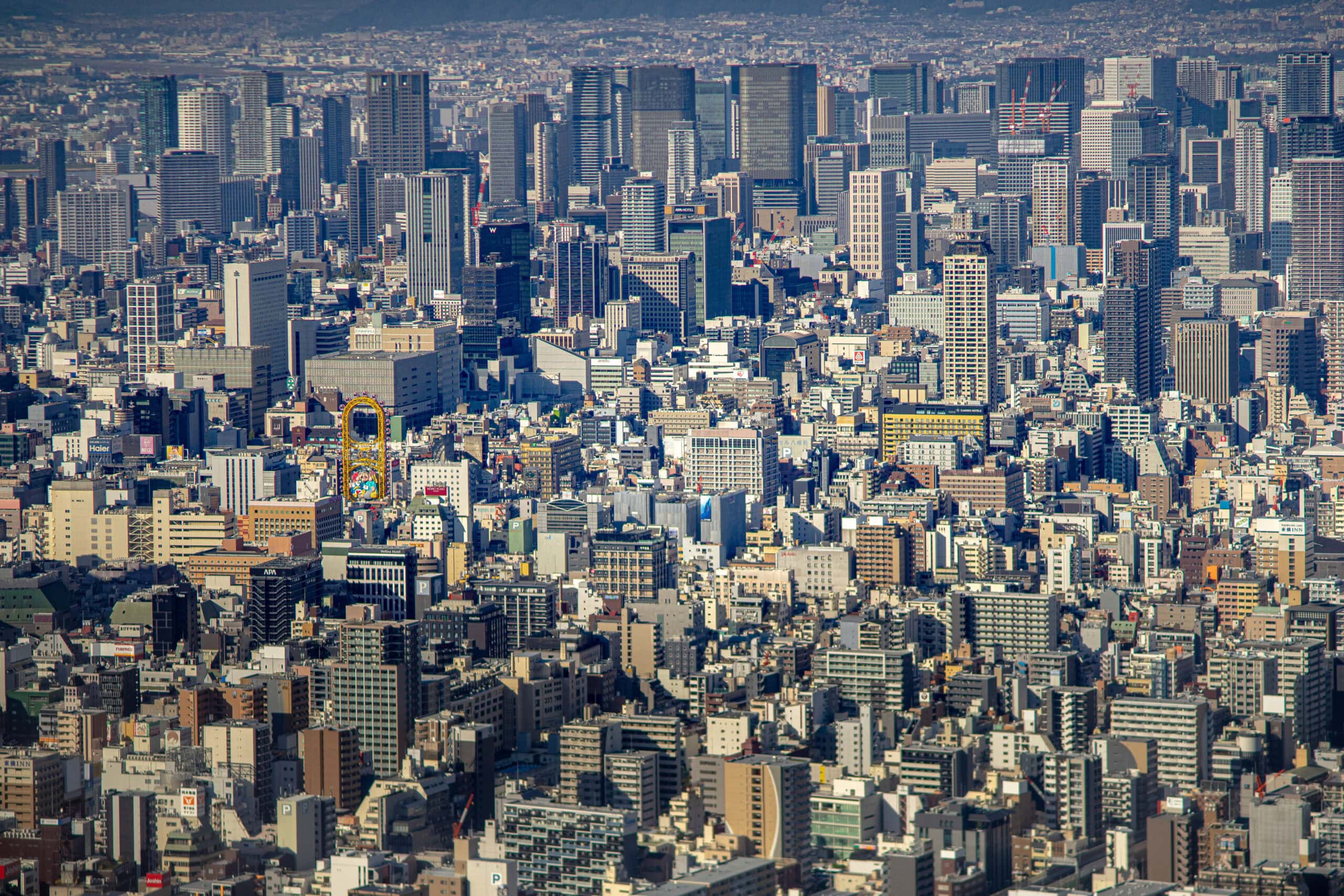
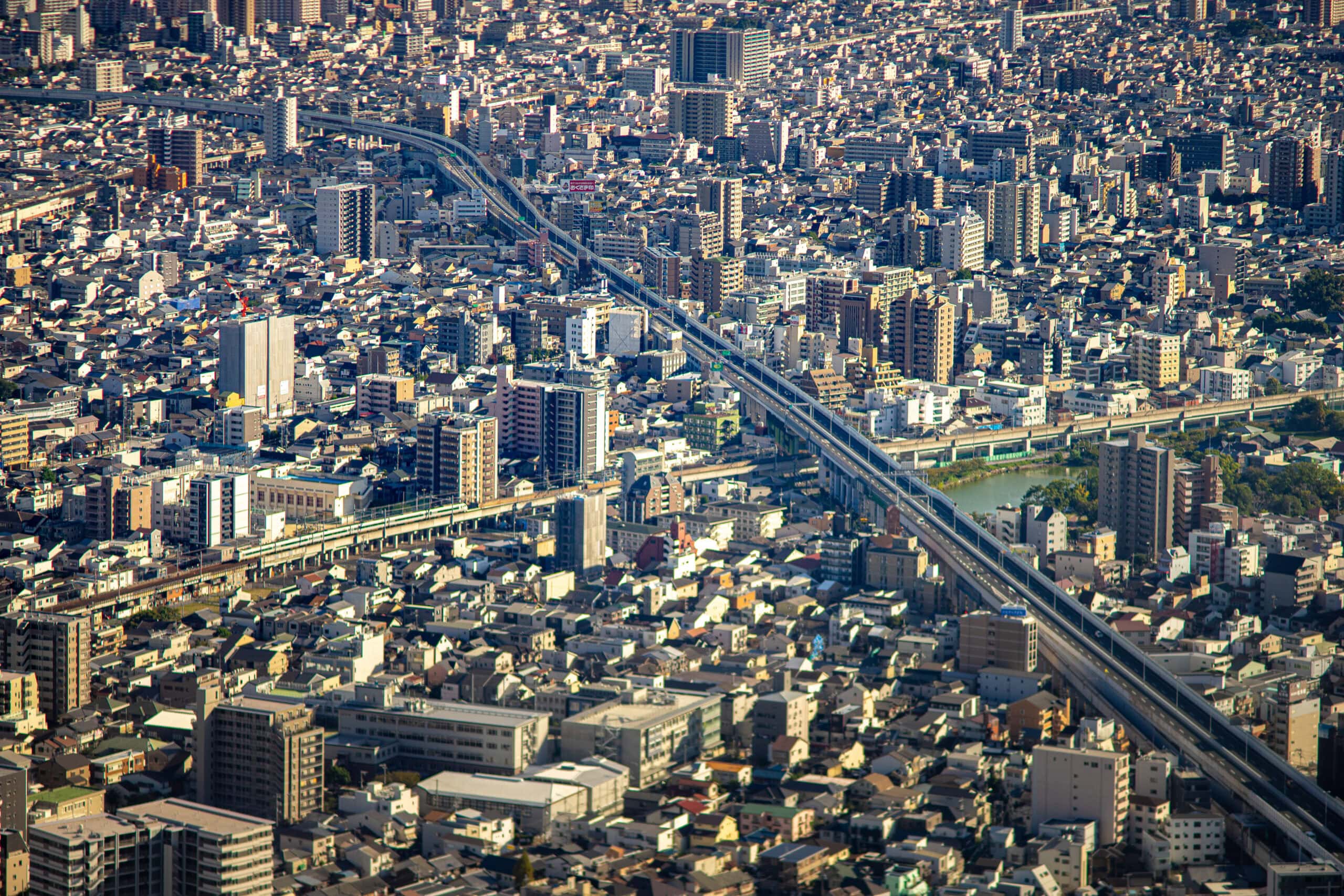
Osaka sprawls out like some great, breathing organism. Highways snaking through high-rises like arteries.
But look close. You’ll spot a little temple, a garden, a clothesline fluttering on a distant rooftop. Dotonbori and Shinsekai are down there, too, toy-sized, dwarfed by the monster they helped create. Osaka doesn’t end. It just folds in on itself like some brilliant origami.
There’s a free garden on the 16th floor if you’re tight on yen. But the view that makes you feel like a god is on top, and for that, you’ll have to pay ¥2,000.
Location
Entrance Fee: 2000 yen for adults, discounted for children
Hours: 9:00 – 22:00 (last entry 21:30 )
Namba Yasaka Shrine: Where the Lion Eats Your Demons
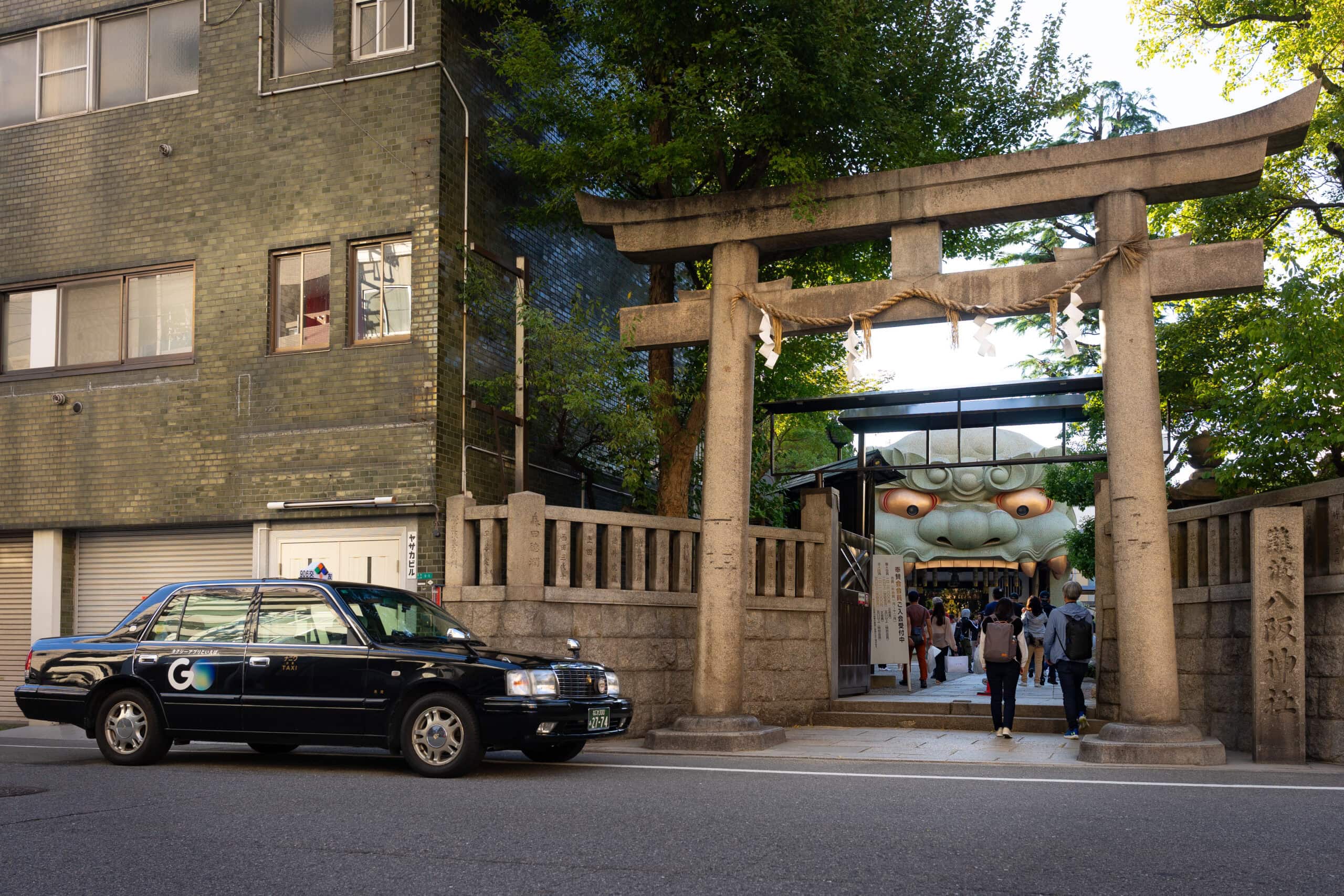
Tucked into a backstreet not far from our hotel is one of Osaka’s weirdest and most wonderful sights—Namba Yasaka Shrine. You’re walking along, half-lost in the concrete sprawl, and then bam, a giant lion head, 12 metres high, jaws wide open like it’s about to swallow the city whole.
It’s not just for show. This Shinto lion—shishi—is said to devour evil spirits and spit out good fortune, especially for students and salarymen chasing that next big win. Want to pass your exams? Get that promotion? Let the lion eat your bad juju.
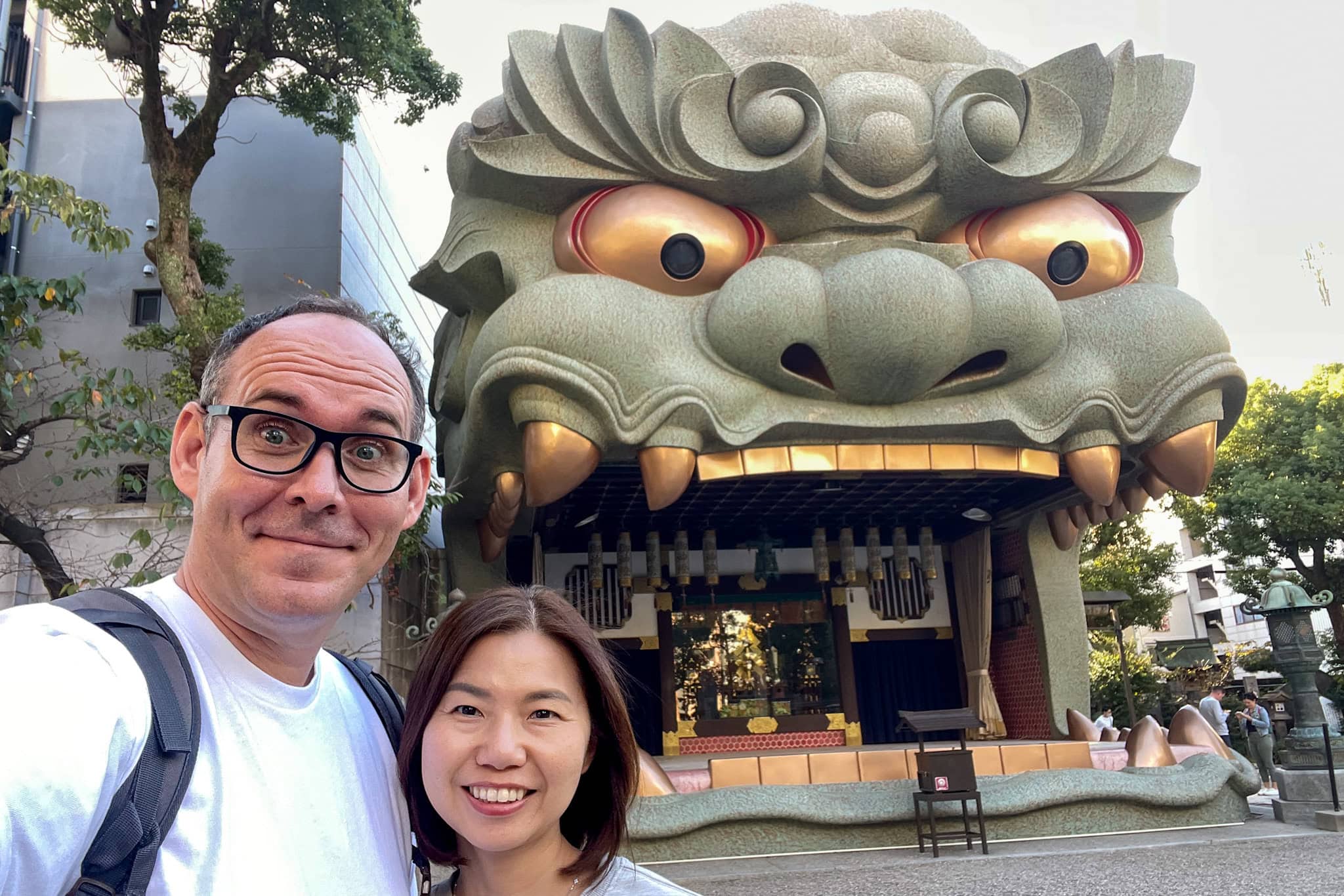
The Namda Yasaka Shrine is so surreal it feels like a Miyazaki fever dream dropped in the middle of downtown Osaka.
Locals come here to pray for success; tourists come for the Instagram. Both leave a little lighter.
Hours: 06:30-17:00
Entrance Fee: Free
Location
Haidendai Shrine: A Quiet Corner of Old Japan
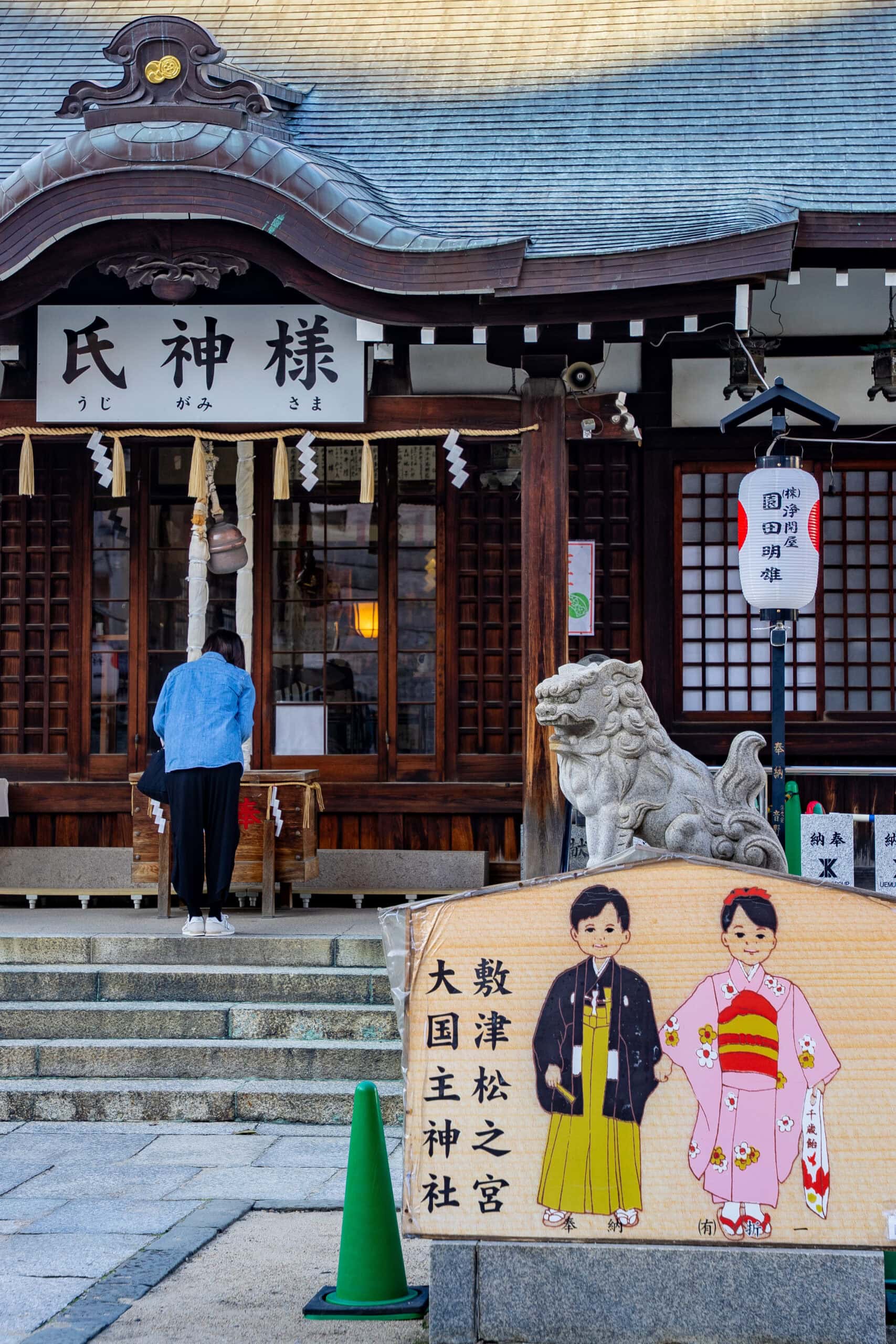
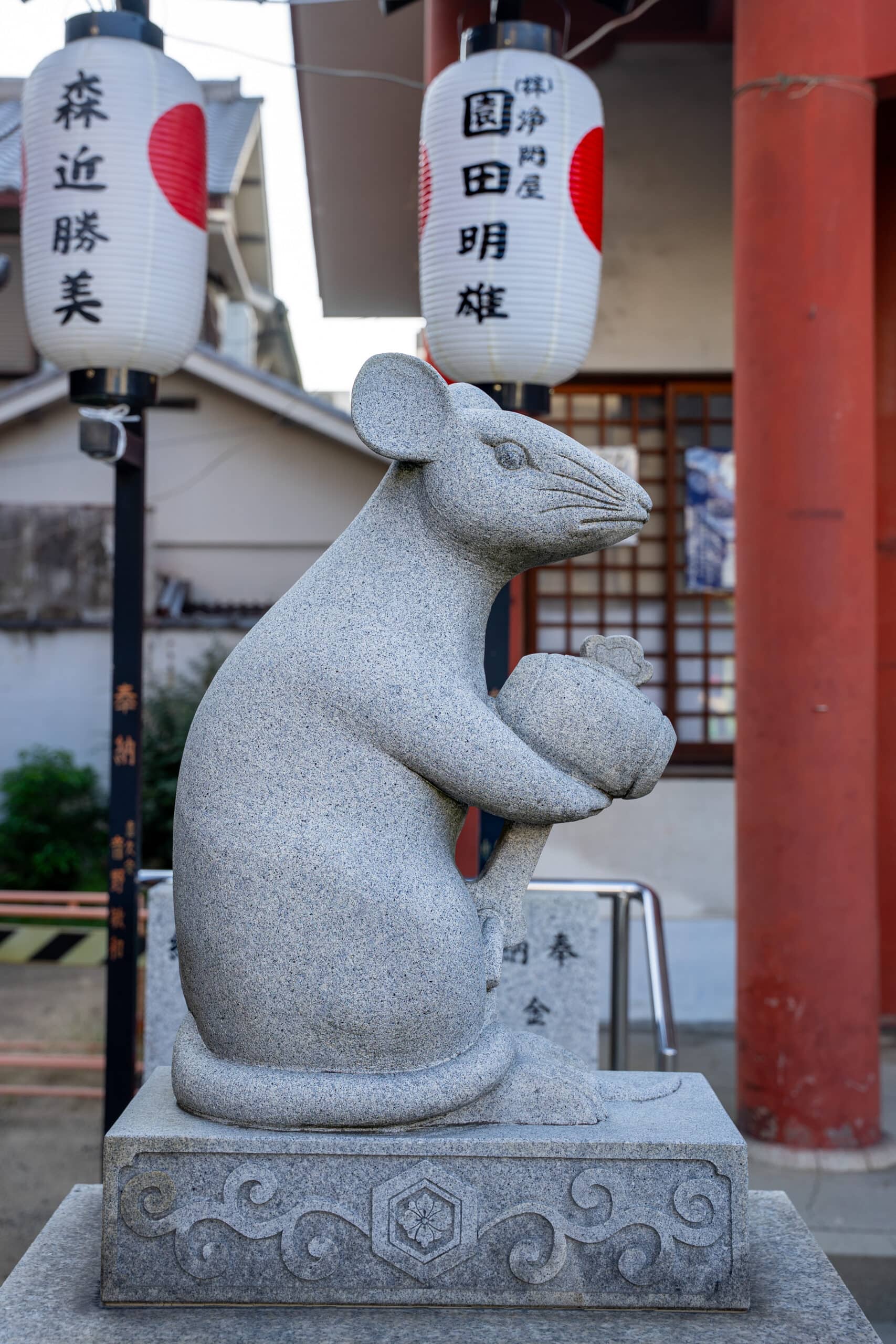
A few streets away, the noise fades just enough to hear yourself think. Haiden Shrine is tiny—blink and you’ll miss it—but it carries its own quiet weight. Nestled between buildings and vending machines, it’s the kind of place you stumble into and feel immediately calmer.
Haiden roughly translates to hall of worship, and this spot is a place for local Shinto rituals, ancestral offerings, and everyday blessings.
Salarymen drop in to bow before the workday. Elders leave offerings. It’s not famous. It’s not flashy. But if you’re looking for that fleeting, meditative pause in a city that never shuts up, this is it.
No crowds. No fanfare. Just a small slice of spiritual peace hidden in plain sight.
Location
Free entrance
Afternoon Rest
Even with only two days in Osaka, you’ll need to pace yourself. Don’t fall into the trap of thinking you MUST be out and about all the time. If you’re tired, take a rest.
We were, so back to the hotel we went. For some time off our feet and doom scrolling on our phones.
There might have been another convenience store snack on the way back to the hotel.
Dotonbori – Where Osaka Lets Loose
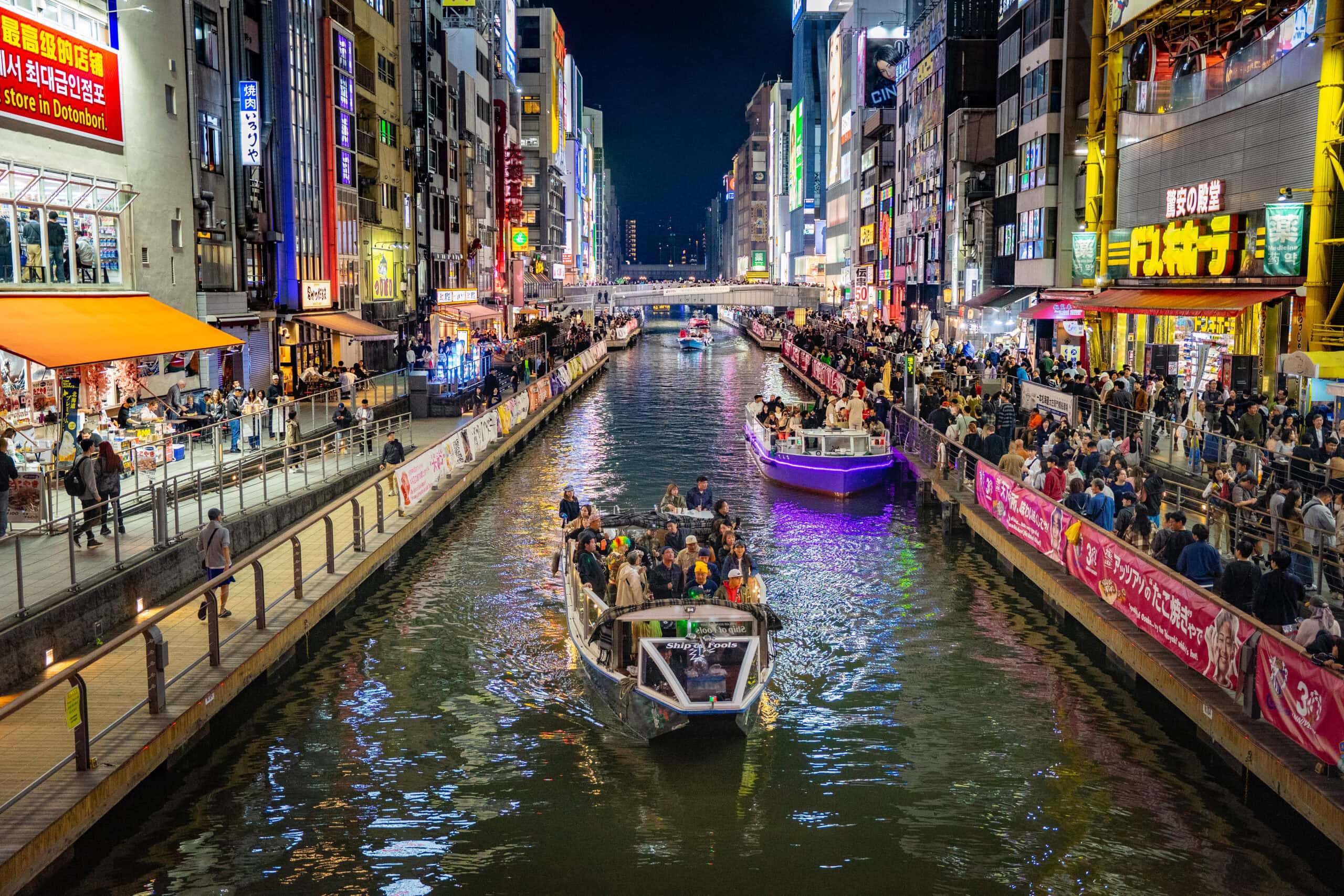
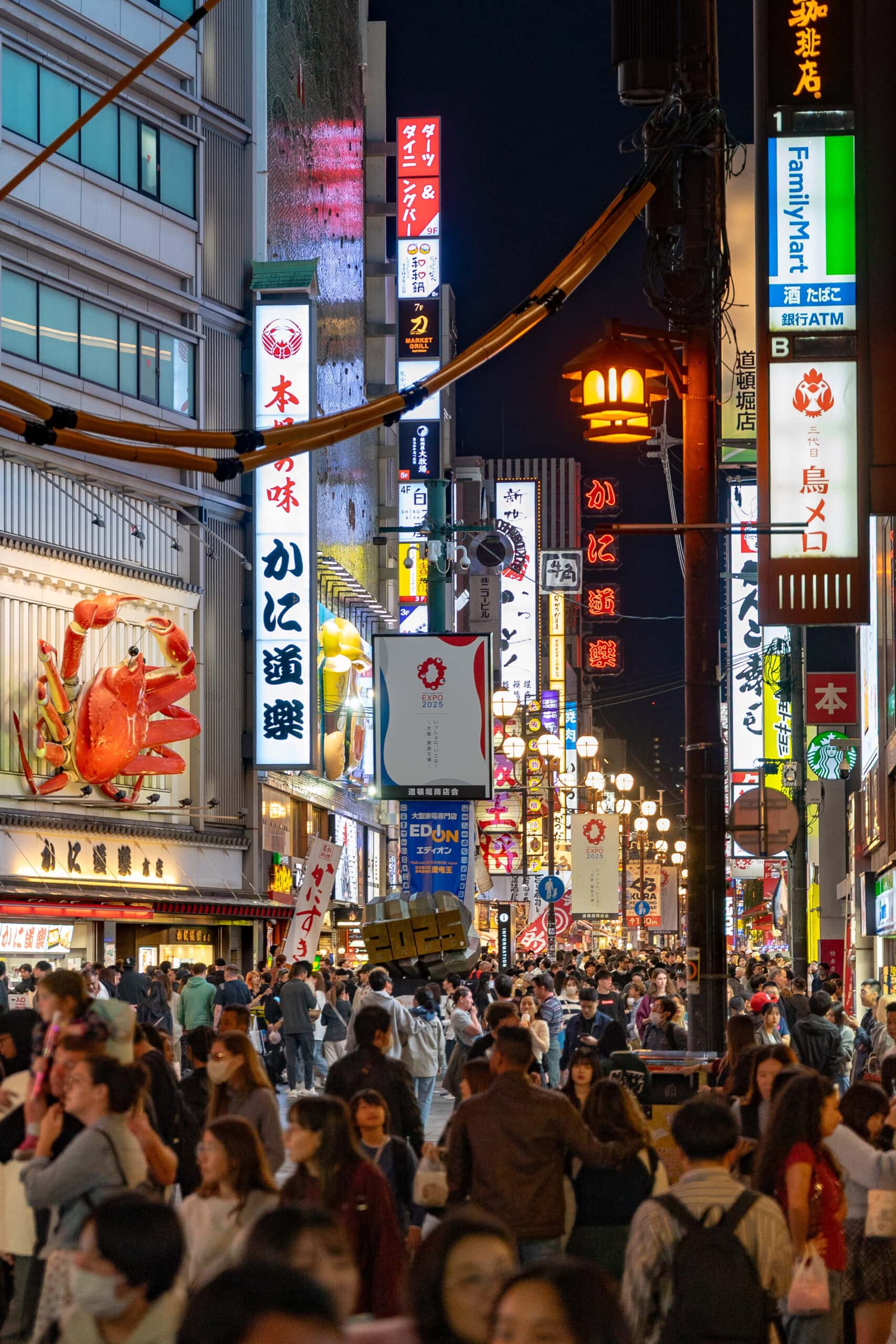
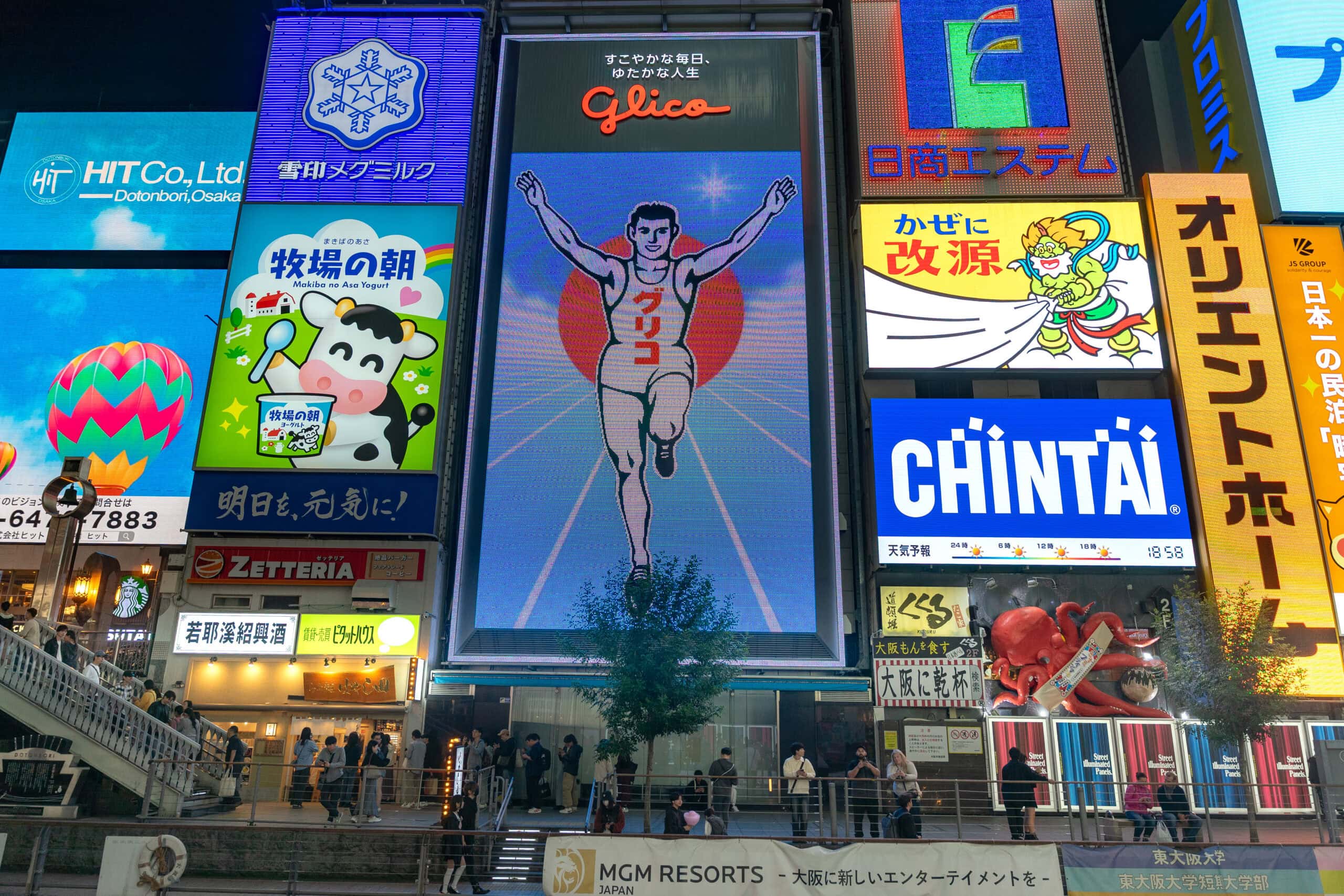
We walked into Dotonbori as daylight surrendered to neon. Osaka had already charmed us, but Dotonburi was something else. A sensory riot. One of the best nightlife spots on the planet. Crowds pulsed through the streets, drawn by the glow and the promise of good times or something fried, skewered, and drowned in sauce.
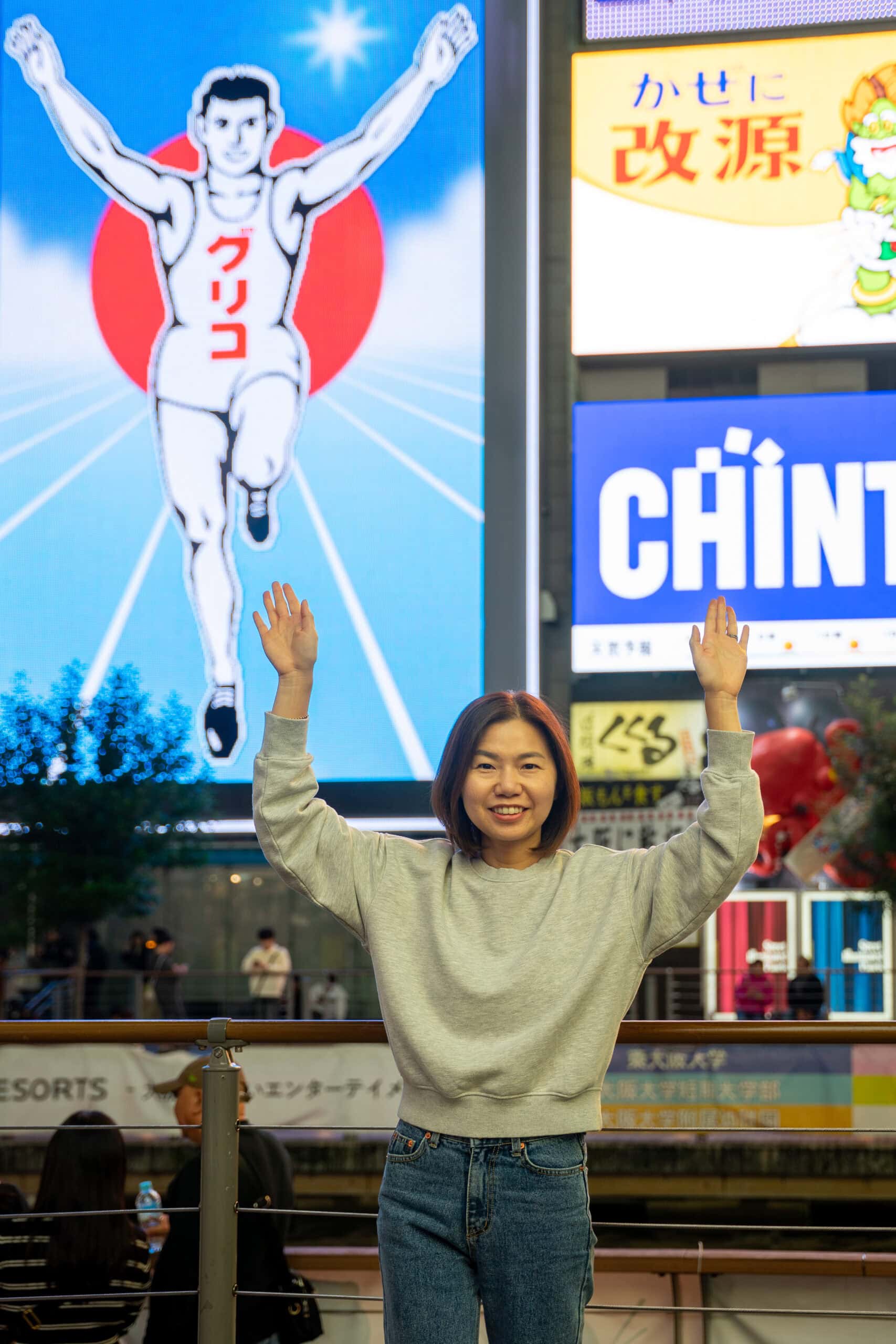
We did the Glico Man selfie, of course. It’s obligatory. Everywhere, something demanded attention. Canal boats floated past, full of shouting, waving passengers. We waved back.
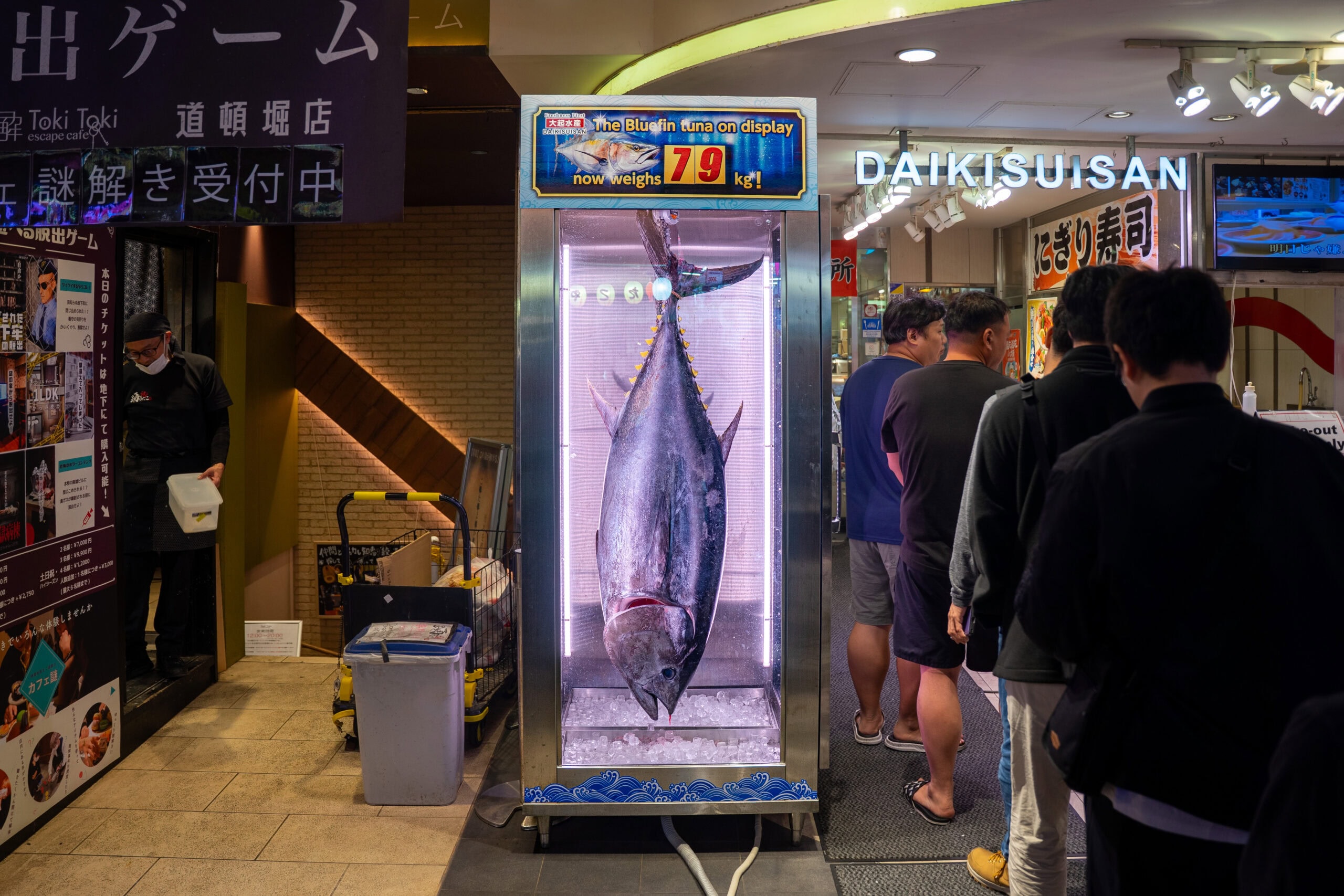
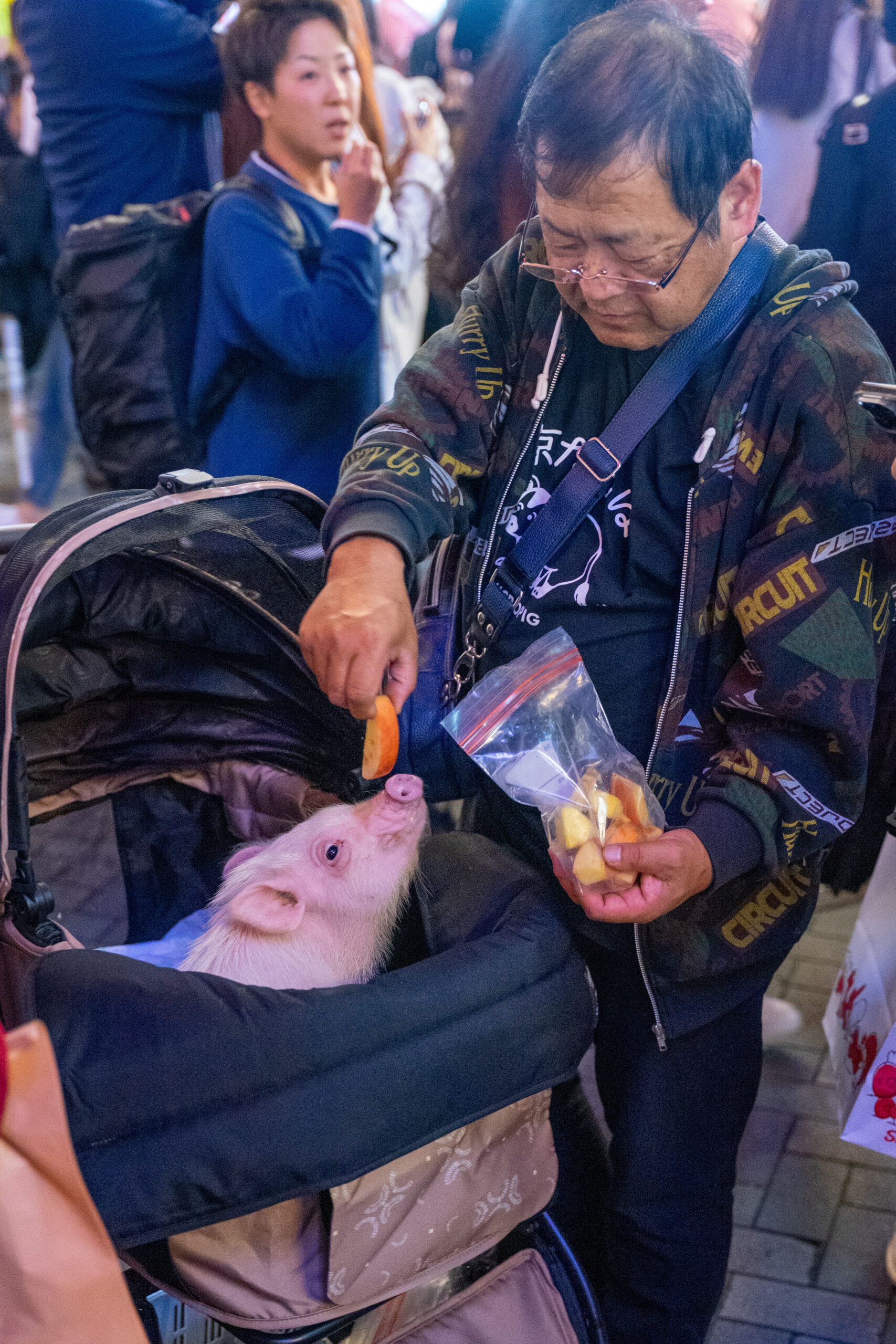
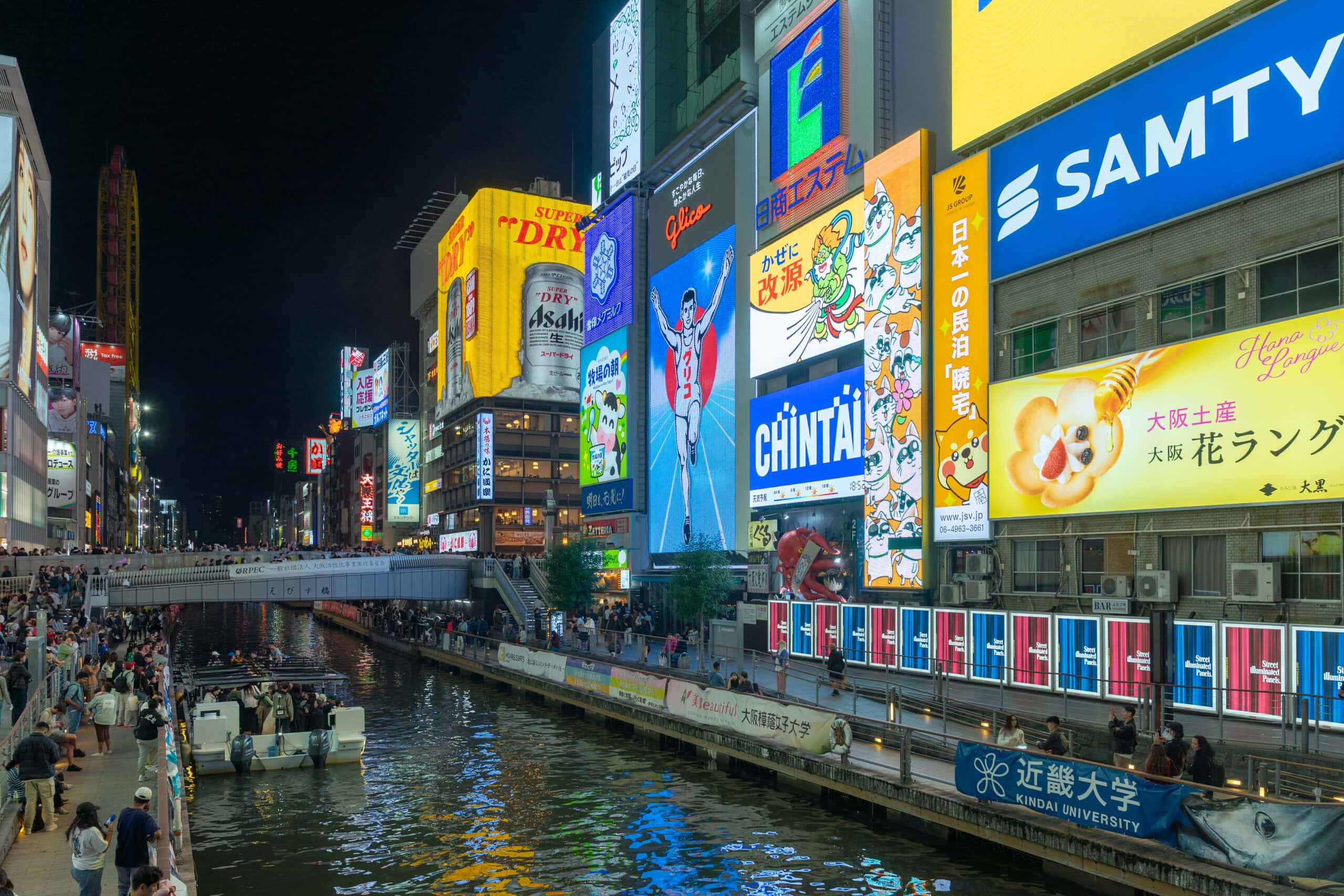
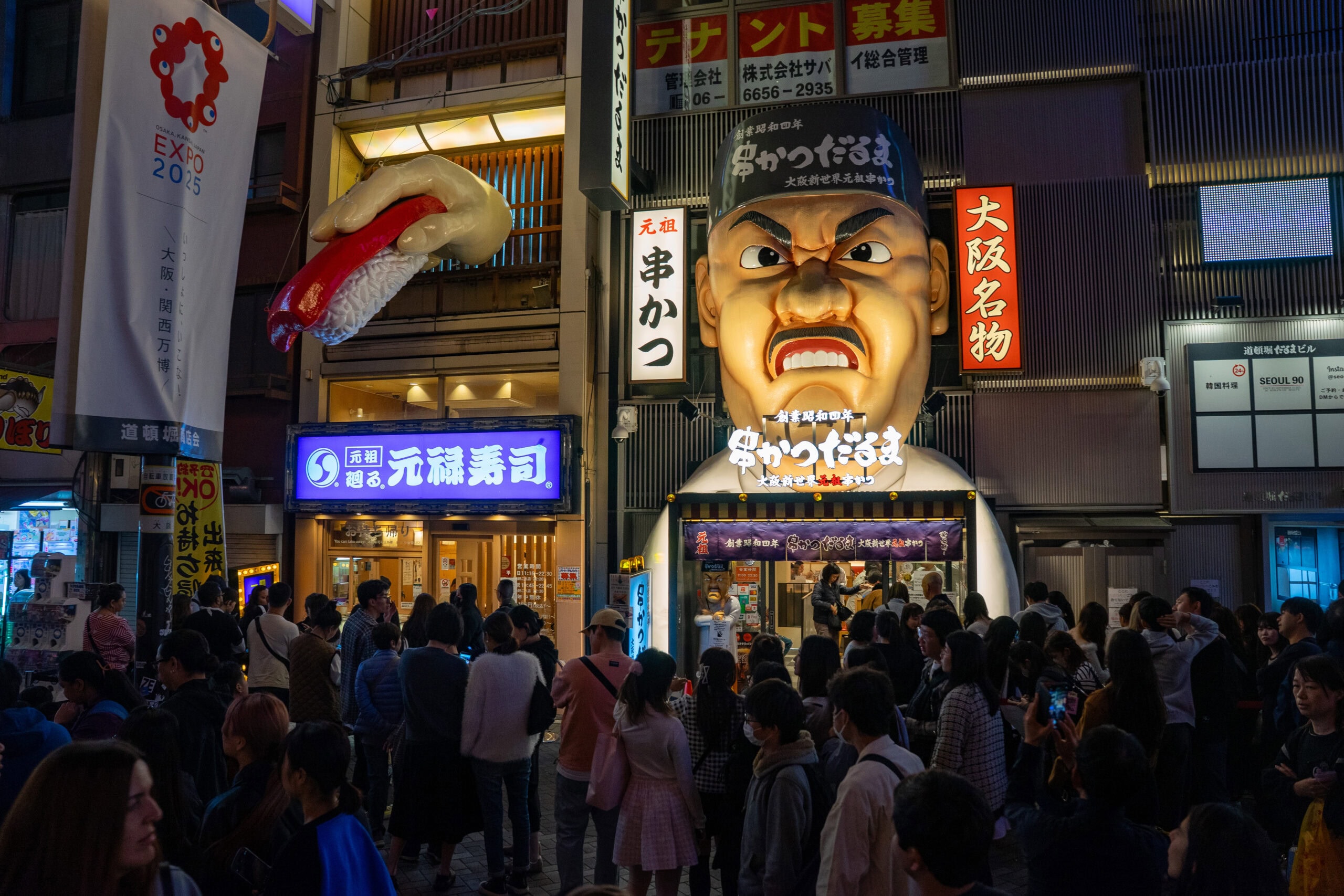
There was a whole bluefin tuna, 79 kilos, outside a sushi shop. Nearby, its twin lay, reduced to bones and a dorsal fin. An old man strolled by, pushing a piglet in a pram like it was just another Tuesday night. Dotonbori is a sensory overload in the best possible way.
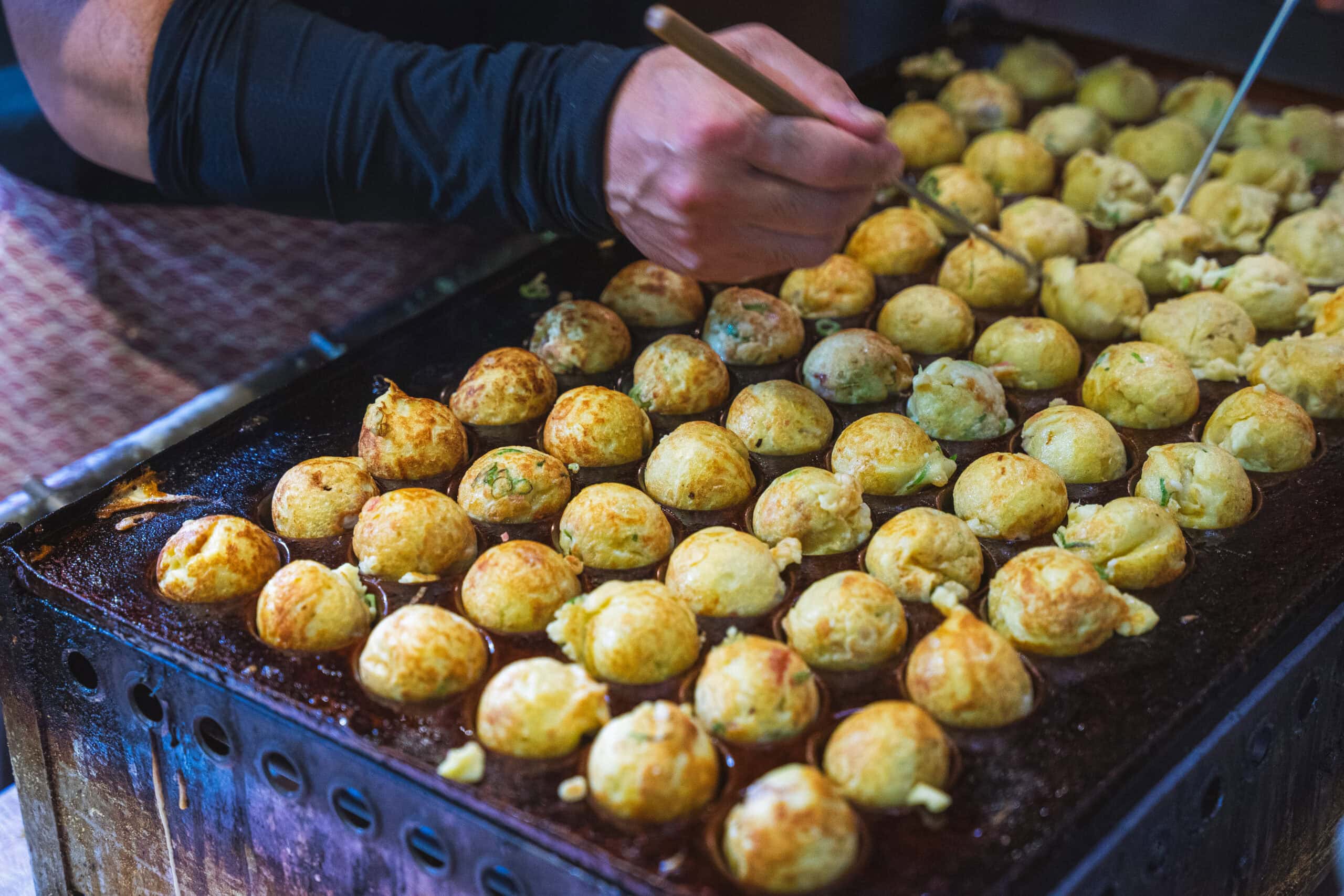
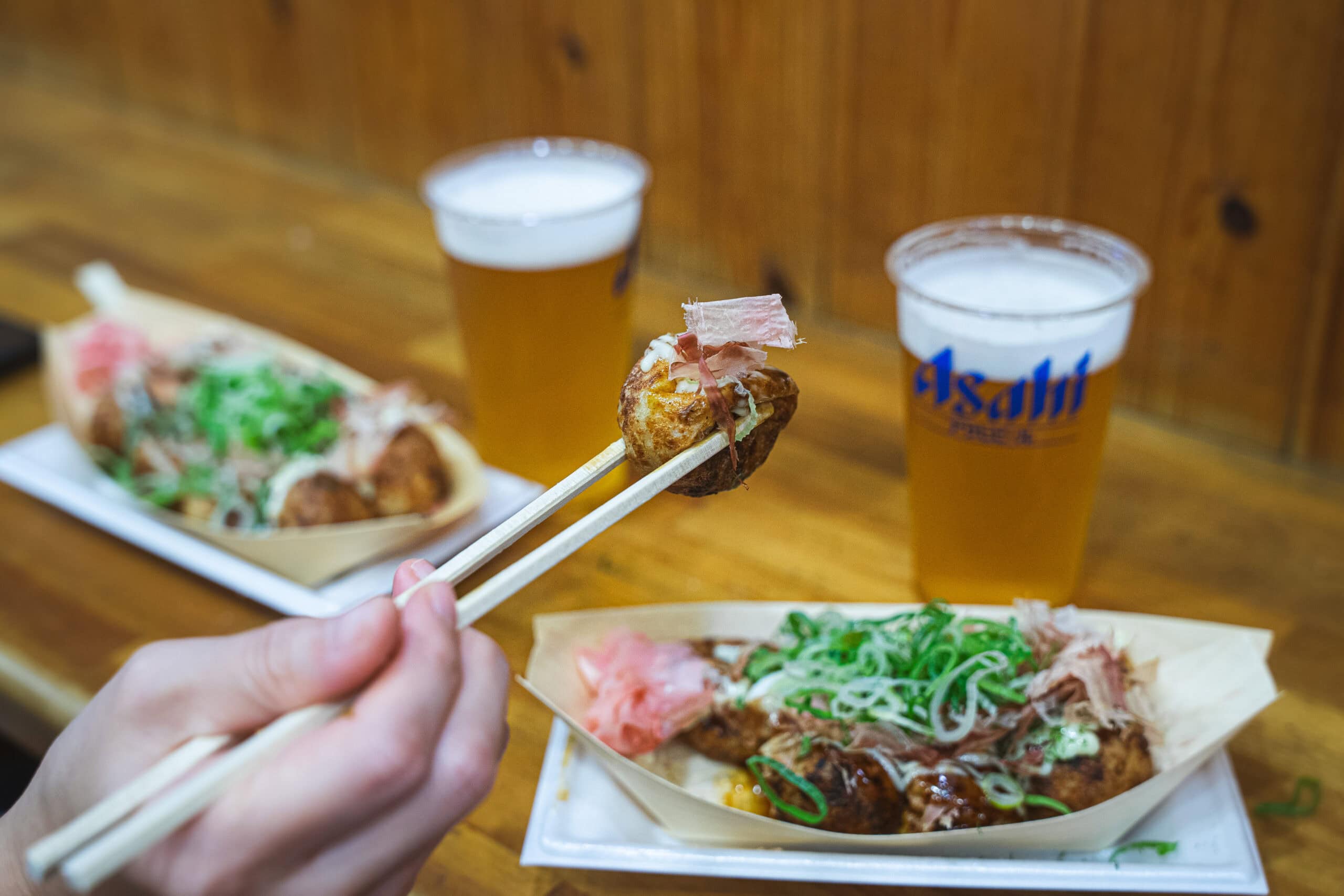
For our first dinner, we stood in line at Achichi Honpo (あっちち本舗 道頓堀店 – location) for takoyaki. Because in Japan, a long queue usually means something worth waiting for. It didn’t disappoint. Hot from the pan, crisp on the outside, molten inside, stuffed with octopus and drenched in an unholy amount of mayo and spicy sauce. We washed them down with cold Asahi in plastic cups.
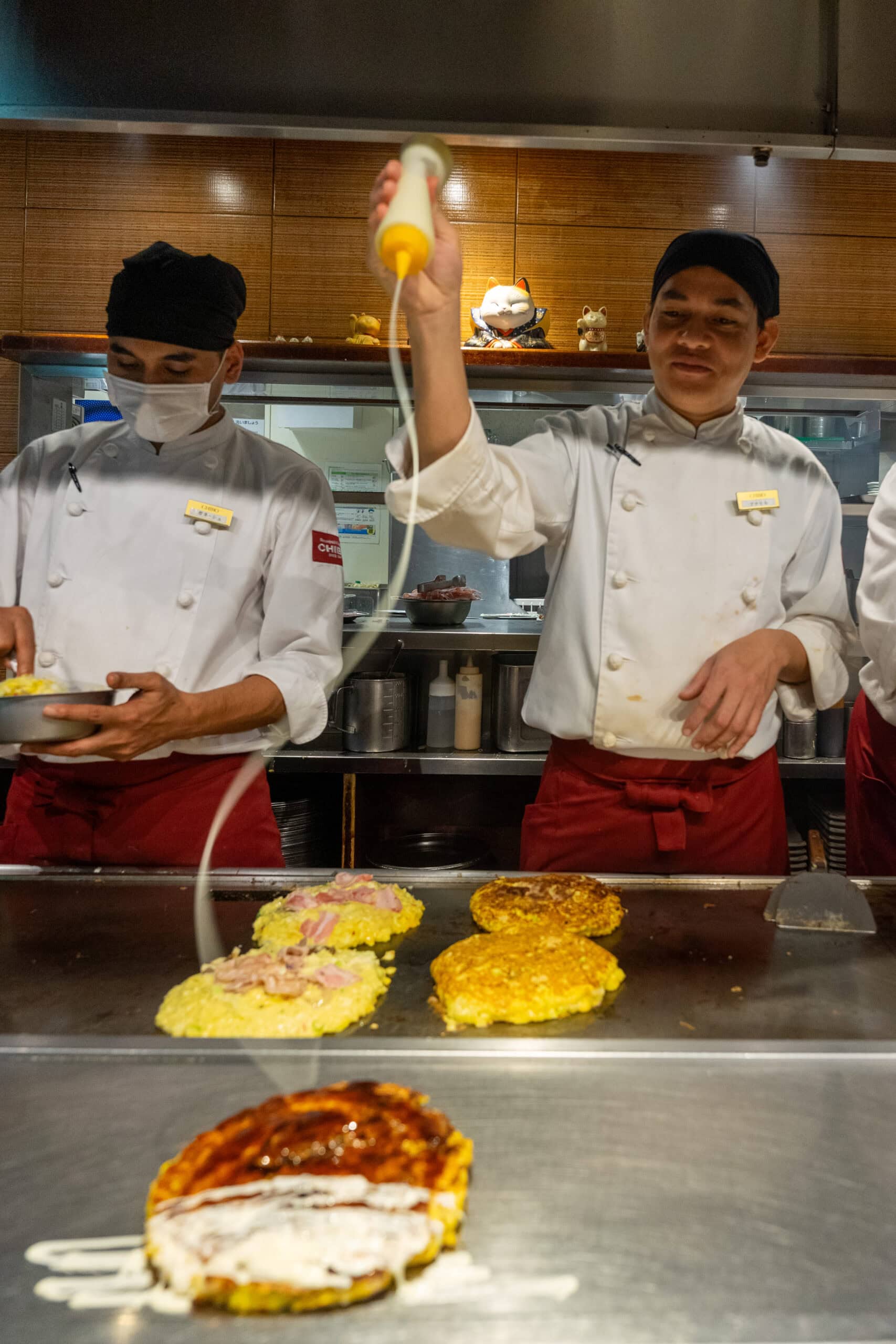
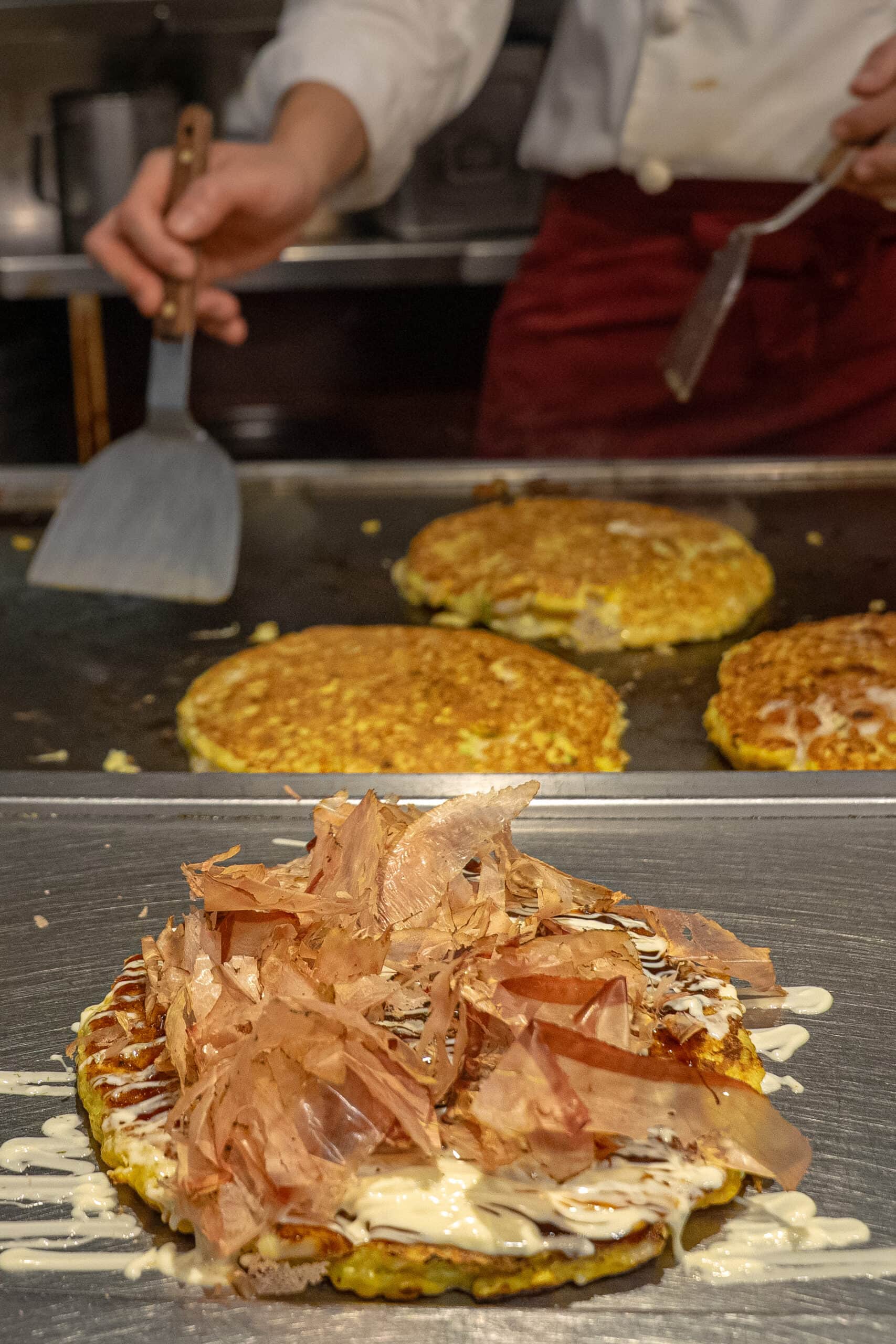
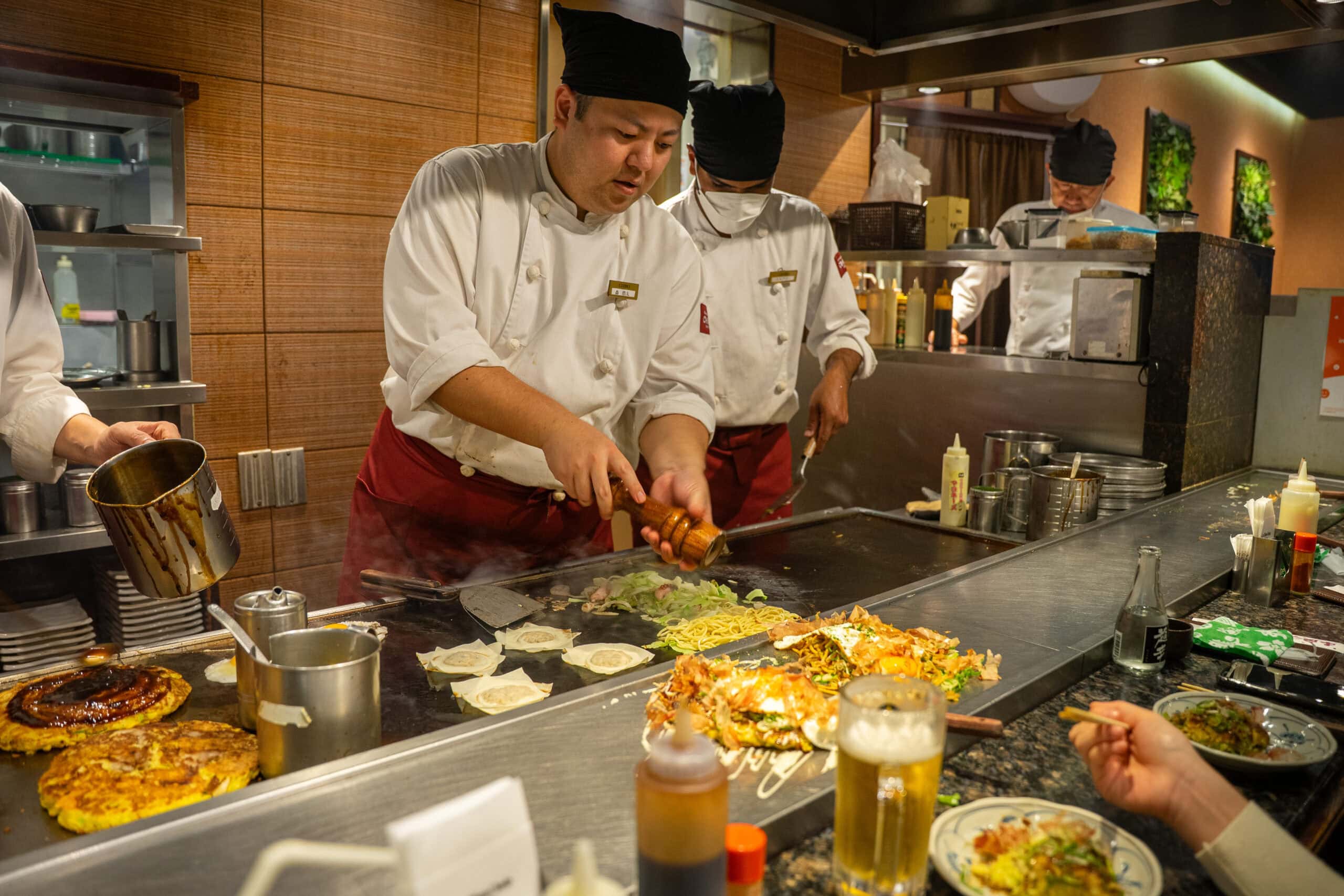
Our second dinner called for okonomiyaki—Osaka-style, of course. Not layered like in Hiroshima, but mixed and griddled. Hearty and imperfect. Just like Osaka.
We found Chibo (location), a towering six-floor shrine to savoury pancakes. Even a halal floor. We grabbed seats at the teppan and watched the show while swigging more Asahi.
The chef grinned.
Mayo show?
Hell yes.
He moved our pancakes from the grill to the counter in front of us. Held up a plastic bottle high and squeezed, sending a silky ribbon of mayonnaise swirling through the air with absurd precision. It landed perfectly, of course. It was topped off with katsuobushi (bonito fish flakes that danced on the pancake like it was alive).
Told you Osaka is a fun place.
Shinsaibashi-suji Shopping Street
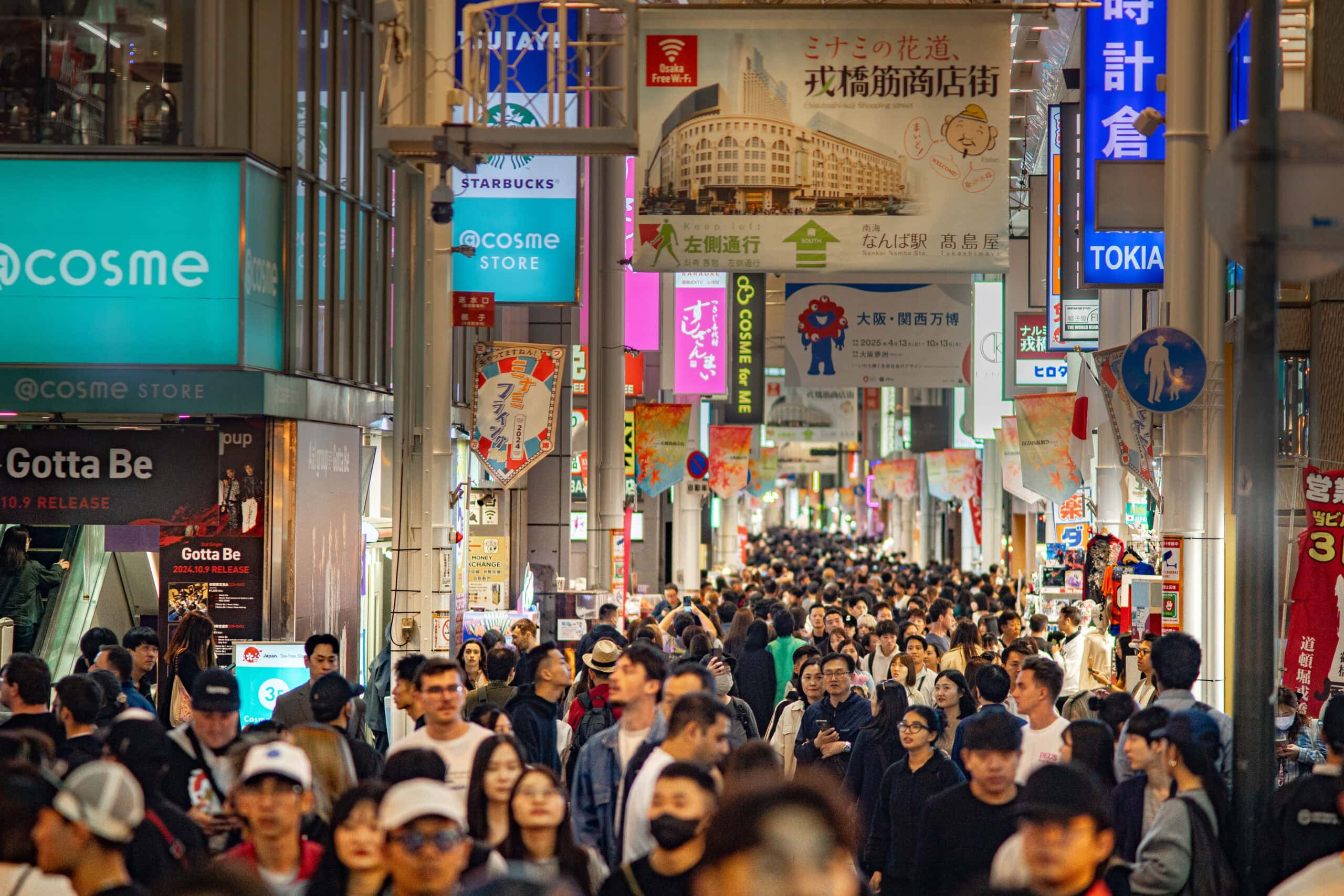
We wandered into Shinsaibashi-suji, a 600-metre-long covered gauntlet of consumerism. The heart of Osaka shopping. A tsunami of heads bobbing forward—99% black hair with the remaining 1 % blonde or brunette clutching a Google Translate screen.
We were only here for one reason: Rikuro’s. The Osaka cheesecake that wiggles like a belly dancer. When we finally spot the store, it’s buried behind what looks like half of Osaka. The queue was longer than our patience. We took one look, laughed, and kept walking.
Next time, maybe.
Shopping at Don Quixote
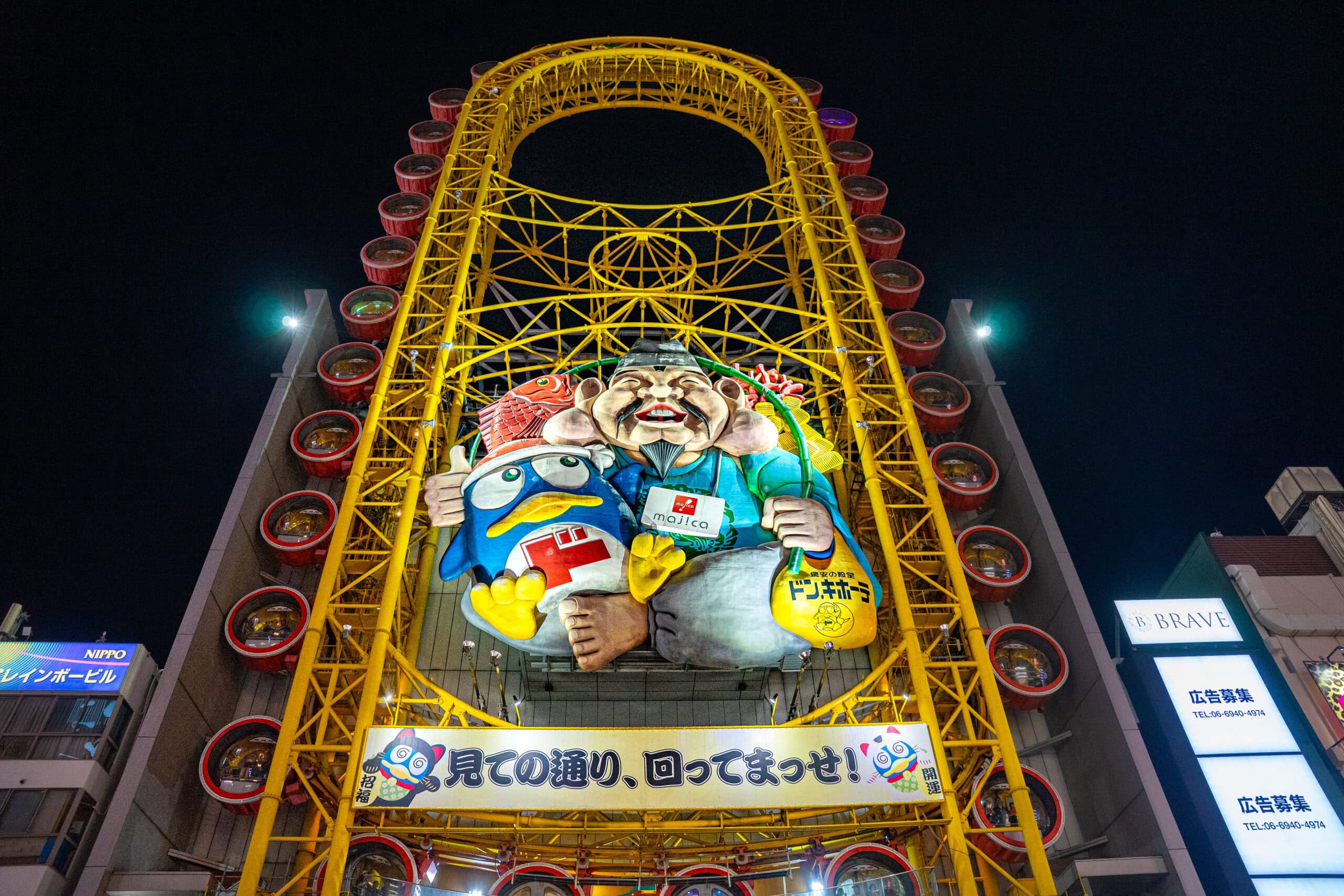
Jin said we had to go to Don Don DonKi, the main branch next to the Dotonbori canal (location). Six floors of chaos, open 24/7. A dollar store on acid. If Disneyland and a chemist had a lovechild, this would be it. Six floors of everything you never knew you needed.
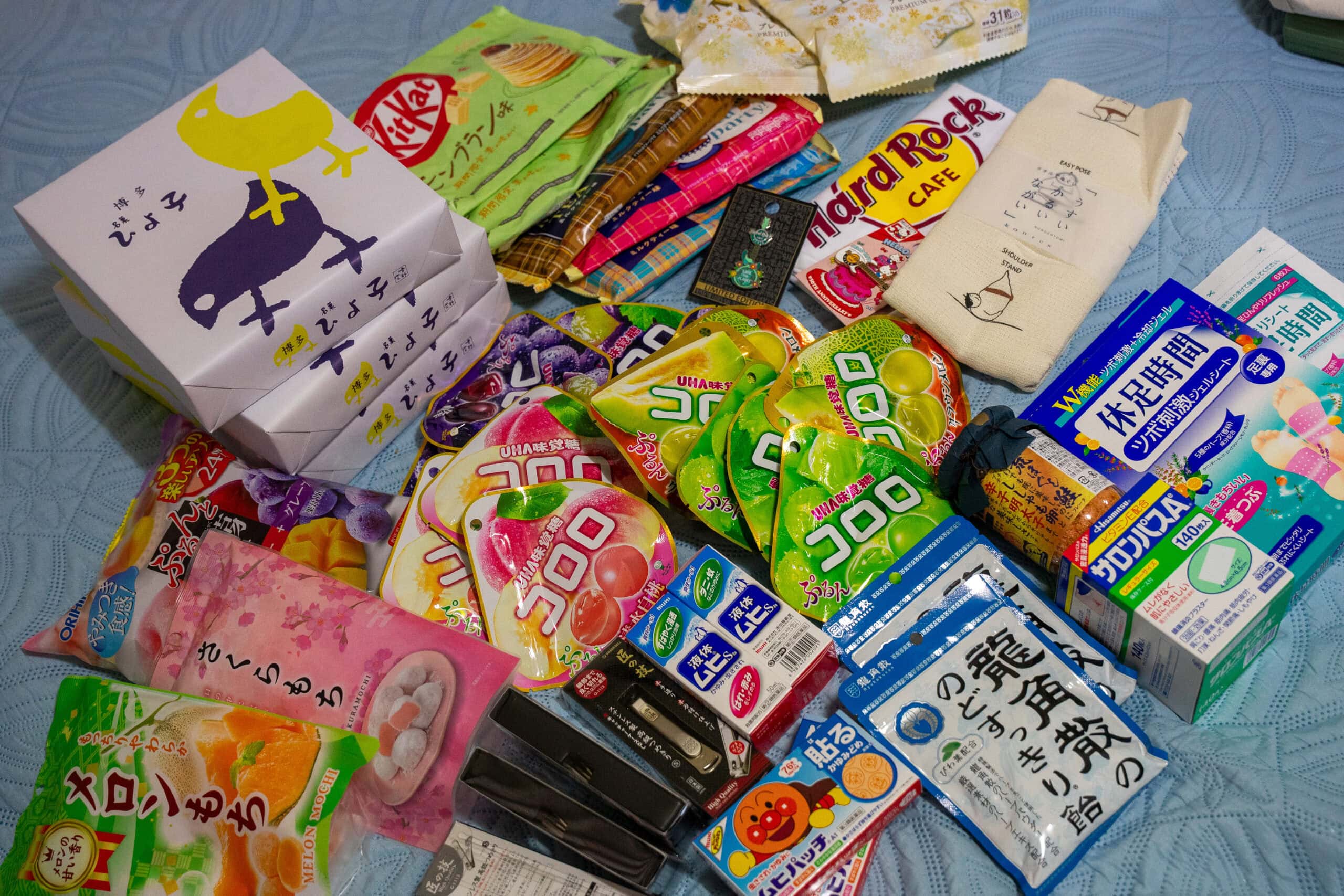
When we walked out, there were two bags full of KitKats in flavours no KitKat should come in: matcha, wasabi, and milk tea. There are a few packs of grape candy that look and taste like they were picked from a vine. Several packs of sakura-flavoured mochi and a jar of glistening fish eggs. Enough vitamins and icy-hot acupuncture foot band-aids to open a clinic.
Happy days!
But Jin says there is another branch nearby. She didn’t quite find everything she was hoping for.
So I follow her up the canal. She seems driven by urge and instinct, pushing on like she’s been there before.
At the Don Quixote Midosuji branch (location), we find another six floors open 24/7. I browse the Japanese whisky section and the adult toys on the fifth floor while Jin goes in search of that one thing she still needs.
After what felt like an eternity, she shows up looking proud AF, clutching a single nail clipper.
How I Shot This Guide
Every photograph in this article was taken with the exact same gear I carry on every journey. It is a setup refined over years on the road to keep travel light without compromising the final image.
- Camera: Sony A7 V
- Lenses: Sigma 24-70mm f/2.8 DG DN Art.
- Storage: SanDisk Extreme Portable SSD
- Software: Adobe Lightroom Classic
- My travel essential (trust me): Ray-Ban Wayfarer
- Outerwear: The North Face Canyonlands
More Japan Guides
➜ Two Days in Hiroshima & Miyajima
➜ Guide to Kinosaki Onsen
➜ Kyoto in 4 Days
➜ Nara Day Trip
➜ Fushima Inari Guide
Still wondering how to spend two days in Osaka? Come hungry, walk until your legs yell, get a little lost, and say yes to everything that smells good. That’s the only advice I can give.
And if you’re wondering whether to squeeze Osaka into your Japan trip, let me just say: Don’t skip it. The city hands you a cold beer, grills something magical, and waits for you to fall in love.
We did.