
Ecotourism and community-based tourism (CBT) are more than just buzzwords doing the rounds among enlightened travellers these days. Community-based ecotourism may just be the new way that we travel in the future. Those seeking a unique and immersive travel experience will love community-based tourism in Southeast Asia.
Pristine nature, friendly people, and incredible food are just a few reasons to visit Southeast Asia. Whether you’re a country or a city mouse, this region has something for every kind of traveller who wants something more than just lying on the beach.

While there are many places to chill in Southeast Asia, people are also coming for an authentic taste of local life. Trekking from one homestay to the next in Vietnam, taking a cooking class in Thailand or helping a community restore an ancient temple in Cambodia are just some of the meaningful travel experiences you can have in Southeast Asia.
Please note: This post may contain affiliate links. This means I may earn a commission if you make a purchase by clicking a link (at no extra cost to you). As an Amazon Associate, I earn from qualifying purchases. Learn more.
Why We Love Eco Travel & Community Based Tourism

We have been on eco and CBT experiences for years, without even planning it. That’s just who we are. We find nature fascinating and rejuvenating. Connecting with different cultures gives us a glimpse into a world so different from ours. All of this is extremely rewarding and insightful.
Growing up in northern Namibia, I’ve been extremely #blessed (cringe) to be exposed to nature conservation and the role of local communities in conservation from the day that I was born. In Namibia, the community and the environment are inseparable. So I have grown up with community-based tourism before it was even a thing.
In Africa we also have Ubuntu.
The philosophy of Ubuntu translates to I am because we are. Ubuntu is the belief in a universal bond of sharing that connects all humanity.
And THAT’S COMMUNITY-BASED TOURISM at its simplest. Spend some time in someone’s house, share a meal or listen to their stories and you WILL share a bond and connect with another human being, even if you have nothing else in common.
In South Korea, where Jin comes from, the Confucian culture places an extremely high value on community. Knowing your place in the community, where you fit in, and your role in the community will influence all relations.
It’s only natural then that we are drawn to eco destinations with a strong emphasis on both nature and community.
What is Community-Based Tourism?

You don’t have to wear vegan boots or have a dreamcatcher in your living room to enjoy CBT. Many think that community tourism is boring and that you need to be a Mother Teresa to enjoy it.
Can we also please stop this holier-than-thou attitude amongst some travellers, who think that you are saving the locals, need to eat tofu and grass for weeks while staying in a bamboo hut and carry water for miles to have an authentic and meaningful travel experience. Community tourism should be an enjoyable and enriching experience, not hard work.
It is also not charity. CBT directly involves the local community and supports cultural or environmental conservation. While the community directly benefits financially, we expect to pay a fair price for a unique and immersive experience. Please stop thinking of community-based travel as charity. It’s mutually beneficial for both the hosting community and visitors alike.
And you don’t have to give up your beach holiday either. We think that combining a regular holiday with something more meaningful will give you the best of both worlds.
Community-based ecotourism comes in many forms. At its core, it’s a responsible and sustainable form of tourism that focuses on conservation and educating travellers about the area they are visiting.
This low-impact style of travelling will often take you to rural areas where you can immerse yourself in local life and nature, far away from mass tourism.
It’s not about how much you spend,
but where you spend it.
Examples of Community-Based Ecotourism
- Staying at homestays.
- Observe nature or wildlife, guided by members of the local community.
- See how the culture, traditions and food of a community are linked to nature.
- Learning about the culture of your destination, such as how to cook a local dish.
- Buying souvenirs directly from source.
- Travelling to off-the-beaten-path destinations.
- Using local guides to show you the local spots.
Let’s show you the best spots for ecotravel and community-based tourism in Southeast Asia.
Homestays, Minority Markets & Floating Adventures in Vietnam
DA BAC | TRANG AN | COC LY | CAN THO
Trekking and Homestays in Da Bac

Homestays are one of the most popular accommodation options in rural Vietnam, with many travellers seeking to spend the night with a local family at some point during their travels. The popularity of homestays has created opportunities for people across the country – from Sapa to the Mekong Delta – to earn an extra income by hosting tourists. In northern Vietnam’s Da Bac, this model has been taken to a new level.
Da Bac is located in rural Hoa Binh province, roughly two hours west of Hanoi by road. Villages scattered amongst a network of lakes and waterways created by the Da River, with green valleys and verdant rice fields in between, are home to families from the Red Dao ethnic minority group. Co-run by NGO Action on Poverty, the Da Bac community-based tourism initiative supports people with training and grants to establish guesthouses in their homes. The program also employs locals who work as chefs, drivers and guides, creating job opportunities for people of every age and background.
Visiting Da Bac is an all-inclusive experience, with accommodation, meals and activities provided. Cultural exchange is encouraged through performances, demonstrations and cooking classes, while guests can take in the area’s natural beauty by trekking in the hills or kayaking on the lake. Families involved in the CBT earn a fair wage and have complete control over the growth and development of tourism. Part of the proceeds is reinvested into a shared trust, helping to fund infrastructure projects that benefit the entire community.
By Emily from Wander-Lush
Go on a Trang An Boat Tour

The Trang An boat tour in Ninh Binh Province is one of the most beautiful and eco-friendly things you can do in northern Vietnam.
Trang An is a nature area full of limestone cliffs, rivers, caves, and you can even spot wildlife if you’re lucky. The scenery in Trang An is so breathtaking that it was deemed a UNESCO World Heritage Site in 2014.
The best way to experience this beautiful nature area is to hop on a boat tour. The Trang An boat tour is eco-friendly because you can only visit the area in rowboats, which means that you don’t even leave footprints behind. Many people from the area row these boats, which means you directly support the local community by going on this tour.
The boat tour in Trang An is a great alternative to Halong Bay. In Halong, the sheer amount of boats and tourists contribute to a lot of water pollution. In comparison, the rivers of Trang An are still pristine.
The Trang An boat tour is the perfect eco-friendly experience for those looking to support the local community and appreciate the beautiful nature of Southeast Asia at the same time.
By Cecilie from Worldwide Walkers
Meet the Hill Tribes at Coc Ly Market

Who doesn’t like a good old hill tribe market? For an authentic glimpse into the lives of the ethnic minorities of northern Vietnam, head to the hamlet of Coc Ly on a Tuesday morning.
Coc Ly, situated right on the border with China, holds one of the most colourful hill tribe markets in Vietnam. Every Tuesday morning, members of the Flower Hmong, Black Zao, Phu La, Nung and Tay minorities gather to buy and sell their produce, products and buffalo. It is also the social event of the week.
If you’re not in the market for a strong buffalo ox to plough your fields or a kilogram of turnips, you can also buy some very unique embroidered hill tribe textiles or silver jewellery. Try some fresh fruit, sugar cane, rice wine, rice cooked in bamboo and other hill tribe food while walking around the market.
Coc Ly market is an incredibly interesting place to observe local life in this part of Vietnam. As it is the week’s social event, you’ll see teenage girls trying to impress the boys in their newest hill tribe fashion, barbers cutting hair, men smoking bamboo bongs, and women bartering for groceries.
It takes just over 2 hours to reach Coc Ly from Sapa. Find a driver in Sapa to take you to Coc Ly, or join this full day tour leaving from Sapa.
Eat Your Way Through the Can Tho Floating Market

South of Saigon (Vietnam’s largest city but not the capital – which is Hanoi), lies the Mekong Delta. The Mekong Delta is noted for its floating markets, and you’ll find the best floating market in the Mekong Delta in the city of Can Tho.
The Cai Rang floating market consists of over 300 boats and, as the name suggests, is an actual market on the water. These boats sell tropical fruits, vegetables, crafts and other locally produced goods from the Mekong Delta.
Get a local guide to row you around the market. You’ll get to buy juicy fruit such as pomelo, jackfruit, mangosteen, rambutan, mango, guava and boring bananas depending on the season, directly from the boats. You can even get a Vietnamese coffee with condensed milk here.
In addition to the floating markets, you can explore the Mekong Delta by visiting fruit farms, walking or cycling to craft villages, learning how to make rice noodles, and, of course, eating more amazing Vietnamese food.
By Lavina from Continent Hop
Nature-Based Ecotourism in Malaysia
DERAMAKOT FOREST RESERVE | PERHENTIAN ISLANDS
Search for Sunda Clouded Leopards in Borneo

One of Borneo’s best-kept secrets, Deramakot Forest Reserve, is one of the finest wildlife-watching destinations in South East Asia. It is the only place in the world where you have a decent chance of spotting the elusive Sunda Clouded leopard in the wild.
It seems counter-intuitive that a logged forest would be a good place for finding some of the region’s rarest wildlife species. Yet in Deramakot, the Sabah Forestry Department attained a good balance between sustainable logging practices and wildlife conservation – an achievement recognized by the international Forest Stewardship Council and a great variety of wildlife species that live there.
Deramakot is home to Borneo Orangutans, Pygmy elephants, marbled cats, otter civets and a plethora of more common Borneo animals. However, just because the animals are there doesn’t mean that they are easy to find.
A visit to Deramakot is an adventure that can only be done as part of an organized expedition that would include a guide, a driver, and a cook. There are no shops, no petrol stations in the forest and the roads demand a high-clearance 4WD.
Adventure Alternative Borneo was the first commercial outfit to bring tourists to Deramakot and remains the best option on the market.
By Margarita from The Wildlife Diaries
Dive & Snorkel for a Good Cause in the Perhentians

Not many realise that the Perhentian Islands, a popular island destination in Southeast Asia, is also a marine park of Malaysia. The beaches are amazing, and every beach has a different vibe.
A unique way to experience the Perhentian Islands is through the Fuze Ecoteer volunteer program. This homegrown social enterprise focuses on conservation and works alongside the local community and the Marine Park authorities.
There are 3 programs that you can join. All three directly support marine conservation and environmental education on the islands. It also raises funds for long-term programs for the community’s youth.
The Perhentian Turtle Project is about protecting local nesting beaches and studying the local turtle population. You will kayak and snorkel to photograph turtles to help identify and record turtles. If you find an unidentified turtle, it will be named after you!
The Perhentian Eco-Education Project is about community education. You’ll be involved in education about plastic waste and upcycling of plastic waste. You don’t want to miss the weekly Perhentian Islands Ladies Association meeting where the ladies share their kuih (traditional Malay dessert).
Joining the Perhentian Marine Research Station gets you directly involved with coral reef surveys and research that help monitors coral health. New divers can get their PADI certification while experienced divers…can dive right in. This project will allow you to improve your diving skills while helping with conservation and reef restoration.
Being an Ecoteer volunteer allows you to experience local Malay village life, as you would be based in the fisherman’s village. It’s a side of the Perhentians very few tourists get to experience.
Check out Ecoteer for more information on this incredible experience.
By Teja from Teja On The Horizon
Food in Thailand
Chiang Mai
Learn to Cook Lanna Food in Chiang Mai

For centuries, the Lanna Kingdom (Kingdom of a Million Rice Fields) has been serving up some of Thailand’s most delicious dishes. It is difficult to find these mouth-watering recipes anywhere else in the country and it is one of the best ecotourism activities in Thailand.
Learning to cook Lanna food in Chiang Mai is one of the best things to add to your Thailand itinerary.
The cooking classes are a whole day of learning how to cook this traditional food. The best place for these lessons is the rural areas just outside the city. Here, you’ll find plenty of good, fresh ingredients: all sorts of vegetables, fruits, poultry and other protein needed when cooking scrumptious meals – even herbs have their own handy part here as well.
At the beginning of this cooking class, you can select dishes that interest you and then pick ingredients from the farm. Each participant will be provided with necessary kitchenware, including woks, spatulas and chopping boards.
The instructor will demonstrate how to make these delicious recipes step by step: when it’s time to put vegetables in the pan or how much seasoning to add so that everyone can have their own success story of making homemade Lanna cuisine.
After finishing all the dishes, you and your fellow cooks can sit around a table with fresh food to share amongst one another. This hands-on cooking course will introduce participants to this delicious cuisine while also encouraging Chiang Mai’s traditional culinary heritage.
By Alice of Adventures of Alice
Conservation & Crafts in Laos
SAYABOURY | BAN LUE
Support the Elephant Conservation Center in Sayaboury

Centuries ago, the country of Laos was known as the Kingdom of Lan Xang. The name Lang Xang translates to ‘Land of A Million Elephants’. However, the sad reality is that an estimated fewer than 800 elephants remain in Laos today – 400 left in the wild, and 400 in captivity.
The Elephant Conservation Center (ECC) in Sayaboury has been thoughtfully established to save elephants in Laos from diminishing entirely. The centre also educates visitors about elephants in a way that is very different from any other ‘sanctuaries’ in Southeast Asia.
At the ECC there is no elephant riding. Rather the entire conservation centre has been set up to prepare the elephants to be released back into the wild. The centre provides 6000 hectares of elephant pastures.
With over 30 years of partnership with local NGOs, international organisations and the support of the best mahouts in Laos, the ECC has developed a successful and sustainable model of elephant conservation.
Visiting as a tourist is a very memorable experience of ecotourism where you can volunteer and really contribute to the elephant crisis in Laos. Stay in traditional bamboo huts and learn all about the conservation of these beautiful Asian elephants.
By Sarah of Away With The Steiners
Dye and Weave Lao Textiles in Banlue

Banlue Handicrafts and Community Learning Centre is an exciting community-based enterprise located in the village of Ban Nayang Nua, around three hours from Luang Prabang in northern Laos.
Immersive workshops and hands-on activities are centred around traditional Lao handicrafts – especially the organic cotton and indigo dyes that the Tai Leu village is renowned for. You’ll not only have the opportunity to participate in a range of cotton picking, spinning, dyeing and weaving workshops but also enjoy enriching interactions with the little-visited Tai Leu community.
By providing an uplifting, sustainable income to the remote ethnic minority village, Banlue aims to help revitalise and preserve the regional handicraft traditions – all while providing an authentic cultural experience for travellers.
The Banlue Handicraft Centre itself consists of a traditional Tai Leu wooden house, under which is a shady, covered area filled with cotton spinning wheels and weaving looms. The whole compound is enclosed by lush, green plants, many of which are used directly in the natural dyeing process.
With the help of the English-speaking owner, Mr Somdeth, immerse yourself in the vibrant local community with experiences ranging from half-day, full-day, overnight and multi-day workshops.
Surrounded by rolling mountains and idyllic rice paddies, get a taste of rural village life after your workshop by exploring the authentic Tai Leu village and ethnic living style. Or stay overnight in a traditional wooden, stilted Tai Leu house and enjoy the tasty local cuisine of the village.
By Marie of A Life Without Borders
Looking for the best community-based trip in South Africa?
Can’t beat the five-day Wild Coast hike from one Xhosa village to the next in rural Transkei.
Salt Farms & Hidden Temples in Cambodia
KAMPOT | BANTEAY CHMAR
Meet the Salt of the Earth at the Kampot Salt Fields

While many associate Kampot with pepper, it also produces the best salt in Cambodia. There are over a thousand hectares of salt fields scattered throughout the Kampot and Kep areas.
Salt production in Kampot strongly relies on the weather, requiring hot, dry conditions. The best time to visit the Kampot salt fields is from the beginning of December to April when the weather is hot, and it doesn’t rain too much.
Situated close to the sea, salt fields in Kampot use water directly from the sea. Salt farmers channel seawater into the salt fields and then wait for the sun to do its work. The water evaporates after about 40 days, leaving dazzling white salt crystals behind.
Kampot sea salt, 100% natural with no added chemicals and preservatives, goes through a natural process from the beginning to the end and the whole process is un-mechanized.
There are about 200 families around Kampot who rely on salt production for their primary income. These hardworking people are the salt of the earth, and they welcome visitors to see and learn about the way they make salt. Ask your hotel about local guides who can show you the salt fields and introduce you to the salt farmers.
While visiting the salt fields, also buy some salt directly from the community to take home with you. The unrefined, artisanal salt makes great gifts with a good backstory.
By Marya of The BeauTraveler
Banteay Chhmar Homestays & Temples in Rural Cambodia

Banteay Chhmar is a tiny, relatively unknown commune located in the far-off province of Banteay Meanchey in northwest Cambodia. In this small village lies the massive temple complex of Banteay Chhmar. It truly is a hidden treasure of Cambodia, and well off the beaten path.
Not very long ago, the Banteay Chhmar temple was just a huge pile of stones. In 2007, Global Heritage Fund jumped in to restore this heritage site and decided to get the local community involved. That gave rise to the concept of Banteay Chhmar Community Based Tourism.
Locals are not just part of the restoration team that is trying hard to put together this 12th-century Buddhist-Hindu temple complex, they also take care of tourist accommodation, food, local transport, and special experiences.
You can stay with locals in traditional wooden homestays, take a temple tour with a local tour guide, discover rural life on a bicycle or Kuyon, join a cooking class, and feast on a delicious spread of home-cooked food under the stars, along with traditional Khmer music.
It is heartening to learn that 100% of tourist income in Banteay Chhmar is shared with villagers. As a result, annual incomes in the region have increased by 15-20%. To support this incredible project and experience rural Cambodia, book directly on the CBT’s official website. The community will take care of all your needs from the moment that you arrive there.
By Soumya from Stories by Soumya
Jungles, Dragons & Friendliness in Indonesia
ALOR | KOMODO | BUKIT LAWANG
Reset Yourself on Little Kepa Island, Alor

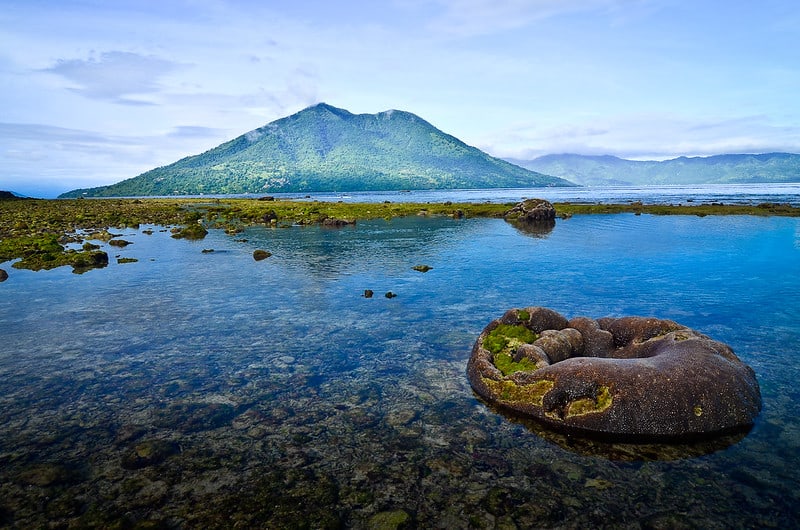
The Alor archipelago in eastern Indonesia is where you’ll find some of the best diving, snorkelling, traditional villages and double ikat in the world. Located in the heart of the Coral Triangle, the water is like liquid glass and the marine life is out of this world.
Alor is also home to one of the most magical eco-friendly places to stay.
La P’tite Kepa on Kepa island is where the best of community-based tourism and ecotourism come together. French family Cedric, Anne and their daughters have been working with the local Menglolong people of Alor for almost 20 years.
Since setting up camp on Kepa island, Cedric and Anne have helped to establish seaweed farming for the local community to help generate income and give an alternative to destructive fishing practices.
La P’tite Kepa embodies everything about sustainability and community-based tourism. Ten bungalows were built in the local style using locally sourced materials and using only traditional methods and tools.
The mattresses are stuffed with kapok, a local tree fibre, and there are no fans or AC. Solar electricity is available 24/7. The plates in the kitchen are clay pottery made in a nearby village. Three hearty, home-cooked meals use only the freshest locally sourced ingredients. Food is whatever is in season or what fish was caught that day. Guests enjoy meals family-style, with everyone sitting around one table and sharing food.
Today, 17 families live on Kepa Island, and they are all directly involved in La P’tite Kepa.
The diving, snorkelling, mountain villages and friendliness of Alor are one of a kind and those who know about the magic of Kepa return year after year. It truly is a spectacular place to get away from it all and reconnect with yourself and nature.
Snorkelling & Dragon Spotting in Komodo

Flores Island has become one of Indonesia’s hottest destinations in recent years for one reason only: Komodo National Park. The town of Labuan Bajo is the centre of tourism activity, and almost everyone in town is in some way involved in tourism.
Komodo National Park, half marine reserve, half Jurassic Park, needs no introduction. With prehistoric-looking dragons, pink beaches, surreal landscapes and incredible diving and snorkelling, Komodo is an epic adventure.
For a truly unique experience, go down to the harbour and charter a boat to take you on your own private island-hopping adventure into Komodo National Park. Hiring your own private boat is quite affordable and you know that your money goes directly to Labuan Bajo locals. In addition to renting the boat, the crew will also buy food and other supplies for your trip, which further supports the local economy.
While there are many tours available in town and online, we think it’s much more fun finding your own boat. Talking to the captains about routes, snorkelling spots and what to expect also empowers them to take initiative and share their expertise of the area. Read more here about how to charter your own boat to Komodo on a budget.
We spent two days island hopping and snorkelling on board our boat, the Dede Putra. It was a fantastic experience, and the company we shared with Captain Bien and first-hand DD was just as special as the underwater wonders and dragons of Komodo.
Jungle Trekking in Bukit Lawang to See Orangutans

There are two kinds of people in Bukit Lawang: those who work in the palm oil industry and those who don’t. Those not working on the palm oil plantations are more often than not involved in tourism.
Bukit Lawang is a small jungle town in northern Sumatra and is one of the best places to see semi-wild orangutans in the jungle. Gunung Leusser National Park is home to many rescued orangutans that have been reintroduced to the wild. Wild orangutans are also in the park, but visitors are unlikely to spot them.
Going on a jungle trek with a local guide is the best (and only) way to see the orangutans in Bukit Lawang. Visitors can choose anything from a half-day jungle trek to a multi-day expedition into the jungle.
Other than orangutans, your guides will point out other primates such as Thomas Leaf monkeys, hornbills, medicinal plants and their uses, as well as other jungle critters and sounds.
A jungle trek is usually followed by an exciting tube raft on the Bohorok River back to Bukit Lawang.
It doesn’t take long to see that the people of Bukit Lawang genuinely value the jungle and the animals that live in it. They realise that the jungle is their livelihood and that the tourists will continue to come as long as the jungle and its orangutans are there.
When you visit Bukit Lawang, you are not merely going on a jungle trek. You are also indirectly supporting the whole community and the conservation efforts in the area. Locals are aware of international trends and, as a result, are promoting low-impact tourism activities.
Is Community-Based Tourism for You?
You will never know unless you give it a try!
This exciting way to travel is so broad that you’re sure to find something to match your personality. If you haven’t tried it, we suggest you give it a go. If you have any recommendations for other unique travel experiences in Southeast Asia, do let us know in the comments below.
