
Ancient Xi’an, the world-renowned home of the Terracotta Army, is one of the most popular places to visit in China. The Terracotta Army is an incredible sight – you must see it! There are, however, many more things to do in Xi’an other than seeing the Terracotta Warriors.
We recently spent 4 days in Xi’an, and we’re happy to share the best of this incredible city with you.
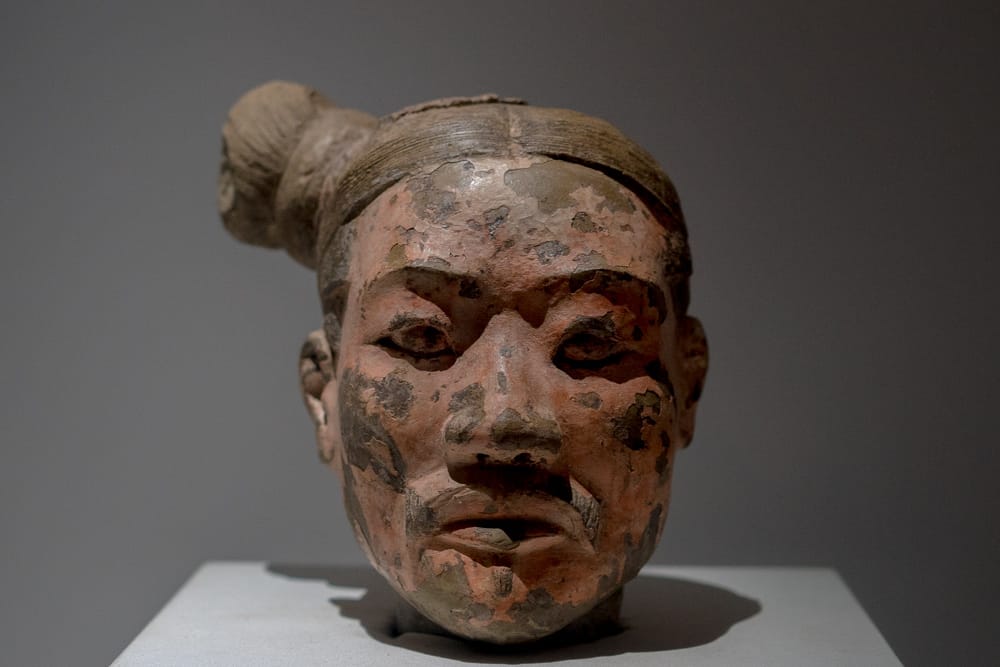
Xi’an offers visitors the chance to see some of the best cultural and historical landmarks in China. As one of the most prominent cities on the fabled Silk Road, Xi’an is an astonishing city with a history going back thousands of years.
Xi’an ticks all the boxes if you’re looking for the finest ancient sights, art and landmarks of China. For us, the above and experiencing the food and the unique Muslim culture were the best things to do in Xi’an.
Please note: This post may contain affiliate links. This means I may earn a commission if you make a purchase by clicking a link (at no extra cost to you). As an Amazon Associate, I earn from qualifying purchases. Learn more.
Quick Guide to Xi’an
Visited: December
Suggested time: 3-4 days
Where we stayed: HeSu Hidden Art Hotel
Transportation: Xi’an Xianyang International Airport, high-speed rail
Famous for: Terracotta Army, Muslim Street food, Silk Road history
Tip: Get your hotel to help make reservations for you to visit the Shaanxi Museum on Wechat
Unique Experience: Lost Plate Food Tour
Is Xi’an Worth Visiting?
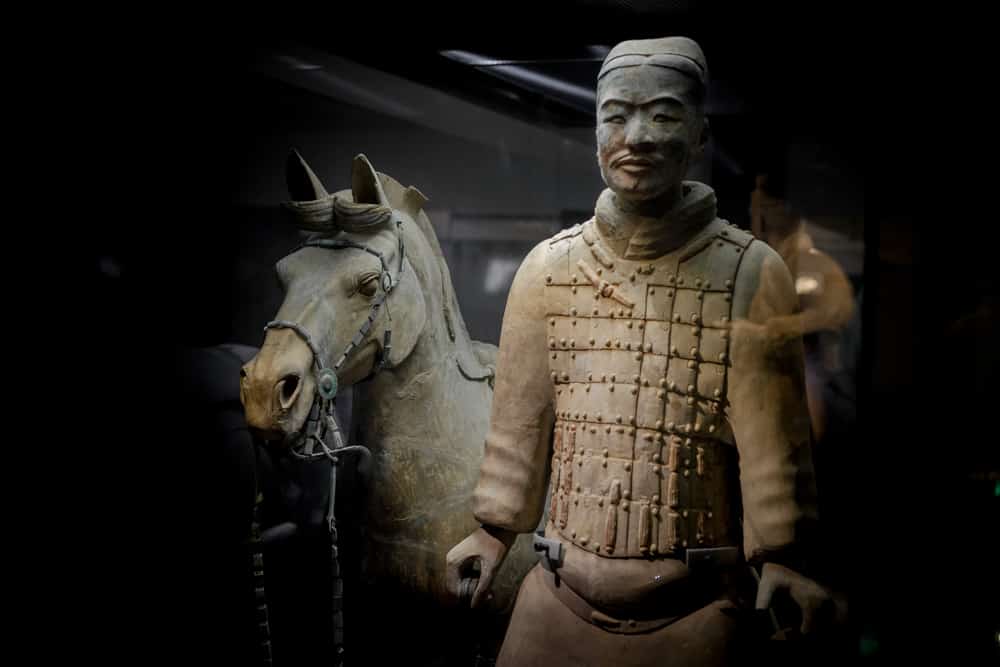
ABSOLUTELY!
Xi’an is one of the most rewarding and interesting cities to visit in China. The Golden Triangle of Bejing-Xi’an-Shanghai is the most popular itinerary for first-time visitors to China.
While most people stay just long enough to tick off the Terracotta Warriors, those who make the effort to look beyond the famous clay army will be rewarded with some of the best food, art and historical sights in all of China.
It’s easy to visit Xi’an, and the city is well connected to the rest of the country by air and high-speed rail.
It is in Xi’an that you truly get a sense of how old China really is. Chinese civilization has been changing, evolving and innovating for thousands of years, and Xi’an encapsulates all of it. Xi’an is not merely a museum city filled with ancient artefacts. This city of about 8 million is as alive today as it was during the days of the Silk Road.
As one of China’s ancient capitals (then known as Chang’an), Xi’an was one of the most populous cities on earth during its heyday. During its time as capital, Chang’an was the heart of China for 13 dynasties.
As a result, you can see some of the most famous landmarks and art from ancient China in Xi’an today. The layers and accumulation of thousands of years of history are quite remarkable.
“If you want to see China over the past 100 years, go to Shanghai. If you want to see China over the past 1000 years, go to Beijing. But if you want to see China over the past 5000 years, go to Xi’an.
Chinese saying
Other than burial pits filled with terracotta figures (from larger than life to miniature), art treasures from the Tang dynasty and taking on the world’s most dangerous hike, visitors can indulge in excellent street food in the Muslim Quarter.
Where We Stayed in Xi’an
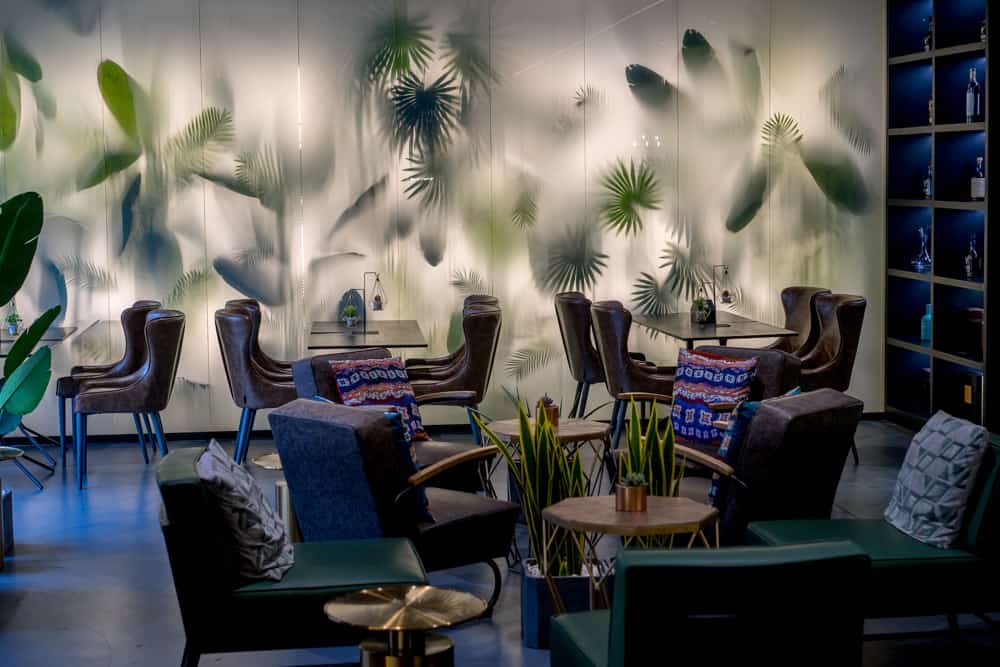
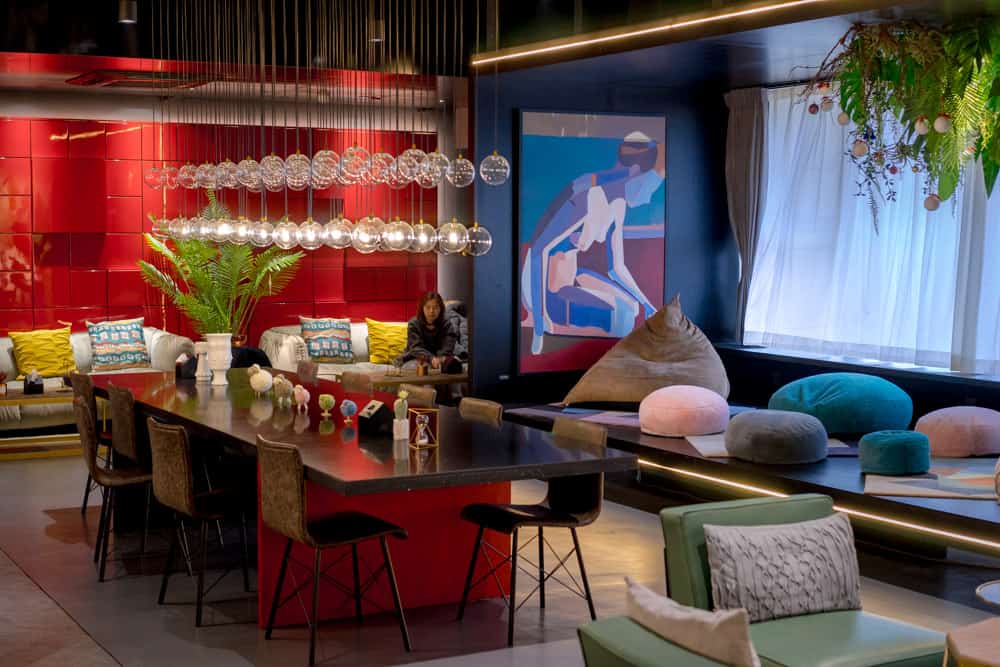
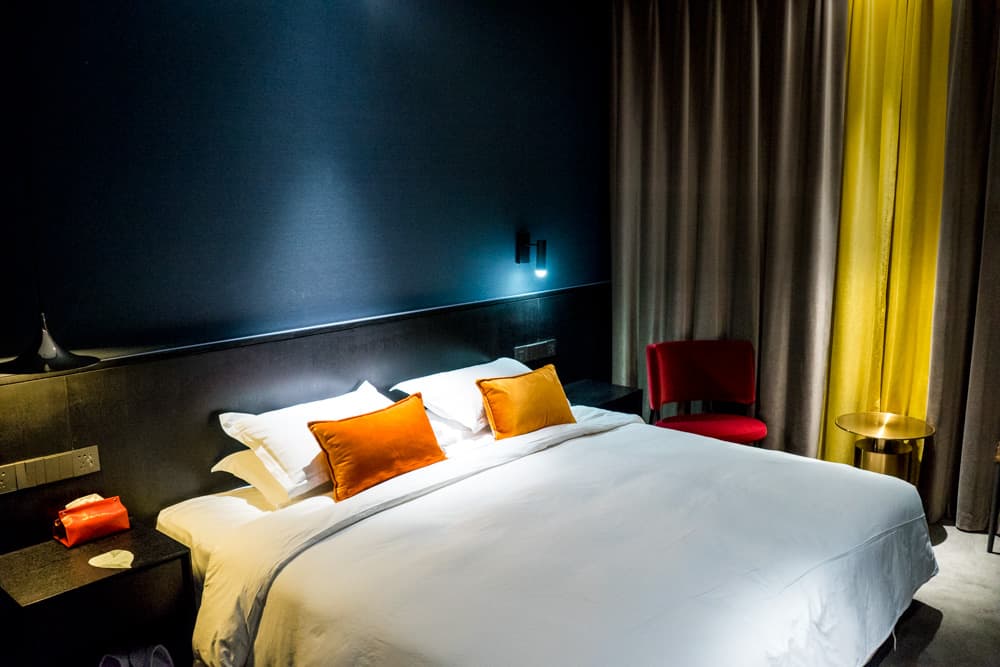
The HeSu Hidden Art Hotel is a magnificent hotel and the perfect place to stay during a trip to Xi’an. The He Hotel can rightfully put the word designer in its name, as it is trendy, and modern and features some great contemporary art in public spaces and rooms.
The stylish rooms are super clean and comfy, and all rooms have AC and heating. The air purifier is also a nice touch—something we haven’t seen anywhere else in China.
In the shower, you find great water pressure and a snazzy collection of complimentary toiletries.
Guests can sit down to an excellent (included) Chinese or Western a la carte breakfast every morning.
The staff, especially the manager, Hai Ting, went out of their way to make us feel welcome, answer our questions, and help us make online reservations for restaurants or museums.
The He Designer Hotel is located just outside the Southern City Gate, and the nearest metro station is about 5 minutes away on foot.
We will sing praise for the He Hotel far and wide for its value for money, excellent amenities, wonderful hospitality and trendy design. Stay here – you can thank us later 😂
Our 3-Day Xi’an Itinerary
How long should I stay in Xi’an? we hear you ask.
We recommend at least three full days in Xian, but of course, longer is always better. While it’s tempting to try and cram as much as possible into your Xian itinerary – DON’T. Seeing two sights a day is a very realistic and achievable goal.
Seeing two sights a day, one in the morning and one in the afternoon, will be much more enjoyable, and you’ll actually see and remember things rather than rushing from one place to the next.
Also, consider the crowd effect. Xi’an is one of the most popular destinations for Chinese tourists, and lines for seeing the major sights can get long. Battling with crowds, language barriers, and the summer temperatures are draining, so take it easy and remember to relax and spare some time just to be.
Here is a summary of our Xi’an itinerary:
Day 0:
Late-night arrival at Xi’an Airport
Day 1:
Shaanxi History Museum
Giant Wild Goose Pagoda
Great Tang All Day Mall
Day 2:
Muslim Quarter
Great Mosque of Xian
Muslim Street Food
Tomb of Emperor Jingdi
Day 3:
Terracotta warriors
Bike along the Xi’an City Wall
Day 4:
Morning departure by high-speed train to Chengdu.
Things to See & Do in Xi’an
Here is a rundown of attractions and sights to see in Xi’an to help you plan your trip. Our list of Xi’an attractions will show you the best sights to see, where and what to eat, and of course, the Terracotta Army.
Shaanxi History Museum
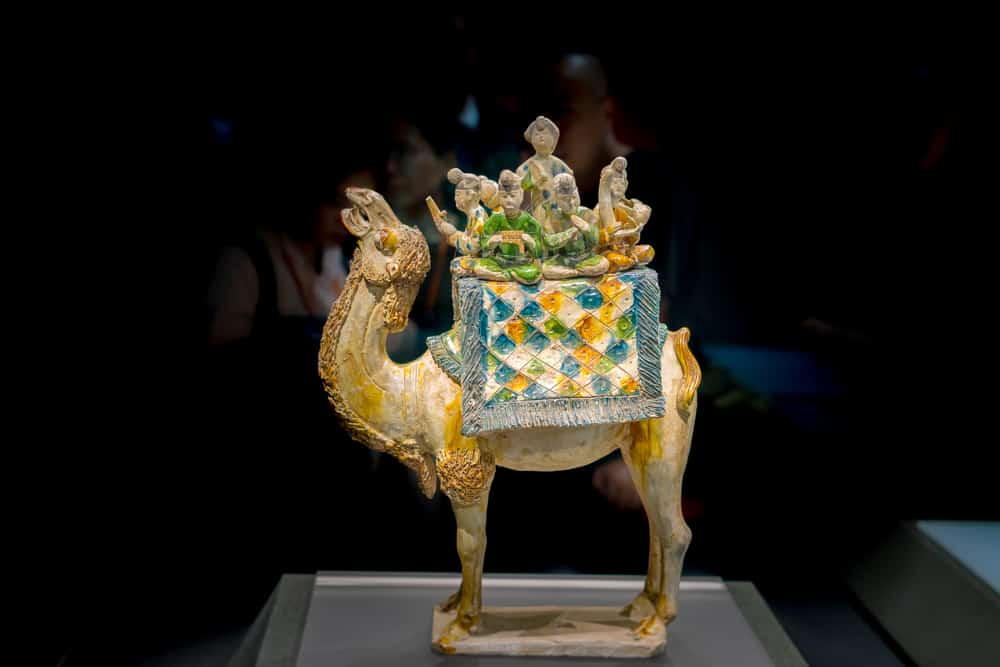
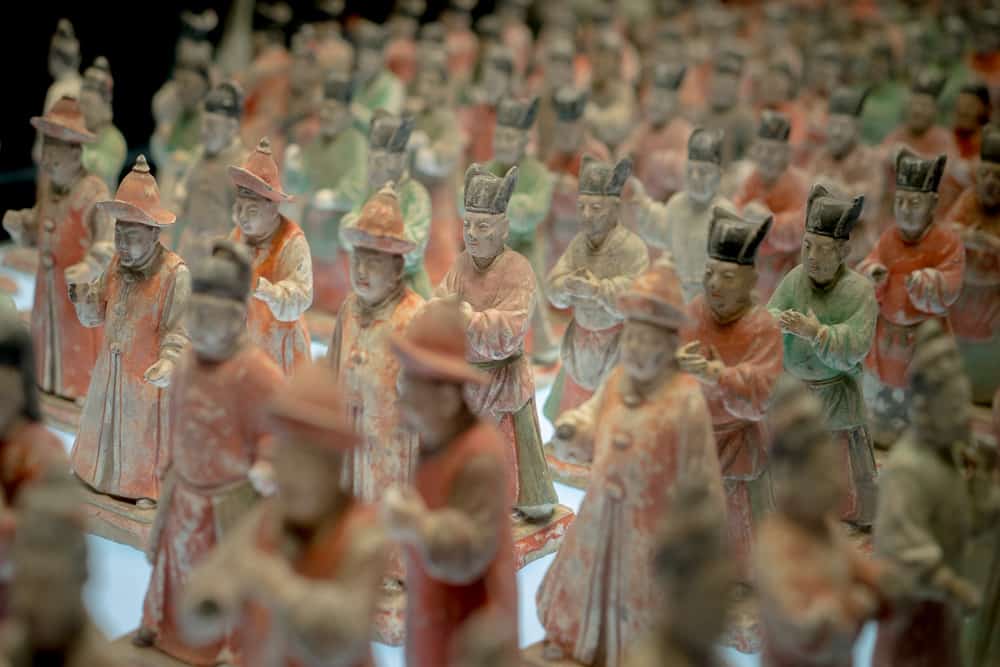
The best place to start your trip to Xi’an is the marvellous Shaanxi History Museum. This enormous state museum houses over 370,000 artefacts and is definitely one of the best art museums in the world. The collection is about 10 times larger than that of the Louvre.
After visiting the Shaanxi History Museum, you will have some idea of how incredibly old Xi’an is, know that there is more than just one Terracotta Army in Xi’an, and you’ll be amazed at how well preserved these ancient treasures are.
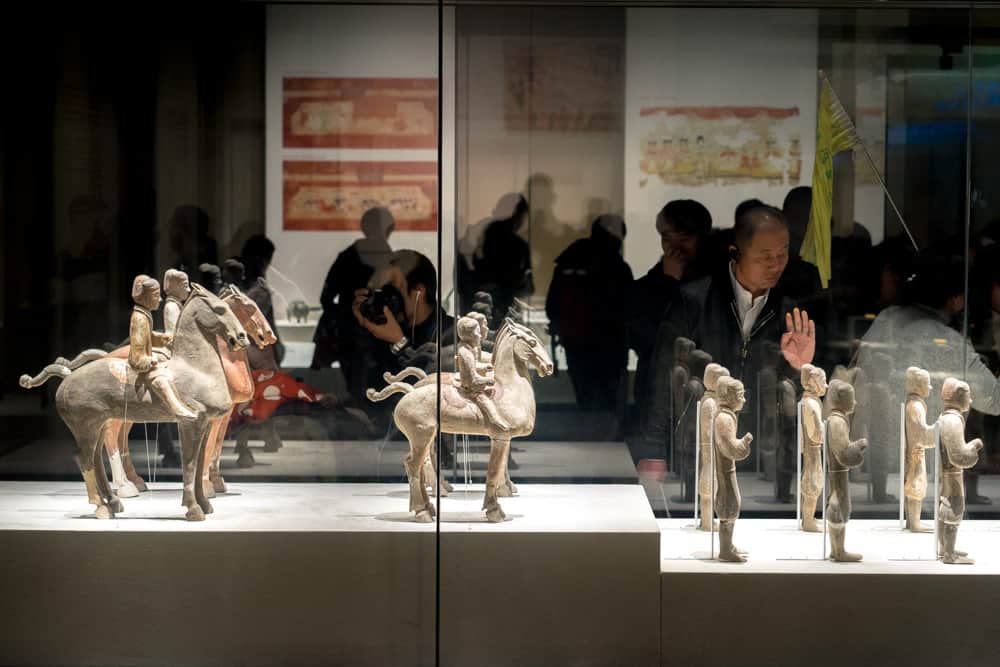
The displays cover millions of years (yes, millions!!) from prehistoric times up until around 1840. The sheer amount of art is truly staggering.
The highlight of the museum is known as the Treasures of the Great Tang Dynasty. These Tang Treasures are some of the most interesting terracotta figures that we’ve ever seen, including glazed camels, horses and figures with very Western features – no doubt an influence from the trade along the silk route.
As you wander the exhibition halls, you’ll also see various terracotta armies. Of course, there are quite a few of the famous Xi’an terracotta warriors and horses, but for us, the highlight was seeing the other terracotta burial figures.
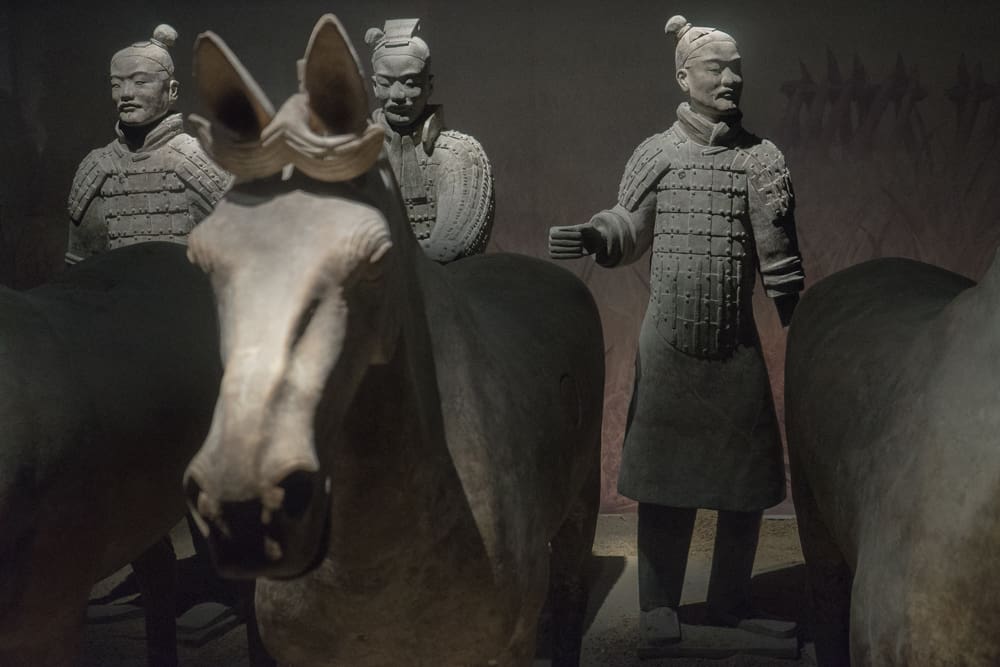
The famous terracotta figures are larger than life. The next emperor would have a slightly smaller funeral procession placed in his tomb, and so on. Towards the end of the Tang Dynasty, the tomb figures were the size of toys. Seeing an entire, pastel-coloured royal court in miniature was an unexpected highlight of our Xian trip.
Entrance fee: RMB 30
The Tang Murals (known as the Chinese Ufizzi) is a whopping RMB 300 extra
Tips for visiting the Shaanxi History Museum
- Don’t try to see it all in one go.
- 6000 free tickets are available each day (forget about getting one)
- Paid tickets are limited to 4000 per day.
- Ask your hotel to help you make a reservation on WeChat.
- You must show your passport at the entrance.
Giant Wild Goose Pagoda
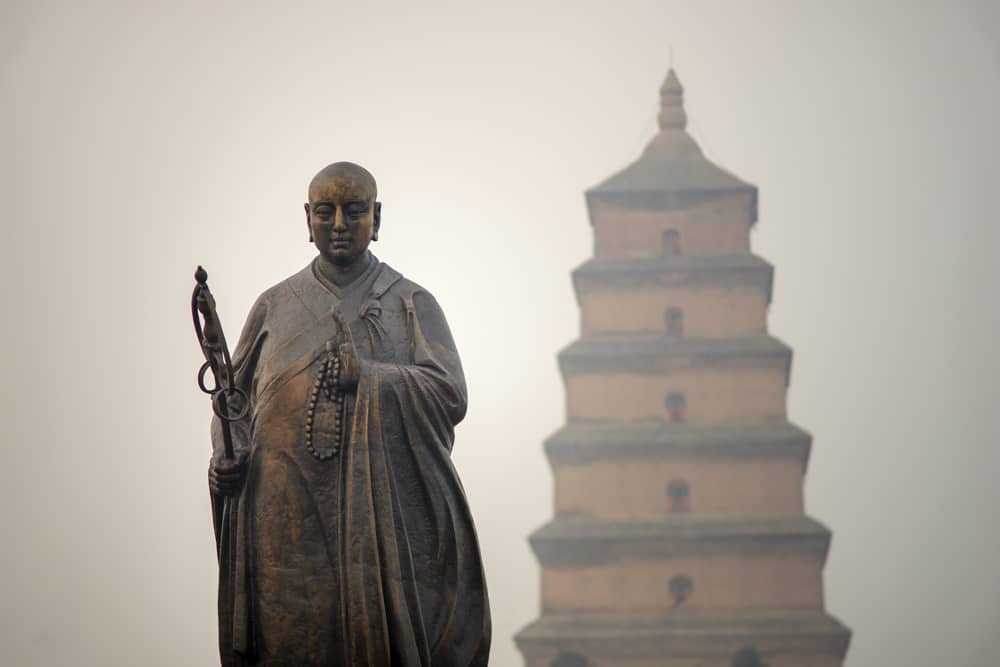
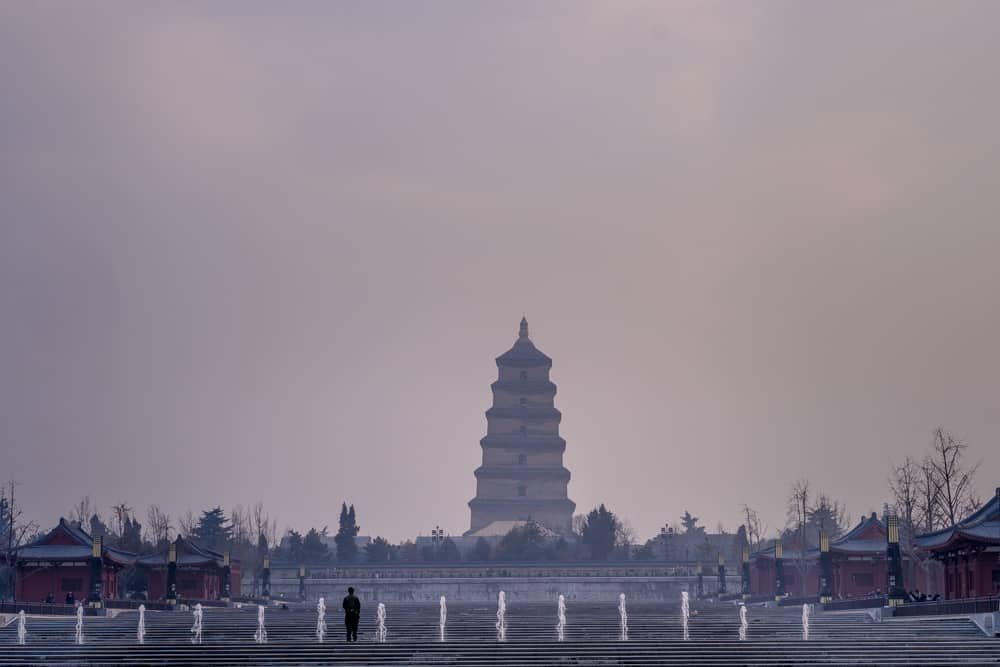
Not too far away from the Shaanxi History Museum is another Tang Dynasty remnant. The seven-story-tall Giant Wild Goose Pagoda (大雁塔) was built in the ancient capital of Chang’an in 648.
A monk named Xuanzang embarked on a 17-year pilgrimage to India and brought back several Buddhist sutras, texts, and figures. The Giant Wild Goose Pagoda was constructed to house the treasures that Xuanzang had brought to China.
On the northern side of the pagoda is an enormous fountain (only open in summer and an excellent place to cool off), while the southern side has a large square with a statue of Xuanzang.
Come here around sunset and join all the Chinese tourists and Xi’an families taking selfies and watching the pagoda light up. In summer, get something cold to drink from a convenience store and cool off in the mist of the fountains.
Great Tang Mall
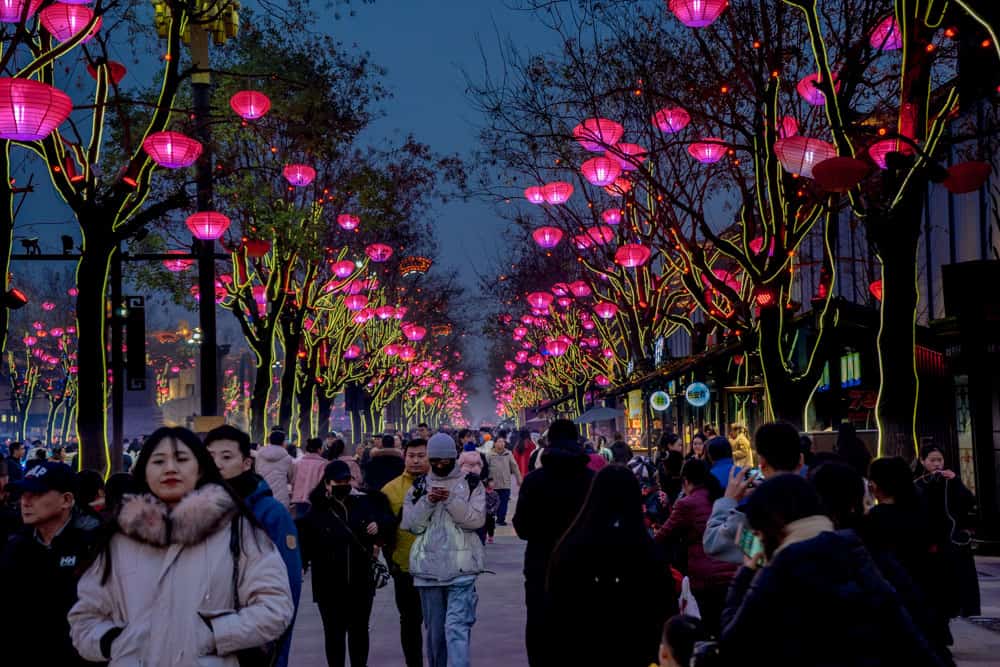
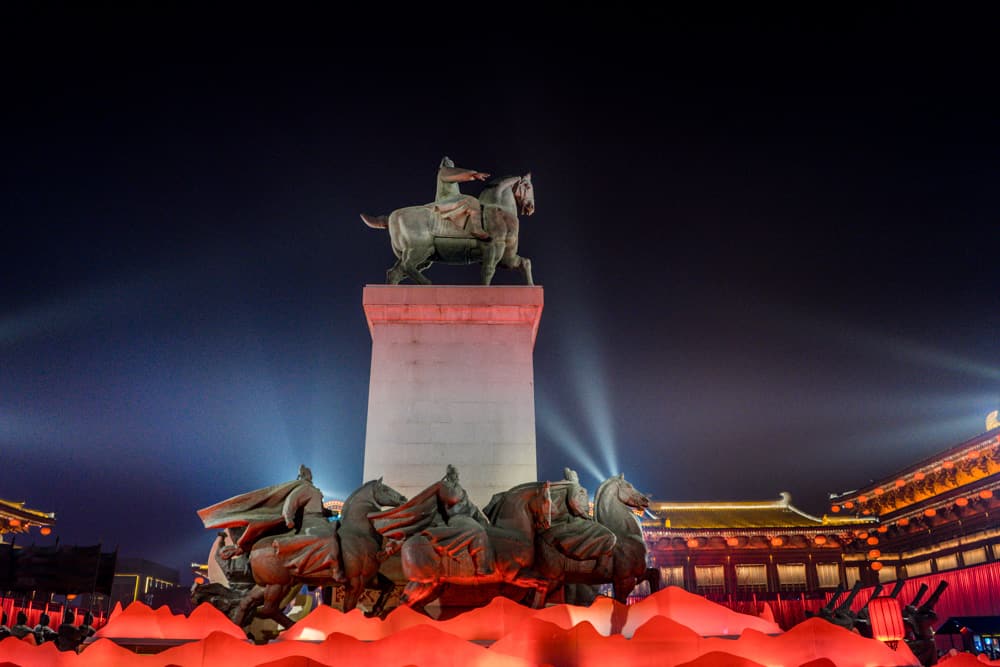
Don’t be put off by the word mall. This pedestrian street, just across from the Xuanzang statue in front of the Giant Wild Goose Pagoda, is great for strolling, especially when it lights up at night.
Officially known as the Great Tang All Day Mall, this street is always buzzing with local tourists, and the atmosphere is energetic day and night. In addition to shopping and eating, you can see giant statues of Chinese emperors and historical figures and enjoy LED light shows or street performances.
There are more than enough options for eating – from Peking Duck to Sichuan hotpot to street food skewers.
Restaurant recommendation in the Great Tang Mall:
First Noodle Under the Sun
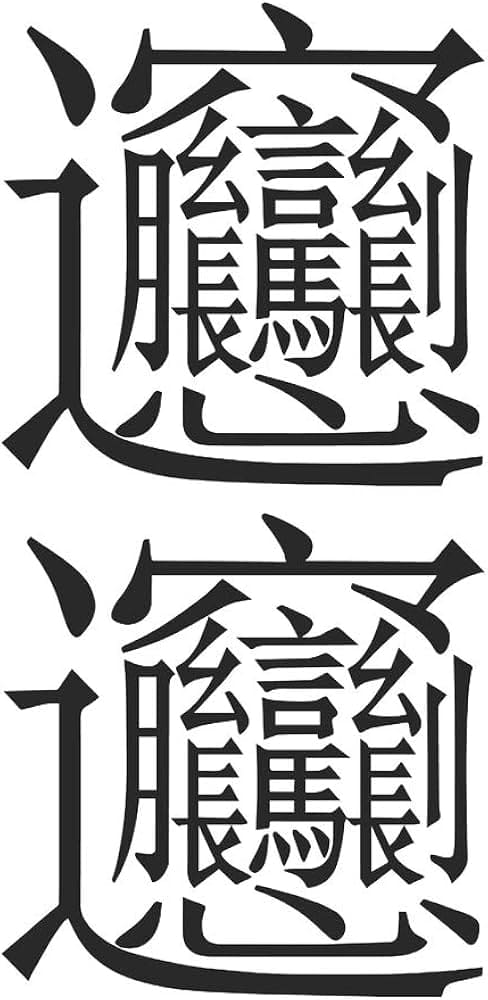

Xi’an is known for its excellent noodles, and this Xi’an noodle franchise does the city proud. We had the Baing biang noodles, perhaps the most famous of the Xi’an noodles. Biang biang noodles translate to belt noodles due to their length and shape. The noodles come with several vegetable toppings, nuts and spicy sauce. Definitely give it a try.
These biang biang noodles are famous not only for their yumminess but also because the Chinese character is one of the most complex in use today.
Other than several kinds of noodles, you can also get great Xi’an burgers (rou jia mo), lamb skewers, veggie dishes and ice-cold Tsingtao beer.
Xi’an Old Town & Muslim Quarter
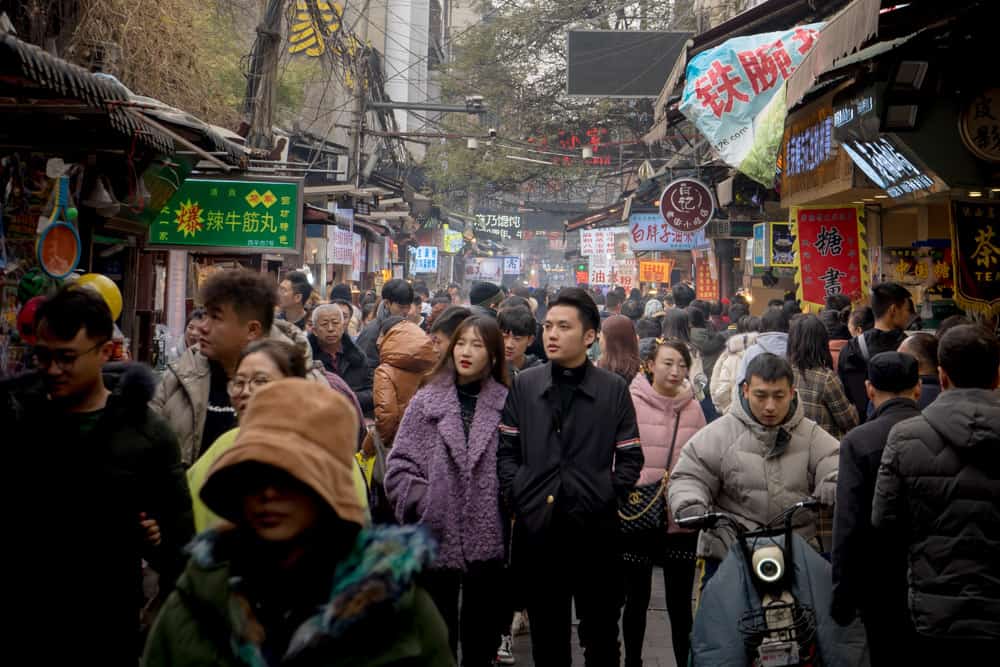
The city wall surrounds the entire old town of Xi’an, and it really feels as if you’re entering a silk road city once you enter the old town. Inside the walls, you’ll find the predominantly Hui (Muslim) community, with men wearing their white skull caps and women in traditional dress.
This part of China looks much more Central Asian than the rest of Eastern China and is wonderful to explore on foot or by bike. The Drum and the Bell Towers are two prominent landmarks inside the Xian city wall, and you’ll probably pass them a few times during your trip.
Plan to spend the whole morning exploring the Muslim Quarter, and you’ll probably want to come back here again, even if it’s just for the incredible street food.
Great Mosque of Xi’an
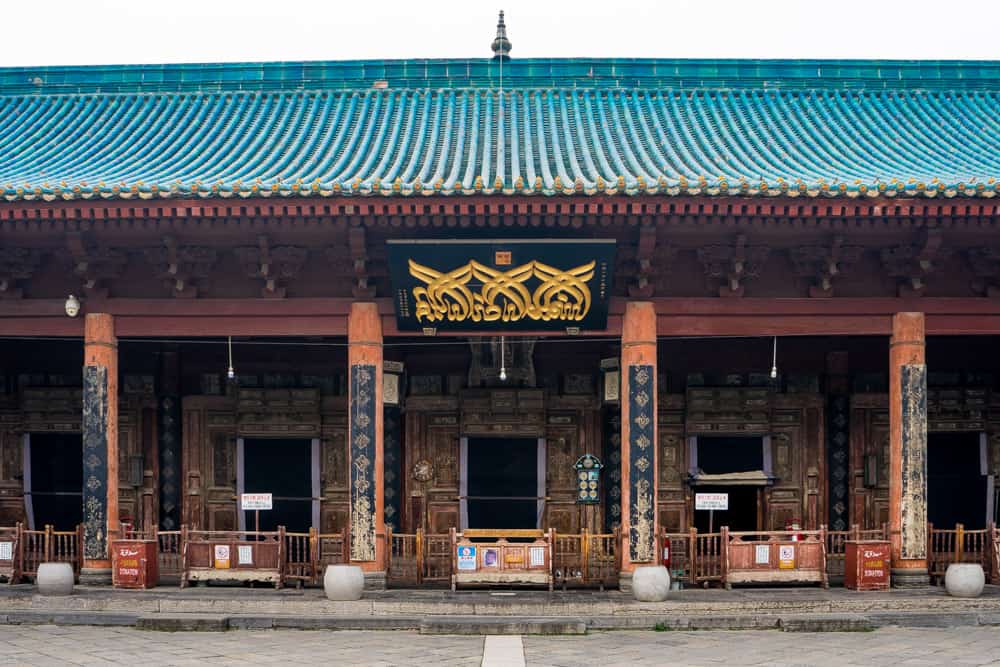
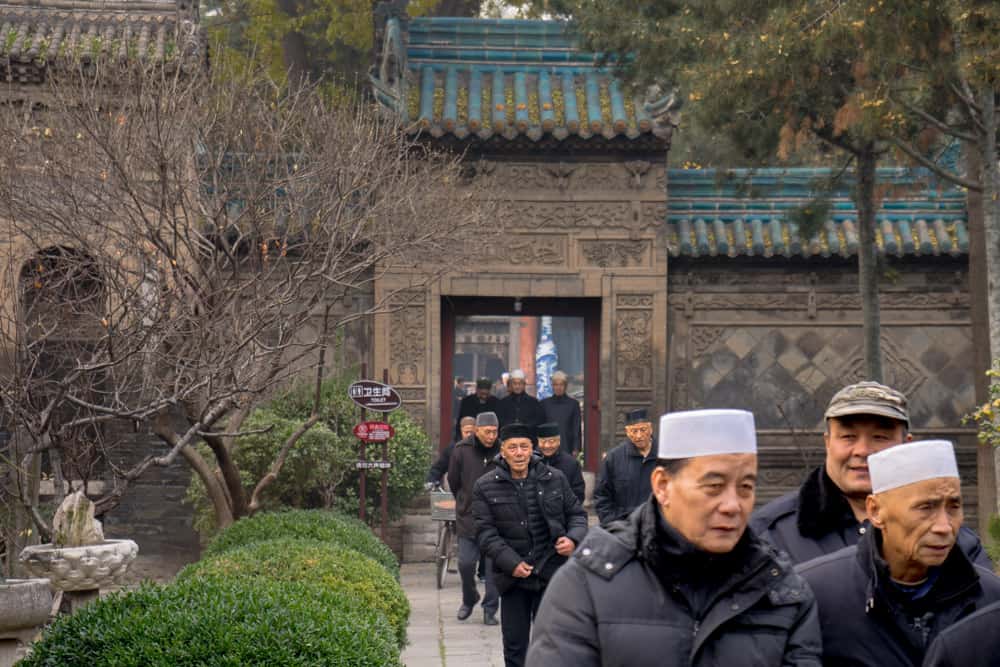
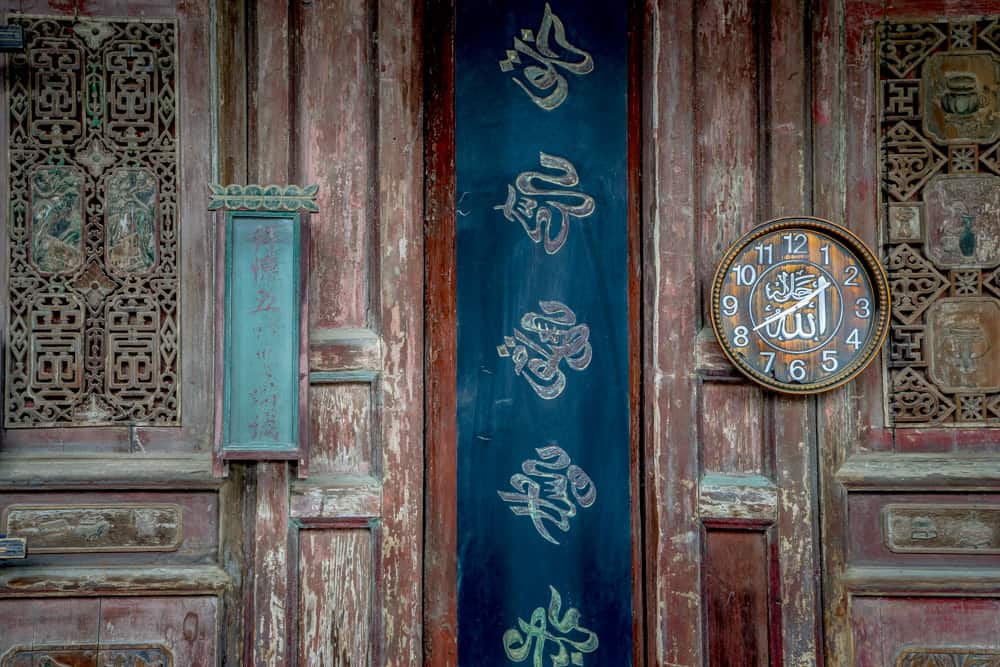
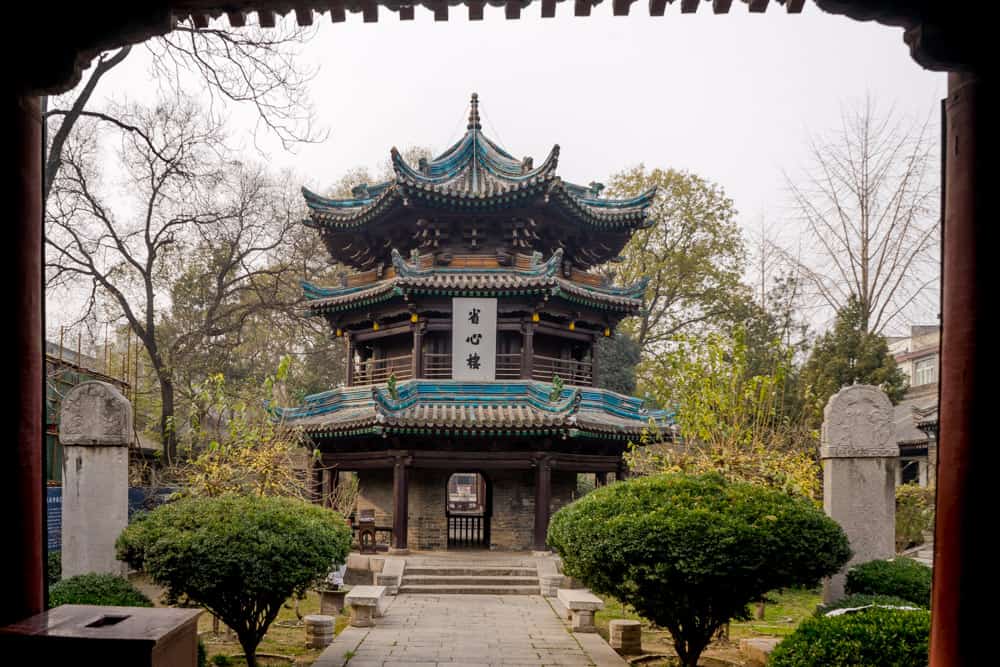
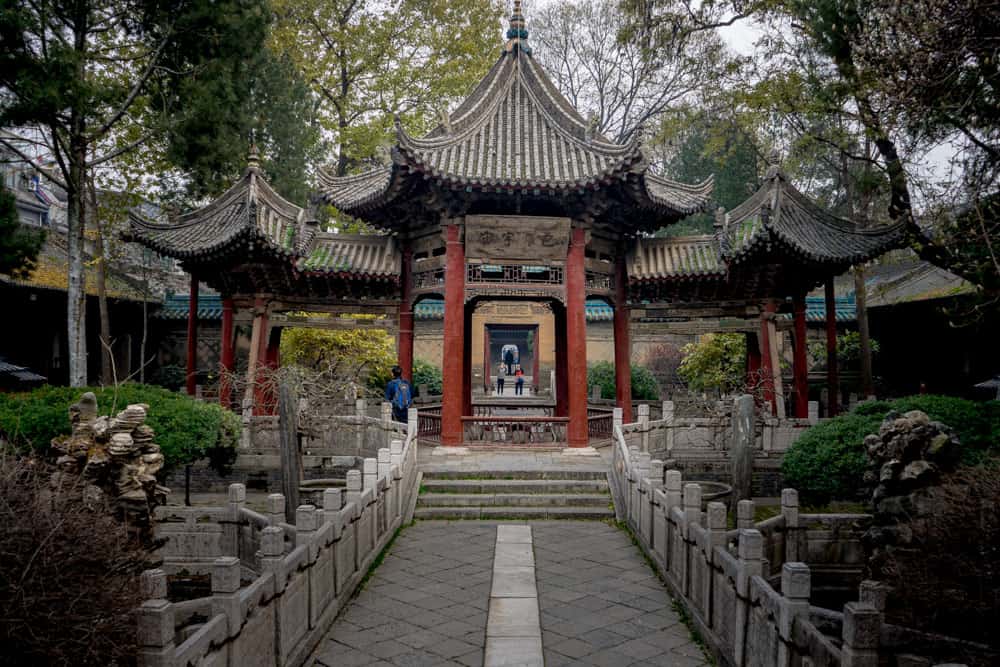
Xi’an’s Great Mosque (西安大清真寺) is the oldest and largest mosque in China and is still an active place of worship today. Like all other mosques around the world, visitors of all religions are welcome to enter the complex.
The beauty of the Xi’an Mosque is the effortless and interesting way that Chinese and Arabic design elements combine. At first glance, it might look like a Buddhist temple since the mosque lacks a distinctive dome and minaret. (It does have a minaret, though; it just looks like a pagoda.)
Notice how the Arabic calligraphy has been manipulated to look Chinese.
Xi’an Street Food
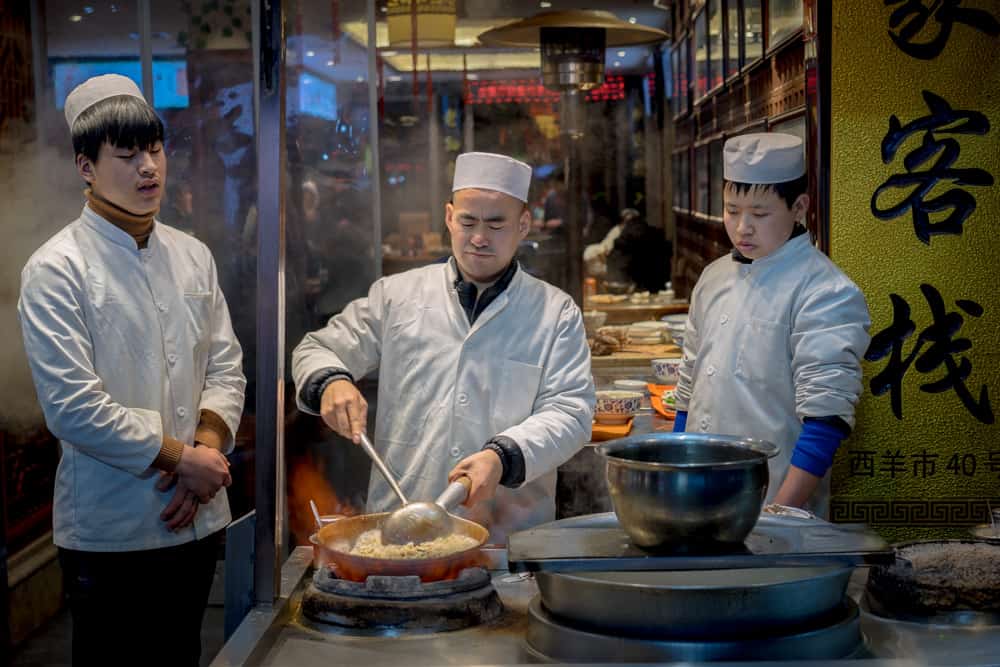
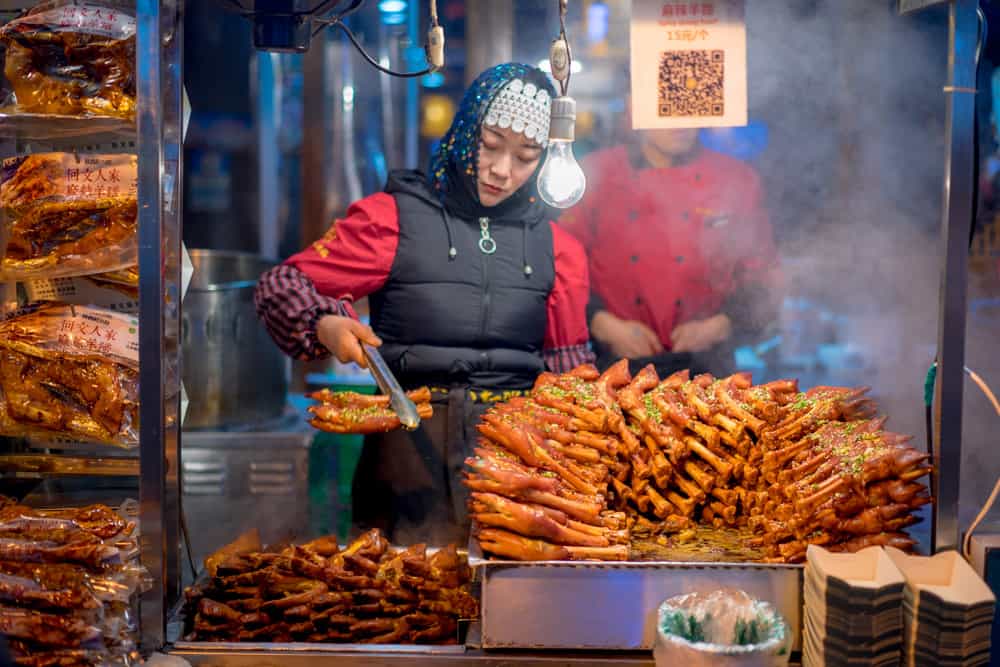
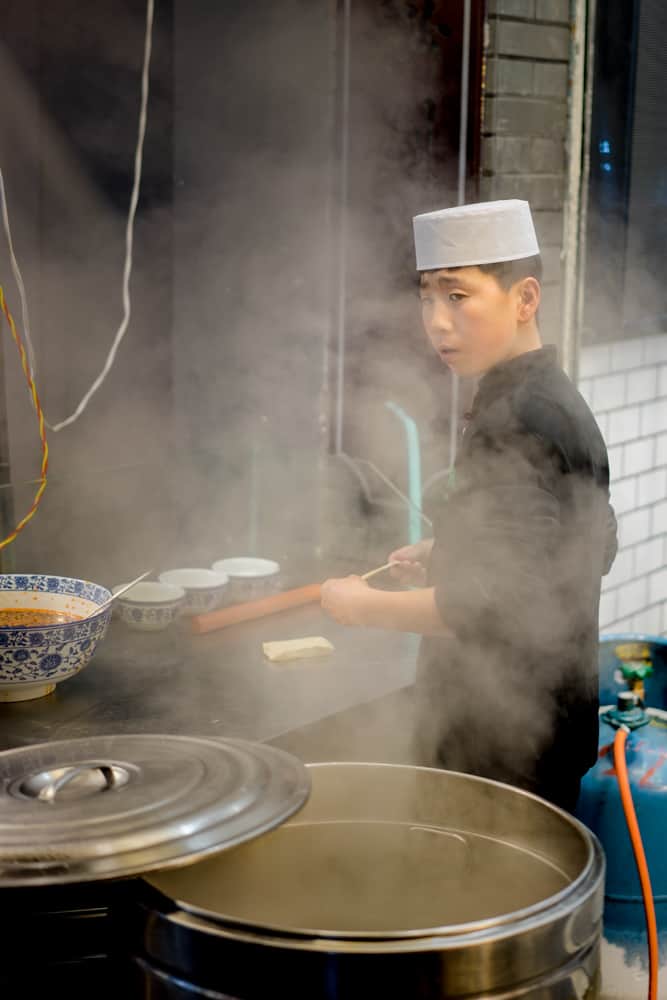
Street food in Xi’an is perhaps just as good a reason to come to the city as the famous terracotta warriors! Seriously, foodies and normal people like me and you will love Xi’an for its food. And the absolute best place to experience the culinary delights of Xi’an is on a street simply known as Muslim Street.
A food tour of the Muslim Quarter is one of the best things to do in Xi’an, and something that you’ll remember long after the rows of terracotta warriors have faded away.
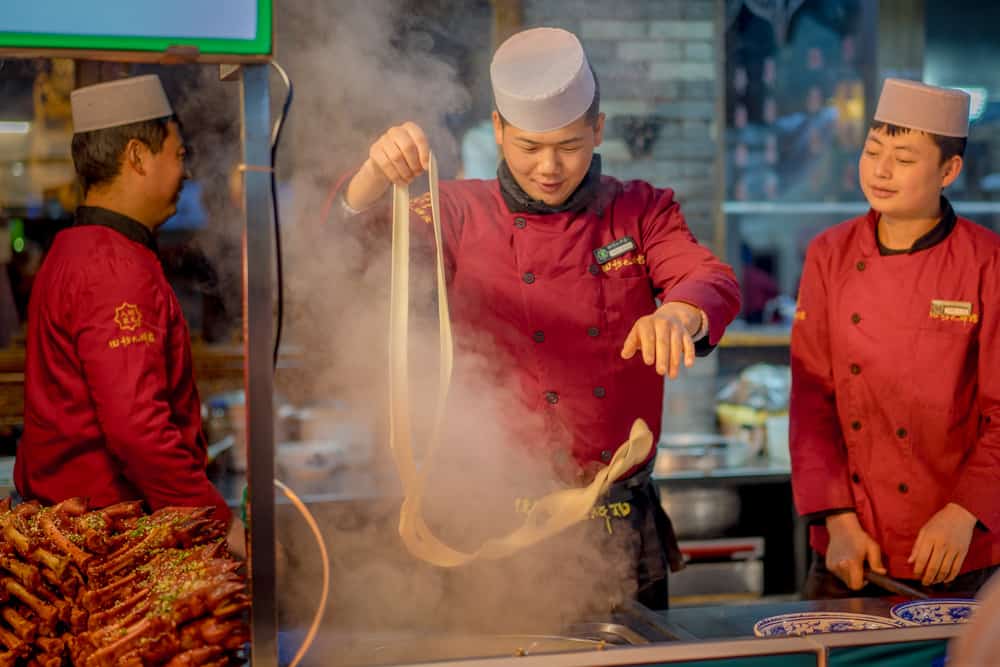
Muslim Street is chockablock with food stalls, hole-in-the-wall eateries and restaurants. Something is exciting about trying to taste it all, about the aroma of grilled lamb filling the air, and watching the cooks pull noodles and drop them into cauldrons of boiling water.
Food you must try on Muslim Street
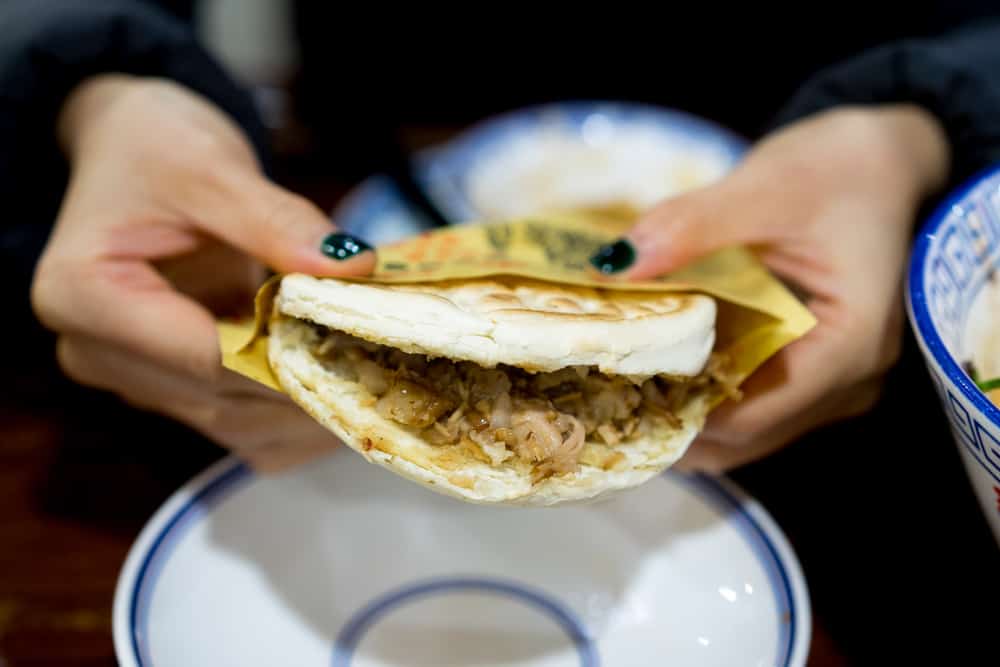
Rou Jia Mo (肉夹馍): If there is one thing you MUST eat in Xi’an, it’s the Rou Jia Mou, also known as a Xi’an burger. It is a Chinese flatbread (mo) cut open and stuffed with wonderfully braised and spiced lamb, pork or beef (rou). That’s it. Less is more. This might be the best burger you’ll ever have. It’s definitely the oldest, as it dates back to BC!
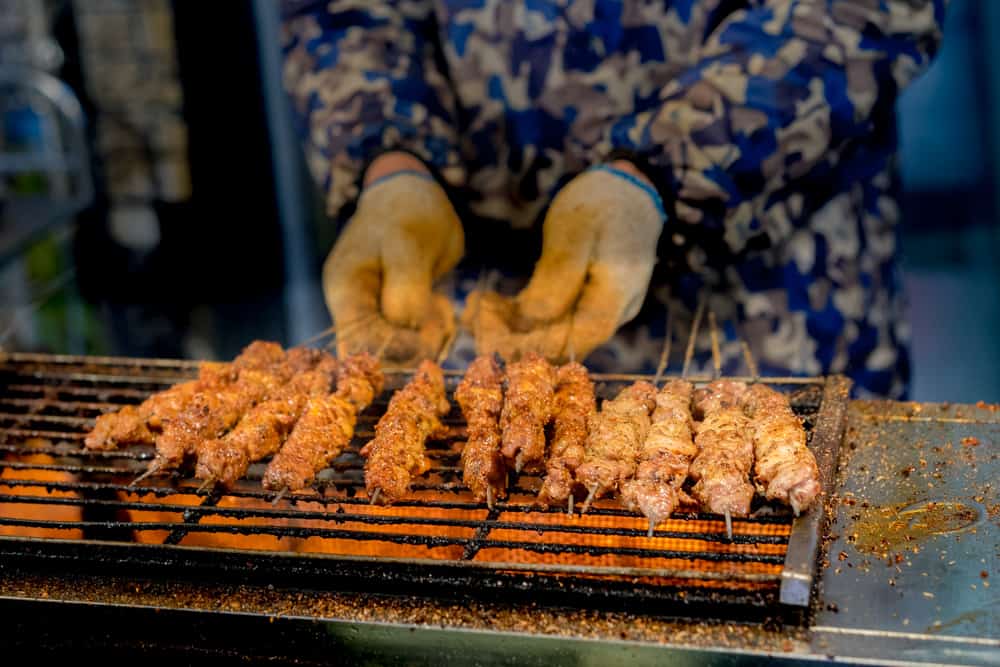
Kao Rou Chuan (烤肉串): Grilled meat skewers can be found all over China, but nowhere are they as good as on Muslim Street in Xi’an. It must be the copious amounts of cumin and chilli that do the trick. (Actually…we visited Xinjiang Province after Xian, and the Xinjiang skewers have a definitive edge).
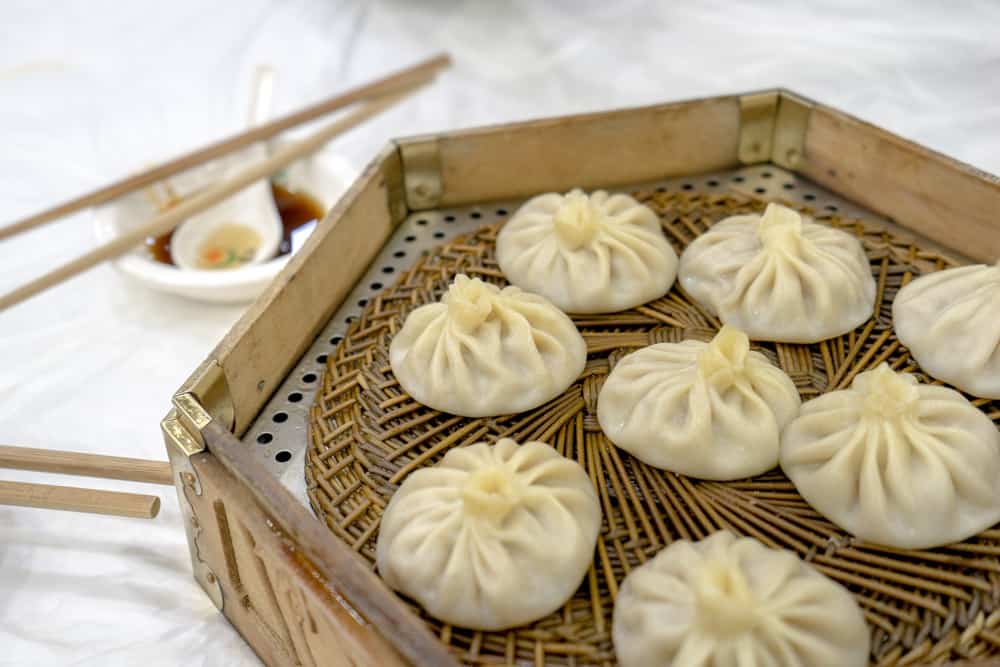
Guan Tang Bao (灌汤包 ): These soup dumplings are similar to xiao long bao from Shanghai, but contain much more soup and are filled with lamb rather than beef.
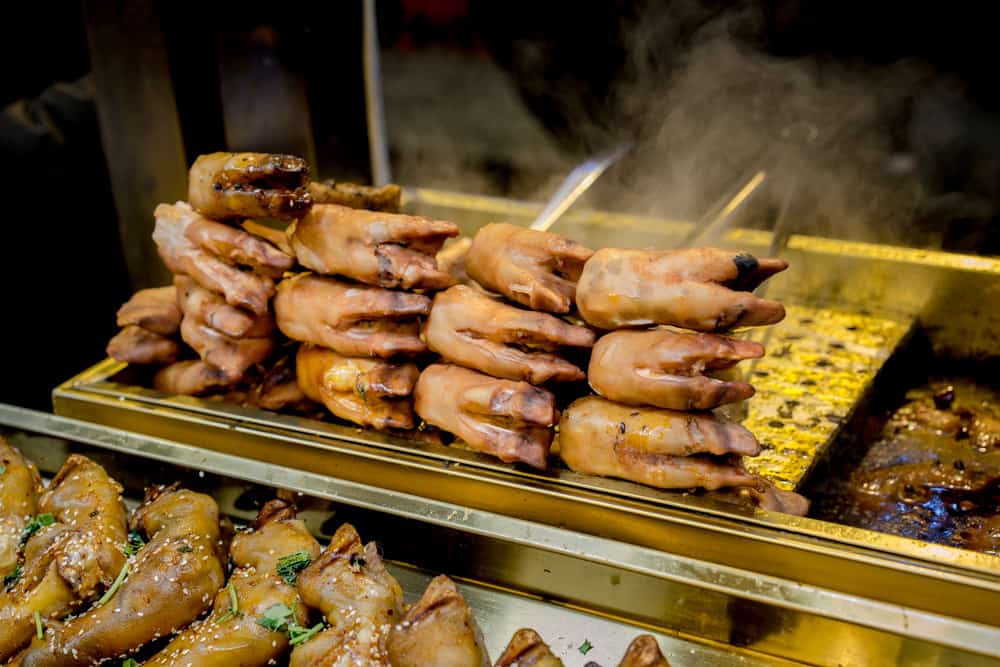
Yang Ti Zi (羊蹄子): Sheep’s hooves might sound and look weird, but there are few things as good as this meat-collagen-cumin combo.
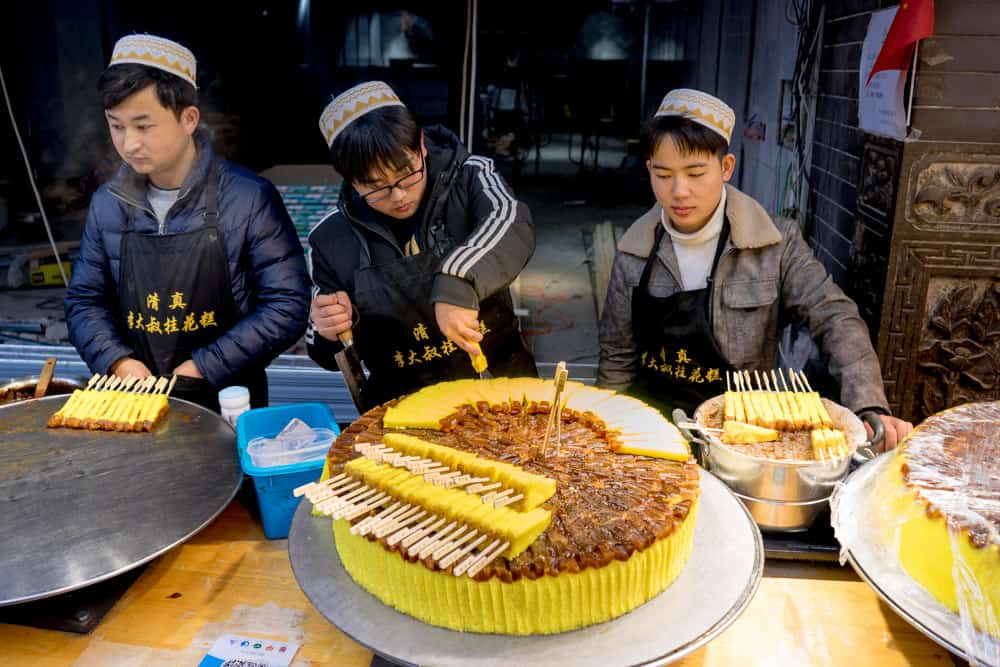
Gui Hua Gao (桂花糕 ): This bright yellow, fragrant osmanthus rice cake is a dessert unique to Xi’an. We thought it was some pineapple concoction, but it turned out to be something very different!
The moist, dense rice cake is infused with osmanthus essence, and the best way to describe the taste is to think of the smell of Malibu rum. It tastes like the smell of Malibu rum. YUM!
Muslim street is not only incredibly delicious but also very photogenic. This is perhaps the best place to photograph everyday life in Xi’an.
Tomb of Emperor Jingdi
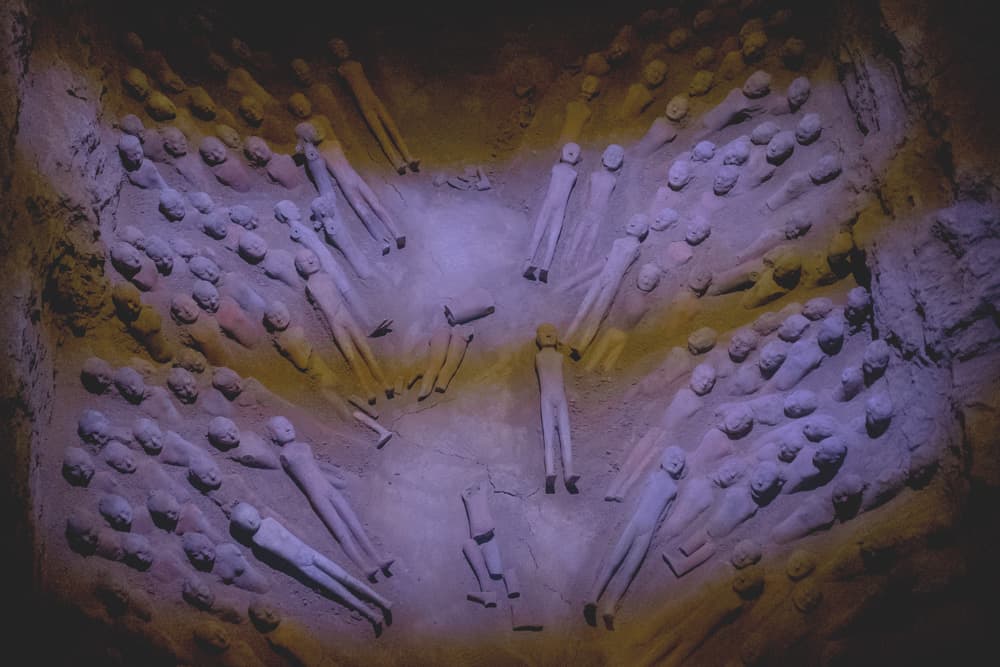
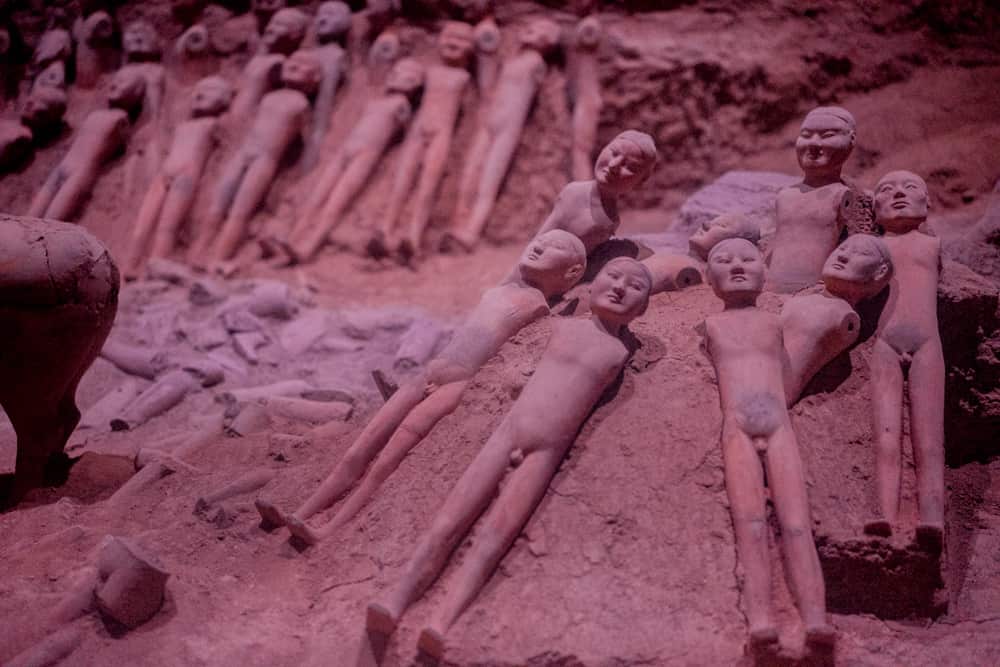
Confusingly, the tomb of Emperor Jingdi is also known as the Han Jing Mausoleum, Liu Qi Mausoleum and Yangling Mausoleum.
Regardless of what you call it, this burial site is packed with unique terracotta figures and is one of the hidden gems in Xi’an not to be missed!
If you’re rushing through Xi’an, we suggest you visit the Terracotta Army and then come straight here to see this remarkable tomb. What makes it even better is that it’s not nearly as crowded as its more famous counterpart. In fact, when we went (in December), we saw fewer than 10 other visitors.
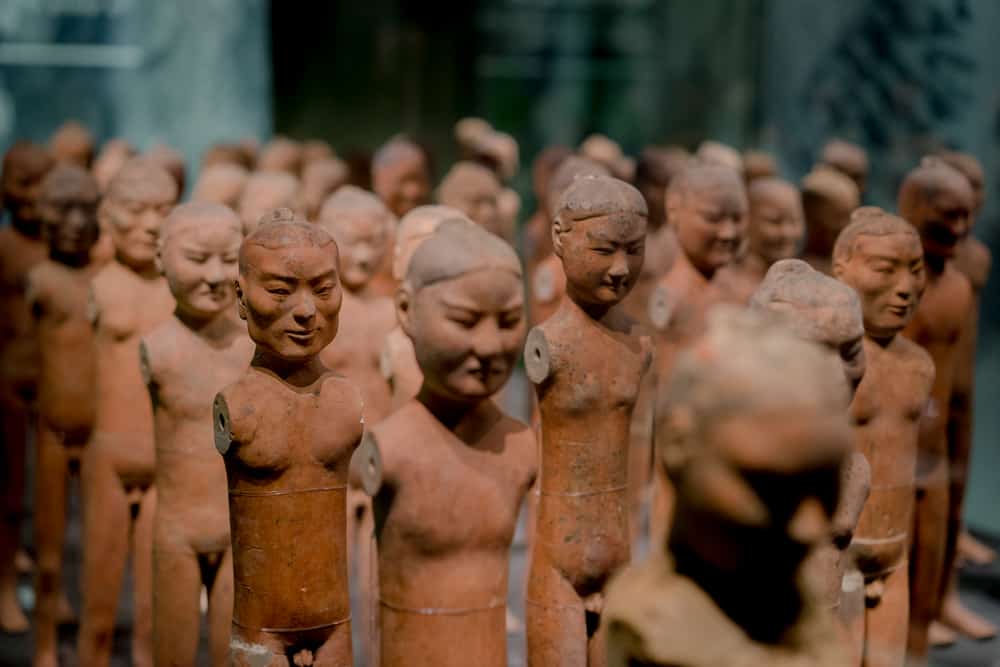
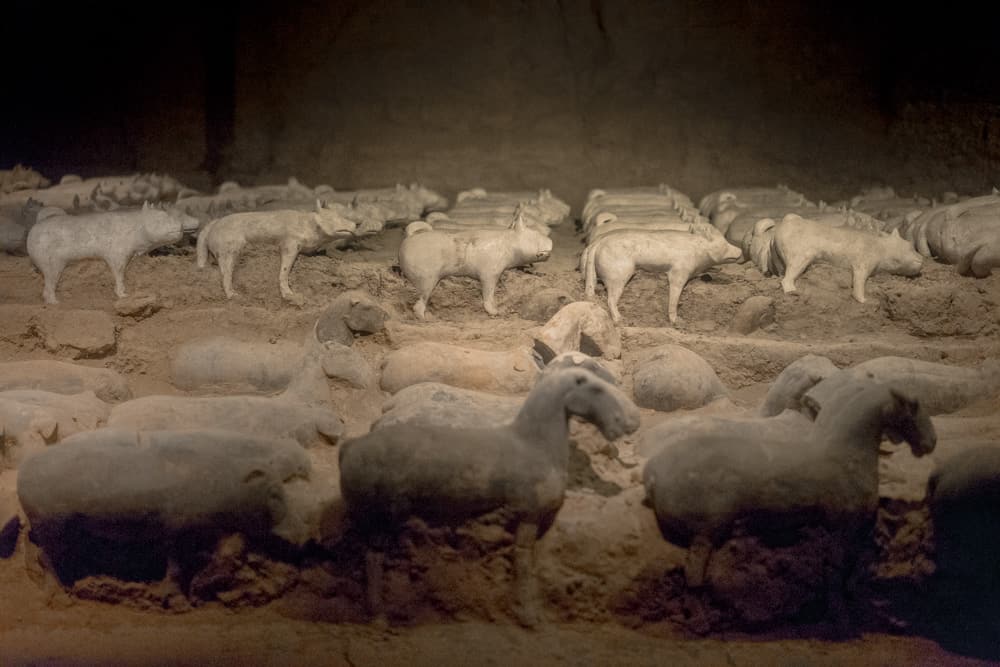
Emperor Jingdi’s tomb was discovered much later than the Terracotta Army and was only opened to the public in 2006. Jingdi’s tomb is also filled with terracotta figures, but in miniature, and there are over 50,000 of them.
Unlike his predecessors, who spent all their time and money building over-the-top terracotta armies, Jingdi cut public spending and lowered taxes. His army of doll-sized eunuchs, servants, domesticated animals and female cavalry on horseback is truly sublime.
The figures have a surprisingly contemporary look, considering that they are 2,500 years old. Today, all the human figures are naked and without arms, but initially, they had wooden arms and silk clothing, which, of course, have eroded and disappeared over time.
Take note of the figures’ facial expressions. They look as if they are smiling because they know something that we don’t. Some historians call them the Eastern Mona Lisas.
Tips for visiting the Tomb of Emperor Jingdi:
Opening hours: 8:30-19:00
Tickets: 90 RMB (March – November), 65 RMB (December-February)
Finding the tomb can be a little tricky. Even with GPS, our Didi had trouble finding it. Once at the site, signage is scarce or nonexistent, so we spent quite some time before finding the actual tomb. Getting a Didi back to the city also took a really long time.
There should be a bus back to the Hanyangling Metro Station at 9:30, 11:10, 12:50, 14:30, 16:10 and 18:00.
We suggest asking at your hotel about tours, as it will be easier and much cheaper than the tours you’ll find online.
The Terracotta Army
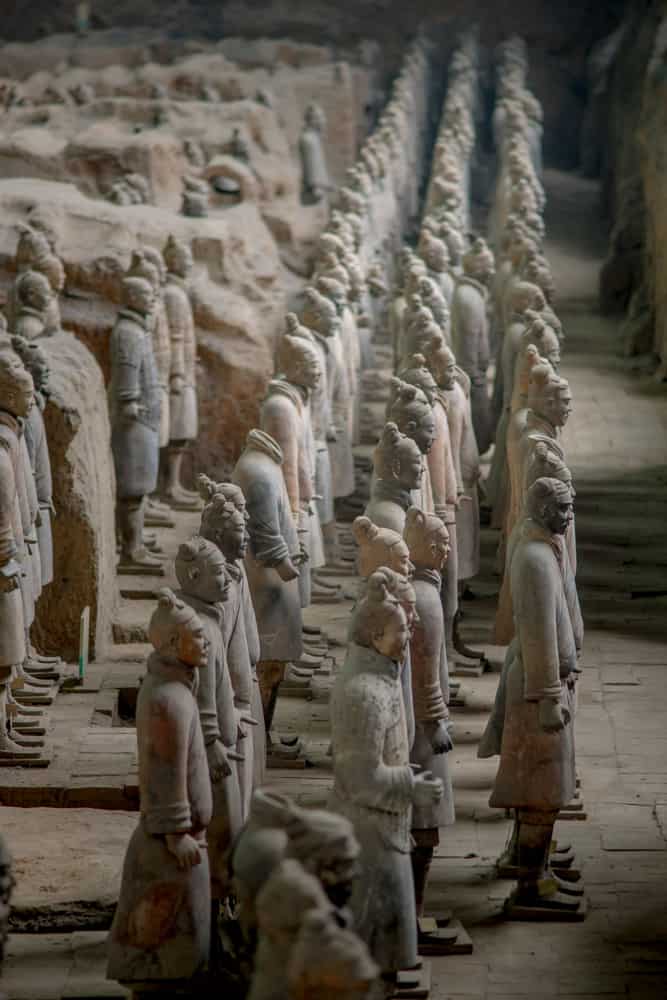
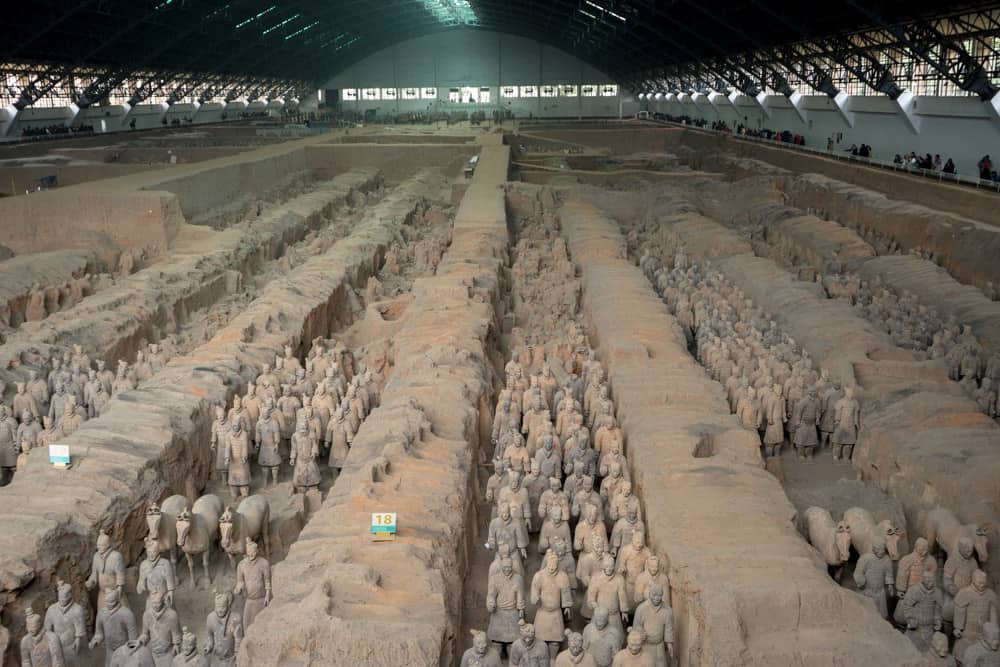
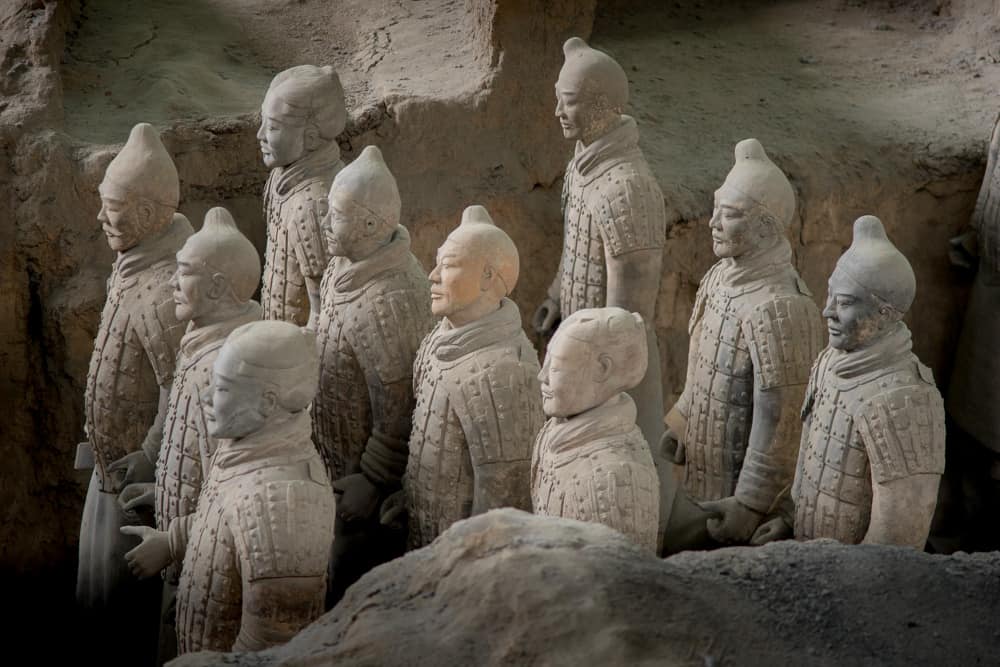
Farmers digging a well in 1974 unearthed one of the greatest discoveries of all time. The Terracotta Army needs no introduction and is undoubtedly the top sight in Xi’an.
The army inside the tomb of the First Qin Emperor was made as funerary art and to protect the emperor in his afterlife. It is a spectacular sight.
Not only the sheer number of larger-than-life terracotta warriors, but also the fact that every single one of them has unique features and clothing. And, of course, that all of this was planned and pulled off more than 2,000 years ago!
TWO. THOUSAND. YEARS.
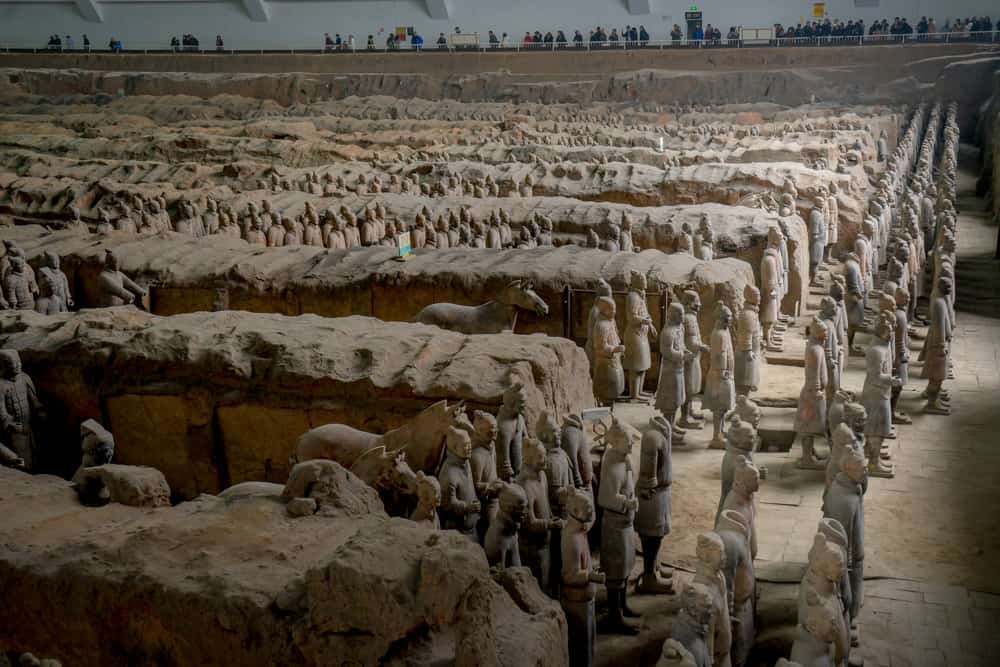
In total, there were 8,000 warriors, 600 horses, and 160 chariots, and more are excavated every year.
The man behind this unbelievable piece is Emperor Qin Shi Huang, who ruled between 259 BC and 210 BC. He was the emperor who united China. To show a united China, he had his terracotta warriors made with individual facial features and hairstyles to show different tribes and clans united as one army, just like his country.
As an overachiever, Qin Shi Han also connected several smaller sections of walls to eventually form the Great Wall of China.
Many historians consider him one of the most influential people of all time. And a great influential man like him needed a kick-ass army to ride with him in the afterlife.
Xi’an City Wall Bike Ride
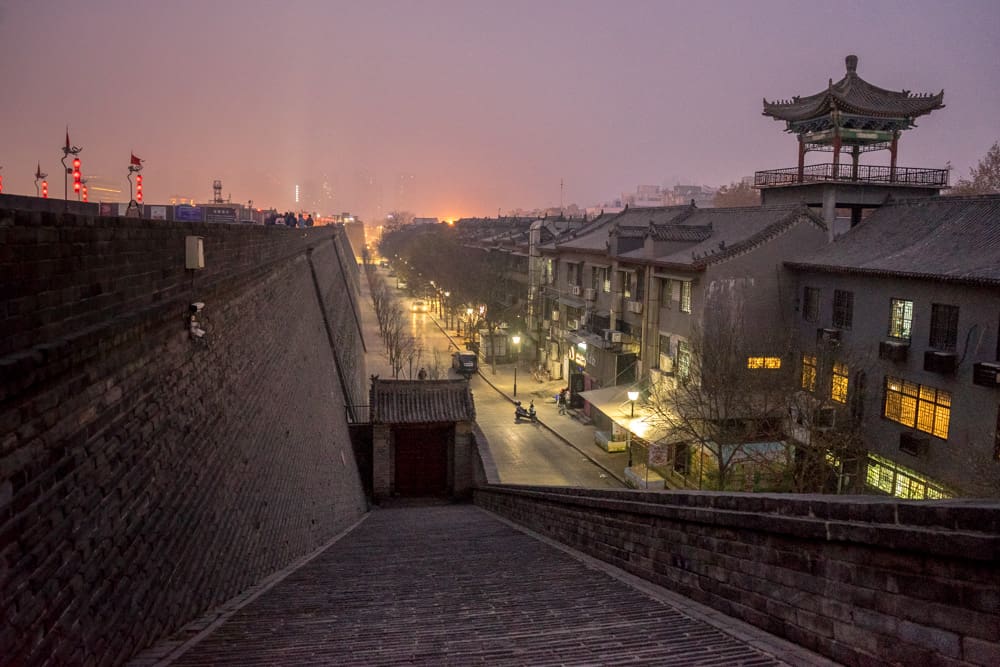
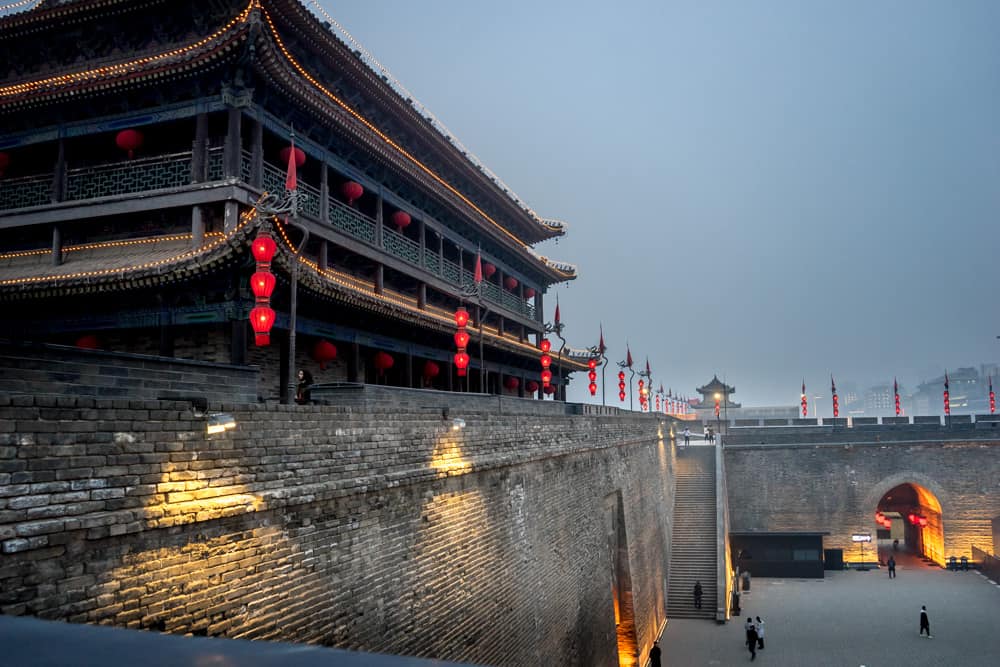
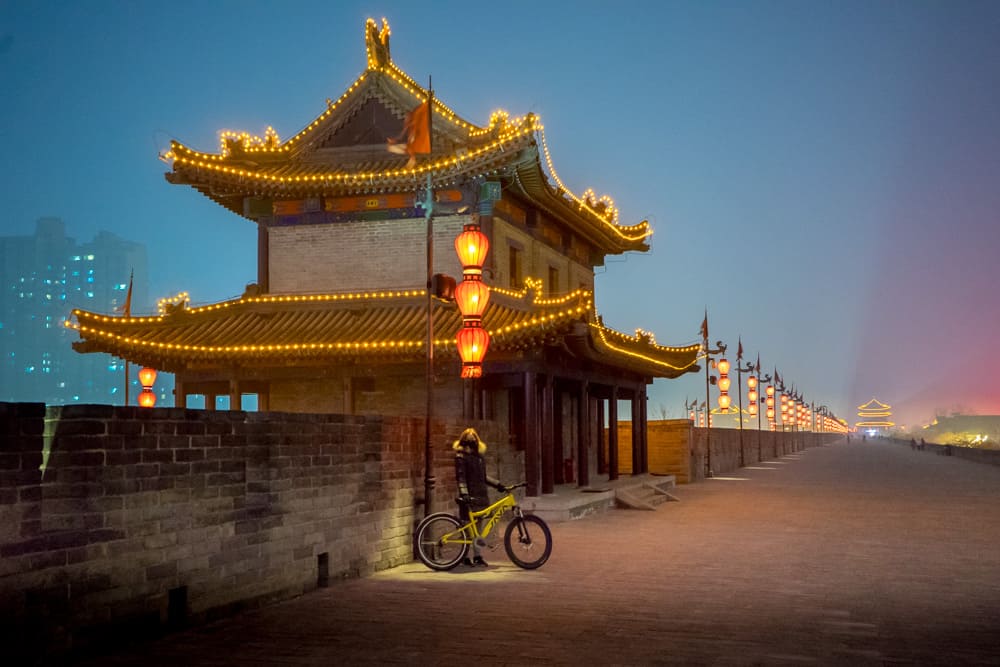
The wall surrounding the old town of Xi’an is one of the best-preserved city walls in China. (It’s not the longest, though – the city wall in Nanjing is the longest in the world).
The city wall, standing 12 meters high and over 11 km long, is one of the most prominent landmarks in Xi’an.
The best way to see the city wall is to rent a bike and cycle around it. The top of the wall is like a wide road, and it’s perfect for cycling (and much safer than dealing with the Xi’an traffic on the roads).
If you don’t feel like cycling 11 km, you could also do half, renting a bike at the South Gate and returning it at the North Gate (which would be about halfway).
Entrance to the wall: RMB 54
Bike rental: RMB 45 (+ RMB 50 deposit)
How I Shot This Guide
Every photograph in this article was taken with the exact same gear I carry on every journey. It is a setup refined over years on the road to keep travel light without compromising the final image.
- Camera: Sony A7 V
- Lens: Sigma 24-70mm f/2.8 DG DN Art
- Storage: SanDisk Extreme Portable SSD
- Software: Adobe Lightroom Classic
- Outerwear: The North Face Canyonlands Hybrid Jacket
AND THAT’S WHAT YOU DO IN XI’AN!
We are sure that you will love Xi’an. There is a reason why it’s one of the best places to visit in China. Enjoy all the things to do in Xi’an, and let us know if you find something that we’ve missed!