
The Camino de Santiago (or the Way of St. James) in northern Spain has become one of the most popular adventures in recent years, and rightly so. Your Buen Camino starts right here with our handy route planner.
The Camino is a network of pilgrimage trails throughout Spain and Portugal. You can also start walking from European countries further away. All these routes eventually lead to the same place: Santiago de Compostela in northwest Spain.
It has religious, medieval origins, but nowadays, it’s seen as a long hiking holiday for those with a sense of adventure. People walk the Camino for lots of reasons, and it’s seen as a cheap holiday alternative for many budget travellers from around the world.
Planning your Camino de Santiago route is an important decision and not an easy one to make. There are seven main routes to choose from, though there are a total of 281 routes listed, 49 of which are in Spain and nine in Portugal.
Not sure where to start or which Camino to walk? Then, this Camino de Santiago route planner is all you need.

Please note: This post may contain affiliate links. This means I may earn a commission if you make a purchase by clicking a link (at no extra cost to you). As an Amazon Associate, I earn from qualifying purchases. Learn more.
What are the Best Routes for the Camino de Santiago?
For this Camino de Santiago route planner, we’ll examine the three best routes to choose from: the popular French Way, the coastal Portuguese Way and the beautiful Camino del Norte.
Each of these three routes is amazing in its own right, so let’s see what to expect from them when planning your Camino adventure.
The French Way (Camino Frances)

The French Way (or Camino Frances) is, without a doubt, the most popular route that most pilgrims take to reach Santiago de Compostela.
Beginning at St Jean Pied de Port: The actual start of this route begins in France in St Jean Pied de Port, which is a small commune near the Pyrenees.
The first few days on the way from this point are considered the toughest as you have to tackle the highest ascent through the Pyrenees across to Spain.
The entire distance from here to Santiago de Compostela is a whopping 780 kilometres and roughly takes about a month to complete. Depending on how fast or slow you walk, it could take more days or less, depending on whether you’re in a hurry or want to take your time.
Of course, you don’t have to start at this point if you don’t fancy it. That’s the great thing about the Camino; you get to choose how much of it you want to walk depending on several factors, including your fitness level, the amount of time you have available, and your budget.
But for the sake of this post, let’s assume you start from St. Jean Pied de Port. Over the course of the month of walking, you’ll pass through several towns and cities throughout northern Spain.
To detail each stage of this route would make for a very long blog post, so instead, let’s take a look at the main parts that you can expect to visit:
Pamplona: The first major city you’ll pass through, Pamplona is famous for the Running of the Bulls festival (San Fermin), which occurs annually for a few days every July. This is where runners flee from bulls who give chase through the city’s streets.
Logroño: A few days later, on your walk, you’ll visit Logroño, a lovely medieval city south of Bilbao.
You’ll see stunning views of the River Ebro as you walk across several bridges here. The most famous bridge is Puente de Piedra, otherwise known as the Stone Bridge, which dates back to the 11th Century.
Burgos: The next big city on the French way is Burgos, which features extraordinary medieval architecture. The most prominent landmark is the Cathedral of St. Mary, a world heritage site.
The Meseta: Between Burgos and the next noticeable city is what some pilgrims dread the most: the Meseta, known as the mind section of the Camino. This 200-kilometre stretch of the Camino features mostly flat landscapes.
This can be challenging as there is a lack of shade during this stretch, and the monotony of the constantly flat views can be quite difficult mentally. With a lack of visual distractions, this stretch becomes a walk into one’s mind – great for solitude and reflection.
The Camino is difficult to walk at the best of times, so it’s important to ensure that you’re physically fit and ready for every aspect of it.
León: After the challenge of the Meseta comes another big city worth exploring on the French Way: León.
This is another charming city famous for its medieval Cathedrals and churches. It’s definitely worth spending an extra day here to explore all that it has to offer.
Galicia: After leaving León behind, you’ll soon reach one of the most beautiful regions in all of Spain: Galicia. Once here, you’ll notice a marked change in the landscape; everything is greener, with endless hills that resemble parts of the UK rather than Spain.
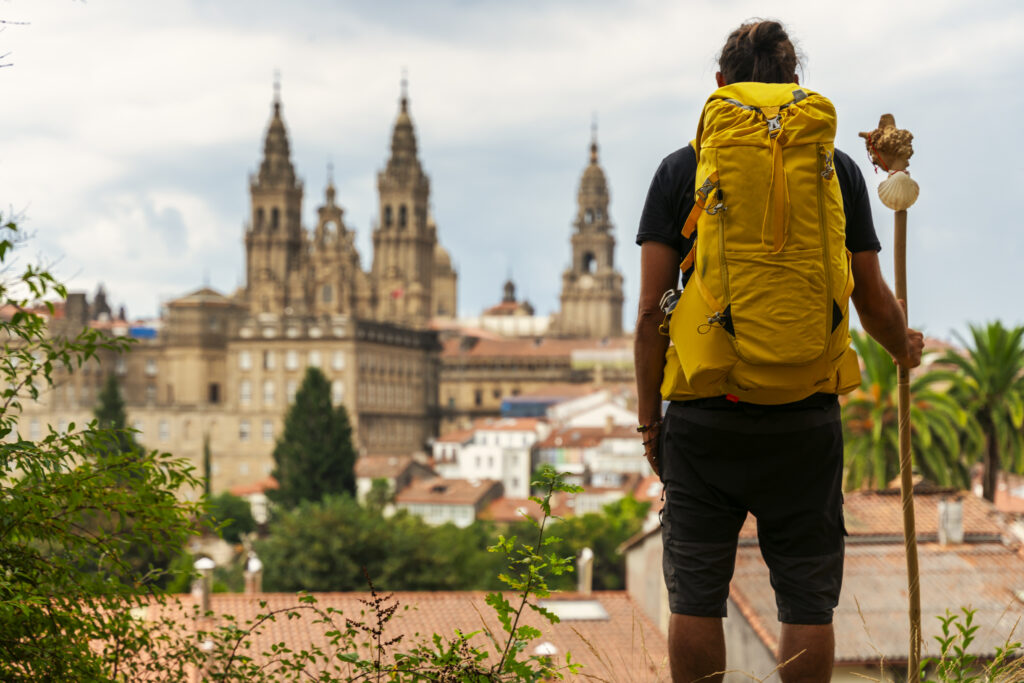
Santiago de Compostela: Finally, the destination point suddenly arrives on the horizon: the capital of Galicia, Santiago de Compostela.
This ancient city is a UNESCO site and is considered one of the most beautiful urban areas in the world.
The central point is the Cathedral of Santiago de Compostela, where the remains of St. James are rumoured to be buried.
Portuguese Way (Camino Português)

Another Camino route that has gained popularity in recent years is the Portuguese Way, which is considered the second most popular route after the French Way.
There are two main starting points here, which are two of the most beautiful cities in all of Portugal; Lisbon and Porto.
And there are two separate routes to choose from on the Portuguese Way whether you start in either Lisbon or Porto. You have the choice of walking the central route or the coastal route.
Needless to say, the coastal route is by far the better choice. It is about 33 kilometres longer than the central route, but you’ll be walking alongside the Portuguese coast, making for a beautiful journey.
Walking the Portuguese Way offers a completely different experience compared to the Spanish routes. Portugal has a totally different culture, but it is just as enriching and rewarding. Many people say that Portuguese people are a lot friendlier and warmer than the Spanish. Obviously, that’s a generalisation, but it is still worth keeping in mind when choosing the best route to walk on the Camino.
Camino del Norte

The Camino del Norte is often called the most beautiful route on the Camino, but it can also be one of the most challenging. This route crosses the Spanish northern coastline and offers some stunningly dramatic coastline views along the way.
This route is longer than the two previously mentioned, being 850 kilometres from Irún on the French border all the way to Santiago de Compostela.
The terrain can be quite difficult at times on this route, most notably during the first few days and also during the Deba a Markina to Xemein section.
It does pass through some beautiful cities, too, so let’s take a look at the three best cities you’ll visit on the Camino del Norte:
San Sebastian: Probably the most beautiful city on the whole of the Camino del Norte. San Sebastian is a resort town in the Basque region of northern Spain. It’s a really beautiful place and worth staying an extra day or two to make the most of its renowned beaches and restaurants.
Bilbao: A few days later, you’ll reach the next major city on the Camino del Norte: Bilbao, which is known unofficially as the capital of the Basque region.
It is a delightful place known for the extraordinary Guggenheim Museum, which is definitely worth finding the time to visit when passing through.
Santander: Santander is the third city of note when walking the Camino del Norte. It is the capital of the Cantabria region of northern Spain and is known as a popular holiday destination for Spaniards during the summer months. It has plenty of beautiful sandy beaches, mountainous landscapes, and stunning architecture.
How Many Days Do You Need to Walk the Camino?

As mentioned earlier in this blog post, it’s totally up to you how many days you want to walk the Camino. But, if you plan on walking the entirety of one of the three routes we’ve looked at here, then this is a quick guide:
French Way: It’s possible to walk the entirety of this main route in under a month, but most experts estimate at least 35 days, possibly more. It’s best to plan for more days than less, so give yourself 4 to 5 weeks to be on the safe side.
Portuguese Way: Similarly to the French Way, it all depends on where you choose to start walking from.
If you decide to start in Lisbon and take the coastal route, finishing in Santiago de Compostela will take roughly 25-30 days. The coastal route from Porto is a much shorter option, taking only 12 to 14 days.
Camino del Norte: The Camino del Norte is the longest route of the three we’ve examined in this blog post, lasting 850 kilometres from beginning to end. If you decide to walk the entirety of this route, it will take around five weeks, so plan accordingly.
How Do You Not Get Lost on the Camino?
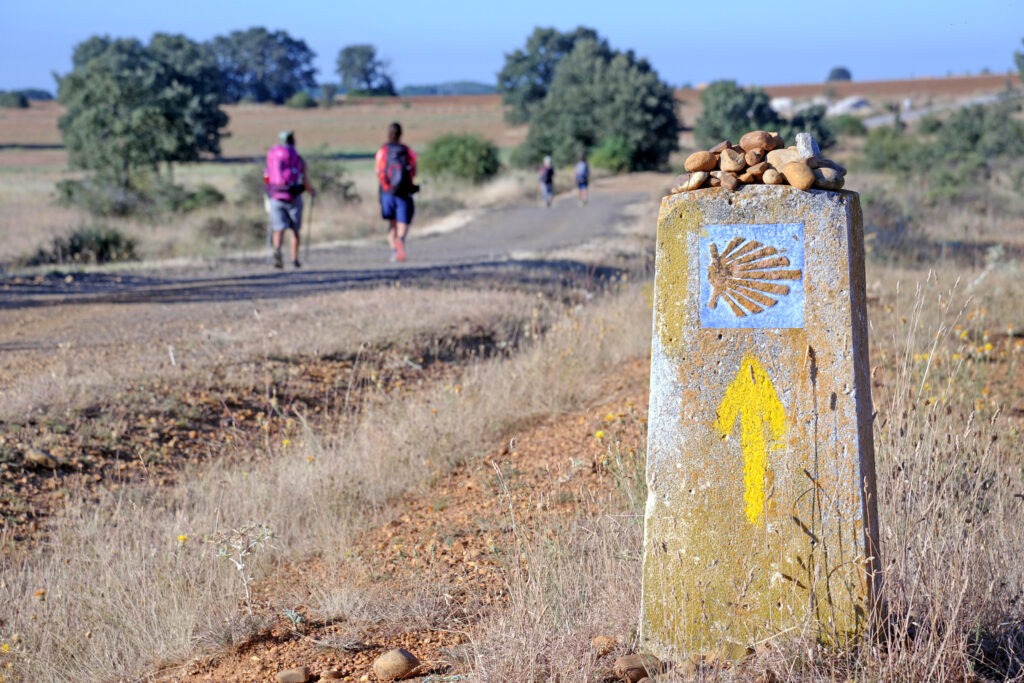
It’s most likely you will get lost at times on the Camino! But, all you have to do is look out for the yellow arrow markers which are signposted everywhere on each of the main routes.
You’ll see the yellow arrows on signposts or on walls or as graffiti on pavements and roads. Sometimes the exact direction of the arrows can get confusing, but you’ll soon get the hang of it after the first couple of days.
When is the Best Time to Walk the Camino?
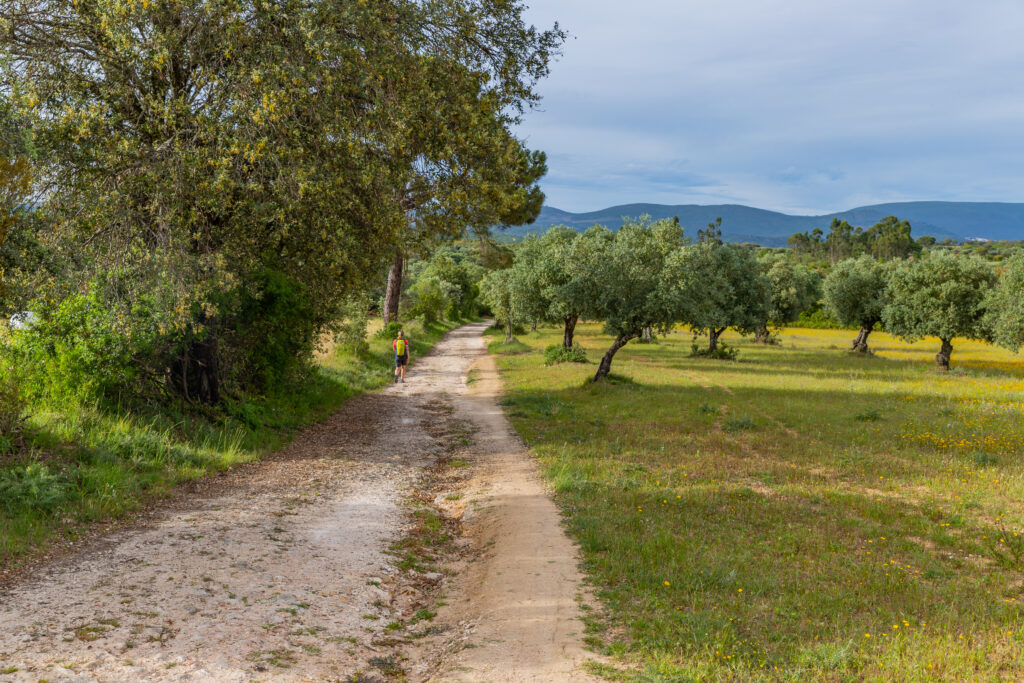
Spring or autumn are considered the best times to walk the Camino, as during these months, the temperatures are most suitable for hiking—not too hot and not too cold.
Don’t plan to walk the Camino during the winter months for obvious reasons. Also, the summer months can be gruelling, with high temperatures reaching the upper 30s (Celsius) and higher.
Conclusion: Best Routes for the Camino de Santiago

So those are the best routes to consider when planning to walk the Camino de Santiago. Whichever option you choose, be prepared for a life-changing few weeks.
The Camino will stretch you to your limits at times, and it will likely be the most difficult physical challenge you’ve faced.
But it’s also one of the most rewarding adventures you’ll ever experience. From the breathtaking changing scenery to the friends you’ll make along the way, there is nothing quite like walking the Camino de Santiago.
This post guest post was written by Mark from MJ Travel Guides
Mark is from Wolverhampton in England and started travel blogging back in August 2022 after deciding to combine his love of writing and travelling.
He has visited over 40 countries, mostly solo, and his aim with his travel blog (www.mjtravelguides.com) is to give expert, up-to-date, and in-depth advice on the places he has visited and build connections with fellow travellers.