
They say the churches of Lalibela were carved by angels. Maybe they still are. Before sunrise, wrapped in the cold of the Ethiopian highlands, it’s hard to tell where the stone ends and the people begin. The churches are rough, hand-chiselled, gouged into the earth with faith and calloused fingers. So are the faces. Etched by wind and life, lit from within.
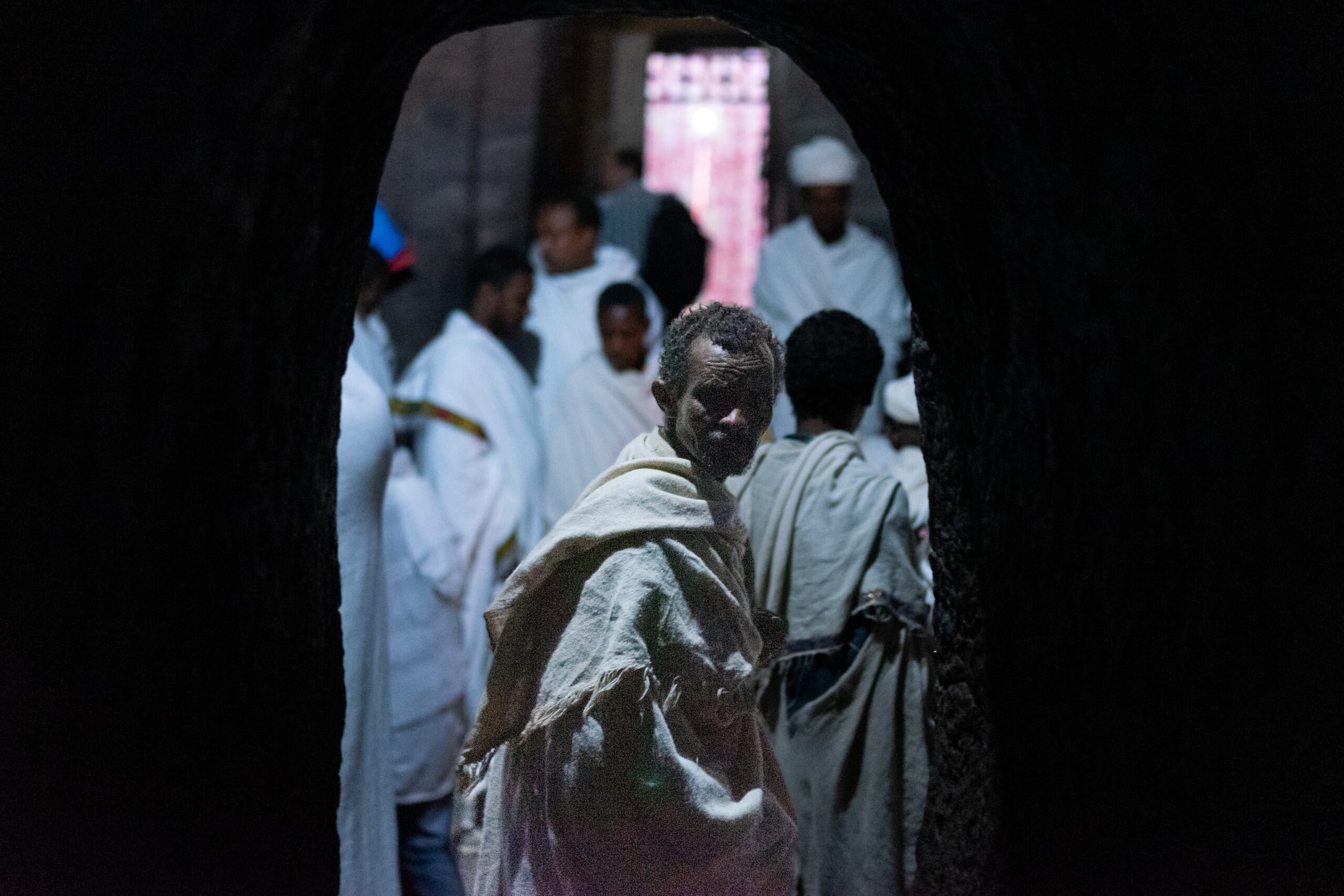
I’m the only outsider here this morning. No other tourists. No camera crews. Just thousands of white-shawled pilgrims moving silently through stone corridors like water through riverbeds.
This is Sunday Mass in Lalibela, not as a visitor attraction, but as a living ritual. I came before the sun, camera in hand, but mostly to watch. And to listen. What follows is what I saw, heard, and felt.


Please note: This post may contain affiliate links. This means I may earn a commission if you make a purchase by clicking a link (at no extra cost to you). As an Amazon Associate, I earn from qualifying purchases. Learn more.
Before the Sun
It’s just before five in the morning, and still dark outside. Not city dark. Mountain dark. Real dark. You feel it more than you see it. The air is cool and thin. No birdsong yet, no light creeping over the horizon, just the sound of footsteps on gravel. No rush. No chatter. Just purpose. I zip up my hoodie and fall in behind the footsteps, drawn by some ancient rhythm.

This is how I found myself walking alongside Ethiopian Orthodox worshippers on this Sunday morning in late June. Together, like a dream set in the Old Testament, we follow the road towards Biet Medhane Alem, the largest of Lalibela’s 11 rock-hewn churches.
Their shoulders are all covered with white linen shawls that almost glow in the dark. It reminds me of those laundry detergent slogans. Whiter than white, the box would promise. As we draw closer, I can hear the rhythmic chant of prayers and feel the vibrations of soft drumbeats echoing out of the stone.
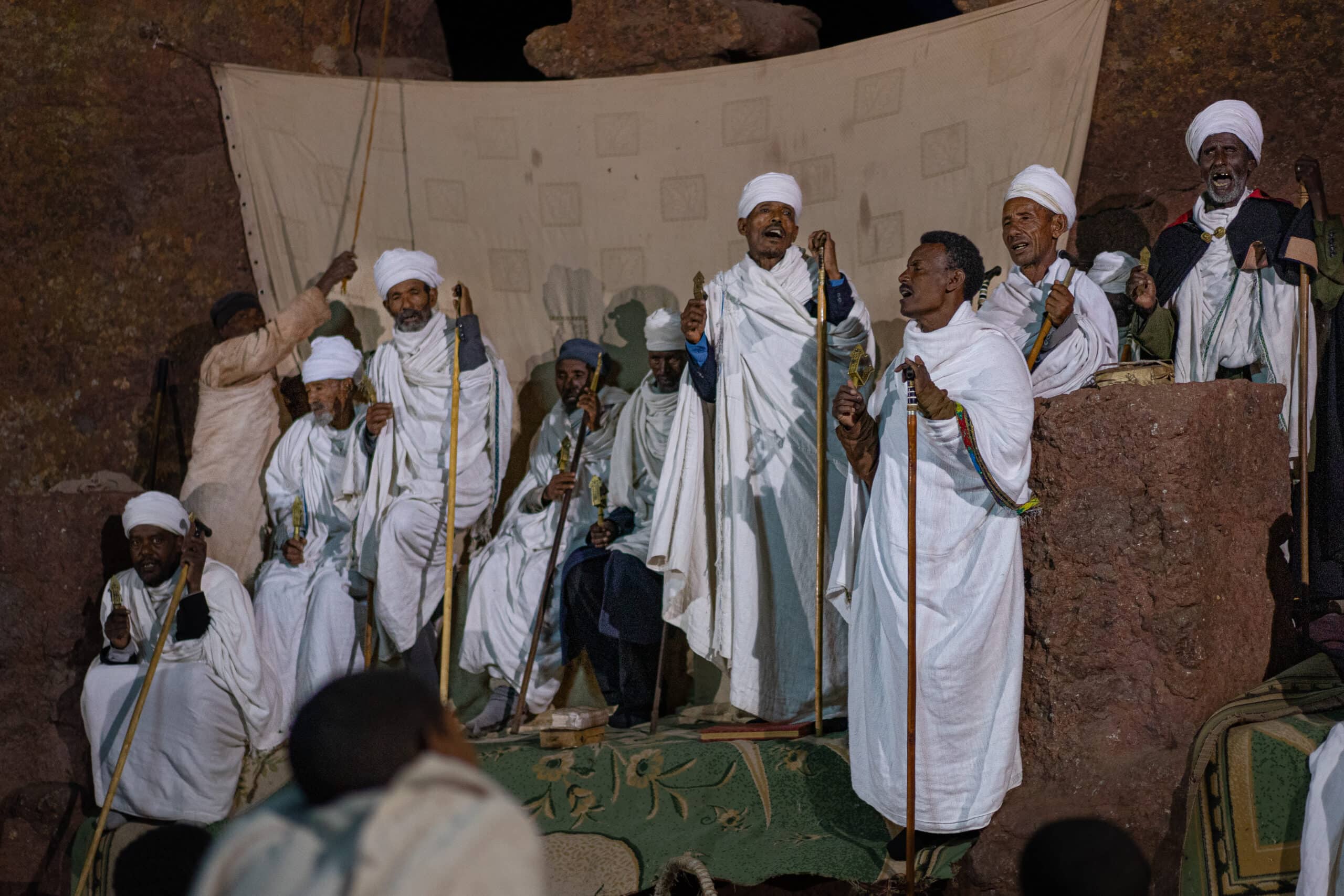
Sunday Morning Mass at Biet Medhane Alem
I wasn’t sure what to expect when attending Sunday morning mass in Lalibela, but this wasn’t it. The sense of spirituality is overwhelming. I’ve never experienced anything like this before. Overwhelmed, I decided to melt into the rock. Find a spot in a rock-carved niche and become a quiet observer. A tourist in flip-flops with a camera at the edge of something ancient and alive.
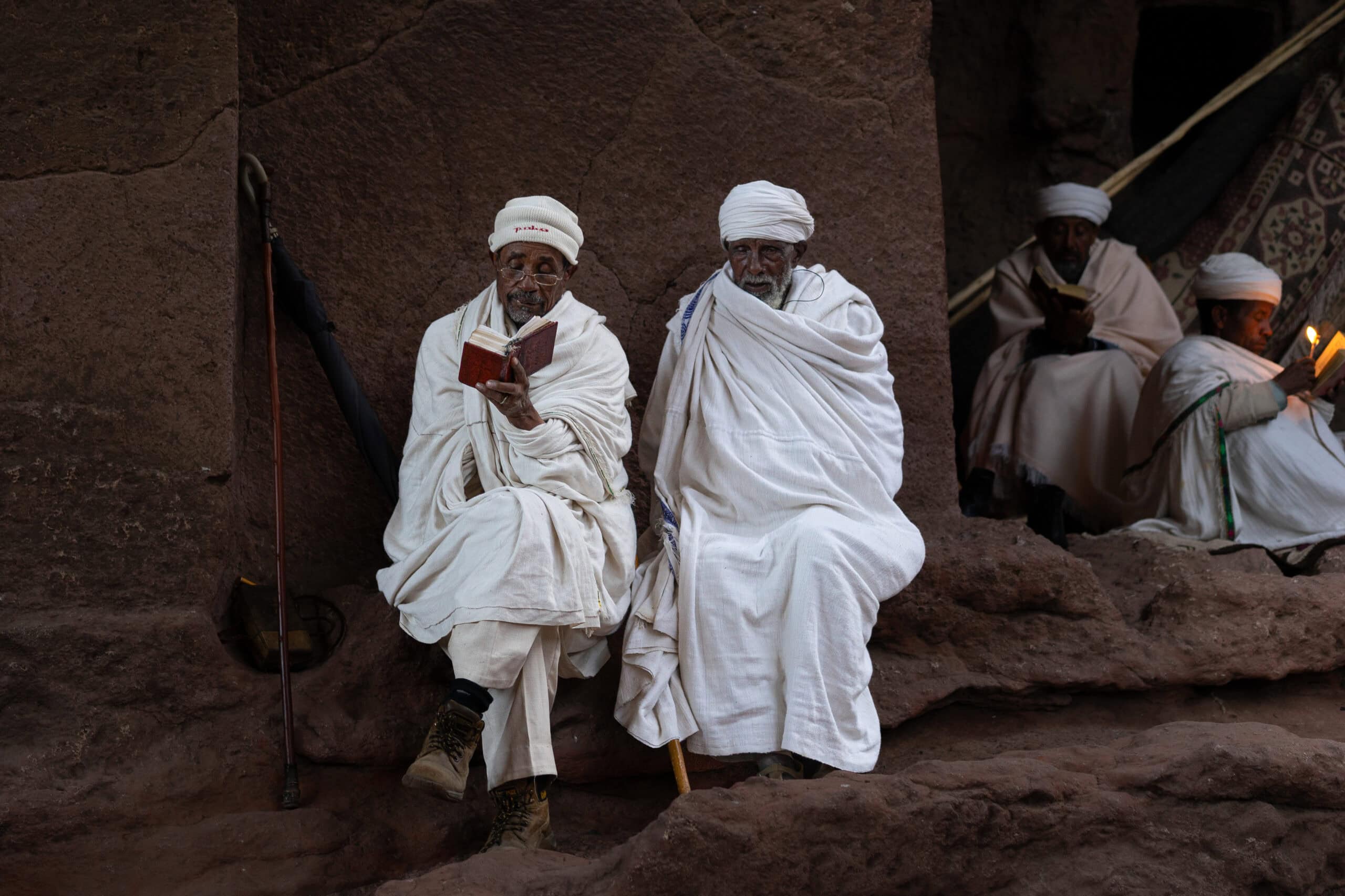
Young and old continue to pour into the underground church. It’s hard to tell where they come from. From town? A hut in the surrounding mountains? Genesis?
The trenches, narrow sunken walkways carved into the rock, spit out figure after figure. Old men with walking sticks. Women bent almost in half. Teenagers rocking perfect afros and fake Nike sneakers. Children clutching at the hems of white shawls.

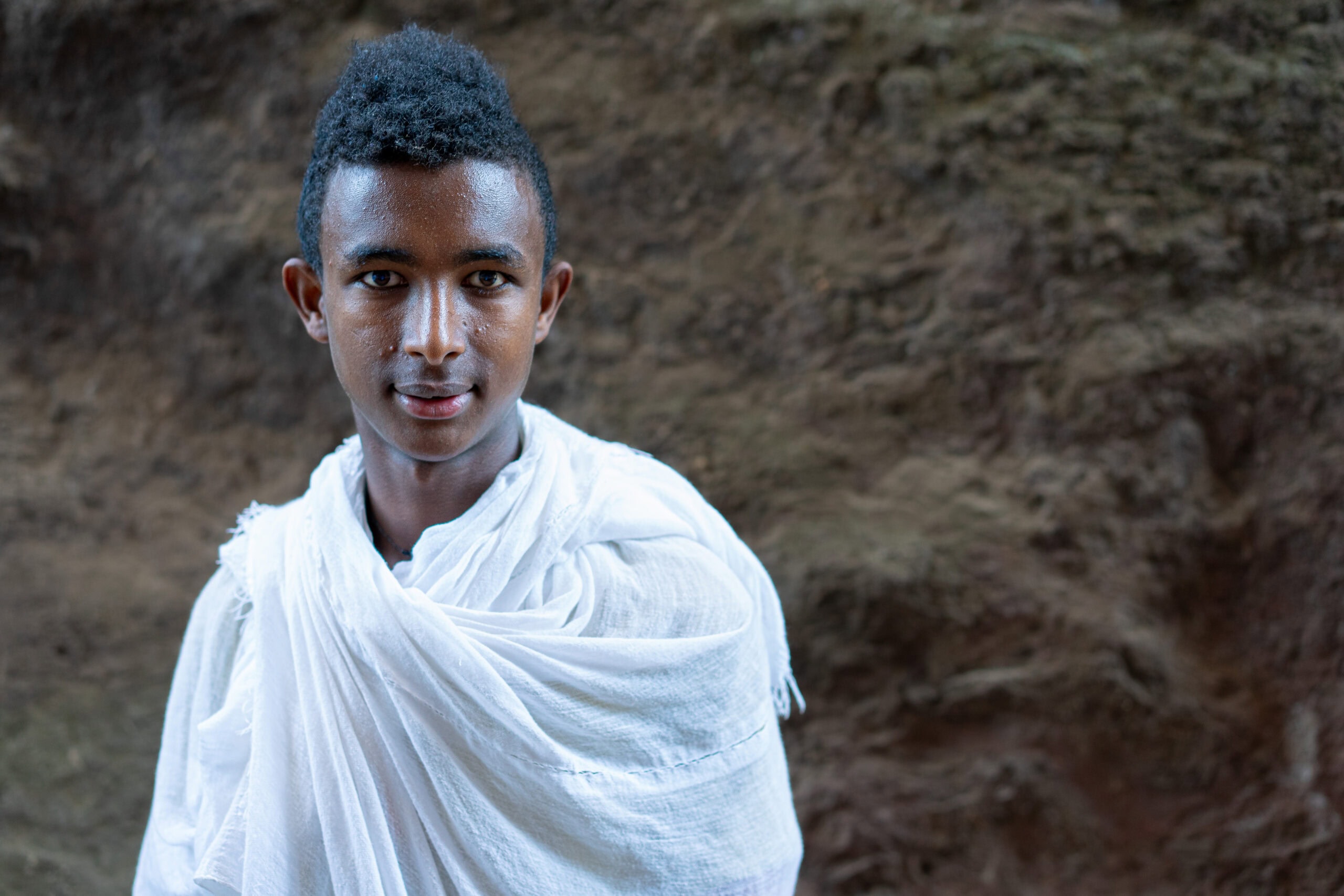

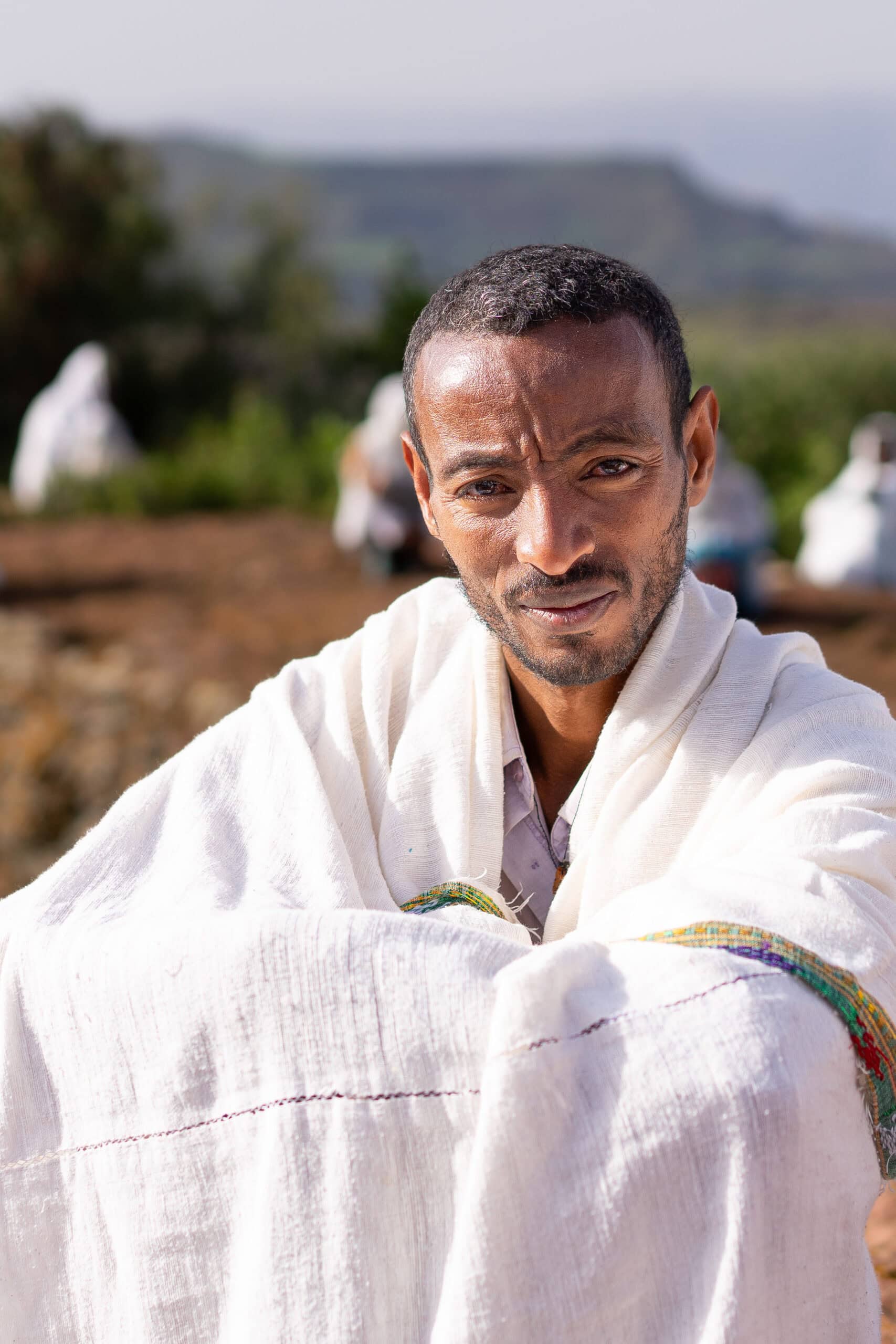
Most faces are lined and leathered. Etched deep with sun, wind, and work. They bear the same texture as the walls of these churches. Carved rough. No polish. No pretence. The people and the stone belong to each other. The same Hand shaped them both.
All of them are here for the same reason. To kneel, to sing, to pray. To ask for something: forgiveness, a break, a little hope. They kiss the walls. They murmur prayers. Some stand, others kneel, a few weep. Some leave this realm entirely. Maybe they’re praying for a good harvest. Or love. A visa. Maybe they’re just praying to get through another week.
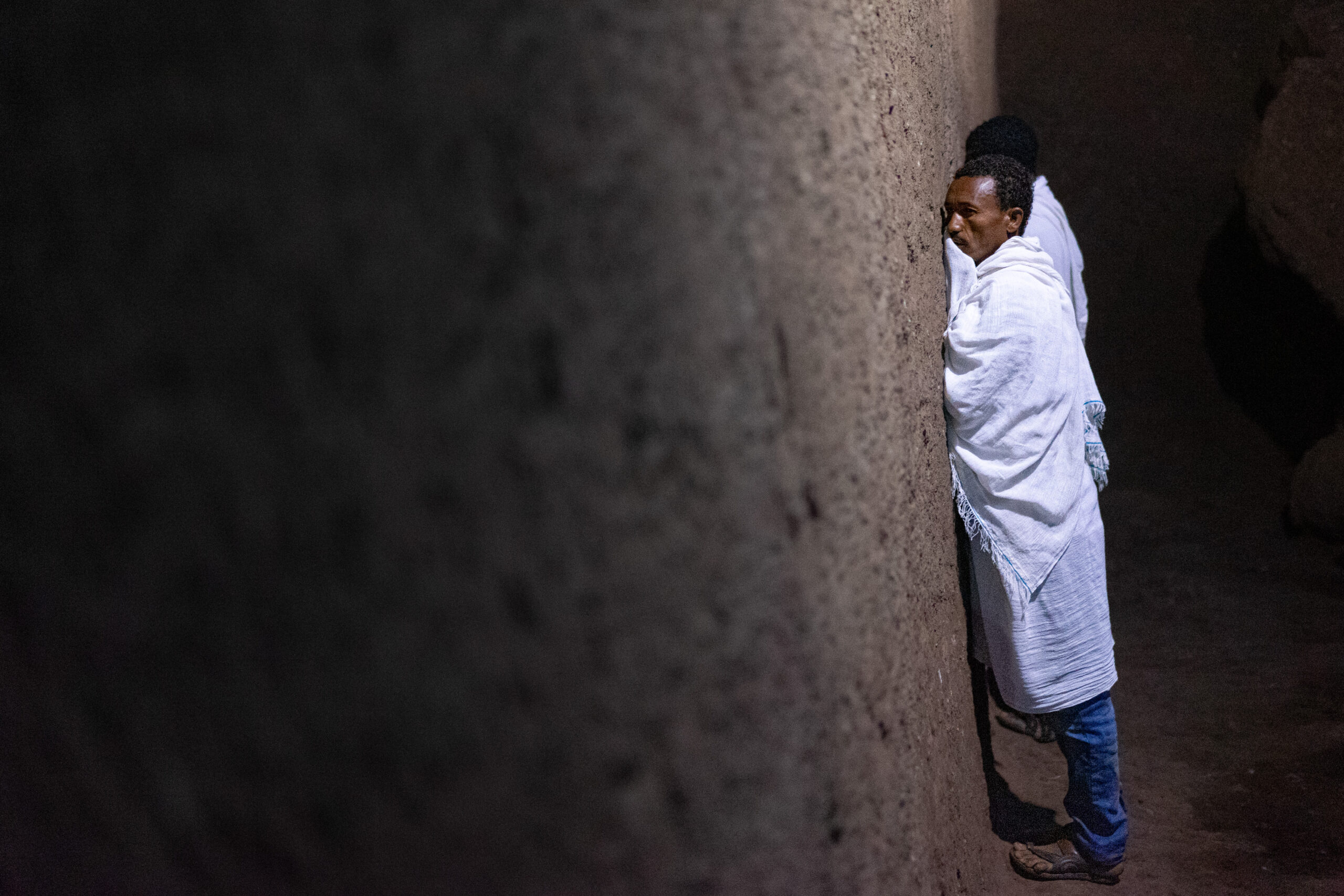
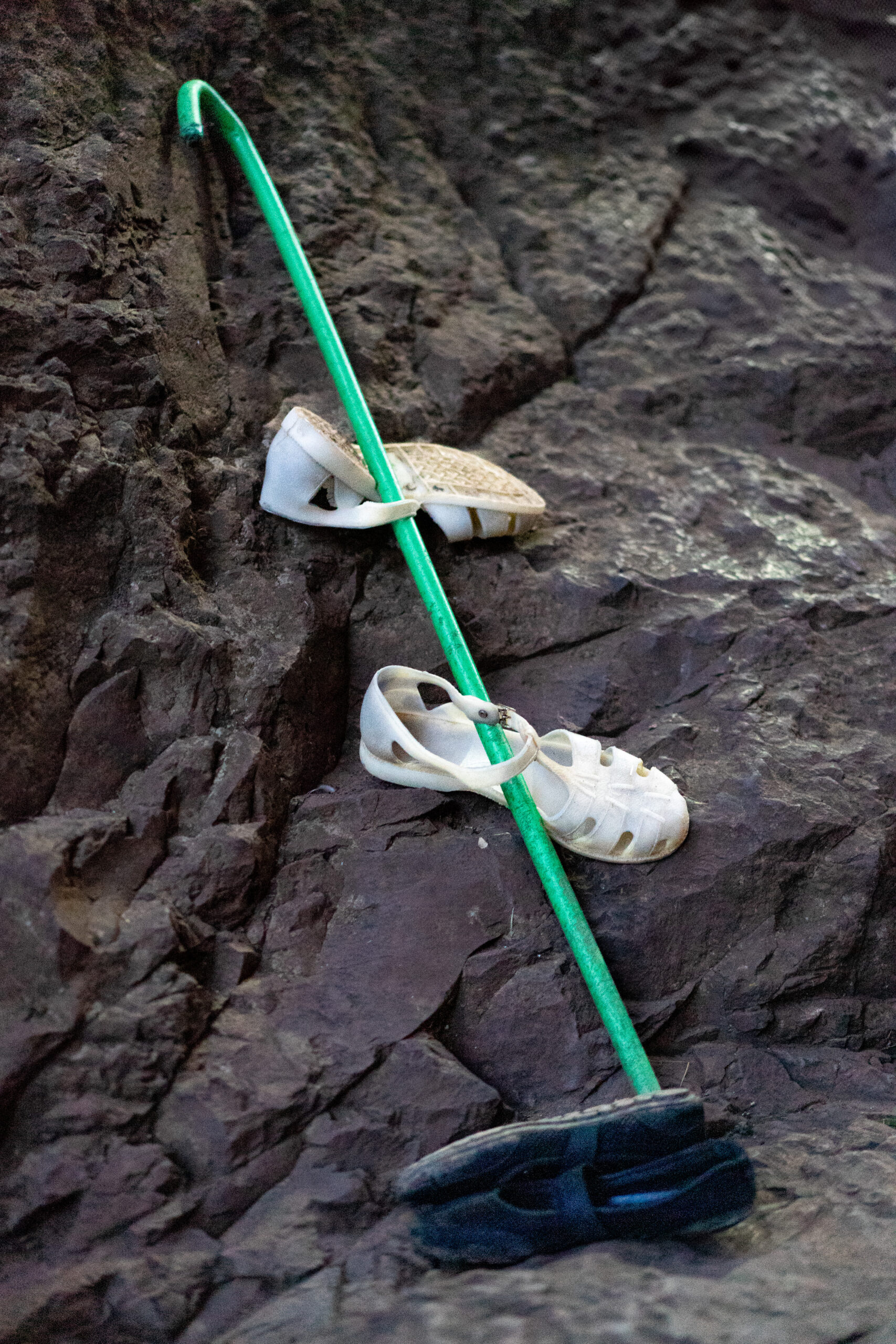
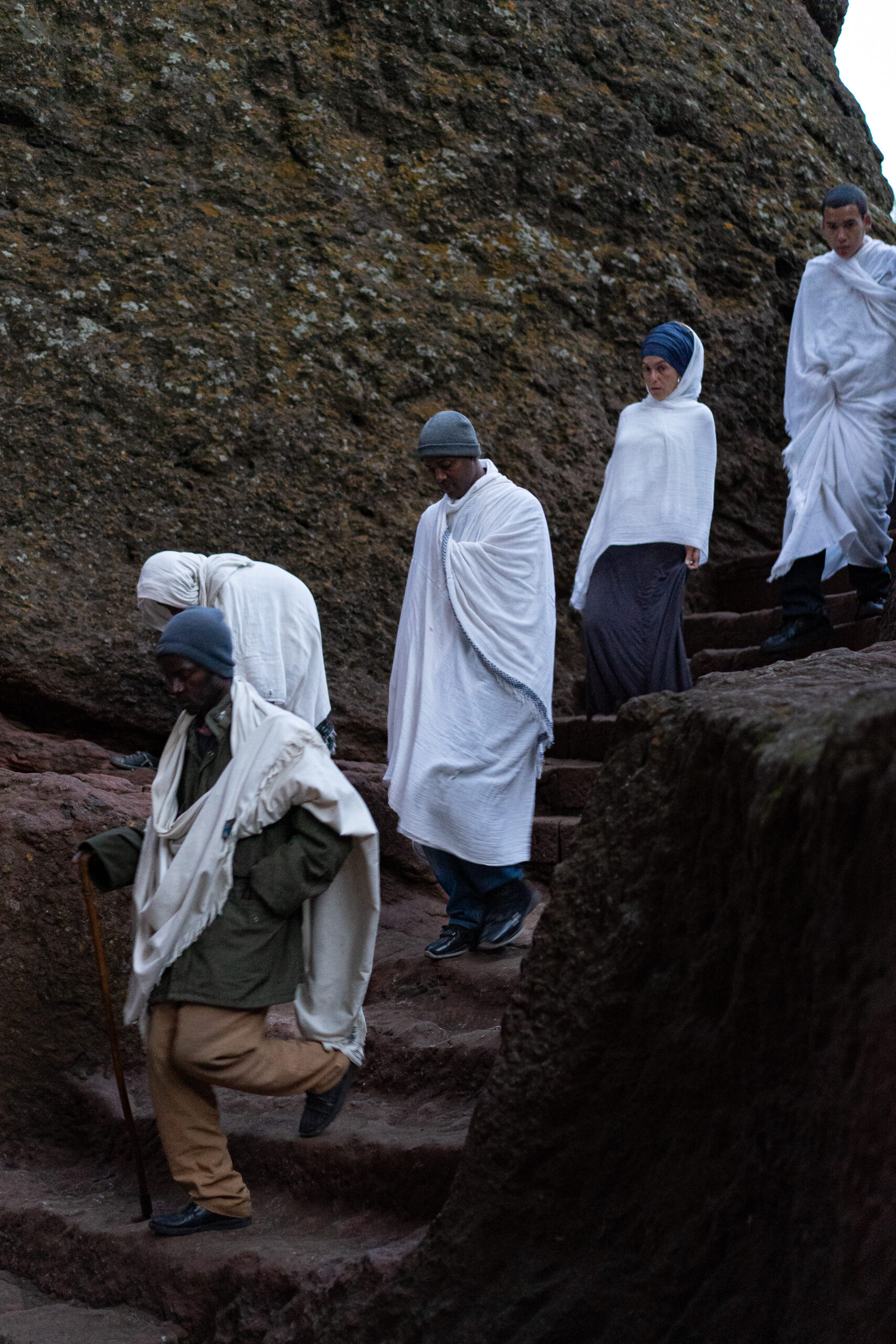

And as I watch, I realise this isn’t just a mass. It’s something else. A release, maybe. People bring their stories here. Their burdens. Their private griefs and quiet hopes. And for a moment, they carry them together.
Light begins to pour in slowly, like warm tea into a cold mug. The trenches turn from black to shadow. Stone wants to glow. The mood shifts, not dramatically. There’s no hallelujah moment. But you feel it. The weight lifts just slightly.
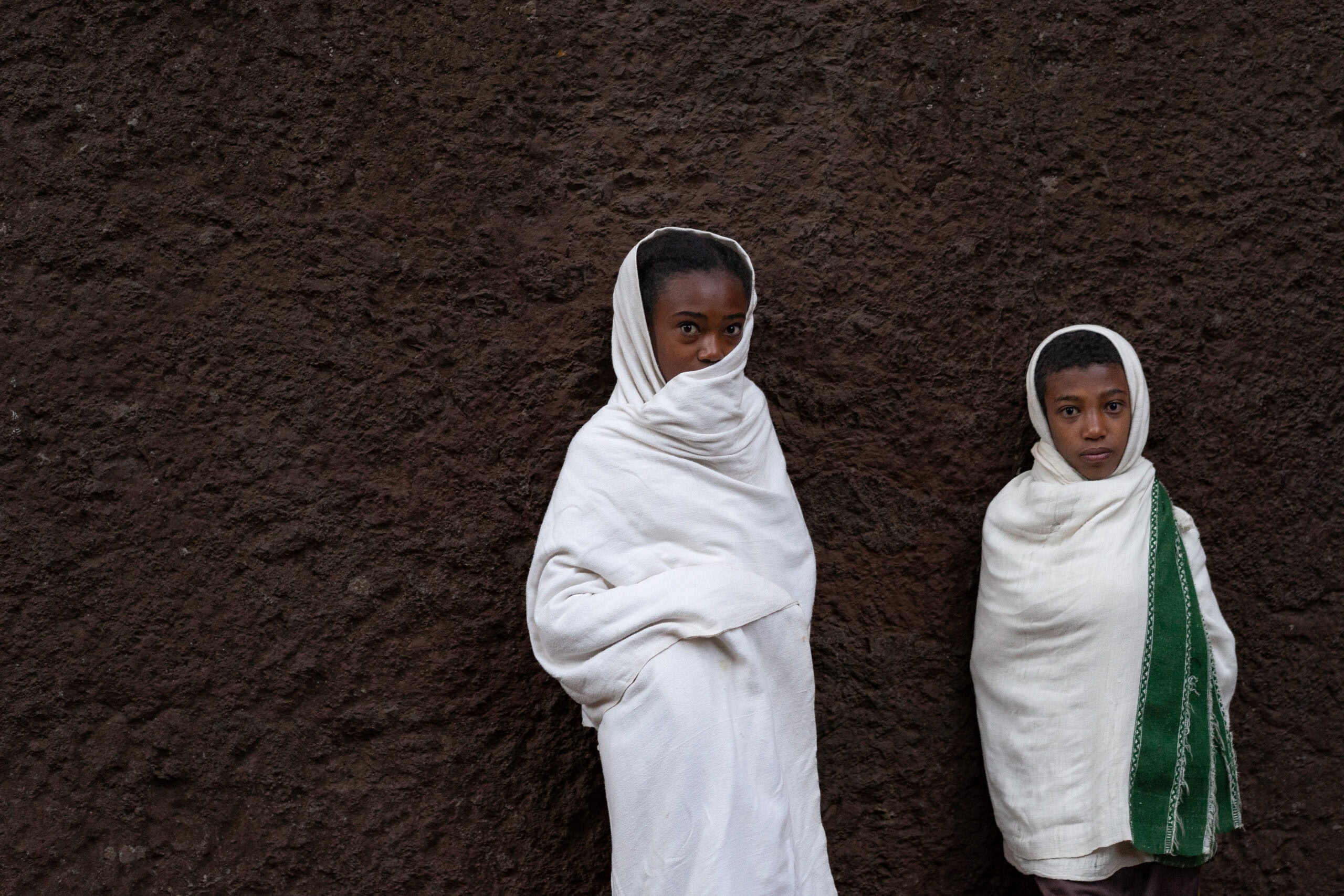


Sunrise
With the shift in the light, something in me shifts with it. A quiet instinct says: Go now.
I listen.
By the time I leave Biet Medhane Alem, the sky is softening. Not quite day, not quite night, just that in-between hour when the earth holds its breath. Up the trench, past the sleeping dogs, across the dirt road, and down a narrow path carved into the ochre earth. I already know where I’m going. My guide had shown me the way the day before, walking me through trenches and tunnels like a priest with a map of the soul.

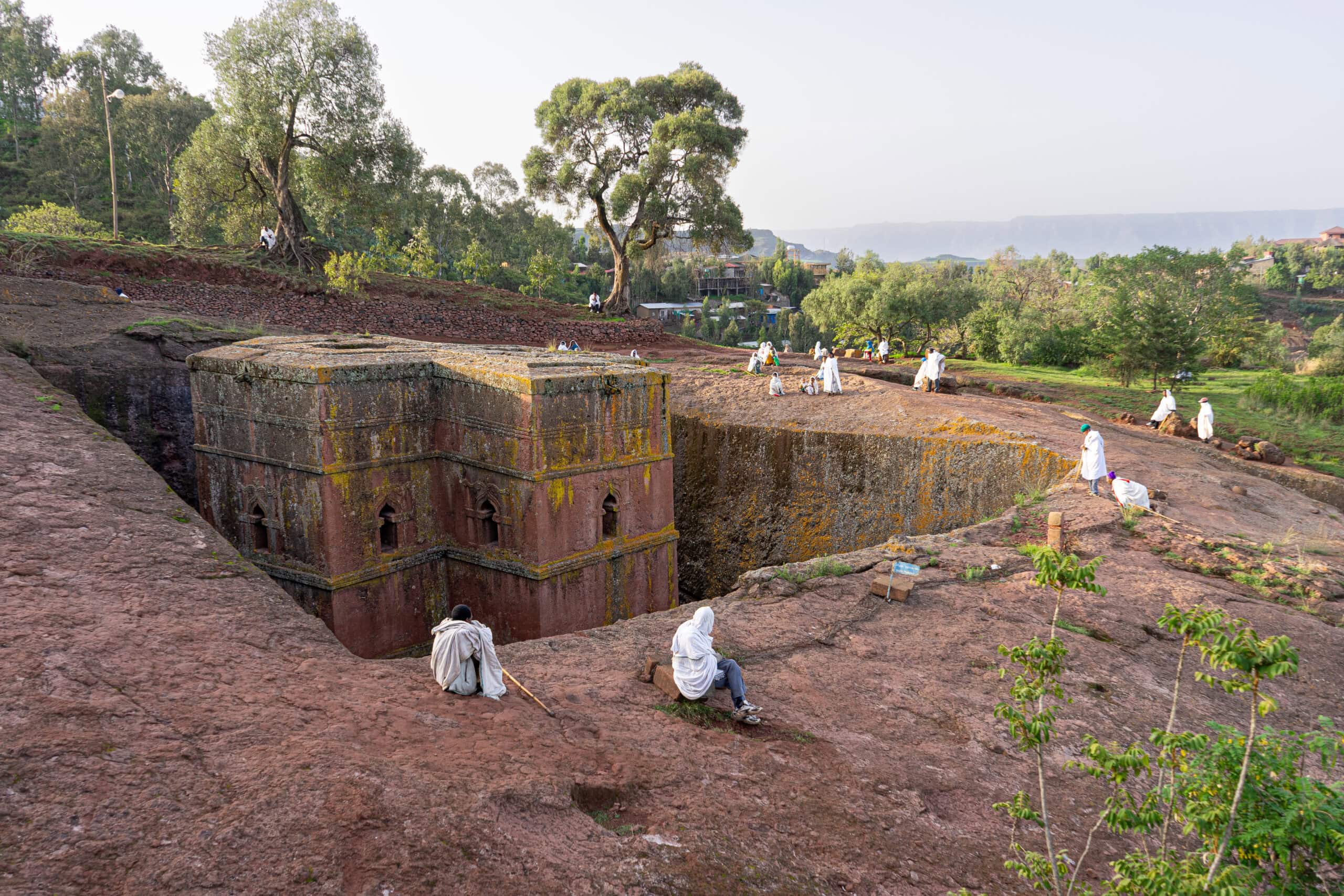
The footpath winds toward Biet Giyorgis, the most iconic of the Lalibela churches. From above, Biet Giyorgis emerges from the earth like an answered prayer. A cross, perfect and quiet. It doesn’t sit on the earth; it is the earth. A handful of white-shawled figures sit at its edges, faces to the sky.
I find the trench and follow it down, like boarding Noah’s Ark.
Sunday Morning Mass at Biet Giyorgis
Inside, the small stone space is packed. Bare feet. Billowing frankincense. A chorus in Ge’ez, the ancient liturgical language of the Ethiopian Orthodox Church. Deacons in crimson robes. A full mass in motion. I stand at the back, still. Watching. Listening. Understanding nothing and everything.
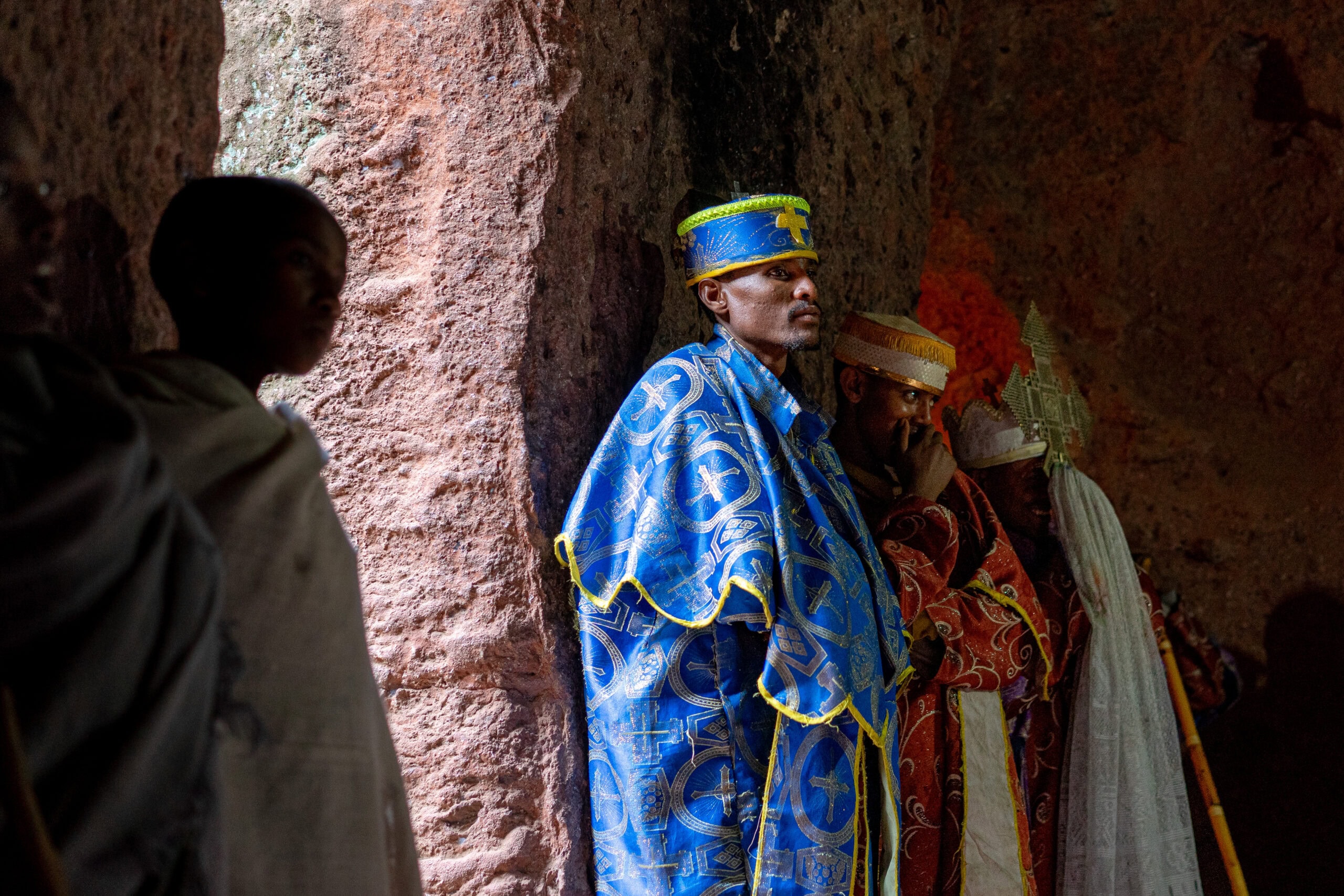
Suddenly, motion. The congregation starts moving. Out of the church and up the trench, like water surging back to source. I’m swept up too.
At the top of the church, they gather on the rim looking down. They bow toward the church. Some kneel. Some cross themselves. One woman presses her forehead to the ground. The priest emerges last, holding up his cross. He blesses them.

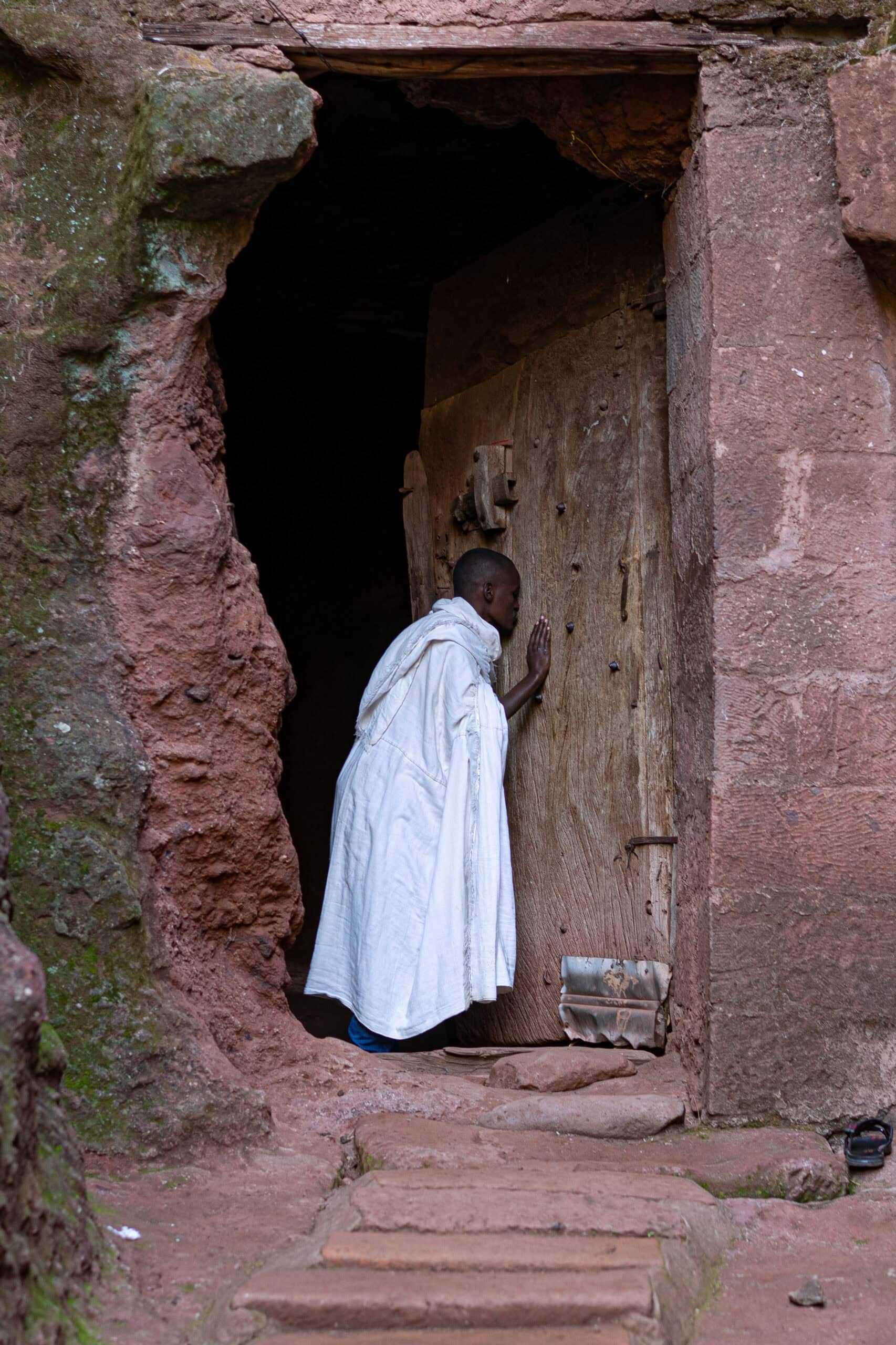
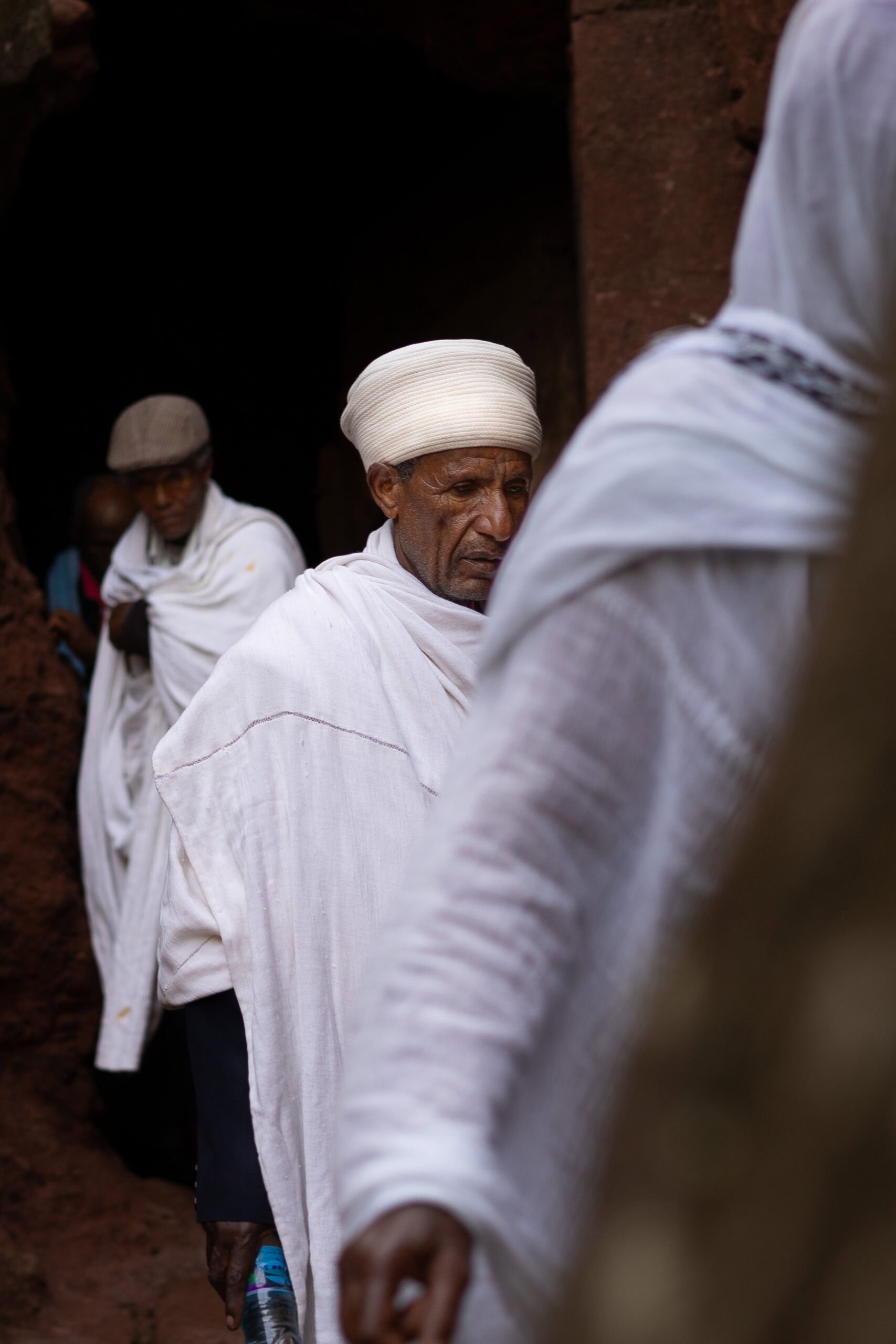
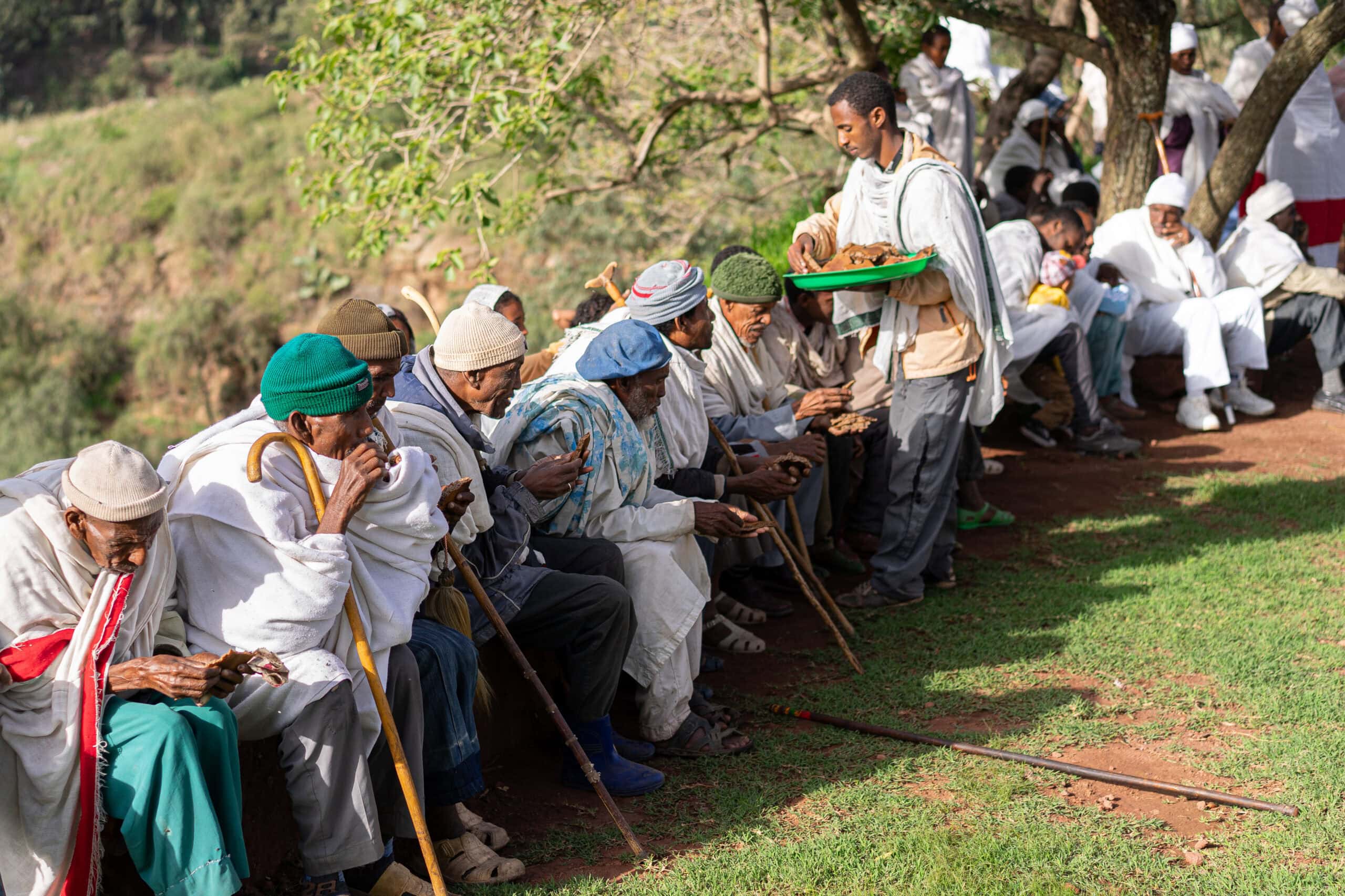
When the blessing ends, the church boys begin handing out injera, still warm, folded neatly on plastic trays. Breakfast. Communion. Call it what you will, but they eat it together, sitting with their backs against sun, in complete, unhurried silence.


After the Sun: Another Mass, Another Morning
My stomach reminds me that I’ve been walking since before dawn. But I don’t take the direct path back to my hotel. Maybe it’s divine intervention, or maybe I just want to stretch this morning out a little longer.
And that’s when I stumble on it.
Another mass.
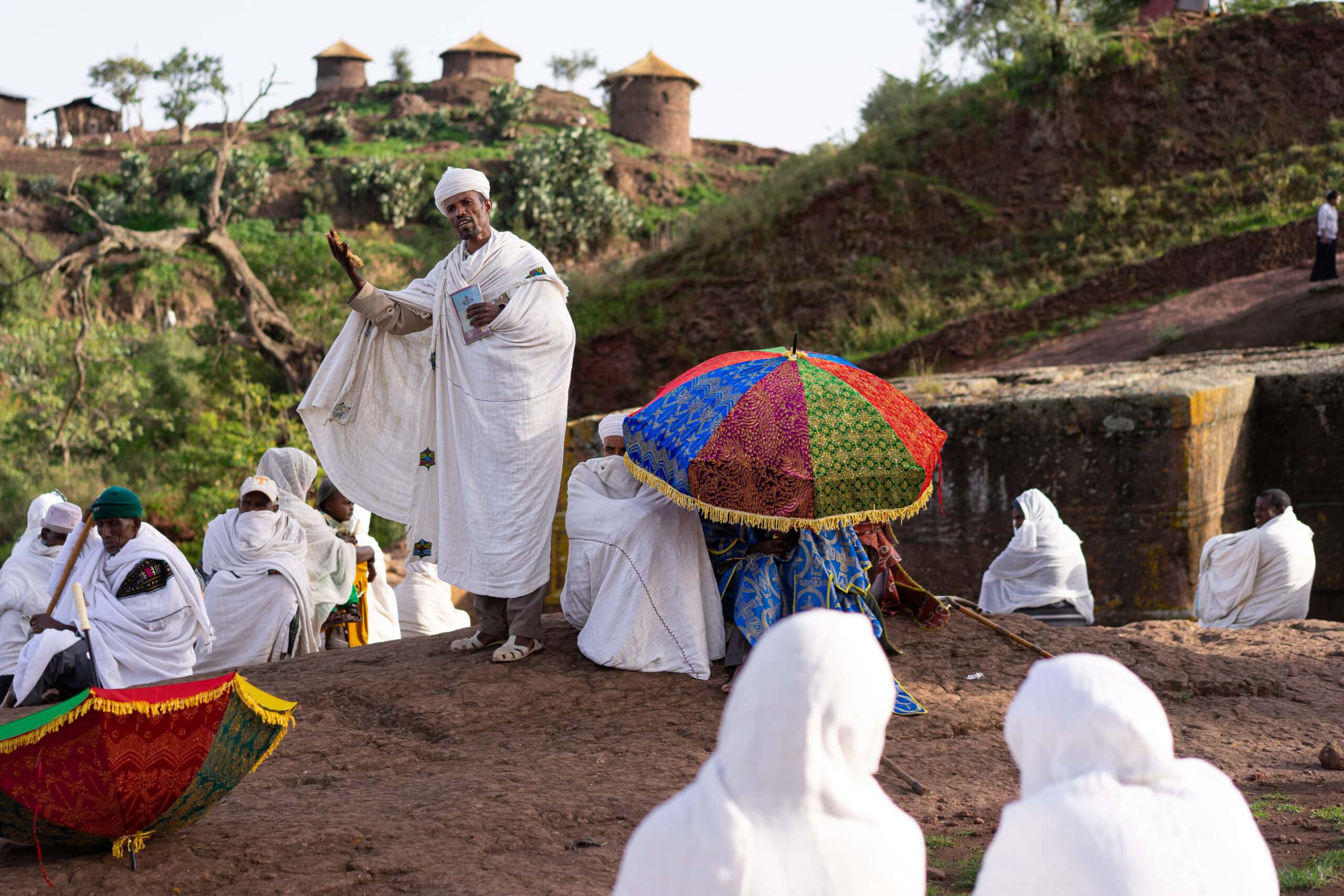
This one is different. Outdoors, uncontained. It spills across a sloping hill just off the road, almost like an amphitheatre carved by centuries of feet and faith. From the road, it looks like a field of white. White shawls catching morning light. A wave of stillness.
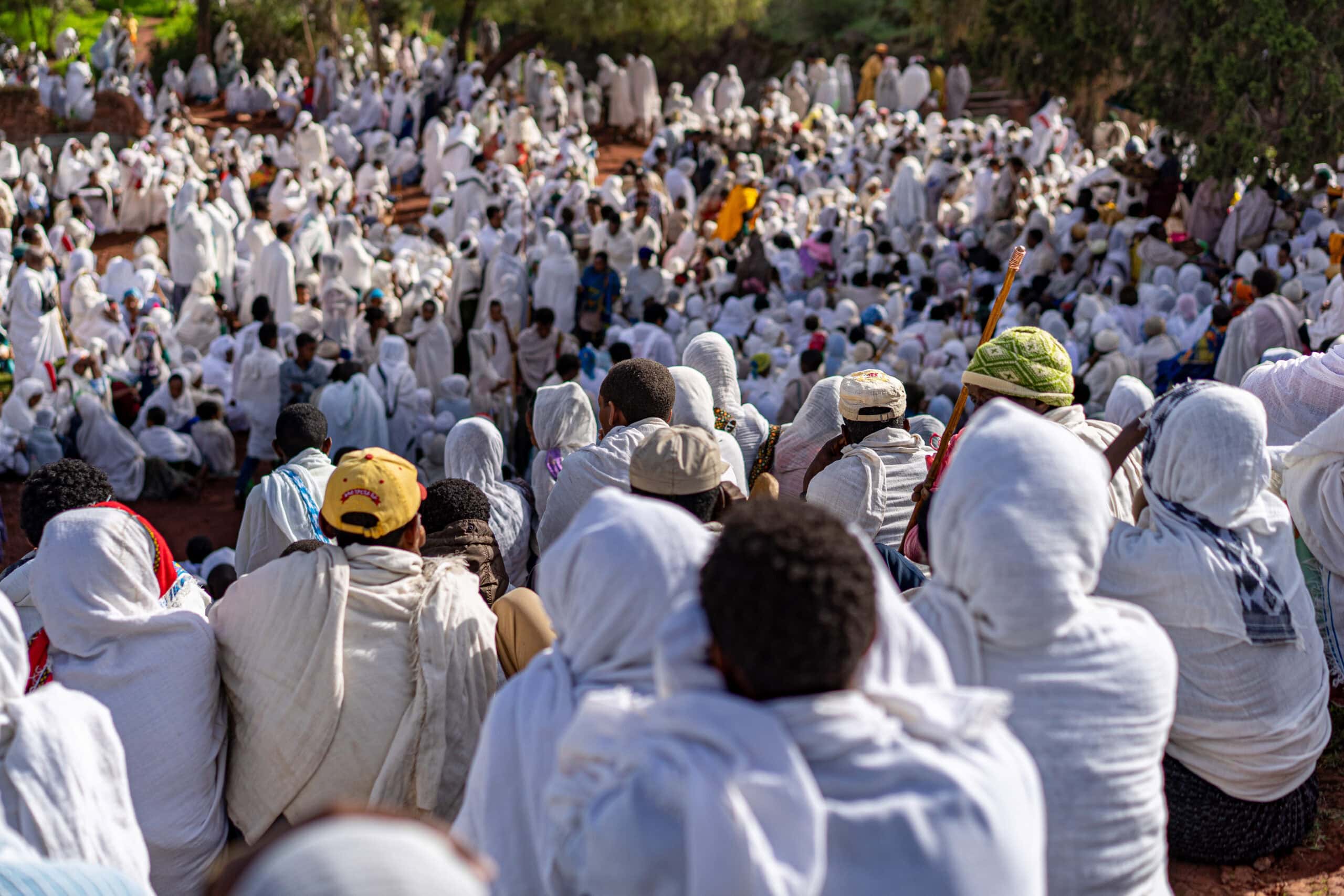
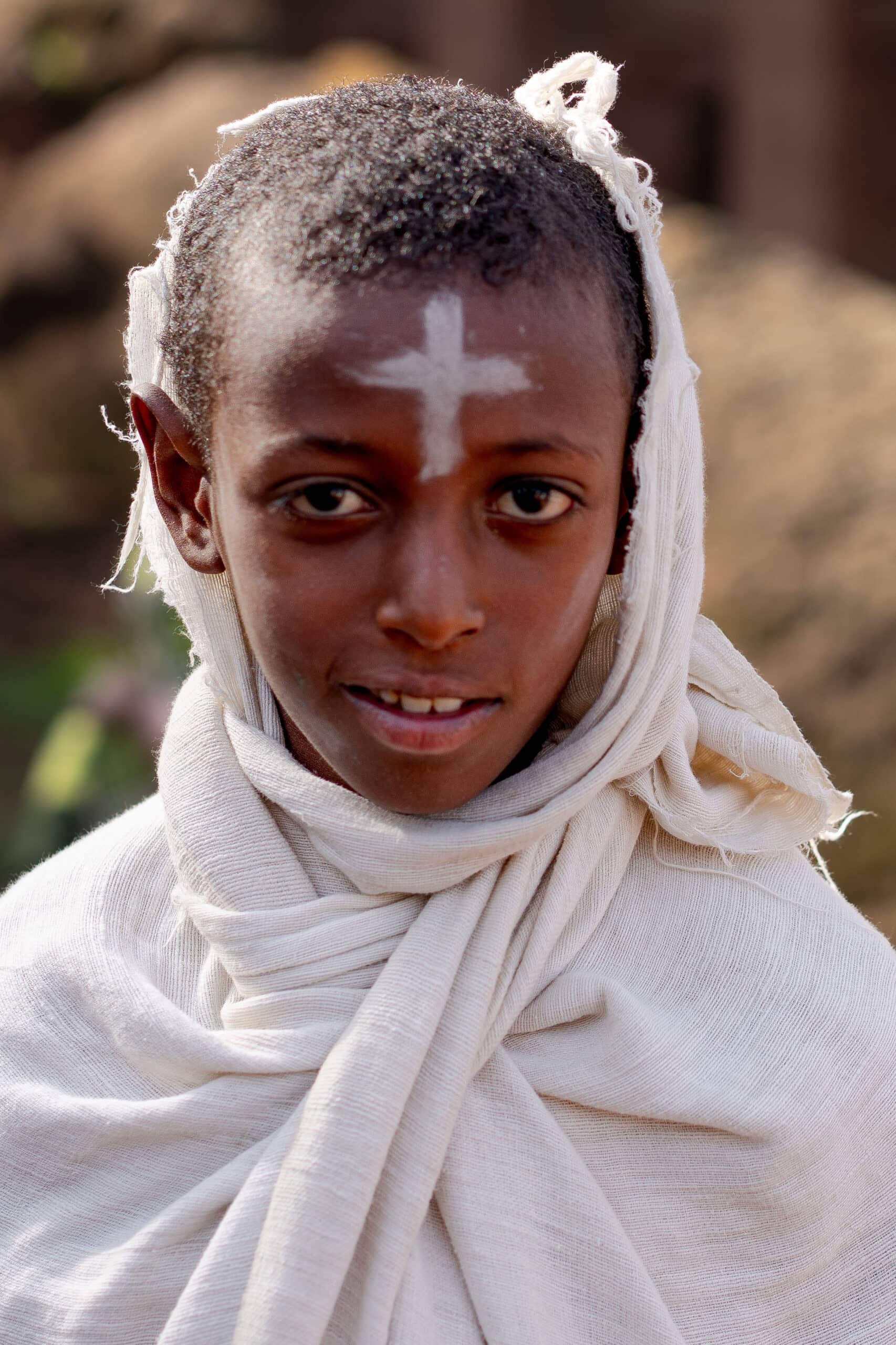
Children with white crosses painted on their foreheads play around. Some of the older women have those crosses tattooed, not for decoration, but as declarations of devotion etched into skin.
There’s no priest that I can see. No chanting or incense. Maybe the service hasn’t started yet. Or maybe it’s already happened and this is what remains. An afterglow of something shared and holy.
They sit together in silence. A community of belief.
No walls.
No roof.
Just sky.
I don’t linger. The sacred is still humming in my chest, but now I need food and coffee strong enough to bring me back to earth.
And maybe later, much later, I’ll try to make sense of this morning. But for now, I’m just full of it. Full of something I can’t name.
I often get asked what camera I use.
All photos in this post were taken with my Sony A7 and Sigma 24-70mm F2.8 DGDN II lens.
Breakfast and the Weight of Wonder
Back at the hotel, I finally sit with a plate of injera and scrambled eggs in front of me, coffee steaming in my hand. My feet are dusty. My hoodie smells faintly of frankincense.
I eat slowly. Not because I’m tired — though I am — but because I want this part to last too. The return to reality. The small, earthly joy of a hot breakfast after wandering barefoot through someone else’s sacred space.

Across the dining room, other travellers are just waking up. One flips through her guidebook and complains about the weak WiFi. Another is asking about transport to the airport. I don’t say much.
It’s hard to put words to what I just witnessed.
It’s not one thing I’m left with. It’s a hundred small impressions that blur into something bigger.
Ultimately, I’m left with faith. That against all odds, even the hardest lives can still believe in light.
That’s what I’ll carry.
That, and my dusty flip-flops.
Attend Lalibela Sunday Mass: Practical Tips for a Respectful Visit
- Arrive early. Worshippers begin arriving as early as Saturday evening. I got there by 5:00, and by 7:00, the churches were alive with chanting, prayer, and candlelight. If you want to witness the transition from dark to light, come before sunrise.
- Keep your distance. This is a sacred experience, not a spectacle. Don’t be that person climbing walls or poking lenses into people’s faces. The best photos often happen when you’re not trying so hard. And trust me — the real magic is in simply watching.
- Dress for the cold. Lalibela sits high in the Ethiopian Highlands. Early mornings can be icy, even when the forecast says sun. A hoodie, light down jacket or thermal layer goes a long way.
- No shoes inside. When entering a church, remove your shoes. Wear socks if you’re squeamish about cold stone or centuries of dust.
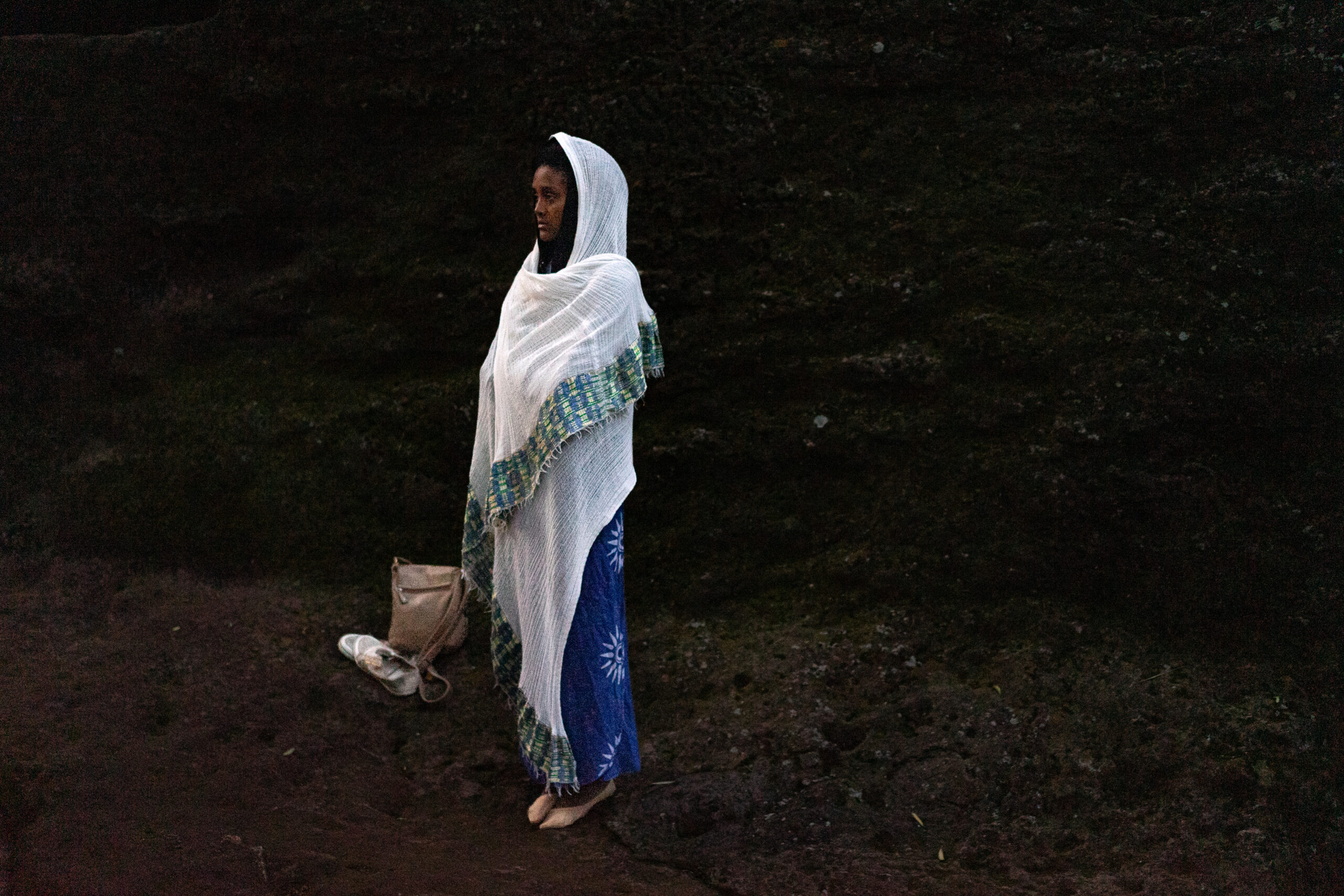
- Women: bring a scarf. While not strictly enforced for tourists, a light shawl or scarf to cover your head shows respect for local Ethiopian Orthodox Church traditions.
- Don’t expect explanations. The mass is entirely in Ge’ez, the ancient language of Ethiopia. You won’t understand the words, but you’ll feel the weight of them. Let it wash over you.
Planning a trip to Ethiopia?
Here are more stories and guides to help you plan:
➜ Ultimate Lalibela Travel Guide
➜ Things to Do in Harar: Ethiopia’s Walled City
➜ High on Khat
➜ How to Spend a Day in Addis Ababa
➜ Ethiopian Airlines Review + Free Layover Hotel