
South Sulawesi is home to a picturesque valley surrounded by mist-clad mountains. This valley is called Tana Toraja, or Torajaland, and offers visitors with strong stomachs the chance to experience one of the most unique and weirdest celebrations of life. A Tana Toraja funeral is something that you won’t forget anytime soon.
WARNING: This post contains graphic photos of animal sacrifice and human bones. If you’re sensitive to this kind of thing, please click away and go make yourself a cup of tea instead.
It is a blunt thud, almost like pounding a watermelon with a hammer. A mixture of fine mist rain and an exploding water pipe of red instantaneously fills the air. Utter silence follows before you can hear the sound of a gurgling brook in crimson.
Having left the watery Maluku province, Sulawesi feels like being in a different country, or even another planet.
Tall, strong-looking people tending to their rice paddies and water buffaloes replace the lean fishermen and brilliant beaches; in the markets weird-looking fruit I had never seen before replace cassava and sago. Life here seems very different from what I had experienced so far. But I am not here to experience life.
I am here for a celebration of death
The people of Tana Toraja practice a complex funeral ceremony known as Rambu Solo which dictates that the deceased can only be buried during a certain time of year. For this reason, Tana Toraja has a funeral season that runs from June to October – the driest months in South Sulawesi.
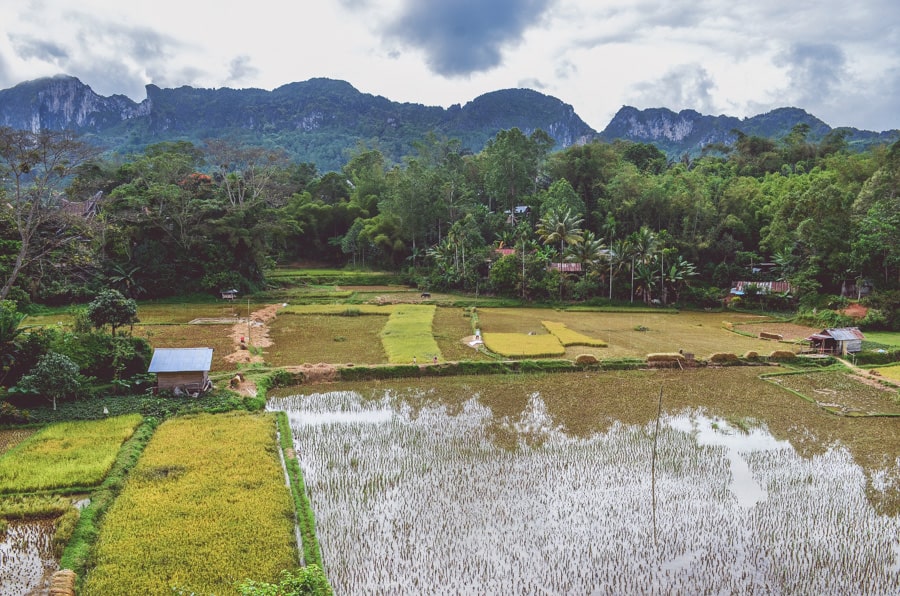

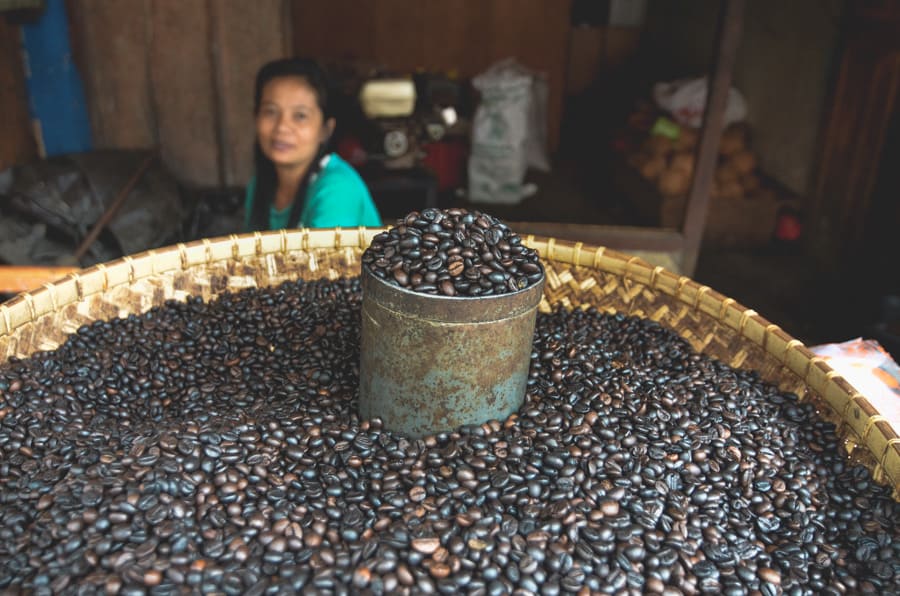
Preparing for a Toraja funeral
Tana Toraja is a bizzaro world where the dead are not always dead. The dearly departed are merely considered to be macular, or sick. The macula stays in a sealed coffin and is kept inside the house with the family until they have saved up enough money to throw a big send-off party.
Getting enough money can take more than a year. Until then, the coffin stays in the house with the family. In the past families would use herbs and smoke from smouldering fires to preserve the remains, but these days formalin is more common.
The deceased is only considered sick. During the time before the funeral family members will bring food to the coffin a few times a day and talk to them as if they’re still alive. Not until the first buffalo is slaughtered at the funeral would their souls start their journey leaving this earth.
Torajans believe that blood needs to be spilt on the ground to facilitate the journey of a soul to the land of souls. The more buffalo, the more blood, and the faster the transition.
On the day of the funeral, a minimum of 6 water buffaloes must be sacrificed, but it can be as many as a hundred. A small black buffalo costs about RP 5 million (US $350) while a rare albino can fetch more than a hundred million rupiah (US$ 7000) – the costs of these funerals are sky-high.
This explains why it sometimes takes a year or more before the funeral can take place. The family needs to get enough money together to throw a proper send-off.
Where to See a Funeral in Tana Toraja
The town of Rantepao is the capital city of Tana Toraja and a perfect base for exploring the valley and attending a funeral. I ask at my guesthouse about funerals.
July is funeral season in Torajaland and I’m in luck, so they get an ojek ( motorbike with a driver) for me. Geoffrey, my ojek driver, speaks almost no English. But he knows why I came. Everyone who comes to Tana Toraja wants to see a funeral.
With hand gestures showing the sun rising and setting, I came to understand that there would be a funeral ceremony 2 days later. Until then, he takes me around the valley from one macabre sight to the next.
Skulls and Bones
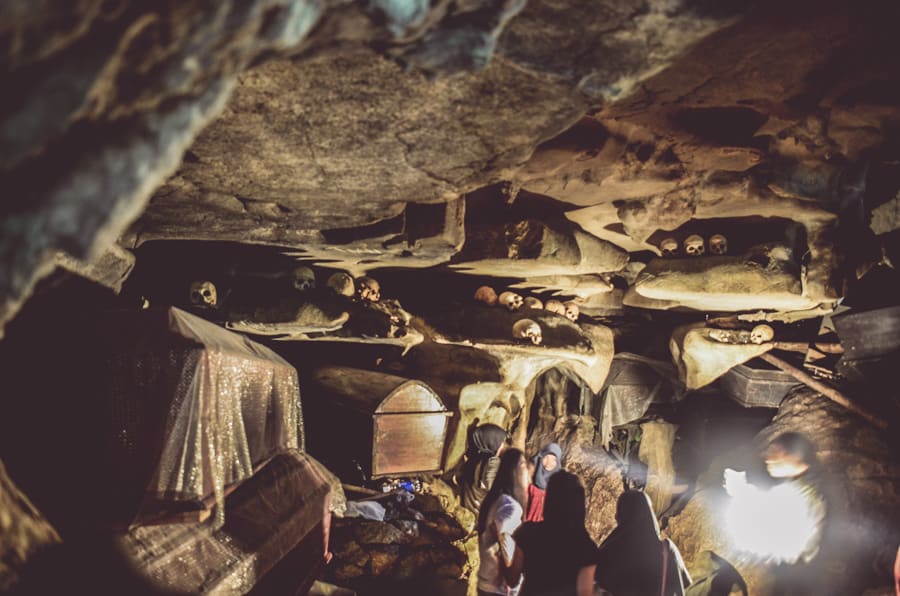
At Londa, one of the most prominent landmarks in Tana Toraja and a popular burial site, you can get a guide with a gas lamp for a small fee to take you through the burial site. I warily followed him and his gas lamp into the cave. Before entering, I warily looked up at the life-sized tau-tau, wooden effigies, placed on a balcony carved into the cliff face. These figures represent the dead.
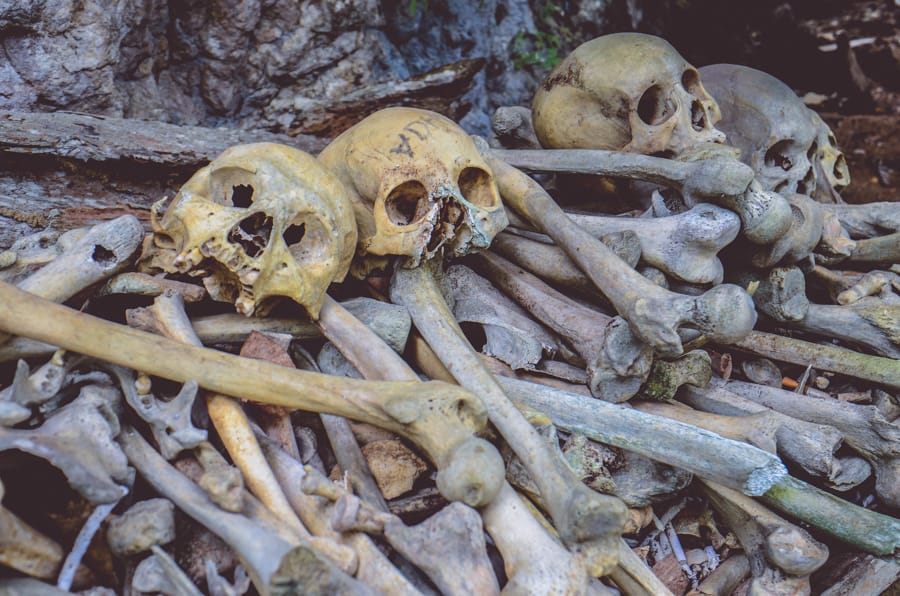
The inside reveals a grim game of Tetris. Coffins in various stages of decay are stacked on top of each other, some standing upright, some open, others closed. Scattered on the floor lay booby traps of skulls and bones. Some skulls have cigarettes placed inside their nasal cavities, while others have bottles of beer standing next to them.
Grim, yet effective, quit smoking and drinking campaigns, I think. I understand from my guide’s “ Family gift ” that the relatives still come to visit these coffins and bones and bring them gifts of earthly delights.

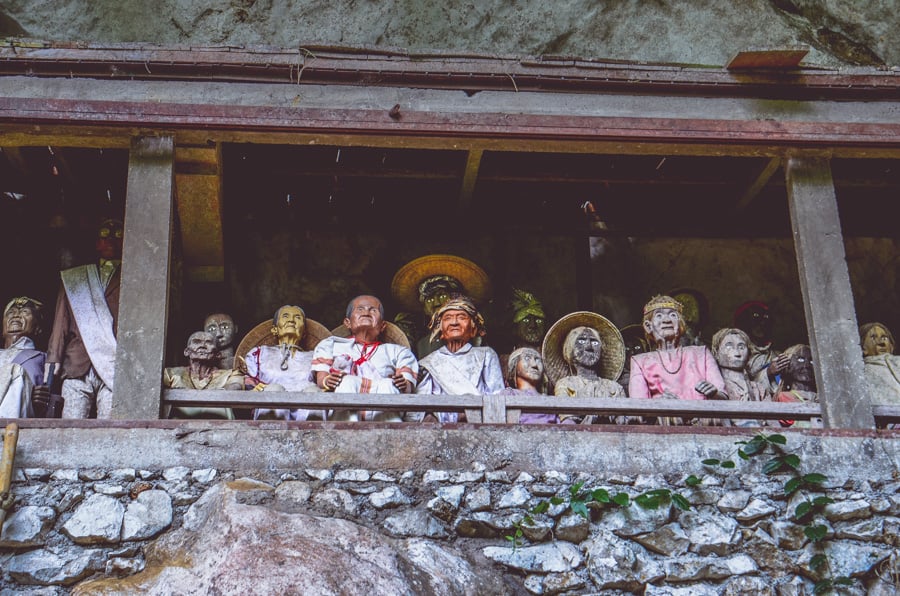

The village of Kete Kesu is perhaps the most picturesque in the valley. It consists of two rows of Tongkonan (traditional houses) and is believed to be around 300 hundred years old.
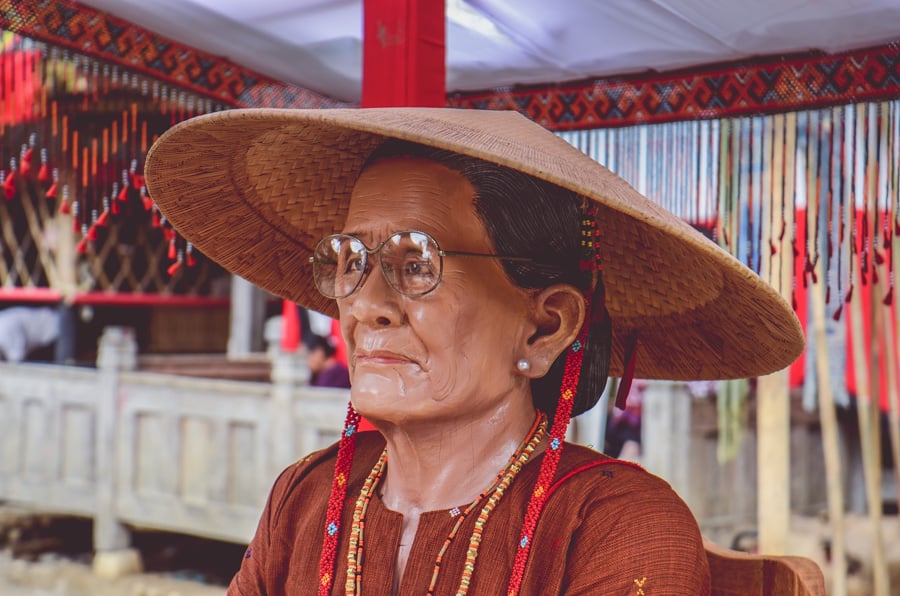
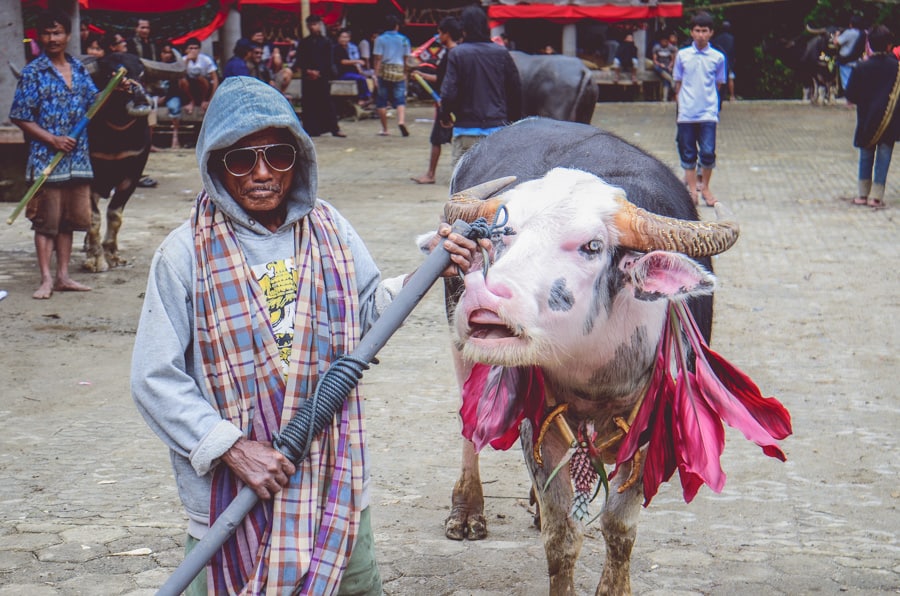
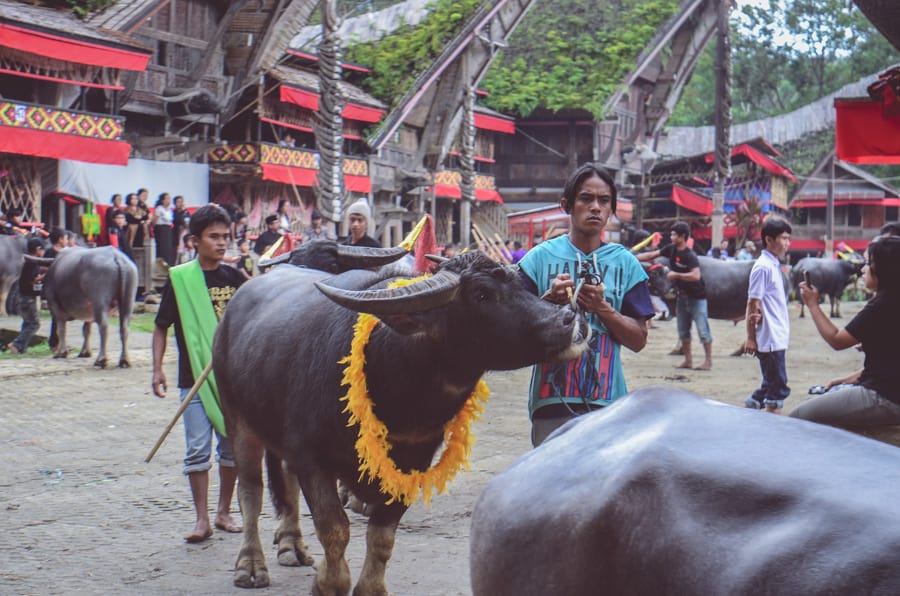
On the day of my visit, Kete Kesu is preparing for a funeral. Buffaloes are paraded around, and a wooden tau tau effigy of a woman who passed away the previous year is on display.
Behind the village of Kete Kesu is a complex of hanging graves. The coffins are not buried in a cave, but hoisted up and left hanging from the cliff face. If I were a Torajan, that’s where I would like to end up, not in a stuffy cave, I think as I look over the rice paddies towards the hills surrounding the valley.


Baby trees
“Baby tree” Geoffrey points. “Inside…babies”
I was wrong when I thought it couldn’t get any more bizarre.
When a baby dies before having teeth they are not buried in coffins. A small hole is carved into the trunk of a big tree just big enough for the body to fit in. The mother then wraps the body in cloth and places it inside. The hole is then sealed with bark and as the tree heals over time, the tree trunk will absorb the body.
The Toraja people believe that the baby’s spirit grows with the tree. When another baby dies, the mother would make a new hole in the same tree. By doing this she ensures that her baby would not be alone as its spirit grows older.
Babies continue to grow inside the tree towards heaven, and after 16 years their souls will reach the land of the souls.

Bolu Market
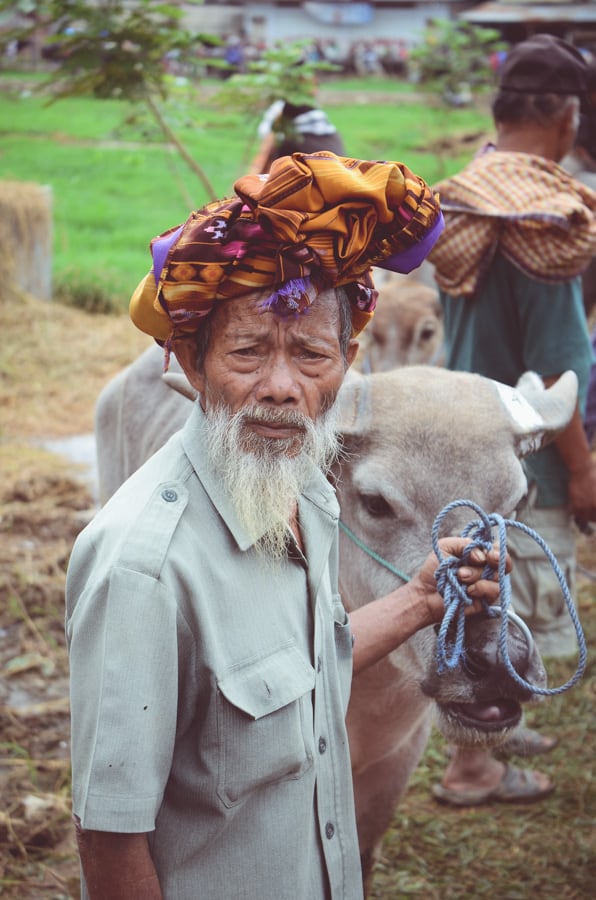
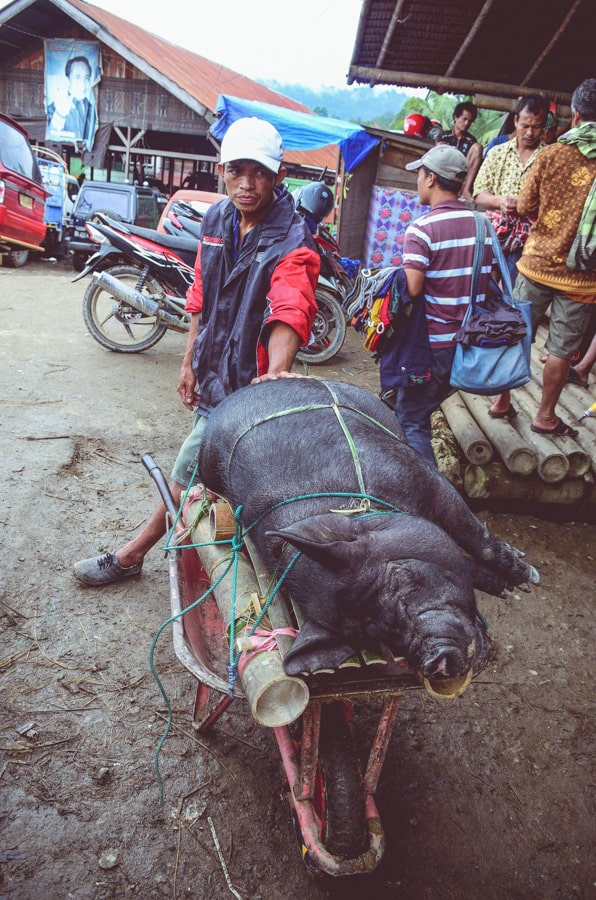
Bolu Market is your one-stop shop for all your Tana Toraja funeral needs. Most buffaloes and pigs passing through here probably end up as the main event at a funeral somewhere around the Tana Toraja Valley. The market is divided into sections for water buffaloes, pigs, and vegetables.
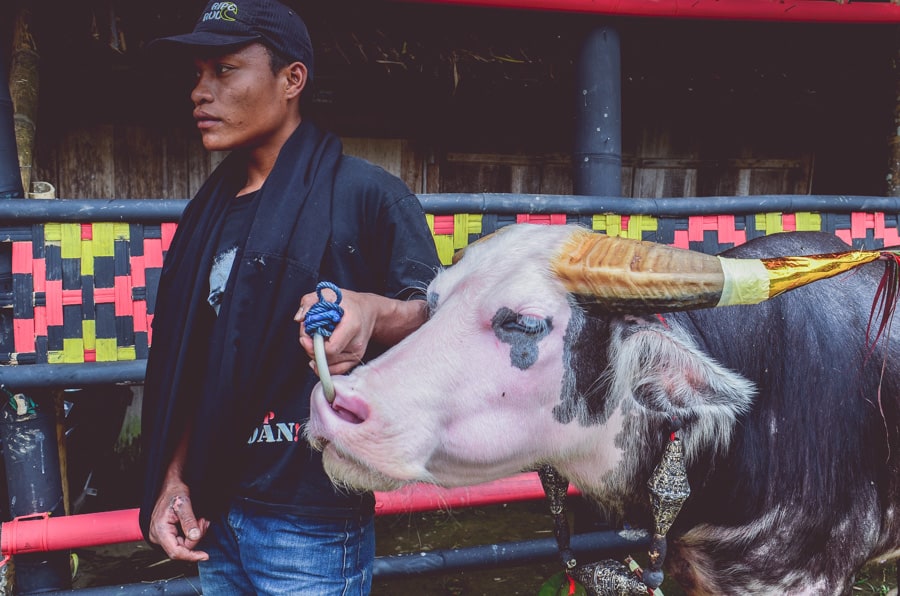
The buffaloes are status symbols and really well taken care of. You can tell that the owners take immense pride in their animals, washing them, decorating their ears and horns and talking to them.
A small black buffalo goes for about RP 5 million while a large black one will set you back about RP 10 million. Want something a little more special? A spotted black and white buffalo starts at about RP 50 million. The rare pink-eyed albinos cost over a hundred million rupiah.
The Funeral
On the day of the big send-off the family members show off their prized water buffaloes. Pink albinos are the most sought-after and are worth a fortune. Geoffrey explains that the albinos won’t be sacrificed as they are so expensive.
After the parade, there’s bullfighting. The family hopes that the fighting bulls will spill blood on the earth which will help speed up the journey to the land of the souls. The bulls lock horns and push each other around a little.
Some onlookers run away and climb into trees when the bulls get too close. After the bullfight, some there is standing around before Geoffry tells me to take a seat and get ready. The send-off will take place soon.
Silently the buffaloes are led in. They have accepted their fate. A machete appears, followed by a blunt thud, almost like pounding a watermelon with a hammer. A mixture of fine mist rain and an exploding water pipe of red instantly fills the air. Utter silence follows before you can hear the sound of a gurgling brook in crimson.
The journey has begun.


Tana Toraja Practicalities
When did I go? Third week in July
Where to stay in Rantepao?
Budget: Pias Poppies
Midrange: Nuansa Homestay
With Swimming Pool: Toraja Heritage Hotel
How long to spend in Tana Toraja? Stay at least two full days, or even three, to increase your chances of attending a funeral.
Getting to Rantepao: The nearest airport is in Makassar. Buses to Rantepao leave from the DAYA Bus Terminal in Makassar. It takes about 8 hours to reach Rantepao from Makassar. The buses are modern and fairly comfortable.
I took an overnight bus both ways, which saved some time. I bought the ticket an hour or so before departure at the DAYA terminal.
The bus from Rantepao to Makassar can drop you off at the airport, which will save you from backtracking if you have a flight to catch. Travel agents in Rantepao sell tickets, so buy them a day or so in advance.
You can find the Tana Toraja traditional settlements on the UNESCO World Heritage Centre tentative list for their unique cultural importance.
How I Shot This Guide
Every photograph in this article was taken with the exact same gear I carry on every journey. It is a setup refined over years on the road to keep travel light without compromising the final image.
- Camera: Sony A7 V
- Lens: Sigma 24-70mm f/2.8 DG DN Art
- Storage: SanDisk Extreme Portable SSD
- Software: Adobe Lightroom Classic
- My travel essential: Ray-Ban Wayfarer