
Dara ancient city (Dara antik kenti) is one of Turkey’s under-the-radar destinations that truly deserves the title of hidden gem. Perhaps the fact that the Syrian border is just 6 km away has something to do with it.
Despite its historical importance, the Mesopotamian ruins of Dara ancient city remain well off the beaten path. We pretty much had the entire archaeological site to ourselves, save for the local Kurds who live among the ruins and a handful of Turkish tourists.
We visited Dara on a half-day trip from Mardin, and we highly recommend you do the same if you’re in this part of Turkey.
In this guide to Dara Mesopotamia, we’ll cover Dara’s history, share our tips for visiting the ruins from Mardin and show you the highlights of our visit.


Please note: This post may contain affiliate links. This means I may earn a commission if you make a purchase by clicking a link (at no extra cost to you). As an Amazon Associate, I earn from qualifying purchases. Learn more.
Quick Guide to Visiting the Dara Ruins
When did we go? First week in April – it was lovely
Where did we stay in Mardin? Zerzevan Hotel
Dara Opening Hours: Dara’s sites are open from 08:00-12:00 and then 13:00-17:00. Note that the sites are all closed on Monday.
Dara entrance fee: Free! Thank you, Turkey
How to get to Dara from Mardin?
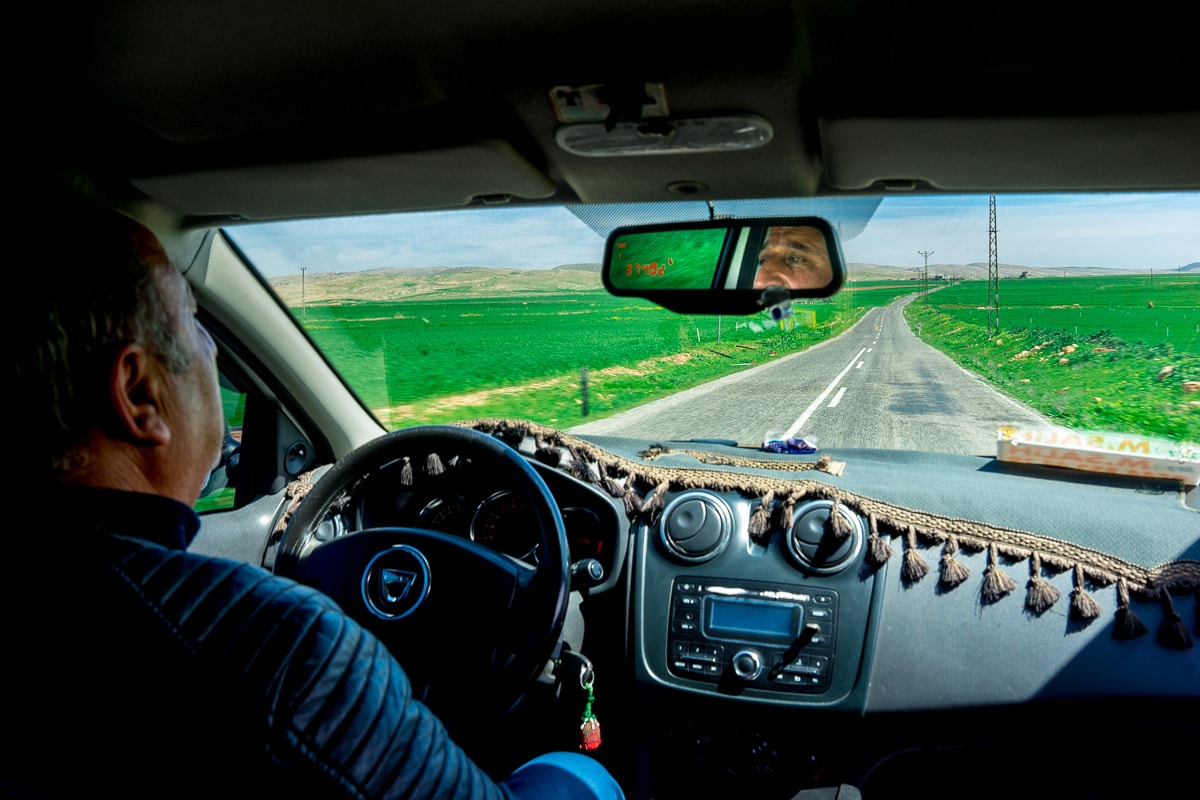
You can get to Dara from Mardin by minibus (dolmus) or car. Dolmus seemed too inconvenient, so we arranged a taxi for half a day.
By dolmus: The internet says there is one dolmus a day leaving from the minibus station in Mardin, returning in the afternoon. The dolmus does not run on Sundays (and Dara is closed on Mondays, so plan accordingly if planning on taking the bus). No one in Mardin could tell us the schedule or price of this bus.
By taxi: Our hotel owner helped to arrange a taxi for us. We paid TRY 500 (USD 25) for a half-day trip to Dara and stopped at the Mor Hananyo monastery on the way back to Mardin. This was very convenient.
At first, the driver wanted TRY700, but Jin’s a tough negotiator and got him down to TRY500. We were so happy with him that we decided to tip him TRY 100 when we returned to Mardin.
Is there anything to eat in Dara? We saw small restaurants at the entrance to the Necropolis, Western Cistern and Zindan where you can get something to eat or drink.
Dara Mesopotamia History: The Condensed Version

Archaeological excavations of Dara have been going on for over 35 years, yet only an estimated 10% of the ancient city has been unearthed so far. Rumours say that excavations have stopped in recent years due to money problems.
Throughout its history, Dara has always been a border settlement. It was first founded in 507 AD by Emperor Anastasius and served as a frontier town between the Roman and Persian empires. Today, the ancient ruins of Dara are situated in Turkey, about 6km from the Syrian border.
Geographically, Dara is located about 30 kilometres from Mardin, between the Mesopotamian plain and the Tur Abidin Mountains.
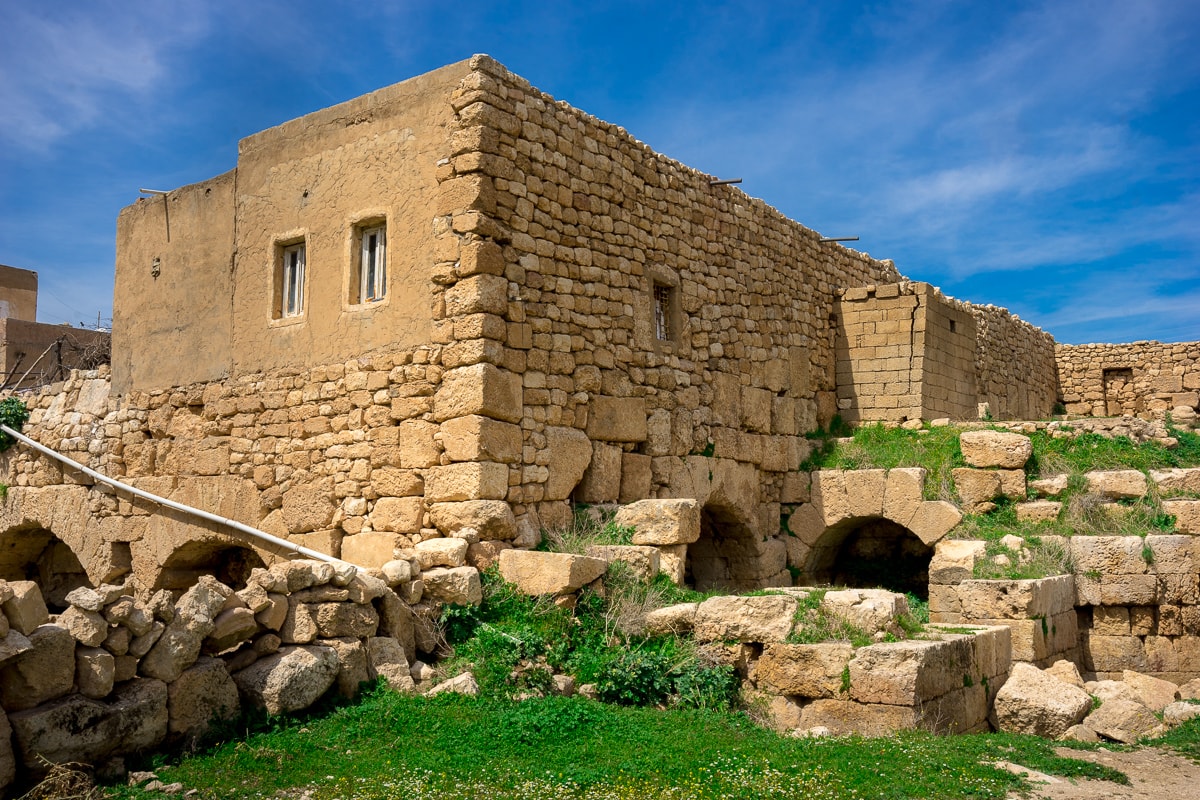
The Roman Byzantines and the Persian Sassanids were constantly in each other’s hair. To strengthen the Roman Empire’s presence in the area, Emperor Anastasius built a fortress in Dara, near the Persian stronghold of Nusaybin.
Thanks to Dara’s strategic location and abundant water sources, the city quickly became a military and administrative centre and the seat of Roman Mesopotamia. During its heyday, an estimated 40,000 people called Dara home.
Emperor Anastasius was a bit rushed when he built Dara, so his successor, Emperor Justinian I, had some significant improvements done.
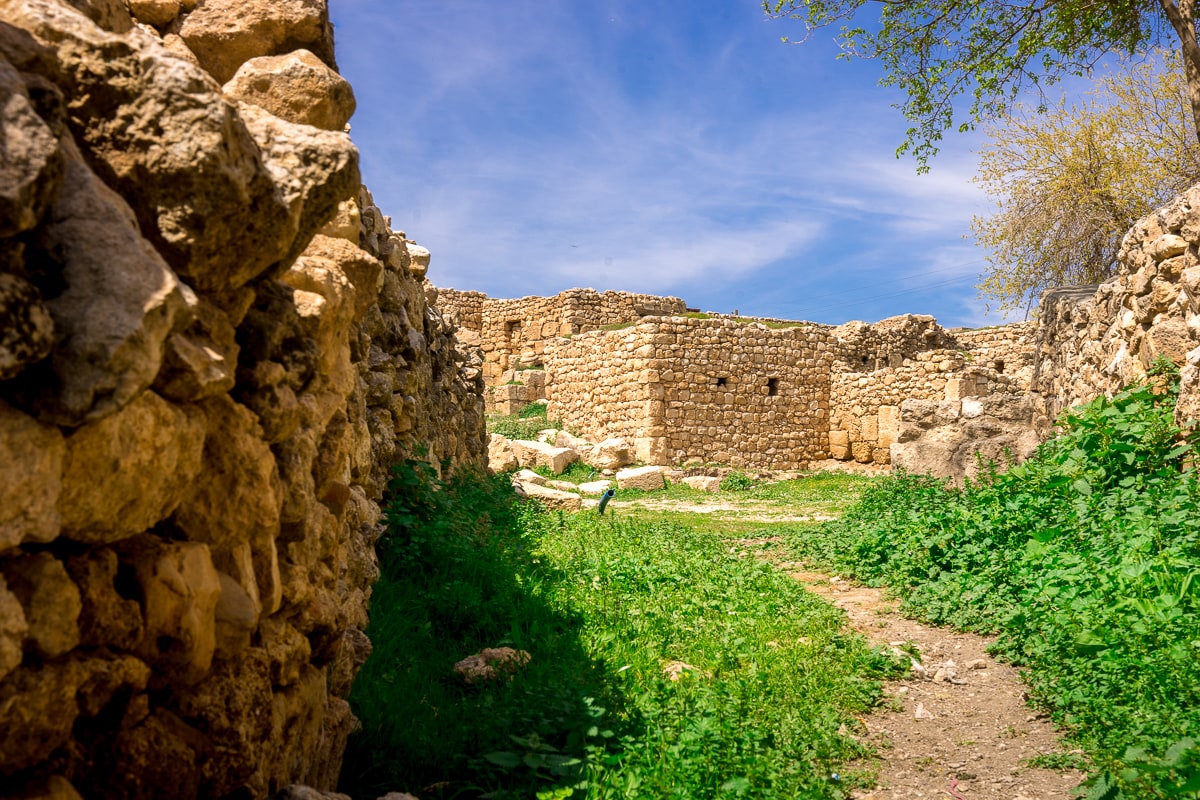
Besides strengthening the city walls and upgrading the barracks, a major improvement under Justinian I was diverting the Cordes River to Dara. This ensured ample water supply and withheld it from enemies simultaneously.
In 530 AD, the Romans and Persians clashed here in the Battle of Dara, which the Romans won.
While the Romans claimed victory at the Battle of Dara, fighting between the Byzantines and Sassanids continued for years to come, and Dara exchanged hands several times between the two powers. Later, the Sassanids put Dara under siege, cut off their water supplies, and, after four months, completely sacked Dara in 605 AD.
Hearing of Dara’s fall made the Byzantine emperor lose all his marbles, and he went insane.
The die-hard Romans regained control of what was left of Dara in 628, only for the Arabs to give them the final knockout not long after.
Dara was entirely abandoned by the 13th century.
Today, the ruins of Dara’s ancient city lie scattered among the modern village of Oğuz, which has a predominantly Kurdish population. Much of Oğuz was built using the building materials from ancient Dara.
Since its founding, Dara has gone by the names of Daras, Anastasiopolis or Lustiniana Nova.
Our Visit to Dara
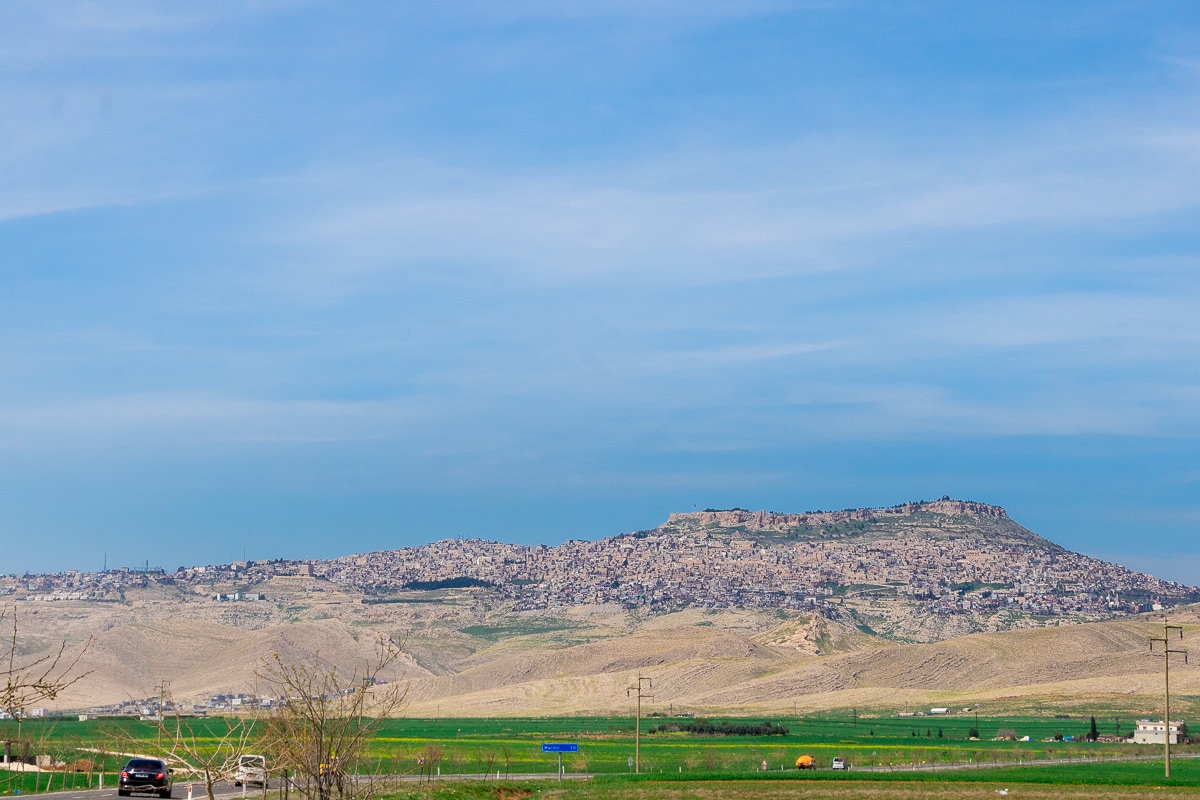
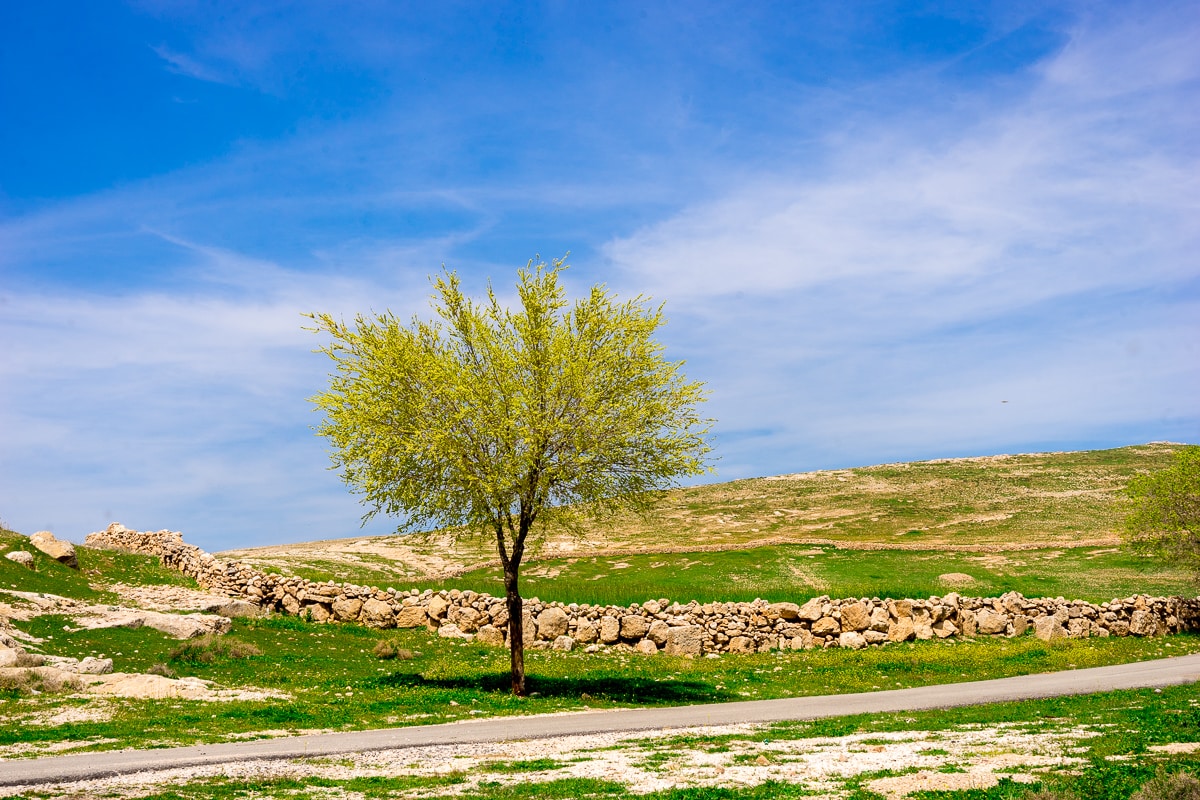
It’s the first week of April, and the weather in Mardin is lovely. We’re spending a few days in hilltop Mardin, taking in the sweeping views over the Mesopotamian plains below (as you do in Mardin) and exploring the stunning city. Jolly good.
One night before bed Jin stumbles upon Dara in a Korean blog.
Until the Korean blog, we were completely unaware that down in the plains below lay one of Turkey’s most famous ruins. So the next day, after breakfast, we asked our hotel to arrange a driver to take us to Dara on a half-day tour.
The road winds down the hill that Mardin towers on, and once we reached the plains, it was as flat as a backgammon board. Being early spring, the plain was verdant green, interrupted every now and then by bright yellow canola patches.
I followed our journey on Google Maps to see how close we got to Syria while taking in the scenery outside. The closest we got to Syria was about 5 km at the settlement of Alakus before turning off to Dara.
Once we got to Dara, our driver took us from one site to the next, which was very convenient, as Dara is quite spread out. Walking between sites in Dara would not be enjoyable.
We visited Dara in the following order:
- Necropolis
- Western Cistern
- Zindan
- Agora
- Castellum Aqua
We were very disappointed to find the Necropolis closed when we got there. After peering through the fence, we continued exploring the rest of Dara. We spent about 3 hours in Dara. You can easily spend much longer here, especially if the Necropolis is open.
On the way back to Mardin, our driver convinced us to stop at the Deyrulzafaran monastery (Mor Hananyo), and we’re glad he did. It’s an excellent addition to your Dara trip.
Visiting Dara Ancient City Practicalities
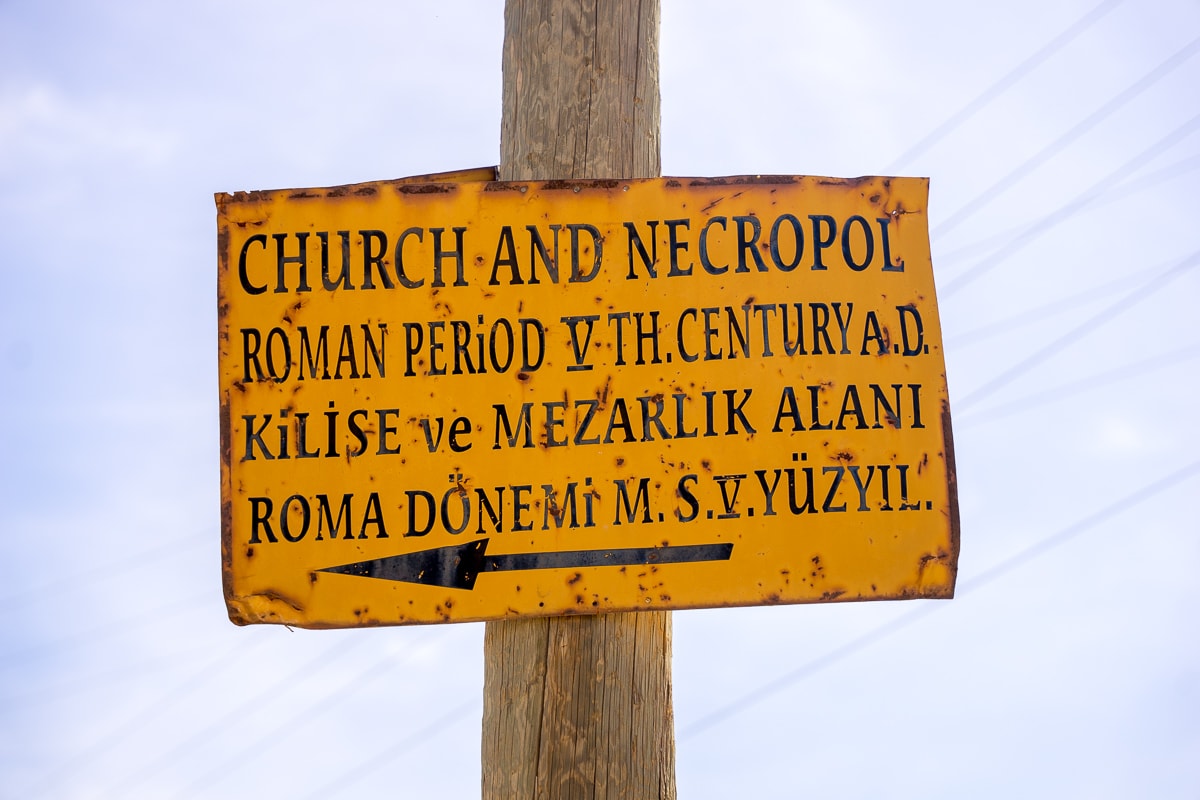
Dara is a sprawling site, and signage is scarce. Thankfully our driver took it upon himself to show us around and drove us from one spot to the next. We thought we were just getting transport from Mardin to Dara, but our driver saved us from wandering aimlessly through the ruins of Dara.
We think the distance between the sightseeing spots is too far for an enjoyable walk – especially in summer. But visitors who like a good adventure might enjoy the challenge of navigating the sprawling site on their own.
The only map of Dara we saw was in the Agora. But remember, Oğuz village is a mixed bag of ancient ruins and modern structures made from the same materials. So, even with a map, distinguishing between an ancient tomb and a Kurdish bachelor pad might require some detective skills.
The internet says village children will guide you through the ruins for a small fee, but they must have been in school (hopefully) when we visited.
What to See in Dara
Below is an account of what we saw during our visit to Dara. We spent roughly three hours in Dara, but plan to spend longer if you’re lucky enough to get into the Necropolis. I’m sure you can easily spend an entire day exploring the vast site.
The Necropolis

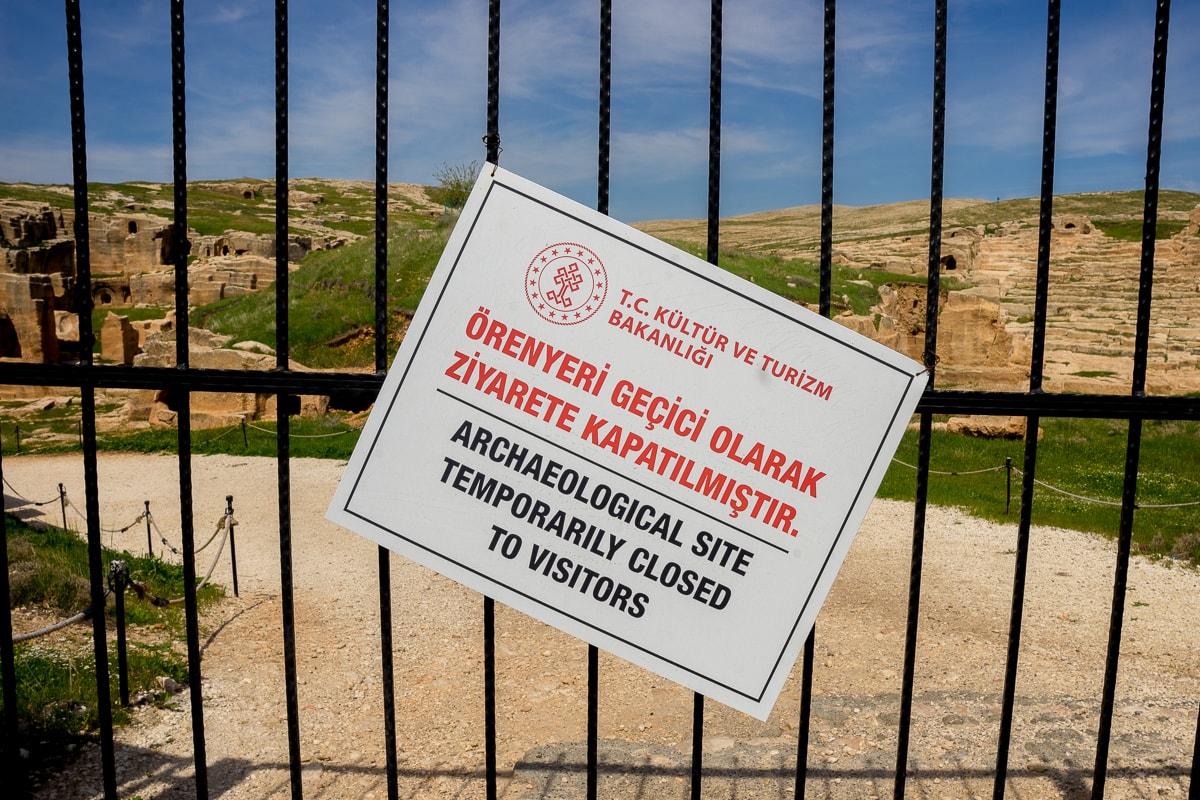
When you enter Dara from Mardin, you’ll first notice the Necropolis on the left side of the road, considered the most significant feature of the archaeological site. The Necropolis is a burial ground that dates back to the Roman and Byzantine periods (6th-14th century AD) and contains tombs and burial chambers carved into the rock.
The Necropolis is located outside the walls of the ancient city. Unfortunately, it is not always open to visitors due to restoration work, the gatekeeper’s extended break, or other reasons.
We excitedly jumped from the taxi, ready to get our Indiana Jones on, just to be greeted by a sign saying the Necropolis was temporarily closed. We could only see the tombs from a distance, and asking the guys at the little restaurant across the road when it would reopen was fruitless, as they spoke no English.
Bati Sarnıç
(Western Cistern)
Our taxi driver drove us off and, when he stopped, pointed in a direction which was our queue to start exploring.
A very non-descript entrance gave way to a massive underground chamber of a water cistern.
This cistern, which has a capacity of 1500 cubic metres, sits outside the city wall. It’s believed that the cistern served commercial caravans hosted outside the city and the Necropolis area.
Inside the square cistern, you’ll see two gigantic columns supporting a cross-vault roof.
Sarnıç Zindan

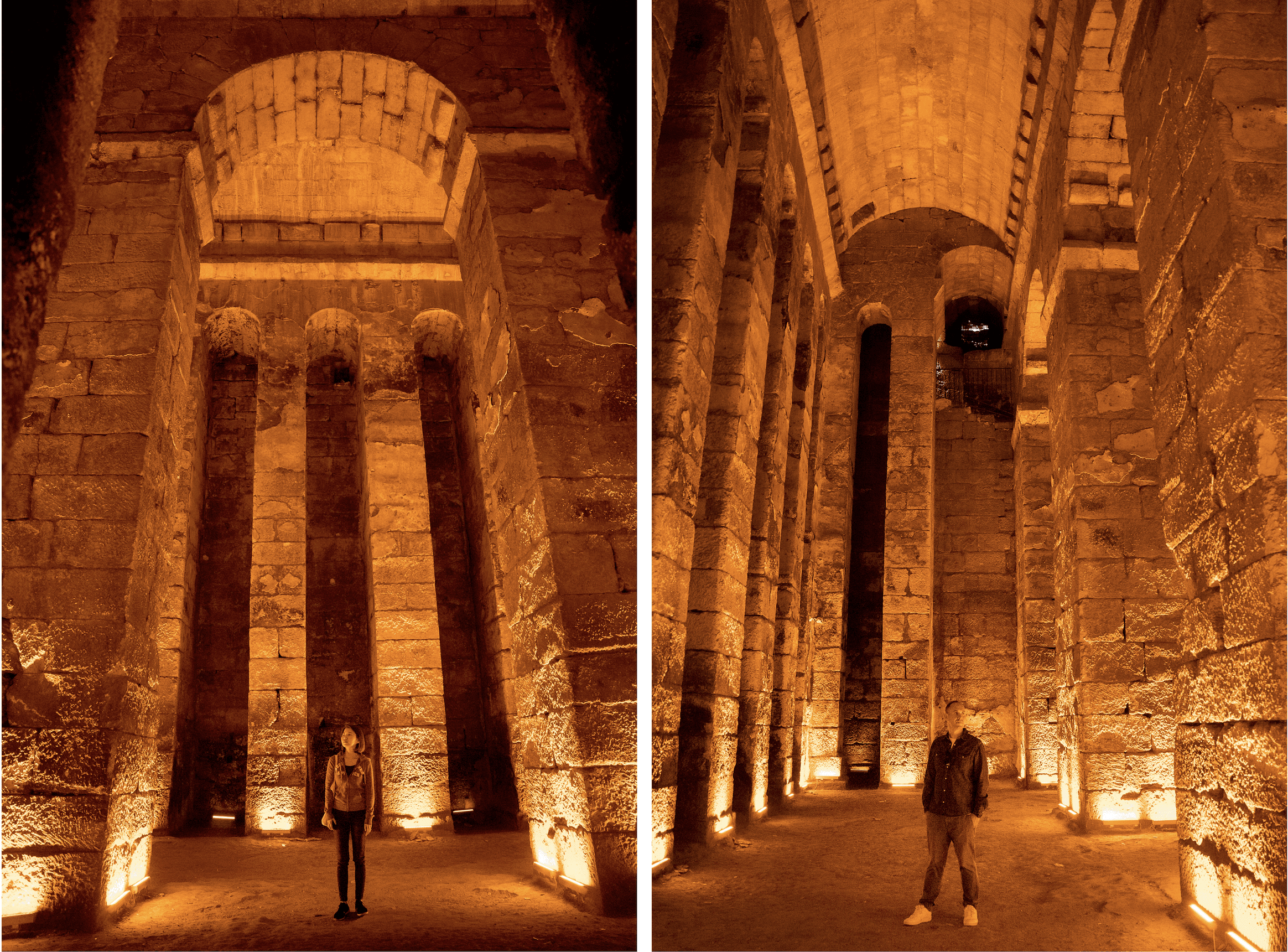
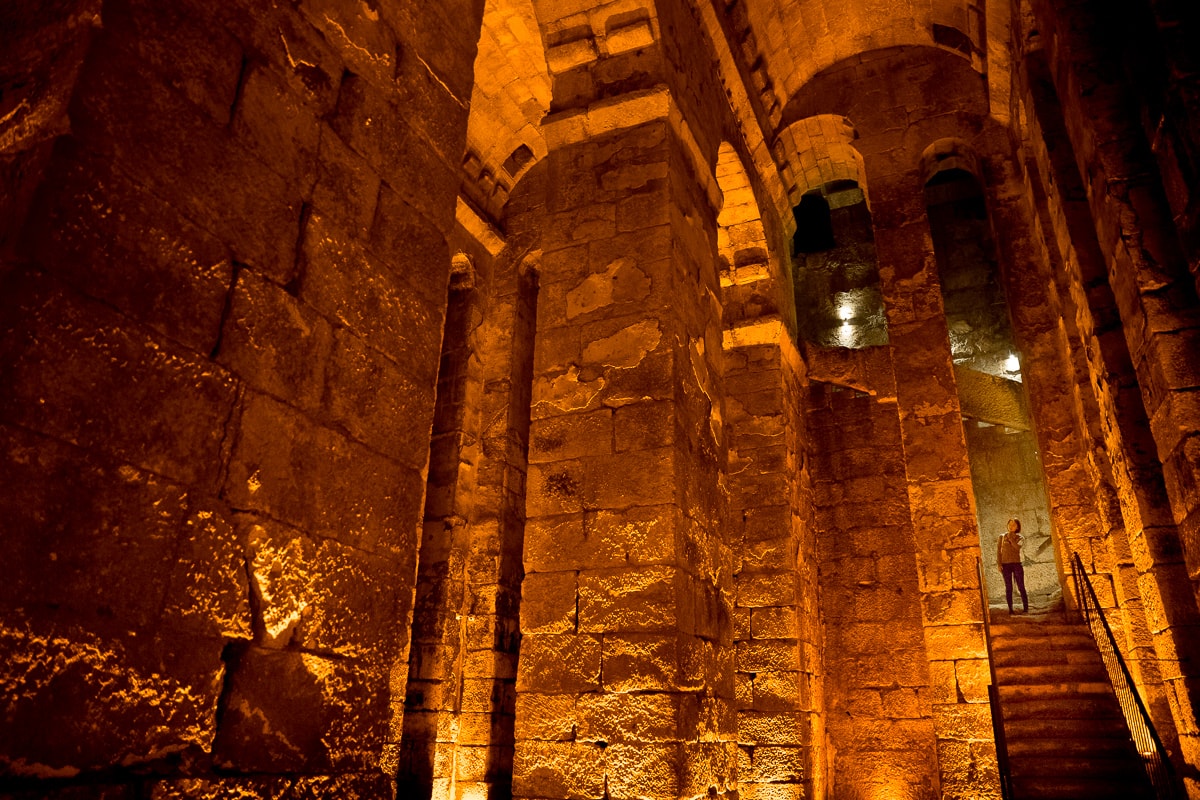
Next up was another subterranean construction, the Sarnic Zindan.
We didn’t know where our driver took us, so when we stopped at what looked like a house with the words ZINDAN painted in white, he led us to the entrance.
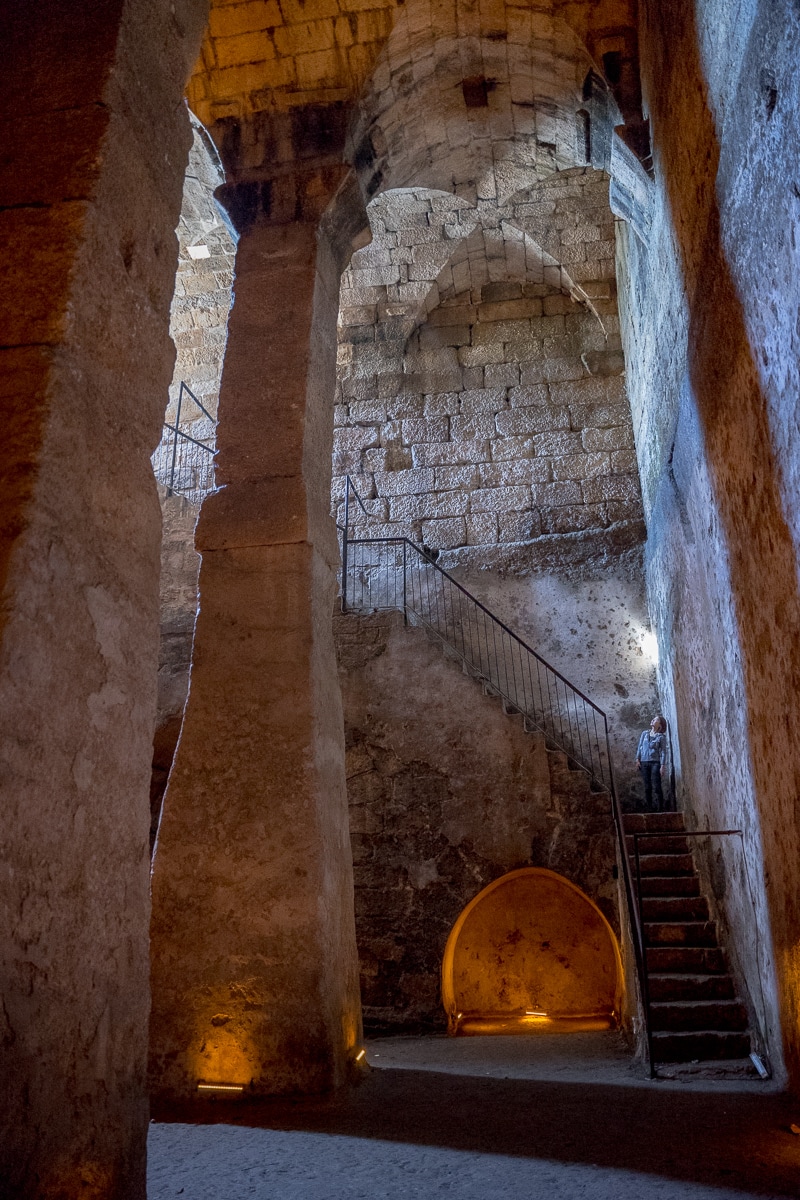
A series of steps led down from yet another nondescript entrance, and soon, we found ourselves in a massive underground chamber. It was this underground cistern, beautifully lit-up, that we saw on a Korean blog when we decided we MUST visit Dara.
The massive cistern is a 15-meter-high structure with a water capacity of 10,000 cubic meters. It is about 6 meters higher than the Basilica Cistern in Istanbul, the most famous one of the Byzantine period.
During our visit to the cistern, the lights suddenly went out for a minute or two. The pitch-black chamber became a real underworld (perhaps a local had to charge his phone, or a goat outside tripped over the cable).
More of our Mesopotamia Guides:
Mardin City Guide: What to see, do, and eat
Mor Hananyo: The Saffron Monastery
Agora
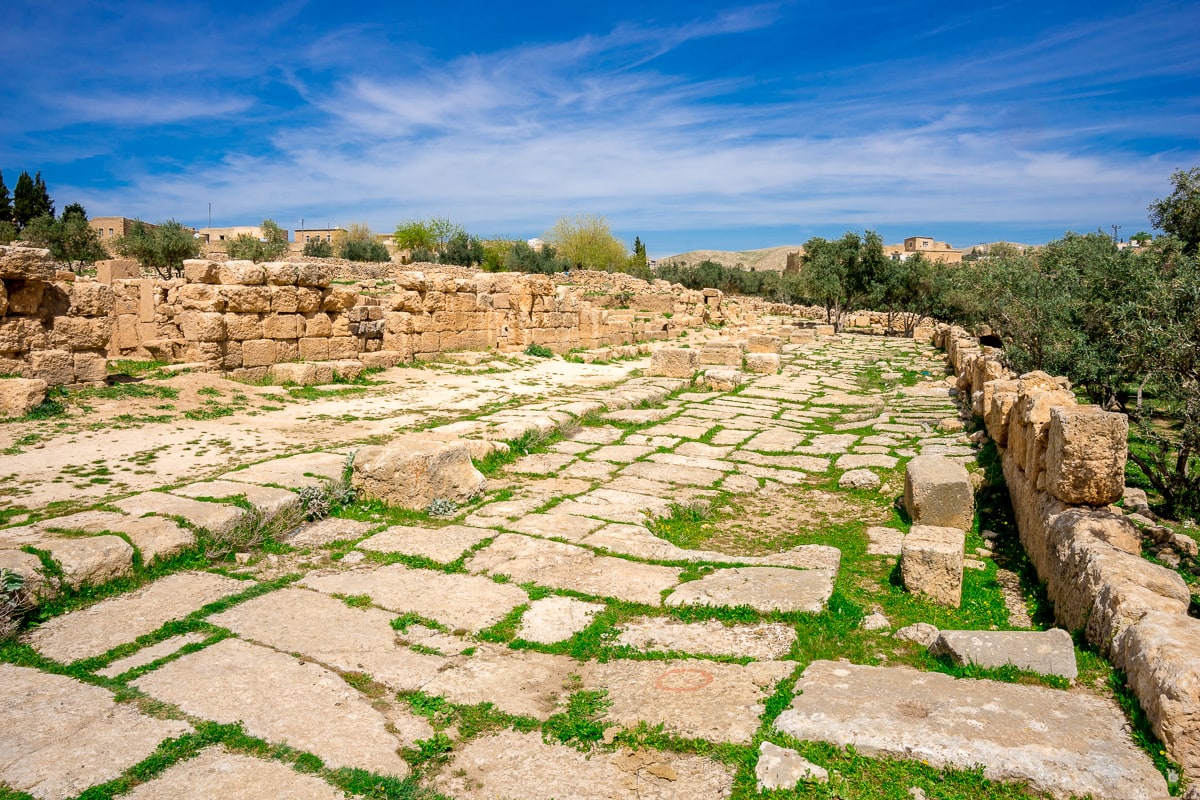
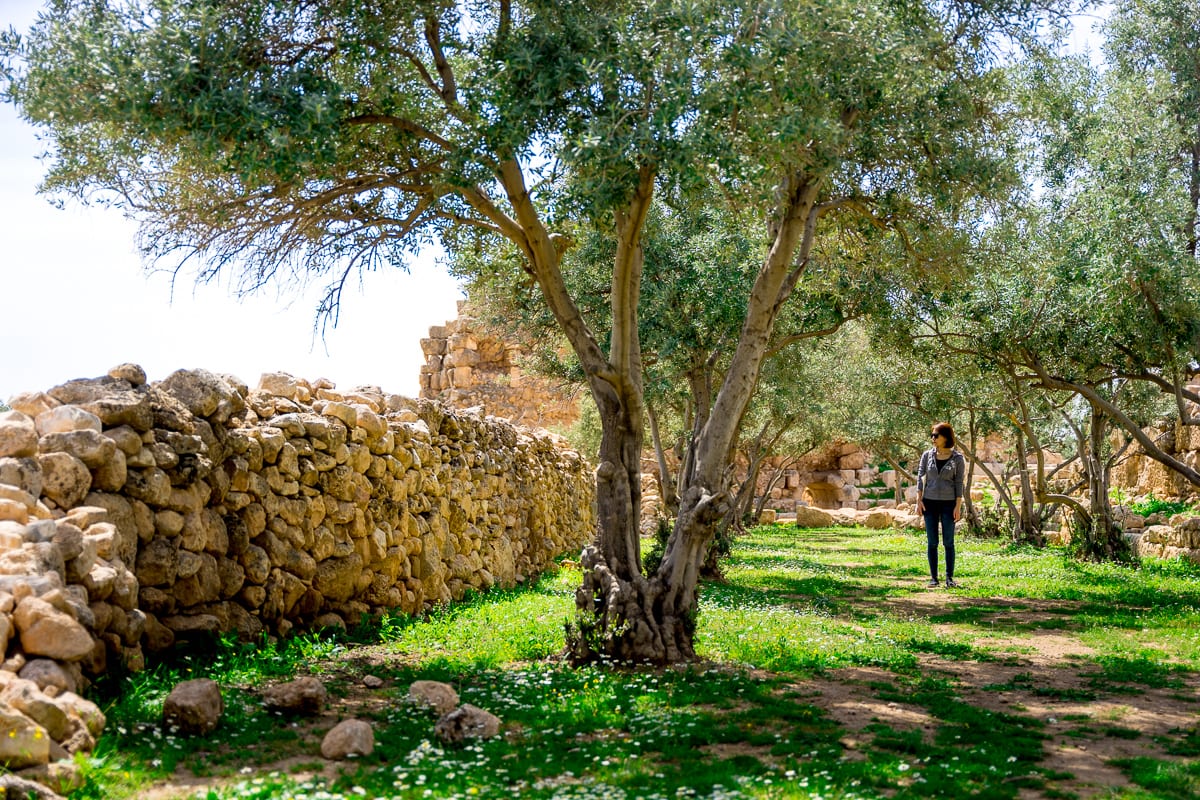
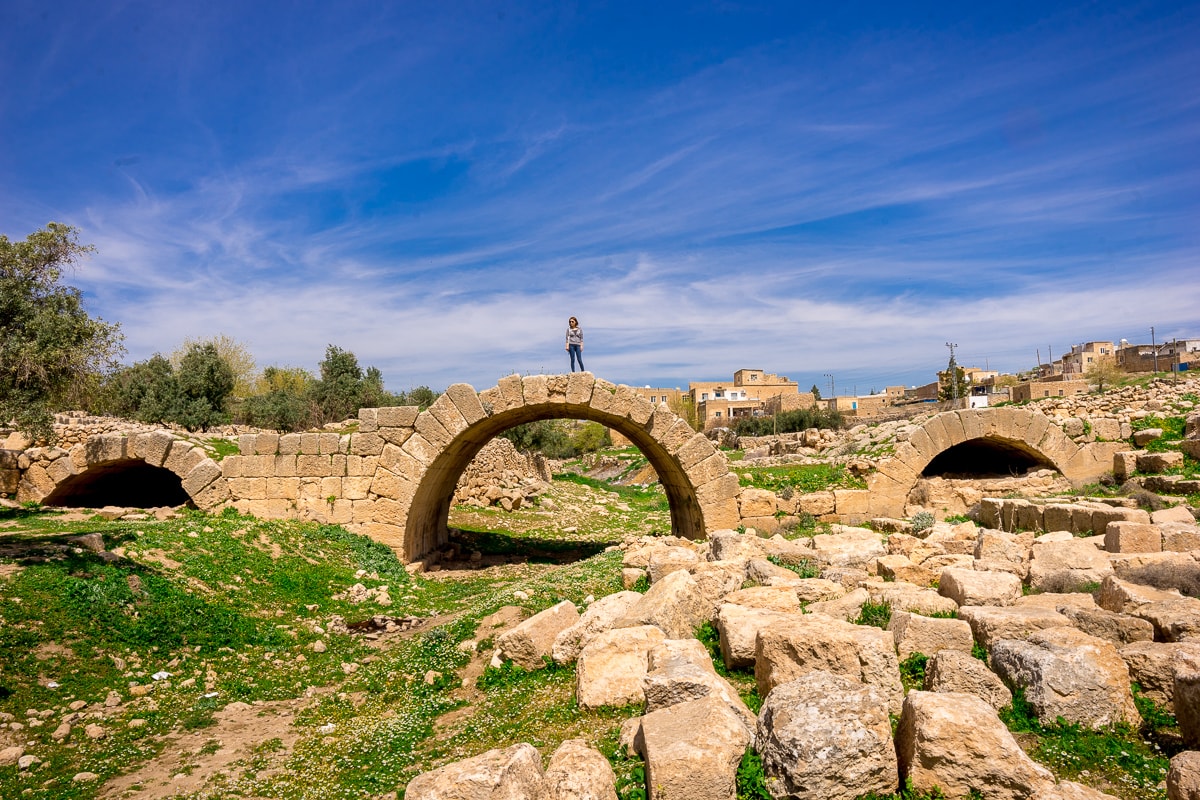

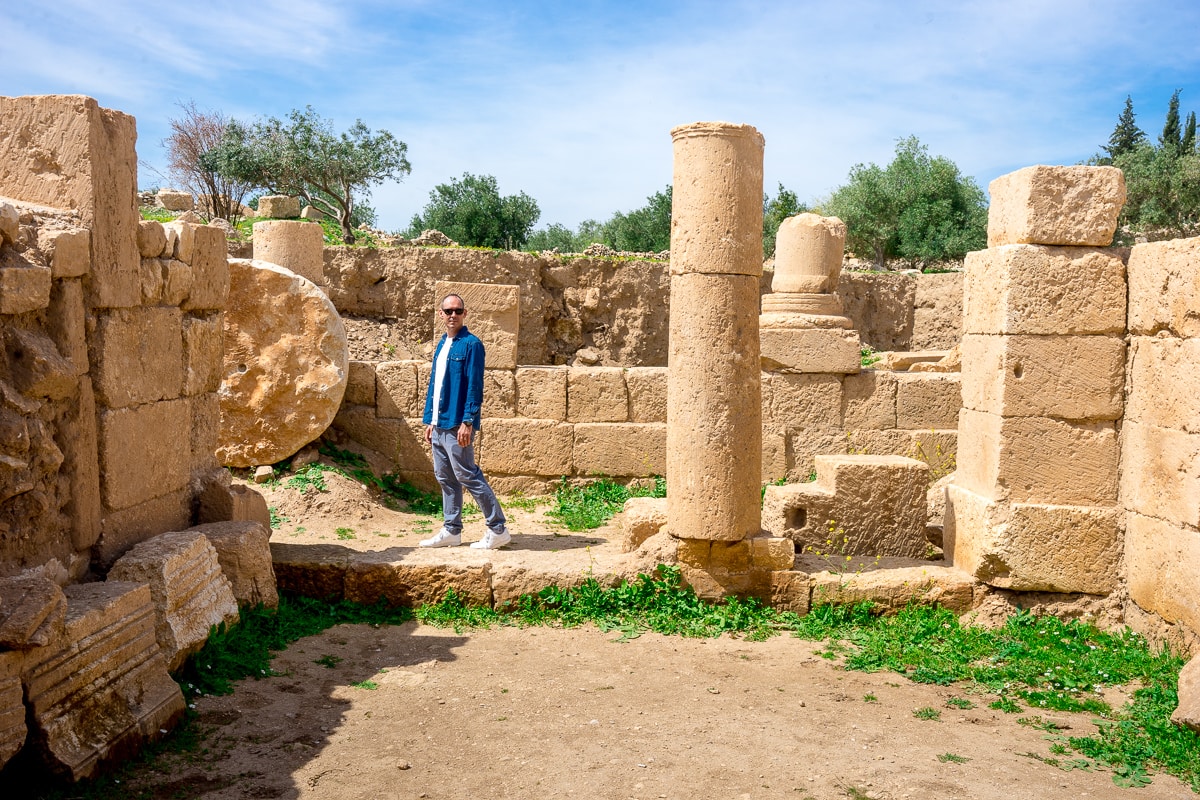
After exploring the Zindan, we made our way to the Agora, located next to the cistern. We followed a stone path that led through fields and olive groves towards the marketplace. The Agora played a crucial role in the economic and social life of the people who lived in Dara and was an essential part of the city’s infrastructure.
As we walked along the path, we came across a handsome three-arched bridge that spans the now-dry Cordes River.

Continuing, we arrived at one of the city gates and a remaining section of the Dara city wall. At Dara’s peak in the 6th century, the fortifications surrounded the last castle of the Byzantine Empire in the east and were 18 meters tall and 3 meters wide.
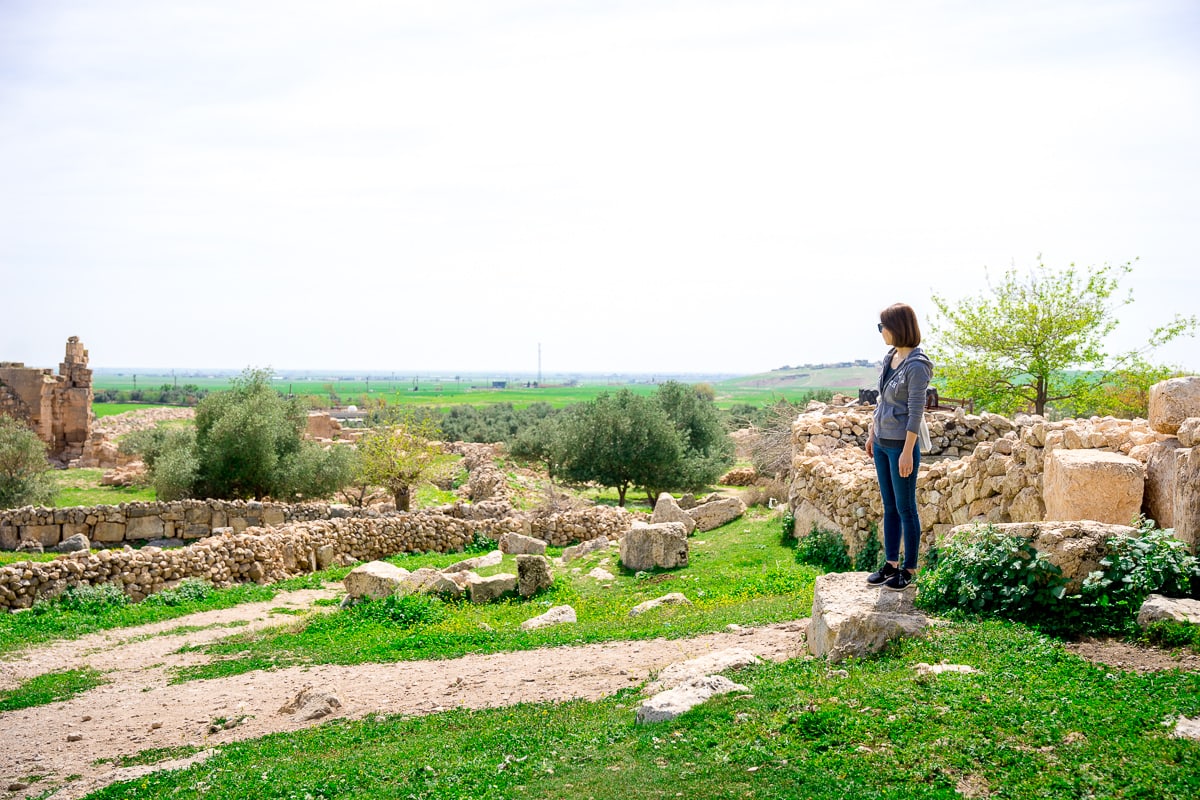
The Agora itself was fascinating to explore. We enjoyed clambering over the ruins and trying to imagine what it might have looked like in its prime.
The olive groves around the Agora are beautiful, too. The discovery of an olive press and olive oil workshop in the Agora proves that olives have been a part of Dara for centuries.
Maksem
(Castellum Aqua)

After the Agora, we thought we were done with Dara, but our charming taxi driver/guide had other plans.
Before leaving Dara, he made a quick detour to yet another cistern called the Maksem.
Also known as the Castellum Aqua, this water system is carved into the rock and consists of 10 parallel cell rooms covered with barrel vaults. This massive structure served as a water collection and distribution centre.
After snapping a photo, we drove back to Mardin (or so we thought). On the way, our driver convinced us—in Turkish—that we had to make a detour to the Syriac monastery of Mor Hananyo.
How I Shot This Guide
Every photograph in this article was taken with the exact same gear I carry on every journey. It is a setup refined over years on the road to keep travel light without compromising the final image.
- Camera: Sony A7 V
- Lens: Sigma 24-70mm f/2.8 DG DN Art.
- Storage: SanDisk Extreme Portable SSD
- Software: Adobe Lightroom Classic
- My travel essential (trust me): Ray-Ban Wayfarer
- Outerwear: My North Face Canyonlands jacket was perfect for spring weather in Türkiye
Is Dara Ancient City Worth Visiting?
We loved Dara and think it’s a worthwhile and exciting day trip from Mardin. It’s blissfully off the beaten path, beautiful and fascinating. Extra bragging rights to coming within a stone’s throw from the Syrian border too
✌️
It was everything but a hidden gem. We visited on October 19th and it was full of Turkish tourists. Full of screeming souvenirshops, loads of busses and ice cream stands. It is no longen of the beaten path. Lovely place but to commercial.
And children begging for money, knocking on your car door.
Hi Lianne,
What a pity! Maybe because we visited during Ramadan, the place was deserted. We were quietly hoping for some kids to guide us around, but even they were not around. Well, sounds like the local economy is doing well, at least.