
I knew about the Silla Kingdom in name only. That’s part of what makes Gyeongju such a compelling place to visit. Everything here is labelled Silla this or Silla that, but for the casual foreign visitor, the history sits far outside any familiar framework. It’s ancient in a way that feels almost abstract.
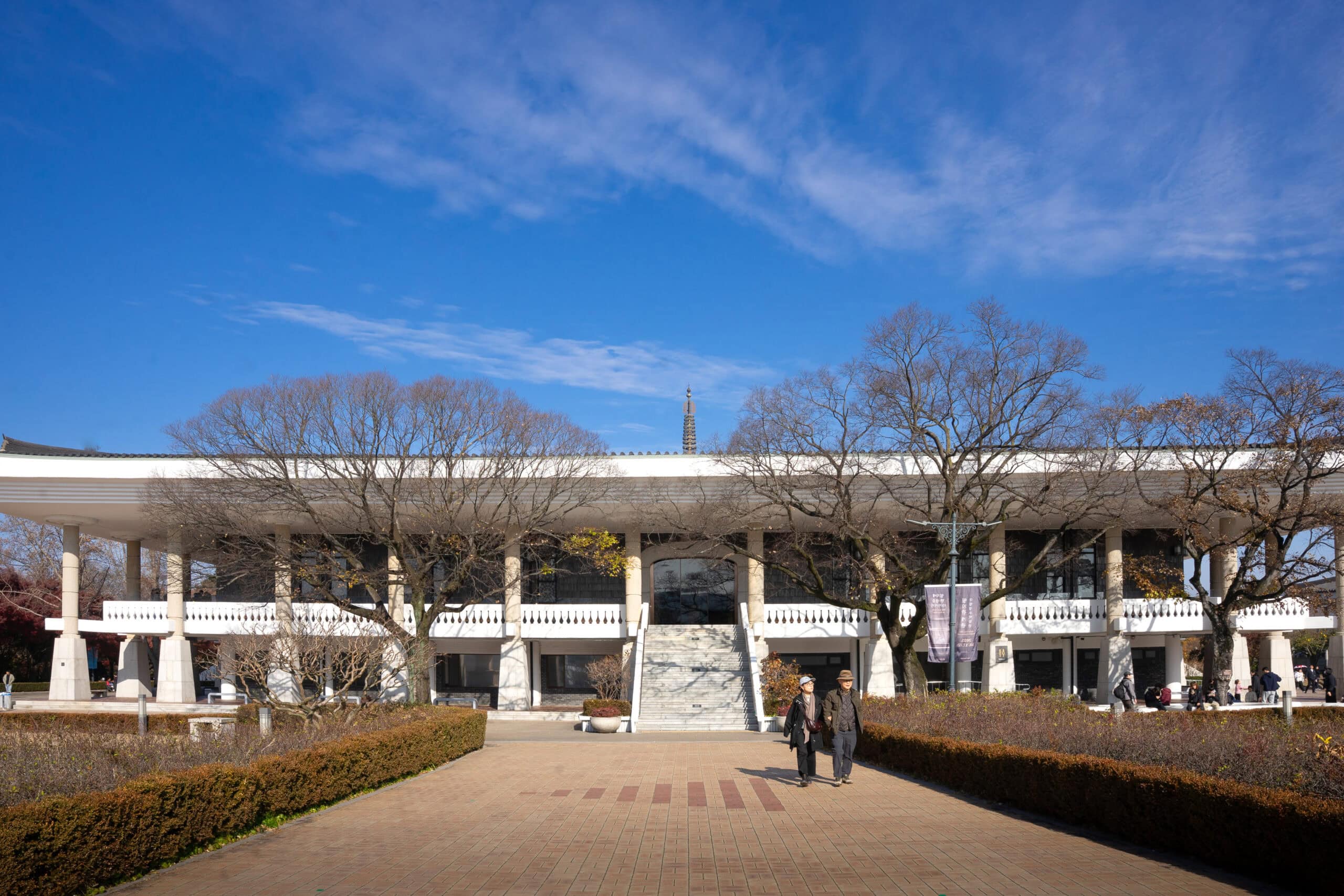
Wanting to understand it better, or at least to see what remained, we went to the Gyeongju National Museum.
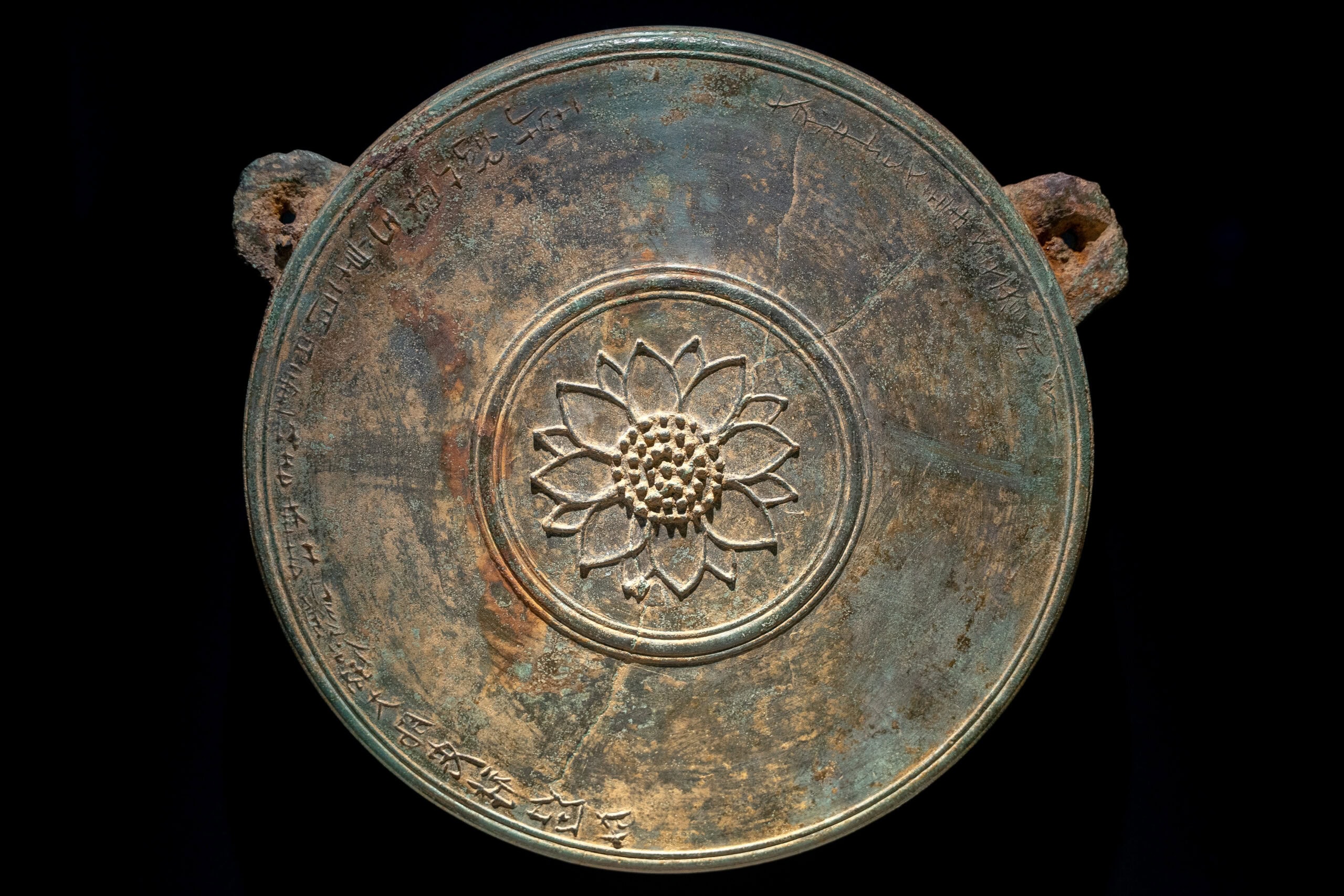
The museum doesn’t try to force that story into focus. Instead, it acts as an archive of a kingdom that no longer exists, allowing Silla to be understood through objects rather than names and dates.
After visiting the Gyeongju National Museum, I’m still no expert on Silla. I still can’t explain who ruled when, or how power shifted over centuries. But I left with a deeper appreciation for just how sophisticated this kingdom was, and how much of its story survives through artefacts.
For culturally curious travellers and anyone with a soft spot for very old things, the museum is essential when in Gyeongju.
Please note: This post may contain affiliate links. This means I may earn a commission if you make a purchase by clicking a link (at no extra cost to you). As an Amazon Associate, I earn from qualifying purchases. Learn more.
Gyeongju National Museum: Practical Information
Location: Gyeongju, South Korea
Opening hours: 10:00-18:00 (until 21:00 on Saturday)
Admission: Free for permanent exhibitions.
Time needed: 1.5–2 hours
Getting there: Bus or taxi from central Gyeongju
Best time to visit: Morning or weekday for quieter galleries
Map: Google Maps pin, Naver Map Pin
A Brief Note on Silla
Every Korean knows about the Silla Kingdom. It’s taught in school, referenced casually, and folded into the country’s sense of its own past. And yet it remains part mystery. There are gaps, uncertainties, and details that were never recorded or never survived.
When I asked Jin to explain Silla to me, she paused. She could outline the basics, but not the kind of detail I was looking for.
She told me that Silla was powerful and long-lasting, that it eventually unified much of the peninsula, and that it had queens as rulers for the first time in Korean history. It was also known for its gold.
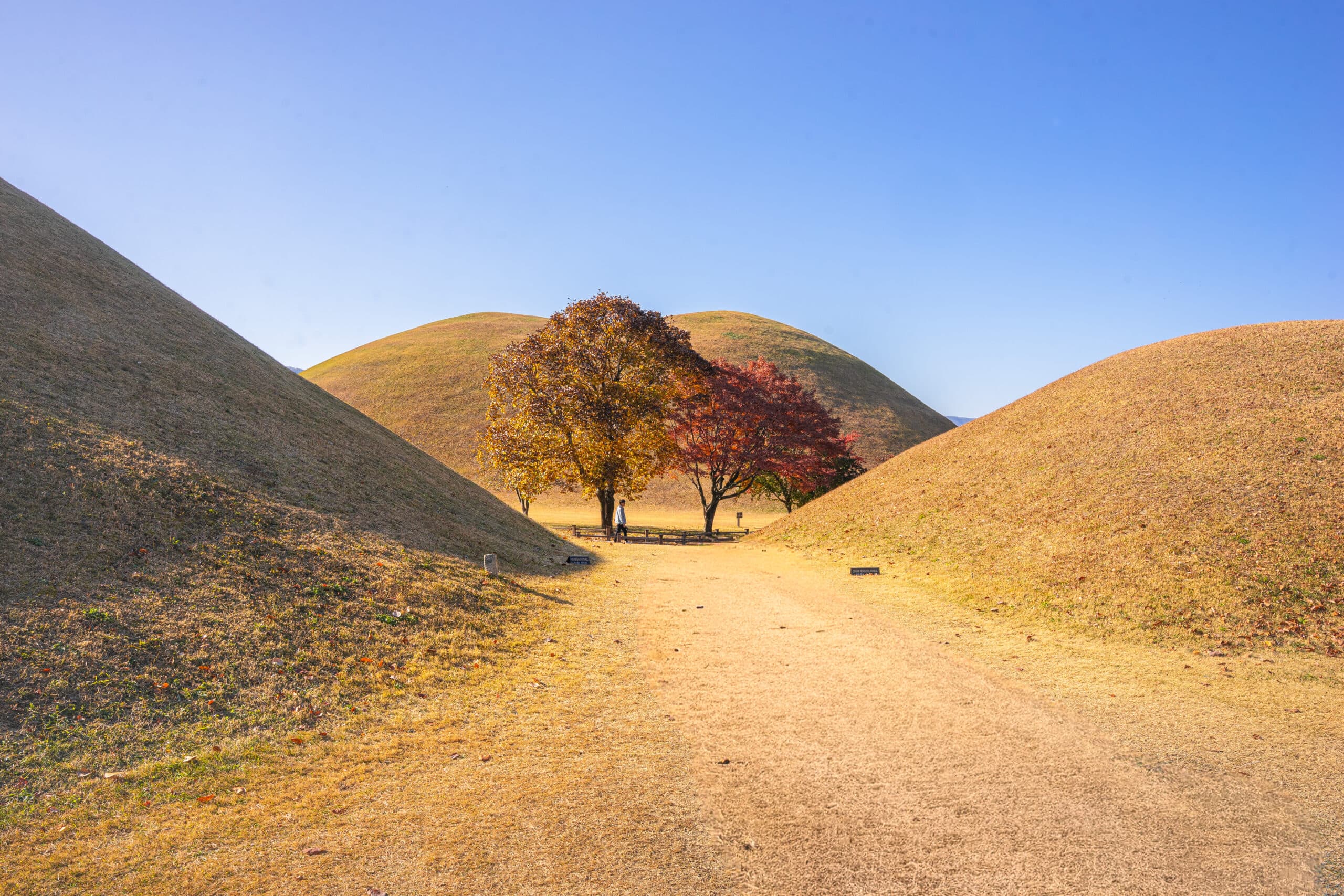
History tells us the Silla Kingdom ruled much of the Korean peninsula for almost a thousand years between 57 BCE and 935 CE, making it one of the longest-lasting dynasties in the region.
At its height, Gyeongju was not a peripheral capital but a centre of wealth, belief, and artistic ambition, connected through trade and diplomacy to China and beyond.
Silla’s embrace of Buddhism shaped both its politics and its aesthetics. Temples, stonework, and ritual objects were not only expressions of faith, but of authority. The gold crowns and ceremonial artefacts preserved in the museum speak to a kingdom confident enough to invest in beauty as a form of power.
Its decline was slow rather than sudden. Political fragmentation, shifting alliances, and the rise of new powers gradually drew Silla to a close. What remained were objects built to outlast their makers, left behind in a city that never entirely forgot what it once was.
The Gold Crowns
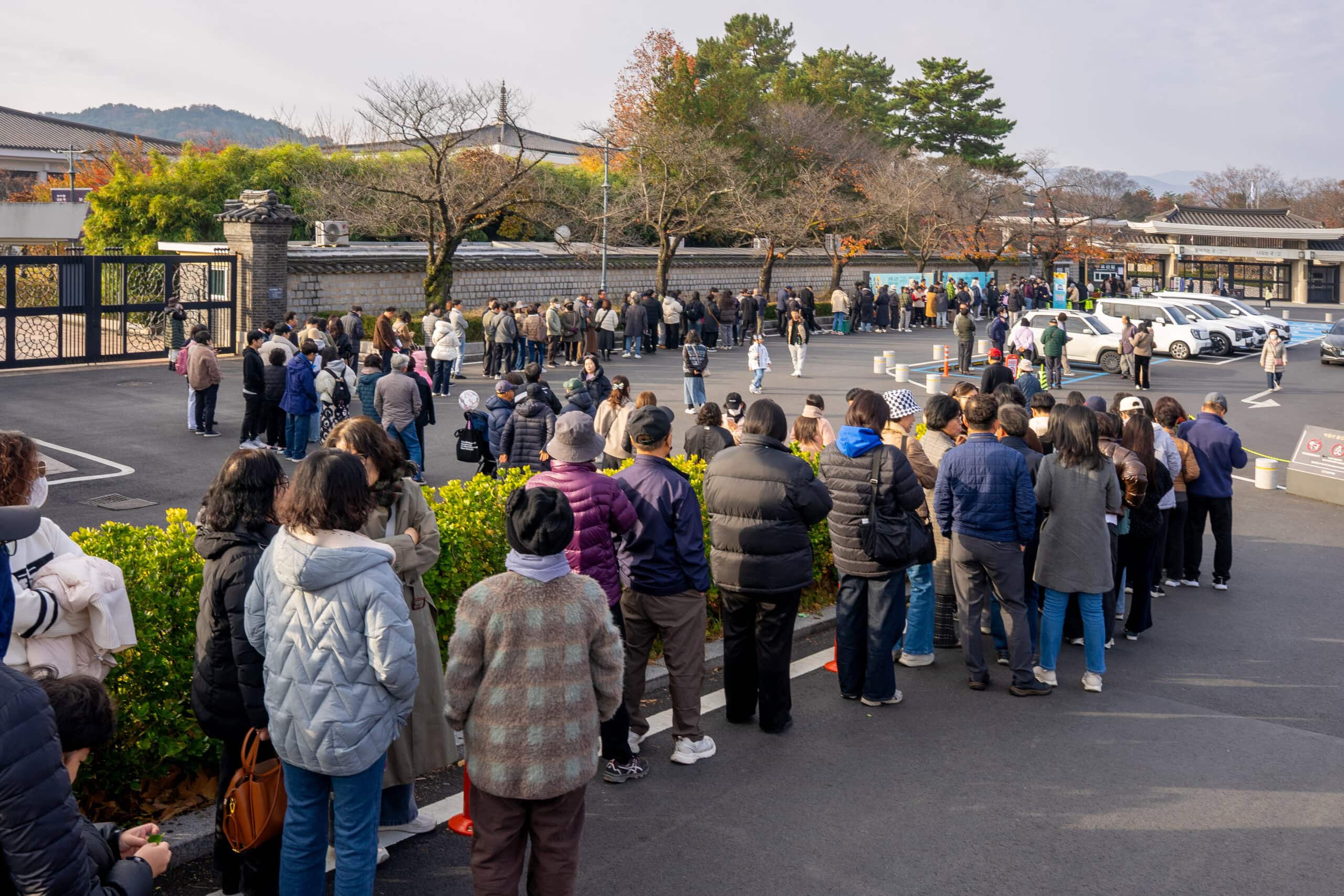
We visited shortly after the Gyeongju APEC summit, when the museum was incredibly busy. A special exhibition had brought together the six Silla gold crowns from museums across Korea, reuniting them in one space for the first time in over a century.
When we arrived 30 minutes before opening time, the line was already snaking into the parking lot.
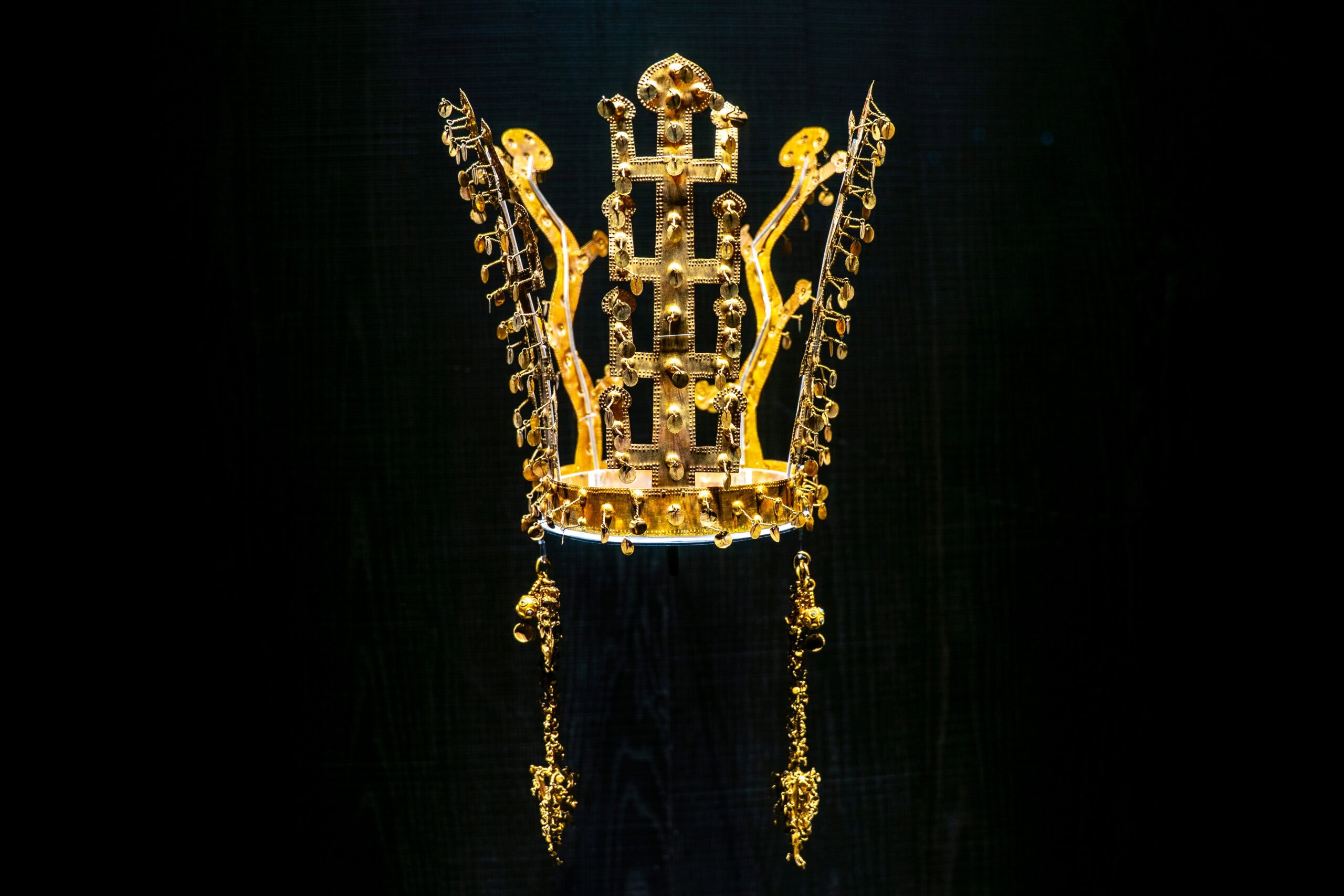
I don’t think I’d ever really associated ancient Korea with gold. In my head, early Korean art was pottery, ceramics, soft glazes, with a lot of restraint. The crowns blow that assumption apart. They are pure confidence.
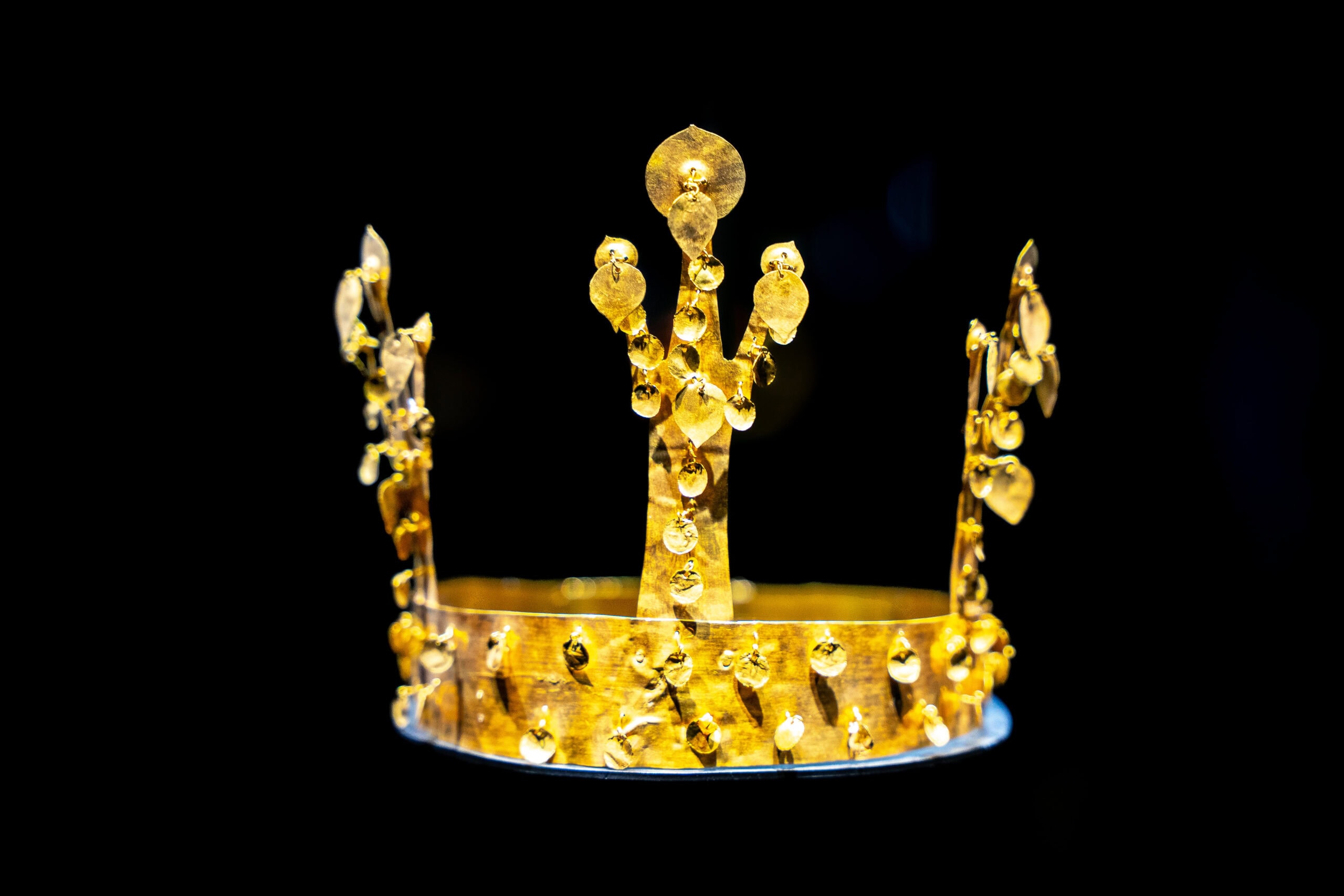
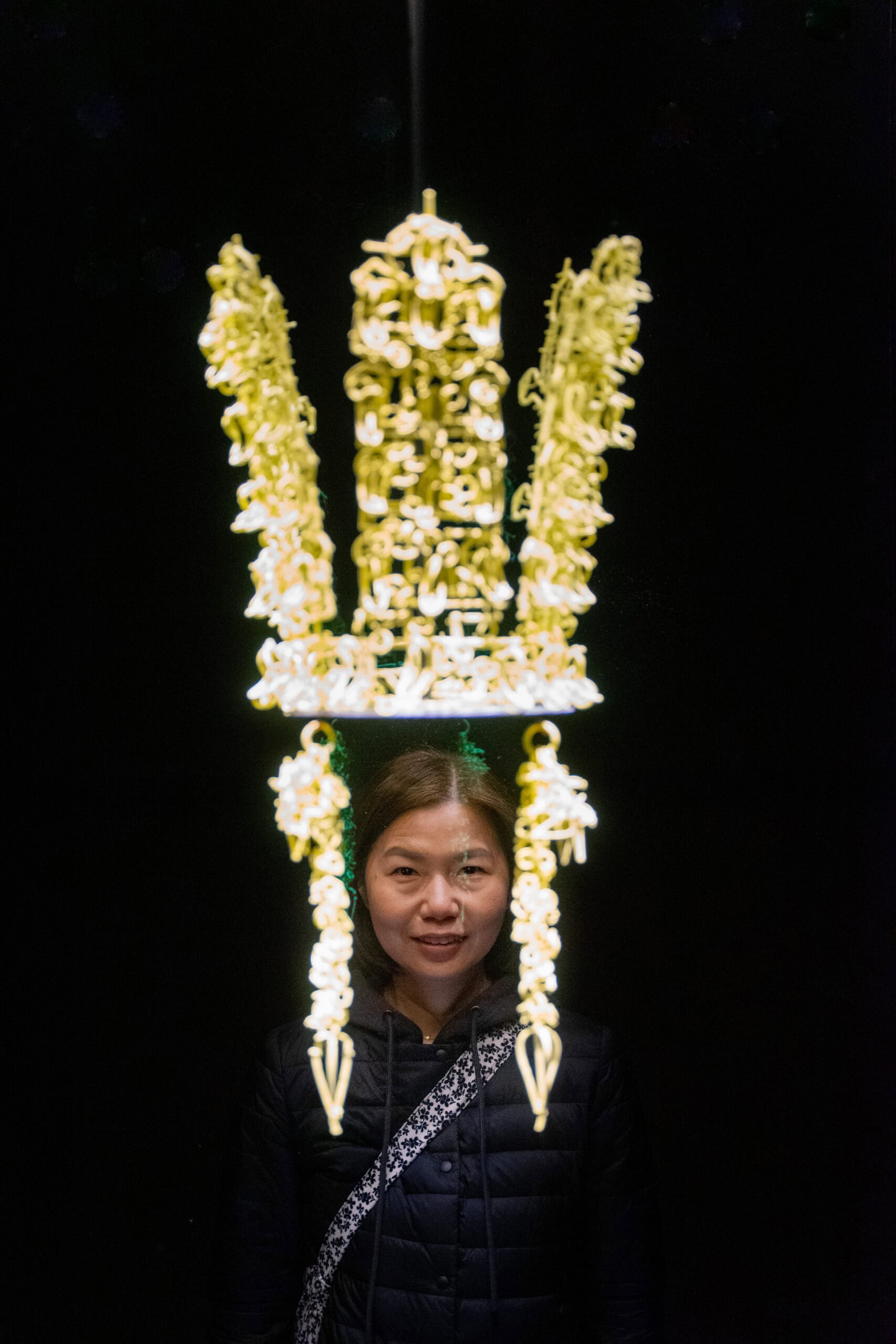
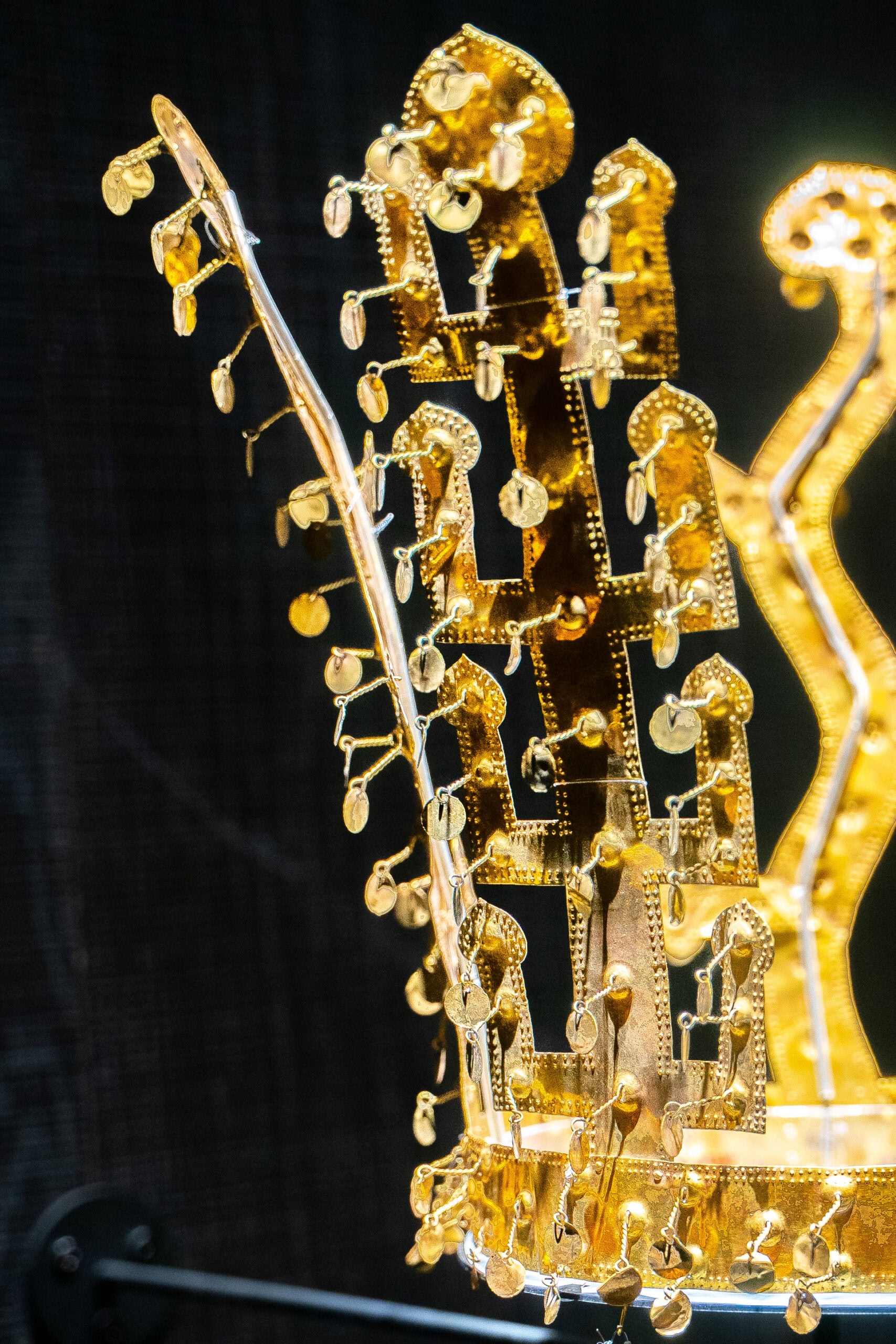
Each crown rises upward in these branching shapes that look like trees or antlers, almost architectural. Some have delicate jade ornaments hanging from the tips, shaped like pale green cashew nuts. They almost have this cinematic quality.
Standing there, it was impossible not to think of fantasy films, of something an elf might wear in The Lord of the Rings. Not in a kitschy way, but in that same sense of otherworldly craftsmanship, where the object feels halfway between ritual and myth.
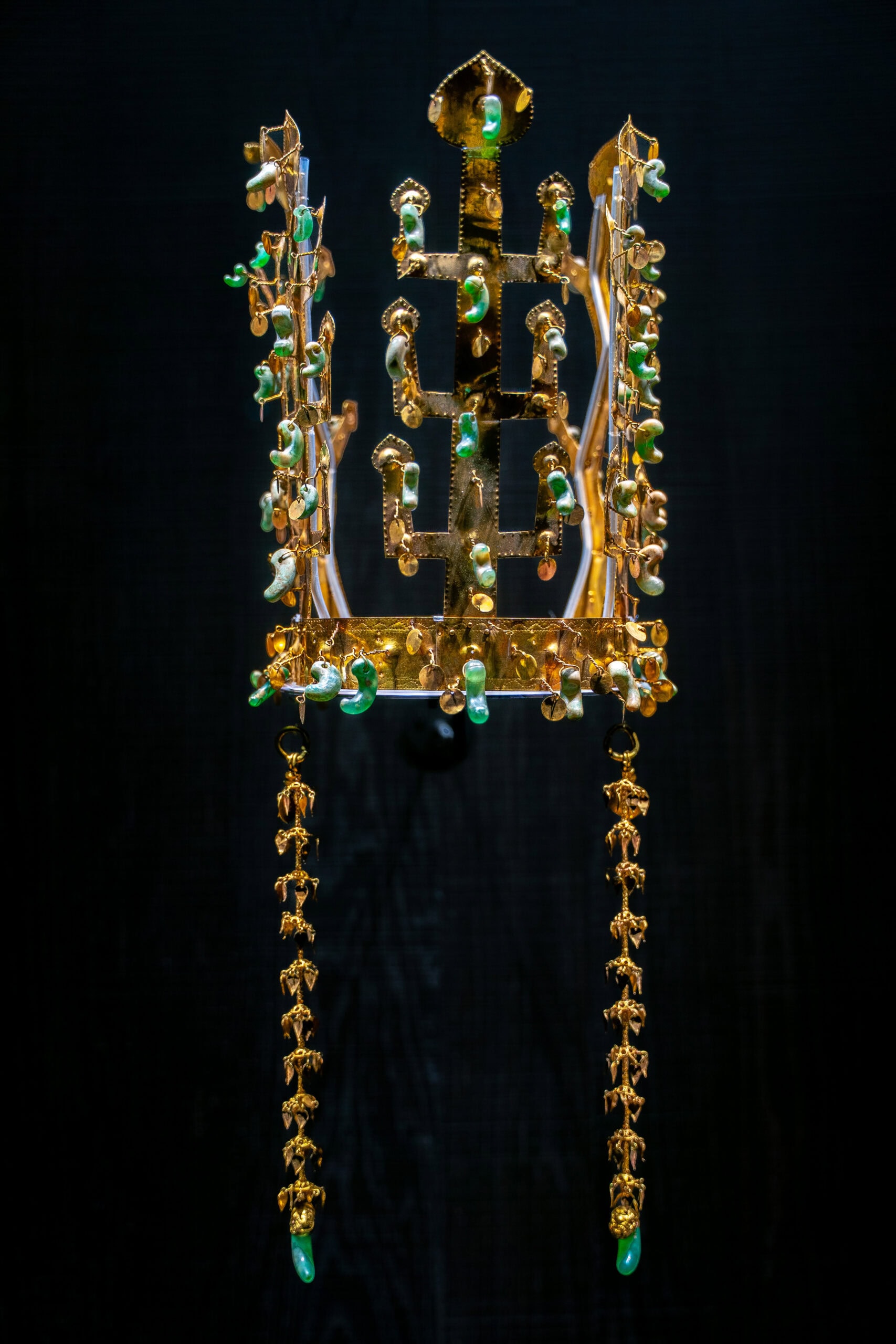
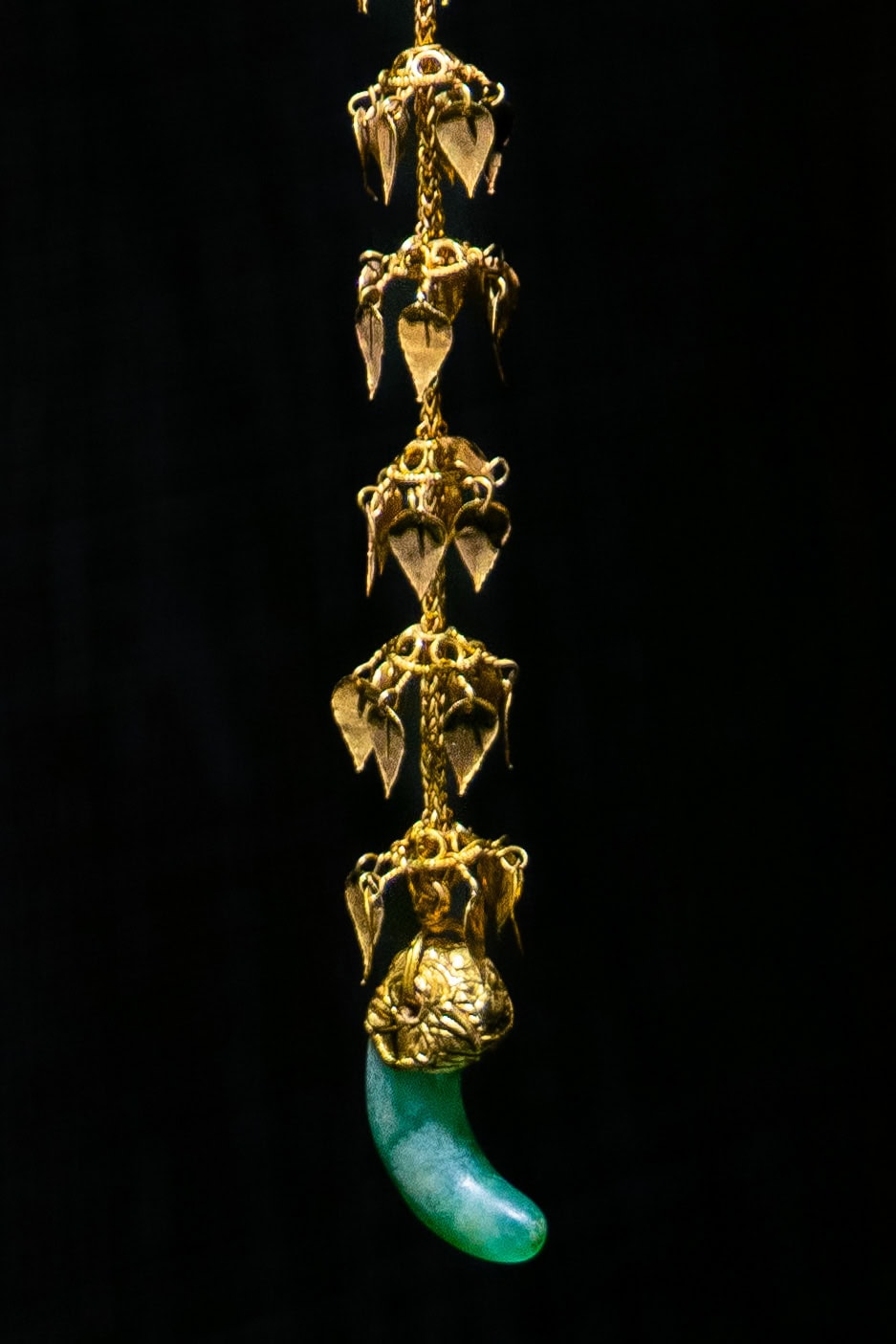
During the APEC summit, the South Korean president, Lee Jae Myung, presented a full-size replica of a Silla gold crown, made of real gold, as a diplomatic gift to President Donald Trump. The symbolism was unmistakable. More than a millennium later, Silla gold still lubricates trade deals and exercises soft diplomacy through its beauty.
Note on the Silla Gold Crowns Exhibition
The Silla Gold Crowns is a special exhibition running until 22 February 2026, bringing all six known Silla crowns together in one space. Three belong to the Gyeongju National Museum, with two loaned from the National Museum of Korea in Seoul and one from the Cheongju National Museum.
If you visit after the exhibition ends, three of the crowns will still be on permanent display at the Gyeongju National Museum.
Jewellery
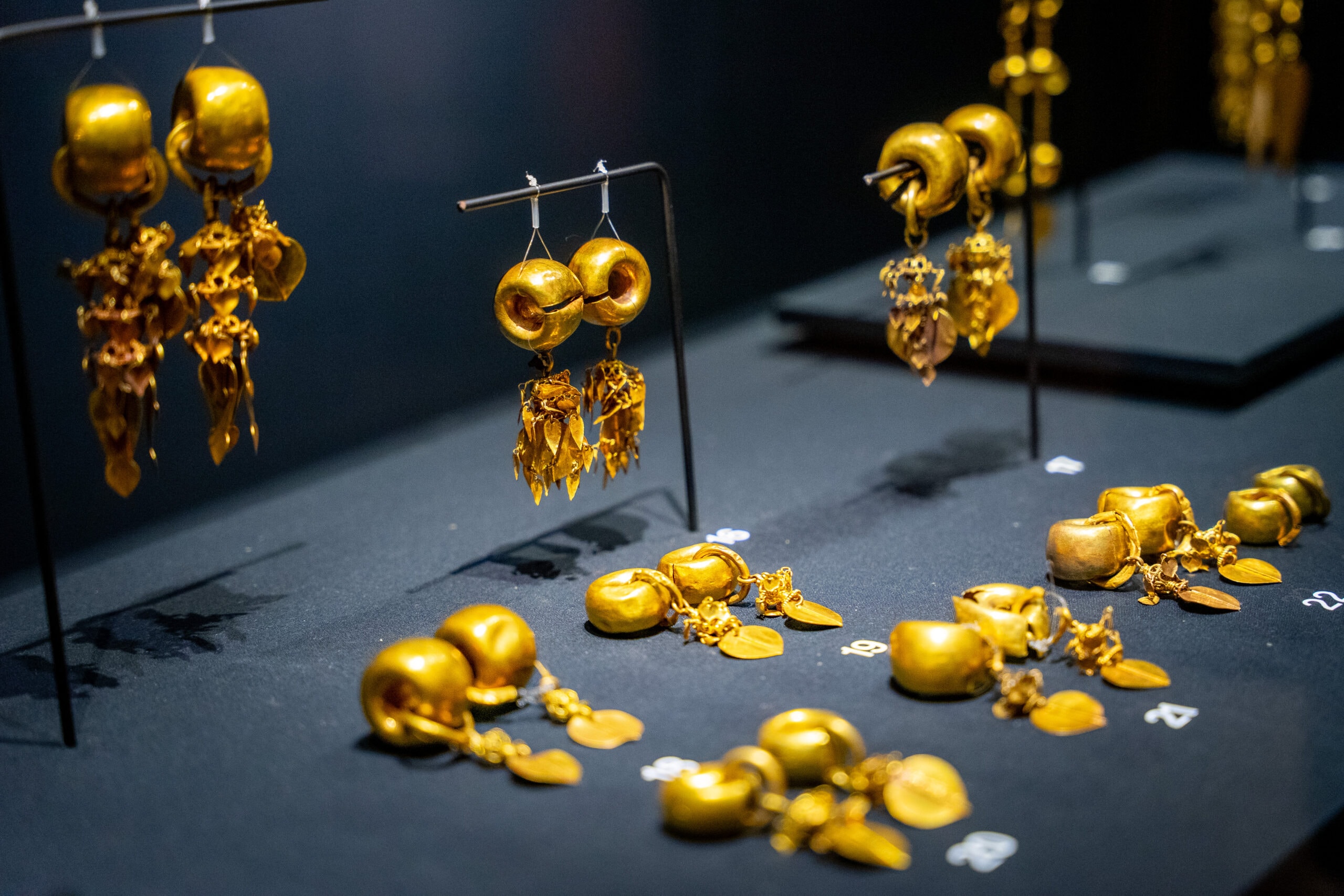
Gold in Silla was not reserved for crowns alone. The museum’s jewellery collection, largely earrings, shows how comfortably the material was used beyond royal spectacle.
Some pieces are bold and expressive without feeling heavy. Others are refined and minimal, with lines so clean they feel almost contemporary. Removed from context, they wouldn’t look out of place in a modern jewellery display.
What stands out is the confidence. These were not tentative experiments. Gold was already understood and used with ease.
The Silla Smile
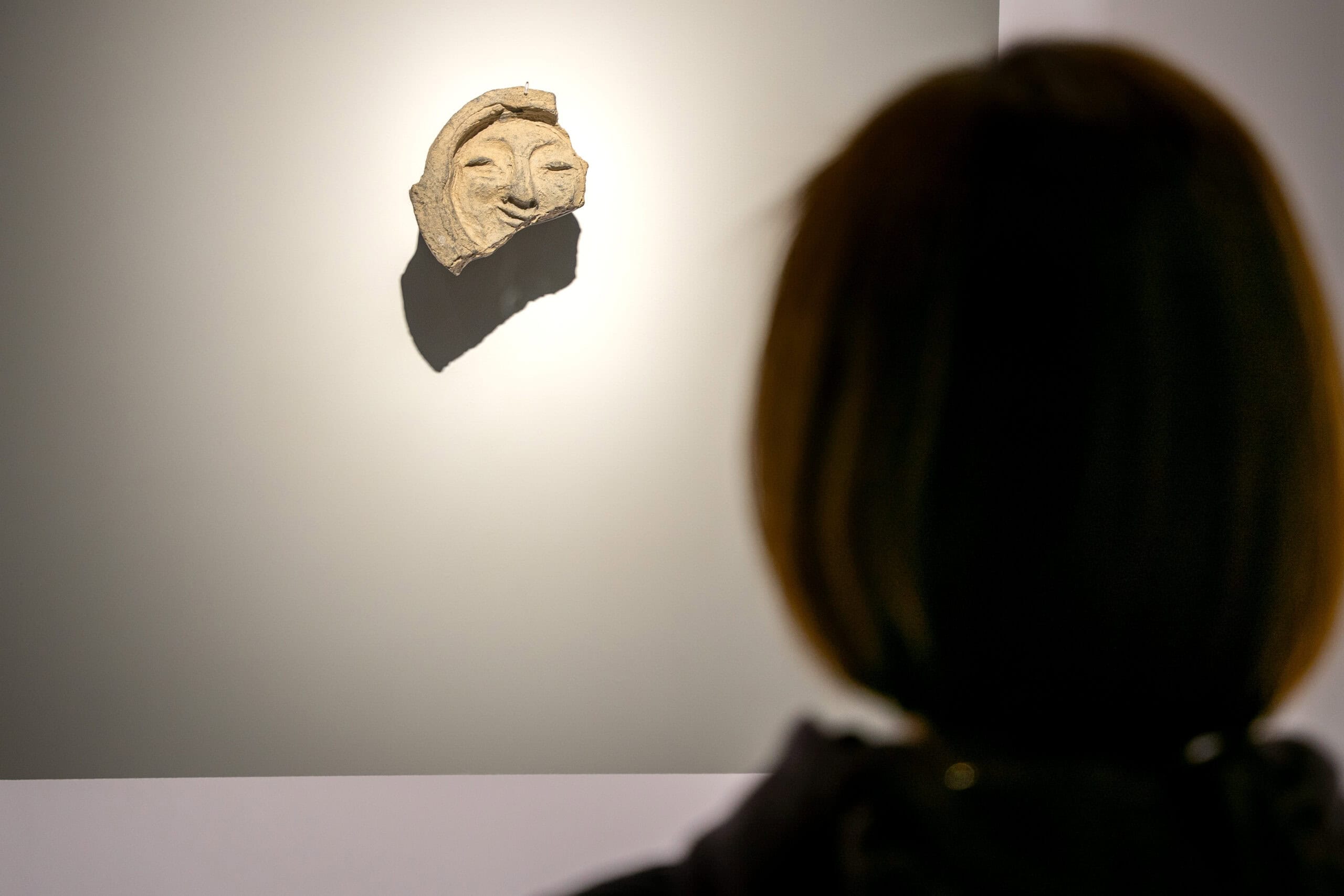
One thing Jin was excited to see in the museum (besides the crowns) was the Silla Smile. It’s a broken roof tile end, roughly halved, with a smiling face pressed into its surface. Unglazed terracotta. Small enough to miss if you weren’t looking for it.
Despite that, it’s one of the most recognisable objects in the museum, and perhaps in Gyeongju itself. You see the smile everywhere around town, reproduced on signs, t-shirts, and even cakes. It has quietly become the city’s face.
What surprised me most was how human it felt. I think I smiled without meaning to, and for a moment it felt like the tile smiled back, separated from me by more than a thousand years. This wasn’t meant to be art. It was a functional roof tile, one of many.
My question is, why did only one survive? As a roof tile, there must have been hundreds of them.
My theory is that perhaps, 2,000 years ago, a tile maker had a bored moment at work. Maybe he took a break from pressing the same shape over and over again, made a smiley face in the clay, and then went back to his job. There’s no way to know, and the museum doesn’t try to explain it. That small, unplanned gesture survived when so much else didn’t, and that feels like its own quiet miracle.
Silla Smile reminded me of the Gypsy Girl mosaic I saw at the Zeugma Museum in Gaziantep (Türkiye). It’s also a small, broken image that somehow became the image for an entire city. In both cases, the power lies not in scale or completeness, but in recognition. Something ancient looking back at you, aware of the distance between then and now.
Pottery and the Everyday
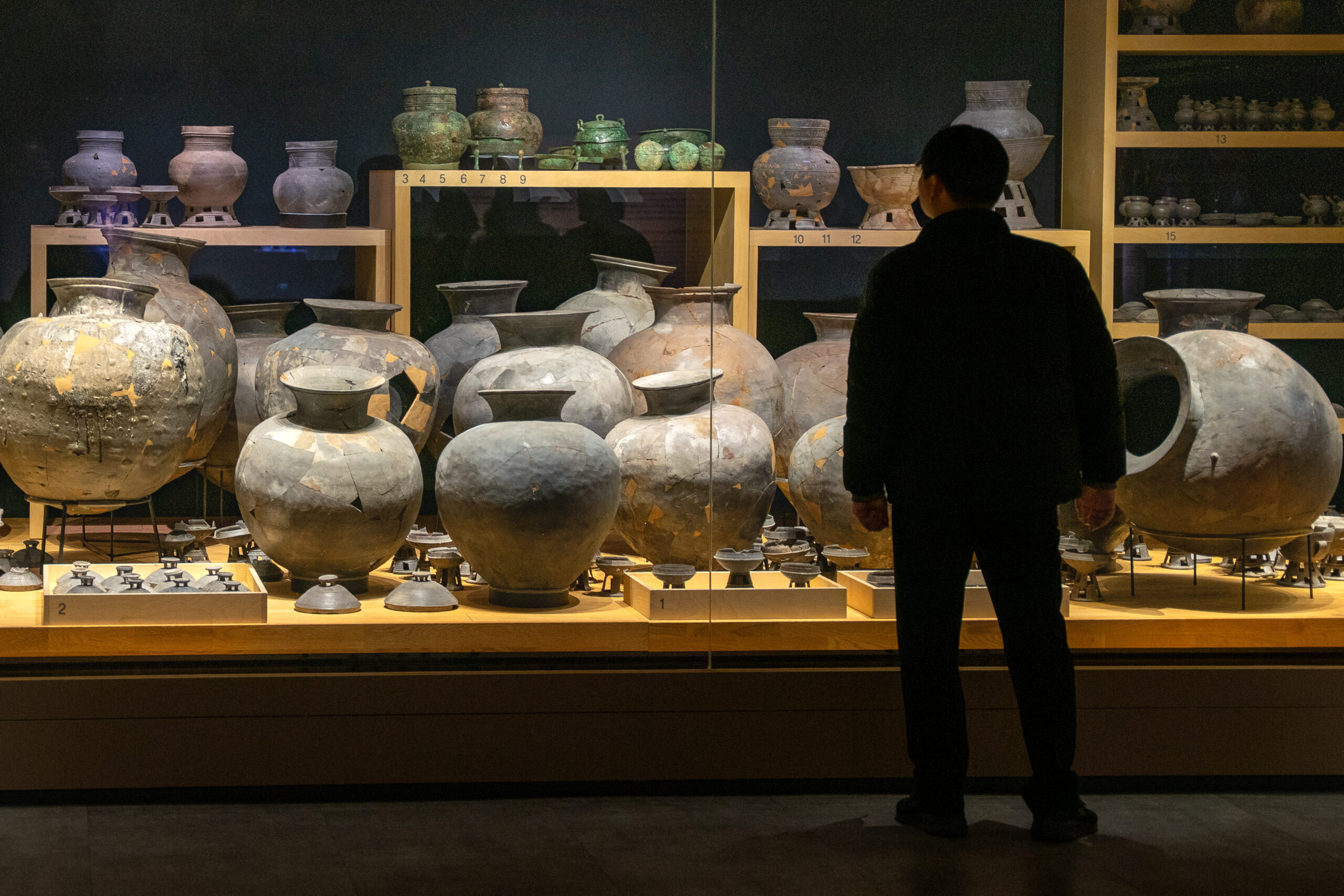
The Gyeongju National Museum has a strong pottery collection, which is not surprising. If you’ve spent any time in Korea, you expect clay. You expect vessels made for use rather than display, objects shaped for food, storage, rituals, and the practical business of living and dying.
The range here is broad, from cooking ware and storage jars to funerary pieces and objects that clearly existed for symbolic rather than practical reasons.
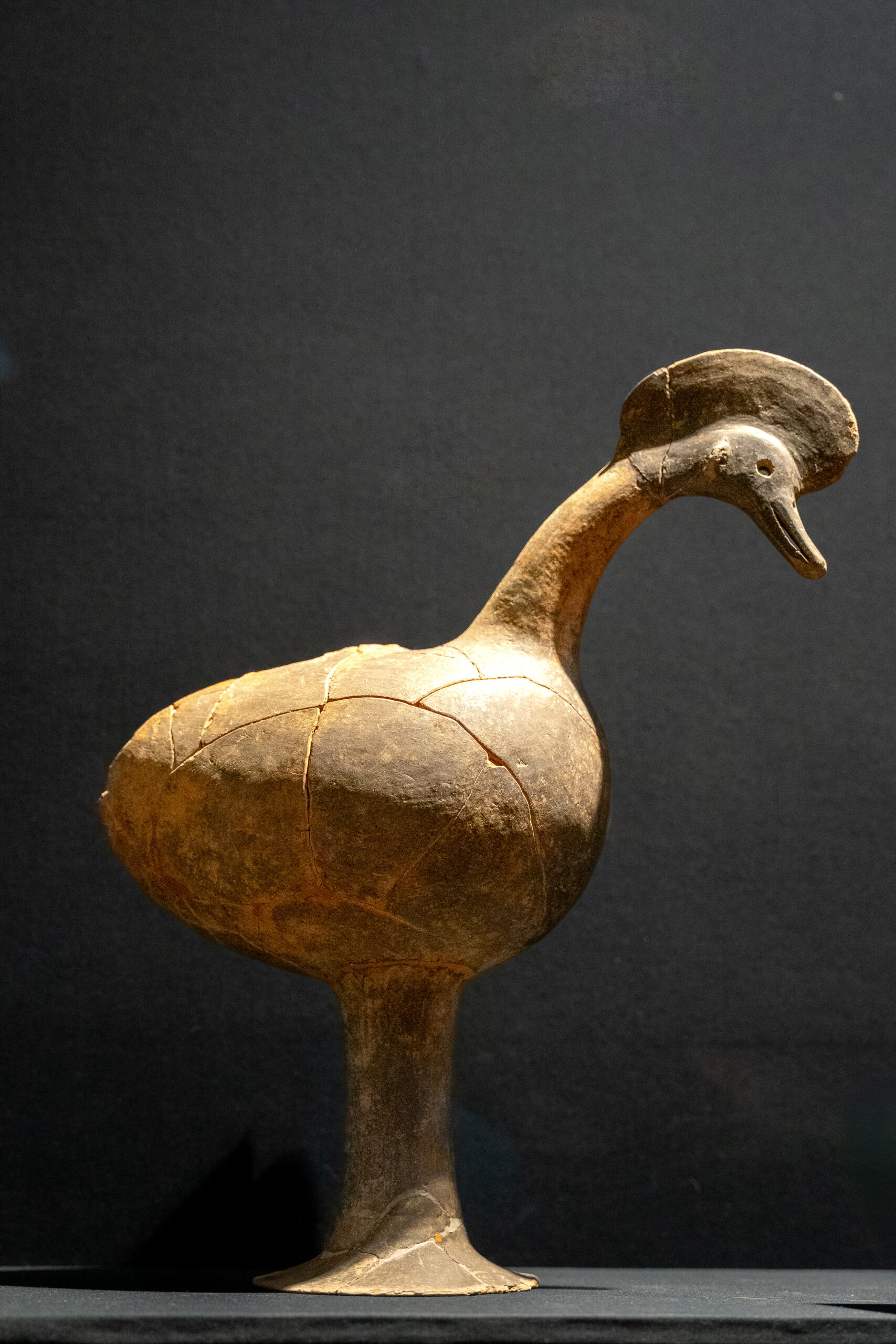
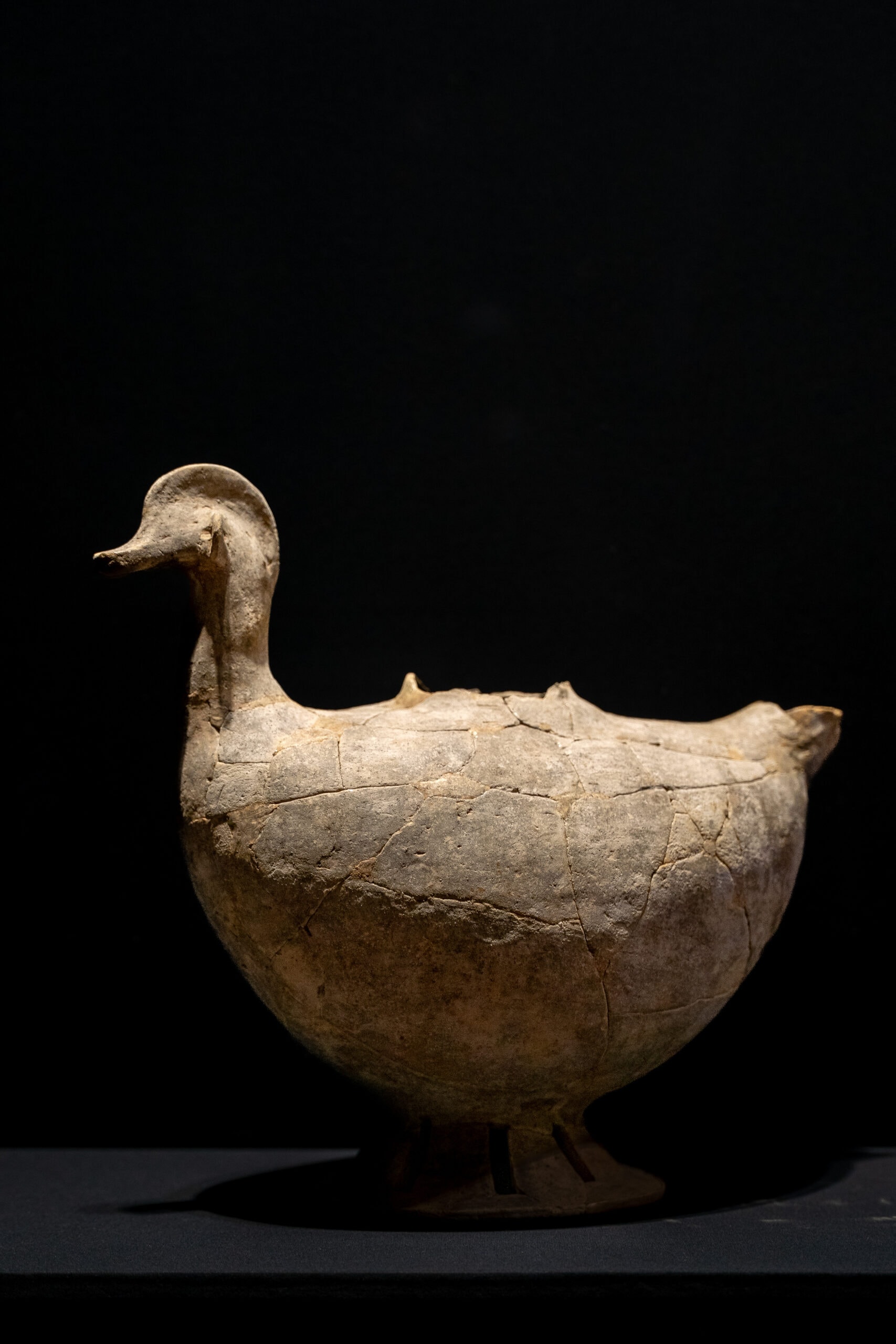
What caught my attention were the birds, shaped simply but with real personality, their forms reduced to clean lines and balanced proportions. In Silla belief, birds often acted as intermediaries between worlds, able to move freely between earth and the afterlife.
Seen in that context, these small clay figures start to feel less like decoration and more like quiet companions, placed with care rather than decoration
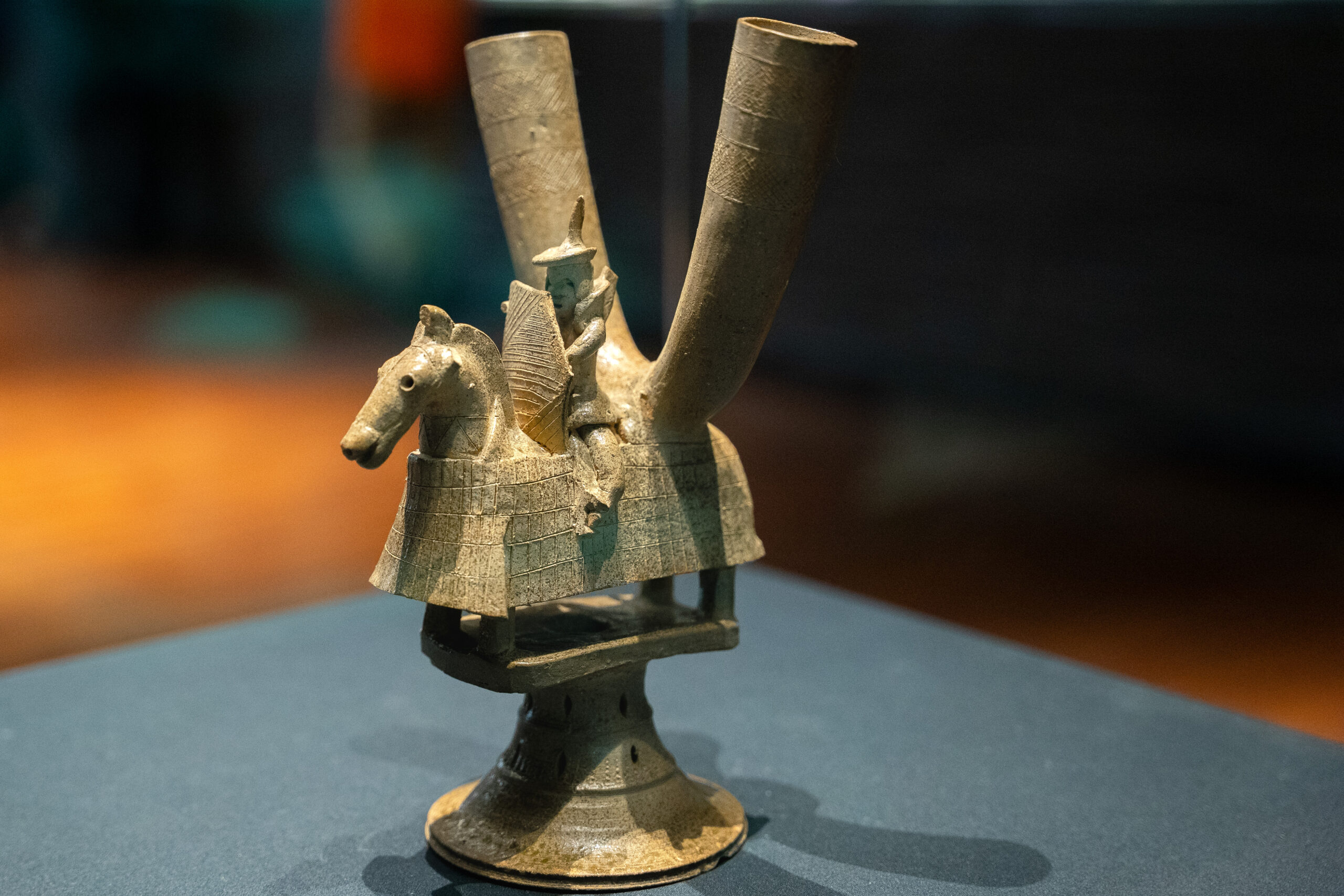
Another striking piece in the collection is the Mounted Warrior-shaped Horned Vessel. It shows a soldier in full armour riding a horse, with two cups rising behind him. These vessels were made for ritual use, likely placed in tombs during funerals rather than used in daily life.
The Silla believed horses carried the soul onward, transporting the dead toward the afterlife. In that light, the piece becomes less about warfare and more about passage.
Buddha Statues
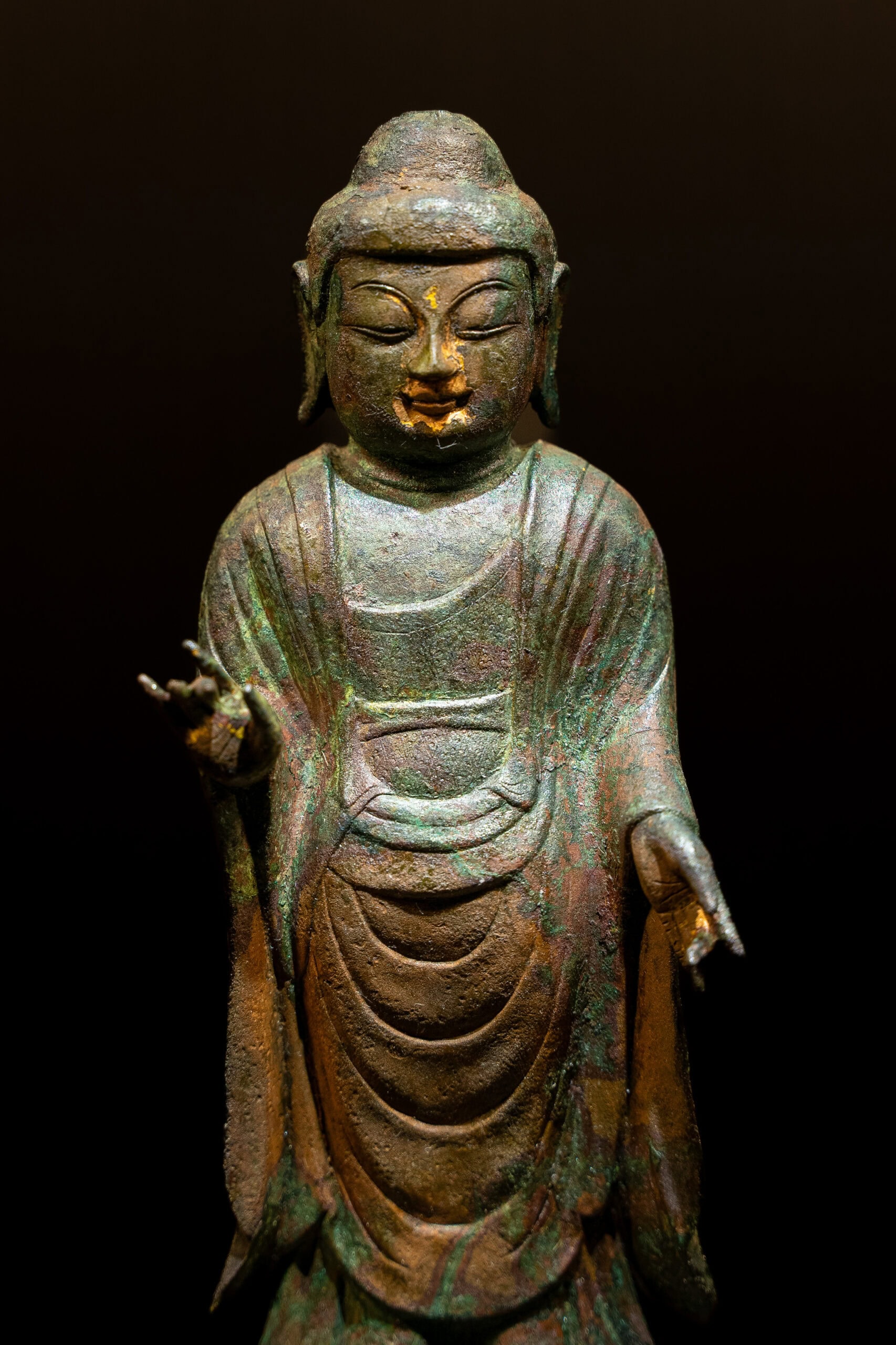
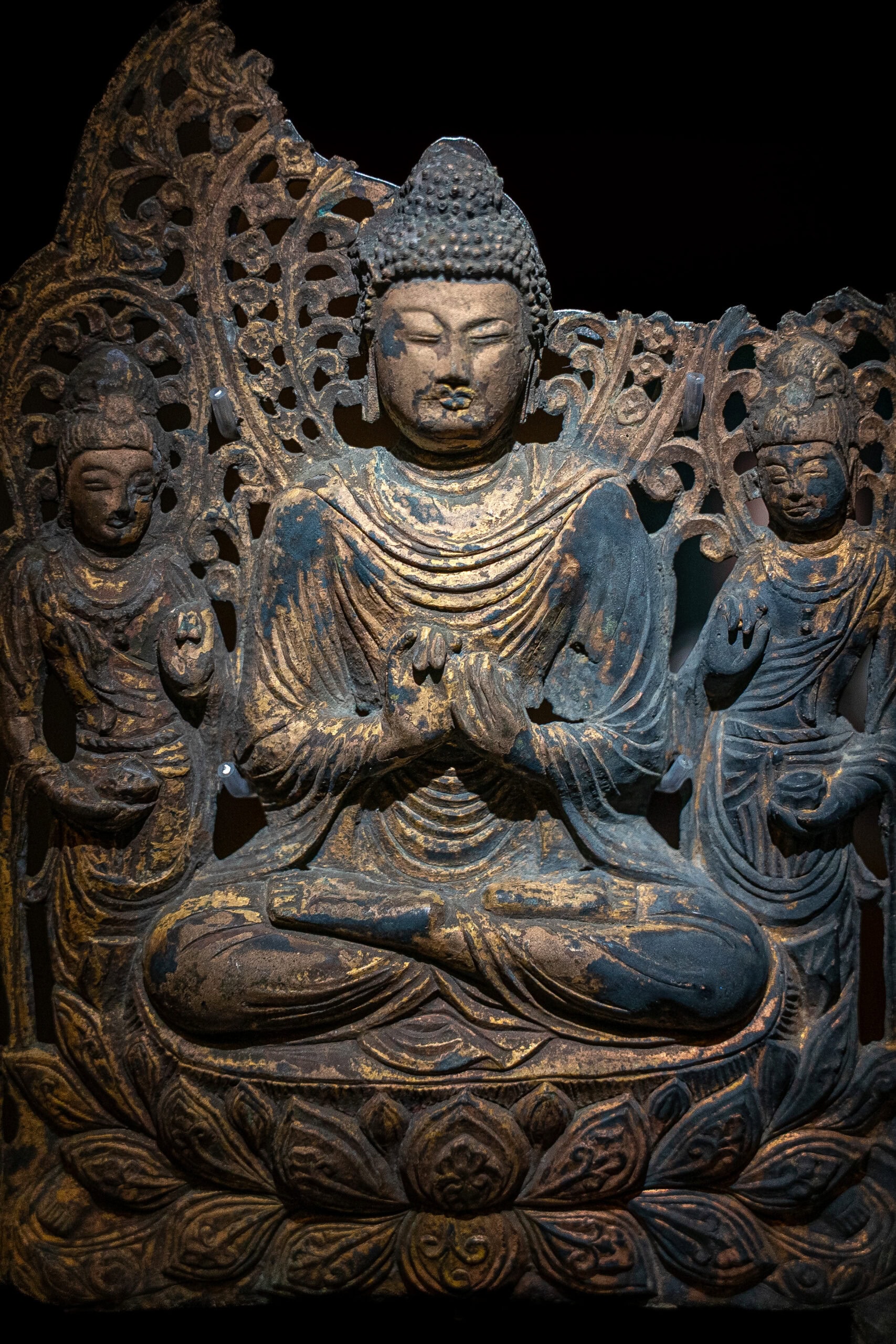
Buddhism reached Silla early and was absorbed deeply, shaping not just belief but governance, art, and daily life. By the time many of the museum’s objects were created, Buddhism was already woven into the kingdom’s identity.
The museum displays Buddha statues in a range of sizes and materials. The stone figures feel heavy and worn, their surfaces roughened by time and exposure. The bronze statues, by contrast, are refined and controlled, rich with detail and balance.
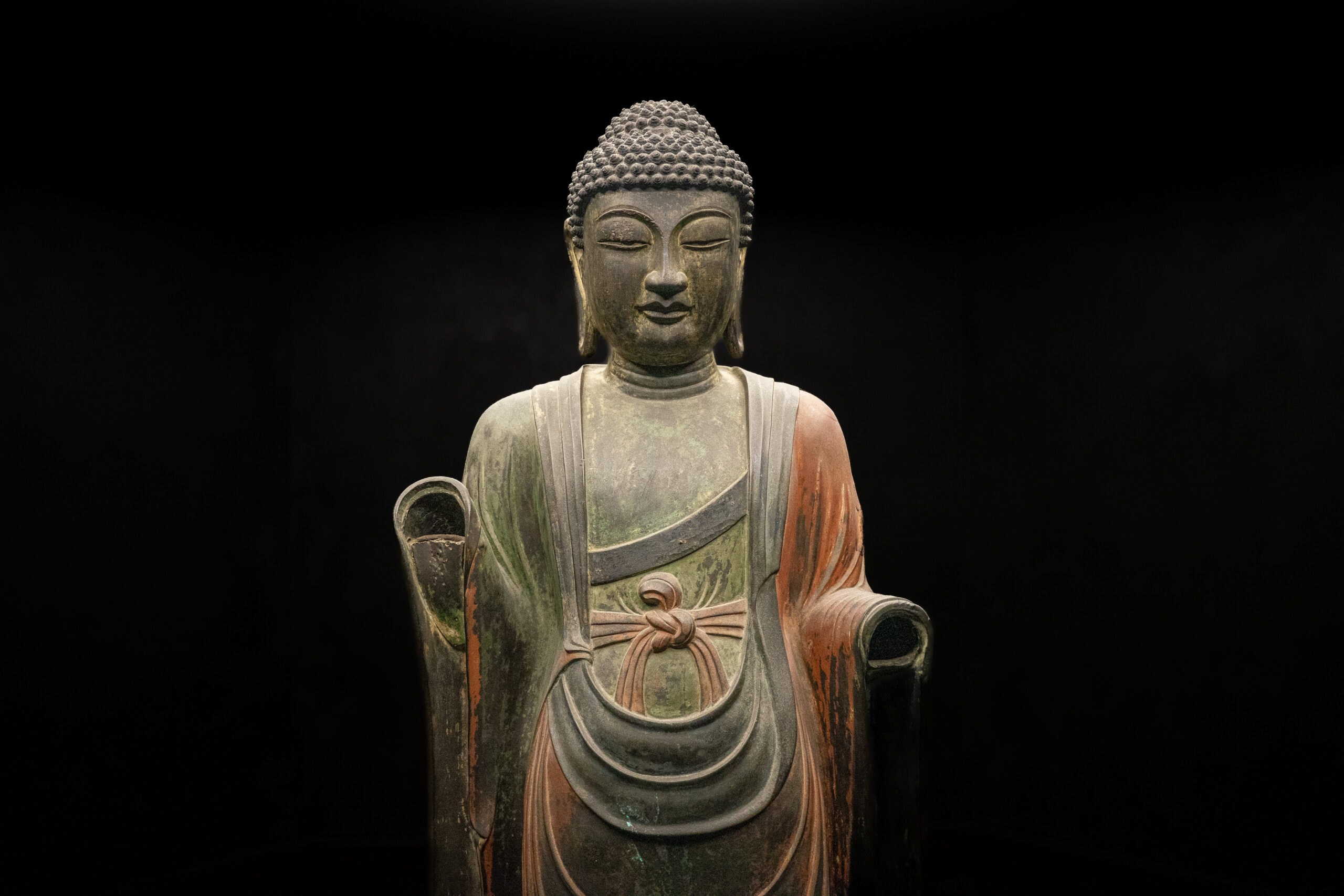
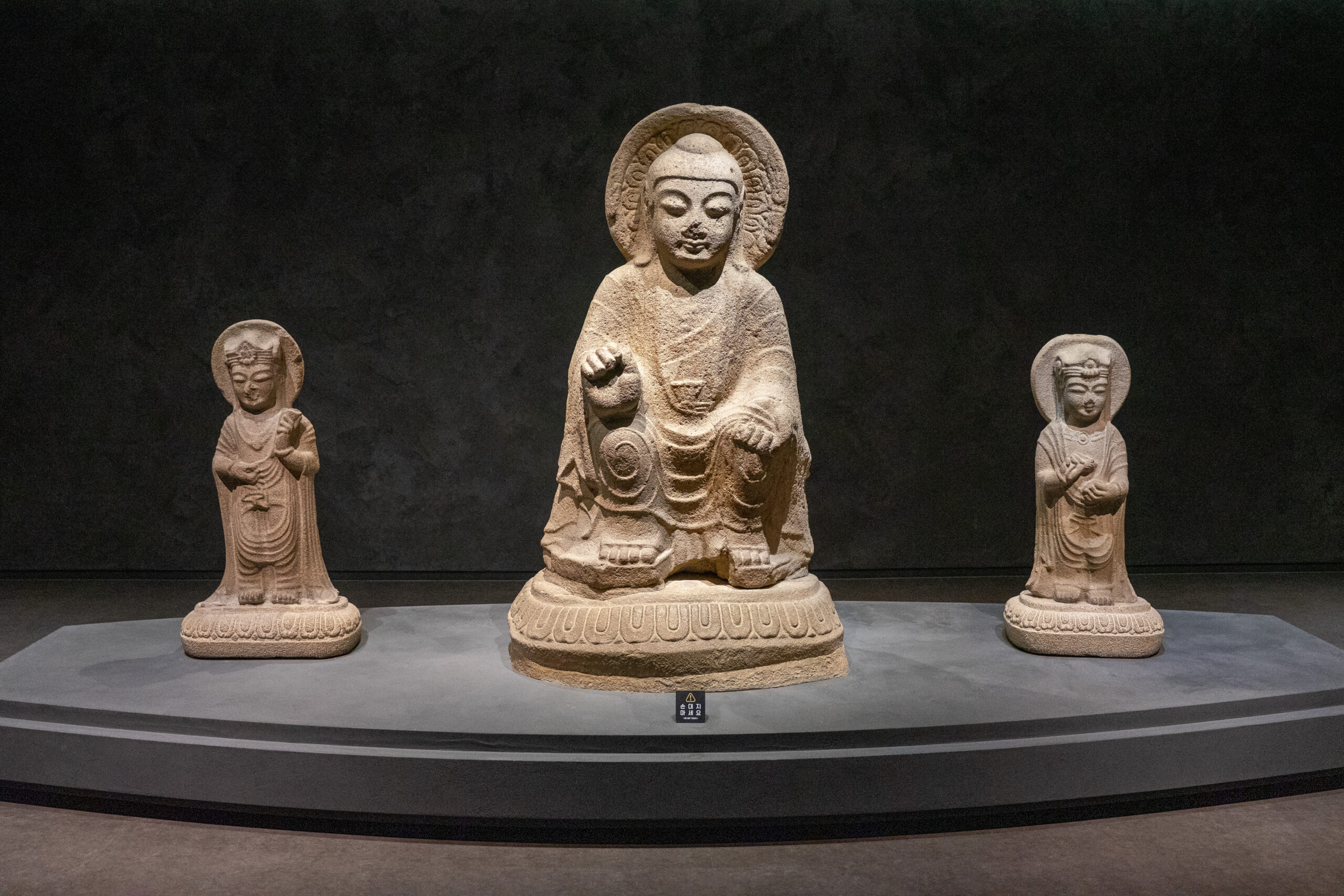
The bronze Bhaisajyaguru Buddha, a national treasure, feels luminous and precise. Nearby, the stone Maitreya Buddha Triad carries a physical weight that’s impossible to ignore. Seen together, they show how faith could be expressed through very different materials, each equally deliberate.
The Emille Bell
Stepping outside, the dim hush of the museum is replaced by early November light and the sound of a bell ringing somewhere nearby. You can’t miss it after the silence and whispers inside the museum. I tell Jin that I can’t believe they would let visitors ring something this old, something that has National Treasure status.
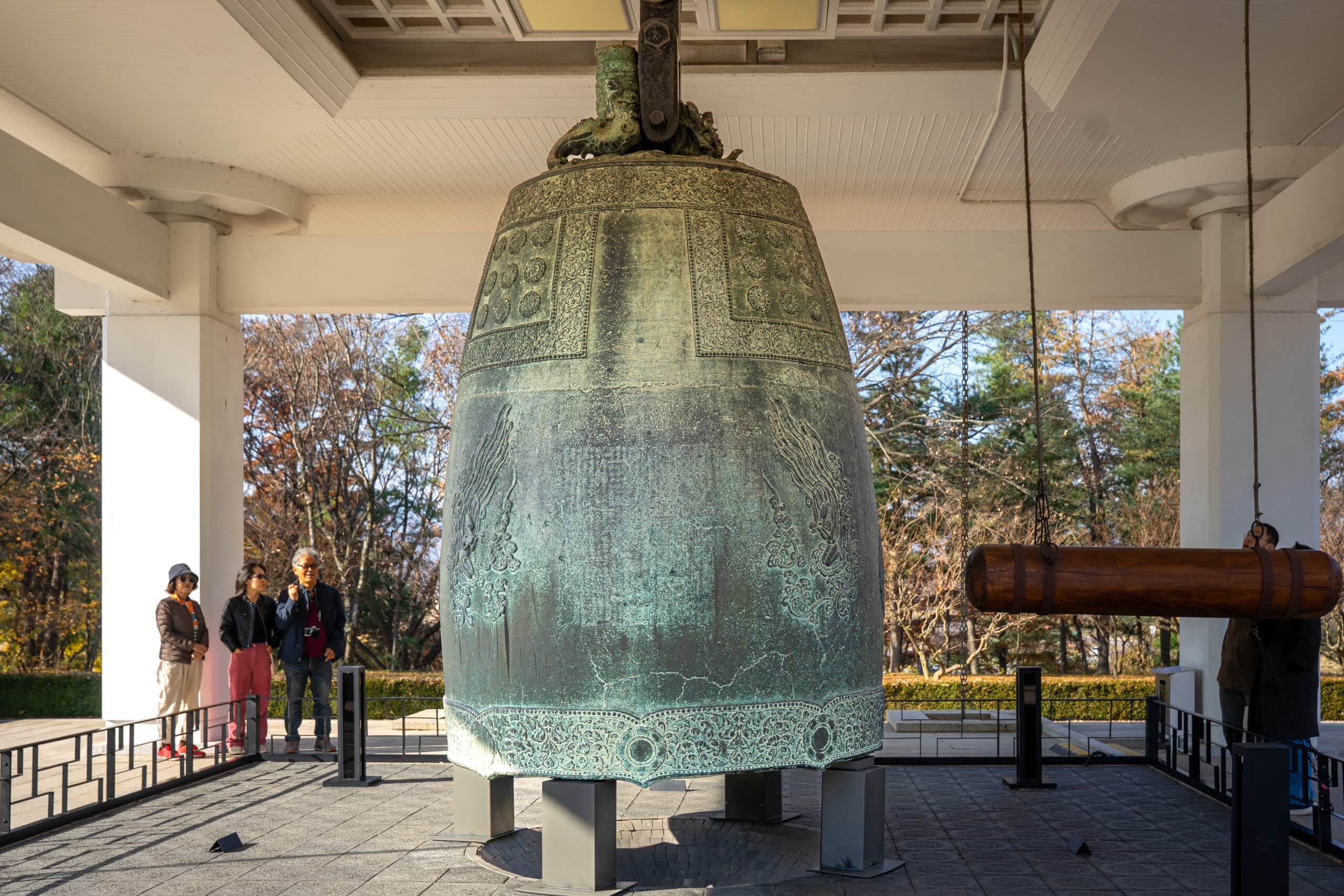
We follow the sound, and when we reach the Emille Bell, it makes sense. What we’re hearing isn’t the bell itself, but a recording, played at intervals to give visitors a sense of its voice. This is the King Seongdeok Divine Bell, cast in the 8th century and considered one of the finest surviving examples of Silla bronze work.
The bell is inseparable from its legend. According to tradition, early attempts to cast it failed, and a child was eventually sacrificed to ensure its success. When struck, the bell was said to cry out Emille, a child’s voice echoing through bronze.
Whether true or not, it’s just another layer of a kingdom that survives largely in fragments.
What the Gyeongju National Museum Leaves Unsaid
I left the museum knowing more than I did when I arrived, but not in the way museums usually promise. I still couldn’t list rulers or timelines with confidence. What I gained instead was a sense of scale and ambition.
The Gyeongju National Museum doesn’t try to resolve Silla into a neat story. It lets objects exist as they are. Some feel monumental. Others feel almost accidental.
Outside, Gyeongju continues much as it always has, with burial mounds in public parks and history folded casually into daily life. The museum doesn’t compete with that landscape, but rather complements it.
Some kingdoms leave behind clear narratives. Silla leaves traces. And walking among them, that feels like enough.
If you’re planning a visit, this museum works best as part of a wider exploration of the city. I’ve written a guide to Gyeongju, covering what we saw, did and ate during our two-day stay.
And if the Buddhist side of Silla caught your attention, Bulguksa Temple deserves some of your time in Gyeongju. I’ve shared a photo essay on Bulguksa, looking at how we found peace at one of Korea’s most beautiful (and busiest) temples.
How I Shot This Guide
Every photograph in this article was taken with the exact same gear I carry on every journey. It is a setup refined over years on the road to keep travel light without compromising the final image.
- Camera: Sony A7 V
- Lens: Sigma 24-70mm f/2.8 DG DN Art
- Storage: SanDisk Extreme Portable SSD
- Software: Adobe Lightroom Classic
- Outerwear: The North Face Canyonlands Hybrid Jacket