
If you turn any city upside down and give it a good shake, you’ll be amazed at what comes out: alligators and zebras, homemade time machines, coffin-shaped beds, shrunken heads, and two-headed taxidermy ducks. (And that’s just the normal stuff). I promise you, you won’t believe it.
In Vienna’s case, we’d likely see a few pairs of Mozart’s jock straps, a secret family Socher torte recipe, and, I kid you not, an ancient Greco – Roman city among the bizarre things that fall out.
Hidden away in a wing of the Hofburg Palace, Vienna is home to the Ephesus Museum, an incredible collection of Greco-Roman ruins. I wasn’t even aware that it existed. Luckily, Jin remembered seeing a display when she visited Ephesus in Türkiye, saying that most of the original archaeological finds are housed in the Ephesus Museum in Vienna.
So, for us, with a bit of a fetish for Türkiye and ancient art from Asia Minor, it was a no-brainer that we had to visit the Ephesus Museum on our Vienna trip.
Please note: This post may contain affiliate links. This means I may earn a commission if you make a purchase by clicking a link (at no extra cost to you). As an Amazon Associate, I earn from qualifying purchases. Learn more.
Quick Guide to Visiting the Ephesus Museum in Vienna
Opening hours:
Tues – Sun: 10 a.m. – 6 p.m.
Thurs: 10 a.m. – 9 p.m.
Closed on Mondays
Tickets: Regular admissions € 9. Discounted for seniors, youths and students.
Free entrance with the Vienna Pass.
How much time: About an hour (or two for real Greco-Roman freaks).
Photography: Allowed free of charge
Still planning your Vienna trip? We recommend staying at Hotel The Weekend
Our Visit to the Ephesus Museum
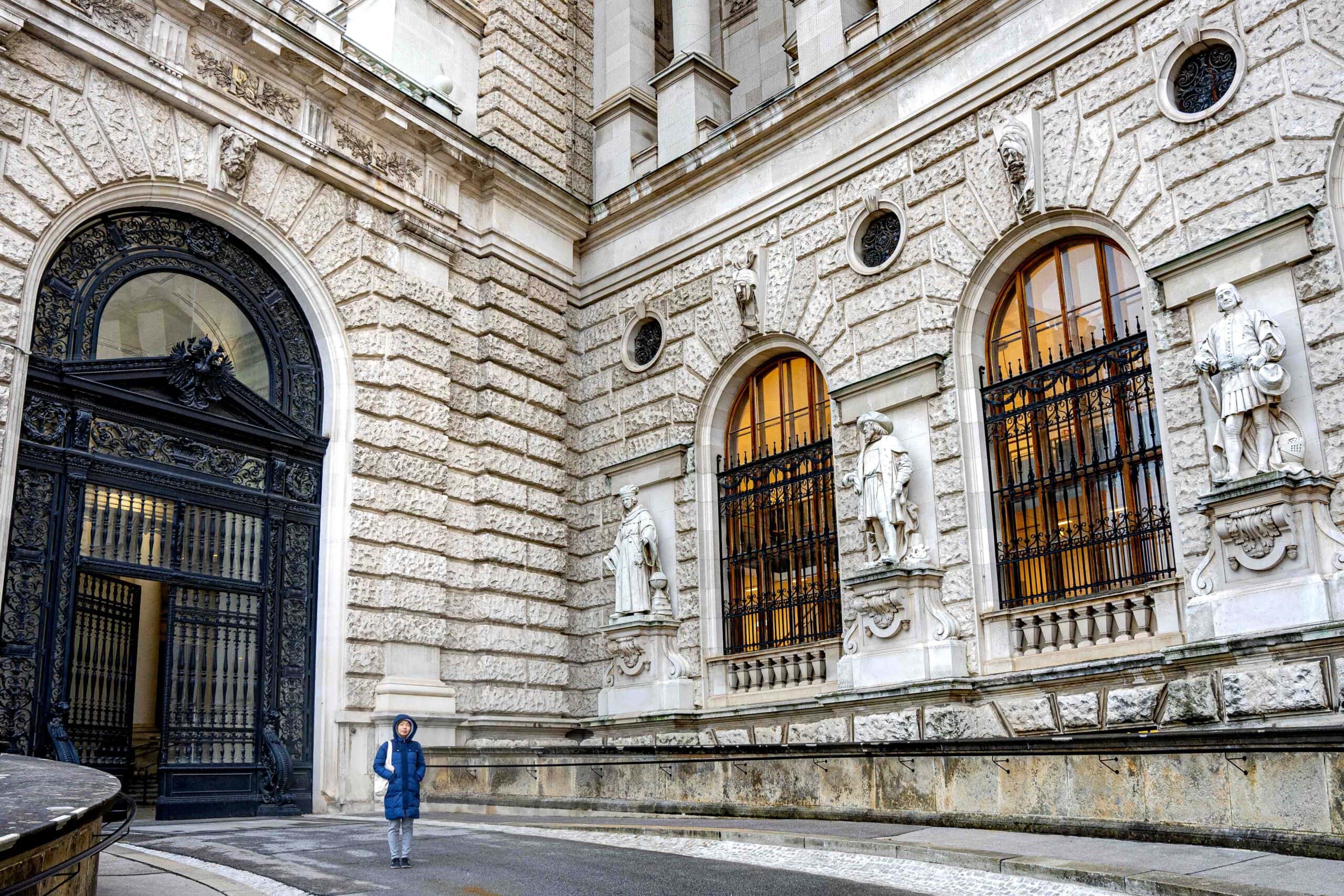
It’s a cold and drizzly afternoon, 21 December, when we walk across Heldenplatz to the entrance of the Ephesus Museum. We take a quick look at the Hitler Balcony right above the entrance from where Adolf announced the annexation of Austria by Nazi Germany in 1938.
The Neue Burg wing is an opulent whale of marble and stucco inside. It’s deserted, and we have it all to ourselves, quite a shock after the masses we saw at the other Vienna museums we visited so far. We check our coats and bags and head up marble stairs to the Ephesus Museum.
It might be the chiselled torsos and naked butts (or the genuine interest in Greco-Roman art), but Jin immediately goes into another realm as she starts devouring the displays and information beside them.
In just over an hour, we teleport to ancient Türkiye as we admire the marble busts, friezes, bronze statues, and ruins of the Library of Celsus.
Why we loved the Ephesus Museum: We had a very enjoyable and insightful visit. Anyone with the slightest interest in Greco-Roman art and archaeology or those who have visited Ephesus in Türkiye will undoubtedly find the museum worth visiting.
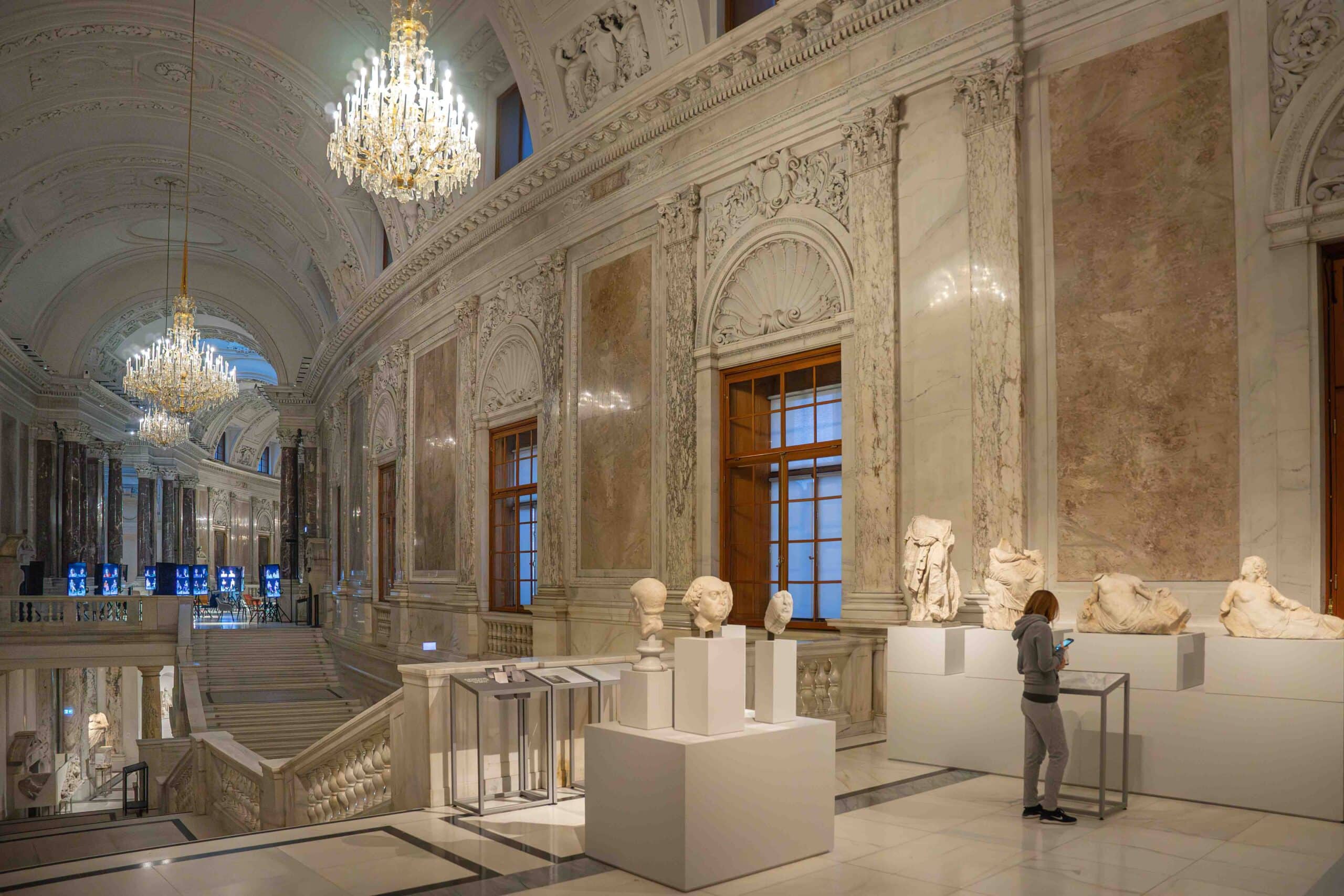
We also loved seeing the spectacular interior of the Neue Burg and having it all to ourselves was just grand. It is the proverbial hidden gem in Vienna.
If you don’t fancy old stuff or are not fixated on rock-hard abs and chiselled torsos, you can skip the museum without feeling guilty.
How Did Ephesus End Up in Vienna?
Now, I can hear a keyboard clacking away in the distance.
Oh, it’s *Darlene, a keyboard warrior from Milwaukee. She types: “Imperial bastards! I can’t believe the Austrians carried away almost an entire ancient city from Türkiye. Shame on them! #ElginMarbles #ReturnItNow 😡”
Well, *Darlene, first, relax for me.

The Ephesus collection in Vienna is not like the Elgin Marbles. The Austrian Archaeological Institute has been researching and excavating Ephesus since 1895, and Sultan Abdul Hamid II donated the collection to Austria between 1896 and 1906. They were a gift.
The collection in Vienna includes remnants of the Altar of Artemis, the frieze of the Parthian Monument, and the Four Virtues from the Celsus Library, among others.
Once again, it was a gift, *Darlene.
If you have anything else to add, you can join the heated debate in the comments at the end of this post.
*not her real name
What to See in the Ephesus Museum
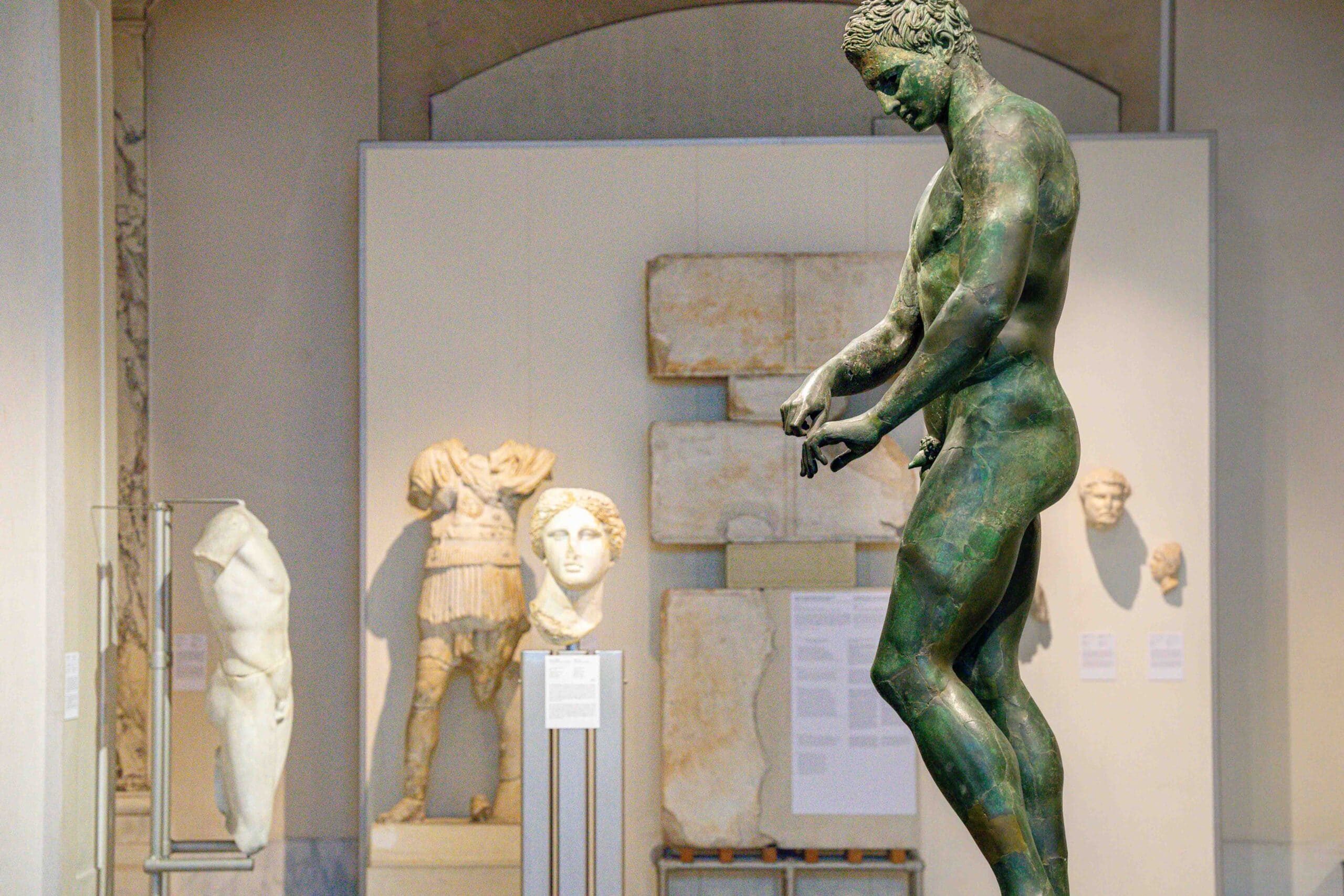
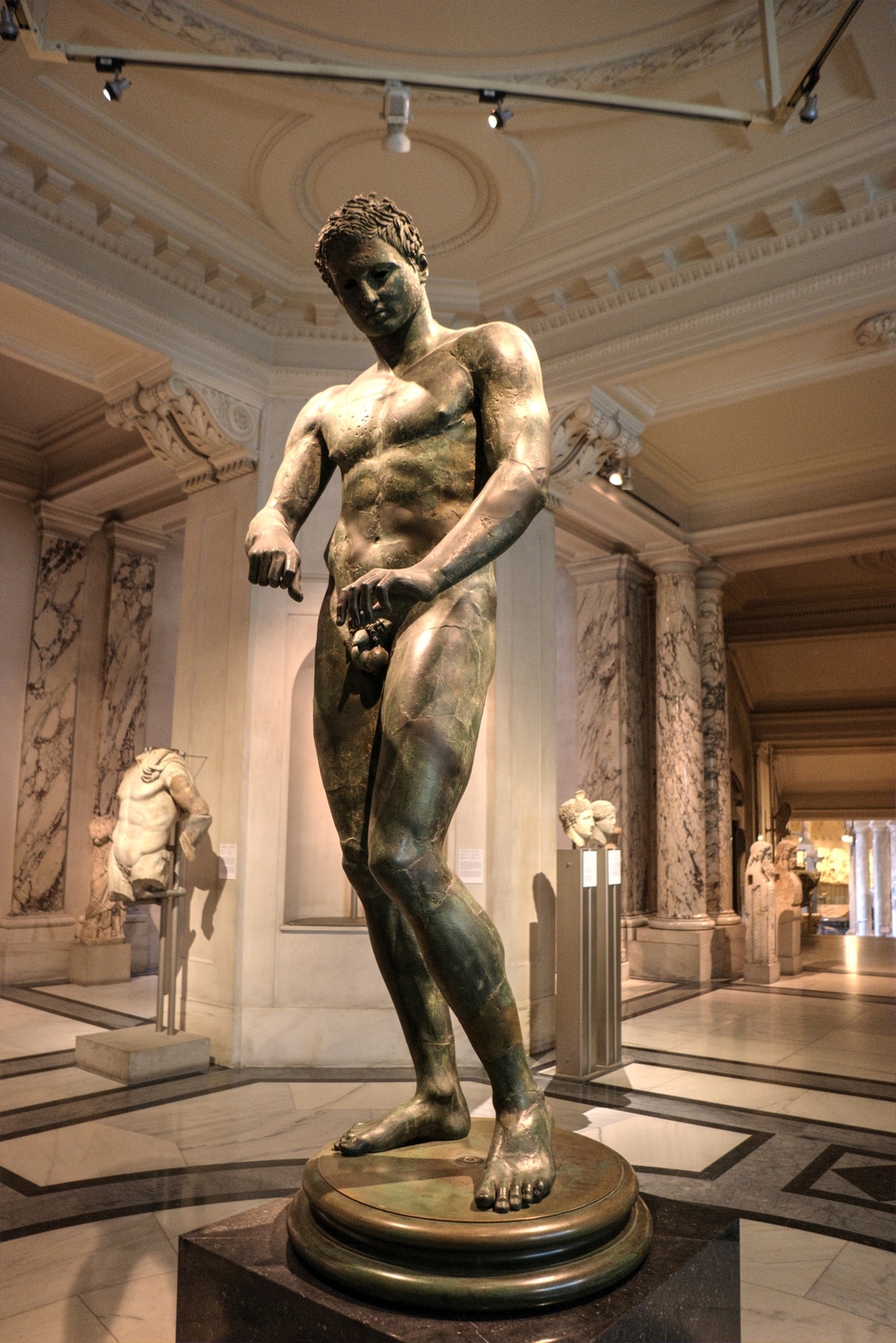
Bronze Statue of an Athlete
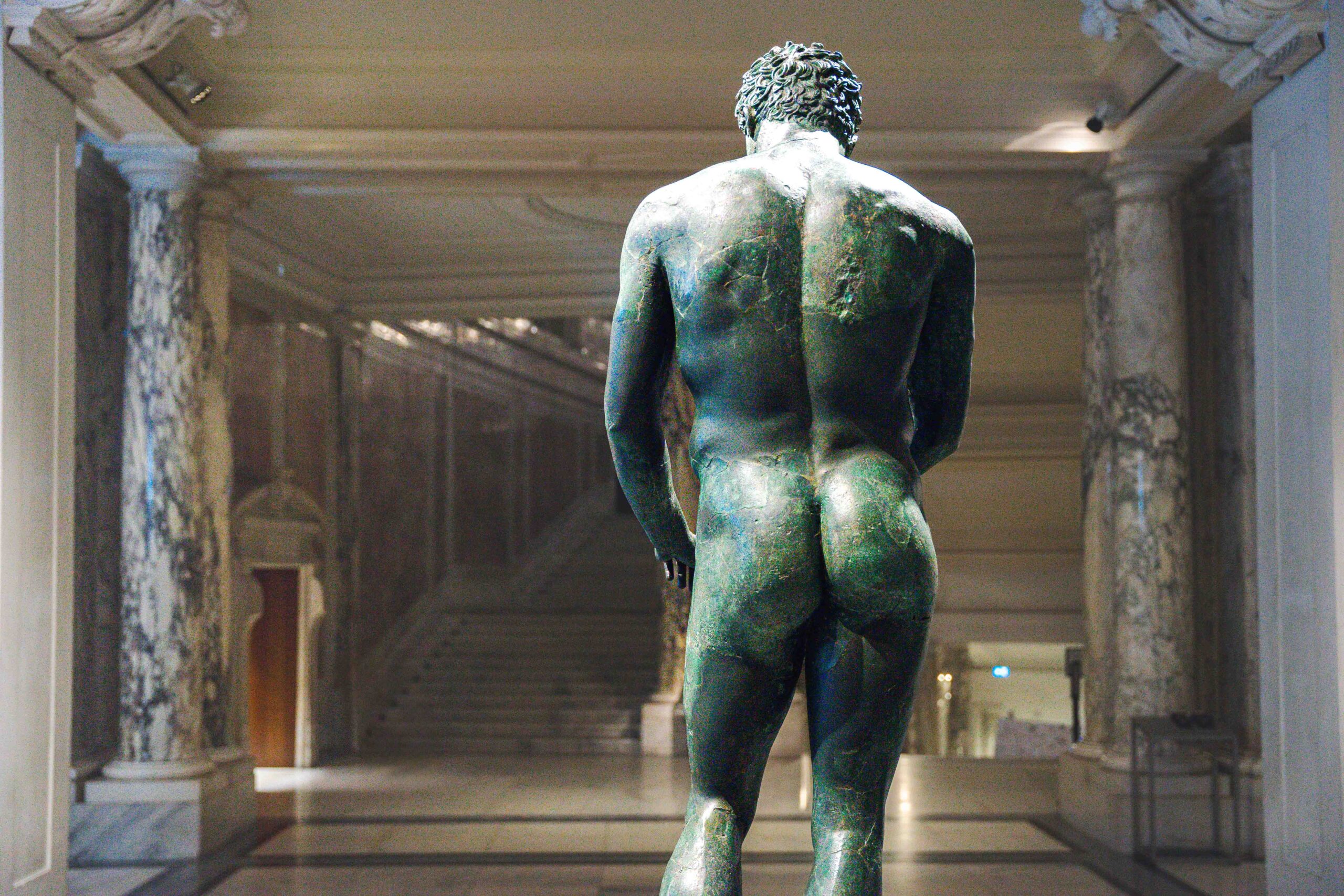
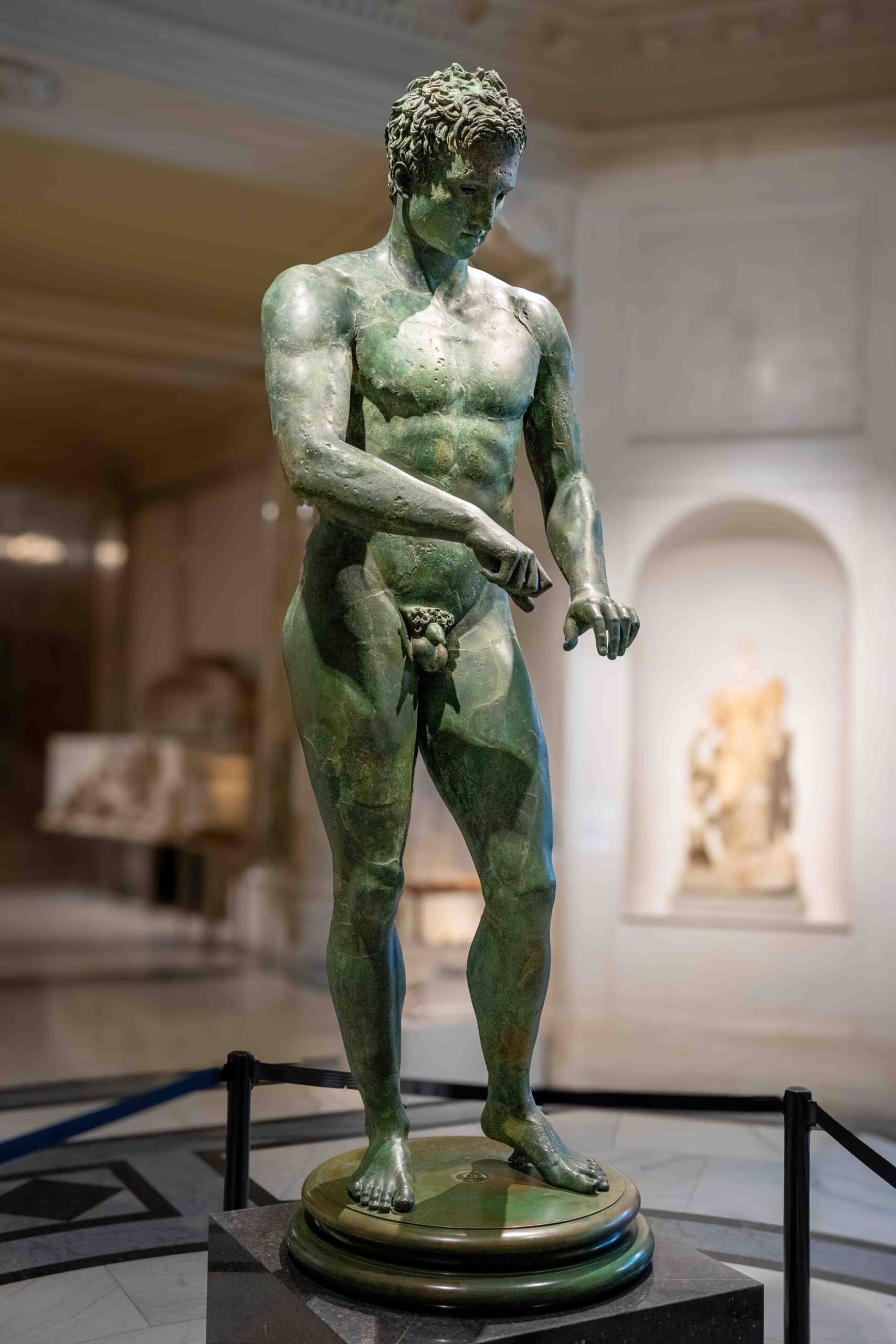
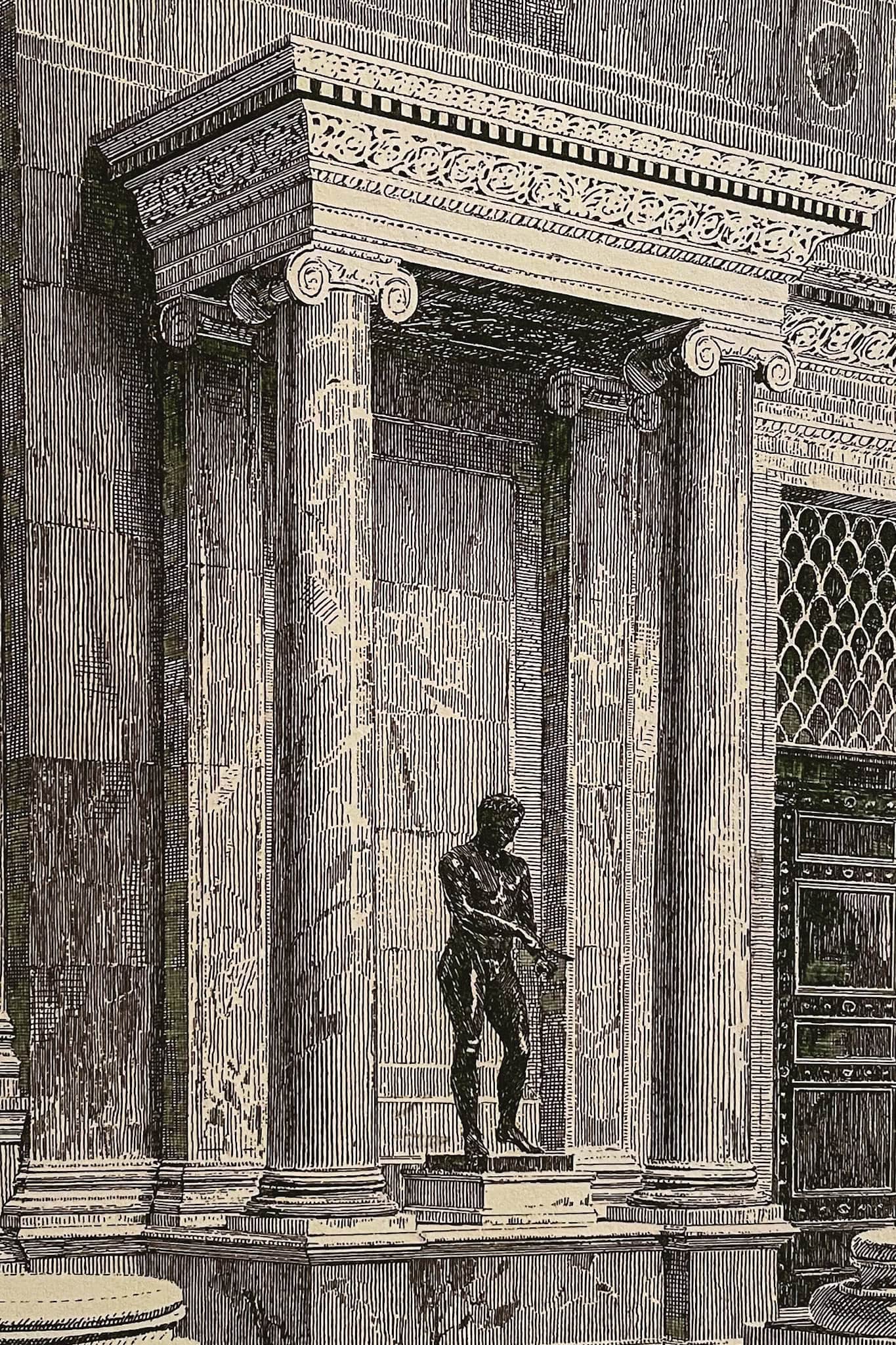
At the start of the exhibit, a handsome naked athlete in bronze welcomes you. He still looks damn fine and strong, considering he is about 1924 years old. He was unearthed in 234 fragments at the Harbour Gymnasium in 1896, with only his head and shoulders intact.
The fragments were brought to Vienna, where he was painstakingly put back together with brass strips and filled with special concrete to his neck.
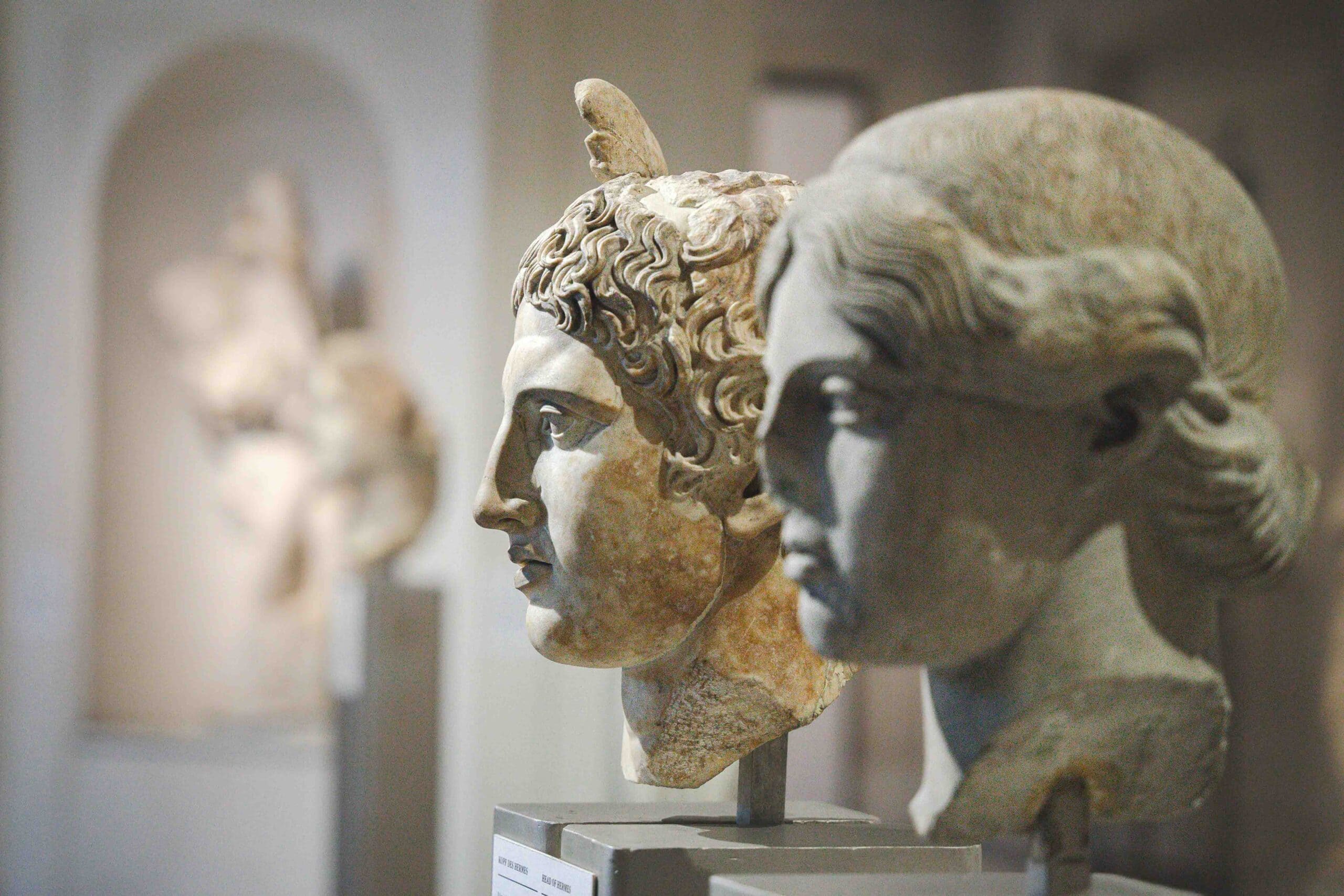
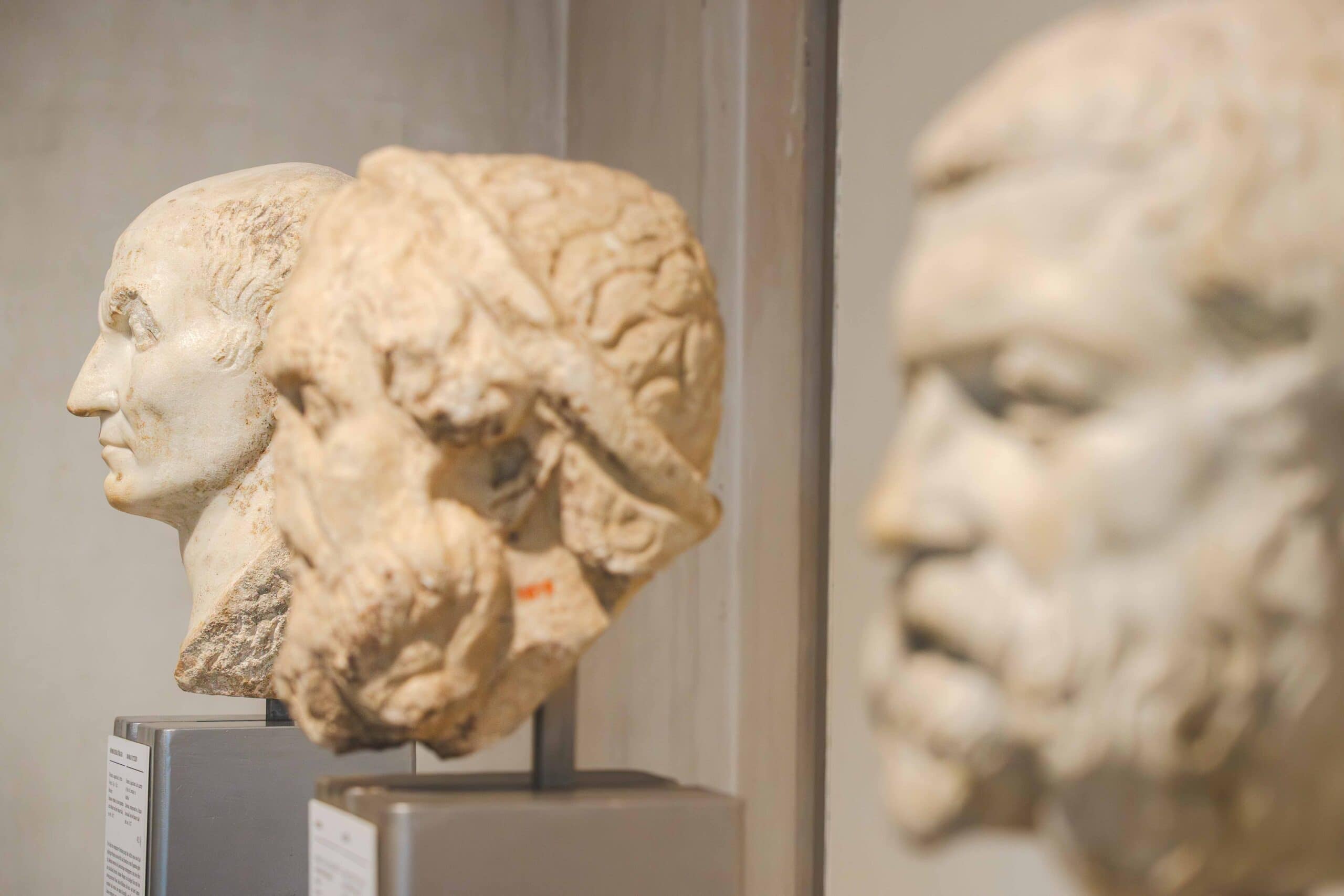
You’ll see the Head of a Citizen, the Head of Homer, and the Ideal Portrait of the Striding Poet standing in a row, while a few steps away, Hermes and a goddess sit staring out without their bodies.
Young Hermes is easily identified by the wings on his head, marking him as a messenger of the gods, and his well-known curly hair.
Torso of a Cuirassed Statue
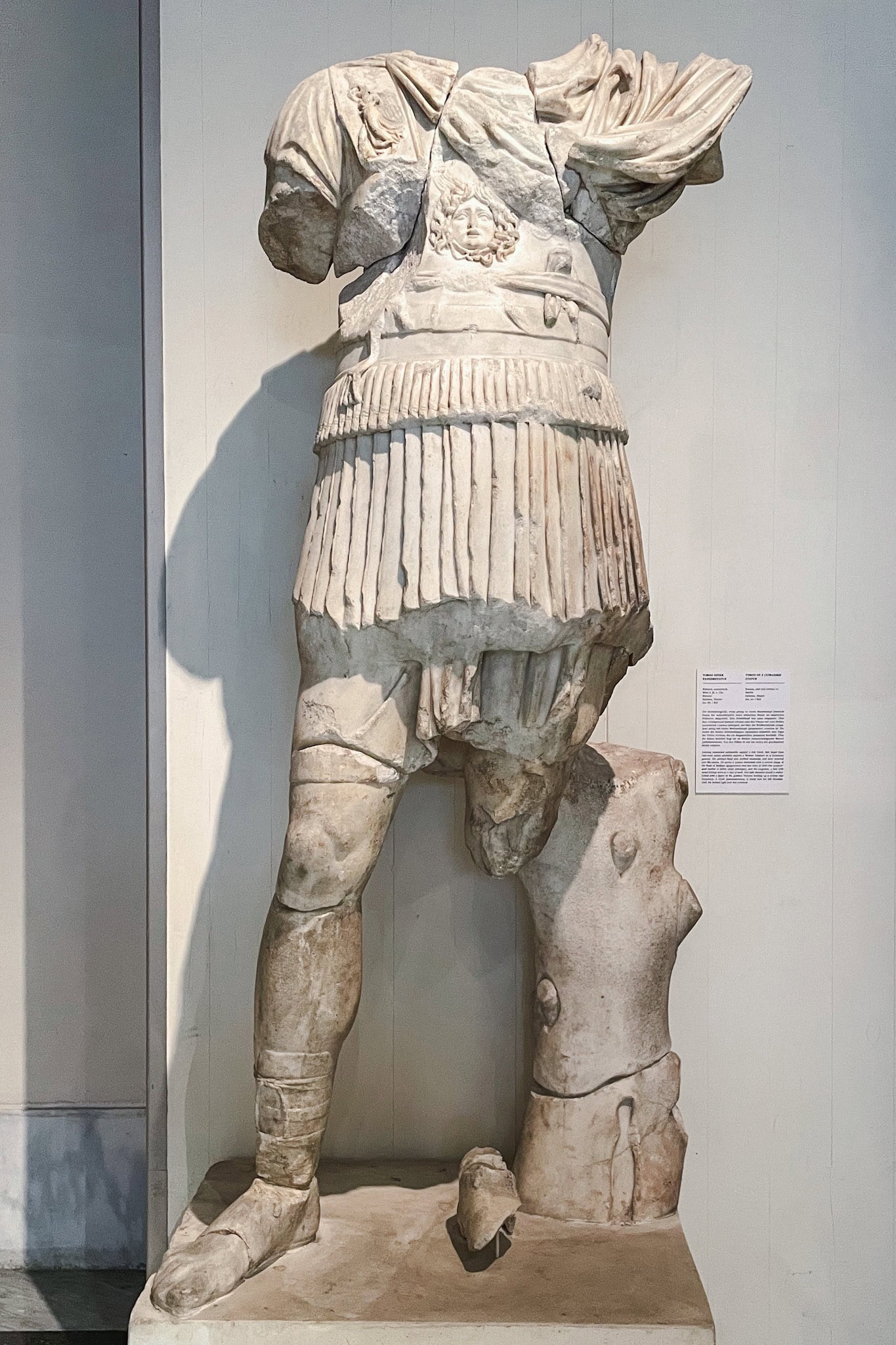
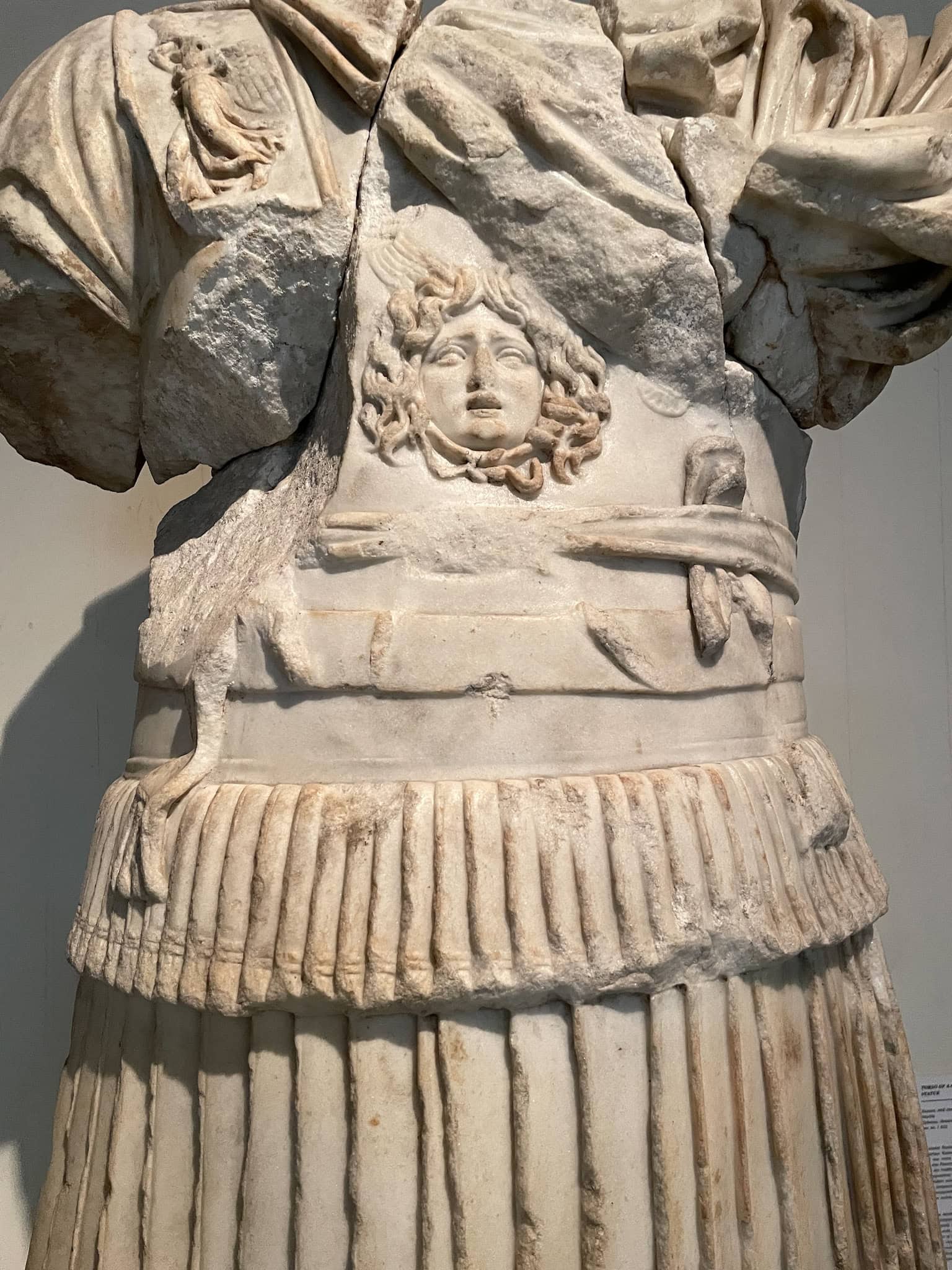
Leaning somewhat awkwardly against a tree stump, this larger-than-life Roman Emperor might have been a victorious general once, but he’s not looking so hot these days.
Having lost his head, both arms and one leg, it is his body armour that tells us he was a man to be reckoned with.
His armour sports a central head of Medusa, a double-layered skirt, and a belt with metal fittings, which are signs that he was highly ranked.
Mosaic Emblem
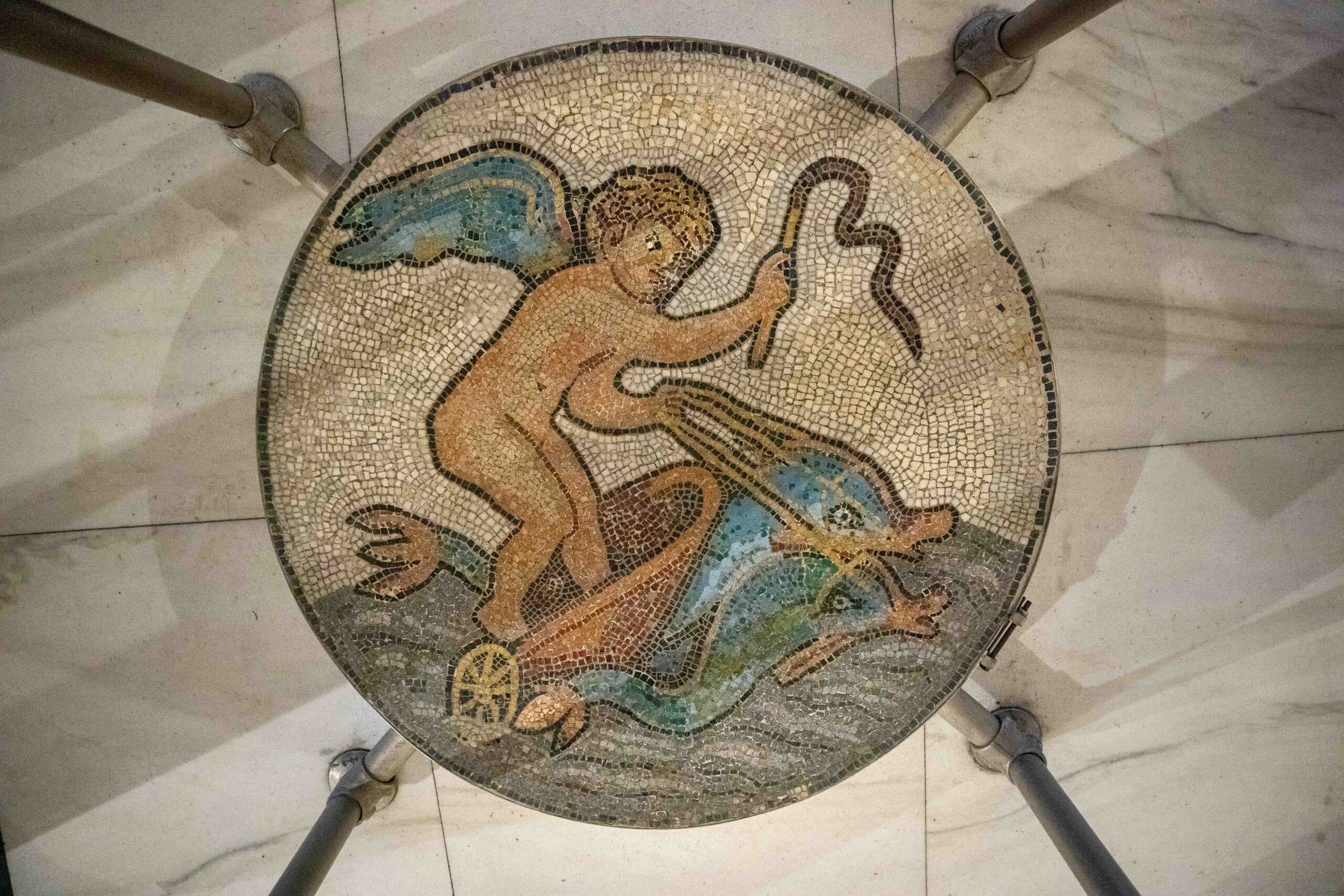
Romans loved a good old mosaic to decorate their bathhouses and villas. The only mosaic (that we saw) in the Ephesus Museum dates from the 6th century CE and was found in a house near the Harbour Gymnasium. It is made of marble, glass and brick tesserae (the fancy word for mosaic pieces).
The mosaic depicts Cupid riding his chariot, which is pulled by two dolphins.
The Parthian Monument
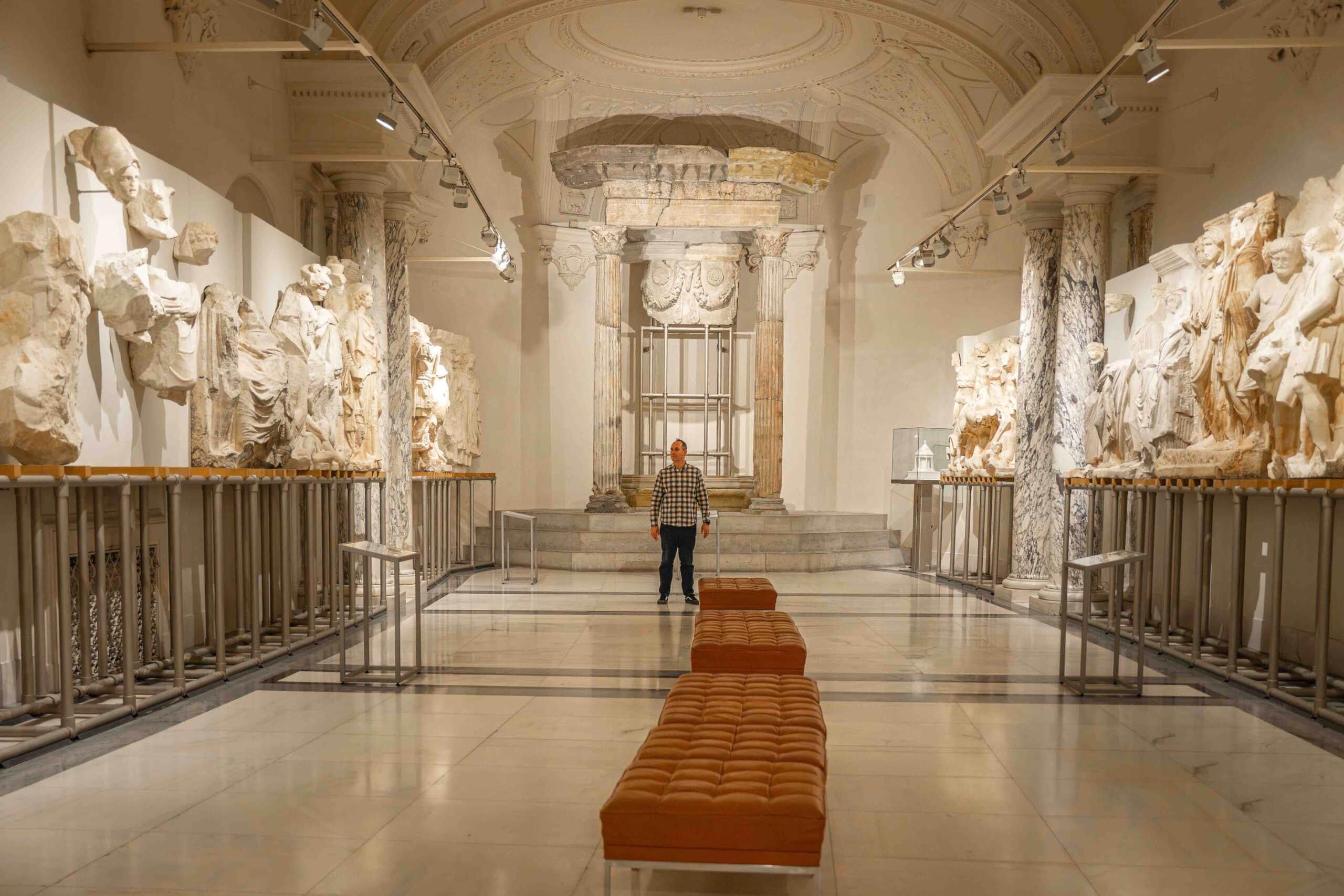
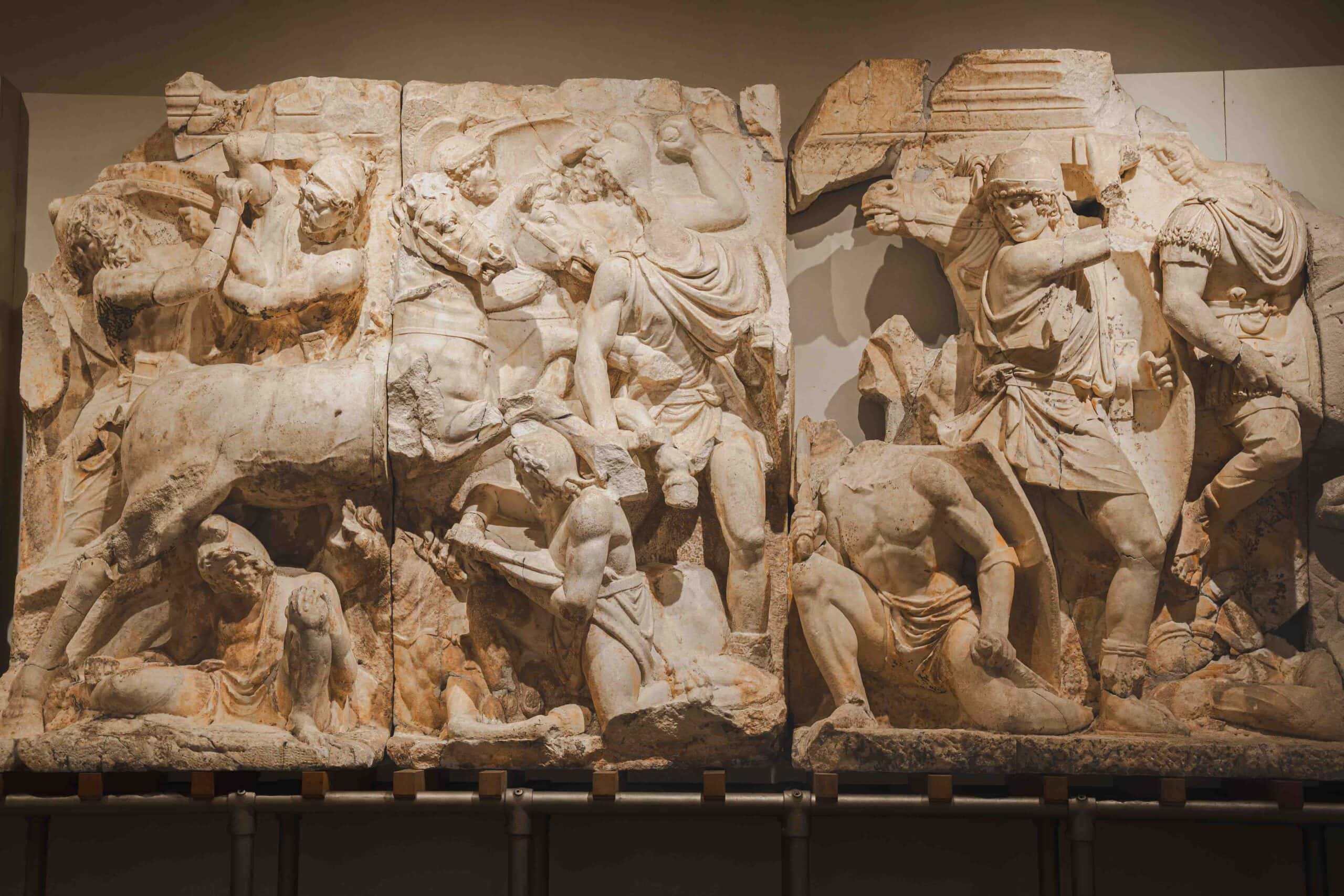
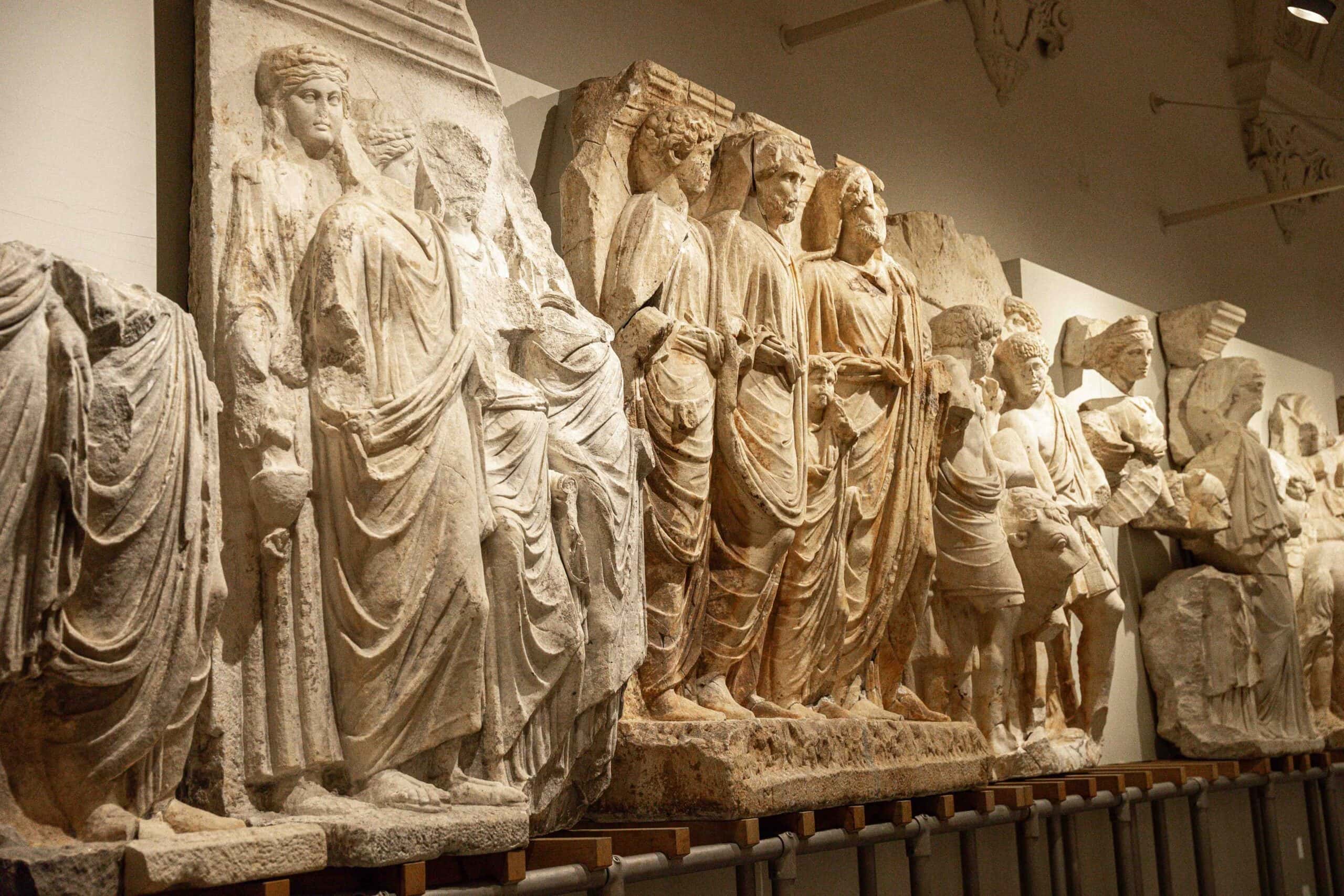
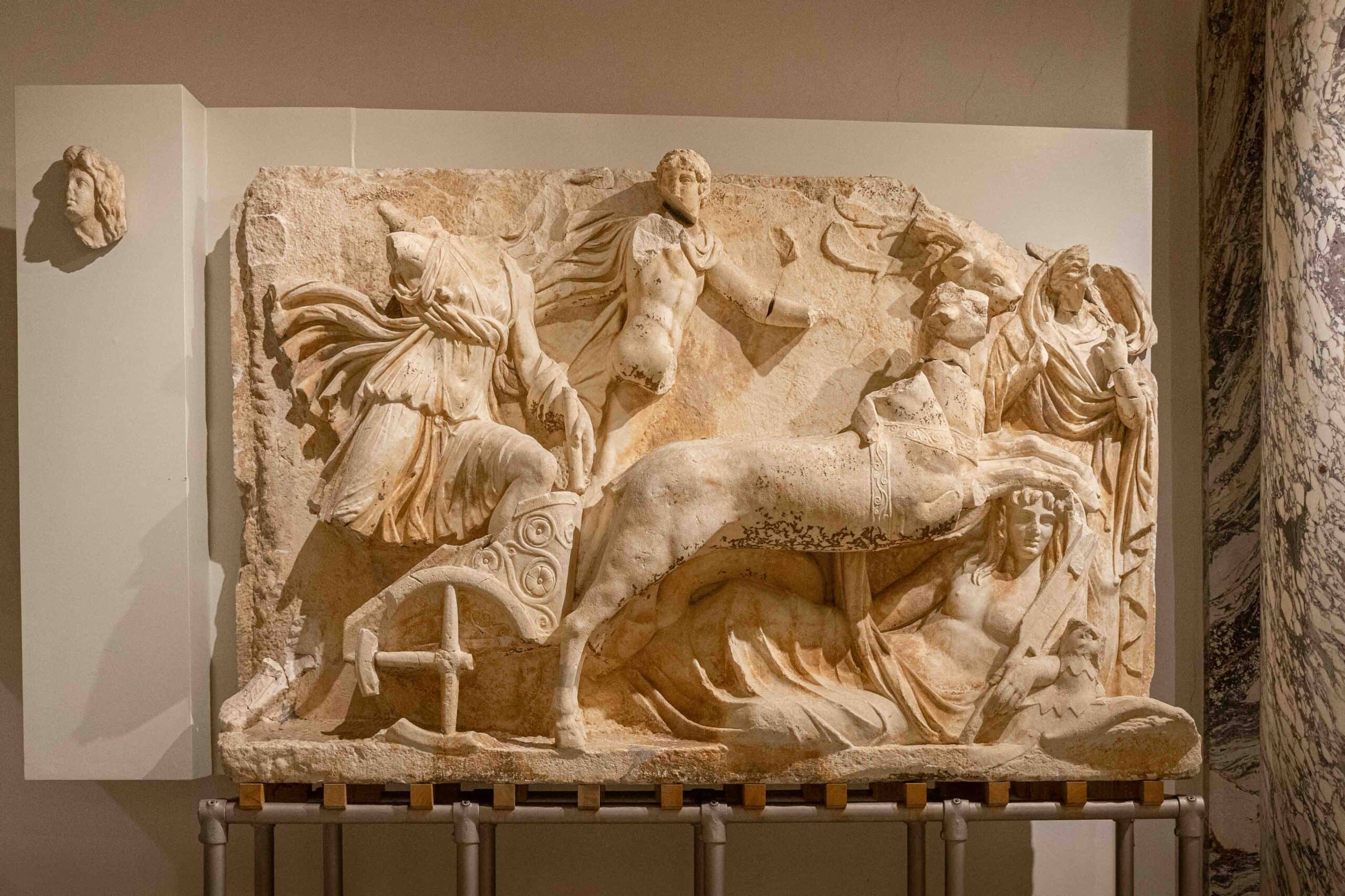
The Parthian Monument was the highlight of the Ephesus Museum for me. These fragments are among the most significant surviving Roman-era reliefs from Asia Minor. They epitomize classic Roman art, showcasing muscles, horses, and golden ratios galore.
The Parthian Monument is essentially an Instagram feed or Facebook wall in marble of Roman Emperor Lucius Verus.
Besides saying: “Look at my awesome life”, it also says the Roman emperors’ line of succession is secured across three generations, ensuring political stability.
It is also a warning: Don’t mess with us because we will crush you, whether you are from Parthia in the East (modern-day Iran and parts of Iraq, Afghanistan and Armenia) or a German in the North.
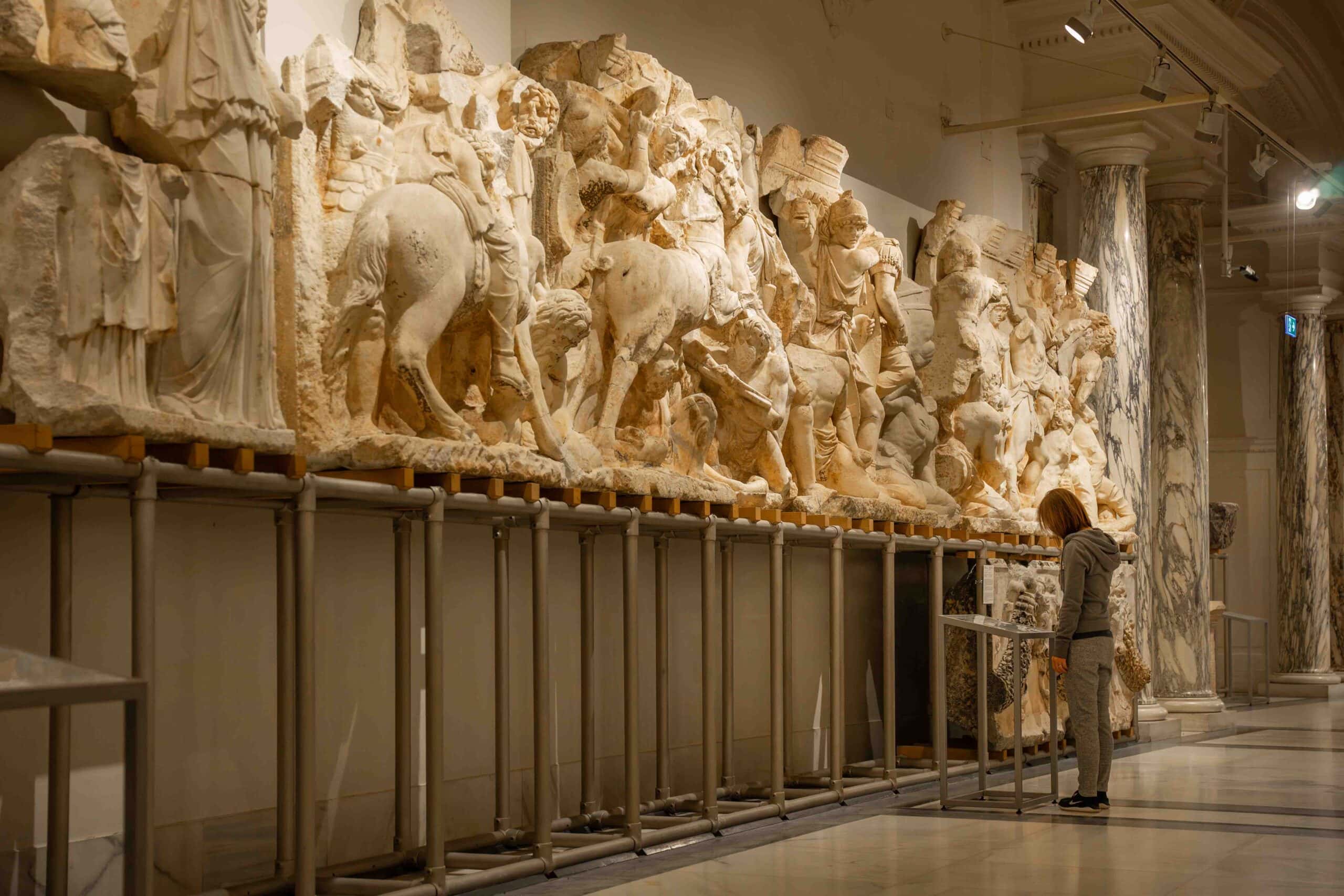
The monument honours Roman Emperor Lucius Verus and his Parthian War of 161-165 CE through five thematic cycles: the Battle Scenes, the Adoption Scene, the Personifications, the Assembly of the Gods, and the Triumph.
The individual pieces were arranged to form a monumental altar, but the exact arrangement is speculative as they were not found in their original order. The friezes measure about 70 meters in total length, with 40 meters currently on display.
Celsus Library
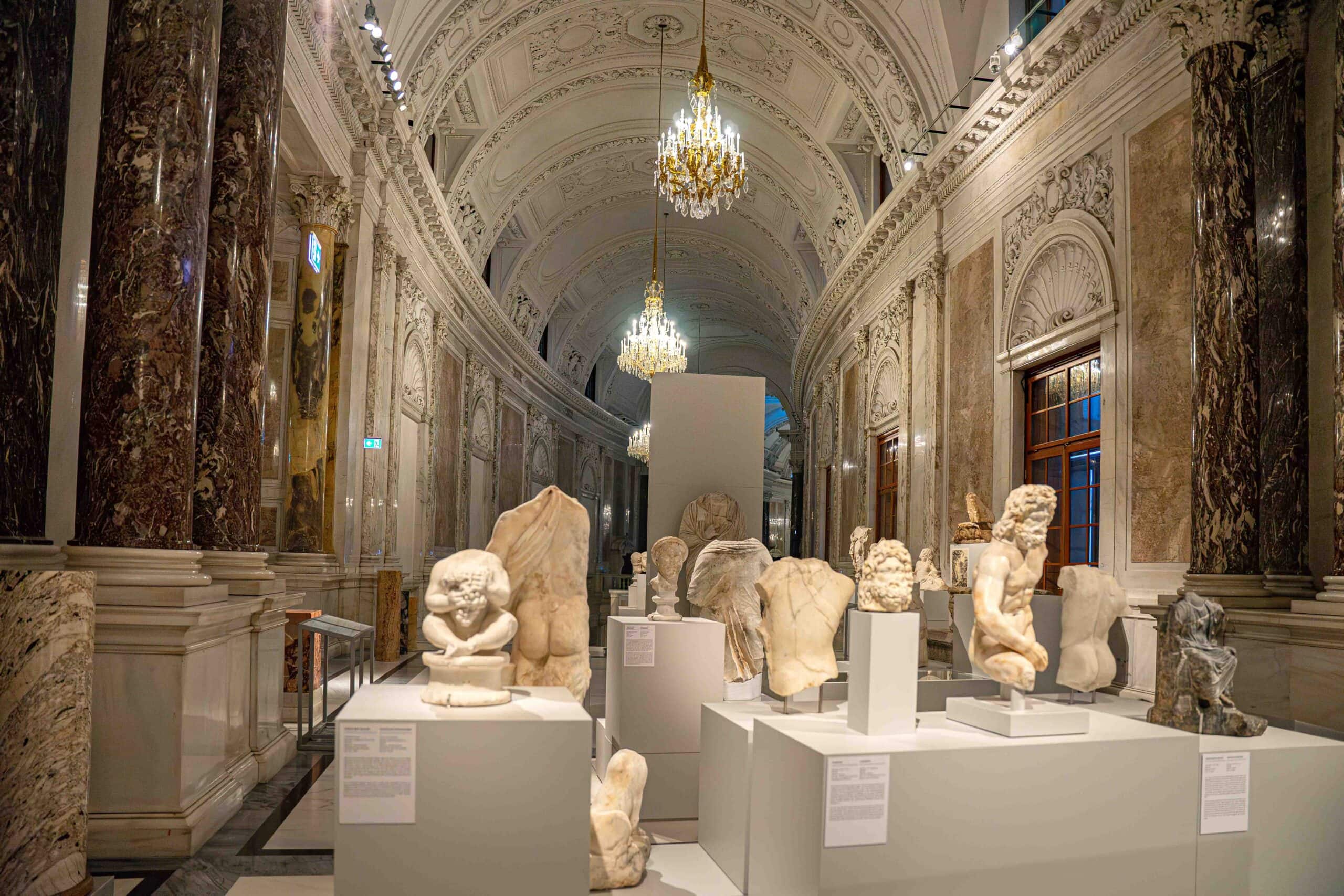
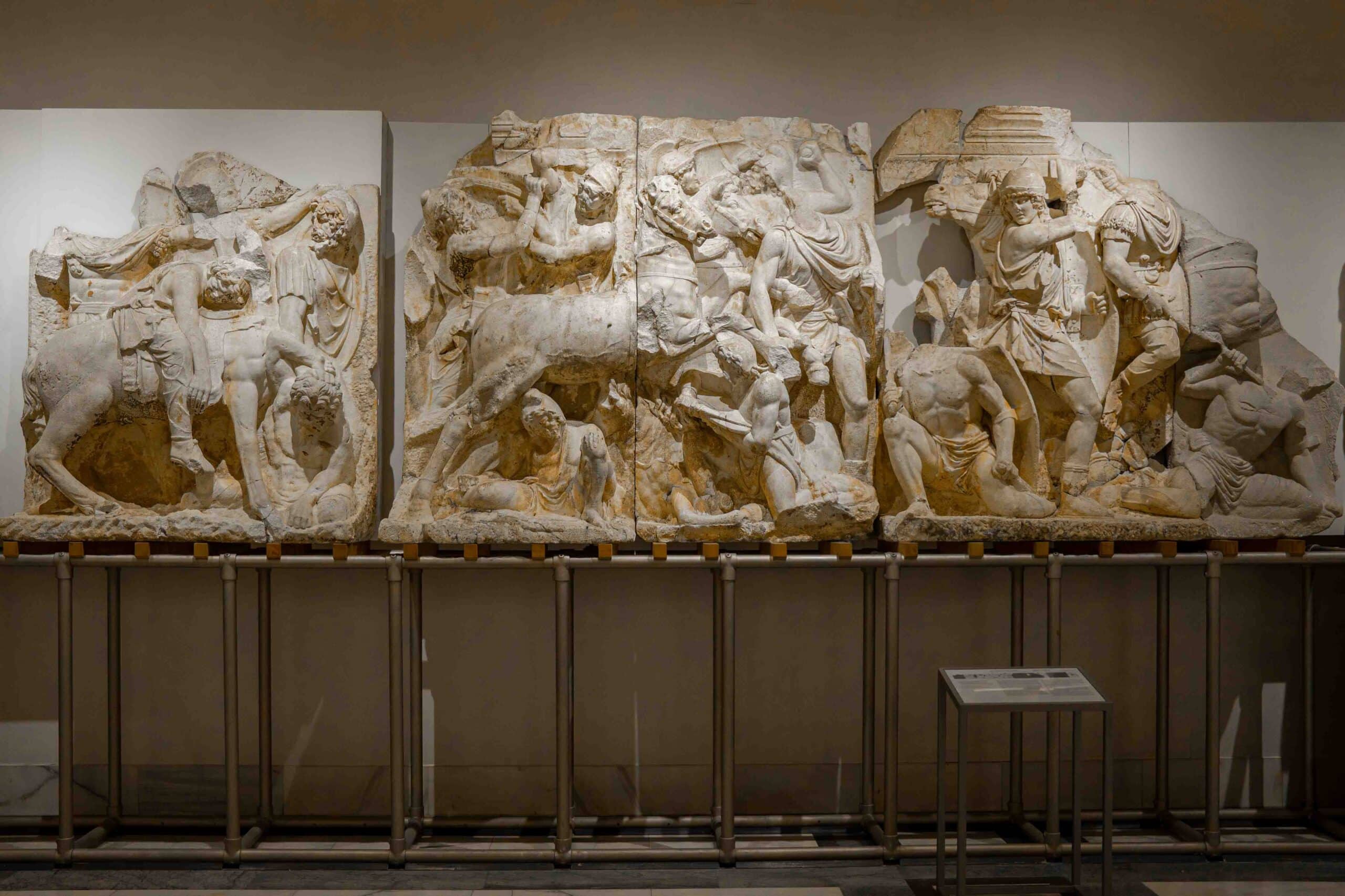
A lavish marble staircase leads to an exhibit of the Celsus Library, the centrepiece of the most visited archaeological site in Türkiye. It was during Jin’s visit to Ephesus that she learned that the four iconic statues adorning the facade of the Celsus Library are reproductions, and the originals are kept in a palace in Vienna.
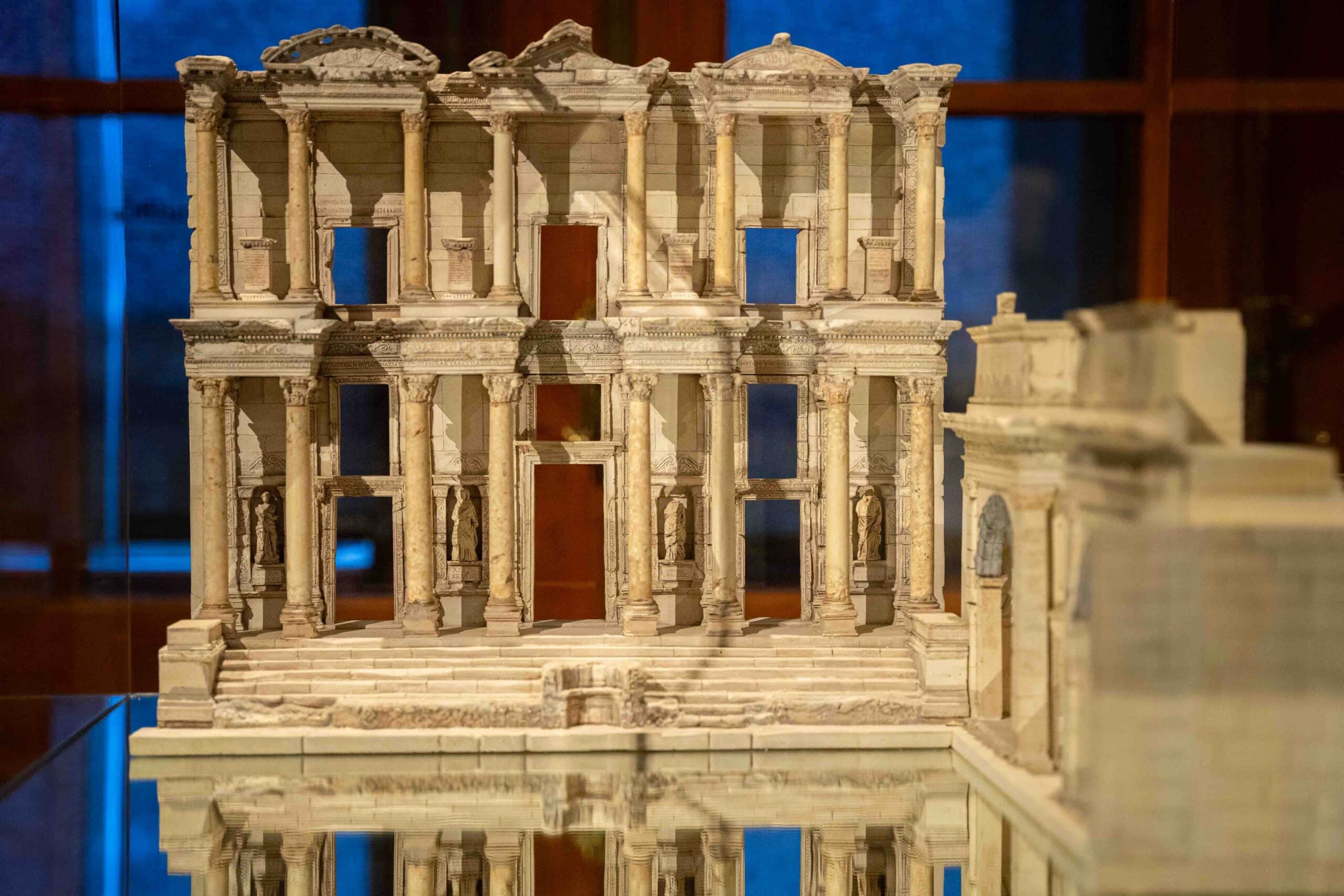
There is a scale model of the Celsus Libray showing the original positions of these four ladies.
The statues decorating the facade of the Library of Celsus symbolize the Four Virtues, or the Hellenic cultural values of Celsus. They are Sophia (Wisdom), Arete (Bravery), Episteme (Knowledge), and Ennoia (Thought).
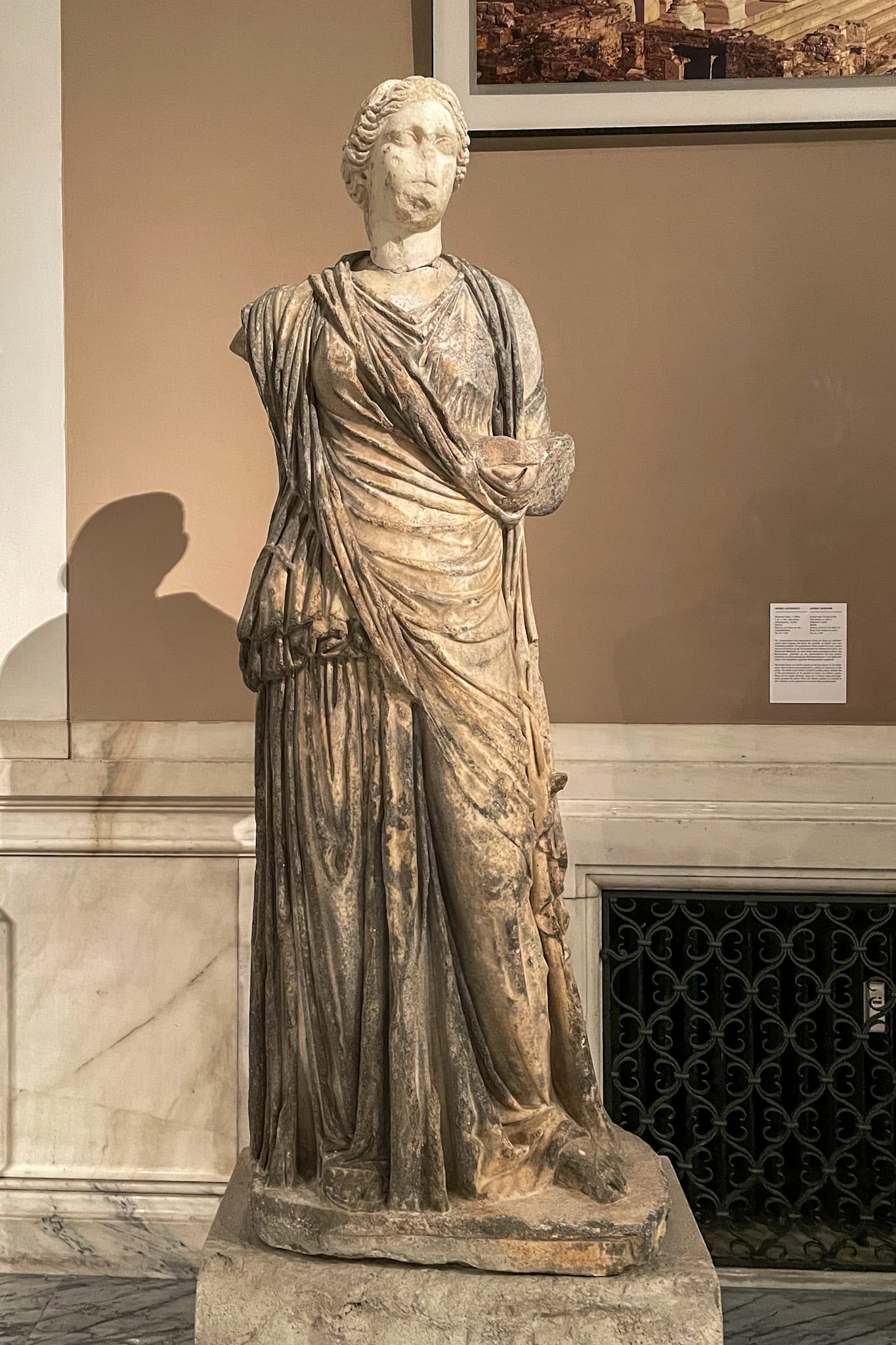
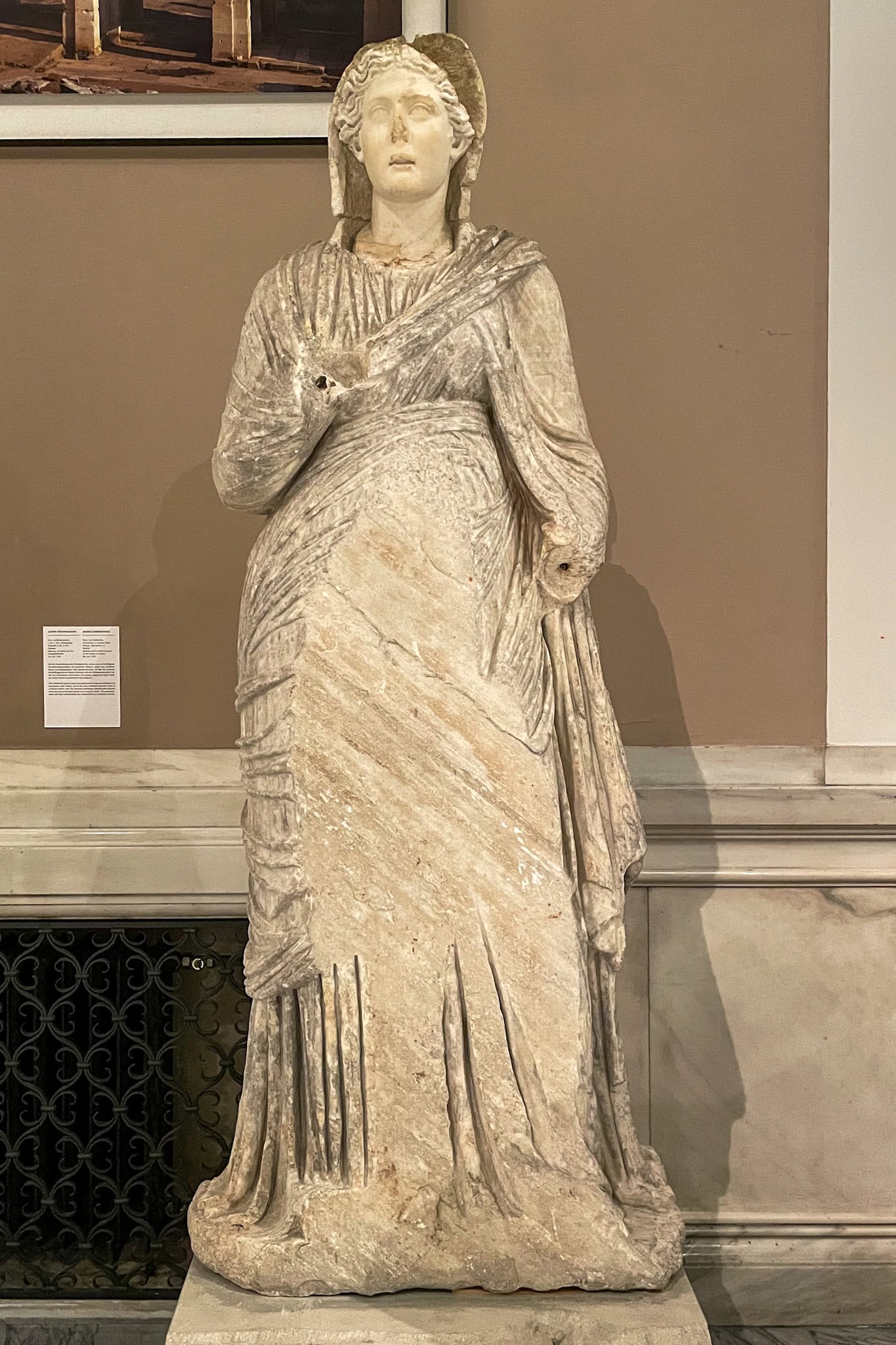
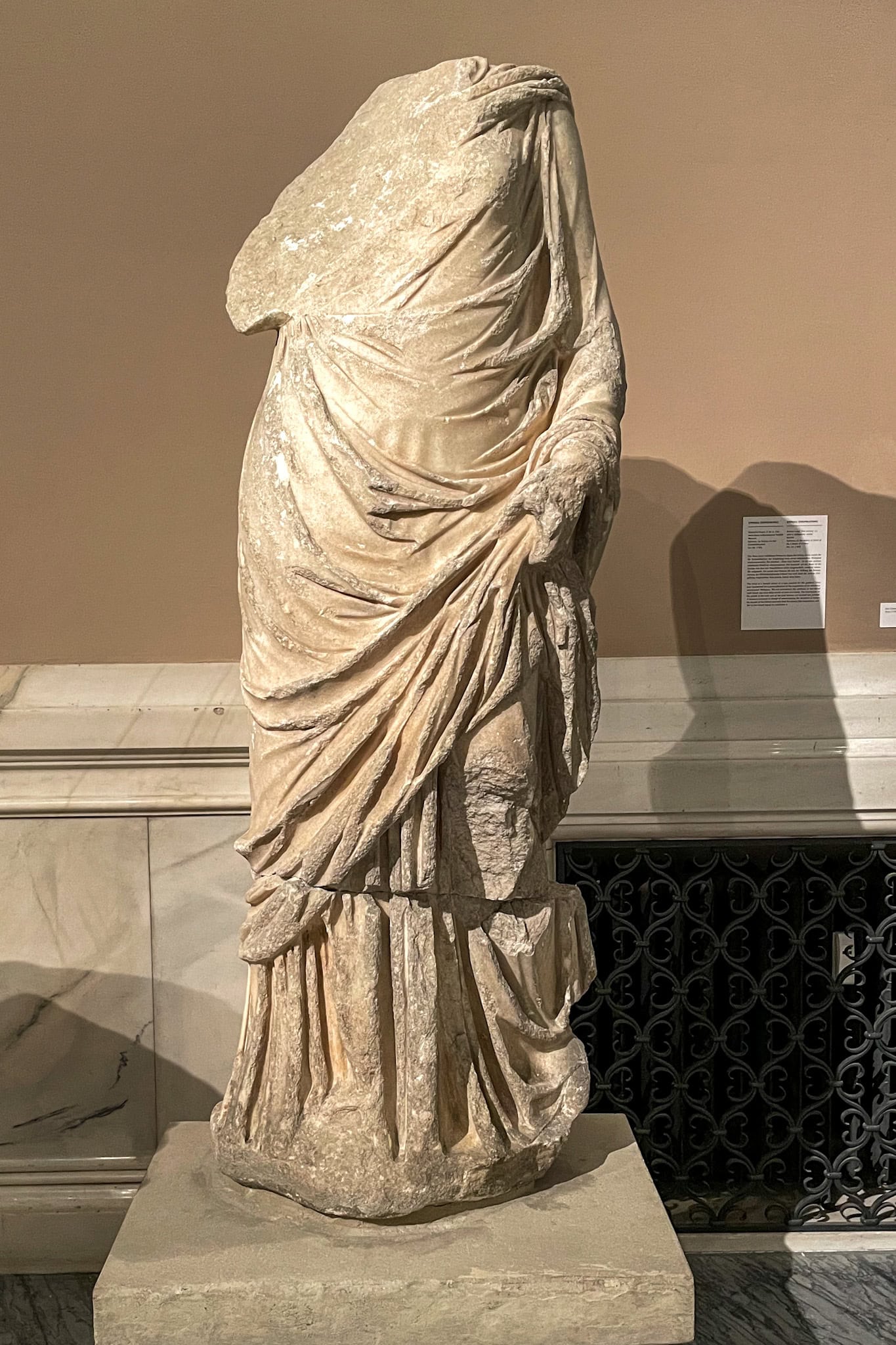
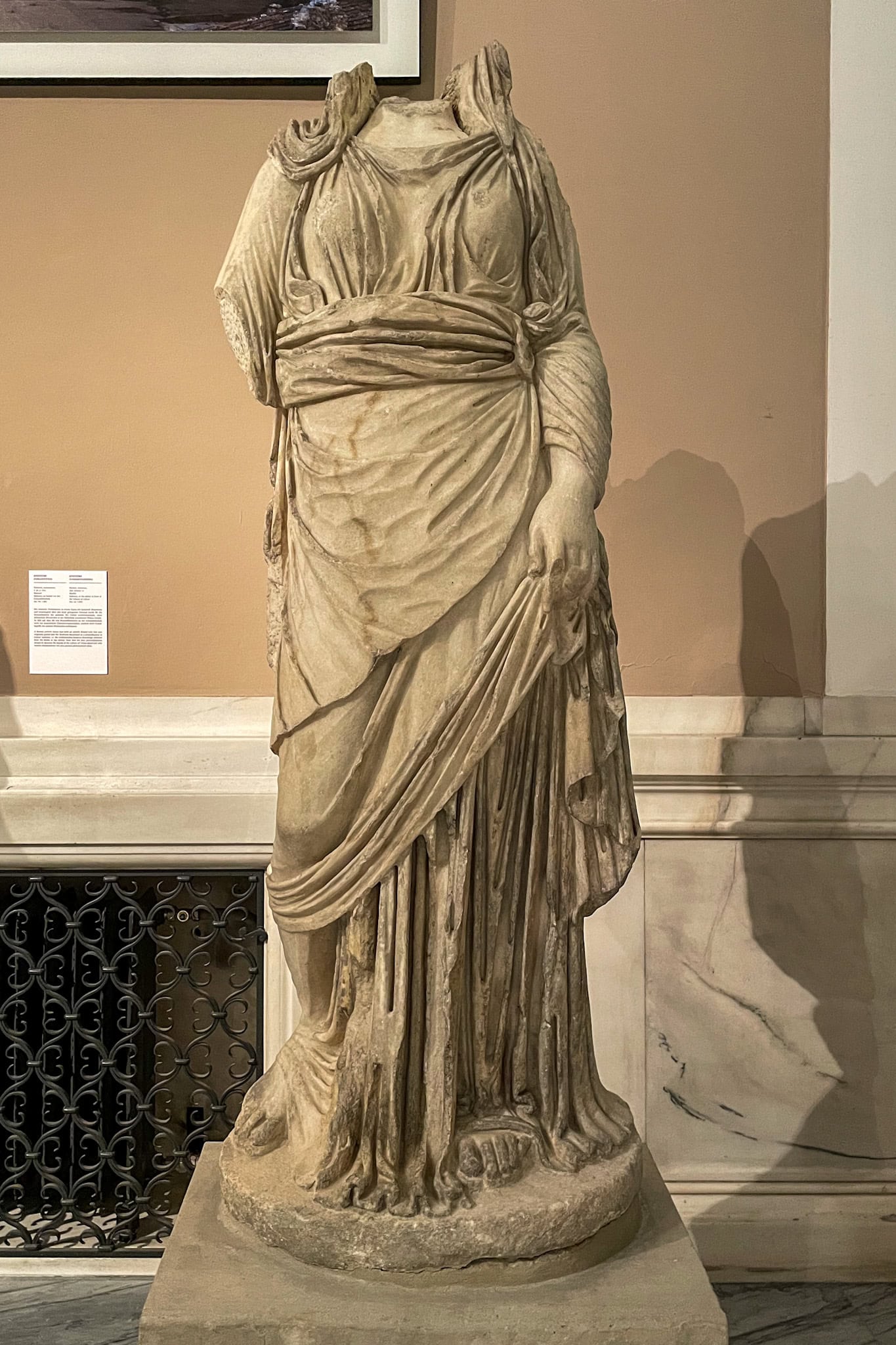
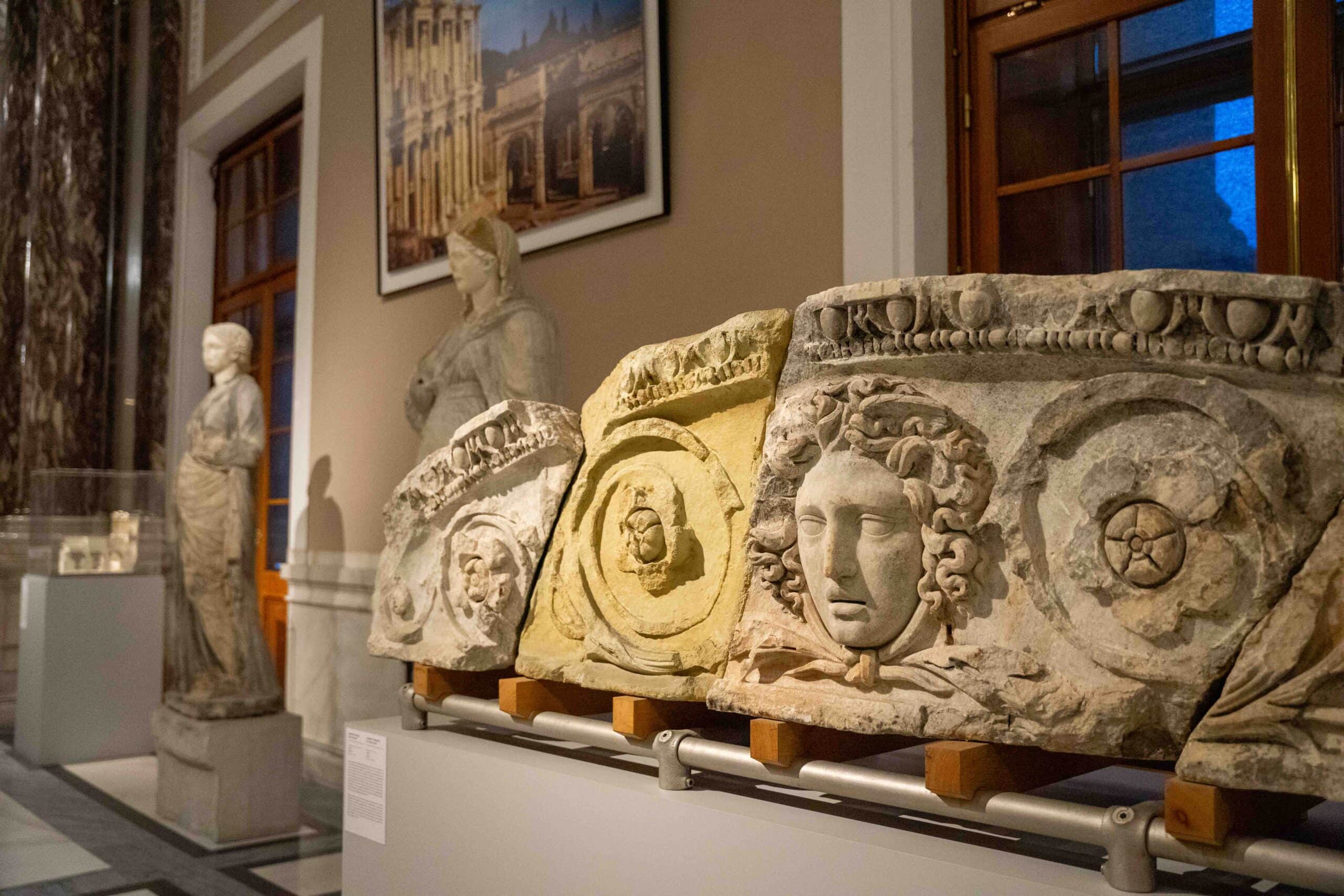
At the centre, between the Four Virtues, stands a gable from the library. In the middle of the gable, the head of Medusa protects the library from evil, surrounded by flower tendrils.
Boy with Fox Goose
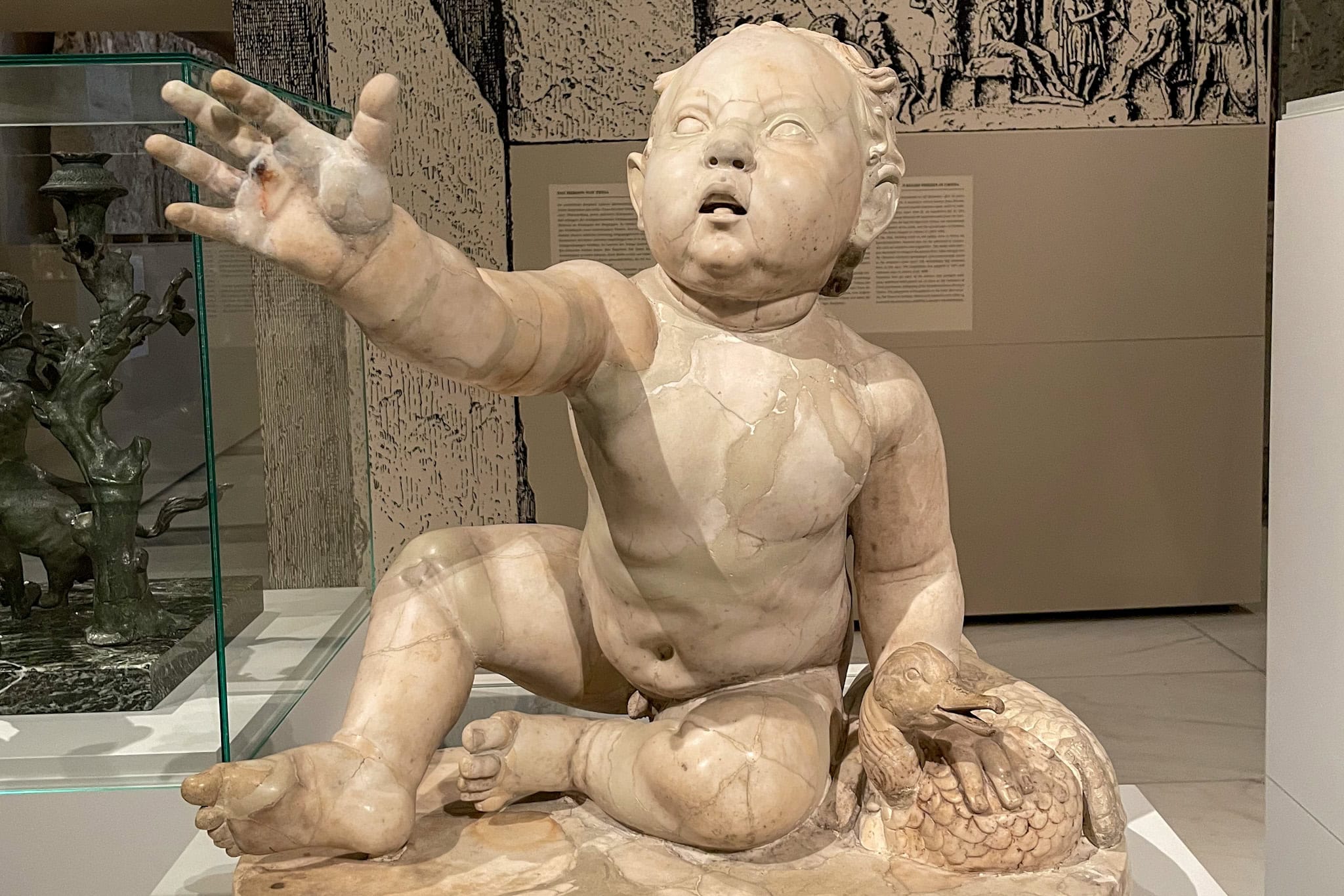
A remarkably realistic marble statue, reassembled from fragments, comes from the Marble Hall of the Harbour Gymnasium. The goose is believed to be a fox goose, identified by the pattern of its feathers.
Heracles Battling a Centaur
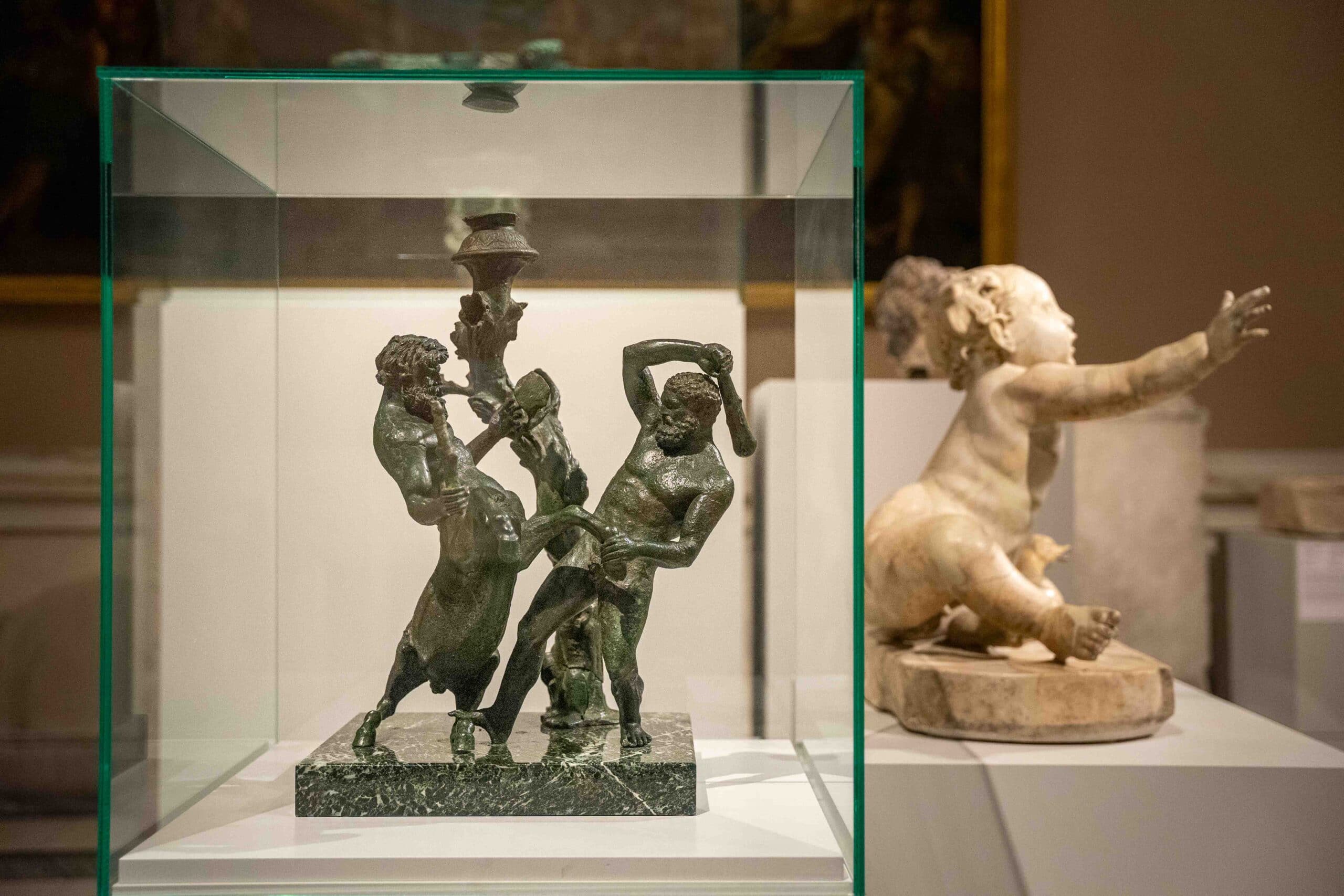
This small bronze piece, either Roman or Hellenistic, shows Heracles in a fierce battle with a centaur. Heroic battles were a popular theme of the times.
The gnarly tree stump at the centre of the battle scene doubles as a candelabra.
How I Shot This Guide
Every photograph in this article was taken with the exact same gear I carry on every journey. It is a setup refined over years on the road to keep travel light without compromising the final image.
- Camera: Sony A7 V
- Lense: Sigma 24-70mm f/2.8 DG DN Art.
- Storage: SanDisk Extreme Portable SSD
- Software: Adobe Lightroom Classic
- Outerwear: My North Face McMurdo Parka kept me warm throughout our Christmas trip to Europe.
And that, dear Greco-Roman freaks (like us), were the highlights of our visit to the Ephesus Museum. Enjoy your visit to this little Turkish delight in the heart of Vienna
✌️
*Darlene darling, the Ephesus collection in Vienna is very much like the Elgin marbles collection in London in that both were obtained with the blessing of the Ottoman Sultan and neither could be said to have been in any way “looted”. There is currently a fierce propaganda campaign going on worldwide to slander Lord Elgin and unjustly denigrate the reputation of the British Museum. Don’t be a mindless echo – don’t suck up to it “*Darlene” – ok sweetie.
Steve, #TrueDat
Don’t want to get into politics here, but where I come from it’s rude to give back, or ask back a gift.
Then the given not looted Elgin Marbles (all of them) had better stay in the Duveen Gallery at the British Museum, same as sculptures taken from the Parthenon by Louis-Francois-Sebastien Fauvel will stay in room 347 at the Musée du Louvre (the lovely *Darlene may not have heard of those) and the National Museum of Denmark, you will be happy to know, are definitely not being so rude as to give up theirs.
https://www.nordisch.info/daenemark/griechische-marmorkoepfe-bleiben-im-nationalmuseum/