
Vienna is one of the most seductive European cities to visit in December (or anytime, really). After spending four days there last December, I completely get why.
The mix of imperial history, festive lights, and an incredible food scene makes it the perfect winter destination. Whether strolling through Christmas markets, exploring world-class museums, or warming up with an einspänner and apfelstrudel in a classy café, Vienna in December just feels right.


We LOVED Vienna; four days was just the right time to see and eat everything we wanted. Now, I’m sharing it with you so you can plan your own winter getaway to Vienna without the stress of figuring it all out from scratch. Here’s exactly how we spent four days in Vienna in December.
We’ve put together this itinerary based on our own trip, featuring four packed but perfectly paced days that balance sightseeing, Christmas highlights, and plenty of time to just enjoy the city. If you’re planning a Vienna city break this Christmas, I hope this helps you make the most of it.
You can danke schön us later.
Please note: This post may contain affiliate links. This means I may earn a commission if you make a purchase by clicking a link (at no extra cost to you). As an Amazon Associate, I earn from qualifying purchases. Learn more.
Quick Guide to Vienna
Visited: 18-22 December
Where we stayed: We stayed at the lovely Weekend Hotel in Neubau. We loved it (see more below). Book your accommodation as soon as you have your travel dates. December is a very popular time to visit Vienna.
Don’t miss: Visit at least one of the famous museums and one of the famous Viennese coffee houses, and if you have a thing for music, you’ll want to see the Classic Vienna Ensemble .
City Card: We used the Vienna City Card (from €17). It includes free rides on Vienna’s public transportation and discounts at over 200 attractions. It’s conveniently available as a phone app. Jin crunched the numbers, and the City Card was better value than the Vienna Pass (from €99) for our itinerary.
The Vienna Pass offers FREE entry to most sites, and might be a good option if you want to visit many attractions and do a hop-on hop-off tour.
Christmas Market Dates 2026: A few markets start on 6 November, but most will kick things off on 13 November. The big markets stay open until 23 December. A few smaller markets stay open after Christmas. Schönbrunn runs until 6 January 2027.
Our Vienna Itinerary
Vienna is the City of Music, but if you’re expecting an itinerary packed with Strauss and Schubert tributes, you won’t find it here. Sorry not sorry. Classical music is great and all, but we had a different rhythm in mind for our trip.
Instead, this four-day Vienna itinerary is all about art, architecture, food, and Christmas vibes.
We wandered through the city’s grand streets, admiring its famous architecture, spent hours in world-class museums, hunted down the best schnitzel and würstel in town, and, of course, made plenty of stops at Vienna’s magical Christmas markets for a mug (or two…or three) of mulled wine.
Here’s how we spent our four days in Vienna:
Day 1: Arrival, Schönbrunn Palace and Christmas Market
Day 2: DIY architecture tour, St. Stephen’s Cathedral, Christmas markets
Day 3: Hofburg Palace, Café Demel, Leopold Museum, Kunsthistorisches Museum, dinner at a Ukrainian restaurant in Karlsplatz
Day 4: Belvedere Palace, Bitzinger Würstelstand, Ephesos Museum, Mariahilfer Straße, Vietnamese dinner, Christmas lights
Let’s get into the details!
Stay at The Weekend Hotel
A good trip to Vienna starts with a great place to stay. When planning ours, we were overwhelmed by the sheer number of amazing-looking hotels—finding one within budget was just as tricky.
Enter the Weekend Hotel.
Our uber-nice hotel in the Neubau district was the perfect base for our four nights in Vienna. With bus, tram, and subway stops just minutes away, getting to the Ringstraße and the city’s main sights was a breeze.
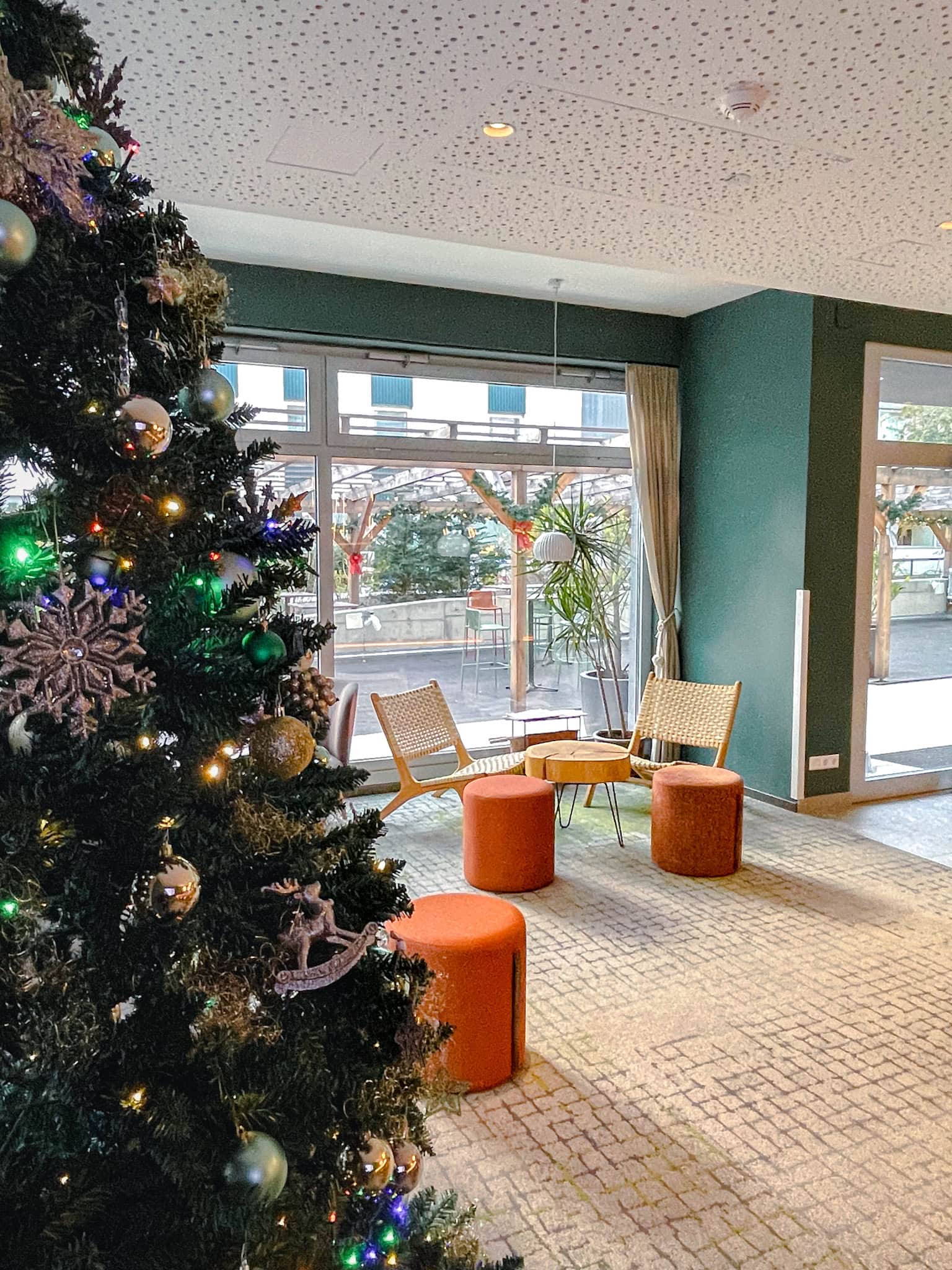
The room with an ensuite bathroom was comfy and elegant, with everything we needed. The small fridge was handy for stocking up on late-night snacks and drinks.
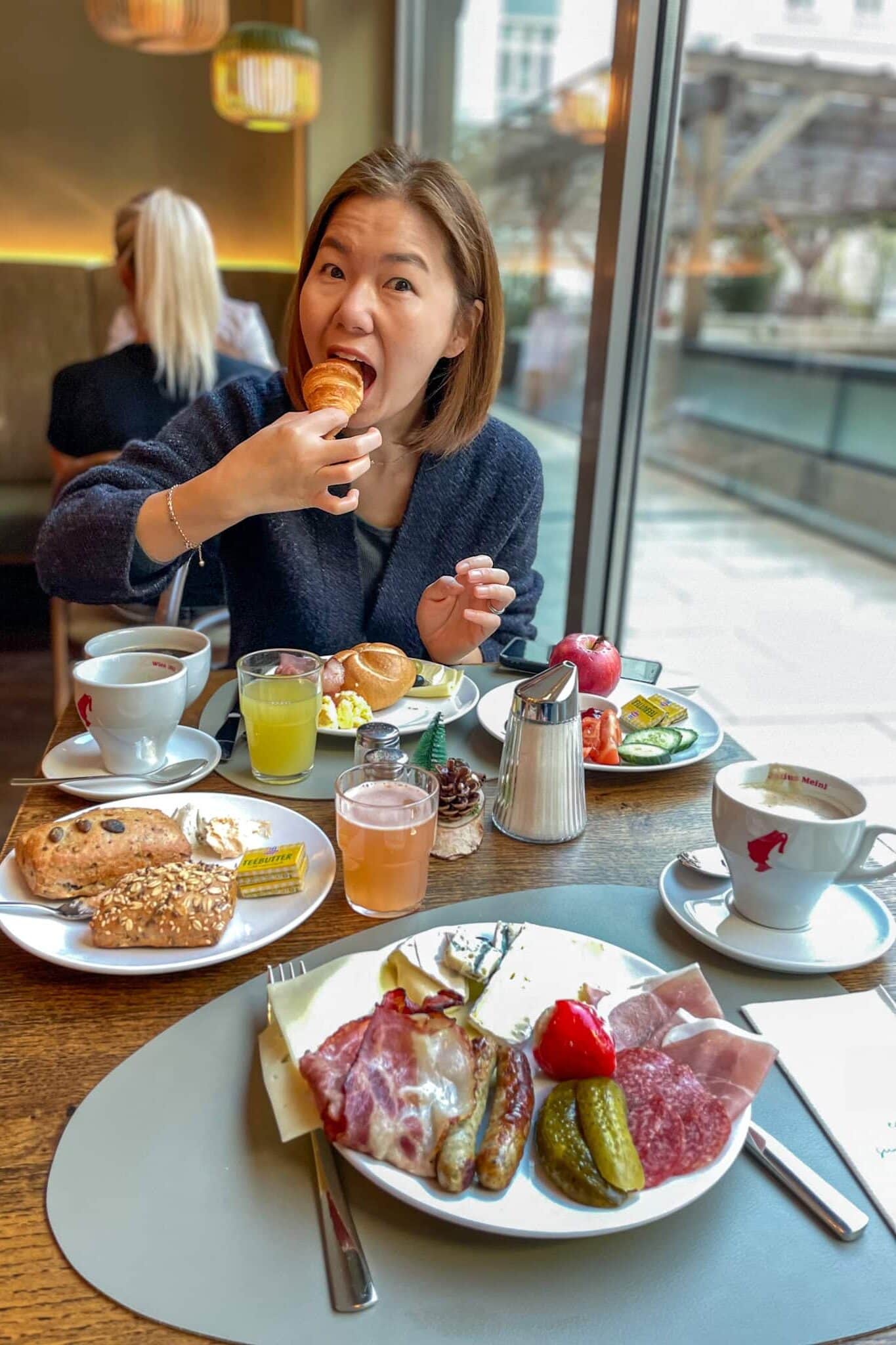
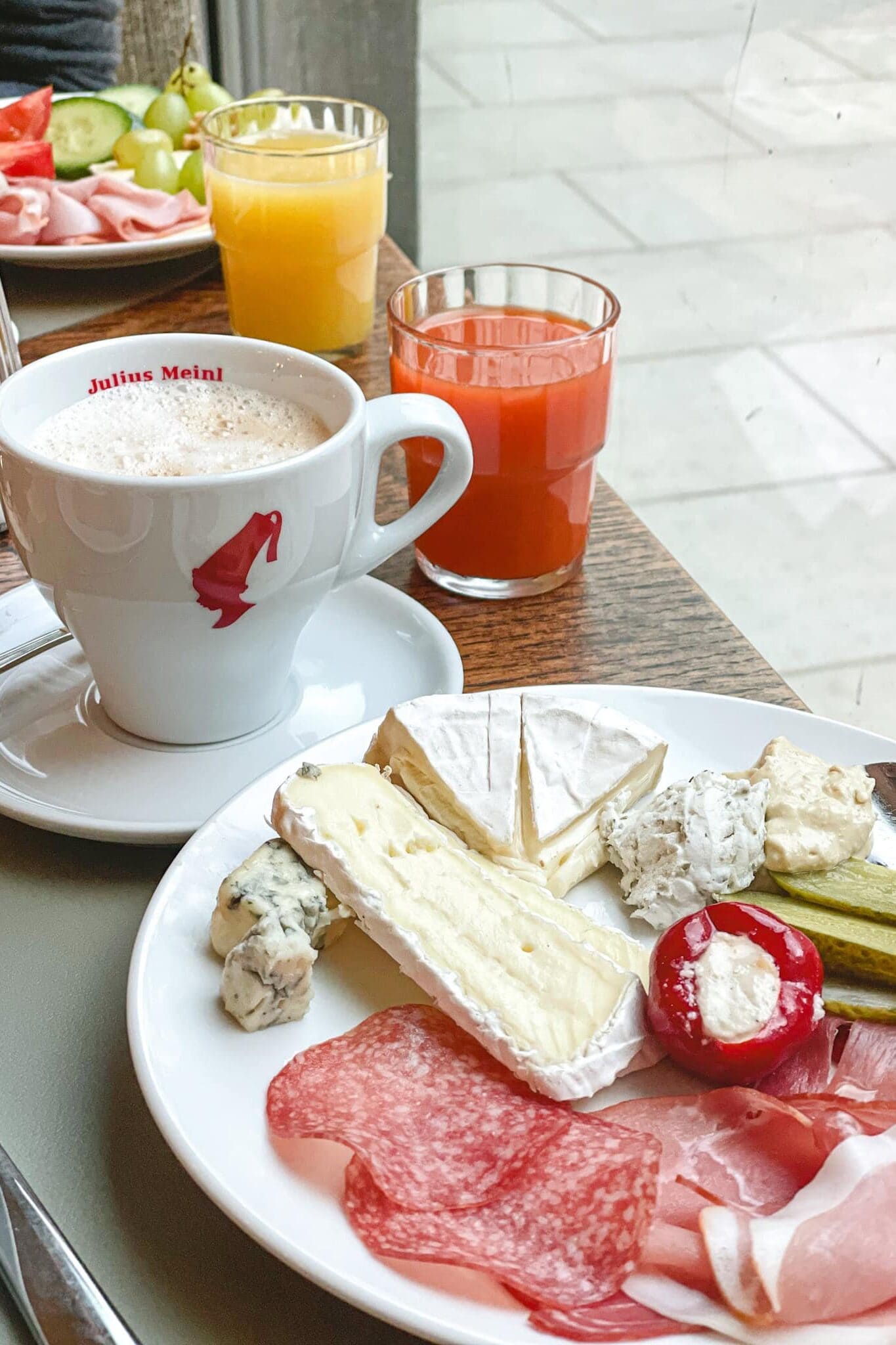
But the real star was the breakfast. Weekend Hotel goes all out with an AMAAAAZING buffet that puts most continental breakfasts to shame with a huge selection of bread, cheeses and cold cuts, bacon, eggs, the works, and Julius Meinl coffee to top it all off.
If you’re looking for a great place to stay in Vienna, just book this one already.
You can danke schön us later.
Day 1: Arrival, Lunch, & Schönbrunn Palace
Our train from Salzburg pulled into Vienna Hauptbahnhof at 11:30. After finding our way to The Weekend Hotel and dropping off our suitcase, we were a) starving and b) ready to start exploring.
Since we only had half a day to ease into Vienna, we kept things relaxed, with just the right mix of sightseeing and settling in.
Lunch at Gastwirtschaft Schilling
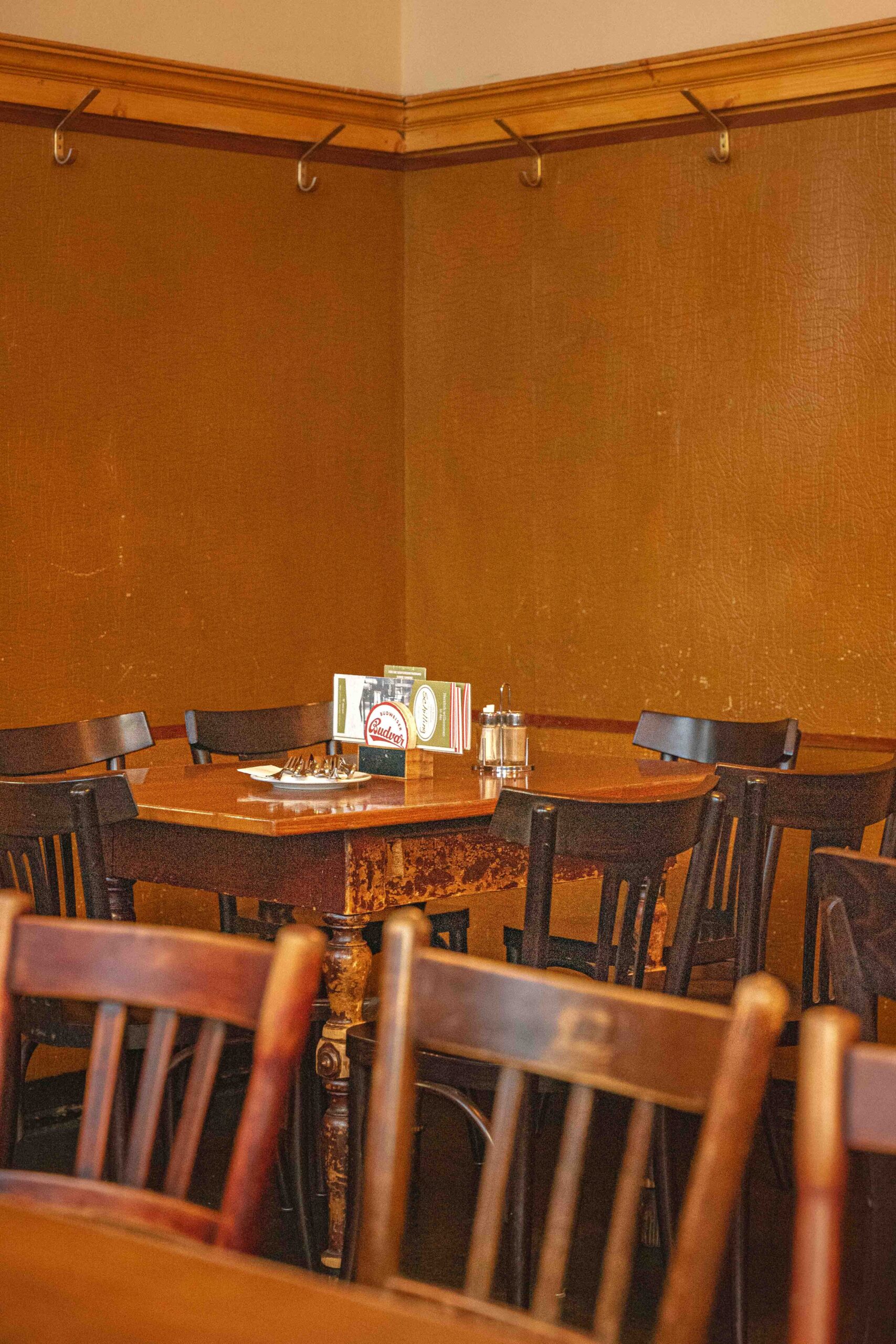
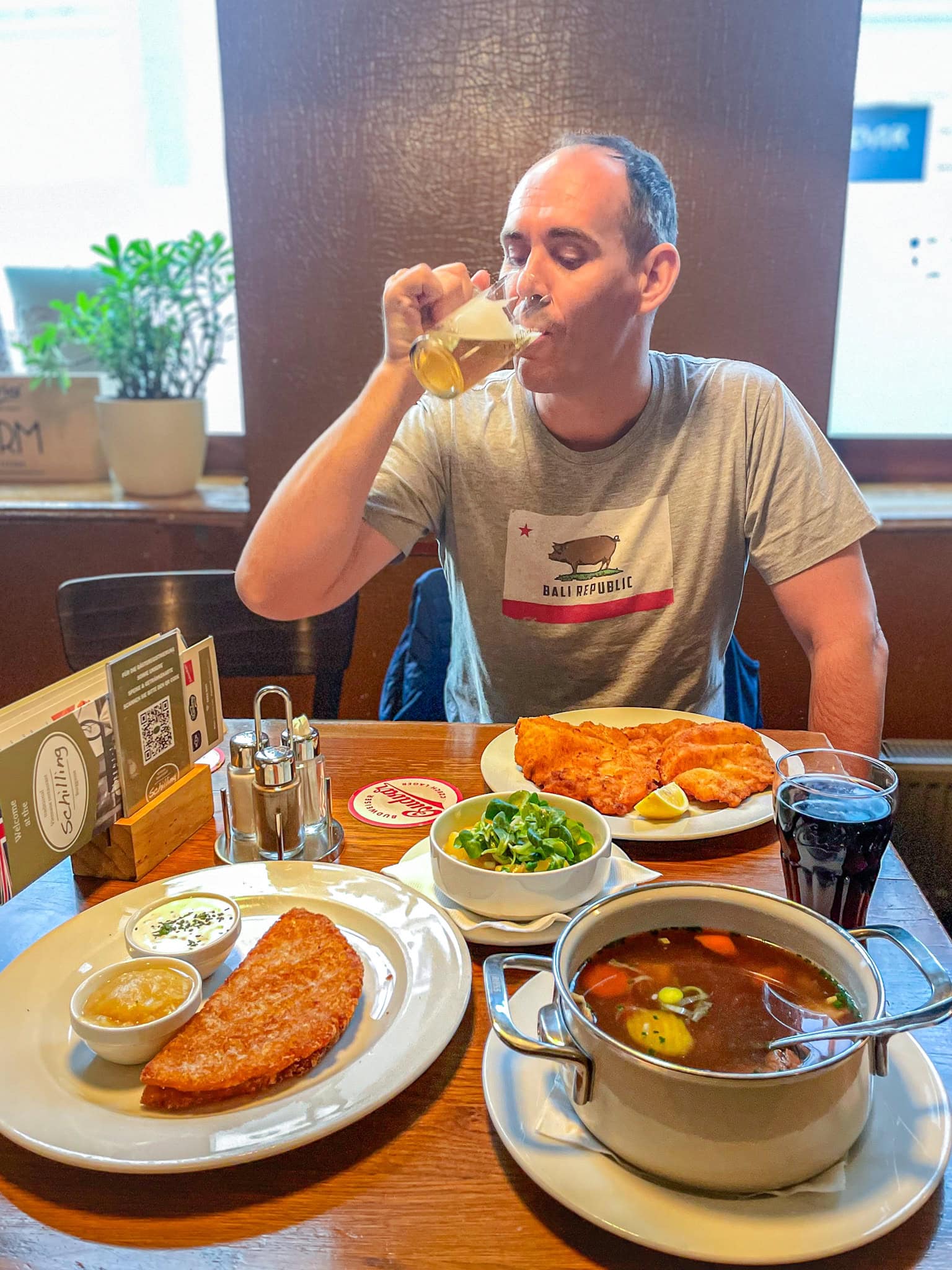
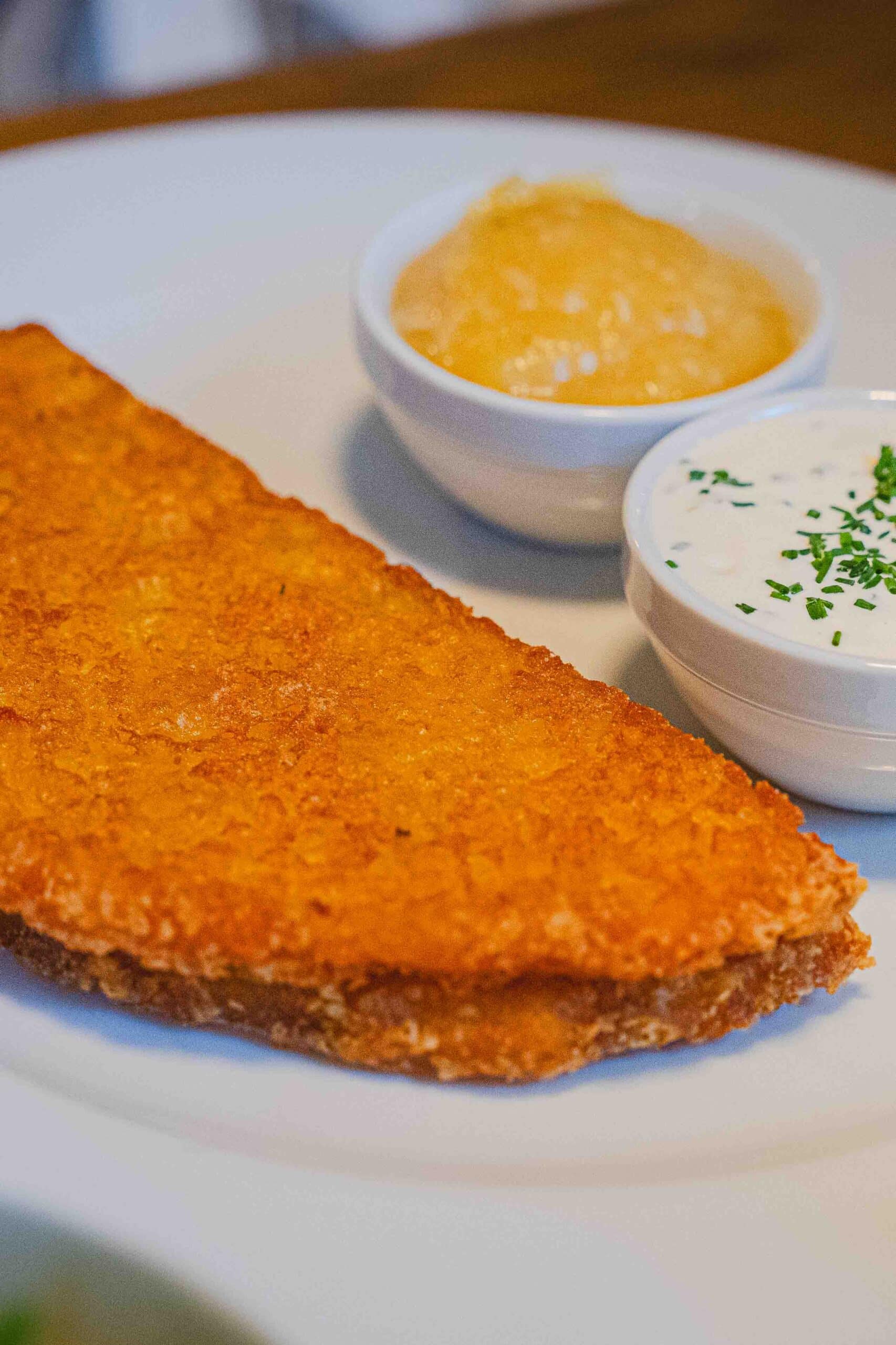
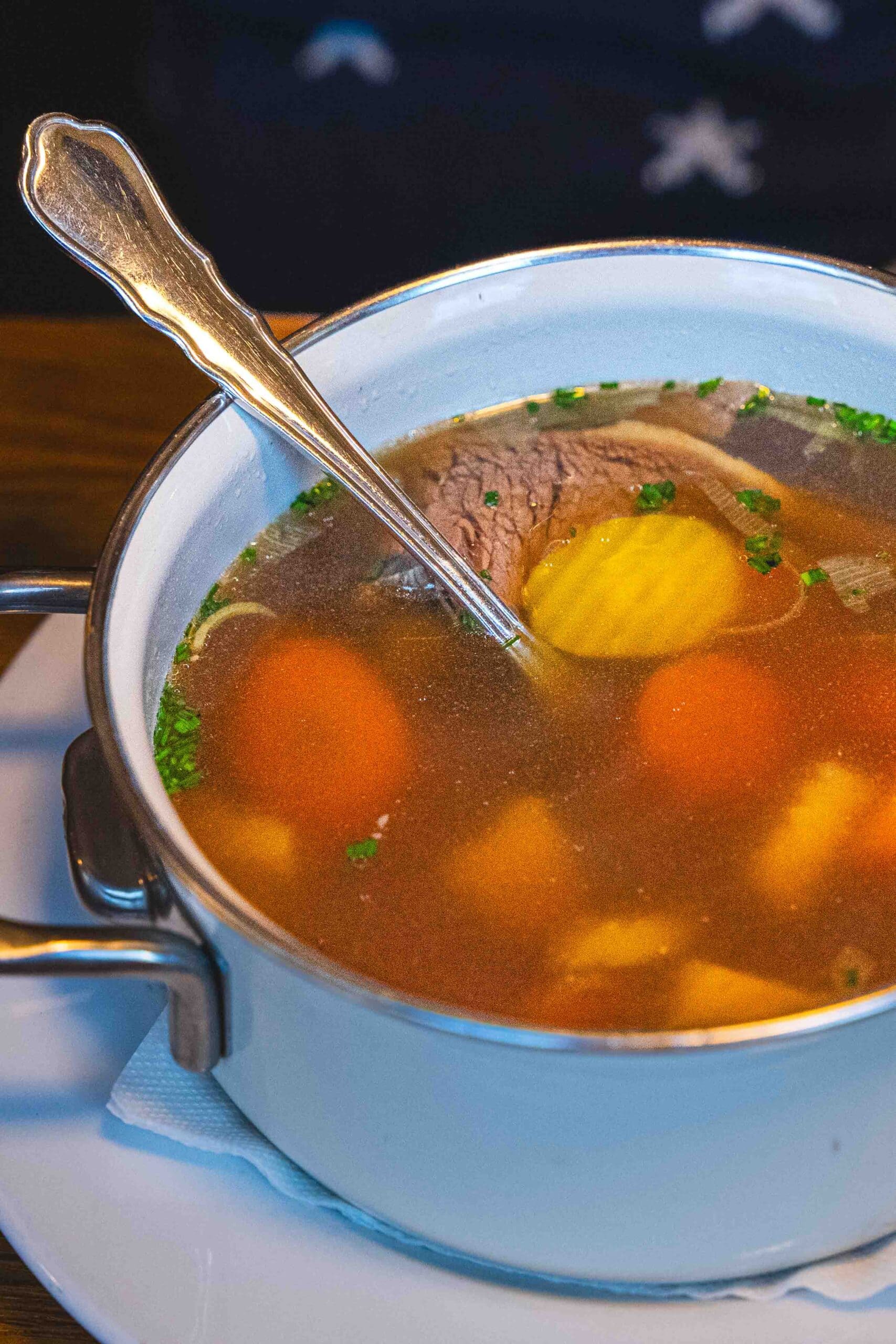
Jin had Gastwirtschaft Schilling saved on her Vienna-to-eat list, and we were over the moon to see it was just a few doors down the road from our hotel.
From the moment we stepped into Gastwirtschaft Schilling, I knew we were in for something good. The warm wood panelling and the old-school bar felt more like an Alpine village tavern than a bistro in the middle of Vienna.
I ordered Wiener schnitzel with potato salad (easily the best I’ve had to date), while Jin went for the tafelspitz (a classic Viennese dish of boiled veal in broth, served with crispy rösti, applesauce, and horseradish).
My schnitzel was perfection, but the tafelspitz? Absolutely next-level. If you go to Gastwirtschaft Schilling, order the tafelspitz. You can danke schön me later.
Besides authentic Austrian food, you’ll find a handsome selection of local and Czech beer on the menu.
Hours: 11:30 am to 11:00 pm
Menu & Reseravtions: website
Map Location
Schönbrunn Palace & Christmas Market
We made it to Schönbrunn Palace just in time for the last admission. While guided tours of the palace and gardens are available, we opted for only an entry ticket with an audio guide for the Imperial Tour.
Our visit took about an hour, just right for a glimpse of imperial life without feeling rushed or bored.
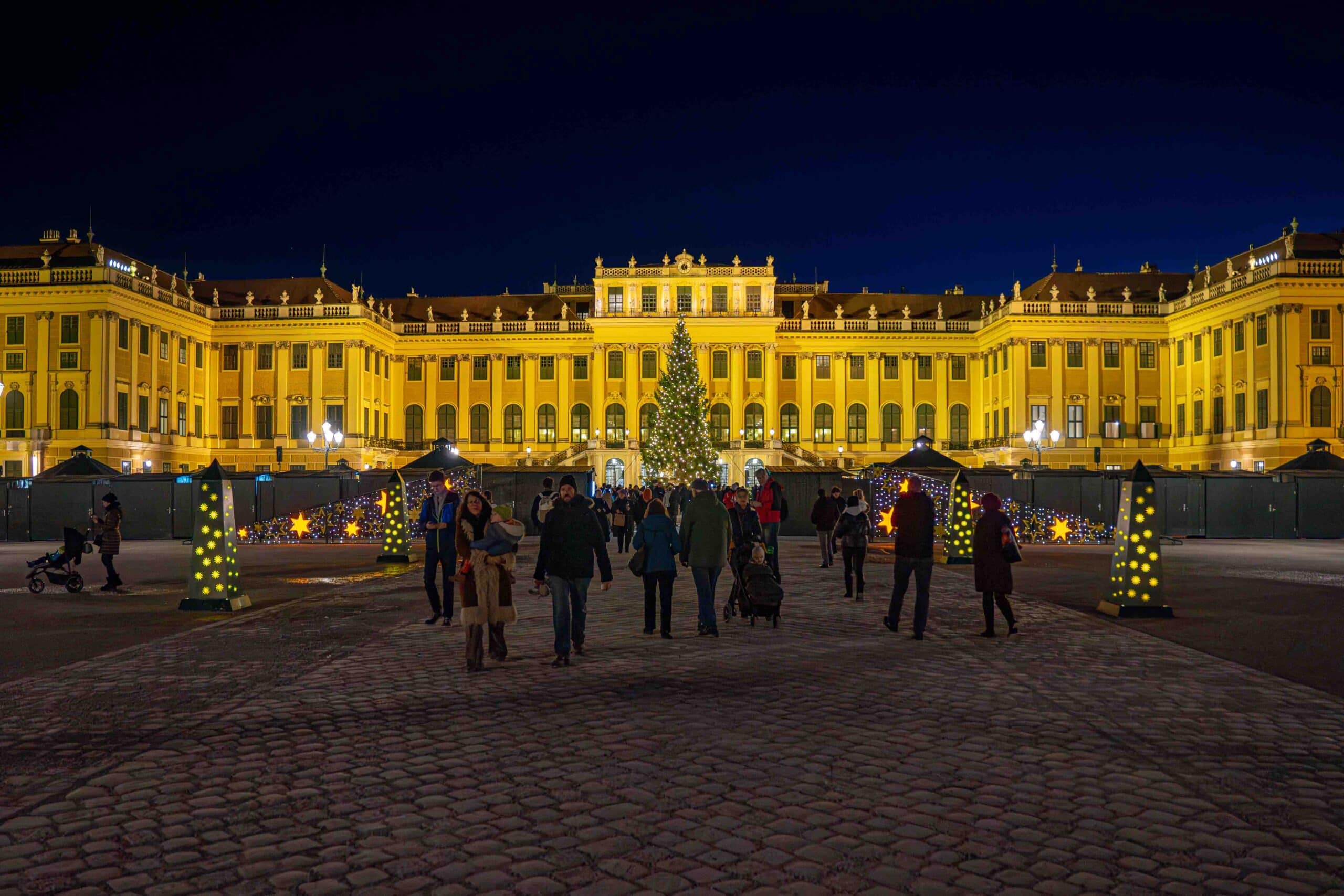
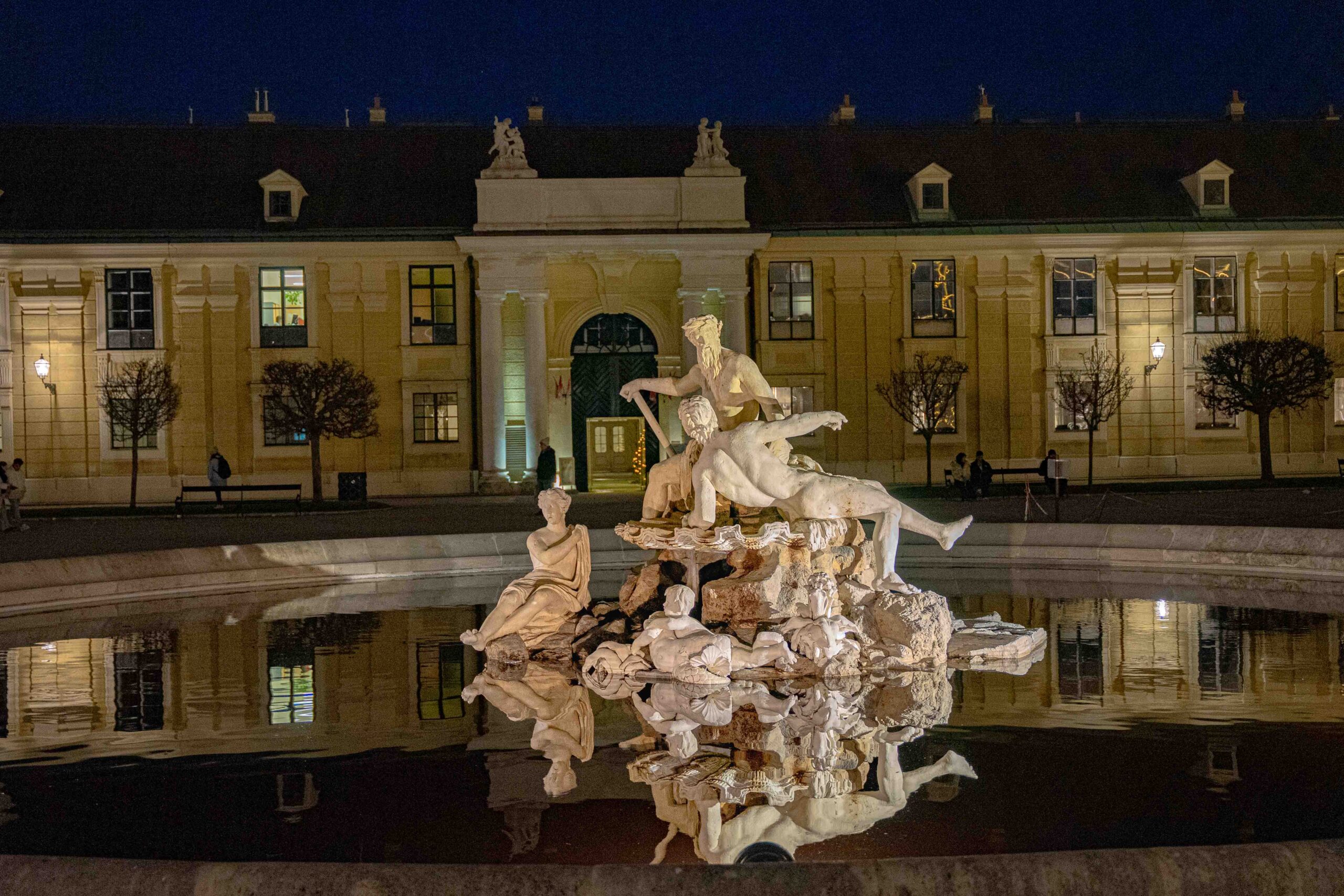
There are several ticket options for visiting Schönbrunn, and to be honest, we found the choices a bit overwhelming. After some debate, we settled on the Imperial Tour, which was a great decision. If you’re planning a visit, you can check out the ticket options on the Schönbrunn Palace official website beforehand.
A heads-up: photography isn’t allowed on the Imperial Tour. We’re not sure if that applies to the entire palace, but either way, be prepared to soak it all in with your eyes rather than your camera.
Imperial Tour
The Imperial Tour at Schönbrunn Palace takes you through 24 rooms, offering a glimpse into the private lives of Emperor Franz Joseph and Empress Elisabeth (Sisi), who lived here until the monarchy ended in 1918.
As expected in an imperial palace, it’s an overdose of gold-trimmed walls, crystal chandeliers, and frescoed ceilings—a clear display of Habsburg wealth and power. But not every room is about luxury.
Franz Joseph’s study reflects his disciplined, no-frills lifestyle. It is simple, spartan even, with dark wood furniture and a functional desk where he worked long hours. His bedroom is equally modest. It’s far from what you’d expect for the ruler of a vast empire.
According to the audio guide, he believed in serving his people and spent money on the empire rather than on himself.
On the other hand, Sisi’s rooms are the opposite: extravagant and unapologetically Baroque.
After oohing and aahing at the lavish interiors, we had a few minutes to rush through the gardens before dark.
Schönbrunn Christmas Market
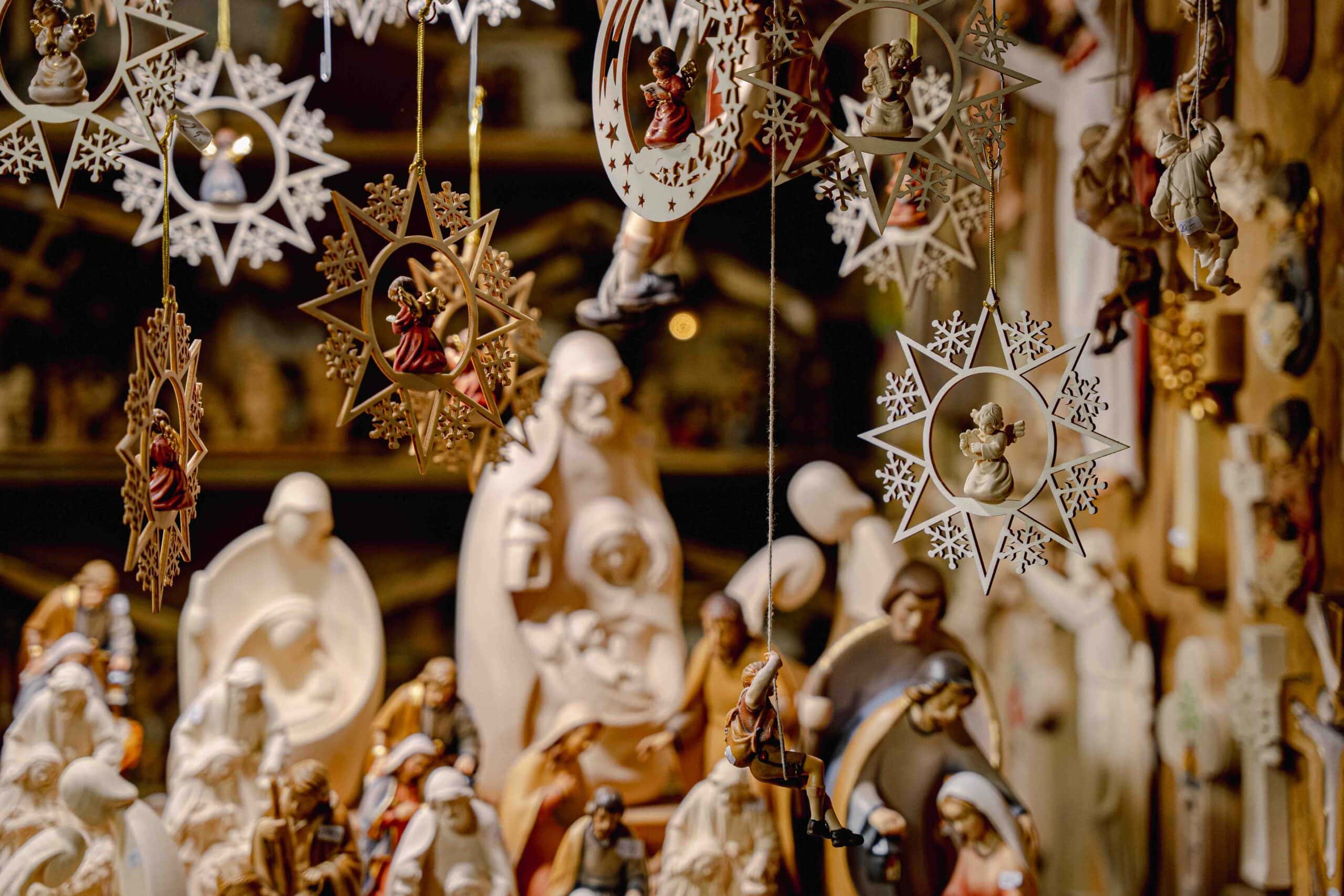
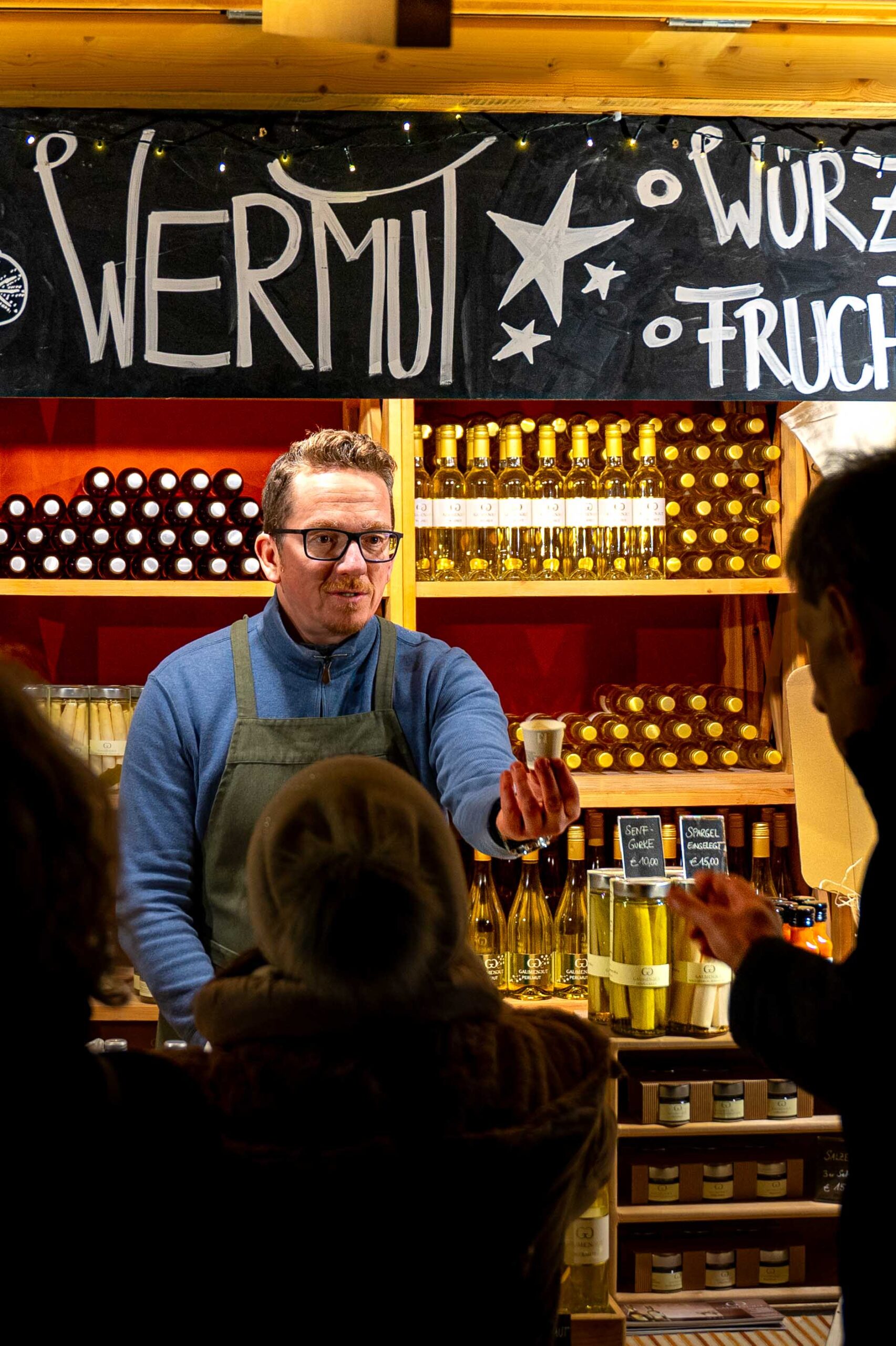
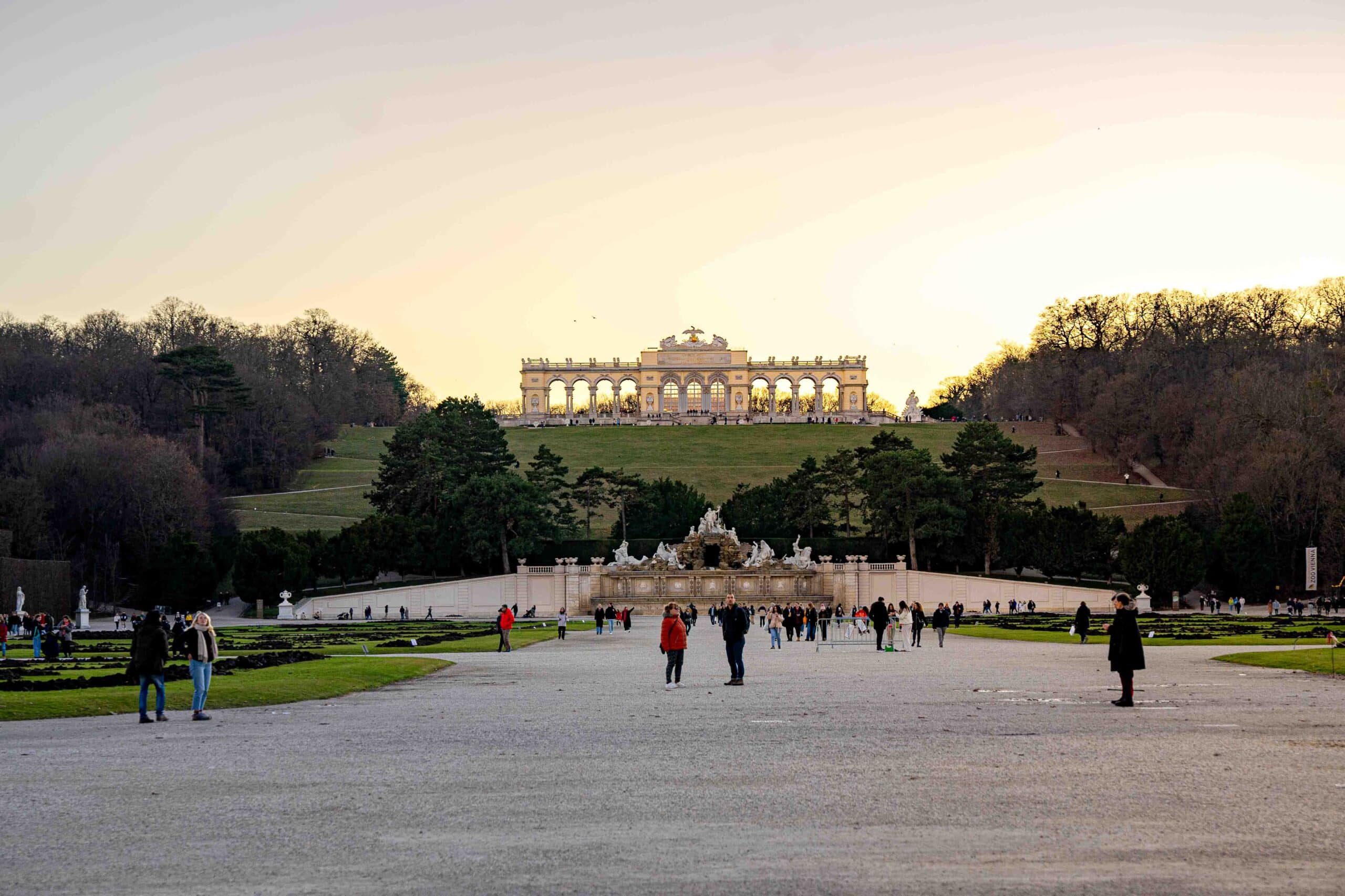
Schönbrunn Palace hosts one of Vienna’s longest-running Christmas markets from mid-November to the first week in January.
With over 90 stalls, the market has plenty to explore, from handmade crafts to seasonal treats and hot alcoholic drinks. There’s a stage for live performances, ice skating and curling rinks, and a bicycle-operated merry-go-round to entertain the kids.
When we visited, we caught a beautiful round of carol singing while I nursed a glühwein and Jin a nice hot chocolate.
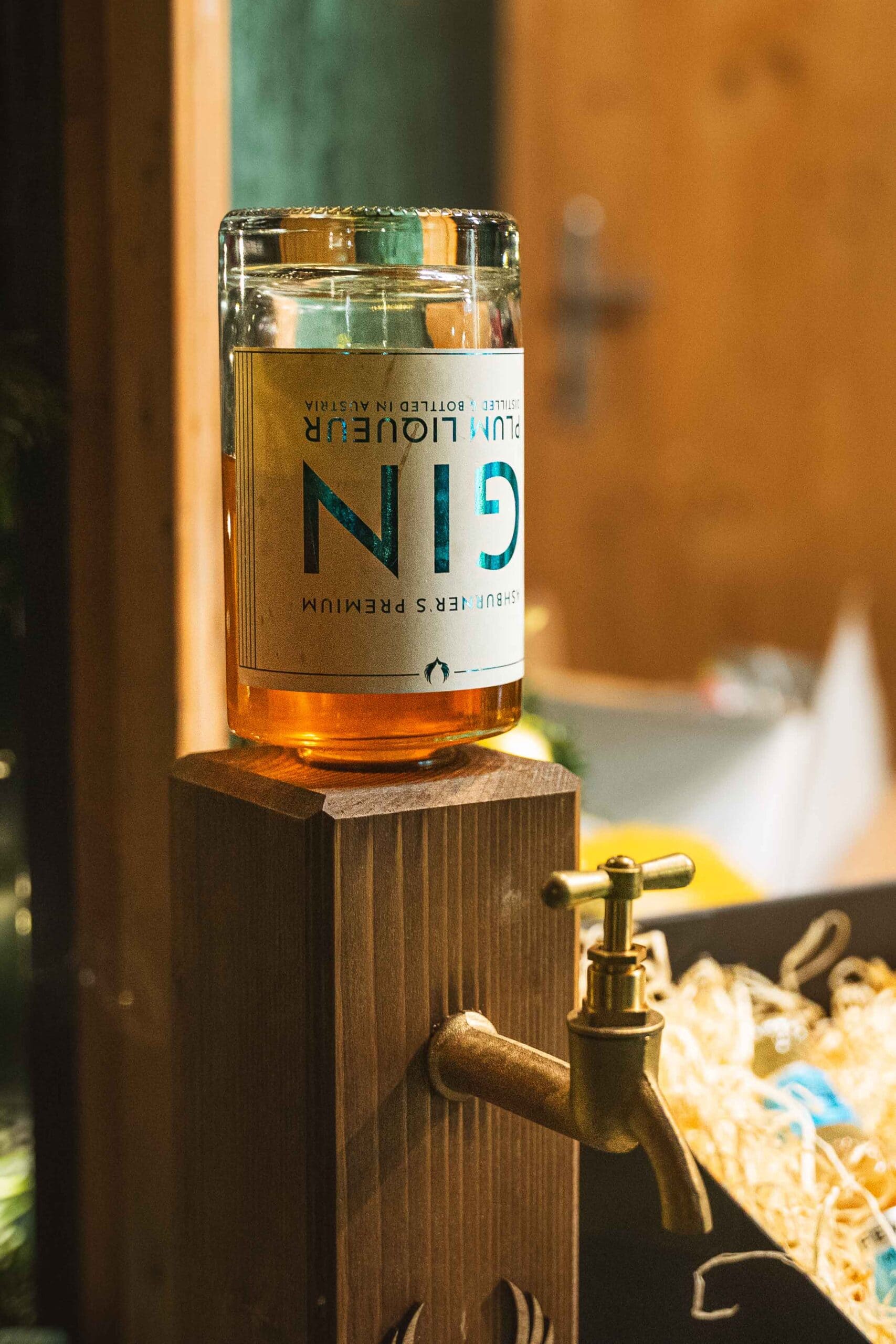
I especially loved the variety of alcoholic Christmas drinks at this market. There was hot wine, gin, and rum concoctions to kickstart our festive season in Vienna. Always a welcome relief from the dry Middle East where we came from.
Day 2: Architecture Tour, Food, & Christmas Markets
We love creating our own DIY tours based on a specific theme whenever we visit a new city. In Vienna, we focused on unique architecture, which turned out to be a great way to explore different districts while making full use of our Vienna City Card on the city’s excellent public transport system.
After that incredible buffet breakfast at our hotel, we were fueled up and ready to discover some seriously cool brick and mortar.
Below is a brief overview; you’ll find a detailed guide on our Vienna architecture tour here.
In the evening, we wallow in the festive atmosphere at various Advent markets in the city centre.
For navigation, we relied on Google Maps to show us the best transport options. Exploring Vienna independently is an absolute breeze. You won’t see the – cliche alert- get lost in the alleys here. We tried, and we found it impossible to get lost in Vienna.
A DIY Architecture Tour of Vienna’s Most Beautiful Buildings
Google Maps led us to the nearest tram stop, and soon we were cruising along Ringstraße. From the window, we caught glimpses of some of Vienna’s most famous landmarks—the Parliament Building, City Hall, and Vienna Stock Exchange—before cruising along the Donaukanal.
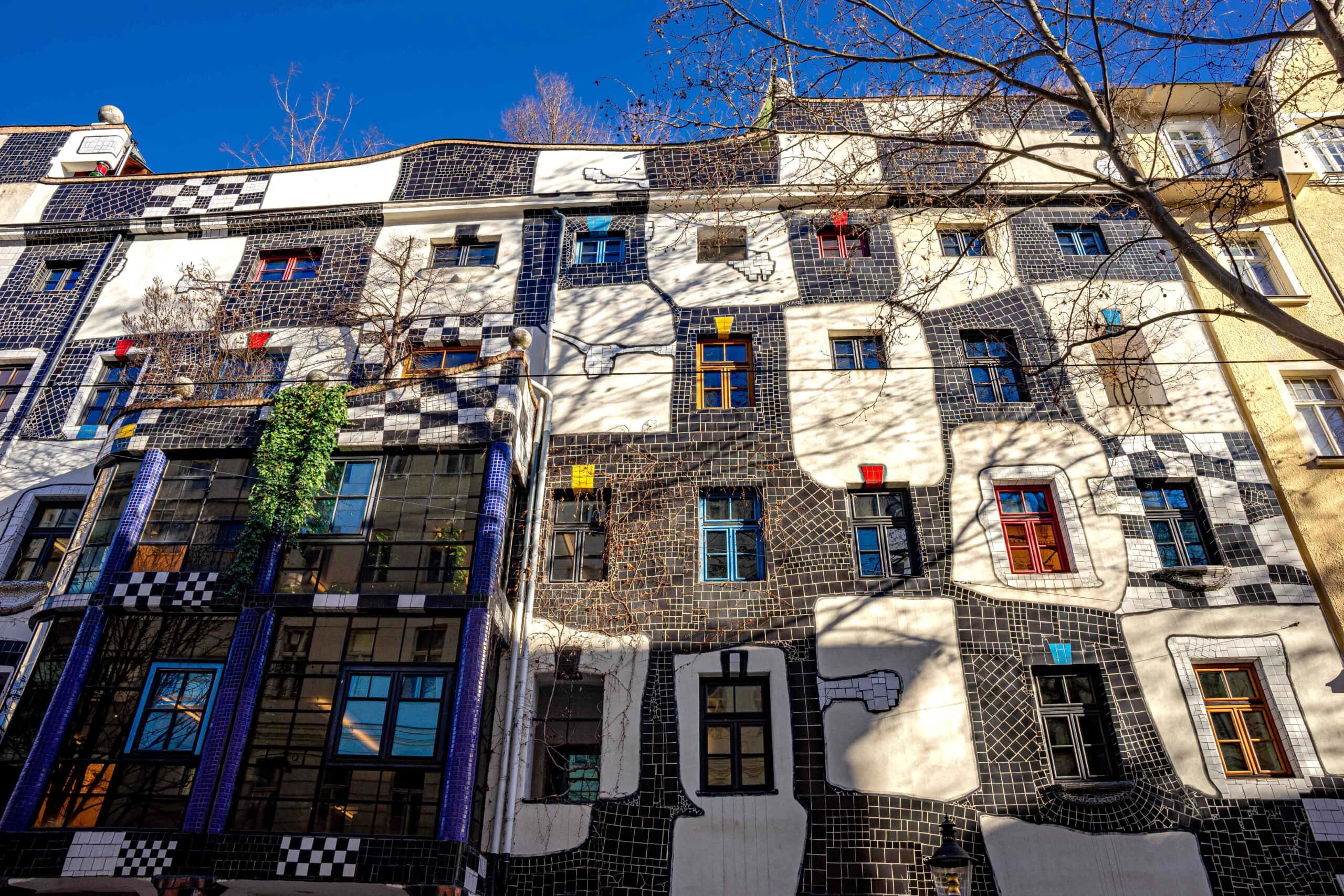
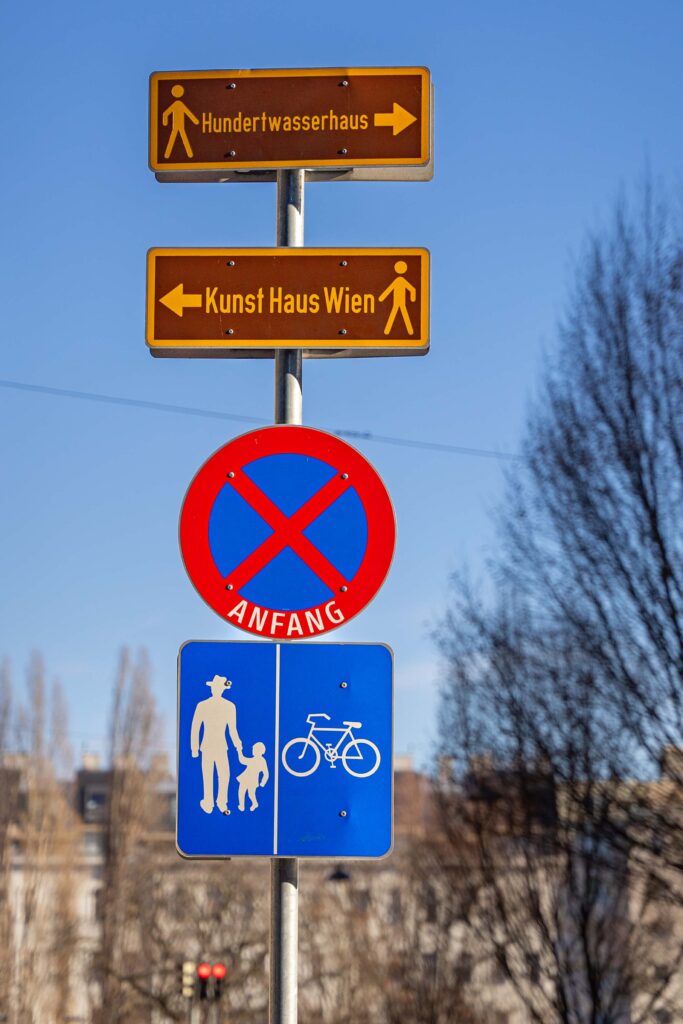
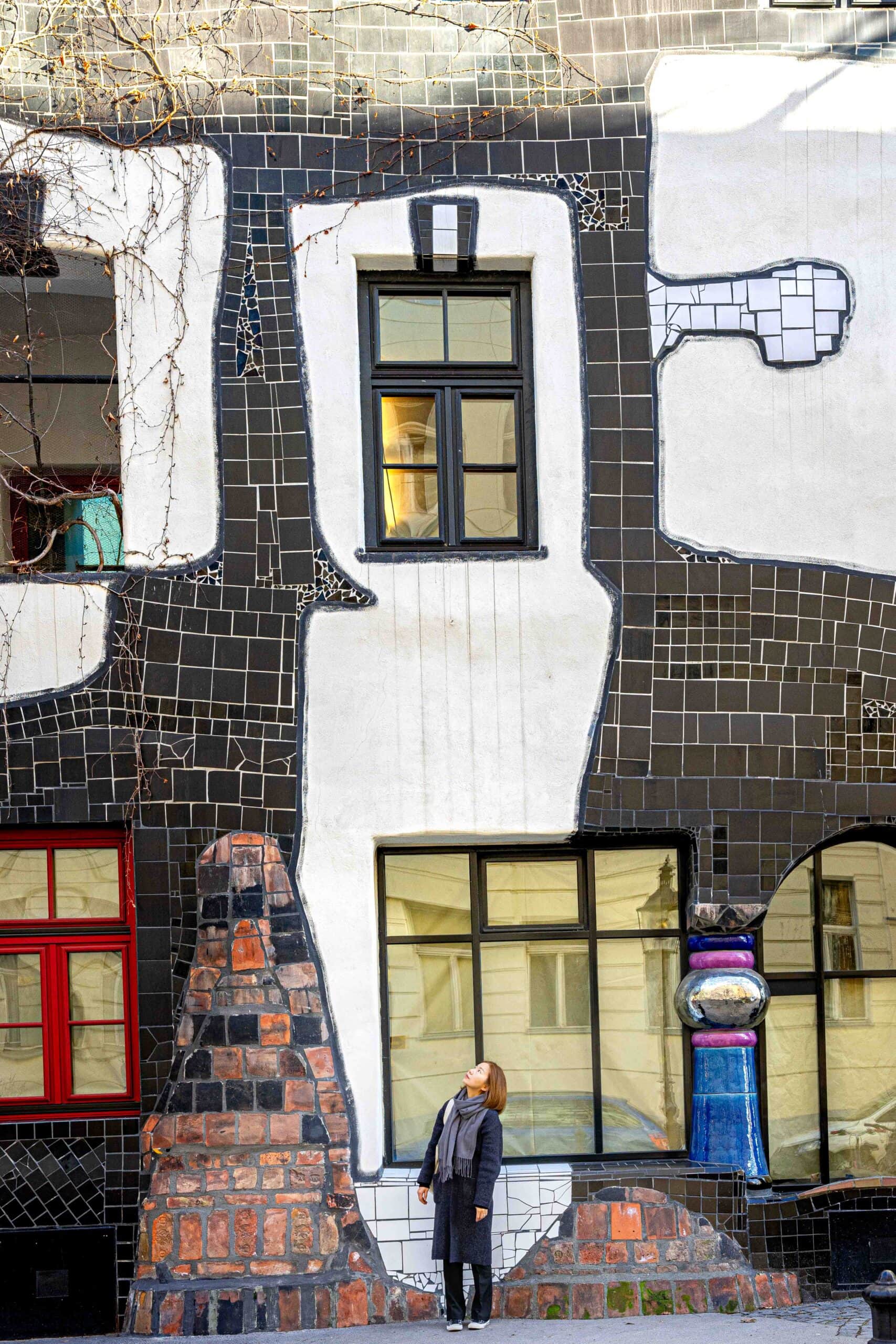
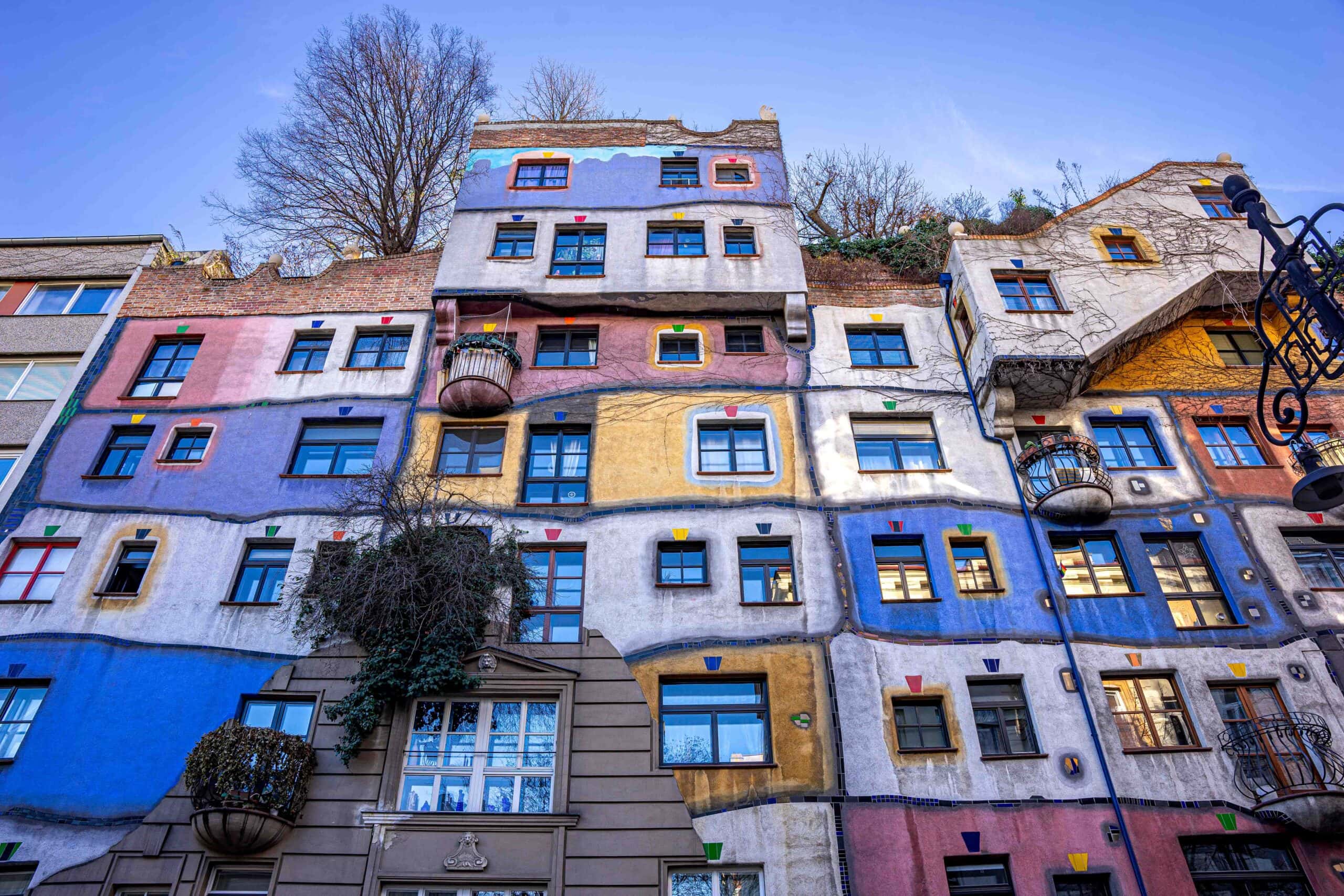
Arriving in the Landstraße District, we visited two of Vienna’s quirkiest buildings: Kunsthaus Wien and Hundertwasserhaus.
Both were designed by Friedensreich Hundertwasser and break every rule of traditional architecture. Irregular shapes, uneven floors, and a riot of colours bring his vision of organic, nature-inspired design to life.
We loved the playful details, from undulating facades and mosaic tiles to greenery woven into the buildings, making them a striking contrast to Vienna’s more classical style.
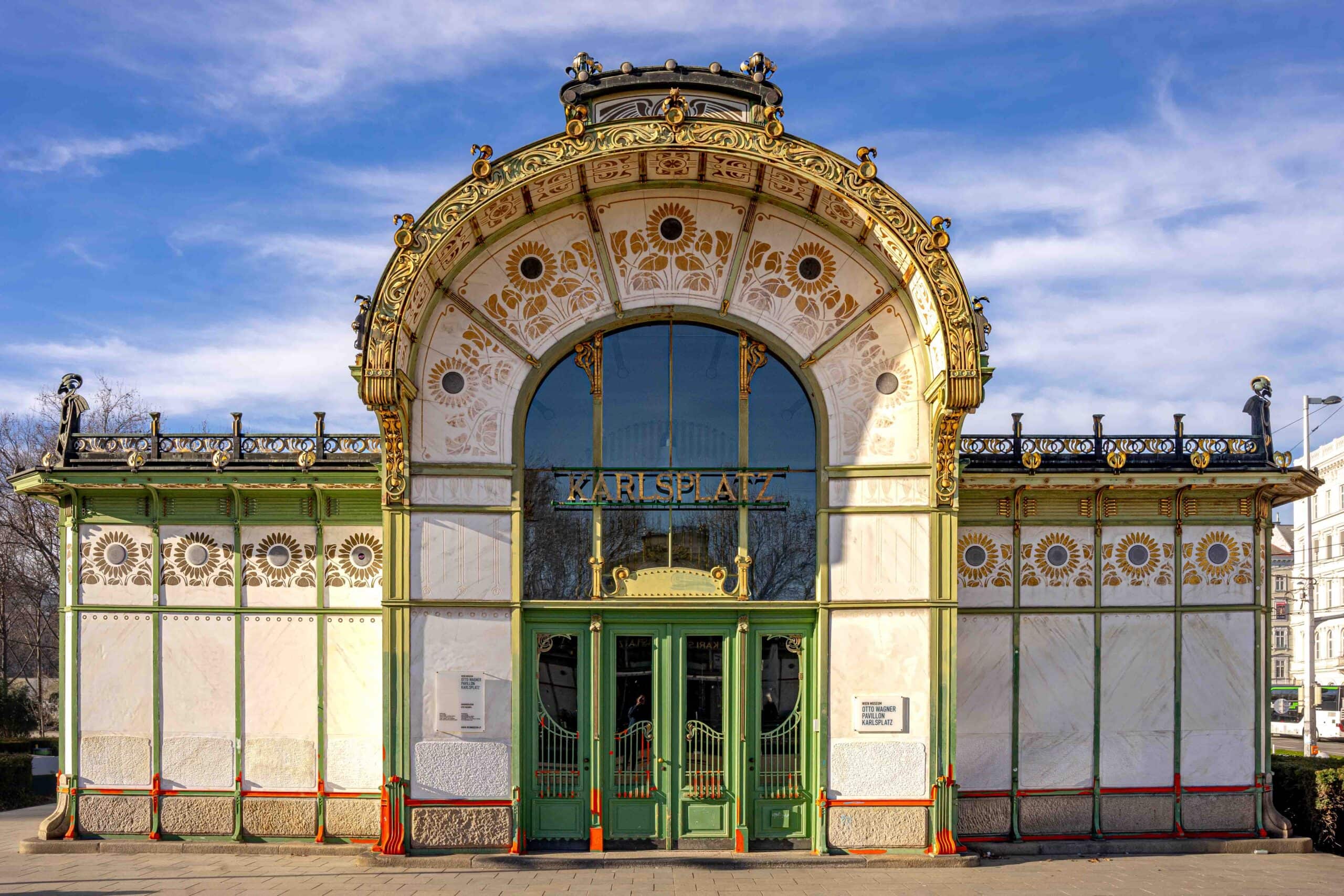
Next, another tram took us to the First District, where we explored some of Vienna’s best Secessionist architecture, starting with Otto Wagner’s masterpieces. His Karlsplatz Pavilion stands out with its elegant symmetry, gilded ornamentation, and delicate floral motifs, marking a shift toward modern design.
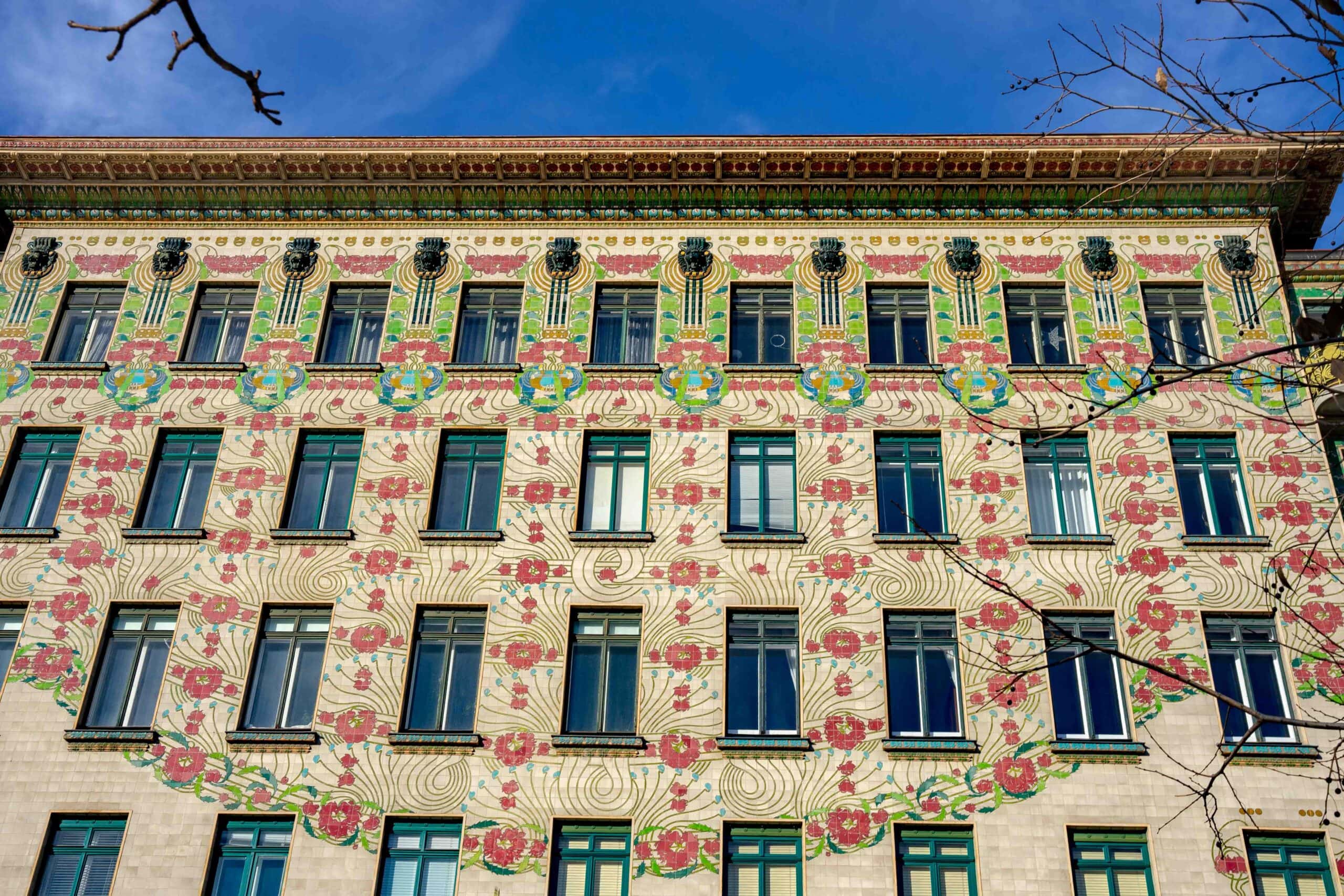
Meanwhile, his Majolikahaus and Musenhaus on Linke Wienzeile blend function and decoration, featuring colourful ceramic facades, geometric patterns, and clean lines that make everyday buildings feel like works of art.
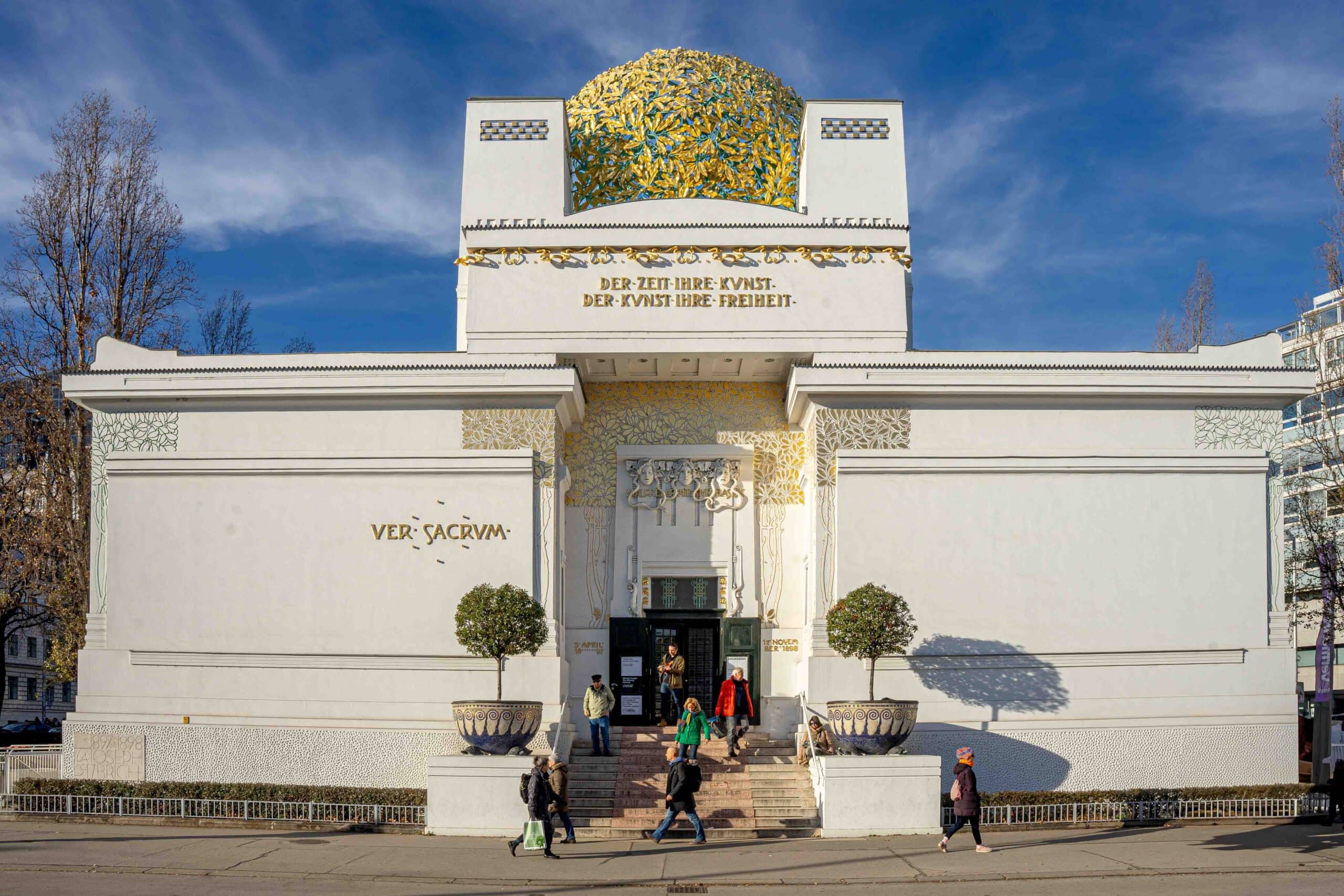
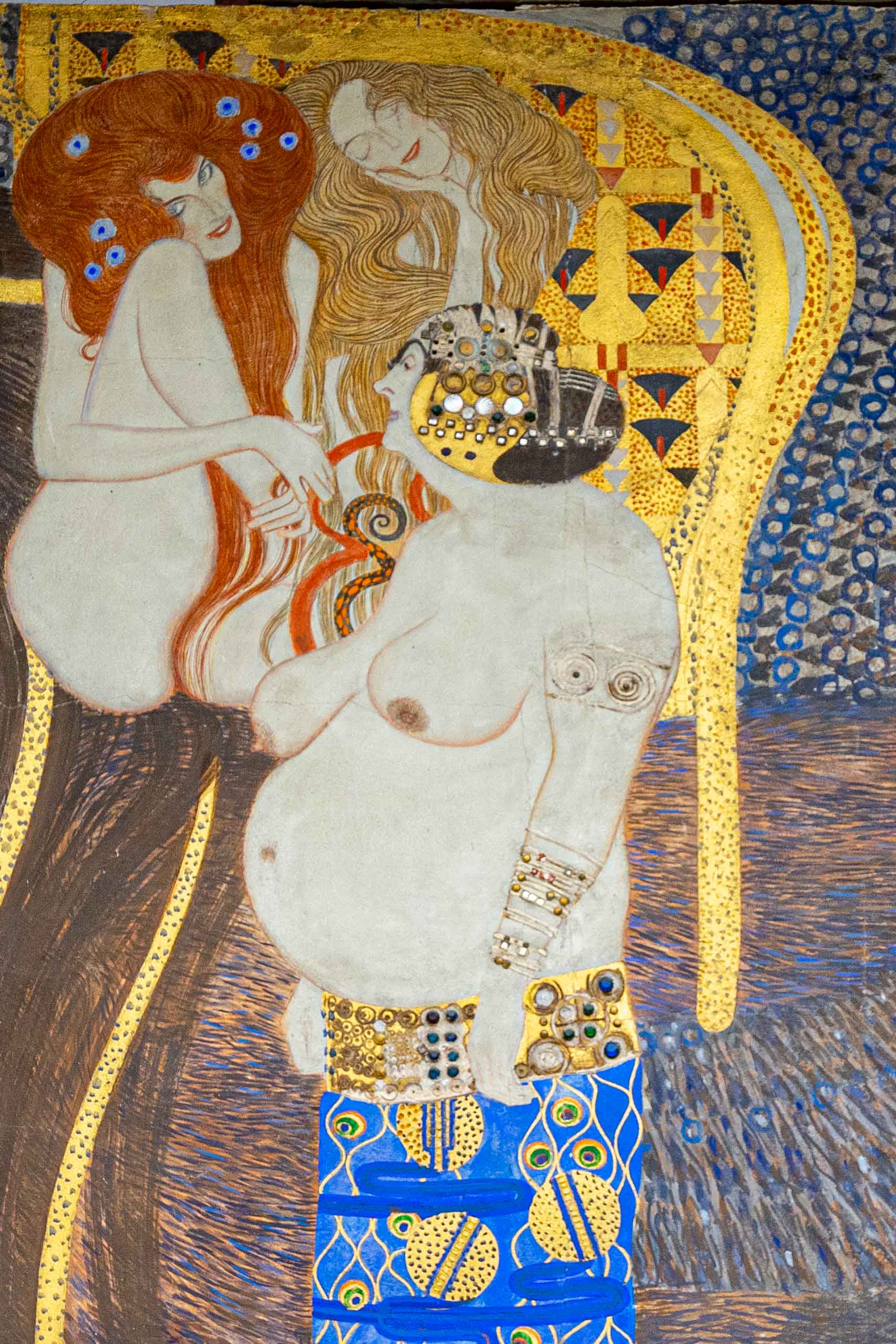
Then there’s the Secession Building, designed by Joseph Maria Olbrich and perhaps the most iconic of the movement. With its intricate laurel-leaf dome, locals have fittingly nicknamed it the Golden Cabbage.
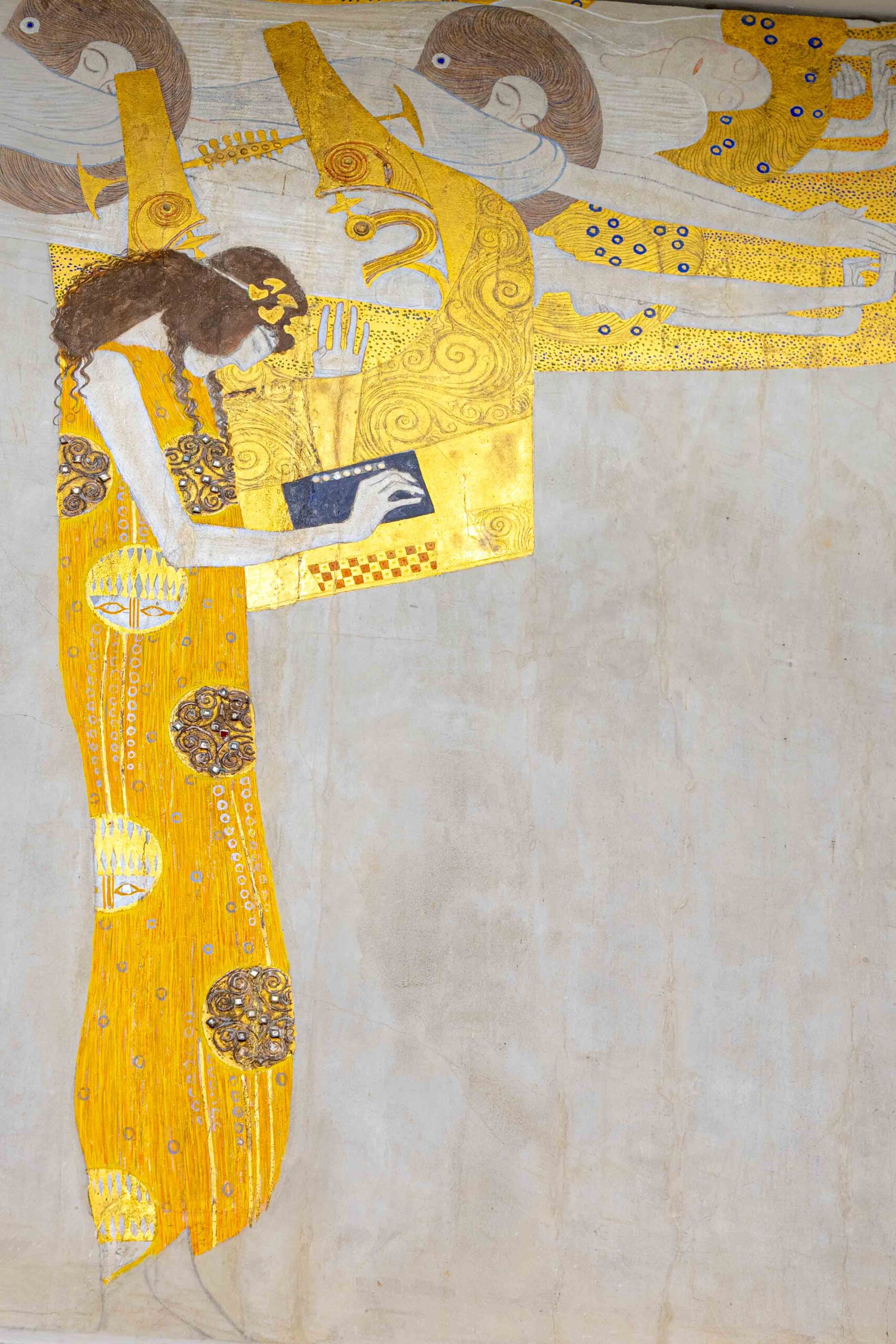
Inside, we saw Gustav Klimt’s monumental Beethoven Frieze, a sweeping, gold-accented mural stretching across three walls. Its flowing lines and dreamlike figures, paired with classical music blasting from your audioguide, bring Beethoven’s Ninth Symphony to life. Read our post on the Beehoven Frieze to see why it’s a must on your trip to Vienna.
Get the audio guide (free with the Vienna City Card) for the full experience.
You can danke schön us later.
Lunch at Ribs of Vienna
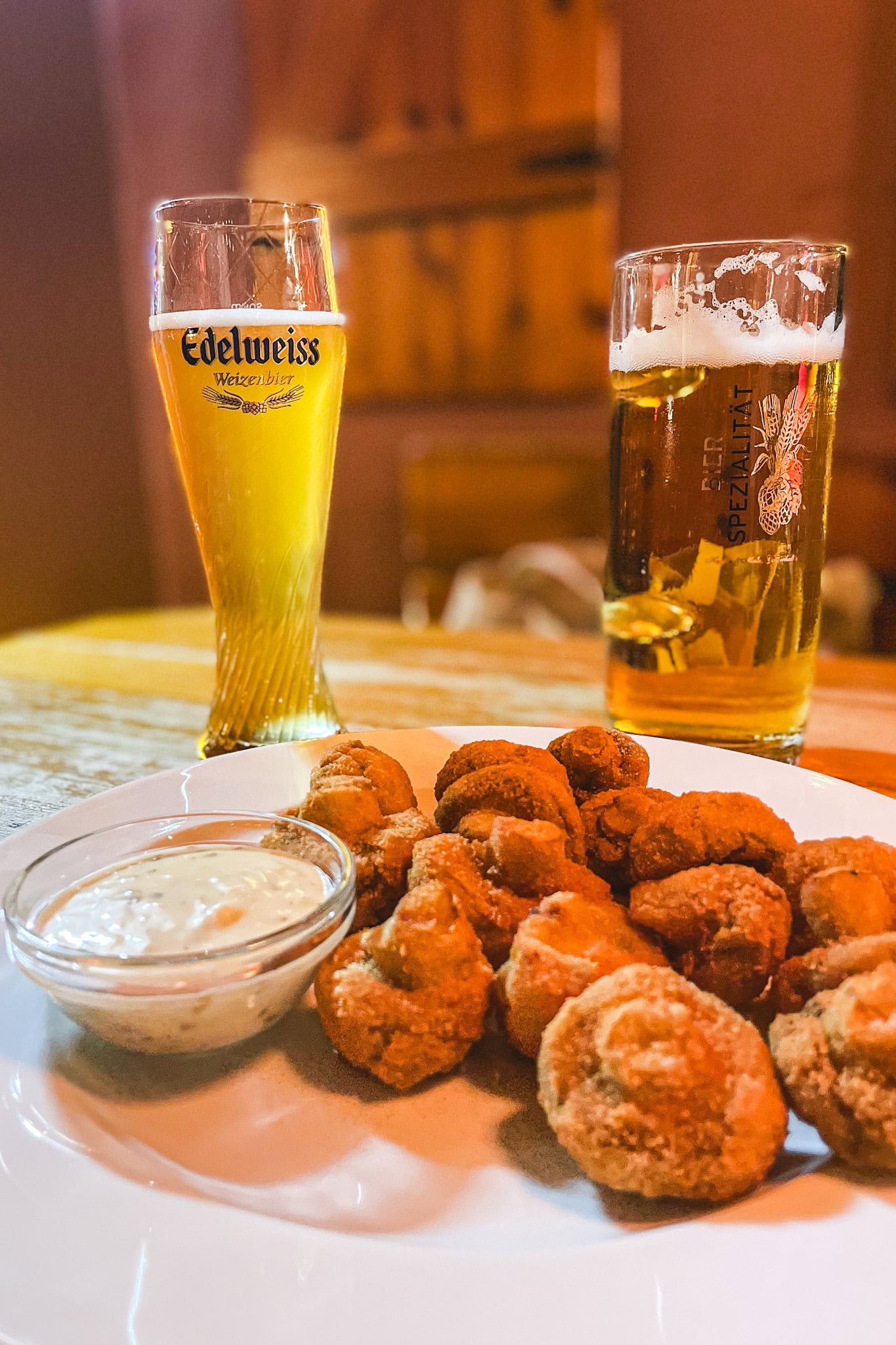

For lunch, we found ourselves in a barrel-vaulted cellar in central Vienna for what’s rumoured to be the best ribs in the city. Some serious sticky fingers to be had here!
The place was packed when we arrived, but luckily, we snagged a table after a short wait.
We started with crumbed mushrooms, then shared some of their famous spareribs, washed down with draft beer, all absolutely fantastic. While their signature Ribs of Vienna steal the spotlight, the menu also features creative options like Mexican, Hawaiian, or Tokyo ribs, steaks, and tempting desserts.
Hours:
Mon–Fri: 12:00–15:00, 17:00–24:00
Sat, Sun, Public Holidays: 12:00–24:00
Menu & Reservations: Website
Location
Stepansdom
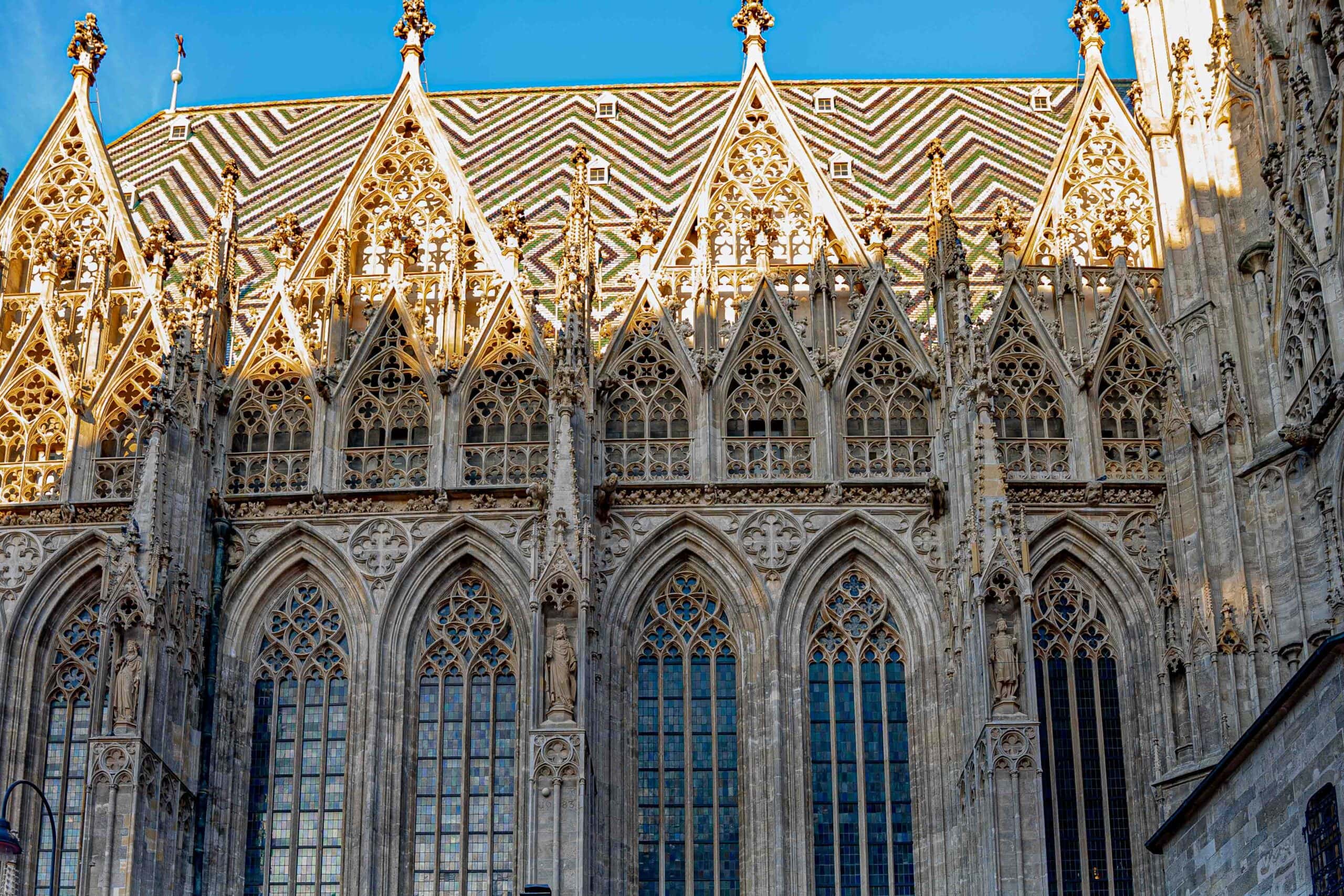
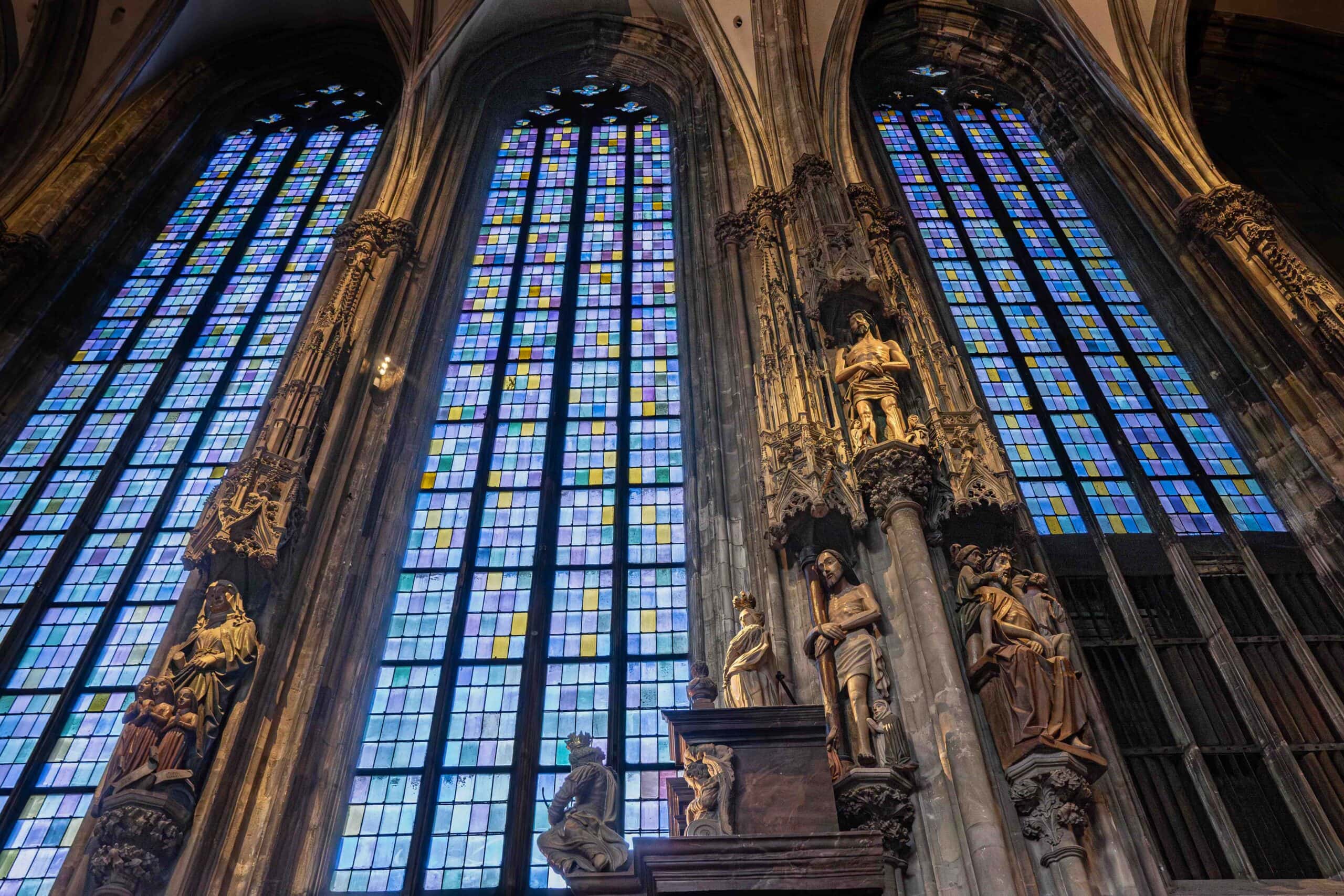
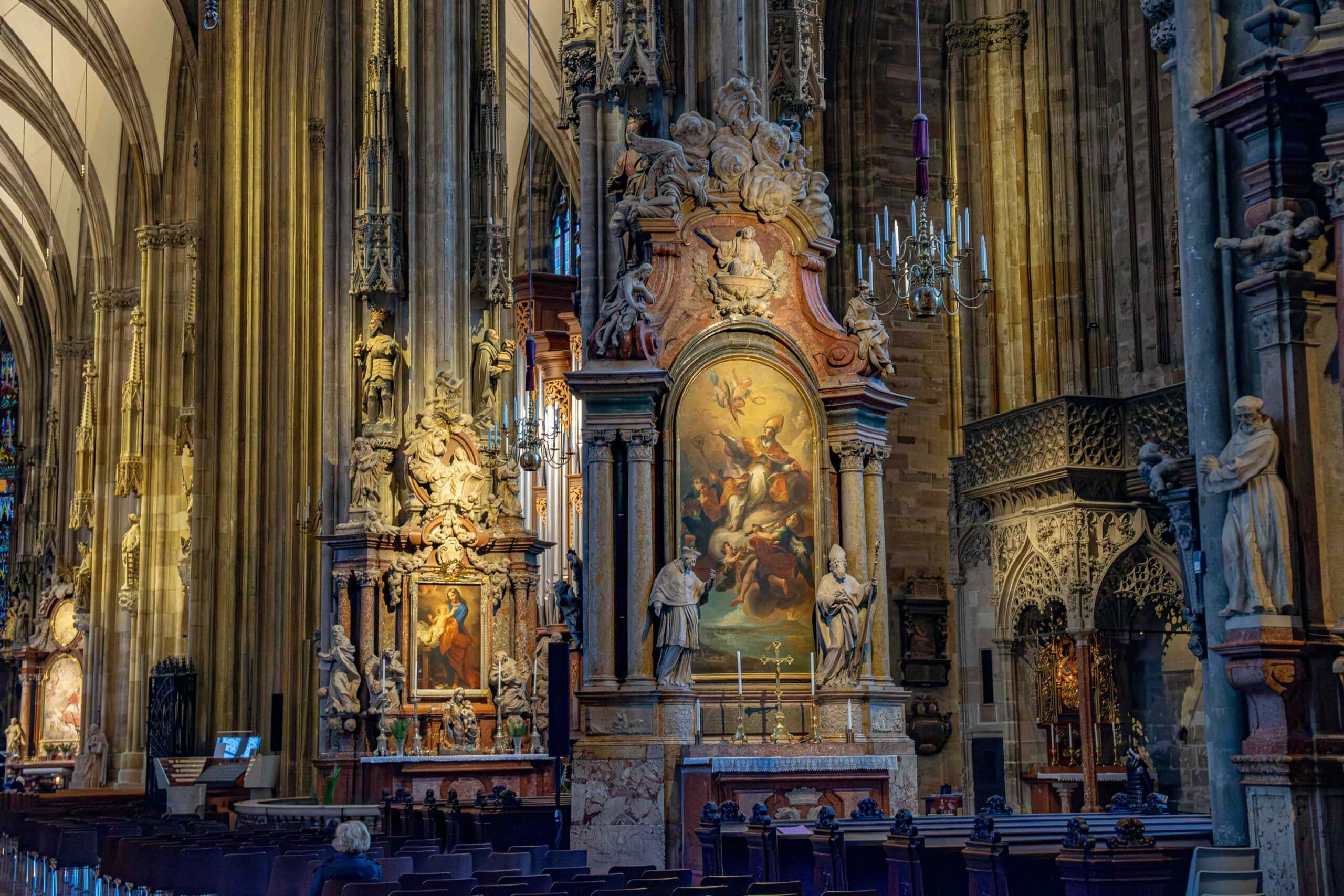
After lunch, we gave our fingers one last lick and walked to St. Stephen’s Cathedral (Stephansdom), Vienna’s most famous church, keeping with our architecture theme for the day.
Also known as Steffl, Austria’s tallest church is a symbol of Vienna’s identity and post-war resilience.
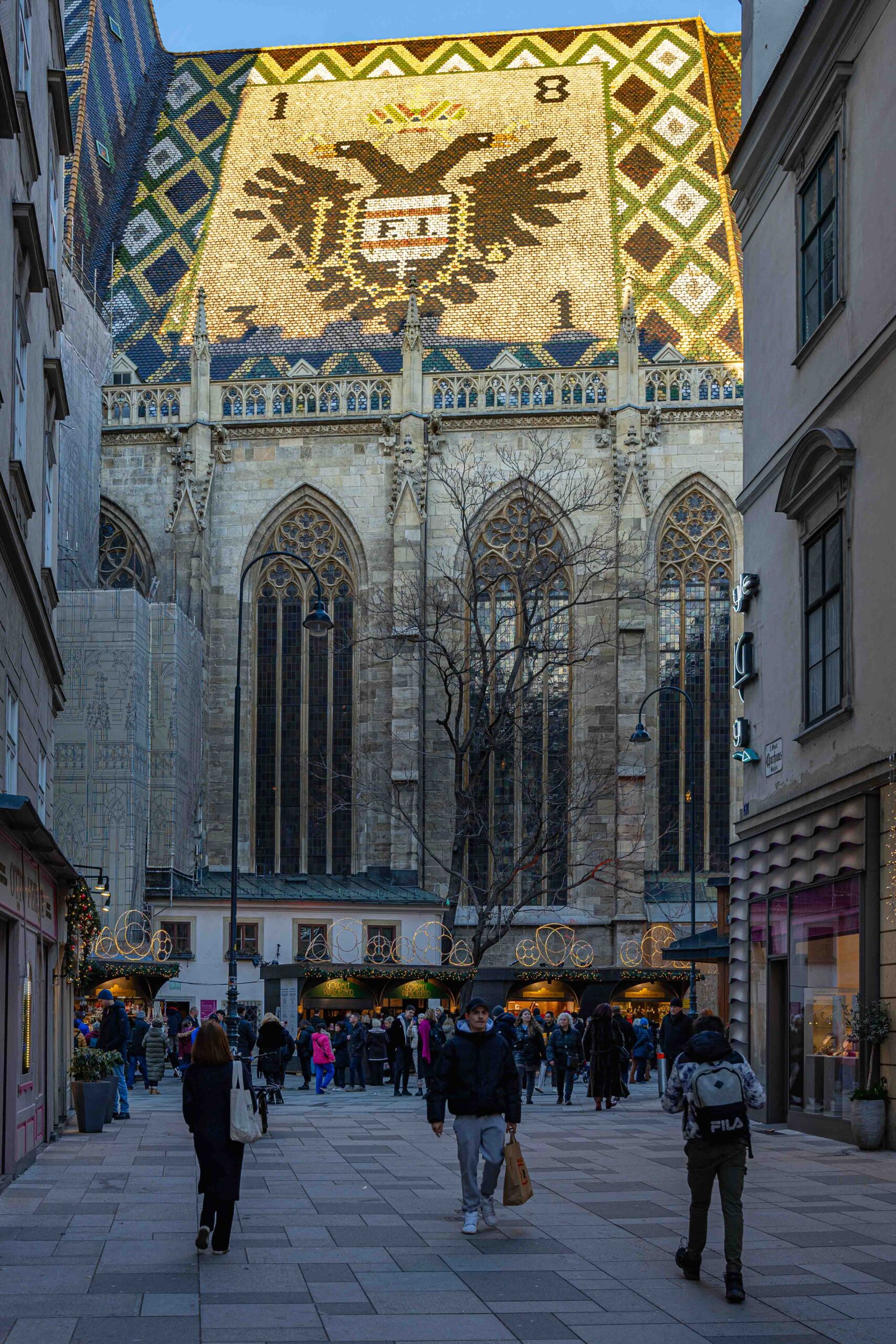
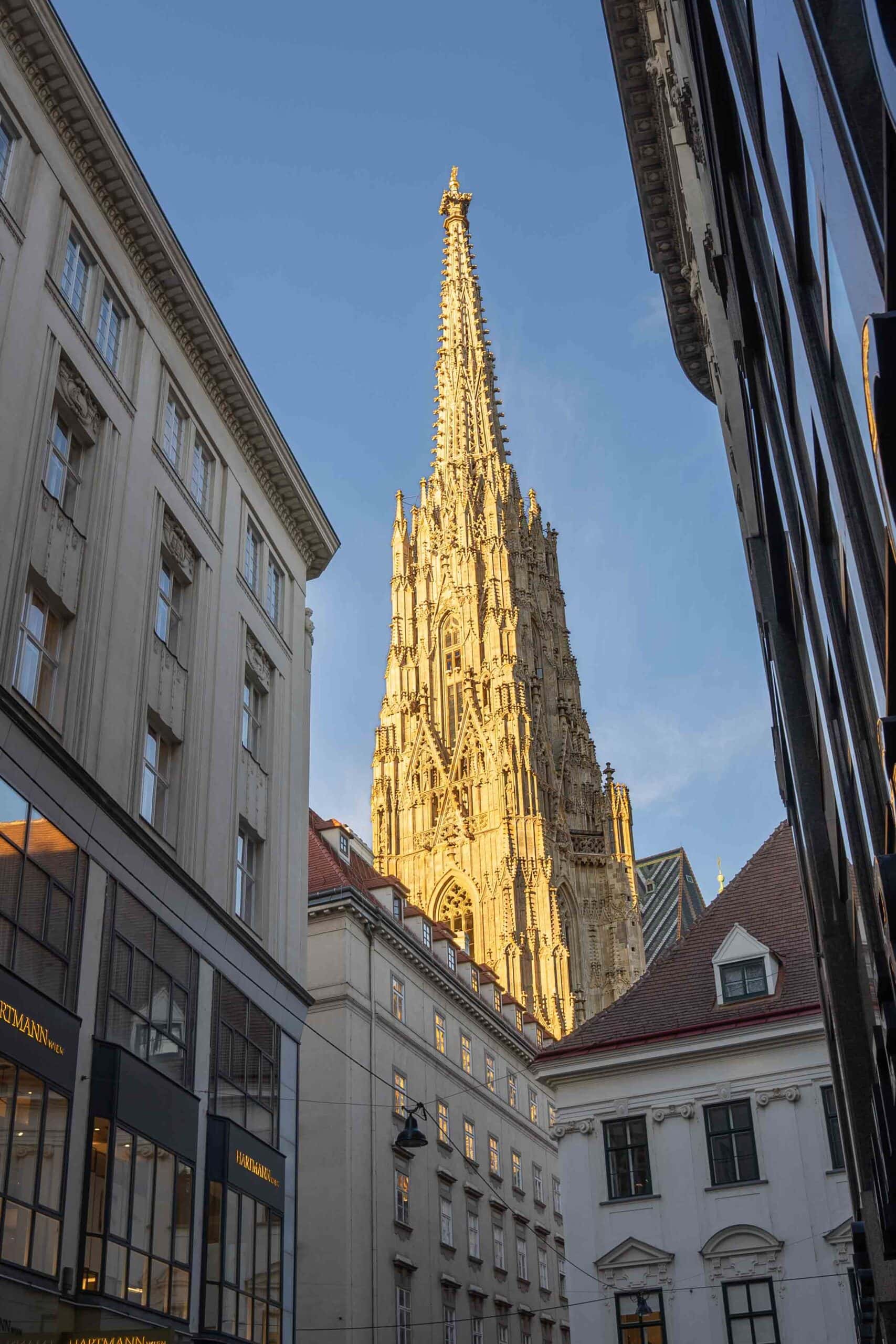
It was easy to find Stepansdom. Its multicoloured tile roof, featuring double-headed Habsburg eagles and a towering Gothic spire, gleamed in the late afternoon sun. Being so tall, we spotted it when we left the restaurant, so we didn’t even need Google Maps to find it.
Inside, St. Stephen’s is a towering forest in stone, with massive columns stretching up to the rib-vaulted ceiling. We loved the simple stained glass windows, which contrast beautifully with the ornate altars and side chapels.
Entry to the central nave is free (which we thought was good enough). Access to the catacombs and towers requires a ticket, which you can buy at the entrance—cash only.
Hours:
Mon-Sat 6.00 – 22:00
Sundays and public holidays 7.00 to 22:00
Stroll Along the Graben
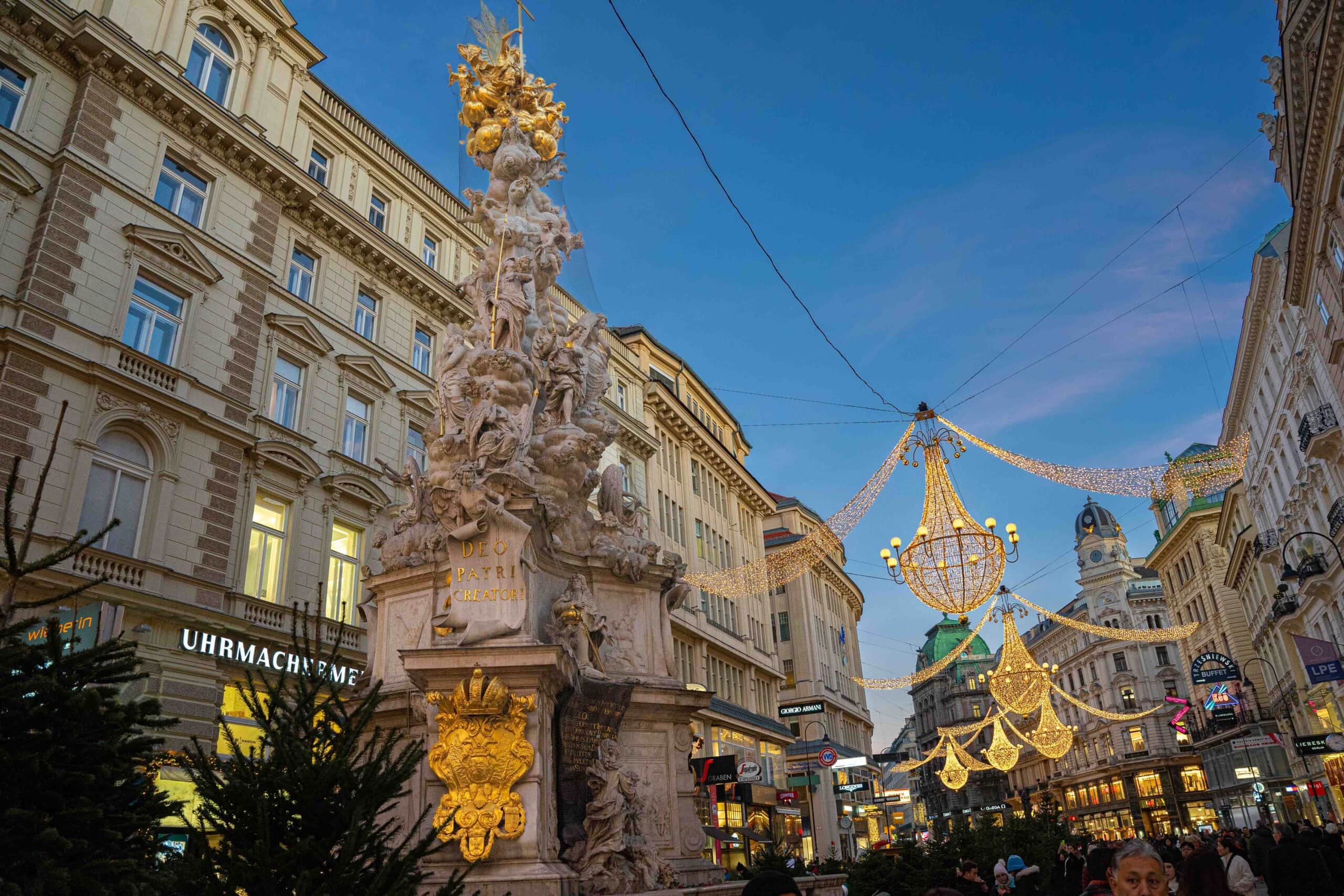
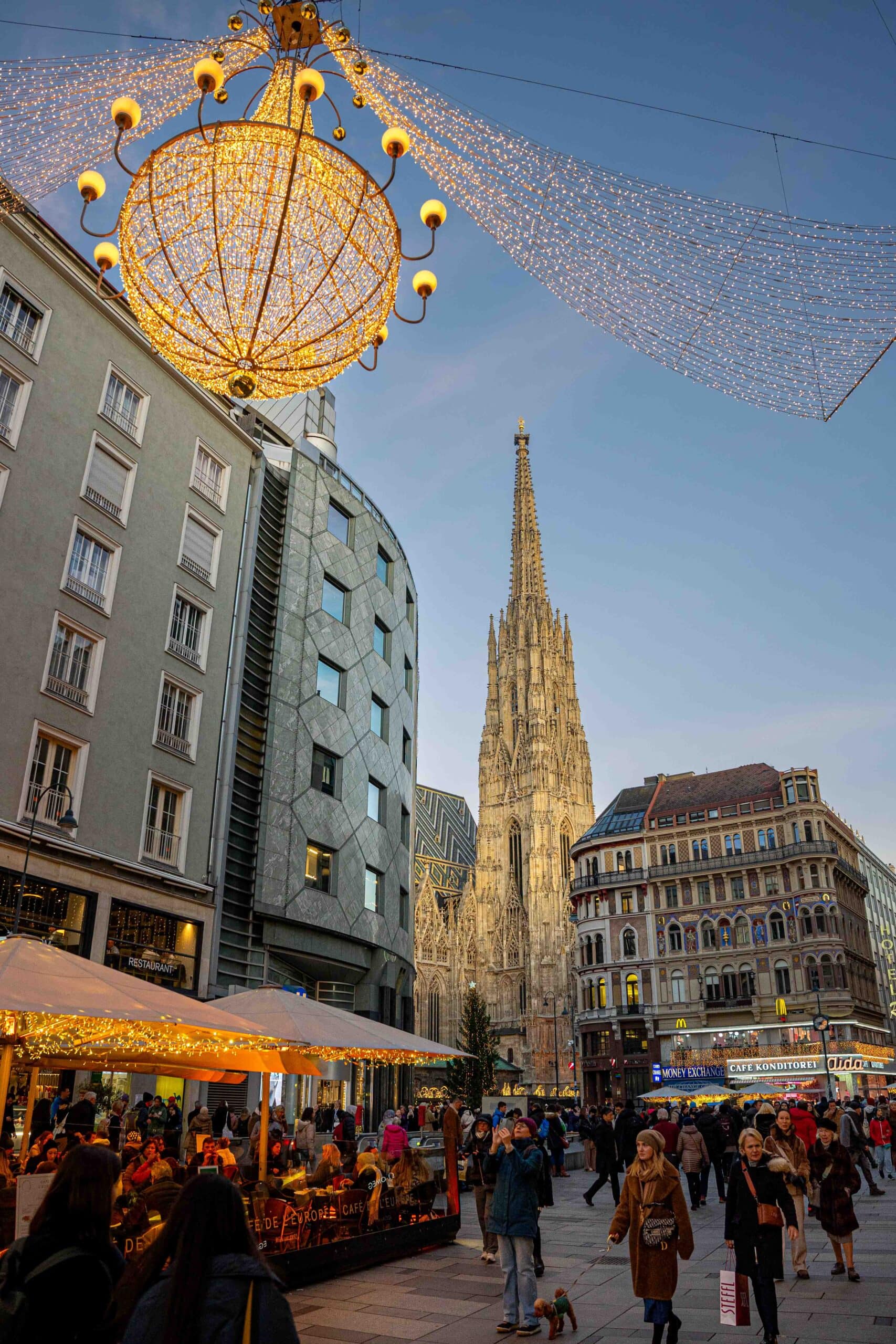
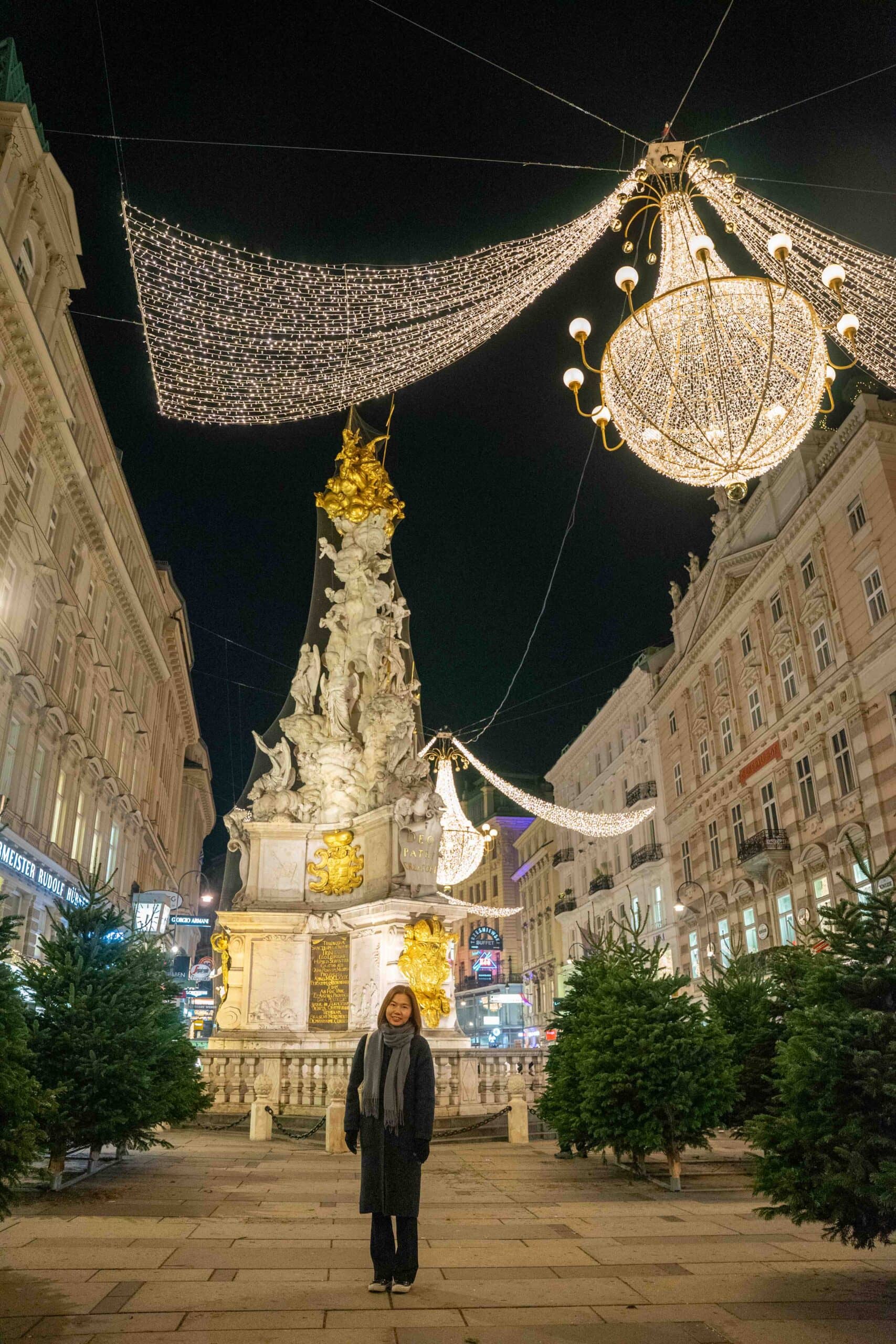
The Graben is Vienna’s most famous pedestrian street and is pure eye candy. This elegant boulevard is lined with historic buildings, luxury shops, and grand cafés. At its centre stands the Plague Column (Pestsäule), an elaborate Baroque monument built in gratitude for the city’s survival after the 17th-century plague.
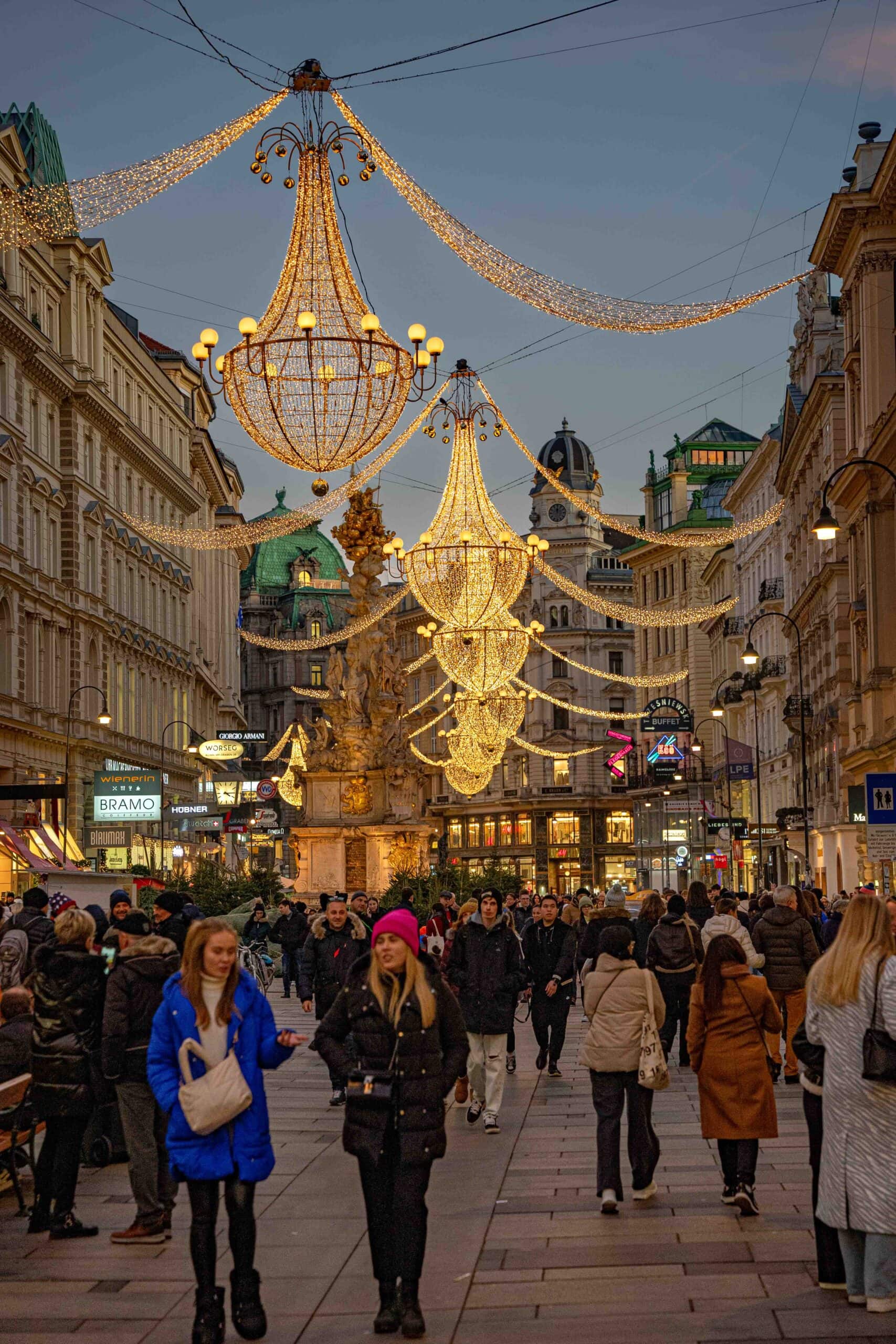
In December, the Graben becomes even more magical than usual, with stunning chandeliers suspended above the street. Strolling hand in hand past the classy storefronts and famous cafés under the golden glow of the chandeliers sure is a nice way to spend some time.
Christmas Markets
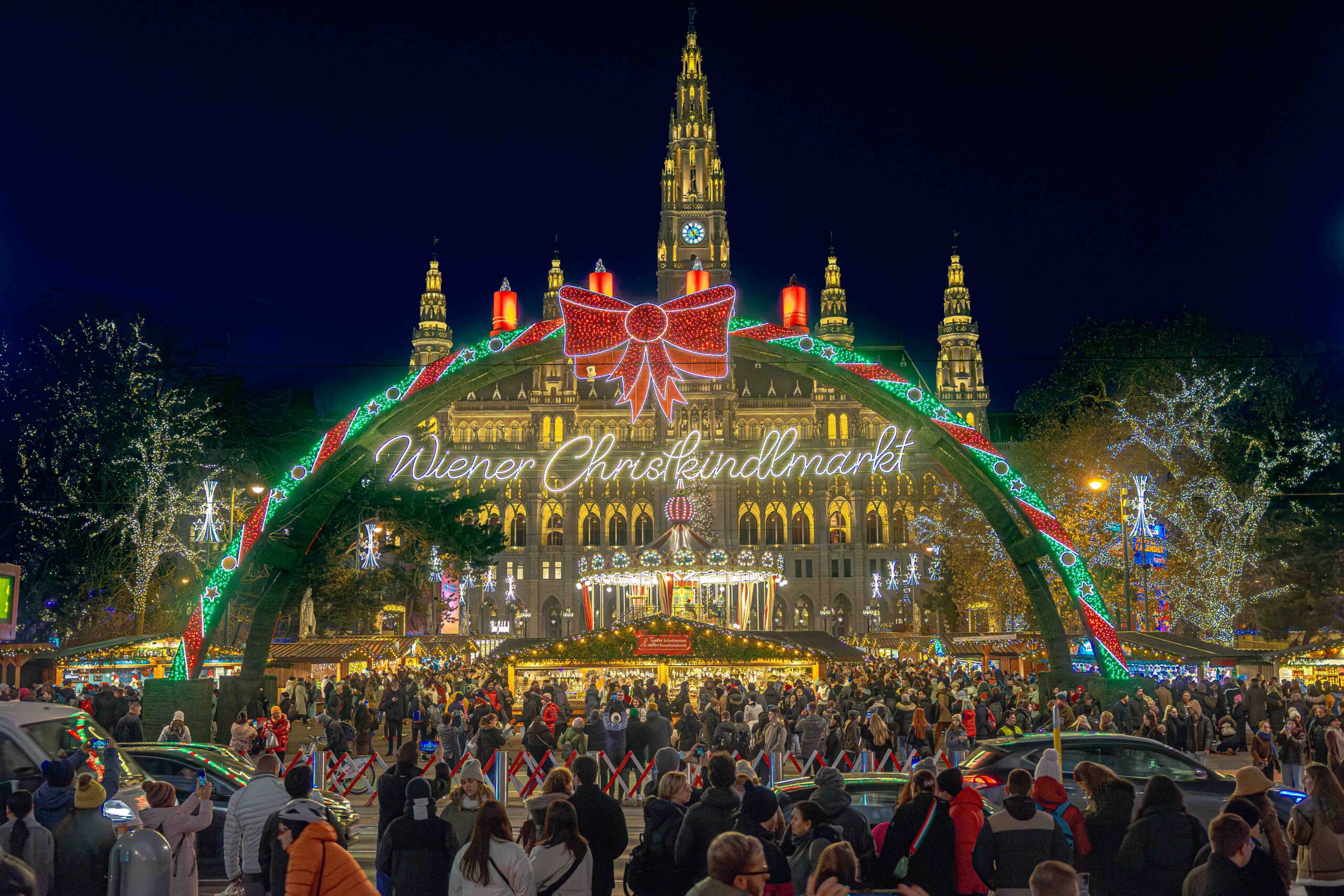
Our Vienna trip is all about Christmas markets and museums, and tonight, it’s time for the markets—one cup of glühwein at a time. We visited four of the city’s most famous, all within a short walk of each other in the city centre.
We started at the Stephansplatz Market, sipping glühwein under the cathedral’s Gothic spires before strolling through the glowing streets to Am Hof Market. Set in a small square surrounded by fine Baroque buildings, this was my favourite market in Vienna.
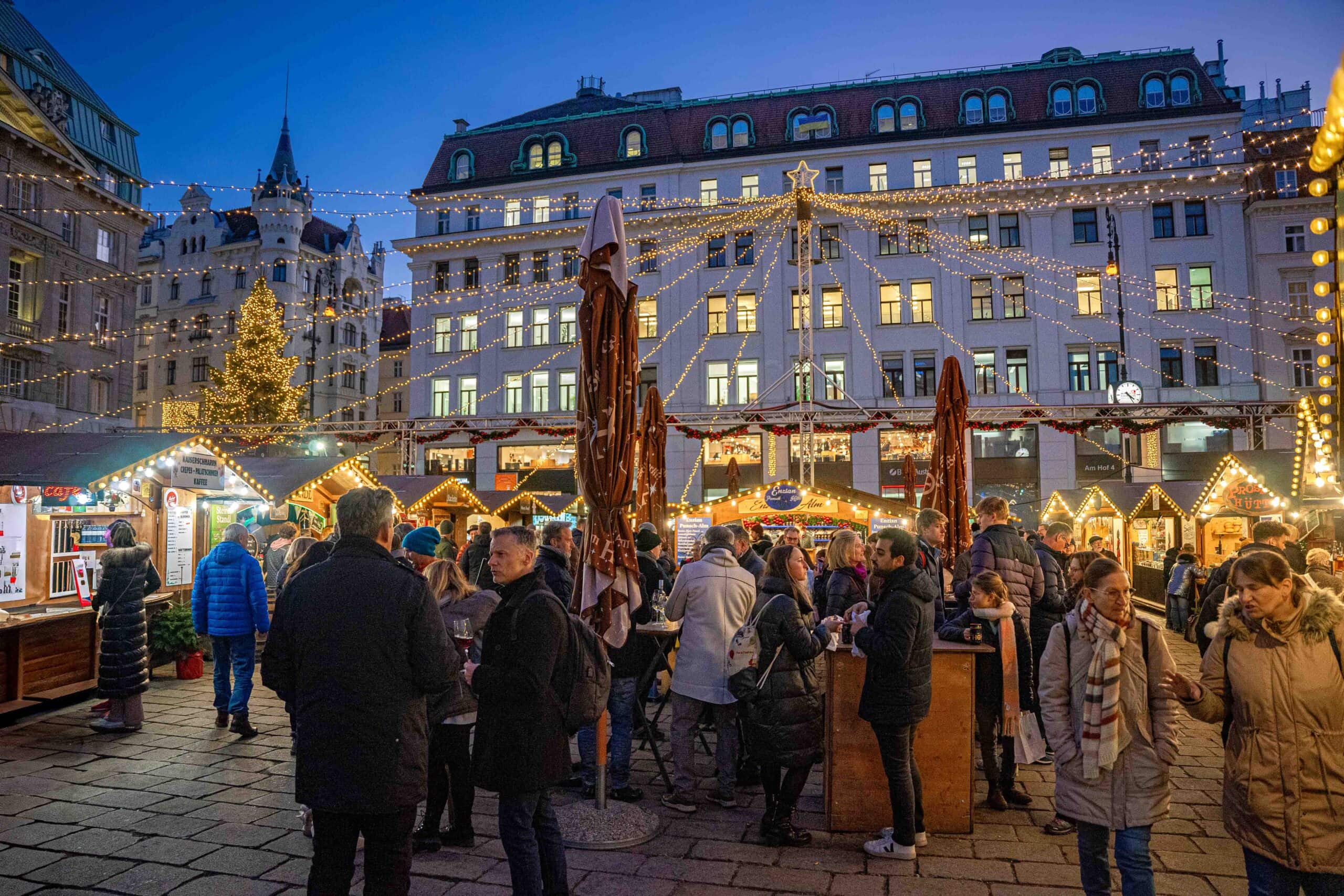
This intimate square feels a little more upscale, with great food, drinks, and even a champagne bar. We grabbed another glühwein (of course) and shared a langos (a crispy fried Hungarian flatbread topped with cheese), and some damn fine currywurst.
Next was the Altwiener Christmas Market in Freyung, which was small but lively. There, we enjoyed a drink and some hot nuts while a brass band pumped out a few carols.
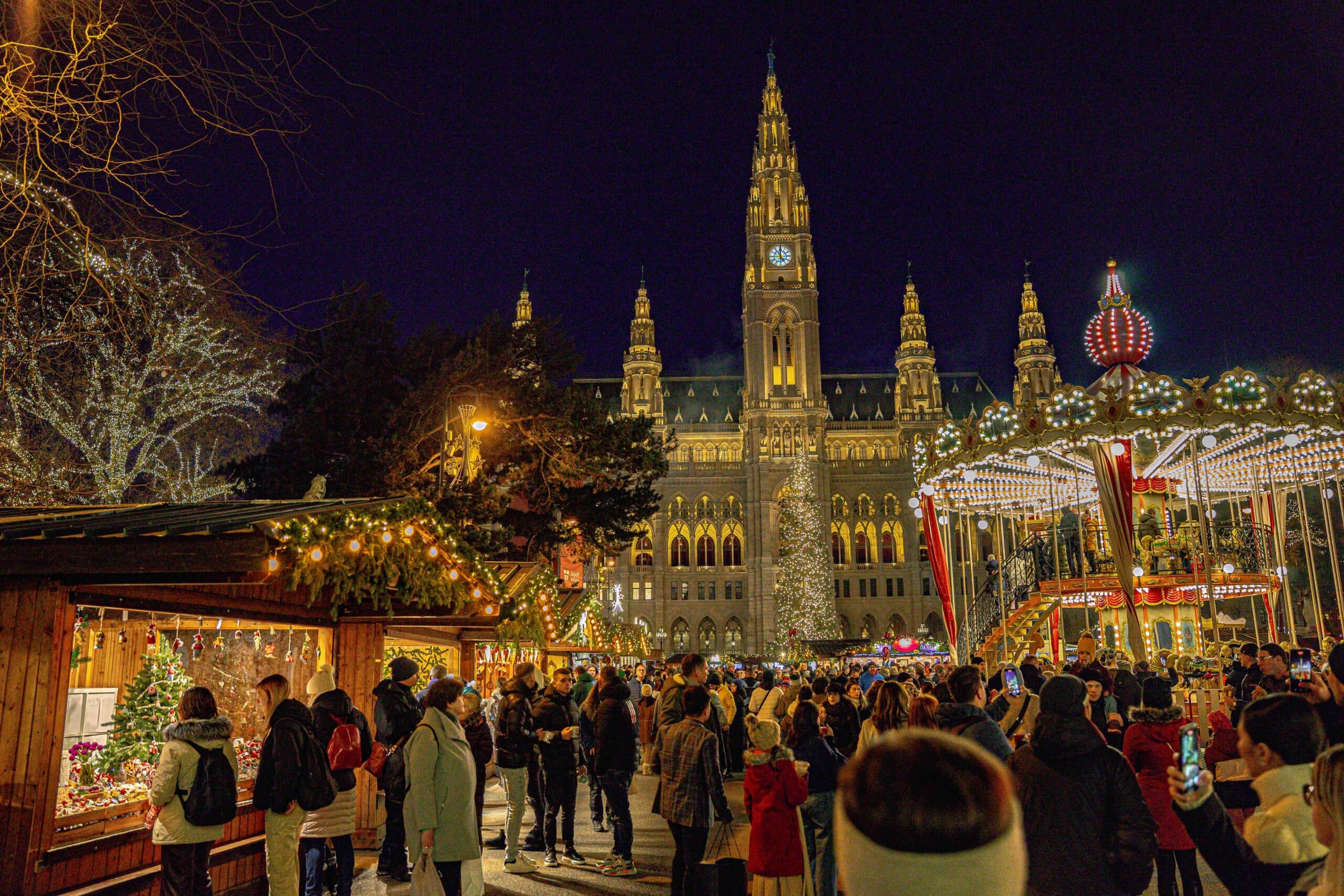
We ended the night at the Rathausplatz Christmas Market, where the proverbial Viennese Christmas fairytale came to life. The Advent market, set in front of Vienna’s city hall, is pure magic with extravagant light displays, a grand merry-go-round, an ice rink, and all the festive treats we could dream of. And yes, glühwein.
If you have a glühwein fetish like me or just like pretty lights and Christmas vibes, check out our guide to Vienna’s Christmas markets in 2026.
Day 3: Cake & Museum Marathon
Today’s plan is all about Vienna’s famous coffeehouses and world-class museums. We’re skipping breakfast because we have a dessert-filled brunch lined up, and after that, it’s time to hang with Klimt, Schiele, and other art legends at two of the city’s top museums.
We’re only visiting one coffeehouse because the famous ones have long lines all day, every day. We originally planned a full coffeehaus run spread out over our four days in Vienna but quickly gave up on that dream after seeing the reality.
If you’re set on visiting a classic Viennese café, be prepared to wait in line for a while.
Admire the Hoffburg
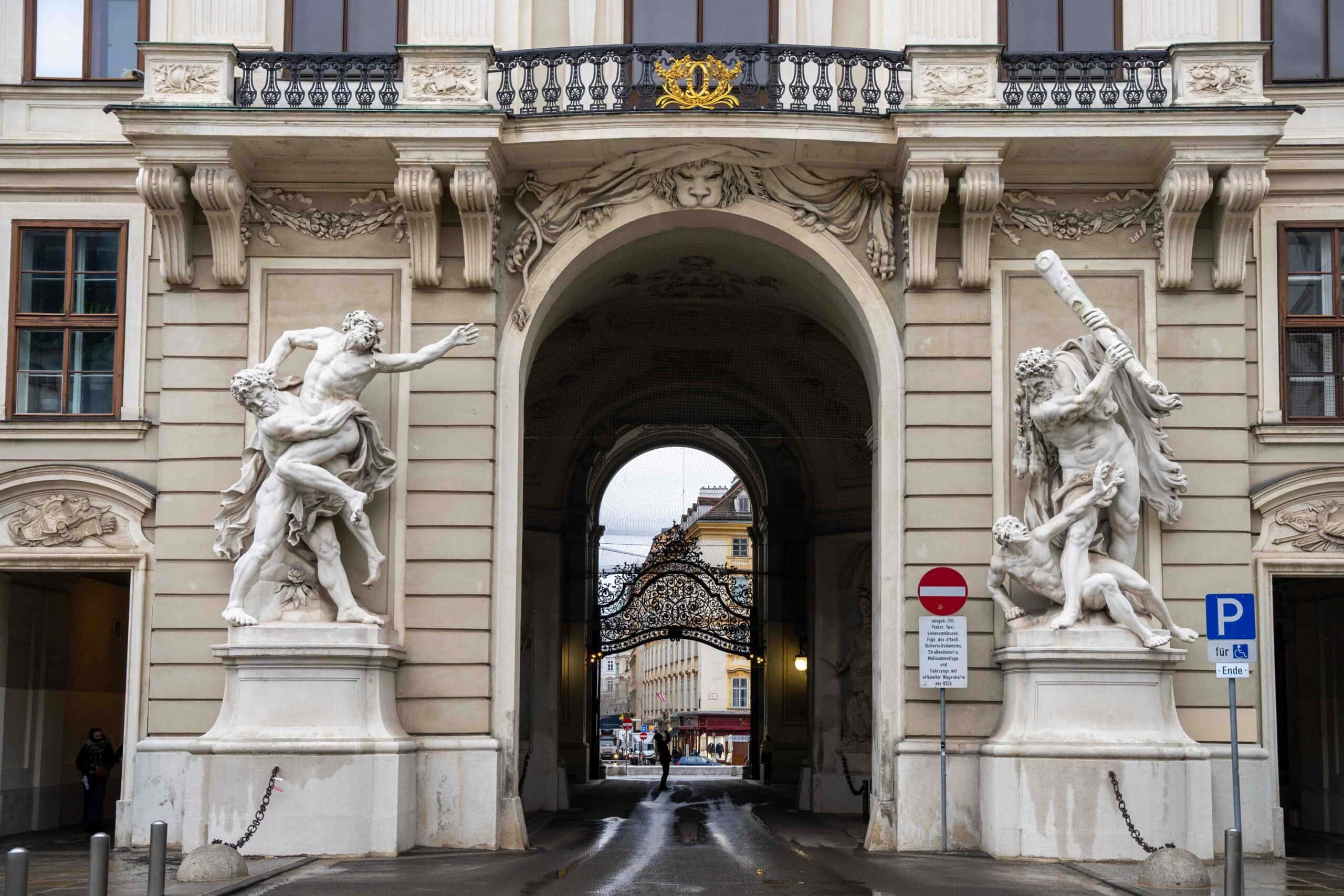
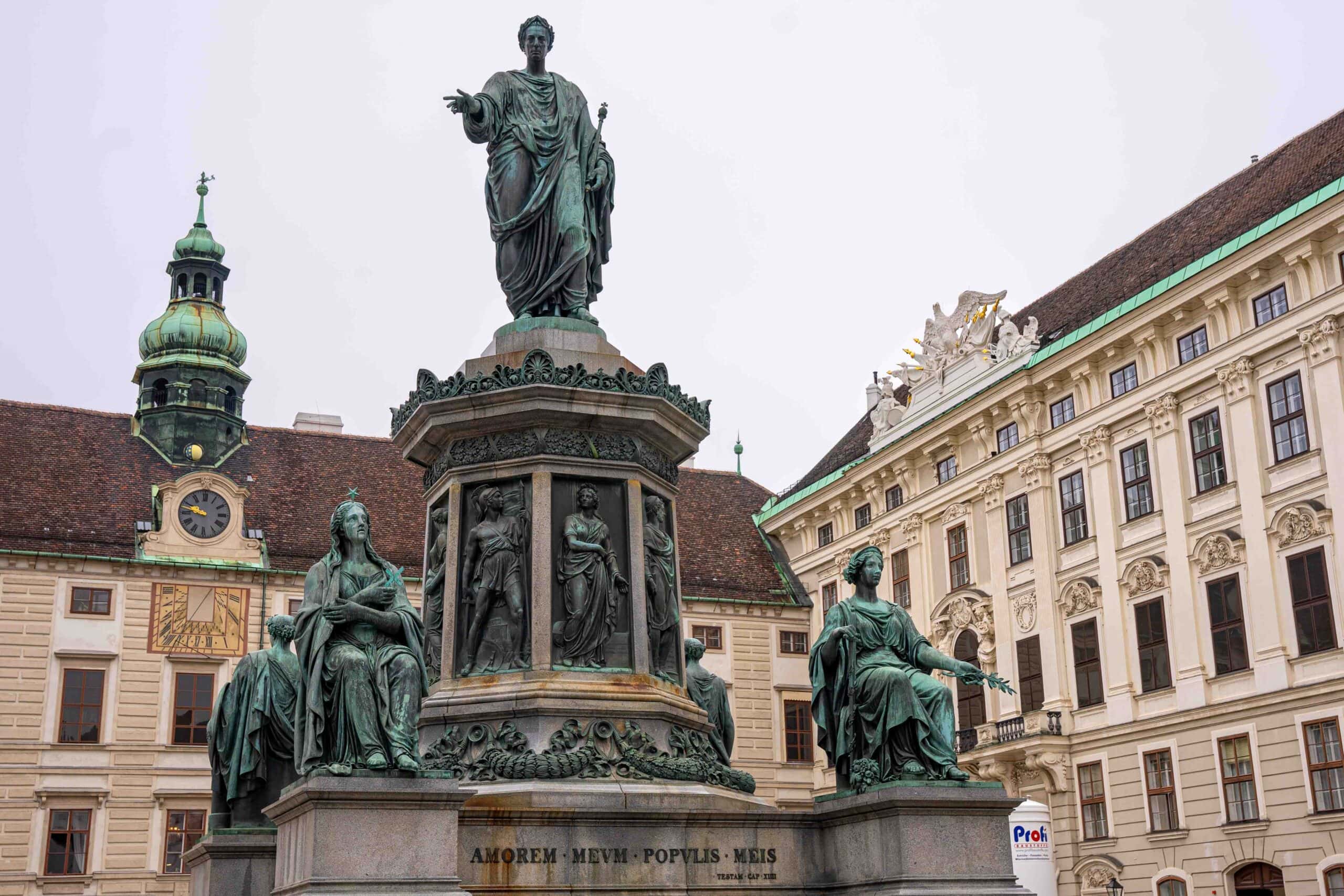
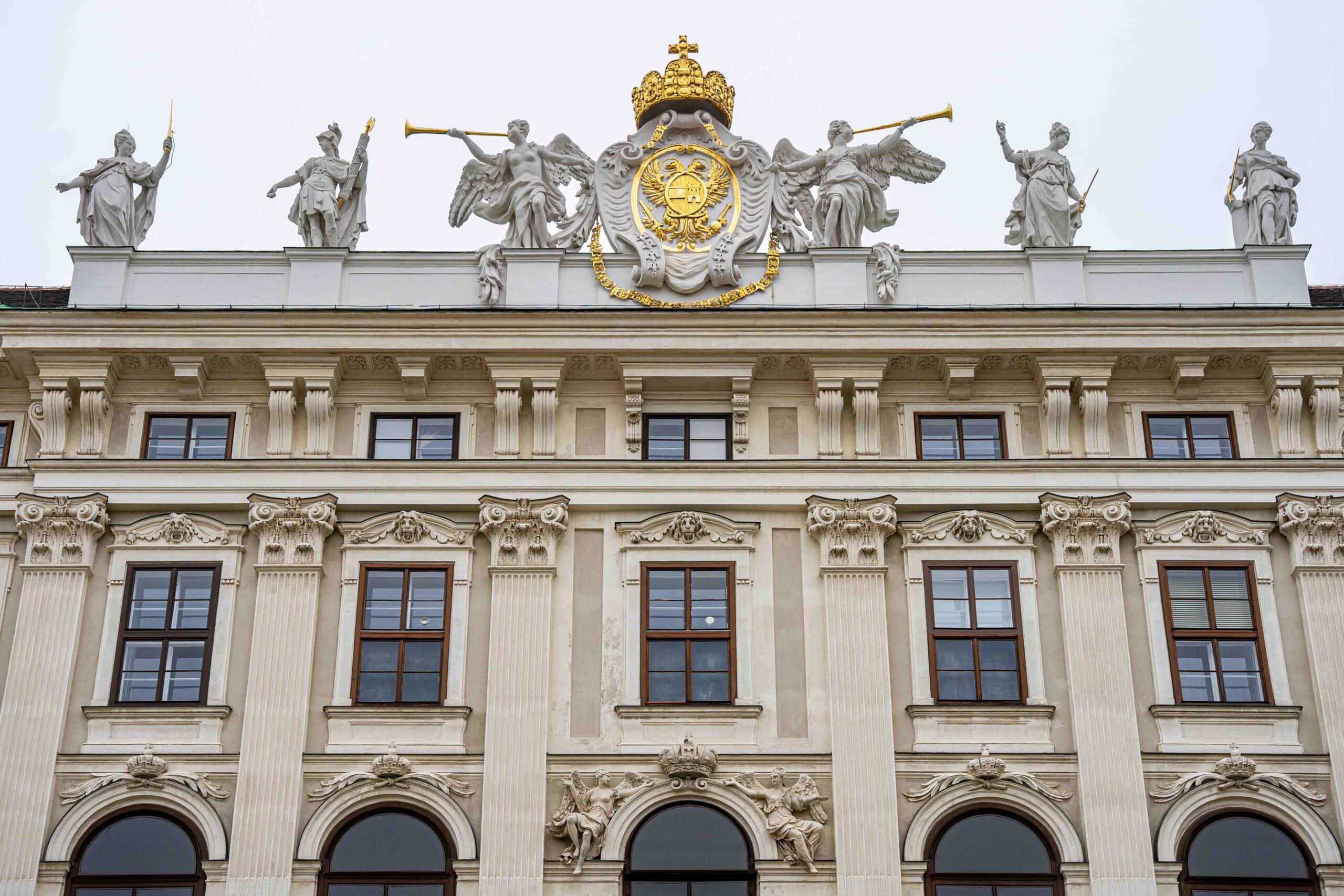
The Hofburg is a massive palace complex that was the Habsburgs’ winter residence for over six centuries, with Schönbrunn as their summer retreat. Built in stages from the 13th century, it blends Gothic, Renaissance, Baroque, and Neoclassical styles.
Today, it houses some of Vienna’s top attractions, such as the Imperial Treasury, the Sisi Museum, and the Imperial Apartments, as well as government offices. It’s free to wander around the Hofburg grounds, where you can see some fine architecture, squares, and statues.
The Spanish Riding School, where the world-famous Lipizzaner stallions perform their graceful dressage routines, is the most famous of Hofburg attractions. We wandered past its stables, hoping to glimpse these unicorns, but luck wasn’t on our side.
It’s possible to watch the riders train the Lipizzaners (€17), or attend the full performance (€40) inside the Baroque Winter Riding School.
Sweet Brunch at Demel
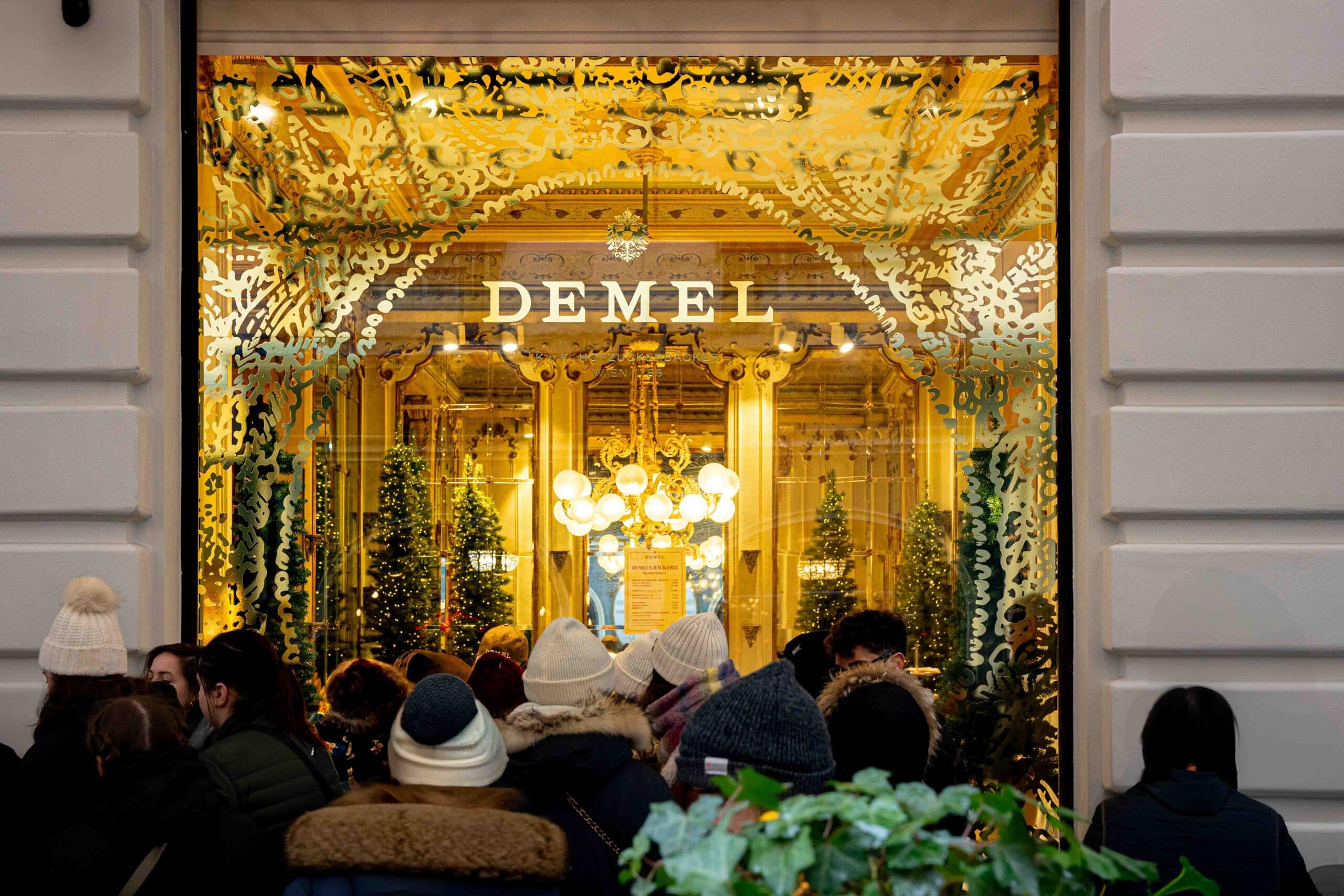
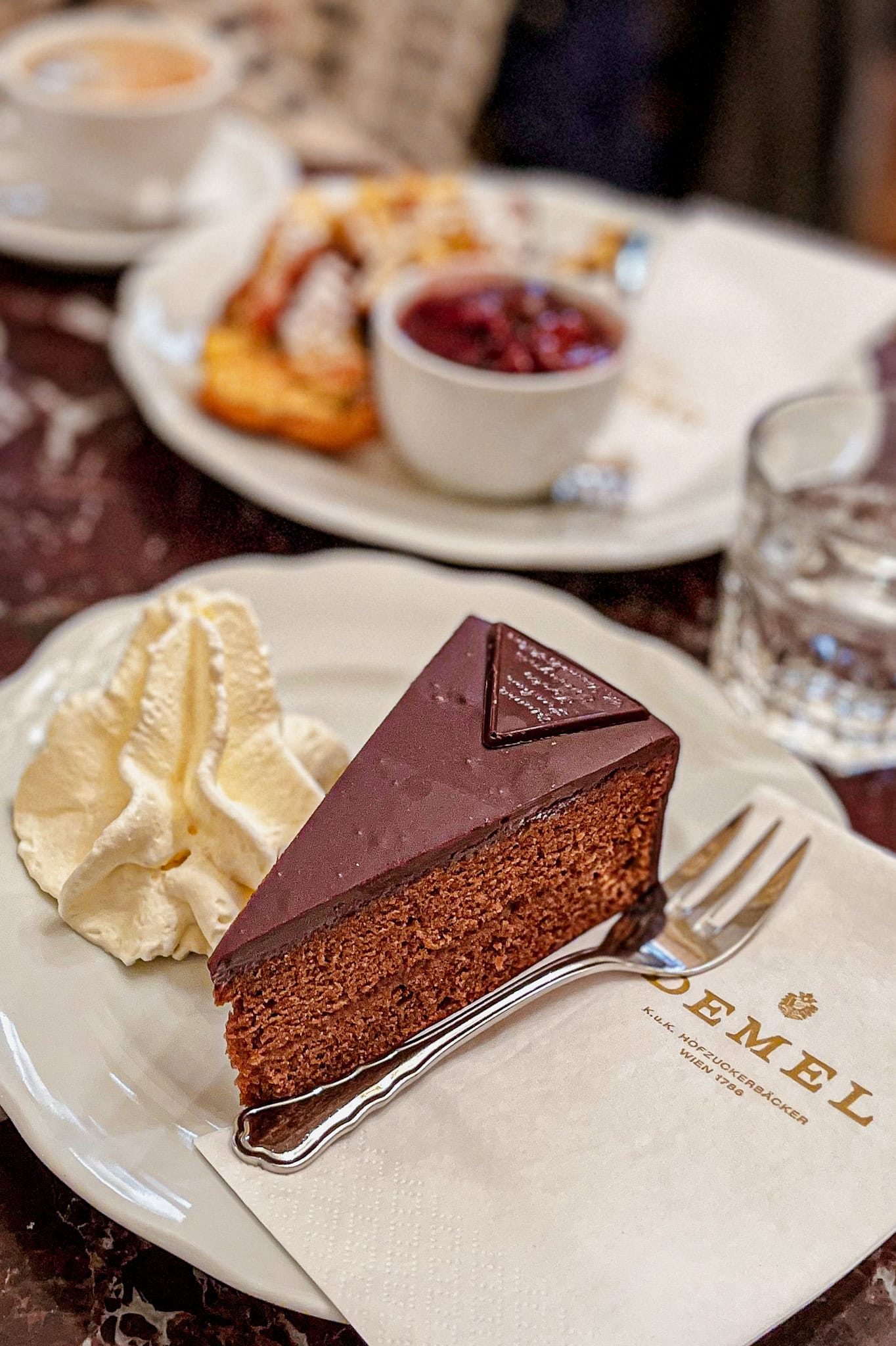
Demel is one of Vienna’s most famous coffeehouses, serving royalty and sugar whores like ourselves since 1786. Once the official pastry supplier to the imperial court, it still serves up some of the city’s finest cakes in an elegant, old-world setting.
When we arrived at Demel, just a hundred steps or so from the Hofburg, it was 9:30, and there was already a line, and they only open at 10! So we waited as the line got longer. When the doors opened (what felt like an eternity later), we were lucky to get a table with the first sitting.
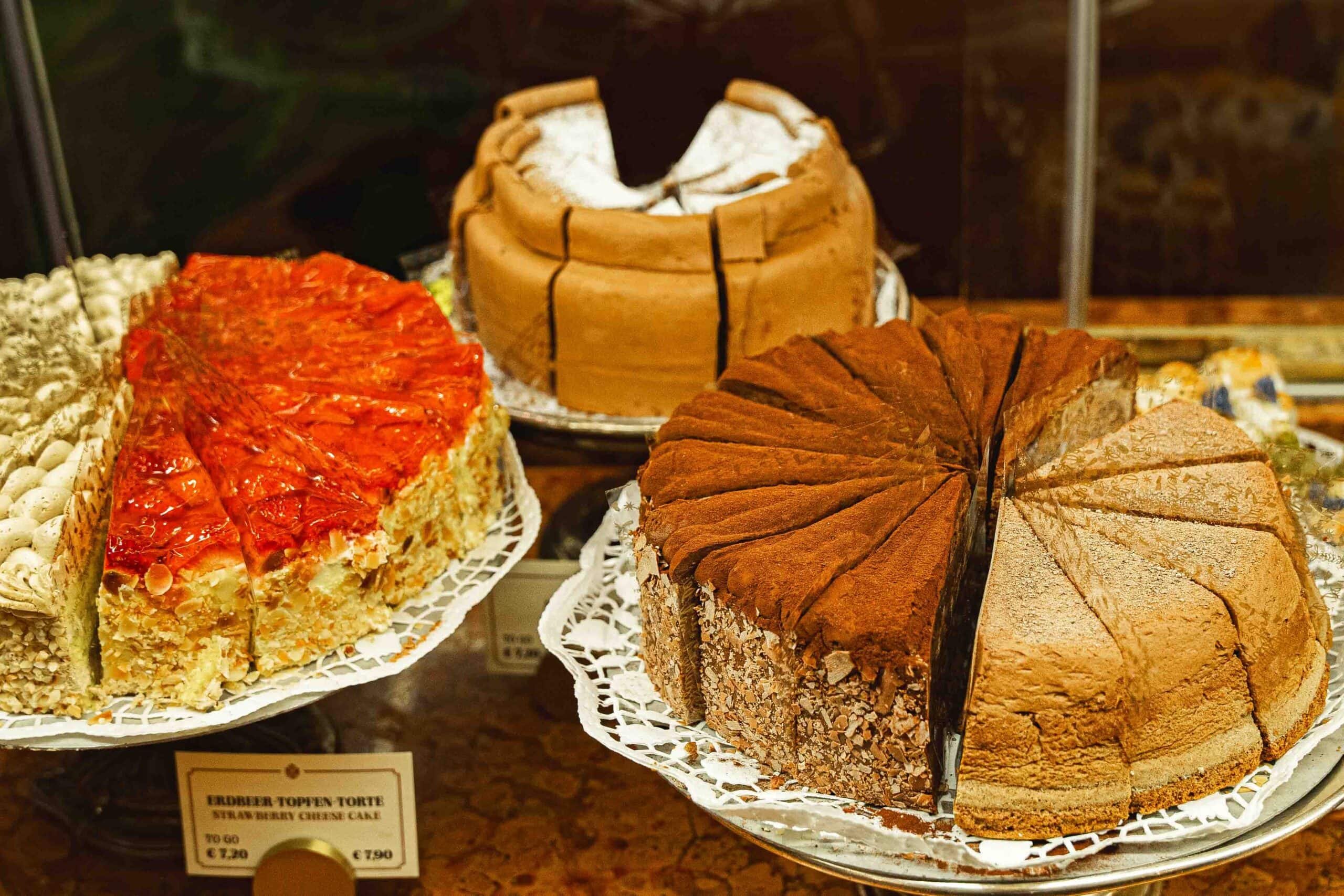
Inside, it’s like walking into a pastry museum, with gorgeous displays of Sachertorte, Esterházy cake, apfelstrudel and who knows what else, but I’ll eat them all, and chandeliers casting a soft glow over marble tables.
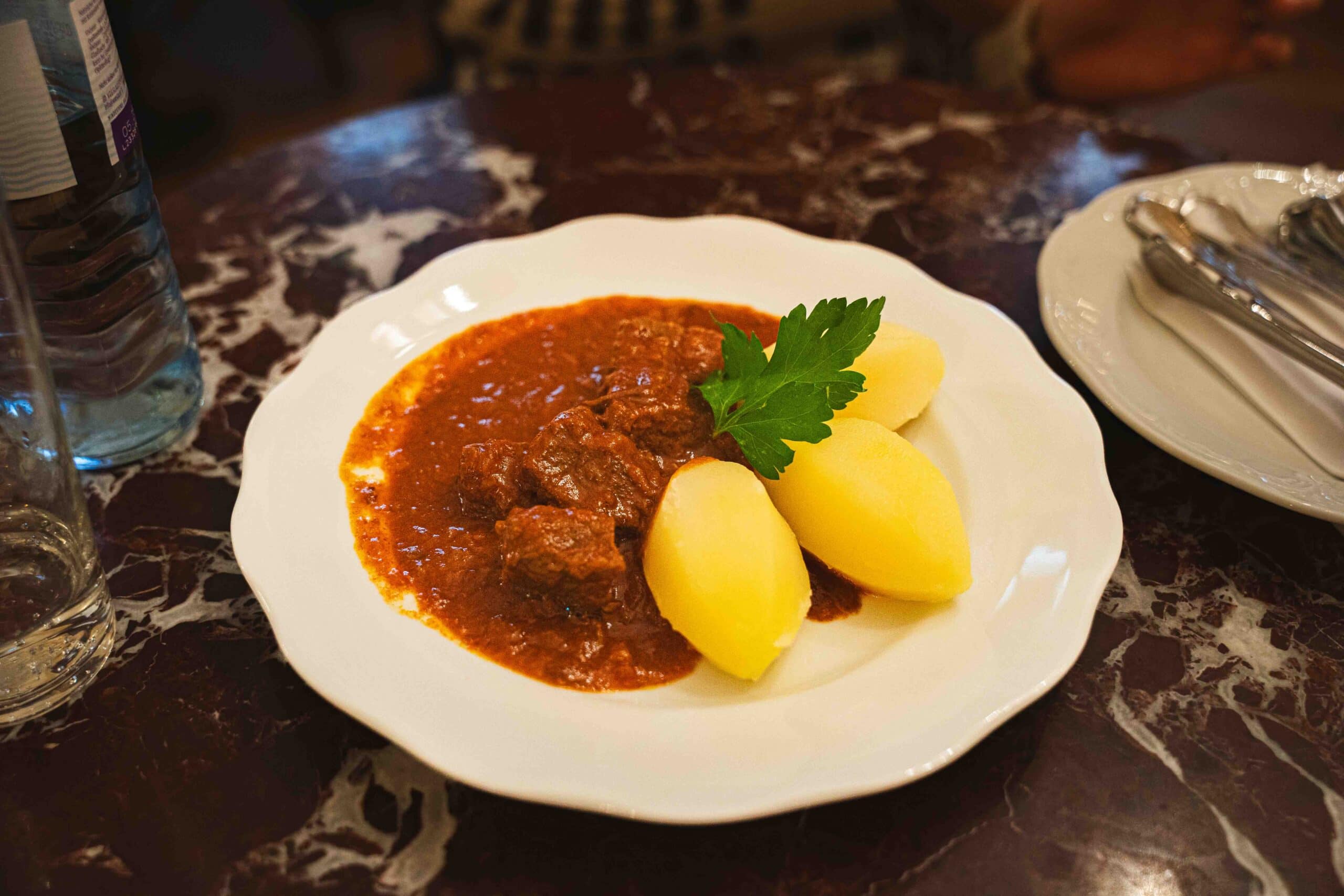
We started off with a plate of Old Viennese beef goulash with potatoes, which we shared. It was the most beautiful goulash we’ve ever had, and it tasted damn fine too.
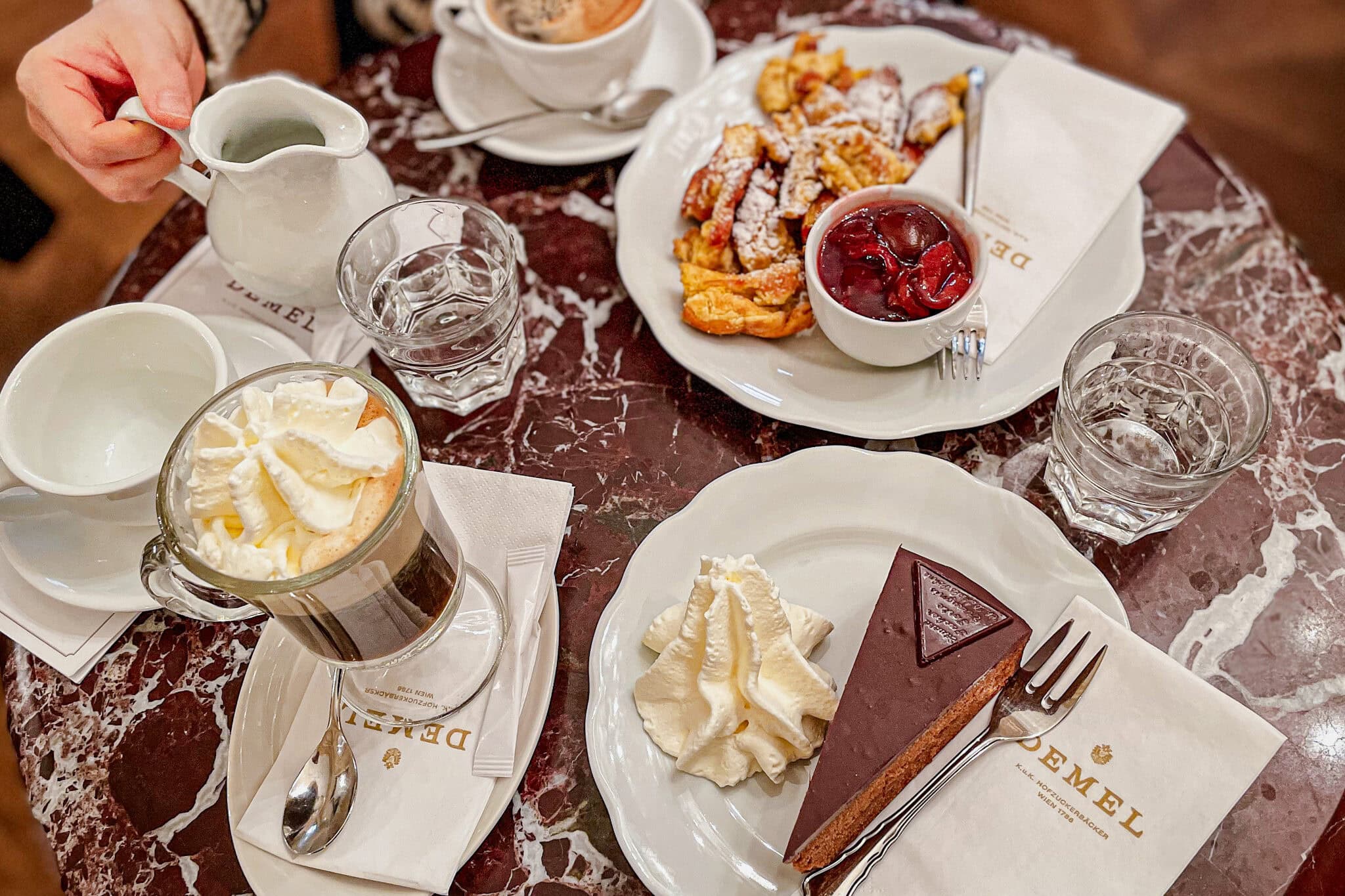
For the main event, I had the Sachertorte with a Fiaker (double espresso with cherry schnapps and whipped cream), while Jin had the Kaiserschmarrn and an Americano.
To be honest, my Sachertorte was a little meh. I found it a bit dry and boring. I’m an extravagant man and will get something flamboyant like an Anna Demel cake or a decadent custard slice when I’m ever in Vienna again. I must say, my schnapps-laced coffee made up for it.
Jin’s Kaiserschmarrn with plum compote was fantastic.
Order that, and you’ll be happy.
Danke schön us later.
Hours: 10:00-19:00
Location
Reservations not possible
Leopold Museum
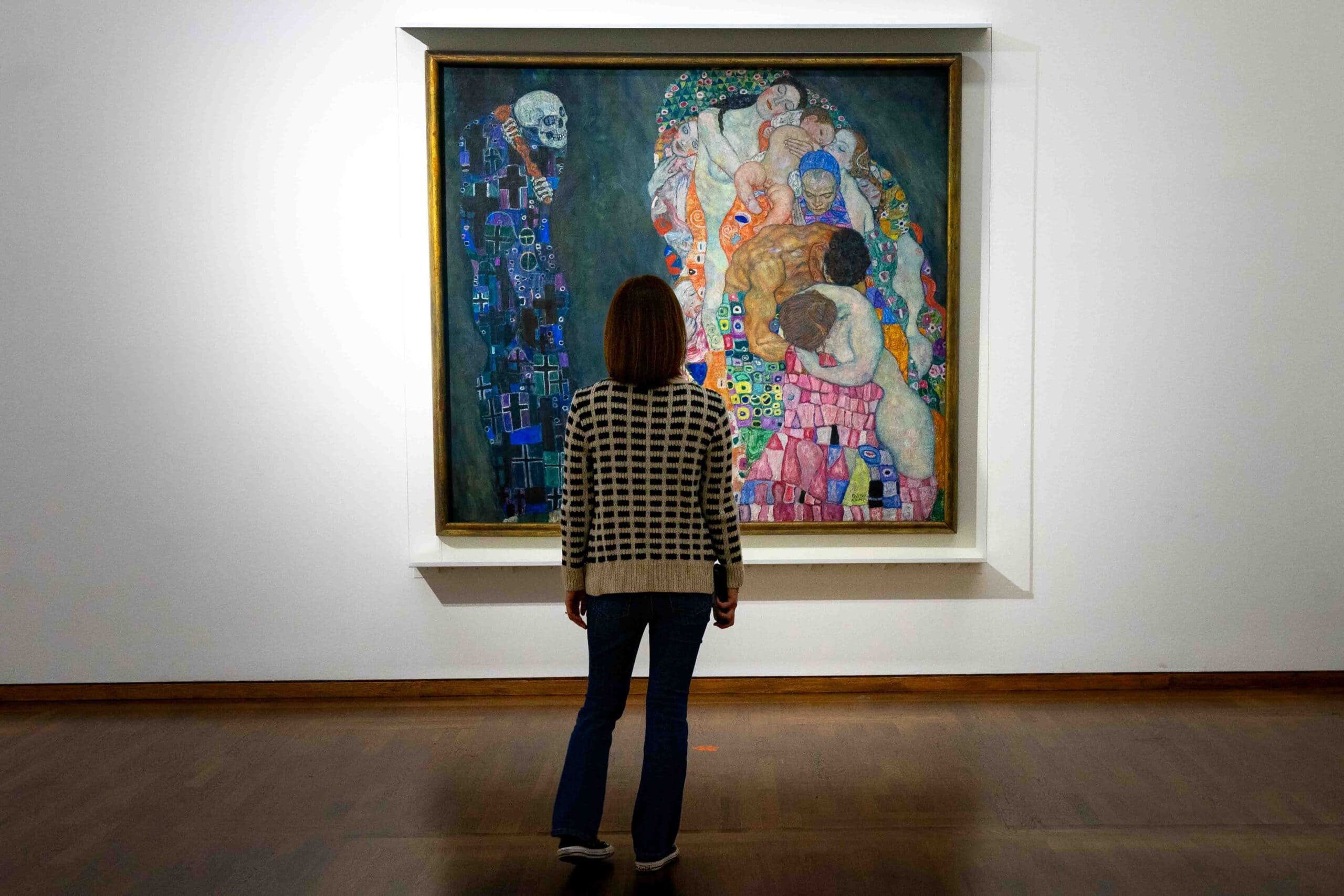
The Leopold Museum is entirely dedicated to Austrian art, making it one of Vienna’s most fascinating museums.
Located in the MuseumsQuartier, this sleek white cube houses a fantastic collection of Viennese Art Nouveau, the Wiener Werkstätte, and Expressionism. It’s best known for the world’s largest Egon Schiele collection, famous for his intense, angular portraits and moody landscapes.
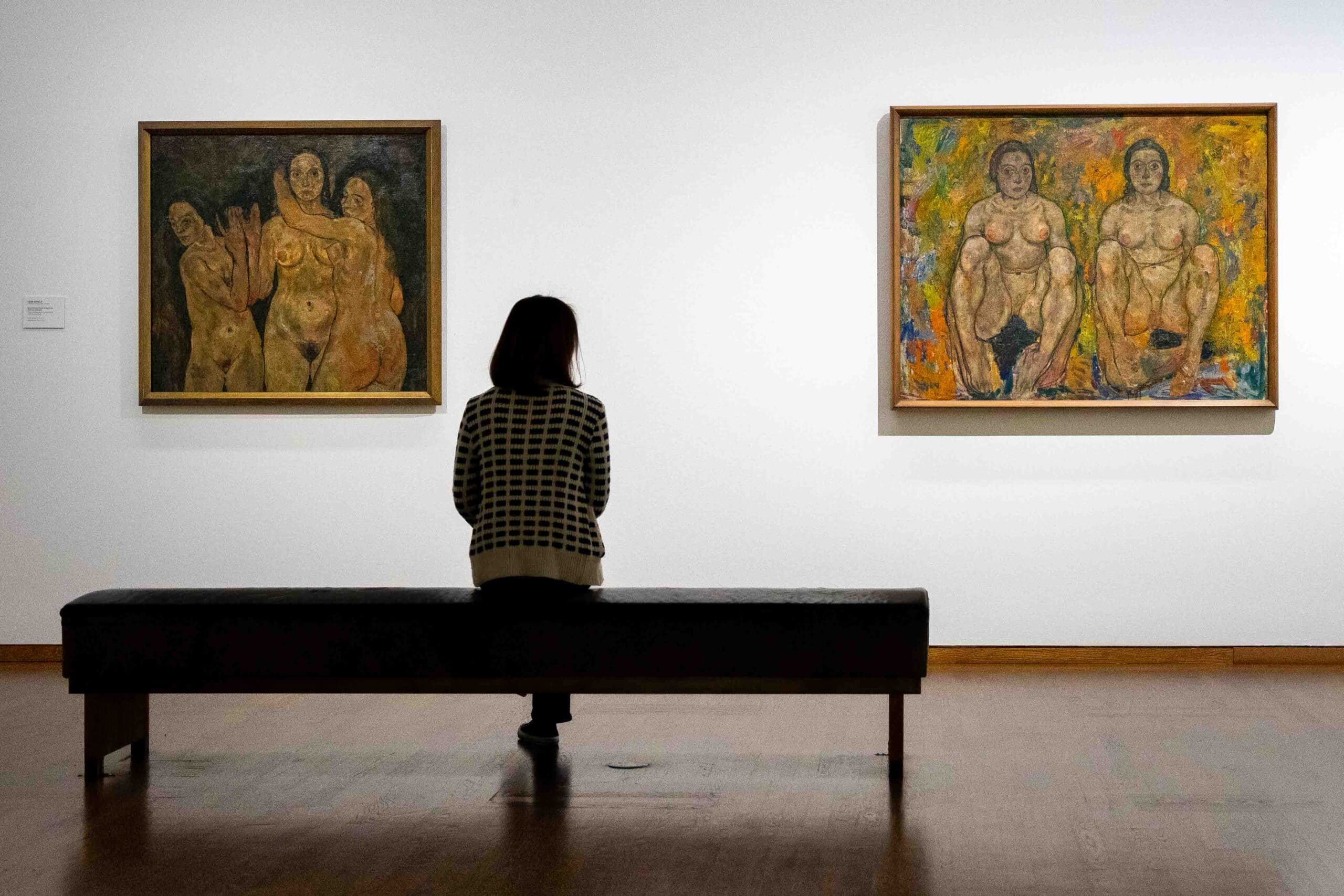
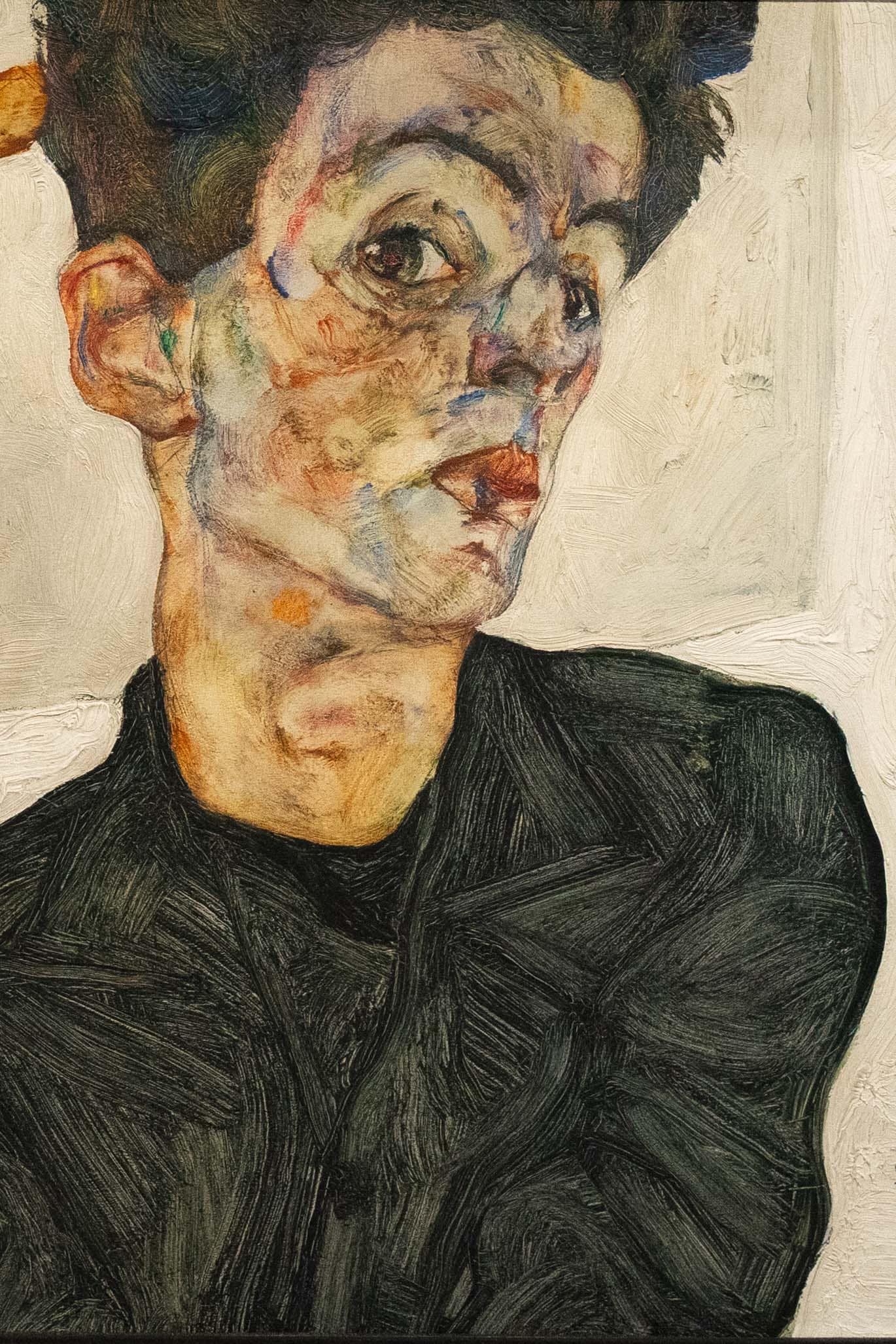
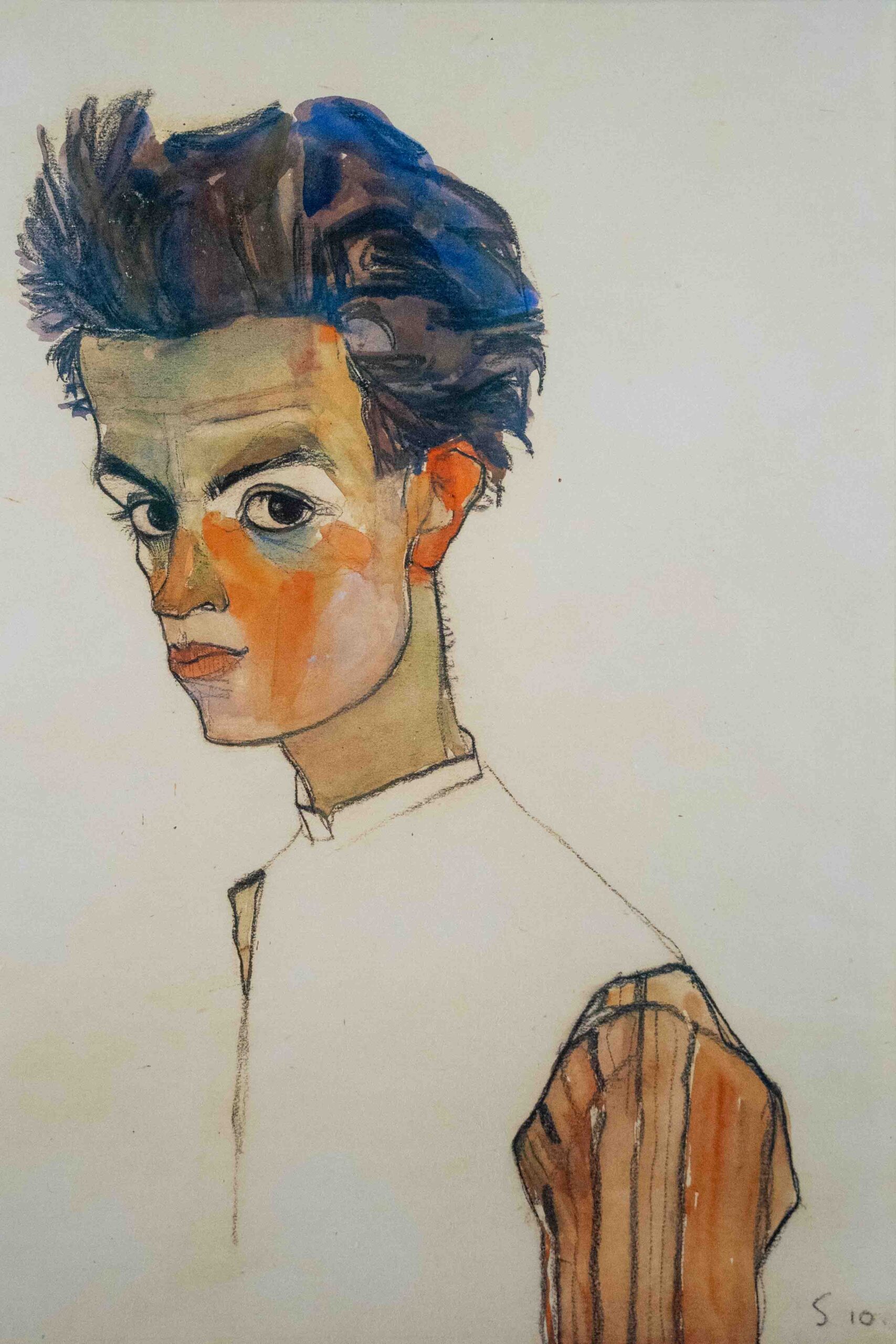
I’ll admit, I didn’t remember hearing of this Egon Schiele guy until our visit to the Leopold Museum in Vienna that December morning, despite having a degree in Art History. Slapping myself on the wrist as I’m typing.
But we’re so glad we discovered him. Looking at his cool-without-trying self-portraits, I believe he was the original hipster, and his Krumau (modern-day Český Krumlov in Czechia) townscapes are damn fine too.
The museum also features iconic works by Gustav Klimt, including the powerful Death and Life and a few of his stunning landscapes, along with pieces by Oskar Kokoschka, Richard Gerstl and others.
For anyone interested in Viennese Modernism, this museum is a must-see.
Hours: 10:00-18:00 daily (closed on Tuesdays)
Open every day July and August
Skip-the-line tickets (€17)
€2.50 off with the Vienna City Card when you buy a ticket onsite
Kunsthistorisches Museum
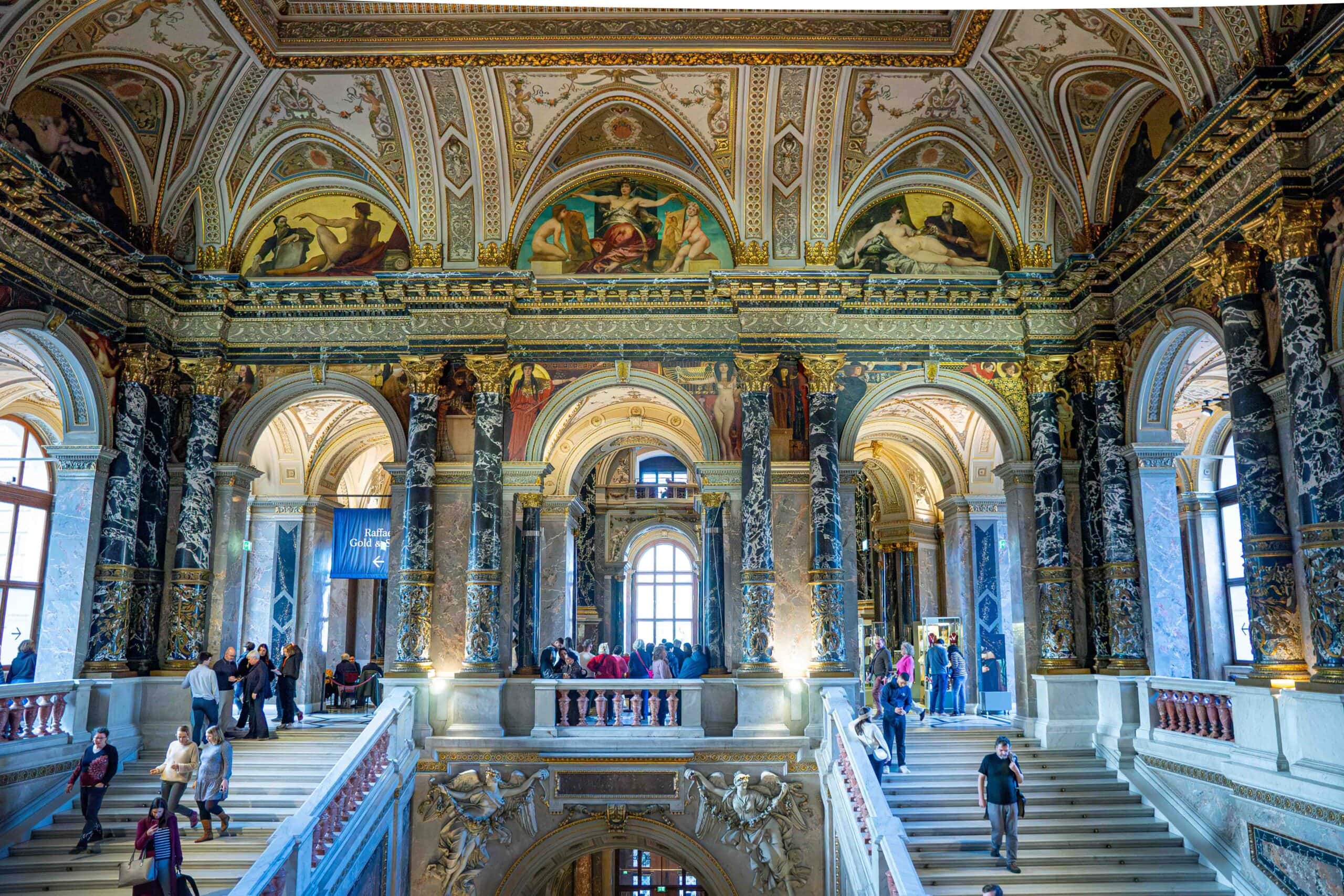
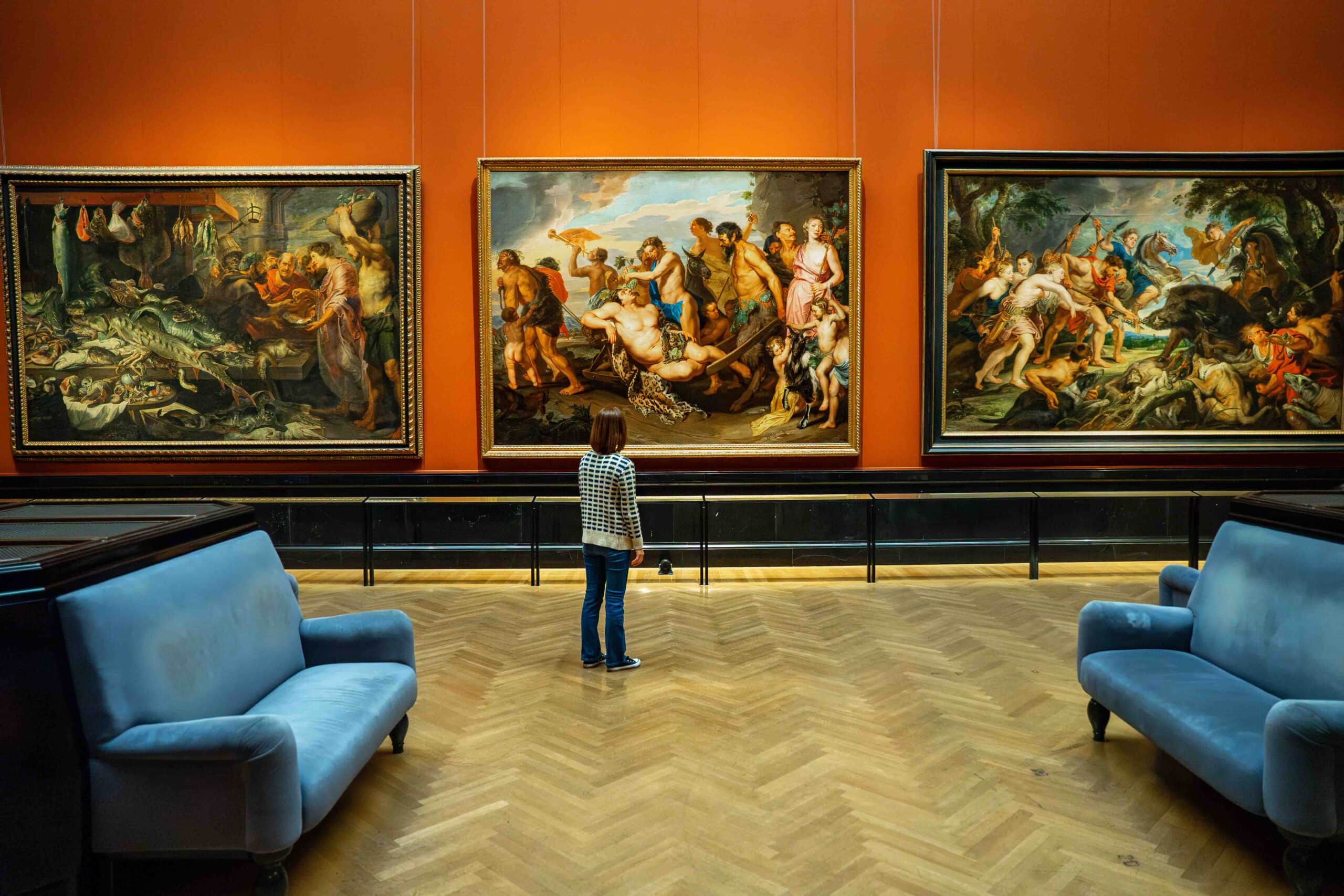
The Kunsthistorisches Museum (KHM) is Vienna’s grandest museum, built to showcase the Habsburgs’ legendary art collection. You could spend hours here and barely scratch the surface. We spent about three and had to rush at the end as the museum was closing by then.
Walking inside feels like stepping into a palace: marble staircases, gold accents, and a spectacular dome set the scene for some of the world’s finest masterpieces.
Highlights of the Kunsthistorisches Museum include the world’s most extensive Bruegel collection, including his Tower of Babel, Caravaggio’s David with the Head of Goliath, and many works by Durer, Titian, Rubens, and Vermeer. Seriously, all the big names are here.
There are also incredible Greek, Roman, and Egyptian collections and a cabinet of curiosities (Kunstkammer) filled with all sorts of imperial oddities.
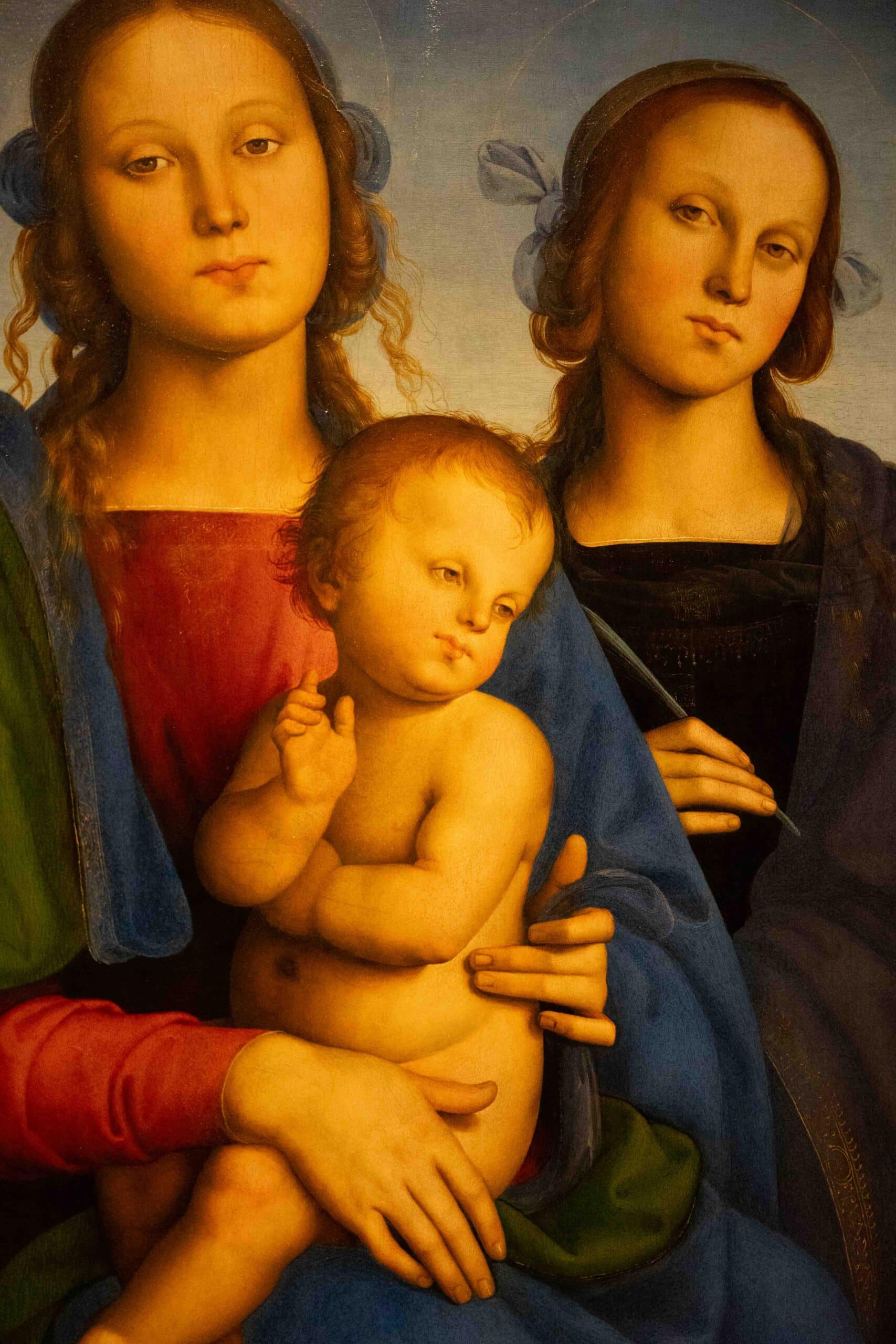
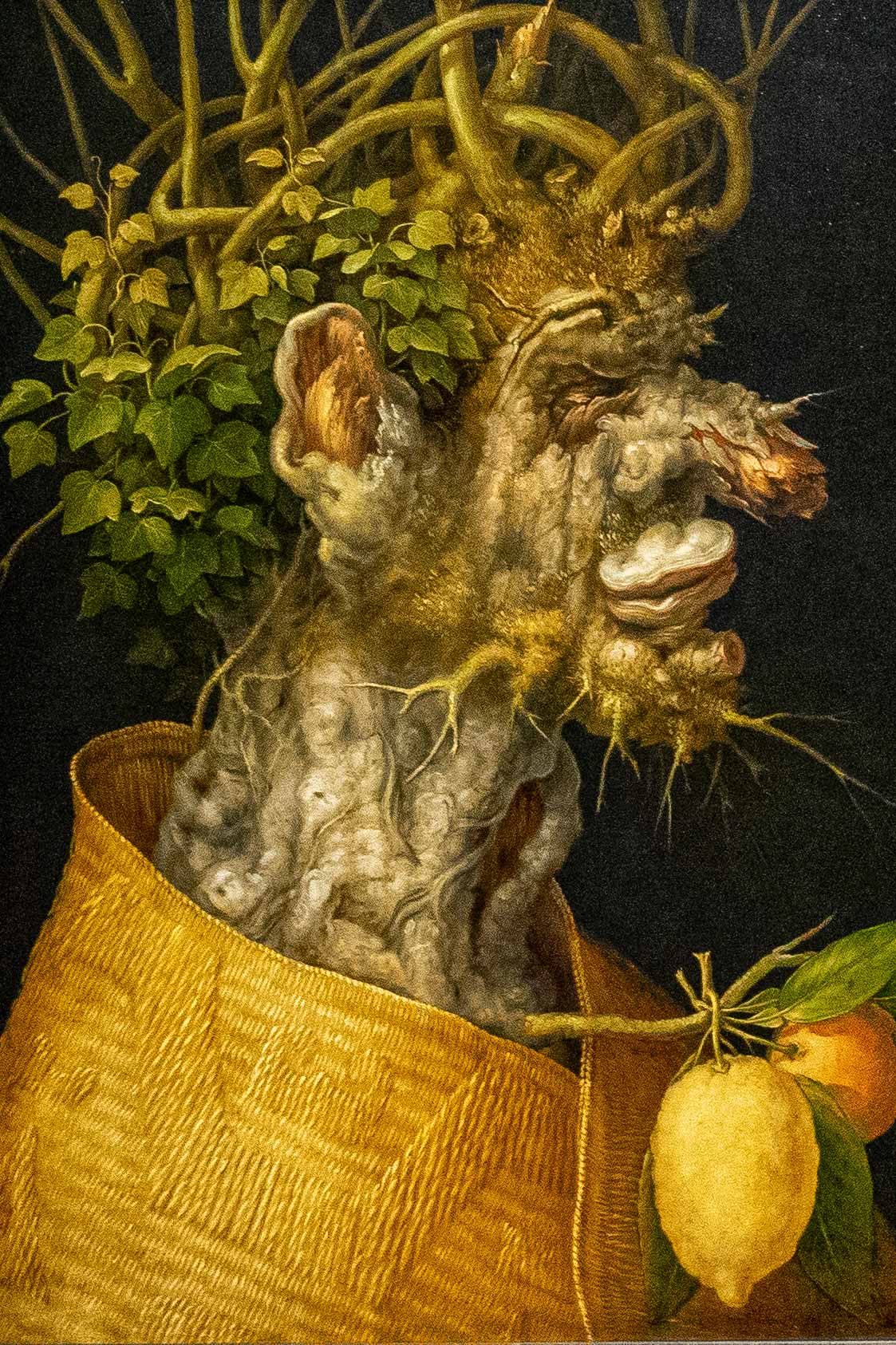
When we left the museum, my mind was utterly blown. I never realised just how much art there is in Vienna, and most of it is kept here in the KHM. This museum is a must if you love art, history, or just jaw-dropping interiors.
Hours:
Thurs 10:00-21:00
Tue/Wed/Fri/Sat/Sun 10:00-18:00
Mon Closed
Skip-the-line tickets (€21)
€1 discount with the Vienna City Card when you buy a ticket onsite
Ukrainian Dinner at Grnd
We returned to our hotel for some doom-scrolling a quick nap before dinner.
For dinner, we hit up Grnd, a 200-year-old Ukrainian restaurant near Karlsplatz Station and the Opera House. We were told the whole place was booked for a private event when we arrived, but they could squeeze us in if we ate in under an hour.
Deal!
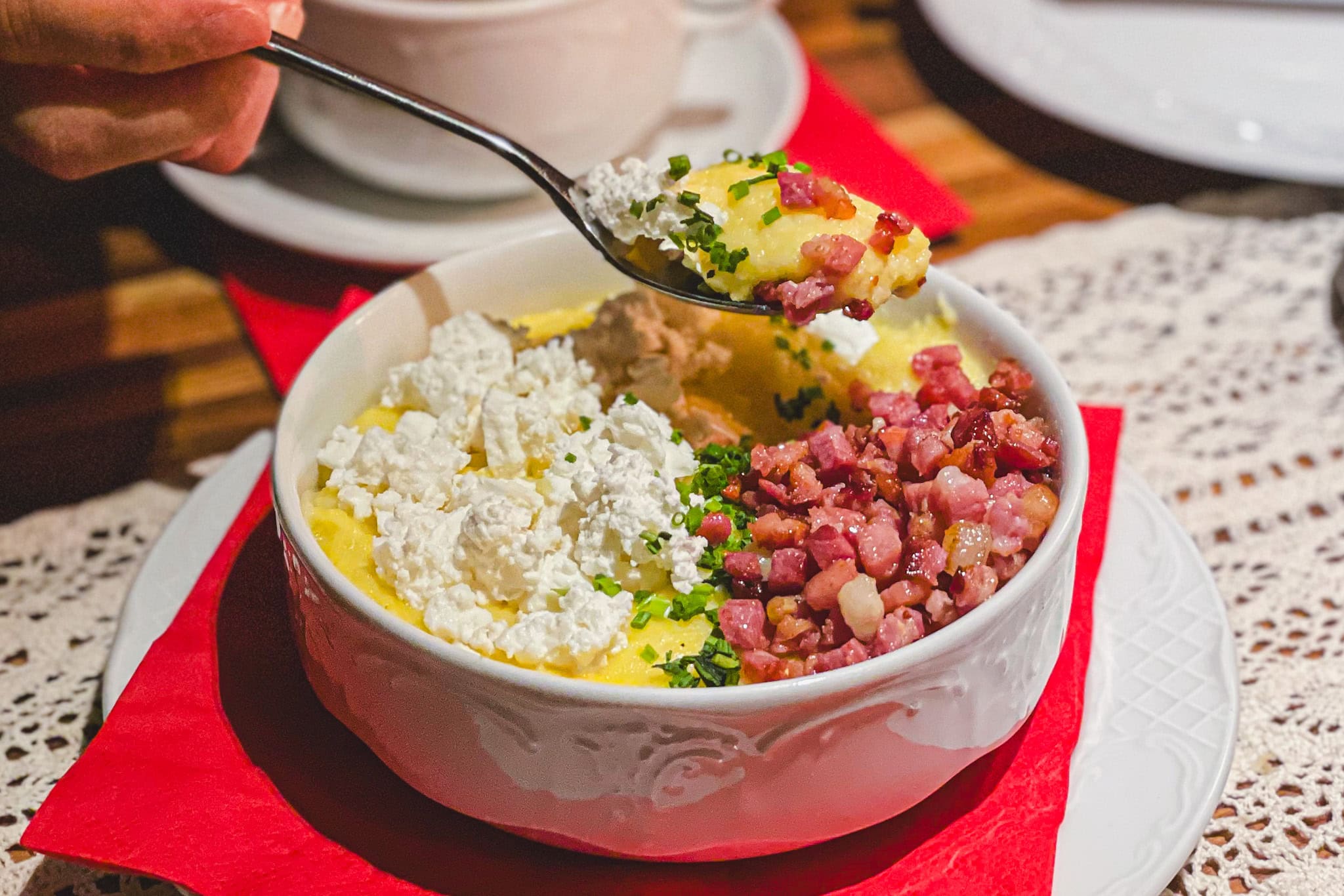
The eclectic menu blends Viennese and Ukrainian dishes, making it tough to choose. We settled on beef soup with sliced pancakes, varenyky (Ukrainian dumplings), and banosh Bukovyna (corn grits with cheese, sour cream, and bacon). OMG, that banosh!
Day 4: The Kiss, the Würstel, & the Ancient Near East
Our Vienna itinerary wows until the very end. Today, there’s some serious oohing and aahing over Klimt and other great art at the Belvedere, an essential food stop, and then a hidden gem museum not many know of.
There’s some shopping and a delicious Vietnamese dinner before ending with a stroll to see the city’s best Christmas lights.
The Upper Belvedere
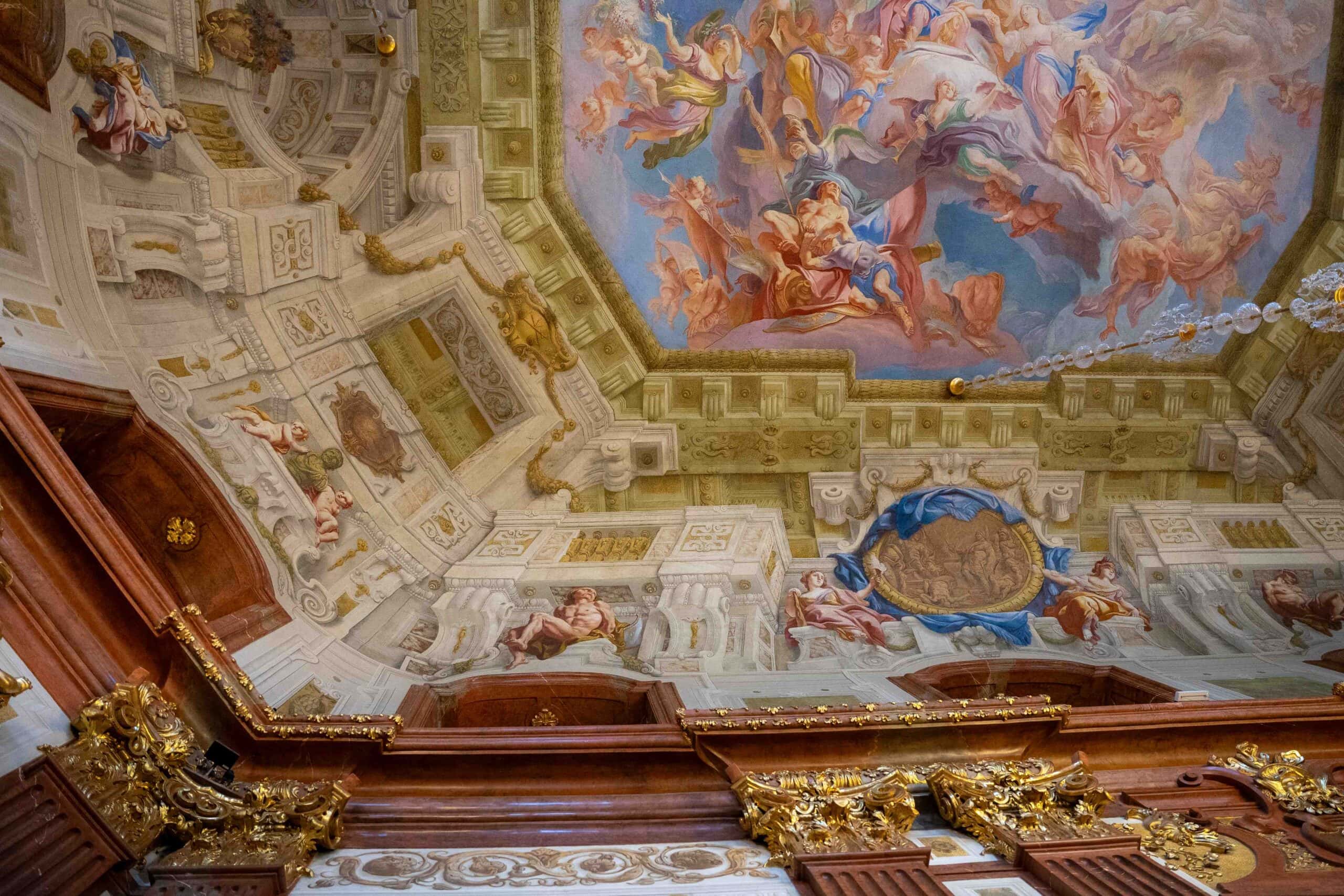
The Upper Belvedere is a Baroque beauty, built initially as a summer palace for Prince Eugene of Savoy. Its grand halls, frescoed ceilings, and manicured gardens are stunning. But let’s be real—we came here for the art.
This is THE place to see Gustav Klimt in all its golden, shimmering glory. And for most, that means The Kiss. It’s breathtaking in person, though you’ll have to elbow your way through the crowd for a good look.
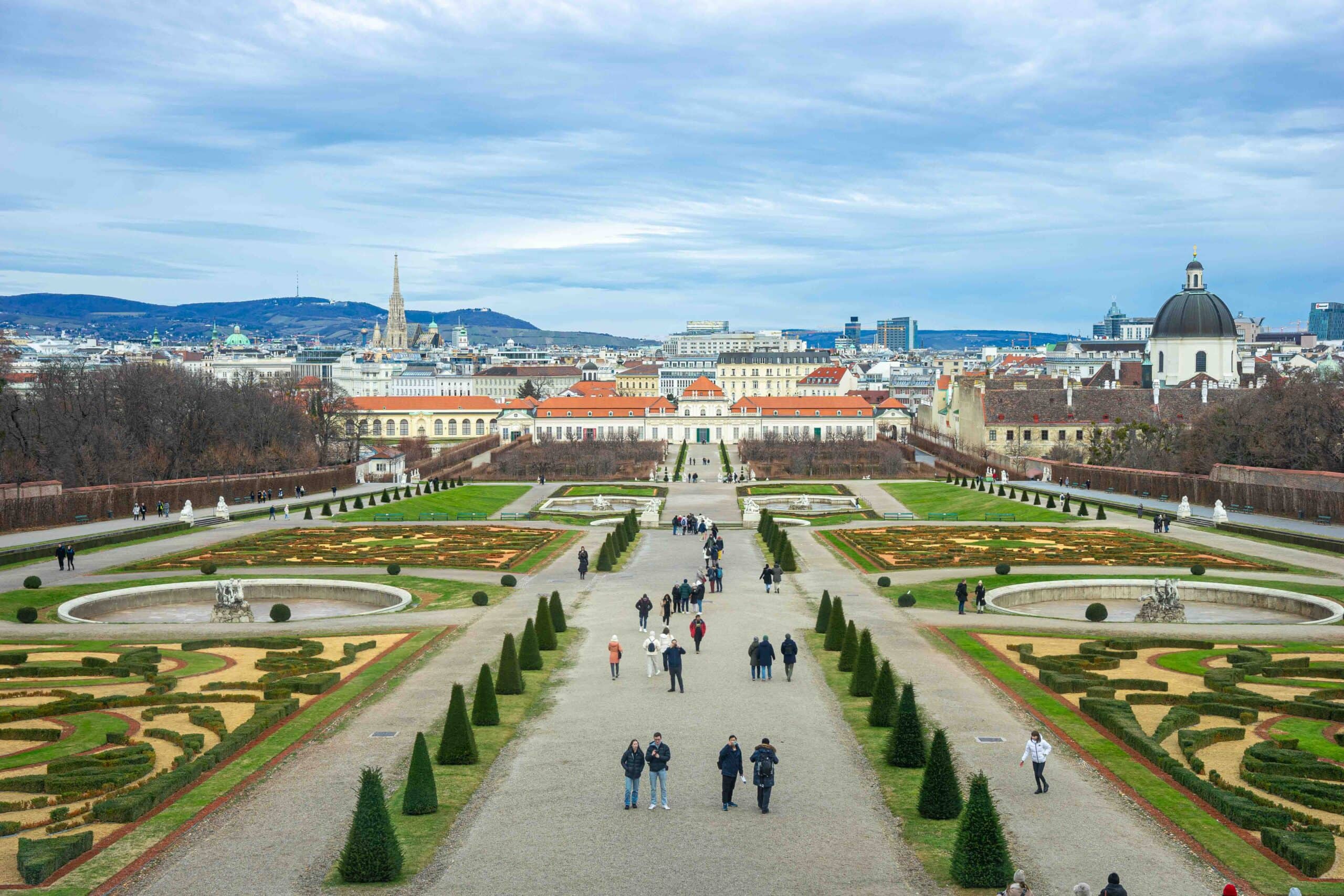
The Kiss is an absolute must-see in Vienna, and for me, it was incredible to see it for myself. I half expected it to be like seeing the Mona Lisa (which left me feeling abit underwhelmed, to be honest), The Kiss had the opposite effect. From then on, Gustav Klimt became one of my favourite artists.
But there’s much more than just The Kiss. Whether it’s golden lovers, fierce femmes, or hypnotic nature scenes, the Belvedere is like a backstage pass to any Klimt groupie.
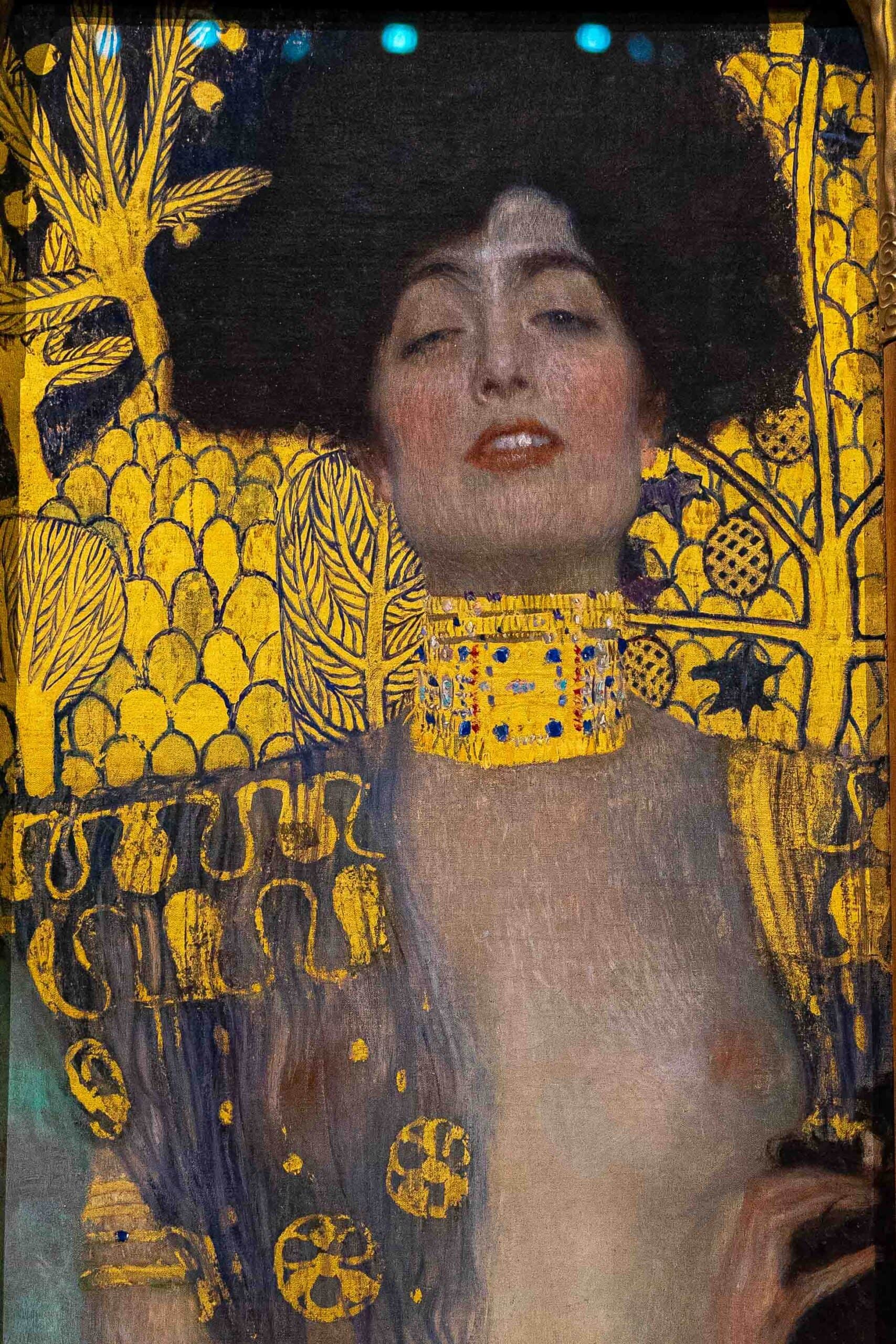
Among the other Klimt highlight for us was Judith and the Head of Holofernes – bold, sensual, and dripping with attitude. Only Klimt can make decapitation look this sexy.
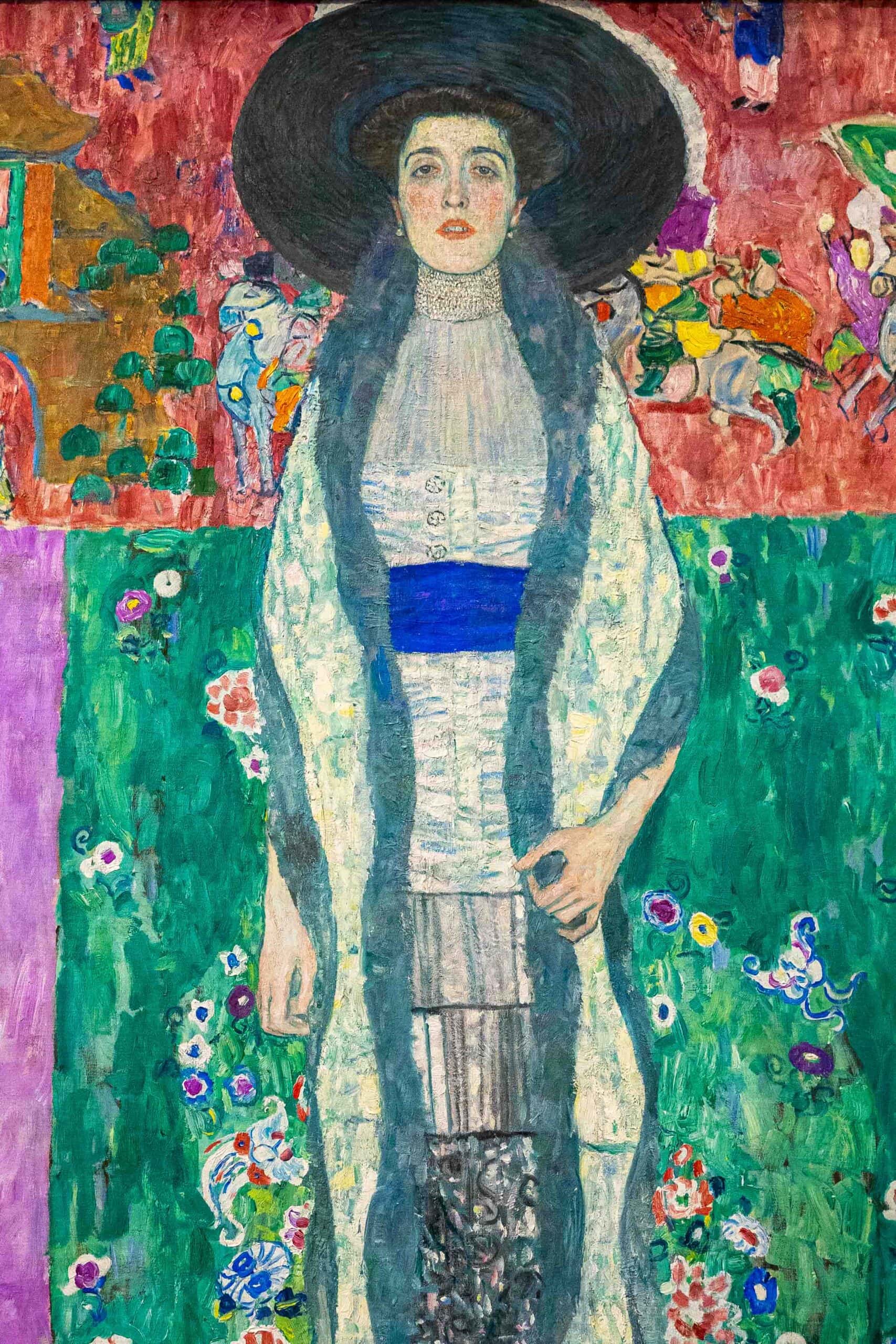
Then there was Portrait of Adele Bloch-Bauer II, a Klimt with a dramatic back story. The Nazis looted it from Adele’s family in World War II. After a lengthy legal battle, Adele’s niece won back the painting in 2006.
Soon after, it was sold at auction for $88 million to no one other than Oprah Winfrey. Oprah sold it privately in 2016 for a staggering $150 million. This portrait is now in a private collection, but it was on loan to the Belvedere during our visit, and we were happy to see it.
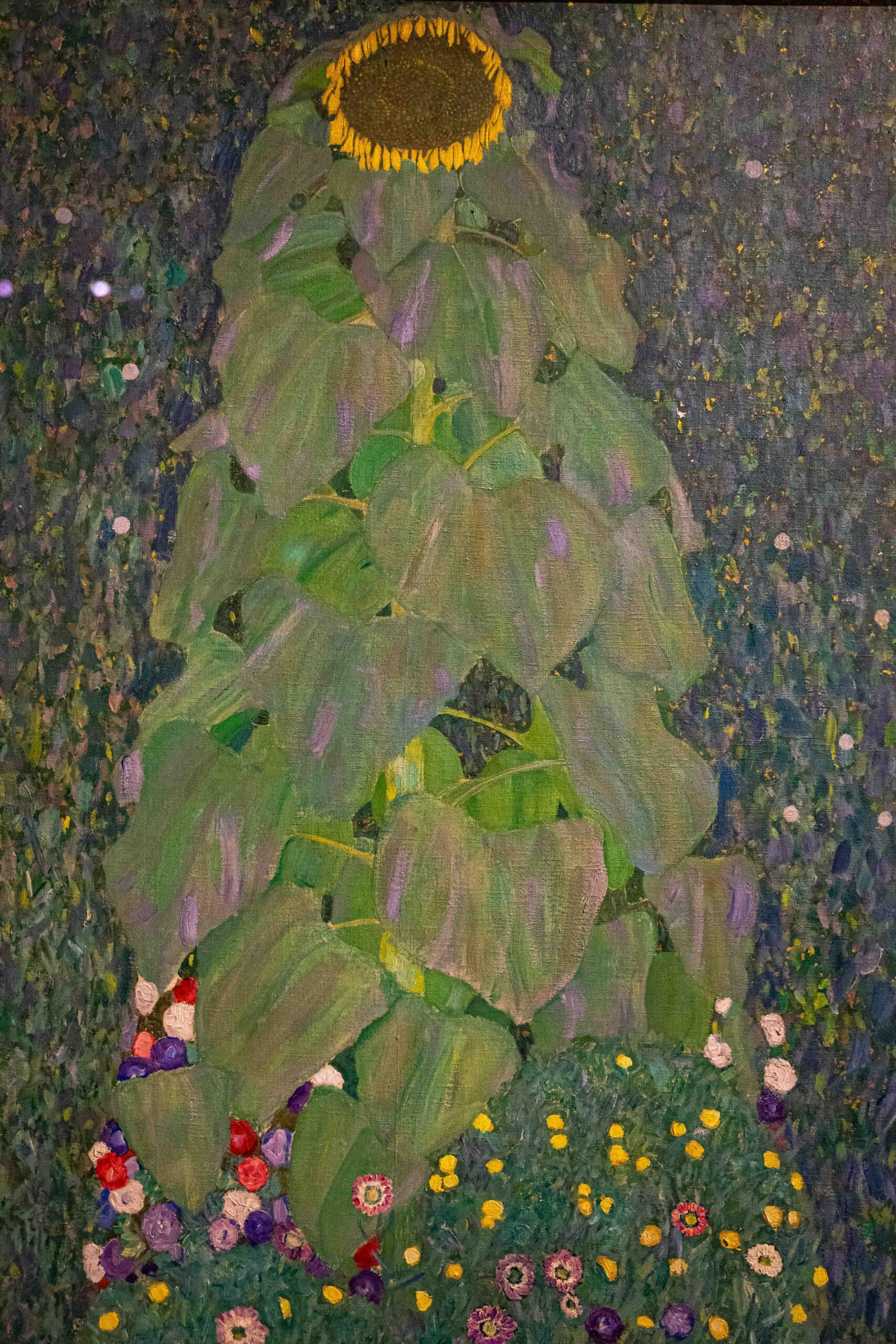
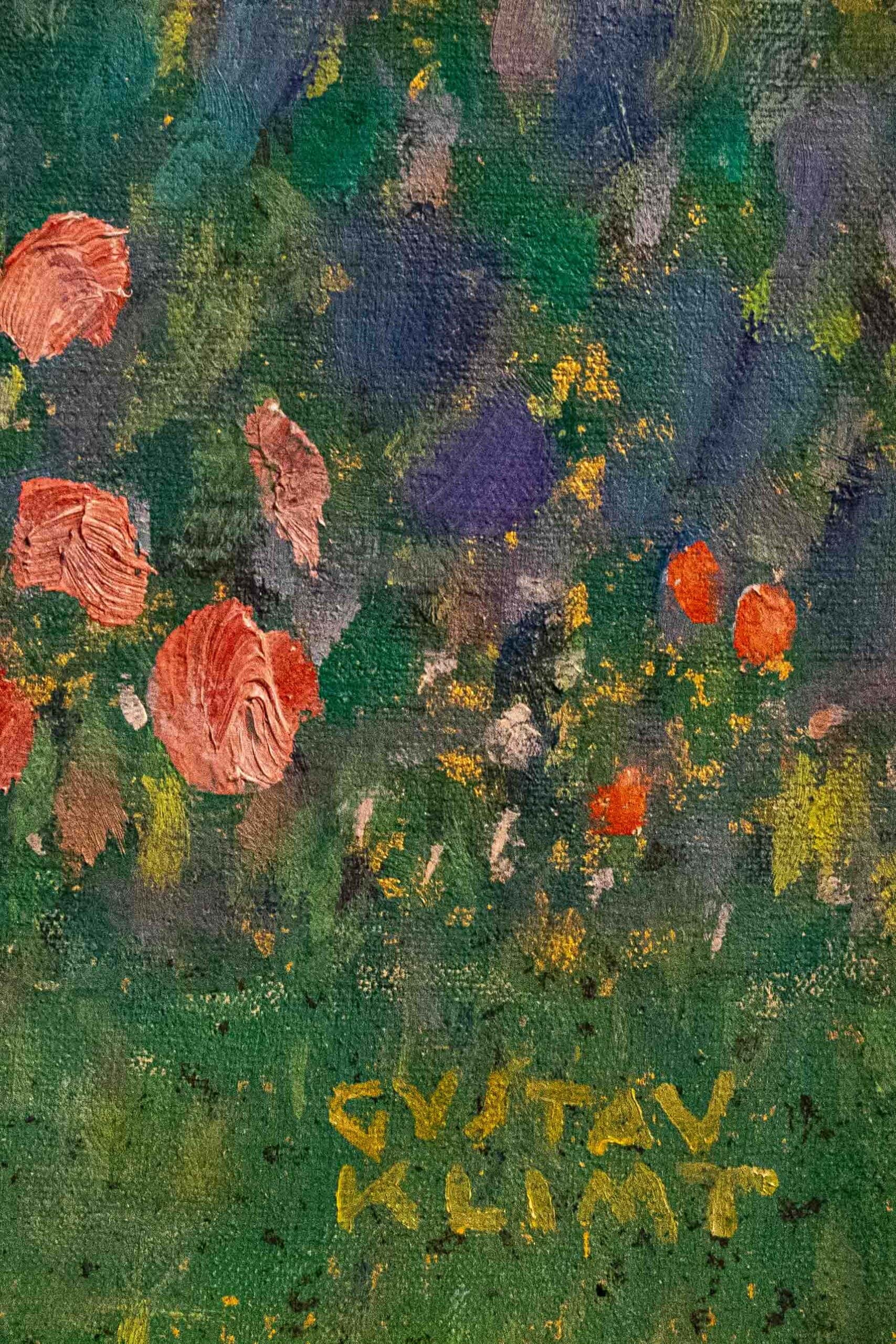
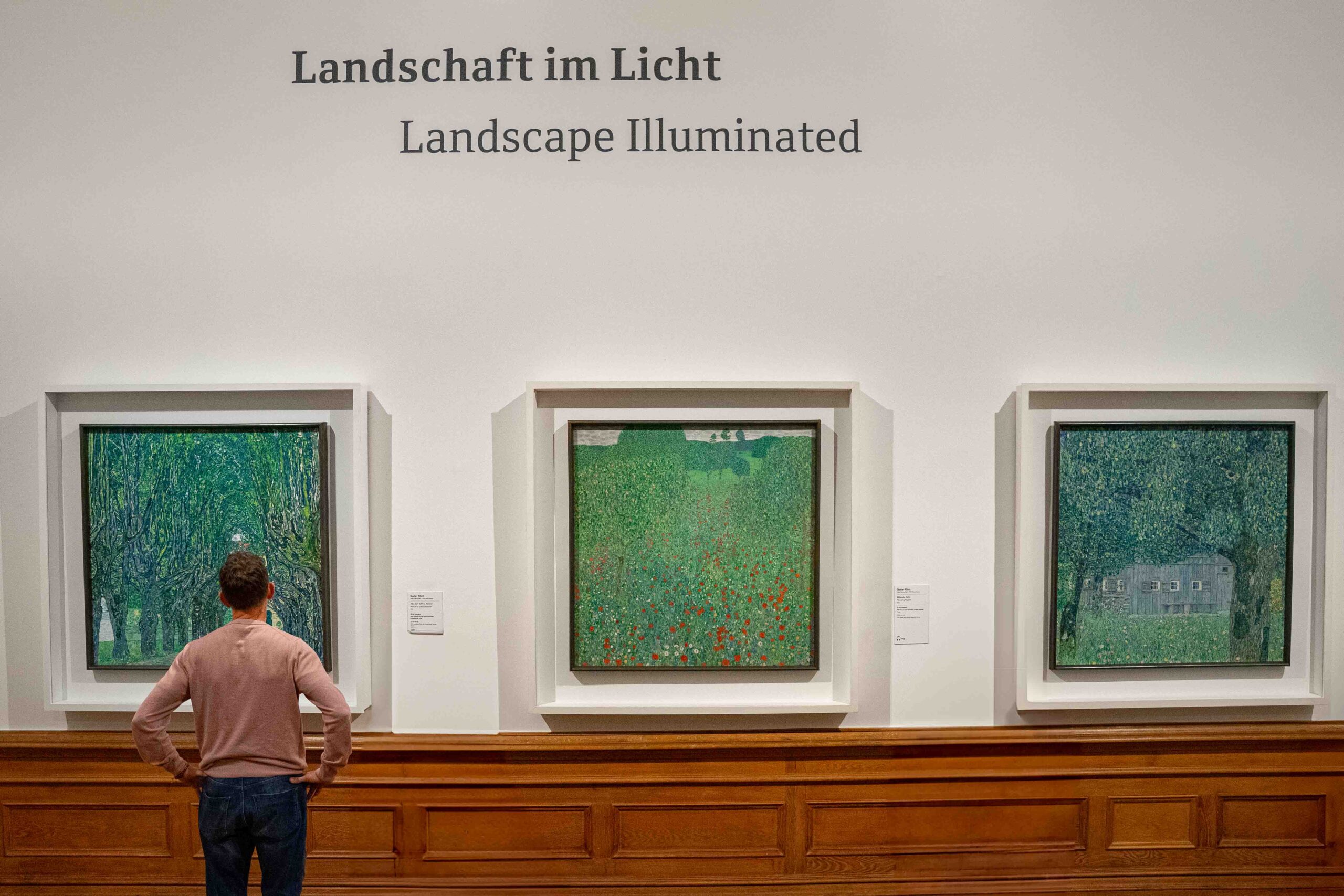
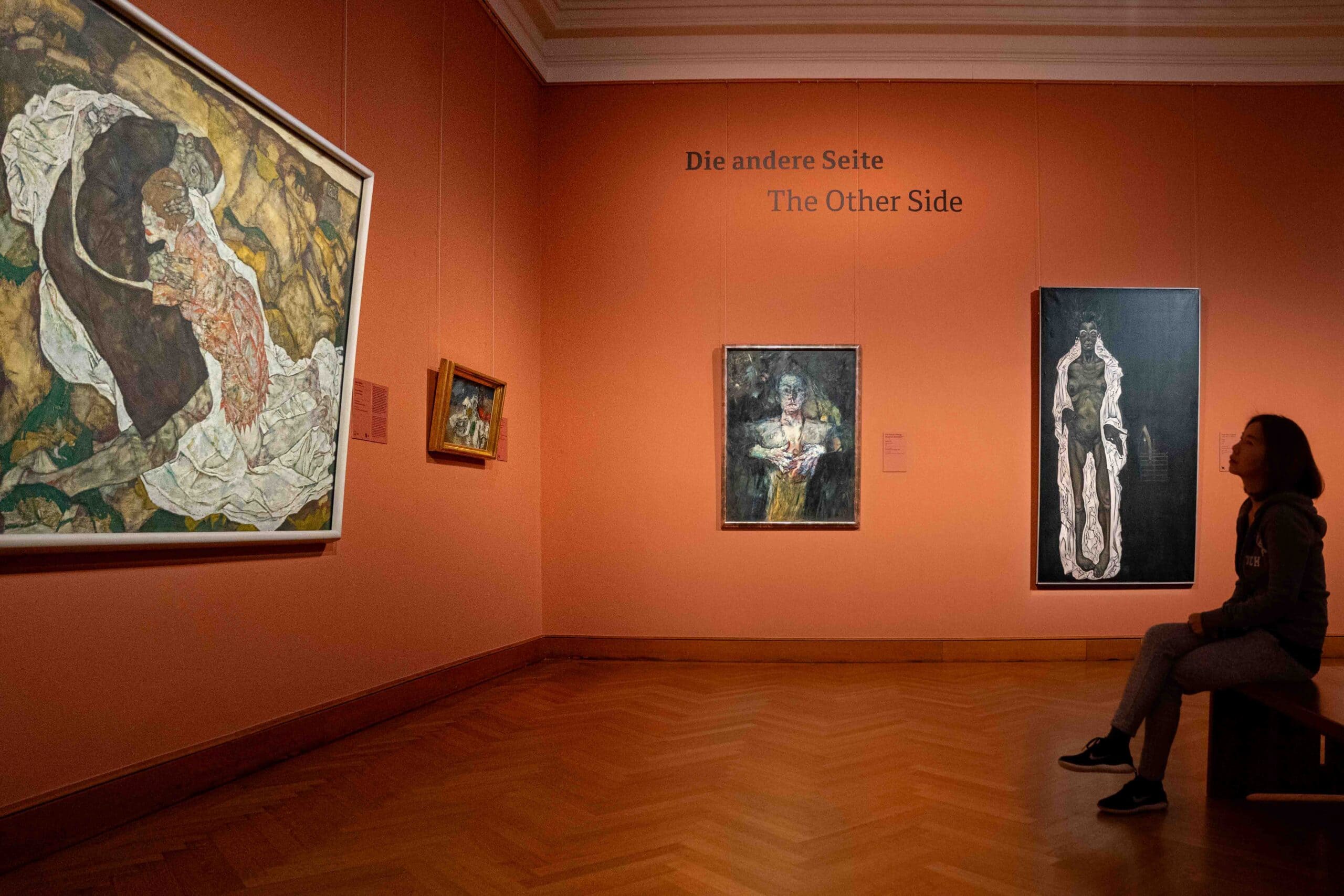
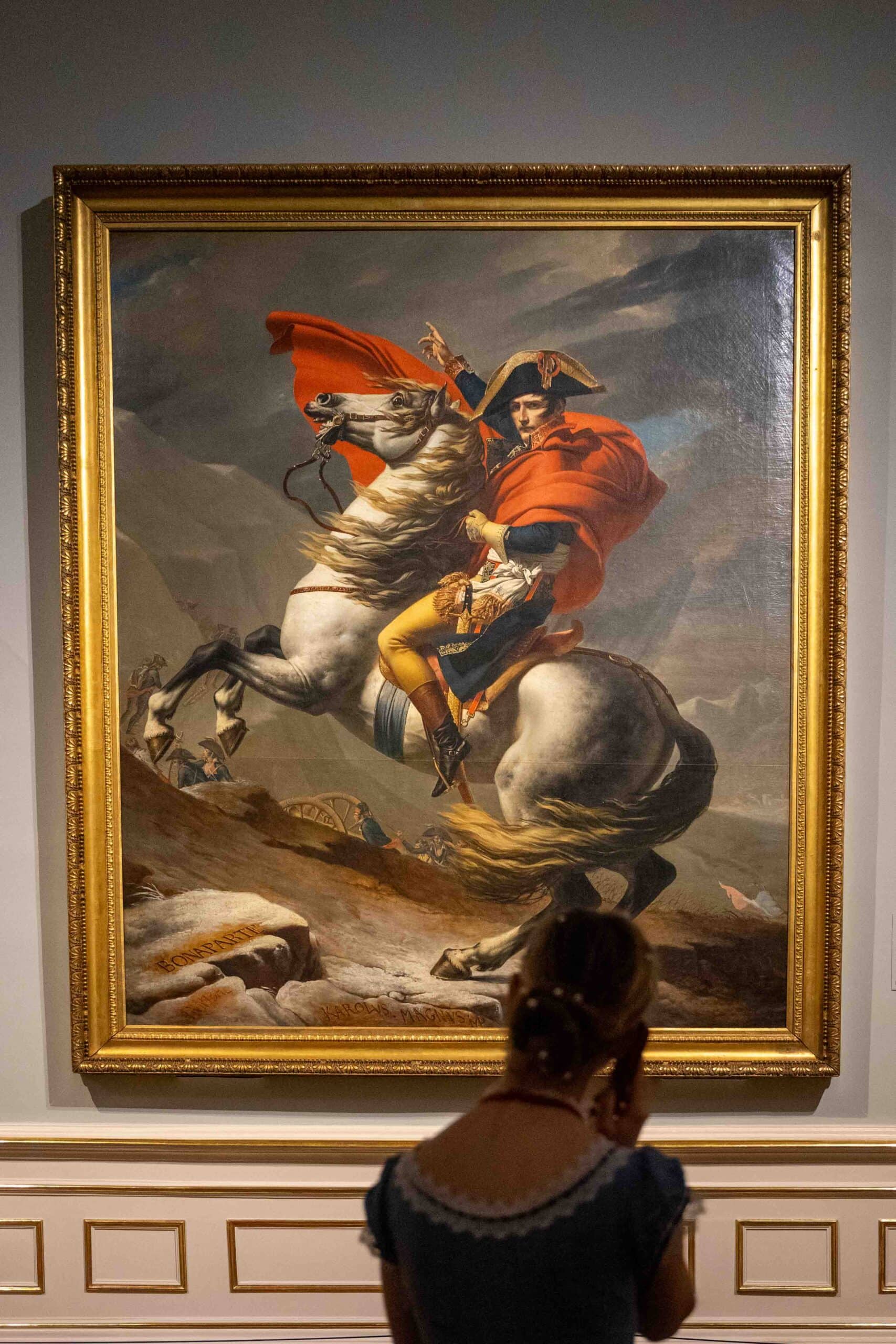
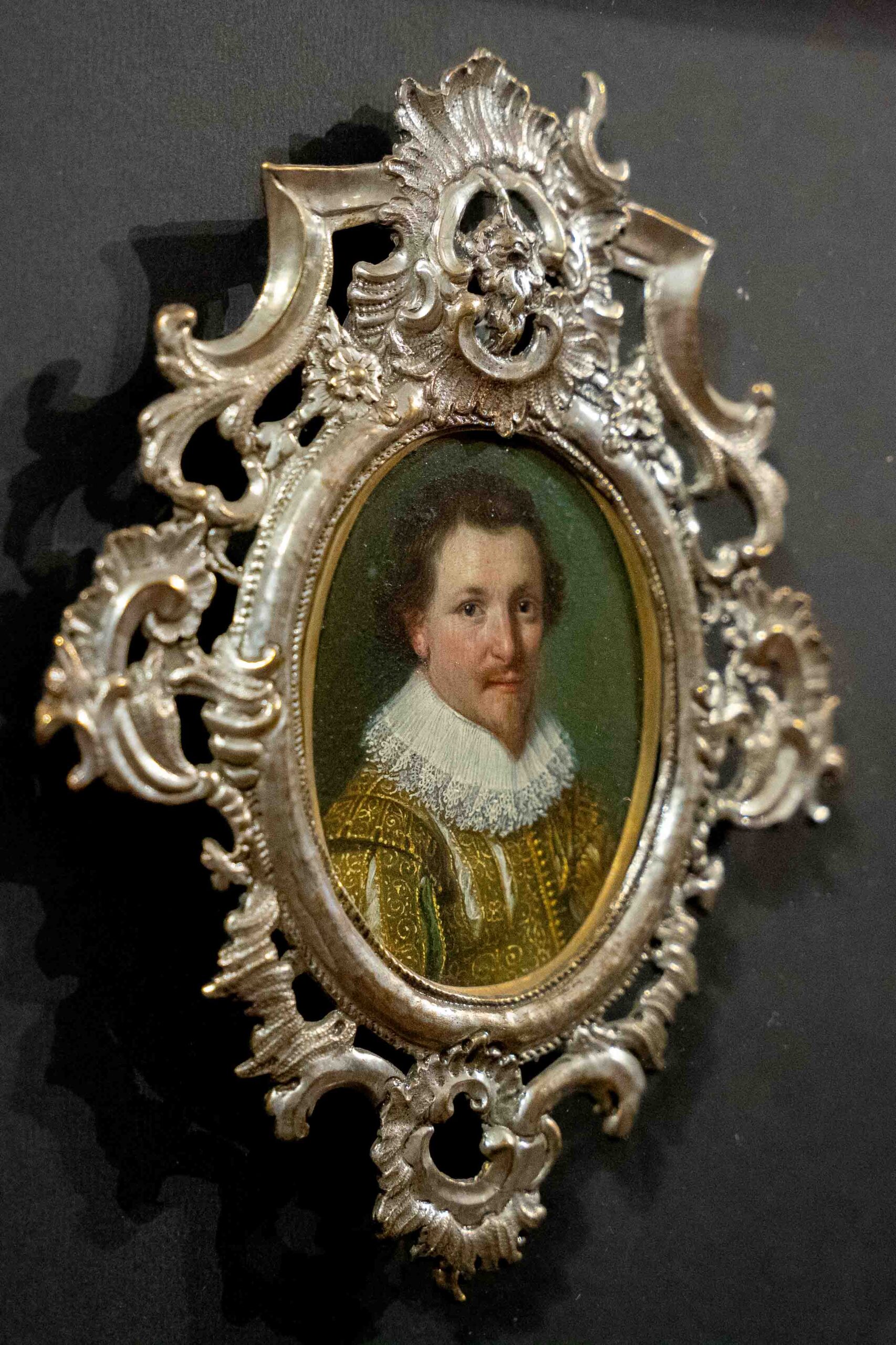
Beyond Klimt, the museum is packed with incredible Austrian art, from Schiele to Kokoschka. There’s also plenty of French Impressionism, medieval altarpieces, and dramatic Baroque paintings to keep you entertained. It’s without a doubt one of the best art museums in Europe.
Hours: 09:00-18:00 daily
Skip-the-line tickets (€17.50)
€1.50 discount with Vienna City Card when bought onsite
Bitzinger Würstel Stand
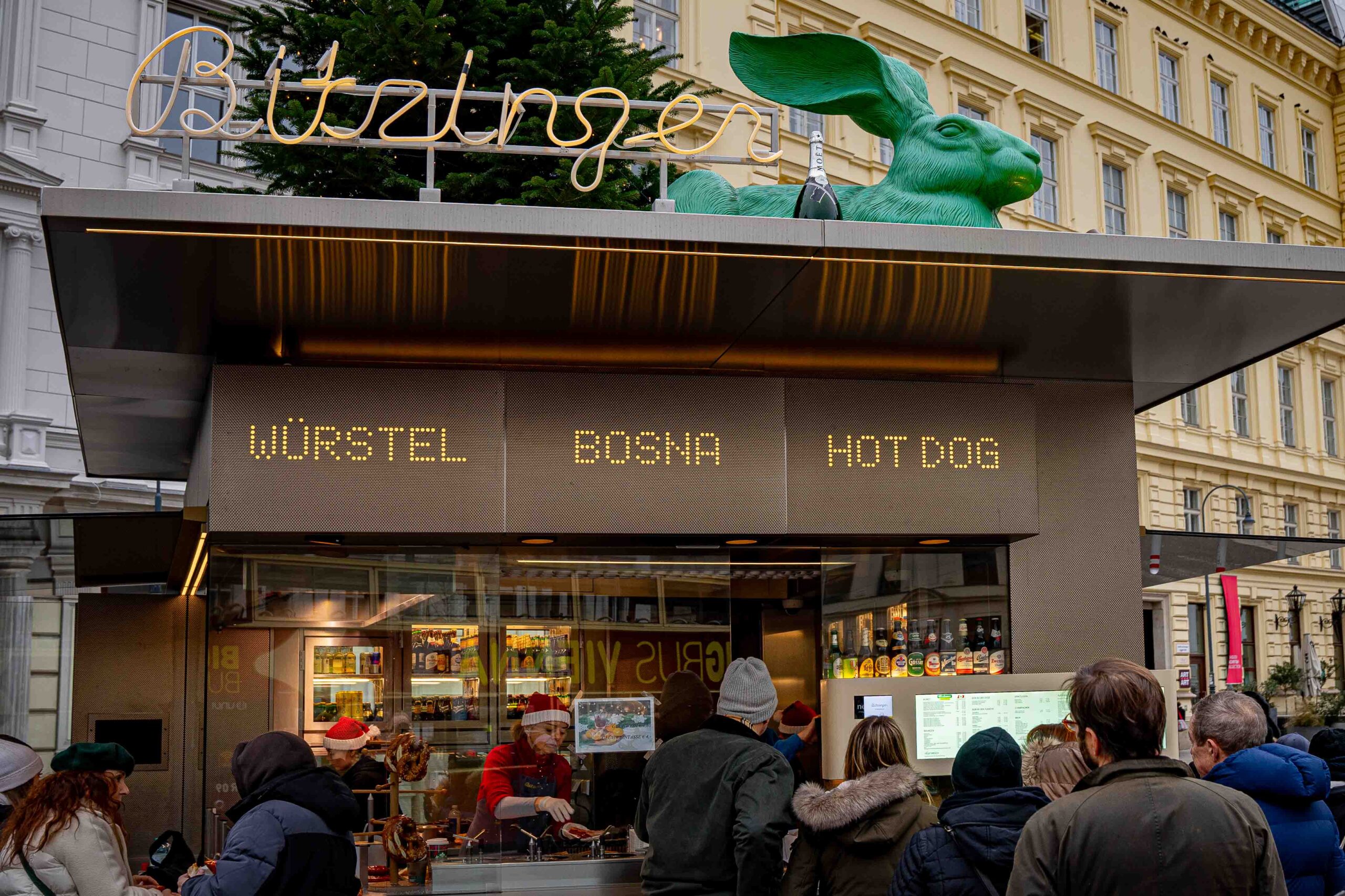
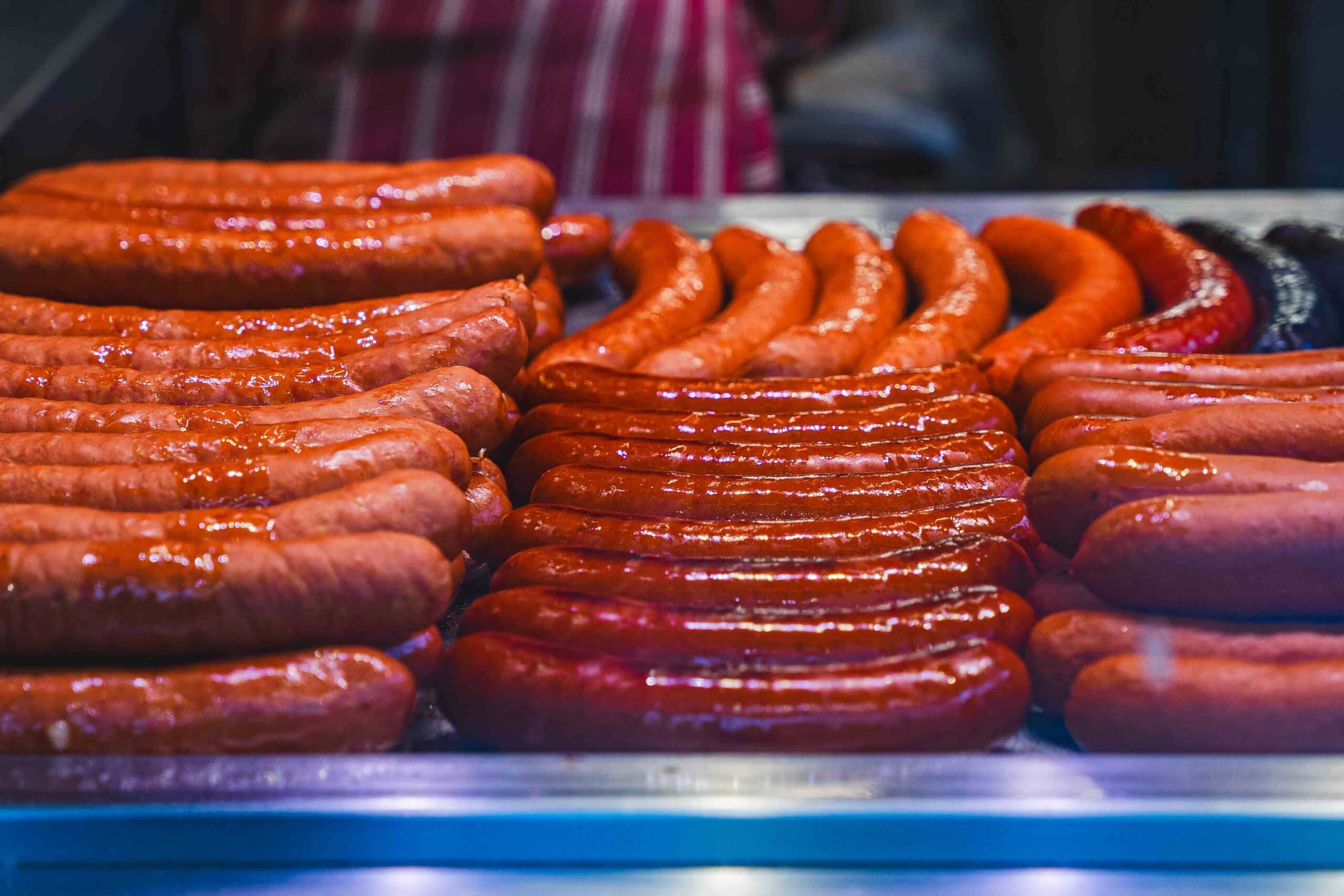

Vienna’s würstel stands are more than just snack stops—they’re an institution. For over a century, these sausage kiosks have been fueling locals and visitors alike, offering quick, delicious bites at all hours. They’re so deeply woven into Vienna’s culture that they received UNESCO intangible cultural heritage status in 2024.
Whether it’s a lunchtime staple or a post-opera, post-clubbing, or just-because snack, würstel stands are always there.
If you visit just one würstel stand, make it Bitzinger, right next to the Albertina. The iconic green rabbit on the kiosk’s roof is a nod to a painting by Dürer, Young Hare, on display in the Albertina.
This sleek, black kiosk serves some of the best sausages in town. Order a Käsekrainer hotdog, a juicy, cheese-stuffed sausage that oozes with every bite. We enjoyed ours with a nice cold hefeweizen. If you’re feeling fancy, Bitzinger even offers a glass of champagne. Told you Vienna is a classy place.
Hours: 08:00-04:00 daily
Burggarten & Mozart
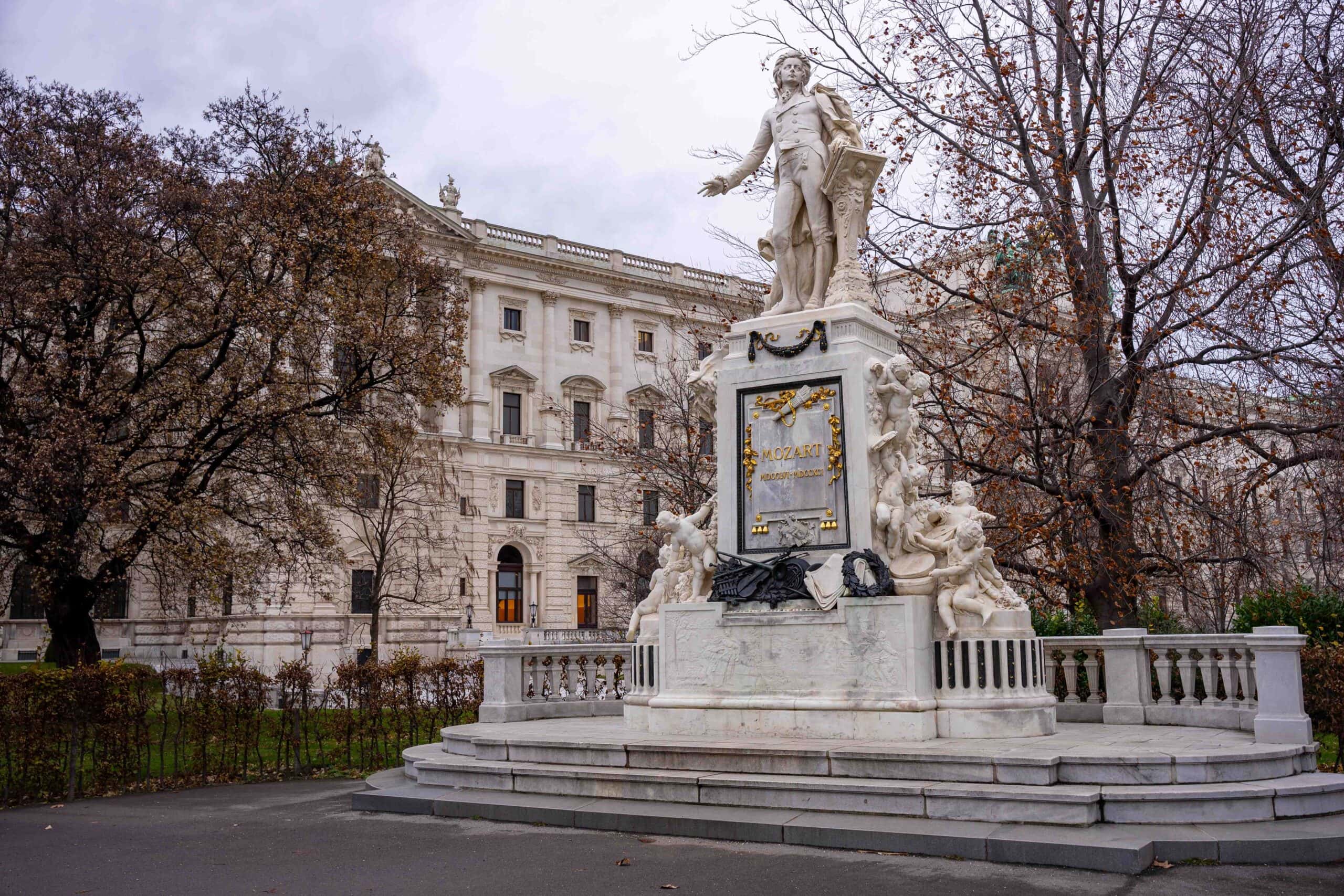
Google Maps led us on an unexpected but scenic shortcut through the Burggarten on our way to the next stop.
Once Emperor Franz Joseph’s private garden, this peaceful park is now a lovely spot to wander. We passed the Palmenhaus, a stunning Art Nouveau greenhouse turned café. Step inside for coffee and cake among towering palms and tropical plants if you fancy a mini getaway to another era or climate zone.
And then, we ran into Mozart! Well, his statue. This grand tribute, complete with a treble clef made of flowers, is a photo-worthy stop, even if this itinerary isn’t about music.
Ephesos Museum
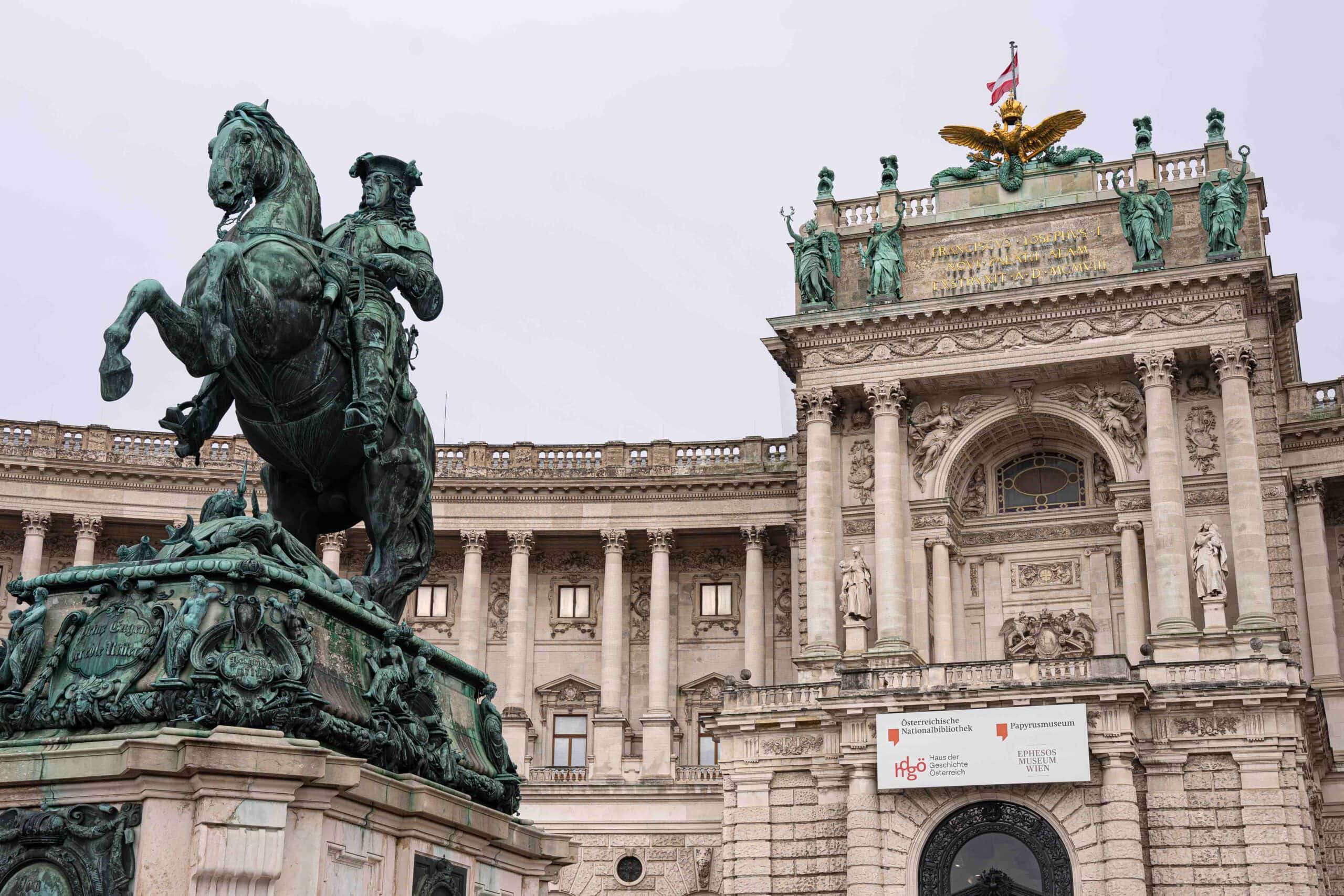
Tucked inside the Neue Burg, part of the sprawling Hofburg complex, the Ephesos Museum is a hidden gem among Vienna’s museums. It houses jaw-dropping treasures from the ancient city of Ephesos (in modern-day Türkiye), brought to Vienna in the late 19th century after Austrian archaeologists excavated the site.
The collection was definitively not looted and carried away by the Austrians! Sultan Abdul Hamid II gifted them to Austria between 1896 and 1906, so there is no need for a guilt trip when you visit.
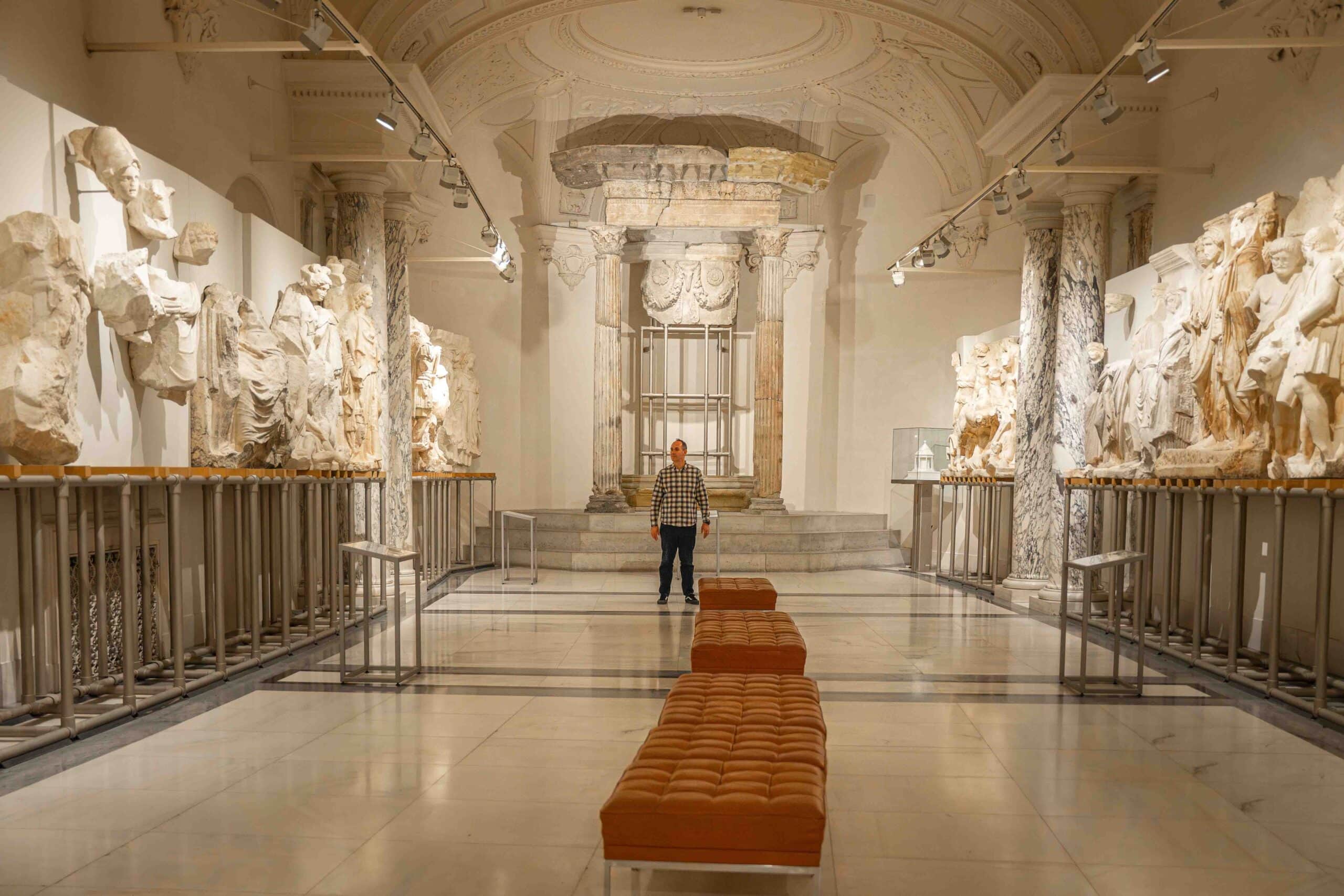
The collection may be small, but it packs a punch, offering a fascinating glimpse into one of the greatest cities of antiquity, all without leaving Vienna. Definitely worth a detour if you have a fetish for Asia Minor or chiselled torsos in marble.
Highlights for us were the Parthian Monument, an enormous relief celebrating Roman victories, and the bronze Athlete of Ephesos. It also houses the original Four Virtues statues that once stood in front of the Celsus Library in Ephesus.
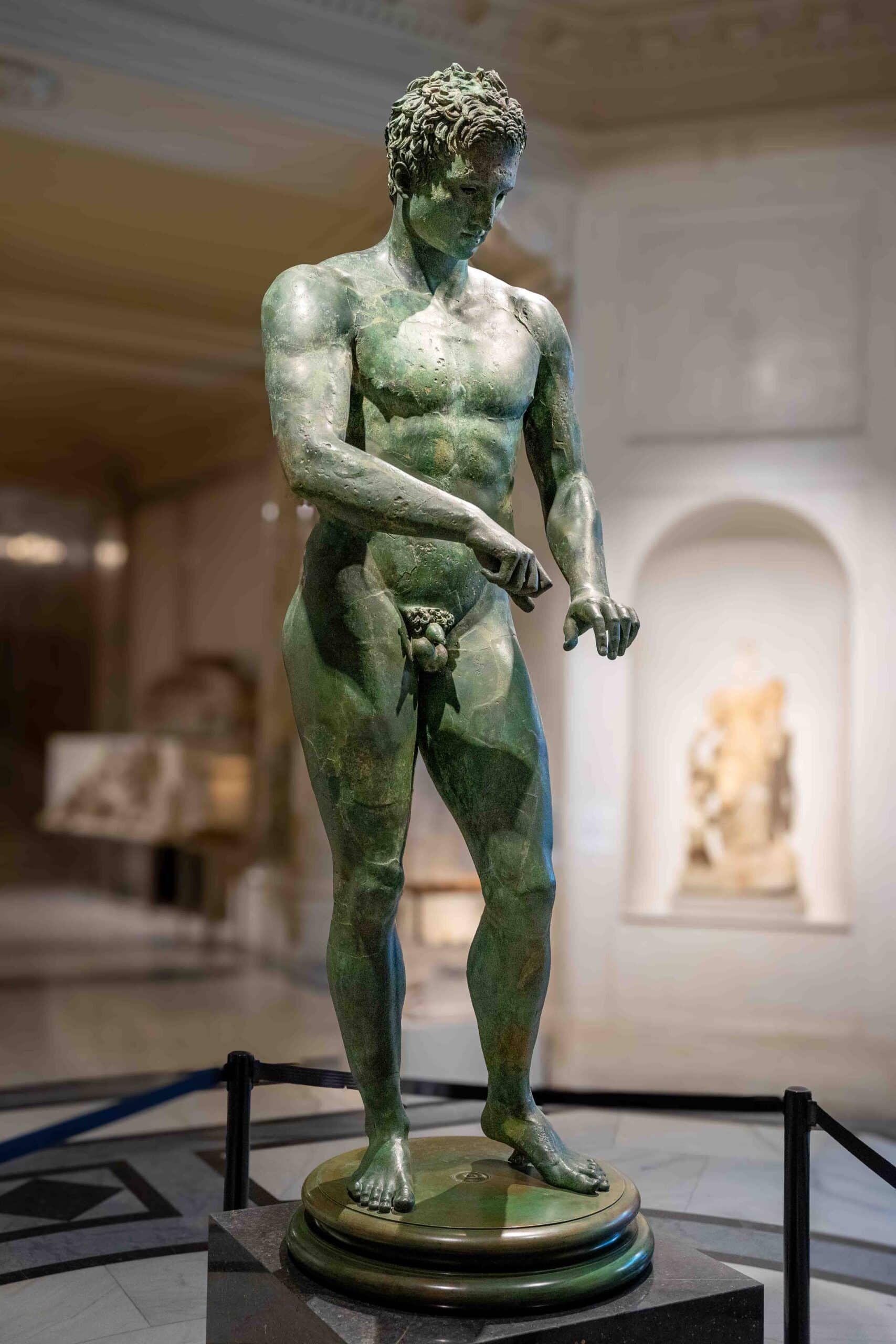
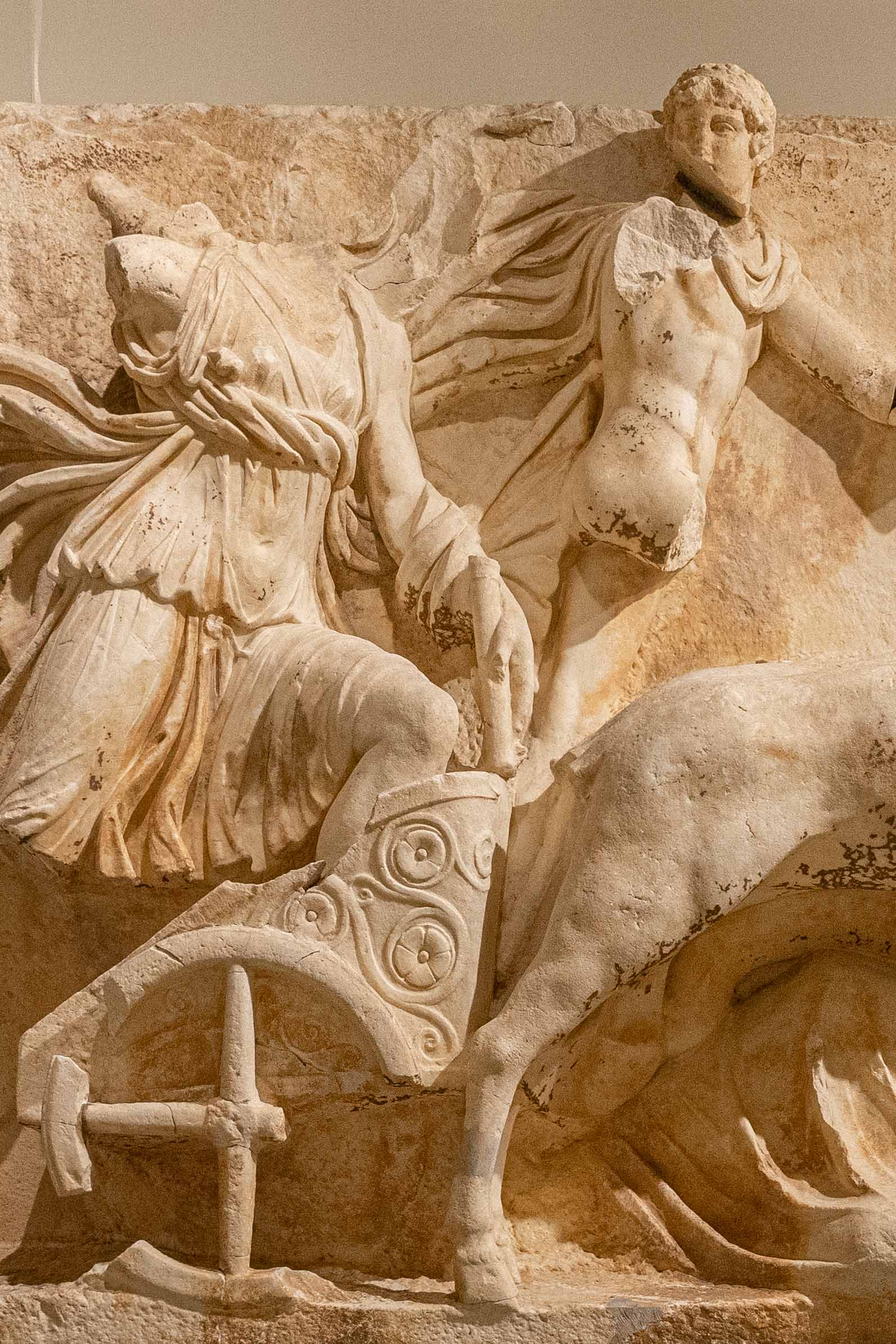
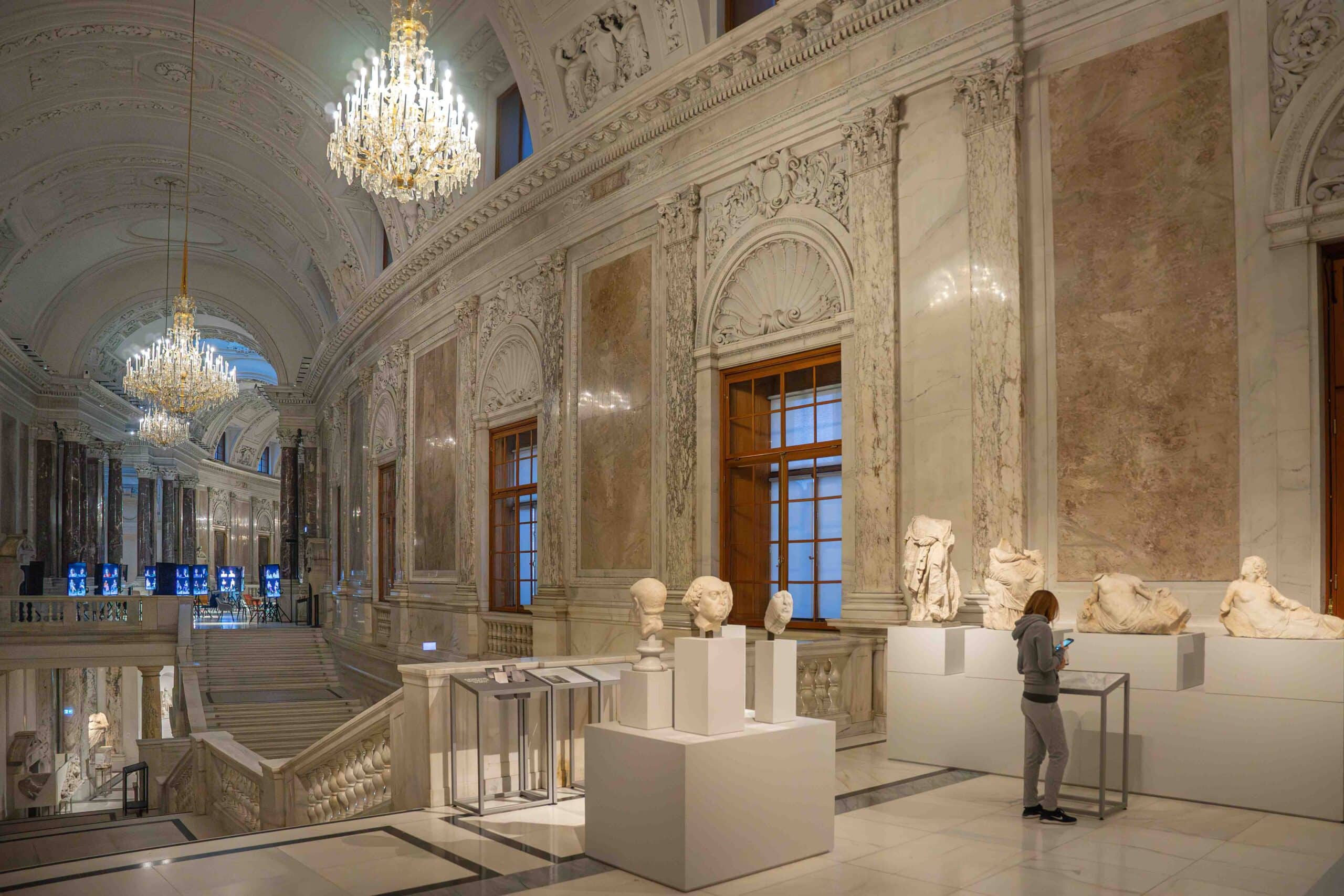
Besides treasures from the ancient Near East, visiting the Ephesos Museum takes you inside the stunning Neue Burg. It’s a classy whale in marble and stucco, and best of all, we had the entire museum to ourselves!
Another historic highlight lowlight to look for is the Hitler Balcony, right above the entrance of the museum from where Adolf announced the annexation of Austria by Nazi Germany in 1938.
Hours:
Thurs 10:00-21:00
Tue/Wed/Fri/Sat/Sun 10:00-18:00
Mon Closed
Entry: € 9
Shopping on Mariahilfer Street
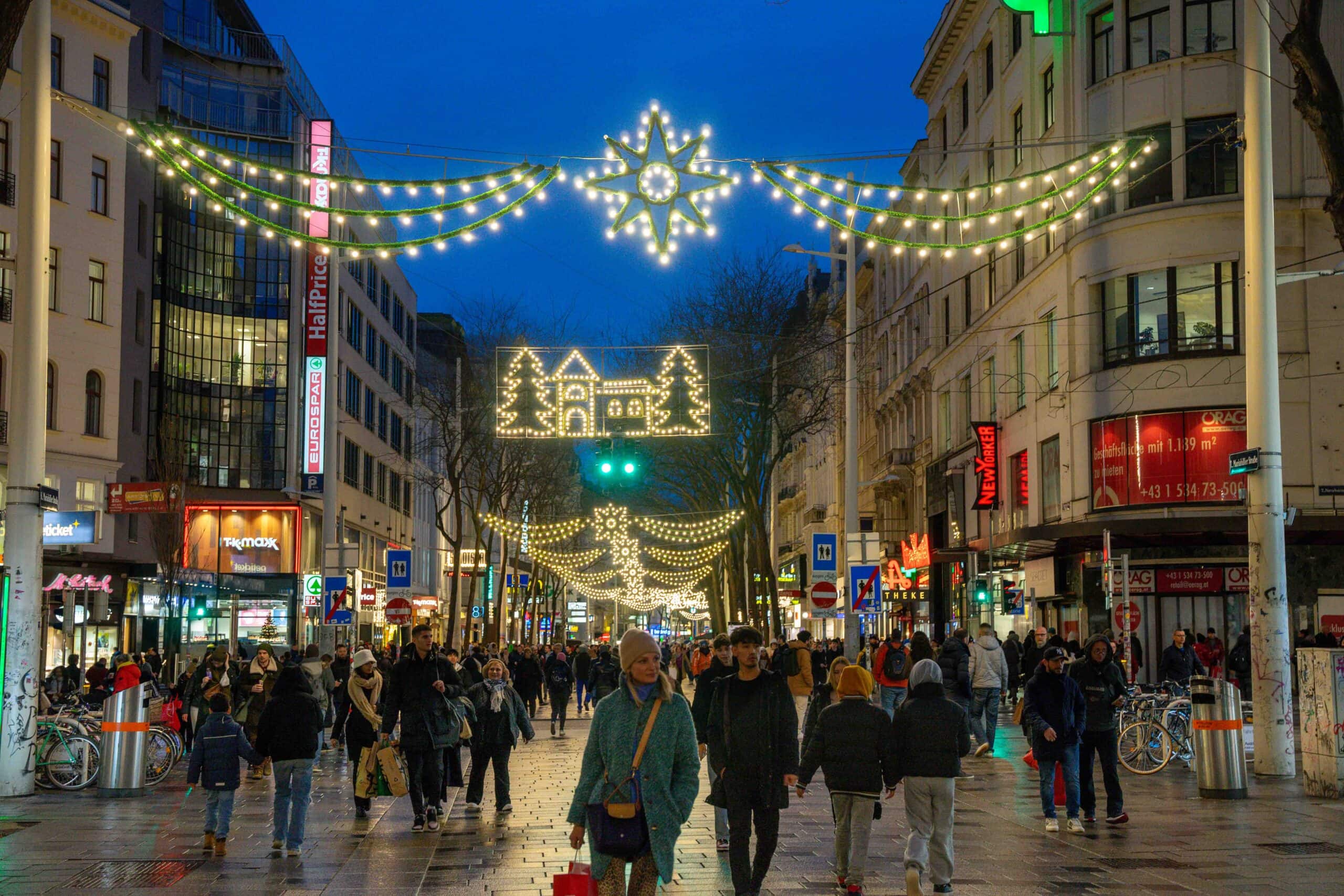
I needed new running shoes, and since it was almost Christmas, I thought I’d treat myself to a present. A quick online search showed prices much more affordable than Dubai, where we lived at the time. Google also directed me to the Nike store on Mariahilfer Straße, Vienna’s ultimate shopping street.
Mariahilfer Street has some nice Christmas lights, too. It’s less extravagant than the city centre but still magical. We strolled, window-shopped, and popped in at Peek & Cloppenburg and Gerngross department stores before returning to the hotel for some doom-scrolling and a quick rest before dinner.
Vietnamese Dinner at Banh Mi Hoi An
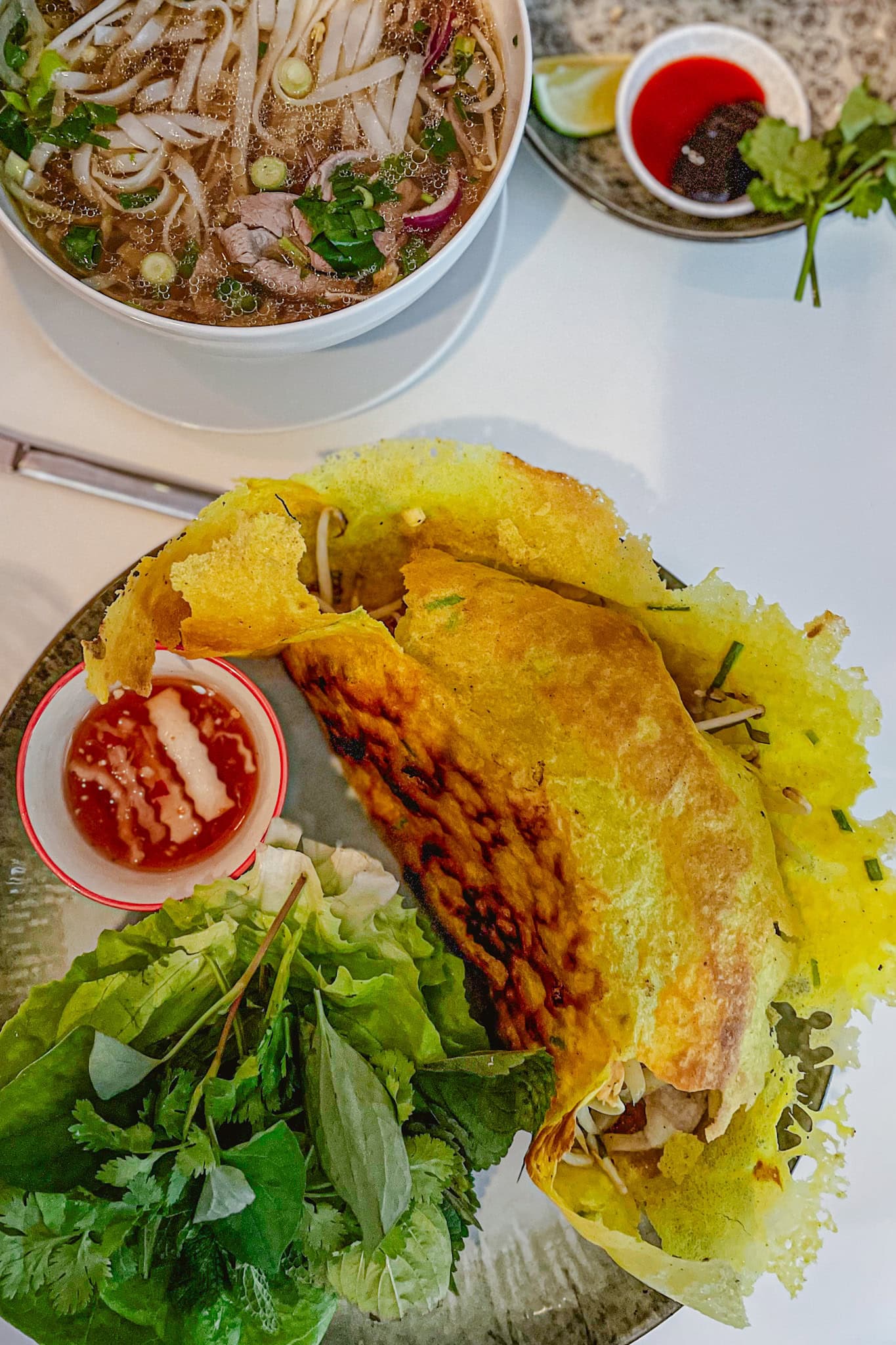
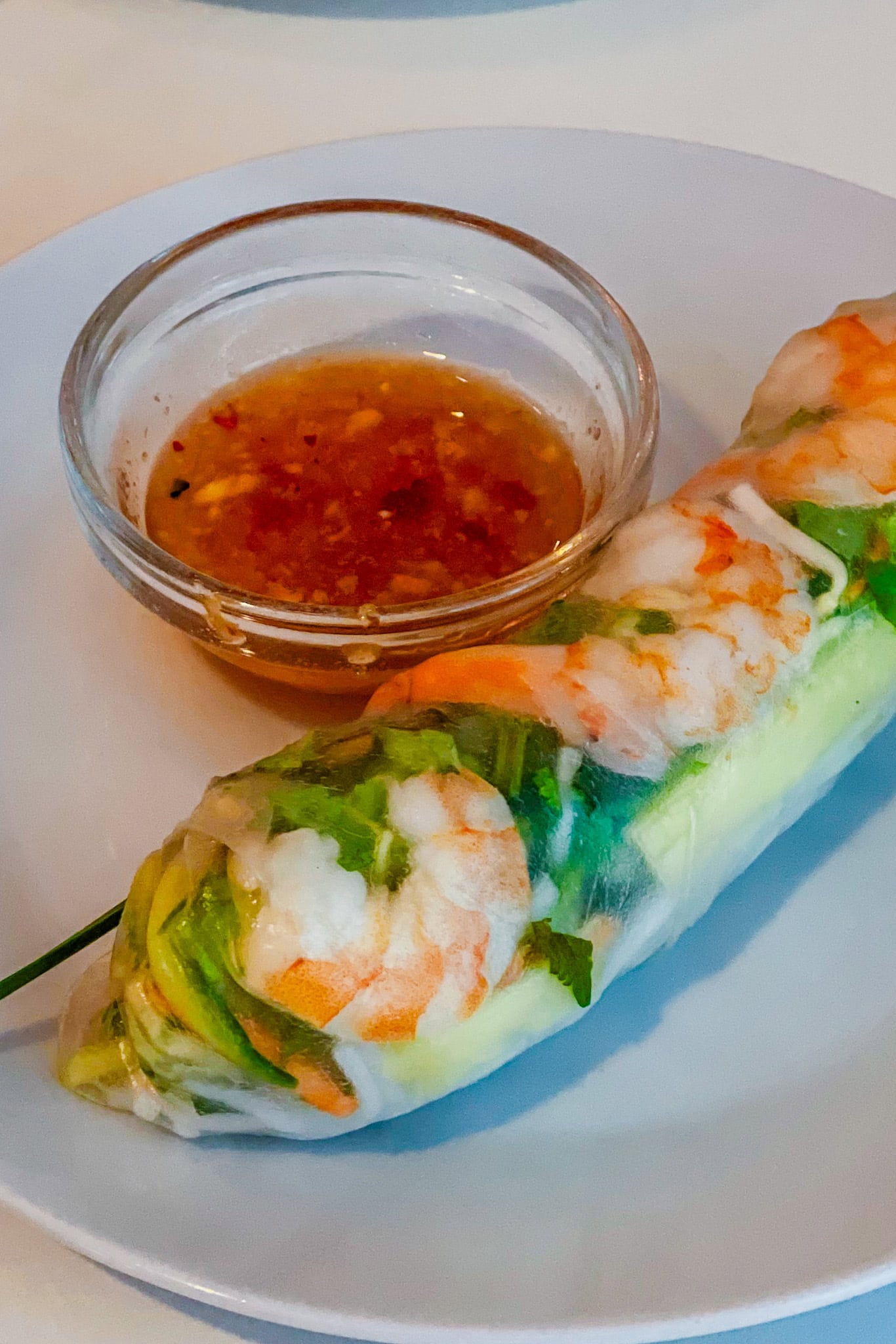
For a break from schnitzel and cake, Banh Mi Hoi An brings a taste of Vietnam to Vienna. This friendly spot serves up authentic street food with bold flavours and fresh ingredients.
We had the bánh xèo (crispy rice-flour pancake), a bowl of pho, and summer rolls. All fantastic.
It’s insanely popular, so don’t just show up. Make a reservation or risk missing out. We learned the hard way when we tried the night before and got turned away. We saw plenty of others without reservations getting the same bad news on our visit.
Hours:
Mon – Fri: 11:00 to 21:00
Sat / Holidays: 12:00 to 21:00
Sun: Closed
Christmas Lights
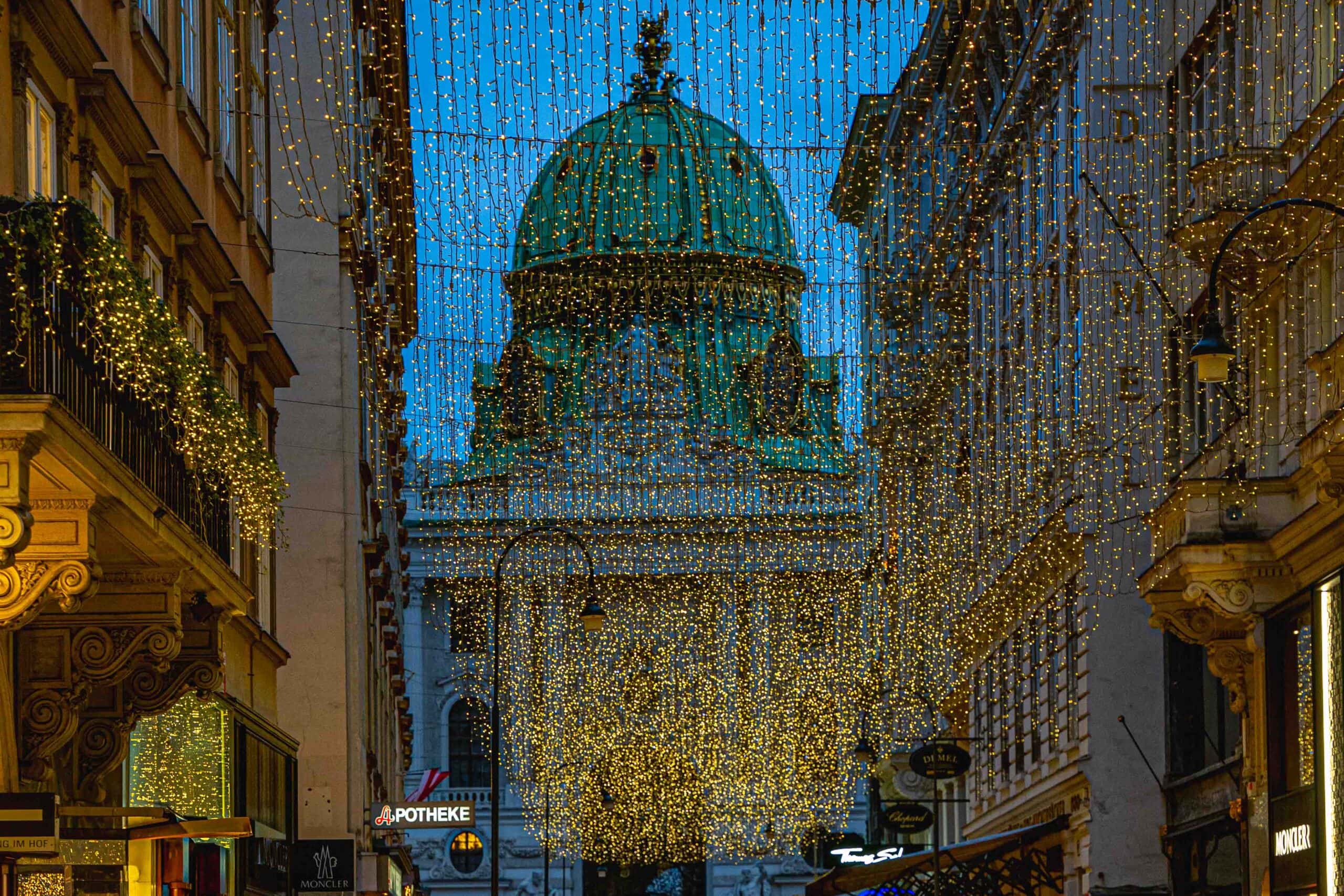
The end is, sadly, in sight, people. We end our Vienna trip with one last stroll through the centre to enjoy the Christmas lights, because who knows when we’ll ever experience it again.
You’ve probably seen them already, but the pedestrian zone in the city centre surrounding Stepansdom has the best Christmas lights in Vienna.
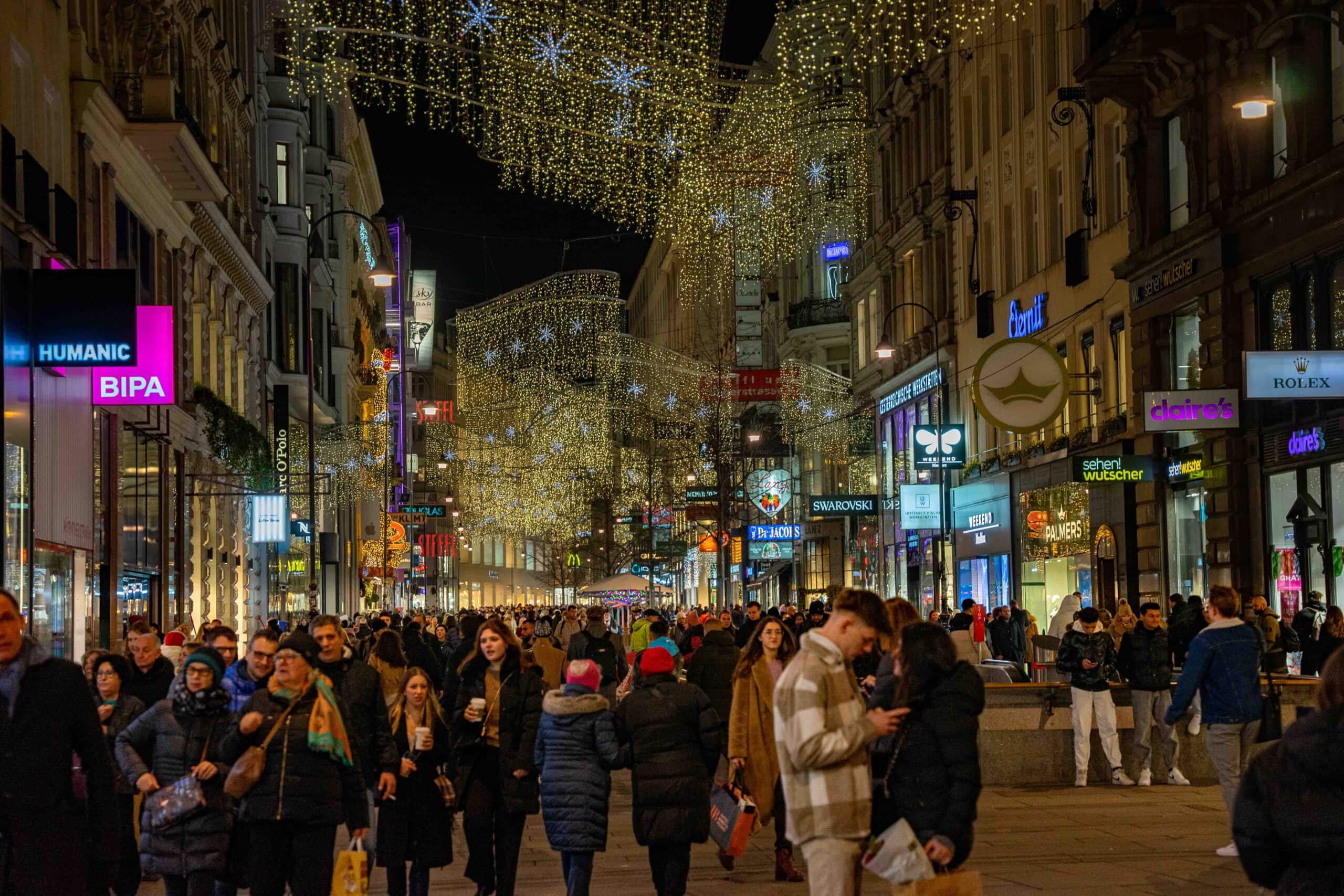
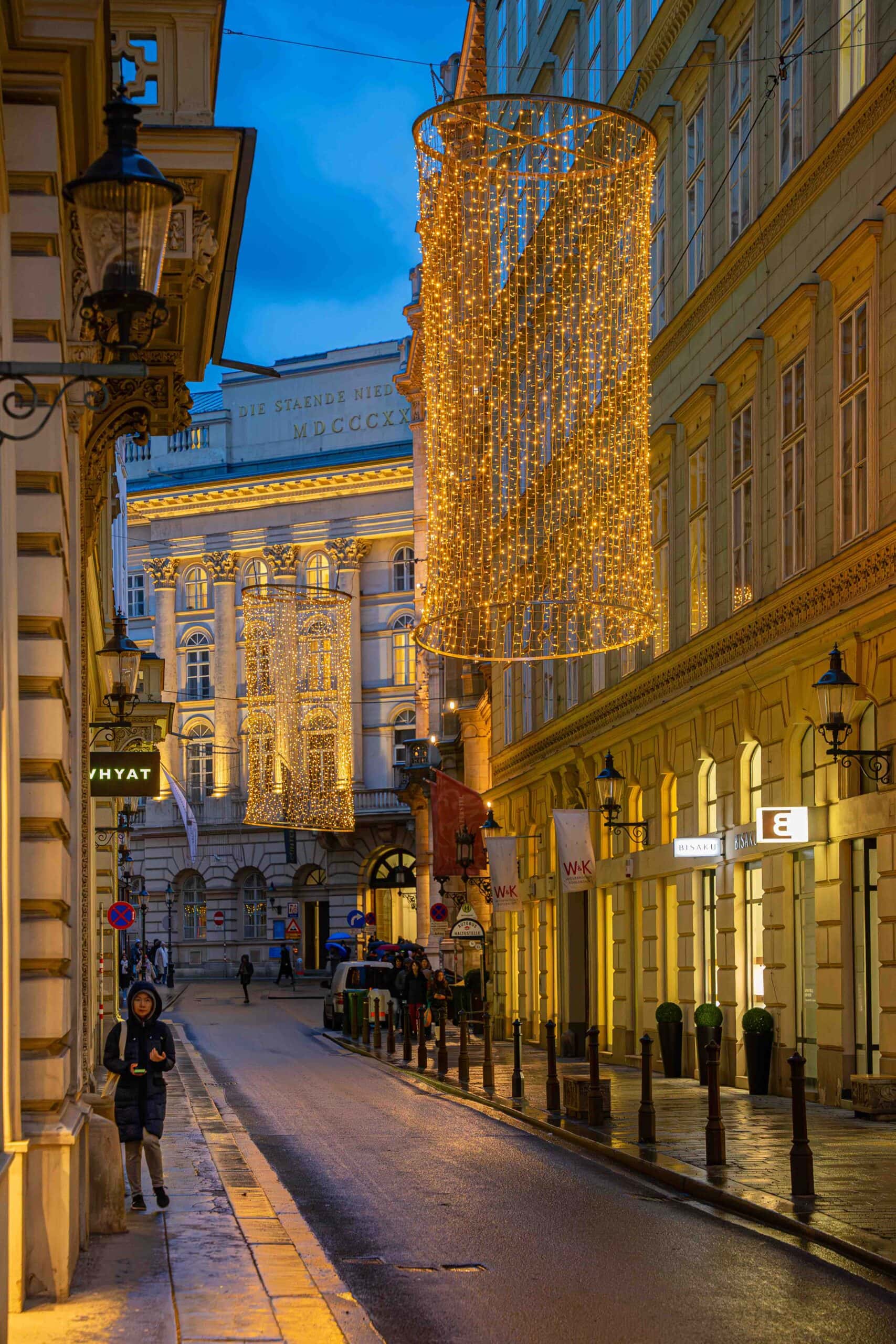
In the Goldenes Quartier (Tuchlauben, Bognergasse, Seitzergasse area), Prada, Bottega Veneta, Miu Miu, and Alexander McQueen stores glow under huge cylinders of lights.
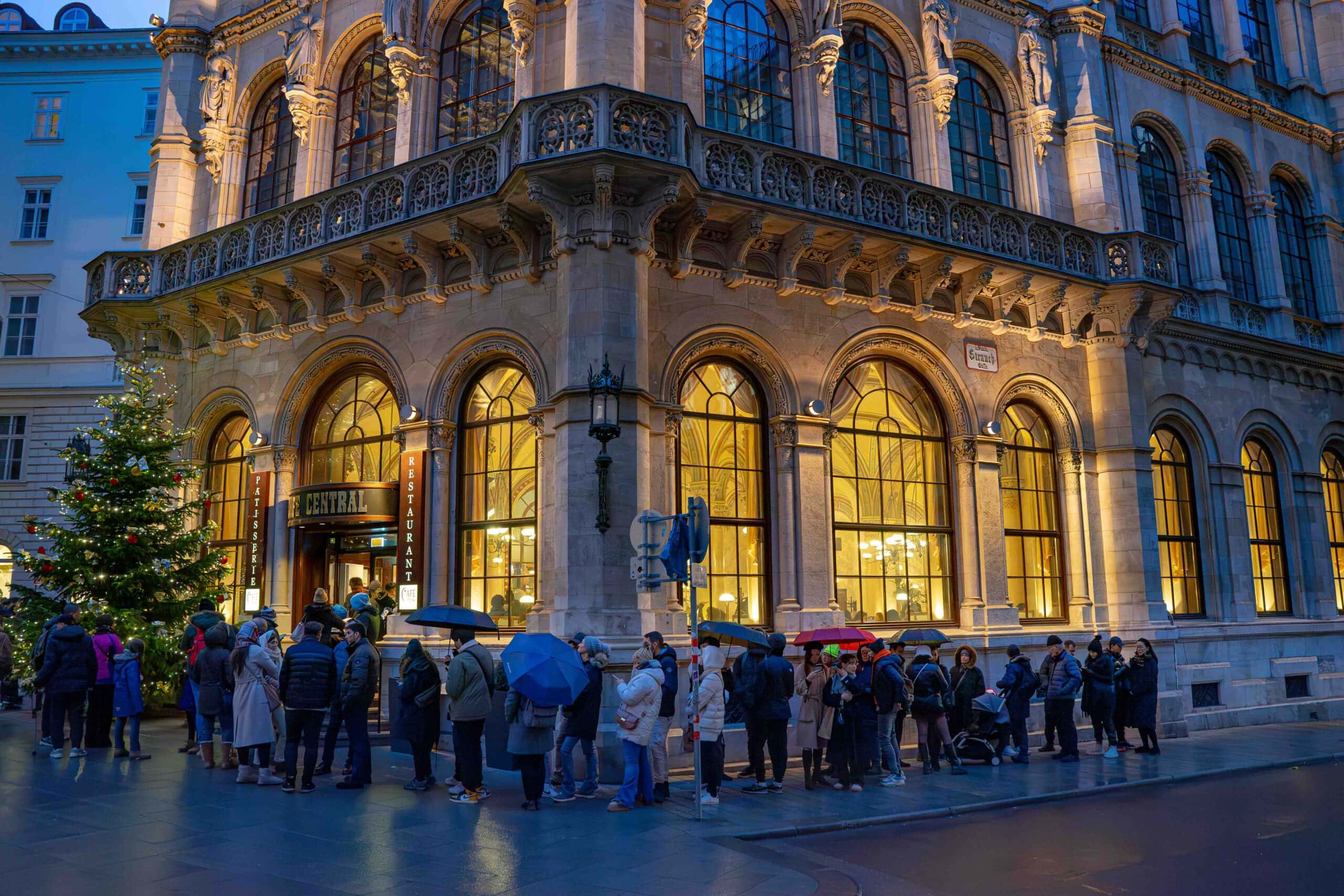
We thought about popping in at Café Central for an epic coffee and cake sendoff to end our Vienna trip but instantly abandoned the idea when we saw the endless queue.
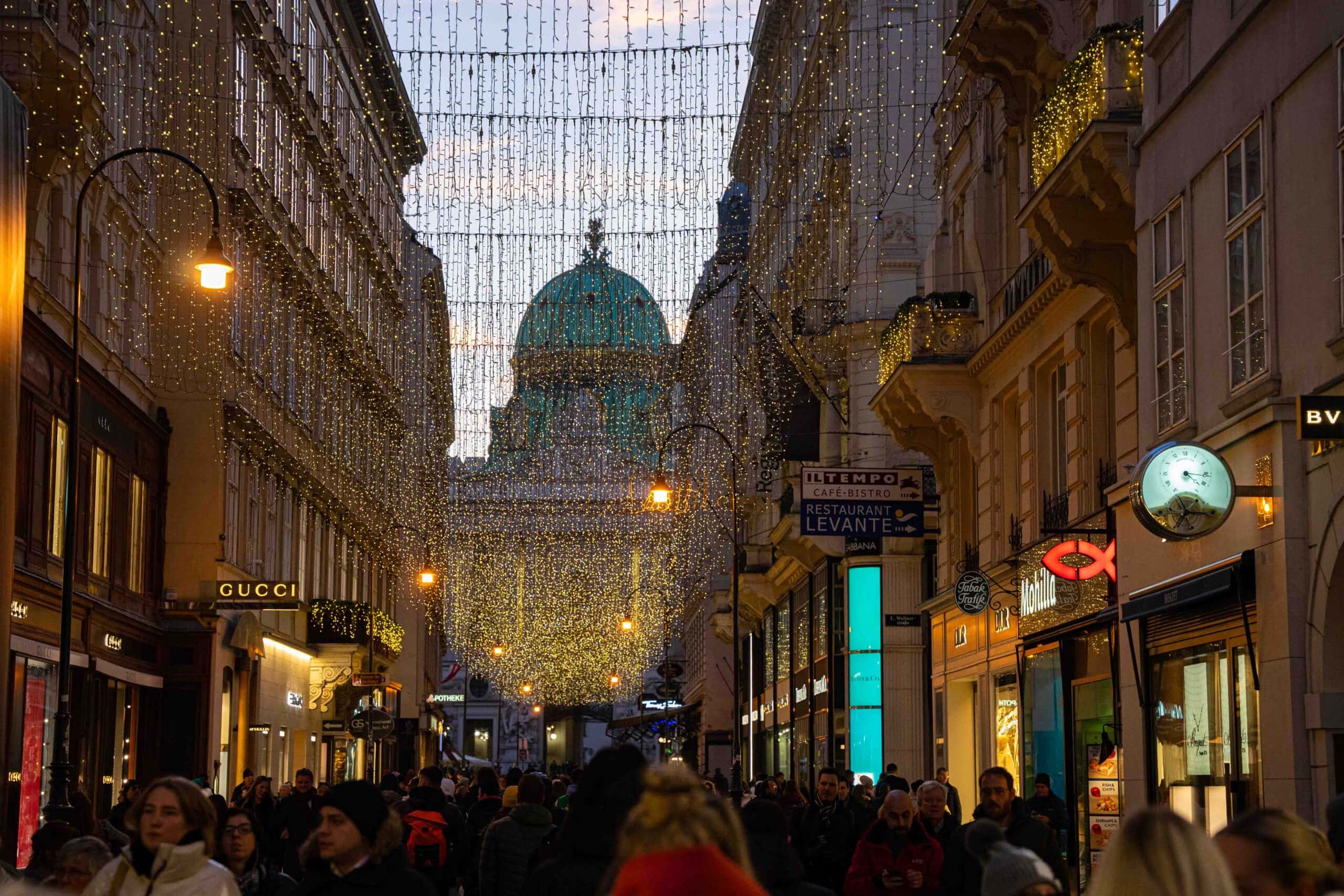
Instead, we take one last stroll along the Graben to see the chandeliers and then head up Kärntner Straße to walk under almost half a million LEDs hanging across the street.
In Kohlmarkt, we pass Café Demel under a zillion twinkling lights like stardust with the Hofburg behind it. On Rotenturm Straße, we see gigantic red orbs lighting up the street, and then, it’s game over.
We return to the Weekend Hotel for the last night before taking the train to Prague the next morning.
Danke schön Vienna – it’s has been just grand!
How I Shot This Guide
Every photograph in this article was taken with the exact same gear I carry on every journey. It is a setup refined over years on the road to keep travel light without compromising the final image.
- Camera: Sony A7 V
- Lenses: Sigma 24-70mm f/2.8 DG DN Art.
- Storage: SanDisk Extreme Portable SSD
- Software: Adobe Lightroom Classic
- Outerwear: My North Face McMurdo Parka kept me warm throughout our Christmas trip to Europe.
And that, people, is how you do four days in Vienna in December! You can drop the danke schöns or questions in the comments below
✌️