
Stepping into the National Museum of Indonesia, or simply Museum Nasional is akin to embarking on a voyage across over 18,000 islands spanning more than 5,000 kilometres from west to east.
Here, you can delve into a tapestry of cultures, a mosaic formed by more than 1,300 ethnic groups, and a symphony of roughly 700 languages. It is an epic journey showcasing the nation’s staggering cultural wealth and diversity – all in one museum.
A visit to the National Museum of Indonesia in Jakarta is a fascinating glimpse into the archipelago nation that’s more like a continent in itself. Hailed as the best museum in Indonesia and widely acclaimed among the finest in Southeast Asia, Museum Nasional is a must when visiting Jakarta.
So, if you’re ever in Jakarta, put aside a few hours to explore the vast nation through the incredible exhibits of its national museum.
Please note: This post may contain affiliate links. This means I may earn a commission if you make a purchase by clicking a link (at no extra cost to you). As an Amazon Associate, I earn from qualifying purchases. Learn more.
Quick Guide to the National Museum of Indonesia
Entrance Fee: IDR 25K per person
Opening Hours: Tues-Sunday 8 am-4 pm. Closed on Monday
Where is Museum National: Jalan Medan Merdeka Barat no. 12 in central Jakarta. It’s on the western side of Merdaka Square, where the MONAS (National Monument) stands. Location
How much time: You can see all the exhibits in under two hours without rushing.
Photography: Allowed for free
Lockers: Available free of charge. Backpacks must be checked; totes and handbags are OK to enter
Recommended hotel in Jakarta: We stayed at Loewys Home in western Jakarta for three nights. It’s a great place to stay while exploring the city.
Another time, we stayed at the Ibis Styles Tanah Abang in central Jakarta, specifically to be near the National Museum.
About the National Museum of Indonesia in Jakarta

The National Museum traces its roots back to 1778 when a group of Dutch intellectuals founded the Bataviaasch Genootschap van Kunsten en Wetenschappen (Batavian Society of Arts and Sciences). Among their objectives was delving into the cultural nuances of the East Indies.
As their collection of artefacts grew, the Dutch East Indian government decided it was high time for a new museum, and in 1868, it opened its doors. This is the very Museum Nasional that stands today.
Affectionately known as the Gedung Gajah (or Elephant Building), this nickname sprang from the bronze elephant sculpture gracing the front courtyard—a gift from the King of Thailand (then Siam) to Jakarta (then Batavia) in 1871.

Another tag this museum proudly wears is the Gedung Arca (Statue Building), a nod to the vast array of statues that find their home within its walls.
To get technical, the old building is the one they refer to as Gedung Gajah, while the new wing is Gedung Arca. It’s confusing, as the entire statue collection is in the Elephant Building.
We found the old building (with the elephant in front) much more interesting. Visit it first.
The new wing (Statue Building) covers seven floors, but the exhibits are a little thin compared to the old building. (Think a lot of model houses from around Indonesia, replicas and furniture).
Is National Museum Indonesia Worth Visiting

So, is the National Museum of Indonesia worth visiting?
Yes.
A thousand times YES.
The National Museum of Indonesia is home to a remarkable assembly of over 140,000 pieces representing the entirety of Indonesia. From prehistoric relics to archaeology, ceramics, ethnography, and extensive history and geography collections, the exhibits are as diverse as the nation itself.
It’s the proverbial treasure trove where your curiosities can find a home—be it a fetish for Dyak masks from Kalimantan, Sulawesi jewellery, Nias Island statues, Javanese shadow puppets, handwoven ikat textiles from Sumba and Flores, moko drums from Alor, or the tribal art of West Papua or stone statues from Java just to name a few.
The National Museum in Jakarta promises an exploration as unique and varied as Indonesia’s own cultural tapestry.
We loved the museum and think anyone with just the slightest interest in Indonesia, art, culture, or history would find a visit immensely worthwhile. You can really get a glimpse of every exotic corner of Indonesia.
We recalled our previous trips to Indonesia as we stumbled upon artefacts from Sumatra or Tana Toraja. We also have quite a few new places on our Indonesia wishlist for future trips. After visiting the museum, Sumba, West Papua and the Dieng Plateau in Java are on top of that list.
Visiting Museum National Indonesia opens a world of possible destinations you didn’t even know existed.
Exhibits in the Museum Nasional
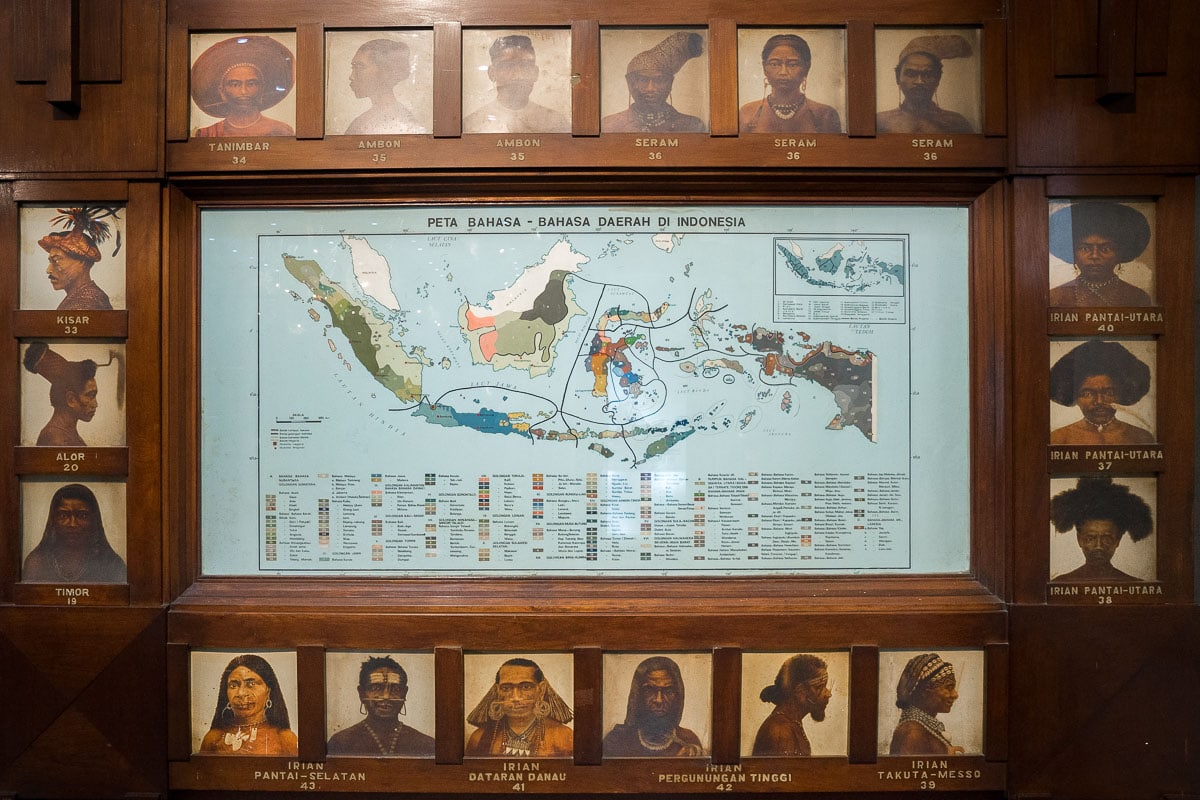
The majority of the displays within the Museum Nasional are housed behind glass panels, with the exception of the oversized artefacts. While information is presented in both Bahasa Indonesia and English, it’s typically confined to basic details like the item’s name and origin. The combination of small text and subdued lighting can sometimes make deciphering this information a bit of a challenge.
Larger printed displays provide more substantial information as an overview of each section.
Below are a few of our favourite exhibits we saw while visiting the National Museum of Indonesia. All of the below artefacts are from the Old Building (Gedung Gajah) side of the museum.
The Statue Collection
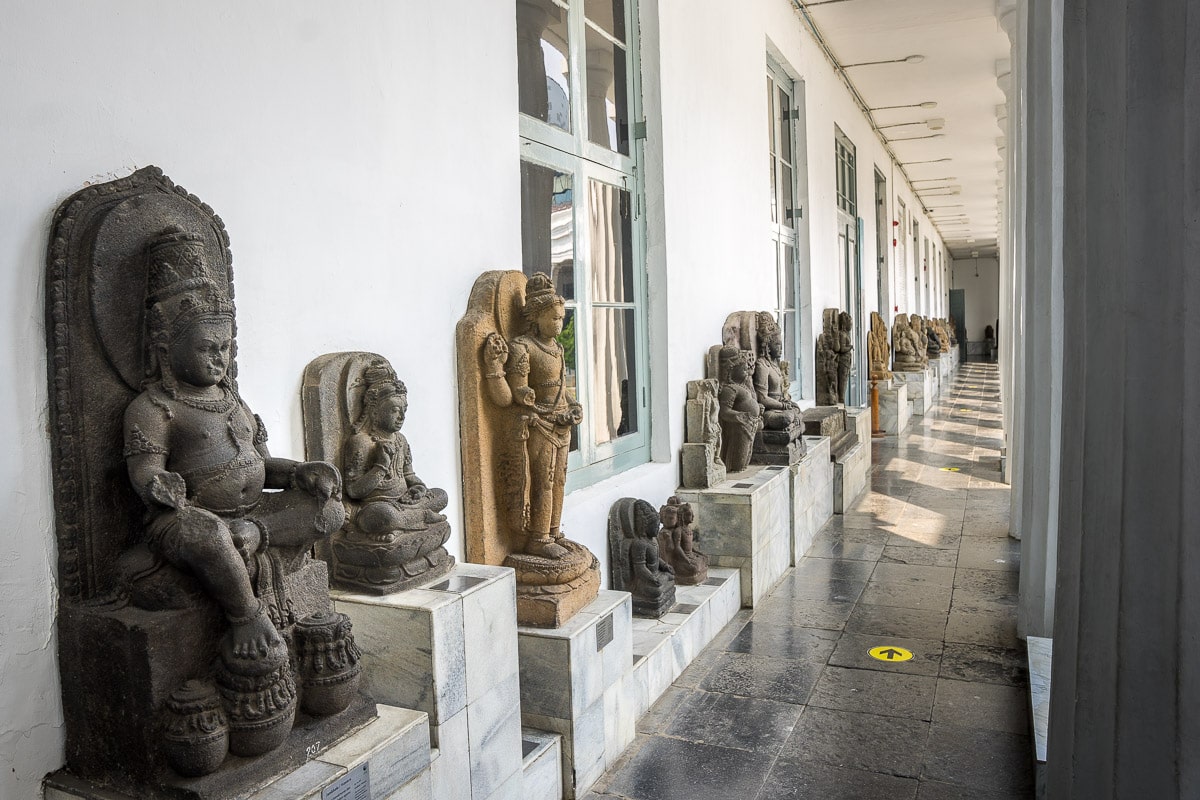
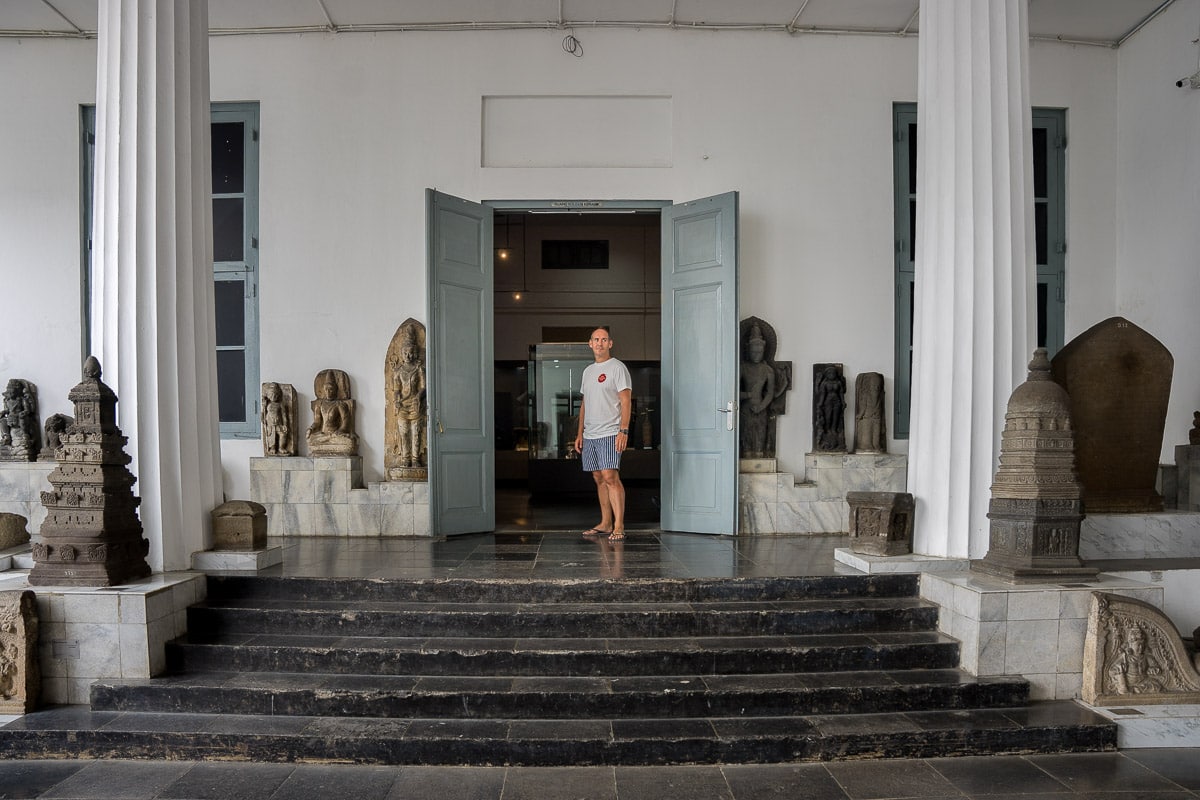
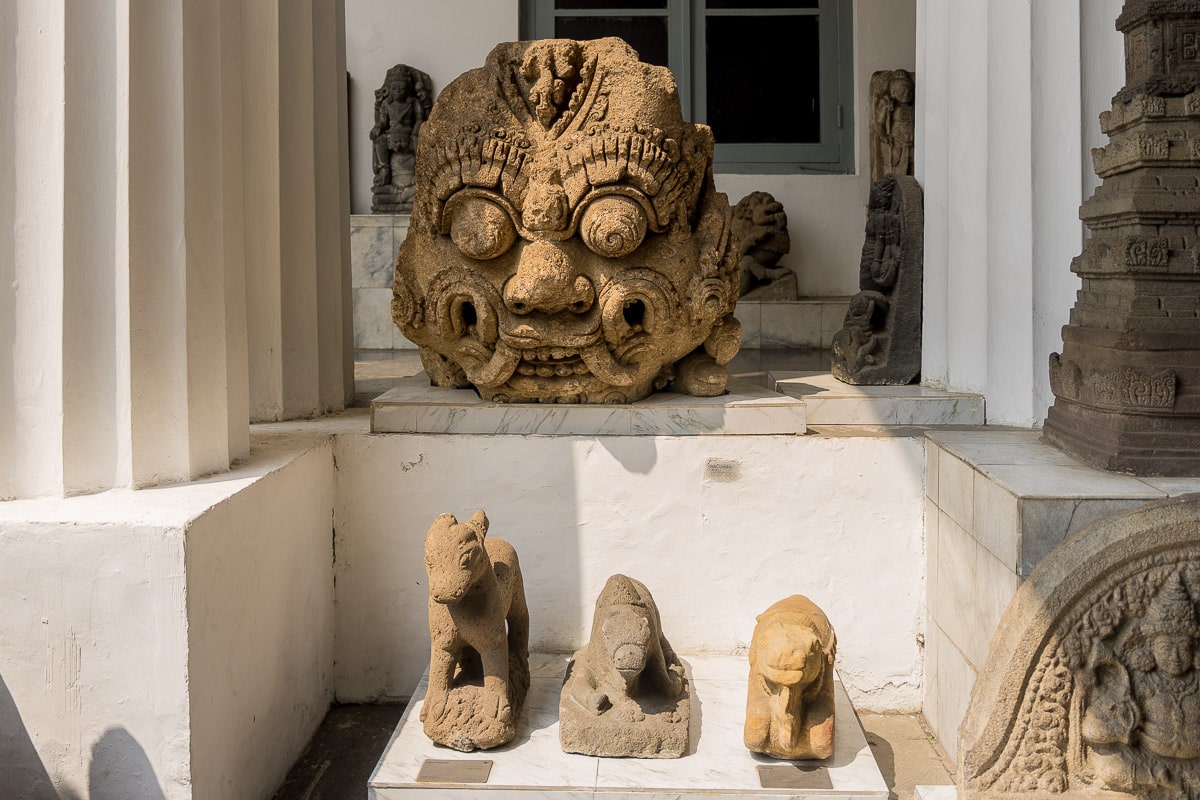
After entering the museum, you’ll find yourself in the courtyard lined with Doric columns. In the square and under the porticos, you’ll find the statue collection of the museum.
The statues are from the Classical Indonesian period (8th-10th century AD) and the Old Mataram kingdom. Most of these statues are from north-central Java and the Dieng Plateau.
Masks

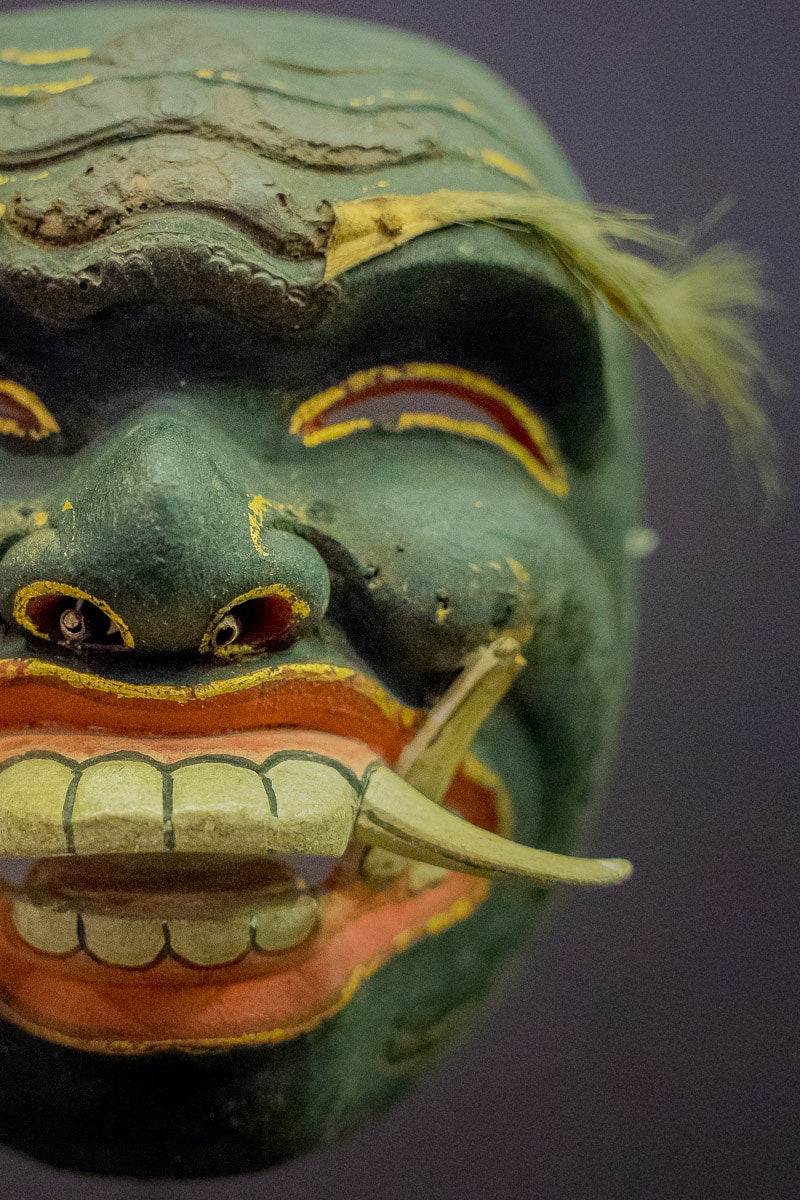
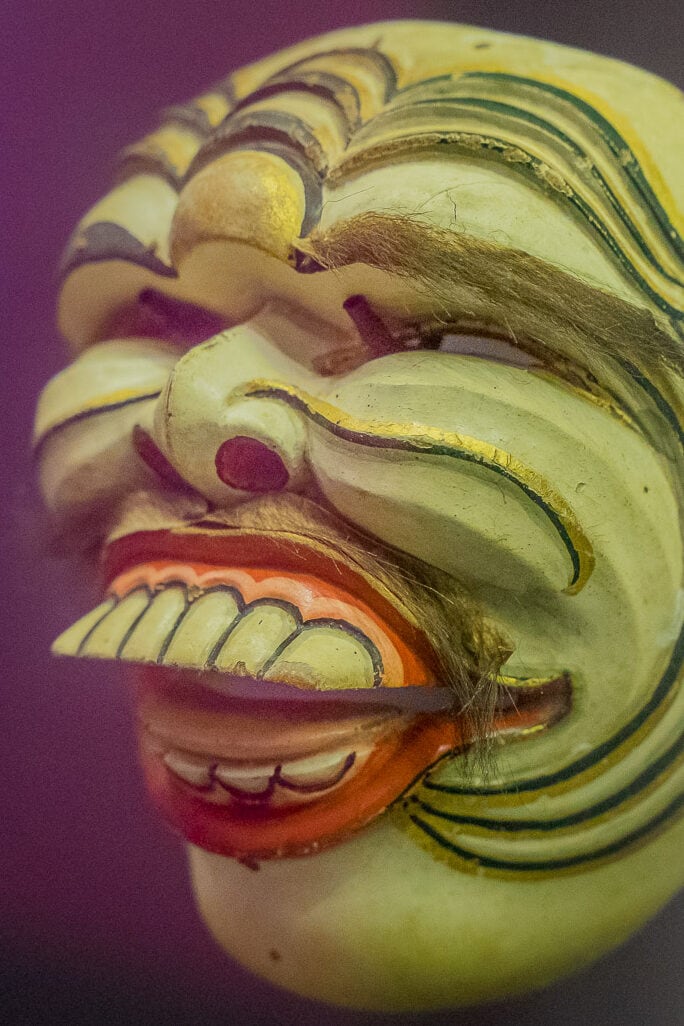

The first exhibit inside the museum building itself displays masks, and they are exquisite.
Among them, you’ll spot a handful of vibrant masks from Java and Bali, but the true showstoppers are the mesmerizing Batak mourning masks from Lake Toba in northern Sumatra.
If I ever win the lottery, I’ll email Museum Nasional asking just how much I can pay for one of those Batak masks to add to my African mask collection at home. One can dream.
Similar to other sections of the museum, the information accompanying these masks is rather minimal, typically providing only their place of origin.
Wayang
(Shadow Puppets)

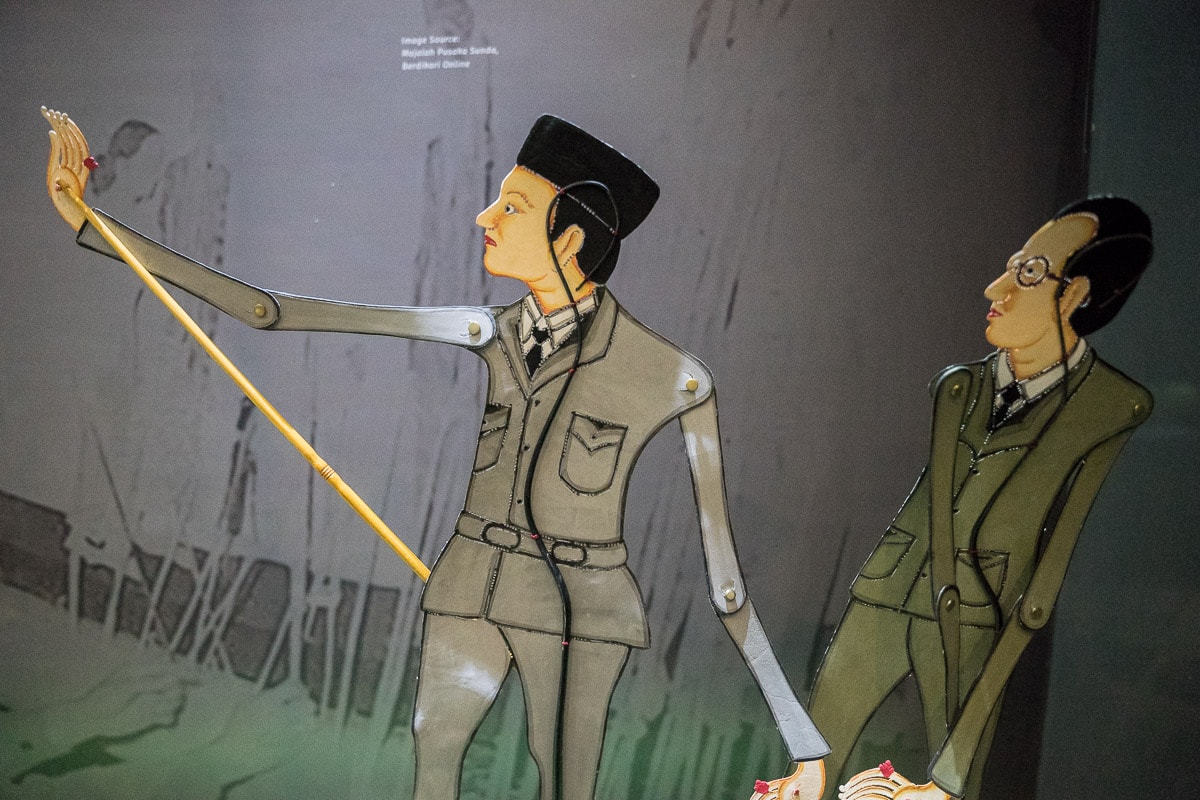
Wayang, the magical world of shadow puppets, is an integral part of Indonesia’s cultural tapestry.
Originating from West Java, this art form weaves tales of heroism, mythology, and morality through the interplay of light and intricately crafted leather puppets.
With roots tracing back centuries, Wayang captures the essence of Indonesian storytelling traditions, as puppeteers skillfully manipulate these delicate figures behind a screen to cast shadows, captivating audiences young and old alike.
The performances entertain and offer a window into Indonesia’s rich heritage, reminding us of the enduring magic of storytelling.
The shadow puppet exhibit introduces traditional leather puppets, along with a selection of intriguing pieces from the post-independence era of Indonesia, which commenced in 1945.
Archaeology and Ethnography Collection
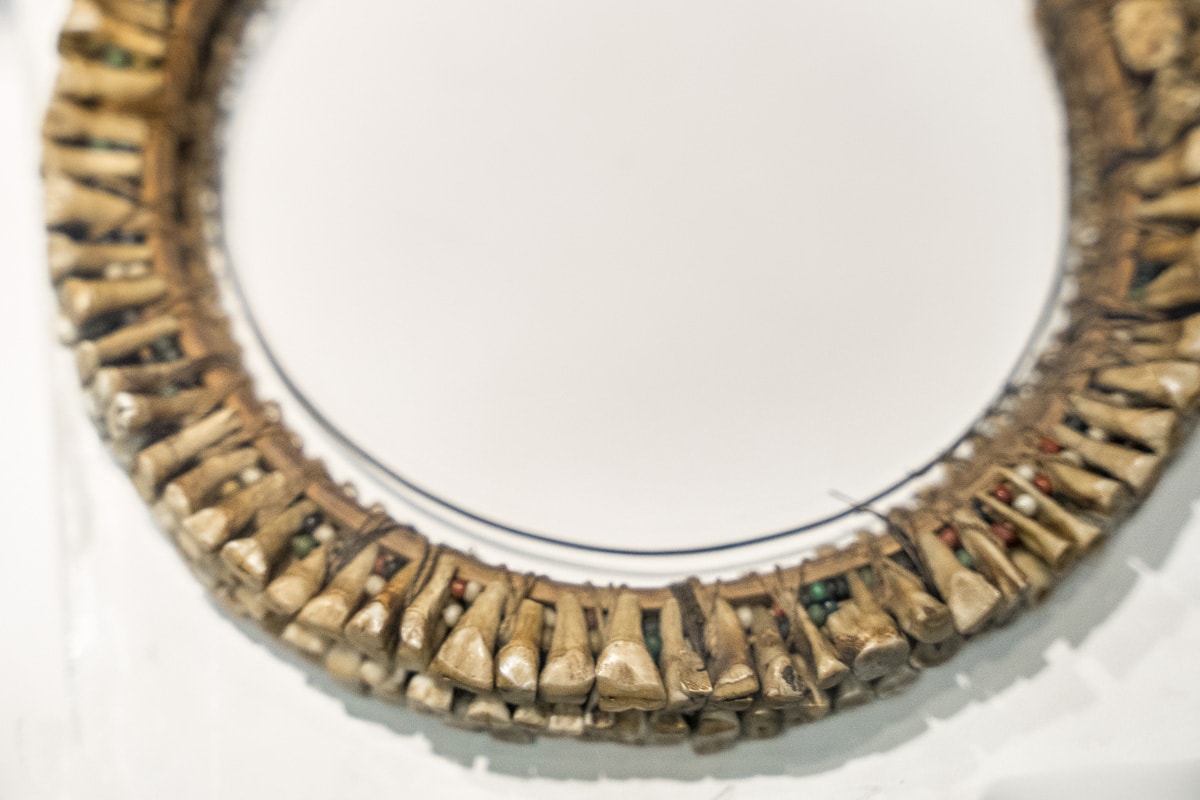
Within this expansive hall, a treasure trove of ethnological wonders awaits, encompassing ordinary articles of daily life and those used for ceremonial or ritualistic purposes.
A particularly captivating gem in this collection is a necklace from Kalimantan, crafted using human teeth. Regrettably, the accompanying information was sparse, prompting me to delve into online research for more insight.
Evidently, this extraordinary piece, known as a vuasagale, holds profound significance. It is made with the teeth of both enemies and loved ones. Only incisors and canines are used, enabling a single necklace to contain the dental remains of more than 50 distinct individuals.
The symbolism is equally remarkable: each tooth serves as a conduit for the power of the deceased, a potent force transferred to the wearer, thereby encapsulating a legacy of strength and influence.
Textiles
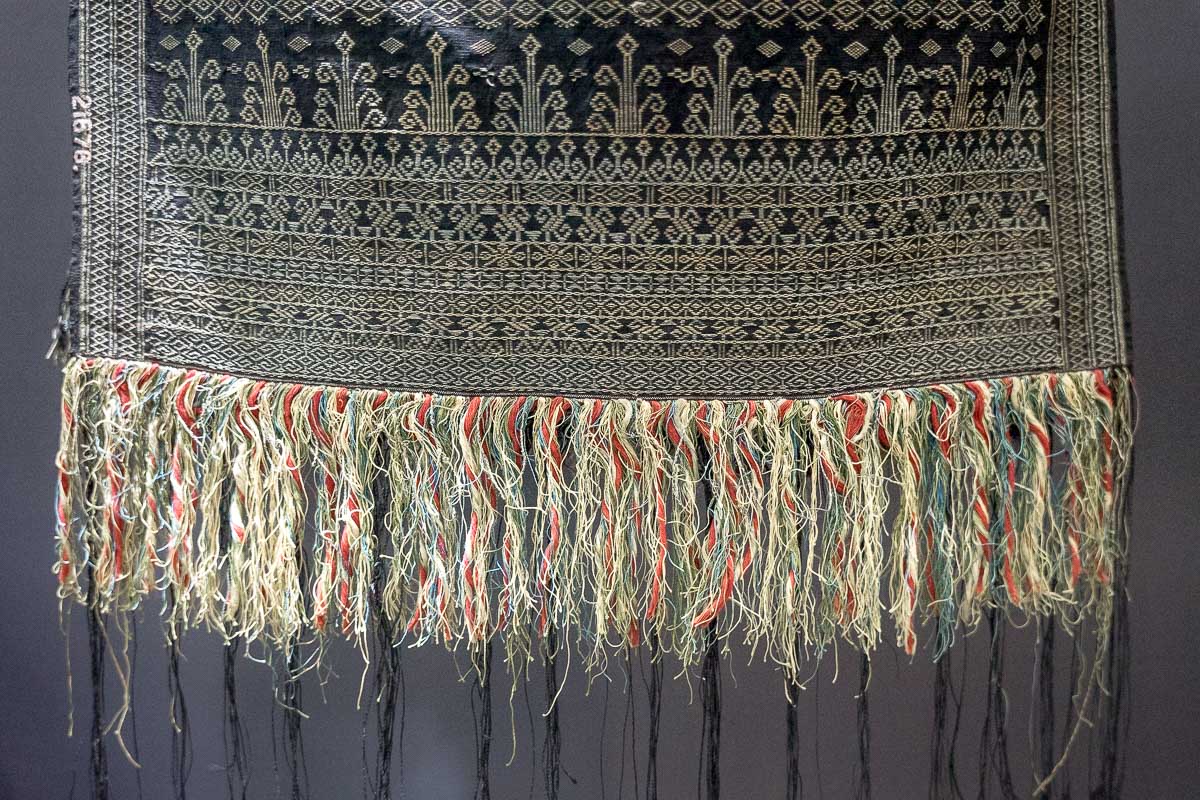
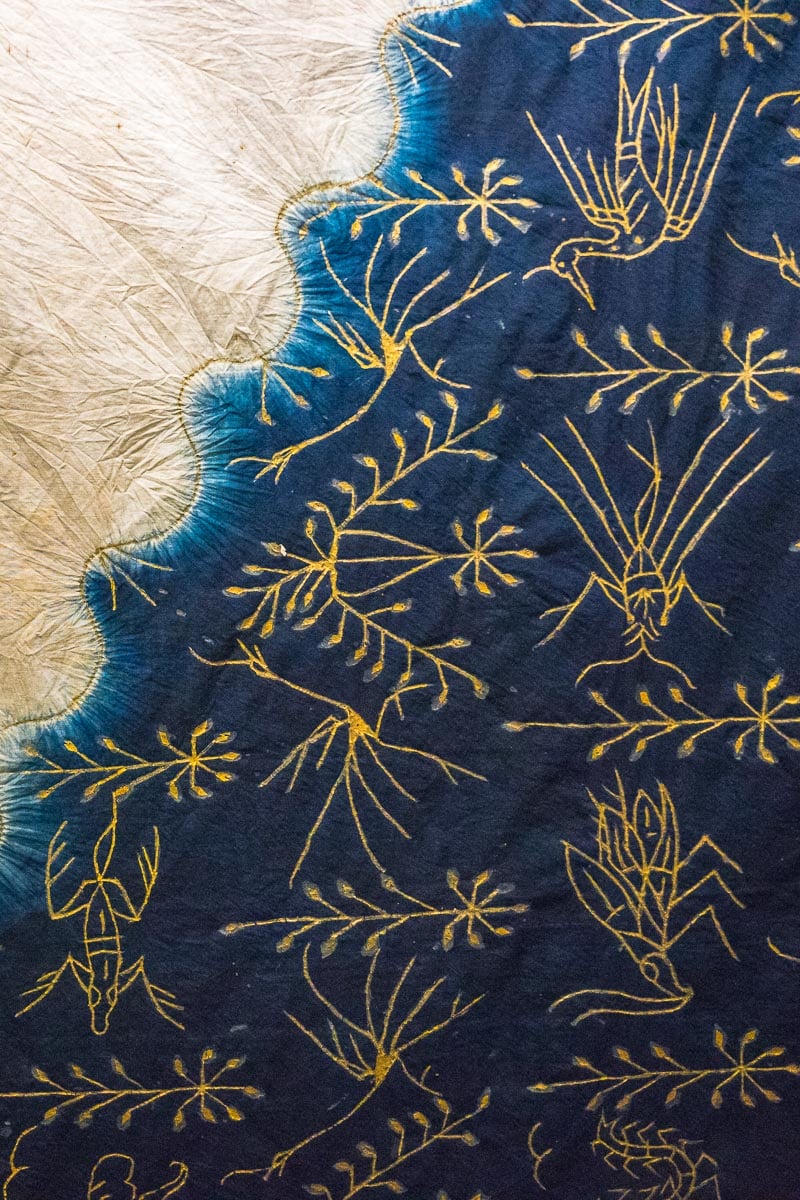
When you mention Indonesia, batik likely springs to mind for many. Amidst the extensive landscape of intricate batik designs, the country harbours another textile gem: ikat, a hand-woven fabric cherished by collectors worldwide.
The textile displays exhibit both batik and ikat.
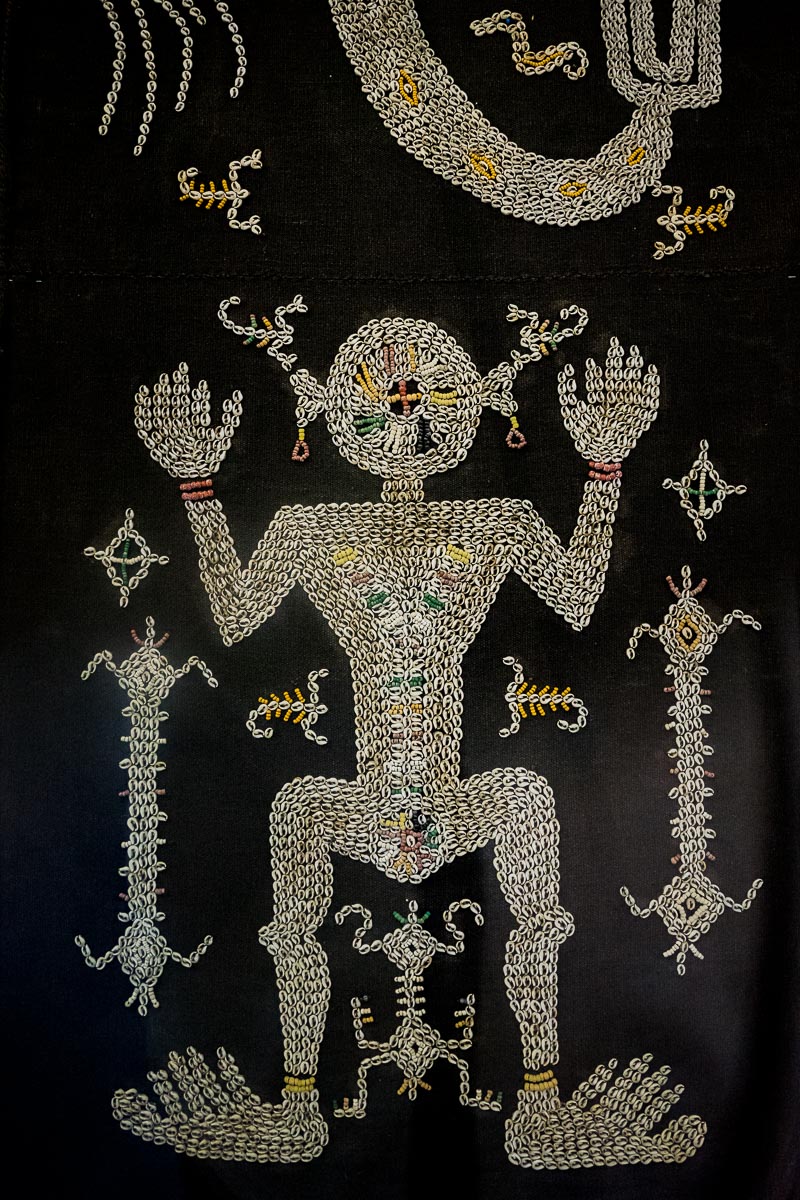
Be sure not to overlook the striking black Lau Hada sarong hailing from Sumba Island. This piece weaves together black cotton with white nassa shells and vibrant glass beads to depict human and mythical figures. It looks almost Polynesian or Austronesian.
The Bronze Room
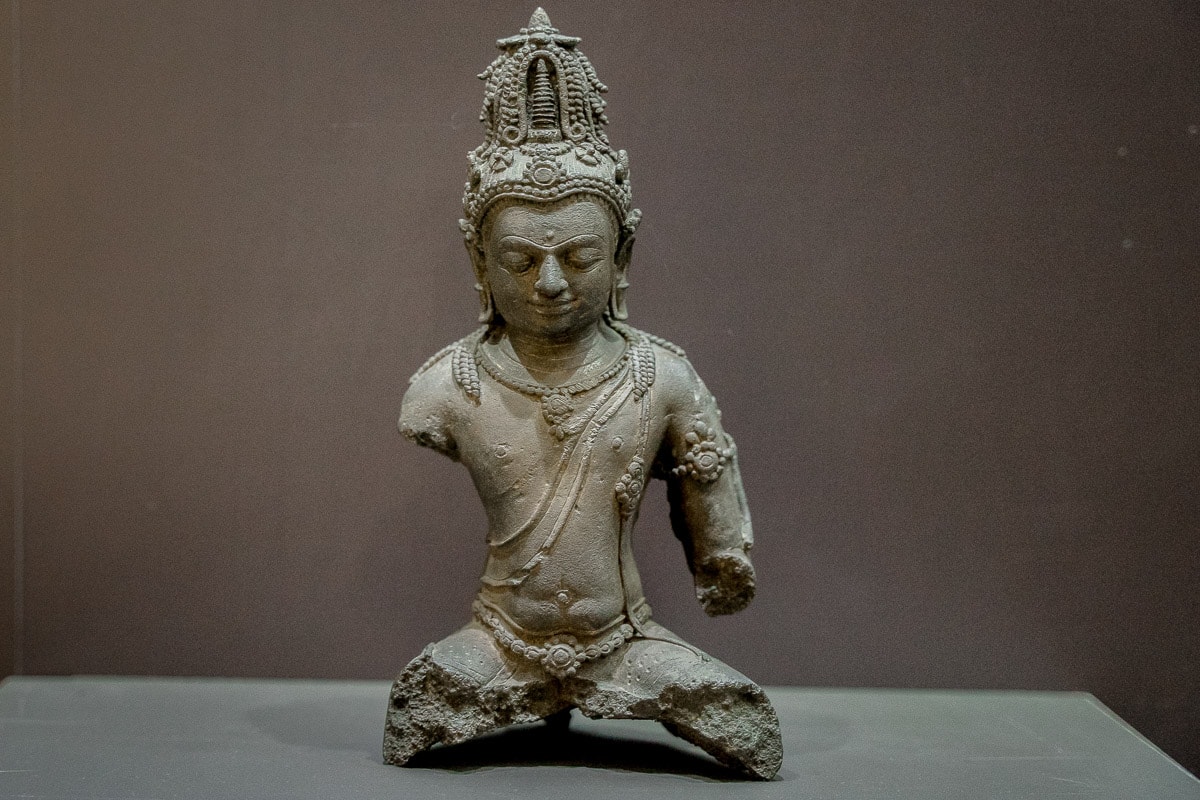
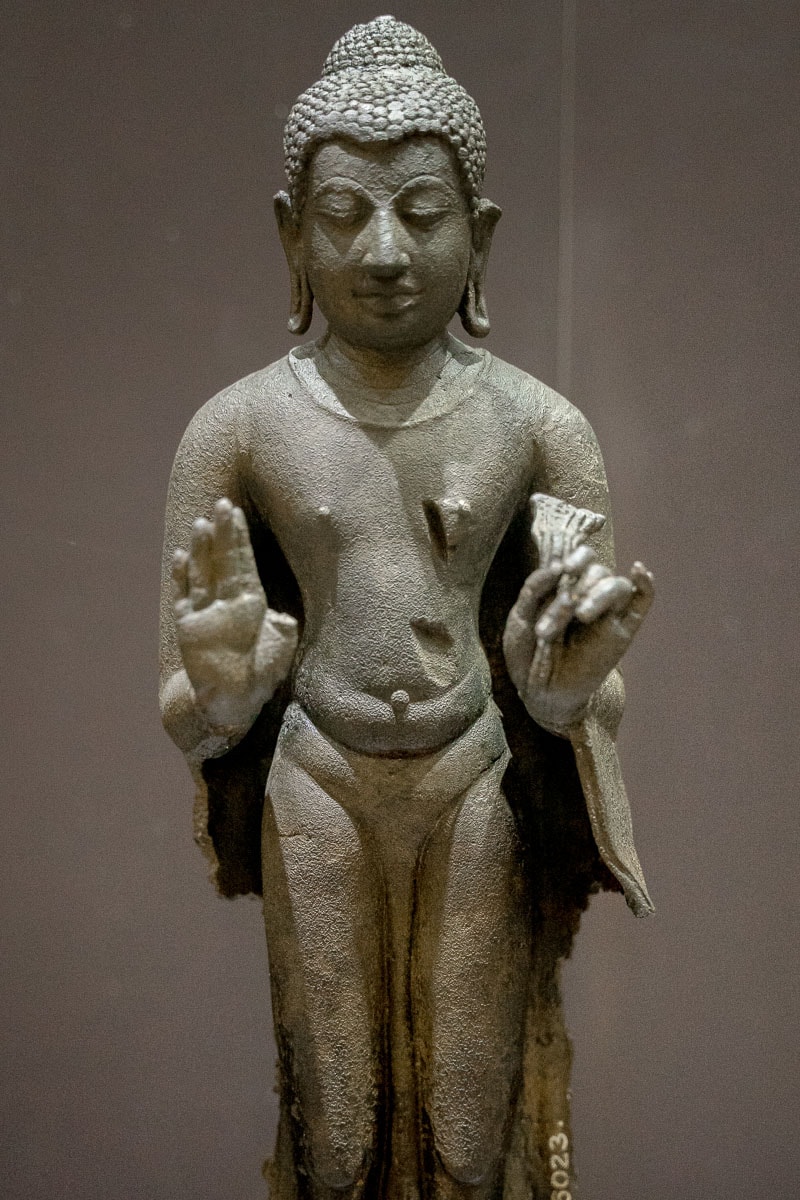
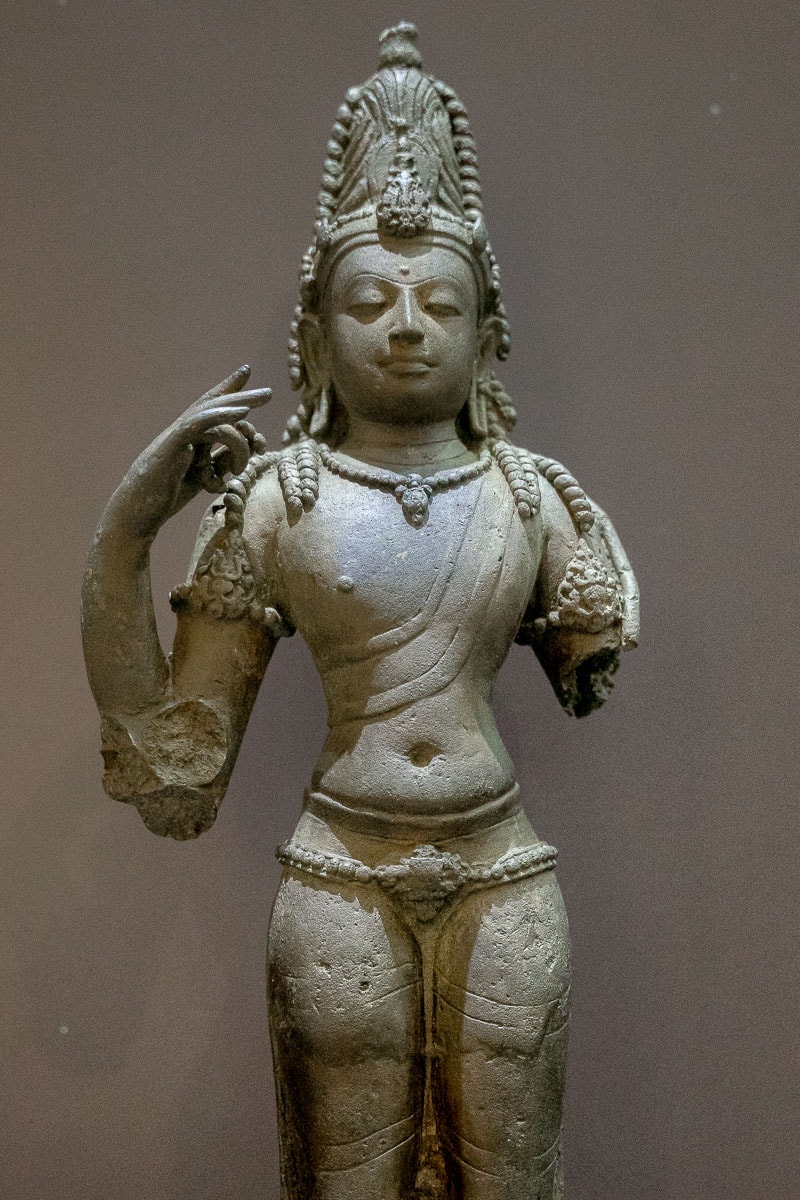
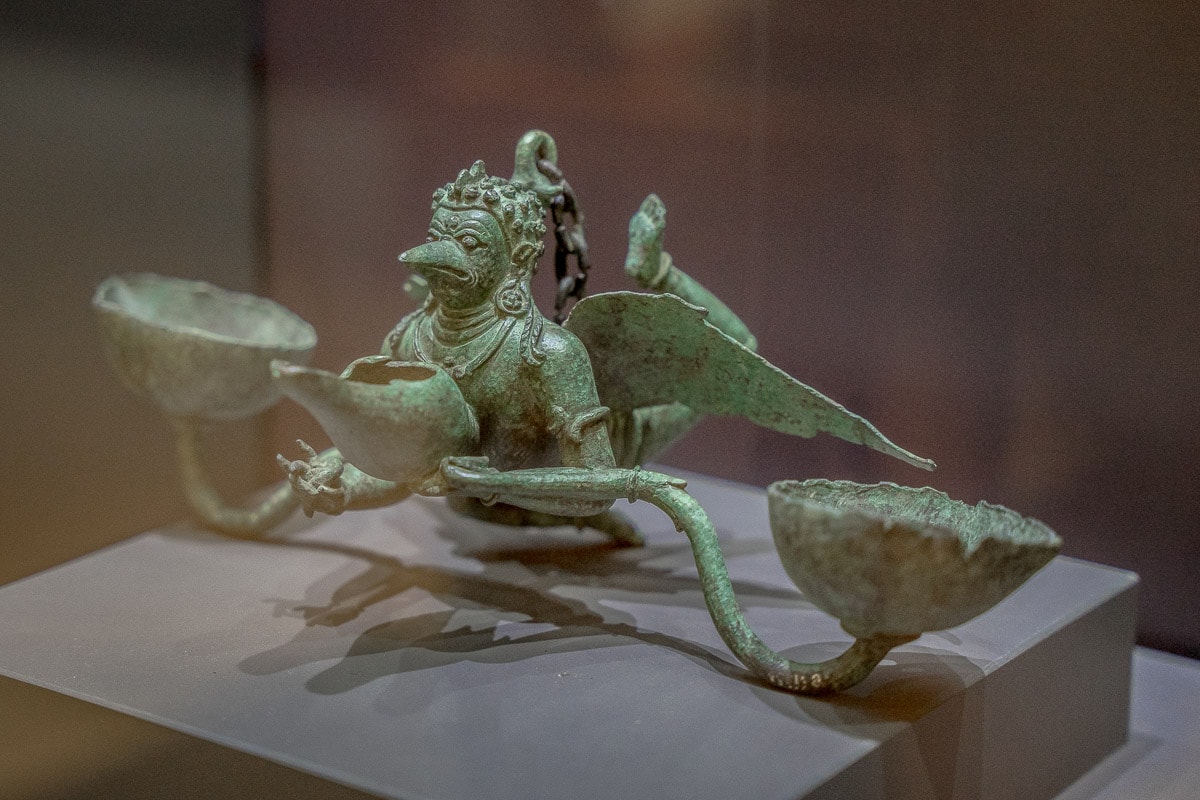
Traces of metalworking techniques involving both bronze and iron have been found in Indonesia since ancient times. The utilization of metal gained even more popularity following the arrival of Indian civilization.
In the Hindu-Buddhist era, artisans specializing in metalwork were known as pande and were held in high regard within society. These skilled individuals were responsible for crafting various items, including religious ceremonial objects, deity statues, jewellery, tools, and weapons, all intricately fashioned from bronze.
Within the National Museum, the Bronze Room showcases a select few remarkable artefacts from the Hindu-Buddhist period, spanning between the 8th and 15th centuries. These pieces offer a captivating glimpse into the artistic and metallurgical achievements of that time.
Ceramics

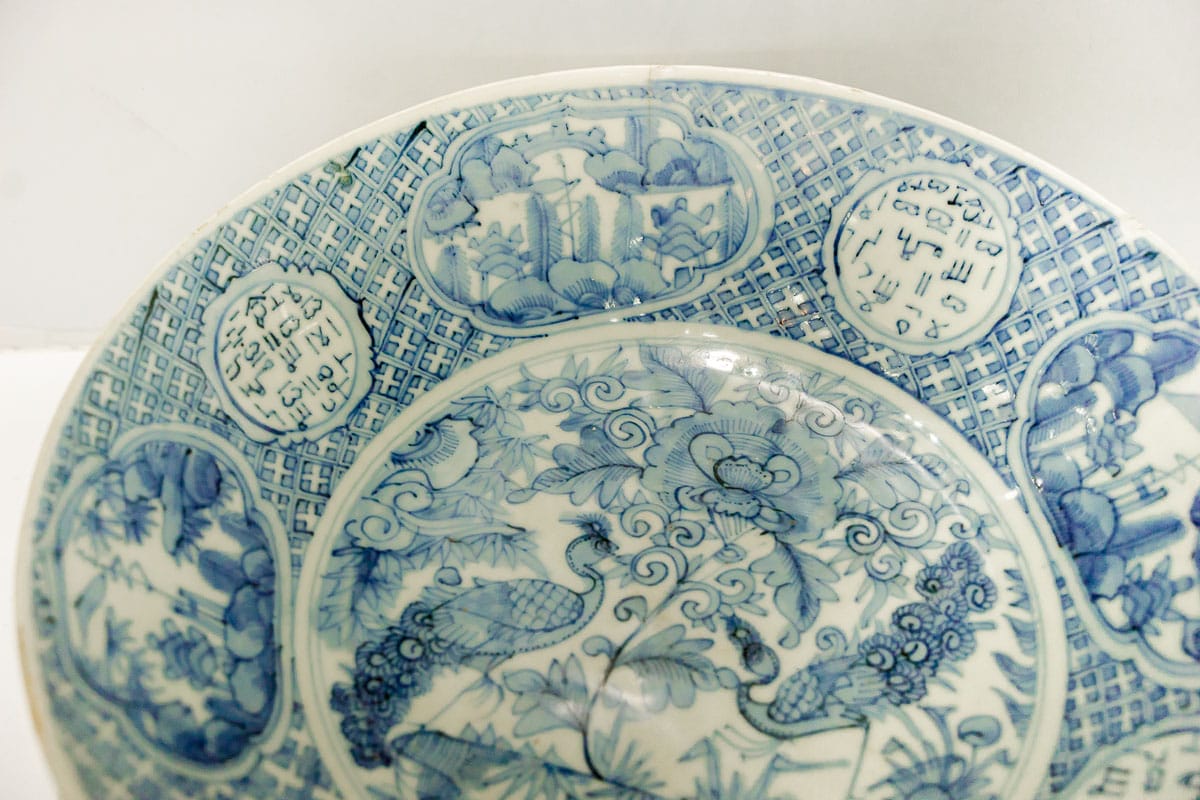
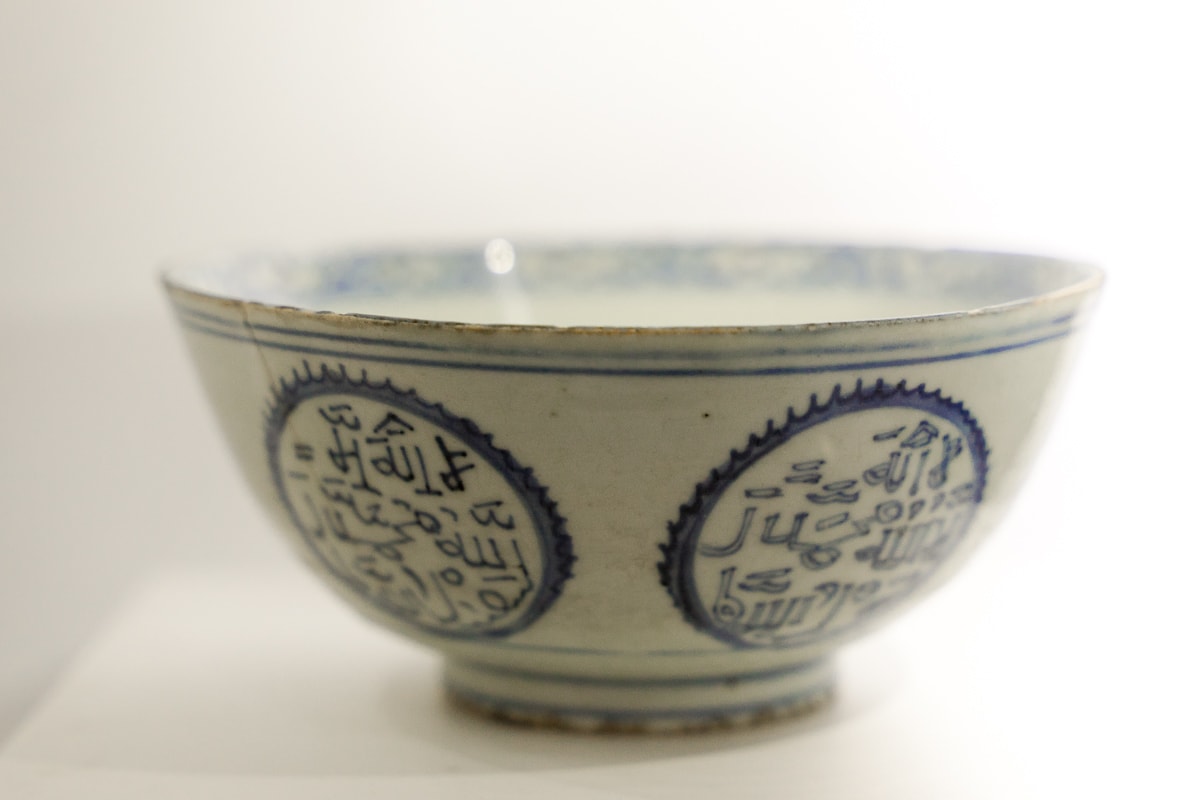
The National Museum Indonesia exhibits an expansive array of ceramics and pottery, marking the largest such collection in Southeast Asia. Research shows that Chinese sailors reached Indonesia during the Western Han period (205 BC to 220 AD) en route to India as part of the Maritime Silk Route.
Among its treasures are hundreds of glazed and natural pieces in all shapes and sizes. We found ourselves particularly captivated by two highlights.
The first was a delightful collection of piggy banks, each with a unique charm.
We were also fascinated by Chinese porcelain adorned with elegant Arabic characters. This exquisite combination speaks to a fascinating historical connection. During the Ming and Qin Dynasties, Chinese potters skillfully catered to the tastes of Muslim consumers in Southeast Asia by creating pieces that resonated with their preferences.
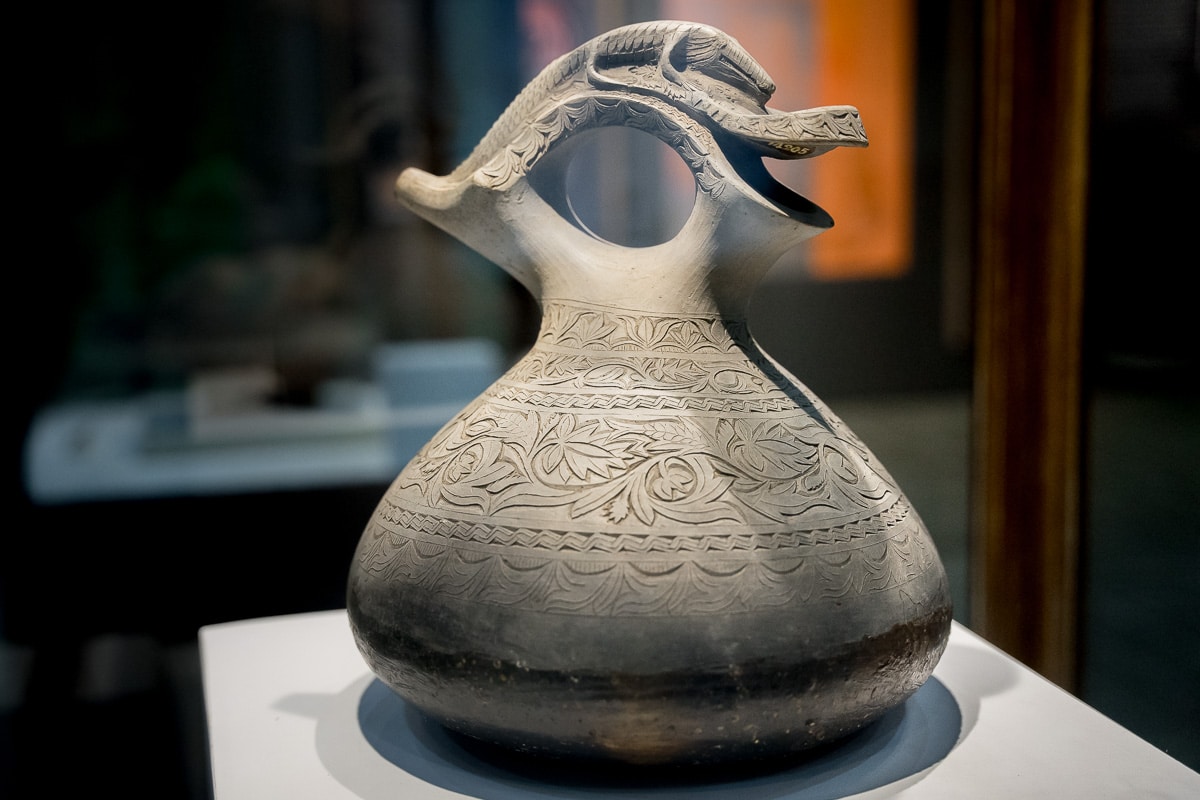
Another fine treasure on display, a ceremonial vessel known as Kendi from north Sumatra was another standout piece for us.
Nogowarno
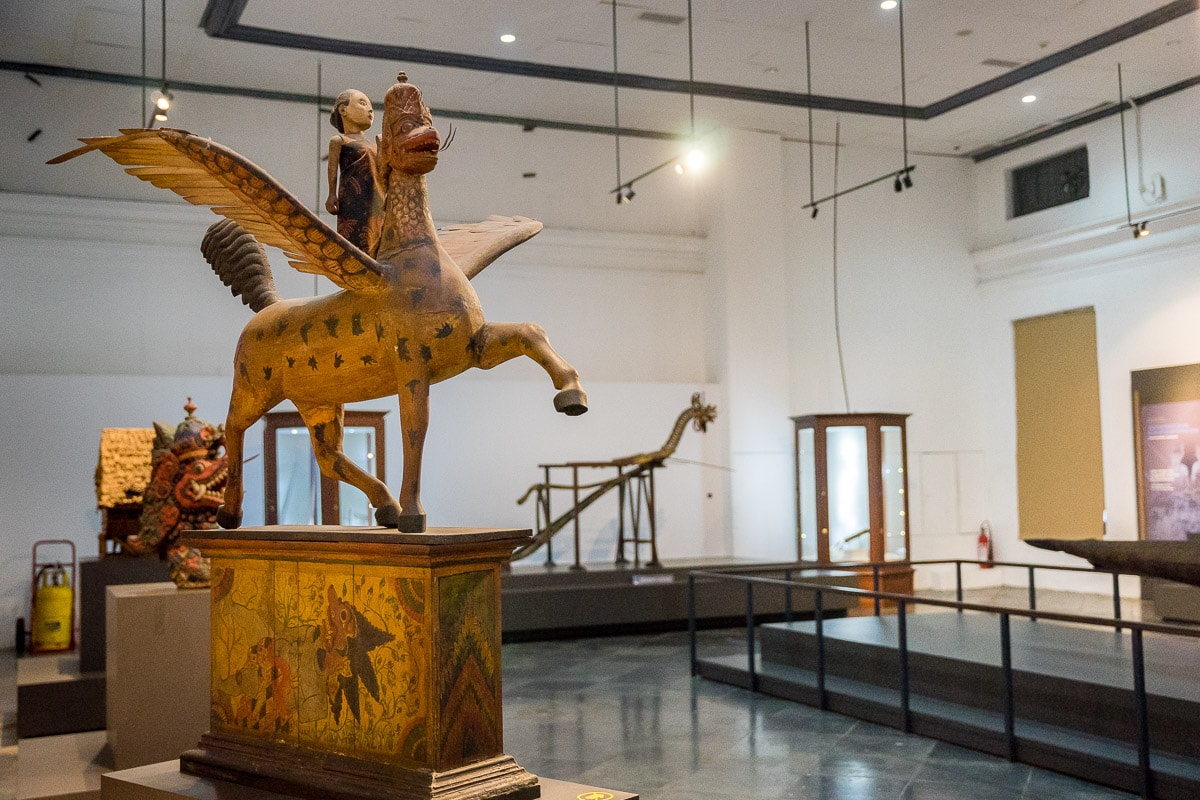
After the ceramics, you’ll enter a large hall dedicated to seafaring and boats. There are a few exquisite large artefacts, including a wooden canoe from Papua and smaller model ships.
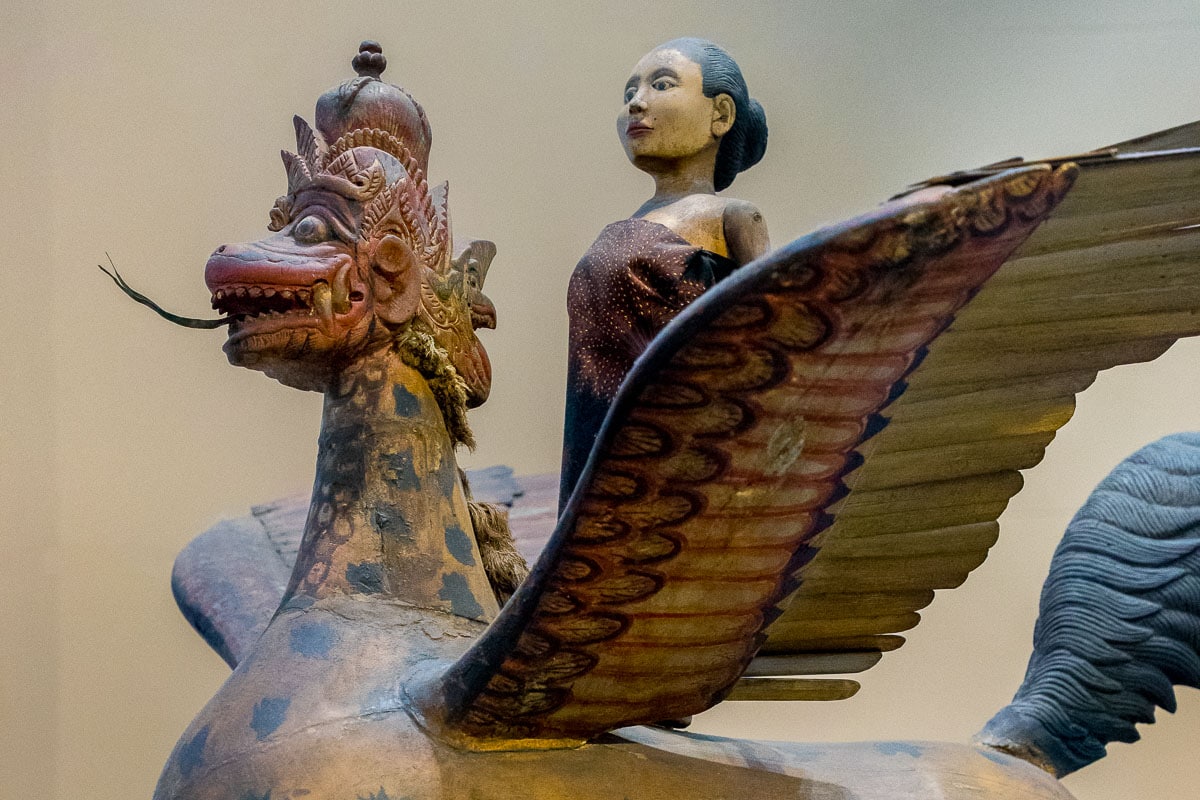
The highlight of this room is a stunning wooden statue depicting Ratu Kidul, the Queen of the South Seas.
She is riding a winged horse with a dragon’s head. She is both loved for her compassion and feared for her destructive forces.
Atoni Lilit Tomi Statue
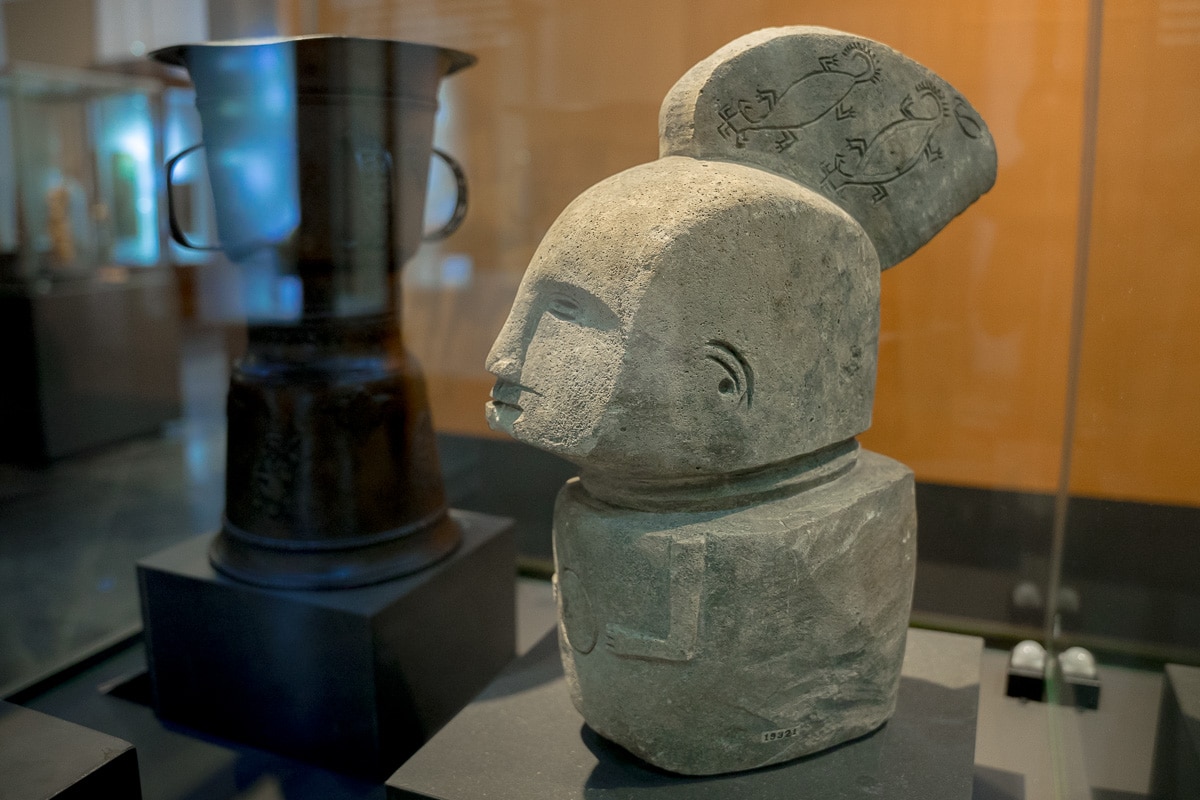
This stone statue from Timor is adorned with patterns resembling roosters, geckos, and scorpions. These motifs hold significance in the realm of the afterlife and are believed to be able to repel negative forces. The head reveals a hairstyle characteristic of the people of Timor.
Such a statue would typically be placed atop stones encircling a sacred tree or within a dwelling for divine safeguarding during headhunting activities.
Korwar
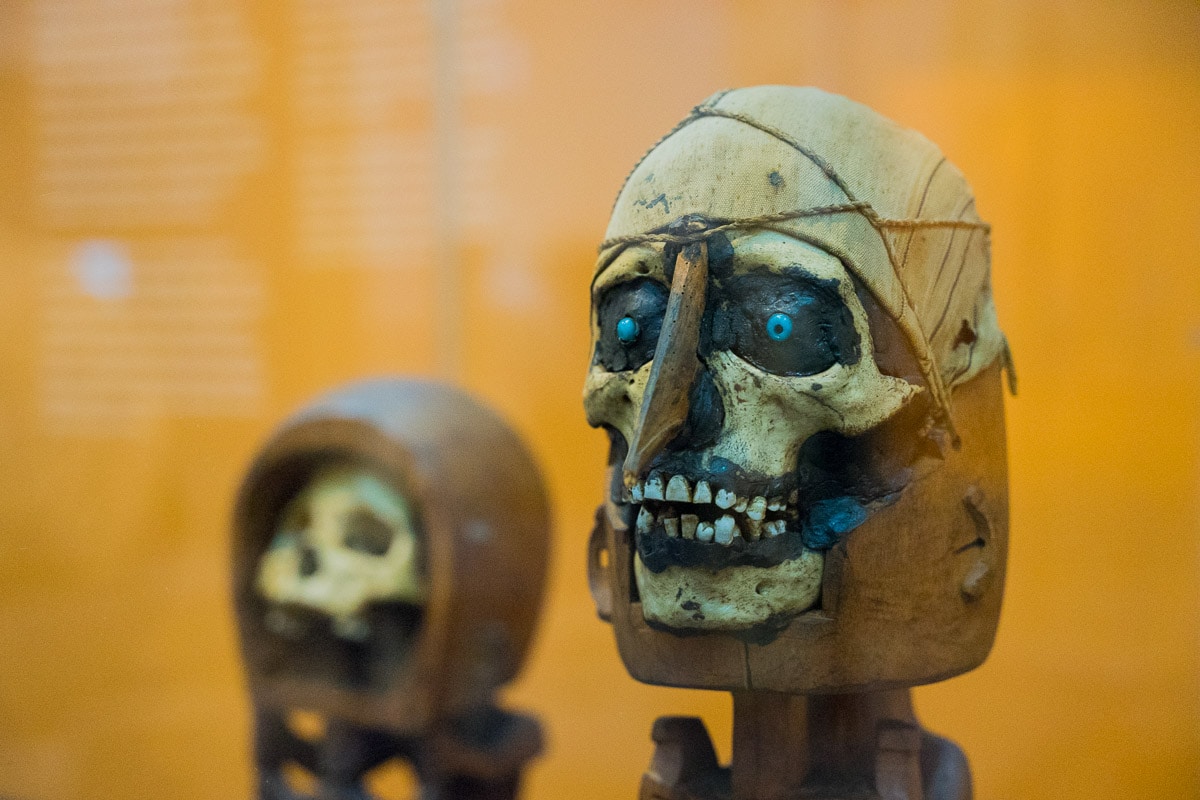
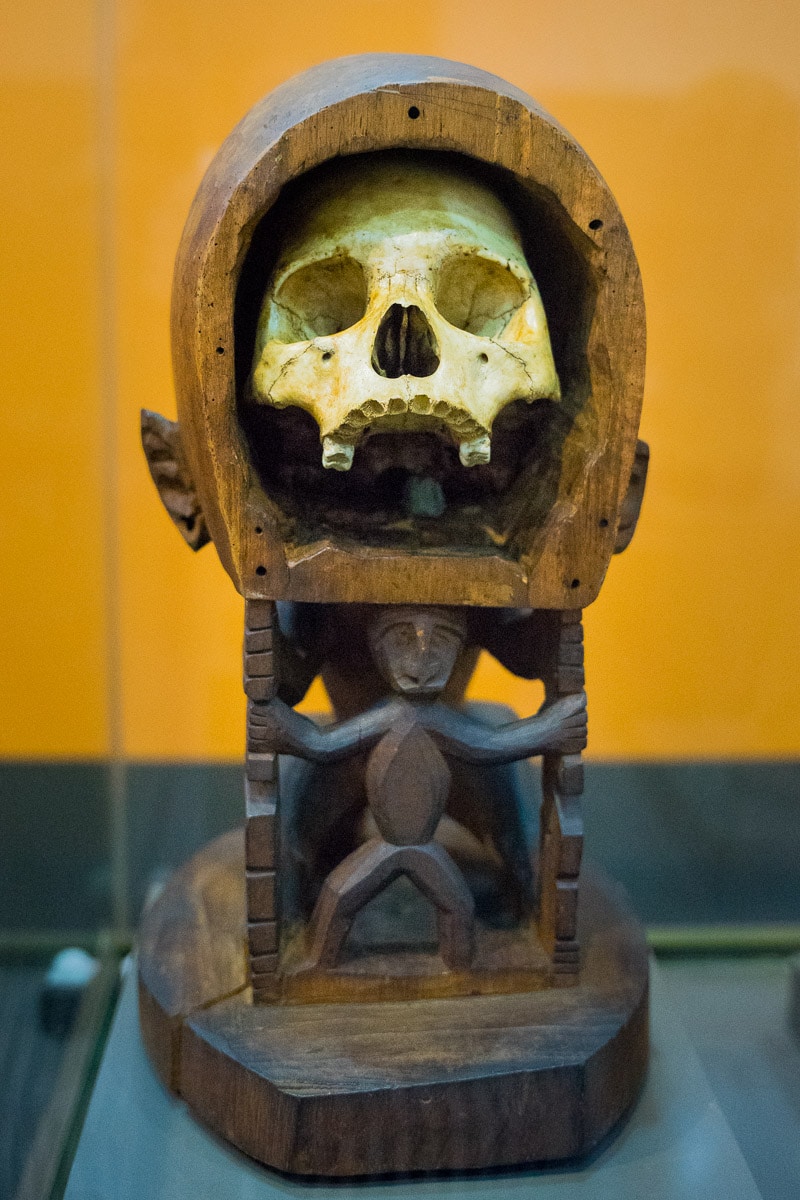
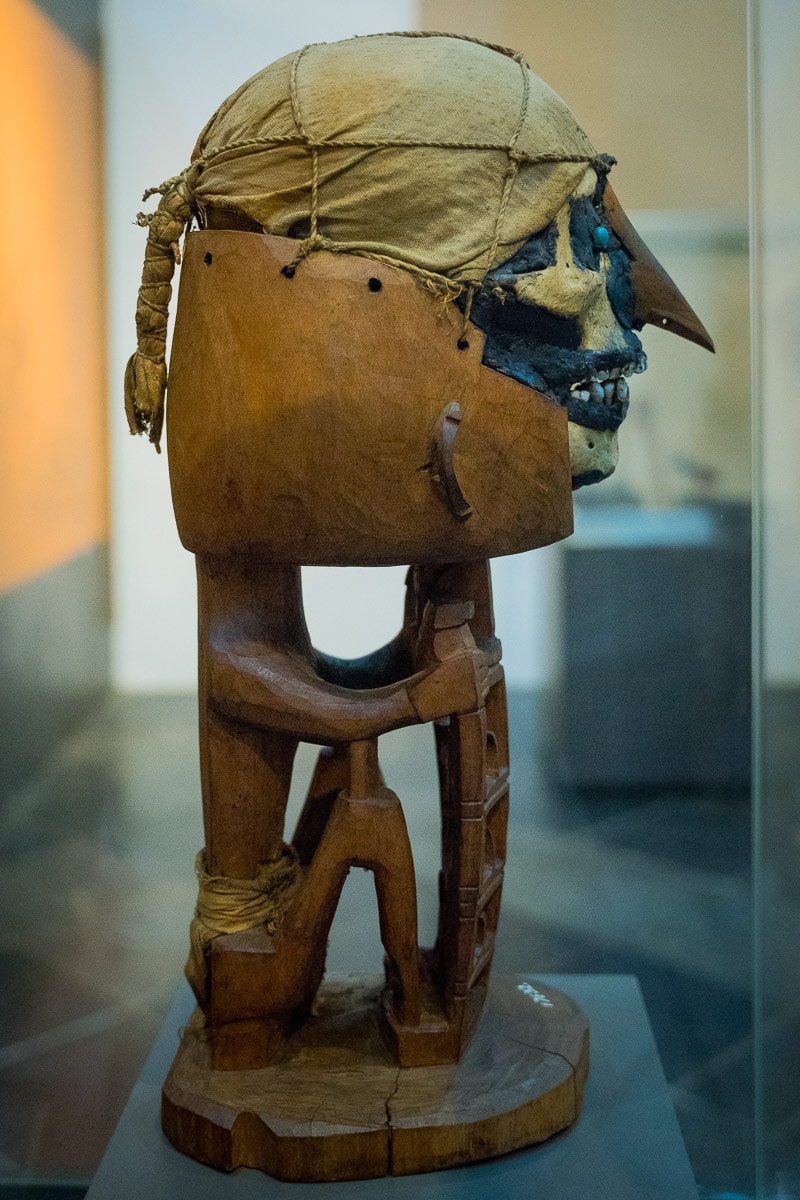
People of the Cendrawasih Bay area in West Papua believe in two spirits living inside the body: Rur (soul) and Nin (shadow of the soul).
When a person dies, the body will deteriorate and move to the land of the dead, taking Rur with it. To give Nin a place to live, people would carve a wooden body and top it off with the deceased’s skull. This wooden figure where Nin lives is called a korwar.
The korwar is a way for Nin to stay with the living while safeguarding the family. It’s also believed to make rain and ward off evil.
Korwar is reserved for chiefs or clan leaders, both men and women, only. Regular folks will take their skull with them to the afterlife and will have a korwar entirely made of wood.
How I Shot This Guide
Every photograph in this article was taken with the exact same gear I carry on every journey. It is a setup refined over years on the road to keep travel light without compromising the final image.
- Camera: Sony A7 V
- Lens: Sigma 24-70mm f/2.8 DG DN Art.
- Storage: SanDisk Extreme Portable SSD
- Software: Adobe Lightroom Classic
- My Jakarta travel essential (trust me): Ray-Ban Wayfarer
These are just a few of our favourite exhibits in the National Museum of Indonesia. Enjoy finding your own treasures while in Jakarta
✌️