
Europe is a continent filled with incredible culture, cuisines, experiences, and, of course, landmarks.
Many of the world’s most famous landmarks are found in this one continent, and this post will show you 20 of the best Europe landmarks you must visit at least once in your lifetime.
Millions of tourists visit these landmarks every year, and you’ll soon find out why. So, enough with the dillydally, let’s take a tour of the most famous (and a few lesser-known) Europe landmarks!
Please note: This post may contain affiliate links. This means I may earn a commission if you make a purchase by clicking a link (at no extra cost to you). As an Amazon Associate, I earn from qualifying purchases. Learn more.
Best Europe Landmarks
Eiffel Tower: Paris, France

The Eiffel Tower in Paris, France, is arguably the most famous Europe landmark. The tower is a sweetheart of most travelling to Europe and almost on everyone’s wishlist. For many, the Eiffel Tower IS Paris.
It’s beautiful by day and night – especially if you catch its light show – and the view from the top is simply breathtaking. The surrounding area is also lovely, and on sunny days, many people opt for a picnic on the Champs de Mars in front of the tower.
Everyone reading this post will be familiar with the Eiffel Tower; for that reason, it is one of the most famous Europe landmarks and one you need to visit this year!
Colosseum: Rome, Italy

Another one of the most iconic European landmarks, and one of the world’s new seven wonders, is the Colosseum in Rome. Photos can’t do the Colosseum justice; seeing it for yourself is an entirely different experience.
Visiting the Colosseum is an incredible experience and a bucket-list destination in Italy.
Check out some Colosseum tours so you can step inside the infamous amphitheatre and feel for yourself what it was like being a Roman gladiator in the Colosseum over 2000 years ago.
Leaving the Colosseum off a list of Europe landmarks would be impossible. It’s one of the most famous tourist attractions in the whole world.
Buckingham Palace: London, UK
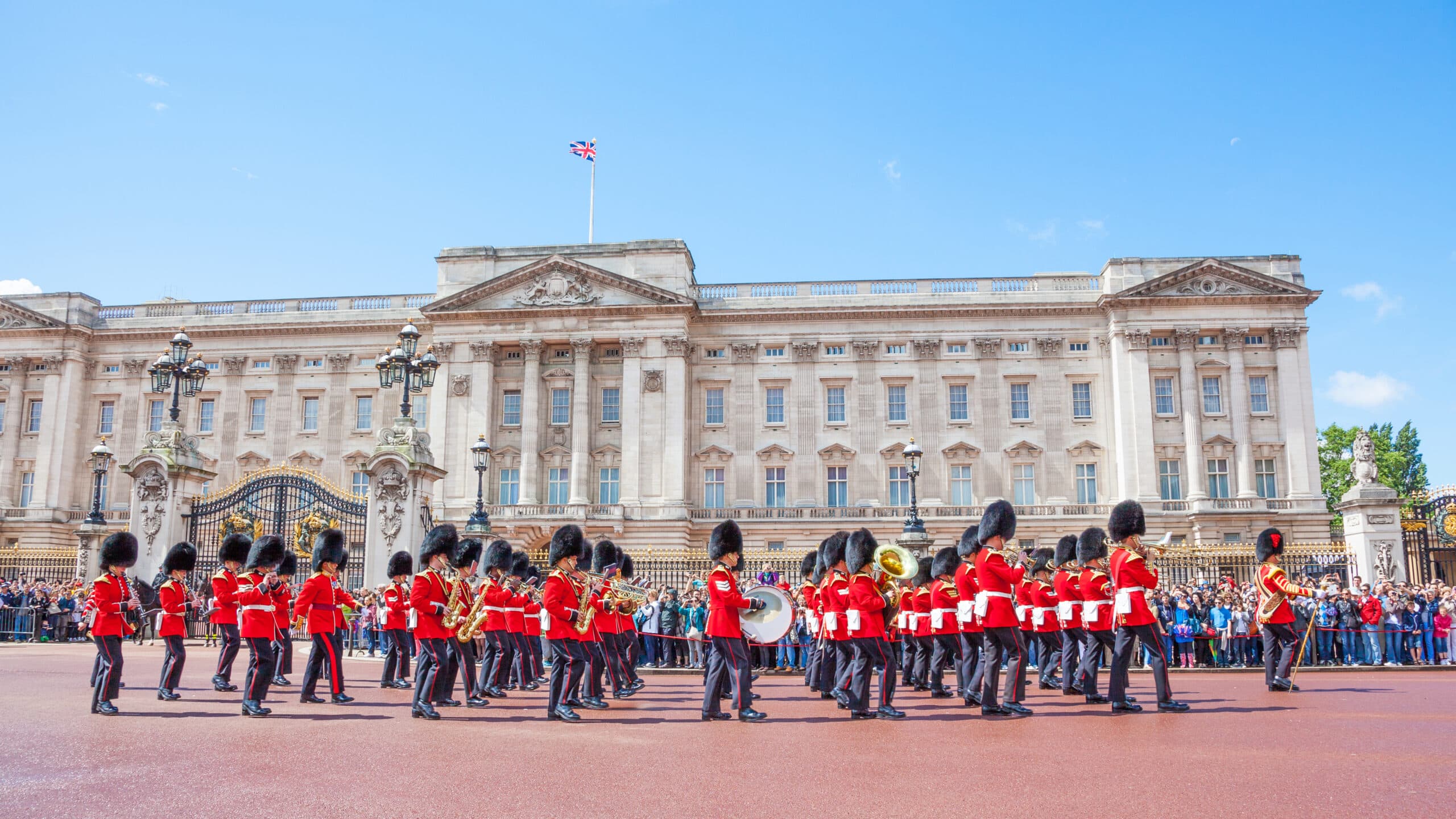
Buckingham Palace, home of the British Royal family, is one of the most well-known buildings in Europe.
Millions of people visit London each year to see the palace for themself, and in the summer months, you can even go on a guided tour of the State rooms and see what life is like as a royal. Say hi to King Charles for us if you bump into him 😂 .
Whether taking a walking tour, hop-on hop-off bus tour, or even a helicopter tour of London, you can’t miss Buckingham Palace. To describe it in one word, it’s spectacular.
Acropolis of Athens: Greece
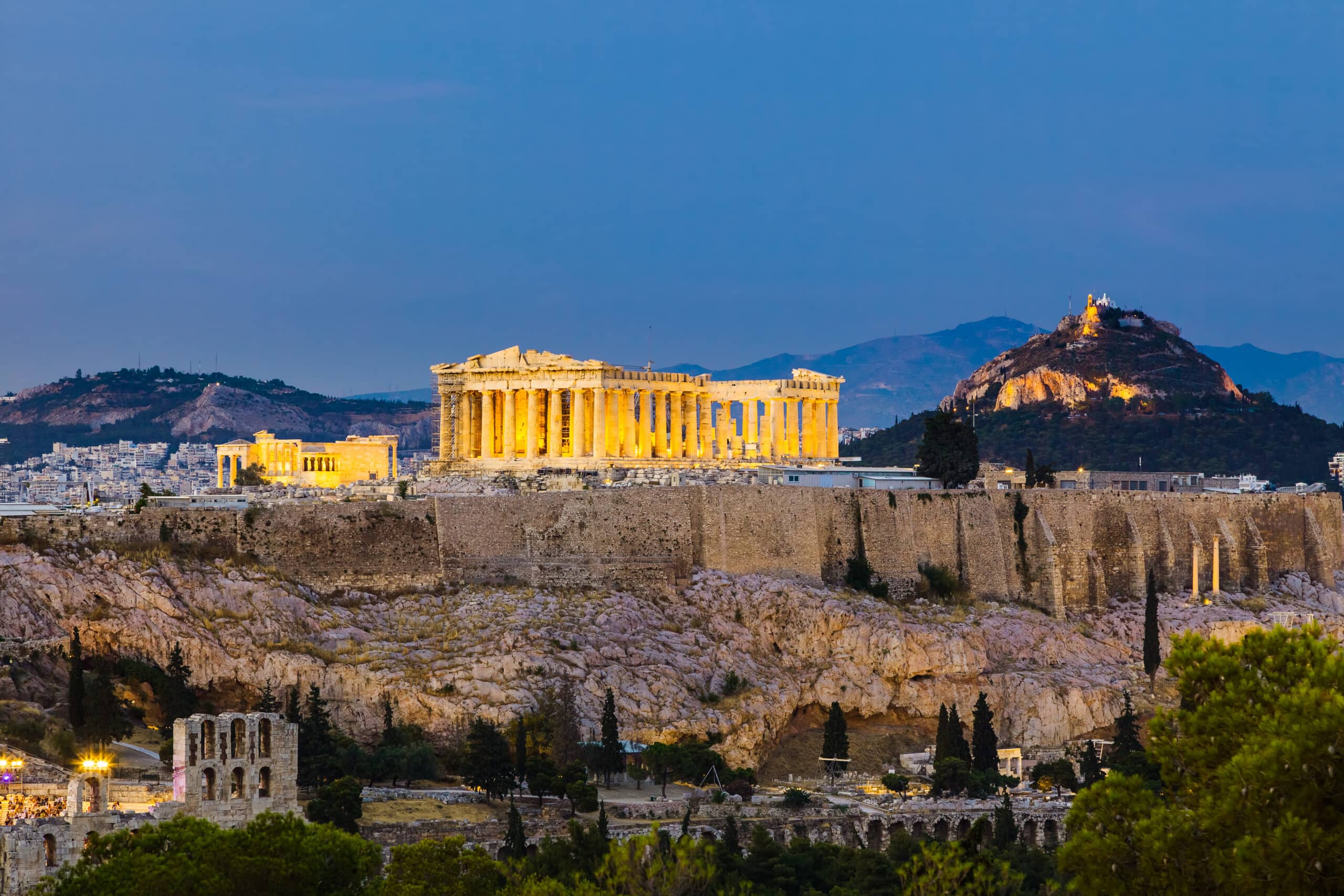
As the Colosseum is to the Romans, the Acropolis is a testament to ancient Greek civilisation.
Perched high on a rocky outcrop in Athens, Greece, this UNESCO World
Heritage Site is steeped in history and attracts visitors from around the globe.
By day, the Acropolis exudes an awe-inspiring presence, while by night, its illuminated columns take on a magical aspect.
While many will bypass Athens and fly straight to Mykonos, Santorini or Crete, a visit to the Acropolis is a must on any Greece itinerary for those wishing to see the sites of ancient Greece.
There’s no denying that it’s one of the most iconic landmarks in Europe. For many, it’s up there, with the Colosseum as one of Europe’s best historical sites.
Brandenburg Gate: Berlin, Germany

A true emblem of Berlin is the Brandenburg Gate which also holds a special place in history and symbolises the unity of Germany. Standing tall in the heart of the city, this majestic gate is a sight to behold.
Its grandeur and architectural beauty are captivating, making it a must-visit Berlin monument. But the historical significance is another reason the gate is so popular.
Before 1989, the Berlin Wall ran directly in front of the gate, separating East from West Berlin. When the wall was demolished on 22 December 1989, the world watched on TV as Berliners hammered down the wall at the Brandenburger Gate.
It is a poignant reminder of the city’s journey and an enduring symbol of freedom, making it an essential landmark for anyone who wants to learn more about German and European history.
Charles Bridge: Prague, Czechia
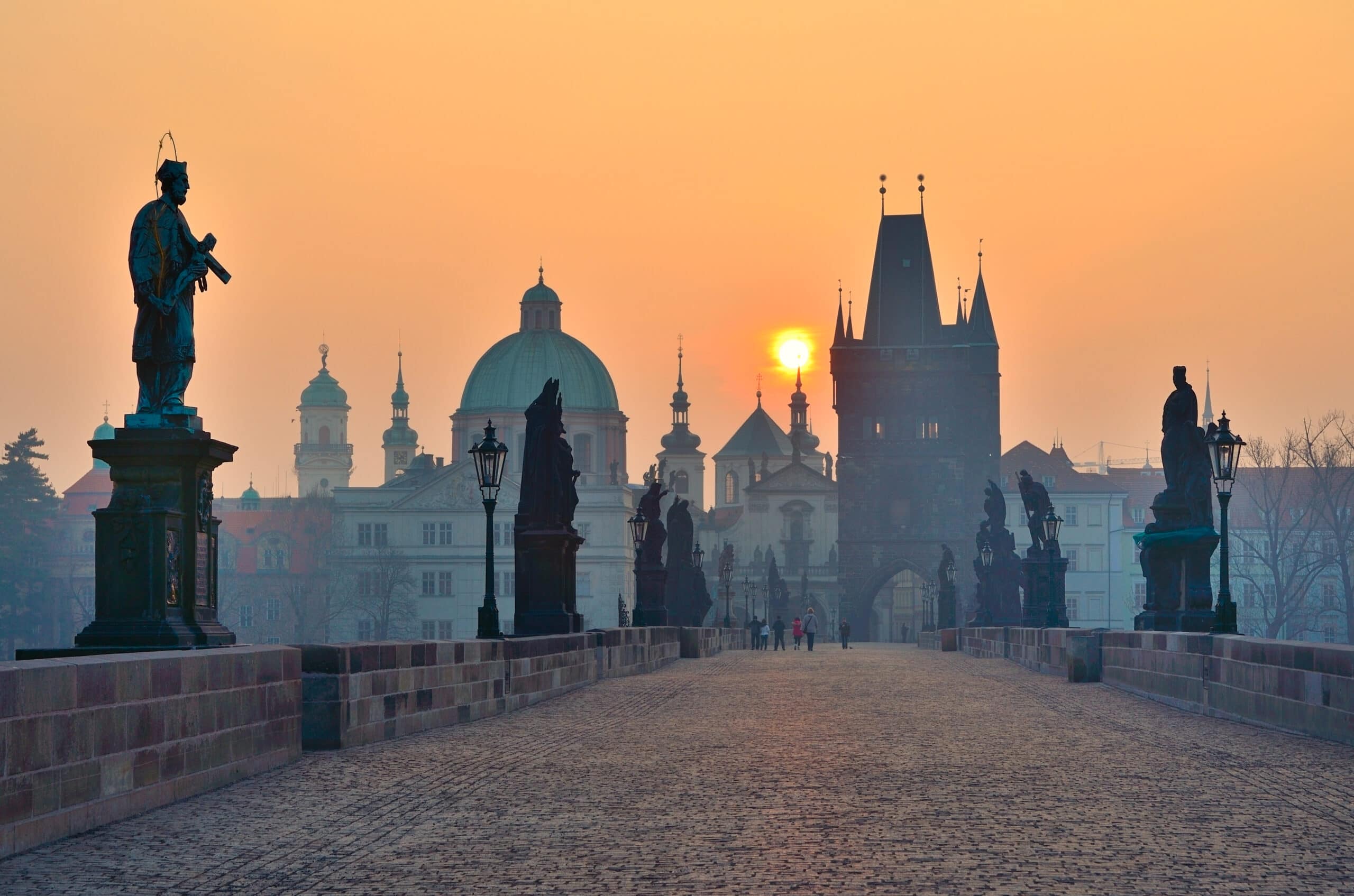
The Charles Bridge is a slightly lesser-known but enchanting European landmark found along the picturesque Vltava River in Prague. It captures the essence of Prague’s history and charm, one of the most beautiful cities in Eastern Europe.
The bridge is alive with activity, bustling with musicians, artists, and souvenir vendors, adding a vibrant atmosphere to the experience. And from its vantage point, you get breathtaking vistas of Prague Castle…another Prague landmark!
Atomium: Brussels, Belgium
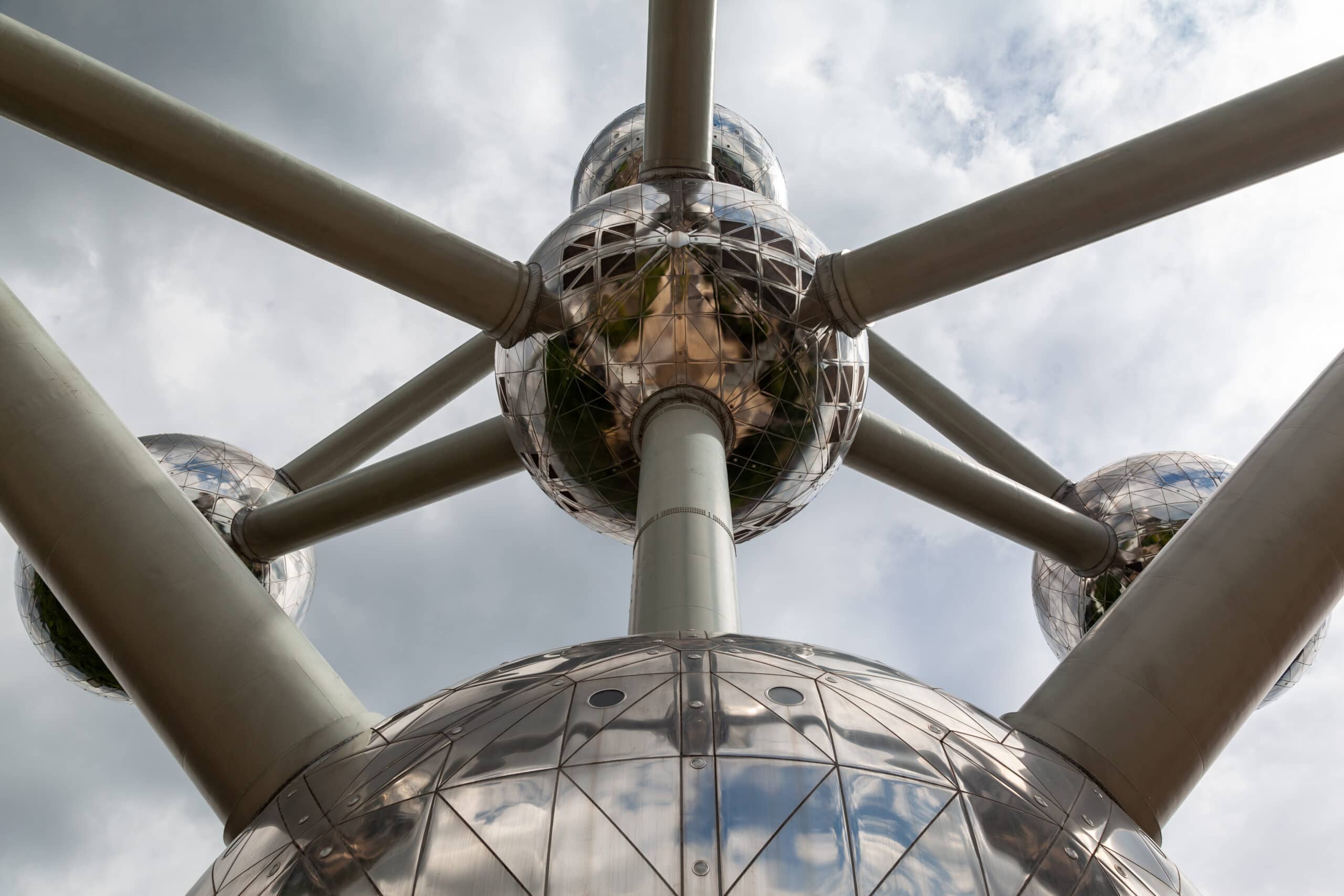
Atomium is often THE landmark people think of when mentioning Brussels, and for good reason.
The colossal iron atom structure is not only impressive to look at, but you can also go inside the atom structure. It’s one of the best reasons to visit Brussels.
Inside the nine spheres are museums and exhibitions, light displays and a viewing deck. Atomium is definitely worth checking out if you are in Brussels.
It’s one of the more modern European landmarks, built in the 20th century, but that only shows how impressive it is to become so iconic in such a short time.
Belem Tower: Lisbon, Portugal
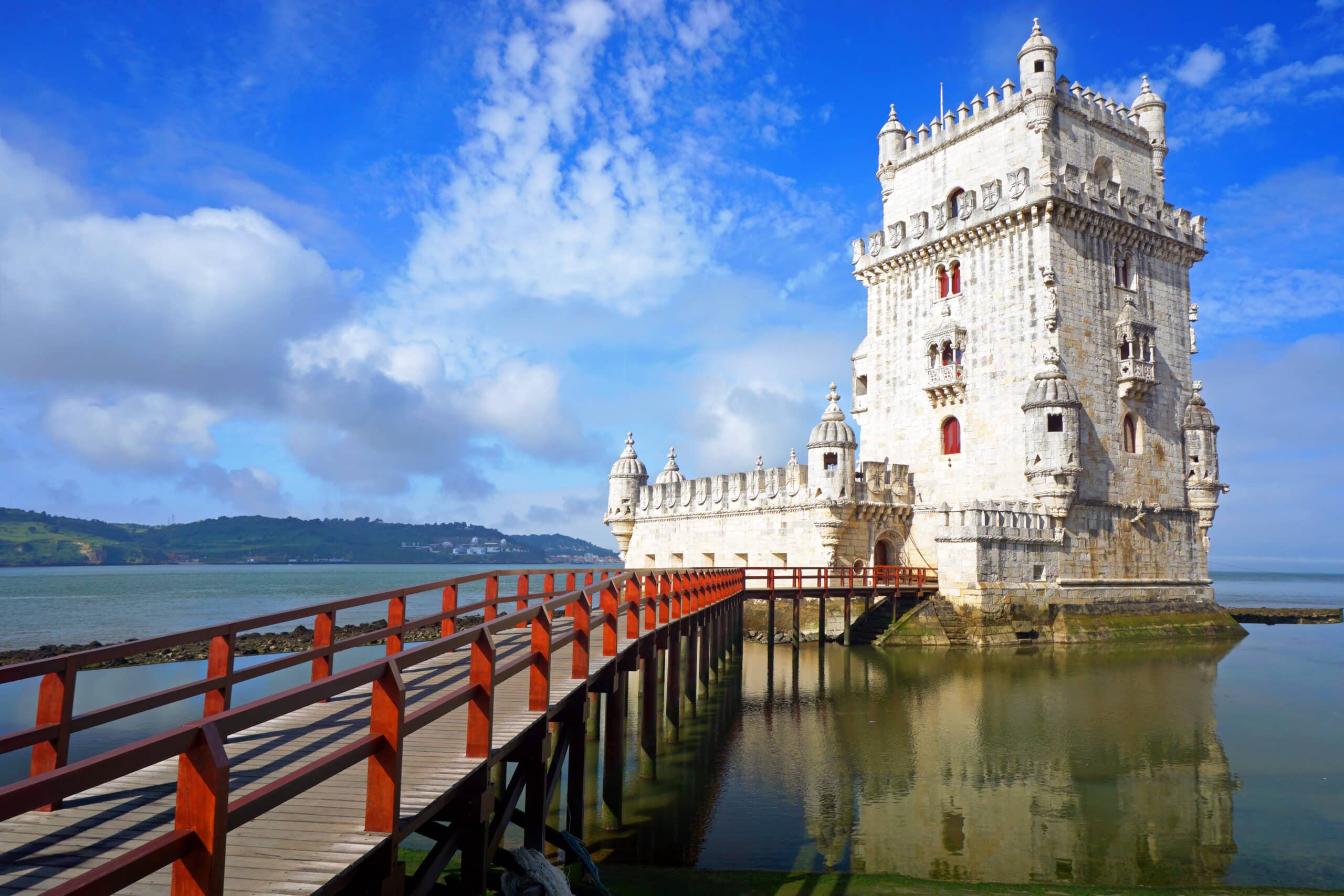
The Belem Tower, a renowned European landmark in Lisbon, is evidence of Portugal’s rich maritime history. With its striking architecture and strategic location on the banks of the Tagus River, this iconic tower captivates visitors from around the world.
Built in the 16th century, this fortress-like structure served as a defensive bastion, protecting the city and its explorers during the Age of Discoveries.
The tower’s ornate Manueline style, characterised by maritime motifs and intricate stonework, reflects Portugal’s maritime legacy and significant role in the world of exploration. Every detail, from the turrets to the decorative elements, tells a story of adventure and conquest.
Climbing the tower’s narrow spiral staircase, visitors are rewarded with panoramic views of the river and the city. From the tower’s battlements, one can imagine the brave explorers setting sail to chart unknown territories and establish Portugal’s global influence – from Brazil and Angola to Macau and Timor Leste.
The Belem Tower symbolises Portugal’s golden age, an era of exploration, trade, and cultural exchange. Its historical significance, architectural splendour, and prime riverside location make it one of the most beautiful places in Portugal.
Seville Cathedral: Seville, Spain
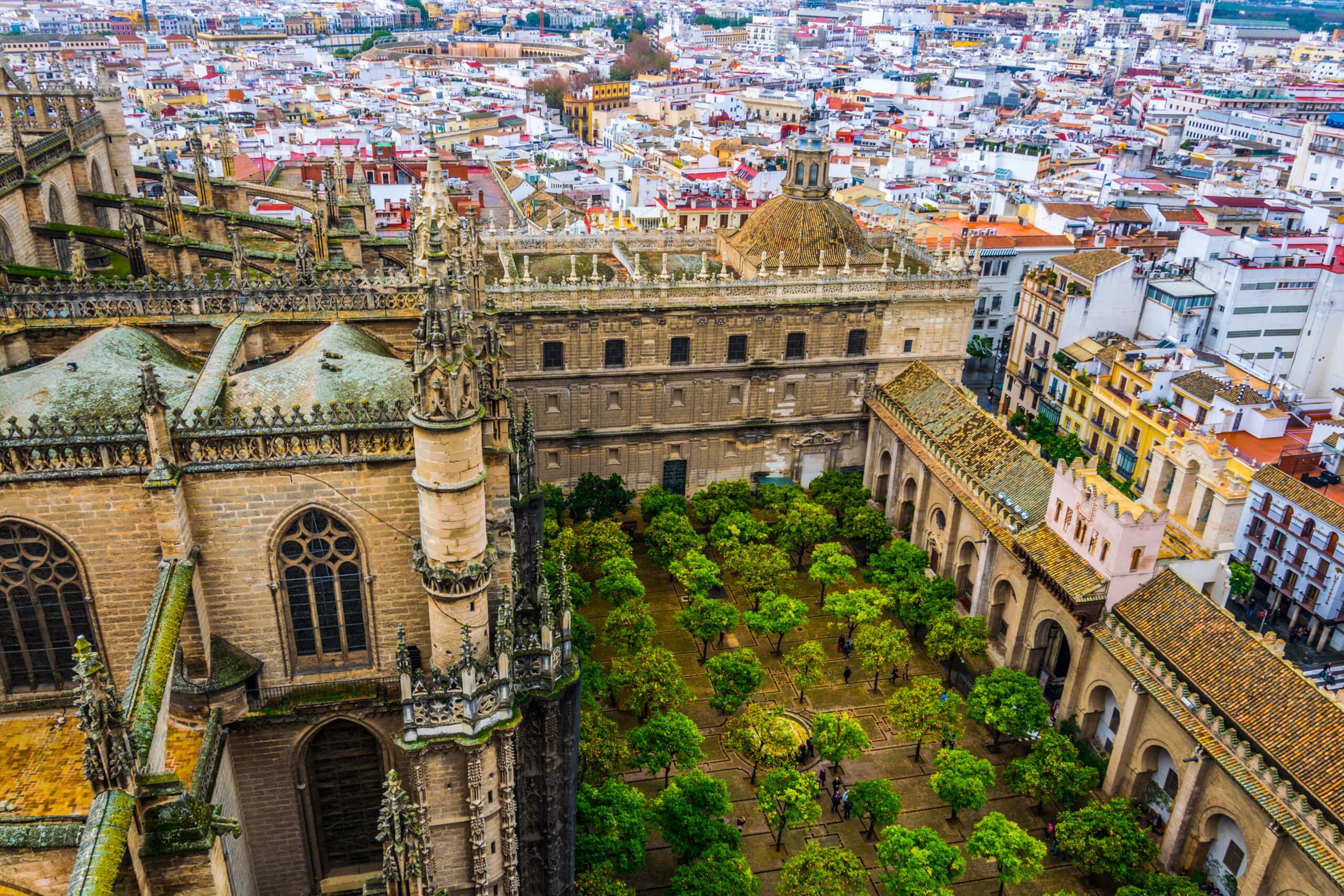
Seville Cathedral, a majestic marvel of Gothic architecture, stands proudly as one of Europe’s top landmarks. Its sheer grandeur and historical significance make it a must-visit destination for travellers seeking to immerse themselves in the rich cultural heritage of Spain.
As the largest Gothic cathedral in the world, Seville Cathedral dominates the city’s skyline with its towering presence. Stepping inside, visitors are instantly captivated by the vastness of the interior, which boasts intricate details, soaring arches, and a sense of grandeur.
One cannot miss exploring the cathedral’s iconic Giralda Tower, a former minaret converted into a bell tower. Climbing its ramp instead of stairs, visitors are rewarded with breathtaking panoramic views of Seville and the city’s famous orange trees in the courtyard below.
Inside the cathedral lies the Tomb of Christopher Columbus, a powerful reminder of the city’s historical significance as a gateway to the New World. The ornate tomb, carried by four statues representing the kingdoms of Castile, Leon, Aragon, and Navarre, pays tribute to the explorer’s lasting legacy.
Stonehenge: Salisbury, UK

Steeped in mystery and ancient allure, Stonehenge is an iconic prehistoric monument and testament to ancient civilisations, this time in England.
The majestic stone circle, with its massive standing stones, exudes an aura of spiritual significance and astronomical wonder, making it famous around Europe.
Stonehenge is surrounded by a vast open landscape, making for a nice stroll in the English countryside while admiring the ancient landmark of Europe.
Visiting Stonehenge is an extraordinary opportunity to see one of Europe and the world’s most iconic and enduring archaeological wonders.
Sagrada Familia: Barcelona, Spain
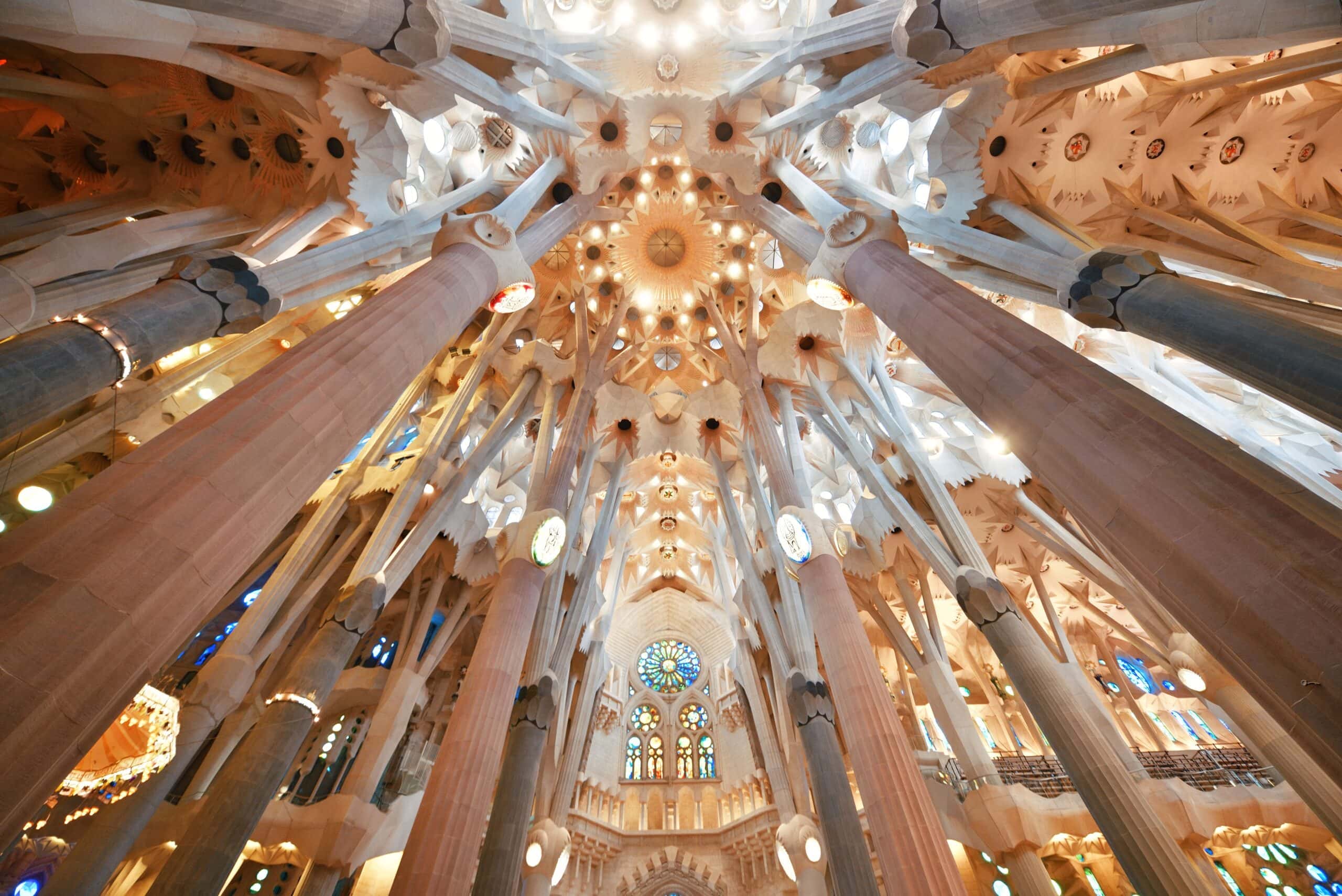
It’s hard to find the words to describe an architectural masterpiece and awe-inspiring landmark like the Sagrada Familia in Barcelona.
Designed by Gaudi, the Sagrada Familia was never completed before the visionary architect died. No one is sure what Gaudi had planned for the building, so the building remains unfinished.
This iconic basilica is beautiful both inside and out, as when stepping inside, you are surrounded by a mesmerising interplay of light and colour, as the stained glass windows cast a vibrant glow around the interior.
When people think of Barcelona, apart from the football team, they think of the Sagrada Familia.
St Basil’s Cathedral: Moscow, Russia

Heading to Eurasia, the St. Basil’s Cathedral in Moscow is another of the most iconic European landmarks. It’s guaranteed to impress you with its extraordinary beauty and historical significance.
This iconic cathedral, with its distinctive onion domes and vibrant colours, perfectly summarises the culture of Russia. If you think of Russian architecture, you see St Basil’s.
And the interior is absolutely stunning too. St. Basil’s Cathedral holds centuries of Russian history and religious devotion, providing a great opportunity to immerse yourself in the country’s storied past.
Standing in the enigmatic Red Square, next to the Kremlin, a visit to St Basil’s is a must on a trip to Moscow. (But don’t go now, because you know…RUSSIA…)
Arc de Triomphe: Paris, France

You could have a whole list of Paris landmarks; the whole of the city is simply iconic, but it would be impossible not to include the Arc de Triomphe on this list.
The Arc de Triomphe stands at Place Charles de Gaulle, where twelve famous Parisian avenues meet.
It proudly stands as a symbol of French national pride as Napoleon commissioned it. Napoleon commissioned the Victory Arch in 1806 to commemorate the victory at Austerlitz.
The Arc de Triomphe also honours those who fought and lost their lives for France in the French Revolution and the Napoleonic Wars. At its base, the Tomb of the Unknown Soldier honours the fallen in WW1.
Aside from history, panoramic views of Paris await at the top of the Arc. It’s one of the best views you will ever see.
Notre Dame: Paris, France
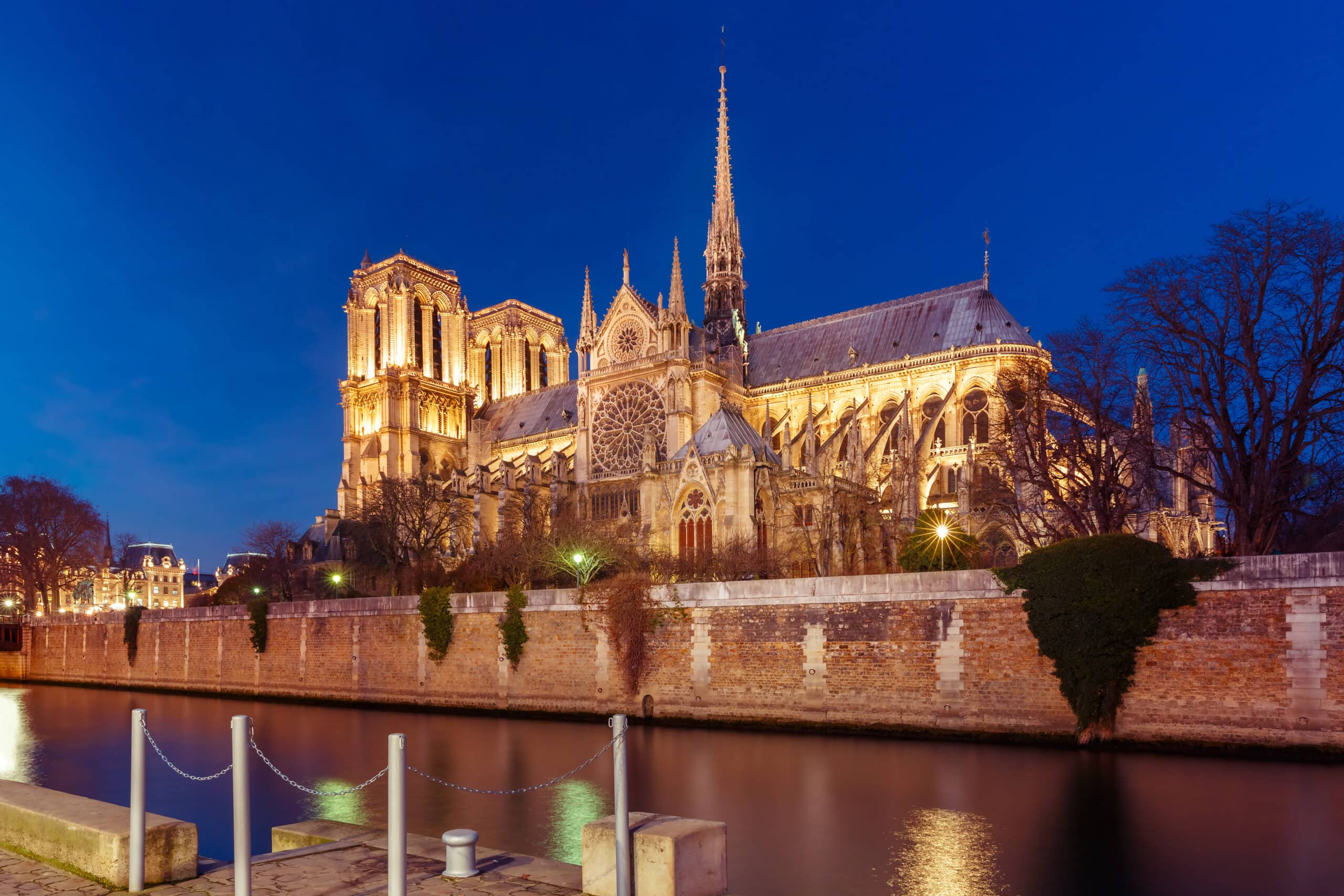
Another iconic symbol of Paris is the Notre Dame Cathedral. Of course, there are many Notre Dames across Europe, but this is by far the most famous, and that’s why it is on this list of Europe landmarks.
Even after being destroyed by the fire, sitting down, admiring its beauty, and pondering its history is a must-have experience when travelling in Europe.
And, of course, the Notre Dame Cathedral holds a profound place in European history, witnessing significant events and inspiring countless generations.
From the first stone being laid in 1163, it has seen the coronation of Napoleon, hosted military parades in the square in front and gained UNESCO status. Sadly, a fire ravaged the cathedral in 2019.
Some parts have been restored and are open for visitors, but it will only fully reopen in December 2024, exactly five years after the blaze.
Despite the challenges it has faced, the resilience and restoration efforts continue to preserve its timeless beauty.
Dom Luis I Bridge: Porto, Portugal
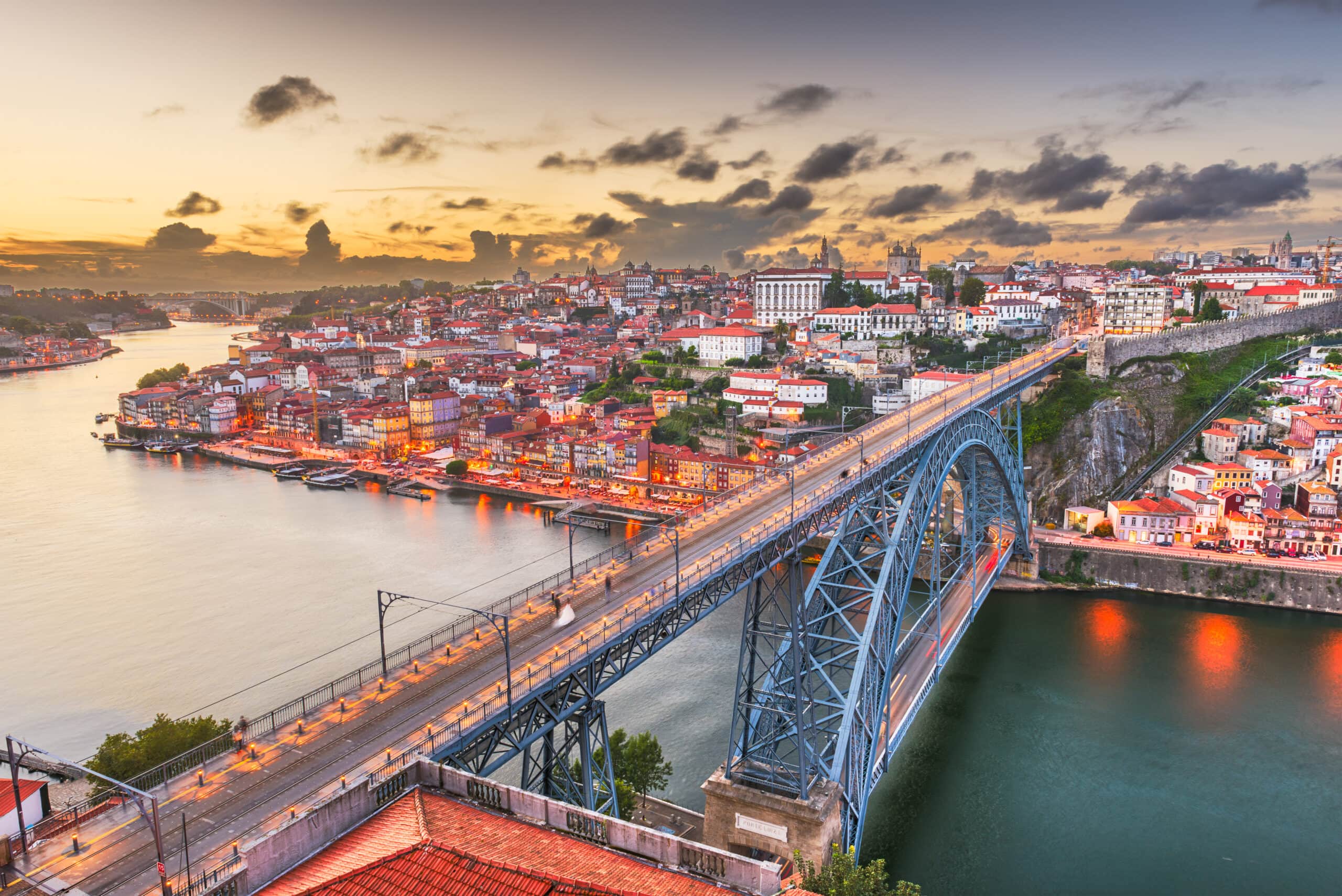
The Dom Luis I Bridge, an iconic European landmark in Porto, Portugal, gracefully spans the Douro River, connecting the city with the picturesque neighbourhood of Vila Nova de Gaia. This double-deck iron bridge, designed by Théophile Seyrig (a student of Eiffel), is a symbol of the city.
It is not only a means of crossing the river but also a symbol of the city’s connection and unity, captivating the hearts of all who cross it.
With its elegant arches and intricate lattice ironwork, the Dom Luis I Bridge immediately captures the attention of onlookers. Its distinctive silhouette against the backdrop of Porto’s colourful riverside buildings creates a postcard-worthy scene that has enchanted visitors for generations.
Walking across the bridge’s upper deck offers breathtaking panoramic views of Porto’s historic Ribeira district and the charming terracotta-tiled rooftops. The serpentine flow of the Douro River, adorned with traditional Rabelo boats, adds to the bridge’s allure and creates a sense of timeless beauty.
The bustling atmosphere and lively energy on the bridge reflect the city’s vibrant spirit, making it a gathering place for people from all walks of life.
Leaning Tower of Pisa: Pisa, Italy

The Leaning Tower of Pisa is the definition of a famous Europe landmark. Everyone travelling Europe knows of the famous leaning tower.
Its distinctive tilt (5.5 degrees) and elegant white marble facade draw visitors from everywhere, and as you approach this iconic tower, you will see why.
Whether you visit for that picture holding it up or want to admire the breathtaking views of the surrounding Piazza dei Miracoli and the city of Pisa itself from the top, the tower is sure to impress.
Big Ben: London, UK
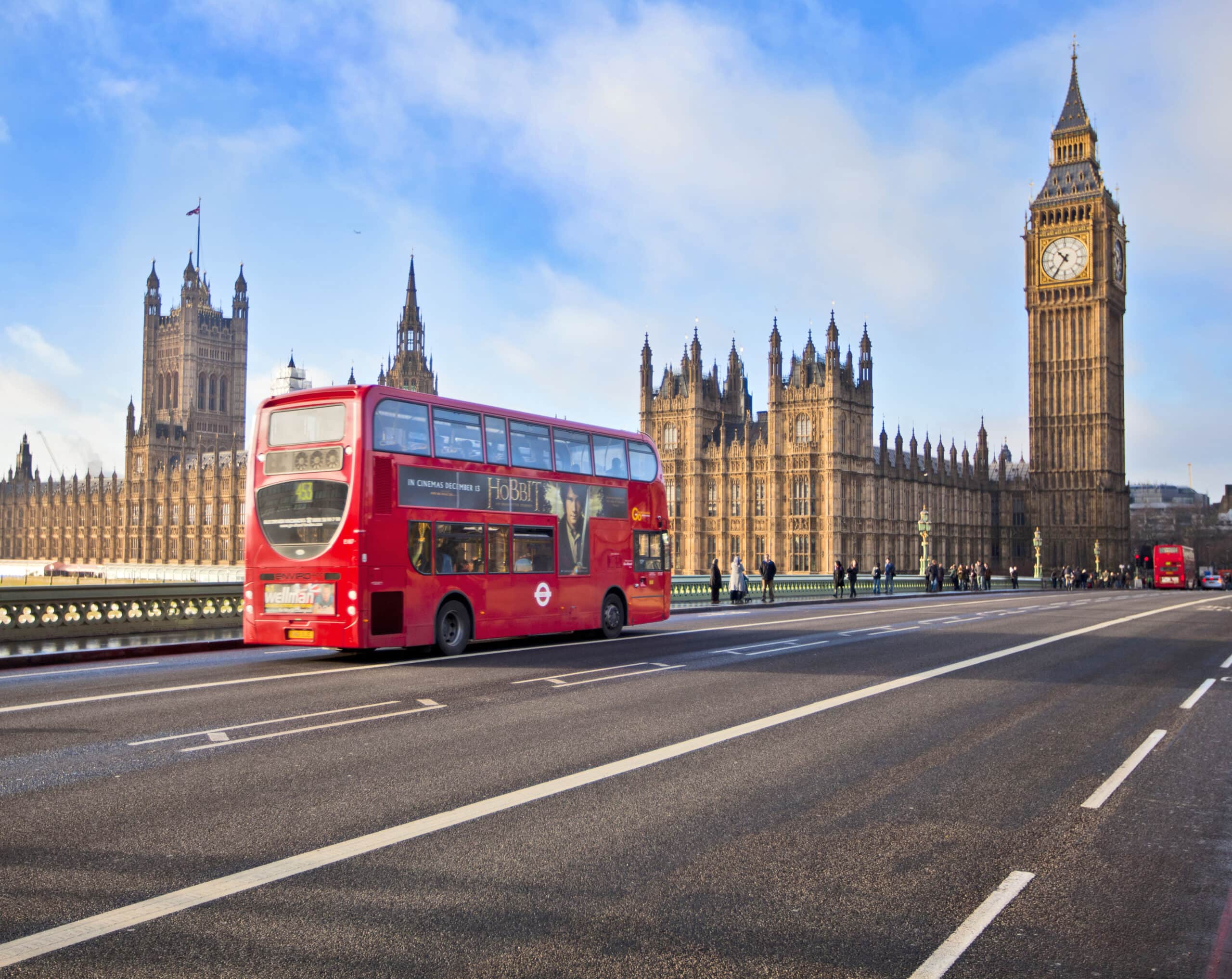
This is a bit controversial, as anyone clued up on their London trivia will know that Big Ben refers to the bell inside the clock, not the clock itself.
So how can bells be included in a list of Europe landmarks?
For argument’s sake, let’s just refer to the clock tower. And there’s no controversy in including it.
Big Ben is extraordinary, especially since its refurbishment. It now shines golden in the sunlight as it overlooks Westminster and the Thames.
People visit London just to get a glimpse of Big Ben!
Blue Mosque: Istanbul, Turkey

You’ll find this Europe landmark in the heart of Sultanahmet district, on the European side of Istanbul. The Blue Mosque is among the top Istanbul attractions, offering an impressive reflection on Islamic architecture. It is a cherished jewel of Turkey’s cultural heritage.
Officially named the Sultan Ahmed Mosque, it is an iconic landmark and a must-visit on your Istanbul itinerary.
Its awe-inspiring architecture demands admiration. With its grand-scale design resembling a lavish Ottoman wedding cake, the Blue Mosque boasts five main domes, eight secondary domes, and six minarets.
Inside, the mosque continues to impress with over twenty thousand hand-painted Iznik tiles showcasing fifty unique tulip designs. Note the predominant use of blue tiles on the upper levels and dome, giving the mosque its name.
Its graceful domes, elegant minarets, and intricate tilework create an ethereal vibe that few places can create.
Plaza Mayor: Madrid, Spain
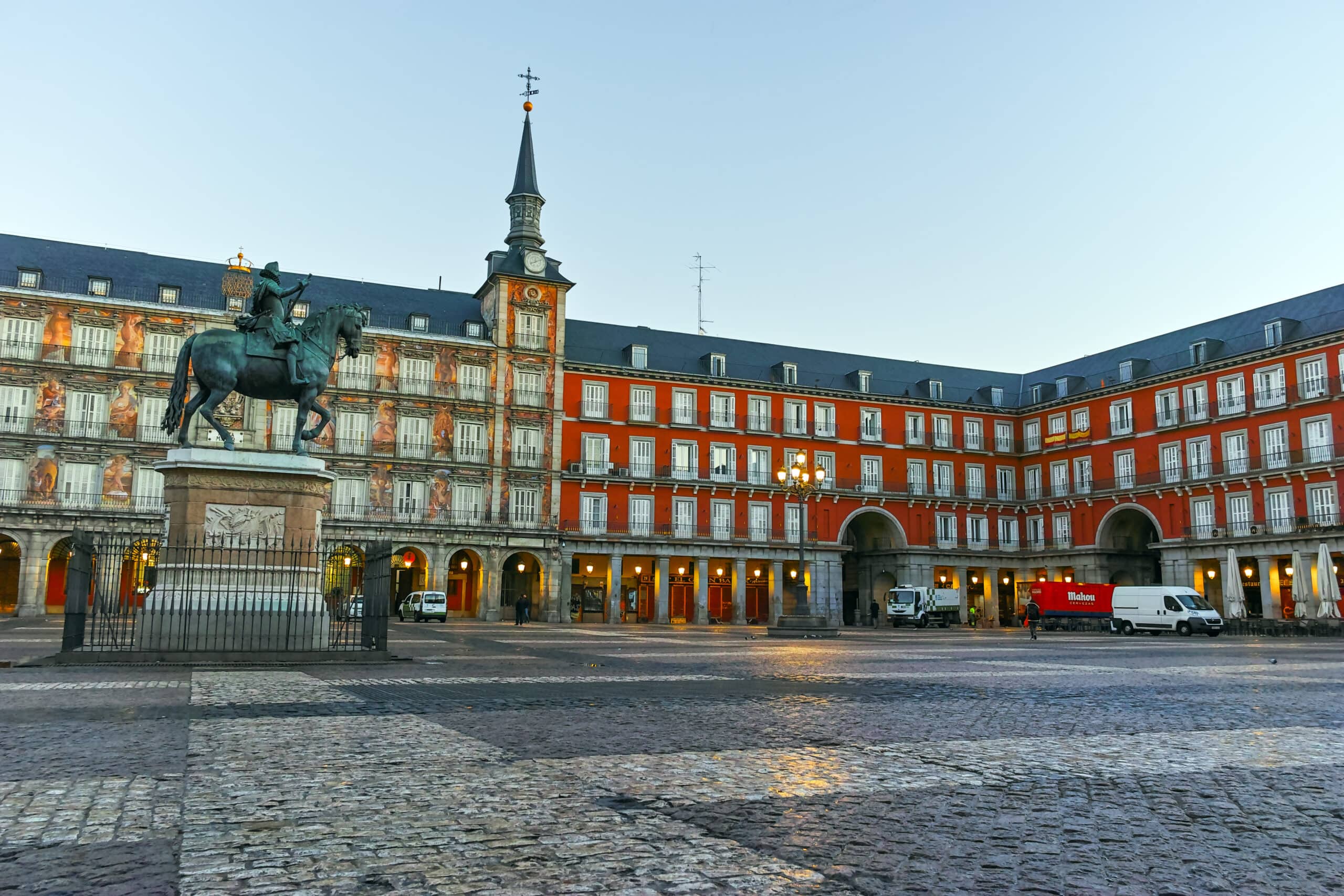
The Plaza Mayor in central Madrid, Spain, is a grand square with imposing architecture and a bustling atmosphere. Locals and visitors have gathered in this square for centuries.
As you enter the Plaza Mayor, you are immediately enveloped by its impressive architectural beauty. The symmetrical facades, adorned with intricate balconies and frescoes, exude grandeur and elegance.
The square, with its equestrian statue of King Phillip III, is wrapped with cafes and restaurants where you can partake in that quintessential European leisure activity – people watching over a drink or two.
The Plaza Mayor has witnessed countless historical events, from royal coronations to public celebrations (and executions).
The lively energy of the Plaza Mayor is contagious. Street performers entertain passersby, while locals and tourists gather at outdoor cafes to indulge in delicious Spanish cuisine and soak up the vibrant ambience. The square is a hub of activity, hosting festivals, markets, and cultural events throughout the year.
Rijksmuseum: Amsterdam, Netherlands
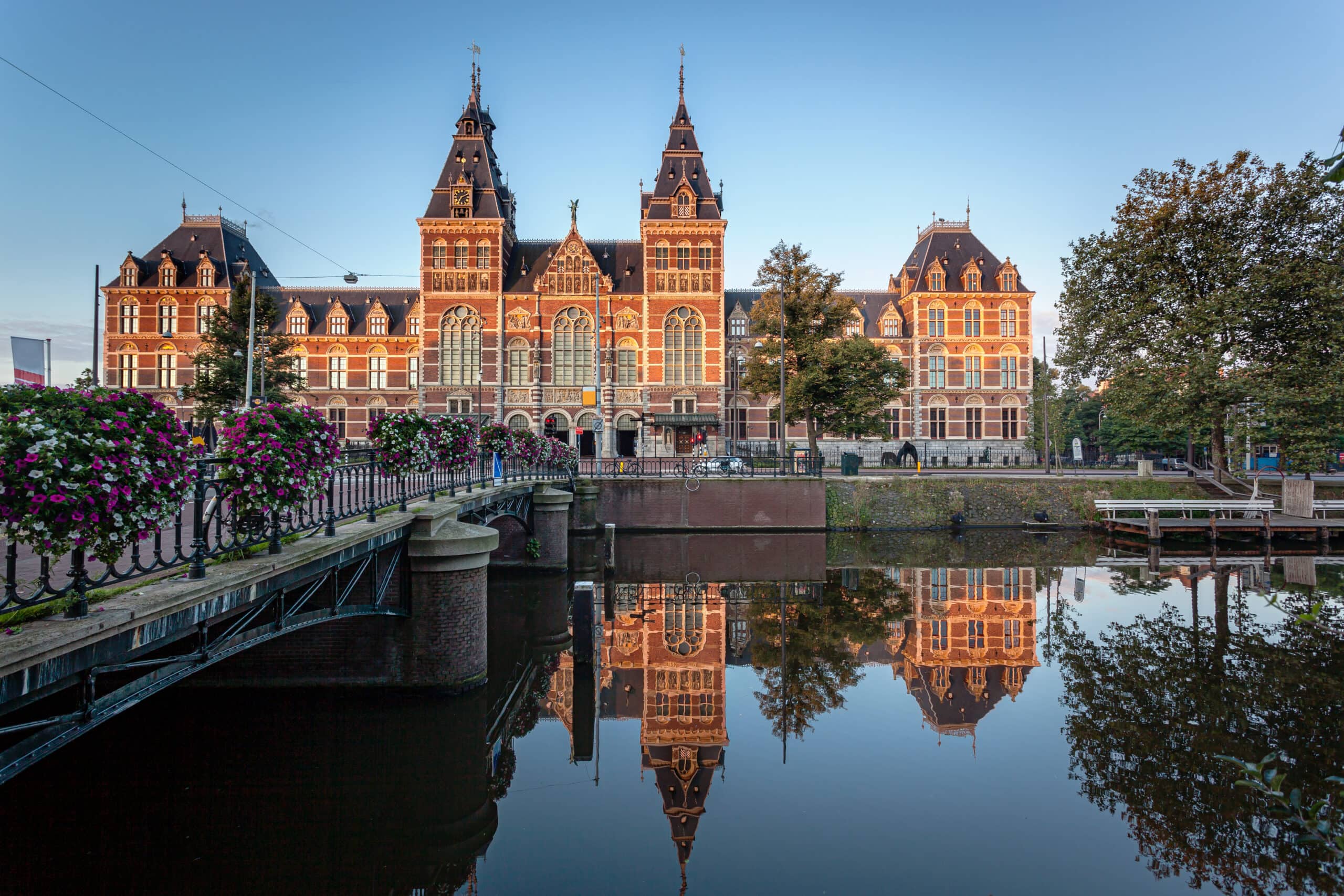
The Rijksmuseum, a celebrated European landmark in Amsterdam, is a cultural treasure trove showcasing centuries of Dutch art and history. This iconic museum, with its mix of Renaissance and neo-Gothic architecture, captivates visitors from around the world.
Inside the Rijksmuseum, you’ll discover a vast collection of masterpieces by renowned Dutch artists, including Rembrandt, Vermeer, and Hals. From the famous “Night Watch” to Vermeer’s enigmatic “The Milkmaid,” each artwork reflects the country’s rich artistic and cultural heritage.
As a Europe landmark, the Rijksmuseum stands as a beacon of culture, enlightening and inspiring those who enter its halls. Its grandeur, artistic treasures, and historical significance make it a must-visit destination for those exploring Amsterdam’s rich cultural tapestry.
Europe Landmarks: Which Ones Will You Visit?
And there you have it, a complete guide to the best and most famous Europe landmarks.
From the Colosseum to Big Ben and everything in between, Europe has many landmarks, many of which were left off this list.
But get out there and get exploring…all of these landmarks are worth visiting at least once in a lifetime!
This post was written by Josh from A Backpacker’s World. Josh loves to write about backpacking all around the world. From Southeast Asia to Europe and everything in between, he loves to explore and spend as little as possible while doing so. Who doesn’t love budget travelling, right?!